← Mick Unplugged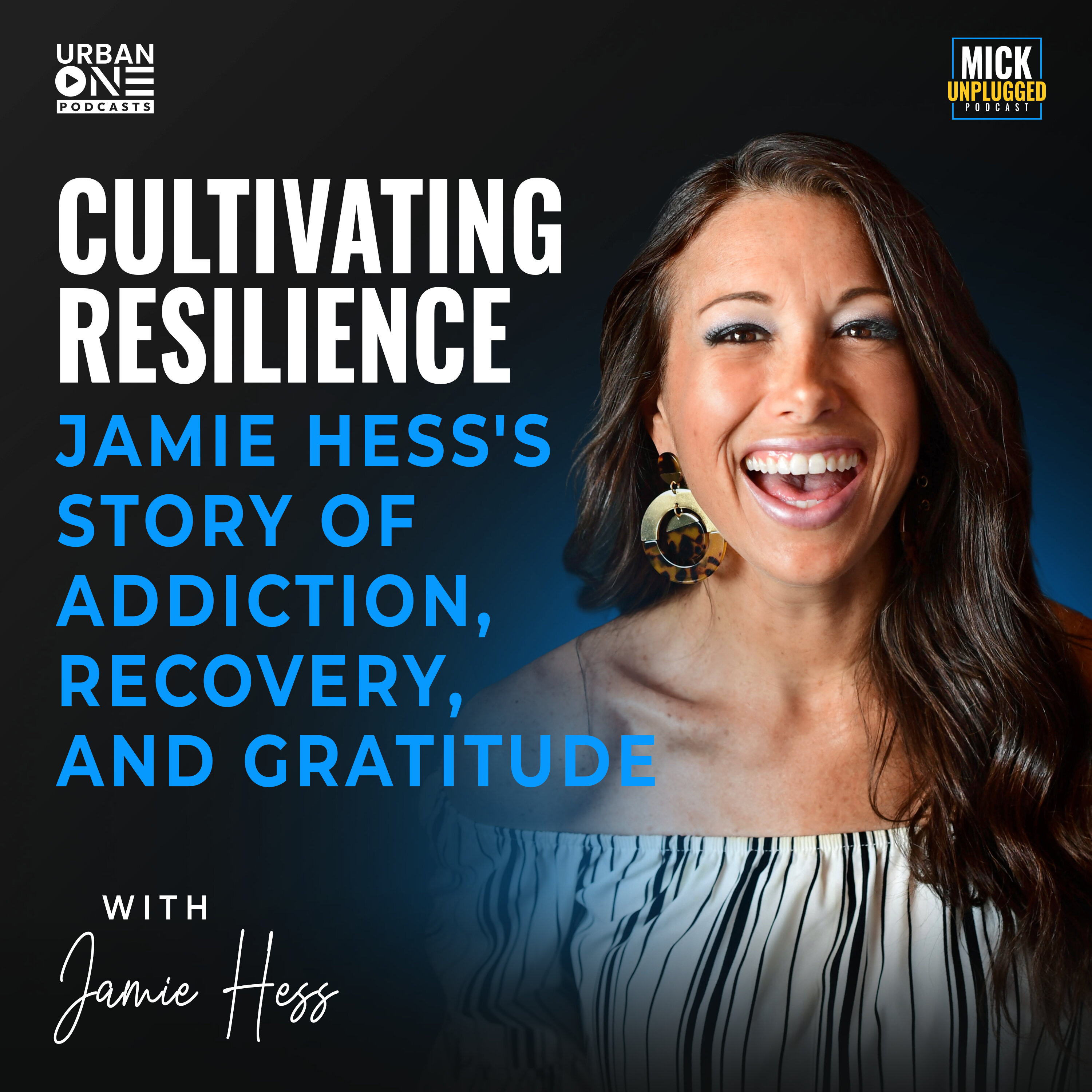
Mick Unplugged
Jamie Hess | Cultivating Resilience: Jamie Hess's Story of Addiction, Recovery, and Gratitude
00:30:06
Loading summary
Transcript63 lines
- [00:00]
Mick
What is Jamie's?
- [00:01]
Jamie Hess
Because, you know, I've done a lot of cool things as an adult, but the fun mic drop moment is that I was an addict and alcoholic and growing up, wow, I made life hard for myself. I made it hard, I made it dark and I didn't see any other way out.
- [00:15]
Mick
I feel that you were just so thankful of the moments and I think that's something that people miss.
- [00:21]
Jamie Hess
Well, you know, it's really easy to have this big philosophical idea that, like, we should be grateful, but what does that actually break down to? Like, that's hard.
- [00:29]
Mick
What are a couple of things that people can do to limit those type of conversations that we all have on a regular basis?
- [00:37]
Jamie Hess
Well, there's a reason they call it a practice, right? You have to practice. It's not intuitive. And in fact, I would challenge that. It's the opposite. So our brains are actually wired the way that our neurochemistry is wired. We are wired to look for the bad, the problems, something that might attack us. The saber toothed tiger. It is what kept us alive as a species.
- [01:00]
Myko
Welcome to Myko Unplugged, where we ignite potential and fuel purpose. Get ready for raw insights, bold moves and game changing conversations. Buckle up, here's Mick.
- [01:11]
Mick
Ladies and gentlemen, welcome to another exciting episode of Mick Unplugged. And today's guest has turned her personal challenges into a global mission of helping others. She is the founder, the creator of Gratitudology, which we're going to spend a lot of time going into today. She is a dear friend and I like to call her QVC's finest. Please join me in welcoming the amazing, the talented, the selfless, Ms. Jamie Hess. Jamie, how are you doing today, dear?
- [01:40]
Jamie Hess
I'm amazing.
- [01:41]
Mick
You are amazing.
- [01:42]
Jamie Hess
I'm feeling amazing and I very much believe in the reticular activating system of our brain. So I've taken to saying I'm amazing. I've taken to saying, you know, as I'm walking down the stairs in the morning and my mind wants to say, you know, oh, I'm so tired, it's so early. I say, wow, why is everything so amazing? Why does everything work out for me? How is my life so incredible today? And the more you call it out like that, the more you believe it.
- [02:07]
Mick
See? See? And that's why I'm a huge fan of you and love everything that you do. And, you know, on Mick Unplugged, Jamie, we talk about your because, right, that thing that's deeper than your why, that really tells us or it not even tells us, but tells you that, like, that purpose, that mission that you have. So for the listeners and viewers, I'd love to share or hear Jamie's because what is Jamie's Because.
- [02:33]
Jamie Hess
Well, this is always kind of my fun mic drop moment, because usually people read a description of the podcast episode or they read my bio, and, you know, I've done a lot of cool things as an adult, but the fun mic drop moment is that I was an addict and alcoholic and growing up, wow, I made life hard for myself. I made it hard, I made it dark, and I didn't see any other way out. And the interesting thing about recovery is that, you know, they say that addiction is the only disease, that once you get the treatment, you actually end up better on the other side. Like, if you have cancer and you go into remission from cancer, you just go back to not having cancer.
- [03:10]
Mick
Right.
- [03:10]
Jamie Hess
But, you know, with addiction, when you do the work in recovery, you come out a different person on the other side. And everything that I learned about gratitude, about having a daily spiritual practice, about not being a victim and taking accountability for things and having integrity, that was all news to me. Like, that was like a blueprint for living I didn't have. And so my. Why my. Because. Because I got sober and because I learned a new way of living. And as a byproduct, I got this understanding that an attitude of gratitude is the heartbeat of happiness.
- [03:41]
Mick
I love that so much. I love that so much. And, you know, again, I'm a huge fan of you, and you talk about the greatness and the fulfillment of every day. And one of my mentors is Les Brown, and he shares that same insight of you. And he's like, mick, you know, I love days. Every day is a great day. You know why? And I'm like, why? Try missing one. Try missing a day. Try not being here and see what that's like. And I'm like, I get what you're saying, mentor. I totally get it. And when I listen to your podcast and I hear your story and not to go there and talk about gratitudeology immediately, but that's what I feel from you. I feel that you were just so thankful of the moments, and I think that's something that people miss. Again, huge fan of you. The content that you're putting out, the platforms that you have, it's about enjoying and embracing those moments. Not just even a full day, a full week. It's the moments of the day, the moments of the week. I'd love for you to go A little bit deeper in just how you take that appreciation because it's something the world needs.
- [04:46]
Jamie Hess
Well, you know, it's really easy to have this big philosophical idea that, like, we should be grateful, but what does that actually break down to? Like, that's hard. And so how do we appreciate things? How do we remain in abject gratitude for our very breath? And that does come down to the moments. You are absolutely right. It's really how we talk to ourselves. At the end of the day, I believe that it comes down to how we talk to ourselves because, you know, a lot of people compartmentalize. We read self help books, and then in that moment when we read the self help book, we're inspired to be grateful or we give advice to others. And in that moment, we're inspired to give somebody else advice to just, you know, really sit back and things could be worse. And there's starving children in another country and you're here and hey, things are pretty good, and be grateful for that. And it's like, that's not enormously helpful. People used to tell me when I was younger and in my addiction, like, what are you doing? Like, you just be grateful, like you have a nice life. My mother is TV journalist Joan London. I grew up with a nice life, and they weren't wrong. But let me tell you something, Mick. Guess how much that helped me? Them telling me just knock it off and be grateful? Zero. That didn't help me. In fact, it made me feel more shame. I'm like, oh, my God, they're right. I have it good and I'm privileged. And here I am completely blowing everything. I really am a loser.
- [06:04]
Mick
Or.
- [06:04]
Jamie Hess
And then I went and used more because, like, who wants to live in that? Easier to escape. Okay, so how do we actually sink into gratitude? Well, it's. It's actually simpler than you think, but it's. It's actually a little more annoying than you think. You see, what I always say is the work doesn't really feel like the work when you're in it. It just feels like a series of minor inconveniences. Right? We all like to say, I'm doing the work. I'm doing the deep. I'm doing the work. Are you? Because the work doesn't feel like anything profound. It feels like in that moment when you walk into the bathroom and look in the mirror and you call yourself fat, saying, we don't talk to ourselves like that. That is a beautiful woman or a beautiful man I see in front of me. I am fabulous. I'm in my power. I'm in my presence. I am a child of God. That's the work. That's literally the work. It is stopping yourself in those micro moments and saying, come on, get back grounded. Pull that leash back. Going to get back in gratitude.
- [07:00]
Mick
So for the listener or viewer that's watching or hearing this, and they're at that moment where it's the bad self talk, or as I like to call it, the false self, right? Like it's not your true self. What are a couple of things that people can do to limit those type of conversations that we all have on a regular basis?
- [07:19]
Jamie Hess
Well, there's a reason they call it a practice, right? You have to practice. It's not intuitive. And in fact, I would challenge that. It's the opposite. So our brains are actually wired the way that our neurochemistry is wired. We are wired to look for the bad, the problems, something that might attack us. The saber tooth tiger. It is what kept us alive as a species. However, what happened or what didn't happen is our brain didn't evolve out of that. In other words, you're not looking to escape a saber tooth tiger all day. It's not coming. You're good. But what we do instead is we react that same way to, you know, the judgmental email from a client or the unhappy email from our boss, or the side eye from a coworker, or, you know, a weird, you know, kind of glance from our partner or loved one. And all of a sudden we feel attacked, we feel under siege, and we get fight or flight. So it's really about having a practice. So you have a little bit of armor. So that intuitively. Because here's the thing, I don't always do the gratitude or the positive self talk or the taking a moment thing perfectly, but I do it a lot more intuitively now. I do it a lot better now than I used to. And that came from a practice. The practice is, for me, a couple of those simple things. I really hate when people who talk about gratitude come on and just say, here's what you do. You do a gratitude list of three things in the morning. Like, we get it, Pam, we get it. You know, like, okay, but gratitude list, great place to start. I will say this. My good friend, great Chris Shembra, who's another gratitude expert, he said, you know, everybody in marketing, like, has to have something they're for or against. Like in the marketing of their own brand. You know, like, I'm for this and I'm against this. He goes you want to know what I'm against? I said, what Chris? He goes, gratitude journals. I said, okay, Frank, give it to me. Tell me why. Why are you against gratitude journals?
- [09:02]
Mick
Yeah.
- [09:02]
Jamie Hess
He said, because I feel that everyone's been sold a lie. That this cottage industry of gratitude journals is gonna. Is the thing is the gratitude is the pr. And why he's saying that is that gratitude's also a pro social exercise. So by sitting in your head in your bed and writing down three things, it is, it is a good start. It's not a bad place to start. But by thinking that's the beginning and the end of a gratitude practice I think is short sighted. So gratitude is a pro social approach. The more that we can profess it, the more that we can say that, you know, especially as leaders, we forget. We. It's very easy to tell people what they're doing wrong. Right. But it's, it's harder to remember to tell people, hey, you know, I had a boss my last time I was employed by the way. I mean I'm employed but the last time I was employed by a company and now I'm an entrepreneur the last time I had a boss. Now I have clients, it's a whole different set of problems. But I had a boss, right? And two bosses, female founded company. They were, it was the best place I ever worked. I worked there for the last seven years. My, my corporate career as an SVP of a big agency. They never failed to, you know, if you're doing a great job, I would just get an email saying, hey Jamie, we just want to let you know you have really been crushing it lately and it has not gone unnoticed. Here's a $250 gift card to go get a massage. Enjoy. And I was floored. And my mom used to say they are so smart, you know, this stupid $250, it costs them nothing. You're never gonna leave that company. I said, you're right. Because I feel appreciated. And that goes so far. But it also boomerangs back to the appreciate tour. Right? Because this is like a goodwill boomerang that we're doing here. So there's a lot of different ways that we show and express and receive and profess gratitude throughout a day. I do like a gratitude list. I think it's a good pen to paper exercise. But I'll tell you Mick, sometimes when I'm just hard moment, I will go, this is, I call it either bathroom prayer. I'll go in the bathroom and do say the serenity prayer or I'll just like pop on YouTube on my phone and type in like gratitude meditation five minutes and do the first one that comes up. It's just about getting in the habit of taking a contrary action.
- [10:56]
Mick
Yeah, I love what you said there about being told what you do wrong. So, you know, I talked to a neuropsychologist, not for me personally, but just, just to talk about life, right? Maybe for me personally, but. But whatever, we won't go there, Jamie. And he said, you know, Mick, here's what our society has taught us for 5 million years, right? When you're born, you taught your name and the word no, right? You know, everything you're not supposed to do and like, it's ingrained in us. No, no, no. When you're hired onto a job, you're taught the rules and the things not to do. You, you're never taught fulfillment. You're never taught appreciation. And even like the best, most competitive athletes in the world are the best self driven people. Like, I like to think I'm a very high strung, self driven person, right? You still appreciate small wins and that's what we don't do enough of. And so when I talk to leaders, I talk about those things, right? Like, how do you show appreciation more than you feel like you should? Because people need that. As humans, we need that. And how do you celebrate small wins? Because people want to know they're doing the right things that are helping companies grow, that are helping to add the contribution to the direction that we're going, not just when we do something wrong or what to look out for. And so again, those are things that I see in you and hearing the messages that you're delivering on your platforms as well. So I wanted to just say thank you for bringing that up today because that's something that I feel the world needs more of.
- [12:30]
Jamie Hess
Well, thank you. And I think it's, it's a great point. It's a great point. And I think it's hard for people sometimes to stay in gratitude in general when they're going through a rough time. That's obviously when we need it most. But that's when most people start to slip and be like, you know what? Everything isn't great, you know, and you just want to lean into like, woe is me. And that's honestly why I started my podcast, Mick, is because my podcast. So I had another podcast for four years prior to this one and it was great. It was, you know, I co hosted it with a couple other well known women in wellness and it was called off the gram. And it was everything at the intersection of wellness and social media. It was a chat show and it was fun, but I really wanted to do deep immersive audio theater storytelling, you know, audio narrative with sound design and narration and telling these great stories and. And I love true crime, but I don't. Ever since I became a mom, I became a wimp. Like, I used to love 48 Hours and Dateline, but like, I. And I love true crime podcasts, but like, I don't want it to end with like, and her body was found in a ditch. It's now that I'm a mom, I'm too protective to like deal with that. I'm like, ah, like, especially when it's about kids. So I was like, how can I take people through a story like that where there's like a cliffhanger and you know, you're like, what's going to happen next? And then leave them with a really motivational outcome? That would be nice, right? So my. Why my. Because the answer to the question you asked me earlier was my addiction. I went through addiction. I went to a really dark place and then as a byproduct, I got better. I gained gratitude and it's fueled my success going forward. And as I went to more entrepreneurial conferences and summits, I realized every eight, nine figure entrepreneur has the same story and celebrity thought leader we all had have our why story. Something happened, it taught us a great lesson, usually along the way. And then we came out on the other side a different person. So each episode, each week, I tell the story of one person. I go and interview them and I do almost all my interviews in person. So I am flying around the country with the crew, sitting with these people because I just want to be heart to heart, eyeball to eyeball and hear it. And I mean, I've had people like Rainn Wilson and Nev Schulman from Catfish and Gabby Bernstein. I mean, such cool people. And we get into their story and I tell it in a way where you feel like you're listening an audiobook, but the goal is to show people that if they are going through that hard point in their life right now, not only is it not the end, like we always have to see the darkness before the brightest light. What might be on the other side of that, if you play your cards right, right, if you lean into it, lean into the suck, because there's something to be learned there. What's on the other side of that is amazing. And so I really believe that's a big part of gratitude is like, almost the disruptive part. It's really easy to be grateful when everything's good. But learning to be grateful for the parts that suck because you know that they're there to teach you a big lesson, I think that's like, gratitude, you know, the rest is gratitude 101. This is like AP gratitude.
- [15:11]
Mick
There you go, giving us high school lessons right there. I like it. Jamie taking us to school. So let's talk more about Jamie. Right. So you're past your addiction, right? Like, it's a thing that people go through, and you're constantly going to be, you know, fighting, battling, and whatever, which I love about you. And then it's like, these are the words of Mick and Mick, only you decided to wake up, toughen up, and now you're starting career. Right? What was those initial moments like? So let's go more of the story with Jamie. So it's like, okay, this is the new me. This is who I am. I'm embracing who I am, and I'm going to move forward. What was moving forward, like, for Jamie?
- [15:49]
Jamie Hess
Well, I was a publicist for my whole 20s, and I was born to be a PR girl. Like, I was just born to do it. I loved that job, but I was always fighting against myself because pr, as you can maybe imagine, I don't know if you know a lot about the world of public relations, but especially in New York City, it's like champagne and cocaine and models and bottles. And that's just what it is, you know? And it was a very easy job for me to lose myself in. I was doing a lot of nightclub and hospitality hotels, you know, PR for those types of places. I was out all the time. You felt like you had to be out, like, doing drugs in the bathroom with the writers from Page Six, because that's, like, how you got further in your career. And it's like, it was hard. It was very hard to get sober in that environment. For a couple of years. I was actually the publicist for Crowbar, which is the biggest nightclub in New York, Chicago, Miami. So, like, literally in the belly of the beast. So there was a lot of. And I think this happens to a lot of addicts. You get your whole identity wrapped up in that. Like, without the drugs, am I even me anymore? Like, because am I even a publicist? Am I even cool? Am I even part of New York nightlife? When I came out on the other side, I really had to give myself a little time to get my sea legs and to Be honest, like, I had to take a little time away. I went back to my sport. Fun side note, I'm a horseback rider. So I had to burn it to the ground and build it back up. I took three years to go teach riding to young women and go back to the working outdoors and getting dirty and working with animals. And then after three years, I woke up and I was like, huh, okay, I'm ready to go home. I was in LA at the time. I'm ready to go back. And I came back to New York and I hit the ground running. What happened on the other side of that is the part I always tell when I'm up keynote speaking, which is this incredible. I started falling up and it was not even. I didn't get any new accreditations, I didn't learn any new skills. But as a byproduct of showing up as a new, different whole version of myself, because I did the work and the work again. The work wasn't something I could do in like a six week workshop. What you're hearing me say is I went to rehab and took three years to rebuild myself from the ground up, dismantling my identity from New York City nightlife, rebuilding my, my ego and my place in the world. And then I came back, by the way, to my high power career. I didn't have to give it up. I had to build myself back into a place where I came there not a shell of a person, but a.
- [18:03]
Mick
Whole person, a full Jamie.
- [18:06]
Jamie Hess
And so I start following up. So I start getting promoted, like out of, by the way, three year employment gap. How to explain that? Like, came back like after, like teaching little girls how to ride ponies for three years. And I was like, I'd like to be a high powered publicist. And they're like, what about the last three years, babe? Side note, for anybody wondering, I got all my high power friends, editors, writers, celebrity friends of mine to write a little blurb about what it had been like to work with me in my early days of pr, to show a testament, you know, hey, she's been out of it for a couple of years. But this is someone who. So where there's a will, there's a way is what I'm saying. Got myself a job and started falling up. And I believe it's because I came to work every day with a humble spirit of gratitude. Everyone else in the office was doing what people in offices do. The west coast office was fighting with the east coast office and all the PR girls were being catty and they were fighting with each other and. And I was just happy to be there.
- [18:54]
Mick
There you go.
- [18:55]
Jamie Hess
And the reason I was just happy to be there was because I know that it didn't have to go down like that, that I potentially should have been dead.
- [19:02]
Mick
Yeah.
- [19:03]
Jamie Hess
And by showing up as this different person, people just. It was magnetic. It was magnetic. And within three years, I got promoted from account executive to senior account executive to managing director to VP to svp. I met my now husband, who, I'll borrow this from, Dr. Phil. I believe that relationships aren't 50 50, they're 100. 100. And both of us had done the work to become full people. In fact, when I was set up with him, my girlfriend who set us up said, jamie, why don't you have a boyfriend? I said, because I'm happy. She was like. She was like, well, I want to set you up with my friend George. I said, fine, I'll meet your friend George. And then fast forward, you know, here we are 13 years later with two kids. But all of that happened because I showed up as a different version of me. Not from a place of lack, but. But from a place of abundance.
- [19:49]
Mick
Love it, love it, love it, love it. Amazing. Jamie Hess. So you know you've been all over tv, right? Good Morning America, the View. You're the queen of qvc, as I like to say that you are. How do you handle, in a good way, the busyness that you have, Right? Because you fly to go interview your guest for your podcast. You're still a mother, you're still a wife. Like, how does Jamie handle the busyness?
- [20:17]
Jamie Hess
I would love to say that I'm an expert in balance, but I don't sleep very much and it's. And what I'm going to be honest about is that's a terrible, terrible thing to sacrifice. So what I'm working on as we go into 2025 is setting better boundaries. I would very much recommend for any solopreneurs out there having a business coach of some ilk. I am a business coach for other people, but I also have a business coach. And the reason is because when I started as an entrepreneur, I was like, wow, now I don't have to. Also, I was always side hustling while I was in the corporate job. And I was like, now that I don't have this corporate ball and chain, I'm going to get everything off the ground in the first 90 days. I'm going to write seven books and speak on 90 stages and be on TV and guess how many things I got done, Mick, probably none, zero, zero, because I was trying to do everything at once. So it was like that old meme, like I have 15 tabs in my brain, open one's playing music and I don't know which one is which. Nothing was actually going across the finish line. I think that prioritizing and setting boundaries is really important. So for me also at the end of the year, having kind of like a bit of a come to Jesus looking at my P and L, which projects did I put the most time into and were those the most profitable? And if not, we got to fix that. You know what I mean? So I would say for me, honestly, I do believe energy begets energy. I just keep going. I'm very ambitious. But I also do a lot of things that I just love. So truly, none of them feel like work. But I should also manage my. As a wellness expert, and I started this whole game as a wellness influencer, I should manage my self care a little better and make sure I sleep as well.
- [21:51]
Mick
See, I need that too, because people laugh because the question that I asked you, I get asked literally the same thing. And it's like, I sleep four hours a night and they're like, what? And I'm like, no, I promise. But I'm refreshed every day. I wake up like this, right? Like, I'm good. I just don't, for whatever reason, require a lot of sleep. But people like Jamie, those wellness experts, those wellness gurus are like, mick, you need eight hours of sleep. And I'm like, there is no way in the world I can find an additional four hours to sleep. So I'm with you 20, 25, I'm gonna go to five hours. I'm giving you five hours of sleep in 25.
- [22:28]
Jamie Hess
The science says that you're not going to live as long. So my concern for you and for me, by the way, is that I also feel okay after not sleeping as long. However, it's like literal brain damage. So it is important to try to get eight hours of sleep as an adult. And I'm not accomplishing it. One thing I would suggest maybe getting a tracker like an aura or an ultra human ring. Another product I was introduced to recently, and this is not an ad. It's called Beacon 40. It's like a light that you put in front of your face and you stare into this light and it helps with the. The part of your brain that essentially is kind of cleansed when you sleep and it kind of helps repair some of that. So not that I Think we should just be biohacking it and not sleeping. But I do believe that you should at least pay attention to your sleep, pay attention to your brain, because it concerns me when I don't sleep, because I do know the science, even if I feel somewhat okay. Part of self care and your body replenishing, especially if you're exercising and working out, is sleep.
- [23:27]
Mick
Okay, Jamie? Fine. Beacon 40, though, you know, I like a hack, so, you know, I'll do four hours of that and four hours of sleeping.
- [23:34]
Jamie Hess
There you go.
- [23:35]
Mick
There we go. There we go. So no, I love that. And I want to give a couple of other tips from Jamie to the viewers and listeners. So what else? When we talk about wellness and tying it to gratitude, what are some things that people can be doing on a regular basis? I hate saying daily because to me, like, daily becomes almost impossible. But if I say regular, then I can build it up to daily. So what are some things that people can be doing on a regular basis?
- [24:03]
Jamie Hess
Acts of service.
- [24:05]
Mick
Okay.
- [24:06]
Jamie Hess
When I went into recovery and my sponsor, I would just complain, you know, I'm stuck in my head and I'm having cravings and I'm having anxiety. She was like, I totally understand. That can be hard. You should reach out your hand and help another alcoholic. I was like, I don't think you heard me, ma'am. I said, me, I'm having a problem. I'm having these problems. She was like, yes, so you should go help someone else. I was like, I no comprendo. What are you talking about? It was news to me. It was news to me that the only two way, the only way to get out from between my two ears was to go help somebody else. To go be of service. We build self esteem by doing esteemable acts. It's why the first thing they teach you in rehab is to like, make your bed every day, right? Like by having structure, discipline, and doing things that make us feel complete and pride, we build self esteem. So if you're waking up every morning and you're just feeling like, I can't get to a place of gratitude, I'm just having a hard time getting my two feet on the ground and feeling good, go be of service. Go help somebody else. Because I'm telling you, it's the life hack that people don't realize. And the problem is it's not because people aren't good people. We want to help each other, but we're just so busy. But when you're so busy and overwhelmed is exactly when you need to go be of service.
- [25:17]
Mick
That's amazing. That's a masterclass lesson in and of itself. I'm taking that mental note because I feel like you were talking to me just now, Jamie, I need it.
- [25:26]
Jamie Hess
And you don't have to go work in a soup kitchen. You could just call a friend you haven't talked to in a while and say, how you doing? Yeah, that's it.
- [25:33]
Mick
Yeah, I love that. I love that. Me and my buddies, we have a thing that we call a checkup from the neck up, right? Like, just randomly out of the blue, we're going to call each other just to how's life? And we have a rule also, and I will tell you this. If you're the receiver of these calls, we have a rule where you have to be honest. If you're not having a good day, tell that person you're not having a good day. Those are our rules. We don't fake it till we make it. We're very honest and transparent. And so I'd like to add that on, too, Jamie, just when you're the receiver of that call, be honest. Because honesty is the key to self improvement as well.
- [26:11]
Jamie Hess
Totally. We have so much ego, and it's hard to just say, you know, what I'm having, I'm struggling, I'm having a hard time. And, you know, a lot of people wait until it's too late, Right. To raise their hand. But the reality is, when you get the thing that's troubling you out of your head, saying something out loud takes so much of the power away from it. Like, so much. And anytime I've had, you know, a struggle, whether it was addiction, whether I had an eating disorder that cropped back up even in my active recovery. I've been sober for many years, but I had an eating disorder that cropped back up, you know, after I had had kids, and I had to stand in that doorway of my living room looking at my husband on the couch being like, am I going to go have this conversation right now? And I did it. And the second you do it, the second you tell somebody else, hey, I'm not okay. No, you think everything's going to get worse, but everything gets better. Everything gets better as soon as you brought somebody else in. So this is why I believe the power of hyperlocal accountability, of just reaching out and saying, I need to fix this, or I need some help, or I need to, you know, can you help me? Magic.
- [27:17]
Mick
Yep. Yep. Love it. Jamie, you've blessed us with so much. This was truly a masterclass like, truly a masterclass. But before I get you out of here, I need to go rapid fire with Jamie Hess. You ready? All right. The best meal that Jamie cooks herself.
- [27:34]
Jamie Hess
That's a trick question because I don't cook, but peanut butter and jelly.
- [27:38]
Mick
Love it.
- [27:39]
Jamie Hess
It's a trick question.
- [27:41]
Mick
So Jamie doesn't cook.
- [27:42]
Jamie Hess
My husband is the chef in our family. He did not marry me for my domestic goddess skills. But let me tell you, I have other things that I do well. We have our lanes.
- [27:50]
Mick
Okay, so what's one thing that Jamie is amazing at that most people don't know?
- [27:55]
Jamie Hess
Scheduling our family and just keeping. I run my house like I run my business, like an absolute maniac. But I think that that's the key to having kids. I truly like lack of chaos. We are. You asked me what. What we're doing next June. I got you. We're booked. We're good. But it de. Stresses the whole family because they know mom's got. I know dad's got dinner, but mom's got, you know, the plane tickets for, you know, for. For spring. In a relationship, you have to have your lanes. And by the way, they might not look like the gender lanes from the 50s. And that's okay.
- [28:27]
Mick
That's better, actually. That's better in today's world, for sure. All right, so we just learned Jamie doesn't cook. Jamie's a prototypical, a strong planner organizer. Right. What's the weakness for Jamie?
- [28:41]
Jamie Hess
I mean, I really disclosed it earlier, but it's like it's just yelling at me loud in my head. It's the only answer I can give, which is setting professional boundaries. I think that when you are a mom, you're always going to live in a bit of mom guilt. But I'm very careful to tell my kids, just because I work this hard doesn't mean you're any less important. It just means that work's important and so are you, and we all learn balance.
- [29:02]
Mick
I love that. I love that. So, Jamie, where can people follow and find you?
- [29:07]
Jamie Hess
They can head over to coachjamiehest.com that's where my coaching program is. Gratitudeology.com or you can find the gratitudology podcast anywhere. Podcasts can be listened to. In fact, you can also text the word gratitude to 33777 and you'll get the links to listen. And you can also find me on Instagram. AmyHess.
- [29:22]
Mick
Love it. I will have the links to all of that in the show. Notes and descriptions for all the viewers and listeners. I promise you. Jamie's phenomenal. You probably already know Jamie's phenomenal, but, like, her Instagram's amazing. She goes a little. Not all the time behind the scenes, but you get to see a lot of bubbly personality. You get to hear the truth. I freaking love you, Jamie. Just want you to know that.
- [29:43]
Jamie Hess
Ditto, my friend.
- [29:44]
Mick
There you go. And for all the viewers and listeners, remember your because is your superpower. Go unleash it.
- [29:54]
Myko
Thank you for tuning in to make Unplugged. Keep pushing your limits, embracing your purpose, and chasing greatness. Until next time, stay unstoppable.