← Mick Unplugged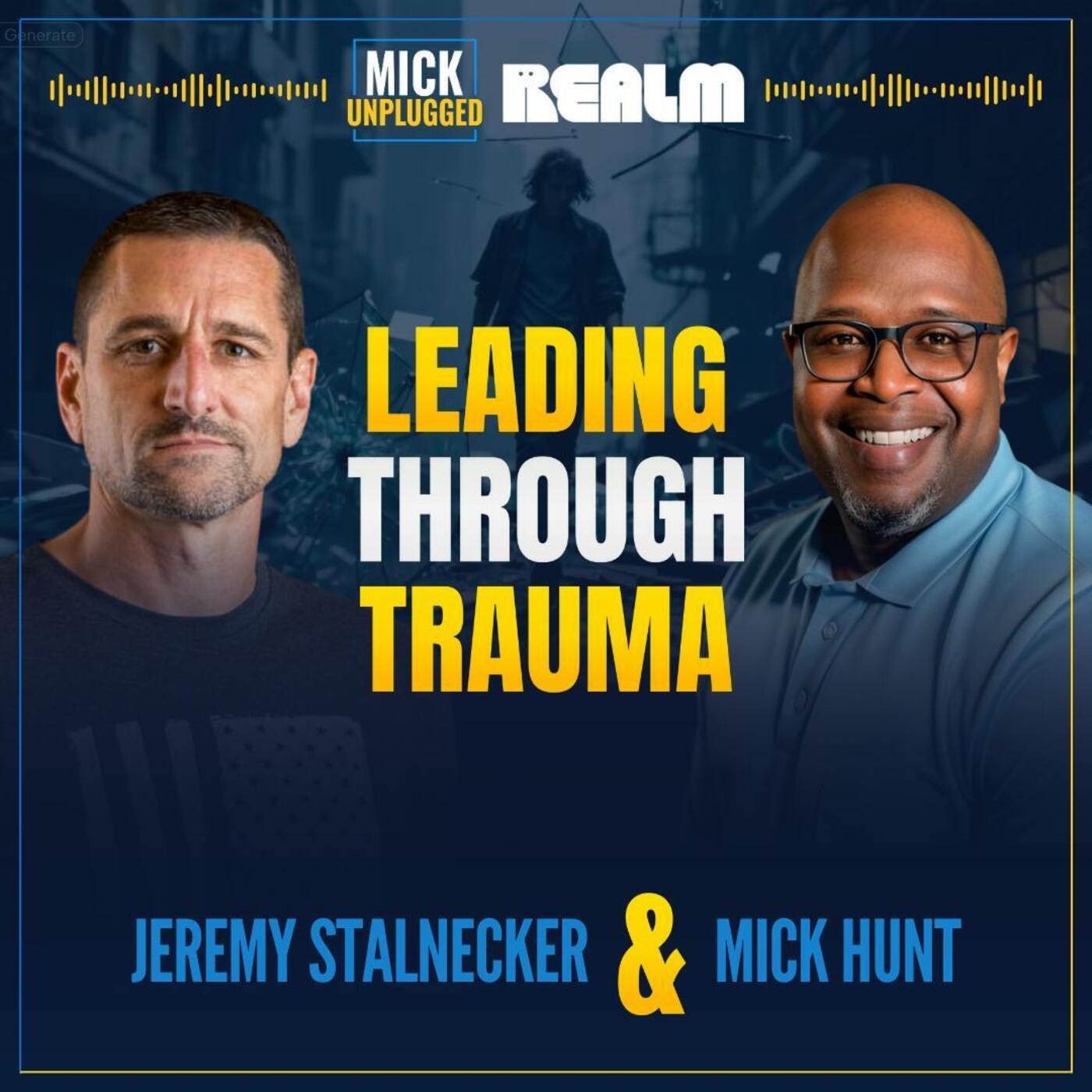
Loading summary
Transcript52 lines
- [00:00]
Jeremy Stalnaker
I figured it out because I had the right people in my life and walked this out as a faith journey. I had a responsibility now to take that to the men that I had served with specifically. But then More broadly, since 2012.
- [00:18]
Nick (Host of Mick Unplugged)
Welcome to Mick Unplugged, the number one podcast for self improvement, leadership and relentless growth. No fluff, no filters, just hard hitting truths, unstoppable strategies, and the mindset shifts that separate the best from the rest. Ready to break limits? Let's go.
- [00:44]
Co-host or Interviewer on Mick Unplugged
Ladies and gentlemen, welcome back to another exciting episode of MC Unplugged. And today we have a distinguished Marine Corps veteran. He's a pastor and he's the CEO of the Mighty Oaks foundation, dedicated to aiding America's military warriors and their families in overcoming unseen wounds of combat such as ptsd. Please join me in welcoming the courageous, the compassionate, the transformative, my guy, Mr. Jeremy Stallnicker. Jeremy, how you doing today?
- [01:11]
Jeremy Stalnaker
I'm doing good, man. Hey, your whole audience is going to be disappointed, though, after that introduction. So I appreciate. I appreciate it, man. No, it's good to be with you. Really appreciate it.
- [01:20]
Co-host or Interviewer on Mick Unplugged
No, sir. No, sir.
- [01:21]
Jeremy Stalnaker
No, sir.
- [01:22]
Co-host or Interviewer on Mick Unplugged
We are not going to be disappointed because I know that you bring it, man. Like, you know, your journey from the core to being a pastor, to all the amazing things that you do for our heroes is commendable, man. And I just wanted to tell you that personally, you know, those that know me know that Robert Irvine is not only a mentor of mine, but one of my closest friends in the world. And his foundation does so much for our military, our servicemen and women and all that. And so over the last couple of years, I've got to see in action the things that you do. And you should totally be applauded, brother.
- [02:01]
Jeremy Stalnaker
Yeah, well, I appreciate that. Yeah. Robert Irvine, man. So I was a part of the 1st Battalion, 5th Marines, and he has supported reunions and other events for us over the years. So he's definitely someone who shows appreciation and, you know, a lot of people say things, but he actually does things. It's super cool.
- [02:19]
Co-host or Interviewer on Mick Unplugged
Amen. If Robert's taught me anything, and he's taught me a lot, but the one thing is about how to make an impact.
- [02:26]
Jeremy Stalnaker
Yeah, right.
- [02:26]
Co-host or Interviewer on Mick Unplugged
And he tells me, if what you're doing in your business, in your personal life isn't making impact, then what are you doing it for?
- [02:33]
Jeremy Stalnaker
That's good.
- [02:33]
Co-host or Interviewer on Mick Unplugged
So that's changed my lens a lot, man.
- [02:36]
Jeremy Stalnaker
Yeah.
- [02:37]
Co-host or Interviewer on Mick Unplugged
People like you of people that I appreciate. So, you know, I always start the show with asking my guests about their. Because that Thing that's deeper than their why. Right. Like that real root of why you do what you do, the purpose behind it. So if I were to say, Jeremy, man, today, what's your because? What's your because, brother?
- [02:58]
Jeremy Stalnaker
Yeah, man, that's an interesting way of putting that. And I could spend a lot of time talking about it. But, you know, when I came home from Iraq as a Christian, a person of faith with a good family into a good church, I had this support network around me. So I had all of the pieces that we would tell men and women coming back from combat to have. I had them. And the bottom still fell out of my life. I struggled in a lot of different ways, and it was faith and it was the right people, and it was, you know, all these components that got me to a place where I was functioning well again and healing and moving forward. And it was a long process, but I had the right people in my life. But in the middle of that, this was 2003, I really believed I was either broken, there was something wrong with me, or I was one of the only people that struggled like this. Right. Like other people can't possibly struggle like this. And so as I started to move forward, I just said, I'm not going to look back. This is me. This is my journey. This is my thing. Right. Like, I need to grow through this. Which was true. But what wasn't true is that I was the only one who had dealt with that. It took me about 10 years. I got together 10 years after I'd served, you know, home from Marine, home from combat, home from Iraq, and a couple of the guys that we'd served with got together and we all sat down and talked about 10 of us. And I hadn't talked to those guys in 10 years. And what I started to hear was stories of suicide of some of the men that we had served with combat deaths, those that had gone back to Iraq, and a lot of broken homes and people just struggling to get by. And what I realized in that moment and that was in 2012. And what I realized then was that, a, man, I'm not the only one who struggled like this, but B, this is the. This gets to your point or to your question, I figured it out because I had the right people in my life and, you know, walked this out as a faith journey. I had a responsibility now to take that to the men that I had served with specifically. But then, you know, More broadly, since 2012, to the men and women who serve, there is an answer. There is a path Forward. And I have a responsibility to share with others what was shared with, important to me.
- [05:16]
Co-host or Interviewer on Mick Unplugged
That's amazing, man. And the work that you're doing, not just you, obviously, but the Mighty Oaks foundation and addressing some of these unseen wounds. Right. And I love how you talk about that because, yeah, it's real easy when you see a veteran and you can physically see the wounds. Right. But there are a lot of unseen things that happen. How does your personal experience. Right. Help you approach the healing and support within the foundation and the people that you help?
- [05:50]
Jeremy Stalnaker
Well, I believe fundamentally what you just said, that we're dealing with what are unseen wounds. But in many, many cases, they're more damaging than even physical wounds. You know, physical wounds we can see, we can address, we can deal with. But so many people are carrying traumas and brokenness within them that goes undealt with. They learn how to cope, perhaps they learn how to shove it down, how to avoid it, how to stay away from places that bring up these feel and emotions and thoughts. But eventually you can't push it down anymore. You can't avoid it anymore, you can't get around it anymore if you don't address these, you know, as you said, unseen wounds, eventually it will have. I say eventually, and eventually it will have a very damaging effect on you. But I think throughout your life, it's, you know, it's almost like walking with a lamp, right? Like there's something wrong. You're getting by. You're kind of working through the things you have to work through in life, but not fully to the way that you were created or to the ability that you actually have. And so trauma is not something that is reserved for those who served in the military. But one of the things that happens in combat is that acute trauma, you are pushed into environments and situations and circumstances that your entire life you're told to avoid, right? Taking a life, you know, seeing friends who lose their lives and all the damage and things that happen on the battlefield, your entire life is spent avoiding those things. And now you're dropped in the middle of them. And you have other people around you to support you, others who are going through the same thing, but it's not dealt with. And when you then separate out of that environment, that military environment, you're all alone with your thoughts, your feelings, the emotions, the traumas, the hurt, the brokenness that you've never dealt with. And you have a decision to make. And again, it is very important for me to say, you know, I talk about this even in our program. You talk to young people who are sexually abused and you know, spouse spouses who deal with abuse. And there's so much trauma, so much brokenness and so much hurt in our world. This is not reserved for veterans, however, the cause of particularly combat veterans coming home and dealing with these things and trying to move beyond them. I mean, we see it, we see it in the numbers. More than 22 veterans a day take their lives. More than four active duty service members a day take their lives. These are real numbers that speak to the consequence of life experience. Undealt with.
- [08:35]
Co-host or Interviewer on Mick Unplugged
Yeah, man. You know, again, it's stories that sometimes we who did not serve will never understand. It's more than just that one human being that these experiences touch, right or impact. You know, there's family members, there's, you know, there's friends, there's confidants that also go through this. How does your foundation, the Mighty Oaks foundation, help those other individuals as well too?
- [09:13]
Jeremy Stalnaker
Yeah, that's a great question. Well, it starts by giving hope. I think one of the challenges for a family member or a friend who's watching someone that they care about deal with this is just that there's no hope. What do I do? I don't know what to do or how to help them or where to send them. And the fact that we have a program that is designed to help those who are hurting, a program that doesn't cost anything. We cover the cost of travel in the program and we raise the money to do that so it's free to that person. It's run by other people who have been students in our program who are combat veterans, who know exactly where they're coming from. So I think the first thing it does is it gives hope. There is a place that my friend, family member, loved one can go to and get the help that they need. The second thing is just kind of foundationally. When we talk to the folks who attend our program, somewhere along the time, somewhere throughout that week, we'll have a conversation about why it is you need to get better. Why do you need to heal? Why do you need to make better decisions? Why do you need to decide not to ever take your life? Why are we talking about all of these things? It's not really about you. You need to get better, you need to heal, you need to learn and grow all the things that we talk about so that you can be a fully engaged husband, a fully engaged father. Someone in our society and in our culture that's giving instead of taking. You need to get to the point where you can, you know, be that servant leader and really kind of fulfill the mission that took you into the military in the first place? So it's giving hope to a family member. There's a place that I can send them. There is then just fundamentally learning as you come through this process. I'm growing and learning so that I can go and be what my family needs for me to be. And then, you know, kind of, I don't know, very practically, we have written books, provided resources, and have a lot of content on our website that is for anyone. So if you're, you know, you're a family member, you don't know what to do. There are places on our website that you can find help. There are books that we've provided that will get to you, digital downloads you can download for free. We want you to have all the content you need so that you can navigate these things. But it's kind of a multifaceted approach. And man, this is, you know, you ask what, what is the reason that I do what I do? Well, one of the reasons is I hurt my family a lot early on. Right. And, and, and that is what happens. Your family's close to you, they love you and they're trying to support you, and they're the ones that bear the brunt of you not making the decision to get up and, and move forward. And so the family dynamic, man, is huge. Huge. And we continue to look for ways to support that.
- [11:59]
Co-host or Interviewer on Mick Unplugged
Yeah, I want to unplug something you talked about a little bit when you talked about the servant leader. And I know leadership is something that you're very passionate about. We actually have a lot in common in our leadership philosophies. You know, in your book Leadership by Design, you talk about leadership is about being, not just doing.
- [12:23]
Jeremy Stalnaker
Yeah, right, yeah.
- [12:24]
Co-host or Interviewer on Mick Unplugged
And one of my pillars, like in my book, I talk about, you know, some of the common traits that all good leaders or great leaders have. And one of them is every great leader I've studied is always present. And so when you talk about leadership is about being. I correlated that to being present. But I'd love for you to talk a little bit about your philosophy and how that shapes effective leadership for you.
- [12:47]
Jeremy Stalnaker
Yeah, you know, I came out of, out of the Marine Corps. I was an infantry officer. And so I went to what I would consider to be the best leadership schools in the world, learning how to lead in combat environments. And so I learned that. And what I took away from that was this hyper aggressive, type A leadership. You're standing up on the table you're screaming, you're the guy who's saying, we're going over there. Well, then you're in charge. Right. That's that kind of leadership. There's a place for that also in the military you learn what are called tactics, techniques and procedures. These are the very specific ways that you accomplish the goals. So everything that you do as a military leader has a list associated with it. You do these things in this order. If this happens, here's a contingency. So it's all very planned out and very structured. And so I took from this. Leadership is being super aggressive and it's knowing how to do a thing. Right. It's about that one thing. Then I came out of the military, I went into ministry and I started to hear words like servant leadership and some of these words. But what I observed was that a lot of people outside of the military, they didn't have that hyper aggressive thing, but they had what we would call now a passive aggressive thing. Right. And so it was this leadership that is almost, almost manipulative. Like, I'm going to get you to do what I want you to do and you know, won't sound the same as you'd find in the military, but the goal is the same to get you to do what I want you to do.
- [14:07]
Co-host or Interviewer on Mick Unplugged
Yeah.
- [14:07]
Jeremy Stalnaker
And what I came to understand, and through a lot of, a lot of study, writing that book was really just a process for me to try to define this and understand it was that real leadership is about using the tools, the resources, the opportunities that you have, viewing those from a stewardship perspective. I have these for the benefit of others. So whatever those things are, I have them for the benefit of others. So my job as a leader is not to get you to do what I want you to do, is to leverage everything I have at my disposal to make you better than you would be without me. I, you know, I use the definition that leadership is taking people from where they are to where they need to be. A good leader is someone that takes people from where they are right now to where they really need to be. And we can spend hours talking about the implications of that. But what that leads to then for me is that leadership is not about learning a list of tactics, techniques and procedures. It's not about learning a specific job. There's a place for that. You need to know that you need to be proficient at your job. But leadership fundamentally is being. And so when I talk about leadership, what do I focus on? Well, we need to focus on being the right kind of Leader, not doing leadership, but be a person of character. Be a person who listens and understands. Be a person who seeks the right people in their. In their circle, gets, you know, counsel from the right people. Be a person that has made a decision to give what they have to others. It is being the right kind of person. And what happens if you are a leader instead of just do leadership is that if you're in the military, you can lead because you can learn the stuff. You can lead when you leave the military, you can still lead. When you go home, you can still lead. When you get another job, you can still lead. And the problem with positional leadership or organizational leadership is that I can do that over there. But now I'm completely confused. Why is it that I can't lead in my home and lead my kids? And I got a new job? Why am I falling. Falling on my face? Because you thought that was leadership, that was doing a job. Yeah. Leadership is saying, what do I have? And how can I best use it for other people?
- [16:23]
Co-host or Interviewer on Mick Unplugged
Amazing. Yeah, I couldn't have said that better, man. And I actually am going to take some notes on that too, because you're exactly right. It's. It's you. But it's more importantly the impact that you have on others.
- [16:36]
Jeremy Stalnaker
100%.
- [16:36]
Co-host or Interviewer on Mick Unplugged
Me, I like to define my success as a leader by how many other leaders I create. Like, to me, that's my benchmark. I'll tell people there's two things that my team scores me on. So just like I have performance reviews with them, I also require them to have a performance review with me. And I'm looking at two things. Regardless of your title, am I developing you as a leader? And the second thing is culture is my biggest accountability. Culture is me. That's how I get graded. Grade me on the culture of the organization. And to me, that's the biggest accountability check mark that you can have. Because. Because we've all heard the saying, attitude reflects leadership. Well, to me, in business and even in your household, culture is what reflects leadership. And so I love that that's something with you, too. And transitioning to something that you also said about character. When I've studied you and I've seen your videos, I listened to your podcast. You talk a lot about the importance of character in leadership, and you highlight traits like virtue and knowledge and self control for the viewers and listeners today. How can they cultivate these qualities first in themselves and then also for others?
- [17:54]
Jeremy Stalnaker
Yeah. Wow, that's a great question. Again, there's probably a thousand different ways we can go with that. Right. But you know, I think high level, first of all, you have to make the decision to be a person of character. It does not happen on accident, by osmosis, just because you are around the right people. You have to make a decision that you prioritize character above everything else. And what is character? I mean, we have good character or bad character. Character is who you actually are. And so we make a decision to develop good character and then from there we learn how to do that. And I think that is being around the right people. That is, for me, as a Christian, that's spending time in the Bible and asking the question, what does God, the Creator, how does he want me to live? And onboarding those things not as a checklist or rules or do's or don'ts, but authentically, what should come out of me, that's my character. So it's spending time again for me in the Bible, it's spending time reading other books. I read a lot of books by people who know more than me, who have faced hard things. I love biographies for these reasons. Right. Like you face a critical decision point and what happens? How do I make those decisions? It is surrounding yourself with the right people. Mentorship is absolutely essential if you're going to develop character because you need someone on the outside looking in who can say, hey, you're doing a good job here. You're not doing quite as good there. Maybe there's some adjustments that need to be made. And so it's making a decision. It's spending time learning, I would say, first from our Creator and then from others. It's surrounding yourself with good mentors, putting some people in your life that have permission to speak truth, and then walking it out or living it out. You know, where are some areas that I can develop this through? You know, working it out, doing the things that are required of character. That's leading my children and leading in my home and leading in these areas where I'm demonstrating character. You know, start big. It's one thing to be a CEO faced with the ability to take something that's not yours in a big way. Right? Like don't start there. Start by keeping your word to your kids. Start by doing what you said you're going to do with your spouse. Start by showing up on time. Let your character grow through these really small acts that are very important. And then when the big things come, there's not going to be a question, your character has been developed and, and you just respond out of what you've Already been putting in.
- [20:31]
Co-host or Interviewer on Mick Unplugged
I love that, brother. I love that, man. Like you are. You're the voice that I think most of. I was going to say America, but I'm going to say the world needs to hear. And I genuinely mean that because the world is changing so fast. And, you know, I know when we look back in history and we say that, you know, we always evolve, and we do. We evolve as the same society, we evolve as humans, and we do. But I would definitely say that the rate of that evolution is much faster now than it's ever been, 100%. So from a leadership perspective, what do you see as, like, the most pressing challenge or challenges for leaders today? And then, more importantly, how can they adapt to meet those challenges?
- [21:18]
Jeremy Stalnaker
Man. Yeah. So for me, personally, one of the biggest challenges is just how fast things change and how much information is coming our way all the time. I was having a conversation about this earlier today that it is becoming so difficult. It probably has been for a long time, but it's so difficult to know is that right or is that wrong? Is that real or is that not real? I mean, turn on the news right now. I can't even discern really what's happening because there's so much information coming from so many different places. And so exercising discernment, understanding what is real and what's not, what's true and what's not. But more than anything, understanding in the midst of this chaos and this confusion and this deluge of information, what should I do? That's the challenge. And it's so easy to get pulled down a rabbit hole of, you know, information and whatever, and allowing that getting pulled down that rabbit hole to prevent you from doing what you've been placed on this earth to do. I have a podcast coming out. It's just a solo podcast. Me just talking. I think next week on developing a personal mission statement. And if you don't know who you are or why you're here, then you will be dragged all over the place. The loudest voice, the most compelling argument is going to take you wherever they want you to go. And you can be sincere in that. I don't think it's because I'm trying to do anything wrong. It's just because I'm not grounded anywhere. And for me, having a mission statement that defines my goals, it keeps me grounded. So I'm not trying to answer every question, understand all that's going on. I'm simply trying to navigate how do I do what I feel like I was placed on this earth to do in the midst of an ever changing environment. So that I think being grounded in that, you know, it's taking time to really establish, this is who I am, this is what I'm here to do, here to accomplish. And then it's just, you know, I guess pushing out the noise is not the. Probably the best phrase, but it's. It's pushing aside anything that doesn't allow you to do that. It's, you know, where they say it's easy to curse the darkness, but, man, it's always been hard. I'm sure it's been challenging at other times for other reasons. And right now, what we're dealing with is different. Technology's different. Our access to information is different. You know, it's different. But it's always been tough to be who you were created to be, and you have to be grounded to that and then move forward in that. I don't know if that's the best answer or not, but it's. It's really figuring out, who am I, why am I here? Recognizing the world's changing, but it will always change. It's going to be different 10 years from now than it is right now. That shouldn't change who I am, though. And that goes back to the character conversation we had a minute ago.
- [24:17]
Co-host or Interviewer on Mick Unplugged
Yeah, I love that. I totally love that. And I agree with that challenge. Right. Like, we're in the information age, whether people want to believe it or not. I tell this conversation with my children and leaders that I lead that are under the age of 30.
- [24:32]
Jeremy Stalnaker
Right.
- [24:33]
Co-host or Interviewer on Mick Unplugged
Like, when I was growing up, I had to believe what everyone told me.
- [24:37]
Jeremy Stalnaker
Right?
- [24:38]
Co-host or Interviewer on Mick Unplugged
Right. Like, there was no Internet. There was no social media.
- [24:41]
Jeremy Stalnaker
Right.
- [24:42]
Co-host or Interviewer on Mick Unplugged
If my parents said this was the truth, then that was the truth. Right. And then I think when you got older, you realize, oh, wait, I was doing this because that's what my parents said, not because it was real. And then there was also a time, and I know that there are some viewers and listeners that are not going to understand this. There was a time when we would get today's news tomorrow.
- [25:02]
Jeremy Stalnaker
Right, Right. Or even this weekend. Right, right.
- [25:06]
Co-host or Interviewer on Mick Unplugged
Jeremy, could you imagine all the things like you live in California, all the things that are going on now, good, bad, and different. Could you imagine waiting till tomorrow night to find out what happened?
- [25:17]
Jeremy Stalnaker
Yeah, yeah. It's. It's crazy. And what happens is we get sucked into that vortex. Right. It's like, I want more. I want more. And. And I don't even have to go get a newspaper. I don't have to Turn on the television. I just have to get on my phone and it's there. So, yeah, it's tough.
- [25:33]
Co-host or Interviewer on Mick Unplugged
Yeah. Yeah. So, you know, you. You brought up your podcast. You have a podcast. Talk to the viewers and listeners about your podcast. Let's plug that now.
- [25:41]
Jeremy Stalnaker
Yeah, I appreciate it. It's called the March or Die podcast comes. The title comes from a story, a fight that we were in, in Iraq. And the principle is this. In life, we're going to have traumas and trials and difficulties and obstacles and all the things that will pop up in front of us and seek to prevent us from moving forward. And in those moments, we have to make a decision. Are we going to stay where we are and die? You know, because death is not always physical. People who aren't moving forward are functionally dead. You're relationally and spiritually and emotionally, you're dead. You're just kind of getting by. You're just surviving. That's death. That's no kind of life. But when those things pop up in front of us, we have to decide, am I going to stay where I am and die, or am I going to march? Am I going to put one foot in front of the other and keep moving forward, get to a place where I can better deal with the enemy in front of me and experience victory? And so that's where that phrase comes from. And there's a story behind that. But I do my best. In the podcast and most of our episodes, I have a co host who is a former police officer. He's a SWAT officer. He's a professional, a mixed martial artist. And what we attempt to do is to provide principles and perspectives for moving forward. So life is difficult. Life is challenging. What do you need to know to take the next step and keep taking those steps and keep moving forward? So it's been a lot of fun. Yeah, it's been a lot of fun. We're creating some new content on YouTube and really investing there, which we haven't done until this year, but it's been neat.
- [27:16]
Co-host or Interviewer on Mick Unplugged
That's awesome, man. That's awesome. So I know earlier I. I went over the book and some of the. The quick things in there that I picked up on. But. But I want to give you a moment to. To talk about all the cool things that you have going on, including the book, man.
- [27:30]
Jeremy Stalnaker
Sure. Well, I appreciate that. Yeah. Leadership by Design was the book you mentioned, and that was a book on leadership that I sat down and just. I figured, or came to the point where I had to figure this thing out. I'm like, I got to figure this thing out. So I'm going to write. It's just helped me process it and it became that book. This year we'll actually put out an online course that's attached to the new edition of that book that will make available to people. And it just goes back to what we've been talking about. Spiritual leadership, servant leadership, a clear understanding of leadership, where it comes from and how we can apply that in our lives and homes. It's called Leadership by Design. Wrote another book called March or Die, same as the podcast that talks about our experience in Iraq and some small books that we've written on post traumatic stress, suicide, spiritual resiliency. A lot of content, a lot of resources that we put out. All of those can be found on our Mighty oaks page. So mightyoaksprograms.org you can learn about Mighty Oaks, the work that we do. If you're a veteran service member, first responder, you can sign up for a program there, family member, friend, you can learn more. All of that is on that Mighty Oaks web website.
- [28:37]
Co-host or Interviewer on Mick Unplugged
Awesome. I will make sure that we have links to all of that in the show, notes in the descriptions. Any other place where people can find or follow you and see some of the amazing things you have going on?
- [28:47]
Jeremy Stalnaker
Yeah, if you're on social media, we just talked about how evil it is. Right. But we all spend a lot of time there. And so if you're on social media, you can find me on all the social media platforms. I'm most active on Instagram. And even if you're just interested in Mighty Oaks or me, just look for my name, Jeremy Stalnaker. All of that is on that Instagram page. So a lot of good, I think daily content. We have a daily devotional that we put out if you're interested in that. But Instagram is the place to find.
- [29:14]
Co-host or Interviewer on Mick Unplugged
Most of that good stuff. Jeremy, man, I appreciate you blessing us with your time and your wisdom. I know how busy you are. So the fact that you could spend a few moments with us made my day, brother.
- [29:29]
Jeremy Stalnaker
Well, I appreciate it. Thanks for the conversation and anytime. Love it.
- [29:33]
Co-host or Interviewer on Mick Unplugged
Absolutely. And for all the viewers and listeners, remember your because is your superpower. Go unleash it.
- [29:41]
Nick (Host of Mick Unplugged)
Thanks for tuning in to this episode of Mick Unplugged. If today hits you hard, then imagine what's next. Be sure to subscribe, rate and share this with someone who needs it. And most of all, make a plan and take action because the next level is all already waiting for you. Have a question or insight to share. Send us an email to hello at nickunplugged. Com. Until next time, ask yourself how you can step up.