← Mick Unplugged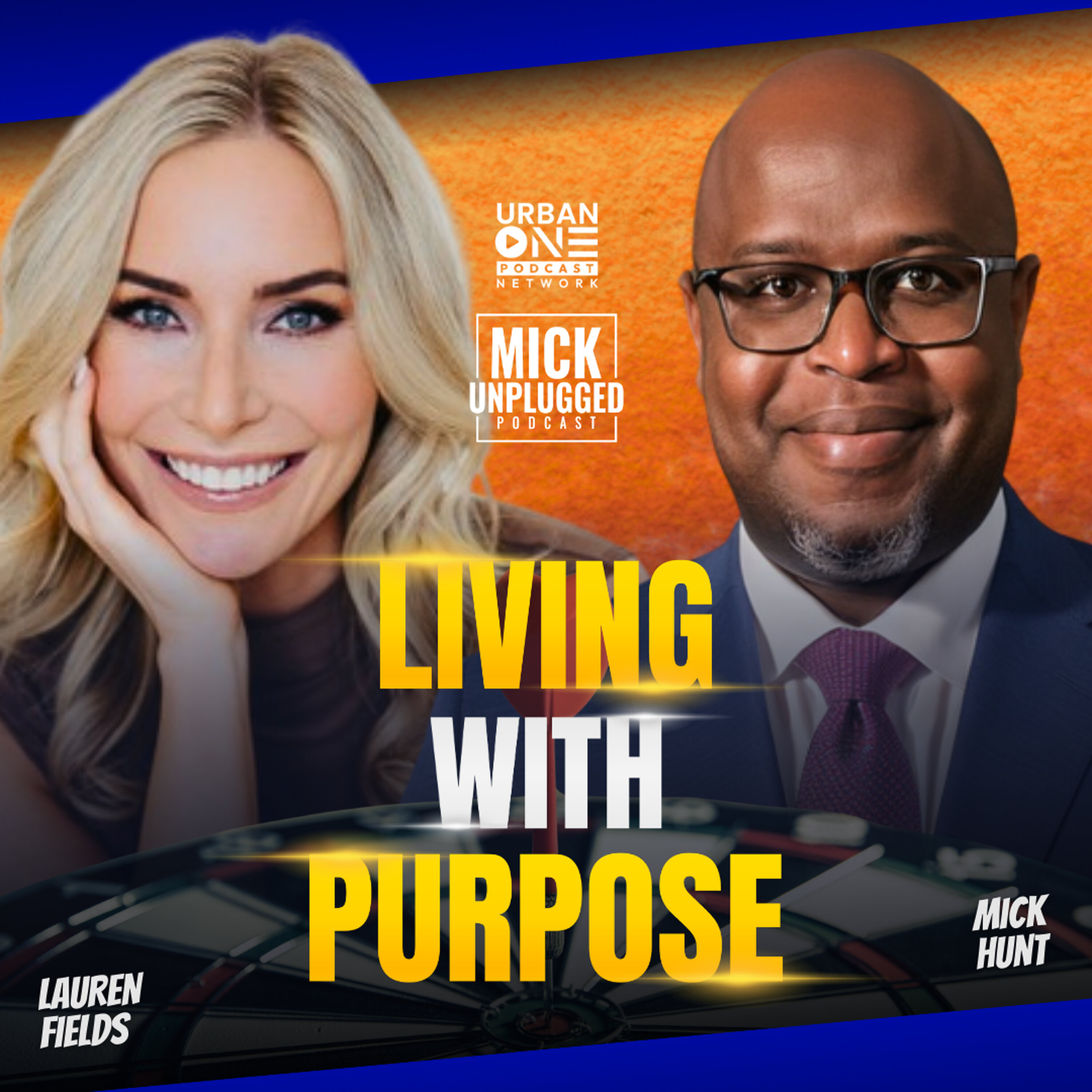
Loading summary
Transcript52 lines
- [00:00]
Lauren Fields
You know, it has been studied that we have up to 60 or 70,000 thoughts a day, up to 90% of which can be repetitive and up to 80% of which can be negative. And so often we're just letting these thoughts run on autopilot, thinking that that's just the norm.
- [00:19]
Mick
Welcome to Mick Unplugged, the number one podcast for self improvement, leadership, and relentless growth. No fluff, no filters, just hard hitting truths, unstoppable strategies, and the mindset shifts that separate the best from the rest. Ready to break limits? Let's go.
- [00:48]
Ladies and gentlemen, welcome to another exciting episode of MC Unplugged. And today we have a transformative force and personal growth and empowerment. As a life design strategist, she's guiding people to break free from limiting beliefs, to crack lives of purpose, and to unlock their full potential. Please join me in welcoming the inspiring, the strategic, the visionary, san Diego's finest, Ms. Lauren Fields. Lauren, how are you doing today, dear?
- [01:14]
Lauren Fields
Hi, Mick. I am fantastic. Thank you so much for having me.
- [01:18]
Mick
No, thank you for being here. I mean, I was honored to spend some time on your podcast and now we get to do it on mine. So I am definitely the honored one. Lauren.
- [01:27]
Lauren Fields
No, we do. We're turning the tables today.
- [01:29]
Mick
There it is. There it is. So now I get to ask you all the deep questions. So, you know, I introduced you as a life design strategist. There's about 2 million people listening there. Like, what's that? Yeah, talk me through what a life design strategist is.
- [01:44]
Lauren Fields
Sure. I help individuals design a life that they're excited to be living and help them become the person who is able to live and sustain that life. So it's really about living with intention and getting really clear on what is. What is it that I want my life to look like and how do I set it up to actually become what I desire it to be.
- [02:11]
Mick
That's amazing. That's amazing. And so hearing that from you, Lauren, you know, we talked a little bit on your podcast too, but on Mick Unplug, we talk about your because. Right? That thing that's deeper than your why, that true purpose.
- [02:24]
Lauren Fields
Purpose, yes.
- [02:25]
Mick
So for the world to know, like, I kind of know, but for the world to know, what does Lauren Fields because, like, what got you here?
- [02:32]
Lauren Fields
Okay, so we're gonna go deep, Mick and I, I actually sat with myself to really get clear on my why versus my because. And so for our listeners, you know, perhaps you listen to Mick a lot and you've gotten clear on what your because is for me, I had to separate the two. My why with being a life Designer is ultimately to help individuals unlock their full potential. And the reason my because is when I was younger, I was in a horse accident and was life. Flighted into a coma, woke up three days later with a traumatic brain injury. I almost lost my life in that moment. And this happened at a young age. I was 14 years old. And upon waking up, I really believed that I get a second chance at life and I'm going to make the most of it. And that life is so precious. And what I noticed is so many of us take it for granted. And so I want individuals to wake up and realize how precious each moment is, that life is a gift and let's really make the most. And to learn how, through my master's work in psychology, through my health and wellness coaching, life coaching, I've learned so much about the importance of living with intention. And so this all packaged in one is how I've created fields. Well, my personal coaching business, my podcast, and have found the name of life Designer.
- [03:50]
Mick
I love that. And you know, I'm a huge follower of yours. We actually connected initially on Instagram. Right. So the power of social media been a huge follower of yours for, for several months now. And you have a recurring theme of like, limiting beliefs. Right. And how to help people overcome that. And I have this, this acronym called bed. Right. So get rid of your bed, your beliefs, your excuses, and the decisions that hold you back. I love to talk to the expert. Right. To my friend Lauren.
- [04:21]
Lauren Fields
Yeah.
- [04:22]
Mick
On those limiting beliefs, like, how can people overcome them? Like when you start to get those triggers or signs, like, what are some of the steps that people should have or should make to overcome those limiting beliefs and self doubt.
- [04:34]
Lauren Fields
Sure. So I think the first step is becoming aware of your own thoughts. You know, it has been studied that we have up to 60 or 70,000 thoughts a day, up to 90% of which can be repetitive and up to 80% of which can be negative. And so often we're just letting these thoughts run on autopilot, thinking that that's just the norm. But when you start to do the work, when you start to meditate and become aware of your thought processes, when you start to check in with yourself and ask, why am I thinking these thoughts? Is this what I want to be thinking? And if not, what would I want to replace it with? Then you start to realize, wow, you know, why do I believe these things? Perhaps they're, you know, part of the identity I formed when I was A child based on the attachment bond I formed with my primary caregivers. And I've let this run on autopilot for the past 20, 30 years. I want to change that. And one of my favorite scientists, Dr. Joe Dispenza, will say, our personality creates our personal reality. So if we want to change our reality, we need to change our personality. And that start. That starts with becoming aware of your thought processes, how you're speaking to yourself. So again, that awareness and paying attention to what are the thoughts that I'm having. Perhaps you want to write them down. Perhaps you want to start to rewire them by doing some mirror work and speaking kind things to yourself. Pay attention to the words you're using and really just focus on the relationship you have with yourself.
- [06:00]
Mick
Yeah, I love that. You know, one of the things that I do is I start with positive affirmations every day. And a lot of people think that that's cliche. Right? But. But you just kind of solidified why I do it. Because we're going to get hit with negative thoughts, even subconsciously, right? Yeah, and so much so. And I love your take on this, because I had a psychologist come on early on and make unplugged. And it was enlightening for me because he said, mick, early on in life, from infancy, you're taught no. Right. Like, you're never told when you're doing something right. Your first instinct to know is when you're doing something wrong. Right. And so that is kind of embedded in us. So I love your take on that, too, because I think that actually is why we have not even limiting beliefs, but sometimes negative thoughts or the apprehensions that we have because our first words are no, a lot of times, yeah.
- [06:56]
Lauren Fields
And for our listeners, you're not alone. We're all going through this, and it takes work to rebuild your mindset. And this is important because our brain is a record of the past. And so if you want to move beyond your. So many of us are either regretting the past or anxious for the future. We need to live for our desired future and get really clear on what it is we want to create. Because these thoughts, these limiting beliefs, these negative thought patterns can really keep us stuck from attracting the future desired state that we yearn for.
- [07:27]
Mick
Yeah. Yeah. That's amazing. That's amazing. So for the listener, for the viewer, that is like, okay, I know I need to do something. And Lauren's given me, like, a good initial step. How do they keep the momentum going?
- [07:43]
Lauren Fields
I mean, again, it comes back to the daily Choices. I think it can sometimes feel overwhelming, like, oh, you can design my life. Like, that's a really big statement. Let's focus in on your daily living. Let's focus in on one day at a time and the choices you're making each day. Say you're saying you want success or you want to earn more money, however you're spending the nights out late at a bar, those are out of alignment. So really look in on what you do each day, and if that is what a person who. In your mind, you know, a person who is successful, fulfilled, would those be daily habits they would be employing in their lives? And if not, it's time to make a change in your life to ensure that the. The acts you're taking each day are in alignment with where you want to go.
- [08:34]
Mick
I love that. I love that. And so, again, you actually just hit on it a little bit there. But one of my favorite series of clips from you is you're talking about alignment and goals, right? And so you just were hitting on the alignment there. But I know it's the central theme of what you teach and what you walk through your clients with. So talk to the listeners and viewers about the importance of alignment and goals.
- [08:57]
Lauren Fields
Yeah. So, you know, Mick, we talked about this last week on the Fields well podcast. It's so important to set goals for yourself and to write them down. There's this statistic that shows we're 42% more likely to achieve our goals just by writing them down. And so it's so important to do that inner work and check in with yourself, like, what are my goals? And. And. And to get clear on what your goals are and to write them down. Because when you write down your goal, you can then break that goal into actionable steps and start working those steps and, you know, put it in your calendar. You have it written down. Put those steps in your calendar, and as soon as you start to take steps towards your goal, you'll start to feel this incredible momentum that'll make it easier to keep going. I think that sometimes that hardest part is taking the first step toward your goal, because it can feel so overwhelming. But once you start take that first step, it will all become easier. And so goals are so important because they keep us guided towards where we ultimately want to go.
- [09:58]
Mick
That's it. I totally believe that. You know, another thing I get a lot and you're the right person that I feel can answer this question is, you know, Mick, the world moves so fast now, right? Like, we've got AI in the Technology, space. We've got so many things going on, so societal. Right. Lauren, how do you help people slow down but still be intentional at the same time?
- [10:24]
Lauren Fields
I think there are different practices we can employ in our day like well, being related practices, mindfulness practices that really help you slow down. A couple that I really enjoy are having a gratitude practice. And so being thankful for everything that you have in life instead of rushing to try and get more appreciating what already exists for you. And so for me, at the end of every day I write down at least three things that happen that day that I'm grateful for. It keeps me, it keeps me aligned with that day as opposed to wishing for all these things maybe that aren't currently in my day to day life. So having a gratitude practice, being grateful for what's around you, I find then you'll have more to be grateful for. And other, another thing that I do is time away from technology really gives you more space and I believe freedom. So every night my phone's from 8pm to around 8am it's on airplane mode and it sleeps in the kitchen. And this space from technology has given me so much extra time each day and so then I can go into my evening routine which is, you know, dim lighting, warm shower, reading, journaling and it's just creating space from like all these external demands that enable you to slow down. And then I'm so much more productive the next day when I enter work mode because I've had this like self care time and well being time that I think is so important.
- [11:47]
Mick
I love that and I want to, I want to go deeper and what you just talked about as far as these are my words, disengaging from society a little bit or at least disengaging socially. Right. Because if we're being honest, most people when they're on their phones now, it's research, right. Like people think it's all you're on all the social platforms but social media has become the biggest research forum that there is. But you can't do it 24 7. Right. So talk to us about how we can set that up in our life where we can just kind of disengage and how important it is because I'm taking notes on this one.
- [12:24]
Lauren Fields
Yeah, I think it's almost creating non negotiable habits for yourself. So for example, I have here my aura ring which tracks my sleep every night because the more I learn, the more I realize how important our sleep is. So say you set, you, you make this non negotiable habit for yourself that you devote seven or eight hours every night to a good night's sleep. No matter what else happens in your day, in your life, that sleep needs to be number one, because again, you can't pour from an empty cup. Your well being is going to, is going to immerse itself in every other area of your life. And when you change inside, your reality is going to change outside. So you really need to prioritize taking care of yourself. So if sleep is a non negotiable habit, maybe you're, you also prioritize moving 30 minutes every day. Maybe you prioritize having, you know, a salad with protein for lunch. And these are these habits you start to build and stick to. And if you can stick to them for say, 30 days, they're much more likely to become a consistent habit because you'll start to see the changes. So many people, maybe they'll sit in meditation for two, three days and they're like, oh, I don't notice a huge difference in my life. I'm just gonna go on without it. It takes time to see the difference. But this is difference that is consistent and it's sustainable long term. And it really is what ultimately sets you up for success.
- [13:46]
Mick
That's amazing. That's amazing. So back to the life design, because that's a lot of what you do. I mean, not that it's a lot of what you do, but it's who you are. I'm gonna say that you kind of brought that, that name, that term to the forefront of giving a lot of popularity. So for the listener, the viewer, that's like, okay, I might be a little overwhelmed, I know I'm gonna do it. But what are the key components of life design? Just so that everybody's on the same page.
- [14:14]
Lauren Fields
Yeah, I think to start, it's what. When you come perhaps to a life designer or a life coach or a lifestyle manager, like when you come to someone to help you with your life, often you're realizing you want to improve your life or you want to make a change. So I think that's the first step is like acknowledging your. Why, like, why am I deciding to meet with a lifestyle manager? And then, okay, that's because you want to see a change in your life. So what is it that you want to see the change in and what do you want your life to look like and what do you want your life to feel like? And so often, Mick, people will desire and end result because of the state that they believe it's Going to make them feel when they get there. The more I learn regarding energy and quantum physics, the key is really to figuring out how we can have that individual feel that emotion now, because that will help them get it and be able to sustain it in the future, as opposed to saying, okay, once my life looks exactly like this, then I'll feel this way. How can we get you to feel this way now? Because then you're more likely to be aligned with the potential that already exists in the field of the life that you desire.
- [15:27]
Mick
That's amazing. And a lot of what you do, it's strategy and it's empathy. Right. So how do you. Using your word, how do you align both of those with your clients?
- [15:39]
Lauren Fields
It's so important. So to give even more background, when I was in my younger 20s, I was living in New York City, and I was a lifestyle manager. And so I was planning all these external realities for individuals. Okay, yes, I know the best restaurant to send you the best hotel gala, what have you. But then I was like, how are these individuals doing inside? Granted, much of this was my own internal turmoil from experience trauma when I was younger, never fully working through it. And this is when I started doing all the health and wellness coaching, yoga teacher training, life coaching, psych masters, all of it. And then I was like, okay, I do love the hospitality element and ensuring people have lives that are beautiful on the outside. But I think what's so important is how they feel about themselves on the inside. And I believe when individuals are given this space of love, compassion, care, understanding, that's so important. And to be able to hold that for clients in alignment with being someone with a background in business who can help them strategize on their lives and to give them shortcuts. Based on my experience in coaching, in psychology and combining. Combining the two has been really harmonious, and it's ultimately what I live for.
- [16:51]
Mick
That's great. That's great. What are some. Some common misconceptions that you see or that you have to help people overcome when they start this journey?
- [17:01]
Lauren Fields
Yeah, I think one of the biggest ones is the limiting beliefs or the story they're telling themselves about their past because they're holding onto it, and it's like they're dragging this. This baggage that no longer exists. Studies show that our memory of the past is only about 50% accurate. And so we're living by this story that's completely keeping us stuck. That maybe isn't even exactly what happened, but we're letting it define our lives, and we're almost like addicted to the story we're telling ourselves about the past and it's blocking us from attracting a brighter future. Say we want to feel free, say we want to feel successful, we want to feel love. But we're coming in with a limiting belief of like anger, resentment, jealousy, those aren't aligned. So it's getting really clear on what the client wants to feel, what they want to attract, and ensuring that their energy in this moment is aligned with that.
- [17:50]
Mick
Yeah, I dig that a lot. I dig that a lot. You know, earlier in the conversation you were talking about resiliency, right? How, how important is resiliency in fulfillment of life?
- [18:03]
Lauren Fields
I believe it's crucial because resiliency to me means being able to get back up after you fall. And so often individuals can get knocked down or they experience a perceived failure where something didn't go as they had planned and they never get back up. But I believe I talk in my TEDx talk, this space between falling and getting back up is the space of transformation. It's just as a butterfly, when a butterflies in the cocoon going through, going through metamorphosis, if you take it out too early, it won't be able to fly because it's still developing its wings. We all go through these struggles and in that opportunity of struggle, in that in between of falling and getting back up is our opportunity to rebuild and ultimately transform ourselves. So to have this belief that I'm resilient, I've made it through hard times, we all already have. Take acknowledgement and celebrate that. Because on the other side of that is a whole new, evolved, evolved and liberated version of you. And so to be resilient, I think in each moment the opportunity to be resilient transforms us into a more capable, a more well shaped version of ourselves who's capable of so much more. And so to celebrate being resilient and it just, it starts with believing in yourself and your ability to overcome adversity.
- [19:21]
Mick
Amazing. Amazing. So I like real life case studies and scenarios. Right. When we talk about life design, I know that you have plenty of case studies and so without naming names and maybe without giving the specific of the details, do you have a story that you could share of a client who came to you and then the work that you were able to do and what that output has looked like?
- [19:48]
Lauren Fields
Sure. I'll give you two examples. I mean for one, an individual and we can just speak vaguely. It doesn't have to be like a specific person because this is what I see often is come in With a lot of heavy emotions in the beginning and can't see a way forward, can't see a brighter future for themselves. But over time, over weeks of working together, they're excited to come in to talk about their life. And they're starting to implement tools that they learn in the sessions that help them approach life more mindful and enjoy the experience of being alive, understanding that that's going to be. Oftentimes life can be a roller coaster. Every day is not going to be rainbows and butterflies, but they're excited for the journey and they come in and they're like, okay, I was in this moment today where it was a difficult situation and I applied some of the tools that I learned and, and I realized like, what was in it for me to, to this. I believe life happens for you and not to you. So to switch kind of like from a victim mode to a creator of their lives, I've helped individuals go from really feeling stuck to setting out on ventures of creating their own businesses, helping clients just gain clarity of what it is they truly want in life. You know, so often we have all these desires, but what is it that you ultimately really want? And I think that such a big thing to get clear on is what is it that I want? Because until you're clear, the universe isn't going to be able to guess for you. And I believe we're always co creating with the universe. So when we can get clear, when we can live with intention, you can start to dance with the universe as you begin to pursue your desires.
- [21:30]
Mick
I love that, Lauren. I love that. So, you know, there are people, and I hate this term, but it's what people say now, right? There are people that feel stuck. I hate that word. There are people that feel stuck in a situation or sometimes even in a life that they feel like they didn't create intentionally, right? And they feel like they're stuck and they can't change the environment, they can't change the situation. What are some things that that person can do?
- [22:00]
Lauren Fields
I think a big thing is getting really clear on like, what's the problem? Identify what the problem is in your life. And then when you identify it, then I think there are multiple ways you can strategize to overcome that problem. But it's getting really clear because so often we're stuck in our own melodrama that we can't even like see beyond it. And so get really clear on what it is that's the problem. What is it that's keeping you stuck? Get really clear and then let's figure out how we can overcome it. Because I believe there are multiple ways or strategies we could start doing today that would improve the problem. But what I see often, Mick, is we're blaming everything outside of ourselves for how we're feeling. And we're waiting on everything outside of ourselves to change, for us to feel better.
- [22:46]
Mick
Yeah.
- [22:47]
Lauren Fields
And that's the reverse. You, as soon as you start taking care of yourself, as soon as you go inward, as soon as you start changing everything around, you will start to change.
- [22:56]
Mick
Totally agree. Totally agree. Lauren, you dropped so much knowledge, so much wisdom here. Where can people find and follow you?
- [23:05]
Lauren Fields
I am most active on my social media, which is my name, Lauren Fields. You can Visit my website, fieldswell.com, you can listen to the Fields well podcast, and soon you'll be able to visit me in person at my wellness sanctuary in San Diego, also called Fields well, which opens in a few weeks.
- [23:25]
Mick
Ooh, let's talk about that really quick. Sanctuary. Let's go.
- [23:29]
Lauren Fields
Let's go mix. So I asked myself this question. We can go to Equinox to work out our bodies. We can go to sweetgreen to eat a salad and nourish ourselves. But where can we go to work on our mindset? And why isn't that something that is prioritized, celebrated to work on? You know, when you. It's not often people celebrate going to therapy. I think we're becoming more open to it. But I saw this gap in the market, and I thought, I want to create a sanctuary where individuals can come to work on their mindset. And that is what I have been focused on building out with Field Dwell. You know, different things from guided meditation, light therapy, sound healing, interwoven with my personal coaching and life design is what individuals can get excited to experience at our sanctuary.
- [24:23]
Mick
Love it. So another question I have, because I don't want to end this one without asking this light therapy. So I just. I just got in with beacon 40 lights, right? And so for the first time, I'm doing light therapy. How important. Talk to us about light therapy. What does it do? How should people be using it? What are the benefits? All that jazz.
- [24:50]
Lauren Fields
So I have been big on light therapy for a long time. When I was in my younger 20s, working, you know, as an executive assistant for a CEO in New York City, like, maxed out. I had and, like, hormonally had acne. Like, some acne on my chin, which often is hormonal. And so I started at that point going in for blue light Therapy, and that helps kill bacteria in your skin. Then I started doing red light therapy, which helps calm the skin and reduce inflammation and it builds collagen in your skin. And so now there's this. Everyone's doing light therapy. It's so good for your skin. And beyond that, I mean, some of the factors they say it can even help with anxiety and depression. I am a big every morning when I do my meditation, it is with a red light therapy. So I'm doing my meditation, sitting in that have the red light on, doing my affirmations, my visualizations. And so beyond making your skin super glowy, less inflamed, killing bacteria, I think we may need to bring a professional to say even more about it. But I'm just a big believer in it and what it really does. It really relaxes me because it's this warm light on my face and I just feel like really calm in that moment and able to be in a more creative zone.
- [26:05]
Mick
Amazing, Lauren. Thank you for that. I needed to hear a little bit more about that for sure. Like all the wisdom and tips that you have, like if you could leave the listeners and viewers with one more tip, what would it be?
- [26:16]
Lauren Fields
Okay, Well, I want to, I thought of like, I always like ending with a quote. And so we're going to bring in one from Theodore Roosevelt. And the quote is, if you believe that you can, you're already halfway there. So for our listeners, start believing in yourself.
- [26:32]
Mick
Amazing, Lauren, thank you so much for spending time with us today. Appreciate you more than you know for everybody. Make sure you're following Lauren and don't just follow, but engage because Lauren engages back. And like, that's the fun of what we do is the engagement with our followers and our fans. So definitely make sure you engage with Lauren.
- [26:52]
Lauren Fields
Can't wait to connect. Thank you so much, Mick, for having me.
- [26:55]
Mick
You got it. For all the viewers and listeners, remember your because is your superpower. Go unleash it.
- [27:04]
Thanks for tuning in to this episode of Mick Unplugged. If today hits you hard, then imagine what's next. Be sure to subscribe, rate and share this with someone who needs it. And most of all, make a plan and take action because the next level is already working. Waiting for you. Have a question or insight to share. Send us an email to hello at nickunplugged. Com. Until next time, ask yourself how you can step up.