← Mick Unplugged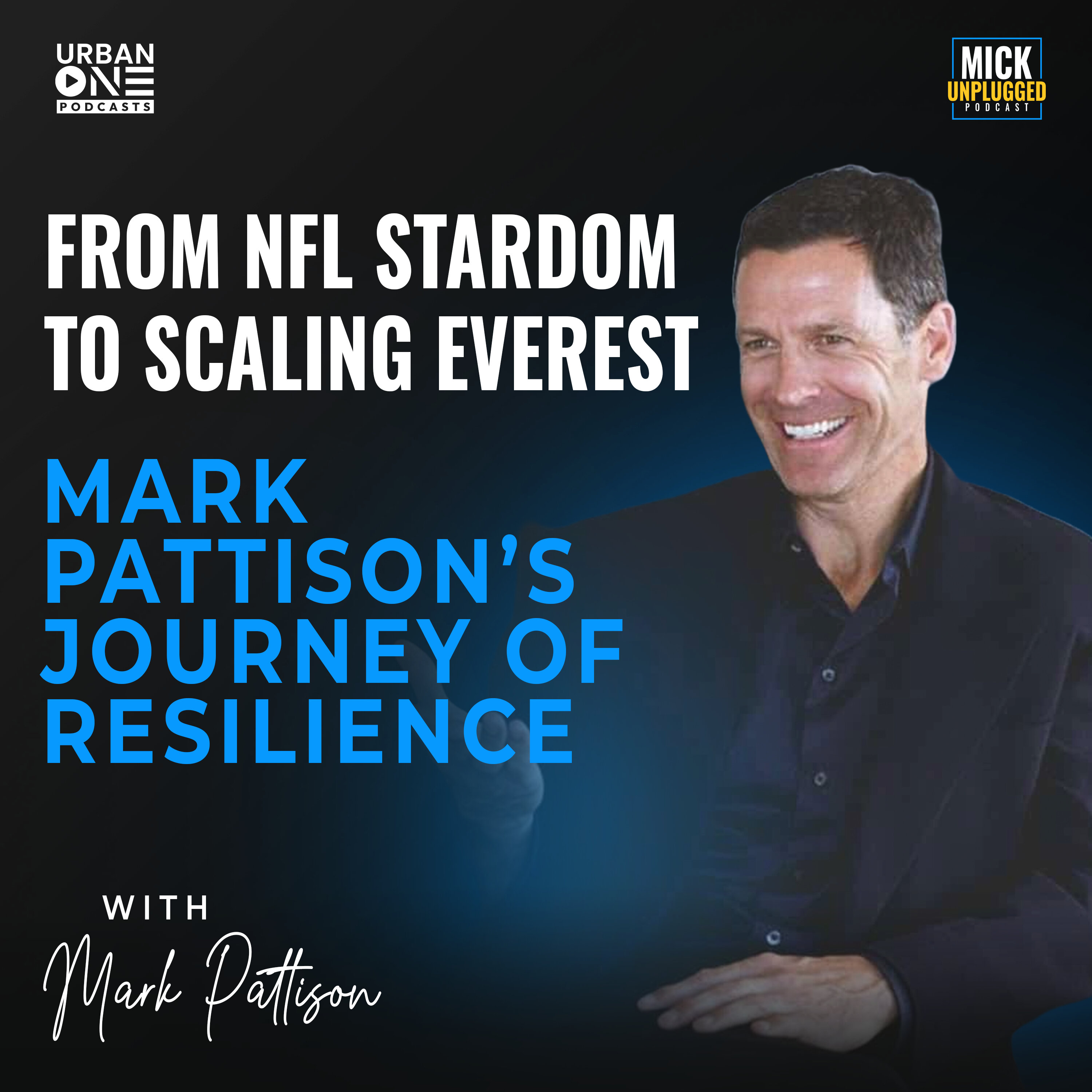
Mick Unplugged
Mark Pattison | From NFL Stardom to scaling Everest: Mark Pattison's Journey of Resilience
00:28:47
Loading summary
Transcript30 lines
- [00:00]
A
It's really through having a daughter of all things. For whatever reasons, you know, the gods decided to, I would say in some way bless her with epilepsy. It pulled me in to really see what I could do, not only for her, but for others as a parent.
- [00:16]
B
I think that was your because. Right. Because she didn't choose the health struggles. Right. But how did you make her feel like you're a normal child?
- [00:25]
A
Just trying to probably, if anything, that one of the gifts that she gave me or is the gift of patience. We're going to come and every day is a new opportunity to get better.
- [00:33]
B
When I first got introduced to you, I said, mark must be some special kind of crazy. And I said that because, you know, I get doing one summit. How did you mentally and physically prepare for these summits, brother?
- [00:47]
A
I think it's like a lot of times you don't go from, you know, little league to the NFL in one jump. What the commonality for me has been is the love of the game. Right. I love the process. John Wooden calls it at the very tippy top, calls it competitive greatness.
- [01:09]
B
Welcome to Mick Unplugged, where we ignite potential and fuel purpose. Get ready for raw insights, bold moves and game changing conversations. Buckle up. Here's Mick. Ladies and gentlemen, welcome to another exciting episode of Mick Unplugged. And today our guest is a former NFL player, entrepreneur, podcaster and mountaineer who has scaled not only the heights of professional sports, but also literally the peaks of the world's tallest mountains. After completing the seven summits, including Mount Everest, he's become a beacon of resilience and determination. He's channeled these experiences into helping others conquer their own mountains, both metaphorically and and physically. He's raised over $150,000 for causes close to his heart, including epilepsy research for his daughter Amelia. Please join me in welcoming the resilient, the determined, the visionary, my man, Mr. Mark Patterson. Mark, how you doing today, brother?
- [02:09]
A
I'm doing great, man. You know what, I appreciate that intro and that opening so much, you know, and we'll get into this, but I get so focused on what I do and I'm very goal oriented. I don't spend much time, if any, thinking about what I did 40 years ago, like, who cares really? But a lot of people do. I don't. And so it's weird because I'm so goal oriented. I just finished, completed another goal a couple days ago in Switzerland and climbed a big scary mountain called the Eiger. And famous picture was was filmed There many years ago with Clint Eastwood called the Eiger sanction. But, you know, when I hear things like that and you're seeing these things, I'm saying to myself, is he talking about me? Right? Because I don't. I don't live in that. Right. I live in everything going forward.
- [02:58]
B
Yeah, man. You know, I was selling you offline. Huge fan of you. But what I didn't tell you and what I haven't told you, and I wanted to wait for this moment, man, is that I'm a huge fan of the human being that you are. I'm a big believer in humans helping humans, humans inspiring humans. And I believe that that's what we were put on earth to do. And so I just wanted to tell you virtually face to face that I just appreciate the person that you are above any accolades and any accomplishments. And I wanted you to know that from my heart.
- [03:31]
A
No, I appreciate that. And just a quick comment. You know, I don't think, you know, we all evolve as people, right? And I don't think I woke up, you know, from when I was a little kid and I was like, I'm going to go try to help the world. And then many times what happens is when you have a personal experience when you're afflicted in some way and it pulls you into this. And in my case, my daughter Amelia, who had epilepsy for 20 plus years, she's 25 now. We discovered this when she was six years old. So maybe just 19 or 20 years. But I mean, it was a battle. I mean, if you could imagine having seizures every single day for 20 years, every day, and if she had 10 seizures, that was a win. Right? And today she's living in New York and she's doing great things and she went to University of Arizona and she was. So anyways, it's really through having a daughter, of all things, with what she. For whatever reasons, you know, the gods decided to, I would say, in some way, bless her with epilepsy. It pulled me in to really see what I could do, not only for her, but for others.
- [04:38]
B
Man, I love that. And, you know, I was going to talk about Amelia, and I think this is the perfect segue because you've mentioned that fatherhood and your daughter's, I'll say, health struggles. Right. But that has greatly impacted your journey. And on Make Unplugged, we believe in being fueled by your because. Right. That deeper reason than your why. It's your because that really catapults you forward. I'd love to hear how you're. Because with providing Amelia, with what I'm gonna use as air quotes, some normalcy in life and how that was really important. But more importantly, this is me on the outside looking in. Like, as a parent, I think that was your. Because. Right. Because she didn't choose the health struggles. Right. But how did you make her feel like, number one, you're a normal child. Number two, you're loved. And that we are going to be there with you through that? Because that's something that most parents don't go through. Man. So much respect to you for that.
- [05:43]
A
Yeah, well, there's a lot of layers in there, and there's a lot to unpack. And I'll try to do it in a very short, succinct way. You know, I think that it kind of came in waves. So there was this, you know, she's. I'm married at the time, and I've got another older daughter, and they're younger. So the other. My oldest daughter is two years older than my younger daughter, Amelia. Right. And so, you know, when. When you first learn of this, we're not sure if she has a brain tumor. You know, you're going through all these things and then you're trying to follow all the solutions and taking her to all the doctors and, you know, wading through all the different kinds of medications and trying to manage it the best you can. And that goes on for years and constantly trying to work on this and how we get over and around and through it for her to help her through that. And there's a lot of trials and tribulations and a lot of emotions, especially with girls, you know, and just trying to probably, if anything, that one of the gifts that she gave me is the gift of patience, right through all that of like, you know, just gotta be patient. We're going to come. And every day is a new opportunity to get better. Maybe today's the day that it all happens. And then kind of fast forwarding the clock 10 years later, then I find myself in this very difficult situation where the gal that I had known for 30 years no longer wants to be married to me. Right. And it's always two people's fault. I'm not throwing her under the bus by any means, and we're on good terms today, but it was just the moment. And, you know, wherever we came at that point in time in life, she didn't want to continue that journey. And so now I had to go. So switching subjects just a little bit. So now I'm. I'm in a tough spot. I'm trying to, like, figure out how I'm going to get myself out of this hole. And so I go back to what I was always good at, which is sports. I knew I couldn't go back and play in the NFL, obviously. And so I said, I'm going to throw out a big, huge, gigantic goal. Like something so massive, they call it a b. Big, hairy, audacious goal. And there I am, thumbs up. And so I decided that I wanted to become the first NFL player to climb the seven Summits. So off I went on this journey. The seven summits, of course, of the seven highest peaks on each continent, we have seven continents. So the highest peak on each. So off I went down to Africa. I climbed Mount Kilimanjaro, and then next I was in Russia. And so as I was going through this, I was kind of evolving through this divorce that I found myself in. All of a sudden, I'm a single guy, and, like, I didn't sign up for that. And so on about my fourth mountain, I started to get some attention from the NFL. The NFL was kind of in this. They were in this place, in this moment in time, where what they want to do is bring some good stories to NFL guys, right? And there have been so many negative stories, and we. Seems like we hear about them every year. The guy gets drunk, he's a star player on the XYZ team, and crashes and kills somebody. You know, it's awful. So they want to start spreading some good news. So we went up to Mount Rainier, which is located in Washington, and we. I climbed up half the mountain, and a crew from the NFL came. And what started to happen is I could see this. This light that was starting to shine on me. And I took a time out, and I said, you know, what a great opportunity to reshine that light on a good cause that, you know, I've already had my 15 minutes of fame right, way back when, and now I'm 50 years old, so, like, I don't need that attention. Doesn't drive me. But what a great opportunity if we can figure out a way to, like, reposition this so that it's coming off me, just really bouncing off me, but being deflected onto my daughter and others who suffer for this. So I reached out to the. The National Epilepsy foundation, and we started to work together. And then that kind of evolved to an organization here in Sun Valley, Idaho, called Higher Ground. So it was kind of a pun on words just a little bit as well. As a great organization for people who have a lot of difficulty and are looking. They find by raising money and bringing them into Sun Valley, by doing physical activities, it gives them more confidence because that's when you have a disability. So many of these people, you know, feel like they don't have the confidence to go out and do things and compete with other people. So we started to do this. And so we decided to start a campaign called Amelia's Everest. And through Amelia's Everest, then I was holding fundraisers. The NFL did ultimately make a movie on my journey on Mount Everest. And the more that they got in, this was interesting. It was only supposed to be like five to seven minutes on NFL networks. And they came here and they just discovered this deep story between myself and my daughter and what I had done to raise all this money in this past journey that I'd been on, that they ultimately turned it into a full length documentary, which is 30 minutes. And you know, the next year we ended up winning an Emmy for best picture. And it was insane, right? And I was just like, how did this all happen? And the beauty is that as we were rolling this thing out in theaters, we turned that into a fundraising event. So the NFL bypassed all the money and every ticket sold, which we sold out every place we went, every ticket sold, 100% of that revenue went to these charities that I was raising money for. So anyways, it just kind of all came in full circle where I was a wounded bird a little bit, turned into an opportunity to go climb, you know, a bunch of big mountains around the world, which then NFL, you know, all of a sudden, somehow another my NFL career becomes relevant to then turn around and help out my daughter and others. And so that's the thing I'm most proud of.
- [11:05]
B
Yeah, man, I love that. And I know you're very humbled by a lot of that as well too, because you're doing help with epilepsy research. You're also doing help with veterans, man, which I also do with my time. What are some of the things that Mark's doing to help and fundraise for veterans?
- [11:23]
A
Well, I mean, as of recently, I was down in Costa Rica this last January shooting a documentary on a place called Rythmia. And I was down there with some Navy Seals Seal Team 6. And it's a plant based product they call ayahuasca. Right. And so it's a natural therapy to help people with traumas. And clearly when I'm down there with these badass Davy Seals, I can't even begin to imagine what they've been through of, you know, bullets flying over the top. And, you know, today we're seeing these tunnels, you know, in Gaza, and where they're like. They were telling the Israeli soldiers, like, go down these tunnels, and you don't know what's going around the corner. And, you know, I'm talking about both sides, right? So anyways, I was blessed to be asked to be part of this documentary and really the narrator of it, film it, talk to these guys every single day. What are your experiences? How is this helping you through some of the trauma? When you're in Fallujah in Iraq, you've got, you know, bombs and bullets and all kinds of stuff going on and, like, insane. Four years ago, I was invited by Chris Long, Howie Long son who played in the NFL for 10 years. And he started this project, which was really cool, called Waterboys. And the whole idea around that was to raise money for the people originally in Tanzania, then they've gone beyond that in East Africa to bring water wells into these different villages. So I was able to go down. I was raised money. I was able to go down with Chris and a bunch of veterans, guys who'd have their legs blown off that were blind because, you know, grenades flew off face. We. We raised a bunch of money. So it was kind of a twofer helping these veterans get up the mountain. Mount Kilimanjaro, second time I'd done it, while at the same time raising money enough to build a well to go into these villages. And I actually got to go visit these villages and these people. And, like, all they did, all we did is, you know, put a well in the water, and they turned on the spigot for the water to come out clean water, so these girls didn't have to walk six miles and get raped and get eaten by lions and stuff. And when they turn on the spigot, you would have thought they just won the Super Bowl. I mean, it was a game changer, right? And again, for me, my journey that I've been on, really tapping that empathy card and that compassion card and what it is to help others and be in other people's shoes when they don't have the same privileges that I have been able to have. Right. Anyways, there's been some different through. Even though my daughter started 6 years old 20 years ago, she started there because I stepped into the fear, which is climbing the seven summits. What I thought was just all about that turned into something completely different. And that's been kind of the blessing yeah.
- [14:06]
B
And so now going to these seven summits, it's not an easy feat. And you know, Mark, when I first got introduced to you, I said, mark must be some special kind of crazy. And I said that because I get doing one summit, I get that. But then it's like, yeah, I'm going to do this six more times. That's a special kind of crazy, right? That's a special crazy. But here's the cool part, is it comes with more challenges than people probably understanding. And for you in particular, you had snow blindness. And I'd love for you to explain what that is for people that don't know. And then you also had to deal with COVID outbreak. How did you mentally and physically prepare for these summits, brother?
- [14:54]
A
Well, I mean, I think it's like a lot of times, you know, you don't go from, you know, Little League to the NFL in one jump, right? And so there's this progression over time. And I think what the commonality for me has been is the love of the game, right? I love the process. John Wooden cults at the very tippy top calls, calls it competitive greatness, right? Competitive greatness isn't necessarily about Michael Jordan winning six or seven, you know, NBA rings. What it's about is that he loved the process, that he'd be there at 2:00 in the morning. Kobe Bryant had that. I just got done a week ago climbing the Eiger. The Eiger is straight up. It's an insane mountain. I mean, it would have like. Like just looking at this thing, I was like, I don't even know how to climb this thing. It's rock straight up. The year before that I did the Matterhorn. Year before that, I did Mount Blanc in Europe. And so you gotta love the process. You gotta love the process. So when you start talking about, you know, some of these experiences I've had, stepping over dead bodies, people getting high altitude, mountain sickness, literally being carried off, flown off in helicopters, people losing their fingers, their toes, their nose, and how to cope with that. You learn over time by paying attention, really understanding the game, and really understanding what you need to do to really manage yourself. Just like if you're playing in a football game and it's super hot, it's the beginning of the season and you got to stay hydrated so you don't get dehydrated and you end up on the sideline. So when you're talking about and asking the question about snow blindness, this happened on Mount Everest. And one thing a lot of people don't really understand about Mount Everest. You don't fly over into Nepal and go up in a week later, after you've climbed it, you're coming back to the United States. You're living at 17,500ft for two months on snow and rocks. You're eating awful food. I lost 35 pounds. I'm not a guy who's 35 pounds to lose. And as you're going up and you're going down, you're going up a little bit further and climbing through the Kumba icefall. And you're experiencing all these different things. It's an insane. You can never mimic that exact same experience without going to those types of extremes, right? Which I'd gone lower mountains and extreme mountains, but this was a whole different level. And so on summit day, two months later, when we were finally ready to go, I'm up at 26,500ft. And when I had gotten up in the morning, it was kind of a big mad scramble. And there was about a 50 mile per hour wind with these little small snow pellets where near at 26,000ft, they're frozen, so they just ripped right across my left eye, ripped my face apart, and I couldn't see. Snow blind list typically last 24 to 48 hours, which is what happened to me. And so now I've got to go climb. This is my, like game day. I've been prepping, prepping, prepping for two years because this was in 2021. In 2020, of course, is when Covid happened, right? So I was supposed to go, then it got pushed out. So then now I've now training for two years for the second. So finally it's game time. We're ready to go. And so up I start the south slope and I can't see. I hadn't eaten in days because we've been in a cyclone. And a lower camp at 23,500ft, you know, sitting at 10, that was 45 degrees slant across the mountain, you could not move. It was awful. And so now I have no energy. I can't see. And so now coming full circle, as I kept going 10ft, kept saying, go another 10ft. Just get to another 10ft. Go another 10ft. And what I kept going for, especially when I got to the top and I was looking around as the last guy on the top of the mountain, looking around, my Sherpa had taken off. I had run out of oxygen. I'm looking around, I'm going, where did everybody go? And the only End how am I going to get off this mountain, right? So now you got to dig, dig, dig, dig, dig deep, right? Which I had to do. And now coming full circle back to my daughters. I knew that my daughters depend on me. Like, you know, they just depend on me a lot. I didn't know like to what extent. It's like whatever maximum gigantic wave, Mount Everest of, you know, dependability that they depend on me to be around and take care of them and give them advice and everything else I do for them, you know, I need to be there for them. Right? So the motivation and the drive and just the inner of don't give up, don't lay back, don't go to sleep, because I will not get back up. I will not make it back down. And when I'm the last guy on Mount Everest looking around and I'm trying to figure out how in the hell I'm going to get off this thing. You need something that they like, a higher cause to help give you that inner strength that you don't really know. You don't even know that you have. All ten toes were on that cliff. All ten toes were right on the edge of just like this is it. And I was supposed to go back down, climb back in my tent for four hours and then go up the other side. It's like a saddle. Go up the other side and climb a mountain called Loti, which is the fourth highest mountain in the world. And I was looking at this like if I even think about that or attempt that, I'm a dead man. I know that for sure. And I got like a 50, 50 chance even right now trying to get off 29,032ft down to 26,500ft. That was my whole goal. And it took me 18 hours or something. I mean, I was up there forever.
- [20:17]
B
I'm envious of people like you. Envious because you have the courage to do it. I'm very courageous. Right. And I have a very strong work ethic. And there's not much that I won't do except the seven summits. Can't do it, brother.
- [20:31]
A
You do have to have an internal drive to go do those things. And I've always loved climb mountains and you know, I live in a mountain town now. But there's also another component with all this which is just when you're faced, like the question is, would I ever run into a burning building? Well, as you and I are sitting here right now in a nice, nice comfortable offices, I don't know, I doubt it. But if your life is on the line or your daughter is in there, you'd blow your mind.
- [20:56]
B
Don't think about it.
- [20:57]
A
Right. You don't even think twice about it. And that's where I was. But rather than have, like, me and you up there, like, encouraging me and everything else, keep going. I was one man show. Right. Like, I got to figure out how I'm going to make this work. And it was scary. You know, it was scary when you're at that. That point.
- [21:16]
B
Yeah. You know, Mark, you're a fellow podcaster, and I tell people this, and they've heard me say this on some of my previous podcasts. I don't listen to a lot of podcasts just because I like to keep everything that I do very pure. Right. Like, if Mark's a guest on another show, I don't want to ask the same questions purposely. But Mark Patterson and finding your Summit, one of the few podcasts I listen to because you talk a lot about overcoming adversity. You have a lot of guests that come on and you guys talk about those things, and you give a lot of tips and inspiration to listeners, which is what I love to do here, too. What's one of your favorite stories from a guest that you don't mind sharing here?
- [22:02]
A
I've had a lot of them, and I've had a lot of famous people on with a lot of. A lot of notoriety. You know, Peter Cetera, he was over to my house. He's a friend. He was a lead singer for Chicago for a zillion years and had all the big hits. And, you know, just listening to. After they had been a band for a long time, and when there was this split that happened back in the 80s and how kind of painful that was when they had served him a piece of paper, like the guys kicking him out of the van, and of course, he went on that monster, you know, success.
- [22:34]
B
Absolutely.
- [22:35]
A
And just. But it serves emotional, you know, pain point for him when you start talking about finding your summit. Everybody has a summit. It's not. It's a metaphorical summit, not an actual summit. And so we all, whether it was divorce or disease or something. Another person I had, and I've had it on a couple times, she's wonderful. Meryl Hemingway. So she's the granddaughter of Ernest Hemingway. And so she's had seven suicides in her family. So listening to her on how she can, like, stay clear of the whole mental health, you know, issue of, you know, is the best thing I can possibly do to check out is, you know, blow my brains out like Ernest did Not, by the way, about a mile away from here. And so, you know, it's stories like that Tom Arnold, you know, he's been in all these films with Arnold Schwarzenegger and others. You know, he's had a lot of struggle with drugs and alcohol. Right. And having to go through that. And when you're making, you know, gobs of money and it's all coming up and you're on the, you know, the Tom and I can't remember that, the Gal show a long time ago, but, you know, they're on those types of shows and they're making that kind of money and there's all this excess. You have to be very disciplined about how you want to live your life. Like, what is. Like you said this in the very beginning of the interview. You know, what is your higher calling? And when your higher calling is all about just, you know, your own personal pleasure, you know, that always has some cliff that you're going to go off. And so just listening to these stories and learning from them and really how they overcame those things. Right? Finding your summit, you know, really finding your summit while going through the adversity to actually get there and lessons learned along the way.
- [24:19]
B
Yeah. That's awesome, brother. That's awesome. You know, I know you're a very busy human being. You have a lot of things going on, and I'm gracious that you took some time with us today. What are some cool things that Mark Patterson has going on?
- [24:33]
A
God. Well, if you're ready for this. So I came off the mountain every year I set a new goal for another mountain since Everest. And, you know, right after that, I went down to Ecuador and climbed a mountain called Cotopaxi. I've been known Jackson Hole climbing mountain called the Grand Teton, which is pretty scary in Zermatt, which is in Switzerland for the Matterhorn in Chamonix. So we've mentioned some of those mountains. So I'm already training. I train three hours a day, and after this interview, I'm going to go out and climb another mountain. And I right now have my sights on climbing a mountain down in South Pacific in Papua New guinea called Carson's Pyramid. So I'm jacked up about that. So that's one thing. Number two is I am an executive. I run Sports Illustrated. So we had kind of a bumpy ride there for a while, and we changed media companies, meaning the parent company. So we've balanced that back out and there's a lot of people have to manage and making sure that we get the right kind of stories out the door every single day as a full network. And so that's kind of like, you know, that's how I monetize my life. Unfortunately, I didn't play football at the time where, you know, you play five years like I did. And that equates to, okay, you're set for life. And it's almost a blessing because I love chasing it down. I love going after the next thing. Right. And we talked about that earlier. And just knowing that there's new goals, new challenges, new things I can do, ways I can get better, you know, continue to podcast, continue to fundraise out there. And so, anyway, there's a lot of things I'd love to improve my golf game, too. Yeah, the one thing, I live in a ski town, so half the year years got snow on the ground, so that doesn't always help out. But, you know, it's being that and being the best dad I possibly can of my daughters, you know, continuing to do that.
- [26:24]
B
And you set an amazing example in that, Mark. And again, that's another thing that I wanted to tell you personally, too, because you're very public and transparent about some of the things that you do, and that allows fathers like me to have a resource to continue to be better father. So I wanted to thank you for that, too, brother.
- [26:44]
A
Yeah, no, I love what you're doing, man. And blessed that you wanted me to come on your show and share my story. And, you know, we all have our own journey, and this has been mine. And I never thought in a million years I'd be living where I live and I'd be climbing these crazy mountains that was never, ever on any kind of map, you know, fundraising and daughter with epilepsy and. And all these things. It's just amazing when you step into things that maybe you're a little scared of, you know, the blessings and amazing things that can come around it. Through climbing these mountains around the world. I've literally been on every continent. I get to see the world. I just got back from Italy. I just got back from Switzerland. You know, it's just a great way to just get educated, not only on life, on people and what they're up to and how you can contribute in a really positive way.
- [27:33]
B
Amazing, brother. And again, Mark Sumble. So he's not going to say this, but also one of the best speakers out there in the world today, too, is Mark Patterson. So if it's someone that you're looking to bring in, whether it's a corporate event, motivational event. Mark brings it. I mean, you know, I told you, he's. He's a little somewhat crazy if he can do these summits. But when he comes on stage, he brings the fire in the fashion. So I'll make sure, Mark, that we have links to everything in the show, notes in the description on YouTube as well, too, so that everyone can find you and follow you. And again, Mark, brother, I just appreciate you for blessing us with some time today.
- [28:13]
A
Thank you so much, man. I really enjoyed this. This is a surprise. I didn't know what I was in for here exactly, but it's always great to walk away like, you know what? That's a good dude. So listen to this guy. You got a lot of good stuff going on.
- [28:25]
B
I appreciate you, brother. And for all the listeners and viewers, remember your because is your superpower. Go unleash it. Thank you for tuning in to make Unplugged. Keep pushing your limits, embracing your purpose, and chasing greatness. Until next time, stay unstoppable.