← Mick Unplugged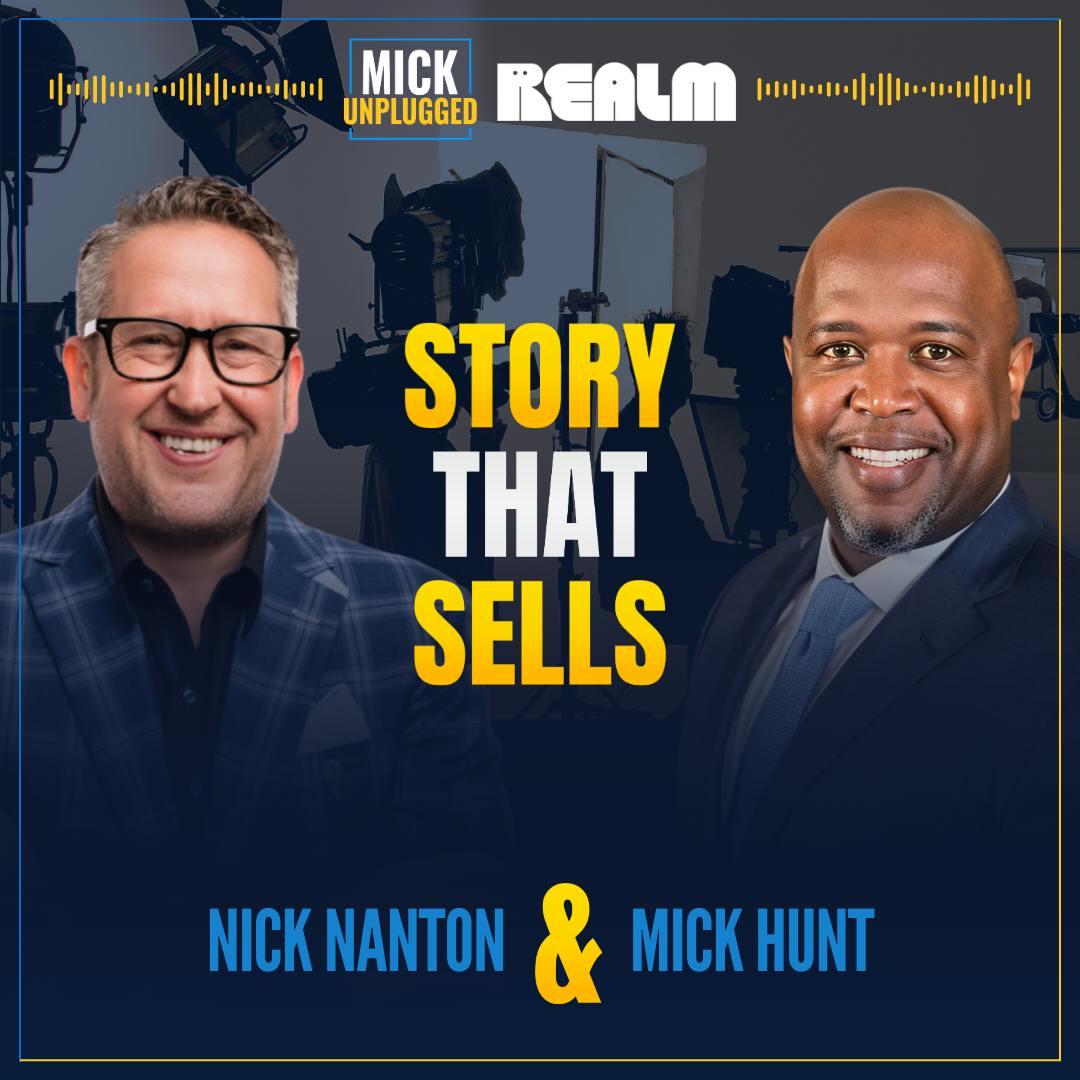
Loading summary
Transcript64 lines
- [00:01]
Nick Nanton
I have to work out. Like, I have to get my energy out so I can be a normal human. And like I do my best thinking or my best, like I listen to audiobooks, if I'm not running with a friend, I run five miles a day or three and then I lift. But if I'm not with a friend, I listen to audiobooks or podcasts at 2x because that's. But I'm like, I'm getting all the nervous energy out and I'm actually able to focus and think and all that.
- [00:23]
Podcast Host (Mick Unplugged Intro/Outro)
Welcome to Mick Unplugged, the number one podcast for self improvement, leadership and relentless growth. No fluff, no filters, just hard hitting truths, unstoppable strategies and the mindset shifts that separate the best from the rest. Ready to break limits? Let's go.
- [00:48]
Mick (Podcast Host)
Ladies and gentlemen, welcome to another exciting episode of Mick Unplugged. And today I have a story of connection. He is the mastermind behind Impact branding. He is the go to storyteller for legends. And he is also a 22 time Emmy Award winning director who's turned ordinary lives into extraordinary legacies. From boardrooms to backstages to bourbon, he's built empires through narrative. Please join me in welcoming the bold, the brilliant, the boundary breaking My guy, Mr. Nick Manton. Nick, how you doing today, brother?
- [01:21]
Nick Nanton
Oh man, I hope I can live up to all that, man. I'm doing great. It's good to see you, man. I'm excited to chat with you today, dude.
- [01:27]
Mick (Podcast Host)
I am the excited one and I think we just need to tell the story of how we connected, man. Like most outrageous connection possible. We're on an early bird, 5:30 in the morning from Vegas to Dallas, Texas flight. There's weather in Dallas, so we get rerouted to Austin, Texas. But what the people don't know is this. I sit down in my seat, Nick sits next to me and puts on his eye shades or the eye blinders and passes out. So there's no conversation. Nick wakes up and I have to inform him, abraham, we're not going to be in Dallas. We're going to Austin.
- [02:07]
Nick Nanton
I remember. Yeah, because I like, I'm like a narcolept on planes. I can't stay awake. And so I remember hearing like, please put your seats up. And I'm like, okay, I'll do that. And then we're landing in Austin. I remember turning to you like, is that for. Is that a joke? Is that one of those like, welcome to Jamaica, New York that they usually do, right? I'm like, is that a joke? Because we're supposed to be going down. No, no, no. There's, like, weather. I'm like, oh, all right. And I was like, well, that sort of sucks, but okay. And then we hit the tarmac, and for way longer than any of us expected.
- [02:36]
Mick (Podcast Host)
Yeah. Three hours sitting there. But I didn't know I'd find my future best friend, man. Like, we had some amazing conversations, realized we had some folks in similar circles, and literally got to know each other, man. And so the power of connection, the power of conversation, but I think more importantly, just the power of networking. Because had we not talked about our mutual circles, it probably would have been like, hey, I'm Mick. Hey, I'm Nick. Nice to meet you. And move forward.
- [03:03]
Nick Nanton
Right, Absolutely. Well, and that is, you know, my whole thing is, like, I. Well, like I said, I just fall asleep on planes. But I also, you know, what I don't like about certain settings is I'm not ever looking for a shallow conversation. Right. I'm looking for deep connections. And usually, you know, I value the people beside me. They're working or they're sleeping or they're doing their thing. So I typically, like, I have great relationships in my life, but I typically don't say more than hello goodbye to the person next to me on an airplane flight just because, you know, that's. I don't need to. I don't need to do more than that. Right. And. And let them do their thing. But it was funny because I remember when you informed me of this and we decided that there wasn't a whole lot more to do because they also rerouted another 300 planes into. Into Austin. Into Dallas. Into Austin. Sorry. And so no one, like, people were losing their minds, right? Yeah, Because. And it is frustrating when you. When you plan to get somewhere, but, like, they can't affect tornadoes. And so there was actually so many planes, we couldn't even go anywhere to get off the plane. And I remember them saying, well, you could get off the plane, but. But you can't get back on the plane. And wherever your luggage goes, like, we're out. I'm like, well, that doesn't seem like the best customer support, but okay, I'll roll with it. I was thankful I only had a dinner to get to, and we had seemingly hours. I was late to the dinner, but I got there, and then I remember. So there wasn't a whole lot to do but maybe have a couple cocktails. And I heard you order a Woodford Reserve, which is a beautiful bourbon, and I said, hey, we got to keep this on the DL, But I got some bourbon that I think you might really enjoy, because I founded the Difference, which is a bourbon, with Chris Voss. His book is Never Split the Difference. Some of you might have seen it on Masterclass. And so it was my dumb idea we should start a bourbon called the Difference because you never split it. And so I have these little airplane bottles that you can travel with. They're actually liquid bottles. You can put anything legal in them and you don't have to check it. They're all small and they're a little rubber coated. They're very cool. And so I happen to have some with me. So I think at some point the flight attendant didn't care because I think they were running out of alcohol. And we were there for. But yeah, it was fun to. To let you try some of it. Since then, it's won six gold medals, which is pretty exciting. So I knew we were onto something. I knew it tasted good, but I'm more of a red wine guy than bourbon guy. I'm learning. But yeah, man, it was fun to just be able to sit there. And of course, yeah, we know like, a hundred of the same people, which is fun too.
- [05:30]
Mick (Podcast Host)
Yeah. So the crazy thing is Nick told the. The real story. I wasn't going to go into, hey, we were drinking the Difference on the plane. You know, both of us are going to have to go through extra security the next time we go.
- [05:43]
Nick Nanton
I'm not saying what airline, but.
- [05:46]
Mick (Podcast Host)
But what was crazy. So Nick's exactly right. We were stuck for three hours. The only way to get off the plane was to stay off the plane. And even if you elected to get off the plane, because they only had so many buses or vans, it was taking like 45 minutes to an hour. Once you said you wanted off the plane, I'm not gonna say that I saw people faking emergencies so that the EMT could come get them, but I saw some people that all of a sudden were not feeling well.
- [06:16]
Nick Nanton
There were some of that. And then there were some guys. Like six guys got off and said they were gonna drive to New York.
- [06:22]
Mick (Podcast Host)
Yeah.
- [06:22]
Nick Nanton
And it was like, I don't know, they're YouTubers or what? I mean, they're pretty funny. But I was like, man, that's a wild. That's a wild trip. Okay, good luck.
- [06:28]
Mick (Podcast Host)
Yeah. I would wait four or five hours before I decided to drive from Austin, Texas, to New York City.
- [06:34]
Nick Nanton
Amen to that. Amen.
- [06:36]
Mick (Podcast Host)
So, Nick, so much I want to get into. Let's just go straight to the difference, literally. And everyone knows I'm a bourbon connoisseur. The best bourbon I have ever tasted in my life. To hear the difference. And it's not just me saying it, because it's a newly released, not even to the public. And you've already won six gold medals. So it's not just me saying it. The world is also saying it. The difference is the best bourbon that is on the market today.
- [07:12]
Nick Nanton
Well, thank you. I love that man. Yeah, that was a fun story. So I met Chris Voss through some mutual friends. My friends Joe Polish and Dan Sullivan. And I don't name drop. I just like to give credit where credit's due. So you'll hear me say names, because if I learn something from somebody, I want you to know who they are. And so I met Chris, and I remember Joe said, hey, you want to come sit down with us? It was at the end of an event with Dan Sullivan. I was like, sure. And Joe, you know, Joe actually runs an entire organization for addiction recovery. So Joe does not drink, which is a good thing for everybody. And Chris ordered a bourbon Four Roses. I ordered a glass of red wine, and we started chatting. Whatever. Like, a week later, I went to Iraq to do an anti human trafficking film that I was working on. And Covid broke out when I was in Iraq, and we decided we didn't want to get stranded there. So we bailed out, went to the airport, went home. And then very, very shortly after that, the entire us was shut down. And I remember asking myself, like, well, I'm grounded for a little bit. I mean, it was really a sweet time with my family, which was great. You know, had three kids, all at home at the time. But I just started thinking, like, what can I do to actually provide value to my community, whoever that is. Whether it's parents at my kid's school or. Or kids that are stuck at home, and everyone's anxious, like, what can I do? I have a good friend named Dr. Nito Cobain. He's the president of High Point University. He taught me what I call Dr. Cobain's rule of thirds. He said, nick, a life lived, one third earning, one third learning, one third serving as a life well lived. And I'm like, oh, I like that. Right? So that's wisdom right there. That's wisdom. So I was like, okay, so even though my life is. No one knew what life was going to be, Right? I mean, we all remember that. You will never forget where you're at when the world shut down, right?
- [08:57]
Mick (Podcast Host)
Yep.
- [08:58]
Nick Nanton
So I was Trying to figure out every day a little bit more, like, what does. What is earning going to look like in my future? And soon, what could I be learning? Because when you're learning, I thought I hated learning, by the way, because they used to make me sit in a desk for eight hours a day and learn. Now I've realized I love learning because I only learn now, speaking to the best in the world about everything. And when you are learning or I listen to a lot of audiobooks and podcasts, like, man, it just. It allows your mind to stay positive and be focused on opportunity and hope if you're listening the right things. And so I was like, okay, what can I be learning? I need to. I need to keep my chops up. And then how can I be serving? And some days serving would just be like, I put my parents on the very first zoom call because they'd just gotten back from a trip and they were quarantined for 14 days, and they want to see their grandkids. And so it doesn't have to be fly to India and feed a bunch of people. Now that's a bad idea. But, like, what does serving look like? And so it was a really cool time for me to realize, like, all the things I love doing out in the world daily, I can just do here, and I can really help a lot of people. So I said, how can I serve my community? You know what? I know a lot of pretty interesting people. I'm going to host, like, a live. A live stream once a week, whatever it was, and whenever I could get them. And I had two astronauts on one time. I let a bunch of kids ask him questions. Of course they all want to know, how do you poop in space? You know, stuff like that. And then I would, you know, I just had a bunch of my celebrity friends on, and I was like, you know, I'd really like to have Chris Voss on it. Probably be a good idea. He's a big deal. But I didn't want to read his book because I read, like, so many Bad Negotiation books. Well, I read, like, half of so many Bad Negotiation books in law school. I never want to read another one again. I'm like, all right, I'll listen to it. And I was blown away. And I tell Chris now, this is like, one of my top 10 books ever. Like, that book is so well written, and the. It's just so good. So I had Chris on my podcast, and we had a great time. And then I pitch him not long after, like, hey, man, you should Let me do your documentary. He's like, all right, let's talk about it. So I end up doing Chris's documentary. I remember being around the country, DC, New York City, LA, wherever we were. And at the end of a shoot day, Chris and I would have a nice dinner. Chris would get a bourbon, I get a red wine. So eventually my dumb brain goes. Spits out, chris, we should start a bourbon. She called the difference. Do you get it? He's like, yeah, we should. And so that to me was. Was permission. And then I went bird dog. The rest was introduced to our partner, Roy Milliner, who's sort of a sorcerer when it comes to spirits. We're able to acquire our first barrels that you've now tried. And so that was really fun. And, you know, I've never done anything in consumer packaged goods, so it was like a really fun way to, like, express your creativity and something that you can consume, you can hold it, the bottles, all that stuff. It was a fun journey.
- [11:38]
Mick (Podcast Host)
So I'm so intrigued, Nick. You know, you told me this obviously, when we were on the plane for 200 hours, but it really started to sink in and I said, I'm going to wait and ask him this. Not in a phone call, not in a text, but on the podcast. So I can see the true reaction. How does one just say, yeah, we should start a bourbon. Like, not, you know, we should think about it. Do you know any connections? No, let's go do it. Like, how did that, in that split second just come to your mind? But then more importantly for the viewers and listeners, what was that process like.
- [12:16]
Podcast Host (Mick Unplugged Intro/Outro)
This podcast you're listening to? It was once just a dream. A dream that became reality not by accident, but. But because someone decided not to let the what ifs keep them from creating something they believed in. Starting your own business is a dream lots of us share, but too many let it remain just a dream. Don't hold yourself back from creating what you believe in and turn those what ifs into why nots with Shopify by your side. Shopify is the commerce platform behind millions of businesses around the world and 10% of all e commerce in the US from household names like Mattel and Gymshark to brands just getting started. What if I can't design a website? Shopify's got you with beautiful, ready to go templates to match your brand's style. What if I need a hand? Get help with everyday tasks like enhancing product images, writing product descriptions, or generating discount codes with Shopify's AI tools created for commerce what if people haven't heard about my brand? Shopify helps you find your customers with easy to run email and social media campaigns. And what if I get stuck? Shopify is always around to share advice with their award winning 247 customer support. So turn those dreams into and give them the best shot at success with Shopify. Sign up for your $1 per month trial and start selling today at shopify.com realm. Go to shopify.com realm shopify.com/realm.
- [13:47]
Mick (Podcast Host)
To actually start it.
- [13:49]
Nick Nanton
Yes. So I have been really blessed with being so bad at so many things that I have learned that like if you can build a world class team, you can pretty much accomplish anything you want. And so my idea muscle has gotten strong. I had a guy who used to work for me and he got into a role where he was like pitching me all these ideas and I was like, I was trying to explain to him, trying to help him have better ideas in a way. And I said, you know, and they weren't bad ideas but like monetizable ideas. And I had to make a distinction that I had never thought of. I said, you know what, I love the fact you have these ideas, but I've realized that I have, you know, 30 something years of experience because I started my first businesses when I was, you know, entrepreneurial, kid in the neighborhood, whatever of monetizing ideas, which is very different than having ideas. And so I've been blessed with, you know, through immigrant parents and everything where we struggled when I was growing up with financial. So I had to learn certain things and I had to make money and I, so like I had to, I had to struggle and learn these things. I learned a lot of times what I was really bad at. But I learned how to monetize ideas and I learned to do it. I can do it. I can execute on anything in a world class way if I have a world class team. And so I didn't think it would be hard to build a world class team. I hadn't done it in Bourbon, but my idea muscle is so strong now. For better, for worse. I'm now at this place where like, oh yeah, that's not a problem. Let me just go find the right team. I knew I had a team of great designers. I've been having people trying, I've had people trying to invest money with me for over a decade and I would never take their money. I would only like with my documentaries. I only take contributions like, I guarantee you no return because I don't want you. Documentaries usually are not profitable. And I don't want you. I just tell people I sell great steak dinners, not poker matches. Like, you know, you know exactly what you're getting. And I'm going to, I'm going to do my best to over deliver, but there's not none of this, like, oh, I don't, you know, like just that, like, I spend a ton of money on great food and booze. I don't like losing money at the, at the craps table. I just don't. Or whatever, right? So I try to demonetize it. And so I finally, when I had this idea, I actually called a couple friends of mine I knew. Some. My buddies own a company called Blue Delta Jeans. They make custom jeans for like everybody, right? And they've been very good to me. And I knew they worked with some people in the bourbon industry. And so I called my friend Nick Weaver there and he told me, he's like, man, I love Chris Vossen. I love bourbon. Let's do something with this. I'm like, all right. And so originally I thought we were just going to host like a two day seminar in Kentucky and we're going to bottle some custom bourbon and everyone's going to take a case home or whatever and we're going to charge whatever for the two days with Chris and whatever. Everyone goes home. And then my buddy keeps, he's super busy. He owns like a mattress company, the Jean company. They do FEMA cleanups. Like, he's just like a straight up entrepreneur. First time I met with him, him and his partner, business partner Josh, took me to a barbecue joint and a bait shop in Mississippi. It was like, all right, these dudes are. They're awesome. So I got restless. So I started talking to some other people I knew and like, oh, no, it doesn't work that way. Like, you can't just go get bourbon. Like, you could get like a barrel pick, which means you like taste a barrel. You like this barrel better than the other one. Great. And they put like, you know, let's say it's Four Roses. They put a little sticker on the side of it that says, you know, Nick and Chris's barrel. I'm like, well, that's not what I want to do. And so kept bugging my buddy Nick and he's like, dude, I'm too busy. But let me introduce you to my friend, Roy Milner. Roy built one of the top 100 breweries in America at BlackBerry Farm in Tennessee, and he owns a bourbon brand. And Roy and I talked on the phone for maybe eight minutes before. We had, like, 14 different connections that were mutual, and we both had trust from this other guy. And he says, why don't you and Chris just meet me in Louisville in Kentucky? I'll take you around some distilleries, and I'll show you what I think we can do. So great. So within a month, we were there. And then by the end of that trip, I'm like, chris, I don't think I want to just bring some people in for, like, an event. I think I want to, like, why don't we start a bourbon together and let our friends play, too? He's like, I was thinking the same thing. So I was like, roy, can we do that? He's like, yeah, yeah, we could absolutely do that. I got the right partners, whatever. And so that's what we decided to do. I did it pretty uniquely, and I. Maybe this will be helpful to people listening. The only reason I'll share the whole. The deal structure. I invited my investors in. I said, I'm not taking. I'm taking 25 investors, and it's $120,000 each, but it's $30,000 a year for four years. So that. Because I don't need it all now. And I told him. I'm like, think of it like a mastermind. Think of it like a mastermind. Like, that you might make some money back, but I can guarantee you a great experience. So, first of all, if you don't want to learn about, like, I don't know that much about bourbon, but if you don't want to learn about bourbon and you don't drink, you're not invited because you're in it for all the wrong reasons. And if you are interested, then why don't you come join me on this journey? We're going to learn a ton. You're going to get a lot of bourbon. You're going to. You're going to own a bourbon with Chris Voss. And I said, if you can't make more than your investment back annually by saying you own a bourbon with Chris Voss, don't do this. So I, like, told him all the reasons not to do it. And then everyone's like, take my money. I'm like, wait a minute. Now I got to get. Now I got to get everything drawn up. And I got. So we held a dinner in Nashville. I think I had 18 people then got my first 15 investors from that 18. And then I went to some other friends, and we closed it out very quickly. And it's. We're About a year in and showing some great promise, we also trademarked business bourbon. It's the first spirit in the world to celebrate the art of fair dealings. They're just partying. We decided we did not want to go retail with it because retail is very difficult. Very. I mean you can't outspend the Pappy's of the world, the buffalo traces of the world. I mean, name it, name it, name it, right? And so we just decided we were going to do something different where it's a. We have, I think all this shareholder society. So. And again, this is no pitch. It's just I'm sharing how my brain works. It's the difference. Never split, always share is our slogan. And so if you want to hold your share of our bourbon, you have to join the shareholder society. And so it's an invite only community for entrepreneurs, philanthropists and investors. We meet up twice a year in different locations, usually at least once a year in Kentucky. And you get quarterly allotments of bourbon shipped to your house. We have full size bottles and then we have what we call shareables. You can share it with your friends and business acquaintances. And it's been. The community is incredible because, because we set the boundaries right. We said this is why you would fit, this is why you wouldn't. And you also. We have a no a hole rule. So that gets rid of a lot of people quick. And it's just been amazing the amount of deals that are starting to get done in those rooms and the amount of friendships that are being created. So that's the story of the difference. And hopefully it helps people see that there is, number one, money is the cheapest commodity in the world. It is what it is worth, what it is worth. I often promise people roe return and experience because I can promise that I cannot promise roi. I don't know what's going to happen in the world. But if you are, if I can create an experience, my goal would be that you, you do this only for the experience. And if you got money back, it would just be gravy. And everyone was like, yeah. And we have the right people involved. We have some, you know, some really cool, some, some heroes of mine who actually invested, which is, which has been really fun. So you know, think I would just encourage people to think in a way that like, if I was offering it the way everyone else offered it, it would, I would be competing. My friend Sally Hogg said, great author says different is better than better. Like being better is almost impossible, but being different is pretty Easy. So in whatever it is you're doing in your business, in your life, reframe to what would make me different. This is a different. By name, by name. It's a different offering. It allows people to join a community, get to know Chris, get to know and. And to learn about bourbon together and to socialize, to network and do business together.
- [22:03]
Mick (Podcast Host)
Well, I am looking forward to my first experience again. It is literally the best bourbon I have tasted and I consider myself a connoisseur. I told you that on the plane, man.
- [22:15]
Nick Nanton
And, well, the new release, dude, the new release, my mind is blown. It's a bottle and bond release and it's. I'll get you some before I see it.
- [22:24]
Mick (Podcast Host)
All right, I'm excited about that too. I'm excited about that too. So let's change gears a little bit. You talk about experience, which is going to segue to 22 time Emmy Award winner, bro. When you told me that on the plane, you didn't say it like you were bragging, right? It was more like I looked it up and I was like, wait, that's you? And then you started talking to me about what you do in film 22 times to win the Emmy, bro. Like, we're not even talking about the nominations, but to win, that means that people appreciate the experience that you're able to deliver through storytelling, which is freaking hard. And it's harder now that we have cell phones that, you know, the average person is trying to get into that business. Not saying it's right, wrong and different, but you have more competition now than you ever had and you still are a 22 time Emmy Award winning guy. When did you know that that was a passion that you had?
- [23:31]
Nick Nanton
So it's funny, I never intended to get into making documentaries or film. Like, I just didn't. I mean, I did some stuff in, you know, elementary, middle school with like, projects, you know, like the stuff that they make you do. And I thought it was fun. I didn't do TV production or anything in high school. In college, I managed some bands. I ended up, you know, I don't recommend this to everyone, but I took out some extra student loans, bought some video equipment and filmed some music videos and even made a mockumentary for one of my bands. Actually ended up getting me, my business partner to invest with me. He's 30 years older than me at the time. So, like, it was, it worked out, but I just, I used it as a tool and I never, until I did a bunch of podcasts during COVID I never would have considered myself a storyteller. Although I've been a songwriter since the age of 15, 16. I'm currently ranked in top 5% of songwriters in the world. I just didn't ever internalize as I'm a storyteller. And so what it's. It's wild because I was doing. I played guitar since I was 6, and I've been songwriting forever. And when the way I got into documentaries was funny because I was coming back from, I don't remember my fourth or fifth Grammys, whatever it was. I was a Grammy voter for years. And I was like, man, I still haven't gotten any nominations. This is not going well. And so I also knew that awards can really help a career. And so I literally, on the plane, I was thinking, like, I wonder what awards other awards I could win. And I literally googled how to win an Emmy. And I followed the directions. And so it said things like, you know, by the way, the only reason I was able to get into filmmaking was because technology was. Was moving forward. Like, the very first five Emmys I won were shot on Canon DSLR cameras or the first, you know, Canon 5D Mark II that allowed beautiful, you know, low F stop, you know, just beautiful footage from a, you know, like a $5,000 camera. I don't think. I think it was maybe 2,500. It wasn't that much. And so it made it accessible to me. So I'm not mad at, as you say, a new technology just allows more people in the game, but allowed me in the game. So it said, you know, look, everyone has access to great equipment now. You know, everyone had, you know, at least imovie, if not final cut pro non linear editing, digital cameras. Like, so it really comes down to you got to execute well and you got to have a great story. So I'm like, so then I just started, like, my brain, subconscious, like, looking for story. And then I found my first story, made it, got two Emmy nominations, and then won my first Emmy. But the wildest part about that was that I got nominated for the documentary and I got nominated for directing. And the story is about a little boy who is five years old, third kid in the family. His older brother played baseball, older sister played softball. And it's his turn. His name's Jacob. And J. It was Jacob's turn to play. But Jacob had Down syndrome, and his parents were really worried about how the community was going to receive him. And then of course, the stories like, it'll make you bawl your eyes out, but it's a short seven minute story. And I, when we lost for the documentary, I'm like, first of all, I was like, there ain't no way if that, like, if that doesn't win, I quit. Like, this is like the most heartwarming, like, whatever. And then like, and if I don't win that, there's no way I'm going to win. For directing?
- [26:48]
Mick (Podcast Host)
Yeah.
- [26:48]
Nick Nanton
And I won for directing. And what I learned from that, a couple of things. Number one, when you're, when you're submitting for awards, submit as many as you possibly can, because you never know which one you're going to have. The luck. Because I've had so many Emmys that I thought like, dude, this is the best thing I've ever made. There's no way this isn't going to get recognized. And it doesn't. And then I've had stuff like, dude, this stuff I'm up against is way better. And you win, right? So as many as possible. The other thing that most people don't ever, awards sort of have this shroud of secrecy around them. But the awards organizations, for the most part, they have people whose job is to make sure they run well. Which means you need to know how to be a good applicant, right? Or a good nominee. And so you can call your industry awards and 99% of the time they will help you. They can't help you win, but they can help you. Because I realized songwriting, like, half the time later on in life, I realized I was losing songwriting competitions because I was classifying something as a ballad that they thought was a mid tempo or like, whatever, right? So even as, like, hey, which category should I enter in? They'll be like, oh, you should enter in this category. Oh, and you could also enter in this category. It's like, oh. So like, hopefully that helps people, you know, ask questions of award bodies and submit as many as you can, because you never know which one it is. Because if I had only entered the one, I may have never made another documentary again. Now, not that I should only be making them for awards. That's not what I'm saying. But I might have been like, so intimidated. Like, I'm never going to make it in this field. I might have moved on. But I entered two and I ended up winning one. And it sort of, my business partner's like, you should do more of that. And so, you know, 90 docs later, you know, we've done a few.
- [28:35]
Mick (Podcast Host)
Dude, it's so crazy, but you're exactly right about the award houses. And the places, because I've had different entities reach out to me recently that's like, hey, you should apply for this award in podcasting. I'm like, what are you talking about? Like, no, not going to say you're going to win, but you definitely want to be nominated and here's what you need to do. And oh, by the way, here are three of the categories that you're a natural fit for without me having to research or think, other than making sure that it was a legit company. Right? But you're so right, they actually do want to help you because it helps them. It truly helps them.
- [29:17]
Nick Nanton
And then even if it's a non profit, it is their business. They're in the business of awards. And that's okay. I mean I, that has changed my life in many ways. And so I highly encourage, look, would you rather work with a team or an award winning team? Clearly an award winning team. I get conversations that I get a shortcut to having conversations that often I wouldn't get because whoever introduces me says, hey, this is my friend Nick. He's 122 Emmys. And all of a sudden they're not asking, you know, is this a conversation I should have? I don't get every conversation, but they're like, oh, okay. But it's just such an easy way. So anyway, I just, I highly encourage people to look for the things what are. Look, don't let it define your self worth. That's really important. Do not let the wins and losses define your self worth because that's a whole other monster. However, I would encourage you to find as many things you can that can help you just start stacking that resume. Because at some point the resume gets good enough, you get a seat at the table that you, that you knew you were destined for. But if you don't put in the work to get some of those. And there's other ways besides awards, of course, but that's one of the ways to build credibility that can really help you get a seat at the table where you can have the most impact. Of course, you could do all of these things just for narcissism and ego and all this stuff too. I can't stop you from doing that. It's not what I'm recommending, but it does work very well to open doors for you when you get those type of credentials.
- [30:44]
Mick (Podcast Host)
Oh, absolutely. Because as you start to elevate yourself and your brand and we'll talk about branding in a moment. There are entities that research that. Right. And so they're going to want to see the credentials that are behind you. Not the credentials that you can go create yourself, but what has the industry said about you? And so having award winning just helps. Right? Like, it helps validate without you having to tell your own story, which I want to segue to. Nick, one of the best people in the branding game that I know is Nick Nanton.
- [31:18]
Nick Nanton
Thank you.
- [31:18]
Mick (Podcast Host)
How important is it for businesses and individuals to truly focus on brand awareness first?
- [31:30]
Nick Nanton
So branding is a really interesting topic because you can find a thousand different people who will tell you a thousand different things and charge you a thousand different prices for branding. Right?
- [31:38]
Mick (Podcast Host)
Right.
- [31:39]
Nick Nanton
So I try to first break it down and just say, look, here's my definition of branding. To me, a brand is just a story. Your brand is your story. A great brand is a story that other people tell before you walk in the room. Right. And so I think that that's. I mean, that's everything. That's how you connect with people. That's how you network. That's how you grow relationships. Look, when you and I were on the plane and you mentioned who you work with, and I said, oh, I know that person. I text them. They texted right back. It's like all of a sudden we're like, okay, we both know everyone's playing on the same field, you know, and so it's just simple things like that. So I think it's massively important to. To have a brand that's so good other people want to talk about it for you. I've also learned, I learned it probably first in music, that if you don't articulate your brand for someone, they will articulate it for you the wrong way. So you drink. I would have bands who would be like, I don't know, they're a cross between Blink 182 and U2. And they'd be like, ah, we don't like comparisons like that. I'm like, okay, so when your best friend, grandma, wants to tell her other grandkid or friend, her friend, you know, Dottie's grandson, about your band, what do you want her to say? Like, you want her to decide what you sound like? Like, no. And so it's all about. It's all about creating a story that's. That's obviously true and believable, that others can latch onto and they can. They can become a part of it, and then they want to share it for you. So, you know, I think when you do that, it allows. It allows you to go way further because you're Traveling in circles you don't even have to travel to, right? I mean, you've obviously achieved massive success in many things. And, you know, speaking, podcasting, it's pret fun when you reach a level of significance in people's lives, that the invitations you get are pretty good. You know what I mean? Like, and that means. And you know it, because when you walk into a room now, you know they've been sharing your brand before you got there, by the way that people greet you, right? Whether it's the event organizer or the person hosting the party or whatever it is. And so I think. I think you owe it to yourself to have the most amount of impact. If you want to be able to have that, you have to build a great brand. And it's not hard. I mean, you don't. You know, I love look and feel. You can see by the difference. I mean, I think packaging, luxury, feel, I. I love all that stuff. But at the end of the day, that's not as important as your brand is just your story. And if you don't know where to start, start at the beginning. Like, who, what. Where did you come from? What made you who you are today? What were the, you know, what were the pitfalls and where were the areas you realized, oh, man, I love this, and I could make a difference doing this. Where are the points where. What are the things that you could share with me that would help me realize that you are the most suited person in the world to help me with what I'm dealing with right now? And all that honestly comes from the life experiences you've had and the gifts you've been given. And the funniest part about that is most of us undervalue our greatest gifts because they came easy. And most of us undervalue our life experience because we experienced it. It's not that big of a deal. And so no one knows where to start. Start at the beginning, and you will learn when you start sharing your story, there will be parts that people will lean into. I had a lady tell me I don't have a story worth sharing. I'm like, what? And I end up telling her story. And she lived in China. Earthquake hit. Her family lived on the streets of China for three years in a tent village. I'm like, you don't. And now she's a successful financial advisor in America. I'm like, you think you now, unfortunately, now everyone else looks at her story and go, oh, I don't have a story like that. I can't tell my story. So it's like, it's all this imposter syndrome comparison stuff, you know, the best thing that happened in your life is the best thing to happen in your life. And the worst thing that happened in your life is the worst thing to happen in your life. Those are stakes. We can use those two ends of tension to create anything you want to help people feel who you are and how you can help them. So there's a couple, couple things on that.
- [35:38]
Mick (Podcast Host)
I love it. I love it. Nick, you know, I could talk to you forever, right? But I want to. I don't want to end this call without me giving you your flowers, bro. So I'm an energy person, right. I feel like we bonded for a specific reason. And it wasn't over the bourbon, which is amazing. It wasn't over the 22 Emmys, which is freaking wild. What bonded me to you was that above all else, you're a husband and a father. And I think those are the two things that you hold above anything else. So I wanted to tell you that.
- [36:12]
Nick Nanton
Man, like, thank you.
- [36:13]
Mick (Podcast Host)
I appreciate that part of you because that's how I feel about life. And so I love being a husband, I love being a father, and I love inspiring those around me to achieve whatever level of success that that means for them. And that's why I was drawn to you, man. So, like, one, I wanted to thank you. Two, I want you to tell the world why that's important to you. Husband, fatherhood and friendship.
- [36:43]
Nick Nanton
Oh, man. Well, thank you. I love that. I'm honored by that. So, look, I go out and do crazy things in the world others would consider crazy. Start a bourbon, make a documentary on anti trafficking, do whatever. And the best part of it, I would say, is that my kids now, by the way, I have a 20 year old son in college, a 17 year old, just about to start his senior year of high school, and a daughter's gonna turn 14 next month, about to go into eighth grade. And so still in the thick of it and loving it. But the coolest part about it is as long as I don't do something that would embarrass my family or, you know, be unfaithful or, or steal from someone or cheat in the world or whatever, like, my kids practically could give a damn what I'm doing in the world. Like, they think it's sort of fun or neat or whatever. And most of their life they didn't even really know. And like, because how do you explain what an entrepreneur does? It's tough. And so I actually remember when my first son was being tested for kindergarten, I went in for the test and one of the questions they asked him is, what does your dad do? And he couldn't answer it. So the second one I forgot and he couldn't answer it. So by the third one, I thought I had it worked out. And my wife actually ended up asking as we were walking out the door to my daughter, hey, what are you going to say when they ask you what daddy does? And she turns around, she smiles, she goes, he cuts deals and makes it rain cash. She's like, no. I was like, I figured I was going to get her on that. I was going to give her an answer anyway. You know, as long as I don't. As long as I act with dignity in the world, they could really care less if I. If a business deal doesn't work out the way I think it's going to work out. And for me, you know, I've been married 23 years, this in July. And so my baseline is. What I love about my family is that my floor is right here. Like, it doesn't get any lower than that. Like it's just here so I can go out and I can take a risk, a business risk. And it doesn't work out and they don't care. Like, because. And also because I've intentionally spent enough time with them, building relationships with them and being present that. Not that I don't struggle with all those things with my phone around and I limit my travel dates. And it's. It, you know, it's. It's intentional. It has to be. And if it weren't for my wife, I probably wouldn't have been as intentional. She helped me to be more intentional. But I have great relationships and they're. They're my favorite people in the world. Which when you do, when you pour enough into your family and they're able to pour back into you, that's what gives me energy and allows me to thrive in the world outside. Because I'm not basing my self worth on the circumstances of the world. You know, things get me down, things frustrate me. It's by far. It's not all sunshine and lollipops, but my baseline is covered because I've poured into them and they're there for me. And that's what makes the rest of it just fun.
- [39:26]
Mick (Podcast Host)
I love it, brother. I love it. All right, Nick, I'm going to get you out of here on my quick five. You ready? Rapid fire. All right. Your favorite documentary that you've Directed.
- [39:37]
Nick Nanton
It's always the next one. But I would say one that I think is really unique is the truth about reading. It talks about how since we've started measuring reading in America for 60 years, whatever, we've never passed 40% proficiency, and we still aren't. And so one of the richest countries in the world, and there are solutions. And most importantly, the way most people are taught to read is not helpful for more than about 40% of people. So if there's an adult. And by the way, once you get past, like, third grade, you don't talk about it anymore. You just start acting out. You start pretending. I interviewed a guy who was a high school teacher for 17 years in California. Did not know how to read. I interviewed a surgeon who passed his. Who passed his medical exam without knowing how to read. Just know how to memorize words. And he. He failed his first surgery boards because he didn't know how to read. So he had to learn how to read to pass his surgery boards. Meantime, he's been practicing medicine, been doing surgery, been so like, it's a. It's. It's. It's a. It's a secret that is really painful to people. So if anyone is listening to this and is struggling, know that there are solutions. It's not you. It's not your broken brain. It's the system and the way they teach you how to read. And there are solutions. Or if you have a kid or a family member or someone who's struggling to read, check that one out, because that can really help. Help people get out of this cycle of shame.
- [40:59]
Mick (Podcast Host)
I love it. I Love it. Question 2. What's your dream collaboration?
- [41:04]
Nick Nanton
Oh, my dream collaboration for me?
- [41:08]
Mick (Podcast Host)
Yeah.
- [41:09]
Nick Nanton
Yeah. Well, hey, that's. My dream collaboration would be. Well, I have many, but I'll just put this one out there. I want to do Jackie Chan's life story. I want to do his documentary. I've read his book. I met him once. We got an award together. His life story is just. He's such an icon. He's such a good human. I would put from what I know of them right now, too. Dwayne the Rock Johnson would be up there. Mark Wahlberg would be up there. I just interviewed Dolly Parton. Her story's already been told. Or she's like my number one. So I'll put it out there right now. Jackie Chan.
- [41:44]
Mick (Podcast Host)
All right, I'll call Chris Tucker, see if he's got some pull for you.
- [41:48]
Nick Nanton
Perfect. Appreciate that.
- [41:49]
Mick (Podcast Host)
So speaking of books, what's. What's a book that Changed your life.
- [41:57]
Nick Nanton
The gap in the gain. Dan Sullivan. Love that book. Just really talks about it. Just make you feel better. About what. Who you really are and who you're meant to be.
- [42:06]
Mick (Podcast Host)
There it is. You're a musician. First concert you ever went to?
- [42:10]
Nick Nanton
First concert I ever went to. They Might Be Giants.
- [42:13]
Mick (Podcast Host)
Really?
- [42:14]
Nick Nanton
Yeah.
- [42:14]
Mick (Podcast Host)
Okay. Okay.
- [42:15]
Nick Nanton
And then Sheryl Crow, who opened for Blues Traveler, is my second.
- [42:19]
Mick (Podcast Host)
Okay, Good stuff. What's one daily habit that fuels your connectivity?
- [42:26]
Nick Nanton
Daily habit fuels my connectivity. I have to. I have to work out. Like, I have to get my energy out so I can be a normal human. And, like, I do my best thinking or my best. Like, I listen to audiobooks. If I'm not running with a friend, I run five miles a day or three, and then I lift. But if I'm not with a friend, I listen to audiobooks or podcasts at 2x, because that's. But I'm like, I'm getting all the nervous energy out and I'm actually able to focus and think and all that. So for me, I just feel so much better when I'm able to. To start my day that way. It doesn't happen every day. Things get in the way sometimes. Flights, early flights, but just. Just moving and expressing energy and being able to think clearly, that really helps me. And then I guess I would absolutely say, too, like, talking to my wife and all my kids every day, too, is another massive one because, again, it allows me to keep that floor. And, you know, people don't. Well, sometimes people break apart very quickly for. For known reasons. But a lot of times people drift apart and it happens unknowingly and unintentionally. So make sure you're intentionally nurturing the people around you you care about the most, because if not, you will wake up one day and you'll find you're not quite as close as you thought.
- [43:38]
Mick (Podcast Host)
Love that. Brother Nick, I appreciate your friendship. I appreciate the man and example that you are to many, and I just appreciate your creativity, brother. So honored to have you on. Can't wait to do it again. Where can people find and follow you?
- [43:55]
Nick Nanton
Thank you so much. Well, thank you for all the kind words, Icknanton on Instagram, or all the things more or less. Thankfully, there's not a lot of people with my name or nicknanton.com, you can go there as well. So I got a new book coming out here, hopefully soon. I'll keep you in the loop on that. And yeah, man, it's an honor to be on the show. I'M so glad we connected and can't wait to see you in Chicago in a couple weeks.
- [44:17]
Mick (Podcast Host)
Yes, sir. And for all the viewers and listeners, remember your because is your superpower. Go unleash it.
- [44:25]
Podcast Host (Mick Unplugged Intro/Outro)
Thanks for tuning in to this episode of Mick Unplugged. If today hits you hard, then imagine what's next. Be sure to subscribe, rate and share this with someone who needs it. And most of all, make a plan and take action because the next level is already waiting for you. Have a question or insight to share, Send us an email to hello@nickunplugged.com until next time, ask yourself how you can step up.