← Mick Unplugged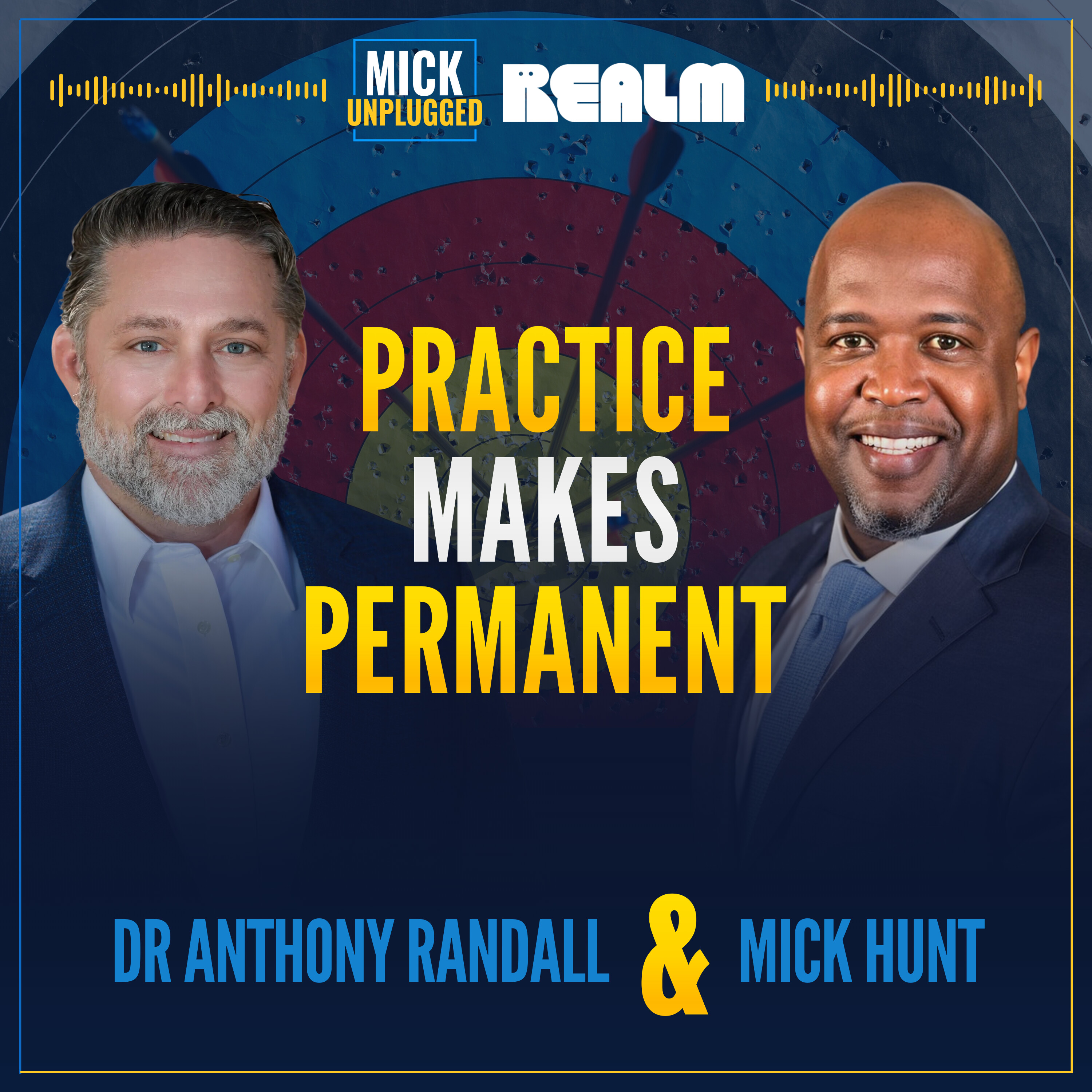
Loading summary
Transcript47 lines
- [00:00]
A
Before I launched Myc Unplugged, every what if was running through my head. What if nobody listens? What if I look like a fool? What if I fail to produce income or people buy my products? But I made the leap anyway and it changed everything. The truth is having the right tools behind you makes all the difference. And that is where Shopify comes in. Shopify is the e commerce platform behind millions of businesses and 10% of of all e commerce in the US they're packed with AI tools that write your product descriptions, enhance your photos and get you up and running fast. They even help you find your customers with easy to run email and social media campaigns. Plus their award winning 24. 7 support means you're never figuring it out alone. It's time to turn those what ifs into with Shopify. Today. Sign up for your $1 per month trial at shopify.com Mick go to shopify.com Mick that's S-O-P-I-F-Y.com Mick. This episode is brought to you by Progressive Insurance. Do you ever find yourself playing the budgeting game? Well, with a name youe price tool from Progressive you you can find options that fit your budget and potentially lower your bills. Try it at progressive.com, progressive Casualty Insurance Company and affiliates Price and Coverage Match Limited by state law not available in all states. Ladies and gentlemen, welcome back to another exciting episode of MC Unplugged. And today we're joined by international award winning author of Force Behind Transforming Leaders. And we are talking to a man who has more black belts than I do around my waist. He is the masterful, the transformative, the unforgettable Columbus George's own. My God. Dr. Anthony Randall. You're listening to Mick Unplugged. Hosted by the one and only Mick Hunt. This is where purpose meets power and stories spark transformation. Mick takes you beyond the motivation and into meaning. Helping you discover your because and becoming unstoppable. I'm Rudy Rush and trust me, you're in the right place. Let's get unplugged. Dr. Anthony, how you doing today, brother?
- [02:25]
B
Good, Mick, how are you? Great to see you.
- [02:27]
A
Great to see you too, man. You know, just catching up a little bit, talking to you for a while on social media. I don't think I realized how close we were to each other. So that's, that's a, a Mick error right there. But I'm honored to have my neighbor on the show. So I've been looking forward to this one for a while, bro.
- [02:43]
B
That, that Sounds great. I've got probably more errors in life than you do. I'm just glad that Herb and Corey Thompson could connect us through Liberty Speaks. And it's great to be working together.
- [02:53]
A
Absolutely. Absolutely. Shout out to. To Herb and. And Corey, or Peaches and Herb, as I like to call them when we're together. There you go, dude. You know, I always start my shows off by asking my guest, what's your because? Right. Like, Simon Sinek, good friend of mine, taught us to all start with our why. And I like to think that once you know your why, you're fueled by your because, that thing that keeps you going, that promise that you make. So if I to ask you today, Dr. Anthony, 2026, what's your because? Why do you keep doing the things that you do?
- [03:28]
B
Yeah, well, I love the question. And I'm going to go a little counter to Simon. I've got his book on my bookshelf. But I always want to press like you do. I don't think it starts with why. It starts with who and it starts with what. And that's the because. And so my because is to help people live a more excellent way. And I believe that there's a way to live a more excellent way of life when we align our passion, your because, our purpose and our precision. And we can go in depth on that today if you'd like to. But that's the bottom line. How do we live a more excellent way to align with? By aligning passion, purpose and precision. And that's what I love to do. I love to see human beings flourish, dude.
- [04:08]
A
And we're going to go there because as I've gotten to know you in your work, one, I realized we had a lot in common. And then two, I've learned a lot through you and your work. You know, you've mentioned numerous times that practice makes permanent.
- [04:23]
B
Yeah, right.
- [04:24]
A
And that kind of came became the foundation for your book Practicing Excellence, which is a great segue into what you're going and saying. You know, I've had this thing, everybody that's listened to the show or watched this show, you've heard me say this a thousand times. Michael Jordan never took a shot. He didn't practice. Steph Curry never takes a shot. He doesn't practice. Kobe Bryant never did a move. He didn't practice. And so when you saw those guys do things, it was because they made those skills permanent. But you never see Michael Jordan take a full court shot because he never practiced those things. Right. He never tried to master those things. So talk to us about practice making permanent, both the mental, the physical, and the psychological aspects of that.
- [05:06]
B
Yeah. So practice makes permanent, not perfect. I think that kind of destroys one of those isms that people typically think is practice makes perfect, practice makes permanent, practice does not make perfect. So practice excellence. And that was kind of a smaller book that I wrote a few years ago, leading to practicing excellence, focused around what you just talked about. And I truly believe that the living a more excellent way is found in the joy of practice, the joy of everyday, you know, disciplined obedience. We can talk about that today, about training your trust, trust in your training, but the art of practice. And I think I learned that art of practice in two different places, three different places in my life, I would say, one, my faith. The second, martial arts, and then the third one in the military, specifically having an opportunity to serve in the Ranger and the special operations and Special Forces community as an Army Ranger and as an officer and as a chaplain. So those are the three places that I've learned that practice does not make perfect, practice makes permanent. So make sure you, what you practice is excellent.
- [06:14]
A
Yeah. And, you know, just doubling down on what you just talked about. So, you know, you've got a diverse set of experiences, like you just said, from martial arts to military service and a ministry. Right. Like, that's a lot of profound insights and growth that you've gone through. How did, how does that inform your approach to, like, what you do when you work with companies and individuals today from a leadership perspective?
- [06:43]
B
Yeah, I think, you know, me and Moto Musashi said that, you know, every warrior should carry a pen and a sword. Right. From my military days, you know, the guys that knew me before I became a chapel, and they just remember the Ranger Randall. Right. And, and I tell people all the time it's, you can put the, the chaplain into the Ranger, but it's hard to take the Ranger out of the chaplain. And I used to think that was a tension or a disconnect. And what I found over life of practicing is that really it's holistic. And so what I try to bring to leaders, to organizations, into the public square is how do you bring your fullness of yourself to the public square, and how do we take that fullness to better understand others and to seek understanding and to have that intellectually rigorous dialogue and discourse that allows us to collaborate, allows us to accept our differences, find our unity and get things done. And so, so for me, you know, when I, when I do coaching, we do leader development, we just take a very Holistic perspective to that. You know, I began learning that in the martial arts and then my time in the special operations community, allowing my opportunities there to work on human performance and then taking that into my time in professional college sports and then what we do today. So it's very much a holistic, transformational process.
- [08:05]
A
Dude. And, you know, once I started following you, I saw something that you wrote and I stood up out of my chair and it was like my skin was on fire because I was like, yes, I needed to hear that. A lot of times in, in leadership, in business, in entrepreneurship, in sports, we always talk about resiliency, right. And so resiliency went from a mindset, I think, to more like a trendy buzzword. Right. Like if we were talking social media, it was a trendy hashtag, wow. And then I saw Dr. Anthony Randall say, where you really need to spend your time is understanding the concept of antifragile. So I want to give you some, some moments to break this down for everybody that's watching or listening about being anti fragile.
- [08:57]
B
Yeah. So the, the concept of antifragility comes from Nassim Talib in his book Anti Fragile, which is a great read. But you know, my time in the military, especially the chaplain and combat tours and all of these things, the military started working on a resiliency project. They spent a couple hundred million dollars on it, actually. And when I was doing some. Some graduate work several years ago, found that 52% of people of soldiers that went through the resiliency training program actually had greater catastrophic thinking after the training than before. And my belief is that we need to go deeper. We need to go deeper than positive psychology. We need to go into this place of character formation, establishing virtue and faith and freedom as a triangle, a golden triangle that shapes who people are to give them a greater foundation to resist and respond to evil and to adversity and the things we face in this world. So the concept is pretty simple. You have people that are in a place of fragility, right. You have a place of resilience or a place of anti fragility. And I think the illustration that I've seen, and I can't remember it came from, was using Greek mythology. If you're in a place of fragility, it's like Damocles, right? The guy laying on the couch with the eating the grapes and the swords hanging above him with the horse hair. If you don't practice in each and every day and prepare each and every day to how to overcome adversity, destroy Self limiting beliefs and learn how to show up and play up and finish every day. You're like Damocles. The tension on that sword is eventually going to, that horsehair is going to snap and you're done. Resilience is the concept of the Phoenix where you get hit, you get knocked down, you bounce back up to the original place that you were. And being a martial artist and doing the things that I've done in my life, man, I've just never been satisfied with mediocrity. And I think truly being a resilient person is just being mediocre. You get knocked down, you get back up again and you stay there. And so just like the Phoenix, it dissolves. You know, it can fire and then it dissolves and it reconstitutes itself. But being antifragile is like the hydraulic right. If you remember the Greek mythological creature, the Hydra. Now you chop off a head, another one's coming back. And so being antifragile is about not just responding, resisting and responding to the things in life, but getting better from each and every one of those sets and reps. An obstacle in life shouldn't be something you're fearful of. It should be something that you embrace and say, okay, how do we go by with and through this thing? And so whether it's the trauma that I've seen in combat, whether it's being in high performance environments and sports or special operations, or even doing martial arts, there is a stress that we need to put ourselves under every day. Emotionally, physically, psychologically, spiritually, mentally, physiologically to help us get better every day. And I think some people have termed that post traumatic growth. I just prefer the term being antifragile.
- [11:55]
A
I love that so much, brother. For the person that's listening or watching right now, that's like, yeah, I like that, but I need to understand how to put that into practice for me or a couple of things that I could do to reverse that mindset or to embrace this new anti fragility or anti fragile mindset. Like what are some things that people can do that's in their common day to day?
- [12:19]
B
Well, I've learned a lot of this practice from failure, right. And so I think just having the courage to get up every single day and to step out in the public square and get in the arena is one thing, is being willing to just be willing to show up every day to play up when you have an opportunity to play up and then be committed to finishing. And so the first part of that, I think goes back to practicing excellence when we identify our passion or our because it helps us overcome adversity.
- [12:49]
A
Let me be honest, it's easy to fall into the trap of scrolling fitness content. Everybody has a tip. Everybody has a hack. But most of it is noise. What I needed was structure. Something that adapts as I grow. That is where fitbod stepped in. I opened the app before a recent workout and within seconds it built a session around my goals, the equipment I had available and what muscle groups needed. Recovery. No guessing. No wandering around the gym. It felt like having a personal trainer in my pocket. The intensity was right where I needed it to be. Challenging but smart. What I appreciate most is that it evolves with me as I get stronger. It adjusts. It tracks recovery so I'm not overtraining. It mixes in new exercise so I do not plateau or get bored. And when you're building at the level I'm building, efficiency matters everywhere, including the gym. Fitbod creates a personalized workout routine based on your goals, fitness levels and available equipment. It adapts as you improve and keeps you progressing. Level up your workout. Join Fitbod today to get your personalized workout plan. Get 25% off your subscription or try the app free for seven days at Fitbod. Me Mick that's f I T B O D Me Mick we talk a lot about trends on this show, and for the past year, AI has been everywhere. But here's the truth. Talking about AI does not make you more productive. Using it does. For me, AI has become a part of how I lead, build and create between the podcast, my team and multiple businesses. Speed Matters Zapier has helped us connect the tools we already use and automate the things that used to eat up hours, lead routing, follow ups, internal workflows, even connecting AI models like ChatGPT directly into our process. No tech headaches, no bottlenecks, just results. Zapier is how you break the hype cycle and actually put AI to work. Whether it's enriching leads, coaching your sales team, resolving tickets, or streamlining marketing, Zapier makes it simple. Join the 3.4 million companies already automating with Zapier and transform how you work with Zapier and AI. Get started for free by visiting Zap. Zapier.com Mick that's Z-A P-I E R.com Mick right?
- [15:20]
B
And then when we align that passion with purpose, the purposeful use of our gifts and our abilities and talents, when we focus on practicing our gifts and our abilities and talents and skills, every single Day. What that does is it prevents us from getting just consumed with the dilemmas and the distractions of self limiting beliefs, the inner voice, the external voices, all of those things. And instead we're able to stay focused on purposeful practice of what we're good at. That requires what I call disciplined obedience. Right. No one likes, I mean, I'm not, I don't know about you, I've got three kids, right. Discipline and obedience aren't their two favorite words as they're growing up, but I've got two in college now and in a high school and they sure appreciate some disciplined obedience now and what they're doing. So discipline is the art of just practicing well every single day. And obedience, you know, as a theologian, in Hebrew there's no word for obedience. The word is actually shema, which means to listen. So people that have disciplined obedience are people every day that are willing to get in the arena to show up and play up and finish and not only be disciplined in their practice, being willing to listen and learn and apply, being humble to be taught every day. And then the last thing is precision. When you align your passion and your purpose, then that gives you precision to focus on exactly where your feet are at and be present in that moment and get after it. Right. So I'll just, I'll stop there. But there's some more depth there that we can get into on practicing excellence.
- [16:55]
A
Yeah. You know, I, I want to go as deep as you want to go in practicing excellence. And you and I have already talked about we're going to have a part two and maybe we'll do a master class for people. Because I totally believe everything that you just said and I think what I heard you say and I'm going to repeat it my way for everybody. I think the first step is just acknowledging failure. Yeah, I think a lot of times we hide from we made a mistake or we messed up or we didn't, we didn't do as good as we wanted to do or as someone else wanted us to do. It's okay to accept that as long as you're willing to correct and get better.
- [17:34]
B
Right.
- [17:35]
A
I think a lot of times we take, we take failure and we begin to stack failure. You know, like me and my background, I'm all about stacking wins, Right. Well, in order to stack wins, every once in a while I have to not win so that I understand what I have to do to course correct. But the opposite is also true. A lot of times people will get into the woe is me or you know, I'm not good enough. And then they start stacking losses and they can't get themselves out of it. One of the things that, that I've have always appreciated about you, and you call it using your four vowels, and I put that into place not only with my team, but myself, right. And so I'd love for you to walk us through these vowels using our vowels. And I love a person that has easy ways for me to remember things. So thank you for doing that. So everybody watching or listening? Dr. Anthony is going to teach us how to use our vowels.
- [18:33]
B
So you mind if I share a story leading up to that?
- [18:36]
A
Yeah.
- [18:36]
B
Okay, so we're starting with vowels because you keep saying Dr. Anthony. That doctor took a lot of long, long hours, right? I mean, I never, I took the SAT three times, Mick. I never broke a thousand. I was the third alternate to get into West Point, right? My, my junior year in Advanced English composition, my professor sat me down, took out an essay that I'd written. There was more red ink on it of his handwriting than black ink that came out of my computer. And he said, wow. He said, cadet Randall, he said, when was the last time you had a urine analysis and drug test? And I said, sir. He goes, are you on drugs? I said, no, sir, I'm not on drugs. He goes, you've got to be on something because this is the worst writing I've ever read at the United States Military Academy. And then he failed me in Advanced English composition, right? So it has been years of practice and a couple other opportunities and stories I share in my keynote of people speaking into me. To overcome self limiting beliefs, to love to write. And today we've written a couple books and I love to write. So we'll go back to the vowels now, but just know that this guy ain't no good at grammar, you know what I'm saying? So you know, my seventh and eighth grade, you know, grammar teacher's like, son, you don't write no good. You know, And I said that once in a keynote, and I had a person in the audience go, you mean you don't write that well? And I'm like, if I got to explain the joke to you, then, then it's so anyways, the five vowels, right? So I think for leadership, you know, you break it down in these five vowels. Acronyms are always a good thing when you're walking in organization and you want to create a culture of excellence, you know, A is assess, right? Assess the situation. And I always try to assess the audience who's my influencers and who are my influential leaders. And I think we see that in society today. We have all sorts of people that are influencers. Way more followers and likes than I'll ever get on social media. But what are they influencing? What impact are they, are they really having versus an influential leader that gets stuff done? They're committed to. They're committed to the process. Right. And they lead by influence, not by power or role or responsibility or title. So that's a. The second one is enlist. Enlist. And a good friend of mine, Clint Hurdle, who I had the privilege to serve with in the, with the Pittsburgh Pirates for eight years, Clint used to always tell us to pick your Mount Rushmore. Who are those four or five people chiseled in stone that, that are always going to be there for you foundationally. So a is assess. E is enlist. Enlist. The. Enlist your Mount Rushmore or the Knights of the Round Table. Who is going to have your back? Who. Who captures your vision, builds your strategy and drives your execution with passion, purpose and precision, by the way. Right? Who. Who, who demonstrates trust and adaptability and execution? Who develops leaders of character as more unethical thinkers and high eq? Right, yeah. Enlist those people. And then who's also in that team willing to confront you and be candid? I mean, we've got an amazing team at Vanguard 21 and I've surrounded myself with a whole bunch of people that are willing to just bludgeon me in the face if I need it, because I need those kind of leaders around me. Right. So you've got to surround yourself. Enlist. Enlist. I identify the people and I'll even go so far as say, identify the terrorists. Because if you've ever been in an organization, you know, there's always someone out there that's trying to destroy everything they try to put together. They're trying to destroy the enemy, the organization. And it's always about they're out for themselves or they've been wounded or hurt, or they've always got some sort of motive, you know, hard heartedness, self righteousness, whatever it is, that they'll do everything they can to destroy your organization. We talk talent management. I talk all the time about, you know, you can hire high character individuals and create a high culture organization or you can hire a bunch of characters and they're going to destroy your organization. You got to identify the people that are going to do everything they can to break that down. And frankly, HR people, we can talk about this on a more empathetic level, but you've got to identify them, you got to isolate them, and then frankly, you just have to eliminate them. Do you want a championship culture or not? Do you want to be a transformational change agent in the public square or not? And quite frankly, some people just don't want to get on board with a growth mindset and be a team player and win and they need to go find someplace else. So that's the A, E and the I. The O is observe. And I'm a big fan of emotional intelligence. We teach a lot of emotional intelligence in our leadership courses. We teach EQ, we facilitate EQ360s. And so I think observe, observe. Have some social awareness, understand empathy and compassion, but also understand cultural values, understand the written rules and the unwritten rules. I know you're an athlete. You and I spent some time in some locker rooms, right? I mean, how many of us know that there's written rules and there's unwritten rules, right? And there's always the clubhouse boss, right? That runs the clubhouse, that runs the locker room. And you either follow those rules or not. And so observe when you come in as a leader, observe what the written and the unwritten rules are, right? Legacy is a great book about the All Black Kiwis and the All Blacks, the Kiwi, the New Zealand rugby team, they have some written rules, they have some written principles that make them great. I guarantee you there's probably also some unwritten rules in there too. So observe, and then the last one you is utilized. So assess, enlist, identify, observe, and then utilize. Utilize a coaching language and a coaching culture. We're finding just study after study today, that when you implement a coaching language and a coaching culture, when you bring in leadership and development executive coaching, when you build an internal executive coaching bench, when you teach your leaders in depth to spend more time coaching and less time directing, you begin to empower people and draw the full potential out of people rather than enabling people to keep asking you for the answer. And that's one of the hugest things that's in our marketplace today, in our society today. That's why we've got so much incivility in the public square, is we're overwhelmed with information and misinformation and people today are just comfortable being told what to think. But high performing organizations, high performing cultures, high character leaders, they coach people how to think. And when you can coach organizations in depth how to think, you begin to create morally and ethically autonomous leaders that get stuff done and you flatten out organizations and you begin to move much faster and that's how you win,
- [25:23]
A
bro. I, I couldn't have said it any better. Again, we have so much in common. We have a lot of principles and theories and teachings in common. Because I say the same thing. Like it's, it's not about titles. It's not even about roles, assignments. It's have you done enough so that this person can lead on their own, so that you can trust them to walk away and the job is done. And when you, when you're able to do that and there's trust two ways, right? Not just one way, but when there's two way trust, that's the secret sauce to scaling. I don't care what business it is. I don't care. It could be a sports team. If you want to know the way to win and to always win, there's got to be two way trust. Because everything that I believe starts with trust, right? And when I trust you and I know that you trust me together, we're
- [26:17]
C
100% yes, online shopping is quite literally at our fingertips. But that doesn't mean it's always simple to buy. Whether it's trying to remember one of a million different logins so you can actually place your order, or getting almost all the way through checkout before realizing your card is nowhere near you, there are many hiccups that can get between you and placing that order. Which is why it's such a relief when you see that purple pay button that has all of your information saved, making checkout as simple as a tap of your screen. That iconic purple shop pay button is why Shopify has the best converting checkout on the planet. Meaning less carts going abandoned and more sales going to you. Shopify is the commerce platform behind millions of businesses around the world and 10% of all e commerce in the US from household names like Thrive Cosmetics, Gymshark and Allbirds to brands just getting started. And they're not just great at converting sales. If people haven't heard about your brand yet, Shopify can help you find your customers with easy to run email and social media campaigns. And they have world class expertise in everything from managing inventory to international shipping to processing returns and beyond. Tackle all of those important tasks from one place, making your life easier and your business operations smoother. See less carts go abandoned and more sales go with Shopify and their Shop Pay button. Sign up for your $1 per month trial today at shopify.com realm. Go to shopify.com realm that's shopify.com realm
- [27:56]
A
this episode is brought to you by Progressive Insurance do you ever find yourself playing the budgeting game? Well, with a name your price tool from Progressive, you can find options that fit your budget and potentially lower your bills. Try it@progressive.com, progressive Casualty Insurance Company and affiliates. Price and coverage match limited by state law, not available in all states. Together we're unbeatable. So you talked about Vanguard 21. I want to give you the floor to talk about some of the amazing initiatives and endeavors that you all are working on, what you plan for in the future and then obviously, you know, anything that you just want to talk about in general before we wrap up.
- [28:36]
B
Sure. Well, you know, very blessed to lead this amazing company, Vanguard 21. We launched it full time when I retired from the military five years ago. You know, leadership development, coaching space. We built it to a seven figure company in less than 36 months. And we've built it around a team of people. That's why I didn't name it after myself. Right. So we've got 19amazing people on the team, coaches, facilitators, leaders across the marketplace. And we have, here's the bottom line. We have a lot of fun. We transform leaders and we coach excellence and we win. I mean, if you're looking to have leadership transformation in your organization, if you're learning to see how excellent coaching can impact your organization and you like to win, hey, you know, maybe we can talk sometime and share some common values and ideas. So that's what we do and we have a lot of fun with it right now. You know, we've been across the marketplace, Mick. We work in Fortune 100, 500 companies, pro college sports, you know, small medium sized companies, a couple fractals that we're really passionate about right now and having some opportunities. Actually where I'm traveling to this week to do some work is in private equity and in public education. Because transformational leadership transforms the marketplace. Right. I mean, you go from private equity to public education. Right. So what we're finding with PE firms and with portfolio companies is that if we can get involved upstream with a portfolio company and help and typically, you know, a P comes in, grabs a portco, typically they keep the leadership in place, but they've got to figure out how to make change or they, they take the entire leadership out and put new leaders in with, you know, fractal or, you know, different kinds of C suites in there, fractional or, or they keep some of the C suite and they replace some of them. The bottom line is if you want a 3x or 5x, an organization start with leadership development. Start with building that culture of trust. And so what we're, we're doing is we're, we're looking right now and working with some different private equity folks and some portfolio companies that they're identifying. Hey, we want you to partner with us upstream. And from the time we take a portfolio company and get them into the marketplace, we're going to have you do leadership development and coaching in depth through that 18, 24, 36 months. And you see the ROI on that, right? That's one. The second one is public education. I'm a publicly educated dude, right? Like, I grew up in Colorado, Pomona High School, shout out to the Panthers, right? You know, so I believe in public education and I, and I believe that it can get better and I believe that we can transform that space. And what we've seen now is that public education has seen the impact of coaching. And so right now we're working with a couple different school districts and hopefully with a potential state department of education where we're coming in and certifying principals, assistant principals, guidance counselors, and key faculty and as ICF professional coaches so that they can begin coaching within their schools and within their districts and then taking their teachers and their, their faculty through our two and a half day leadership transformational leadership course that intros them to coaching and create a coaching culture with this Gen Z generation that's hungry to be coached, they're hungry to get potential john out of them. And it's also going to increase cultures of trust within your administration and your faculty, with your, with your staff and faculty, principals, students, teachers, the whole bit. So those are two fractals we're really excited about right now.
- [32:04]
A
I, I love it, man. I love it. I appreciate the, the hard work that you and your team do because being in the leadership development space, especially when you're talking with adults, everybody's agreeable day one, until you start doing the hard things, right? And then it's like, oh, wait a second, I need to change something. Something needs to change, right? So, so I get it, man. Like, what do you personally have coming up or, or recently released or anything that you want to discuss?
- [32:37]
B
Well, you know, you and I partner with Liberty Speaks, Corey and Herb Thompson, so they represent us as keynote speakers. And so I just did a keynote for a national sales conference a few weeks ago for a, you know, global, global security company, beat the blizzard into Indianapolis and, and they had a great culture. This is an amazing company. And, And I think 90% of their folks came to the Conference despite the weather. So it was just being, it was great being around a high performing culture like that. And so just keynoting a lot this year. Practicing excellence. So I have three keynotes. I do practicing excellence. I do leader as coach, how you create a high culture coaching environment. And then I do another one for law enforcement and for military on how you prepare the warrior soul. And how do you prepare, practice, protect and persevere the warrior soul. So those kind of three keynotes that I do. But I'm really passionate, Mick, about practicing excellence because that book is all about how to restore civility with faith and trusted leadership in the public square. And that's one of my passions in life. We have lost the civility in our public square. And I just really believe that, you know, if we take this golden triangle philosophy of freedom, virtue and faith and tie those together, then we can create a public square, we can have civil discourse, we can have dialogue, and we can figure out that we're not always going to see eye to eye. But when our end state is human flourishing, when our end state is creating a space where people can flourish and we seek to draw that potential out, you and I may have a different way to get after that, but can we find some likeness in doing that? And just to close on that, one of my, one of my favorite put on my, my chaplain hat. One of my favorite sermons is by Dr. King and, and he had a sermon called Transform Non conformist. It's out of Romans 12, 1 and 2. And he preached it probably half dozen or a dozen Times in the 50s and 60s. It is still 127% relevant today. And one part of that sermon that he gives, he talks about that, you know, transformation or purpose doesn't come from being a non conformist. Matter of fact, being a non conformist can actually lead to exhibitionism. That's Dr. King's words. Right? But that transformation is internal. When we're willing to have a growth mindset, a white belt mentality, when we're willing to allow that transformation to occur internally through a transcendent growth, God through a faith, through whatever may be the case, then the transformation that's internal will truly help us be more transformational as non conformists in a society that's conforming to things that it's probably a better way. There's probably a better way for us to live a more excellent way. Right. And so that's my passion is how do we restore civilian the public square? And that includes your company, your organization, your school, your team, your Community. So that's what I really love to speak on is people realizing, oh man, there's more, we have more in common than we do, you know, difference and how do we bring that together? And I've always had a passion to do that. I've always had a passion to bring people together. So that's what I'm really passionate about and love to do it, man.
- [35:55]
A
Absolutely. So before I get you out of here with my Rapid 5, where can people find and follow Dr. Anthony Ralph?
- [36:02]
B
Yeah, so mostly on LinkedIn. I'm 52, not a big Instagram guy, trying to, but still have to ask my kids how to use it. Right. So you can mostly follow me on LinkedIn, Vanguard 21, Vanguard XXI, you can follow us on LinkedIn, Facebook. We do some stuff on Instagram and x, but mostly LinkedIn and Facebook. And then if you want to go to our website for leader development and coaching, that's www.vanguardxxi.com. so whether you're looking for leadership development and coaching in the marketplace, whether you want to become an ICF professional coach, we have five different ICF professional courses, Level one, two and level three courses that you can come and get your professional certification. And then if you're looking for individual executive coaching, off sites, retreats, those kind of things, boom. Vanguardxxi.com and the second place you can find me is at www.anthonyrandall.org and that's my Anthony Randall Speaks keynote speaking website. And so if you're looking for a keynote, looking for more than a keynote. And that's why I always, I try to share. I don't do keynotes. I do a keynote experience. So I will invest in your folks, your people, your industry for a couple days, come in, do a keynote, do some breakout sessions, some panels, and truly just spend time and be present with your folks as they align their passion, purpose and precision to practice excellence.
- [37:21]
A
I love it, I love it, I love it, I love it. Dude, I appreciate you more than you know. Gonna get you out of here with my Rapid fire Quick five. Ready? All right, number one, as a keynote speaker, what's your pump up song that you're listening to right before you walk?
- [37:38]
B
My walk up song, man. Dirk St me Burning man. I'm a little bit steady Rolling Stone. I'm a little holy water. I'm still a little bit of a burning man, right? Because I'm still in that process, right? So that's my walk up song. Dirk Bentley, Burner Man.
- [37:54]
A
I love it, I love it. Number two, if you could have a martial arts match with any historic figure, who would it be?
- [38:04]
B
What? I would probably. I would probably love to train with Sensei Jigoro Kano. So Sensei Kano was the father of modern day martial arts and took judo out of Japanese jujitsu and the practice of the samurai. And that's where Brazilian Jiu jitsu and all that comes from today. So I would say Sensei Kano.
- [38:24]
A
Okay. I dig it. What's one leadership lesson you wish you had learned sooner?
- [38:29]
B
Coaching. Too many people call themselves coaches on LinkedIn. The number one thing that people tell us after day one of our professional coaching courses is they typically look at the floor and they drop their shoulders. They go, yeah, I wasn't coaching. I've been telling people I'm a coach, but I'm not coaching, right? So I wish I would have learned the art and science of how to coach a lot, a lot sooner than I did, because it's been transformational, bro.
- [38:55]
A
We have the same thing in common. Like, I tell people all the time, like, give me your qualifications and certifications to tell me you're a coach versus somebody who's done one thing kind of good, and now you're trying to show other people how to do that one thing worse than you do.
- [39:09]
B
We have a lot of clients that we get. They're like retreads on a tire. They're like, yeah, the coach I was coaching with that. This. This is coaching. Like, that was not coaching.
- [39:18]
A
Yeah, exactly, exactly, exactly. Beyond your books, what's your favorite book that you always recommend?
- [39:27]
B
Ooh, well, Scripture's always a good one. Just dive in that every day. My favorite books, I think, for Leadership man, I love Good to Great by Jim Collins. It's one of my favorites. I love stories about people. So right now I'm reading Henry Kissinger's book Leadership and Great Deep Dive on just some incredible leaders from around the world, from Margaret Thatcher to Anwar Sadat. You know, I mean, just really great read. So I'm reading Kissinger's Leadership right now. Good to Great is a great one. And then probably on the EQ side, Daniel Goleman's Primal Leadership. If you want to better understand emotional intelligence and how to lead with eq, just not the science behind it. I think that's a go to Primal Leadership for sure. Those probably top three without me geeking out on philosophy and ethics.
- [40:19]
A
I love it, brother. I love it. Last one. As the book and the story of Anthony Randall continues to be written, what's one word you want in that book to define and describe you legacy.
- [40:37]
B
I think my greatest joy in life is and my greatest prayer in life is that my children figure it out better than I did. And so yeah, when that final day happens, I hope I can look back and just see my kids being transformational leaders in the public square, transforming people's lives and making an impact in this world to allow people to flourish. And yeah, that's probably my biggest, my biggest thing.
- [41:12]
A
I love it, bro. Completely, completely love it. Ladies and gentlemen, this has been Dr. Anthony Randall. Bro, I appreciate you more than you know. This was an amazing conversation. We will definitely do another part in person. We're going to get to see each other several times this year. So we'll make sure that we, we record in person too because we have a lot to to really talk about it and show.
- [41:35]
B
Love it, man. Absolutely love it. Look forward to seeing you in a few weeks. And thank you again. And just to your folks, listen man, just be encouraged and everybody shout out some gratitude and some thanks to Mick Hunt for his podcast because they're, they're phenomenal. I enjoy listening them to them as well.
- [41:53]
A
Man, you're phenomenal, bro. You're phenomenal to all the viewers and listeners. As always. Remember you're because is your superpower. Go unleash it. That's another powerful conversation on Mick Unplugged. If this episode moved you, and I'm sure it did, follow the show wherever you listen, share it with someone who needs that spark and leave a review so more people can find there because I'm Rudy Rush and until next time, stay driven, stay focused and stay unplugged. Foreign. This episode is brought to you by Progressive Insurance. Do you ever find yourself playing the budgeting game? Well, with the name your price tool from Progressive, you can find options that fit your budget and potentially lower your bills. Try it@progressive.com Progressive Casualty Insurance Company and affiliates Price and coverage match limited by state law. Not available in all states.