← Mick Unplugged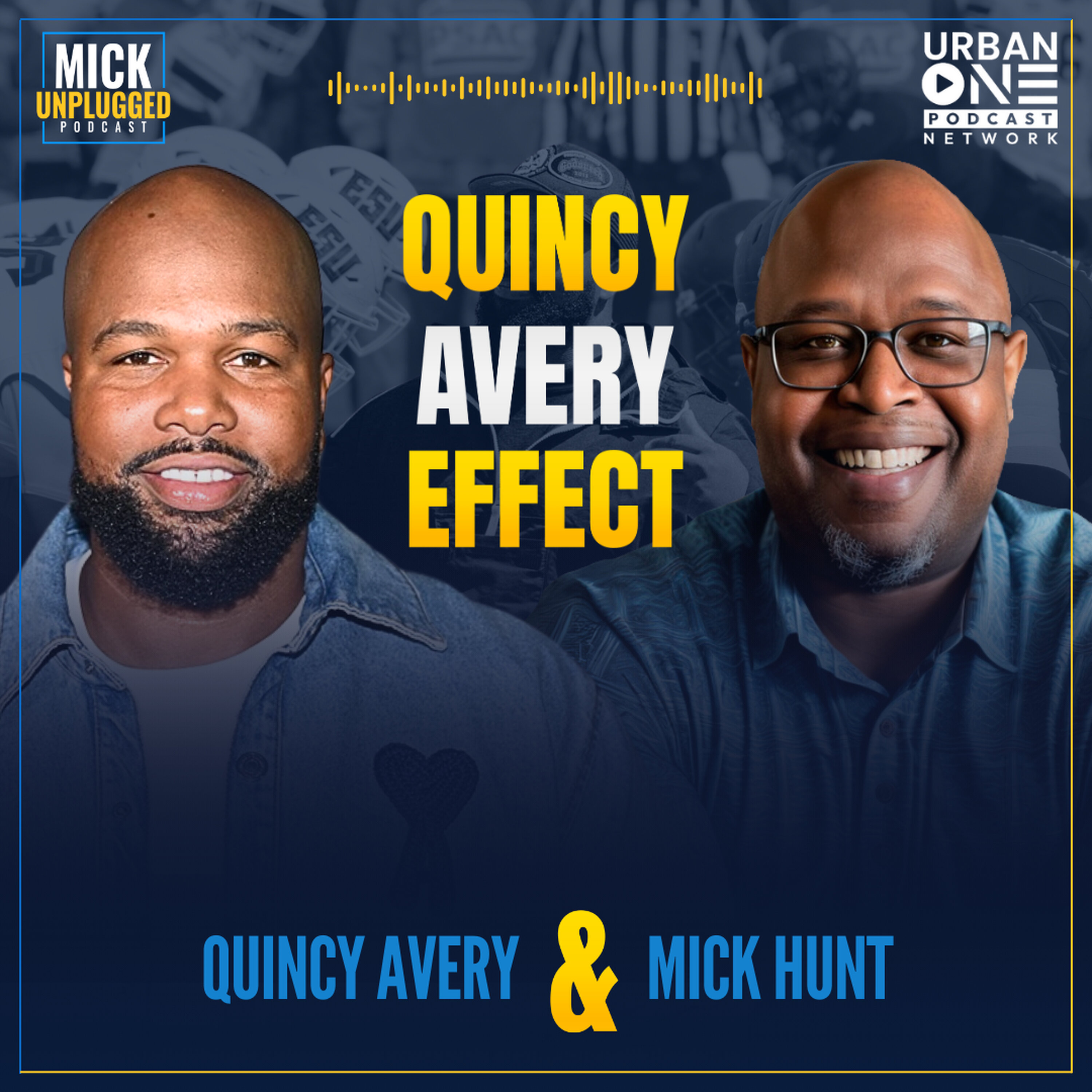
Loading summary
Transcript62 lines
- [00:00]
A
The same way that I've run the business side of our stuff, I'm a quarterback there, right? I'm, I'm playing quarterback. I got to put people in the positions to win. I got to help them be successful. I got to give them encouragement when they need it. I got to press buttons. Those are things that we all can do every single day, right? And it's is that ability to like, work through difficult situations is what allows these top tier quarterbacks to be the best quarterbacks in the world.
- [00:27]
B
Welcome to Mick Unplugged, the number one podcast for self improvement, leadership and relentless growth. No fluff, no filters, just hard hitting truths, unstoppable strategies and the mindset shifts that separate the best from the rest. Ready to break limits? Let's go.
- [00:57]
C
Ladies and gentlemen, welcome to another exciting episode of MC Unplugged. And today we've got a game changer right here. Some people coach the game, some people change the game. My guy coming up did both and he did it with nothing but a dream, a car, and a belief that greatness could be built from the ground up. Today, he's shaping the next generation of NFL stars. The world calls him the QB Whisperer. I call him unstoppable. Ladies and gentlemen, join me in welcoming the guy I call the goat, Mr. Quincy Avery. Quincy, how you doing today, brother?
- [01:32]
A
I'm amazing. I really appreciate you having me on. So I'm excited to get to have a conversation, brother.
- [01:39]
C
I'm the excited one, man. You know, I know the new documentary the Quincy Avery Effect from Andscape and Religion of Sports is streaming on Hulu right now. I got a sneak peek of it. I learned some things that I didn't know and I thought I knew you very well, man. I learned some things, man. Like I love to just start with this question right here. Q. You know, I like to ask people about their because that thing that's deeper than your why, right? Like that real purpose. And I know for you in the journey that you've had, man, you've had an amazing because. So for the world, what's Quincy Avery's because, man, I've never even heard a.
- [02:21]
A
Question that question phrase that way, they're because instead of the why. So that's interesting. You know, I've been in some really difficult situations throughout my life, whether it be home, family situations, sports, or trying to figure out how to get started in a profession and then trying to forge a career in essentially a new industry. But I've always done it with a few things in mind. And really, it is taking care of those around me, because that has been so important. Right. And being able to be there in moments when I feel like they need me, because oftentimes I feel like there's many opportunities for, like, other people to be there for me that they just weren't. And I knew that not only could I have an impact in training young men and helping them achieve their goals, which is amazing, but there's so many young men who we won't see in this documentary or people won't talk about who aren't in the NFL, maybe not even college, maybe just played in high school, but those are young men that I still have relationships. Relationships with to this day. You know, I can help out, and they can call on me when they need anything. I'm here to support them and care about them in a way that I truly feel is a unique and authentic.
- [03:46]
C
And you do it amazingly, brother. You do it amazingly, you know, and in talking about that journey, man. So for people that don't know, and not to give away everything in the documentary, but talk about a little bit of that journey, right? Because everybody looks at today and they see success today. And I tell people a lot of times, the people that you see that are crushing it right now, the people that are really doing it right now, they're doing it because they appreciate the journey that they had to go through. And that fruit tastes so much sweeter because they've had to go through it, man. So talk to us a little bit about that journey that you. That you're referencing.
- [04:24]
A
Yeah, I think I agree with you so much. We live in, like, an instant gratification society where people expect to have the fruits of their labor immediately. But the journey that I went on was crazy. In order to get here, I've had a thousand nights of homelessness, right where I was unhoused, whether I was sleeping in the locker room or my car, just trying to figure out where I was going to lay my head. And it was just a grind. Because the thing that I think separates me more than separates me from a lot of people is the ability to work hard despite the initial outcome. I heard no. When I was trying to start training people so many times, it is crazy. And I just look back, I could go look at my Facebook and just see, like, no unresponse, no. And those are some young men that I probably could helped out, like, do some things if they. If their parents would have responded. Like, I knew that I had a purpose, and I knew that there was something that I thought that I could do at a very high level. And when I say that I'm committed to something, I want my actions and my words to be congruent. I want people. I want not to only be able to say these things, but I want people to be able to look at the actions that I have, and it say it for me, right? So I don't need to verbalize everything that I want to do. I want people to see in my actions who I say I am and the goals that I say that I have.
- [05:49]
C
I love that, dude. I love that. So when did you realize that you had. I'm gonna say, the gift, right? Like, when did you realize you had that gift, brother? Because, again, the way that you communicate with the. I'm gonna call them the students. The students that you're coaching, the way that you're able to get people that are making millions of dollars to say, all right, I'm gonna hire Quincy, right? Like, when did you know you had that gift?
- [06:25]
A
You know, I think that I probably suffer. Even though I said that I wanted to be the best, I knew I was working hard towards those things. I probably suffered from imposter syndrome largely for a while. And it took until there was. There was. Trent Dilfer is someone who, like, I really value their opinion. He's really big in the quarterback space, and when he saw the things that I was doing, and he really was like, man, you're doing a great job. Like, I love the way that you're teaching these things. That meant a lot to me. But after that, I still wasn't sure. Like, I was like, I think that I'm really good at this. I think that I'm helping these young guys out. And then the next, like, real moment for me was I got the opportunity to train Tyrod Taylor. But Tyrod Taylor had been the NFL for nine years. He'd basically seen every quarterback coach who was in the space, and I was in, right? He got to work with all these guys. Then I got there with him for, like, one or two days, and he's like, now I want to hire you, right? And that meant a lot to me because he. He was making a decision. Unlike a lot of the other people that I'd work with, a lot of the people that I work with, it had only been me, right? They, like, this is just what they grew up doing. But Tyrod, that, to me, was like, all right, I really. I'm doing a great job, right? Because if this guy believes in the things that I'm saying, despite Me meeting him at this age and I'm able to help him out that much that quickly, then I think that I'm probably better at this than I even, even I thought I was.
- [07:52]
C
You definitely are the goat, brother. You definitely are the goat. And one of the things that I truly appreciate about what you do is yes, you're the coach, you're the guru, you're the whisperer, but you also run a business, right? Like you have other people that, you have coaches that are with you, right? You have other people that you're developing. It takes a team to do what you do. So now I'm going to ask that entrepreneur question, right? So you knew you had the gift from the coaching standpoint, right? Like that, that little thing that most people don't have. But then when did you know you could turn it into a business as well?
- [08:34]
A
I didn't. I think that people at first thought I was just going to be like self employed, like just work for myself, be able to do this for a really long time and that would be cool. And then I just thought about how can I impact more people? And I think that I'm able to help both coaches that I work with, the staff that I work with and the players. Like everybody gets to benefit from the ecosystem. And the only way that I could do that was be able to like truly build a business that had procedures and we were able to run like we have real systems to operate. And I also had to remove myself a bit from the first layer of that business and be. And not just be in the weeds all the time. Be 30,000ft view. I see what we're doing, but I also see where we're trying to go. And I've been blessed and fortunate to have some great people who work alongside me, run our operations, who run our day to day, who run our finances. A lot of wonderful young women who actually as cool. I love this part about our business. Everybody that you see who's not on the football field who works for that organization is a woman. Primarily women of color who have been able to transform this from really an idea into, into a business where we are able to help so many kids. But it's. That is it. That's what's the hard part. The coaching is easy. Running a business, oh my gosh. It's always something you run into. You run into a new challenge every single day and, and navigating that and understanding people and how you communicate with them and how people need to be loved. Like loved the right way. Like, do they need these words of affirmation because I think people think about those things just in, like, personal, intimate relationships. But everybody has a language they want to be loved in. In terms of the business side too, some people want you to tell them, like, man, you're doing a great job. Somebody wants an Instagram post with their. Their face on it, right? There's all these different things. And some people just want Creditor to be able to go through the steps with the ideas that you have and you champion them and push them forward. So, yeah, I'm always thinking about those things and it's. It's been difficult, but it's been fine.
- [10:49]
C
I believe it, man. Shout out to QB Takeover. Right? That's the plug for QB Takeover. I'm gonna have links for all of that in the show, notes in the descriptions too, man. But now let's tell the people because I know you're not gonna name drop, so I'm gonna do it for you. Jalen Hurts. Justin Fields. Jordan Love. I was gonna say your name pretty much had to start with a J for Quincy to work with, but these are all the next gen quarterbacks that are under your tutelage, man, like from. From the words of the guru, from the words of you. You know, a lot of people think that it's talent and that's what they see on Sundays. But I want to know from you, man, what do you believe separates a good quarterback from what most people want? That franchise quarterback?
- [11:44]
A
Yeah, it's definitely not talent. I think that everybody we see who plays football at a professional level is talented. That is. That's not the easy part, but that's something that everybody has in common. But it's a mindset. The ability to work through adversity, the ability to persevere when things are not going exactly as you wish or you'd hope for. Right? And I think that that's. That's more. That's just life, though. Like, quarterback is. Is life. And that's what I want people to understand. I want people, like, when they watch this documentary, they see the things about me. I want them to live their life like a quarterback. Right? Because the way that quarterbacks move and the way that they operate, the way that they bring people along, the way that they galvanize a team, the same way that I run the business side of our stuff, I'm a quarterback there, right? I'm playing quarterback. I got to put people in the positions to win. I got to help them be successful. I got to give them encouragement when they need it. I gotta press buttons. Those are things that we all can do every single day, right? And it's that ability to like, work through difficult situations is what allows these top tier quarterbacks to be the best quarterbacks in the world. Because you're going to go through something difficult, you're going to throw an interception, you're going to cost your team a game. But it's not just that moment, it's how do you respond? Because that interception you throw in week two, you could learn a lesson then and you come back and win the super bowl because we saw that same defense. Now I knew how to respond. So was that interception in week week one or week two, was that really a loss or did, did we win because of that? And that's what I want people to understand. There's so many lessons that life is going to provide us and it's how we respond each and every time that is going to shape us and define who we are as people.
- [13:26]
C
I totally believe that and agree with that man. You know, I do leadership consulting and one of the things that I tell all leaders, and this is going to be for leaders, period. Whether you're the leader in your household, the leader in your community, the leader of your business, the leader of a team, right? Learning lessons, being a motivator, being an inspiration, right? And then I'm going to say this too. A lot of people say don't take yourself too serious. I'm going to say the complete opposite. You've got to take yourself serious because most people aren't going to. And I see that from you in the coaching that you're doing with quarterbacks, right? And you were just articulating that very well. Like you've got to be able as a leader to know that all eyes are on you, right? How do you respond to situations, good or bad? Because situations can be good and you can respond negatively to a good situation too, right? What's that body language like when you're walking to the sideline or when you're having a team meeting, Are you showing up first to the team meetings, Right? Are you leading some of those meetings? Talk about that. Because it's a great parallel to leadership. Like when you are all eyes on me, when you are the franchise, right? What's that responsibility that you're helping quarterbacks also understand? Because you're not just teaching fundamentals, right? You're also teaching life too.
- [14:55]
A
100. I think that the, the folks on my team would, would talk about how I respond to adversity in a very positive way. Because as a business owner, you're always, it's always going to be something. But I'm never, I never like, shake. I never get sad, I never get flustered. It's simply, how are we going to find a solution to the issue that we have at hand? And that's the only thing that matters. Because everybody's gonna go through these things. It's just what is the next step that is gonna allow us to be successful? It's not about the actual, like, situation you're in. It's about how do we move forward from this difficulty. Like, how do we get better and move the needle so that when people look at us, they're like, hey, that happened. But they fixed it. There's so many times that there's things that I can't control. I'll have a coach miss a session. I'll have somebody who drove two hours, right? And they came for a session, one of my coaches and something you might have missed or was it miscommunicated? And those are situations where I think a lot of people would like not communicate or go in the shell and be like, oh, let me figure it out. No, I'm gonna, hey, I'm gonna get on the phone with that person, I'm gonna, I'm gonna hear where they're at and I'm gonna make sure everything's right, right? Whether that means I gotta fly out there and lose thousands of dollars and go give this person a one on one session. Because that's the standard that we want to hold ourselves to. But when I do those things, then everybody in my organization sees what it means to me when we make mistake. And they know that, hey, when we make a mistake, somebody's got to pay for it, right? And oftentimes it's going to fall on me. But they know that we can't continue to do those things because eventually I'm going to have to come in and make it right. And same thing with the quarterback, right? That's what we do. We make things right. When, when everything is awry, we come through and fix the situation.
- [16:45]
C
I love it, dude. So in the documentary, man, you've got all your students, right? You've got Tony Dungey, you've got a lot of people that are singing your praise, which is well deserved. But I want to know from, from you, man, like the Quincy Avery effect, what made you want to do the documentary? What made you want to tell this story now? Because it's so powerful, brother.
- [17:11]
A
Yeah, it wasn't even, I don't think that, well, we had started actually shooting this documentary maybe four years ago. And you'll see some clips from, from some of the things in there, but just didn't get picked up. A lot of things are going on at the time, didn't go the way that we wanted it to. They circled back two and a half years ago, like, hey, I think that we can do it now. And I thought that it was important. It was. It's cool to see so many of the young black quarterbacks I've had an opportunity to work with, really thriving and be able to show that. But the things that I also want to show is how we've been able to change a culture. Because these quarterbacks, yes, they're the quarterback of the football teams, but they're shaping their high schools, they're shaping their colleges, right? And then the professional quarterbacks, they shape their cities. There's no one more influential to me in a city than their star quarterback. Right. These people have the opportunity to give back to the community, put back in the organization and change. They can really change the world. And I hope that people see that the work we're doing isn't just about on the football field. It's about building better young men who respond when life gets tough. Because that's what they see. That's what they see me doing on a day to day basis. Not only do I respond to adversity, but I feel like I'm a good person, I'm a good father, and they get to see these things each and every day.
- [18:31]
C
I love it. What are some of the traits that you're looking for before you and your team say yes? Right? Because I'm sure now it's a little bit different than it was for you several years ago, right? When it's like, all right, I got tyrod now, I'm sure you're getting hit up all the time, right? And I've seen your camps and I see how packed they are in the lessons that you all are doing out there. What are some traits you're looking for before you say yes? Now.
- [19:02]
A
You know, it's crazy. It's gonna sound wild. More so than who the person is, a football player, more so than how talented they are. Those things don't matter. First things I want to do is have a conversation with the parents, because the parents have been. It's been the biggest determining factor in the kids who I see are successful and the kids who I see aren't. And it's not really what we think. A lot of times people Think it's the parents who are, like, there all the time. They do everything for their kids. Those are the people who become the best sports parents. Those are actually the worst because those are the people who remove all adversity from the kid's life. They don't let them go through things. They don't let them struggle. They don't let them build that muscle, right? And it's a muscle, right? You got to work it. You got to flex it. You got to be able to see yourself in a difficult situation and see you make it out on the other side. Then you got to see how you can learn from these situations, and then you get to control them a little bit better and act. You get to act in a way that you're more proud of the next time you go through a difficult situation. But they don't get these opportunities. They don't get these time, the time to work on these things. When they're in seventh, eighth grade, they don't have a difficult conversation with their high school coach. They don't have a difficult conversation with the teacher when they're failing a class. They miss out on all these pivotal life opportunities because our parents think that they need to be the ones to step in our place and fix it for us. Those are the people who I really don't want my program. And that sounds crazy to say, but that is who I try to keep out, and that's who I try to keep away. Because I come in with anybody else.
- [20:43]
C
I agree a thousand percent, brother. Like, I was that dad that during, you know, Little League and JV in high school, I was literally a fan. Because I know as a business owner, as a business leader, the last thing I could do, whether it's the head coach, a position coach, you know, a hired coach like you, that's working. The last thing I can do or should do is give my insight or try to correct. Because now I'm not helping the child, right? Like, I'm not helping my sons become men. Like you're saying. Because it's those things where, like, I know Quincy's gonna push my son, right? I shouldn't be a buffer. Like, my son's not gonna like this workout today. Quincy's gonna give it to him. Quincy's gonna tell him the 15 things you're doing wrong. He's gonna tell you what you're doing good, too. But Quincy wants to see, are you gonna come back tomorrow to work on the things that we just talked about today? And I think there are a lot of parents I shouldn't say a lot. I've just seen those parents that, oh, well, you don't know what you're talking about. Let me go hire someone else or I'm going to move to this other school. Right. And you're just making it easier on your kid. And then one day life is going to slap that child, or I shouldn't say slap. Life is going to be right in front of that child's face, and what's the child going to do? And that's why I appreciate everything you said, man, because that's what life is about, really.
- [22:05]
A
Yeah, it is. It's crazy to see. And I've seen a lot of different families come through our system, and I've seen some of the most talented kids not make it because their parents, honestly, like, that's just the root of it. Their parents made things so easy on them all throughout life that college got a little bit hard and they couldn't handle it.
- [22:27]
C
Yep, Totally agree. So when you are looking at film and you're looking at the. Your students, right? What are some of the things that you're looking at from them? When you're reviewing film, when you're reviewing tape?
- [22:45]
A
It all depends on where they are. Like, where they are in their career, what they have going on, and what I mean by that. If they're in high school, I'll be a lot more in depth in terms of their reads, their fundamentals, the way that they're throwing the football, all those things. When they're in the NFL, I briefly touch on Reeds because the things that they're doing are so intricate and so much is communicated to them in the. In the board sessions with their coaching staff. But the thing that I'm talking about with them is a much higher level of detail in their fundamentals. The smallest things matter the most to guys at that level because the margin for error is so small. You don't. There's a lot of areas of football, high school, college, middle school, that you can make a mistake once but come back to it because we'll be able to get it again. When you're playing at the highest level, when you're playing against professionals, you don't. You don't get a second chance. It's either we made it work when it came up or we didn't, and we don't get to go back and do it again. So making sure that they're prepared in that moment for that play, that could allow them to change the game, because it's not. It's not going to happen again.
- [23:53]
C
No, sir, it's not. It's not, you know, going back to college. You're the person that I cannot wait to ask this question to. I want Q's truth and opinion on nil and college football.
- [24:12]
A
You know, I'm such a big fan of these young men getting paid and being able to provide for their families. Now. It makes me nervous. In terms of what? Of being able to manage this amount of money at 18, 19, 20 years old. Because I see so many of these guys and I see them making poor financial decisions, right. The things that they're using their money for is alarming, concerning, and it'll be fleeting. It'll be really cool to have this amount of money for a few years, but I know it's not going to be there in the future. So we're giving these guys a whole bunch of money and they're just gonna waste it. Like this should be trampoline into having a successful life. And it's now it's just becoming a money pit to expensive things. And I just hope that there's some way that we can figure out how to help these young men so that they can make better financial decisions. I love that they can help out their families, but I hate, I hate that we just become the biggest consumers in the world with money that's only here very short term.
- [25:24]
C
Yeah, I agree, man. Like I, I love the fact that athletes can, can be rewarded financially. I hate that sometimes it's public because a lot of times like they're looking at it like the kid and I can say kid because I'm older now. They're looking like the kid is being selfish. Like, no, if that's the going rate for a quarterback, that's the going rate for a quarterback. Can't be upset about that.
- [25:50]
A
Business is business, right? I want to get what I'm worth, right? And that's what we're paying everybody else. That's what I should get.
- [25:58]
C
Right? Right. No, totally agree. I wish there could be a fix to the transfer portal. I actually have no issues with NIL or the collectives. My issue is just the transfer portals and the timing. Like I get it from the academic side, right? Like you've got December for the winter and then the spring. So I understand why they're doing it. I just think there's too many options in football that don't really align with the football schedule and academics. Like I wish they could just fix that and, and maybe have a rule of like a one time transfer because it does Kind of bug me that, hey, I, I, I either did, I either did compete and didn't win or I didn't compete like I should and I didn't win a position, so. And I'm gonna go somewhere else. Like, I don't like that either.
- [26:47]
A
That's just, yeah, you know, I, I, I agree. I hate, I hate that guys don't want to compete. And that's frustrating to me because that's where we learn about. I think that we. But there's also a lot of times where college coaches are pushing kids out that we don't talk about a lot, but it's really simple to fix. And it's just contracts, Right. If we create real contracts with real buyouts, and a lot of these things become very easily easy to fix. The problem is the NCAA doesn't want to consider these young men as employees, which they are. They're employees of the institution who happen to go to school. And that's where, until we get a collective bargaining agreement, we are going to have issues because guys are going to continue to leave for more money. They're going to ask for more money after they've already agreed to a certain amount because they find out somebody else is getting more. But when the school doesn't have to honor the contract and you don't have to honor the contract, that is the game that we all play. If schools were always honest with the young men, I would feel a lot, a lot worse about, like, the things that they're doing. But I know schools lie in the same way that these kids are manipulating in order to get more money. So it's a bad situation altogether. There really needs to be real change that could allow it to be a better situation, not only for this, the young men, but for the schools, too.
- [28:08]
C
Right.
- [28:08]
A
It's so, so difficult to operate not knowing who's going to be on your team each and every year.
- [28:13]
C
Yeah. Yeah. You know, Quincy, this is something I've been wanting to tell you for a long time. So this is why I'm glad that we've got this podcast and we're able to do this because I definitely wanted to look Quincy Avery in his eye and just say, bro, I know you know now, like, how much influence you've had on the good for the quarterback position. And just seeing how I'm going to say the quarterback position is being respected as an athlete. Right. I wanted to thank you just for giving visibility into what black quarterbacks can do in the NFL, because a lot of folks are going to go back and Name? Oh, well, you know, there was Mike Vick. There was, there was Doug Williams, there was Randall Cunningham. Yeah, but that was like one or two per team or like for the whole league, right? Like there was one or two for the whole league. Now we've gotten to a point where some of the stigmatism of black athletes, in particular black quarterbacks, are going away. And I just wanted to let you know, man, like how much impact you had on that because you're giving the tutelage, you're showing that, you know, we are accurate, we can read defenses. We're not all run first quarterbacks, man. Like, I just wanted to thank you for, from me just for, for making that impact, bro.
- [29:50]
A
No, that means a lot. I truly appreciate it. That's a goal that I always had and it's, it's fun to see all these young men just getting opportunities. Right. And it's never that we weren't talented enough. It was that at each step of the way there'd be somebody who'd be like a little roadblock, who'd get in our way and hey, how about you switch positions or how about you do this or do that? And they finally allowed us to be ourselves, to be authentically ourselves at the quarterback position in terms of the way that we play the game. And I hope that they, they continue not only let us do that, but be ourselves authentically off the field and be who we are and express ourselves in the way we want to express and we can live a life that we hope to live and like of the culture that we grew up in. But it feels, I'm, I'm truly thankful that I get an opportunity with so many quarterbacks who look like me, because I wish that there was a me for me growing up. And I hope that I can be that not only for these. I was never talented enough to play in the NFL like these guys, but I hope that I could be there for not only the guys in the NFL, but a bunch of college guys growing up underneath them so that they know that there's going to be somewhere in there for them to take to the next level. I used to do a black quarterback club where I brought together a bunch of black NFL quarterbacks, college and high school quarterbacks. And that's something I haven't been able to do the last few years just because life's been lifein'but. It's something I hope to be able to do again because I think that it's important. I think that people be, need to be able to be in a room with other black quarterbacks because there's experiences that we're all going through, right, that. That are difficult, but that you need to know that you're supported. There's a bunch of other guys out there who are going through a lot of things that you're going through, but we're going to push through it together. And that's. That's what I hope that I can do. I hope I can instill a whole bunch of confidence in a whole bunch of young men. And even if they're not professional quarterbacks, they're gonna be professional at something and they're gonna know they're gonna be built for it.
- [31:59]
C
Yes, sir. Yes, sir. So, again, the Quincy Avery effect from Andscape and the Religion of Sport, streaming exclusively on Hulu Man. Like, what do you want? What do you want people to get from this documentary? There's one or two things that it's like, yeah, but make sure you get this. What's that? Yeah, but what are those things, man?
- [32:21]
A
The things that I really want people to get from this is to know that no matter what situation or what it may look like, your destination is your destination. And as long as you continue on your road, you might have to switch lanes, you might got to catch a detour, you might got to make a left, even though it looks like the road is straight, but you have to continue on to your destination and understand that the map is not the terrain. It is easy to look at a map and know exactly where you want to go. It is much difficult when you're actually on the road to getting those things and be okay with that. Understand it's not always going to look pretty. There's elevation changes, there's a whole bunch of things that you may not have expected, but you're going to get there or you're going to get something positive out of the situation. If you put all your all into doing the thing that you said you're going to do, and that's really what I want people to get, because it might change. Like the thing that I thought I wanted down there might be different when I get there. But as long as you worked as hard as you could to get it, you're going to be thankful for yourself forever. And that's what I want people to understand. You, you look at yourself differently in the morning when you did everything you could to get something like you really genuinely did that. I think a lot of times people are saying, like, I worked really hard and I was talking to my nephew about this Today I'm like, you keep telling me you want to go Division 1 in basketball. When I call you and ask you, did you put in the work today? The answer is no. Stop telling me that. Right? You can't tell me that no more because the proof is in the pudding. I want your actions to tell me you want to be a Division 1 basketball player. Stop telling me you want to do that. So I just want to challenge people in that way.
- [34:03]
C
I love it, brother. For the viewers and listeners, again, whether they're an athlete, business leader, they're a person that's looking for self improvement or personal growth. What's one trait that, you know all great people have?
- [34:21]
A
Stability to respond to adversity. That is it. You can't be great without that.
- [34:30]
C
Love it, man. I love it. I love it. Let's. Let's do a hot three with Quincy. You ready?
- [34:35]
A
All right, let's do it.
- [34:37]
C
All right. Who was your favorite athlete growing up?
- [34:40]
A
Warmu.
- [34:43]
C
And he just gave his. Jerk. He just gave his number to Cam, too. I like it.
- [34:47]
A
Yeah. I thought that was really cool.
- [34:49]
C
I like it. All right. All right. I don't want to put you on the spot, but I'm going to ask it anyway. You can plead the fifth. You complete the fifth. Who's been your most rewarding student?
- [35:08]
A
I'm going to tell you a name that no one's going to have ever, ever heard of.
- [35:11]
C
Okay.
- [35:12]
A
His name is Austin Smith. He's at Austin P. Right now. And the reason I say that is because I'm always very honest with parents and players. And I told his dad in seventh grade, so I don't. I don't know if this is for him. Right. He's struggling to pick up these concepts. Like, I don't know if this is for him. I don't know if he's going to be able to do it. His dad said, okay, let's just. Let's figure it out. And he must have told his son and his ability to resp. A lot of times people could hear that and they would just fold. Oh, this person doesn't believe in me. But I saw him turn it up a notch, and he went on to get a college scholarship. He's been a starter. He's gonna have an opportunity to go to the NFL next year. Like, he just. He just worked and he worked. He heard bad news and he didn't get, like, soft and. No, he said, I'm gonna work harder. Oh, he doesn't know if I can do it, but watch me show him that. That. Like that.
- [36:14]
C
Yeah.
- [36:15]
A
That is. That's not just someone who's gonna be a good quarterback. That's gonna be somebody who's gonna be a good father, who's gonna be a good husband, who's gon community. He. He just does things the right way. And that, to me, is why he's one of. One of my most rewarding players to coach.
- [36:31]
C
Ironically, my. My oldest son coaches football, and he was a GA at Austin. P. Yeah. So cool stuff. Small world. Small world. All right, last question. If it were not football, because I know Quincy Avery was an athlete, I want the world to know. If it wasn't football, what sport would you have dominated it?
- [36:56]
A
You know, I would want to say basketball, because that's my favorite sport, but I was. I was probably better at baseball than I was at any other sport. I just got too boring. So I'd have just been a baseball player.
- [37:10]
C
Good stuff. Good stuff. Q. I know you're busy. Honored you took some time for the listeners and viewers to make. Unplugged, man. Any last words you want to leave for. For the listeners and viewers, Man.
- [37:24]
A
I mean, I hope that I was able to impart a little bit of wisdom, but a little bit of faith that you can. You can push through and persevere far more than you think you can. And oftentimes it is your mind telling you that you can't. All you got to do is put your head down and get to work. But I would ask the friends and viewers, like, just take a peek at the Avery Effect Foundation. It's for a lot of young men who are trying to reach goals and do do more with their life. And we are trying to put resources into them so that they can do it, whether it's in football, basketball, whatever the situation is. But we're trying to do as much as we can to help these young men out. So take a peek at that if you have the opportunity. That would be helpful, not only to me, but I think that you would be responsible for helping change some young man's life.
- [38:11]
C
I love it. Is there a website for the foundation?
- [38:14]
A
Yep. You can go to Avery Effect, or you can go to qbtakeover.com and just hit the link for the Avery Effect Foundation. You'll be able to jump right on it.
- [38:24]
C
All right, so I'll tell you what I'm gonna do. We'll have the link in our show notes and descriptions. I'm also gonna have it on our website, so metconofficial. I'm gonna have it there and Then I'm also, you know, if, if you message me and tell me that you've donated and I'll confirm with Quincy and the foundation, I'm gonna match, I'm gonna match all donations up to $10,000.
- [38:50]
A
How about that, man? Either man. I really appreciate that.
- [38:54]
C
I, I believe in supporting man. Like, I'm, I'm always, I'm a believer that there's never a bad time to do good things. And anytime that you're impacting young people in the world that we're in today, I'm always going to be there for it. So another salute for you, Ben. Another.
- [39:13]
A
Thank you.
- [39:14]
C
Well, ladies and gentlemen, this has been Quincy Avery, the quarterback whisperer, the guy that I call the goat and the guru. Again, I'm going to say it again. The Quincy Avery effect is out exclusively on Hulu. Make sure you check it out. It is groundbreaking. It is, it is game changing. It is actually life changing too. I think everyone is going to get something out of that. So again, Quincy Avery effect exclusively on Hulu. For all the listeners and viewers. Remember your because is your superpower. Go unleash it.
- [39:53]
B
Thanks for tuning in to this episode of Mic Unplugged. If today hits you hard, then imagine what's next. Be sure to subscribe, rate and share this with someone who needs it. And most of all, make a plan and take action because the next level is already waiting for you. Have a question or insight to share, send us an email to hellockunplugged.com until next time, ask yourself how you can step up.