← Mick Unplugged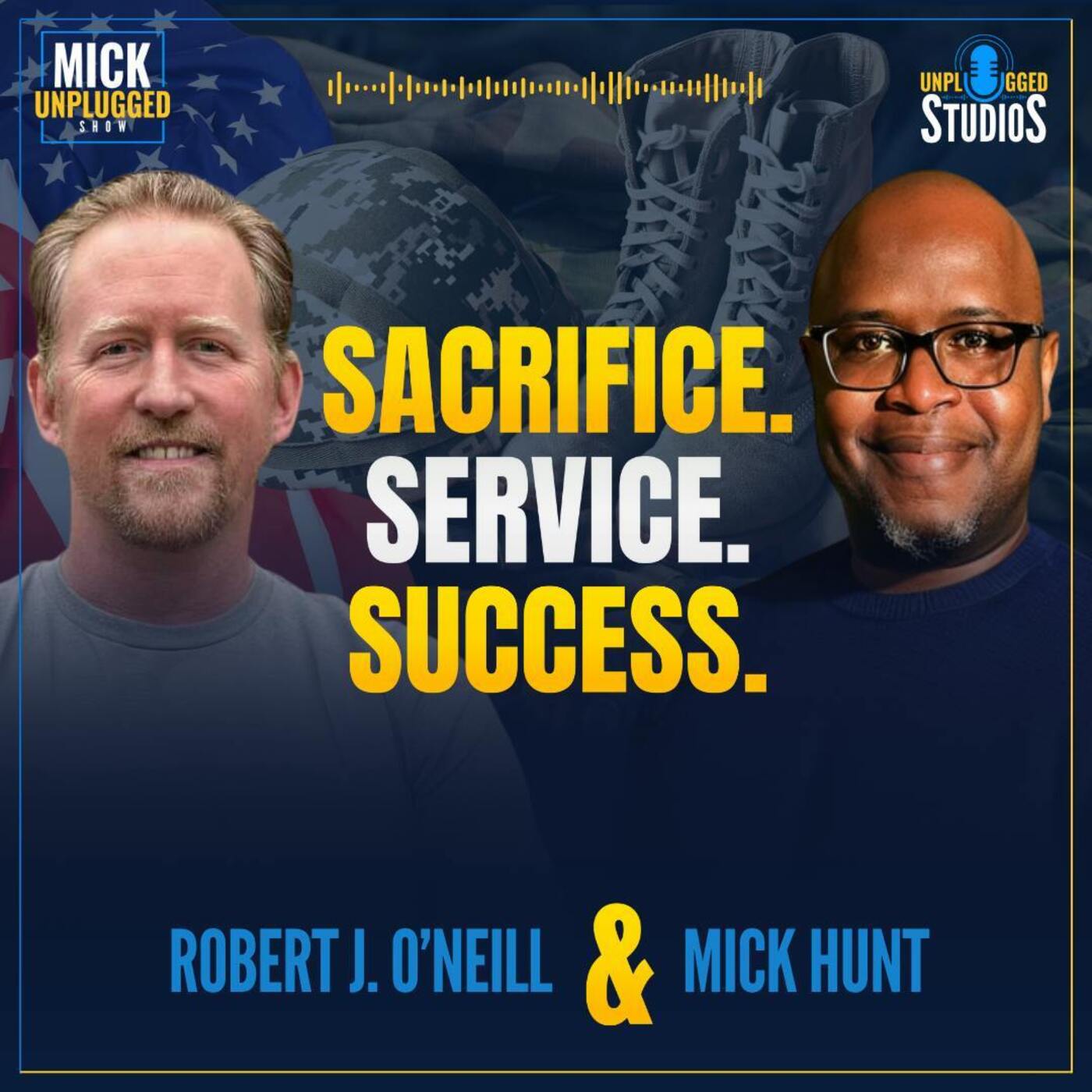
Loading summary
Transcript76 lines
- [00:00]
Robert J. O'Neill
Stress is a choice. Yes, it is. And that's another one where you can slow down and realize if you take a step back and take a deep breath and realize that it's in your mind. Stress is in your mind. Stress. Stress is a bag of bricks. And again, I give myself my own advice. Don't always take it every single day, but it's a bag of bricks you pick up. And if you want to start your day off with a negative attitude, you can.
- [00:23]
Mick Unplugged Host
Welcome to Mick Unplugged, the number one podcast for self improvement, leadership, and relentless growth. No fluff, no filters, just hard hitting truths, unstoppable strategies. And the mindset shifts that separate the best from the rest. Ready to break limits? Let's go.
- [00:48]
Ladies and gentlemen, welcome to probably the most special episode of mcplug that we have had to date. We're talking with the Navy SEAL who took out Osama bin Laden. He's a decorated combat veteran with over 400 missions under his belt. And the author pulling back the curtain on the life of an elite operator. We're going to go from battlefield to bestsellers and from sacrifice to service. He's relentless, he's courageous, he's legendary, but most important, he's my freaking hero. We're talking about the one and only Mr. Robert J. O'. Neill. Robert, how you doing today, brother?
- [01:22]
Robert J. O'Neill
I'm well, Mick. Thanks for having me. I appreciate it. It's good to get a chance to sit down with you, man.
- [01:27]
Mick Unplugged Host
I, I told you offline, I'm the honored one, man. Just what you mean. Not just to me, but I would say for all of the Americans here, man, like, there's not enough thank yous. There's not enough we love yous that we could give you. So I just wanted to give you mine.
- [01:41]
Robert J. O'Neill
For me personally, bro, that, that does mean a lot. Thanks. And it was just an honor the whole time. Just as you know, there was a lot of stuff that we did other than the bin Laden. Right. But to be picked for, for that team was a, was just such a great honor. There's just a great group of guys and asked to do a really hard job that, you know, started off horribly, but we, we pulled it off because we knew how to work with each other.
- [02:03]
Mick Unplugged Host
That it is, man. And, you know, I just, I finished the, the documentary, obviously your segment, the third segment, I probably watched 10 times. I have so many notes on that segment that I want to get to you about. But the first question, man, like, I like to go deeper than people's. Why, right? Like I call it your. Because like that thing that really is your motivator, that thing that really is what drives you. If I were to ask you today, right. What's your. Because, brother?
- [02:31]
Robert J. O'Neill
Oh, well, I mean, right now it's to just try to provide a better life. Not that I didn't have a good life growing up, but I'm a, I'm a girl dad, and I want to, I want to try to make their environment better than mine was. Just, just. And again, I was raised fine and not, not a, you know, nothing, nothing horrible happened. But I just want to be in a spot where I can help with, you know, student loans or tuition because I've got, I've got daughters, I've got. As of next semester, I'll have three daughters in college. And then I have a one year old. So it's like I gotta, I gotta pay attention to the older ones. But also I have free baby babysitting when I need it. So just. I think it's important for everyone to realize that the core is family. And it's like anything when you build a base on the way up, you know, if you can take care, obviously family comes first. But in order to take care of your family, you need to have your own personal health, mental health, physical health, take care of yourself, take care of your family, get to know your neighbors, take care of your community. And that's going to build out just to make better people. And it's everything. Like, I would rather. Now I'm at a point, instead of staring at my phone at Instagram or Twitter, I'd rather go with my neighbors, hang out and talk to real people. Because I think we're getting sucked into a place where we're looking at things that aren't real. And a lot of the forces out there want to try to divide people, and that's just not healthy. I find I'm a lot better off when I don't even look at my phone.
- [03:52]
Mick Unplugged Host
Dude, I'm telling you, man. Like, my wife and I have this rule like every day. When we're done with our 9 to 5 air quotes on the 9 to 5, we go outside, man. Like we, we literally just go outside. We go out back and we just become one with ourselves, with nature. Sometimes our neighbors come over, we go, we walk next door. But just that, that oneness with each other, with the earth, with people. I feel like we have a generation that's following us, Robert, that doesn't understand that. And that's what I try to connect with my kids as well too like, hey, you got to be outside.
- [04:28]
Robert J. O'Neill
Yes, that, that's the first key to, you know, as someone who deals with everything from a little PTSD to depression, the first key is to get out of bed. And that's like if your alarm goes off, great. If you get up without an alarm, good, get up. And then if I'm having a bad day, I'll like take my shirt off, force a smile and go stand in the sunshine, even if there's clouds, get some vitamin D going, get outside, hear nature. And I think like you're saying get outside with a walk. Like that is so good for mental health. Like do you know, 10, 20 minutes a day, just outside, man, you're going to find life's a lot better.
- [05:00]
Mick Unplugged Host
Yes, sir. Yes, sir. I want to go to something that I heard you say publicly in a keynote man, and I want people to understand this. And I know you've probably told this story a million times now, but for our listeners and viewers, you talked about when you got the notice that you were gonna be on the team and that it was time to go, right. SEAL Team six and you had to tell your kids goodbye. And I don't think people understand the brevity of that moment, man. Could you walk us through that? Like from a father's perspective, but also the duty and service commitment that you had where it's like you didn't even think about it, right?
- [05:38]
Robert J. O'Neill
Like tell it was I, I would almost cheat a little bit because when we, and you know, not just the Bin Laden raid but other ones, when we said goodbye, we would try to leave at night so that you didn't need to. I had young daughters at the time and I didn't want to explain to them the, the gravity of what we're about to do, but I'd like to see him at night and be able to say, you know, and, and then I, I, you know, I'd have a 10 minute drive into work before we got on the plane. I, I can cry for those 10 minutes when, where no one gets to see me but just, it's easier to leave them at night. But on the Bin Laden raid was tough. My youngest daughter at the time was three and nobody knew where we were going because we just got back from deployment. So no one expected us to go overseas. But I knew we were going somewhere where this, the Bin Lan raid was a high risk mission. It's a one way mission. And so I told my three and we couldn't leave at night, we had to leave during the day. So I told her, hey, Dad's got to go to work and you know, just a way to tell you a three year old goodbye. And she, she told me to wait and she ran upstairs to a room and she grabbed a hello Kitty suitcase, put a pillow and her Mr. Elephant in it and she left it by the door and said, when you get home, you're going to take me on vacation. However a three year old can form that sentence. And that's one of the hardest things I've ever seen. I actually just had a coffee with her just now because obviously it's been a few years, but yeah, saying goodbye to your family again, getting back to the base, that's the hardest part. And it almost asked the question, is what you're doing worth it? Is this worth it? And, and for us in that case, because so many families were affected by 9, 11 and we might die, this is worth it. This, this is what we're here for. You know, the passengers on United 93 did not wake up that day to fight Al Qaeda. I've been training to fight them. We found bin Laden and I'm going to go do it. And I mean, even as morbid as it might sound, what an ending. That, that's he's going to die. If we die with him, that happens. But we're going to do this. Saying goodbye to the family is hard, but once you get there on the Netflix documentary, you can hear me say, I'm on this mission, this is the team and we're going to kill him.
- [07:33]
Mick Unplugged Host
Yeah, I love that man. Another really cool thing that I saw in the documentary was, and I had this quote written down, after the mission, or I shouldn't say after the mission, after you have done your deed to Osama bin Laden, right? Then you got to get out of there, right? And what most people didn't understand was like, it wasn't easy to get out, right? Like you're trying to get to Pakistan and you, you said, I'm just trying to get to 90. I'm just trying to get to 90. I'm just Trying to get to 90.
- [08:04]
Robert J. O'Neill
It was, it was a tough spot. You got to figure when we went into Pakistan, we're going to Abbottabad, Pakistan, which is actually a resort town and we're not supposed to be there. It's not, we didn't invade Pakistan, we're not at war with Pakistan. And it's a first world country. And you know, out of respect for people living their lives, the first people to show up would not have been Al Qaeda or even the Pakistan military. It would have been the Pakistani police or locals that are armed, like, what's going on? And the last thing I wanted to do was kill a policeman doing his job. So we have that like very fine line there, which means we got to get in and get out quick. So we, but we found so much stuff there. We stayed a little bit longer to gather more intelligence. Meanwhile, outside our interpreter and our snipers were like, hey, the locals are gathering, the cops will be here, we gotta go. And so we're dealing with that. We don't want to get in a gunfight, especially there. A lot of bad stuff can happen, but you got to figure out we might run out of fuel too. So we stayed extra minutes. The hilos are going longer. And then we get in a helicopter and we're leaving on a mission. We're supposed to die, but we have 90 minutes now. We got 90 minutes left on a one way mission. But if we can cross the border In Afghanistan in 90 minutes, we get 50 years. I got to see those kids again. And so that 90 minute flight, I found myself in a spot where. And I give myself my own advice every day. If you're worried about something right now that your worry will not affect, you're wasting your energy. You need to get your mind off it because you're, you're thinking the wrong stuff. So I, we could get shot down at any moment by a Pakistani jet that launched and justifiably because we invaded, but worrying about a missile is not going to stop it. So I just started my stopwatch on my, on my wrist and I just, I was looking at that. I'm sitting next to guys I've been working with forever. And we're, we're all in this together. One missile kills us all. We know that. We probably wouldn't even feel it, but it's been 10 minutes, you know, then it's been 20 minutes. Yeah, kind of looking around 30 minutes, 40 minutes. Now it's been 50 minutes. Got to get to 90, 60, 70 minutes. And you can really. I'm getting goosebumps right now. And I love sports analogies because I mean, anything in life that you do successfully, you didn't really do it on your own. You got a team, someone helped you, someone supported you. Your wife, your husband, your mother, somebody supported you, teammates. So I started thinking about Yankee Stadium, top of the seventh and no hitter. Like, if you're watching it, you don't want to say anything, but yeah, I don't want to jinx it. And then it's been 80 minutes. I got to get to 90. And I started thinking about the single greatest sporting event in American history. In 1980, when Team USA, the hockey team, was playing the greatest hockey team ever assembled in the Soviet Union, and that team hadn't lost. I mean, they're beating people by 10 goals. They won every gold medal since I think, the early 60s or 50s. And these college kids have no business being on the ice. But now they're winning in the third period, and you can hear the crowd counting down. You can Hear Al Michaels, 10 seconds, 5 seconds. Do you believe in miracles? Yes. And I'm thinking that stuff so close, and then I hear the pilot. He was flying a little faster than 90 minutes, because 85 minutes in, he said, all right, gentlemen, for the first time in your lives, you're going to be happy to hear this. Welcome to Afghanistan.
- [11:08]
Mick Unplugged Host
Yeah.
- [11:08]
Robert J. O'Neill
And that's. I mean, that's for the. I think that's the first time on a mission over 400. I actually started giving high fives out because this, this was good.
- [11:16]
Mick Unplugged Host
Yeah. I mean, I. I got goosebumps just hearing you retell that story that I've heard. Right. But just, Just hearing it in this moment, man, like, I. I still get there, you know. Robert, you have, you know, 400 plus missions, man. And I have this saying that I give to leaders and to. To athletes. You don't rise to the occasion. You rise or fall to your level of preparation. Yes. And one of the things that I know about you and the missions that you've been on, what most people don't realize is how. I don't even call it over. Prepared you guys are, but just how prepared you freaking are. And the things that you simulate and the things that you go through, just because in that moment, you don't know what's going to happen. And you have to be able to react and not think, like, talk to us about preparation and why that's so important.
- [12:03]
Robert J. O'Neill
Well, it's a fine line. You want to be prepared for contingencies. You want to think of all the stuff that could happen if this goes wrong. What will their reaction to that be? But before you do any of that, you need to make sure you are the master of the easy stuff. You got to make sure you know the basics. And the easiest way that. I mean, it all came down. You know, we invent tactics, we meet Al Qaeda, we fight the Taliban, we. We come up with other tactics. But the further and more experience we got, we found ourselves getting, keep it simple Keep it simple. And when someone says like, you know, even after a helicopter crashing in the front yard, how did you clear a compound as big as Osama bin Laden's? And the answer was simple. The guy in front of me went left, I went right. And we did that over and over. And that's what we did. We, we mastered the basics. And, and the way that I put that now is never talk yourself into an ass whipping. It'll come, you know, you don't, you don't need to, you know, you don't need all the nonsense. And then, and then another key to our preparation, just doing it so much, you get comfortable not getting nervous and yelling because you'll see in a lot of war movies or a lot of war footage, people screaming, yelling, go, go, go. All this stuff. Pipe down. If you want to communicate very effectively with the team, stop talking. When you're done saying what you're saying, stop saying it. If you're a salesman and your customer says yes, shut up. Don't talk yourself into an ass whooping. Don't talk yourself out of a sale.
- [13:23]
Mick Unplugged Host
You.
- [13:23]
Robert J. O'Neill
He said yes. Sign the paperwork, shake a hand, thank you. And that's just it. It's just because you're talking does not mean you're communicating. An example too is some of the younger guys when we're. Because everything for us seemed to come down to a house and so we called it close quarters battle or cqb. And a lot of guys just like to talk because they want to be part of the moment. I had a guy one time, I'll never forget in training, turn a corner and he pointed up and he yelled, stairwell. And I stopped him and I said, hey, dude, look, I saw you do that. I saw you point up. I'm assuming you either saw a stairwell or an 18 foot terrorist. So we're going to figure it out. You don't need to yell because when you start yelling obvious stuff, you might as well be saying, here we come, here we are, we're on the second. Just. Yeah, well, I mean, you gotta. We crashed a helicopter in bin Laden's front yard. Explosion, immediate gunfight. We land. My helicopter landed in the wrong spot when that eight and a half seconds of complete chaos on the most important mission in modern history was over. And we went in his house quiet. And that's why we were successful, because they didn't know where we were or who we were. We had the enemy confused. They didn't even, they didn't know it was us. They, at first it might have Been the Pakistan military or intelligence services coming to get them to move them. They weren't sure. And when we got on the stairwell, especially moving up in close quarters, the only thing that was set, we ran into Khalid bin Laden, his 20 year old son on the stairs. And actually the woman that found bin Laden told us he would be there. She's very impressive by the way. 100 right on everybody. But when we got the only words I really heard spoken, it was when we got to a place where Khalid was hiding. And the guy up front, the number one man, the point man, just whispered to him, he said, come here, come here in two different in Urdu and Arabic. And he said, khalid, come here, come here. And he. And it confused him. So he just leaned out and that's how the fight started because he whispered to him right there and confused him. And then, I mean that's again with preparation. That guy was so smart, he was prepared how to say something in two languages. He knew the number one terrorist in the world's son spoke. And that's preparation.
- [15:21]
Mick Unplugged Host
That is wild, brother. That is.
- [15:23]
Robert J. O'Neill
I never would have done that. He was way smarter than me, man. I was smart enough to carry the sledgehammer and a gun. I just followed people.
- [15:29]
Mick Unplugged Host
No, I love your analogy of keep the simple things simple, right? Like again, I tell leaders all the time, you're trying to beat down a door or a wall, well, maybe the door was just unlocked and you could have just turned the knob, right?
- [15:40]
Robert J. O'Neill
Did you try opening it? It's. It's almost like when you get, when you get to people like at a hotel and we're standing there at the elevator, you kind of like, did anyone push the button? Or we just stand here like a bunch of assholes. But it is that simple. Just. But that, that's one of the steps in getting into a house. The first thing you do is check the door. And we ingrain that. Because when bullets are flying, that's we do with muscle memory. When bullets are flying, you might forget some of the simple stuff like checking the door. So what we would do is if you want to be good at something, do it 10,000 times. If you want to be great, do it 100,000 times. And do everything like you do anything. Little stuff like when we're on the range, if you drop like the pistol range, rifle range, if you drop something, you don't pick it up until it's cold because you don't want to get in that spot where in a gunfight, I dropped my water bottle, I bet. No, you don't need to pick it up. You need to get rounds at the enemy. When the fighting's over and we're about to head back in the Hilo, the then you can grab your water bottle or your magazine that you dropped. And that's just good, just good business. Because when the bullets are flying, you want to do it like you've been doing it. You want to everything from. If you're wearing a sports coat, how do you move the coat to get to your pistol? Which part's fast, which parts slow. And then the, the muscle memory that slow is smooth, smooth is fast. If you want to be fast, slow down.
- [16:54]
Mick Unplugged Host
I love that, brother. I love that, man.
- [16:56]
Robert J. O'Neill
Because you're thinking and talking a lot faster than you realize. Like, I mean, think about the first time you talked to us, talked in front. And it's like, okay, I got a 45 minute speech, I've rehearsed it. Then you get up in front of them and you're done at 15, because I just ran through it. It's like, oh, man. Okay, I got to slow down, dude.
- [17:12]
Mick Unplugged Host
I train speakers and I tell them all the time. Your first five speeches that you do, if they tell you you have 30 minutes, you need to build a 50 minute speech. And they're all like, what are you talking about? I'm like, just trust me. You need to build a 50 minute speech. Like, there's. I'm going to train you, I'm going to coach you.
- [17:30]
Robert J. O'Neill
Yep.
- [17:31]
Mick Unplugged Host
But there's nothing like being live for the first few times because you don't understand your pace and you're gonna, you're gonna blow through this. And I see folks do it all the time where it's like, okay, I have 15 minutes. What do I do?
- [17:44]
Robert J. O'Neill
I know, right? And, well, and the key there is, along with preparation, if you forget what you're talking about, just talk about something that you know and just assume that you know more about the subject than the, than the audience. It was funny. My, my agent, when I first started my very first speech, no experience whatsoever. I was about to get ready, like, in front of like a thousand airline captains, and I called her. I'm like, I. I've never given a speech before. I've been in gunfights, but am I going to faint out there? And she goes, this is great advice for right before speech. She goes, okay, here's what you do right now. Go have two glasses of red wine. Not one, not three, two. You'll be fine.
- [18:19]
Mick Unplugged Host
There you go. I'm writing that down.
- [18:21]
Robert J. O'Neill
I Don't.
- [18:22]
Mick Unplugged Host
Like, if you said bourbon. You just said bourbon. I was with you.
- [18:26]
Robert J. O'Neill
Okay. Yeah. I mean, well, she. Well, she knows me. And if I. If I had two bourbons, I'll hit four before the speech and then a Microsoft. There you go.
- [18:32]
Mick Unplugged Host
There you go. So, you know I call you Butte, Montana's finest, right? Robert o'. Neill.
- [18:40]
Robert J. O'Neill
You got to keep in mind Evil Knievels from Butte, Montana.
- [18:44]
Mick Unplugged Host
Evil Knievel is not my hero, though.
- [18:45]
Robert J. O'Neill
You are talking about. Thank you. Thank you.
- [18:47]
Mick Unplugged Host
You are growing up. Did you envision this?
- [18:53]
Robert J. O'Neill
No. No. I'm not from a military family, and I was never a tough guy, and this was just not an option. I knew dudes that immediately joined the Marine Corps, and then I knew some guys that joined the Army. That's what they always wanted to do. But for me, again, it's okay to have the perfect plan. But realize if you want to make God laugh, tell him what your plan for tomorrow is, because stuff's going to change. The only time the perfect plan exists is while you're planning. Once you leave, stuff changes. That's why you got to be ready for contingencies. But my perfect plan was to play college basketball, get a degree, and work with my dad. And that's how the plan was going. I was in my freshman year. I was playing basketball at Montana Tech, had a bad relationship. And it was one of those moments where, you know what? I want to get out of town now. And two of my buddies that were Marines, the ones I mentioned earlier, the. The. They were two years ahead of me. I'd see them when they came home, and they look like U.S. marines, man. They look great uniforms. Top notch physical specimens. And I was like, you know what? I want to do that. And I can. The Marine Corps will put me on a bus right now, and I can go to Parris island and join the Marine Corps. I got to leave town. And that's how it started. And then I went to. To the Marine recruiting station. But again, as luck. Sometimes it's better to be lucky than good. The Marine recruiter was literally out to lunch, and the Navy guy was there. So I went over to the Navy guy because my two Marines told me the Marine Corps is actually part of the Department of the Navy. It's just the men's department, which is kind of cool. So I walked in there just to ask the Navy guy, if it's part of the Navy, where's the Marine? He said, why do you want the Marine? I said, I want to be a sniper. He said, look no further. We have snipers in the Navy. You need to be a SEAL first. Sign right here. And I didn't know what a SEAL was, didn't know how to swim. And I was thinking, I'm kind of naive at 19, but here's a professional recruiter, why is he going to lie to me? And so I signed and that's it. And, but the cool thing about that is I love referencing the Butterfly effect. A decision you make right now, good or bad, in 30 years, is going to have a profound effect on your life. I mentioned my daughters and I was just talking to them a couple minutes ago. And I'll remind them if that Marine recruiter was not at Arby's at 11:30 on a Wednesday, you would not be alive because I would have joined the Marine Corps and gone to North Carolina instead of Virginia. Wow, is that crazy to think about that?
- [21:07]
Mick Unplugged Host
That's crazy. So you didn't know how to swim.
- [21:10]
Robert J. O'Neill
Right.
- [21:11]
Mick Unplugged Host
And knowing what I know, at some point you had to go to buds, right? So what was Bud like, man?
- [21:16]
Robert J. O'Neill
Well, my first thought is I should have joined the Navy Owls, just air and land instead of sea, air and land. But I did have someone show me how to swim before I left. Just briefly, a couple strokes. Again, just being lucky in a pool with a guy that was, that happened to be going on a swimming scholarship somewhere and he taught me, but that was going to be it. I'm not, I'm not going to quit, but I'll probably fail a swim. But being, you know, positive attitude, I get to live in Coronado for a while, then I'll get sent to a ship and then back in Butte, Montana in four years. But the advice that I got, and I've said this before and it just, it just stuck with me is an instructor told me before SEAL training, you've probably read the books at this point or seen the movies. Regardless of what you've been told, this course is not impossible. People actually graduate. Look at me, I'm living proof. So I'm never going to ask you to do anything impossible. But I'm going to make you do something very hard, followed by something very hard, followed by something harder day after day for eight straight months. And that sounds like a lot to get from now to eight months from now. But don't think about it that way because that's not how you achieve a long term goal. Do it like this. Wake up in the morning on time, make your bed the right way, and then brush your teeth. That's three wins you just started your day with three victories. Good start. Make it to the 4am workout on time. As I'm beating you, don't think about the pain. Concentrate on your next goal in life, which is breakfast. After breakfast, get to lunch after lunch. Your next goal in life is dinner. After dinner, do everything you need to do to get back inside that perfectly made bed. And because you took the time for yourself in the morning to make your bed the right way, regardless of how bad today was, and it will be bad, tomorrow's a clean slate and tomorrow's a fresh start. And when you feel like quitting, which you will, do not quit right now. That's emotion. Quit tomorrow. If you can keep quitting tomorrow, you can do anything. And he simplified it. And that's what taught me the short term goals equal long term goals. Don't overwhelm yourself with this, you know, with the skyscraper, the top of the Empire State Building. Get to the second floor.
- [23:22]
Mick Unplugged Host
Man, I don't quit today. Quit tomorrow.
- [23:26]
Robert J. O'Neill
Just quit tomorrow. And even say it to yourself, boy, this sucks. I'm definitely quitting tomorrow. And then tomorrow comes a, man, this is horrible. I'm definitely going to quit tomorrow. And you can even tell your friends that, hey, tomorrow you're going to join me and then see them tomorrow. Hey, tomorrow, come join me. We'll ring that bell. Tomorrow we're quitting. And that kind of helps with admitting. Yeah, this is really hard. Not impossible. I mean, look at him. He graduated and he's. I don't know why that instructor gave me good advice because SEAL instructors are pretty mean, historically.
- [23:55]
Mick Unplugged Host
Man, man, man. So. So BUDS was literally about just getting to tomorrow, getting to the next goal. And I guess it wasn't even tomorrow if the next goal is four hours from now.
- [24:07]
Robert J. O'Neill
Yeah, yeah, the next evolution. Then finishing the swim five minutes before someone so that you have five minutes to rest before the five mile run. There's little goals like that, but I'd be just learning the short term goals, not worrying about the stuff that can't affect you. I mean, BUDS was so hard. BUDS is basic underwater demolition SEAL training. It was so hard. I remember knowing I had a past. I know I came from somewhere, but I do not have a future. I'm just going to be in hell. And I accepted that to the point where, you know, there's evolution. Evolution meal. Evolution meal. But then Monday came around after 40 days on San Clemente Island. And they're like, okay, you need to go to dental and medical, get your records and your service record, check out you're going to be heading out to SEAL Team 2 and graduating on Friday. And it's like, wait, I'm, I'm graduating? And it's almost like, oh man, I, I got to be a Navy SEAL now. And you guys haven't taught me anything. What am I supposed to do now? And it's kind of scary, but that's, it's almost, it's cool because this is good for life too. No matter where you are. You're going to get used to it. So don't freak out off the bat. You get used to it. And one of my favorite sayings, I can't even for living in the moment, I can't take credit for this, but somebody said, wherever you are, be there. And if you make yourself available, stuff can happen. I mean, look at me. My wife calls me the luckiest unlucky man in the world because I've actually, I had a, an army, a special forces guy say, I remind I'm the Forrest Gump of the Navy, only I'm not as good looking and can't run as fast as, which is kind of funny. But just because I was available, I, you know, I found myself on the, on the mountain after the Lone Survivor marks the trail. I, I left my, my four year, four year old daughter's preschool on my birthday, Good Friday, April 10, 2009, as the lead jumper to rescue Captain Phillips. And we did on Easter Sunday, 16 hours from Virginia into the Indian Ocean. I found myself on the Bin Laden raid. I was on the base when Bo Bergdahl walked off. And it's not like I'm a hero. I just was available. I didn't slack off. I'm going to do this to the fullest. And just being there, you might get picked for the team.
- [26:14]
Mick Unplugged Host
Hey, there it is. That's my leadership lesson number one actually for leaders. Be present.
- [26:19]
Robert J. O'Neill
That's it.
- [26:20]
Mick Unplugged Host
Be present, be available. That's what your team needs the most out of you as a leader. Present and available.
- [26:26]
Robert J. O'Neill
You know what else is a leader too? Because I do tell people that panic is contagious. We see it in airports all the time. We all complain about why is everyone line up and why do we box up and get another plane? Why do we always do that? Because we're hurt animals and panic is contagious. That's why we ran out of toilet paper in 2020, because someone bought it all. I better go buy what I can and panic. But as a leader, and people don't think of this as a leader, you know what's really contagious is calm. Because nobody, nobody knows what you're thinking. They don't feel your adrenaline or your fear. But if they see you calm, they will be calm. Them being calm will calm you down. So that comes back to slow and smooth. Talk slowly, take a step and breathe because you're actually moving a hell of a lot faster than you realize.
- [27:10]
Mick Unplugged Host
Yes, sir. Yes, sir. You know, you just dropped a quote and here's what I'm going to give you a shout out. So a book that has changed my mentality from a leader perspective. And I always felt like I was a great leader. But great people get better, right? The operator, bro. Love, love, love, love, love that book. You have some amazing quotes in there. The first one is. What'd you say? Nothing is scary. And stress is a choice, man. Like, talk to people through that a little bit.
- [27:45]
Robert J. O'Neill
Yeah, it's. I mean, you don't need to be afraid, but you do need to realize being afraid is not a problem. Fear is healthy and it makes you, makes you think more clearly. You know, without fear there wouldn't be courage. But what was the second part of my quote? I know I talked about fear. What was the second part of that one?
- [28:02]
Mick Unplugged Host
Stress is a choice.
- [28:03]
Robert J. O'Neill
Stress is a choice. Yes, it is. And that's another one where you can slow down and realize if you take a step back and take a deep breath and realize that it's in your mind. Stress is in your mind. Stress. Stress is a bag of bricks. And again, I give myself my own advice. Don't always take it every single day, but it's a bag of bricks you pick up. And if you want to start your day off with a negative attitude, you can. Or you can throw stress out the window. And you should, because it's in your mind. And it's like the, the example is guilt. What's the point of guilt? It's that plays over, man. You're not getting it back. Learn from it. You learn from failure. Stop being guilty about it. Learn from it. Try not to do it again. And if you do, try to learn from it again. The stuff in the past is the past. When I talk to football teams, I will tell the offense, it doesn't matter why it's second and 15 guys. It just is, right? So you can, you can bicker about it all day long and blame someone, but the thing we all have in common right now is that clock is ticking. What are we going to do? We're just here. It's like the bin Laden raid, helicopter crash. We didn't know it were outside. They opened the door for us when we were going to try to blow it up. Didn't know why they were in there, my guys, but they just were. Let's talk about it later. We have a job, right?
- [29:17]
Mick Unplugged Host
Got a job to do. Got a job to do. Another quote, man, I want just briefly go through. You said the scariest thing you ever did was leaving the Navy.
- [29:27]
Robert J. O'Neill
Yeah, because again, that was the unknown. And I actually know veterans that would rather go to combat than fill out a resume because combat makes sense to them. Going into a job interview, I mean, it's, that's not normal for a lot of special operators especially. And we work mainly with dudes, so we're, you know, it's, it's little things like, hey, job interview, spit out the dip. Wear a different pair of shoes. Here's how you tie a Windsor knot. You know, dress for the job you want because, like, seals will show up. I call a tank top and flip flops. Navy Seal, business casual. It's like, that's not the case. But see, it doesn't make sense to them because they can show up and kick someone's ass. That's their job. But when you get out of the comfort zone, that's it. You're going to be good at it. And you got to realize the skills you've accrued along the way. Just as simple as the stress management, team building, problem solving, and, you know, listening, leading and being led. You bring that to a company, you just got to get to the front door and sit down with someone and that it's a fear of the unknown like anybody else. It's almost refreshing to know that guys like Navy SEALs would be nervous about an interview with, you know, Merrill lynch, that, that why would that scare them? It's kind of funny, but it's true. And again, it's because that's something else we all have in common, is there's unknown to all of us. But once you get into it, you're going to get used to it. It's gonna, it's gonna be normal eventually.
- [30:49]
Mick Unplugged Host
Yeah, man. Really good stuff, brother. You know, I, I told you. Robert Irvine, celebrity chef, one of my, my really good friends, my mentor, his passion, helping, supporting and giving to veterans and servicemen and women. And that has become a passion of mine. So one shout out to Robert Irvine for that. But one of the things that I've learned always being in front of veterans in particular, is while they appreciate the thank you for the service, the conversation should really be about how was your service? Right, right. Like thanking them is one thing, but talking. Because what I've learned is sometimes just being able to talk for you, for a veteran is like a dream, right? Like, it's one of those things where, like, thank you for allowing me to share what my service was like. So I love your take on that a little bit too.
- [31:47]
Robert J. O'Neill
That's really good because, yeah, a lot of people don't know how to respond to thank you for your service. It's like, okay, thank you. I, I actually had one guy that instead of saying, you're welcome, he would say, you're worth it, which is a good answer. But saying to someone, how was your service? That's a, that's a much cooler way to open the door because it does open a dialogue and it lets them talk about stuff. Because I mean, I mean, my experience in the military, even at the top of the top, we can make anything suck. So a lot of the jobs suck. We, I mean, if we can make skydiving and scuba diving suck, we can make a lot of things suck. So it's not, you know, it's almost like that poster of the poor dude throwing a grenade at someone saying, I just joined for the college money. But yeah, but saying, yeah, how was your service? That, that's almost a better way to do it. Just because it gets people talking and they get this plan because not all veterans have like a platform like I do, but they definitely had a more dangerous job than I did because, you know, we as Navy seals, we were able to fight on our terms and we could fight at night and we can see at night the enemy can imagine being that 20 year old dude from Georgia who's driving down Route Irish in Iraq wondering, am I going to blow up now? Am I going to blow up now? Am I going to blow up now? And he does that for 13 straight months. Every single second that's going to wear on it. And probably you've seen your friends get blown up, that's going to wear on you. So there's a lot of people out there that have done a lot of stuff that no one even realizes. But if you did something as simple as how was your service even, like, even in an airport. Yeah, that, that's, that's, that's a conversation starter, like you said.
- [33:16]
Mick Unplugged Host
Yeah, that's been, that's been my, my conversation starter and my, my way of showing true appreciation. Right? Yeah, it does too. Getting people to talk. So, Robert, man, you've been so gracious of your time, man. Like, where can people follow find you? I know you don't. You don't clamor on social but you are a great follow on Instagram. I'll just tell you. Huge fan of you on Instagram.
- [33:37]
Robert J. O'Neill
Yeah. So my. Well robertjoneal.com is my hub. That's where I have my apparel. I'm actually the only one that has hardcovers of the operator left we're reprinting the publisher is but I will I I personalize and sign them that robert o'neill.com which is fun because I'll put anything on the again more being more personal instead of like a tough guy. I will within reason put whatever you want. My favorite one to this day was a dude bought one of my books for one of his like a guy he worked with and he had me sign Dear Jeff. You. You kill it selling mattresses like I kill Bin Laden, Love Rob. Like stupid stuff like that. But it's more of a human element type stuff. But also my apparel. I'm wearing one of my shirts now because I've gotten into the cannabis business because that helps me with post traumatic stress, helps me with sleep deprivation and things like that. So this was a headline that said SEAL Team Spliff, which is kind of funny. That's so you know, so that I have an apparel line there. Again, a lot of it's tongue in cheek because I'm a big believer when you're running a team, it's if morale is high, people are going to. If people want to be at work, they're going to work harder. There's nothing wrong. Never lose your sense of humor. It's okay to have a good time. But yeah, so right there has all my. My social media is Mikuya MCH O O Y A H and that's. That's a funny story because people ask me why is it that. Well, I was still in the Navy when Twitter came out and my buddy said, hey, there's this new thing and if you make up a name, you can just mess with people and no one will ever know. So just make up a name. And I'm like, well, I'm Irish, so Mick and Hooyad buds Mick who? Yah now and then I woke up with like 15,000 followers. I'm like, well, I guess I'm Makuya. But also at the Operator podcast is my other handle and that podcast comes out usually weekly.
- [35:11]
Mick Unplugged Host
So yeah, an amazing podcast. By the way, I like calling you the Truth because one, you're comical to you. Like you talk about situations, you talk about news and you give it the truth. Like there's no angles. Which is why I love that. Because, you know, a lot of times I'm a podcaster too, and I like to think I'm the truth. But a lot of times people like angles to try to garner attention or praise. Like, you are the truth. You're going to give people the truth whether they want to hear it or not.
- [35:40]
Robert J. O'Neill
It's the truth. My version. I'll give them my version of the truth. But also in the comments, if someone calls me out on being wrong, and I am, I'll admit it, because I think that's how you learn, too. No one's ever learned from being in a room with everyone that agrees with each other. You know, the way you learn is conversation. Not by shutting someone down or canceling them. Unfortunately, though, we do live in a time, it might be coming out of it where you can lie and lie and lie all you want, you won't get called out. But if you tell the truth and offend someone, you can get canceled. So. But the truth, I mean, even with, with my, you know, my college age daughters, we have conversations about everything from current events to socialism to Donald Trump to Joe Biden. They have different opinions, but I listen to them and I want, I want to hear, you know, how are you going to learn from someone if you don't attempt to put yourself in their shoes? Where are they coming from?
- [36:23]
Mick Unplugged Host
That's right.
- [36:24]
Robert J. O'Neill
Nothing wrong with having a conversation.
- [36:26]
Mick Unplugged Host
That's right.
- [36:27]
Robert J. O'Neill
Cool.
- [36:28]
Mick Unplugged Host
So, Robert J. O', Neill, I need everyone to go there now. You can get a personalized copy of the book. There's some apparel. I always do this with books that I enjoy. So here's what I'm going to do. I'm going to do it for five, and here's what I'm going to do. Okay, give me what you want personal from Robert as your inscription for him to sign. I'm going to pick the five ones that I think are the best and I'm going to order them on your behalf. So the first five.
- [36:55]
Robert J. O'Neill
That's so cool. Thank you.
- [36:56]
Mick Unplugged Host
Yeah, because one again, you're my hero. I. I can't. There's nothing I could ever say or do that could show my appreciation for what you've done for us. But I want, for five of my viewers and listeners, we're going to get a book.
- [37:12]
Robert J. O'Neill
Very cool.
- [37:12]
Mick Unplugged Host
Personalized. Cool. Well, Robert, brother, I appreciate you more than you know. Thank you for taking time out of your tremendously busy schedule to spend time with us. This means the world to me.
- [37:25]
Robert J. O'Neill
I'm humbled that he gave me the time. Thanks so much and we can do this again. This is fun.
- [37:28]
Mick Unplugged Host
You got it. And to all the viewers and listeners, remember your because is your superpower. Go unleash it.
- [37:37]
Thanks for tuning in to this episode of Mick Unplugged. If today hits you hard, then imagine what's next. Be sure to subscribe, rate and share this with someone who needs it. And most of all, make a plan and take action, because the next level is already waiting for you. Have a question or insight to share? Send us an email to hello. Ickunplugged.com until next time, ask yourself how you can step up.