← Mick Unplugged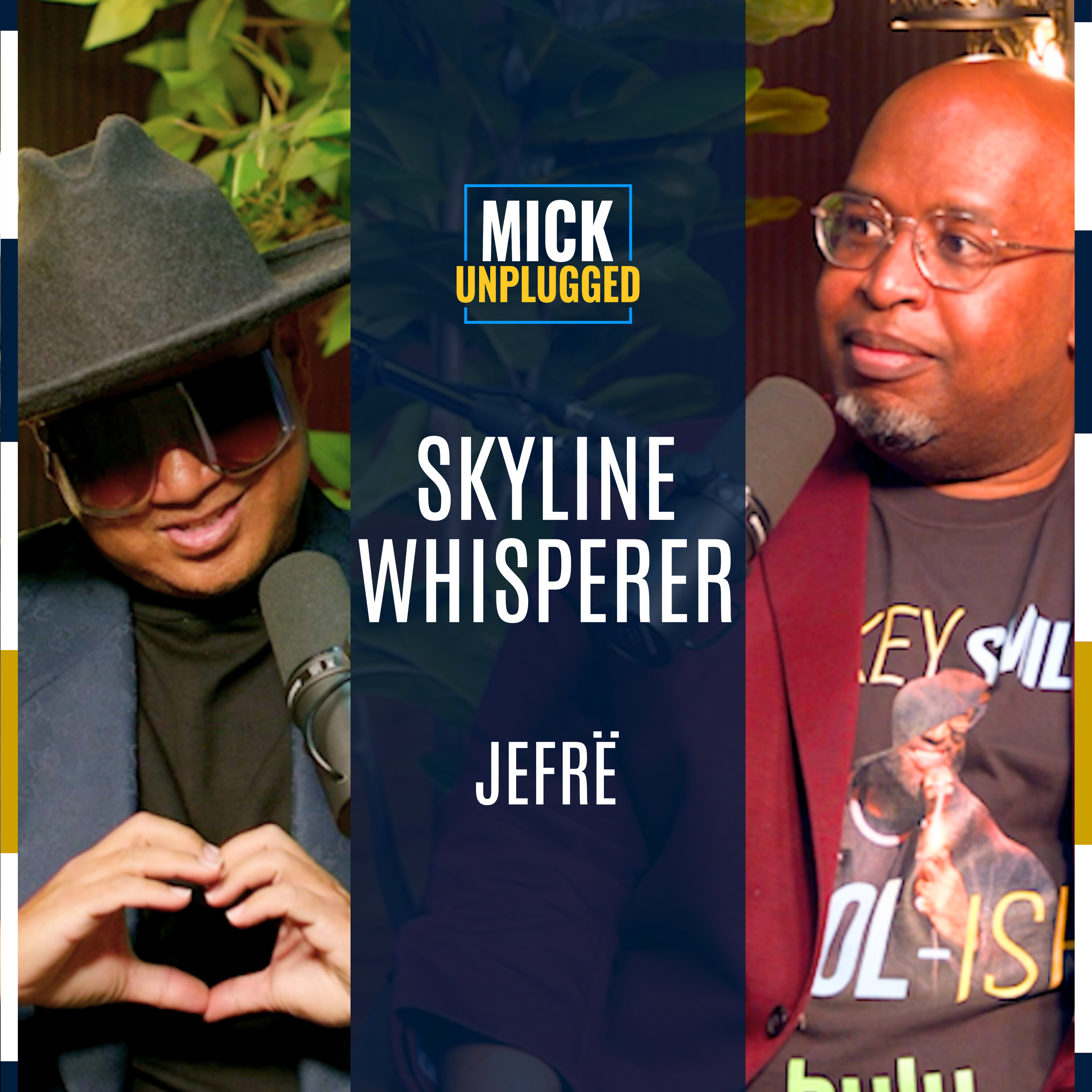
Loading summary
Transcript163 lines
- [00:00]
A
With Vrbill's last minute deals, you can save over $50 on your spring getaway. So whether it's a mountain escape city break or a week at the beach, there's still time to get great discounts. Book your next day now. Average savings, $72. Select homes only.
- [00:15]
B
If you work in university maintenance, Grainger considers you an MVP because your playbook ensures your arena is always ready for tip off. And Grainger is your trusted partner, offering the products you need all in one place, from H vac and plumbing supplies to lighting and delivered with plenty of time left on the clock. So your team always gets the win. Call 1-800-GRAINGER visit grainger.com or just stop by Grainger for the ones who get it done. You're listening to Mick Unplugged, hosted by the one and only Mick Hunt. This is where purpose meets power. And stories spark transformation. Mick takes you beyond the motivation and into meaning, helping you discover your because and becoming unstoppable. I'm Rudy Rush, and trust me, you're in the right place. Let's get unplugged.
- [01:09]
C
Ladies and gentlemen, welcome back to another exciting episode of MC Unplugged. And we are in for something monumental. A lot of times we talk about people being a unique one of one. Well, I am definitely talking to someone that is just that. We're talking about a journey, a story. The uniqueness that can only be told by my man, Jeff Wray. Jeff. Ray. How you doing today, brother?
- [01:33]
D
Thanks, Mick. Thanks for having me here today. Appreciate it.
- [01:36]
C
I am truly honored. You were decked out. You got the Gucci Adidas. We are doing major things right here today on Mick Unplugged. Bro. I'm honored.
- [01:46]
D
You know, I had to come and compress dress to impress. I'm here on MC Unplugged.
- [01:50]
C
Hey, hey, hey. And we appreciate it too, man. You know our. We were introduced to each other through our mutual homie Daymond John the Shark. The Shark. And we're gonna talk about Shark art in a second too, right? We're gonna break some news on that. But talking to Damon and he's like, mick, do you know Jeff Wray? And I'm like, nah, who is Jeff Wray? He goes, dude, and he shows me this portfolio of amazing things. And I was like, you know this guy? And he's like, not only that, he's the number one draft pick for Shark Art. And I was like, let's go. And so then I. I got to follow you. And I saw all the amazing things that you've been doing, and I have been blown away because 1. I'm not artistic, bro. I see one dimension, so I'm gonna go ahead and ruin it for everybody. Like, I.
- [02:43]
D
We're all creative in our own ways.
- [02:46]
C
No, no, I see one dimension. But following you, I have learned to appreciate art. And when I call you a unique one of one, it's because you're building sculptures that are, like, 18 billion feet high, and those are things that we haven't seen, like, in our lifetime. Like, you're doing things that. That generations from now are going to say, whoa, how'd that get there? How's that make you feel, man?
- [03:16]
D
You know, I think for me, as we get into it, like my life story, you know, I think for me, it was always about understanding, you know, legacy.
- [03:25]
C
Right.
- [03:25]
D
And can I create as a creator? Can I create something here that will outlive me? And some things that I do are necessarily about or as an artist, you know, you try to do things about you and your story, but I think for me, it's really this opportunity to kind of create legacy through celebrating other people and other cities and other cultures, not about me. And I think that as an artist, sometimes we forget that, you know, the art should come from you, but if you're trying to share it with the world, you should bring parts of the world to you so that you can interpret in ways that they can experience it for them to create memories for lifetimes.
- [04:08]
C
Yeah, and that's what it's about, man. Like, you know, we were talking earlier, and you're all about creating those memories, creating those moments that people appreciate that they're going to talk about, not even talking about, oh, Jeff Wray did that. Because I know that this is your heart. You want them to understand how it made them feel in that moment and the memories collectively that it's there. Has that always been who you are? Has that always been, like, that inner thing for you?
- [04:37]
D
I think so. I think I'm always been interested in using my talents and my gifts to help others. I'm more of a giver. Whether it's through creation or organization or helping, I'm sort of the guy that always is, like, trying to get people together, whether it's through friends or family and organizing these experiences. And so instead of getting friends and families together, I'm getting cities and nations together to create icons or moments that they can identify with their own culture and their own sort of history, to create their own memories as part of it, you know? And I think, you know, if you look at these last couple centuries. We haven't built anything of significance in terms of something that has meaning and purpose. That's not a building. Right. So when I say Statue of Liberty, architect triumph the bean, now Eiffel Tower, I don't have to tell you what city it is. And so a lot of these things that have been created have been gifts to cities. Like the Eiffel Tower was for the World's Fair, and obviously the Statue of Liberty was a gift from France. But people these days are like, well, how can I build these things and get an ROI from it? And so that's sort of what I've been able to figure out is that is that if you build these things, people will come not just to come to take a selfie, but take a selfie, have a drink, buy some coffee, have lunch, go shopping. It's the idea that these icons become centers for economic development.
- [06:09]
C
Yeah. And then what they're doing, especially now, they're then sharing those. Right. And so now people are like, oh, Mick was over here. What's that?
- [06:19]
D
Yes.
- [06:19]
C
Right. And now they want to go take a trip to Chicago or to a Milan or whatever to. To see some of the things you're doing. Going down to the BVIs. Right. To see some of the things that you have going on.
- [06:30]
D
Yeah. We're such a selfie culture right now. In the last 20 years or even 10 years, you will Google when you go visit, where are the top things or destinations or icons to see? And I'm just helping contribute to that skyline. And that's what Damon gave me is a nickname, a skyline whisperer, that I'm changing the skyline with art versus just buildings.
- [06:53]
C
Amazing. Amazing. Well, we're here in 2026 talking about all these amazing things, but it didn't happen just now. There's a journey that you've had, right. Being born. I call you Chicago's finest, Right. Like the love that you have for your city and that the city has for you. That's where you were born, right?
- [07:14]
D
Yes.
- [07:15]
C
That's where you got to learn a little bit about yourself. But you also have, you know, being the son of parents from the Philippines.
- [07:24]
B
Right.
- [07:24]
C
Like, you still have that love for your homeland too. Talk to us about the birth of Jeff Frey, man. Like, let's talk about that journey of where you started to how you got here.
- [07:36]
D
So I'm a first generation Filipino. My parents came here looking for that American dream. You know, living in the Philippines was hard back then. It's even hard now. But, you know, back Then, you know, our culture in the Philippines is about education. If you were a. Especially if you were a doctor or someone in the medical field, you would actually get a plaque on the house outside of your house in the village. And so you would walk by and you would see all these plaques of people who had education, right? And it was sort of this idea that education helped you, was sort of a test of success. And so for me, coming to or being born and raised in the U.S. you know, that was part of the pediment or the pedigree that I was kind of under the pressure of, that Asian kids needed to be doctors, successful engineers or whatever. And I actually started off in looking at medicine and all of these things, but I started looking into this idea of urban design and planning because, you know, my parents are. You know, my mother is a nurse, and my father was actually an accountant. But then their hobbies were this idea of having a green thumb. So my father actually started a landscape contracting business, had a garden nursery, and then almost helped my mother create a flower center, which then she was doing weddings and arranging. And I remember as a kid doing all these sort of things related to design. And so I thought I got a lot of my design through my mother. You know, she's gonna love that I said that.
- [09:10]
C
Of course, of course.
- [09:12]
D
And then, you know, I started going to school. I went to Ohio State, studied urban design, landscape architecture, went to the AA in London Architecture association, and then worked for the biggest firm called SOM Chicago, which essentially designs sort of the mega structures of the world. I had an opportunity to come to Florida to work in the Bahamas. And then, you know, going through design, you know. You know, I was always sort of working in a firm and still doing place making, which is like creating moments. And then 15 years ago, at 35, I had a heart attack and triple bypass surgery. I was down in Miami at an event, had some kind of pain, didn't know what it was. We didn't have Ubers. They told me to get in a taxi and make sure he gets to his room. And on the way, you know, Mount Sinai, I saw Mount Sinai Hospital, and I was like, I gotta go there, and there's something wrong. Like, I couldn't just sleep it off. Went in. They put the EKG in you, and you're like, you're having a heart attack. Are you on cocaine, heroin? Like, being in Miami? Like, no, I'm not on anything. Like, well, you're having a heart attack. I had two stents put in and had triple bypass. And that's what changed my life. I essentially recovered, went into the partner's office I was working for, quit my job and decided to become an artist. Wow.
- [10:29]
C
So if we can, can we go to that moment when you're in the hospital and they're telling you you're having a heart attack? What are you thinking at that moment?
- [10:42]
D
Well, a couple things. One is like, you know, how, you know, my family, what am I going to do? Am I going to take care of them? Is there anything, you know, what are they going to think, where they are? Are they? And. But then also, like, as you sit there after recovery, you go through this moment about what have I actually left here in this world? As an urban designer and planner, you're there designing cities and communities that take 10 years or 20 years to evolve. And I was like, I can't do anything that's just gonna sit on a shelf. I need to do things that are gonna create an impact now. And so I said, instead of locating the moments, I'm just gonna do the moments. And I said, that's what I'm gonna do. And I said, how am I gonna do that? So I didn't wanna go back to art school. I didn't wanna do any of these, you know, the traditional thing that you do as an artist. And there was these percent for art program where cities were issuing call to artist. You have to come up with designs not based on your portfolio, who you know, it's just based on ideas. And my first year, I was a finalist on 12. I won eight my first year. And I was the fastest artist to break the million dollar mark in commissions in my first year. And then, since then, I'm like, okay, if I can do that, can I go taller? That's when the journey of going taller started.
- [12:05]
C
Talk to that part, man. Because again, I see one dimension, right? Like, I'm sure if I were to say, you know, what do you see here? It's a mic stand. All right, that's what I see. A mic stand, a microphone. You know, you probably see curvature, you see lines, you see a whole bunch of things, right? What made you say, I'm going taller? And what vision did you see of yourself for the moments that you were creating when it's like, taller is where it's at, skylines are where it's at.
- [12:35]
D
You know, what it was is that, you know, as I started traveling the world and designing cities, we started studying and I started looking at these icons and I was able to witness two times where people were doing celebrations or Actually, someone proposed in front of these giant icons like the Eiffel tower or the St. Louis Arch, and you saw the joy of everyone being in this selfie phase, right? Everyone's like, okay, taking a selfie, and it's a selfie of them with a moment that they're capturing. For them, that's sort of a moment in time and space, or where they are at that moment outside of work, outside of family, just to be there to capture that piece in the back. I was like, I want to do those pieces, you know? And so I was like, how do I do something that it's iconic enough that people will come and take a selfie with? I mean, there's amazing artists all over the world. And so my test is just, would you go there? Would you fly there just to take a selfie with it? Would it be on the sort of visitors bureau's magazine? Or when you take the airline magazine and see, like, here's the places to visit, is it that strong? You know, and so not that, you know, big is bigger is better. I mean, the bean is smaller compared to the Eiffel Tower. But it has to be something that resonates with the community and has a storyline. Storyline is much more important than scale. Although scale will get you there, scale will get you there. The story will keep you there.
- [14:05]
C
There it is. There it is. So for those that are watching this and those that are listening, take us through that process. So take us through the process of one sculpture, one piece of art. Like, what is that like? Because again, I see one dimension. I don't have that creative gene that you have, not even close to it. How do you say, all right, this is a vision, and then what are the steps to put it in place?
- [14:33]
D
It's really about talking to the community, asking what they want. So I think, for me, the biggest thing is I've been able to listen and then interpret that listening into form. Whether it's a figurative form or contemporary or sculptural, interpretive form. It's really at the end of the day about them. So they are the ones that giving me the data to. To figure out what this should be. I go through a series of. In some ways, I think my gift is usually some people come in and say, I'll give you 20 different ideas. For me, what hits is I really already kind of know what it should be after speaking to the community group, and then I just have a 1 and a 1A or 1B.
- [15:18]
A
It's sort of when you manage procurement for multiple facilities, Every order matters, but when it's for a hospital system, they matter even more. Grainger gets it and knows there's no time for managing multiple suppliers and no room for shipping delays. That's why Grainger offers millions of products in fast, dependable delivery. So you can keep your facility stocked, safe, and running smoothly. Call 1-800-GRAINGER Click grainger.com or just stop by Grainger for the ones who get it done.
- [15:48]
D
Variations on that interpretation, because it's still about the story. And so from there, just the technical parts of it. You know, you go in there, do sketches. We'll do a 3D model where now we're getting into physical models that then we'll 3D scan and then we'll blow it up to, to figure out one to one scale and do it sort of a test of a certain part of it. But the key is, is really engineering. That's where the word is. Like, you can't just go help and put up a, you know, a 1028 story piece without understanding wind loads or earthquakes or anything related to that. So, you know, I had to get a team together that understands, literally, it's almost like building a building, but in a form of correct a figure or another form that's not occupied. And now we're looking at things that are being occupied. But it's really working with a good team that understands two things. One of how to make sure it doesn't fall, make sure how it doesn't, how to make it, and then how to assemble it and put it together. So the secret is, it's funny because I sort of live in this 8 by 8 by 40 foot box which is the size of a shipping container. So a lot of the parts and pieces have to figure out where those go because some ways you kind of control where the seam lines are if you don't sort of polish and weld them out. But you know, the assembly of. Obviously you can't just take a 28 foot sculpture and just like Gulliver's Travelers and have it come down, down the highway, right?
- [17:26]
C
Yeah.
- [17:27]
D
So it's building into pieces and parts and assembling it together. And at the end of the day, it's just trusting that team and working with that team that understands construction as well. To make something that will be there for centuries to come.
- [17:38]
C
Amazing. Amazing. You know, earlier you showed me this, I'm gonna say the most amazing thing that I've seen. And it was something that you built for the Philippines. Right. There's this piece and if you're watching. We're gonna roll some footage of that right now of. I'm just gonna call it Beauty.
- [18:02]
D
It's called the Victor.
- [18:03]
C
The Victor. I'm just gonna call it Beauty, though. Like, it. It's so amazing. First, I want you to describe it for everybody that's listening. But then my real question for you is, what impact did that have for you personally as your give back to the Philippines?
- [18:21]
D
Well, it's. It's interesting. I kind of rewind. It's almost this. There's a Filipino story before I got to create the largest icon in our country. You know, growing up in the US I actually hated being Filipino. I hated being Asian. I was assimilating in a culture where I felt like I needed to fit in. Like me, my brother and her sister were not only the only Asians, but we were essentially the only minorities in our school or our neighborhood. You know, we were very much raised in a community where, you know, as immigrants, you have to kind of assimilate somehow, right? And. And be who you're not. Right. In some ways. And that was sort of very anti going to, you know, you know, Filipino festivals or all these kind of things related to my own culture. And in some ways, obviously, I regret it. Cause I wasn't never. I never talked down about it or did any. I just didn't participate, you know. But coming full circle, when I started getting invited back to my homeland because of the work I was doing here, it sort of brought me to full circle. The idea that I'm taking my education and bringing it back to my homeland. And that's what this sculpture is about. It's called Victor, which they named it, but it sort of honors the global Filipino. The idea when a Filipino migrates to the US Or Europe, they're looking for that American dream, European dream, looking for a better life. When you do that, don't forget where you're from and that there will always be a beacon for you to come home. And so this sculpture is a 28 story sculpture. The reason for that height is because it's the. The same height I made, a little taller than the Statue of Liberty. The same sort of idea of this idea of the American dream and freedom. And then it has this hand in the air because it's like a beacon to remind you to come back home. But it's made a perforated mellow on the top and then goes solid to the bottom to a mirror finish at the feet. So when you first enter it, you actually see your reflection in the sculpture of who you can be right now doesn't have to be abroad or go anywhere. You can do this right now. And then as you go up, you actually see the structure kind of sort of become invisible, like, becomes perforated. So you can actually see the structure inside that then represents the strength of the Filipino.
- [20:41]
C
And, you know, seeing the sun pass through at different times, and that really touched me, man. And I know you didn't know as we were, as you were showing me, but it touched me because it reminded me of why I moved back home to South Carolina a couple of years ago. Like, the connection that you have with people, and I'm talking about you, Jeff, right now, is so empowering, man. Like, you touch people, and I want you to know that because it's something I feel from you. It's something obviously I've known through Ted and Damon in the group over at Shark Group, but it's phenomenal, brother.
- [21:19]
D
Thanks.
- [21:19]
C
Like, what you do for people is phenomenal.
- [21:22]
D
I mean, my piece is that, you know, we all have our own studio work, right? My studio work has these fractal, low poly kind of positions with the box heads that. For me, the box heads represent this idea of a city with emotions, but the fractal pattern are really points that are connected, and so they're called points of connection. And the fact that you said that I like connecting people is really what resonates in my own personal work, that I'm still doing these pieces that are about connection. And so when I had my first museum exhibit in the US Was called Points of Connection. My first museum exhibit in my homeland, the Philippines, was called Points of Origin. The idea of thinking of my origin story, which is based on my new book that's coming out in July.
- [22:08]
C
We're going to get there in a second. Before we get there, though, I want to talk about something that I know is important to you because I've never Not seeing you on brand, in brand. And this is a business lesson. This is an entrepreneurship lesson. Talk to the audience about the importance of brand and what that does for your business and even for you as a. As a person. I don't mean you, but what it can do. For those that are listening to Jeff Wright,
- [22:45]
D
I mean, you talk about, like, my whole style. You know, I'm not sure, like, I didn't do this on purpose. You know, I think I sort of fell into it. You know, I love style and fashion, and I think, you know, I've been, you know, if I wasn't into art, it might have been a Fashion designer.
- [23:03]
C
Right.
- [23:03]
D
And so I think I've always wanted to do brand collabs, right? And so, um, for me, it was watching you know, people on the Runway coming down in sort of these expressions of almost kind of like moving art.
- [23:18]
C
Right.
- [23:19]
D
Made me think that, you know. You know, that if you want to, you know, you're you. You are your work as well.
- [23:27]
C
Right, right, right.
- [23:28]
D
And so the thing is about artists is that, you know, it's okay. Like, it's okay to kind of be very introverted, like I think, you know, and have your work show. But. But the success of certain artists, in my mind, not to say that I'm successful, one of the things that advice I give to artists is that you have to understand three things. One is how to share your story, your personal story, how to share your work and then also be able to execute.
- [24:00]
C
Yeah.
- [24:00]
D
And the sharing and telling. Your work is you. Your work is expression of yourself, and you're part of that same brand, right? Believe it or not, artists are part of the same brand. I mean, it's not only in the visual arts, but if you look at music. Music and fashion, we're all extensions of our expressions, right?
- [24:20]
C
Yeah.
- [24:21]
D
Not to say you have to walk in. You're like, oh, you look like an artist. Right? But in some ways, it does help. Like, I think it helps, you know, this. This sort of expression of me, of my art on. On my body, is also. Is the same thing that I'm doing with my monumental work, right? And so I'm sort of practicing what I'm preaching, you know? And so everything is curated, right? So this whole thing is curated. Just like my artworks are all purely created. Just like when you go to My museum, exhibits are curated. Like, if you go to festivals curated, Everything's curated. It's all part of the same brand, right?
- [24:56]
C
Speaking of brands, bro, the Gucci Adidas. I'm telling you, I don't know if there's an official. I was gonna say I don't know if it's official.
- [25:03]
D
Damon. We'll work on it.
- [25:04]
C
But I've not seen you not in it, and it's amazing every time. So if you were to create. Since you almost wanted to be a fashion designer, if you were to create the brand of Mick and Mick Unplugged, and you're looking at me and you're like, all right, Mick, this should be your style, your brand. Go ahead. I'm gonna let you. I'm gonna let you fashion design me up. Jeff.
- [25:22]
D
You already got it. You got this sort of street meets business. Like, I think so.
- [25:27]
C
That's me.
- [25:28]
D
No, you've got this sort of hip hop entrepreneur sort of combination, both. Like, I can. I can look at you and be like this. This guy knows what he's talking about. But then he can also tell me how to. What to do with my money and make it work as well. Like you. You look like the combination of rich and authentic, you know, There it is.
- [25:52]
C
You all heard it. Jeff Wray said it, not me. Jeff Ray said it, not me. I am the hip hop entrepreneur.
- [25:58]
D
Yes.
- [25:59]
C
There we go. There it is.
- [26:00]
D
And sometimes, you know, it comes to you naturally. You just have to be comfortable. Like, I'm comfortable like this. Right. And I think everybody needs to be comfortable how they are, but I think they also need to be aware that when you're sharing your work, you're also sharing you.
- [26:17]
C
Yeah, right. Yeah. So let's talk about shark art. I talked about it in the opener. The number one first round draft pick of shark art, Damon, knew I can't even draw stick figures. So he was like, nah, Mick, you gotta go on this business side over here. Talk to us about the collective.
- [26:36]
D
I think you were in the draft pick, too. He was like, Mick Jeffrey, number one. Number two.
- [26:40]
C
There you go. I was number 50. I was number 50. But no, talk to us about how that came about and some of the cool things that you're doing with shark art, man.
- [26:50]
D
It goes back to, like, your original question of being on brand. I was at a, you know, just being myself.
- [26:57]
C
Yeah.
- [26:58]
D
I mean, that's another way of saying I was being on my Being myself on brand.
- [27:01]
C
Right.
- [27:03]
D
I was at an event in my home over in Lake Nona at a conference that he was speaking at again. Another conference.
- [27:11]
C
Right.
- [27:12]
D
He happened to be walking in the garden where there was a series of monumental sculptures there. And he did a video. And he's talking. He's someone that supports artists all the time and came to me. I introduced myself to him backstage through a secondary friend and introduced who I was. And like, wait, you're Jeffrey? So you're the guy that has the sculptures in the garden? Cause you could see my name on the plaque on there. That's another branding kind of tip. Your name, how you share it to the world. He's like, I didn't even know you're alive. You know, it's like, you know, and it's interesting because in that garden itself, I was the only living artist in that collection.
- [27:57]
C
Wow.
- [27:58]
D
And he did a video for me, and I still have it. And it says, like, we need to support artists now living while they're living right now. And, you know, through that discussion, we still stayed in contact. He saw all these things I was doing. He saw how a lot of these other people who are taking advantage of me necessarily, you know, taking advantage of my monuments and making commercials and AI videos without your approval, without my approval, and making miniatures and, like, saying, well, that's great and all, but how much are you making on it? And I was like, you know, zero. I thought that was really cool. I was like, oh, my God, that's really cool to see it on a commercial.
- [28:37]
C
Yeah.
- [28:38]
D
Like, yeah, but then you should. It's like, nil. It's like your image and likeness.
- [28:43]
C
Yep.
- [28:44]
D
And they can play dumb all they want, but, you know, people are making money off, you know, what's the difference between using your sculpture and hiring an actor? Right. They still have to pay. Right. So we got into this sort of business and art kind of discussion, and he started this group called Shark Art. He's always posting videos and supporting artists, like, of all types, from really established artists to emerging to just beginning and just supporting artists in general. And we started talking and said, you know, we should do something together. And you keep doing what I'm doing, which is kind of creating. And let me help you with the management side. He's like, think of a singer or an actor. They have a team around you. Like, who's your team? And I was like, right here. And they're like, huh?
- [29:37]
C
Yeah.
- [29:38]
D
They're like, yes. Like, everything from business administration to concept to project managing.
- [29:44]
C
I've been there too. Yeah.
- [29:45]
D
Yes. And he's like, you just need to focus on showing up and doing and creating. And let us put a team around you so that you can help expedite your process, but then also figure out an opportunity where these giant pieces can now be shrunken and be given to the consumers as well. As we're in this new phase now where creators such as myself are being sought after by brands. If you look at Virgil Abloh, like, Virgil, I met him. He was. For those who know, he was an architect at University of Chicago. Got in with kanye and started DJing and started this brand called Off White. And next thing you know, he was the lead designer of Louis Vuitton.
- [30:38]
C
Yeah.
- [30:38]
D
How do you start an. I don't think people starting an architecture school actually thought that, but his path was set, and maybe he knew that, but he got himself in position to allow that to happen. So. So brands are now looking for creators Outside of within their own companies to collab with them. And you could see it with artists as well. Like, you see these amazing artists that are just like even Jeff Koons and, you know, he's the largest living artist, you know.
- [31:06]
C
Yeah.
- [31:06]
D
$91 million for that bunny rabbit, you know.
- [31:09]
C
Yeah, yeah.
- [31:10]
D
You know, but then, you know, he's also doing things with H and M and Louis Vuitton and. And so, you know, brand starting to look at us as people, as leaders that sort of move culture, inspire culture, and at the end of the day, move product.
- [31:27]
C
There it is. There it is. So, you know, you've teased us about this book that's dropping very, very soon. Tell us about the book. Tell us about the origin and the journey of writing the book.
- [31:38]
D
So it's more than, you know. So it's being published in my homeland, the Philippines, and it's not necessarily a coffee table book that shows the history of all my work. Yeah, that's easy. You can do sort of an architectural book of pre pictures, but it's divided into three chapters. It's divided into my me growing up in the US Sort of my heart attack story and then coming home. And it's written by three different amazing authors, sort of like as a Q and A. Yeah. And then we have this dialogue like you and I are doing, and then has inserts of my history of my childhood, of my home in the Philippines, and it talks about my journey to like, to connect and to create these moments and memories to inspire. And then you kind of at the end, see all the big work. You know, so in the beginning you see the big work, but it sort of goes backwards. Like I just, you know, show the journey of how I got to the big work. And the big work. And the pictures are secondary to the words, Right.
- [32:42]
C
To the story, right? Yeah, yeah. To the written story.
- [32:45]
D
So it's called, you know, we still have some working titles with, but it's definitely more about my origin story.
- [32:50]
C
I love it. Well, I can't wait to share that to the world. I know you're going to, but I'm going to help promote it and push it to the world. You know, I want to talk about some of the other things that you also have going on because you have some amazing projects that are in the works. Talk to us a little bit about all the things or the big thing that you have going on.
- [33:11]
D
There's always big things. And I think now with Damon introducing me to people of influence that help shape skylines, now I have some existing clients where One is Sir Richard working on, hopefully, which would be the largest underwater sculpture in the world. There will be a coral reef. It's a figurative sculpture with coral reefs. It talks about sort of the folks that are sort of healing the world. Sort of a table of 12 with the hand coming out and 10 stories tall with a fist that becomes a light tower out of the ocean. That's going to be sort of an attraction close to between Moskito and Necker, where his island is. The second thing I'm working on, I just finished the world's largest heart sculpture down in South Florida, seven stories tall, trying to get Guinness to certify it. I had 30 couples just get married there. And that's the full circle where I was actually able to sign the marriage certificates. I think they wanted that more than memories and moments and moments to actually see that. And then also, I'm working on something for Hollywood. I'll have one of the world's largest stars there. I just got this will be first time announcing it, but I was selected by the Chinese Theater to do the commemorative handprint ceremony. Sculptures that we'll give out to the people who get their famous handprints. They don't go home with anything except with dirty hands. So we're going to give them a commemorative sculpture piece, which is nice.
- [34:46]
C
Congratulations, man.
- [34:47]
D
I'll have an exhibit there of these astronauts that are going to go through perfect timing with Artemis right now. And then, you know, we're still in the works, but, you know, possibly this will be the world's largest sculpture at 80 stories tall. You know, wow. It's interesting when you're working on a sculpture where the architecture team says, you know, we can fit, you know, three or maybe 10 stories of residential or commercial in the body of the sculpture.
- [35:17]
C
You know, that's pretty freaking cool.
- [35:19]
D
You can live.
- [35:20]
C
That's pretty cool.
- [35:20]
D
Live in this sculpture. And then, you know, I think, you know, working with Damon, I can't really say yet, but he's gotten me these interesting licensing deals of these really known names that you're gonna start seeing large versions of them popping up in cities. And the beauty of that is I'm still doing what I'm doing. These large, iconic pieces that become part of the skylines, but then negotiating opportunities where I can do collectibles that are limited edition, and then also things that are a little bit more economical that we can then give to consumers as well.
- [35:55]
C
Got it. I love it, man.
- [35:57]
D
The one other thing I do want to say is that, you know, I was talking about the heart sculpture. That was the kind of that full 360 moment for me is like, is that the world's largest heart? I had a heart issue. I built that. I saw people getting married there. Some person came up to me and said, I was here for the last five months doing a time lapse video of this spot when the heart was under construction. And on the last day, I brought my girlfriend out and I proposed to her in the same spot.
- [36:26]
C
Wow.
- [36:27]
D
And so to actually influence that is amazing.
- [36:30]
C
Yeah.
- [36:31]
D
And there are times when I'm off brand, so I'll be off brand when I'm just, you know, just my T shirt and jeans and a baseball hat. And the beauty of what I love doing about that is that I actually get to watch people engage with my work.
- [36:44]
C
Yeah.
- [36:44]
D
And just see them taking selfies and I'll be with friends. Like, tell them it's you. I was like, no, just let them be them. Like, I'm not. I don't need to be part of that experience. You know? But that's sort of what brings joy to me, is actually seeing people enjoy the work. You know, it's more than coming, going to a museum and seeing a photo or painting and then walking by, but actually experiencing that piece more than 10, 20 seconds.
- [37:12]
C
Right. Having that moment. And again, that's exactly who you are. The creator of Memories and moments. That's your new tagline. You can have it.
- [37:21]
D
That's a tagline. You can have it.
- [37:23]
C
Go ahead and have Damon. Go ahead and trademark it. Everything. It's yours. I want nothing. Nope. I want nothing. That's my gift to you. Yeah.
- [37:29]
D
Thank you.
- [37:29]
C
I can't draw, but I can give you a tagline. How about that? So where do you want people to find and follow you? You?
- [37:39]
D
So you can follow me on my Instagram. It's J E F R E Artist is my ig. That's the easiest way to follow me. You can also just Google me if you want. And there's always he is that guy.
- [37:55]
C
Google me. Him. That's him. Google.
- [37:58]
D
No, because they usually have. That's where we'll find events that are. That people are having in sponsors. I sometimes, I don't know, I'm having stuff myself or they're being exhibited and I think I need to get that all reined in. But I think if you want to see my work, you can obviously go on Google and go to Images and see that. But I do have a website, www.jefre.org as well. But in general, just, you know, Follow
- [38:23]
C
Mick, follow me to get to him. You know, he talked about building his team.
- [38:28]
D
Yes.
- [38:29]
C
I'm the ea. That's me. I'm the executive assistant to Jeff.
- [38:33]
D
No.
- [38:33]
C
Yes, yes, yes, yes. So I'm going to get you out of here. My rapid fire top five, quick five. You ready?
- [38:39]
D
Is this the unplugged part?
- [38:40]
C
This is. This is Jeff Ray unplugged. Okay, you ready?
- [38:43]
D
Yes.
- [38:44]
C
All right. Your favorite piece of work that you've done.
- [38:48]
D
Can't say it. It's like saying your neighbor, your favorite child.
- [38:53]
C
Oh, I'll say mine.
- [38:54]
D
Okay.
- [38:54]
C
No, I won't.
- [38:55]
D
Okay. But I'm not my favorite. But my probably, my most connection is probably obviously the Victor, because the idea, it's about, you know, sort of a full circle moment for me about being Filipino.
- [39:10]
C
That's the one I connected with. Of all the things you have, like, that's the one I connect with. Okay. Number two, one of my really good friends got me hooked and addicted to Lumpia. Can Jeff Wray make lumpia?
- [39:24]
D
No, but I can make adobo.
- [39:27]
C
I want lumpia, by the way. No, no, I need lumpia.
- [39:30]
D
Lumpia is easy. I haven't made it because it's just a wrap with just pork and different mixtures and then wrapping up and then deep frying it. If you want me to make lumpia for the first time, I'll make it for you, Mick.
- [39:41]
C
Beef, though.
- [39:42]
D
Beef, Yes.
- [39:43]
C
I love it.
- [39:43]
D
Beef. Yes. All right, we'll do a MC version.
- [39:46]
C
Thank you. Thank you. So that does lead to comfort food for Jeffrey.
- [39:53]
D
What?
- [39:53]
C
Where are you going to? What are you having? You just want to decompress for a weekend. You want to get unplugged?
- [39:59]
D
I mean, it's. I am a sushi guy. I like sushi, even though it's probably not good for me. But I could go for some fried chicken or something like fried stuff. But it's not good for me, for my heart. But I do love Japanese and sushi. That's sort of my comfort go to all the time.
- [40:22]
C
Okay, fourth question. Can you help someone like me who only sees one dimension? Can you help me see two and three and maybe even four dimensions when we're looking at art?
- [40:35]
D
Yeah, it's very simple. It's sort of. The question is, what does it mean to you when you look at it? Okay. Because everything, it's just like art. You can't have everybody like it. But what does it mean to you? What do you see first? And so when you. Whatever you see first, it could be something like I see a circle or I see a dog or I see, you know, food. Like, it's whatever resonates with you, then that actually creates a personal connection with you.
- [41:09]
C
Okay, easy enough. You'll be my tutor.
- [41:12]
D
How about that?
- [41:12]
C
Expensive tutor. But you'll be much.
- [41:14]
D
Or you go to California, you get some gummies, and you can see whatever you want.
- [41:18]
C
That's the real secret. That is for those that are listening, the real secret is see multiple dimensions. Just go to California and get gummies.
- [41:26]
D
Yes.
- [41:26]
C
There we go. Last one. Very serious. As the story and legacy of you is being told and being written, what's one word that you want to make sure is used to define your legacy?
- [41:41]
D
Moments.
- [41:43]
C
Easy enough, easy enough.
- [41:44]
D
We said it over and over again. You know, I could say legacy and stuff like that, but legacy is about me. Moments is about everybody else.
- [41:53]
C
That's it. That's why he is who he is. Ladies and gentlemen, I have been honored to spend a few moments with the guy who creates them, Jeff Wright.
- [42:04]
D
Thank you, Mick.
- [42:05]
C
Love you, brother.
- [42:06]
D
Love you, too. There it is.
- [42:08]
B
That's another powerful conversation on Mick Unplugged. If this episode moved you, and I'm sure it did, follow the show wherever you listen. Share it with someone who needs that spark. And leave. Leave a review so more people can find there because I'm Rudy Rush, and until next time, stay driven, stay focused, and stay unplugged.