← Mick Unplugged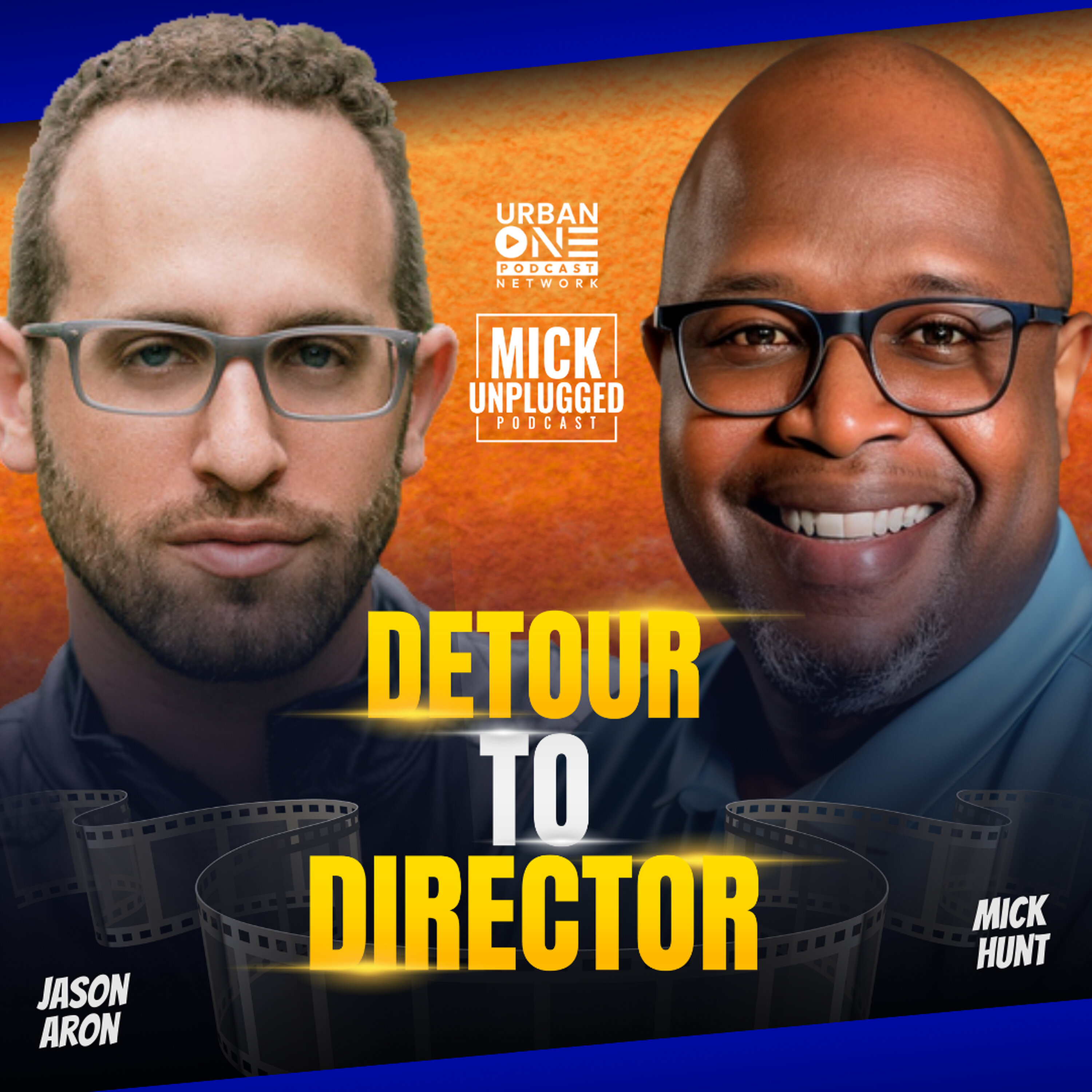
Loading summary
Transcript248 lines
- [00:00]
Jason Aaron
I'm just into what interests other people. And that's what I think a good story is. I think far too often things are a little too artsy, you know, And I think that artsy really is nothing more than saying it's just so niche.
- [00:17]
Mick
Welcome to Mick Unplugged, the number one podcast for self improvement, leadership, and relentless growth. No fluff, no filters, just hard hitting truths, unstoppable strategies, and the mindset shifts that separate the best from the rest. Ready to break limits? Let's go.
- [00:45]
Host
Ladies and gentlemen, welcome to another exciting episode of Mick Unplugged. And we have an award winning everything. When I talk about filmmaking, directing, producing, he just told me he is Teaneck, New Jersey's finest.
- [00:58]
Jason Aaron
My guy, unofficially.
- [01:00]
Host
There we go. Jason, how you doing today?
- [01:01]
Jason Aaron
Good, how are you, man? It's a pleasure to be here, man.
- [01:04]
Host
Like, I am honored to have you here. I don't get to talk to award winning people all the time, right? So there's so many questions I want to ask. There's so many places I want to go, man. But let's just talk about you and what got you into this world of entertainment and filmmaking. Directing, producing. Like, what got you here heavily by.
- [01:24]
Jason Aaron
Accident, to be honest, my college degree is in criminal justice. I did nothing with it. I was gonna go to law school, dropped out three months before it was gonna start, and was just lost, you know, 22 years old, a degree in something I wasn't gonna use. What do I do? I had a little bit of a cushion just to hang out for a little bit. My dad had a sales business and I was always creative. I was always into Photoshop. And in college, I was that guy sitting editing music. And I was a DJ for a while.
- [01:56]
Host
Okay.
- [01:57]
Jason Aaron
And that kind of pushed me somehow into like web design and graphic design. This is the early 2000s.
- [02:06]
Host
Okay.
- [02:06]
Jason Aaron
And I was an okay graphic designer. I was. I was okay. I was all right. You know, I could still. I could still work my way around Illustrator and Photoshop, but that allowed me a platform to, you know, this is still the early. This is before Canva, right? This, before everyone could do it themselves. So as long as you could do something, you can make some money.
- [02:22]
Host
Yeah.
- [02:23]
Jason Aaron
And I was designing a bunch of logos for people and doing, you know, business development in the graphic design space. Nothing major. And through that, I'll never forget the day a family friend who had an insurance business said, do you do video? And I said, yeah, of course. But no, I'd never done a single video in my entire Life. And that was it. That was the genesis of the whole thing. I went out. He wanted a website and a video for the website.
- [02:49]
Host
Okay?
- [02:49]
Jason Aaron
The irony is he ended up hating how he looked on camera, which was probably my fault. But he decided after we shot the video that I went out and bought the camera and did the whole thing. He decided that we were just gonna do a stock video, a stock footage video, which I made for him, but I didn't even need the camera. That was the whole point. But that was it. Once I had that, started doing corporate video. And I think the good thing is that I didn't know what I wanted to do, which allowed me to do a lot of different things. And the first television pilot that I shot, which I still think would be a good show that never went anywhere, was a show called music school. We went to different colle music festivals, like, you know, their spring festivals. We shot our pilot at Rutgers fest, which was my alma mater. That was nerd played, like, shot Pharrell. Like. Like, first thing I ever shot was, like, pharrell. It's like, oh, okay, there you go. And it was a cool show. We had a Z100DJ. His name was Nico. He, like, hosted the show. I still think that's a cool show and would sell. Shot a couple pilots, but along the way, just started making money. The corporate video stuff that, like, everybody does, you know, dentist office or, like, whatever. And then 2012 was my big break when I had the wild idea to make a documentary about back to the future.
- [04:03]
Host
There we go. And so I want to go there next, man. So actually, before I go there, let me. Let me. Let me pause for a second and give you some appreciation, because what you do. And I don't think a lot of people, the average person like myself, don't understand storytelling through film, right? It's not just, hey, we're gonna go record something. There's still a story that has to be told that's deeper than the story that's telling, right? Like, how did that become a thing for you? And how to me, I call it creative genius. Genius I don't have. But definitely through your work, is there, like, how important is that for you when you're like, before you take on a project, like, what's the story? And then how do you take that story and, like, truly tell it?
- [04:48]
Jason Aaron
I think one of the interesting gifts. And I'll use that word that I have, is that what interests me, I think interests a lot of people. It's a weird gift, but I think over the course of the last 15, 20 years, I've kind of figured that out. I'm into some obscure stuff, and I think you have to be. And I think you have to be a little nuts, and I think you have to be willing to work 22 hours a day sometimes. Yeah, you need all that. But I think as we're gonna get into kind of that Back to the Future doc, I'm just into what interests other people. And that's what I think a good story is. I think far too often things are a little too artsy, you know, And I think that artsy really is nothing more than saying, it's just so niche, you know, and there's nothing wrong with it. It interests you, and maybe it interests 10 other people. But I find that the stuff that I'm interested in is what interests a million other people or 10 million other people. And it's weird to say this, but I think I'm just an average guy, right? Like, I'm just. No, no.
- [05:48]
Host
Not letting you get away with that, Jason.
- [05:51]
Jason Aaron
I think, you know, I like to watch sports and I like to watch movies, and I. You know, the entertainment that's supposed to appeal to the masses appeals to me. And in turn, I could take that and turn it around, and the things that become interesting to me become interesting to other people. The documentary I'm working on now, it's about eating healthy. And, you know, I thought I hit a big cultural moment hitting the 30th anniversary, back to the Future, which was huge, and we'll get into it. But now I'm doing a documentary about eating healthy. I mean, everybody eats. Literally. There are so little things that as human beings, we all have in common. We don't all have the same political beliefs. We don't all, you know, have the same religion. We don't all have the same wear the same clothing, but we all eat. We all eat. We all breathe. I don't know that a documentary on breathing would be interesting. Maybe it would be. But outside of that, what do we really all have in common? And that wasn't something that I was thinking about when I had the idea for this, but over the course of a year, producing this documentary, and people would say, hey, what are you working on? And I'd say, oh, a documentary about eating healthy. 100% of the people I've talked to have been interested in it or want to strike up a conversation about it or want to know what the angle is. And that's, even to me, that's, like, mind blowing, because That's a hundred layers beyond Back to the Future. I have way too many friends in their twenties that have never even seen Back to the Future, and it's like, oh, my God. You know?
- [07:13]
Host
Yeah. So let's go Back to the Future first.
- [07:16]
Jason Aaron
Let's go. Because.
- [07:17]
Host
Perfect segue, because one, for you to do a documentary on that was amazing. And it's one of my favorite ones, by the way, so definitely go check it out.
- [07:26]
Jason Aaron
Love that.
- [07:26]
Host
But then, two, it's hard for films, a classic like Back to the Future, one, to have three, to have a trilogy is hard. And then to say, not only was there a trilogy, we're doing a documentary about it. Like, so. So walk us through that whole.
- [07:43]
Jason Aaron
It was. The year was 2012.
- [07:45]
Host
Yeah.
- [07:45]
Jason Aaron
And the Genesis story is amazing because I was still working in event film production, so I kind of got to that point where I was shooting a lot of weddings, bar mitzvahs, whatever.
- [07:55]
Host
Yeah.
- [07:56]
Jason Aaron
And this was sort of the odd phone call. Somebody who was having a bar mitzvah for their son wanted me to make a short film that they were gonna play at the bar mitzvah. And the guy sold insurance. I don't know why everyone in my life sells insurance, but the guy sold insurance. And. But. But his calling in life was to be a film producer.
- [08:13]
Host
Okay.
- [08:13]
Jason Aaron
You know, he wanted it so badly. He loved that world. And so this was his opportunity to write a script and act and produce something. And it was a little hokey, but basically, he takes his son, who's now 13, takes him back to when he was 13, and then to when his grandfather was 13. And they do this through a DeLorean time machine, and they go and they see their grandfathers, and everybody in the family got to be in the film, and it was fun. Well, he rented a DeLorean, and this is out in Long island. And the day that we were filming, everybody who passed by, stopped at cars dead in the street, got out, took pictures of Stellarian, and I was like, wait a second. It's like, I love Back to the Future. I guess a lot of other people love Back to the Future, but this is a fairly affluent area of Long island where a DeLorean at the time, you could buy a perfect condition DeLorean for, like, 30 grand. And people are pulling over their $100,000 cars to take a picture of this relic from the early 1980s. And that was it. That's all it took. And I was like, wow, this is incredible. I should make a documentary about how the DeLorean affects so many people all these years later, you know, from Back to the Future. And that was it. That's all it took. And then I just had. I had the ability because I had the equipment to go out. I found the guy up in Massachusetts who was a huge collector Back to the Future stuff. Went up there for a day, shot a pitch trailer, put it on Kickstarter, raised $45,000 on the first Kickstarter. And that was. I think we had 600 backers for the first one. But that's all it took to know, okay, this project is viable. They wanted to be made. I thought $45,000 was like a million dollars to make a film. Me, it's. I'm doing it. It's all my equipment. Like, that's just so much money. I burned through that money in, like, three months. It was gone. Our first couple of shoots were in Vegas, Louisiana. Of course, and it was just the travel that just ate through the money. Ultimately, we had another producer who came on board, and he invested in the film to become a producer because we had already sort of kicked the ball down the hill a little bit. So that brought in more money. And then we always knew we would do a second Kickstarter where we raised $150,000, which to me was $10 million, right? And I feel like some of that money was already also spent before we even got it. But again, it was enough to finish the film. So we basically had zero out of pocket cost. You know, we just had fan investors, essentially, who got paid back in T shirts and Blu Rays and license plates. So all it took was just that spark and knowing that, hey, the public wants to make this film. It's clear. The media attention we got was unbelievable. I say we were. We were in every publication from National Geographic to Playboy, and that is with no exaggeration. We were in both of those publications. Everything. You know, the Hollywood Reporter and all that, you know, all the stuff you'd expect, but just everyone picked it up. And they were sending cars to my house to take me to Dirty Rock to go on msnbc. I'll never forget, my second appearance on MSNBC was right before the doc came out. And I'm on. I don't even remember what the show was. I'm on the show talking to the host, and they're like, we have to break. Bernie Sanders has just announced his run for presidency. I'm like, okay, I guess. I guess Bernie Sanders is booting me, right? And it was just moments like that I kept happening over and over and over we were. We promoted the film at, like, seven Comic Cons. We went to London, where we were the opening panel on the main stage of the London Film and Comic Con. And the panel after us was 15 members from the original Castle Back to the Future. It was the largest assembly of that.
- [11:33]
Host
Yeah.
- [11:33]
Jason Aaron
And we were there, opening act, and it's just like, yeah. How. How does this happen?
- [11:38]
Host
Amazing.
- [11:39]
Jason Aaron
All because I just sat there and said, oh, I should make a documentary about DeLorean. And, oh, three years from now, there's this big 30th anniversary back to the Future. And it's the date in the film. October 21, 2015, when they go into the future. That'd be a good date to release a film. Yeah, that was it. That's all it took.
- [11:54]
Host
Crazy outside of the box, but almost simplistic in your thinking, right to the.
- [11:58]
Jason Aaron
Point that you get scared. Because I had the thought, well, who am I? I'm just some filmmaker from Long Island. Universal Studios is gonna want to do this. Like, I can't do this because, you know, there. Nope. You know, and you gain a lot of confidence through an experience like that where you just go, no, I'm gonna do this, and I'm gonna do it first, and I'm gonna do it better. And I think that once everybody realized how big this anniversary was, I'm sure Universal would have loved to do it, but I was way ahead of them. And so, you know, I beat a big studio to the punch, which is. Yeah, it's crazy. It's crazy to think about.
- [12:37]
Host
And you got to meet, obviously, and talk in film. Some of the cast, right?
- [12:43]
Jason Aaron
Yeah. I mean, almost everyone who's in the film I met. Steven Spielberg is the only one. He was busy on post production of film. So he did our interview. His team basically said, okay, what cameras do you want it filmed on? What's your framing? What microphone are you using? How do you want it shot? Send us the questions. We'll ask for you. I try to fight back, but I lost that battle. But everyone, you know, to sit this close to Robert Zemeckis and talk to him about a film that he made is, like, is mind blowing. Michael J. Fox, who lives pretty close to where we are right now. I mean, we just sat and talked about hockey. Like, we're both, like, hockey guys. Yeah, it was weird. It was weird.
- [13:18]
Host
So. So what was it like, Man, I'm going to call him Fox because, you know, there's two. There's three. Red Fox, Michael J. Fox and Jamie Foxx. Right? Like, all of them. You Fox, Vivica A. Oh, that's true.
- [13:32]
Jason Aaron
Yeah.
- [13:32]
Host
Vivica A. Fox.
- [13:33]
Jason Aaron
Can't forget her.
- [13:35]
Host
So the four Foxes, right. You can just call them Fox. So when you met Michael J. Like, what was that really like? Because I could only imagine, like, me sitting here, and it's like, holy crap.
- [13:46]
Jason Aaron
It's so surreal. Oddly, I think the date was January 7, 2015. I don't know why I remember that. And there was a snowstorm here in New York. He has his, like, house and office are combined uptown. Not going to give out his address, of course, nor do I remember it, but just the date. There's a lot going on. Right. Commuting into. So one of the things about this documentary was we did very little filming in New York. Most of the filming. Adam F. Goldberg, who is the writer and creator of the show the Goldbergs on abc, he was an executive producer, which is a story in and of itself. But he had come on, and he basically gave us carte blanche access to the Sony lot in LA to film as many interviews as we needed on the set of the Goldbergs, which was perfect because that show was set in the 80s.
- [14:31]
Host
Okay.
- [14:32]
Jason Aaron
So the set looked like the 80s.
- [14:34]
Host
Yeah.
- [14:35]
Jason Aaron
So we. We had filmed Dean Cundy over there. Leah Thompson. We did on that set. We. I finally convinced Adam to get in the documentary. I'm like, you are a part of this.
- [14:45]
Host
Right.
- [14:45]
Jason Aaron
You know, because the show had done an episode on the Goldbergs, which I filmed BTS of them filming their episode, which is also like another out, like, out of body experience. And Michael J. Fox was one of the rare interviews that we did in New York.
- [15:01]
Host
Wow.
- [15:02]
Jason Aaron
I mean, almost I. Off the top of my head, I can't even think of another one. So the weird part of that is it's not weird for me to wake up in my own bed and go to work. I mean, I do it all the time. But for this documentary, to wake up in my own bed, get up, go into, you know, come into the city and film an interview that was very different than almost everything else on this project. So the buildup wasn't there. Like, I didn't get on a plane. I didn't go somewhere. I didn't have to go to a. To a movie studio that day.
- [15:28]
Host
Yeah.
- [15:28]
Jason Aaron
I just got up and went.
- [15:30]
Host
And then.
- [15:30]
Jason Aaron
And it was snowing. So there's like. There's snow, which is like, you know how it is here. It's just a pain.
- [15:35]
Host
Yeah.
- [15:35]
Jason Aaron
So now you're dealing with all that. We're unloading a Grip truck in the street in the snow. And like we had a hand carry everything into his house and make sure that we didn't get snow everywhere because it's this guy's house.
- [15:44]
Host
Yeah.
- [15:44]
Jason Aaron
And then next thing you know, and then we're setting up an interview and it's like, okay, I've done this 10,000 times. And then Michael J. Fox walks, walks in and it's like, Damn, like if 9 year old me could see this right now.
- [15:56]
Host
Right?
- [15:56]
Jason Aaron
Like, this is crazy.
- [15:59]
Host
Yeah.
- [15:59]
Jason Aaron
And that's, that was, it's so out of body. And then afterwards, like I said, we're just talking about hockey. Like my team's breaking down and we're just. Oh yeah, I go to the Ranger games all the time. Oh yeah, where do you sit? Oh yeah, yeah. I'm friends with Cam Neely and you know, you know, and he's, he's Canadian and yeah, you know, he's a Bruins guy and a Rangers guy and it's just so weird. And then I saw him again a few times. London Film and Comic Con was one of them. And you know, we got like the semi VIP treatment at all these things. And like we were just like kind of hang out backstage and just talk and it's weird to be you end up on the same level as these people that like, you watch on TV and you know, when you're a kid, like these people are heroes.
- [16:40]
Host
Yeah.
- [16:40]
Jason Aaron
Athletes and actors and whatever. And then, and then they just become a part of your life. It's a weird place to be.
- [16:47]
Host
What's something cool that most people don't know about Michael J. Fox?
- [16:51]
Jason Aaron
Oh, I think now when you see him with the disease, everyone's like, oh, is he okay? You know, like, is he like, how was it his mind? He is sharp as attack. Like, you know, he has a physical, physical ailment.
- [17:04]
Host
Yeah, yeah.
- [17:05]
Jason Aaron
But you know, when you, when you see the tremors and you see the shaking, I think to a viewer it makes you uncomfortable. But when you're kind of a foot away from him and talking, he's just, he's that guy. Yeah, he's still that guy. And I know he's in a lot of pain and obviously he's basically given up on acting except for sort of weird either commercial things or one off appearances. But it's, it's sad. I liken him to, I think this is crazy opinion here. I think that Michael J. Fox would have had about 50% of the roles that Jason Bateman's had in the last 10 years.
- [17:40]
Host
Can totally see that. Can totally see that.
- [17:43]
Jason Aaron
I don't know why, but that came to me one day and I'm like, I'm positive. I feel like they're in the same lane. And, you know, Michael J. Fox is Michael J. Fox. I feel like he would have had so many of those roles. Agree. And Jason Bateman tries hard to kind of be the bad guy, too. I think he wants that for himself, you know, even like a role. Like he had an Ozark, let's say. Right. You know, he's. He's good, but he's bad.
- [18:05]
Host
Right.
- [18:06]
Jason Aaron
I don't know that Michael J. Fox fits into those roles, but I feel like so many parts I've seen Jason Bateman have, and he's blown up. He's huge. Of course, that would have been. That would be Michael J. Fox.
- [18:15]
Host
I could see that. I could see that. And so, like, right after that. Well, I shouldn't say right after, but sometime after that. Right. You also had to work with probably the most tantalizing sports event ever, at least at that time. And I'd say still probably.
- [18:34]
Jason Aaron
It's probably ever.
- [18:35]
Host
Yeah, yeah, ever. And for those who don't know, we're talking Floyd Mayweather, Conor McGregor, Jason. How did that come about?
- [18:43]
Jason Aaron
You know what? That's another one that's no planning. Right place, right time. What's fun about my career is that I did not stay in one lane. I think that's my brain that just fires in a million different directions all the time. It's funny, I'll run into somebody on a pickleball court and they say, oh, what do you do? Like, totally out of context. And I just say video production, because I don't even. That's. What do you say? And they're like, oh, that's cool. Like, yeah, it's fine. Let's just end it.
- [19:13]
Host
But I've got a trophy back home, though. You can see my awards.
- [19:16]
Jason Aaron
But, yeah, no. So we. I had gotten into a lot of live production after the documentary just because it was, again, a natural progression of my career. I was doing live production when I was shooting weddings still. I would get the weird phone call like, hey, I know you do, like, some live stream stuff. And this is before live streams livestream. My grandma can't make it up from Florida for the wedding. Could we live stream the wedding for her? And that got me in, like, really at the ground stages of the prosumer live stream world and equipment and how to. And figuring all this stuff out. Believe me, when we Got to Covid. It was a great skill to have. I was one of the busiest men on earth during COVID and I truly believe that. But I. One of our clients at the time was Showtime. I was working full time at an agency and we were just following their boxing weeks and making like little video clips like for social media. And that grew, that relationship grew into, hey, you know, we have these press conferences like after fights and some guy's like throwing it up on Facebook live on his iPad. Do you guys think you could do something a little better? And we're like, yeah, we could definitely do something a little better.
- [20:23]
Host
Yeah.
- [20:24]
Jason Aaron
So ultimately what happened is the agency that I was at, we became Showtime's digital arm for all the ancillary events that were not the fight during the fight week. So that was press conferences, weigh ins that grew into doing a lot of these pre shows. So we would do some of the fights. So if, let's say, you know, for those that don't know, if you ever watch boxing on tv, you see usually four fights, maybe five.
- [20:48]
Host
Right.
- [20:48]
Jason Aaron
But when you go to the stadium, there are 12 fights that happen or 10 fights. So it's a long day. Yeah.
- [20:54]
Host
Long night. Yes, long night.
- [20:55]
Jason Aaron
I mean, it's crazy because you know that when you turn on that pay PER VIEW At 9:00, they've usually been fighting since like 4 or 5:00.
- [21:01]
Host
Exactly.
- [21:02]
Jason Aaron
And at 4 or 5:00 they're fighting for nobody because the stands are empty.
- [21:06]
Host
Yeah.
- [21:07]
Jason Aaron
You hear like the fighter's mom like, like, go, Mike.
- [21:10]
Host
Right.
- [21:11]
Jason Aaron
Like that's, that's, that's what it is. And so we started, not those fights, but basically like seven to nine. That was us.
- [21:19]
Host
Yeah.
- [21:19]
Jason Aaron
And then, you know, the truck production would take over. So we started doing all that for Showtime and it became very cost effective for them to use a smaller digital crew that didn't have the expense of two trucks and union labor and all this stuff.
- [21:34]
Host
20 people, right.
- [21:35]
Jason Aaron
And so we would do, a lot of times they would do a kickoff press conference for a fight that let's, let's just call it a pay per view that kind of knew would have legs. Instead of just doing a press conference four days before the fight, they would do a press conference right after they announced it. Like anything else in sports, right? You sign a player for a seven year contract, do a press conference. So same deal, they sign up a big fight, we would do the press conference. And that was flying all over the place and you know, doing these things. And I mean, again I'm underselling it. It became very turnkey and it was, it was a very repeatable process and it was great. Well, 2017, Floyd Mayweather has come to the end of his career and decides he's going to fight Conor McGregor now. Anytime. Floyd Mayweather. Floyd Mayweather was boxing. Floyd Mayweather still boxes these stupid exhibition fights and people still watch and he gets paid a fortune to do it. At the time, this was going to be his last professional fight. This was fight number 50 and he was fighting at the time, by far the most polarizing, exciting fighter in the UFC, Conor McGregor. And they decided to do a press tour, which not unheard of. It was going to be a four city press tour, L.A. new York, London and Toronto was a fourth location. London was last. The other three first. We started west and moved east. And Floyd had done, I think Floyd had done like 10 city press tours when he fought like Madonna and stuff like that. Shout out to Kelly Swanson, who put all those things together for all these years. And we were doing this thing and they asked us, the digital team, to come in and just stream these press conferences because, you know, they weren't going to bring in the whole truck production for this. Like it was too much. And not only that, there needed to be some level of being nimble because we were in LA on Monday and Toronto on Tuesday. You can't move trucks that fast. Yeah, it's impossible. And Showtime had their own truck that, you know, they own their truck for their fight production. So I don't know if that was part of the equation. Like, well, we can't even physically do this. We'd have to rent broadcast trucks in different cities. So let's just use the guys to do digital stuff. Mick, I was in so far over my head on this. First of all, this was going out to linear television. It was my first experience doing that. We were in these, I say, ah, we were in LA and New York. We were at the Staples center and the Barclays Center. Okay, Those are the locations. Right. And in Toronto we were at a 10,000 seat amphitheater that, you know, it was outdoors. They did a lot of music stuff there and whatever. And I'll tell you a great story from Toronto, but now I'm dealing like I'm playing with the big boys now.
- [24:02]
Host
Yes, sir.
- [24:03]
Jason Aaron
And we're doing these shows and I think what Showtime didn't have the forethought to realize, I don't know that anybody did, was this was going to be the biggest thing ever, not in sports in pop culture, like, ever.
- [24:15]
Host
Yeah.
- [24:16]
Jason Aaron
You could not, you know, fast forward to the fight, which happened over that summer. I remember walking in and we're just on the floor, and I did the post fight. So during the fight, I was just walking around, and we were kind of on the. On the floor level. The VIP level.
- [24:30]
Host
Yeah.
- [24:30]
Jason Aaron
Roger Clemens walks in with the owner of the Astros. Okay. And then I hear somebody behind me. Yo, Tobe. Tobe. And I turn out. It's like Toby Maguire's like, all right, Spider Man's here. Then, like, a Rod's over there. J. Lo's right there. Jamie Foxx, the other Fox we mentioned earlier, he's. He's three feet away from me. To my right, it was. Shaq was there. Of course, this was the biggest cross section of entertainment people that I had ever seen. I've. And I've been to some major boxing events. I've been to the super bowl. Like.
- [24:55]
Host
Yeah.
- [24:56]
Jason Aaron
I have never been at an event where you would just have this feeling, if you're not here tonight, you're nowhere. Because this is it.
- [25:02]
Host
Yeah, this is.
- [25:03]
Jason Aaron
This is the Mecca.
- [25:04]
Host
That's it.
- [25:04]
Jason Aaron
You know, this is the Coliseum in Rome, you know, like, you know, 500 years ago. This is. This is where it was at.
- [25:12]
Host
Yeah.
- [25:12]
Jason Aaron
And we. That event was just so big, and we ended up streaming, like, 10 streams for that fight, because we did. We did the four, then we did five. Fight week. And I'll tell you the great Toronto story I'll never forget. There was nowhere. There was no, like, backstage area for us to set up. So it was a very big stage in this amphitheater. They had the press conference in the middle of the stage, and we're just off on the side of the stage, like, just behind, like, where the curtains would be, but on the stage. So I'm here, and there's the press conference happening right in front of me. So my whole setup, you know, it's portable. We're on a couple tables, and I'm just sitting there. And. And also, you wouldn't believe how small of a crew we did this with. We had a camera operator on every camera. Yeah, it was me, my guy, Shy, who ran all the audio stuff.
- [25:55]
Host
Yeah.
- [25:56]
Jason Aaron
And then I had another technician from our company who didn't really have much live experience, but was, like, an extra set of hands for me to, like, cut cameras. So I tell him, like, all right, just press, you know, camera two, camera three, camera four.
- [26:08]
Host
Yeah.
- [26:08]
Jason Aaron
That's all he knew. Just to press 1, 2, 3, 4, 5, or whatever. It was. And that was the whole production crew. That was it.
- [26:15]
Host
Wow.
- [26:15]
Jason Aaron
And then. And then a camera operator on every camera, and it was like. You're telling me you did that with. For that? Yeah, that's all. That's all it was. And it was everywhere.
- [26:25]
Host
Dude, watching that doc, I would not have thought that at all.
- [26:28]
Jason Aaron
It was everywhere, you know, and of course, there was so much media there and they were doing behind, you know, behind the fight and all that stuff. But we were just, like I said, we were the production crew to actually make that live. Production was nothing. And even still, Those videos on YouTube, millions of views, but that doesn't even count all the television stations that picked it up all over the world, you know, and their views and whatever. It was just. It was wild. So I'm sitting in Toronto, I'm on the stage, I'm at the computer, and, like, you know, when you feel somebody coming up on you, like, you know, you kind of have that. I look over my shoulder and I'm like, Drake standing over my shoulder, staring at my computer, just watching me, like, cut the show out. I'm just like, oh, hey. He's like, hey. It's like, what that was, that press tour. Just certain things in life that you work on, they just become so much bigger than you could. Than you could ever imagine.
- [27:27]
Host
You didn't think that was going to be big when you started it as I grabbed you. Sip water.
- [27:34]
Jason Aaron
It's interesting because we got to, you know, I've gotten to work on some really big fights. And, you know, Gervonta Davis now is one of the biggest fighters in boxing, Done a ton of his fights. The magnitude's just not there. And you hear the stories. You hear the stories of, like, Floyd in his prime and what those fight weeks were like, or Tyson back in the 90s. And I worked the Andre Berto fight that Floyd Mayweather fought, which was fight 49. Yeah, that was kind of. Once we had made our segue into Showtime and, like, same guy, right? It's Floyd Mayweather. And that fight was basically a dud. He just. He just danced. Yeah, he just danced around for most of it. Threw a couple punches, got the win. So, no, you can't imagine that. I mean, that fight was. And I've talked to so many people. I've become friendly with a lot of people working media and, you know, combat sports. That fight was just the perfect soup of, you know, just bringing two sports together, selling us on the IDEA that Conor McGregor had a chance of winning that fight.
- [28:38]
Host
Floyd might get knocked out. Right, right.
- [28:40]
Jason Aaron
Which. There was no chance he wasn't gonna get touched. There was no chance. And the people that really knew, knew.
- [28:46]
Host
Yeah.
- [28:47]
Jason Aaron
But I think even me, who had been covering boxing for a couple of years at that point, like, I believed because Conor made you believe because he was one of the best salesmen out there. And, yeah, I mean, that fight was great until the fight started. You know, everything about the promotion was great till the fight started. And then you're like, wait, a little different.
- [29:06]
Host
Like, Conor was heavy.
- [29:07]
Jason Aaron
Conor looked awkward throwing punches, foot speed. And that's what boxing has become now. I mean, the fights that sell are these celebrity fights. You know, it's Jake Paul, Mike Tyson. Like, that fight did incredibly well for Netflix. Also great business model. Same. Had some of the same elements.
- [29:24]
Host
Yeah.
- [29:26]
Jason Aaron
But, you know, you can't fake Floyd Mayweather, who's still active at the time, he was older, but still active, and Conor McGregor, who's at the peak of his prime. You can't fake that with a boxer who's a celebrity boxer, who nobody's ever thought was really all that good. In Jake Paul.
- [29:41]
Host
Right.
- [29:42]
Jason Aaron
And Mike Tyson, who's 56, like, you're not.
- [29:45]
Host
Right.
- [29:46]
Jason Aaron
But it had a lot of those elements, like, oh, this guy can knock out Mike Tyson, or, oh, Mike Tyson's going to finally knock him. I mean, everyone's still waiting for Jake Ball to get knocked out. Right. And it hasn't happened. And it won't happen because the people making his fights won't put him against me to knock him out. And there are. I mean, there's two dozen boxers out there that can knock out Jake Paul in two rounds. There are.
- [30:06]
Host
But. But then the show stops, right? Then the story ends and the money runs out. Exactly. So why would they do that?
- [30:12]
Jason Aaron
Right, Right.
- [30:13]
Host
Like, totally get it, guys. It's a business.
- [30:15]
Jason Aaron
And most of those boxers that could knock Jake Paul out won't sell tickets because you don't even know who they are.
- [30:20]
Host
Right.
- [30:21]
Jason Aaron
And it's sad that you have to. You know, I mean, I hate to say it, but I worked on. I worked on the Evander Holyfield fight. I mean, this is a career moment. Donald Trump called that fight.
- [30:32]
Host
Yeah.
- [30:33]
Jason Aaron
This is down in Florida. It's in between presidencies. He was, I guess, hanging out. Mar A Lago didn't have much to do. Triller puts on this fight. It's Oscar De La Hoya fighting Vitor Belfort again, like this boxing crossover with an active MMA fighter, like, right at the end. And Oscar was certainly Big enough to carry this fight. And then he got Covid, like two. I think it was two weeks before the fight against Covid. Triller spent all the money. What do we do? They call Oscar. They call Evander Holyfield sitting on the couch, also in his 50s. Now the thing with Evander is again, Evander could sell fights. He had enough of a name to like salvage this thing. Vander's in shape all the time, right? He looks like he could fight right now, but looks like he could fight and can fight are two totally different things.
- [31:16]
Host
When the bell goes off and you gotta shuffle, it's like, oh, wait, wait a second. And I remember 58 year old hips.
- [31:21]
Jason Aaron
Yep. And I remember. And I remember his, his media workout, because they did a media workout and it just. Everything looks slow. And I did that production and I remember telling my camera operator, shoot, really tight because really tight. Like slow doesn't look that slow.
- [31:37]
Host
Yeah.
- [31:37]
Jason Aaron
And wide slow looks really slow. And I remember watching that and I go, I think Saturday night's gonna be ugly. And it was. I mean, he got knocked out. Like, it was that. That was the one time I ever worked a fight that I think everybody working the fight felt dirty. Like, why are we doing this?
- [31:55]
Host
Right?
- [31:55]
Jason Aaron
Why is this, why is this happening? But Trump called that fight. It was. That was crazy. You know, I'm just. I have a picture of like me in a suit standing there. I'm like, I just put his earpiece in because again, tiny crew. So I'm also the guy doing that. Right, right. And the day before the shoot, they're like, oh, your entire crew has to go through Secret Service, like background checks. And almost everyone made it through. And I was like, oh, God. Then we had to like, negotiate deals. Like, okay, can we sit in the hallway? They won't be in the room with him. Like, all this, like, this is the only time I've ever had to deal with this on a production. And I just have a picture of me standing over him and Donald Jr. And. And he's like looking up at me like this and I'm like, yeah, yeah, I was telling him, you know.
- [32:36]
Host
Yeah.
- [32:37]
Jason Aaron
But it's just a funny picture.
- [32:38]
Host
It's. It's crazy.
- [32:39]
Jason Aaron
Just a weird time.
- [32:40]
Host
That's crazy. Good stuff, man. So now we're going to fast forward to the. To the new documentary, right? Netflix. But before we go there, I want to ask you a question that probably is going to lead to. To this. On Make Unplug, we talk about your. Because that thing that's deeper than Your why, Right? Like for me, why is superficial. Your because is what holds you accountable to getting things done. So if I were to say, Jason, man, what's your because? Like, what's deeper than your why? That's like making you do the things you do.
- [33:11]
Jason Aaron
I have a burning desire to create. If I don't, you know, there are days that go by where there's no shoot. Right. I don't have a shoot every day. I wish I did, I guess. But, you know, there are just days that you don't. And if there's a day and you're sitting around the house and you know, you're watching TV and like, you just get to the end of the day, like it feels so unproductive.
- [33:38]
Host
Yeah.
- [33:39]
Jason Aaron
And it's almost a double negative. But I don't know how to not create and I don't feel right when I don't. And that could be TikToks, like that could, that could just be making a five second TikTok and putting it out there. But. But you're creating and you're putting something out in the world and then you're watching to see if people watch it. I mean, the instant gratification that you get from, you know, social media is. It's a drug. Love it.
- [34:03]
Host
Yeah.
- [34:03]
Jason Aaron
The irony is, the one platform I've never tried to, to kind of grow is my own Instagram. That's the one that I've never, you know, it's just like people that I know, that's it. Like, you know, But I mean, my TikTok, I've grown like, way bigger than Instagram because I'm doing that more as a creative outlet to like, put videos out there and see if I can hit the algorithm. Like all stuff. I need that because the double negative there is, if I don't have it, I feel incomplete and unhole. And that's what's cool about doing a big documentary project that unlike doing contract work and doing shows, there's a date of that show, there's a meeting for the show, there's a pre pro and then a setup and then you do the show and then it's over. With a documentary, especially something that I'm writing and directing, there's this sense of like, it's there, like for the entire duration of the project. It's going on, it's happening and my brain's always working. You know, right now we're getting towards the end of production this doc I haven't even turned on a television. I haven't watched since The Super Bowl?
- [35:04]
Host
Yeah.
- [35:04]
Jason Aaron
I don't think I've turned on a television.
- [35:06]
Host
Okay.
- [35:07]
Jason Aaron
And by the way, I was working during the super bowl also. I was directing a concert and then there was like a screen with the super bowl on. First time that's ever happened in my life because I am a big sports fan, but I haven't watched TV at all because my mind is so in, like, create mode. And I think that is deeper than the why. Because you could think about the why. I think the because is innately buried inside of you.
- [35:33]
Host
Exactly, exactly. I love that, dude. Like, my thing is, my because is the promise that I keep. Right. So the promise that I made to my mom when I was 10 years old, I'm keeping that promise. The promise that I made to my kids, I keep that promise. And that's what's deeper. Right. Like, my why are my kids, my why are my family? But it's because I make all of them a promise. And I fulfill that promise every day, or at least I try to fulfill that promise every day. But it's the promise that's my.
- [36:02]
Jason Aaron
Because I love that. And I think the people that are closest to me in my life, it's hard for them to necessarily understand the hours that I put in or the fact that, like, there's no 5 o'clock bell and that when my phone rings at 10 o'clock at night for work, I don't think twice about answering it.
- [36:19]
Host
Yeah.
- [36:21]
Jason Aaron
Because that's how it's been for the last literally 20 years. Like, that doesn't stop. And I'm sure plenty of people would tell me how unhealthy that is, that there's no work life balance. But, like, work is life. And not that it should be, but it's my life. Yeah. And that's because I don't have a job. You know, I'm not doing a job that I hate.
- [36:39]
Host
Right.
- [36:40]
Jason Aaron
It's so cliche to say, oh, you know, do something you love and you'll never work a day in your life. But it's true. Find anybody who does what they love and they'll agree, you know, cliches are cliches for a reason.
- [36:50]
Host
Yeah. I live that dream every day. I love what I do.
- [36:53]
Jason Aaron
Right. So I never feel like I'm working. I never have a problem being on a laptop. And yeah, you need to make time for yourself and you need to get away and you need to unplug and you need to go on vacation. You need to do all those things because, you know, mental health is a Thing. But. But I am programmed to just constantly be thinking about creating and working and, you know, that next success. Money has never been a driver for me, ever. I like it. I mean, you know, tell me somebody money who doesn't like it, but that's never been a driver for me. It's never about, like, making the next dollar. It's about doing the next thing, you know, creating the next thing, being successful at the next thing. No, that's the driver. And that is. I feel so deeply inside of me. I don't have to think about it. I don't have to make it a part of what I do. It is me.
- [37:40]
Host
Yeah. Yeah. So let's get healthy for a moment.
- [37:43]
Jason Aaron
Yeah.
- [37:43]
Host
Right. So I love when we started and you said you thought about commonalities and people and everybody breathes and everybody eats. The fact that you could just do that, that simply, bro. Like, I'm seeing the story of Jason a little bit. Right. It's the simplicity of things that you can make creative. And so talk to us about the documentary. How'd it start? Where is it going? All of that same genesis.
- [38:08]
Jason Aaron
I sat. I was having conversation, think it was with my girlfriend, and I said, you know, the price of healthy food is expensive, but I don't know, I feel like it's overblown. Like, it doesn't have to be that expensive. That was it. That was all it took to get the wheels of motion. And so I was traveling a lot back and forth to Raleigh at the time, and I was coming home, and I kind of had this idea. I think it was over, like, the Christmas season, 20, 23.
- [38:41]
Host
Are you talking Raleigh, North Carolina?
- [38:42]
Jason Aaron
Yes.
- [38:43]
Host
Oh, that's where I just moved from.
- [38:44]
Jason Aaron
Oh, nice.
- [38:45]
Host
Yeah.
- [38:45]
Jason Aaron
Spent a lot of time down there. And so I go to the airport, and I'm sitting in the Delta Lounge at the airport. And literally in like, 20 minutes, I did basically the entire research, this entire documentary.
- [39:00]
Host
Wow.
- [39:01]
Jason Aaron
Came up with a name. The price of health. Again, Simple, Right. I mean, the Back to Future documentary is called Back in Time.
- [39:08]
Host
Right.
- [39:08]
Jason Aaron
You know, play on the song.
- [39:10]
Host
Right.
- [39:10]
Jason Aaron
You know, And I researched who I would want in it. One, like, kind of what we could touch on, finding out that nobody ever did it. Obviously, that's. That's the big piece of it because there have been a gazillion documentaries on food. I mean, that's not new.
- [39:23]
Host
Yeah.
- [39:25]
Jason Aaron
But just finding the unique angle of, you know, essentially what this documentary became is the inverse supersize me to the point that it was so obvious that I was Uploading transcripts into Chat GPT to organize them. And I asked ChatGPT, do you understand what this trend? And I said, yes, this project is like the opposite of super size me. I was like, yeah, okay, I'm done with the machines. But that's what it is. And I think the benefit of what I'm doing over super size. I mean, super size means entertainment. Right. So this guy went to McDonald's, at McDonald's every day. But what do you learn? Not to eat McDonald's. I mean, I think that's fairly common sense at this point. You know, nobody's gonna tell you. What do you mean McDonald's isn't healthy?
- [40:08]
Host
Right. Every day. Right, Right.
- [40:10]
Jason Aaron
You may want it, you may eat it, but I don't think anyone's gonna be pitching how healthy it is.
- [40:14]
Host
Right.
- [40:15]
Jason Aaron
So what I want to do with this project is start at the top, look at healthy food. You know, my document is called the price of Health and we're looking at how much does it cost to eat healthy? Well, the problem with that question is there are two variables. If you go back to high school math, there's two variables in that that need to be defined. One is what's healthy and the other one is what's expensive. One of those answers cannot be answered, which is what's expensive? Because expensive is going to be different to everyone, every person.
- [40:44]
Host
Right.
- [40:45]
Jason Aaron
What is healthy I think can largely be answered and then there's room for exploration on certain other things. I think as I've done this, the biggest problem with the healthy food conversation is that people get so caught up in trying to be perfect that they do nothing. Because you can start talking about oils and then, oh, but this oil, but then that, and then it's not 100%. And oh, there's this chemical in that and that's an additive. That doesn't mean you can't just be better.
- [41:12]
Host
Right.
- [41:13]
Jason Aaron
And I think that even outside of food, just be a little bit better every day. And you know, that's, that's a great way to live your life.
- [41:19]
Host
Yeah.
- [41:20]
Jason Aaron
And that's kind of how I look at food. And I didn't, I wasn't extreme in this project in any way. It wasn't, you know, ultimately I did a 30 day experiment where I, I ate healthy for 30 days. Well, what to find healthy, there were no extreme guardrails on it. But it was, eat whole foods. Don't eat things that, you know, have a million ingredients in them or that are cooked in a ton of oil or that are Fried, I think largely we know, or with a little. A teeny tiny bit of research, you know, what's kind of healthy? I had no macro counts. I wasn't counting calories. And in 30 days, you know, we added up the number, and that's a secret for the end. And even the health results, and I'll give away some of them. I mean, I lost 10 pounds and 10% of body fat in 30 days.
- [42:09]
Host
How?
- [42:10]
Jason Aaron
Just by eating healthy. There was no exercise involved. I played pickleball. So because I played before, I continued to play because I didn't change any variable. The only variable that changed was just eating. There was no working out. There's no exercise, no gym. Just ate healthy.
- [42:24]
Host
And when you define. When you define healthy, what's. What is that for you?
- [42:29]
Jason Aaron
So it was a lot of eating chicken, eating fish, eating steak, although I had to cut that out because I had taken. I took blood tests before and after as well and, like, found, oh, my cholesterol is really high. So we cut out a lot of the red meat stuff. It was eating quinoa and eating frozen vegetables. Frozen vegetables are. I found this out during the project, just as healthy, if not healthier than fresh because they're flash frozen as soon as they're picked. So. Okay. Frozen vegetables get a bad rap. You know, it doesn't. It doesn't feel like you're eating at a gourmet restaurant when you have peas and carrots on your plate, but they're just as good for you, if not better. And, you know, a serving of frozen vegetables at a big box store is about 45 cents. Okay. Serving quinoa is 45 cents. You can buy salmon, even, you know, frozen, prepackaged pieces, about $4 a piece. Okay.
- [43:18]
Host
That's.
- [43:18]
Jason Aaron
That's a meal for $5. And those are the. Those are the changes that you start making. You know, the snack stuff. I use Thrive Market, the CEO of Thrive Markets in the documentary. I use them just to order a bunch of snacks. See how it is. I did some. I did some meal prep with a company called E. Clean, Bro. They've been around for a while. They kind of started servicing, like, the finance guy and then the gym world. And is that something I would regularly do? Their meals are about $12 each. If you, you know, if you order for a week and do the pricing, that's like, I would regularly do. Probably not, but, you know, gave me a little bit of variables in the. In there. Some sauce on stuff. Yeah, because you just stay away from sauce. But at the same Time met what most people's calorie goals. Three meals, about 1800 calories, three of those meals a day. And then filled in with some snacks and cut out the snacks. There were no potato chips, there was no Doritos, there was no chocolate. I make ice cream at home in a Ninja Creamy. So it's relatively inexpensive and it's super healthy and loaded with protein. Watching that, watching protein every day, making sure you're having protein in every meal. I didn't want this to be a film about a specific diet. And that's absolutely not what it is. It's about being mindful of what you're eating. Being mindful that, hey, you know, having protein, fat and carbs at every meal is important. And showing that you can lose weight, lose body fat without counting a single calorie, almost doing it by accident because that's just what's going to happen. And mindfulness, mindfulness is probably the one thing that comes out of this documentary the most that we're all busy. I mean I just talked about working 22 hour days. Yeah, all busy. But you know, I think when you do anything for yourself, when you go to the spa and get a massage, you get satisfaction out of that. Taking that time and doing something for yourself. And these meals that I, that I was making, these are not gourmet meals. Like this is stuff that like open a package, pour some rub on and put it in the oven like this. This is not complicated. The frozen vegetable stuff like broccoli bag, microwave five minutes and sure you can get to. What do you mean the microwave? And you can't microwave food and it's not good. Yes, I understand that, I do. I wasn't trying to reach this hundred percent pinnacle of how to be. It was just being healthier and making the right choices.
- [45:35]
Host
Absolutely.
- [45:36]
Jason Aaron
Sadly, there are people in this country that don't know that fried chicken's bad for you because they think it's chicken but it's fried and that's a real thing. And you know, I have friends that.
- [45:49]
Host
Are pescatarians that love fried fish. And I'm like, well, okay, okay, exactly, exactly.
- [45:56]
Jason Aaron
And I found for myself because fat's not an issue. I didn't know this, but I could drink olive oil out of a bottle and get only benefits from it. There are so many health benefits to olive oil. As long as it's olive oil, not canola oil. Not knows what they're frying stuff with at some of these restaurants. But if you're not worried about fat intake, then yeah, Drink olive oil till the cows come home. So, yeah, I could douse stuff. But then you go to the restaurant and you get those vegetables and they're nice and soft. I mean, they're soft because they're drenched in oil. But like, what is it?
- [46:27]
Host
What oil? Right.
- [46:28]
Jason Aaron
Probably not that extra virgin olive oil. So things like that. And I think this project is going to help a lot of people. So many health documentaries that I had seen, they're just so specific. Don't touch me. And you could do this. Don't touch this. Or you can't eat anything out of the ocean. We're killing the oceans. And these are great documentaries and they're based in research and science and that's fine. But going back to the beginning, do they reach the masses? Does it hit that 80% of people who are not the 10% extreme, not the 10% at the other end, 80% in the middle, and speak to them in different ways, like, oh, I could do this. Oh, I could exercise. I could change my diet a little bit. Oh, if I just stop doing that. And, you know, eating doesn't have to be restrictive. It certainly wasn't for me. There are things that I did not eat, but if I was hungry, I ate. It wasn't like I didn't intermittent fast. There are benefits to all these things, but I think I stayed away from the extremes and just.
- [47:27]
Host
I love it.
- [47:27]
Jason Aaron
Ate and had a good time.
- [47:28]
Host
I love it. So when is the documentary coming out and where. Although I said it earlier, but for the listeners and viewers, this is a big deal.
- [47:36]
Jason Aaron
We are looking at Netflix. There are some other players involved. I actually had a great talk with our sales agent this week. And you know, the documentary space is weird right now just in terms of who's spending money and who's not in studios, but when is a little easier. We're going into post right now. Aside from the interview that I'm shooting in an hour, we're basically wrapped on all the interviews. I already did the 30 day challenge. There's going to be a little bonus at the end when I work out for 30 days and see kind of what that does to my body. That was one of the recommendations I got from a doctor in the documentary early on was you need to be strength training. You're at that age where you don't use it and train and build muscle, you lose it. So that's going to kind of be the footnote to the documentary that health is not. It's not just about eating. Eating is definitely the most Important piece. But your own life's journey through health can have different twists and turns. We'll see what that does over the course of a month. I think it'll be positive. So I'm going to do that. But we're going to post at the same time and I know where that's going to fit into the film, so I don't need to wait a month to shoot it.
- [48:37]
Host
Right.
- [48:38]
Jason Aaron
And then from there we probably 60 to 90 days in post. And then one thing we're looking at is a big film festival release. So don't know where that would be. If you kind of know what film festivals are going to be in early 2026, you could figure out what we're targeting.
- [48:54]
Host
Yep.
- [48:55]
Jason Aaron
And.
- [48:56]
Host
Yeah.
- [48:56]
Jason Aaron
And then, and then from there the, you know, the streaming release. So that's, that's the, that's the plan. But I mean, super exciting. It's been. It's crazy to think that Back in time came out 10 years ago this year.
- [49:08]
Host
Yeah.
- [49:09]
Jason Aaron
10 years flies. I've been in contact with Bob Gale, who is a writer of Back to the Future, now that they're planning some stuff this year. Because now it's the 40th anniversary.
- [49:16]
Host
Correct? Correct. Right.
- [49:19]
Jason Aaron
It just, it just kind of creeps up on you. So amazing to think I worked on another feature length. Talk about travel in the middle. That is still. It needs some refinement.
- [49:31]
Host
Gotcha.
- [49:32]
Jason Aaron
Never got to the COVID Kind of killed that as we were sort of getting to the finish line. Maybe I'll pick that back up. Maybe I won't. Who knows? But who knows? I think it's been, you know, 10 years since. Since the last release. I mean, I could not be looking forward to that more because the only thing more fun than working on a long term project is releasing the long term.
- [49:51]
Host
There you go. There you go. So two questions. I'm gonna get you out of here. I know you're busy. You' gracious with your time. So here we go. Rapid fire. Two questions. When are you gonna do the podcast documentary on the world of podcasts and how that came? And then part two of that question. Do I get to be the superstar?
- [50:10]
Jason Aaron
Since it was your idea, definitely yes to the second question.
- [50:13]
Host
Thank you.
- [50:13]
Jason Aaron
And the first question. I like that. I like that idea. I would definitely be ready to do that. All right, we get some of the big names at the top, some of the small names at the bottom. That's a good.
- [50:24]
Host
I'll go to the bottom. I'm good.
- [50:25]
Jason Aaron
No, you know, I'm thinking Rogan's got to be in there.
- [50:28]
Host
Of course.
- [50:29]
Jason Aaron
But then. Yeah, I think this is. That could. That could be next. I had another. I had another good idea too the other day, which I already. I forgot. But yeah, you got to.
- [50:40]
Host
It was podcasting.
- [50:40]
Jason Aaron
Yeah. The world of podcast things down.
- [50:43]
Host
There you go. You know, there you go. And then last question. Where can people find and follow you? Where do you want them to know?
- [50:48]
Jason Aaron
So Instagram. The one that I don't optimize is Jason underscore Aaron. It's 1A, a R O N. And that's. That's the best place.
- [50:59]
Host
Okay.
- [50:59]
Jason Aaron
And of course, shout out to Younger, which is the agency that we just started Young and hungry. So youngry.
- [51:05]
Host
I love that.
- [51:06]
Jason Aaron
Yeah, I was anchors name Shout Out Ankara, who came up with that, but started that early this year. That's kind of where we're taking. Taking all our talents on the sort of corporate and production side. You know, Younger is a full service marketing agency. Yeah, I had a video and creative there. So all of Younger Socials are another good place because he does a much better job of promoting us than I do.
- [51:29]
Host
There we go. Ladies and gentlemen, this has been my guy, Jason Aaron Jaron. Thank you, Jason, thank you so much for breaking bread with us today, man.
- [51:38]
Jason Aaron
Anytime.
- [51:38]
Host
You got it.
- [51:39]
Jason Aaron
No bread, though. We're staying off the carbs.
- [51:40]
Host
There we go. Because you told me to. For all the viewers and listeners, remember your because is your superpower. Go unleash it. You're awesome, brother. That was great.
- [51:53]
Mick
Thanks for tuning in to this episode of Mick Unplugged. If today hits you hard, then imagine what's next. Be sure to subscribe, rate and share this with someone who needs it. And most of all, make a plan and take action because the next level is already waiting for you. Have a question or insight to share, send us an email to hello@nickunplugged.com until next time, ask yourself how you can step up.