← Mick Unplugged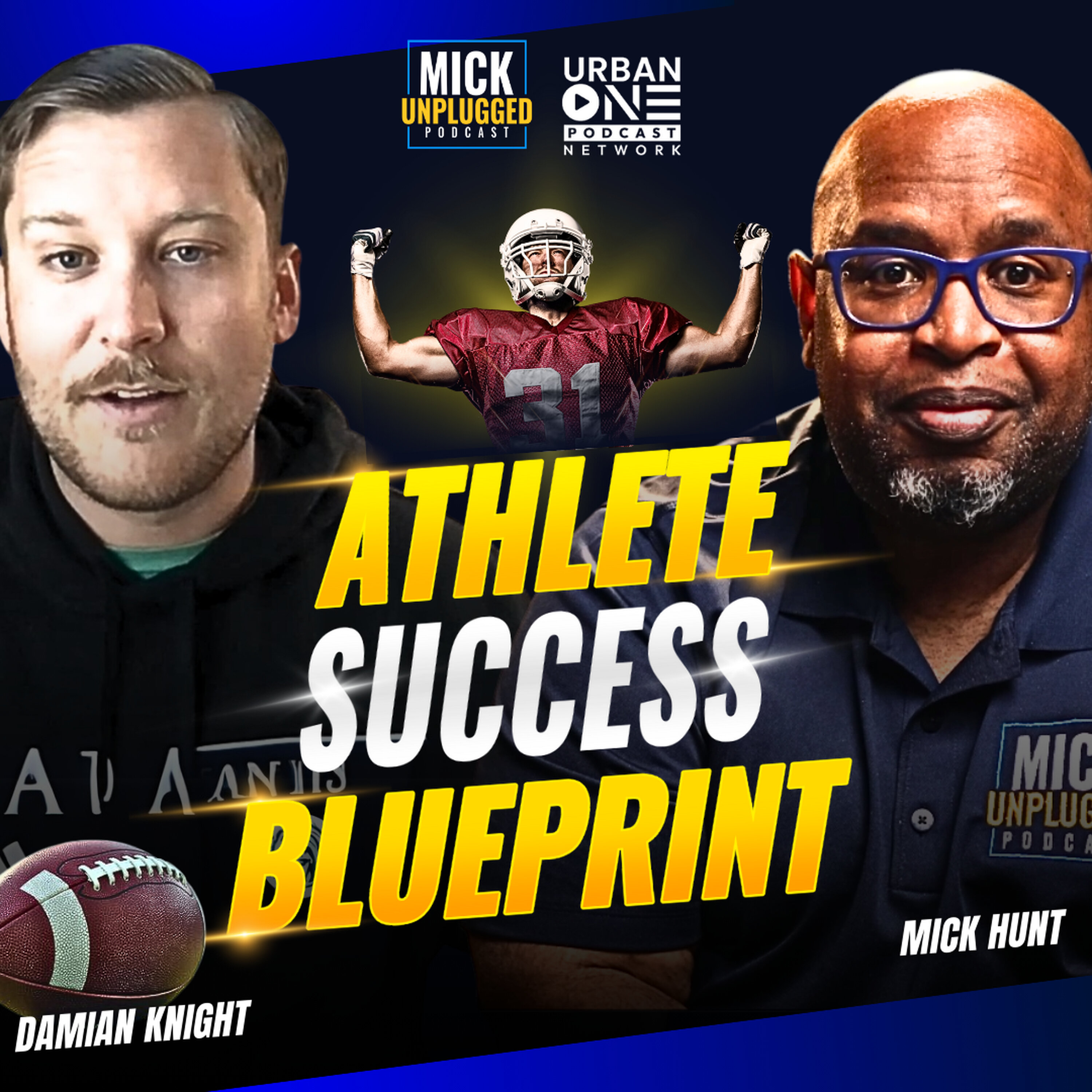
Loading summary
Transcript83 lines
- [00:00]
Mick
What's up everybody? It's your boy migh from the McPlugged podcast. And let's be real, nothing hits like a hot, fresh McDonald's breakfast to start the day. And my go to, it's those fluffy buttery hotcakes. But here's my hack. Get a side of hash browns and add some syrup on top of the hash browns too. Trust me, it is next level flavor. And of course, I have got to have my caramel frappe, smooth, cold and exactly what I need to lock in for the day. McDonald's breakfast, it just hits different. So what's your go to? Pull up to McDonald's, grab your favorite and start your morning right.
- [00:34]
Damian Knight
For the common person, what's something that as a sports agent that most people don't think that you have to know or a rule that you have?
- [00:43]
You know, like one thing that people probably don't associate with sports agents having to know is like, these are the benefits the NFL gives you.
- [00:50]
This is the right opportunity for me to ask my friend, what's your because, brother?
- [00:56]
Because I don't want to see guys get left behind. I don't want to see guys get forgotten about. And you hear this statistic of your NFL players three years after the NFL are broke.
- [01:05]
So for the athlete that's listening or watching this podcast, why Forever Athlete management? Why fam? Why should they choose you?
- [01:13]
If you look at this entire industry, you know you have over a thousand agents as of this year. And I don't know the exact number, but it's between 150 and 200. Agents actually have people on a roster. That's it, right? So.
- [01:30]
Mick
Welcome to Mick Unplugged where we.
- [01:32]
Damian Knight
Ignite potential and fuel purpose. Get ready for raw insights, bold moves and game changing conversations. Buckle up, here's Mick.
- [01:42]
Ladies and gentlemen, welcome to another exciting episode of Mick Unplugged. And today we have a dynamic force in the sports industry. He's a former Marine and army veteran. He's a current NFL agent and the founder of Forever Athlete Management. With the relentless drive and commitment to excellence, he represents top tier athletes guiding them to success on and off the field. Please welcome my guy.
- [02:08]
Mick
Someone who's turned into one of my.
- [02:09]
Damian Knight
Best friends in the world. The tenacious, the visionary, the dedicated, Mr. Damian Knight. Damian, how you doing, brother?
- [02:15]
Man, I'm good. Thank you for having me on today.
- [02:18]
Thanks for being on. I know we had some weirdness that happened right before getting on here live, but I'm honored to have you on, man. I told you offline I've told you in our Instagram conversations and our text messages, dude, I appreciate the human being that you are. I've learned so much about you, obviously through social, following your path, but then just, you're just an overall great dude, man. And I just appreciate you for being the dude that you are, man.
- [02:47]
Yeah, I really appreciate it, man. And that's. I'm just trying to spread that positivity throughout the world no matter what I'm doing, man.
- [02:53]
That's it. That's it, man. So, you know, I want to start with your, your military background. And you know, I had someone on a couple of weeks ago and I used to always tell military personnel, active, inactive veterans, I used to always say thank you for your service. And, and he corrected me and said, mick, you know, we hear that a lot. What we really want to hear and feel is how was our service? So that we can have that conversation. Because when someone says thank you, right, the response is to tip the hat and say, you're welcome. But the conversation starts when you ask, how was your service? So, Damian, man, like, how was your service, brother?
- [03:33]
Man, that's, that's definitely a good view on this whole thing. I wouldn't trade it for anything else, right? It taught me a lot of lessons. I joined super young. Like, I graduated high school at 16 years old. Thought the military was my way out, you know, I had to get out of town, so joined the Marine Corps and early on got identified to be part of this like, nuclear reaction team where, you know, I had to go through this big selection and everything was super. A lot of red tape to get into, like, realistically. Right. Made me grow up really quick, especially for a 17 year old kid, right, who, that's what I was, a kid, you know, and then very quickly was put in charge of people and assets and, you know, seeing things that people only see in movies, you know, like very quickly. And it was awesome. I feel like it made me mature a lot quicker than my peers, you know, I'll go back home on leave and I'm 18 years old, telling people to be careful and be responsible and this and that, and all they're thinking about is the party on Friday night or whatever's next, you know, so it was great. So I made a lot of really good friends, lifelong connections there at the, my first duty station in South Georgia. And then I had a couple options of where to go after and California popped up as one. And I was like, man, I've never been, I've never been more west of like Mississippi at this point in my life. So I was like, let's do it, man. So, yeah, jumped in, ended up getting stationed in 29 Palms, California, which was a. It's the middle of nowhere. It's the desert. You know, the closest thing is like Joshua Tree, which is beautiful, but it, it's the desert, you know, it is what it is. So I always told people it's in the middle of nowhere, but in the middle of everything because, you know, everything in life is what you make of it. And I was about two hours from Vegas, two and a half hours from la, two and a half hours from San Diego. So if you wanted to do, you were in the prime location, you know, but if you wanted to sit there and sulk, you were also in the prime location if you wanted to feel bad for yourself. So, you know, one thing that I did early on was, you know, take in a lot of guidance and leadership from everyone. I just wanted to learn. I volunteered for literally everything, even the things that going back, I wish I wouldn't have volunteered for. And I learned a lot and was able to develop myself as like kind of a servant leader. And that's something that I transitioned into this NFL space of like, how can I best lead these? You know, they're not soldiers or marines anymore, but they're high level athletes that, you know, they don't always have it all together. Right. So they need that mentorship and that guidance and that what's next planning. And that's what I feel. The military was able to help me really transition into the space.
- [06:02]
I appreciate that so much, man. Like I said, you know, I'm definitely thankful for the service that you put in and more importantly, the servant leadership that you have right to not let it stop there. But I want to unpack something you just said, man. So you graduated at 16?
- [06:19]
Yeah.
- [06:20]
As much as I thought I knew about you, I also didn't know you were a nerd, apparently.
- [06:25]
And that's the thing, man. I always tell people, you go back and check the transcripts and they're not as pretty as they should have been. I was just. I had a mission. My mission was to get out of town, right? And so I went to my guidance counselor my junior year of high school and I was like, how do I get out of here? And they're like, well, if you want to, you could take night school, right? So I was going to school normal, like 9 to 4 o'clock every day, whatever it was. And then I would go work. I had a Job? I was working at Zaxby's. I was working there from about five to eight every day. And then I would leave there and go to the technical college in town and take school with adults that were trying to get their GEDs. And I was taking, like, a couple extra English classes and math classes just to check the boxes. And I ended up graduating, like, a 2.7 GPA. But I got out of there, man, and it was a super busy senior year. You know, everybody has these stories of their senior year, how wild and crazy it was, man. Mine was. I started grinding right away. I was trying to get out of town, man.
- [07:24]
Yeah.
- [07:25]
Okay.
- [07:26]
All right, so now let's fast forward to you're now officially out of the military. What led you to the path of sports agency life?
- [07:36]
You know, if you go back, I don't think there was ever one catalyst. There was, like, multiple things that kind of led me into this path. And, you know, I got out of the Marine Corps, didn't know what I wanted to do with my life, but I knew how to shoot guns, right? So I started working at these gun ranges and at gun stores, just trying to make it make sense. After about four or five months, I was like, man, I need to be back in the military in some capacity. So I joined the Florida Army National Guard to try to become a Green Beret, actually. And I went through this thing called Special Forces Readiness Evaluation, where I actually got selected through this process to be able to continue training. And then I started college kind of simultaneously. Definitely bit off a little more than I could chew. It was great, man. I started playing rugby in college, doing all this stuff. I was in probably the best shape of my life trying to do all these things at one time. And then Covid happened. When Covid happened, everything kind of slowly shut down in Florida, more so than, you know, the pace it did the rest of the world. But I remember I was working at a gun store. I ended up meeting an athlete who played for the Jacksonville Jaguars, who's now actually one of my best friends. He's actually gonna be at my house Sunday for the super. Like, one of my best friends in the whole world. And I just kind of seen how he was treated by agents along the way and kind of, like, forgotten about here and there. And, you know, I just thought to myself, it reminded me of the military and all those times where I was forgotten about or kind of treated like a number when I knew, like, hey, man, I'm the guy. Like, why are you treating me like a number? You Know, and so I wanted to take that and apply it, you know, hey, how can I help these guys? And, you know, during COVID I went and I was actually a contractor for the Department of State as a sniper. There was nothing else to do. The world was shut down. So let me go make some money. And I did that for a while. I actually got stuck in Afghanistan because flights were happening. I was supposed to be there for three months. Ended up being there for like seven and a half, eight months, something like that. Wow. And came back, met my wife, who actually is the sister of one of my fellow rugby playing teammates, you know, so that was okay. And after that, man, she kind of convinced me to start my first business, which was, you know, kind of leaning into that long range sniper, you know, military background that, you know, I kind of had from all the things I had done and started my first company, which was like, doing security consulting and teaching people to shoot. And obviously it was easy, it was a lot of fun. I was able to do all the stuff I liked from the military, but leave all the stuff I hated behind, which was great. Ended up teaching, like, a handful of NFL players, you know, every month how to do this. And I, you know, it started becoming a trend. It wasn't just one NFL player who would complain about their agent. It was, you know, this guy and this guy. Or maybe they wouldn't complain directly, but they'd be like, hey, man, this guy's tripping, you know, like, he's got to figure this out. And I'd be like, yeah, you know, just kind of take notes. I didn't really ask many questions. I was just taking notes, you know, and finally asked one of my friends, like, hey, do you think I should do this? He's like, oh, 100%, man. You kill it. And I was like, all right. When you hear that from someone in the space, you just got to, you know, jesus, take the wheel. You got to do it, man.
- [10:39]
Yeah.
- [10:40]
And so talk to my wife about that too. Is really big decision. And she was like, yeah, you can do anything you put your mind to. She's a rock star, man. Like, without her, who knows where I'd be? And I went back to school, got my master's degree, and, you know, went through the process to become an agent, which I did not do nearly enough research for.
- [10:58]
Tell us about that process. What is that process like?
- [11:00]
Yeah, so the first thing you have to. You have to have a master's degree or better, like a terminal degree. So like a lawyer, doctor or something of that nature. And then you go through this application process which opens up every January, and they make it sound like it's just a normal job application. You know, you pay your fee and that's it. But then you open it up and it's like 160 pages. And you're like, what, what am I getting myself into? I feel like I was back in the military about to try to go for top secret security clearance, you know, and you fill this thing out and it's asking you for references and everything you did. And, you know, a lot of jobs I've had, I've like, let people know, like, hey, I'm going to put you down as a reference. There was no way in my head I thought the NFL was going to reach out to every single reference I put down. And I started getting called from marines that I hadn't Talked to in 10 years that were like, hey bro, why did the NFL just call me? I was like, oh no. So I started like backtracking, trying to get everybody up and let them know. So anyways, you do this application in January, it's due by February. And then they go like radio silent. You don't hear anything from them at all until about May. And then all of a sudden they're like, hey man, congratulations, you're eligible to take the test. And they send you. You have all these materials that are sent to you. And I remember looking at it, you know, through the same lens I did in the military, which is when I was given information, I would just memorize it, right? Yeah, but this was like 700 pages. And I had two months and I was like, oh, no, I can't memorize this. And I thought I was going to. I told my wife, I was like, I'm going to sit right here every night when the kids go to bed. I'm a memorize a couple of pages and I opened it up and I closed it right back and I slid it aside. I was like, you know what? We have a seminar in a couple of months. They'll teach me everything I need to know.
- [12:37]
Oh boy.
- [12:38]
And I just trusted the process, man. And I really didn't open the book at all until I went to that five day seminar. And you go to the seminar and you know, they're, they're teaching you so much information. So basically you go to the seminar like 7 or 8 every morning until about 5pm and then what I was doing from 5:30pm until midnight was studying all the information they just taught us. And I did that for five Days. On the sixth day, you take the test. And, you know, I was hearing all these horror stories about people because if you fail it the first time, you can take it again in a year, right? If you fail it the second time, you have to come back in five years. I'm hearing horror stories. There was a lady in our class who's like, this is my fourth time taking the test, you know, and I'm no mathematician, but I'm over here crunching the numbers.
- [13:23]
That's a life journey right there, right?
- [13:25]
Wow. This is. And I was like, what do you do for a living? She's like, I'm an attorney. And I was like, oh, no. I was like, if an attorney can't pass this. And this is like a very law heavy, you know, book. I was like, this is, this is a wrap. I remember. I can't. I called my wife after the test because the biggest thing people tell you is they time out. They, they, they lose track of time because the questions are too dense. And you have basically three minutes a question. And you know, when I did my average time at the end of this, I finished it in about 40 seconds a question. I just, I flew through the test and I called my wife and I was like, hey, I finished. And she was like, oh, no. Like, that was it. And I was like, I definitely failed. Like, there's no way I finished that quickly. And people are struggling with time unless I misinterpreted every single question. And I really think the thing that helped me the most is that I wasn't an attorney, so I didn't read too deeply into every single question. And, like, I'm very good at for my time. In the military, they give you a mission and you have to sift through a lot of bs, you know, to find out what you actually have to do as a unit. So it's the same thing I just went through. And it may be a 1,000 word question that you're only looking for eight words, you know, and so I'm pretty good at skimming that and finding what I needed. And then, yeah, it worked out, man. So you take this test in July and you don't even find out again. It goes silent until October, whether or not you passed.
- [14:47]
Mick
What's up, everybody? It's your boy Mickup from the MCplugged podcast. And let's be real, nothing hits like a hot, fresh McDonald's breakfast to start the day. And my go to is those fluffy buttery hotcakes. But here's my hack. Get a side of hash browns and add some syrup on top of the hash browns, too. Trust me, it is next level flavor. And of course, I have got to have my caramel frappe smooth, cold, and exactly what I need to lock in for the day. McDonald's breakfast, it just hits different. So what's your go to pull up to McDonald's, grab your favorite, and start your morning right.
- [15:21]
Damian Knight
So I finally got the call in October that I passed and hit the ground running, man. Never looked back.
- [15:26]
I love that, man. I love what you just said about. You just answered the question. And to me, that correlates in life too, because a lot of times people, I think they feel like they need to give you more words than are actually needed or they need to paint a picture that isn't there. But most of the time, we just want the answer, right? I don't need Damian to talk to me for 20 minutes when he could have just said five words and I could have got to where I'm going. Right? That's where people miss. And for me, especially leaders, sometimes your team just needs the answer. Sometimes they just need the vision. Sometimes they just need to say, hey, we're going over here so that they know. All right, we're going over there.
- [16:05]
Correct? Right.
- [16:07]
I love that, man. So going back to that test really quick, like, what's for the common person? What's something on that test without, like, going through a question? But what's something that as a sports agent, you have to know that most people don't think that you have to know or a rule that you have?
- [16:25]
You know, like, one thing that people probably don't associate with sports agents having to know is like, the benefits, like health benefits that players get, right? So obviously they. You expect us to know money, you expect us to know contract values, that kind of thing, because that's negotiation. But what we also have to know is if a player gets hurt because of an injury, how do you guide them through that process? Right? What does their medical recovery look like? It's not always as easy as the player is going to get helped by the team. They could get released by the team and need 1, 2, 3 opinions go on workman's comp. Now we have to navigate that state's workman's comp on top of the NFL's processes. And so I would say that's one of the things that really gets a lot of people are the benefits that you have to memorize. Like, we're over here having to understand, like the 401k that the NFL has, you know, the matching that the NFL has, Like, stuff that will never apply to me and I don't get a percentage on, so why should it matter, right? But it's so you can educate your player so they're set up for life after the NFL. And I would say that's. That has to be the biggest thing that I did not expect. They gave me 40 pages on, hey, these are the benefits the NFL gives you. And I'm like, oh, wow. You know?
- [17:34]
Yeah, that's amazing, man. So, all right, so now you're an agent, right? Talk to us about getting your first couple of clients. Like, I know you had some friends that asked for advice and this and that, but then when ink has to.
- [17:48]
Mick
Go to paper, it becomes a little bit different, 100%.
- [17:52]
Damian Knight
So part of my initial thought process was like, hey, I know all these guys, and they're coming up on contract years, and they trust me, like, we're boys. They're about to sign with me. This is going to be awesome. It's going to be a slam dunk. And that was just not the case. So I go through. I become an agent. I'm texting all my friends like, hey, man, I made it. I made it. I made it. And they're like, cool. Like, are you going to work for a big agency? And I was like, well, you know, I reached out to a couple, and I'm not going to name them, but, like, their morals and ethics just didn't align with mine, right? So for that reason, I actually met someone else through the process of becoming an agent. We started our own agency together, right? So I have a business partner in this whole thing, Jeffrey Poe. And I was like, nah, man, I'm gonna do my own thing. And almost every player would be like, oh, that's bold. And I'd be like, oh, what do you mean? They're like, well, how about I make a call and you can work with my agent? And I'm like, oh, man. Like, what am I getting my hands into? You know? I'm like, no, no, man. I trust myself. I know the process. Like, I'm gonna kill it. And none of those players signed with me, obviously, or else I'd be in a whole different boat right now. But I will say that those players would check in on me through the process. They'd ask me. They. They'd, you know, tell me about certain athletes that maybe aren't even in the NFL. They never made it, but it was their friends, so they could kind of connect me with them. But Largely, man, connecting with these athletes is. It's like online dating. You're sliding into the DMs. You watch. So, you know, the office now is, you know, Saturday, watching a football game, and then you see a player who looks flashy and fast, and you look up the stats on espn, and then you turn around, you read every report you've ever heard or that's ever been written, and then you find them on Instagram. You go, hey, man, you looked really good on Saturday. You know, like, I love the way that you attacked the ball. Would you like to talk? You know, and it's like, it's really hit or miss, and obviously, it's a little bit more in depth than that, but that's really what it feels like. And you'll have players that, you know, they leave you on read, and it kind of hurts your heart a little bit. You're like, man, I thought I put a lot into that message. And then you have players that'll immediately hit you back, or you have players that'll never, ever even open the message because they have so many followers. You get lost in the mix. So, you know, I got really fortunate. I guess it's a mixture of being fortunate and having a drive that a lot of other people don't. So when last year, October came around, and they're like, hey, this counts as one of your years. You know, being certified, you only have three years to sign somebody or you expire. And I was like, oh, I'm getting somebody. Year one, that was my whole goal. I'm getting somebody. And so I went through and started looking at every team across America, hopefully, like, thinking that I could get someone in Florida, that we got someone at famu, luckily, but, like, outside of that, man, Florida's untouchable for me. I'm over here in Mississippi, Auburn, the Carolinas, you name it. You know, I was able to. Collectively, as an agency, we signed over 10 people in year one, and, you know, we were able to get nine people into the NFL in year one. And out of those people, you know, of the ones that I directly was kind of like the lead agent on, two of them stuck in the NFL. So I had two players stick in the NFL Year one, and the other ones we all got two or three tryouts for. So it's not like they had one opportunity. We. We were able to provide them all the opportunity, which is really our job at the end of the day, right? And, you know, I can't play football for you. You know, unfortunately, I wish I could, man. If I could, I'd be in a different tax bracket, because I'd be out there, you know?
- [21:17]
Right.
- [21:17]
So. No, and it was awesome. So. And again, we got. We got a guy, Swayze Boseman for the Kansas City Chiefs, and Alex Hale for the. He's a kicker, actually, for the Green Bay Packers. So those are my two guys. And then my partner has several guys as well, so.
- [21:32]
Yeah, I love that, man. I love that. So which one of you came up with the name of the agency? So Forever Athlete Management?
- [21:40]
That's. That is a good question, man. We had a list, a laundry list of about 100 names, and we hated every single one of them. And so instead of just like, throwing them away, I started making logos. Like, sometimes you have to see it, you know, for it to be the name. And nothing was sticking, man. Like, nothing. And I was sitting on the couch one day, just got done playing with my daughter. I just had a beer, and I was sitting there, and I was like, what. What am I doing here? Like, what is this agency about? You know? And the biggest thing is I don't want a player to ever think, like, we're going to ditch them. Like, hey, you. You used to be a guy, and now we're going to forget about you. Like, no, I want to help you through retirement. Even if you had one year in the NFL or 10 years in the NFL, I want to see you succeed afterwards, too. Right? And so I was sitting there, and I was like, forever. And I just got stuck on the word forever. And one of my boys hit me up. He text me, hey, fam, what's up? And I was like, fam. I was like, hold on forever. And I just sat there, and finally I sent it to my partner, and he was like, nah, man, that ain't it. And I was like, what do you mean? Like, this is crazy. Like, this is so good. And the next day, he called me up. He's like, hey, man, I was thinking about that. Like, I actually think you're onto something. And so I made the logo up and, you know, put it on a website. And we were like, oh, man, this is it. This is. You know, because it just is who we are. Like, cool. It's. It's cool branding, right? But also, like, retreat. Every player. Like, you are family, and that's not just being corny. Like, I know about your mom, your dad, your sister. If you got a brother that was locked up, Like, I know that stuff, right? And they know it about me. Like, I'm not trying to hide anything. Because I feel like if I'm open with them, they'll be open with me, you know? And that's just part of that process of getting to know.
- [23:13]
I love that. And I actually was gonna ask you, which is a great segue, because on the podcast, we talk about your because, right? That thing that's deeper than your why. Like, your true purpose. And so when I see fam, right. Forever Athlete Management, I'm like, damon's got a because somewhere around there. Whether it is family, whether it is legacy, there's a because somewhere. So this is the right opportunity for me to ask my friend, what's your because, brother?
- [23:40]
Man, that's. I don't think I've ever heard it worded that way. And I love that, though. Like, what is the because? And again, like, because I don't want to see guys get left behind. I don't want to see guys get forgotten about. And you hear this statistic of your NFL players three years after the NFL are broke.
- [23:56]
Yeah.
- [23:57]
Well, even at the very minimum salary you can make, let's say you were even only a practice squad guy. So we'll look at, like, really the nuts and bolts. Like, you only made $750,000. Right? And it's like, only.
- [24:08]
Mick
Yes.
- [24:08]
Damian Knight
Only $750,000 is more than some people will make in their entire lifetime. Right. Probably my parents included. Right. So when I look at that and I realize that the NFL doesn't require us to make them have a financial advisor. That's kind of crazy to me. So I don't require you to. However, I highly, highly, highly recommend it. And we've already vetted a handful of them. So I make you vet them as well as part of the process. You want to join famous, you're joining, and you have to, like, kind of abide by what we are going with, right. Our system. And I just don't want any of these guys to call me three years after the NFL and go, man, like, you got a job. Because I'm broke. I need something, right? I want them in three to five years to be thinking. I want them to see, you know, that happening and then be able to call me and be like, dude, thank you so much. I am so glad I'm not in that, you know, situation. And it's not. I don't even need the thank you. But I just want them to realize that that's what I want for them. I don't want them to feel trapped, you know?
- [25:05]
Yeah, that's good stuff, dude. So you told us a Little bit about, you know, what it's like being an agent. Like, you talked to us about the test a little bit. Talk to the common folk like me about these contracts, right? Because we see these five year, I mean, now I'm going to outdate myself now. Five year, 200 million probably isn't even surface level anymore for a lot of these folks. But, but you see these big numbers and then we always hear, yeah, but you got to go back to the guarantee because that's what the real contract is. So talk to the, to the common folk about what these contracts really are. What do you look for when you go to negotiate? And then from a player's perspective, what are some things that they should be looking for in these contracts too?
- [25:50]
Mick
What's up, everybody? It's your boy, Mick Hut from the Mick Unplug podcast. And let's be real, nothing hits like a hot, fresh McDonald's breakfast to start the day. And my go to, it's those fluffy buttery hotcakes. But here's my hack. Get a side of hash browns and add some syrup on top of the hash browns, too. Trust me, it is next level flavor. And of course, I have got to have my caramel frappe smooth, cold. And exactly what I need to lock in for the day. McDonald's breakfast, it just hits different. So what's your go to? Pull up to McDonald's, grab your favorite, and start your morning.
- [26:24]
Damian Knight
Right.
- [26:24]
Yeah. So it's a good point. You know, when you talk about guarantees and in reality, you know, talk to me, the common people, if you take someone who's been in real estate, right? When someone has been in real estate and they go to sell their house or someone who hasn't been in real estate and they go to sell their house, what they're going to do is they're going to look at comps in the area. How much did my neighbor sell his house for? How much was my house sold for in the past? And what does the current market look like? Right. It's kind of the same thing with players. Cool. So I got a wide receiver who has these stats and he played in these years. Let me look at every other receiver who is similar in height and weight and shape and play size and the years that they played and see how much that guy got, you know. Okay, so now we have our comparison amount. And a lot of people, they'll look at it as like, hey, the Jacksonville Jaguars, they were offering me $1 million, right? But no guarantee. Okay, well, the San Diego, you know, or we'll say, like the LA Chargers, they were going to give me, you know, 2 million with 1 million guaranteed. So at face value, you look at it as, all right, well, if I go there, it's double the amount. And the total amount of Jacksonville is guaranteed in la, Right. Which is great, you would think, but now dial back a little bit. We have to look at the tax rate for those cities, right? And where are you playing your games? Because a lot of people don't understand that those. You don't just get taxed for the state you're in. Right? You get taxed for every single city you play in. And so if I'm on a West coast team, I'm probably playing a little more on the West Coast. And we know those tax rates are higher, right?
- [27:56]
Versus entertainment tax in California.
- [28:00]
And so a lot of the times when you look at those west coast contracts, it will be a lot higher for that reason. And people are like, oh, he must just be a better player. It's like, no, in order to be there, he needed more money to survive, you know. So I would say that's kind of one thing to look at. But the guarantee is always the biggest thing. You could look at a contract and say, you know, you're getting a three year, $5 million contract, but four is guaranteed. That's awesome, you know, or you could get that same three years at the same location for $15 million, but none is guaranteed. You know, you have to really ask yourself, what do I think I'm going to get, right? So if it's not guaranteed, there's probably incentives, right? Well, we'll keep it with wide receivers. Maybe he has to have X amount of touchdowns or X amount of first downs, or he has to, you know, have a thousand yards receiving every year to get a million dollar bonus, like whatever it is. And it's not just betting on yourself. A lot of players will be like, man, I'll bet on myself. I'm the best. And that's great. Every football player in the NFL was the best at some point and they probably still are like, they're better than everybody else, you know, I mean, that is a fact. So it's great that you're willing to bet on yourselves, but you have to look at this whole thing as a business now, and they're bringing in other receivers with similar incentives, you know, and then the coaches know the incentives. So sometimes, you know, in certain situations, quarterbacks or whoever will try to help you with that incentive. Right? But maybe there's an incentive to the quarterback to not get you that incentive, you know, to save the franchise some money. So there's a lot that goes into it, man. And I would say one of the other big things to look at, and you know, it's back on that guarantee thing, is when you're looking at a guarantee, things are guaranteed regardless of skill injury. And if you're a guy who's had a bunch of injuries and you can get a guarantee that says, hey, even if I retear the same ACL I've torn three times, I'm guaranteed a couple million. Maybe it's worth you taking some off the top to have guaranteed generational wealth, you know. So I think it's funny that when you get into this industry, and this isn't with everybody, but when you get into this industry and you're talking to a player about $5 million and they're like, man, that's not much money is like, man, you want to sit down and talk about how much I make real quick. So it is interesting when you, when you hit that tax bracket and then start realizing, what do you consider a lot of money? You know, oh, you have to be making $20 million a year to be making a lot of money. You know, that's crazy, right? Yeah, right?
- [30:26]
That's good, man. So I have another question. I'm gonna ask it and tie it to the real world for a second. So let's just say I'm a salesperson and I get hired and, you know, they tell me I'm going to make 65,000, 70,000 a year with incentives and bonuses, I can make 100.
- [30:46]
Right?
- [30:47]
And I bust my butt and I go, I'm the number one salesperson. I make $100,000. Next year, they hire someone else and they give them a base that starts at 100, and then now all of a sudden they're making 150. But I'm still the best salesperson out there, and I can only make $100,000. So now I'm going to tie that scenario to the sports world. How do you deal with the ego, right? So you sign someone or someone signs this year and they're the number one highest paid wide receiver. Well, then six months later, another team signed somebody, and now they're the highest paid wide receiver. And so you've got that ego to deal with a lot with athletes. How do you manage that ego, man?
- [31:28]
I would say that's. That's kind of twofold. So one, when we're going through our process of finding athletes, we try to really screen for that, you know, and that's hard because sometimes it'll come out later in life, right? But we really try to screen for that and, like, really do a lot of character evaluation on our players. But I would say if I was faced with that situation, you just have to be honest with the player, be like, look, you were the best. Now you have to prove that you're the best again because you're currently under a contract you signed, right? And every year, it's kind of like, you know, if you compare it to the national debt, unfortunately, our debt keeps growing, right? So the budget for the NFL keeps growing every single year. And so that debt that America has, things are going to adjust according to that debt. What percentage people are taking of it. It's the same thing with a salary cap, right? Every year that salary cap grows, you are already locked in, right? You're locked into whatever it is. And so now this player can get a larger percentage. So it's really about, how do we look at this in the future and make sure you're the highest paid again, right? So in order to do that, you have to swallow your pride for, you know, whether it's one year, two years, three years, right? And go out there and show why you're better than him every single year, you know, show why you deserve to make more than him every single year. So when that day does come, it's not even a question of if he's there, if he's lost a step, if he's worth the money. They're going to be throwing the money at you, you know? So, yeah, the ego may be there and then be like, hey, man, screw that. Release me. I got to go somewhere else. But the reality of it is, a lot of times, even if you get released by that team because you feel this is a personal attack, when another team picks you up, they're picking up the same contract, right? You know, sometimes it's better, and I'll probably mess this up, but it's better to be with the evil you know, than the evil you don't know, you know? So that's probably the way that I would approach that.
- [33:14]
I love it, man. For everybody that's listening, what Damien is saying is, keep working, right? Like, let your work be your worth, right? A lot of times we start thinking about or comparing to others. At the end of the day, if you're good at what you do again, I don't care what industry you're in, what position you're in, I don't care what you do. If you are good at what you do, people notice, Right. But it's the moment that you stop and you want to compare or you want to complain, people notice that too. People notice the work, and people notice the not work as well.
- [33:50]
Yeah. And everybody's at a different point, you know, so just gotta recognize that.
- [33:56]
That's what's up, man. So what do you look for in the athletes you're bringing on? Because this is your season now, right? So, you know, college football is officially done with for this year, and it's time for Damian, Right. To start that evaluation process. And it's go time for you, right?
- [34:15]
Yeah, man. And it's kind of a revolving door, right. Like, it's constant. You know, I think our only down time is maybe in the summer. Right. But I would say for me personally and as an agency, what we value, right. And I'll say it time and time again, and some people take it the wrong way, but when you really unpack it and understand what I'm saying, it's a good thing. So what I look for are great people who are good football players. Right. Because you can take a great person who is intelligent, who's good at football and make them better at football. Right. That. That is very possible. But if you have a person who's a great football player, they are a killer on the field, but they're not a good person. It's a lot harder to make that adjustment and make a character adjustment at 23, 25, 26 years old, right. And I'm not saying that's not something I'm willing to do. I'm willing to help mentor and guide you and try to develop you. But some of those people don't want it, right? Hey, I am the guy. I'm the best corner in the ncaa. I don't need to be a better person, right? Like, that's kind of the attitude you'll get. And the reason that I'm looking for those great people is because, for example, a guy like Swayze Boseman, right. Who played college football for seven years, right. Two years in junior college, five years of Southern Mississippi, had some injuries along the way. Such a great guy and a high work ethic that we knew once he gets his foot in the door, they're not letting him go. Like, we. We just knew that. And the thing is, like, when I went to the AFC championship game and I'm down on the field and I was meeting the linebackers, coaches and defensive coordinators, they're like, Swayze Boseman, that is one of the best people I've ever met. You know, and that's what I want to hear, right? He's obviously in the room for a reason still, right? But he's one of those people, when there's an optional linebackers meeting, he may be the only person who shows up, and that goes a long way. And if you're one of those guys with an ego or a chip on your shoulder and you don't show up to that, like you said, people will notice when you don't show up just as much as they'll notice you do show up. You know, and sometimes even more, they'll be like, man, he didn't show up to this meeting today. You could have been there 29 days out of 30 of the month, and you miss that one day, and everybody in the office is going to talk about the one day you didn't show up.
- [36:20]
Absolutely.
- [36:21]
So that's what we look for, man. And a lot of the times, everything else follows after that, right? You find this person who's a great person and someone who is receptive to criticism, right? And I just keep it real with these guys. I mean, I'm a lot different than most agents. I'm a little bit younger, and I just keep it 100% real with them. When they tell me, man, I'm the best, I'm the fast, I'm the strongest, I'm like, maybe at your college, but NFL, you know, you're going to be one of the slowest if you don't get it together, you know, like, hey, if you want to be the best, you need to get off the video game and you need to get in the books, you know, like, I just keep it real with these guys. And again, at face value, there's some people who will be like, what'd you just say to me? Right? They, like, they get caught off guard. Because a lot of agents, we. I say we, right? Because I've caught myself almost doing this is you want to be a people pleaser. You want to be like, oh, man, you're the best. You can do it, blah, blah, blah. But I don't think that does anybody a benefit. At the end of the day, you're just really just building this person up for mediocrity, right? And if you want to be great, if you want to be a guy who's in the NFL for more than two or three years, you have to show these intangible traits of why you're better than them, right? You got to have that work ethic so that's what we try to get in all of our guys.
- [37:35]
Mick
There it is.
- [37:36]
Damian Knight
So for the athlete that's listening or watching this podcast, why Forever Athlete Management? Why fam? Why should they choose you?
- [37:44]
Man, this is going to sound cliche, but I guarantee you I work harder than anybody else in this industry. Right Again, everybody's going to say that, but why I know that that's factual is if you look at this entire industry, you know, you have over a thousand agents as of this year. And I don't know the exact number, but it's between 150 and 200 agents actually have people on a roster. That's it. Right? So we're looking at about 20% of agents actually have someone somewhere. And if you look at myself and my partner, we have five people in the NFL. So we're not. It's not like, hey, we accidentally got a guy on the practice squad. Like, no, what we're doing is working, right? And in year two, like, quote me, I'm going to have. We're going to have 10. We're going to have 10 guys in the NFL and we're going to keep building. And the thing is, why we're different is I'm never going to give an athlete an intern's phone number, right? Or a secretary. You're always going to be able to get a hold of me, my business partner. We have another guy who does just endorsements, another guy who just does pr. And you'll have all their cell phone numbers. You're going to have the guy's cell phone numbers, right? It's never going to be, oh, can I take a message? Like, no, you're getting a hold of somebody, right? And that's no matter how big we get. So again, I say we've been growing. So we have this year's draft class. We have guys we're doing nil for in college and we have our pros. We even have one in the UFL now. Like, we are getting everywhere quick. And so we brought in another agent who's actually NFL and NBA certified, right? So eventually there's going to be an NBA branch of FAM as well. And that's what we intend to keep doing. As we get more athletes, we're bringing in more agents that are like, minded to keep that ratio high. So you always have someone you can reach out to and you never get lost in the mix.
- [39:25]
I love that, brother. I love that, man. Any final words of wisdom for the people? Like, anything you want the audience to know, man.
- [39:33]
I guess if there are any other athletes out there listening to this, what I would say is the money is going to come. Don't get so wrapped up in the money now. If you focus on your education and you focus on your development, your personal development on and off the field, the money is going to come. So don't get so wrapped up in it now.
- [39:51]
I love that, brother. I love that, man. So where can people find and follow my guy? Damian Knight?
- [39:57]
Yes, I'm on Instagram, NFL Underscore Agent Underscore Damian Knight, as well as Forever Athlete Management. That's our ad. We're also on X as fam agency. And yeah, if you guys want, you can shoot me a DM if you have any questions. I'm an open book. And yeah, our website is forever athletemanagement.com if you have any questions, want to submit, you know, any of your film or tape for us to look over? Yeah, we'll. We'll definitely have someone reach out to you.
- [40:25]
Athletes, slide into his DMS. Yeah, slide into his DMs. He's ready.
- [40:30]
Yes, sir.
- [40:31]
Man, I appreciate you for. For taking time. I know how busy you are and I know how hectic your schedule is. So it means the world to me that you took some time to spend with us, man. So I appreciate you, brother.
- [40:42]
Yeah, yeah. No, again, I appreciate you having me on here, and I look forward to going back and watching this when I have some time and sharing it with the. The people on the Internet.
- [40:50]
You got it, man. And for all the viewers and listeners, remember your because is your superpower. Go unleash it.
- [41:00]
Mick
Thank you for tuning in to Mick Unplugged.
- [41:02]
Damian Knight
Keep pushing your limits, embracing your purpose, and chasing greatness. Until next time, stay unstoppable.
- [41:11]
Mick
What's up, everybody? It's your boy, Mick from the Mick Unplugged podcast. And let's be real, nothing hits like a hot, fresh McDonald's breakfast to start the day. And my go to, it's those fluffy, buttery hotcakes. But here's my hack. Get a side of hash browns and add some syrup on top of the hash browns too. Trust me, it is next level flavor. And of course, I have got to have my caramel frappe, smooth cold, and exactly what I need to lock in for the day. McDonald's breakfast. It just hits different. So what's your go to? Pull up to McDonald's, grab your favorite, and start your morning right.