← Mick Unplugged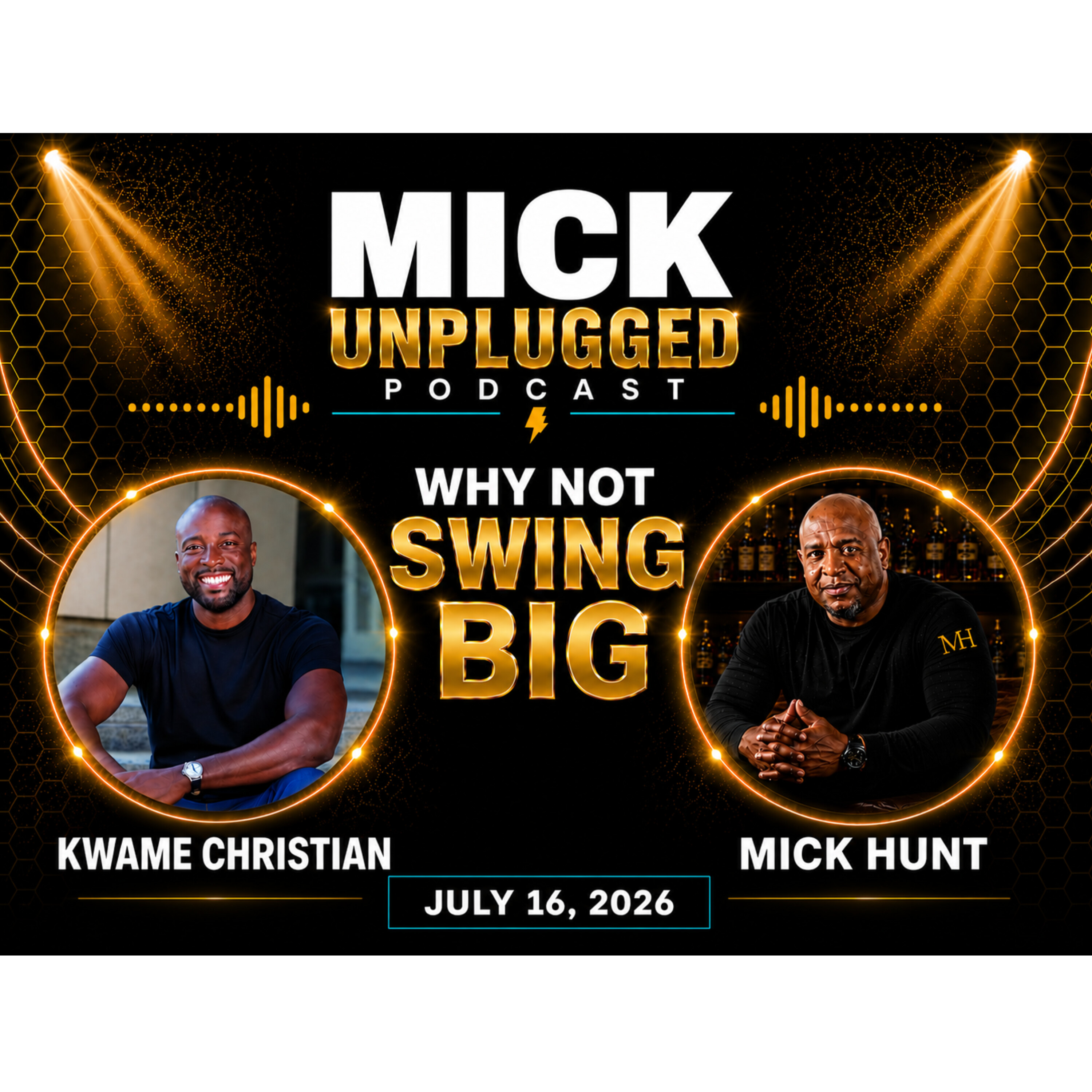
Loading summary
Transcript101 lines
- [00:01]
Kwame Christian
There's nothing like the American Express Platinum card. Find out your welcome offer after you
- [00:05]
Mick
apply, which could be as high as 175,000 points.
- [00:09]
Kwame Christian
Learn more and find out your offer@americanexpress.com
- [00:13]
Mick
Explore Platinum terms apply Grainger knows When
- [00:17]
Grainger Advertisement Voice
you're a procurement manager for an office park, you're not managing one building, you're managing all of them. And to stay ahead, you need to see through walls and around corners. Lights about to fail, filters ready to clog H Vac on its last leg. If you wait until something breaks, you're already behind. Count on Grainger for quality products, easy reordering, and 24. 7 support. Call 1-800-GRAINGER Click grainger.com or just stop by Grainger for the ones who get it done.
- [00:45]
Kwame Christian
Let's say, hypothetically, you learn all these negotiation skills. You are the perfect communicator. You navigate the conversation effectively and you get exactly what you want. And then you come to find out it is the worst thing that could have ever happened to you. And because you didn't have that initial conversation, you didn't recognize what you really wanted.
- [01:11]
Mick
Ladies and gentlemen, welcome back to another exciting episode of Mick Unplugged. And today I have someone that I've been looking up to for the last several years. He's guided leaders from NASA to Microsoft to LinkedIn through their toughest talks, transforming businesses and lives. He is someone that I promise you today is going to give you so many nuggets that you're going to be able to implement in your business or your life. Please join me in welcoming the strategic the negotiator's negotiator, the genius himself, Mr. Kwame. Christian Kwame. How you doing today, brother Mick?
- [01:47]
Kwame Christian
Thank you so much. I'm doing. Listen, I'm doing even better now. I'm going to take this intro you gave, send it to my wife, send it to my mom.
- [01:59]
Mick
Hey, I get asked all the time, like, hey, make the intros that you do. Why do you do them that way? I'm like, because trust me, there are moments when I'm on stage where I wish, like, somebody would just pump me up and make me feel like the greatest human being for like, 30 minutes. So that's what I try to give my guests. I want them to be the greatest human being. Because in the real world, like you just said, our wives and kids are just like, hey, dad, that's great and all, but I need this peanut butter and jelly sandwich in about five minutes exactly.
- [02:27]
Kwame Christian
That's one of the beauties of having a family. They keep you humble, you know, swagger in. Guess what I just did. I don't care what you just did. Clean these dishes. That's what I need you to do. That's what I care about.
- [02:38]
Mick
Exactly. Exactly. Hey, man. So, again, I am honored to have you on. And there's so much that I want to unpack because I truly mean it when I say I've looked up to you for so long and, like, you've given me so many things that have improved my business and my life, and I think it's only fair that we share those with the world. But, Kwame man, I always start my. My podcast by asking my guests about their be cause.
- [03:07]
Kwame Christian
Right?
- [03:07]
Mick
Like, Simon Sinek taught us to start with our why. But I believe that we have something deeper. If I were to ask you why is that your why? And we go deeper into that sauce, that sentence usually starts with, well, because. And I care about everything that you say after that, because to me, that's your true accountability. So if I were to say, hey, kwame man, it's 2026, you're doing so many different things in the world. What's your because? What's your purpose that keeps you grounded in doing those things?
- [03:35]
Kwame Christian
Because the best things in life are on the other side of difficult conversations. And that's what I recognized in my life when I looked at the most impactful moments, There was always a difficult conversation, even in the vicinity of that moment. And so for whoever it is that's listening, it's the same thing, too, because there's always something impactful that we are trying to do. And most of the time, it doesn't have to do explicitly with communication, but 100% of the time, communication will be part of that process. And so for whatever the person is trying to accomplish, just recognize that your success and failure, happiness and sadness, they're going to depend upon how well or how poorly we're having these conversations. And for me, I was a people pleaser for most of my life before coming into law school, and that really held me back. And learning how to build my confidence, recognizing confidence as a skill that you can learn, learning how to overcome those fears, and then learning the mindsets and the skill sets necessary to take me to the next level and have these tough conversations, once I started to recognize that, I recognized every other element of my life started to get better. And. And so for me, my goal with the American Negotiation Institute, with the podcast, with everything that we do is just helping the world to become a better Place one difficult conversation at a time.
- [04:52]
Mick
I love that, man. And, you know, again, following you as long as I have and really taking your life lessons and applying them to me because, you know, you talk about being first generation Caribbean American. Right. And that led a lot to your people. Pleasing. And I think if all of us are honest with ourselves, we all have that. I don't even know the right word, but we all have that. That complex syndrome, right? Where it's like, all right, I know I'm not really good at this. I'm probably inferior at this. So if I can just make people happy, it'll hide a disguise. All the other things that are really back there. Talk. Talk to us through those moments for you of when you decided to say, I'm gonna face these fears. I'm gonna face these challenges head on. Because I think there's somebody that's listening or watching right now that's like, that's me. And how do I stop that?
- [05:46]
Kwame Christian
Yeah. It's. We have to have that moment where we get real with ourselves. And for me, it was in undergrad. I was talking to one of my mentors. I was telling him the dreams that I had, everything that I wanted to accomplish. And he told me, you have to learn how to get over this, because this is the thing that really sticks with me. Mick. He said, there's a big difference between being liked and being. And being respected. Those are not the same thing. And you're not going to be able to have the success that you want to have. You're not going to be able to be the leader you want to be unless you can learn to have these tough conversations. So at that moment, I said, okay, well, now I know I need to do it. Now the question is how? And that would. That's. That was the start. That was the catalyst for me.
- [06:28]
Mick
Yeah. And I'll tell you what you taught me was the first tough conversation that you have to have is with yourself.
- [06:37]
Kwame Christian
Yes.
- [06:37]
Mick
Right. Because you're gonna talk yourself out of more situations and conversations than you actually ever believe. And I was sitting there, I was like, man, Kwame, you're tripping, man. Like, no, like, I'm good. And then I started thinking about it. I was like, wait. The things that I'm avoiding, it's because I haven't had that conversation with me yet. Right. I can't have a tough conversation with my team member if I haven't had a tough conversation with me. I can't have those tough conversations even with clients. Right. If I'm not willing to have those with me. And so I want to give you your flowers, man, because you taught me that before anything else, you got to look at the person in the mirror. And that's the first tough conversation you
- [07:19]
Kwame Christian
have to have 100%. And think about this, Mick, if we don't have that conversation, what could happen? And this is one of the scariest things that people aren't afraid of. We are fearing the wrong thing. Let's say, hypothetically, you. You learn all these negotiation skills. You are the perfect communicator. You are very clear on what it is that you want to achieve in this. In this conversation. And then you navigate the conversation effectively, and you get exactly what you want. And then you come to find out it is the worst thing that could have ever happened to you. So think about this. Imagine if you. You work really hard and you say, all. All my life I've been focused on trying to go through the corporate ladder. Next level up, next level up, next level up. Everybody's been telling me that this is what I was destined to do. Now I see a promotion. That's what a guy like me is supposed to do. So you go, you negotiate, you effectively negotiate, you get the job. But then you realize after the fact, after six months of doing this, you're traveling so much, you don't have any time to spend with your family. And the thing that you care about the most, which is the family, they're getting neglected. And now you have problems at home, right? And it comes. And because you didn't have that initial conversation, you didn't recognize what you really wanted and recognize that that wasn't the opportunity for you. So we have to get real with ourselves and have these conversations to figure out what we want and what we really want and why. And once we start to uncover those things, then we can start to navigate these conversations with a true north and moving toward a worthy type of goal. And then the last thing, too, is we need to uncover what it is that's holding us back. Because when I think about these conversations, we focus on the external goal. But for me, there's a bit of self discovery that comes through the process. Because if there is some hesitation, some fear, some anxiety, my goal is to figure out where that is coming from. Because it's not just to make. To approach this in a way where I can have a better conversation at the end of the process. I want to be a better person. And this will uncover things within ourselves that we wouldn't be able to address or understand without having the Conversation. So we really often miss out on these opportunities for the internal negotiation. That's where it needs to start.
- [09:32]
Mick
I love it, brother. I love it. This next part of the show I call the Unplugged Truth. And I'm going to tell you something that I've never told anybody. And I'm telling you, and now the world is going to know. But you help. You help me understand something. And the reason I go deeper on because is because you taught me to avoid why questions, avoid why questions and difficult conversations. And so that really brought on my framework of because. Because, again, if why is the question, because is the answer. If why is the start. Because is the fuel of the journey. And then I heard Kwame say, avoid why questions and difficult conversations. And I was like, dang it, that makes so much sense. And he said it much better than I could have said it. So I love to unpack this unplugged truth of why we should avoid why questions in difficult conversations.
- [10:36]
Kwame Christian
Yes. And first of all, for the person who's listening, just remember this, okay? Remember this little moment here. So I taught something that was taught to me. I shared it, and now Mick has it, and he's sharing it with everybody. So when you learn something, share it. If you're doing things and you're accomplishing things, don't think of it as something that is arrogant. I'm not going to share it because it's arrogant. No. Sometimes we are doing ourselves and our communities a disservice to by not sharing what we've learned and sharing our accomplishments. You never know who you're going to inspire. So that means the world to me. Mick, thank you for that.
- [11:09]
Mick
Thank you, brother.
- [11:09]
Kwame Christian
Yes. And so when it comes to these conversations, think about this. When you ask a question that starts with why, you truly want the information that comes behind that why. I want to first start off with the fact that asking a question that starts with why comes from an admirable place. Because we want to understand that because behind the why now, the challenge is when somebody is in a very heightened emotional state, they will take things that are neutral and find every opportunity to think about it as a negative thing. And so the word why is often associated with. With judgment, with criticism. So think about it. I've got. I've got two kids, 10 and 5, and usually if I ask, I find myself asking them, why? Is it because they made a mistake? It's like, why would you put the cup there? Why would you do that? Now I need to clean this up, Right? So for so Many where our caregivers, our parents, our teachers. Those questions that start with why usually trigger, I must have messed up somewhere. And so what ends up happening is we get a defensive response and we don't avail ourselves to the information that we're trying to get. So a simple tweak is shifting from why to what or how. So instead of, why did you do it? That way, you could say, so what were you trying to accomplish with that decision? Or how did you come to that conclusion? You can get the exact same information, but you do it in a way that actually doesn't do a disservice to the psychological safety that you've built in the relationship and the conversation.
- [12:38]
Mick
Dude, like, that took me so many places when I first heard you talk about it and break it down. And that's what really got me to. To understand Kwame, and your. Your methodologies, your framework, your science. And. And here's what I probably applauded you the most for, especially in times like we're in now. And I'm gonna preface this. These are the words of Mick and Mick only. So get mad at me. Don't get mad at anyone else. Society today. And I love AI One of my companies is a AI company.
- [13:13]
Kwame Christian
Yeah.
- [13:14]
Mick
But AI has made it real easy to sound like an expert, right? It makes it real easy to research. And I'm not even saying that it. Except when people that don't have the proper credentials and certifications and true studies to back up the things that they say, that bothers me. And so as I got to know Kwame, what I appreciated the most was that you have the credentials, you have the education, the continued education. Like, you're always going deeper into things instead of broader. I'd love for you to talk to us about that aspect, because negotiation, the art of negotiation, the framework of negotiation, isn't easy. Because in those true moments, it's not just a book.
- [14:09]
Kwame Christian
Right.
- [14:10]
Mick
It's real life that you're going through. Like, talk to us about the importance of the education piece, the credentialing piece, because again, these are my words and my words only. I think sometimes AI has made it easy to make it appear like you know things that you actually don't know. And I'm not saying everything's bad, but be careful who you're listening to.
- [14:30]
Kwame Christian
So. So, Mick, I'm going to take what you said, and I'm going to take it to the next level. AI can make you think that somebody's smart when they're not.
- [14:39]
Mick
There you go.
- [14:40]
Kwame Christian
I mean, there you go, that's really it. I could sound like an engineering expert because I can prompt it and then charismatically deliver a video. And then you ask me a question about engineering. I was like, I don't even know how to spell it, okay? And so it's really easy. And so there for me, when it comes to the importance of education, but not just education, but the depth of knowledge and education, it serves two main purposes. One, to be able to do it, and two, to be able to prove to other people that you can do it so you can get opportunities. Right? And so for me, I always have been driven by what I'll call strategic insecurity. These little voices in my head that would say, you're not good enough because of this, or nobody would believe you because of that. And so instead of just saying, oh, man, and then quitting, I was like, great, I'm going to prove that voice wrong, because there might be some voice outside of me that has that same thought. So for me, what I want to do when it comes to building my personal brand is I want to make sure that it is undeniable. My goal isn't to be good. My goal isn't to be recognized. My goal is to be undeniable where if even if there is somebody who hates me, they have to say, I don't like him, but he's legit. So that's what I'm going for. But for myself, it is deep knowledge. So just educational career, psychology degree, minors in Spanish and foundations of law, master's of Public policy and a JD Gotten at the same time, still three years. And so then after that, I recognized that there were still holes in my game because I understood psychology, but I wanted to get better at communication. I also needed to learn business as an entrepreneur. So I put myself on a diet of one book every single week. So what I would do is I would listen to the book in about 3.5 times speed, consume the book, audiobooks, and then dictate notes as I would go. So depending on the depth of the notes, it would be about 10 pages, size 12 single space. But for a book that's very meaty, like thinking fast and slow, we would get up to about 60 pages. Just a quick little aside, Mick. It's fun when I have those authors on my podcast, and then I say, I took some notes on your book, and then they. I see, send them the note. They're like, what? Yeah, close their mind. Because what I was doing is I was reading a book every week. But then for me, Recall is very important. So as I would take those notes, turn them into audio files, and then rehash the previous books that I would read as I was driving to the gym, driving to take my kids to school, those type of things. So it's constant consumption of information and then retention of information, too. So constantly learning in that type of way. Because for me, I don't just want to know what to do. I want to understand why it works. I want to understand the psychological mechanisms behind what works and why. And then I think about every criticism, and I think about how I can create an accolade or award or some external marker of legitimacy of that. Of that thing. So I want to have practical, pragmatic demonstrations of success in terms of the logos that I have. So we have Google, Apple, NASA, Intel, Microsoft, all these big companies. Great. So I can show those logos. People know that I'm verified in the corporate space. When it comes to academics, I still teach. I'm an adjunct professor at the top dispute resolution program in the country. So I got that. Check that box. And then I also have. What is it? The writing, too. So I wanted to make sure that I had the books. And then I also write for Forbes and cnbc. And so for me, as I'm going through this and navigating what I need to know to be effective, but also what I need to know to prove to other people that I'm effective, my goal is to just be bulletproof. Just put everything on trial, look at it like a lawyer, and say, what can I do to make sure that there are no vulnerabilities and no holes in the. And if you do that long enough, good things happen.
- [18:38]
Mick
I love it, man. I love it. And again, that's why I hold you in such high regard, because it's the receipts that you have. And to me, that's what matters. Because if I'm going to learn something as important as negotiation, right, I'm going to you. I'm going to Chris Voss. You two are my guys, right? Like, you two are my guys. And so I love to talk about a truth in negotiation. I think people don't understand the emotional intelligence that's involved in negotiation. I think a lot of times people look at negotiation selfishly, and this is something else that I learned from you. Because even when I thought I was a good negotiator, I rarely put myself in the. The eyes or the shoes of the other person or other entity. I assumed that I knew the outcome that we both were trying to get to. You taught me that it's much different. So I'd love for you to talk to some folks, to folks about some of the truths of negotiation.
- [19:44]
Kwame Christian
Yeah. First of all, it helps when we think about it from the perspective of the other side. So in conversations, how would you want to be treated? So do you want to be lectured? No, you don't. Do you want to be heard? Yes, you do. If somebody doesn't give you an inch when you make a point, do you want to give them a point? No, you. Now we want retribution. Hey, I made a point, you ignored it. Guess what's going to come next? Say something smart, not disagree on principle. Right. If you give me nothing, will I be willing to give you something? And for me, I want to be the kind of person that other people want to talk to. What kind of person do I want to talk to? That's who I will be in my negotiations. So the same kind of vibe that we have here in this conversation is the same kind of vibe I have in my most high stakes negotiations. This is the vibe I bring. Now, of course we can code switch effectively if somebody just wants to be a bully. Of course we can adjust. I think about it in terms of the dial of assertiveness. So we can go warmer, we can go colder. I start off very warm, but you know, we, we might need to adjust. As, as a lawyer, I recognize those times. But if you just think about it through the lens of what kind of person do I want to talk to and then be that person for other people, it makes it so much easier. And I'll even go down to how we, we think about putting people in, putting ourselves in other people's shoes. But we have to think about it in two ways. First of all, we don't go extreme enough. And we also need to have more humility with our empathy. So let's focus on the extreme side. So I want to see how I actually look to the other person. So with my kids, for instance, when I just started as a father, and there are times where you have to correct your children and so you say, hey, you shouldn't do this, you should do that. And I recognize that no matter how soft I can make my voice, I'm still six foot one. Enlarged to this child, that's still a scary thing. And so I would lower myself to their level because I said, oh, if I'm looking up at a 12 foot tall giant who is not happy with me, that would be scary no matter how compassionate the giant sounds. But if I get down to the level okay, now I can see it. So I'm thinking about, even if we're on a zoom call, what is in my background? How do I look like to them? What research do they have they done on me, how am I appearing, how am I sounding? All of those things. And that changes the way that you interact with the person, you know. So thinking about it, taking empathy to its furthest extreme is important.
- [22:21]
Grainger Advertisement Voice
When you're a maintenance engineer in a beverage manufacturing plant, you keep production lines moving and quality on track because there is no room for slowdowns. With Grainger's vast selection of high quality motors, sensors, belts and hard to find parts, you can get what you need fast and all in one place. So nothing gets in the way of getting the job done. Call 1-800-GRAINGER Click grainger.com or just stop by Grainger for the ones who get it done.
- [22:51]
Kwame Christian
Now, the humility, that's important and we can go deeper because I feel like humility is one of the hidden skills of top negotiators. It's recognizing that no matter how good I am at the skill of empathy, I will never be able to fully appreciate what it is that you're going through. And so that's crucial. Think of, I've been married for, it's going to be 16 years this weekend and I've seen my wife give birth to two children and we've talked about it a lot. I don't know what that feels like, Mick. There's no way, there's no matter how empathetic I am. And so we have to also recognize that the other person is the ultimate authority on their experience and we should honor that. And so when I'm listening, I'm listening with a degree of reverence because I recognize that they have information about themselves and the situation that it is impossible for me to get elsewhere. So I want to learn from them and be humble in that approach. And so you see how the way that I've been describing this, this does not sound like the smoky back room negotiation that a lot of people are familiar with when they, when they think about the term. But when we have a more human, heart centered approach, good things happen.
- [24:07]
Mick
Amen. Amen to that. This next segment I call Hot Takes. And I feel like we could spend five hours on Hot takes because you've given me some of the greatest quotes and lessons. And so I'm going to choose a couple and we're just going to go deeper into them. So one of the things that again, you taught me, and this is a Lesson for me that I'm allowing our viewers and listeners to have is that you can't convince anybody of anything. They have to convince themselves. And dang it again, Kwame, you made me reflect, bro. Like, you made me go back and say I made it much harder than it needed to be. I was over convincing when it starts with the other person first. So break that down for those that are watching or listening, that you can't convince anyone of anything. They have to convince themselves first.
- [25:00]
Kwame Christian
Yes, I. So here's my approach. When it comes to conversations. I say to myself, my goal isn't to have the person leave the conversation and say, kwame changed my mind. I want them to leave the conversation and say, I talked to Kwame. And then I started to think about it differently, and I decided I don't want them to think that I had a role in it at all. That's it. And so the thing is, the harder we push, the harder they push back. And so for me, I'm very. I'm extremely transparent in the way that I negotiate. I'm saying, hey, this is my goal. This is what I'm trying to do. But I understand you have goals, too. Let me tell me what your. Your goals are, and then I'll just spend the whole time talking about their goals. I don't need help advocating for myself. I'll inject that when necessary. But I'm. My goal here is to help you express yourself so I can get a better understanding. And then how can we marry? What it is that I want with what you want, and then you tell me whether or not that works. Completely different vibe. And so the thing is, when it comes to negotiation, one thing I always say is that I'm trying to make these difficult conversations easier. Because the. The way. The reason I say that is because I'm thinking about it from a psychological perspective. What are the psychological perspectives that are in my way? Because my. With my hypothesis is that if I lower or eliminate those barriers, then we just have a conversation and we figure it out. Now it's two people just problem solving. We are on the same side of the table trying to put this puzzle together, and sometimes the pieces don't fit, and that's okay. And the thing is, when it comes to that, it also takes a lot of patience, too, because you recognize that they are in control of the persuasive process, their willingness to be persuaded. So I think about it in terms of demonstrating enough empathy and listening long enough for them to give themselves the permission to be persuaded that's it. I am just helping them through the process, and it completely changes the way that you interact with them, and they receive that interaction, too, bro.
- [27:02]
Mick
So now I'm gonna get personal and tell you how this helped one of my companies. When people think of sales and you think of sales process, most of the time, people think negotiation starts after you've given a price, right? So I've given Kwame. Kwame, it's going to cost you $10,000 for X, and it's X number of years or months or whatever the services are. And now we think we're in negotiations. So much so that if you look at traditional sales pipelines and salesforce HubSpot, you name it, they start negotiation after you've given a proposal, right? Yeah. Kwame taught me in my company that the entire sales process is actually a negotiation. From moment one until you've collected payment or have been told no, it's a negotiation. And when we changed our mindset on that, bro one, we closed more sales. But the sales process was so much easier because we started the negotiation in that first call or that first meeting or that get to know each other. Because as you as you just eloquently said, it was all about putting the puzzle together together, right? Not, hey, here's the puzzle that's already made, and the puzzle's gonna cost you 10 grand. And our mindset shifted to, nope, let's do it together. Because what traditional thought of negotiation is, is truly just a pushback. If I give Kwame the complete puzzle and say it's 10 grand, if he doesn't like it, he's pushing back. That's not negotiation. Like, he had nothing to do with building the puzzle. So I applaud you for that, and I'd love your take on that, because I feel like there's a whole new way to do sales by people joining some of your academies. But we'll talk about that.
- [28:49]
Kwame Christian
Thank you. Well, first of all, listeners, let the record reflect that Mick just volunteered to buy dinner when we meet. Because if I'm helping you make money, man, done deal with my commission.
- [29:01]
Mick
Done deal.
- [29:02]
Kwame Christian
But jokes aside, I tell you, it's a different mindset shift. Because the thing is, we let's get really nerdy then practical. So humans follow these scripts called heuristics. So going into a situation, there's a choreographed dance. So for instance, if we're going into a movie theater, we. It doesn't matter where in America we're going to a movie theater, we know. We enter the door, we find the ticket person, we buy the ticket, we give the other ticket to the other ticket person, and, you know, and we got get our popcorn, have to get popcorn, et cetera. We know that script. So for me, I want to flip the script. I want to make sure that I'm the person handling the. The. The framing of this negotiation. So instead of just thinking about it in heuristics, it's about stories. What's the story here? This is every conversation, every negotiation. For me, it starts with a storyline. Who am I? Who are you? What are we trying to do here? And I want to get to that story first because my goal is to create a story that is so incredibly positive for both of us, positive and collaborative, that it would make you look silly to say no. Right. That that is my goal. Because if you reject my frame, you are admitting in this relationship I am the bad guy. When you had a story, when we're both the good guy trying to figure something out. Right. So the question is, what are we negotiating for? So for me with negotiation, I define negotiation as anytime you're in a conversation and somebody wants something, which means the majority of our conversations would qualify. So in that initial reaction, what. What am I negotiating for? I'm negotiating for trust. I'm negotiating for information. I'm negotiating for collaborative vibes. I want us to feel good while we're interacting with each other and setting the stage. In that way, it changes everything. So each step lowers a barrier because they are realizing there's no fear. He's not. He's not trying to get one over on me. We're working together. And then this is the last thing that's super important that actually comes back around. You have to have a wider mindset and an abundance mindset to be able to pull this off. But for me, I don't look at negotiation as the art of deal making. I think about it as the art of deal discovery. My goal is to sit down with you and see whether or not we can discover a deal together. If we can, fantastic. If we can't, that's fine. And then people will be more willing to come back around and recommend other folks to you if you are willing to let them go and not try to get one over on them.
- [31:28]
Mick
Amen. Amen. So I'm going to put links to this in the show, notes in the descriptions, because again, I want everyone to go to your website to really discover the American Negotiation Institute. Like, you do so much great work there. We have another thing in common. I'm a huge believer in curiosity and curiosity as a framework, like, I have something called the four zones of curiosity. Like, I think whenever you're having a conversation or you're leading people, there's four things that people are curious about, like who you are, right? What it is that you do. Why should they care? And then the last one is, can they trust you? Right? Like, I believe it's broken down. And those four. And you have the compassionate curiosity framework, man, Like, I would love for you to break that down for everyone. And then we're all gonna. I'm gonna make sure people, like, sign up and go get that, because that's amazing.
- [32:27]
Kwame Christian
So. So here's the thing with. With the podcast.
- [32:30]
Mick
We.
- [32:30]
Kwame Christian
I've been actually just made the post today. 10 years of doing negotiate anything. Over 1800 episodes, we were the number one negotiation podcast in the world for almost a decade. So all the brightest minds in the field have come on the show. And so I turned it into qualitative research. I wanted to see what everybody was saying, but describing differently, depending on their field. So it led to two discoveries and one creation. And compassionate curiosity is that creation. So discovery number one is that the best negotiators adapt and flow, so they don't have a rigid approach. They will prepare very thoroughly, but then they are willing to sit back and trust their skills and make adjustments to make sure the conversation continues, to approach, to move productively. That's discovery number one. Discovery number two is that there are only three core skills. You need to be a better negotiator, become a better listener, ask better questions. So be curious, and then also become better at managing your emotions, both yours and the other sides. And this is what you're talking about with emotional intelligence. And all of these are filtered through the lens of continuous improvement because there's no limit to how good you could get at these things. No limit. You spend the rest of your life focusing on those three core skills. You're going to be good. And when you think about a tactic or strategy, it is some combination of those three core skills used in the right circumstances at the right time. Right? So that's what prompted me to create Compassionate Curiosity as a mental model that allows you to use the secrets of the best negotiators in a fluid type of way, while giving you space for your own authenticity. The way that you use it will sound differently than the way I use it, but fundamentally, it will be the same thing. So it's three steps based on what it is that's in front of you. So step number one. Is acknowledge and validate the emotions. So you're going to label the emotions, you're going to validate what the person says about how they're feeling. And this lowers the emotional temperature of the room. There's countless studies about this. And then number two, we're going to get curious with compassion. We're going to ask open ended questions with a compassionate tone to gather information, demonstrate empathy, build rapport and build trust. And my goal in the conversation is to speak only 30% of the time and give the person the floor 70% of the time. It's perfect. And then lastly is joint problem solving. Using joint problem solving. So it's not me versus you, it's you and me versus the problem. We're going to work together to find a solution. So through all the conversation, all I'm doing is cycling through those. Do I see an emotion? Then I'm in step one, is everything chill? Okay. Then I'm in step two. That means I need have information. Is everybody chill? Relatively. Do I have enough information? Then I have earned my right to step number three. But at some point they might get a little bit more emotional. I know I cycle it back up to step number one. So it allows you to know what to say and when to say it for maximum impact.
- [35:19]
Mick
Amazing, amazing brother. Like I said, man, like I could talk to you about this all day, all day. I know we don't have that much time, but I want to shift to what I call the room. Was there a certain room that you were in, a dinner, a conversation that sparked this journey that you're on? Like, can you remember like that meeting, that room, that situation where it was like, I know that this is my destiny and this is what I'm supposed to do.
- [35:55]
Kwame Christian
Yep. So one of the things that I do and I ask other people to do it too, because you, I know you've, you've been in business long enough to see somebody has a twinkle in their eye where they're not living their best life. So after I discovered this question for myself, I love asking people the same question. And it's what would you do if everything in the world was free? What would you do if everything was free? Because people will give some frivolous answers at first. Oh, I'll travel the world, I'd buy all these things. Okay, good, good, good. And then when that, when you've gotten off the hedonic treadmill, you've had enough pleasure now then what would you do to find purpose? Okay, interesting. And so for me, I was building my Solo practice as a business lawyer. And I was. In order to get more clients, I was working with a lot of startups and entrepreneurs. So I would go to different business development centers to. To give seminars. And I loved negotiation because of what it did for me. So I was giving all of these free negotiation seminars around the city, and I said, oh, my gosh. The thing that I love the most about what I do is teaching people how to negotiate. Because invariably, when I would teach them the skill, they would say, yeah, I know how I can use this to make more money in my business. But now I realize I can talk to my spouse, I can talk to my kids. I didn't know this, right? And so for me, it's that aha moment. I'm a teacher at heart. And letting people seeing that, that. That eureka moment, where they're saying, oh, my gosh, after learning this, my life is fundamentally different. I said, okay, that's it. I don't know how I'm going to do it. I'm 27 years old, a solo practitioner, and I just left my job, and I've got a wife and a small kid, and now I'm going to teach negotiation. Who even does that? Right? And so I said, I don't know how I'm going to do it, but I know that is what I will do.
- [37:49]
Mick
There you go. I love that dude. And, you know, we talked about the podcast briefly, man, but I want to give you the floor to talk about the podcast, where we can find it, some of the cool things that you have going on. I'm going to have links to your website because there's a lot of dynamic things that you do. There's. You can actually book Kwame to speak. I highly recommend that as well, too. But the floor is yours for a moment, brother.
- [38:14]
Kwame Christian
Thank you. Yes. So this is an interesting time, Mick. I'm going to break some news for your audience because after 10 years of doing this, we are actually going to be wrapping up Negotiate Anything. And this is. It's. It is a bittersweet thing because we've accomplished so much, we've helped so many people, and after 1800 episodes, I think the topic is pretty well explored at this point. So I found myself asking, what's next? And one of the goals that I had was to build the largest free audio library for negotiation content on the planet. And we did that because it's so expensive to get courses. So I wanted to make sure that we could keep it free all this time. And we. We have, and we always will. Now, the transition. So in the last few years, I've been demoing this motto. I never said it publicly, but the motto was big swings only. And I said, you know what? What would happen if I just went big on everything? If I just took my dreams and went maximum effort on everything and took those risks and incredible things happened. The people would congratulate me for being on the Mel Robbins podcast. How did you get that? What introduction did you have? Cold pitch, big swings. Why not? Right? And so I started thinking about just life in terms of that. So I have two philosophical foundations for this. Number one, if you have the mindset and skillset to hit the ball out of the park, the only thing that holds us back is whether or not we're willing to take a big swing. And so for me, I wanted to make sure that I wasn't playing small, so I started swinging big on everything. So that's the first one. But then the other philosophical basis is more Michelangelo carving the statue of David. And he said the statue of David was always there. I just had to remove what was superfluous or unnecessary. And so for me, when it comes to the big swings, it's not about whether or not you hit the ball out of the park, because sometimes you're gonna whiff. It's about making sure that you are taking those big swings like an artist, sculpting yourself and removing what is unnecessary. So it is a path of self discovery. No matter what happens, if the swing hits and it's a success or it fails, I want to be the man that I respect. That's it. I'm building the man that I want to be. So for me, the next chapter is this new podcast, Big Swings only. Helping people to live the life and become the person they were supposed to be.
- [40:54]
Mick
I can't wait. I can't wait. We did 1800 episodes, and I wasn't in a single episode. I'm just gonna throw that out there.
- [41:05]
Kwame Christian
Big swings is for you, Mick.
- [41:07]
Mick
Hey, I'm just saying, I'm taking my big swing right here.
- [41:10]
Kwame Christian
Yes. Yes.
- [41:13]
Mick
Okay, done.
- [41:15]
Kwame Christian
100%. And we will do it in person.
- [41:20]
Mick
I will come up there. I will come up there. I love it, brother. Well, like I said, we'll have links to all of your websites, your socials, and this is what I want to do before I get to my rapid fire quick 5. Because I know you have your AI coach that's on your website. There's courses, there's a lot of things. I think. I think the AI coach is a good Way for people to understand who they are, to get to know your philosophies, your frameworks, before they go into some of the other things. So here's what I'm going to do, if you're okay with it.
- [42:01]
Kwame Christian
Yeah.
- [42:02]
Mick
Ten people, I'm going to pay for a full year of them to have you as their AI Coach on your platform.
- [42:12]
Grainger Advertisement Voice
Wow.
- [42:14]
Mick
But here's. Here's the qualification, because I'm a LinkedIn guy too, and I feel like our followers and viewers that are on LinkedIn, this is gonna benefit you. So I want you to DM Kwame and I a video.
- [42:32]
Kwame Christian
Ooh.
- [42:33]
Mick
That explains why you deserve. Not why you need, why you deserve this. And I'm gonna select 10, and I promise you, you're gonna have the best AI coach for a full year, for 12 consecutive months that you've ever had. And that's gonna lead you to doing other things with Kwame, because I believe in that, and I know that. So, Kwame, if you're okay with it.
- [42:58]
Kwame Christian
Absolutely. Thank you, Mick. That means the world to me. Thank you. Thank you. Thank you. That's great.
- [43:04]
Mick
That's what I want to do, bro. Wow. That's what I want to do, because if my life and my businesses can change, I promise you, yours can too. And this is the guy that did it for me, and so I want to be able to pass that. I believe in giving flowers.
- [43:18]
Kwame Christian
Thank you.
- [43:19]
Mick
On time, bro. So that's why I want to.
- [43:21]
Kwame Christian
Wow. Thank you. That's amazing. I'm so excited for that.
- [43:26]
Mick
Yes, sir. Yes, sir. All right, so you ready for this quick five?
- [43:33]
Kwame Christian
I'm ready, man.
- [43:33]
Mick
Rapid fire.
- [43:34]
Kwame Christian
Let's do it.
- [43:35]
Mick
All right, so I know you're a Caribbean influence.
- [43:37]
Kwame Christian
Yes.
- [43:38]
Mick
Who's the better cook in the house, you or wifey? Ooh.
- [43:43]
Kwame Christian
I am. The more frequent. I am. The more frequent. About 95% of the time, I'm the one doing the cooking I can. I also was a fan of a Food network. Love Food Network. And so last night, last weekend, we were out, and Whitney was looking at different restaurants, and she said, I don't even want any of this stuff because what you cooked was so much better. And so I like to create fusion dishes, so I think about flavors by country. And so on Saturday, it was. I called it quamfredo. So it was roast, like, garlic roasted chicken with quamfredo sauce. So Italian Caribbean medley there too. So I think I have the higher top level and the higher frequency. Whitney has the vibes. Whenever Whitney cooks, there is more love in it than I could ever muster. So I'll give Whitney the check on that.
- [44:41]
Mick
All right, so then question number two. What is your favorite dish that Whitney cooks?
- [44:47]
Kwame Christian
Ooh, Ooh.
- [44:50]
Mick
And she's gonna hear it.
- [44:51]
Kwame Christian
Yes. So honestly, it is. She will make biscuits by hand. And so when she would make biscuits by hand, she also would pair it with some scrambled eggs where she chops up onions, tomatoes, ham, and everything. Takes a lot of time. And for me, whenever I'm cooking, I'm trying to get the most flavor in the most efficient type of way, like saving the smallest time possible. But Whitney would actually take a lot of time to put that together. And it's always a Saturday or Sunday morning, so I know that if we are having that, it is a full family day ahead. So that's my favorite dish.
- [45:32]
Mick
Love it. All right, this one's going to be personal. Michigan or Ohio State?
- [45:39]
Kwame Christian
Oh, my gosh. Hey, hey, now. Hey, listen, listen, listen, listen. Oh, my goodness. We got a triple buckeye here. 3. 3 degrees. 3 alumni awards. Whitney is biology and med school and residency and a doctor there. And both of my kids were delivered at Ohio State. If I had any questions of loyalty, remove my degrees, I will say this. We signed General Motors, and I was doing a training for them in Detroit, and I said, oh, my gosh, I'm in enemy territory. So I told them. I was like, listen, as you're reading through my bio, don't tell them where I went to school. I need them to trust me first.
- [46:27]
Mick
I love it. I had to throw that one in there. I had to throw that one in there. You're walking out on stage. Who's in your ear? Is it Biggie or is it Pac?
- [46:37]
Kwame Christian
Oh. Ooh, in my ear. This is going to be bad because I am not an old school rap guy. I am not. We could do. It's Bob Marley, though. I love me some Bob. I love me some Bob.
- [46:55]
Mick
All right, so. All right, so what Bob Marley's song in your ear, then. How about that?
- [46:59]
Kwame Christian
Oh, One love. Okay. One love for sure, for sure. Because it's got the levity and the warmth that I'm trying to connect. Connect to. Now, if I. If I need some swag, there is a. What I've been doing, actually, is creating my own AI Music with the exact lyrics that I need at the moment. So you can make it in like a minute. Make it incredible. So I call it my musical medicine. So I'll go and I'll take specific journal entries, and I'll take it and turn it into music and then turn it into like hard hip hop, like rap. Cause I need that swagger and attitude. But I want to make sure that the message is aligned perfectly with what I need at the moment. So that is actually what I do to get into the right mindset.
- [47:51]
Mick
You just gave me some homework for the weekend, bro. Oh, yeah, like, trust me, I'm borrowing that. I'm doing that.
- [47:57]
Kwame Christian
I'll send you the link because for me, I think about it in terms of reprogramming. So what I do is spot target self limiting beliefs. So I'll build the arguments against the belief in the form of identity statements. Who I am, what I believe and why. And then I just create a soundtrack. I'm going to listen to this until I become that person and then we'll move on. So yeah, I'm sorry I don't have straight answers for these, but I hope they're still good.
- [48:27]
Mick
Nah, man, like that was dope. Like that. You genuinely, you always give me something. Yes. Now like you gave me like real homework to go. Like that excites me, bro. That excites me. All right, so I'm gonna get you outta here on this one. As the book of Kwame Christian is being written, as the story's being unfolded, what's two words that you wanna make sure in that book that define who you truly are?
- [48:52]
Kwame Christian
Always evolving.
- [48:55]
Mick
Mm, yeah.
- [48:56]
Kwame Christian
Always evolving.
- [48:58]
Mick
That's timely too.
- [48:59]
Kwame Christian
Yeah. Because for me, I wake up every morning and to myself, who do I want to be? And then I do whatever it takes to make sure I become that man. That day. Every day I ask the exact same question. And so it leads to hyper evolution. And I just say, okay. I think about myself like a video game. You know, the creative players, you know, everybody, if they're creating NBA 2K, everybody's Victor Wembanyama, right?
- [49:29]
Mick
99 across the board. Yeah.
- [49:31]
Kwame Christian
And so I'm thinking, if we have skills, mindsets and skill sets and all these things and we can just calibrate that, why would I not make myself the best creator player ever? And in the book of my own life, I am the character that I'm always watching. And so for me, I want to watch a good movie. And so I say, okay, is this what I. Is this the character that I want to have right now? You see this mess on the floor? So the character is sloppy. You're a sloppy character, Kwame. No. And so it's funny, even this weakmic because I just. One day I looked at my closet and I said, is this. Is this who I want to be? I've been a mess. I've been the messy roommate for years, and Whitney's blown away. My now my side of the room is pristine. She's like, how do you just choose to be.
- [50:17]
Mick
Just choose to be different?
- [50:19]
Kwame Christian
I'm like, yeah, it was time.
- [50:20]
Mick
Yeah, yeah, yeah. Good stuff. Kwame. Bro, I could talk to you forever. I just wanted to personally tell you thank you for changing my life. Thank you for changing my business. But most importantly, man, thank you for being an amazing human being, bro. Like, you make it easy to follow you. You make it easy to absorb your content, your teachings. Just thank you for being the person you are, bro.
- [50:51]
Kwame Christian
That means the world to me. Thank you. And I want to thank you, you know, retroactively for becoming a good friend. Listeners, this is the beginning of something beautiful. So I really appreciate you, brother. Thank you.
- [51:04]
Mick
Appreciate you back. To all the viewers and listeners, remember your. Because is your superpower. Go unleash it.