Podcast
Middle East Analysis
Hosted by Middle East North Africa: An Analysis · EN
The Middle East North Africa region is complex - hardly breaking news. There are complicated religious, political and socio-economic realities. Our 'Middle East Analysis' podcasts feature the analysis of Dr Harry Hagopian, an international lawyer and commentator on the Middle East North Africa region and the Gulf States.
10episodes
Episodes
Newest firstAll episodes
Keynote address at Middle East peace vigil in London
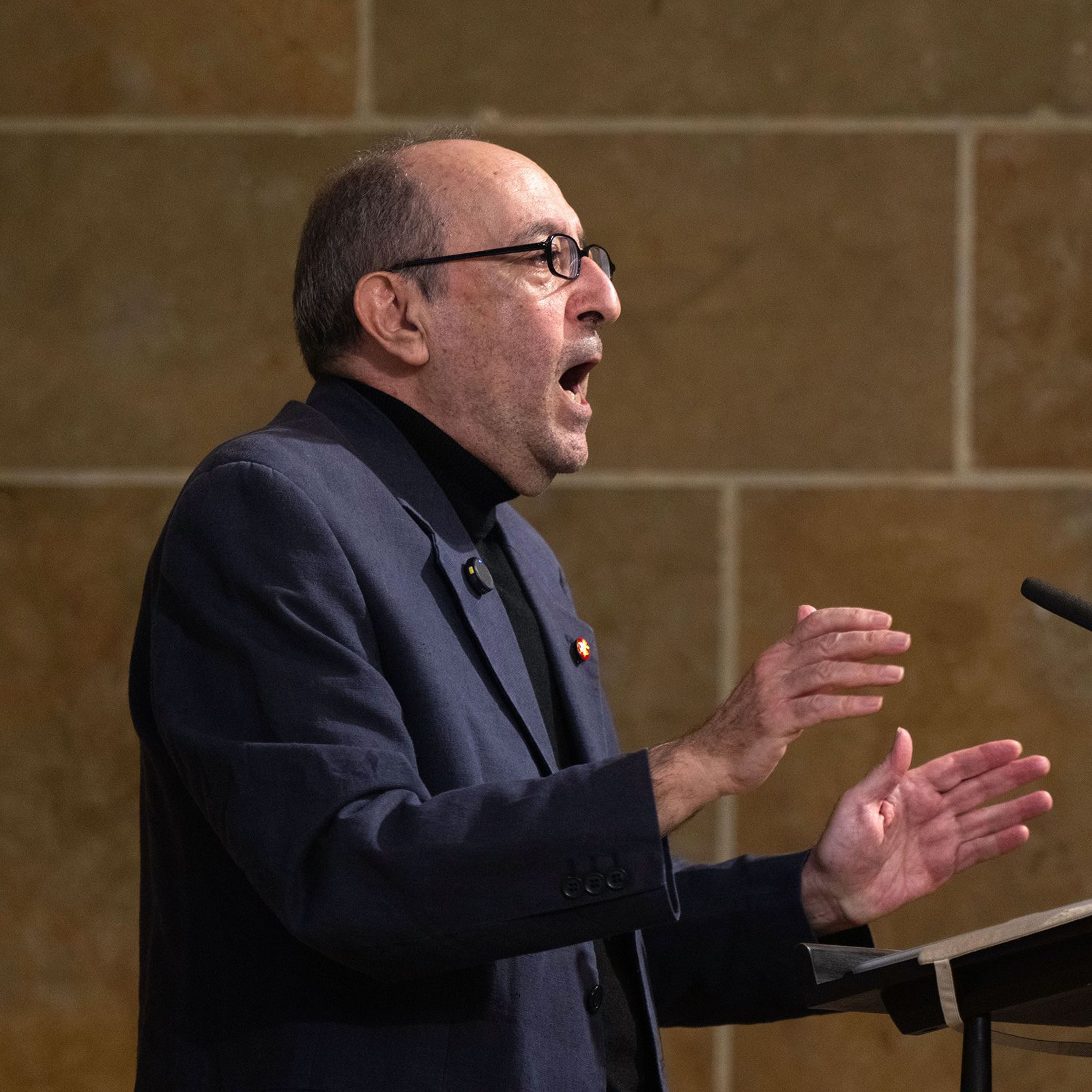
May 200:17:52Tap to summarizeA peace vigil was held in London on Thursday, 30 April, at Our Lady of Victories Catholic Church in Kensington to pray for peace in the Middle East. The vigil was attended by Bishop Jim Curry, Lead Bishop for the Holy Land for the Bishops' Conference as well as Bishop Mike Royal, General Secretary of Churches Together in England, and His Grace Bishop Hovakim Manukyan, Primate of the Armenian Apostolic Church in Great Britain and Ireland and Churches Together in England's President for the Orthodox Churches. During the service, an address was given by Dr Harry Hagopian, a public international lawyer who was also Assistant General Secretary of the Middle East Council of Churches, and Executive Director of the Jerusalem Inter-Church Committee. Dr Hagopian reminded the congregation that “sustainable peace is not achieved through force, but through justice, equality, and the recognition of our shared humanity. It is our duty to amplify this call in every community, in every church, and in every heart.” He closed by recalling the powerful words of St Francis of Assisi’s prayer for peace and their relevance today, "in a world of crisis, chaos, and dog-eat-dog tensions."
Transcribe →
Iran Special
Mar 1100:52:01Tap to summarizeJust as we were lamenting the fact that we had, with some sadness, placed our 'Middle East Analysis' podcasts on hold to consider the long-term future of the series, something cataclysmic and literally earth-shattering took place to shake us from our self-imposed slumber to talk about the war in Iran and its wider regional consequences. Joining us is the voice of 'Middle East Analysis', the international lawyer, regional consultant, negotiator and commentator Dr Harry Hagopian. He sits in our studio alongside the Right Reverend Jim Curry, Lead Bishop for the Holy Land for the Catholic Church in England and Wales. This 'Iran Special' runs for exactly 52-minutes. In fact, MEA specials, to cover exceptional events may show us a future path for these podcasts. We hope you take something from the conversation.
Transcribe →
MEA: Au revoir or Adieu?
Feb 1200:58:53Tap to summarizeIt's the end of the world as we know it. Wasn't that what REM once sang? Ironically when the famous US rock band from Athens, Georgia committed those lyrics to popular music folklore, the world made more sense. Today, after 17 years and many laughs, smiles, tears (and the odd exasperated outburst), Dr Harry Hagopian brings the curtain down on a remarkable podcasting run with this, the final Middle East Analysis. The epitaph reads: Here lies Middle East Analysis, 2009 to 2026, it lived hard, loved dearly and asks for your prayers as it returns to its maker. Something like that. So for next hour, alongside our guest, Bishop Jim Curry, who takes the lead for the Catholic Bishops' Conference of England and Wales for matters related to the Holy Land, we look back on almost two decades of culture and conflict, rancour and resilience not to mention the insight, knowledge and razor-sharp analysis of the good Doctor. But is this really the end? Seemingly so but Harry leaves the door perhaps not open, but slightly ajar by saying au revoir rather than adieu.
Transcribe →
Hope is merely staying alive
Dec 1101:10:19Tap to summarizeYou cannot totally divorce the political and the spiritual in the Middle East North Africa region, so for this special Christmas edition of 'Middle East Analysis' we are splitting the podcast into two parts. Leading the way with the political analysis is our regular guest Dr Harry Hagopian, an international lawyer and consultant on the Middle East, North Africa and Gulf States. Harry takes us to Lebanon, Syria, Iraq, Sudan (yes, pushing briefly a little further south into Africa again this month) and Israel/Palestine. The latter allows us to segue seamlessly into the second part of this episode. This is the 'Christ in Christmas' bit and who better to reflect on the true meaning, and in fact geography, of the season, than Bishop Jim Curry. Bishop Jim is a Catholic bishop who holds the Holy Land brief for the Catholic Bishops' Conference of England and Wales. Light in the darkness, hope in times of despair, all embodied by Jesus Christ born in a stable in Bethlehem in the West Bank. There's no ducking the realities this Christmas but our two guests do find reasons to cling to hope in tumultuous times.
Transcribe →
Shifting Sands
Nov 1901:02:10Tap to summarizeIt's hard to be still and take stock when you're standing on shifting sands. Equally it's impossible to build anything meaningful or lasting when the ground under your feet won't stop moving. That's why the title of this 'Middle East Analysis' podcast feels very appropriate in these uncertain times for the region and its people. Conflicts and wars - proxy or otherwise - come and go from the news headlines and the value and dignity of human life is degraded with every man, woman or child killed in the crossfire. Not much is solid, certain and reliable. Today Dr Harry Hagopian looks at: Israel/Palestine - a fragile ceasefire in Gaza and the Kairos II statement. Lebanon - how can its government disarm Hezbollah and at the same time avoid civil war? Sudan - the horrors of el-Fasher and a tragedy that has left millions in need of humanitarian aid Syria - Interim president Ahmed al-Sharaa's visit to the White House and an easing of sanctions. Saudi Arabia - Crown Prince MBS, Mohammed bin Salman - another leader visiting President Donald Trump - and the small matter of the F35s. All this and more on the shifting sands of the MENA and Gulf region (and Sudan).
Transcribe →
Pessoptimism on the path to peace
Oct 300:48:01Tap to summarizeThere are two ways of looking at every subject covered in this 'Middle East Analysis' podcast. Recorded just after US President Donald Trump presented his 20 (or 21) point framework for peace in Gaza, resident studio guest Dr Harry Hagopian grapples with the viability of the deal and whether it's one that offers any sort of hope for lasting peace whilst allowing for Palestinian self-determination. Symbolism is a word that can be associated with the other topics on our radar – recognition of the State of Palestine by the UK (and 10 other states) and the aid flotilla - or Global Sumud Flotilla (GSF) - that attempted to reach Gaza with Greta Thunberg and other activists onboard before being intercepted by authorities and transferred to an Israeli port. Dr Harry Hagopian is joined by Bishop Jim Curry who is the Lead Bishop for the Holy Land for the Catholic Bishops' Conference of England and Wales. Bishop Curry provides the pastoral, Dr Hagopian the political as our guests explore the fading chances of a two-state solution and whether peace is but a distant dream. Pessoptimism is certainly the word, but Dr Hagopian is more pessimist than optimist with only a few crumbs of comfort to be found.
Transcribe →
Israel-Palestine: A Personal Armenian Story
Aug 2200:12:46Tap to summarizeOn occasion, Dr Harry Hagopian, the voice of Middle East Analysis, offers a personal reflection on a key regional topic. This piece focuses on the political story of his family - from his grandparents in Ottoman Turkey, to his parents during the British mandate of Palestine. The story also weaves across Lebanon and Jordan. But then 1967 happened, the six-day war, and it was downhill from there. Harry concludes with the current horrific war in Gaza.
Transcribe →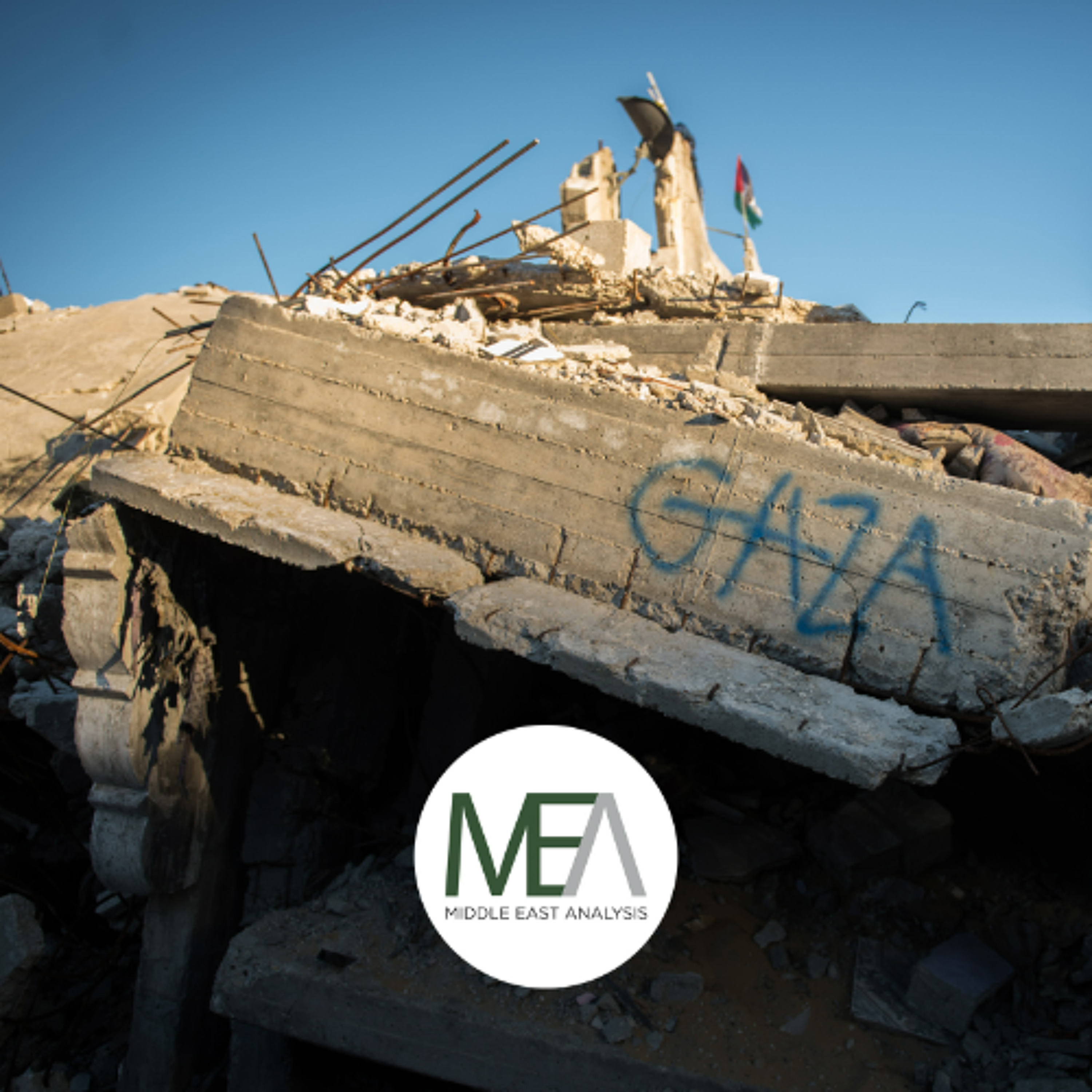
Gaza: Walk the Talk?
Jul 31, 202501:08:38Tap to summarizeOrdinarily, a disclaimer would be bolted on at the end of the introductory blurb. However, one of the key talking points in this podcast - Palestinian self-determination and the recognition of Palestine as a state - has taken on a whole new dimension since recording. On Tuesday, 29 July, our resident studio guest, Dr Harry Hagopian, sat down to discuss the headline topic of the human cost of the war in Gaza. Just an hour after the faders went down, UK Prime Minister Keir Starmer announced the UK's intention to join France in recognising the state of Palestine dependent on whether Israel, and indeed Hamas, meet certain conditions. Canadian Prime Minister Mark Carney then made a similar move saying Canada will also, under certain conditions, recognise a Palestinian state in September - the third G7 nation to make such a pronouncement in the past week. With that context in mind, this Middle East Analysis podcast spans a bumper 68 minutes, exploring many varied subjects, so to make things easier for our listeners, here are the topics and time codes: Start - 3m 46s Introduction. 3m 47s - 7m 15s Pre-analysis topic. 7m 16s - 42m 29s ISRAEL/PALESTINE: Gaza, humanitarian devastation, patriarchs' visit, Palestinian statehood, settler attacks in the West Bank and more. 42m 30s - 47m 39s LEBANON: De-militarisation, funeral of renowned musician and composer Ziad Rahbani, son of legendary Lebanese singer Fairuz. 47m 40s - 54m 55s ARMENIA: An unholy spat between Church and State. 54m 56s - 1h 1m 41s SYRIA: Armed conflict between Druze groups and Bedouin tribes in Sweida. 1h 1m 42s - End AFTERTHOUGHT: Book recommendation on Contemporary Arab Thought.
Transcribe →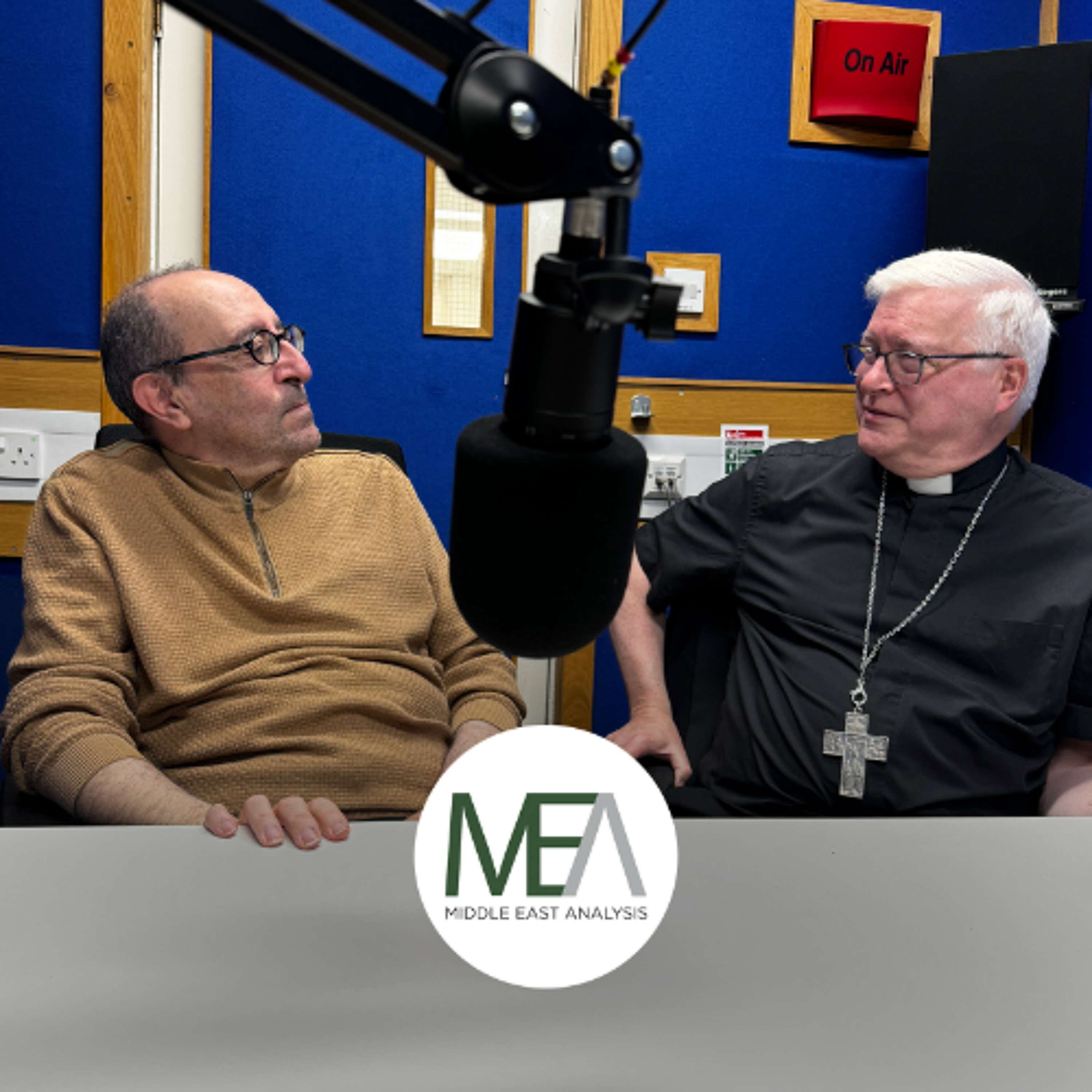
Gaza and the Holy Land
Jun 12, 202500:49:08Tap to summarizeA Papal death, conclave and election, in tandem with our key contributor's multiple regional travels have dented our once-a-month aspirations for Middle East Analysis but, at last, June sees a fresh podcast episode. Regular studio guest, Dr Harry Hagopian, who brings more than three decades of experience of the ever-complex Israel/Palestine conflict to the table, brings us up to date with the tragic realities of the situation in Gaza. For this episode, he sits alongside a special guest, the Right Reverend Jim Curry. Bishop Curry has long been a passionate supporter of the Christians and peoples of the Holy Land. He is a Knight of the Holy Sepulchre and the Lead Bishop for the Holy Land for the Catholic Bishops' Conference of England and Wales. Dr Hagopian talks politics, Bishop Curry talks pastoral realities. It's an interesting mix. In this Middle East Analysis podcast, we look at the necessary ingredients for a ceasefire, the desperate need for 'dignified' humanitarian aid and an end to the suffering, Pope Leo's calls for peace, the situation regarding international law and war, Palestinian self-determination - viability of two-state or single state solutions, the small Christian community in Gaza, hope in the darkness, and more.
Transcribe →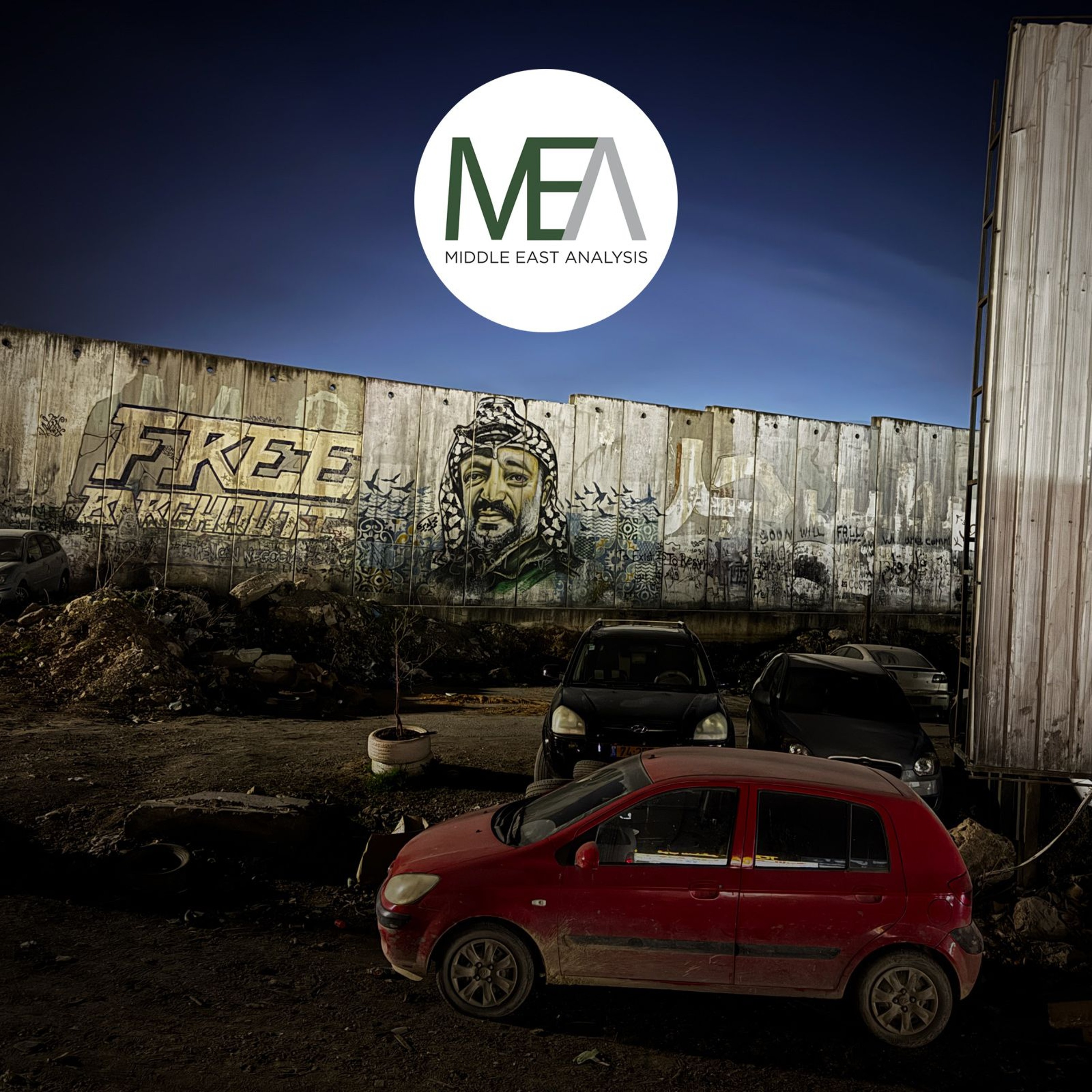
Discombobulated Realities
Apr 16, 202500:50:29Tap to summarizeBeing lost for words is no state to be in when preparing to record a podcast. This 50-minute 'Middle East Analysis' episode started with head-scratching on the presenter's part whilst grasping for the right questions to get us underway. Despite being somewhat fatigued, regular guest Dr Harry Hagopian takes on what we're terming the discombobulated realities of Israel-Palestine, Syria, Lebanon, and Iran. What are the rules of engagement? Are there any? Is mention of a two-state solution to the Israel-Palestine conflict so fanciful as to be a waste of breath? Talk is cheap, says Dr Hagopian. When are the key players going to do the right thing and walk the talk?
Transcribe →