Loading summary
Transcript194 lines
- [00:00]
Dr. Michelle Ward
AI.
- [00:03]
Podcast Advertiser / Host Voice
Had the time of my life A I never felt this way before.
- [00:10]
Dr. Michelle Ward
From building timelines to assigning the right people, and even spotting risks across dozens of projects, Monday Sidekick knows your business, thinks ahead, and takes action. One Click on the star and consider it done. And I owe it all to you. Try Monday Sidekick AI you'll love to use on Monday.com why choose a sleep.
- [00:31]
Desiree Smith
Number Smart Bed Can I make my site softer?
- [00:33]
Podcast Advertiser / Host Voice
Can I make my site firmer? Can we sleep cooler?
- [00:37]
Sleep Number / Advertiser Voice
Sleep Number does that cools up to eight times faster and lets you choose your ideal comfort on either side. Your sleep number setting J.D. power ranks sleep number number one in customer satisfaction with mattresses purchased in store and online. And now the more you buy, the more you save on beds, bases and more. Plus, get free premium delivery on any bed with base limited time. For J.D. power 2025 award information, visit jdpower.com awards check it out at the Sleep Numbers.
- [00:59]
Jerry Insurance Advertiser
Store today Are you noticing your car insurance rate creep up? Even without tickets or claims, you're not alone. That's why there's Jerry, your proactive insurance assistant. Jerry handles the legwork by comparing quotes side by side from over 50 top insurers so you can confidently hit buy. No spam calls, no hidden fees. Jerry even tracks rates and alerts you when it's best to shop. Drivers who save with Jerry could save over $1,300 a year. Don't settle for higher rates. Download the Jerry app or visit Jerry AI Acast today.
- [01:36]
Dr. Michelle Ward
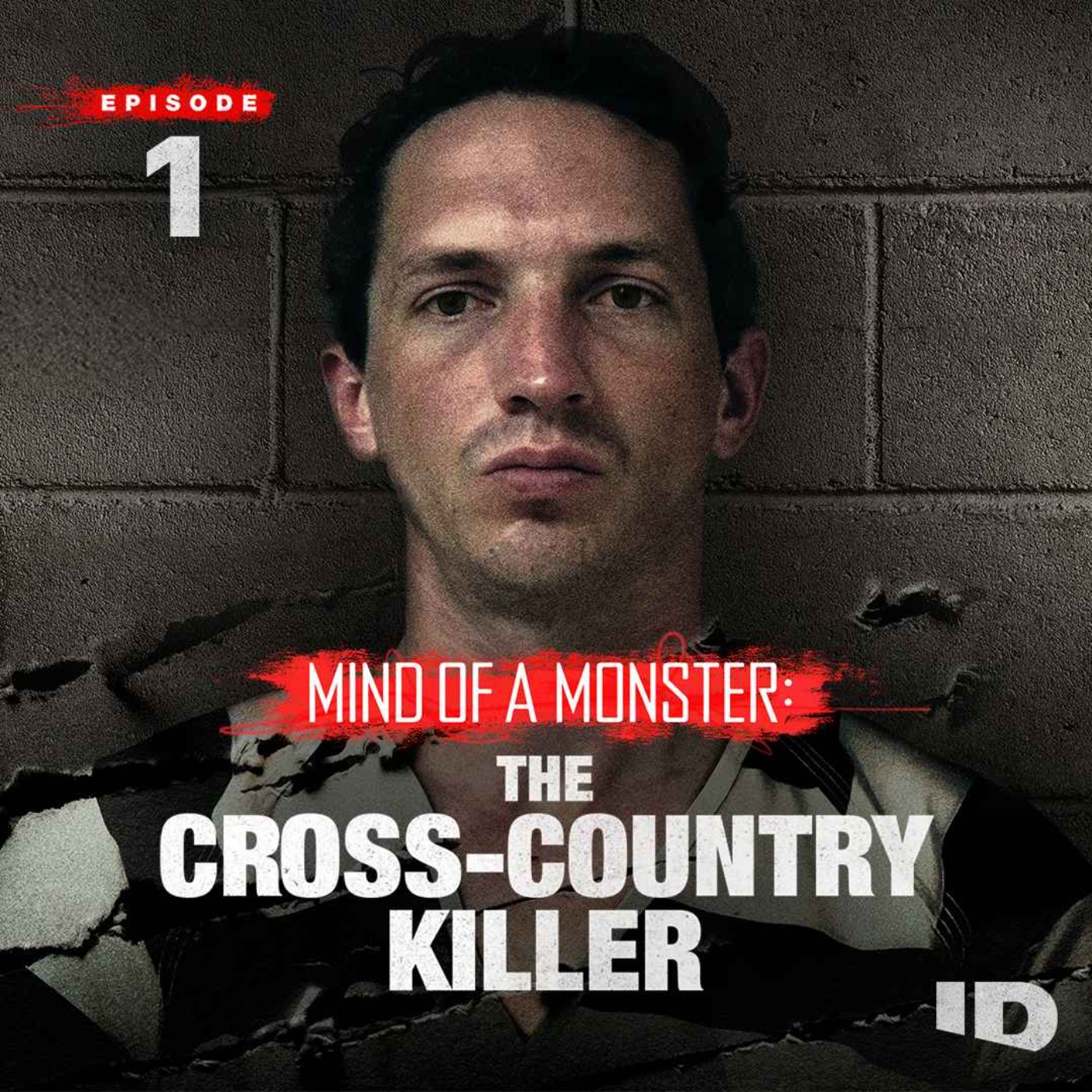
This podcast explores themes of murder, rape, child abuse, and racism. Listener discretion is advised. When we hear the term serial killer, we may think of a trail of victims sparking mass panic? Police investigations lasting years lured speculation in the press. But what about a killer so methodical, so terrifyingly discreet, that nobody is looking for him? From ID and Aeromedia, I'm criminal psychologist Dr. Michelle Ward, and this is Mind of a Monster, the Cross country killer. Chapter 1 Israel Keyes.
- [02:18]
Israel Keyes
Israel Keyes is the most prolific serial killer you've never heard of.
- [02:22]
Dr. Michelle Ward
You would have no idea that he could have committed the crimes that he committed because he seemed like such a normal guy. But he was the face of evil.
- [02:33]
Josh Hallmark
He roamed the country and quite meticulously planned all of his attacks, sometimes years in advance.
- [02:41]
Detective Jeff Bell
He took them both out to the farmhouse and took Mr. Courier downstairs, restrained him, and then took Mr. Mrs. Currier upstairs to a room that he had set up with his ligatures and restraints.
- [02:57]
Dr. Michelle Ward
Israel Keys is a deadly predator who strikes from the shadows, brutalizes and butchers his victims, and Then covers his tracks so efficiently that no one knows he's out there getting away with it.
- [03:10]
Israel Keyes
The only person who knows about what I'm telling you kind of things I'm telling you is me.
- [03:17]
Dr. Michelle Ward
I'm going to analyze FBI recordings of the killer's own twisted and highly detailed confessions and speak to the detectives who tried to keep up with his spiraling body count to attempt to understand why he killed and how his crimes went unnoticed for so long.
- [03:35]
Israel Keyes
I have lots more stories to tell if you're interested.
- [03:44]
Dr. Michelle Ward
It's spring 2012 in the attorney's office in Anchorage, Alaska. Local PD, the FBI and various lawyers sit around the board table. The focus of their attention is the prime suspect in the disappearance of 18 year old Samantha Koenig. She's been missing for nearly two months and her family, friends and the entire state are desperate to know where she is. Israel Keys has been tight lipped since his arrest two weeks ago. But investigators are certain he's killed her.
- [04:17]
Detective Jeff Bell
It's Officer Bell, APD going on tape. It's March 30th.
- [04:21]
Israel Keyes
US Attorney talks.
- [04:23]
Dr. Michelle Ward
After 17 days in custody, Keys finally agrees to talk.
- [04:28]
Sleep Number / Advertiser Voice
All right.
- [04:28]
Israel Keyes
Is it. It's okay. You will ask some questions.
- [04:30]
Sleep Number / Advertiser Voice
Okay.
- [04:32]
Dr. Michelle Ward
The tall and wiry 34 year old with greased back hair and dark eyes has a captive audience. Sitting across the table is Detective Jeff Bell.
- [04:44]
Detective Jeff Bell
I think we had some expectations that he was going to talk to us about the disappearance of Samantha Koenig, but none of us were prepared for the detail in which he provided to us not only about her kidnapping, but about the what he did to her and her death.
- [05:02]
Dr. Michelle Ward
What you are about to hear is not the voice of an actor. It's very real and it's chilling.
- [05:10]
Israel Keyes
You just described to me the putting her body in pieces in the lake around February 22, 2030. First day was the head, legs and the arms of Samantha Cunning.
- [05:31]
Detective Jeff Bell
Yep.
- [05:34]
Israel Keyes
And the second day, the torso.
- [05:39]
Detective Jeff Bell
Very kind of eerie watching him react to his own telling of the story. He was constantly like rubbing his arms like he was chilled about what he was saying. He was definitely having a physical reaction to talking about what he had had done.
- [06:01]
Israel Keyes
When I robbed her, she was, you know, very cooperative and I knew from the minute she walked out of that coffee stand, I was gonna kill her.
- [06:15]
Dr. Michelle Ward
He's giving you a lot of information. What effect does this have on you?
- [06:21]
Detective Jeff Bell
Well, it was, it's both mentally and physically draining, honestly. I mean we, none of us in that room had ever heard anything face to face with someone to that detail of crime. Because most people, when they confess to crimes, they leave out details. He left no details out.
- [06:45]
Israel Keyes
Then I tied knots in the ends of the rope and I screwed her, screwed the rope down to the floor of the wall.
- [06:53]
Dr. Michelle Ward
Did she ever struggle for you, or did she just let you do the ball?
- [06:58]
Israel Keyes
She knew. She knew at that point. I put my head right up to her ear and I said, you knew this was coming.
- [07:10]
Detective Jeff Bell
Once he told us the details of what he did to Samantha and how he disposed of her remains, we were all very confident that he had other victims.
- [07:26]
Israel Keyes
I don't know if I want to tell any more stories today, but I have a lot more stories to tell.
- [07:31]
Dr. Michelle Ward
Over the next seven months, the FBI hears intimate details about Keez's life and his murders. There is something undeniably chilling about hearing a killer's voice describing his thought process and reliving his experiences. But it also offers a unique opportunity to get inside his mind, to try to understand who Keyes is and why he kills. I need to start at the beginning, but this is not easy. Israel Keys was raised without a birth certificate or formal education. Cut off from regular society. 1983. Colville. Heidi and John Jeffrey Keyes have just moved from Utah to the forests of northeast Washington with 4 year old son Israel and his older sister. They were Mormons, but have now rejected that religion and are searching for a new way of life. They find it here, living off grid in nature and attending an extreme fundamentalist Christian church. It is in this isolated world where Keyes spends his childhood right up until his late teens. I really need a deeper understanding of what goes on within this cutoff society. But these are people who harbor an intense distrust of outsiders like me. So I'm incredibly fortunate to meet two people who grew up in this covert community. John and Desiree Smith are a married couple who still live near Colville, Washington, in the area where Israel Keyes was raised. John, can you please give us an idea of where Colville is and what it's like?
- [09:14]
John Smith
So the city of colville is actually 40 miles south of us. We live just tucked up right under the Canadian border. There's a lot of space, there's a lot of nature, There is a lot of. Of beauty. But there's also isolation. And that can be great for people who want to be close to nature, like myself and my family. We live on a ranch. We like that sort of thing. But it can also create space for religious extremists. My grandfather, one of my grandfather's best friends, was one of the leaders of The Aryan nations, which was a very strong neo Nazi white supremacist organization. And so growing up in that environment, I had a lot of experience with the Christian Identity movement, with white supremacy and with the associated anti Semitism.
- [10:07]
Dr. Michelle Ward
It's through this Christian Identity movement that John will meet Israel Keys. But what is Christian Identity?
- [10:15]
John Smith
Christian Identity fundamentally believes that the world is ruled by a group of Jewish banker elitists who manipulate and control the entire world to their ends. Then you have the other races who they view as subhuman. They're closer to animals than they are to humans. Where the Jews are satanic. This will culminate in a great battle at the end of the world where white people essentially kill everybody else and take over the planet and either subjugate or eliminate anyone and everyone else.
- [10:49]
Dr. Michelle Ward
So this is the sort of negative and hostile belief system that's being fed to Israel gays.
- [10:54]
John Smith
It was a culture of violence. What was inherent to it is dehumanizing those who don't share your individual beliefs. And then a heart of the conversation was how destruction of those people was righteous and how it was good and how it was benevolent.
- [11:14]
Dr. Michelle Ward
John left Christian Identity behind a long time ago, as did his wife Desiree, who was raised in the same environment. And we can't confirm whether Keyes and his family were members of the Christian Identity movement, but it's at their meeting place where Desiree first makes contact.
- [11:30]
Desiree Smith
I first met the Keys family because when I was a young teenager, I was attending the Saturday meetings at the Ark. The Ark was a large building where we could all be together with these like minded folks. And their family visited a couple of times. And so they had several girls similar to my age. And so that was. It was neat to meet the girls and to kind of interact with them a little bit and become a little bit friendly with them. And that was my first experience with the family.
- [12:08]
Dr. Michelle Ward
Israel did not have a Social Security number or a birth certificate. How unusual was that in that area at the time?
- [12:17]
Desiree Smith
Not unusual at all. Not unusual. What I understood at the time from getting to know the sisters a little bit was that they were all born at home without any medical supervision. They didn't have birth certificates, they were never given birth certificates, never given Social Security numbers. And so basically they, the government had no idea they existed.
- [12:44]
John Smith
It was a common thing in those days to discuss. Oh yeah, well, I've never had a Social Security number and I've never had a birth certificate. And so it was viewed as like a status of righteousness because that was.
- [12:56]
Dr. Michelle Ward
Such a point of like value. It was a flex.
- [12:59]
John Smith
Oh yeah, because you were a higher social order. If you were if you were not sold into the Babylonian system, which is what they called having a birth certificate or Social Security number.
- [13:13]
Dr. Michelle Ward
Already I'm wondering what effect this has on the mind of a child. He's learning that society outside his family is wrong and bad, and that by isolating themselves, they are superior to the regular people who follow society's rules. If Israel is being raised with such radically antisocial principles, then it makes sense that he will continue to challenge and rebel against established rules and boundaries. But a serial killer? It does not make.
- [13:42]
Jerry Insurance Advertiser
Are you noticing your car insurance rate creep up? Even without tickets or claims, you're not alone. That's why there's Jerry, your proactive insurance assistant. Jerry handles the legwork by comparing quotes side by side from over 50 top insurers so you can confidently hit buy. No spam calls, no hidden fees. Jerry even tracks rates and alerts you when it's best to shop. Drivers who save with Jerry could save over $1,300 a year. Don't settle for higher rates. Download the Jerry app or visit Jerry aiacast today.
- [14:15]
Dr. Michelle Ward
We will receive a call as soon as we can.
- [14:18]
Podcast Advertiser / Host Voice
Are you still running your business? With one creaky old phone system, missing calls, losing track of messages, and scrambling to keep up with your team email, it's time to break up with the past and say hello to Kuo. Kuo is the number one business phone system with 4.7 stars across 3,000 reviews on G2. Quo brings all your business phone calls and texts into one app for your team. No more juggling devices or being tied to a landline. Quo's built in AI logs calls, creates summaries, automates follow ups, and can even answer and route calls so you never miss an opportunity. Whether you're a solo operator or leading a growing team. Quote Quo keeps you connected and helps you deliver standout customer experiences. Join over 90,000 businesses using Quo and see why. It's the one business phone system for customer satisfaction. Level up your workflow with quo. Get started free plus get 20% off your first six months at quo.com business. That's quo spelled Q U O.com business and if you have existing numbers with another service, Quo will port them over for free. Quote no missed calls, no missed customers.
- [15:28]
Sleep Number / Advertiser Voice
Why choose a sleep number?
- [15:29]
Desiree Smith
Smart bed Can I make my sight softer?
- [15:32]
Podcast Advertiser / Host Voice
Can I make my site firmer? Can we sleep cooler?
- [15:35]
Sleep Number / Advertiser Voice
Sleep number does that cools up to eight times faster and lets you choose your ideal comfort on either side. Your sleep number setting J.D. power ranks sleep number number one in customer satisfaction with mattresses purchased in store and online. And now the more you buy, the more you save on beds, bases and more. Plus, get free premium delivery on any bed with base limited time for J.D. power 2025 award information, visit J.D. power.com awards. Check it out at a sleep numbers store today. Well, the holidays have come and gone once again, but if you've forgotten to get that special someone in your life a gift, well, Mint Mobile is extending their holiday offer of half off unlimited wireless. So here's the idea. You get it now, you call it an early present for next year. What do you have to lose? Give it a try@mintmobile.com Switch limited time.
- [16:19]
Dr. Michelle Ward
50% off regular price for new customers. Upfront payment required $45 for 3 months, $90 for 6 month or $180 for 12 month plan taxes and fees. Extra speeds may slow after 50 gigabytes per month when network is busy. See terms. It's the early 1990s and Heidi and John Jeffrey Keyes are raising their growing family out in the Washington woods. When one of their daughters gets engaged, they hold a wedding shower and invite guests from their insular community. Desiree Smith is one of them.
- [16:50]
Desiree Smith
I was probably, I want to say I was 14 or 15 at that time. The driveway was incredibly long and very bumpy up the side of a mountain and it didn't really feel like we were going anywhere. But eventually we ended up at this little ramshackle house. I believe Jeff built that house for them and it was pretty rough looking and there were chickens running around in the yard area and on the driveway.
- [17:22]
Dr. Michelle Ward
And did everybody sleep there together in that little ramshackle?
- [17:27]
Desiree Smith
I wondered because there were so many of them and so many children. I did not have any idea how they all fit in there. There were some little shacks kind of around the property. So, you know, I didn't know if some of them were sleeping in the shacks or somehow they all piled into the house.
- [17:47]
Dr. Michelle Ward
It's unclear how many keys children there are at this point, but Heidi and John Jeffrey eventually have 10.
- [17:53]
Desiree Smith
A couple of the girls were close to my age. So, you know, going in the house with them and it was small and they didn't have electricity. I didn't realize it at first, but then I noticed all of the walls had oil lamps on the walls instead of light sockets from the ceiling. So that kind of let me know pretty quickly that there was no Electricity, no running water, nothing like that.
- [18:20]
Dr. Michelle Ward
So they're kind of off the grid, completely off grid.
- [18:24]
John Smith
There were people like the Keys that viewed their rugged survivalist lifestyle as a point of righteousness on their behalf because they weren't interacting with the system and they weren't slaves to all of those necessities, but that they were, they were free and independent and living as God intended.
- [18:48]
Dr. Michelle Ward
And so did they stand out because they were choosing that unusual lifestyle?
- [18:52]
Desiree Smith
They did. So the girls were not allowed to wear anything but dresses and the mother wore a head covering and dresses all the time.
- [19:03]
Sleep Number / Advertiser Voice
They.
- [19:05]
Desiree Smith
They were very socially awkward. You could tell that they hadn't spent a lot of time with out the outside world or with other people in social situations.
- [19:16]
Dr. Michelle Ward
Even in this isolationist culture, it sounds like Israel Keys's family takes it to a whole other level. Imagine a five year old kid with no running water, no electricity and no heating. The winters in Washington and halfway up a mountain. It's such a harsh and unforgiving environment to choose for your children. I am very interested to learn more about Israel's parents, so I asked John Smith for his impressions. Did anything stand out to you in terms of how Heidi and Jeff were parenting the kids?
- [19:50]
John Smith
When it came to the way that Jeff spoke of, reflected on or, or interacted with women, it was very derogatory. At best, all women would be treated like, like children. But at worst, it was far worse than that. When it came to the girls, they were just treated as if they were stupid. They, they were irrelevant, they were a nuisance. There was no valuing, there was no paternal affection, there was no congratulation or even value of them.
- [20:33]
Dr. Michelle Ward
Israel is growing up in an environment where there is a violent distrust of everyone outside his family's belief system. But he's also in this extreme patriarchy where even within the circle of equals, women are to be dismissed as irrelevant and perhaps violently so. So how did this environment affect Israel? I take Desiree back to the Keys house in the woods.
- [21:00]
Desiree Smith
I noticed Israel. He stood out absolutely partly because he was a little older than I was. He was fairly tall and lean and not fit. Physically unattractive at the time. He didn't look very different from what I was used to. He always wore camel pants and he had, you know, a knife on his belt and things like that. That wasn't too unusual for what I grew up around. What stood out to me when I first met him was he was pretty aloof, he was very antisocial. He kind of was lurking in the background a lot and it didn't just seem like he was shy. I'd been around a lot of shy kids. He just seemed strange and a little bit creepy.
- [21:52]
Dr. Michelle Ward
Keys never gives a full account of his childhood, but he drops hints as to how he spends his days.
- [22:00]
Israel Keyes
12 or 14. I started building rafts and stuff like that. Rope bridges and all that. I used to hang out in the woods by myself. So I would just, you know, be walking around in the woods. I would hike for miles.
- [22:17]
John Smith
I knew.
- [22:18]
Israel Keyes
I knew I would advance to that area.
- [22:23]
Dr. Michelle Ward
Desiree remembers Israel as a loner hanging out on the fringes. But I want to know if she ever got closer to him. I did.
- [22:30]
Desiree Smith
Unfortunately, yes. I think I was right around 15 years old. I must have been the Ark, because it was used often as a community building. A lot of the kids in the community wanted to get together and raise money to buy things. So we decided we wanted to put on a box social. And back in the day, a box social was when all of the girls would. Would make special picnic lunches and decorate a fancy box or a basket and put the picnic inside of it. And then you'd have an auction where all the young men would bid on these boxes. And if you were lucky, you would get the box of the girl you might have been a little bit sweet on. And so the one who bid on my box and won it was Israel Keys. There were tables all set up in the room, one on one tables. And so you would sit down and have your lunch. And basically it was a date.
- [23:29]
Dr. Michelle Ward
Wow.
- [23:31]
Desiree Smith
It just. It started off a little awkward because he was very socially awkward, but then it just started getting more uncomfortable and more uncomfortable because he couldn't. He couldn't have a normal, pleasant conversation. He talked about hunting and he talked about fishing, but. But he didn't talk about it in the way a regular hunter or angler would. He talked about he was learning how to be a survivalist and evade the government, and there's going to come a time when they're going to be after him. And he talked about how he learned how to live off the land and what animals to kill. And he would kill this animal and he tried to kill that other animal. And it sounded more like he. He was enjoying that in just a weird way.
- [24:23]
Dr. Michelle Ward
Just a little aside, since we do know he became a prolific serial killer. How scary that you were basically on a date with him as a young teenager, listening to him perfect his outdoor skills of slaughtering animals and enjoying it. Did he seem intelligent? Did he. I mean, obviously he's boasting about his skill set. But did he come across as smart?
- [24:46]
Desiree Smith
He seemed very intelligent.
- [24:47]
Dr. Michelle Ward
And did you get the sense he was attracted to you or hitting on you during that date?
- [24:51]
Desiree Smith
Yeah, absolutely.
- [24:52]
Dr. Michelle Ward
And what was that like?
- [24:53]
Desiree Smith
Very uncomfortable. I was basically being looked at like a piece of meat. So, yeah, it was pretty uncomfortable.
- [25:02]
Dr. Michelle Ward
It won't come as a surprise to learn that Desiree and Israel never had a second date. I asked John Smith for his impression of the teenager.
- [25:12]
John Smith
So Israel defined himself in his conversation as an outdoorsman, as a survivalist. So his flexes, the thing that he would tell you, was all about, you know, I killed a deer with nothing but my survival knife, and I went out and built a shelter in the woods where nobody knows where I am or what I'm doing, and I disappeared for a weekend out in the woods and survived without anything but myself.
- [25:43]
Dr. Michelle Ward
Did you get a sense of what Israel's relationship was with guns?
- [25:50]
John Smith
Yeah. Well, again, if you were Christian identity, and if you viewed that there would be a violent civil war in your lifetime, which most did, then guns were a part of your lifestyle. When Israel spoke about guns themselves, one thing that struck me in that conversation is he talked about guns, plural. And then he also talked about having handguns, which in Washington state at that time, you had to be 21 to own handguns. So how did he get those?
- [26:26]
Dr. Michelle Ward
It's an interesting question, and Keyes answers it in the FBI interviews.
- [26:32]
Israel Keyes
I used to carry a pistol all the time, from the time I was about 14. I mean, by the time I was 14, I was basically the same size I am now. I didn't really look 14. And so I could get away with, like, the houses, the guns I took from, houses I broke into, I could get away with selling them without anybody knowing about it, without my parents knowing about it. So I had a lot of guns, and I would always carry a gun.
- [27:00]
Dr. Michelle Ward
So he gets his guns by breaking into houses and stealing them. And while firearms are condoned by his family, their son's blossoming delinquency is certainly not.
- [27:12]
Israel Keyes
I got in trouble a few times. Around that age, people found out about some of the stuff I did. Like my parents and parents of other kids who would hang out with me, they would find out about some of the stuff I did.
- [27:24]
Dr. Michelle Ward
As Keyes recalls this teenage misbehavior, he suddenly starts talking about a pivotal moment. It's 1992, and Israel is in the woods near his house.
- [27:37]
Israel Keyes
I've known since I was 14 that there was. There were things that. That I thought were normal and that were okay. That nobody else seems to think are normal and okay. When I was 14.
- [27:54]
Podcast Advertiser / Host Voice
There were some.
- [27:55]
Israel Keyes
Friends staying with us, and there was cat of ours that was always getting into the trash and was my sister's cat. And I told her at the time, I was like, if that cat gets into the trash again, I'm gonna kill it. And so there was this kid and some of the other, Some of his. I think maybe one of my sisters and one of his sisters. We all went up into the woods and I had the cat with me.
- [28:32]
Dr. Michelle Ward
It's at this point that Keys goes into graphic description about how he tortures the cat and then shoots it in front of his friends. What happens next is important.
- [28:43]
Israel Keyes
I didn't really react. I mean, I actually kind of laughed a little, I think, because of the way it was running around the tree. But then I looked over at everybody else, and the kid who was about my age was with me.
- [28:55]
John Smith
He was.
- [28:56]
Israel Keyes
He was throwing up, like, he was, like, really, I don't know, traumatized, I guess you would say. And. And he told me. He told his dad about it.
- [29:12]
Sleep Number / Advertiser Voice
And then.
- [29:16]
Israel Keyes
Of course, his dad talked to my parents about it. And that was pretty much the last time anybody went in the woods with me. I learned my lesson, and that's when I just started doing stuff by myself, pretty much exclusively.
- [29:39]
Jerry Insurance Advertiser
Tired of your car insurance rate going up? Even with a clean driving record, you're not alone. That's why there's Jerry, your proactive insurance assistant. Jerry compares rates side by side from over 50 top insurers and helps you switch with ease. Jerry even tracks market rates and alerts you when it's best to shop. No spam calls, no hidden fees. Drivers who save with Jerry could save over $1,300 a year. Switch with confidence. Download the Jerry app or visit Jerry AI Acast today.
- [30:12]
Podcast Advertiser / Host Voice
Are you still running your business? With one creaky old phone system, missing calls, losing track of messages, and scrambling to keep up with your team, it's time to break up with the past and say hello to Kuo. Kuo is the number one business phone system with 4.7 stars across 3,000 reviews on G2. Quo brings all your business phone calls and texts into one app for your team. No more juggling devices or being tied to a landline. Quo's built in. AI logs calls, creates summaries, automates follow ups, and can even answer and route calls. So you never miss an opportunity. Whether you're a solo operator or leading a growing team, Quo keeps you connected and helps you deliver standout customer experiences. Join over 90,000 businesses using Quo and see why it's the one business phone system for customer satisfaction. Level up your workflow with quo get started free plus get 20% off your first six months@quo.com business that's quo spelled q u o.com business and if you have existing numbers with another service, quo will port them over for free. Quo no missed calls, no missed customers.
- [31:22]
Sleep Number / Advertiser Voice
Why choose a Sleep Number Smart Bed.
- [31:23]
Dr. Michelle Ward
Can I make my site softer?
- [31:25]
Podcast Advertiser / Host Voice
Can I make my site firmer? Can we sleep cooler?
- [31:28]
Sleep Number / Advertiser Voice
Sleep Number does that cools up to eight times faster and lets you choose your ideal comfort on either side. Your sleep number setting J.D. power ranks sleep number number one in customer satisfaction with mattresses purchased in store and online. And now the more you buy, the more you save on beds, bases and more. Plus, get free premium delivery on any bed with base limited time. For J.D. power 2025 award information, visit jdpower.com awards. Check it out at the Sleep Number.
- [31:51]
Detective Jeff Bell
Store today, Amazon One Medical presents Painful.
- [31:55]
Israel Keyes
Thoughts do they ever actually clean the ball pit at these kids play gyms? Or is my kid just swimming in a vat of bacteria, catching whatever cootie of the day is breeding in there? A cootie that'll probably take down our whole family.
- [32:11]
Detective Jeff Bell
Luckily, with Amazon One Medical 24. 7 Virtual Care, you can get checked out for whatever ball pittitis you've contracted. Amazon One Medical Healthcare just got less painful.
- [32:27]
Dr. Michelle Ward
Israel Keys story about torturing the cat is really interesting. Not the act itself, but his reaction afterward. To dig a little deeper into this moment, I want to talk to somebody who has been researching Keyes for nine years and counting, investigative journalist Josh Hallmark. This moment with the cat is when Israel Keyes recognizes that there's something different about him. What he did to that cat disgusted his peers. What's your impression of how that might have affected him?
- [33:01]
Josh Hallmark
I think it was probably one of the most important moments in his life. I think for him it's he realizes he's different. He also realizes the joy he gets from inflicting pain on others.
- [33:18]
Dr. Michelle Ward
Mm.
- [33:20]
Josh Hallmark
He also realizes that the power it gives him. So it's kind of like his entire philosophy is born in this moment of I have to feign care and humanity, but also I am invigorated by pain and power and control. And I think that that single moment is what created the Israel Keys that we know today.
- [33:48]
Dr. Michelle Ward
I love your take on that.
- [33:50]
Josh Hallmark
He even said, that's where I realized, like, I had to present a different version of myself to the people around me.
- [33:58]
Dr. Michelle Ward
It is so rare to hear a serial killer acknowledge that moment when he knew he was different. Israel might not have the word for it, but he understands that he's a psychopath. His empathetic responses are very different to those of his peers in neuroscience. The area of the brain responsible for empathetic responses, among other things, is called the limbic system. And studies show that in the psychopathic brain, a structure within the limbic system called the amygdala can be smaller or malformed, which could indicate malfunction and impaired emotions. Now, we have no such medical information on Israel Keys, but the way he processes the killing of the cat reveals a very typical coming of age moment in a fledgling psychopath's life. And as Josh says, this understanding sets about a change in behavior. It doesn't change the way Keys feels about torturing cats, only that now this must be a private activity. He has crossed a line even in his strange community. But I have to wonder how much of his upbringing, the violence, violence and hatred, fostered this way of thinking. I want to hear Josh Hallmark's take on this.
- [35:12]
Josh Hallmark
You know, you're going to know way more about this than me, but I always consider it like in that type of community, an isolationist community where you're taught not to value other human life. You know, I think it's a easy line to cross of killing someone to get what you need or think you need or to make a statement. I think it's an extremist religion with very extreme, pointed, hateful views.
- [35:38]
Dr. Michelle Ward
You're surrounded by guns, hate, and if you happen to be born with a propensity to hurt or you don't have whatever protective factors that we have, like consciousness, like conscience, then it's the perfect breeding ground.
- [35:54]
Josh Hallmark
I think that's just a recipe for disaster.
- [35:58]
Dr. Michelle Ward
In a world like Israel Keyes's, a psychopath is less likely to be noticed and less likely to be steered away from unacceptable behavior. Here's John Smith again, talking from personal experience.
- [36:12]
John Smith
I believe that a belief system that chose to reject empathy and rules and moral guidelines and chose to adopt philosophies like antisemitism, like racism, I believe that that's why what allowed Israel Keys to prosper.
- [36:30]
Dr. Michelle Ward
I'm thinking about the interviews that I just had with Desiree and John Smith as I'm cooking dinner. And I'm thinking about how it actually distills down one of the most fundamental problems we have when considering how somebody becomes a serial killer. And this interview almost sounded like an Experiment. You've got John Smith and Israel Keys, who are arguably from the same environment, not exactly the same, but they're both from incredibly extreme, racist religions. They're raised in an environment where violence was normalized, where the state is considered the enemy. You can't trust doctors, teachers, anybody who isn't of your same religion, your same community, your same color. So they're on a similar pathway. And then their trajectories go in antithetical, opposite directions. You've got John Smith, who becomes completely pro social. He even becomes a senator so that he can serve the people around him. And then you've got Israel, who becomes one of the most sadistic, violent serial killers of all times. And it really highlights how you can't, as much as one wants to explain violence simply by pointing to a bad childhood, pointing to a bad environment. And we do that because then we feel like we can control it. We have to dig deeper. We have to go to the science. We have to go to places that aren't comfortable to truly understand how somebody becomes someone like Israel Keyes. It's the spring of 1997, and the Keyes family sell the land in Washington and move east, the first in a series of moves over the next few years. Israel's father uses some of the money to buy a rundown house in Oregon, and Israel is tasked with renovating it. It's an opportunity to develop his growing skills as a carpenter and laborer. But there are other opportunities, too.
- [38:32]
Israel Keyes
When I was living in Oregon, I was working on this house for my dad, and there was this river that was near the house. There was a lot of people would go down there, a pretty remote area, but there were beaches and stuff along the river where people would go and hang out for the day and stuff. So did you get away with something there? Never even got recorded.
- [38:58]
Podcast Advertiser / Host Voice
Wow.
- [38:58]
Dr. Michelle Ward
Keys admits to the FBI that he did something to one of the people hanging out at the river. It's the earliest crime that he describes in full detail. Detective Jeff Bell sat across the table from Israel Keys throughout the entire 40 hours of the FBI interview. And he's going to take us into that room. Describe his voice to me.
- [39:20]
Detective Jeff Bell
You know, I think that the weirdest thing and the creepiest thing about his voice was his continuous laugh at entirely inappropriate times. I mean, if you've listened to the tapes, you hear him do that laughter. I think that he. I originally thought it was a nervousness, and it might have been, but I also think that he knew what he had just said was shocking. The conscience of us. And I think he liked that.
- [39:48]
John Smith
Mm.
- [39:49]
Dr. Michelle Ward
God, that's so creepy. Let's start with firstly his. His first attempt at killing that took place, I think it's the Deschutes river in Oregon.
- [39:57]
Detective Jeff Bell
In Maupin, Oregon. Correct.
- [40:00]
Dr. Michelle Ward
It's 1997 and Israel Keys is 19 years old.
- [40:07]
Israel Keyes
Oh, there were these, like, remote restrooms in these just random little beach areas along the river. It was a small bathroom, didn't get used very much. They probably only cleaned it out maybe once a year or something. So what were your thoughts? I was waiting for someone who was pretty small because I was going to dump them down in the tank. It was really dark tanks. I mean, they probably wouldn't have been found for a year or something.
- [40:42]
Dr. Michelle Ward
Keys describes waiting for an opportune moment. He has no particular victim in mind, just whoever comes along.
- [40:51]
Israel Keyes
There's like, I don't know, four, four or five of them. The river was pretty fast in that area and once you went around it, you couldn't really see it. Her friends went around the corner and I just grabbed. Jumped out of the bushes and grabbed her. She was like the last one in her group. I don't know how old she was, but she could have been anywhere from 14 to 18.
- [41:22]
Dr. Michelle Ward
His victim is totally random. She's just a girl in the wrong place at the wrong time. This sort of chance selection of victims is not unheard of in serial killers, but it is unusual.
- [41:35]
Israel Keyes
I had her tied up. It was like one of those handicap accessible bathrooms that had the bars along the walls. I had her tied to those probably. She tied. I had once around her neck to one of the bars and then I.
- [41:53]
John Smith
Had her.
- [41:56]
Israel Keyes
Arms tied out so she couldn't move.
- [42:02]
Dr. Michelle Ward
Keys sexually assaults the teenager, but doesn't go through with his plan to kill her. So what do you think stopped you from taking it to that level?
- [42:12]
Israel Keyes
She. She was just really scared and kept saying she wasn't gonna tell anybody and. Yeah, I don't know, I almost did. I just.
- [42:26]
Dr. Michelle Ward
Had you thought about how you were gonna do it if you did it?
- [42:29]
Israel Keyes
Yeah, I was. I was gonna strain my. Do you remember anything that she said to you that stuck in your mind? I mean, I knew what she was doing. She was trying to make it seem like it wasn't a big deal and like she was okay with it.
- [42:48]
John Smith
And.
- [42:50]
Israel Keyes
I mean, she was pretty smart because it worked. I just told her to, you know, get back on tube and go down the river.
- [42:59]
Dr. Michelle Ward
Let's go.
- [43:01]
Israel Keyes
Like I said, it was pretty fast.
- [43:02]
Detective Jeff Bell
So.
- [43:05]
Israel Keyes
I'm sure her Friends were wondering why she was so far behind.
- [43:09]
Dr. Michelle Ward
Detective Jeff Bell follows up on Israel's confession. Were you able to corroborate the story about the girl on the Deschutes River?
- [43:18]
Detective Jeff Bell
No, we. We tried. We had a pretty specific time frame, pretty specific area, but, you know, that, that. That person may not be alive, may probably didn't hear or see any public service announcements the FBI put out.
- [43:35]
Dr. Michelle Ward
So Israel's first attempt at murder doesn't go to plan, partly because the victim is smart and talks to him like a friend. And this disarms him because he doesn't anticipate it. But there is another reason he fails, which I want to explore. What he had planned was a ritualistic sacrifice. Sacrifice.
- [43:56]
Israel Keyes
I was into a lot of weird stuff back then. I thought I was a Satanist. I thought that if I, you know, did all the things that these books said and, you know, did all the right rituals or whatever, that I would get some kind of confirmation that there was Satan or that I was doing something special.
- [44:22]
Dr. Michelle Ward
Did you talk to her about that and what you were going to do or talk to her about the Satanic piece?
- [44:26]
Israel Keyes
Honestly, once it actually started, there were a lot of other issues that I had to deal with. I mean, if it hadn't been for my intentions to rape her, then I would never have taken someone. I was just using that as justification or a reason or something. That wasn't really the reason I wanted to. It was just because I wanted to do it. And then so once I kind of came to terms with that, there wasn't a higher power, if you will, that I was going to do it for. It was just something I wanted to do. That made it a lot easier.
- [45:01]
Dr. Michelle Ward
One thing that jumps out in listening to Israel Keys is how self aware he is. He is trying to understand why he's so different from other people and what drives his urges. And in the moment, he realizes it's not some external force, it's not God, it's not Satan, it's just him. It's his choice to act on these desires. He also appears to understand that his primary motivation is sexual. While psychopathy can explain how he's able to commit the violent crimes, there could be another element driving the sexual motivation of the crime. Research has connected sexual offenses to previous sexual abuse. So during my conversation with Desiree Smith, I asked her whether Israel was the victim of such abuse. And she doesn't know. But she does have something else to say. It's upsetting, but it is important.
- [45:53]
Desiree Smith
I was never protected, never protected by the other people around. My first sexual interaction was actually at the age of five, and the man was 4:45 at the time.
- [46:07]
Dr. Michelle Ward
I'm sorry, Desiree.
- [46:09]
Desiree Smith
It took me a long time to kind of work through that. And it wasn't until I think I was about 15 that I actually confided in someone what had happened. This friend then told my grandfather because, you know, he was supposed to protect me, right?
- [46:30]
Dr. Michelle Ward
He was.
- [46:30]
Desiree Smith
He was the family patriarch. But instead of protecting me, he sided with the person who had done it. And he told me that I needed to keep my mouth shut and that I needed to just be quiet about it. And it was kind of a life shattering moment.
- [46:53]
Dr. Michelle Ward
I'm so moved by Desiree's honesty, her bravery and. And her grace. What she says next really helps us to understand the danger that Israel Keys grew up around.
- [47:03]
Desiree Smith
I know for a fact that most of the kids that I grew up around were likely abused in one way or another. Whether it was neglect. Neglect was incredibly common. Emotional abuse, physical abuse, and sometimes sexual abuse. And every once in a while, in these Christian identity groups and churches, it would come out that one of the dads was physically or sexually abusive to his children. And, you know what would happen is that the rest of the congregation would come around and protect him and talk about how what happens in a man's family is his business.
- [47:46]
Dr. Michelle Ward
So it wouldn't necessarily be denying the belief that it happened. It would be like, well, if that happens, that's up to him.
- [47:52]
Desiree Smith
Yeah, absolutely.
- [47:54]
Dr. Michelle Ward
That's disgusting. Thank you for sharing that. I think it paints an important picture of the environment or what it was going on at the time. To be clear, being sexually abused as a child cannot make you a psychopath. But could it play a part in the development of a sexual predator? Sure. We may never know whether Keen Keys was a victim of sexual abuse as a child. And there are plenty of serial killers who had nearly perfect childhoods, just as there are paragons of virtue who suffered appalling abuse, like Desiree. Going back to Keyes first attempt at murder, I want to know where his mind was.
- [48:38]
Israel Keyes
I don't remember if I was worried about DNA at the time, but I was convinced that, you know, there was like some big investigation trying to find out who had done this. For years after that, for like two years after that, I kept telling myself I should have killed her and, like, really beat myself up about that.
- [48:57]
Dr. Michelle Ward
I asked Detective Bell how he thinks this failed attempt affected Keys.
- [49:03]
Detective Jeff Bell
He did tell us that he essentially let her talk him out of the rest of what he had planned. He regretted that because of the chances of getting caught. He worried about that, and he said he never made that mistake again. And what he meant by that was, I think, twofold. He never let anybody get away from him without being killed, but he also never let anybody personalize with him.
- [49:34]
Dr. Michelle Ward
What we know from studying serial killers is that early failure is not a discretionary discouragement. Rather, these attempts at murder form part of a learning process. And Israel Keys is a very fast learner. Coming up this season on Mind of a Monster, the Cross Country Killer.
- [49:53]
Israel Keyes
I was hogtied on the ground.
- [49:55]
Sleep Number / Advertiser Voice
I'm screaming at him, yelling at him.
- [49:56]
Israel Keyes
You know, like, cut me up, cut me out.
- [50:00]
Josh Hallmark
There's the person that everybody knows and loves, and then there's the guy who spends every waking hour planning on how he's gonna kill someone.
- [50:08]
Israel Keyes
That's where I got my kicks, I guess was being able to live two different lives and have no one have a clue.
- [50:19]
Dr. Michelle Ward
What did I miss?
- [50:20]
Israel Keyes
I asked myself that I don't know how many times.
- [50:24]
Dr. Michelle Ward
What did I miss? Mind of a the Cross Country Killer is produced by Aeromedia, a Freemantle Company for ID. I'm your host, Dr. Michelle Ward. You can follow our show wherever you get your podcasts. And we'd love it if you could take a second to leave us a five star review on Apple Podcasts.
- [50:52]
Sleep Number / Advertiser Voice
Hey listeners, meet Russell.
- [50:53]
Dr. Michelle Ward
Hey.
- [50:54]
Detective Jeff Bell
Russell just launched a fitness app and.
- [50:56]
Sleep Number / Advertiser Voice
He needed to get the word out to busy professionals looking to stay fit.
- [51:00]
Podcast Advertiser / Host Voice
So I turned to acast. I used their Smart Recommendations feature to easily find shows that talk about health and fitness. Booking sponsorships through their platform was a breeze. And just like that, my app was in their ears during their morning run.
- [51:12]
Sleep Number / Advertiser Voice
Sounds like a smart move, Russell.
- [51:14]
Detective Jeff Bell
How's business looking now?
- [51:15]
Podcast Advertiser / Host Voice
Sweat is pouring and so are the installs.
- [51:18]
Sleep Number / Advertiser Voice
Spread the word about your business with.
- [51:20]
Detective Jeff Bell
Podcast ads on Acast.
- [51:22]
Sleep Number / Advertiser Voice
Start today at go.acast.com advertise.