Loading summary
Transcript146 lines
- [00:00]
Narrator / Interviewer
This episode is brought to you by Progressive Insurance. Do you ever think about switching your insurance companies to see if you could save some cash? Progressive makes it easy. Just drop in some details about yourself and see if you're eligible to save money when you bundle your home and auto policies. The process only takes minutes and it could mean hundreds more in your pocket. Visit progressive.com after this episode to see if you could save Progressive Casualty Insurance Company and affiliates. Potential savings will vary. Not available in all states. Hey, Sal. Hank. What's going on? We haven't worked a case in years. I just bought my car at Carvana and it was so easy. Too easy. Think something's up? You tell me. They got thousands of options, found a great car at a great price, and it got delivered the next day. It sounds like Carvana just makes it easy to buy your car, Hank. Yeah, you're right. Case closed.
- [00:52]
Dr. Michelle Ward / Podcast Host
Buy your car today on Carvana. Delivery fees may apply. Flowers die in three days. Matching underwear from Meundies. That's a gift that lasts. Meundies creates matching prints for couples and friends. Same adorable designs in different cuts for each of you. All made from their signature ultra modal fabric that feels impossibly soft. With 30 million pairs sold and 90,000 five star reviews, Meundi's matching prints are the perfect gift. The Valentine's Day is February 14th, so don't wait. Get exclusive deals up to 50% off at Meundies.com acast code acast that's Meundies.com acast Code acast this podcast explores themes of murder and rape. Listener discretion is advised. Previously on Mind of a Monster, the Cross Country Killer.
- [01:54]
Narrator / Interviewer
I've known since I was 14 that there were things that I thought were normal and that were okay that nobody.
- [02:02]
Dr. Michelle Ward / Podcast Host
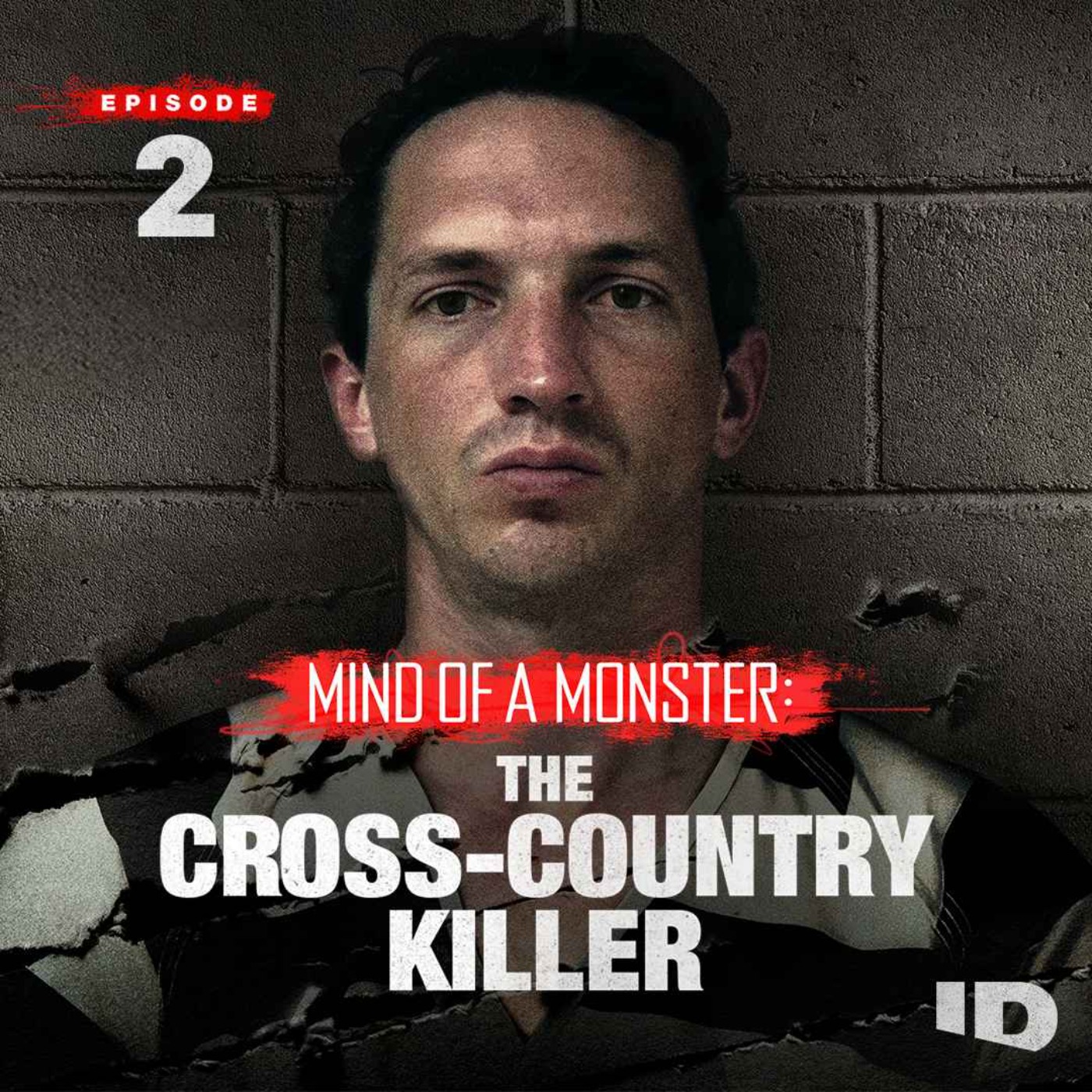
Else seems to think are normal and okay. From ID and Aeromedia, I'm criminal psychologist Dr. Michelle Ward, and this is Mind of a Monster, the Cross Country Killer. Chapter two, A Double Life. He talked about what animals to kill, and it sounded more like he was enjoying that. In just a weird way, you realize.
- [02:28]
Narrator / Interviewer
The joy he gets from inflicting pain on others.
- [02:32]
Dr. Michelle Ward / Podcast Host
Israel Keys is a deadly predator who strikes from the shadows, brutalizes and butchers his victims, and then covers his tracks so efficiently that no one knows about his trail of depravity.
- [02:45]
Narrator / Interviewer
He assaulted her, but he did not kill kill her. And he said he never made that mistake again. It's Officer Bell, A.P.D. going on tape. It's 1548 by my watch. Second interview with Israel Keys today. All right, Israel, thanks. For coming back. And I thought that we just let you talk to us for a little bit. I can tell you right now there is no one who knows me or who has ever known me, who knows anything about me really, because I'm two different people basically. And the only person who knows about what I'm telling you kind of things I'm telling you is me. How long have you been two different people? Long time. 14 years.
- [03:43]
Dr. Michelle Ward / Podcast Host
I have explored Keys difficult childhood and those fledgling moments in the young killer's development. But the statement made to the FBI investigators feels particularly significant to me. He appears to say that the most important moment in his life happened 14 years prior to his arrest, once he was already an adult. He doesn't say what that moment is, so I need to dig deep to try to figure it out. It's 1998. The 20 year old Israel Keys is now stalking the state forests of upstate New York, just south of the Canadian border. He is no longer living with his family, but he's still very much off the grid. So I catch up with investigative journalist and Israel Keys encyclopedia Josh Hallmark.
- [04:33]
Narrator / Interviewer
He is living in a blink and you miss it. Town and like literally on the border in New York called Constable. His family purchased about 10 acres of land with a house would be generous, like a cabin. And they have sold Keys this land for like a dollar.
- [04:54]
Dr. Michelle Ward / Podcast Host
A dollar. So what's this property like? It sounds very much like the property he was raised on in Washington.
- [05:01]
Narrator / Interviewer
It's on a dirt road in the woods. There's a river that runs along the property. It's got a house that's already falling apart. It's got a barn and a few other outbuildings and it's very rural, so there's no neighbors.
- [05:18]
Dr. Michelle Ward / Podcast Host
Israel lives on the property alone while the rest of his family moves to Maine to become part of an Amish community. So they've gone from Mormon to militant far right Christian to now living with the Amish. Last episode we learned that Israel starts questioning religion and I wonder what effect this has on his relationship with his parents.
- [05:42]
Narrator / Interviewer
So after you didn't kill the girl in the river, you said something changed. At the time I was going from like I say, a really religious upbringing to becoming an atheist. I have a lot of issues with organized religion. Does that come from when you, you know, the thing that your mom is involved in the religious group that you're. I mean it. I'm sure it has something to do with the way I was raised, but for the most part it's just my general outlook. On life and humanity, I guess.
- [06:17]
Dr. Michelle Ward / Podcast Host
So how does Israel Keys's newfound atheism impact his devoutly Christian family? I asked Josh.
- [06:26]
Narrator / Interviewer
Israel's relationship with his mother, Heidi is complex. There seems to be a very codependent relationship that is built on their isolationism and his need to be the best oldest son he can be and provide for his family. And yet also there's this push and pull because he over time evolves very different beliefs systems than his family, which ultimately come to a head when he denounces God.
- [06:58]
Dr. Michelle Ward / Podcast Host
So Israel is alone on this New York property, partly through a self imposed exile and partly because of this family rift. But he doesn't live like this for long. Within a year, he drops another bombshell on his parents. He's going to join the Army.
- [07:16]
Narrator / Interviewer
I think, you know, the army was the bigger problem for them because it was a problem that they couldn't fix or manipulate or manage because now he's going to be accountable to others and he's around other belief systems and other types of people.
- [07:29]
Dr. Michelle Ward / Podcast Host
So that was the camel that broke the relationships back. Keyes joining the army. Yeah, not rejecting God, that was a.
- [07:39]
Narrator / Interviewer
Big part of it too. But according to Keyes, it was when he joined the army that they were like, okay, you can't be saved.
- [07:45]
Dr. Michelle Ward / Podcast Host
We have to remember that Israel has been brought up to hate and distrust the government. So joining the army is about as rebellious a move the young man can make. Why do you think he decided to do that with his life?
- [07:59]
Narrator / Interviewer
I think there's a few factors at play. I think one, he was already starting to feel a separation from his upbringing and his family. And this was a way he could get away from his family. So it was an out for him.
- [08:13]
Dr. Michelle Ward / Podcast Host
Right.
- [08:15]
Narrator / Interviewer
I also think it was provocative. It was to upset his parents or to draw the line in the sand that, you know, would separate them for the rest of his life. Also, it was a way for him to maybe exercise some of these feelings he was having in a controlled environment where it was okay to shoot people. Why the army instead of any of the other armed forces? Was there a reason or just. That's what I had always learned about was like World War II, Vietnam, army stories, guys on the ground. Right. That was the kind of thing that appealed to me. Backwoods survival type stuff.
- [08:58]
Dr. Michelle Ward / Podcast Host
Spring 1998. Israel Keyes enters the recruitment center in New York, York. In order to enlist, he needs some sort of formal documentation. But he grew up without a birth certificate, without a Social Security number, and without any evidence of an education. And yet somehow within three months, he produces the necessary paperwork and is welcomed into the military.
- [09:27]
Narrator / Interviewer
There's just a lot of stuff that happened when I was in the army that changed my perspective on things. Just really changed my perspective on the big picture and made me realize that, you know, if that was what I wanted to do, then I should just do it. If you wanted to kill someone, yeah, I guess you could say I just kind of came to terms with myself, the reasons why I wanted to do it.
- [09:55]
Dr. Michelle Ward / Podcast Host
So what happened during his time with the military that was so formative? I need to speak with someone who was there in the barracks with Israel Keys.
- [10:04]
Narrator / Interviewer
Hi, I'm Nate Lessard. I was in the army from 1998 until 2002, stationed primarily in Fort Lewis, Washington. And that's where I was stationed with Israel keys. So it's 1998, maybe it was 99, but I think I'd probably been in almost maybe six months. And I was kind of relieved that there was a newer new guy than me. So I kind of. I was a pretty social guy. So I went and met him.
- [10:37]
Dr. Michelle Ward / Podcast Host
What did he look like?
- [10:39]
Narrator / Interviewer
I don't think he was over 21. I. I was 18, so he might have been 19 or 20. I might be getting that messed up. He was a little older than me, but not. Yeah, not by much. He was a very athletic guy, but he just. Everything about him kind of moves slow. And I. I went down to meet him and these are the first questions you ask somebody, you know, what kind of music you into? What. What kind of sports are you into? And he said, well, I don't really listen to music. I was like, well, what did you listen to, you know, like, growing up? Nothing really. So I'm like, well, you gotta listen to this, you know. So I'd bring my, at the time CDs, you know, out, or we'd go to my room and I'd put that stuff on and be like, yeah, I like it. It was like almost to me. I probably could have put on anything and he would have been like, yeah. He's like, yeah, this is cool. You know, wow.
- [11:33]
Dr. Michelle Ward / Podcast Host
It's like having an alien dropped onto Earth and you get to show him things.
- [11:37]
Narrator / Interviewer
Yeah. Which was. Which was kind of, kind of neat, you know, it's like, I'm keeping this guy for myself.
- [11:44]
Dr. Michelle Ward / Podcast Host
It's so intriguing picturing this guy who has spent the first 20 years of his life being kept away from society, and now he's experiencing this entirely new community. He's like a five year old on the first day of school. Was he really different from the other guys? Like, did he stand out to everybody?
- [12:03]
Narrator / Interviewer
Yeah, yeah. I mean, he was weird. You know, it'd almost be like talking to somebody from the 80s now, you know, just the certain expressions were kind of out of place. We liked him, we loved him, but he was not cool.
- [12:19]
Dr. Michelle Ward / Podcast Host
Wow. I'm just gonna pause for a moment. We loved him. The last person we heard from who actually met Israel Keys was Desiree Smith, who described a painfully awkward date with a creepy kid who had no social skills and no warmth. Cut to a few years later and he's loved. How did that happen? Well, he's mirroring Nate. He likes the same music Nate likes, and he's learning social cues so he can be accepted as one of the guys. I haven't talked to a lot of people who consider themselves close to him. That puts you in a unique category.
- [12:57]
Narrator / Interviewer
Yeah, yeah. I mean, we'd hang out. Keys didn't like to be out as much, you know, but he would. He'd go out, shoot pool, have a few drinks at the bar, you know, I think he probably came to his a couple karaoke nights with us.
- [13:12]
Dr. Michelle Ward / Podcast Host
Did Israel talk to you about why he decided to join the military?
- [13:16]
Narrator / Interviewer
Mostly just to get away. He was really not into religion at all. He was pretty anti religion, which was not a uncommon thing. But, yeah, it seemed like he wanted to get away and get out of that community.
- [13:38]
Dr. Michelle Ward / Podcast Host
So he told you a little bit about his family. Did he tell you that they got along or did he ever communicate with them?
- [13:45]
Narrator / Interviewer
I know he communicated with his sisters, he had told me. And it sure seemed to add up that he was Amish, that he had moved through the Amish communities, which, you know, I had seen pictures of his sisters and his mother and the traditional, like, bonnet and dresses, homemade dresses and stuff. And yeah, I mean, they look like Amish people.
- [14:12]
Dr. Michelle Ward / Podcast Host
So Israel's family has moved to an Amish community, but Israel is telling his new friends that he grew up Amish. He doesn't mention the white supremacist Christian identity movement at all. And it's easy to understand why in this mixed race environment, he probably doesn't want to share that baggage. But it is interesting to me that he's modifying the way he presents himself in order to be accepted, lying essentially to fit in. And this is consistent with how psychopaths navigate the social experience. I asked journalist Josh Hallmark about this behavior, but he believes it's not just about fitting in. Israel's outlook on the world is changing.
- [14:53]
Narrator / Interviewer
It's interesting he attributes his, you know, changes in philosophy to the army. I think he started questioning things before that because it was against his family's values to participate in the armed forces. So he clearly, before the army, was already starting to kind of shy away or challenge, you know, the belief system he was raised with.
- [15:16]
Dr. Michelle Ward / Podcast Host
It's not just the existence of God he doubts. It's the racism, the antisemitism. Hearing about the changes Israel makes to his life, it's hard not to feel some optimism about him. He's rejected the extreme politics he was born into, he's found a way to connect with society in spite of his family, and now he's even making friends. I wonder if the military offered a legitimate way for him to thrive. In the FBI recordings, Keyes has this to say.
- [15:50]
Narrator / Interviewer
I didn't do anything really bad when I was in the army. Kind of balanced me out and gave me something else to focus on. I guess not so much free time.
- [16:02]
Dr. Michelle Ward / Podcast Host
Interesting that he says he didn't do anything really bad. I wonder what, in Keys's mind, this actually means. Hey, it's Janiece from Warner Bros. Discovery. Now that the holidays are over, are.
- [16:17]
Narrator / Interviewer
You feeling a little hungover?
- [16:19]
Dr. Michelle Ward / Podcast Host
You know, if it wasn't the drinks, it was the cookies. And if it wasn't the cookies, it was the money. Between travel and gifts and food and all the rest, the holiday spending hangover can really cramp your style in January. But I've got good news. Mint Mobile is here to help you make some space in your budget. Say goodbye to overspending on wireless this January with 50% off unlimited premium wireless. With Mint, I get the coverage and speed I'm used to, but for way less money. All plans come with high speed data and unlimited talk and touch delivered on the nation's largest 5G network. And I was even able to use my own phone and existing phone number, which made the transition super smooth. Because you know what? Nobody likes sending a Happy New Year text only to receive a huh? Who is this in return? Mint Mobile's end of the year sale is still going on, but only until the end of January. So while you still can quit overspending with 50% off, unlimited premium wireless plans start at $15 a month@mintmobile.com discovery. That's Mintmox Limited Time Offer upfront payment of $45 for three months, $90 for six months or $180 for 12 months. Plan required $15 a month equivalent taxes and fees Extra initial plan term only greater than 50 gigabytes may slow when network is busy, capable device required availability, speed and coverage varies. See mintmobile.com.
- [17:48]
Narrator / Interviewer
AI is transforming customer service. It's real and it works. And with fin, we've built the number one AI agent. We're seeing lots of cases where it's solving up to 90% of real queries for real businesses. This includes the real world complex stuff like issuing a refund or canceling an order. And we also see it when FIN goes up against competitors. It's top of all the performance benchmarks, top of the G2 leaderboard. And if you're not happy, we'll refund you up to a million dollars. Which I think says it all. Check it out for yourself at FIN AI. This episode is brought to you by Progressive Insurance. Do you ever find yourself playing the budgeting game, shifting a little money here, a little there, and hoping it all works out well, with the name your price tool from Progressive, you can be a better budgeter and potentially lower your insurance bill too. You tell Progressive what you want to pay for car insurance and they'll help you find options within your budget. Try it today@progressive.com, progressive Casualty Insurance Company and affiliates. Price and coverage match limited by state law. Not available in all states. Why choose a sleep number Smart bed?
- [18:48]
Dr. Michelle Ward / Podcast Host
Can I make my site softer?
- [18:50]
Narrator / Interviewer
Can I make my site firmer? Can we sleep cooler? Sleep number does that cools up to.
- [18:55]
Dr. Michelle Ward / Podcast Host
Eight times faster and lets you choose.
- [18:56]
Narrator / Interviewer
Your ideal comfort on either side. Your sleep number setting J.D. power ranks sleep number number one in customer satisfaction with mattresses purchased in store and online. And now the more you buy, the more you save on beds, faces and more limited time. For J.D. power 2025 award information, visit J.D. power.com award check it out at the Sleep Number Store or SleepNumber.com today.
- [19:22]
Dr. Michelle Ward / Podcast Host
I'm talking with one of Israel Keys's buddies from the Army, Nate Lessard. How did Keys take to being a soldier?
- [19:30]
Narrator / Interviewer
Better than any of us. He was. He was a good soldier. Like he, it was a a pretty common insult to call him an army guy, you know, which nobody wanted to be, at least in our mortar squad. Not only did he always have his uniform and boots shine and pressed, I mean, he would do mine, he would do other people's.
- [19:53]
Dr. Michelle Ward / Podcast Host
Do you think he enjoyed the the stringent scheduling of it?
- [19:58]
Narrator / Interviewer
Yeah, I mean he was meticulous. Everything he did was, was regimented, done in order. If you were to look in his drawers, he was always like ready for inspection. You know, his socks were rolled up, his, his uniforms were rolled to Perfect army standards, you know, I mean, just everything was perfect.
- [20:20]
Dr. Michelle Ward / Podcast Host
What do you think attracted him to be such a good soldier?
- [20:24]
Narrator / Interviewer
I just think he was. He was kind of one of those guys made for it, you know, I mean, he. He was a real structured type of guy. He did that being on time, being, you know, ready, having his stuff ready to go at all times. He was better at that than the rest of us, certainly better than me and my buddies.
- [20:50]
Dr. Michelle Ward / Podcast Host
Meticulous, regimented, and ready to go at all times. Israel Keys, the survivalist who was raised in the forest preparing for doomsday, has found an ideal home in the army. The skills he learned as a child, hunting, hiding, adapting to his environment, and using whatever is at hand to solve problems are highly valued in this new life. Plus, now he's in a place where it's okay to kill. In fact, killing is part of the skill set which makes him the perfect soldier. Perhaps the biggest problem for Kee is, is that there's no war. I can't believe that in this environment, there were no signs of Keys the killer. I asked Nate if he saw another side to his buddy, a darker, violent side.
- [21:36]
Narrator / Interviewer
He wasn't a violent person. When I knew him, he was almost a gentle person, you know, like, yeah, violent would be like the last word I would have ever used to describe him.
- [21:50]
Dr. Michelle Ward / Podcast Host
So nothing stood out to you, as I could see that guy becoming a.
- [21:53]
Narrator / Interviewer
Criminal one day at the time, no. But, like, you look back on it, I tell this one, and I had forgotten it for years because it didn't really mean anything until I found out, you know, that he'd been murdering people. I'd always given him shit. And sometimes he'd get. Not angry about it, but he'd just get quiet. And I remember sitting in this room and it was the three of us, and. And I was getting drunk, and I'm sure all three of us were, but. And I was giving Keys a lot of. And he was doing his get quiet thing. And I'm laughing and I'm getting closer and closer to passing out, so I must have passed out and. And I woke up and it was just Keys and I in the room, but I was hog tied on the. On the ground. Like, wrists tied to ankles. I'm screaming at him, yelling at him, you know, like, cut me out, cut me out. You know, cut me off. And. And he just sat there just looking at me, drinking his. His beam and water. He probably left me there for like five, 10 minutes. That feels like a long time. It's not a comfortable position to be in. I mean, finally he grabbed his knife and. And cut the zip ties. And I was upset, you know, I was yelling at him and whatever and went back to my room, probably told the other guys, you know, what that asshole did to me. And I'm sure they thought it was funny, which I probably thought it was funny for years and years until I found out.
- [23:27]
Dr. Michelle Ward / Podcast Host
Did this feel out of character for Keys?
- [23:30]
Narrator / Interviewer
No. I saw it as the joke that he had taken maybe too far. I wasn't even mad at him about it really. You know, afterwards.
- [23:44]
Dr. Michelle Ward / Podcast Host
If it were anybody else, you could write this off as a typical army prank. But we know from his first attempt at murder that he's tied up his victim and uses zip ties in later killings. Do you think he was contemplating killing you?
- [24:00]
Narrator / Interviewer
Probably contemplating it. I don't think he would have done it, you know, it would have been pretty hard to get away with that one.
- [24:05]
Dr. Michelle Ward / Podcast Host
It's interesting to me, thinking through his lens. I bet he was practicing. He was probably, like, timing himself, seeing how quickly he could do it, see if he'd wake up, like. And serial killers do that. They practice, right?
- [24:20]
Narrator / Interviewer
I mean, I don't want to pretend like we knew that he was capable of that stuff because nobody did. This episode is brought to you by Progressive Insurance. Fiscally responsible financial geniuses, monetary magicians. These are things people say about drivers who switch their car insurance to Progressive and save hundreds. Visit progressive.com to see if you could save Progressive Casualty Insurance Company and affiliates. Potential savings will vary. Not available in all states or situations.
- [24:55]
Dr. Michelle Ward / Podcast Host
Flowers die in three days. Matching underwear from Meundies. That's a gift that lasts. Meundies creates matching prints for couples and friends. Same adorable designs in different cuts for each of you. All made from their signature ultra modal fabric that feels impossibly soft. With 30 million pairs sold and 90,000 five star reviews, MeUndie's matching prints are the perfect gift. Valentine's Day is February 14th, so don't wait. Get exclusive deals up to 50% off at Meundies.com acast code acast that's Meundies.com acast Code acast why choose a sleep number?
- [25:38]
Narrator / Interviewer
Smart bed.
- [25:38]
Dr. Michelle Ward / Podcast Host
Can I make my site softer?
- [25:40]
Narrator / Interviewer
Can I make my site firmer? Can we sleep cooler? Sleep number does that cools up to eight times faster and lets you choose your ideal comfort. Comfort on either side. Your sleep number setting. J.D. power ranks sleep number number one in customer satisfaction with mattresses purchased in store and online. And now the more you buy, the more you save on beds, faces and more limited time. For J.D. power 2025 award information, visit J.D. power.com awards. Check it out at the Sleep Number Store or SleepNumber.com today.
- [26:07]
Dr. Michelle Ward / Podcast Host
Shipping, billing, admin, payroll, marketing. You're managing all the things, so why waste time sending important documents the old fashioned way? Mail and ship when you want, how you want with stamps.com print postage on demand 247 and schedule pickups from your office or home. Save up to 90% with automated rate shopping. That's why over 1 million small businesses trust stamps.com go to stamps.com and use code podcast to try stamps.com risk free for 60 days. Nate's recollection of Keys makes him seem like a regular member of the squad who nobody thinks thought twice about. But I wonder, does Keys remember it that same way? When the FBI asked if he remained friends with anybody from the army, Keys had this to say.
- [27:00]
Narrator / Interviewer
They all knew I had issues. That's why I wasn't really close with any of them. Really. A lot of the guys in my squad didn't want to hang out with me if it was like in a social situation because they didn't know what to expect. So what kind of stuff do the other guys, what kind of issues would they see that they just knew I had psychosocial issues, I guess I don't know what you would call it. There was that time when I moved to Tel Aviv when I was in Egypt and they saw some of the stuff I did.
- [27:31]
Dr. Michelle Ward / Podcast Host
The way Keys talks about his army buddies reminds me of his reaction to those friends in the woods who watched in horror as they the 14 year old killed a cat. He realizes that he's revealed too much of himself and now they know he's different. Keyes mentions something that happened in Tel Aviv and I want to know more. About a year and a half after Keyes joins the army, their squad is sent on a peacekeeping mission to Egypt. They're stationed close to Israel and when the boys are off duty they decide to cross the border to indulge in some R and R. We had gone.
- [28:06]
Narrator / Interviewer
Out to a lot Israel, and as we're trying to check into a hotel, a guy comes up and introduces himself and we're like, yeah. So he's like, don't wait in line to check in, just come up with me. And so he takes us up to the sixth floor and puts us in this suite. If we wanted beer or if we wanted, you know, drugs or if we wanted girls, you could do all that. We end up drinking. I think a Whole army duffel bag full of Heineken beer. And so he sends Russian prostitutes up to the room. They would knock on the door. Well, Keith takes one into the, into the suite bedroom. And they're in there maybe five, 10 minutes, and she comes busting out, holding her clothes. She's kicking at him. And Keys is right behind her in his underwear, holding the money out, trying to hand her the, the money. And she's slapping at him. And as she kind of swinging outside the door, still holding her clothes, he's trying to put the money out through the crack in the door. And she's. I, I, she's kicking at him. And I remember that scene that's burned into my memory.
- [29:32]
Dr. Michelle Ward / Podcast Host
Wow. Did she seem frightened?
- [29:35]
Narrator / Interviewer
Yeah, she seemed. Yeah, like she didn't want him to touch her or be anywhere near her.
- [29:40]
Dr. Michelle Ward / Podcast Host
I'm so curious about what happened in there. When you asked him, what did he say?
- [29:44]
Narrator / Interviewer
He just said he didn't know. She got, she got freaked out and, and got up and left. It's like, well, dude, come on, there's got to be more to it.
- [29:54]
Dr. Michelle Ward / Podcast Host
I have no doubt there's more to it. He's mentions the incident in his interviews with the FBI.
- [30:00]
Narrator / Interviewer
Yeah, she was a pretty small little Russian girl, and she and I had been drinking, so, you know, I kind of threw her around a little bit.
- [30:12]
Dr. Michelle Ward / Podcast Host
Keys doesn't elaborate beyond this, so we can only imagine what it was that terrified the girl so much. But he has another encounter in Egypt that goes longer than five minutes, and it's one that his army buddies did not witness.
- [30:28]
Narrator / Interviewer
Egypt is. I thought I could get away with it over there because, I mean, I did. I got away with it. But there were some close calls, like I said, where things could have got really out of hand real quick. There was a girl that I met in, I think it was when I was in Tel Aviv. She was pretty young. She was a student. I think she was from Nor. Yeah, she was a Norwegian exchange student or something. And. I wouldn't say that was like an outright rape because she, you know, we were, We were hanging out and stuff, and she, she allowed herself to be, you know, like, oh, it was in her room. She, she took me. She told me where the room was, and I was gonna, I almost. Well, I did lose control a little bit as things progressed.
- [31:44]
Dr. Michelle Ward / Podcast Host
Keys is using some awful minimizing language that attempts to lay some of the responsibility with his victim. Not outright rape. She allowed herself. But he basically said he raped a girl who he was dating and nearly killed her. It's what he says next that helps me understand why his time in the army is so important.
- [32:06]
Narrator / Interviewer
That's when I realized, like, that if I was going to do that kind of stuff, I had to do it, had to just be complete strangers from then on. It couldn't be. Couldn't be anyone who knew me or who had seen seeing me around the person. Or I just realized that if I kept doing stuff like that, it was only a matter of time before I got caught.
- [32:30]
Dr. Michelle Ward / Podcast Host
Keys comes to a terrifying realization that he can get away with murder if he plans it properly. I think it's here in the army when he starts to understand the ideal circumstances for committing his crimes. The choice of victim, the choice of location, and the timing that if he gets these things right, he can do whatever he wants. When he talks about that turning point 14 years ago, when, in his words, he became two separate people, I wonder if he's referring to this discovery.
- [33:04]
Narrator / Interviewer
I'm two different people, basically. Long time, 14 years.
- [33:12]
Dr. Michelle Ward / Podcast Host
I want to be clear about what he means because we are not talking about a psychological split or what used to be called multiple personality disorder. That's when a person experiences switching between two or more different identities with different personalities, and they have no control over this. What Keys is talking about is a conscious decision to separate his life into two Personas who never cross. I check in with Josh Hallmark again for his opinion. So he is saying he is two separate people. Is he delineating his public Persona from his secret life?
- [33:49]
Narrator / Interviewer
Yes. He's saying there's the person that everybody knows and loves, the family man, the army buddy, the construction worker. And then there's the guy who spends every waking hour planning on how he's going to kill someone.
- [34:04]
Dr. Michelle Ward / Podcast Host
Israel Keyes, public Persona, takes a new shape once he decides to leave the army in 2001. He does something quite unexpected. He starts a family. Detective Monique Dahl interrogates Israel to establish a timeline.
- [34:20]
Narrator / Interviewer
When did you meet Tammy? How long? I met her when I was in the Army. When you were stationed in Washington? Yeah, that was. I met her right after I got back from Egypt. And then were you stationed in Washington when you got out of the military? Yeah. Okay, and then from there you went to live in Neah Bay? Yeah, with Tammy.
- [34:39]
Dr. Michelle Ward / Podcast Host
It's year 2000, and Israel Keys meets Tammy on an Internet dating site. She's around 10 years older than him, and she's mixed race, half indigenous and half black. Which makes her an interesting choice of girlfriend when we consider Keyes's white supremacist upbringing. Tammy has an 8 year old son from a previous relationship and soon after they start dating she becomes pregnant with Israel Keys daughter. Tammy's originally from a reservation called Neah Bay on the very northwestern tip of Washington State and she moves back there to have her baby. When Israel leaves the army, instead of going back to his cabin in New York, he moves in with Tammy. I ask Josh Hallmark, why, what's the motivation to become a hands on dad?
- [35:27]
Narrator / Interviewer
I mean my answer would probably change from minute to minute. I think that his upbringing says this is what you're supposed to do. I think it's also to be provocative. He now has a mixed race child with a black and native woman. I think it's also like I'm a serial killer who feels most comfortable in the woods and I'm being invited to go live on the edge of the world in the woods, on a tribe with this woman almost. I mean very different but also very similar to the communal way with which he was brought up. It's like we're surrounded by like minded people with similar belief systems and tenets out in the woods with very little oversight or accountability.
- [36:13]
Dr. Michelle Ward / Podcast Host
I agree. Josh's final point is perhaps the most fascinating. Keyes is going to live in an area which is not off grid but shares a lot of similarities with the environment in which he grew up. I want to talk with somebody who's from the reservation and remembers Israel Keys. And this is a tall order because understandably people from that area do not want to talk about this man who entered their community, exploited their trust and then committed a series of horrendous atrocities. So I'm incredibly grateful that Jim Thompson has agreed, agreed to speak with me. Jim is now a cop and works in the town of port Angeles. But 24 years ago he was living and working 60 miles to the northwest on the edge of the world.
- [37:01]
Narrator / Interviewer
I'm from Neo Bay, Washington, out on northwest. Washington. As far northwest as you can go in the, on the continental United States.
- [37:11]
Dr. Michelle Ward / Podcast Host
Really? Oh, I didn't realize that. You're almost touching in Canada.
- [37:15]
Narrator / Interviewer
Yeah, you're out on the water out in the bay and looking towards the land. There's, you know, there's village but you know, right in behind that there's mountains and trees and then on the other side it's open water. All clear to Canada.
- [37:30]
Dr. Michelle Ward / Podcast Host
So the majority of the demographic is Native Americans.
- [37:34]
Narrator / Interviewer
Yes, it's our home. We've lived there since at least the mid-1800s.
- [37:41]
Dr. Michelle Ward / Podcast Host
Jim's tribe is called Makah and about 1,500 people live on the Neah Bay reservation.
- [37:47]
Narrator / Interviewer
You know, it's one of those kind of those, you think, stereotypical small town. You walk down the street and you'll know everybody.
- [37:56]
Dr. Michelle Ward / Podcast Host
Basically, it's early 2002. Israel Keys is now 23 and works as a handyman on projects for the local community. It's here where he meets Jim. Do you happen to remember the first time you met Israel Keys?
- [38:11]
Narrator / Interviewer
It doesn't stand out. I knew who he was before I met him. He. He was married to a family member of mine. Her name is Tammy. There's the sibling relationship. Only a couple generations back between Tammy and I. It would have been, I think, second or third cousin, something like that. But those aren't terms that we speak in growing up, that was just my cousin's Tammy and her mom was Aunt. Auntie.
- [38:42]
Dr. Michelle Ward / Podcast Host
And what was Tammy like?
- [38:45]
Narrator / Interviewer
I always have really good memories of growing up around Tammy, growing up around her family. She's always really happy, really positive personality, great, you know, great laugh. She seemed like she was always laughing. Always, always a good time around her and, you know, if she was around, we were gonna have a laugh about something.
- [39:11]
Dr. Michelle Ward / Podcast Host
Oh, wow. And Israel's married to Tammy.
- [39:14]
Narrator / Interviewer
At that point, I don't recall if they were ever officially married. I think by and large the community looked at them as husband and wife, regardless whether or not they actually were legally married.
- [39:27]
Dr. Michelle Ward / Podcast Host
Reading what little information there is on Israel's relationship with Tammy, it seems pretty functional. Apparently he gets along really well with her son and she describes him as a good father. We now know that he's a serial killer. But did anyone close to Keyes have any idea about this dark side? Jim worked with Keyes for almost a year.
- [39:49]
Narrator / Interviewer
I was 21. I don't remember how old he was. He's. I don't think he's much older than I. I am.
- [39:55]
Dr. Michelle Ward / Podcast Host
You're 21. You were young. Was he friendly?
- [39:59]
Narrator / Interviewer
Quite reserved. Seemed a little bit socially awkward, but not to the point where it was like really strange or weird or. But just, you know, not a social. Not a social person is what once stood out to me.
- [40:15]
Dr. Michelle Ward / Podcast Host
What did he look like?
- [40:16]
Narrator / Interviewer
One of those, you know, slender people, but they're strong is what I got from him and working with them. But just one of those wiry guys that have that weird strength.
- [40:29]
Dr. Michelle Ward / Podcast Host
So you guys were working together on construction projects.
- [40:32]
Narrator / Interviewer
A lot of what he did was kind of the beautification around town. You know, he installed the plates, ground. There's a open air building by the general store and just kind of small things around the community to make it a little bit look a little bit nicer.
- [40:51]
Dr. Michelle Ward / Podcast Host
So Israel Keys is doing good work for the community?
- [40:54]
Narrator / Interviewer
Yeah, yeah. My mom's house, he actually did some work on, you know, her porch was in pretty bad shape. And I don't know if. I don't know if he. If she paid him for the work or if he just came and did it as fast.
- [41:08]
Dr. Michelle Ward / Podcast Host
Isn't it interesting how somebody can be so nuanced and layered? That's what never stops amazing me. You had mentioned that the majority of the people who lived there were part of the Makah tribe. What did the indigenous people think of Israel?
- [41:26]
Narrator / Interviewer
I think he was accepted, so they welcomed him to the community as someone that worked for the community and is connected with community, with his relationship.
- [41:37]
Dr. Michelle Ward / Podcast Host
It is surprising to me how Keys ingratiates himself into the Macaw community. And this relationship comes up in the FBI interviews.
- [41:48]
Narrator / Interviewer
Israel, are.
- [41:49]
Dr. Michelle Ward / Podcast Host
Are you.
- [41:49]
Narrator / Interviewer
Are you Native American or anything? No. I noticed you spent several years out on the. On the west coast working for the Maca tribe. Is. Is that correct? Yes. In Henin. It might have some property in upstate New York near the St. Regis tribe. The Native American or. I mean, is it. Is that significant in any way? I don't know how significant it is, but, you know, our paths have crossed for a long time.
- [42:20]
Dr. Michelle Ward / Podcast Host
I think it is significant. As Josh Hallmark pointed out, there are several interesting parallels between Nia Bey and Israel's upbringing. He is living somewhere incredibly remote, surrounded by nature, and he's part of a community that, for very different reasons than that of the militant Christians he grew up with, is isolated from the rest of society. By associating with the Makah tribe, Keys, too, can isolate himself. He's an outsider among the indigenous people, but an outsider among the non indigenous too. And it's the this distance that gives the space for him to develop a secret life. When I asked Jim whether he picked up on anything strange about Israel, he says he didn't, which totally makes sense. Israel's living with his partner and his baby. And let's be clear, even Tammy fully believes Israel's a normal guy. Did he seem like a good dad to you?
- [43:15]
Narrator / Interviewer
He did. You know, he. Every time he talked about her, you could tell that he cared about her and he wanted good things for her.
- [43:25]
Dr. Michelle Ward / Podcast Host
Did he speak affectionately about her?
- [43:28]
Narrator / Interviewer
Very much so, yeah.
- [43:30]
Dr. Michelle Ward / Podcast Host
It's so interesting. And juxtaposed against what we know later, a caring father, a decent partner, a reliable community figure, you could almost believe that Israel Keys is a Regular guy, which, of course, is exactly what he wants you to believe. Josh Hallmark.
- [43:50]
Narrator / Interviewer
There are times where he. He seems like an affable, nice guy. He's talking about his friends, he's talking about his kid, he's talking about his girlfriend. So, like, there is a normalcy there and an ability to intermix with typical people in a way that feels like he's actually gaining value from those relationships. But then he also is out in the woods killing people.
- [44:13]
Dr. Michelle Ward / Podcast Host
Keys is living a double life in Nia Bay, and his friends and family are completely oblivious. He's begun his killing spree.
- [44:24]
Narrator / Interviewer
So going back to when you got out of the army and you're living in Neah Bay, right? Yeah. And you said it was. You had a lot of downtime, and you've been kind of holding back on the stuff that you were thinking about doing. Doing what? What set that free, what made it kind of go to the step where you were to act? There was stuff that happened when I was in Neah Bay. Yeah. I just don't know. I want to give the whole timeline on that right now.
- [44:52]
Dr. Michelle Ward / Podcast Host
In his interviews with the FBI, Keys admits to killing at least four people while he's living in Mia Bay. And yet there's no mass panic, no manhunt, no recognition at all that a serial killer is at large.
- [45:07]
Narrator / Interviewer
I would do something, and then I would go back like business as usual and go out with friends, go out to bars, talk to them, see people. And it was all like a mind game with me. That was all I needed. That was my adrenaline. That's where I got my kicks, I guess was being able to live two different lives and have no one have a clue. Just being able to look at people while they were talking to me and thinking that, you know, for all the years they've known me, they actually don't know me at all, really.
- [45:55]
Dr. Michelle Ward / Podcast Host
He's talking about people like Jim Thompson. Jim became a cop before he found out his former work buddy is a serial killer. He has this to say.
- [46:06]
Narrator / Interviewer
You know, this is something that I struggled with early on. When I found out who he really is, who he really was, it was hard. What did I miss? I asked myself that. I don't know how many times. What did I miss? What did I miss? Steve?
- [46:25]
Dr. Michelle Ward / Podcast Host
How can someone commit serial murders across 14 years and multiple states without arousing any suspicion whatsoever? Not just to the police, but also his friends and family. Israel Keys is becoming a master at hiding his trail of victims, and he's just getting started. Next time on Mind of a monster, the Cross Country Killer.
- [46:53]
Narrator / Interviewer
The authorities were alerted and that Keys himself was part of this initial search party where they're looking for the guy. My thought process had always been that there's not a body and not any witnesses. Then I probably won't ever even be questioned about it. He would say, without me, you're never going to find out who, who these people were. I'll give you two bodies and a name. I've had some confessions in my history, but nothing to that detail. The whole thing is just so disturbing and something that you'll never, you know, you never get out of your mind. Never forget.
- [47:34]
Dr. Michelle Ward / Podcast Host
Mind of a monster. The Cross Country Killer is produced by Arrow Media, a Fremantle Company for ID. I'm your host, Dr. Michelle Ward. You can follow our show wherever you get your podcasts and we'd love it if you could take a second to leave us a five star review on Apple Podcasts.
- [47:54]
Narrator / Interviewer
This episode is brought to you by Progressive Insurance. Fiscally responsible financial geniuses, monetary magicians. These are things people say about drivers who switch their car insurance to Progressive and save Hundreds of Visit progressive.com to see if you could save Progressive Casualty Insurance Company and affiliates. Potential savings will vary. Not available in all states or situations.
- [48:16]
Dr. Michelle Ward / Podcast Host
Flowers die in three days. Matching underwear from Meundies. That's a gift that lasts. Meundies creates matching prints for couples and friends. Same adorable designs in different cuts for each of you. All made from their signature ultra modal fabric that feels impossibly soft. With 30 million pairs sold and 90,000 five star reviews, MeUndies matching prints are the perfect gift. Valentine's Day is February 14th, so don't wait. Get exclusive deals up to 50% off at Meundies.com acast code acast that's Meundies.com acast Code acast hi, this is Jonathan.
- [48:59]
Narrator / Interviewer
Fields from Good Life Project.
- [49:01]
Dr. Michelle Ward / Podcast Host
If you are not using Ironclad for.
- [49:03]
Narrator / Interviewer
Contracts, you could be leaving millions on the table without knowing it. Every contract holds renewal dates, pricing terms.
- [49:09]
Dr. Michelle Ward / Podcast Host
And obligations you can't afford to miss.
- [49:11]
Narrator / Interviewer
But good luck finding them when it matters. Ironclad's AI instantly surfaces what matters so you can act before opportunities slip away. That's why they're trusted by OpenAI, L' Oreal and Salesforce. Find the savings hiding in your contracts@ironcladapp.com podcast that's ironcladapp.com podcast shipping, billing, admin, payroll, marketing.
- [49:35]
Dr. Michelle Ward / Podcast Host
You're managing all the things, so why waste time sending important documents the old fashioned way? Mail and ship when you want how you want with stamps.com print postage on demand 247 and schedule pickups from your office or home. Save up to 90% with automated rate shopping. That's why over 1 million small businesses trust stamps.com go to stamps.com and use code podcast to try stamps.com risk free for 60 days.