Loading summary
Transcript181 lines
- [00:00]
Dr. Michelle Ward
You walk in tired and hungry, one bad dinner away from losing it. You don't like to cook. You don't want more takeout. You just want something good. That's why there's Dish by Blue Apron pre made meals with at least 20 grams of protein and no artificial flavors or colors from fridge to fork in five minutes or less. Keep the flavor. Ditch the subscription. Get 20% off your first two orders with code APRON20. Terms and conditions apply. Visit blueapron.com terms for more.
- [00:31]
Trusted House Sitters Advertiser
We all love our pets, but we love to travel too, and sadly they can't always come along for the ride. Don't stress. Trusted House Sitters connects you with verified sitters who will stay in your home and care for your pets, all in exchange for a place to stay on their travels. So while you're off exploring, your pets get to stay safe and happy at home, right where they belong. Find a loving in home Pet sitter today@trustedhousesitters.com Monday Sidekick AI agent that knows.
- [01:03]
Dr. Brent Turvey
You and your business, thinks ahead and takes action. Ask it anything seriously. Monday Sidekick AI you'll love to use.
- [01:12]
Dr. Michelle Ward
Start a free trial today on Monday.com it's February 23rd, 1984. Robert Hansen and his lawyers are in a meeting room at the DA's office in Anchorage, Alaska. The prosecutor on Hanson's case, Frank Rothschild, is down the corridor. He spoke with us in 2020.
- [01:39]
Frank Rothschild
The Anchorage DA's office had a full floor of an office building in downtown Anchorage. It was a big office, lots of lawyers, lots of secretaries, paralegals, you name it. And for at least 10 minutes, anyone on the whole floor could hear him screaming at the top of his lungs at his lawyers.
- [02:04]
Dr. Michelle Ward
Hansen has already admitted to five murders, but the prosecution accuses him of many more.
- [02:11]
Frank Rothschild
He was pissed because we'd called him and he wasn't going to get away with what he was trying to get away with. He wanted to beat the man, and the man was not having any of it.
- [02:28]
Dr. Michelle Ward
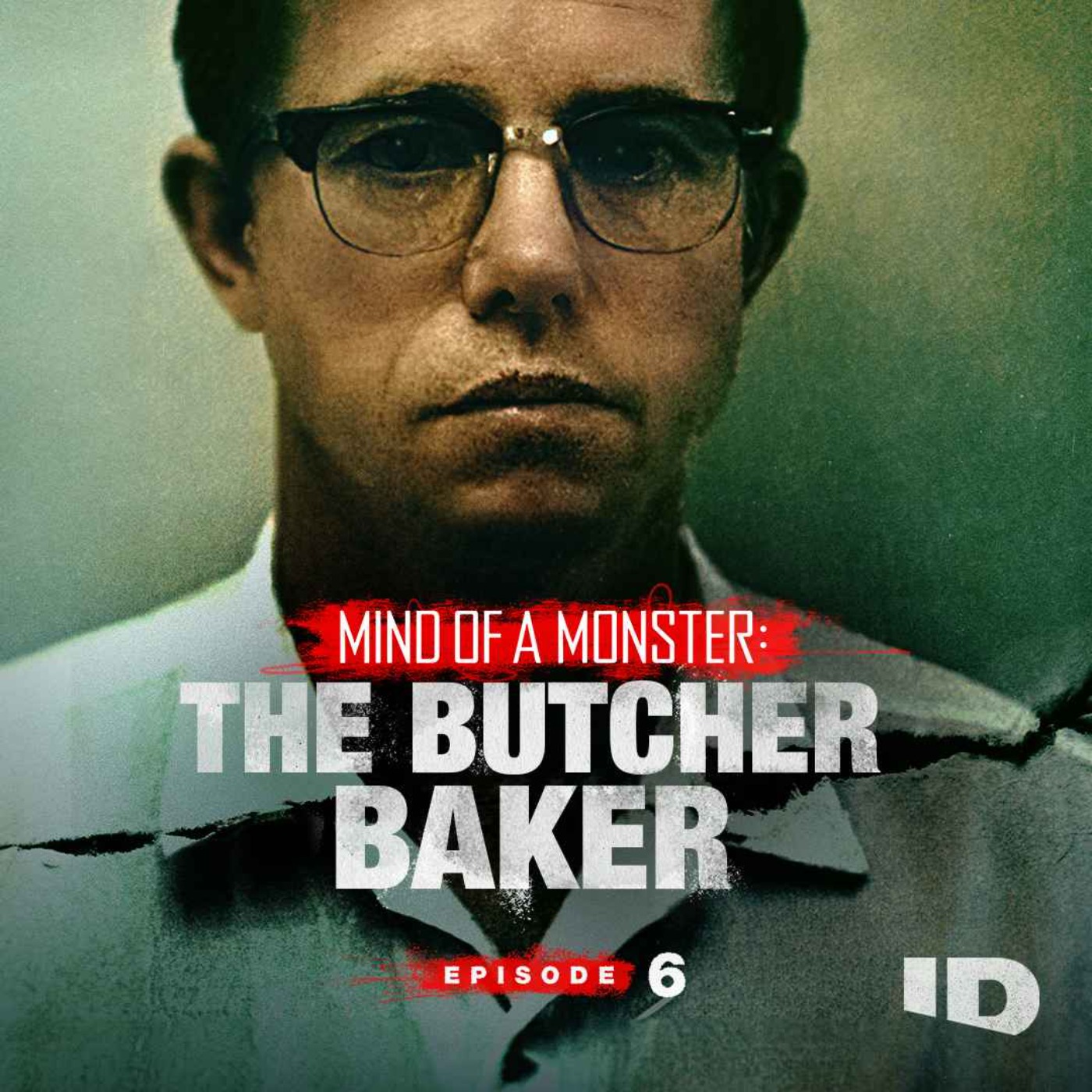
This is Mind of a Monster, the Butcher Baker and I'm your host, Dr. Michelle Ward. Episode 6 Breaking the Unfortunate Bond As I mentioned, Frank's down the hall from the argument unfolding in the private meeting room. But Hansen's defense attorneys, Fred Dewey and Joe Evans, are right in the thick of it. So Joe, you, Fred and Robert Hanson are all talking in this room. What are you saying?
- [02:56]
Joe Evans
No, no, not talking. I'm yelling. I'm yelling at him. I'm saying what I mean. I'm using the F word. I said, what the fuck's Going on. I have no idea what you have told me that you were involved in four, now five murders. Are you telling me now that there are more than four or five? And I remember him saying, yes.
- [03:22]
Dr. Michelle Ward
Oh, my gosh. So up to this point, you really had no idea that there were other murders?
- [03:26]
Joe Evans
No. And I said, well, I think we're finished here. Meaning you've confessed to four or five. We're done for the day. It's time to leave. We need to take a break. We can come back later. And he said to me very emphatically, I don't want to do that. I want to take care of all of this today. I want to finish this today. And that's when I seem to recall saying, you know handwriting. I told him, shut the fuck up. He said, no.
- [03:57]
Dr. Michelle Ward
Joe gets Hanson to sign a piece of paper saying that his attorney told him to stop talking, and he refused. Joe will now hear about Hansen's other crimes at the same time as the prosecution prosecutor, Frank Rothschild.
- [04:12]
Frank Rothschild
So it was maybe 15 minutes later, they came back down the hall, came into the room, he sat back down. He was calm, and he indicated he was willing to continue on talking about other cases.
- [04:30]
Glenn Flothi
Are we on record? Let me make sure. Time now is 2:24pm Right. Mr. Hansen will be charged right now with five murders. And we already stand charged with the rape and the rest of this stuff with this prostitute. We will not charge you with anything more that you tell us about here. If you don't tell us when we find him, we will.
- [04:54]
Frank Rothschild
Now, we made it clear to him and to his lawyers, we're not gonna charge you with any of these other cases. We're not gonna sentence you to any of these. But we want the information because there were lots and lots of people calling into the troopers, asking whether their daughters were one of one of Hansen's victims, trying to figure out whatever happened to their kid.
- [05:16]
Glenn Flothi
We're at that point where we'd like to show you first item, which is a flight chart. And what we're going to do is we're going to ask you about those little asterisks. You understand at this point what it is that we're talking about, do you not? Presumably, we can have a meeting of the minds right now. How many women, sir, have you killed in Alaska? I'm gonna be very honest about this here. These marks represent something, and they do.
- [05:51]
Dr. Michelle Ward
On this flight map, they're looking at the one taken from Hanson's house. There are asterisks marking the grave sites of the five murders. Hanson has already admitted, but there are also 16 murders, more marks on the map.
- [06:07]
Glenn Flothi
That's the old Palmer Highway, Barnhart's Mill Road. You go in a way I don't know how far. There's a road that leads into a landfill. There's one big tree right in behind. There's a little scrub alder. There's one land right there that's beyond charge number one. Okay.
- [06:33]
Dr. Michelle Ward
There'S one laying right there as if he's talking about a piece of clothing. I asked Joe Evans what it was like hearing about these additional murders for the first time.
- [06:43]
Joe Evans
I've had murderers confess to me what they did, but they've always had an excuse or a plausible explanation for what took place. I've never had someone talk about multiple murders and then essentially have no explanation other than I wanted to have sex with them and they upset me. And when I finished, I knew I had to get rid of them.
- [07:04]
Dr. Michelle Ward
Is it hard at that point to separate your feelings as a human, as a person, from your duty as his defense lawyer?
- [07:11]
Joe Evans
Well, at that point, his life outside of prison was over. And the more important thing for me was to try and help the families.
- [07:25]
Dr. Michelle Ward
Over the next several hours, Hansen admits to 10 more murders.
- [07:32]
Glenn Flothi
Bob, you've given us, at this point, 16 girls. Are there any more on this either? Any of these maps? No.
- [07:40]
Dr. Michelle Ward
How did you feel at that point? What was it like to listen to that?
- [07:43]
Joe Evans
I think part of the impact it had on me is I have two daughters at the time. And the thought of him doing what he did to these women, I just. I could not imagine someone being so caught up in their own desires to do this to someone. And these were not spur of the moment encounters. I mean, he had, in my opinion, actually stalked these people. He had singled out folks that did not seem to have friends. He was looking for loners because when they went missing, folks wouldn't say, well, she's not. She didn't show up for work or whatever. Or at least that was his theory. And the matter of fact, way he described them was. Was chilling and disturbing.
- [08:37]
Dr. Michelle Ward
Prosecutor Frank Rothschild.
- [08:40]
Frank Rothschild
I absolutely came away reading that transcript and going back in time and thinking to myself, I didn't believe a lot of his stuff. And knowing how he wants to win the game and portray it now in a way in the best light for him. Yeah, I think he was bullshitting us throughout. And there are the facts and the end result of these things and then the way he tried to make it seem.
- [09:07]
Dr. Michelle Ward
So let's go into this a bit further. You'll remember. Criminal profile Dr. Brent Turvey. We've both listened to these two days of interviews from beginning to end, and I want to pick out some of these important moments with him. Let's talk about Robert Hanssen's confession.
- [09:23]
Dr. Brent Turvey
Anything that happens after the apprehension and incarceration, you just, you can't trust it unless it leads directly to evidence. And some of it did and some of it didn't. But anything the offender says again after the fact to explain what he did, that's a rationalization.
- [09:38]
Glenn Flothi
I'm not saying that I, I hate all women now. I don't smoke. Quite the contrary. If I guess in my own mind what I would classify as a good woman, not a prostitute, I do everything in my power, any way, shape or form, to do anything for her and to see that no harm ever came to her. I guess prostitutes are one that I'm putting down, is lower than myself. Like it was a game, they had to pitch the ball before I could, before I could bat. Oh, I always give them money ahead of time. So that remained that if they accepted money, they were prostitute. I see. Was that, is that for your peace of mind or for the police that made sure they weren't your girl?
- [10:37]
Dr. Michelle Ward
If it was a prostitute, if they didn't ask me for money, I would let them live because then they wanted me for me. But if they ask me for money, then they are a bad girl.
- [10:46]
Dr. Brent Turvey
So we have no corroboration that that's true.
- [10:48]
Glenn Flothi
Right.
- [10:50]
Dr. Brent Turvey
That's just him saying that to suggest that he is morally and culturally superior. That's him tone checking.
- [10:58]
Dr. Michelle Ward
Brent's right. What Hanson describes is the way some of the murders played out, but not all. He pulled a gun on 18 year old Patti Roberts as she was restarting her car. He tried to abduct a real estate secretary. One of his victims, Joanna Messina, was neither a dancer nor a sex worker. And he asked Cherry's friend Susan Bradford out on a date, not the other way around. And when I talked to author Leland Hale about this, he agreed.
- [11:25]
Dr. Brent Turvey
In fact, he did do that.
- [11:29]
Dr. Michelle Ward
Right?
- [11:29]
Joe Evans
He invited women, he said he was a photographer.
- [11:33]
Dr. Brent Turvey
That wasn't them saying, hey, would you take photographs of me for $300? That was not them saying that he.
- [11:38]
Joe Evans
Had to offer that.
- [11:40]
Dr. Brent Turvey
So you know he's a liar and that's, that's what's so problematic about him.
- [11:44]
Dr. Michelle Ward
And there's another thing here. In topless clubs like that, it's the girl's job to go up to the guy and persuade him to take a Lap dance or to buy a bottle of champagne.
- [11:53]
Joe Evans
That's how they're going to make their money.
- [11:57]
Dr. Michelle Ward
Right.
- [11:57]
Joe Evans
So the dynamic there, it's for them.
- [12:01]
Dr. Brent Turvey
To come to you, not to you.
- [12:03]
Joe Evans
To come to them.
- [12:04]
Dr. Michelle Ward
Brent agrees.
- [12:06]
Dr. Brent Turvey
That's not about being a good girl or bad girl. That's about him not liking them. To break the fantasy that he has that he's desirable. That's incel ideology.
- [12:15]
Dr. Michelle Ward
That's exactly what it reads like to me, too. So earlier in the series, when we talked about Hanson's childhood, we spoke about the danger of aha moments, and I feel like that applies here too. We cannot search for a master plan here because Hansen's only logic is to serve his own interests. Maybe Glenn Flothi sitting there in that room across the table from him, says it best. His voice here is read by an actor.
- [12:39]
Randy McFerrin
I think he felt he wanted to take what he couldn't have when he was younger, and he wanted to take what he felt he had a right to, and that was women.
- [12:50]
Dr. Michelle Ward
There's one more elephant in the room regarding Robert Hanson's confession. If you look Hanson up on the Internet, you're gonna see multiple reports that he, quote, hunted women like prey. And you may be wondering, when are we gonna get to that part? Well, we're here, but not in the way you think. Dr. Brent Turvey. So this idea of hunting the girls, what are your thoughts about this?
- [13:15]
Dr. Brent Turvey
One, he didn't confess to it. And two, there's no physical evidence that that happened. Yes, the bodies are put in different spaces, and he confessed to some of those, but some of those bodies weren't found. So that's the first part. Second part is we need to know that they actually ran. We need to examine their feet, we need to examine their clothes. We need to examine whether or not they were blindfolded. One of the girls was found with an ace bandage around her head, and then her injury was to her back. Yeah, okay, maybe. Maybe that's what happened. There are about a dozen other explanations for that behavior. Why choose that one? They choose that one because it's a better story to tell, and it makes for a better monster. And when this case gets repeated, that is one of the only things that gets repeated.
- [13:53]
Dr. Michelle Ward
And by virtue of sensationalizing his crimes, it almost glamorizes them. The story becomes about that rather than what it's really about.
- [14:01]
Dr. Brent Turvey
It's also what society taught him. He was not held accountable for all the terrible things. He was doing. All right. By anyone until it was way too late.
- [14:10]
Dr. Michelle Ward
When Glenn Flothi was interviewed. He said the same thing somewhere.
- [14:14]
Randy McFerrin
The ball was dropped. He was not an articulate craftsman of murder and deception. That was absolutely false. I think some of the lack of thorough investigation on the police part made him what he was. We allowed him to continue. We are as much at fault as he was in a way. And I think that we should bear some of that responsibility for the continuation over a 15 year period of murder. He just points out the fallacy of the system.
- [14:46]
Dr. Michelle Ward
Back in the room on that February day in 1984, the troopers have one further request of Hansen.
- [14:52]
Glenn Flothi
Will you take us to a dam when we leave, like tomorrow or Saturday with a helicopter and go right out to these spots once you've showed them to us? All right.
- [15:02]
Dr. Michelle Ward
Glen Flothi asks Hanson to come with the troopers and mark grave sites so that when the spring thaw comes, they can dig up bodies and return them to their families. And that is how Hansen and the troopers spend the February weekend. Before his sentencing. Author Leland Hale spoke with Glenn Flothi about the experience.
- [15:27]
Joe Evans
That was a remarkable scene as well. When Hanson got on the ground, he.
- [15:30]
Dr. Brent Turvey
Just took off like a goat. I mean, Hanson is just flying toward.
- [15:35]
Joe Evans
The, you know, the grave sites.
- [15:37]
Dr. Brent Turvey
And Flothi's like, I can't even keep up with him. He was very excited. He was very. There was almost a pride. You guys don't know where these grave sites are. I do. The only person who could take you there is me.
- [15:52]
Dr. Michelle Ward
My God, that is awful.
- [15:53]
Dr. Brent Turvey
It was something. He could show off his skill. Look at how skillful I am. Look at how smart I am. Look at what a great mountain man I am. So he was twisted.
- [16:03]
Joe Evans
That was a twisted pride.
- [16:05]
Dr. Michelle Ward
Police officer Greg Baker spoke to Glenn's colleague Lyle Hogsfin about the same thing.
- [16:11]
Randy McFerrin
But I remember Hoggsman telling me that.
- [16:15]
Glenn Flothi
When they were coming up to a.
- [16:17]
Joe Evans
Site where he had buried one of.
- [16:20]
Dr. Michelle Ward
The bodies, he was almost giddy.
- [16:23]
Randy McFerrin
It was fun, it was exciting for him and he was having a great time.
- [16:28]
Glenn Flothi
And Hogsman said he'd never seen anything.
- [16:40]
Dr. Michelle Ward
On Monday 27 February, just four days after agreeing to Hansen's plea deal, the sentencing hearing begins.
- [16:47]
Frank Rothschild
The courtroom was absolutely packed because anything that said State vs. Hansen brought out all the journalists anyhow.
- [16:55]
Dr. Michelle Ward
Sitting there that day is Cindy Paulson, alongside family members of many of the murdered young women. It was Frank Rothschild's job to make a statement for the prosecution and a recommendation for sentencing.
- [17:08]
Frank Rothschild
My goal at the sentencing was to explain as best I could to the population of Alaska who This man was, what he had done, the extent of his crimes, how he was found out, why it took so long to find out. Before you sits a monster, an extreme aberration of a human being. Man who has walked among us for 17 years, serving us doughnuts, Danish and hot coffee, all a pleasant smile. His family was a prop. He hid behind decency. I don't know how I delivered that, quite frankly, because I was really caught up in the horror of this whole case. I'd lived with it for a good while. I'd lived with this man. And so, yeah, felt an obligation to all of the women. That's why I wore a little red rose in my lapel. I didn't say what it was for, but it was to honor the women who never made it back. That was one way of expressing my emotion.
- [18:48]
Dr. Michelle Ward
Order. Order.
- [18:49]
Frank Rothschild
It turned out to be 461 years plus life without parole. That was the sentence that the state recommended for Mr. Hansen that would ensure that he never saw the light of day again. Mr. Hansen was given the opportunity by the court to speak. He declined. And so then Judge Moody gave his comments and imposed that sentence. And that was the end of it.
- [19:21]
Dr. Michelle Ward
For Detective Maxine Farrell, it was the culmination of four years of dedication and investigation behind the scenes. How did you feel when you heard about a sentencing?
- [19:31]
Detective Maxine Farrell
Oh, I was glad. I mean, he couldn't come out ever. I mean, that was the main thing. This was a lifetime sentence. He wasn't gonna get out again to do this to anybody else ever. I never did care about the glory of anything. It was just that I did the job and I did a good job. My mother always said to me, anything you do, you gotta do it over 100%. And I felt I'd done that.
- [19:56]
Dr. Michelle Ward
Did things change for you at the Anchorage Police Department after that?
- [20:01]
Detective Maxine Farrell
No. They pushed it under the carpet. It was never mentioned. It was never mentioned again. After that, I applied for no promotions at all.
- [20:09]
Dr. Michelle Ward
Why bother?
- [20:10]
Detective Maxine Farrell
Why bother? I was fed up with them.
- [20:13]
Dr. Michelle Ward
How would you like people to remember your part in the Robert Hanson case?
- [20:19]
Detective Maxine Farrell
It feels good now that people are saying, oh, you're the one. Da, da, da, da, da. But nobody ever else really cared until you guys came along. You're the first guys that came along that wanted to talk to me.
- [20:29]
Dr. Michelle Ward
Maxine, you're our hero. I think you're quite incredible.
- [20:34]
Detective Maxine Farrell
Thank you.
- [20:42]
Dr. Michelle Ward
Two months after Robert Hansen is sentenced, the grim work of digging up the bodies begins. A reporter there to follow the uncovering of remains said, quote, the troopers were quiet as they worked Wednesday. And despite their presence, it was a lonely place. From the end of April until the first frost of fall, troopers travel around the remote gravesites that Robert Hansen had pointed out to them in the snow months earlier. Just last Tuesday, troopers discovered two other bodies in the Canic river area.
- [21:14]
Glenn Flothi
Neither of the victims have yet been identified.
- [21:17]
Dr. Michelle Ward
Remember that Hansen didn't recall any of these women by name. They weren't worthy of that to him. So each body recovered represents an ongoing puzzle, a search for a real person who has more to their story than that ending Robert Hanson gave them. We're just going to have to compare the X rays and go through dentals, Sgt. Floeth said. By later that year, the troopers have recovered the remains of 11 young women and they've identified nine. And while we have newspaper reports, profiles and countless interviews with Robert Hanson about his childhood, his upbringing and his life, the information about most of his victims remains sparse. I want to read out their names and tell you something about each of their stories, something not related to Robert Hanssen. 23 year old Sue Luna. She had a tiny daughter just 18 months old. She was headstrong and confident. 31 year old Paula Goulding was from Hawaii. Paula had been a secretary in Fairbanks and was completely new to the dancing scene. She was full of life and very outgoing. 24 year old Sherry Morrow, who Susan described as shy and sweet. Her sister said Sherry could light up a room. Joanna Messina. She used to be a nurse but had started traveling around Alaska after a relationship fell apart. Her loyal German shepherd never left her side and was never found after her death. 25 year old Angela Federn came to Alaska in 1979. She had a young daughter named Christina. 21 year old Angel Tammy Peterson. Her middle name was Joy. She loved ballet, dance and creative writing. 28 year old Malai Larson was trying to get enough money to return to her native Thailand. 22 year old Teresa Watson was from Sacramento, California. She was blind in one eye and had lost touch with her parents. And finally, 41 year old Lisa Futrell. There's a picture of Lisa in One of the 1980s newspaper articles about missing dancers. It shows her with a small girl who looks just like her with brown hair and bright eyes. Detective Maxine Farrell remembers Lisa. So tell me about Lisa Petrout.
- [23:33]
Detective Maxine Farrell
She was so smart, you know, she was the one that when the girls came in, she was in charge of them and she really took care of them. And I had a good rapport with her. She's the one that I got in touch with her parent, her mother, and told me she had a six year old daughter and she could not be missing. It had to be something happened and I was hoping and praying it was not her. So I was really sick about that.
- [23:58]
Dr. Michelle Ward
Well, that's sad.
- [24:00]
Detective Maxine Farrell
You know, she'd been through so much all her life.
- [24:03]
Dr. Michelle Ward
Three further victims known to police were never found. An unidentified girl Hansen mentioned in his interview. He said, quote, this girl here is.
- [24:12]
Glenn Flothi
Black, buried right in a creek bank.
- [24:15]
Dr. Michelle Ward
Roxanne Eastland, who was presumed a victim because of the date of her disappearance and the fact that she was a dancer. And Andrea Altieri, who was known as fish to her friends and wore a custom made necklace in the shape of a salmon. This necklace was found in Hansen's house among his other mementos. There's one other name missing from the list. A young woman. We do know more about Delynn Fry. We spoke to her cousin Deborah in a previous episode about growing up in Baltimore. She was six years younger than me, but when she was there, my uncle would bring her to stay, so I took care of her. It was Delyn's mom Jean who reported her missing in 1983. But in 1985, a year after the troopers pulled the last body from the ground, she still has no news of her daughter. The words you are about to hear are Jean's, taken from later court documents and read by an actor. I thought she might still be alive throughout those years, I always hoped that she wasn't dead. I'm going to take you up the knik again, the beautiful river that is the scene of so much devastation in this story. It's August of 1985 and a hunter takes his plane up the knik, landing on a remote sandbar there. By now you probably know how this story ends. I'm going to read from the police report taken on that day. The pilot stated in essence that on August 20th he saw a pretty flower and he could see that an animal had been digging at the base of it. There was a bone sticking out of the sand. This pilot calls the troopers and as they unearth the remains, they find the body of a young woman. There's no identification, but her hair is held by a rubber band in a ponytail. She's wearing a peach blouse and there's two silver rings on her hand. I have the handwritten police notes here. One silver ring, figure 8 design, rope type pattern formed. The 8. One turquoise stone in each loop of the 8 silver ring appears non commercially produced red green rock or semi precious stone mounted in the center, these are distinctive rings, so you'd think it'd be easy to identify to whom they belong. But nobody notifies Delinfry's mom that a body has been found or sends her these rings for identification and just called Anchorage Police Department. I would ask them if there was any news or if there was anything they could tell me, and they always said no. I told them she had a broken arm and it would never go straight again. A serious fracture in her right arm. Information that would identify a Jane Doe immediately. But this crucial piece of the puzzle that we can see in Delin's missing person report, it doesn't get checked against the evidence. It is four agonizing years later, in 1989, that Jean manages to get through to a state trooper, Ewain Selden, the first person to take her seriously. He said he had some missing persons reports. She could possibly be one of the Jane does that were buried here. And he would do everything possible for me to learn the truth. Finally, he came over to see us. We had several discussions on my daughter and how things were done. He was certain one of the bodies was her. Wayne Selden mails Jean the two silver rings found on the Knick river body. They're wrapped in plastic and slipped inside a manila envelope. When they arrive, the police report states, Jean, quote, stated she did not want to see the rings, asking her husband, Delin's stepfather, to identify them instead. Jean's husband confirms the rings belonged to Delin. When the body is exhumed in 1989, they find a fracture in the right arm bone. She was just a nobody up here to them, and she wasn't anybody. I really didn't suffer physically. It was just a mental loss of mind. In 1991, Jean sues the state on the grounds of, quote, intentional reckless infliction of emotional distress. Her legal team claims agents knew that Delyn had been killed by Hansen, who had already been caught by police, and that Delyn was probably a drug addict or a prostitute. She wasn't important enough. But Jean doesn't win her case. It's dismissed. And for Deborah, Delyn's first cousin, the wait to find out what happened was even longer. I was talking to some of my relatives, and this is what in 2004, and I was asking if anybody had seen Delyn, but I didn't hear anything. What I did is I went into one of those services, people finding service. I thought, well, I'm going to pay for it and see if I can find her. And they brought up like articles. Articles and Delynde. And they had a picture of her, that one picture with her blonde hair. You saw articles about how she was murdered? Yes. I just was in shock. I couldn't believe it. I just couldn't believe it.
- [29:29]
Patty Busby
I said, this is not real.
- [29:31]
Dr. Michelle Ward
Deborah. I struggle the most with all this entire story. My biggest struggle is the fear that those girls experienced. I can't fathom. He treated those animals that he hunted better. She was a child. How do you want Delyn to be remembered most? Geez, that's emotional. I want her to be remembered as.
- [29:53]
Patty Busby
A beautiful young woman that lost her.
- [29:55]
Dr. Michelle Ward
Way and we weren't there to find her.
- [30:07]
Trusted House Sitters Advertiser
We all love our pets, but we love to travel, too. And sadly, they can't always come along for the ride. Don't stress. Trusted House Sitters connects you with verified sitters who will stay in your home and care for your pets, all in exchange for a place to stay on their travels. So while you're off exploring, your pets get to stay safe and happy at home, right where they belong. Find a loving in home pet sitter today@trustedhousesitters.com Ay.
- [30:37]
Dr. Michelle Ward
I had the time of my life. Hey, I never felt this way before. From building timelines to assigning the right people and even spotting risks across dozens of projects, Monday Sidekick knows your business, thinks ahead and takes action. One click on the star and consider it done. And I owe it all to you. Try Monday Sidekick AI you'll love to use on Monday.com time. It's always vanishing. The commute, the errands, the work functions, the meetings.
- [31:13]
Patty Busby
Selling your car.
- [31:14]
Dr. Michelle Ward
Unless. Do you sell your car with Carvana? Get a real offer in minutes, get.
- [31:19]
Patty Busby
It picked up from your door.
- [31:20]
Dr. Michelle Ward
Get paid on the spot so fast.
- [31:22]
Patty Busby
You'Ll wonder what the catches? There isn't one. We just respect you and your time. Oh, you're still here. Move along now.
- [31:29]
Dr. Michelle Ward
Enjoy your day. Sell your car today. Carvana Pick up Fees may apply.
- [31:37]
Randy McFerrin
Tired of your car insurance rate going up? Even with a clean driving record, you're not alone. That's why there's Jerry, your proactive insurance assistant. Jerry compares rates side by side from over 50 top insurers and helps you switch with ease. Jerry even tracks market rates and alerts you when it's best to shop. No spam calls, no hidden fees. Drivers who save with Jerry could save over $1,300 a year. Switch with confidence. Download the Jerry app or visit Jerry AI Acast today.
- [32:10]
Dr. Michelle Ward
If you've been doing your math right, you'll realize that there are two victims we haven't talked about yet. Two young women who remain unidentified. And it's their stories that take us right up to the present day. The first was called Horseshoe Harriet because she was found near Horseshoe Lake, 25 miles from Anchorage in 1984. At the time her remains were skeletal, she was estimated to be between 18 and 25 years old. And that's all anyone knew about her for over 30 years. But in 2017, State Trooper Randy McFerrin came out of retirement to join the Cold case Investigation team. Is it cold in Alaska right now?
- [32:51]
Randy McFerrin
It's like in the twenties. It's pretty nice. We're finally getting some sunshine, and we've gotten a lot of snow this winter.
- [32:57]
Dr. Michelle Ward
Randy has a kind face. He's thoughtful and measured.
- [33:01]
Glenn Flothi
He.
- [33:01]
Dr. Michelle Ward
He officially retired again in 2022 and now lives outside of Anchorage. When we talk, there's still six feet of snow outside his window. Where do you even start with a case like Hansen's?
- [33:13]
Randy McFerrin
Because the case never went to trial. It didn't get put together like it normally would have. Essentially, the case report was in a couple banker's boxes when I found it. And then from there, I started, you know, analyzing the cases that had potential DNA evidence for DNA analysis.
- [33:32]
Dr. Michelle Ward
I think we're all pretty familiar with the kind of DNA where you take a swab from someone's mouth and you can link that to a direct match. That's called an STR profile. But in 2018, a different kind of DNA profiling was used to find the Golden State Killer. He was found using something called genetic genealogy.
- [33:51]
Randy McFerrin
I'm not a DNA scientist, so I don't understand all of how it works, but the way it was explained to me is an STR is your genetic fingerprint. It's what makes you, you and only you. Genetic genealogy uses a different type of profile called a snip. An snp. A SNP profile is kind of like your genetic blueprint. It's all the DNA that you inherit from your ancestors that makes you. So if we can find your second cousin on your mother's side and your first cousin on your dad's side and start building a family tree between these two individuals, we can potentially figure out who your grandma grandpas were, your mom and dad were your siblings, and then eventually you. And it's been a real game changer in cold case investigations.
- [34:52]
Dr. Michelle Ward
So tell me about when you took on the case of Horseshoe Harriet. What did you know about her?
- [34:58]
Randy McFerrin
Very little. Ended up having to exhume Horseshoe Harriet's body. To get DNA samples from her bones. They were sent off to laboratories to extract DNA from them. And eventually we got a good DNA sample that was processed and uploaded into gedmatch and F. FamilyTreeDNA.
- [35:21]
Dr. Michelle Ward
Gedmatch and Family Tree DNA are two public DNA databases. So once the profile of Horseshoe Harriet is in the database, it will pick up anyone in her family, however far removed. From there, the case team builds a family tree circling closer and closer to whom? Who this young woman could be.
- [35:41]
Randy McFerrin
Once, you know, we got her family tree put together as we just started doing regular legwork, investigative work, and we eventually located a close family member living out of state.
- [35:53]
Dr. Michelle Ward
Wow. What was it like to make that kind of phone call after so many years?
- [35:58]
Randy McFerrin
The family members we talked to, they were obviously very shocked. And in some cases they initially were in a bit of denial. You know how it is. People hope against hope that they're still alive. This relative agreed to provide a DNA sample. Sure enough, it's her. We've identified Robin Pelkey, Robyn Pelke, a.
- [36:19]
Dr. Michelle Ward
19 year old with family in Alaska. The picture we have here shows her smiling, with beautiful wavy auburn hair. She looks so healthy and happy in this photo.
- [36:29]
Randy McFerrin
You know, it's very tragic loss. I mean, she was only like 19 and had her whole life ahead of her. We'll never know what her potential was because it was taken, her life was taken at such a young age.
- [36:45]
Dr. Michelle Ward
Could you tell me a little bit about Robin's story?
- [36:47]
Randy McFerrin
From what I learned, she grew up here in the Anchorage area. She was like 13 or 14. She started having some, you know, teenage behavioral issues, stuff like that, and things just kind of going downhill from there. Apparently she got it, you know, started having some drug abuse issues, started living on the street, started resorting to prostitution to support herself. And eventually she crossed paths with. With Robert Hanson.
- [37:24]
Dr. Michelle Ward
You know, we talk about these victims like they're great. These are children. A lot of these victims were teenagers. It must be really difficult to investigate.
- [37:31]
Randy McFerrin
Oh, yeah, yeah, it's tough.
- [37:34]
Dr. Michelle Ward
So here we are. You've now identified Robin. What happens next?
- [37:40]
Randy McFerrin
Well, the public safety commissioner made the decision that the department would purchase a headstone for her. And then last, last summer, the stone was installed. And so at least now you know, she has, she has a name.
- [38:00]
Dr. Michelle Ward
On a rainy day in August 2022, in front of a small crowd of state troopers, Robin's new gravestone was installed. Instead of being called Horseshoe Harriet or Jane Doe, her headstone now reads Robin Louise Pelkey. You were never forgotten.
- [38:23]
Trusted House Sitters Advertiser
We all love our pets, but we love to travel too and sadly they can't always come along for the ride. Don't stress. Trusted House Sitters connects you with verified sitters who will stay in your home and care for your pets, all in exchange for a place to stay on their travels. So while you're off exploring, your pets get to stay safe and happy at home, right where they belong. Find a loving in home pet sitter today@trustedhousesitters.com Monday Sidekicks the AI agent that.
- [38:54]
Dr. Brent Turvey
Knows you and your business, thinks ahead and takes action task at anything seriously. Monday Sidekick AI you'll love to use.
- [39:03]
Dr. Michelle Ward
Start a free trial today on Monday.com.
- [39:07]
Randy McFerrin
Youm'Ve worked hard to build your business. SimpliSafe helps you protect it with SimpliSafe for Business AI powered cameras watch over your entry points and instantly alert live monitoring agents. They can deter intruders before they get inside. It's protection built for growing companies 247 monitoring, no contracts and a 60 day money back guarantee. To get 50% off your new system, go to SimpliSafe.com podcast that's SimpliSafe.com podcast for 50% off. There's no safe like SimpliSafe.
- [39:37]
Dr. Michelle Ward
Got a new puppy or kitten?
- [39:39]
Patty Busby
Congrats.
- [39:40]
Dr. Michelle Ward
But also yikes. Between crates, beds, toys, treats and those first few vet visits, you've probably already dropped a small fortune. Which is where Lemonade Pet Insurance comes in. It helps you cover vet costs so that you can focus on what's best for you and your new pet. The coverage is customizable, sign up is quick and easy, and your claims are handled in as little as 3 seconds. Pro Tip Lemonade offers a package specifically for puppies and kittens. Get a'llemonade.com pet your future self will thank you.
- [40:08]
Patty Busby
Your pet won't.
- [40:10]
Dr. Michelle Ward
They don't know what insurance is. What did giving Robin her name back mean to you? Like how. How did you feel that day?
- [40:20]
Randy McFerrin
You know, just it the culmination of a lot of work to put this final closure. And you know, of course it was a team effort. It wasn't just me. Actually, I have a picture of it here. Here it is. But I don't know if you can see that.
- [40:38]
Dr. Michelle Ward
Randy holds up a picture on his phone. It shows him in the graveyard in Anchorage next to a small stone with some flowers laid by it. A woman with long dark hair stands beside him.
- [40:49]
Randy McFerrin
The woman standing next to me is Patty Busby. She's a criminal analyst and she's also a genealogist. And between the two of Us, we worked this case. And you know Patty, she's hard at work on Eklutna Annie. I just hope she solves it.
- [41:09]
Dr. Michelle Ward
Eklutna Annie, the last unidentified victim of Hanson, the woman whose remains were uncovered by Detective Maxine Farrell next to power lines in in 1980. It's time to bring our story back to where we began. And to do that, we need to talk to Randy's colleague, Patty Busby. Hi, Patty. How are you doing?
- [41:31]
Patty Busby
All right, thank you.
- [41:33]
Dr. Michelle Ward
Patty answers my call from a meeting room in the Alaska State Trooper office. She has dark hair pulled back into a ponytail in a gentle, sincere manner.
- [41:42]
Patty Busby
I'm a criminal intelligence analyst. I assist with cold cases that involved genetic genealogy.
- [41:48]
Dr. Michelle Ward
And tell me what you love about your work and why it's so important to you.
- [41:52]
Patty Busby
Ultimately, it's about helping the victims and their families. And every victim has a story, and so I get to use genetic genealogy to help tell their story. And that is so. It's such a powerful thing.
- [42:10]
Dr. Michelle Ward
So here you guys are, able to give Horseshoe Harriet back her proper name. What did it mean to you personally to give Robyn back her name?
- [42:18]
Patty Busby
Gosh, I could get kind of emotional whenever I make an identification. It's twofold. It's a very. Oh, my God, I did it. And on the other hand, it's like, wow, this is very, very sad. Now I can see who I think that person is. You know, what they look like, where did they go to school? What was their life about?
- [42:43]
Dr. Michelle Ward
But the Hansen file isn't fully closed, right? The Klutnah Annie, you guys are still trying to find out who she is.
- [42:49]
Patty Busby
Everybody has that case that is haunting them, that they have to solve this case. I'll get there. Because I can't take no for an answer. It's not an option to not identify her. It's just not. We just need one. We just need one match, just one person to upload.
- [43:10]
Dr. Michelle Ward
Back in 2021, Patti uploaded Eklutna Annie's DNA SNP profile into GEDmatch and Family Tree DNA, but she doesn't have close enough matches to build a good family tree yet. She needs more people to make their profiles public so that she can get a match. And the other DNA services that are advertised everywhere? Well, they're private. Patty can't check a client Annie's DNA against them.
- [43:35]
Patty Busby
I can't give specifics about where I'm at with the case, but I can tell you that her matches are somewhat low.
- [43:43]
Dr. Michelle Ward
Every day, it's a new possibility of a fresh chance to get that upload it is.
- [43:48]
Patty Busby
And it's hard not to check your matches every day, but you know, you can't, you got, you know, it wouldn't make you crazy.
- [43:56]
Dr. Michelle Ward
Yeah.
- [43:56]
Patty Busby
So maybe once, once a week or so when I just need one person to upload with a high match.
- [44:02]
Dr. Michelle Ward
How can people help solve cases like these?
- [44:06]
Patty Busby
That's a good question. If they've taken a DNA test, they can upload to GEDmatch, G, E, D, M, A T, C, H and also to family tree DNA. And they can just create a username, create a profile and upload.
- [44:25]
Dr. Michelle Ward
What will it mean to you to find her identity and finally give Eklutna Annie a name.
- [44:30]
Patty Busby
I've been working on her family tree for so long and it's going to be very heartbreaking and also rewarding as well.
- [44:41]
Dr. Michelle Ward
Does it feel like she'll be a person once again, not just a victim? Because right now all that we talk about regarding that person is the circumstances of her death. When she had a whole life before that, right?
- [44:55]
Patty Busby
Yeah, she had a life. She went to school. She's somebody's daughter, possibly somebody's mother. We don't know anything about her at this point. And to be able to break that unfortunate bond with Robert Hanson, she is her own person without the association with Robert Hanson.
- [45:19]
Dr. Michelle Ward
I'm really hoping she'll have that one day. Thank you, Patty.
- [45:22]
Patty Busby
Thank you.
- [45:27]
Dr. Michelle Ward
I can't help thinking of Patty and Randy and their work. 43 years after all of this went down to me, they're given the final middle finger to Robert C. Hansen. He didn't see these women as people. And Patty is still fighting every day to bring back their full stories, their humanity. So where do we go from here? Well, a few weeks ago, a good three quarters of the way through making the series, our assistant producer managed to track down the one person upon which this entire case hinged. The young, straight talking 17 year old whose testimony put Hansen behind bars. When we was driving, I observed everything.
- [46:11]
Glenn Flothi
Because this motherfucker wasn't getting away with it.
- [46:13]
Dr. Michelle Ward
In 40 years, Cindy Paulson has never spoken in public about this case, not even for a newspaper interview. But that's about to change. Please double check to make sure that your seatbelts are securely fastened. I'm nervous. On our next episode of Mind of a Monster, the Butcher Baker. I'm going on a journey to meet her.
- [46:36]
Randy McFerrin
Hi.
- [46:36]
Dr. Michelle Ward
Can I give you a hug? Yes, of course.
- [46:38]
Glenn Flothi
Hi.
- [46:39]
Dr. Michelle Ward
And hear her side of this story from beginning. He sat and sat in the chair and he had me cuff and that chair upside down so fast it made my head spin. Boom to end.
- [46:50]
Detective Maxine Farrell
I hope to God you never ever.
- [46:52]
Dr. Michelle Ward
Ever have to feel that way. Mind of a Monster the Butcher Baker is produced by Aeromedia for id. The executive producer for I D is Jessica Lowther. Aeromedia's producer is Jess Leyndeveer. Editor Millie Tapner Audio engineering by Mahoney Audio Post. Our line producer is Philippa Whittle. Our production manager is Alexandra Kelly. Our junior production manager is Jodi Tanner Wilde. Our production coordinator is Shannon Tunicliffe. Our archive producer is Katia Lohm and our assistant producer is Isabel Wilson. Glenn Flothy voiceover by Mike Boddy. Aeromedia's series producer is Gabrielle Nash and executive producer is Stuart Pender. I'm your host, Dr. Michelle Ward. You can follow this series wherever you get your podcasts. We'd love it if you could take a minute to leave us a five star review on Apple podcasts. It really makes a difference. Sam.