← Mind of a Monster: The Hollywood Ripper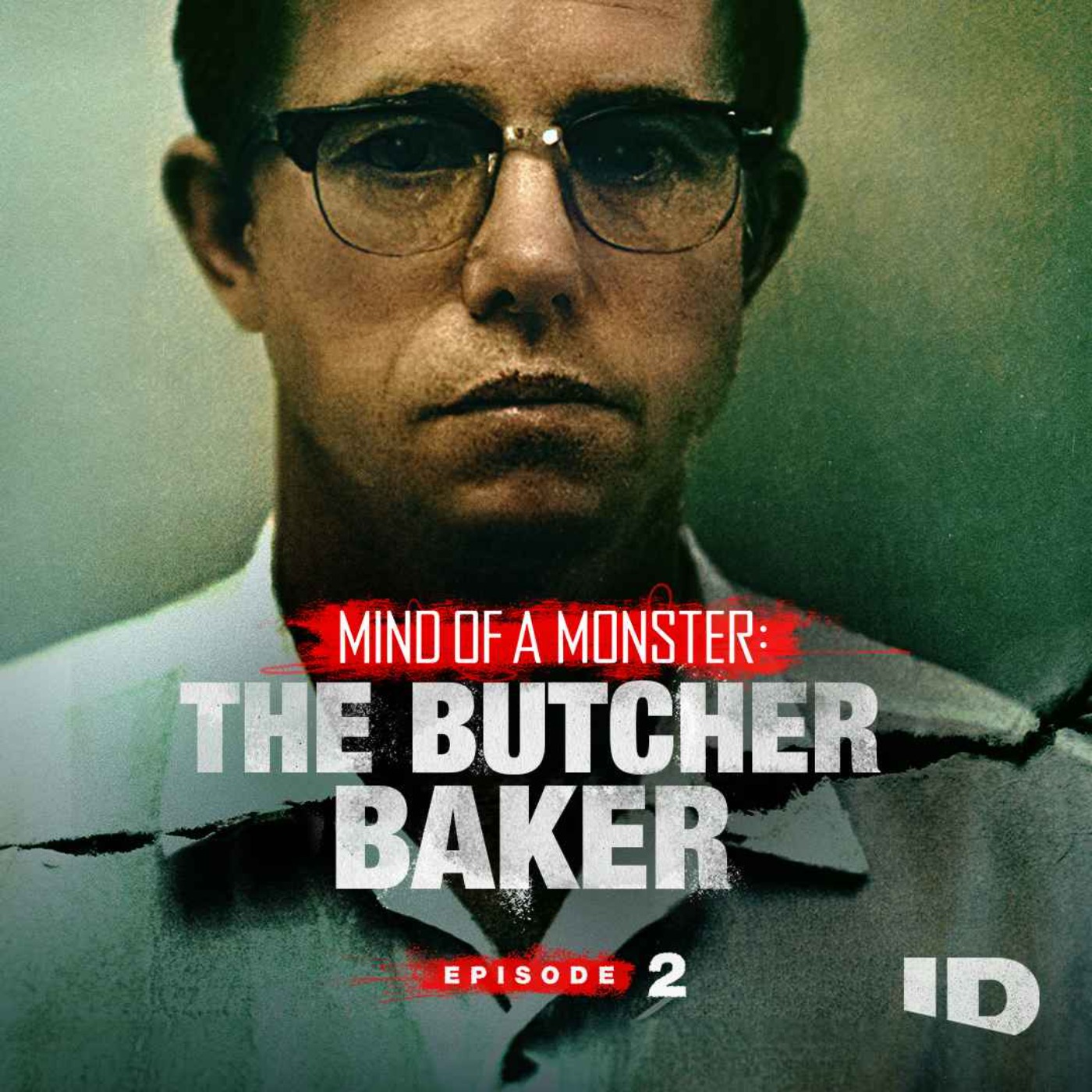
Loading summary
Transcript191 lines
- [00:01]
Simplisafe Advertiser
Old school security kicks in after the break in. Too late. Simplisafe rewinds the story. Stopping crime before it starts. Active Guard Outdoor Protection. Uses AI powered cameras to detect intruders, alert live monitoring agents and can deter intruders before they reach your door. It's proactive protection plus a 60 day money back guarantee and no contracts. To get 50% off your new system, go to SimpliSafe.com podcast. That's SimpliSafe.com podcast. There's no safe like Simplisafe.
- [00:31]
Cindy Paulson
Hi, I'm Morgan. I have three kids.
- [00:33]
Dr. Michelle Ward (Host/Narrator)
I have an IQ of 160.
- [00:34]
Cindy Paulson
I work with the cops.
- [00:36]
Dr. Brent Turvey (Criminal Profiler)
You're a cop?
- [00:37]
Dr. Michelle Ward (Host/Narrator)
No, but they do sign my paychecks. Kaitlin Olsen returns in High Potential, the number one drama.
- [00:43]
Dr. Brent Turvey (Criminal Profiler)
She was abducted. You knew that already, didn't you?
- [00:45]
Dr. Michelle Ward (Host/Narrator)
Yeah, I thought it'd be nice to let you have this one. And one of the best new crime procedurals.
- [00:52]
Dr. Brent Turvey (Criminal Profiler)
You're waiting on me to leave so you can poke around without a warrant, aren't you?
- [00:54]
Dr. Michelle Ward (Host/Narrator)
Yeah. High potential. New Tuesdays, 10, 9 Central on ABC and stream on Hulu.
- [01:00]
Progressive Insurance Advertiser
This episode is brought to you by Progressive Insurance. Do you ever think about switching insurance companies to see if you could save some cash? Progressive makes it easy to see if you could save when you bundle your home and auto policies. Try it@progressive.com Progressive Casualty Insurance Company and affiliates. Potential savings will vary. Not available in all states.
- [01:22]
Dr. Michelle Ward (Host/Narrator)
This podcast explores themes of murder and rape. Listener discretion is advised. Outside the oil boom town of Anchorage, two young women, one a possible sex worker and the other a 24 year old dancer named Sherry Morrow, have been found murdered in the space of two years. For Detective Maxine Farrell, these bodies are part of a much bigger picture of.
- [01:47]
Cindy Paulson
The number of girls I was collecting as missing persons.
- [01:51]
Dr. Michelle Ward (Host/Narrator)
I think it was about 10, 12 girls. And I've got a feeling that maybe.
- [01:55]
Cindy Paulson
There'S a serial killer out there.
- [01:57]
Dr. Michelle Ward (Host/Narrator)
It was everything for me to stop this.
- [01:59]
Cindy Paulson
All I needed to do was get this guy.
- [02:02]
Dr. Michelle Ward (Host/Narrator)
I was like stuck on we gotta get this guy. I'm Dr. Michelle Ward and this is Mind of a Monster, the Butcher Baker. In this seven part series, we're taking you back to the summer of 1983 in Alaska. Episode 2. There were stuffed animals everywhere. One of the most recent additions to Maxine's list of missing girls is a young woman named Delyn Fry. Her mom calls the Anchorage Police Department in July of 1983. She hasn't heard from her daughter since June. I have a picture of Delynn Here around the time she went missing. She is shortish with blonde hair in a wavy 70s style, and she has these enormous eyes. I want to give you a sense of Delyn's backstory because as you will hear, this becomes important.
- [02:56]
Deborah Fry Benner (Cousin of Delyn Fry)
My name is Deborah Fry Benner. I am a first cousin of Delyn Fry. I was raised with her father. We lived in a neighborhood in Baltimore that had lots of row homes. It was a city in the city. It was called Greek Town.
- [03:14]
Dr. Michelle Ward (Host/Narrator)
And what was the rest of the family like when you were growing up?
- [03:17]
Deborah Fry Benner (Cousin of Delyn Fry)
So my grandmother raised 10 kids by herself, that's including me. They all grew up and they pretty much got out early because my grandmother was very strict.
- [03:28]
Dr. Michelle Ward (Host/Narrator)
What was your relationship like with Delyn?
- [03:30]
Deborah Fry Benner (Cousin of Delyn Fry)
Well, she was six years younger than me, but when she was there, my uncle would bring her to stay, so I took care of her. I played dolls with her, you know, I read her stories. We took walks. Delyn, her mom and dad separated, divorced at a very young age. She was different. She had these green, darker green eyes, but they were like almond shaped and very sad. Just sad, you know, I mean, she did all the things that a little girl would do, but then she would. There would be times that he would bring her over and leave her and she would be very quiet. I mean, you couldn't get a word in edgewise with her.
- [04:23]
Dr. Michelle Ward (Host/Narrator)
Deborah tells me that Dylan split her time between her dad's house with his new wife and new kids and her mom's house in New Mexico. Do you think she was being mistreated at home?
- [04:33]
Deborah Fry Benner (Cousin of Delyn Fry)
I think it was other things, and I hate to say it, but. But I know it happened with one of our relatives because he was that way. And at that time, everything was hush, hush. You didn't tell anybody about what happened, even though you found out a few things and said, oh, you know, we have this man that's here and he's doing things to people in our family that he shouldn't be doing things to. You know, it's very hard.
- [05:04]
Dr. Michelle Ward (Host/Narrator)
You think she might have been abused?
- [05:06]
Deborah Fry Benner (Cousin of Delyn Fry)
I think she was. And also by, and I hate to say it, by her own father. You know, I hate to say it.
- [05:16]
Dr. Michelle Ward (Host/Narrator)
I just want to step back here for a moment to be clear that Deborah is speculating that Delyn was sexually abused as a child by not one, but two men within her large family, including her father. I read somewhere that she was eager to leave home.
- [05:33]
Deborah Fry Benner (Cousin of Delyn Fry)
Yes, yes. Because who could blame her? I mean, I did, too.
- [05:36]
Dr. Michelle Ward (Host/Narrator)
She just wanted to get away from her situation.
- [05:39]
Deborah Fry Benner (Cousin of Delyn Fry)
I think she did. I think she did.
- [05:43]
Dr. Michelle Ward (Host/Narrator)
The last time you remember seeing Dylan, could you tell me about that?
- [05:47]
Deborah Fry Benner (Cousin of Delyn Fry)
She came over. My grandmother was babysitting for me, and we just went out. We went and saw old friends.
- [05:57]
Dr. Michelle Ward (Host/Narrator)
How old was Delyn during that last meeting?
- [05:59]
Deborah Fry Benner (Cousin of Delyn Fry)
She was 13. You know, she was restless, just like any teenager that has family issues.
- [06:08]
Dr. Michelle Ward (Host/Narrator)
This was the mid-70s. Deborah never saw Delynn again. I asked our research team to try to work out what happened next. They found some court documents that put Delin in Anchorage in their early 80s, working at the Shangri la health club. We tried to find out exactly what this place was, but we kept hitting dead ends until we went back to police officer John Daley. He said this was, quote, unquote, a massage house on 27th Street. It apparently had a pretty impressive sunken grotto. The court documents also mentioned that the police department at this time knew Delin as a heroin addict. So why do I want you to know about all of this? Because victims of crimes and their histories are often overlooked. And actually knowing about a victim's background is crucial to understanding what type of person may have committed a crime against them. This is where criminal profiler Dr. Brent Turvey comes in again. Over the years, he's developed something called behavioral evidence analysis.
- [07:13]
Dr. Brent Turvey (Criminal Profiler)
Behavioral evidence analysis has three parts, and the first part is examining the physical evidence to reconstruct the crime. The next thing is you look at the. What we call forensic victimology. And these are the traits that indicate the intersectionality or the vulnerability of the groups or individuals being targeted for crimes. And we conceptualize those mostly as things related to modus operandi. How the offender got there, how the victim was selected, what they did with the victim during the crime, whether or not they let them live, if they kill them, how did they kill them, if they restrained them, how they do that. And that is used to suggest motive. And then finally, the fourth step. If you haven't done those first three steps, you don't have a fourth step. But if you do the first three steps, you can then start doing the profile, which is, what's the skill level of the offender in this context with this type of crime? Like, you can have an offender who's very good at burglary, who's very poor, and leaves a lot of evidence behind when they commit sexual assault. And when I describe this to new students, they always say, oh, my God, that's a lot of work. Yeah, it is. That's the point. If you haven't done that work, then you don't actually know what you're doing, you don't actually know what you're profiling. So it's not a guess. It's a concrete analysis of established behavior, established victimology, and established crimes and characteristics.
- [08:35]
Dr. Michelle Ward (Host/Narrator)
Now, I want to be clear here. There's no kind of evidence based forensic investigation going on in 1983. Far from it. Sherry Morrow's murder case is languishing at the Alaska State Troopers, and the missing dancers are being ignored by everyone except Maxine. But I want to go down part of this road with Brent now to see what Maxine's list of missing dancers and sex workers can tell us about a possible perpetrator. You've got these girls brought in by Talence West. They have similar backgrounds. They have complex trauma. They're also marginalized. Right.
- [09:10]
Dr. Brent Turvey (Criminal Profiler)
So in the context of complex trauma, let's talk about it. There's two kinds. There's trauma, which is from a single event, usually something very traumatic like witnessing a murder or being sexually assaulted or being the victim of domestic violence. Those are events, and that results in what we call ptsd. Right. A specific event that you're reliving because you have not learned how to integrate it into your world or into your sensory experience. Now, complex trauma is things that happen over time that you're not allowed to talk about, that you're not allowed to give voice to, that you're not allowed to reference, that you have to be quiet about. And that that is unresolved. Trauma society will not let you acknowledge it or deal with it. And you don't, or you don't have the resources to deal with it.
- [09:52]
Dr. Michelle Ward (Host/Narrator)
And when you look down that list and you look into their backgrounds, almost everyone, just like Dylan, who may have been sexually abused, or like Sherry Morrow, who also had a difficult past, they all have something that indicates complex trauma.
- [10:05]
Dr. Brent Turvey (Criminal Profiler)
Exactly. The ones that have that history of, let's say, trauma or violence, that have those addiction problems, that have that financial illiteracy, those are the ones that are going to wind up getting hurt the most. Those are the ones that are going to be the most vulnerable. And sex traffickers are experts at identifying those girls and separating them from the herd.
- [10:24]
Dr. Michelle Ward (Host/Narrator)
Yeah, they. They know what they're doing. They know how to select their talent.
- [10:27]
Dr. Brent Turvey (Criminal Profiler)
Yeah, it's a business model, works very well.
- [10:29]
Dr. Michelle Ward (Host/Narrator)
And you definitely see that in my area of study as well. Serial killers can become experts at identifying the right victims. They become almost victimologists.
- [10:40]
Dr. Brent Turvey (Criminal Profiler)
Anyone who's committing successfully or unchecked committing serial crime, whether it's burglary, sexual assault, or Serial murder. They learn who they can target and exploit and who will not be protected by the system, by law enforcement or by the government.
- [10:58]
Dr. Michelle Ward (Host/Narrator)
So the pattern here, the MO of this guy is to pick up the most vulnerable of the vulnerable girls. And that fits right in with what Susan Bradford said in our last episode. Right?
- [11:08]
Dr. Brent Turvey (Criminal Profiler)
Right.
- [11:10]
Dr. Michelle Ward (Host/Narrator)
Just to remind everyone, Susan was the friend of Sherri Morrow. She walked her to a date from which she never returned. And she spoke to Sheri's date at the club a few days before. This is her talking to the mind of a monster team in 2020. He'd asked me, do you have family up here? Where'd you come from? And his big drill do you have sisters and brothers? Where are you from, what you're doing? This guy is checking her support system. He's checking how vulnerable she really is. As we mentioned in the last episode, Maxine's list of suspects in the trail of missing girls starts small. Just three men. A transient worker who fled to Hawaii, a local photographer asking girls for their picture around town. And a middle aged guy named Robert Hanson. Hansen owns a bakery downtown. He has a wife and two kids. He's last on Maxine's list for a reason. But all that is about to change.
- [12:08]
Cindy Paulson
We get in the car and I'm laying down on the back seat with a cover over me. Get to the airport and then the passengers your seat here in the rope in a gun.
- [12:20]
Dr. Michelle Ward (Host/Narrator)
You're hearing the voice of 17 year old sex worker Cindy Paulson in a police interview. Sometimes she's hard to hear and I'll jump in to tell you what she's saying. It's around 5am on June 13, 1983 at Merrill Airfield just outside of Anchorage. It's summer, so it's been light since around 3:30. Cindy is handcuffed and hidden under a heavy green wool blanket. She watches as a man takes stuff from the car to a small single engine bush plane, a Super Cub parked right next to all the other planes.
- [12:59]
Cindy Paulson
He kept going back from the truck to the plane and then when he went back to the plane, I looked up and I see them. I threw see him from the waist down in the front. Driver's door was open, so open the back door.
- [13:16]
Dr. Michelle Ward (Host/Narrator)
Cindy describes seeing Hansen with his head right inside the plane, turned away from her. She knows it's her only chance to.
- [13:23]
Cindy Paulson
Get away and I ran and he started chasing me again.
- [13:29]
Dr. Michelle Ward (Host/Narrator)
Cindy races across the parking lot next to the airfield, barefoot, ducking behind cars to hide from the armed man behind her. She makes a final Sprint toward the highway.
- [13:42]
Cindy Paulson
And this guy in a white truck stopped me because I had handcuffs on my hands and I didn't have no shoes. I was hysterical.
- [13:51]
Dr. Michelle Ward (Host/Narrator)
The truck driver asks the handcuffed, crying Cindy if she wants to go to the police. She says no, she wants him to. To drop her at a motel.
- [14:01]
Cindy Paulson
And he gave me a ride up the street to the Mushroom. And that's when I called a friend of mine to come and get me.
- [14:08]
Dr. Michelle Ward (Host/Narrator)
Cindy calls her pimp using the motel phone, and the truck driver continues on to work. But by now, he's sufficiently shaken up to call the police himself.
- [14:20]
Officer Greg Baker
We got the call from dispatch that a white female was running down fifth Avenue with some pants on and a jacket and handcuffed.
- [14:31]
Dr. Michelle Ward (Host/Narrator)
This is the patrol cop who got sent to check on the report, Greg Baker. He was interviewed for the Mind of a monster documentary in 2020.
- [14:40]
Officer Greg Baker
We approached the room with some caution, but after knocking on the door, we realized that Cindy was in a room by herself. She was still handcuffed. I took the handcuffs off of her, tried to calm her down. She was physically shaking. When I contacted her. She was extremely distraught and trying to tell me what happened, you know, in one sentence. So it took a while to get her calmed down enough so that I could realize what the situation was.
- [15:14]
Dr. Michelle Ward (Host/Narrator)
Slowly, Cindy reveals that she'd been taken hostage and raped by a guy who paid her for oral sex.
- [15:21]
Officer Greg Baker
She was pretty sure she was gonna get killed because she was also aware that women had been disappearing in Anchorage. Only she was probably. She probably had more insight into the problem than I had at the time. I asked her if she would go to Humana Hospital with me and consent to a sexual assault examination. And she said she would. On the way over there, we passed by Merrill Field. He pointed at a small single engine bush plane and screamed, there it is. There it is.
- [16:01]
Dr. Michelle Ward (Host/Narrator)
Cindy is certain that the plane she sees is the one her attacker was loading up with supplies.
- [16:08]
Officer Greg Baker
So I contacted the ground control, asked him to give me the name of the owner of that tail number. And the name of the owner was Robert Hansen.
- [16:30]
Progressive Insurance Advertiser
Did you see the game last night? Of course you did. Because you used Instacart to do your grocery restock. Plus you got snacks for the game, all without missing a single play. And that's on multitasking. So we're not saying that Instacart is a hack for game day, but it might be the ultimate play this football season. Enjoy. $0 delivery fees on your first three orders. Service fees apply for three orders in 14 days. Excludes restaurants. Instacart we're here.
- [16:55]
Dr. Michelle Ward (Host/Narrator)
You open the fridge, there's nothing there. So what's it gonna be? Greasy pizza? Sad drive thru burgers?
- [17:04]
Deborah Fry Benner (Cousin of Delyn Fry)
Dish by Blue Apron is for nights like that. These are the pre made meals of your dreams.
- [17:10]
Dr. Michelle Ward (Host/Narrator)
At least 20 grams of protein.
- [17:12]
Deborah Fry Benner (Cousin of Delyn Fry)
No artificial flavors or colors.
- [17:14]
Dr. Michelle Ward (Host/Narrator)
No chopping, no cleanup. No guilt. Keep the flavor. Ditch the subscription. Get 20% off your first two orders with code APRON20. Terms and conditions apply.
- [17:23]
Deborah Fry Benner (Cousin of Delyn Fry)
Visit blueapron.com terms for more.
- [17:26]
Simplisafe Advertiser
Most security systems react after a break in begins. That's too late. Simplisafe is different. It's proactive. Active Guard Outdoor Protection uses AI powered cameras to spot suspicions suspicious activity before criminals get inside. Live monitoring agents can see, speak to and scare off intruders in real time, quickly calling police if needed. To get 50% off your new system, go to SimpliSafe.com podcast that's SimpliSafe.com podcast for 50% off. There's no safe like Simplisafe.
- [17:56]
Progressive Insurance Advertiser
This episode is brought to you by Progressive Insurance. Do you ever think about switching insurance companies to see if you could save some cash? Progressive makes it easy to see if you could save when you bundle your home and auto policies. Try it@progressive.com Progressive Casualty Insurance Company and affiliates. Potential savings will vary. Not available in all states.
- [18:28]
Dr. Michelle Ward (Host/Narrator)
It's the 13th of June 1983. Officer Greg Baker has a lead on the rape and kidnapping of sex worker Cindy Paulson. A plane she identifies as belonging to her attacker is owned by Robert C. Hansen, living on Old Harbor Road.
- [18:47]
Officer Greg Baker
Ask a couple more patrol officers to go over to the address and to.
- [18:52]
Dr. Michelle Ward (Host/Narrator)
Stand by as the officers wait for Hansen to return home. Cindy Paulson gives the police a full statement about what happened to her the night before. But before we dive into that, I want to get some background on Cindy from author Leland Hale. Tell us about Cindy Paulson.
- [19:09]
Leland Hale (Author)
So Cindy Paulson had grew up in a very fractured family and started working as a sex worker at age 13 or 14.
- [19:22]
Dr. Michelle Ward (Host/Narrator)
Oh my gosh.
- [19:23]
Leland Hale (Author)
And she'd worked in Portland. Then they came up to Alaska. And actually by the time she got to Alaska, she was fairly new working in Alaska.
- [19:35]
Dr. Michelle Ward (Host/Narrator)
She was new to the area. She was young. She had a traumatic past. I hope you see where I'm going with this. She fits right in with the profile of the other girls who have been reported missing in the last couple of years in Anchorage. At this time she's working with a pimp and staying with him in a motel room near the airfield. Most Nights she heads to the main Anchorage strip, named as we mentioned before, the world's longest bar. And it's here on fourth Avenue that she plies her trade.
- [20:06]
Leland Hale (Author)
So one night she's working the street and a guy stops and talks to her. She asks for money for cigarettes and he says I don't have change. And then goes through his wallet and one of the things she sees is there's lots of bills in there and they look like twenties and they look like one hundreds and so this is kind of a like his. Come on. So they make an appointment, not for tonight, for the next day. She oversleeps so she doesn't make the connection with him. But the next night, lo and behold, here's the sky again.
- [20:45]
Dr. Michelle Ward (Host/Narrator)
What you're about to hear is audio of Cindy recounting her ordeal a few months later to an Alaska state trooper. It closely matches her police statement that she gave at the time.
- [20:57]
Cindy Paulson
I was cornered in Denali and a gentleman here going by and pulled in a parking lot and off, you know, I got in the cart, volunteers was talking with this man that he offered me $200 for a little job in the car and I said fine, no problem.
- [21:17]
Dr. Michelle Ward (Host/Narrator)
Just a note about this. I'm going to play Cindy's story for you pretty straight because I want you to get a sense of exactly how detailed her account is. But every now and again she's hard to hear, so I'll fill in the gaps and in this next bit it's really hard to hear so I'm going to summarize. Cindy and this guy pull over in his car and she starts to give him oral sex. But while she's doing this, he starts to play around with the necklaces on her neck and somehow handcuffs one of her hands.
- [21:46]
Cindy Paulson
And I was trying to get loose and he pulled out a gun and he got my other hand cut just from fighting him because I didn't really. I fought, but not a lot because I knew I needed to.
- [22:02]
Dr. Michelle Ward (Host/Narrator)
She's saying I fought but not a lot cuz I knew he would do something.
- [22:07]
Dr. Brent Turvey (Criminal Profiler)
What did a gun look like?
- [22:09]
Cindy Paulson
It was a big revolver gun, like a police gun. Handle was brown and a long barrel.
- [22:17]
Officer Greg Baker
Describe this man to me.
- [22:20]
Cindy Paulson
He's on a sandy, kind of darkish brownish and fair, really short. He's got like frog warts in his face, buck teeth. And if I'm not mistaken, I think we got green with blue eyes, moist glass. And he's about five, six, he's about 175. And he took me to his house I know Barbie wrote and Martha, take a ride at the jams and go all the way down to a blue house on the right hand side, just past the dead end sign.
- [23:01]
Dr. Michelle Ward (Host/Narrator)
Do you know your way around town well? Or why did you happen to remember so well where it was at?
- [23:06]
Cindy Paulson
But see, when we was driving, I observed everything because this wasn't getting away with it.
- [23:13]
Dr. Michelle Ward (Host/Narrator)
I hope not.
- [23:14]
Cindy Paulson
I knew I was in trouble in that really room. If there was any chance of me getting away, he was getting away with.
- [23:26]
Dr. Brent Turvey (Criminal Profiler)
You.
- [23:26]
Cindy Paulson
Come into the garage.
- [23:28]
Dr. Michelle Ward (Host/Narrator)
Now tell me what happens then.
- [23:30]
Cindy Paulson
He takes me out of the car and takes me to the house and took me downstairs and we can't. I was handcuffed the whole time. And there was clear fish, there was wolf skins there. Stuffed animals everywhere. Big old like caribou and goats heads, big ones stuffed everywhere. Ducks. Nerds. The foosball table, the pool table. And then there's another window on the street side. I sat down on the chair. Next cocktail, tie the rope around my neck and the pocket table. He called the bearskin rug around. And all the time he kept telling me, don't worry, I'm not gonna hurt you if you claw up. Right then he had sex with me on the bearskin rug.
- [24:19]
Officer Greg Baker
This is the same time you're tied.
- [24:21]
Dr. Michelle Ward (Host/Narrator)
With your neck to the coffee table.
- [24:22]
Cindy Paulson
So if I move too far, it would choke with me.
- [24:25]
Dr. Michelle Ward (Host/Narrator)
Once he was done, Cindy says her attacker wrapped a chain around her neck four times, handcuffed her and left her.
- [24:35]
Cindy Paulson
And I was there for about five hours. What did he do? Slept on the couch.
- [24:41]
Dr. Michelle Ward (Host/Narrator)
Did you leave anything in the house?
- [24:44]
Cindy Paulson
Just a towel that I had peed on.
- [24:51]
Dr. Michelle Ward (Host/Narrator)
What did he do when he woke up?
- [24:54]
Cindy Paulson
He came over to me and sat down. Just stared at him. And I started crying. I told him all I wanted to do is go home to let. Love your mom. Yeah. What did he say to that? He just said, well, don't worry about it, you know, everything's gonna be okay. I'm not gonna hurt you. And then he. That's when he told me about the other girls. And what did he say about the other girl? But there was seven. He had seven other girls there before.
- [25:25]
Dr. Michelle Ward (Host/Narrator)
Cindy's saying that this guy mentioned other girls. He'd done this to seven of them.
- [25:31]
Cindy Paulson
And he told me that since he liked me so good that he would take me to his cabin, he would make love to me one time and bring me back. And I, you know, I told him, okay, fine, that's good. I acted like I wanted to go.
- [25:47]
Dr. Michelle Ward (Host/Narrator)
What if he would have acted differently.
- [25:48]
Officer Greg Baker
What would he have done?
- [25:49]
Cindy Paulson
I would have killed me there in the house. Nobody would have known me. It was so thick. That was downstairs crying.
- [26:00]
Dr. Michelle Ward (Host/Narrator)
Hi, I'm Morgan.
- [26:01]
Cindy Paulson
I have three kids.
- [26:02]
Dr. Michelle Ward (Host/Narrator)
I have an IQ of 160.
- [26:03]
Cindy Paulson
I work with the cops.
- [26:05]
Dr. Brent Turvey (Criminal Profiler)
You're a cop?
- [26:06]
Dr. Michelle Ward (Host/Narrator)
No, but they do sign my paychecks. Caitlyn Olson returns in High potential. The number one drama.
- [26:13]
Dr. Brent Turvey (Criminal Profiler)
She was abducted. You knew that already, didn't you?
- [26:15]
Dr. Michelle Ward (Host/Narrator)
Yeah, I thought it'd be nice to let you have this one. And one of the best new crime proceedings.
- [26:21]
Dr. Brent Turvey (Criminal Profiler)
You're waiting on me to leave so you can poke around without a warrant, aren't you?
- [26:24]
Dr. Michelle Ward (Host/Narrator)
Yeah. High potential. New Tuesdays, 109 Central on ABC and stream on Hulu.
- [26:30]
Simplisafe Advertiser
Most security systems react after a break in begins. That's too late. Simplisafe is different. It's proactive. Active guard Outdoor protection. Uses AI powered cameras to spot suspicious activity before criminals get inside. Live monitoring agents can see, speak to and scare off intruders in real time. Quick, quickly calling police if needed. To get 50% off your new system, go to SimpliSafe.com podcast. That's SimpliSafe.com podcast for 50% off. There's no safe like Simplisafe.
- [27:00]
Dr. Michelle Ward (Host/Narrator)
Hey, Ryan Reynolds here from Mint Mobile. Now I don't know if you've heard, but Mint's Premium Wireless is $15 a month. But I'd like to offer one other perk. We have no stores. That means no small talk.
- [27:15]
Officer Greg Baker
Crazy weather we're having.
- [27:16]
Dr. Michelle Ward (Host/Narrator)
No, it's not. It's just weather. It is an introvert's dream. Give it a try@mintmobile.com Switch upfront payment of $45 per three month plan. $15 per month equivalent required. New customer offer first three months only. Then full price plan options available. Taxes and fees extra.
- [27:29]
Progressive Insurance Advertiser
See mintmobile.com this episode is brought to you by Progressive Insurance. Do you ever think about switching insurance companies to see if you could save some cash? Progressive makes it easy to see if you could save when you bundle your home and auto policies. Try it@progressive.com Progressive Casualty Insurance Company and affiliates. Potential savings will vary. Not available in all states.
- [27:55]
Officer Greg Baker
But what time was it that you left the house?
- [28:02]
Cindy Paulson
Probably about. It was early in the morning. And he said that he had a plane over at Merle Airfield, that we would go there and then he would take me to his cabin and bring me back. And I knew Val was going to come back.
- [28:22]
Dr. Michelle Ward (Host/Narrator)
I wasn't going to come back. Cindy was convinced she would die. Out in the wilderness. Oh, my God, Leland, that is heartbreaking. It's so hard to listen to.
- [28:34]
Leland Hale (Author)
She sounds so young.
- [28:38]
Dr. Michelle Ward (Host/Narrator)
She's a kid. She's not even 18.
- [28:40]
Leland Hale (Author)
And then soon she starts talking, and you get this other sense of this woman is talking about every little microscopic detail. She knows the street. She can actually talk you through going downstairs into the basement, what the basement looked like. You know, all the stuffed animal heads, the foosball table, the pool table, the couch, the tv.
- [29:12]
Dr. Michelle Ward (Host/Narrator)
For Greg Baker, hearing this story for the first time just hours after the attack took place, it has a profound effect on him.
- [29:21]
Officer Greg Baker
I mean, she was genuinely afraid that she was going to die and that nobody would know how, where, or ever find her body again. So I believed her and followed up, as if I would follow up any. Any sexual assault complaint.
- [29:44]
Dr. Michelle Ward (Host/Narrator)
The officers waiting outside Hansen's house radio Greg to say that they've made contact with Robert Hansen. At this point in the police report, Greg notes, quote, officer Baker was advised by units who have now located the scene that matched not only the description by Cindy Paulson, but was the address indicated by the registration printout of the plane. Hansen agrees to come down to the station voluntarily.
- [30:13]
Officer Greg Baker
He looked like an ordinary guy. He said he owned a Bakery at 9th Ingra. He said that he hadn't been involved with any prostitutes that morning. He was just, you know, confused as to why we were contacting him. And I told him, you know, pretty straight up, you know, what the situation was. He said, well, she's lying, because that certainly wasn't what he was doing last night. And then I took him over to investigations.
- [30:50]
Dr. Michelle Ward (Host/Narrator)
Okay, so here is what we need to understand about police. Police hierarchy. Greg is a beat cop, so when he encounters a crime like this, he takes down information, starts following leads, even takes Hansen's statement. But this is a rape and kidnapping case. He must hand it over to a more senior officer, someone in investigations. And that is what he does. And it's this senior officer who starts interviewing Hansen.
- [31:17]
Officer Greg Baker
And I went back to a patrol, and I started doing my paper on the call because I thought that Robert would probably be, you know, arrested. I finished up my paper, went back over to the investigator to ask him what happened, how he had progressed with the interview. He said that he, of course, believed Mr. Hansen and that the state was probably more likely to be that Cindy and Mr. Hansen had, in fact, engaged in some activity for money, and that he had either refused to pay her the agreed price or she had jumped the price on him and he refused to pay it. But in retaliation, she had made up this story and had called or had arranged for the police to become involved.
- [32:21]
Dr. Michelle Ward (Host/Narrator)
Hanson claims he did pay Cindy Paulson for sexual services, but not on the night of the 12th or 13th of June. On that night, the night of Cindy's attack, he has an alibi. I have the police report of the Cindy Paulson rape right in front of me. It's 27 pages long, typed out on aging cross checked paper with a typewriter. The notes from Hansen's interview state, I did not pick up any women or prostitutes downtown last night. I was over at a friend of mine's house. Then he says around 11:30 he went to another friend's house and stayed until 5am before driving to Merrill Field to put a seat in his airplane.
- [33:06]
Officer Greg Baker
The investigator did call, made a phone call to this friend of Mr. Hansen's where he had supposedly been all night. And over the phone he verified that the alibi was true. It was about a two minute phone call.
- [33:33]
Dr. Michelle Ward (Host/Narrator)
In fact, two short calls are made to both of Hansen's friends and they both corroborate his whereabouts. At least one of the friends is telling the truth. His wife and kids also had dinner with Hansen that night.
- [33:45]
Leland Hale (Author)
So now the cops have this dilemma. Do we believe Cindy or do we believe his friend? And in fact, they. One of the cops kind of confronts the friend and say, now's the time, time to tell me the truth. Nope, I'm telling you the truth, not lying. And so that sort of sets up this situation where you have a tendency to believe the important people and they, oh, they just happen to be males.
- [34:14]
Dr. Michelle Ward (Host/Narrator)
It's a sex worker's word against not one, not two, but three men and Hanson's friends. One is a manager of a big and cheap insurance company and the other is a professional boat builder. They are considered upstanding members of the community.
- [34:32]
Officer Greg Baker
While I was over there, the investigator asked Mr. Hanson if he would give us a consent to search his residence. When he consented, that was great. You know, that's less paper, less time involved. And I asked if I could go with the investigator and search the inside of the house. And we said sure.
- [34:50]
Dr. Michelle Ward (Host/Narrator)
Agreeing to a voluntary search of his home is like Hansen's calling card of innocence.
- [34:56]
Officer Greg Baker
Hanson wrote in the front passenger side. And I got in the back of the investigator's vehicle and we were driving over to Old harbor and he was talking about his hunting. He was real calm, he was almost too calm for being accused of sexually.
- [35:15]
Dr. Michelle Ward (Host/Narrator)
Assaulting somebody inside the house. Greg and the investigator head straight down to the basement, the scene of Cindy's rape and imprisonment.
- [35:26]
Officer Greg Baker
Everything was like Cindy Paulson said it should be. And there was a pool table, a foosball table. There was a bear rug on the floor. There was a ram there. And there was another head or two up on a wall. It was all just like she described, to a T. And so I was searching and I found a hollow. A hollow wall that was secured. Not secured, but hidden by a piece of paneling. And inside that hollow cavity were quite a few guns, rifles, a few pistols. I remembered seeing a mini 14, which is a Ruger semi automatic. 223.
- [36:16]
Cindy Paulson
The.
- [36:16]
Dr. Michelle Ward (Host/Narrator)
223. It's a common hunting rifle. The weapon that Cindy described in her statement, the handgun with the long barrel, it isn't among the hidden cachet. So Greg's superior asks Hansen if he owns a handgun. He says no.
- [36:32]
Officer Greg Baker
So investigator didn't push him when he denied having a handgun. Nothing was seized. I was a young rookie with APD at the time, so he was gonna make that decision, and I was not going to suggest or get in his way. He was the experienced investigator.
- [36:58]
Dr. Michelle Ward (Host/Narrator)
As Greg and his boss finish up their search, Greg notices two things. Some green army blankets that match the description of the blanket Cindy said she was covered with in her attacker's car, and a ladder propped up against an attic hatch.
- [37:12]
Officer Greg Baker
I actually asked the investigator if we wanted to climb up and look. I mean, an attic's a very common place to hide things, you know, and he said no. He says Mr. Hansen's been cooperative enough. There's no sense to push him. We just thanked Mr. Hansen for his cooperation and left him there with his car.
- [37:37]
Dr. Michelle Ward (Host/Narrator)
There are no charges filed pending any further investigation. Hansen is a free man. We've gone over in detail Greg's recollection of the case and his opinion of how it was handled. But we also have the police reports written at the time. And I think these are important to look at because they don't just tell us the detail. They also reveal the attitudes of the officers writing up the case. So, Leland, I mean, the report here says that the basement where Cindy was held, quote, this room was searched with no signs of any chains, ropes, or either the towel the victim urinated on or the washcloth she stated she wiped herself off on after the assault. I mean, how many of us expect to find a completely untouched crime scene when hours have passed since the crime?
- [38:27]
Leland Hale (Author)
I mean, they're looking for a urine stained towel. Okay, do you guys think. I mean, maybe you don't do laundry? I don't know. Did you think to look in the washing machine?
- [38:39]
Dr. Michelle Ward (Host/Narrator)
Yeah. Because if I have evidence in my house after I commit a crime, I'm not going to just leave it lying there.
- [38:44]
Leland Hale (Author)
There's just all these little pieces that they were that the lead investigator was willing to overlook, you know, and again, there's this whole thing of an alibi. And of course, what's the best way to contact an alibi witness? You go see him? No, no, just ring him up on the phone. That's fine. We don't have the time for that nonsense.
- [39:07]
Dr. Michelle Ward (Host/Narrator)
Exactly. And another thing that stands out to me, written here, says during this entire search, it should be noted that the suspect was extremely cooperative, gave the officers absolutely no problems regarding information or access to his residence, his vehicle or his airplane. I'm sitting here wondering, what relevance does that have to this case or the allegations against him? Like none, right? Zero.
- [39:30]
Leland Hale (Author)
None.
- [39:31]
Dr. Michelle Ward (Host/Narrator)
But I think it does tell us how the officers viewed this whole thing.
- [39:35]
Leland Hale (Author)
It's a shoddy job and, you know, they've already kind of got their pre written conclusions. You know, it's a hooker and this guy is really nice.
- [39:45]
Dr. Michelle Ward (Host/Narrator)
Criminal profiler Brent Turvey agrees.
- [39:48]
Dr. Brent Turvey (Criminal Profiler)
It's that he's one of them. This is the point to understand here.
- [39:52]
Dr. Michelle Ward (Host/Narrator)
So it's like they look at him and they see this middle aged white guy, big house, owns a business. We get him. He's just like us.
- [39:59]
Dr. Brent Turvey (Criminal Profiler)
Yeah. When you see prostitutes or sex workers of other kinds being abducted or murdered and law enforcement not doing their investigation properly and the people doing it escaping any sort of accountability, that's not an accident.
- [40:12]
Dr. Michelle Ward (Host/Narrator)
And these women who aren't being believed, have we come any further from that? Do women still face an uphill battle to be believed about a sexual assault and a rape?
- [40:21]
Dr. Brent Turvey (Criminal Profiler)
Yes, they still do. Women still face an extremely uphill battle in this regard in terms of being believed, in being credible cops, they withhold good justice and good effort from people that they just don't believe, that they just don't like. And they hold that out as some sort of credential, like, I didn't believe her, so I didn't do this. Oh, really? You didn't believe her? If you didn't believe her, great. Do the investigation and show what's true.
- [40:45]
Dr. Michelle Ward (Host/Narrator)
Yeah. But all of that notwithstanding, I actually think Greg does everything he's supposed to do because he takes Cindy to the rape center, he tracks down the plane, he sends officers to pick up Hanson. You can see from even how he writes up the case. He treats it really seriously, but it's his superior. He's made up his mind already. He just phones it in.
- [41:04]
Dr. Brent Turvey (Criminal Profiler)
People working on the street, working the cases directly, hands on. Once they develop a relationship with a particular complainant or victim, they tend to be more empathetic. Once they get past that barrier of listening, once they can hear them and see their suffering and connect with them on a human level and allow that to penetrate their subconscious, now they're going to help them like a sister, daughter or mother. Superiors don't have that problem.
- [41:30]
Dr. Michelle Ward (Host/Narrator)
I want you to remember here that while this whole Cindy Paulson case is going down, Maxine is investigating missing dancers and sex workers. But she's doing it on her own time with no resources. In fact, to show you how little the departments were talking to each other, we checked with Maxine after our interview and asked whether she knew about Cindy's case at the time it was happening. She said no. She only heard about Cindy's abduction and rape after everything was said and done.
- [41:57]
Leland Hale (Author)
That case should have been given to.
- [41:59]
Cindy Paulson
Me, and I should have been the.
- [42:01]
Dr. Michelle Ward (Host/Narrator)
One doing the search because I knew all the things to look for. You know, these guys didn't even look for those things. And you get a guy with an alibi, you just don't take it right away like that. You kind of pressure him a little bit.
- [42:18]
Leland Hale (Author)
You know, I sit down a little.
- [42:20]
Dr. Michelle Ward (Host/Narrator)
Bit and talk further with the guy.
- [42:22]
Cindy Paulson
If it's not true, and we're going to investigate what you said, you go to jail for the same charge.
- [42:30]
Dr. Michelle Ward (Host/Narrator)
So just for a minute, let's step into an alternate world, one where Maxine brings up the missing girls to her superiors, and they set up a proper investigation with resources and manpower. And then Cindy comes into the police station with this story. What would have happened? Some dots might have been connected, further searches may have been done, some alibis drilled down on. Or maybe it's more likely anyway. But that isn't what happened. In fact, as Greg Baker tells us, quite the opposite.
- [43:02]
Officer Greg Baker
I had not heard anything about the ulcer investigation for probably three weeks, maybe four. I figured, you know, investigations take a while sometimes. But I pulled a copy of the report. Well, I think I just pulled it up on a computer at that time and noticed that the disposition on the case was suspended. In other words, there was no more investigation going on about that case at all.
- [43:41]
Dr. Michelle Ward (Host/Narrator)
On the police report, the exact words read, this case is. And then it goes to all caps closed, exceptional clearance, no further action. It was closed on 24 June, 11 days after the rape. Brent's got a word for this.
- [44:00]
Dr. Brent Turvey (Criminal Profiler)
This is tone checking. That's what it is. It's tone checking. You're tone checking the female community there of sex workers saying, hey, I don't think you guys matter enough so you're kind of on your own. Understand that you're less than the rest of us and don't pretend that you aren't because you're not going to get help when you're not helping a particular community and letting them suffer and die.
- [44:21]
Dr. Michelle Ward (Host/Narrator)
That's a tone check for Greg Baker. Just like Maxine Farrell. It wasn't good enough.
- [44:28]
Officer Greg Baker
And I just. That bothered me, you know, because I mean, damn it, I knew that Robert Hanson was lying to me because I saw where the assault happened and it matched Cindy's description to a T. So I decided I couldn't let that go.
- [44:49]
Dr. Michelle Ward (Host/Narrator)
Greg makes a similar decision to the one Maxine made a couple of years earlier. He may be a patrol cop, but he's going to carry on investigating the case his superiors have shut down.
- [45:00]
Officer Greg Baker
I knew that if I want to over talk to the investigator would tell me to go back to patrol business and leave investigations to investigators. And that's just the way it had to be.
- [45:15]
Dr. Michelle Ward (Host/Narrator)
On our next episode, we dive deep into the past of Greg's main suspect, Robert Hansen.
- [45:21]
Cindy Paulson
I hated the word school.
- [45:23]
Officer Greg Baker
I guess this is why I burnt.
- [45:25]
Dr. Michelle Ward (Host/Narrator)
Down the bus barn way back in Iowa. Mind of a Butcher Baker is produced by Aeromedia for I D. The executive producer for I D is Jessica Lowther. Aeromedia's producer is Jess Leyndeveer. Editor Millie Tapner. Audio engineering by Mahoney Audio Post. Our line producer is Philippa Whittle. Our production manager is Alexandra Kelly. Our junior production manager is Jody Tanner Wilde. Our production course is Shannon Tunicliff. Our archive producer is Katia Lom. Our assistant producer is Isabel Wilson. Aeromedia series producer is Gabrielle Nash. And executive producer is Stuart Pender. I'm your host, Dr. Michelle Ward. You can follow this series wherever you get your podcasts. We'd love it if you could take a minute to leave us a five star review on Apple Podcasts. It really makes a difference.
- [46:22]
Progressive Insurance Advertiser
This episode is brought to you by Progressive Insurance. Do you ever think about switching insurance companies to see if you could save some cash? Progressive makes it easy to see if you could save when you bundle your home and auto policies. Try it@progressive.com Progressive Casualty Insurance Company and affiliates. Potential savings will vary. Not available in all states.