Loading summary
Transcript324 lines
- [00:01]
Mint Mobile Announcer
Old school security kicks in after the break in. Too late. Simplisafe rewinds the story. Stopping crime before it starts. Active Guard Outdoor Protection Uses AI powered cameras to detect intruders, alert live monitoring agents and can deter intruders before they reach your door. It's proactive protection plus a 60 day money back guarantee and no contracts. To get 50% off your new system, go to SimpliSafe.com podcast. That's SimpliSafe.com podcast. There's no safe like SimpliSafe.
- [00:30]
Mint Mobile Host
Mint is still $15 a month for premium wireless. And if you haven't made the switch yet, here are 15 reasons why you should. 1. It's $15 a month.
- [00:40]
Cindy Paulson / Felicia
2.
- [00:40]
Mint Mobile Host
Seriously, it's $15 a month.
- [00:43]
Cindy Paulson / Felicia
3.
- [00:43]
Mint Mobile Host
No big contracts.
- [00:44]
Cindy Paulson (Younger) / Interview Excerpts
4.
- [00:45]
Mint Mobile Host
I use it.
- [00:45]
Mint Mobile Announcer
5.
- [00:46]
Mint Mobile Host
My mom uses it. Are you. Are you playing me off? That's what's happening, right? Okay, give it a try@mintmobile.com Switch upfront.
- [00:53]
Advertisement Voice
Payment of $45 for three month plan. $15 per month equivalent required. New customer offer first three months only, then full price plan options available, taxes and fees extra.
- [00:59]
Darina, Co-founder of Quo
See mintmobile.com hi, I'm Darina, co founder of Quo. You might know us as OpenPhone. My dad is a business owner and growing up he always kept his ringtone super loud so he'd never miss a customer call. That stuck with me. When we started Quo, our mission was to help businesses not just stay in touch, but make every customer feel valued no matter when they might call. Quo gives your team business phone numbers to call and text on your phone or computer. Your calls, messages and contacts live in one workspace so your team can stay fully aligned and reply faster. And with our AI agent answering 24. Seven, you'll really never miss a customer. Over 90,000 businesses use quo. Get 20% off@quo.com business that's quote.com business and we can port your existing numbers over for free. Quo no missed calls. No missed customers.
- [01:59]
Dr. Michelle Ward (Host of Mind of a Monster)
Heading to the airport. It's so early in the morning and there's so much traffic. It's just after 8am and I'm traveling to meet the person who completely turned around the Robert Hanson case.
- [02:13]
Advertisement Voice
All passengers please make your way through security.
- [02:17]
Dr. Michelle Ward (Host of Mind of a Monster)
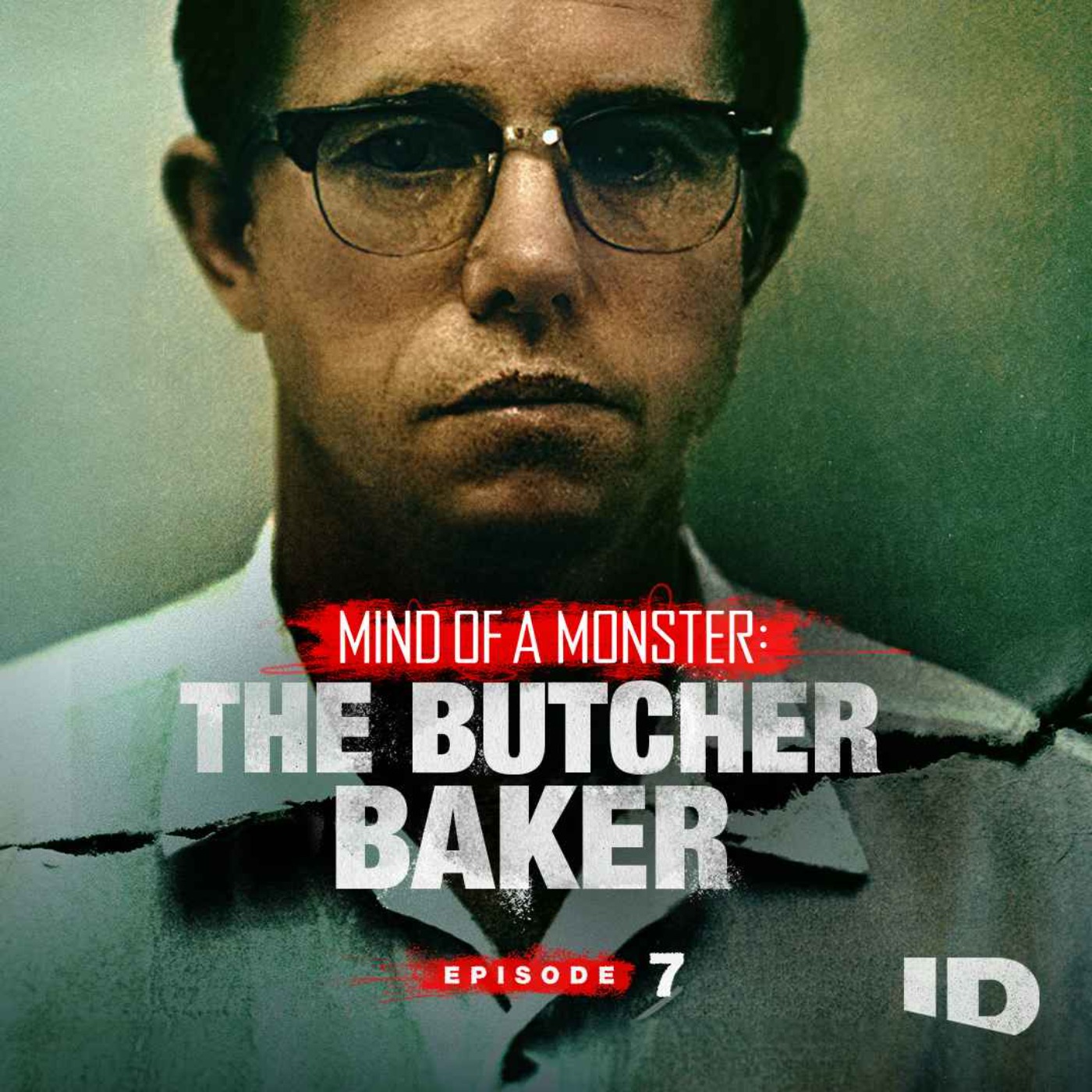
Please double check to make sure that your seat belts are securely fastened. The 17 year old sex worker who risked everything to speak out against her attacker, Cindy Paulson. This is Mind of a Monster. The Butcher Baker Episode 7 they Bleed like everybody else.
- [02:36]
Cindy Paulson / Felicia
Were you handcuffed at that time?
- [02:38]
Cindy Paulson (Younger) / Interview Excerpts
See, that's when I thought he was going to shoot Me downstairs.
- [02:41]
Cindy Paulson / Felicia
Why? Why did you think that?
- [02:42]
Cindy Paulson (Younger) / Interview Excerpts
Gosh, I don't know. I just got the strangest feeling this guy was going to shoot me. And I was really upset. I was really nervous.
- [02:51]
Dr. Michelle Ward (Host of Mind of a Monster)
This is a tape of Cindy talking to lead investigator Glenn Flothi. Three months earlier, she had been driven to Hansen's house, raped and chained up for five hours. Hansen then drove her to his airplane, where she ran from the car and escaped him still handcuffed.
- [03:10]
Cindy Paulson (Younger) / Interview Excerpts
I knew, you know, I'm getting the out of there. So I just waited. Finally, I just was so scared. I just ran.
- [03:18]
Cindy Paulson / Felicia
Did he run after you?
- [03:19]
Cindy Paulson (Younger) / Interview Excerpts
Yeah. With a gun.
- [03:20]
Cindy Paulson / Felicia
Did he say anything?
- [03:21]
Cindy Paulson (Younger) / Interview Excerpts
Said, I'm gonna get you.
- [03:24]
Dr. Michelle Ward (Host of Mind of a Monster)
In the 40 years since that moment, Cindy has never spoken in public about her ordeal and the impact it had on her life. But that's about to change. Just pulling in to get my rental car. Part of our agreement to meet with Cindy now is that we do not say where she lives or use her real name, which, spoiler alert, is not Cindy. My driver's license.
- [03:49]
Cindy Paulson / Felicia
Okay, great.
- [03:52]
Dr. Michelle Ward (Host of Mind of a Monster)
Thank you so much. Bye.
- [03:53]
Cindy Paulson / Felicia
Bye.
- [03:54]
Dr. Michelle Ward (Host of Mind of a Monster)
Her story illuminates the attitudes of the police, the heroes, the anti heroes of this case. Her perspective as a sex worker is unlike anything you've ever heard or experienced before. She can fill us in on gaps we know nothing about, like what happened when she disappeared and why. And we're officially off. My drive from the airport is around two and a half hours through stunning mountain passes. And as I wind my way through the snowy caps, I listen to Cindy's tapes again.
- [04:27]
Cindy Paulson (Younger) / Interview Excerpts
I came over to me and sitting down and just stared at me and I started crying. I told him all I wanted to do is go home to that log.
- [04:37]
Cindy Paulson / Felicia
Your mom?
- [04:38]
Cindy Paulson (Younger) / Interview Excerpts
Yeah.
- [04:40]
Dr. Michelle Ward (Host of Mind of a Monster)
I've been listening to her tapes, the original tapes, the tapes that we got from her interviews with police. And I can't keep it together. I've been crying the entire time. She's a little girl. She's somebody's daughter. It is my sincere hope that we can do her justice by telling this part of the story. I just arrived at the hotel and I am totally running late. And I'm worried she's gonna get there before I can check in. I don't find myself usually nervous for interviews. Oops. But I just feel like this is so important. I'm gonna go check in now.
- [05:31]
Cindy Paulson / Felicia
Hi.
- [05:32]
Dr. Michelle Ward (Host of Mind of a Monster)
How are you?
- [05:33]
Cindy Paulson / Felicia
I am so good.
- [05:34]
Cindy Paulson (Younger) / Interview Excerpts
How are you?
- [05:35]
Dr. Michelle Ward (Host of Mind of a Monster)
I get into my hotel room and I get changed in about four minutes flat. And then I head back down to the hotel lobby where Cindy Is waiting. I'm nervous. Hi, I'm Michelle.
- [05:52]
Cindy Paulson / Felicia
Hi.
- [05:52]
Dr. Michelle Ward (Host of Mind of a Monster)
Can I give you a hug? Cindy is in her late 50s now, and when I see her, she's sitting right next to the entrance on one of those standard hotel leather couches. She's cool. She looks like she could have ridden up on a Harley. And she's chatting with her friend and AA sponsor, Vicky.
- [06:09]
Cindy Paulson / Felicia
Nice to meet you, Vicki.
- [06:11]
Dr. Michelle Ward (Host of Mind of a Monster)
Do you care to come with us to dinner? Yeah, we'd love to have you. Should we just hop in my car? We're going to sit down for a proper interview tomorrow, but right now I just want to take Cindy out and get to know her a little bit.
- [06:26]
Cindy Paulson / Felicia
See in the right lane.
- [06:29]
Dr. Michelle Ward (Host of Mind of a Monster)
Oh, I see it.
- [06:30]
Cindy Paulson / Felicia
Yeah.
- [06:31]
Dr. Michelle Ward (Host of Mind of a Monster)
So we head around the corner to a Mexican restaurant. I'm just gonna park over here.
- [06:35]
Cindy Paulson / Felicia
Yeah. Got a little clo. Cozy little nook in the back. Cool.
- [06:40]
Dr. Michelle Ward (Host of Mind of a Monster)
That we can hang out.
- [06:41]
Cindy Paulson / Felicia
Yeah.
- [06:41]
Dr. Michelle Ward (Host of Mind of a Monster)
I mean, do you guys mind a little bit of a walk?
- [06:43]
Cindy Paulson / Felicia
No worries. No worries. Getting ready to go on vacation anyways.
- [06:48]
Dr. Michelle Ward (Host of Mind of a Monster)
Where are you going?
- [06:50]
Cindy Paulson / Felicia
We're going to Washington, D.C. and New York.
- [06:53]
Dr. Michelle Ward (Host of Mind of a Monster)
Okay. That could not. Those are my two favorite places. That is so much fun. Cindy's speaking Spanish. Thank you. We sit in a booth and over guac and chips, the chat gets deep pretty quickly.
- [07:17]
Cindy Paulson / Felicia
My life before Hanson was a trial, to say the least.
- [07:26]
Dr. Michelle Ward (Host of Mind of a Monster)
How old were you when you ran away?
- [07:28]
Cindy Paulson / Felicia
Like 12.
- [07:31]
Dr. Michelle Ward (Host of Mind of a Monster)
Where did you. Where does. Where does a 12 year old go? I'm gonna stop recording just so we can talk more freely. I just said goodbye to Cindy and her sponsor. We had a really nice dinner. They were both very open and Cindy was very open. And she didn't seem nervous at all. Maybe a little guarded, but she didn't seem nervous and that made me happy. I'm really looking forward to tomorrow's interview because from tonight I can tell that she has such interesting stories and she's got such an incredible attitude. The next morning, it's a cold, gray day outside and I'm feeling anxious. Cindy and her sponsor are here, so I just got a text and I am gonna go meet them in the lobby. I just feel like this is a really big deal. This is someone who's going to walk me through her personal trauma. Trauma that most people couldn't even imagine. And I don't know how I'm gonna react to it, much less how she's gonna react to telling it.
- [08:48]
Cindy Paulson / Felicia
Hello, ladies.
- [08:51]
Dr. Michelle Ward (Host of Mind of a Monster)
How are you? Good to see you. Oh, you smell good.
- [08:54]
Cindy Paulson / Felicia
Thank you.
- [08:54]
Dr. Michelle Ward (Host of Mind of a Monster)
I like that perfume.
- [08:55]
Cindy Paulson / Felicia
Hi. Lemon spray on. I like it.
- [08:58]
Dr. Michelle Ward (Host of Mind of a Monster)
I like the lemon spray. So I think we'll. If you guys are ready, we'll just go upstairs to the. How are you feeling? Are you nervous? Are you good?
- [09:06]
Cindy Paulson / Felicia
No, I'm good. Okay, now you make it very easy.
- [09:09]
Dr. Michelle Ward (Host of Mind of a Monster)
Thank you. I'm a goofy girl with a microphone and a degree and that's all.
- [09:16]
Cindy Paulson / Felicia
That's all you need.
- [09:18]
Dr. Michelle Ward (Host of Mind of a Monster)
Our sound guy, Carlos, has set up microphones above a couple of couches in a very large, very cold hotel suite.
- [09:26]
Cindy Paulson / Felicia
I should have brought my little lap blanket, huh? I might see if there's a blanket on here that we could just give you.
- [09:32]
Dr. Michelle Ward (Host of Mind of a Monster)
As we get the heaters blasting, Cindy sits down and she pulls the blanket around her, leaning her elbow on the arm of the couch. It feels a little bit like a sleepover. Like two teenagers about to share secrets. Be cozy, girl.
- [09:45]
Cindy Paulson / Felicia
Oh, yeah, I'm cozy right now.
- [09:47]
Dr. Michelle Ward (Host of Mind of a Monster)
Yeah, we're just gonna turn it off and get. And get started. Cindy looks composed and ready. Now it's her turn to tell her story. I want to start at the beginning.
- [10:00]
Cindy Paulson / Felicia
Okay.
- [10:00]
Dr. Michelle Ward (Host of Mind of a Monster)
So tell me what your family was like. Tell me about your childhood.
- [10:05]
Cindy Paulson / Felicia
I grew up in a home with four teenage sisters. I was happy go lucky. Even though I was being physically molested sexually by a person that I thought loved me. And I loved them and surely they all loved this neighbor. And nobody would say anything. And I didn't know it was wrong until one day, sitting on his lap on the couch, he said, you know, if you tell, they won't believe you.
- [10:44]
Dr. Michelle Ward (Host of Mind of a Monster)
How long was that molestation going on?
- [10:50]
Cindy Paulson / Felicia
It was going on from the age I remember is nine.
- [10:55]
Dr. Michelle Ward (Host of Mind of a Monster)
So you're this, as I understand this, happy go lucky little girl, obviously you're being abused by your neighbor, but you don't even recognize it as abuse.
- [11:05]
Cindy Paulson / Felicia
Every family has its secret skeletons, but I guess mine had more than I could live with.
- [11:16]
Dr. Michelle Ward (Host of Mind of a Monster)
Can you explain that?
- [11:18]
Cindy Paulson / Felicia
My mother wasn't my mother and my father wasn't my father. And here I find out that my sister's my mother. Why didn't they tell me? I felt betrayed.
- [11:30]
Dr. Michelle Ward (Host of Mind of a Monster)
Cindy tells me that her mom had her when she was just 15. And her mom's parents, Cindy's grandparents, adopted her as a baby. When she was 9, she found out at a family party.
- [11:42]
Cindy Paulson / Felicia
At that time, families were always taught, you know, keep your secrets in the closet. You know, it was a generation. My mother at the time was everything was hush hush. 15 year old girls go away and have babies and they adopt them out. I felt like I didn't belong. I felt like my life had been a lie. And so I rebelled against my family.
- [12:24]
Dr. Michelle Ward (Host of Mind of a Monster)
What did your rebellion look like? What did you do?
- [12:28]
Cindy Paulson / Felicia
My rebellion looked like I started skipping school, smoking cigarettes. And then they sent me to live with my mother.
- [12:39]
Dr. Michelle Ward (Host of Mind of a Monster)
With your mom? Your biological mother?
- [12:41]
Cindy Paulson / Felicia
Yeah. And my mom worked the graveyard at her job. She didn't even know I hadn't been going to school. Maybe the first few weeks they called her. So for a year, I had been going out, hooking with my friends, making money so we could go to Seattle.
- [13:03]
Dr. Michelle Ward (Host of Mind of a Monster)
Hooking, sex work. At this time, Cindy was 11. How did your friend know where to go to start hooking up?
- [13:11]
Cindy Paulson / Felicia
We knew where to go and what part of town to go to. I knew some relatives. I had relatives that were a little bit on the wild side, real wild side. And I knew where they went. And she did too. She knew people. And so that's where we go.
- [13:31]
Dr. Michelle Ward (Host of Mind of a Monster)
So then what happened?
- [13:33]
Cindy Paulson / Felicia
I knew I caused problems in everybody's lives up into that point. So I felt like the common denominator was me. So let me remove me from the problem and that'll solve it for everybody.
- [13:50]
Dr. Michelle Ward (Host of Mind of a Monster)
You left home. What did you say?
- [13:52]
Cindy Paulson / Felicia
I don't say nothing. I just leave.
- [13:54]
Dr. Michelle Ward (Host of Mind of a Monster)
You run away? Essentially, that's yes.
- [13:56]
Cindy Paulson / Felicia
And I'm staying in Seattle on Pacific highway in a hotel. And I look every bit of 18.
- [14:04]
Dr. Michelle Ward (Host of Mind of a Monster)
And you're 13 or 12?
- [14:06]
Cindy Paulson / Felicia
I'm 12.
- [14:07]
Dr. Michelle Ward (Host of Mind of a Monster)
12. Just a little older than my own kids. From here, Cindy flitted across the country, ending up in juvie in Denver and then flying to Hawaii at age 13. Did you go by yourself?
- [14:24]
Cindy Paulson / Felicia
Well, I had this one girlfriend. Her name was Covergirl. She's beautiful. Black. Black girl. And she was with this guy named Cleve. So he was a pimp. So we're all in Hawaii and we, as soon as we got there, we hit the beach, just had a hellacious time, had a blast. And then when we got done there, we came to Los Angeles and from la, we drove to Texas.
- [14:53]
Dr. Michelle Ward (Host of Mind of a Monster)
Were you afraid? Like when you're 12, 13, 14 years old, you're living in hotels now you have a pimp. Did you have fear?
- [15:03]
Cindy Paulson / Felicia
No, we were traveling, you know.
- [15:06]
Dr. Michelle Ward (Host of Mind of a Monster)
But when you look at a 12 year old now and think of what they do and what they know versus what you were doing, does that seem like a. What does that feel like for you?
- [15:18]
Cindy Paulson / Felicia
It scares me. It scares me.
- [15:21]
Dr. Michelle Ward (Host of Mind of a Monster)
Explain to me how you came to be in Anchorage, Alaska.
- [15:25]
Cindy Paulson / Felicia
I'm in Portland and I meet and I'm not 16 yet, 22. And he thinks I am 22.
- [15:40]
Dr. Michelle Ward (Host of Mind of a Monster)
Okay, so that beep there, that's us beeping the name of Cindy's pimp. We didn't want to, but here's what happens. Sex workers get arrested a lot. And they go on record as sex workers, but they're pimps, not so much. They get to hide in the background and the police rarely go after them. So we can't prove this guy was a pimp. And if we can't prove it, we have to beep his name.
- [16:05]
Cindy Paulson / Felicia
And then all of a sudden I get arrested really quick. Boom, boom. Really a lot. And then we need to change up.
- [16:15]
Dr. Michelle Ward (Host of Mind of a Monster)
In Portland, Cindy's arrested multiple times, but no one checks her real age or her real name. And no one tries to find her parents. To avoid the heat, Cindy and her pimp find themselves right in the center of boomtown anchorage, working the 4th Avenue strip. What were your impressions of Alaska?
- [16:32]
Cindy Paulson / Felicia
It was raw and rugged. It was the last frontier. Usually in Portland you can always get at least 200, 250 a night. Alaska was anywhere from a south to 5,000 a night. Just doing it, you know what I mean? And if. If you're busy, you're busy.
- [16:57]
Dr. Michelle Ward (Host of Mind of a Monster)
Wow, that's incredibly lucrative. I mean, especially in context of. That's the 80s.
- [17:03]
Cindy Paulson / Felicia
Yeah. We used to go and it would be jewelry store, first store, jewelry store, first store. And we used to have custom made furs. All my furs were customers made. And we would go and some and put our furs. If we got in trouble, we could bail out with our furs.
- [17:23]
Dr. Michelle Ward (Host of Mind of a Monster)
The way Cindy talks about these years, it's so real. She even enjoyed some of it. I mean, she liked the furs and the jewelry and the traveling and the beaches in Hawaii. But of course, there's also. The darker side now is acting as your pimp at the. So two questions. Did he know how much you were bringing and what cut did he expect?
- [17:46]
Cindy Paulson / Felicia
He got it all and he knew. And I would tell him what I wanted, or he'd take me shopping or bring me jewelry.
- [17:56]
Dr. Michelle Ward (Host of Mind of a Monster)
But you gave him all of it.
- [17:57]
Cindy Paulson / Felicia
Mm. When I got up and got ready to go, there'd be like $100 on the table.
- [18:03]
Dr. Michelle Ward (Host of Mind of a Monster)
Is that standard? Do pimps expect all of it and then they take care of you?
- [18:07]
Cindy Paulson / Felicia
Uh huh.
- [18:09]
Dr. Michelle Ward (Host of Mind of a Monster)
That doesn't seem fair to me.
- [18:11]
Cindy Paulson / Felicia
It's not. It's not. And it's really particular. He's very strict. I can't hang with other hoes.
- [18:19]
Dr. Michelle Ward (Host of Mind of a Monster)
What do you think that was about?
- [18:20]
Cindy Paulson / Felicia
Well, because if I'm doing that, I'm not taking care of his business. Take Care of your business and come home, you know?
- [18:28]
Dr. Michelle Ward (Host of Mind of a Monster)
Did he treat you well?
- [18:30]
Cindy Paulson / Felicia
Used to beat my ass sometimes. I wasn't allowed to drink or smoke weed. And sometimes I would get mouthing because you gotta remember, he thought I was 20, 20 some years old, and I was only 17.
- [18:52]
Dr. Michelle Ward (Host of Mind of a Monster)
It's from this life that Robert Hansen plucked Cindy one night in June of 1983.
- [19:00]
Cindy Paulson / Felicia
Did he tell you what his name was?
- [19:02]
Cindy Paulson (Younger) / Interview Excerpts
Okay, it was Don. And then after we were at his place, he was going to take me to the airport. He was saying about Bob.
- [19:09]
Dr. Michelle Ward (Host of Mind of a Monster)
We're going to talk a little bit about the abduction and rape. But we really want to be sensitive about bringing up any memories and flooding you.
- [19:17]
Cindy Paulson / Felicia
I can handle it. Really? Verbatim.
- [19:20]
Dr. Michelle Ward (Host of Mind of a Monster)
In your interviews, you talked a bit about what Robert looked like. What did you think of him?
- [19:27]
Cindy Paulson / Felicia
I thought he was like somebody's grandpa, you know? He looked normal. He looked like just a regular old trick, you know, Just harmless. Didn't think twice about it, really.
- [19:41]
Dr. Michelle Ward (Host of Mind of a Monster)
But with other men, you would sometimes be nervous. Yeah.
- [19:43]
Cindy Paulson / Felicia
Oh, yeah.
- [19:48]
Dr. Michelle Ward (Host of Mind of a Monster)
So then you're in the car with them. When did you know it was all going horribly wrong?
- [19:52]
Cindy Paulson / Felicia
We go down Muldoon Road to his house and I see as big as sign, dead end. My gut hit bottom. I knew I was in deep shit. And then he pulled the car into the garage so nobody could see me. And then you get out of the car and the basement this way, and then the landing, and then this way. He sat and sat in the chair. And he had me cuff in that chair upside down so fast it made my head spin. Boom. Okay, let's be cool. Calm, collective, you know, you gotta think. You gotta think.
- [20:33]
Dr. Michelle Ward (Host of Mind of a Monster)
So your brain is moving?
- [20:34]
Cindy Paulson / Felicia
Yeah, my brain's moving. What the fuck is he doing? You know? And then I started memorizing. Memorizing, Memorizing, memorizing. Because I wasn't saying nothing. I just kept my mouth shut.
- [20:51]
Cindy Paulson (Younger) / Interview Excerpts
He pulled the bearskin rug all the time. He kept telling me, don't worry, I'm not gonna hurt you if you call it right. And then for a minute after he had had sex with me on the bearskin rat, he had left my hand handcuffed and my neck tied.
- [21:08]
Cindy Paulson / Felicia
And he laid down on the couch. And I'm laid there, chained by the neck and handcuffed. And there's a bullet hole at the bottom. A.22. And you can see it's a.22. So I know somebody's been shot here. Probably a head wound, okay? So I know this. So I need to be very aware of what I'm doing now. I thought their pool sticks on top of the table. Do I take the pool sticks and hit him with the hard one and then stab him? There's gonna be a fight for the gun. I don't know what's in here. What's in there. There's toys in there. Kids are involved.
- [21:53]
Dr. Michelle Ward (Host of Mind of a Monster)
I hope you're hearing what I'm hearing, because I think most people in Cindy's situation would panic, scream. But in the five hours Cindy is chained next to Robert Hanson's kids toy box, she doesn't do any of that. She thinks, she calculates, she remembers. Then Hansen gets up and takes her back to his car.
- [22:18]
Cindy Paulson / Felicia
He said, okay. And I got dressed handcuffs. And by now he had them so tight that he says, get in the back and lay down. And I said, okay. And I know everything in the room, everything's burned in my mind. And he covers me up in the backseat. So then when we get to the airport, all the doors are locked, right? But in order for him to get out of the Buick, he has to hit unlock. And when he hits unlock it, unlocks all the doors. And I'm kind of lifting up my head and I'm watching him go from the trunk to the airplane to the trunk to the airplane. And I just. I think my foot opened the door and my hit the ground and I just took off running. And then I seen him get that gun and say, stop, I'm gonna shoot you. I'm gonna shoot you. And I'm just running down the gravel.
- [23:23]
Dr. Michelle Ward (Host of Mind of a Monster)
Did you have shoes on?
- [23:24]
Cindy Paulson / Felicia
No.
- [23:25]
Dr. Michelle Ward (Host of Mind of a Monster)
So you're running barefoot down Merrill Field, and he's chasing you with a gun?
- [23:30]
Cindy Paulson / Felicia
Yeah. And I'm hearing in my head every one of them voices screaming, run. Run, bitch, run. It's like every one of them women were in my head telling me, run, run.
- [23:45]
Dr. Michelle Ward (Host of Mind of a Monster)
We're going to divert here for a moment because as I hear Cindy saying this sitting across the room from me, my heart skips a beat. You see, Cindy is the second of Hanson's survivors we've spoken to in this series. The first was dancer Christy Hayes, who escaped Hanson's camper van in 1979. I'm gonna take you back to her interview right now.
- [24:07]
Cindy Paulson / Felicia
I ran out of the passenger side. I escaped running butt naked through rocks and sticks and trees and barbed wire. And I kept hearing these girls saying.
- [24:23]
Cindy Paulson (Younger) / Interview Excerpts
Who'S he got now?
- [24:24]
Dr. Michelle Ward (Host of Mind of a Monster)
Oh, my God, it's Christy.
- [24:27]
Cindy Paulson (Younger) / Interview Excerpts
It's Christy.
- [24:31]
Dr. Michelle Ward (Host of Mind of a Monster)
There are only two women who actively ran away from Hansen and almost certain death. And they Both remember hearing the voices of other victims in their heads as they ran for their lives. Back to Cindy's story.
- [24:45]
Cindy Paulson / Felicia
And I'm just going. And all I can, in my mind, all I remember is the blood of my handcuffs. And I'm flagging down the first, first car I see is the white Ford truck. I said, help me. This guy's trying to kill me. This guy's trying to kill me.
- [25:03]
Dr. Michelle Ward (Host of Mind of a Monster)
Tell me about the guy in there.
- [25:05]
Cindy Paulson / Felicia
He was just crazy looking at me. Are you all right? Are you all right? Calm down, it's okay. I said, help me, help me. He said, don't worry about it. Poor man. Because when I told him, stop here, turn, turn, turn, stop. He was freaking out, you know, could you imagine?
- [25:22]
Dr. Michelle Ward (Host of Mind of a Monster)
He's just trying to drive to work.
- [25:24]
Cindy Paulson / Felicia
Yeah, exactly.
- [25:26]
Dr. Michelle Ward (Host of Mind of a Monster)
Why didn't you want to go to the police?
- [25:28]
Cindy Paulson / Felicia
Because I'm a hooker. I'm on a date.
- [25:32]
Dr. Michelle Ward (Host of Mind of a Monster)
The guy you somehow thought you'd be in trouble.
- [25:37]
Cindy Paulson / Felicia
Exactly. The police are going to be after me.
- [25:41]
Dr. Michelle Ward (Host of Mind of a Monster)
God, that's so effed up.
- [25:43]
Cindy Paulson / Felicia
Yeah, isn't that? And then he takes me to my motel and there. And I said, look. He said, oh my God, just soak your hands. Are you okay? I said, no, that fucker tried to kill me. He said, man, I don't know what to do. This motherfucker tried to kill her and she's all crazy. And he went to his brother because he knew the police was coming and he didn't want to get busted. Chicken shit. Huh?
- [26:09]
Dr. Michelle Ward (Host of Mind of a Monster)
Chicken shit. And so now he's left you all alone in the room.
- [26:12]
Cindy Paulson / Felicia
Uh huh. And then all of a sudden, bam, bam, bam. It was Officer Baker and I'm freaking out, totally hysterical. And he knows I'm not a hysterical person. I've had dealings with him. I said, I'm gonna let you in, but back away from the door. And I didn't do nothing wrong. Cindy was in a room by herself. She was still handcuffed. I of course had a handcuff key and subsequently I took the handcuffs off of her, tried to calm her down. She was extremely distraught and trying to tell me what happened, you know, in one sentence.
- [26:58]
Casey, Host of Casefile Podcast
Hi, I'm Casey, host of the Casefile podcast. Today I want to talk to you about Boost Mobile offering reliable nationwide coverage backed by a 30 day money back guarantee. Love your service or get your money back, no questions asked. With Boost Mobile you get nationwide coverage and fast network speeds at a fraction of the price. Why pay more for the same great service? Unlimited plans start at just $25 a month and you won't be sacrificing coverage to save. So why wait? Start saving with Boost today. The Boost Mobile network, together with their roaming partners, covers 99% of the US population. 5G speeds not available in all areas. Visit your nearest BoostMobile store or find us online at boostmobile.com money back guarantee try Boost Mobile risk free for 30 days. If you don't like us, you get your money back. Requires port in and autopay. Customers who cancel within 30 days of activation will have Boost service fees refunded, activation fees if applicable, and phone payments will not be refunded.
- [28:19]
Mint Mobile Host
Hey, Ryan Reynolds here from Mint Mobile. Now I don't know if you've heard, but Mint's Premium Wireless is $15 a month. But I'd like to offer one other perk. We have no stores. That means no small talk. Crazy weather we're having. No, it's not. It's just weather. It is an introvert's dream. Give it a try@mintmobile.com Switch upfront payment.
- [28:43]
Advertisement Voice
Of $45 per three month plan $15 per month equivalent required. New customer offer first three months only, then full price plan options available, taxes and fees extra.
- [28:48]
Mint Mobile Announcer
Cmintmobile.com Most security systems react after a break in begins. That's too late. Simplisafe is different. It's proactive. Active Guard Outdoor Protection uses AI powered cameras to spot suspicious activity before criminals get inside. Live monitoring agents can see, speak to and scare off intruders in real time, quickly calling police if needed. To get 50% off your new system, go to SimpliSafe.com podcast. That's SimpliSafe.com podcast for 50% off. There's no safe like SimpliSafe.
- [29:20]
Advertisement Voice
A mochi moment from Mark who writes, I just want to thank you for making GLP1s affordable. What would have been over $1,000 a month is just $99 a month with Mochi. Money shouldn't be a barrier to healthy weight. Three months in and I have smaller jeans and a bigger wallet.
- [29:37]
Cindy Paulson / Felicia
You're the best.
- [29:38]
Advertisement Voice
Thanks, Mark. I'm Mayra Amit, founder of Mochi Health. To find your mochi moment, visit joinmochi.com Mark is a Mochi member compensated for his story?
- [29:55]
Dr. Michelle Ward (Host of Mind of a Monster)
I'm in a room with Cindy Paulson almost exactly 40 years after she was kidnapped and raped by Robert Hansen back then in 1983. Police officer Greg Baker has just found the teenage Cindy in a motel room, hysterical, bleeding and in handcuffs.
- [30:12]
Cindy Paulson / Felicia
Oh my gosh. Greg's eyes were the size of like Gobstoppers. He had the look of sheer shock and terror because he knew from the look of terror in my face and my. The way that I was going away from him, telling him I didn't do it, I didn't do it. He knew that something terrible had happened, and so he was very gentle.
- [30:44]
Dr. Michelle Ward (Host of Mind of a Monster)
From there. You'll remember that. Cindy goes to the hospital and a rape kit is performed. On the way over, she spots Hansen's plane. And it's not long before Hanson himself is in the station talking to Greg's superior investigator. And this is where everything falls apart. A cursory search of Hansen's house is carried out, and he is let go without charges. But I want to know what happens to Cindy.
- [31:11]
Cindy Paulson / Felicia
I was being interrogated. I didn't think anybody cared.
- [31:17]
Dr. Michelle Ward (Host of Mind of a Monster)
Because Greg originally talked to you. But then you end up talking to Greg's superior. He ends up interviewing you. What were your thoughts about him, your impression?
- [31:25]
Cindy Paulson / Felicia
He was a jerk. He didn't believe me. I was just some. I was lying. He said no matter what I said, he had something to counter it.
- [31:38]
Dr. Michelle Ward (Host of Mind of a Monster)
So he had made a decision.
- [31:40]
Cindy Paulson / Felicia
Yeah, I think that Baker's boss had. Didn't. Didn't like prostitutes or dancers. He was totally against us. And he believed Hanson 100%. I remember more than one time. Upstanding member in the community, you know?
- [32:03]
Dr. Michelle Ward (Host of Mind of a Monster)
Upstanding member of the community.
- [32:05]
Cindy Paulson / Felicia
I wanted them to let me go as soon as possible. The police could hurt me more than anything else, and I needed to get away from them.
- [32:15]
Dr. Michelle Ward (Host of Mind of a Monster)
In the police report, it says that Greg Baker's superior asked Cindy to take a lie detector test. And she says no. As soon as she gets out of the station, she skips town with her pimp. Glenn Flothi asked her about this time four months later during his interview.
- [32:30]
Cindy Paulson (Younger) / Interview Excerpts
I didn't take a lie detector test. I should have, but I. I will take one.
- [32:35]
Cindy Paulson / Felicia
Why didn't you?
- [32:37]
Cindy Paulson (Younger) / Interview Excerpts
At the time, I really couldn't. Because I was up here with someone else. And, you know, that person was ready to go. And I didn't want to be left here because I loved the person a lot, you know? And I needed them at the time. And I didn't realize that I really didn't need them.
- [32:55]
Dr. Michelle Ward (Host of Mind of a Monster)
I didn't realize that I really didn't need him. Cindy's talking about her pimp because here's what happens. Cindy stays with her pimp's mom in Portland, but Cindy keeps getting arrested. So what does her pimp do? He sends her up to Anchorage again, this time alone to the place where her rapist walks free. Like Cindy said before, chicken shit. So your relationship with ended?
- [33:21]
Cindy Paulson / Felicia
Yeah.
- [33:22]
Dr. Michelle Ward (Host of Mind of a Monster)
Okay.
- [33:23]
Cindy Paulson / Felicia
He should have never sent me back up there.
- [33:26]
Dr. Michelle Ward (Host of Mind of a Monster)
So since you were 15, you've been with this one pimp and now you're alone. How does that make you feel?
- [33:32]
Cindy Paulson / Felicia
There's nothing I could do about it. You know, I was so numb at this point. And I had to work there, so I knew I had to stay away from the police and I had to stay away from Hanson.
- [33:47]
Dr. Michelle Ward (Host of Mind of a Monster)
I cannot imagine being stuck between this terrifying guy who raped you and then the police. You have nowhere to go for help. There's nowhere that's safe.
- [33:56]
Cindy Paulson / Felicia
You know, I hope to God you never, ever, ever have to feel that way. But life's like that sometimes. There's gonna always be boogeymans. I needed the money, not the things. And so I started dancing in the clubs. And see, there is. There is no Cindy. She's down there somewhere or whatever. There's nobody else from my prison previous life. Felicia emerges in her full bloom. And let me tell you, Felicia is fantastic. Felicia is fast. She can do just about anything. She is Felicia.
- [34:49]
Dr. Michelle Ward (Host of Mind of a Monster)
As we go further into Cindy's story, you'll see that names hold a great amount of meaning in her life. This shift to Felicia isn't even her first change in Persona.
- [34:59]
Cindy Paulson / Felicia
I just made up that name Cindy Paulson Going up to Alaska. It's just the first alias that came out of my name.
- [35:11]
Dr. Michelle Ward (Host of Mind of a Monster)
For now, the newly christened Felicia is off the streets, indoors and dancing at a club called Miss Kitty's. She's lost her pimp, a guy she loved. She's reeling from Hansen's attack, and she's trying to forget it all.
- [35:25]
Cindy Paulson / Felicia
That's when I learned about alcohol and that I could have big bottles, and I know I could drink and I could pass out fur coats in the front yard. That's okay. They make full length ones.
- [35:41]
Dr. Michelle Ward (Host of Mind of a Monster)
Well, so when. When you're drinking and I imagine you're using probably some drugs, and at that point.
- [35:47]
Cindy Paulson / Felicia
Oh, yeah, yeah. A lot of cocaine. I was numb.
- [35:50]
Dr. Michelle Ward (Host of Mind of a Monster)
Yeah.
- [35:50]
Cindy Paulson / Felicia
Yeah. And then he came in the club.
- [35:53]
Dr. Michelle Ward (Host of Mind of a Monster)
He meaning Hansen.
- [35:54]
Cindy Paulson / Felicia
Yeah.
- [35:55]
Dr. Michelle Ward (Host of Mind of a Monster)
Yeah, tell me about that.
- [35:57]
Cindy Paulson / Felicia
It scared me. I said, oh, my God. Oh, my God, there he is. That's him. And it's like the bouncers ran and got him out.
- [36:04]
Dr. Michelle Ward (Host of Mind of a Monster)
There's a moment in Glenn Flothi's 1984 interview transcript where he describes this.
- [36:09]
Glenn Flothi (Investigator)
During the search of his properties, we found his crime kit. Wigs, false mustaches, because he was out on the avenue. So Much. He was getting worried. I mean, he's been doing this now for 14 years. So he figured out he better come up with a disguise because they were starting to spot him on the street. In fact, one time he spotted his car on the street and all of the hookers and pimps went down there and trashed it. Just trashed it. Broke the windows out and everything. So he started wearing these disguises, you know, hats and wigs. Can you imagine some guy coming in a bar with a $2 wig on? I mean, that's exactly what it was.
- [36:51]
Cindy Paulson / Felicia
Hansen's prowling, trying to catch me, kill me, catch me, and kill me if he can. And during this time, I meet with Glen, Okay. And they're trying to build this case.
- [37:05]
Dr. Michelle Ward (Host of Mind of a Monster)
I want to talk about Glenn Flothi a little bit.
- [37:07]
Cindy Paulson / Felicia
Glenn, he's just one in a million. And that feeling is the most sheer, deepest. That's a God thing.
- [37:23]
Dr. Michelle Ward (Host of Mind of a Monster)
How did you begin to trust him?
- [37:25]
Cindy Paulson / Felicia
We would go and eat and do things, and he would talk to me. He would talk to me like I was a kid my age and ask me about things I like to do. He would just treat me like a kid and be gentle. Yeah.
- [37:44]
Dr. Michelle Ward (Host of Mind of a Monster)
You could feel he cared for you.
- [37:46]
Cindy Paulson / Felicia
Yeah, he believed me. He believed you and nobody else did. It wasn't like I was a prostitute. He treated me like a human being.
- [37:59]
Dr. Michelle Ward (Host of Mind of a Monster)
Can I play you some things that Glenn said about you?
- [38:01]
Cindy Paulson / Felicia
Yeah.
- [38:02]
Glenn Flothi (Investigator)
Here she was. She's out on the street doing just incredible things these women do as a matter of course in life. It's unreal. And then, on the other hand, she talks about teddy bears and stuffed toys and wanting the things that she never had as a child. She reminded me a lot of my daughter. She had that little girl in her. She was a little girl that never grew up.
- [38:28]
Dr. Michelle Ward (Host of Mind of a Monster)
What's your reaction to that?
- [38:31]
Cindy Paulson / Felicia
I never had as a child. I never. I never went out on a date.
- [38:38]
Dr. Michelle Ward (Host of Mind of a Monster)
Had anyone ever treated you like a kid before? Like a child of your proper age?
- [38:42]
Cindy Paulson / Felicia
No, they didn't have a clue.
- [38:47]
Dr. Michelle Ward (Host of Mind of a Monster)
Did you miss having a normal childhood?
- [38:49]
Cindy Paulson / Felicia
Yeah. Yeah, I long for it. I long to play with other kids. You know, what. What was. What was that like? What was dressing up to go to the movies or what was dating? I know. I heard my sisters talk about it. You know, I never did that. I never got to do that.
- [39:18]
Dr. Michelle Ward (Host of Mind of a Monster)
So he saw that in you?
- [39:20]
Cindy Paulson / Felicia
Yeah.
- [39:21]
Dr. Michelle Ward (Host of Mind of a Monster)
What was that like? To finally have this man who I.
- [39:25]
Cindy Paulson / Felicia
Could tell that too comforting. Could trust Glenn, you know, someone that. Like a God almost in what we would Say a higher power in aa. And you know he's not gonna hurt you, but you could tell him anything. And he's got you.
- [39:50]
Dr. Michelle Ward (Host of Mind of a Monster)
Was he the first person you shared all that with?
- [39:52]
Cindy Paulson / Felicia
Yeah. I could tell him my name.
- [39:55]
Dr. Michelle Ward (Host of Mind of a Monster)
Your real name?
- [39:57]
Cindy Paulson / Felicia
I could tell him my name.
- [40:00]
Mint Mobile Host
Hey, Ryan Reynolds here from Mint Mobile. Now, I don't know if you've heard, but Mint's Premium Wireless is $15 a month. But I'd like to offer one other perk. We have no stores. That means no small talk. Crazy weather we're having. No, it's not. It's just weather. It is an introvert's dream. Give it a try. @mintmobile.com Switch upfront.
- [40:24]
Advertisement Voice
Came at a $45 for 3 month plan, $15 per month equivalent required. New customer offer first 3 months only. Then full price plan options available, taxes and fees extra.
- [40:30]
Mint Mobile Announcer
See mintmobile.com Most people overpay for car insurance not because they're careless, but because switching feels like too much hassle. That's why there's Jerry, your proactive insurance assistant. Jerry compares rates side by side from over 50 top insurers and helps you switch with ease. Jerry even tracks market rates and alerts you when it's best to shop. No spam calls, no hidden fees. Drivers who save with Jerry could save over $1,300 a year. Switch with confidence. Download the Jerry app or visit Jerry AI Acast today.
- [41:01]
Mint Mobile Host
Mint is still $15 a month for premium wireless. And if you haven't made the switch yet, here are 15 reasons why you should. One, it's $15 a month. Two, seriously, it's $15 a month. Three, no big contracts. Four, I use it. Five, my mom uses it.
- [41:18]
Dr. Michelle Ward (Host of Mind of a Monster)
Are you.
- [41:18]
Mint Mobile Host
Are you playing me off? That's what's happening, right? Okay, give it a try.
- [41:22]
Advertisement Voice
@Mintmobile.Com Switch upfront payment of $45 for three month plan. $15 per month equivalent required. New customer offer first three months only. Then full price plan options available, taxes and fees extra. C mintmobile.com hey, I'm Paige Desorbo and I'm always thinking about underwear.
- [41:35]
Hannah Berner
Hi, I'm Hannah Burner and I'm also thinking about underwear, but I prefer full coverage. I like to call them my granny panties.
- [41:41]
Advertisement Voice
Actually, I never think about underwear. That's the magic of Tommy John.
- [41:46]
Hannah Berner
Same. They're so light and so comfy. And if it's not comfortable, I'm not wearing it.
- [41:50]
Advertisement Voice
And the bras? Soft, supportive and actually breathable.
- [41:53]
Hannah Berner
Yes. Lord knows the girls need to breathe. Also, I need my PJs to breathe and be buttery, soft and stretchy enough for my dramatic tossing and turning at night. That's why I live in my Tommy John pajamas.
- [42:05]
Advertisement Voice
Plus, they're so cute because they fit perfectly.
- [42:08]
Hannah Berner
Put yourself on to Tommy John.
- [42:09]
Advertisement Voice
Upgrade your drawer with Tommy John. Save 25% for a limited time at tommyjohn.comfort. see site for details.
- [42:22]
Dr. Michelle Ward (Host of Mind of a Monster)
But right at this time, when Cindy can talk to Glenn for the first time as herself, her other life, Felicia's life is falling apart. She's working in a massage parlor, doing sex work again for a pimp named Billy. There's a lot of cocaine and there's guns. There's death threats and fights. And then on the 3rd of February, two weeks before Hansen's trial for her rape and kidnapping, Cindy moves out of the massage parlor without telling Glenn. Flothi, you disappeared for a while and Glenn had to go find you. What did you. Where had you gone?
- [43:01]
Cindy Paulson / Felicia
And I. I think maybe I just. I don't even remember.
- [43:07]
Dr. Michelle Ward (Host of Mind of a Monster)
Glenn said he was really worried about you. He said that your life was pretty hard and that your pimp wasn't treating you right. Does that, did that ring a bell for you? Um, I think you were with. You were at a massage product.
- [43:23]
Cindy Paulson / Felicia
I probably wouldn't because I didn't want to go back to the massage parlor.
- [43:27]
Dr. Michelle Ward (Host of Mind of a Monster)
Because Billy's getting upset.
- [43:28]
Cindy Paulson / Felicia
Yeah. Yeah. I need a way to get away from him. And to be truthful, I couldn't go to Albanians with court case hanging over my head because they're gonna think I'm a snitch.
- [43:40]
Dr. Michelle Ward (Host of Mind of a Monster)
Yeah, the Albanians, the mafia, the people sex workers like Cindy could go for protection from angry pimps.
- [43:49]
Cindy Paulson / Felicia
I was in a limbo.
- [43:51]
Dr. Michelle Ward (Host of Mind of a Monster)
Was it hard to be clear headed at this point because there's a lot of drugs happening. You're not sleeping a ton.
- [43:56]
Cindy Paulson / Felicia
Oh, I'm not sleeping at all. It just was too much going on. My life was shit. I couldn't do anything. My living situation, the court situation, I couldn't get my life together because this court thing, you know, it's like, come on, I can't catch a break.
- [44:20]
Dr. Michelle Ward (Host of Mind of a Monster)
Okay, you call Glenn. Glenn comes and saves you, and he takes you off the street and puts you with a family. Tell me about.
- [44:30]
Cindy Paulson / Felicia
The family. The Honey family. Bad. It was bad. It was honey in the tea. I need to get the hell out of here. This is not working.
- [44:43]
Dr. Michelle Ward (Host of Mind of a Monster)
What were they like?
- [44:45]
Cindy Paulson / Felicia
They were nice and asked too many questions and had too many rules and I couldn't sleep. I needed some dope and it was like get me out of here, Glenn. I can't even have coffee. It's got to be tea. I gotta go, Bud. I got to go.
- [45:08]
Dr. Michelle Ward (Host of Mind of a Monster)
It's just 17 days between the time Cindy goes to the safe house and Hansen confesses to his crime and is brought to court for sentencing. Time enough for Cindy to live yet another life.
- [45:19]
Cindy Paulson / Felicia
But Glenn would tell me, just trust me. We're going to get him. If I have to take his whole basement apart and put it up in the. In the courtroom, I will do that. He ain't going nowhere. I got him. I'm never gonna let him hurt you again.
- [45:39]
Dr. Michelle Ward (Host of Mind of a Monster)
So tell me about court. You're sitting in the gallery, right?
- [45:46]
Cindy Paulson / Felicia
Yeah, in the first row.
- [45:47]
Dr. Michelle Ward (Host of Mind of a Monster)
First row?
- [45:48]
Cindy Paulson / Felicia
Yes, first row.
- [45:50]
Dr. Michelle Ward (Host of Mind of a Monster)
Tell me about that.
- [45:51]
Cindy Paulson / Felicia
I mean, Hanson's over there and I'm over here.
- [45:56]
Dr. Michelle Ward (Host of Mind of a Monster)
Cindy uses her hands to indicate that she and Hansen are less than a few feet apart. He's sitting in the front with his lawyers, and she's right behind him.
- [46:06]
Cindy Paulson / Felicia
And he. He pleads guilty. And he turns and. And he's leaning back in his chair and he looks at me. I've never seen of something so evil in my life. Like the look. The look look was Satan himself. I mean, he transformed his face. His eyeballs were black. And it was just. If I could have died from that look. Just the eyes. And his skin wasn't even his skin. It was just death.
- [46:46]
Dr. Michelle Ward (Host of Mind of a Monster)
Remember Joe Evans Shut the fuck up moment?
- [46:49]
Cindy Paulson / Felicia
The countenance on his face, I mean, it truly. It changed from almost this casual everyday look to, I don't know, something out of a horror movie.
- [47:01]
Glenn Flothi (Investigator)
Because his eyes got big, his voice changed.
- [47:07]
Dr. Michelle Ward (Host of Mind of a Monster)
Well, there's science behind this. Predatory killers are usually sensation seekers. They're looking for physical highs. And they also have reduced fight or flight responses. So what we're seeing here is Hansen's physical response. Dilated pupils, increased heart rate, respiration and sweating to a perceived danger or threat. And in his case, it's being made to face the consequences of his actions. The one common feeling among the people who witnessed Hansen in this state was that it appeared to be an intense form of rage. For Cindy, that look is seared into her memory forever.
- [47:42]
Cindy Paulson / Felicia
I had to get up and go. To run out of the courtroom, go to the bathroom. I was so scared. They sent someone after me right away. I was in there, squatched down like I couldn't breathe. Yeah, I took my breath and then I went right back in there.
- [47:59]
Dr. Michelle Ward (Host of Mind of a Monster)
Because you're a survivor.
- [48:00]
Cindy Paulson / Felicia
Yeah. I faced him.
- [48:02]
Dr. Michelle Ward (Host of Mind of a Monster)
Tell me how you felt when he was sentenced.
- [48:07]
Cindy Paulson / Felicia
I know I pray for them women. I'm so grateful that I was able to do for them what they couldn't do. You know, I think that, you know, maybe the trials and tribulations that I went through as a child helped strengthen me to catch him. And that's why I had a wild, long, crazy life, is because I was made to suffer the sheer torture in hell. So all those women who couldn't, I could have a voice for them.
- [48:51]
Dr. Michelle Ward (Host of Mind of a Monster)
So what happens next? He's sentenced and what happens to you?
- [48:55]
Cindy Paulson / Felicia
I try to become normal. I go with Albanians and I go to Mexico, and I have three sons. And I get married, get divorced and go to prison.
- [49:22]
Dr. Michelle Ward (Host of Mind of a Monster)
What did you go to prison for?
- [49:24]
Cindy Paulson / Felicia
Drugs.
- [49:25]
Dr. Michelle Ward (Host of Mind of a Monster)
But you've gotten out of that many times, too, because you used up your nine lives. Yeah, that's the short version. But Hansen continued to haunt Cindy. There was even a coincidental connection between their two families.
- [49:40]
Cindy Paulson / Felicia
Do you want to tell me what the hell is that? Is that torture? Is that. I know where you are all the time, you fucking. And I can have you anytime I want. You or anyone in your family. I know everything about you.
- [50:00]
Dr. Michelle Ward (Host of Mind of a Monster)
So you never felt, once he was put away, you didn't have peace?
- [50:04]
Cindy Paulson / Felicia
Of course not. You know, I used to pay people to sit at the foot of the bed to watch me sleep so nobody could jump through the windows or nothing.
- [50:15]
Dr. Michelle Ward (Host of Mind of a Monster)
Was that your fear of Hanson or your fear of, like, other people in your life that time?
- [50:20]
Cindy Paulson / Felicia
Well, it's just that it wasn't a fear, it was a phobia. Because I know Hansen could get to me anytime he wanted me, and that's. That was the main trigger. Who cared about anybody else? Yeah, if anybody else, I could handle them. What are they going to do, beat me up? Come on. I can fight back. But Hansen's another thing.
- [50:45]
Dr. Michelle Ward (Host of Mind of a Monster)
It's here talking about this period of her life when Cindy sounds the most scared of the entire interview. And it's also when she turned to drugs again.
- [50:55]
Cindy Paulson / Felicia
The first time I did meth, I was 38 years old. And I've had enough use to wreck a freight train.
- [51:01]
Dr. Michelle Ward (Host of Mind of a Monster)
But wasn't some of your addiction to numb what had happened to you?
- [51:04]
Cindy Paulson / Felicia
Of course, all of it was. However, I have to still own up to that. My children, their issues is not because of my story. It's because of my drug abuse and alcohol abuse that they had to go through. That's where their issues with me come from.
- [51:28]
Dr. Michelle Ward (Host of Mind of a Monster)
You're really good about owning your stuff.
- [51:30]
Cindy Paulson / Felicia
I gotta own that shit. And I gotta tell them that Hanson.
- [51:35]
Dr. Michelle Ward (Host of Mind of a Monster)
Died in prison on August 21, 2014. There is a rumor, we cannot verify that his last words were, oh, my God, they're all here. Cindy knows the date of Hansen's death by heart.
- [51:50]
Cindy Paulson / Felicia
When Hansen died, I called my mom, bawling, I'm done, Mom. I need help. I've had enough. Help me. And she got me to where I needed to get help.
- [52:05]
Dr. Michelle Ward (Host of Mind of a Monster)
Cindy got sober just over six months after Hansen's death, and she's been sober ever since.
- [52:11]
Cindy Paulson / Felicia
He's dead. He's dead. Why do I gotta run? And you know, I'm gonna tell you guys, I owe a lot, if not all of it to aa, to Alcoholics Anonymous, because I can use that. Not only not to drink and use drugs, but every step of my life, it just. It saved my life. Yeah. Yeah.
- [52:34]
Dr. Michelle Ward (Host of Mind of a Monster)
I want to ask you, are you also proud of yourself and what you've overcome and what you survived?
- [52:41]
Cindy Paulson / Felicia
Oh, yeah, I'm proud.
- [52:44]
Dr. Michelle Ward (Host of Mind of a Monster)
Are you happy?
- [52:45]
Cindy Paulson / Felicia
Oh, yes. Listen, they have been the most happiest eight years. I have laughed hard, played hard, seen wonderful things that you could never see again. I mean, sunsets, water on the beach, great things.
- [53:08]
Dr. Michelle Ward (Host of Mind of a Monster)
With my grandkids, it's almost like life is just beginning.
- [53:11]
Cindy Paulson / Felicia
It is. I have a wonderful family, very loving and kind. Yeah, I'm happy. And you know what? I'm not Felicia. I'm not Cindy, and I'm not any of them other aliases.
- [53:29]
Dr. Michelle Ward (Host of Mind of a Monster)
No, you get. You get to be you now.
- [53:30]
Cindy Paulson / Felicia
I get to be me.
- [53:36]
Dr. Michelle Ward (Host of Mind of a Monster)
In just a couple of days, Cindy will head on a trip to New York and Washington with her friend and AA sponsor, Vicki. They plan to rent bikes and ride around the monuments, see the Capitol building, and then visit the 911 memorial. They'll definitely eat some good food. I would love to see.
- [53:56]
Cindy Paulson / Felicia
Oh, gosh.
- [53:56]
Dr. Michelle Ward (Host of Mind of a Monster)
Yeah.
- [53:58]
Glenn Flothi (Investigator)
See ya.
- [54:00]
Cindy Paulson / Felicia
See you later. Drive careful.
- [54:01]
Dr. Michelle Ward (Host of Mind of a Monster)
God bless. Okay, bye. I'm in my rental car, and I'm heading back to the airport, and what an amazing story. I think fearing him for decades afterward, at least the way she described it, it's almost like that was as bad as the attack itself. This power he had over her, that kind of just emotional, emotional prison. And it wasn't until he died in prison that Cindy really felt her life began. I'll never forget that interview, and I'm just so thankful that she trusted us with her story. When my producer, Jess Lyndeveer, and I set out to tell the story of Robert Hanson's crimes, we didn't want to make a mistake that's often made. We didn't want to focus just on Hanson himself. So there's a message here in all of this. One that Neisha, Kristi Hayes daughter, told me as her pit bull slept behind her. All I can say is the words on the street, they mean a lot. Regardless of their drug addicts. If they are prostitutes, if they're pimps, they. They bleed just like everybody else. When Neisha said these words, that's the moment I knew what this podcast was about. And this was echoed by Cindy in.
- [55:33]
Cindy Paulson / Felicia
That cold hotel room with our sons and daughters. Teach them compassion, understanding. It doesn't matter if she's a hooker or stripper or pole dancer or if she's a bag lady on the street. She's a human being. If she cuts, she bleeds. She has a heartbeat. She's somebody's baby.
- [55:59]
Dr. Michelle Ward (Host of Mind of a Monster)
This has been season 6 of Mind of a the Butcher Baker. Before we begin the credits, I want to pay a special tribute to author Leland Hale, whose dedication to the truth and to original documents, along with his wit, intelligence and in depth understanding of this case has given us so much. Thank you, Leland. Mind of a monster. The Butcher Baker is produced by by Aeromedia for id the executive producer for ID is Jessica Lowther. Aeromedia's producer is Jess Leyndeveer, editor Millie Tapner, audio engineering by Mahoney Audio Post. Our line producer is Philippa Whittle. Our production manager is Alexandra Kelly. Our junior production manager is Jodi Tanner Wilde. Our production coordinator is Shannon Tunicliff. Our archive producer is Katia Lom and our assistant producer is Isabel Wilson. Glenn Flothy, voiceover by Mike Boddy. Aeromedia's series producer is Gabrielle Nash and executive producer is Stuart Pender. I'm your host, Dr. Michelle Ward. You can follow this series wherever you get your podcasts. We'd love it if you could take a minute to leave us a five star review on Apple Podcasts. It really makes a difference.
- [57:17]
Advertisement Voice
Hey, I'm Paige desorbo and I'm always thinking about underwear.
- [57:20]
Hannah Berner
I'm Hannah Berner and I'm also thinking about underwear, but I prefer full coverage. I like to call them my granny panties.
- [57:26]
Advertisement Voice
Actually, I never think about underwear. That's the magic of Tommy John.
- [57:31]
Hannah Berner
Same. They're so light and so comfy. And if it's not comfortable, I'm not wearing it.
- [57:35]
Advertisement Voice
And the bras, soft, supportive and actually breathable.
- [57:39]
Hannah Berner
Yes. Lord knows the girls need to breathe. Also, I need my PJs to breathe and be buttery, soft and stretchy enough for my dramatic tossing and turning at night. That's why I live in my Tommy John pajamas.
- [57:50]
Advertisement Voice
Plus they're so cute because they fit perfectly.
- [57:53]
Hannah Berner
Put yourself on to Tommy John.
- [57:55]
Advertisement Voice
Upgrade your drawer with Tommy John. Save 25% for a limited time at tommyjohn.comfort. see site for details.