Loading summary
Transcript326 lines
- [00:00]
Range Rover Sport Advertiser
The old adage goes, it isn't what you say, it's how you say it. Because to truly make an impact, you need to set an example. You need to take the lead. You need to adapt to whatever comes your way. And when you're that driven, you drive an equally determined vehicle, the Range Rover Sport. Blending power, poise and performance, it was designed to make an impact with a dynamic drive, refined comfort, and innovations like cabin air purification and active noise cancellation. The Range Rover Sport is built to be as uncompromising as use. Explore Range Rover sport@range Rover.com USSport here's
- [00:38]
Boost Mobile Advertiser
how to stay alive longer so you can enjoy Boost Mobile's unlimited plan with a price that never goes up. Do not mistake a wasp nest for a pinata. Stay alive and switch now at boost mobile, after 30 gigs, customers may experience slower speeds. Customers will pay $25 a month as long as they remain active on the Boost Mobile unlimited plan.
- [00:53]
Podcast Host / Narrator
Okay, I have to tell you, I was just looking on ebay where I go for all kinds of things I love.
- [00:58]
Dr. Robert Suge (Psychologist)
And there it was, that hologram trading card.
- [01:00]
Boost Mobile Advertiser
One of the rarest.
- [01:01]
Podcast Host / Narrator
The last one I needed for my set.
- [01:03]
Boost Mobile Advertiser
Shiny, like, designer handbag of my dreams. One of a kind. Ebay had it. And now everyone's asking, ooh, where'd you
- [01:11]
Daniel Nardoni (Defense Attorney)
get your windshield wipers? Ebay has all the parts that fit my car. No more annoying, just beautiful.
- [01:18]
Podcast Host / Narrator
Millions of finds, each with a story. EBay, things people love.
- [01:25]
Dr. Michelle Ward (Host / Criminal Psychologist)
This podcast explores themes of violence against women, rape, and murder. It includes explicit dialogue. Listener discretion is advised. Please note some of the voices you hear in this series have been performed by actors. Previously on Mind of a Monster. The Hollywood Ripper.
- [01:46]
Podcast Host / Narrator
He's so confident in his ability to brutally murder somebody.
- [01:51]
Dr. Michelle Ward (Host / Criminal Psychologist)
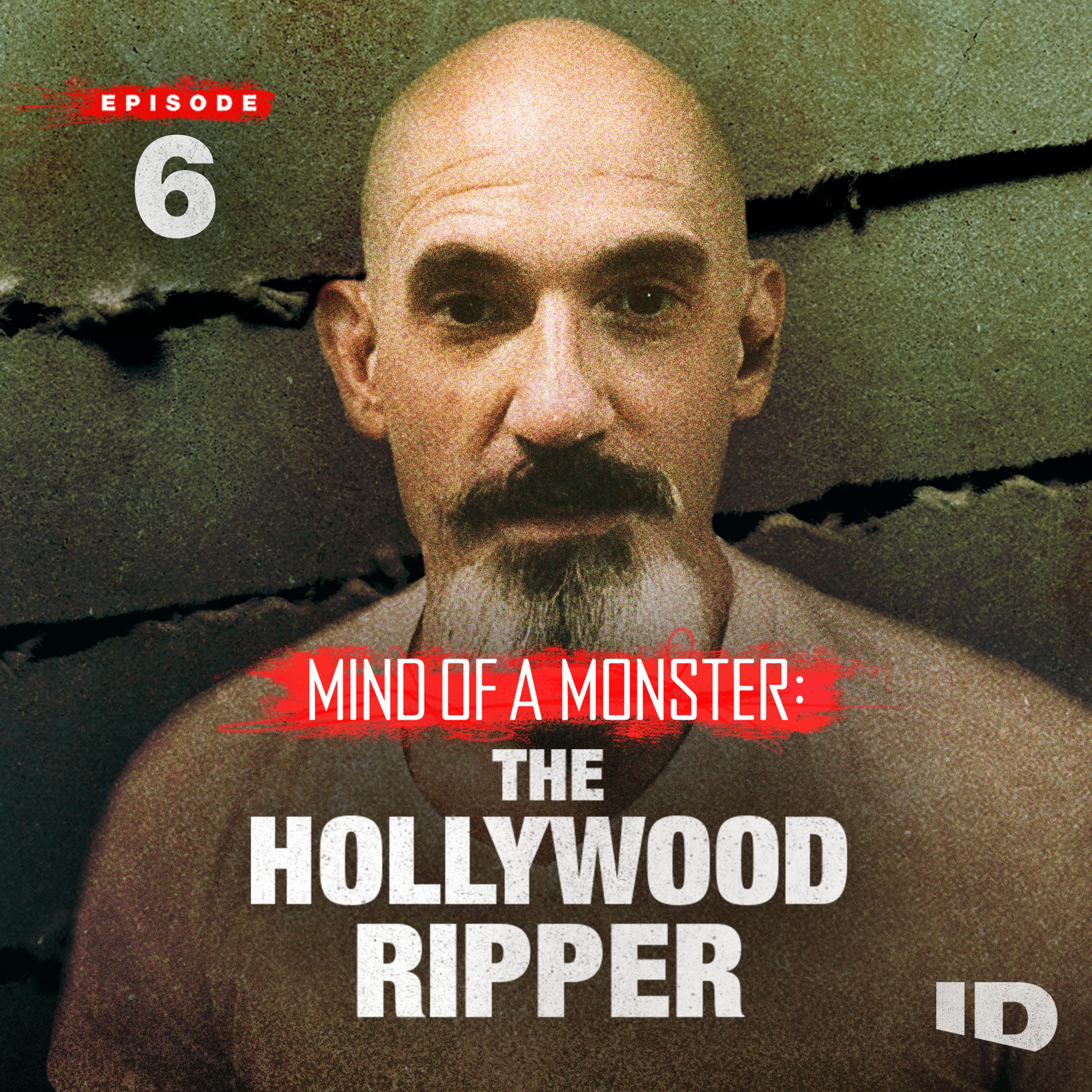
From ID and Aeromedia. I'm criminal psychologist Dr. Michelle Ward, and this is Mind of a Monster. The Hollywood Ripper.
- [01:59]
Podcast Host / Narrator
Chapter six, the Trial. I think he's a psychopath.
- [02:04]
Michelle Murphy (Survivor)
And he goes lay down on the bed. And it was the way he said it.
- [02:09]
Daniel Nardoni (Defense Attorney)
There was a booty. And that booty contained a droplet of Maria's blood.
- [02:23]
Dr. Michelle Ward (Host / Criminal Psychologist)
It's 2008, 15 years after Tricia Picacho's murder, seven years after Ashley Ellerin's killing, and three years since the discovery of Maria Bruno's horribly mutilated body.
- [02:35]
Podcast Host / Narrator
Michael Gargiulo moves out of the El
- [02:37]
Dr. Michelle Ward (Host / Criminal Psychologist)
Monte complex where he killed Maria. Now he's living in an apartment in Santa Monica with his new wife and his mother in law.
- [02:45]
Podcast Host / Narrator
And that's where he targets his next victim, his neighbor Michelle Murphy.
- [02:50]
Detective Tom Small
So here's Michelle's. There's an alley. Here's Gargiulo. From his kitchen window, he can look into her bedroom. So he knew her comings and goings. So she used to work out in the alley. She'd run and do her calisthenics and whatever. Garjul would watch her so he could surveil her right from his apartment. And he's married at the time.
- [03:14]
Dr. Michelle Ward (Host / Criminal Psychologist)
That's retired LAPD detective Tom Small. Detective Small's been hunting Michael since 2002. That's when Michael became his prime suspect in the Ashley Ellerin murder in Hollywood.
- [03:26]
Podcast Host / Narrator
But after that, Michael disappeared off the radar.
- [03:30]
Dr. Michelle Ward (Host / Criminal Psychologist)
It isn't until 2008 that the pieces start falling into place. After Michael's attack on Michelle Murphy, he
- [03:39]
Detective Tom Small
goes to her bedroom. She's sound asleep. He gets on top of her, straddles her, and instantly, with his left hand, stabs her in the chest right here. And good thing she's athletic. And the knife didn't quite penetrate through the sternum. It got partly in there. But that would have severed her heart and aorta right away. But that snapped her out of a sound sleep. And now she's got this monster on top of her, stabbing at her. She's bleeding profusely, but she's fighting. And apparently, she was so bloody and so slippery that he couldn't really get a whole handle on her.
- [04:19]
Dr. Michelle Ward (Host / Criminal Psychologist)
Jeez.
- [04:20]
Detective Tom Small
So she gets underneath him and kicks him in the groin so hard and knocks him off the bed. And in so doing, he cut himself.
- [04:29]
Podcast Host / Narrator
Ah.
- [04:30]
Dr. Michelle Ward (Host / Criminal Psychologist)
DNA.
- [04:31]
Detective Tom Small
Yep. And he left. There was blood trail on her comforter, sheets, pillow, the floor, all the way to the front door, down the steps, and across the alley toward his apartment.
- [04:47]
Podcast Host / Narrator
So now with Michelle Murphy, everything's kind of coming together.
- [04:50]
Dr. Michelle Ward (Host / Criminal Psychologist)
There's all this DNA here.
- [04:53]
Podcast Host / Narrator
So what happens that connects all of these cases?
- [04:56]
Detective Tom Small
Finally, I got a call from Santa Monica from one of the detectives, and they said, you know Mike Gargiulo? And I said, do I know him? She says, I thought so. You're hunting him, right? I said, yeah, I am. She says, well, he did another one. I says, the girl dead? And she said, no, she's very seriously injured, but she's gonna pull through. And she. She doesn't know who this guy is, but we have DNA. And I'll get back to you. And it was a little while later that she called and said, yep, we got a match.
- [05:37]
Dr. Michelle Ward (Host / Criminal Psychologist)
Wow.
- [05:37]
Podcast Host / Narrator
What did that feel like for you?
- [05:39]
Detective Tom Small
Relief. Just absolute relief.
- [05:44]
Podcast Host / Narrator
But it's not until 2008 that Detective
- [05:47]
Dr. Michelle Ward (Host / Criminal Psychologist)
Small connects all the dots. He has the awful realization that Michael had killed again.
- [05:54]
Podcast Host / Narrator
You know that all of these years have passed.
- [05:57]
Dr. Michelle Ward (Host / Criminal Psychologist)
Seven years, yes.
- [05:58]
Podcast Host / Narrator
Between Ashley and now you're not. And you're.
- [06:03]
Dr. Michelle Ward (Host / Criminal Psychologist)
Every day you have that feeling of
- [06:06]
Podcast Host / Narrator
when is it going to happen again? And how do I get closer to getting him? Right, because you don't know about Maria Bruno yet.
- [06:13]
Detective Tom Small
No. So then I get a call from LA Sheriff's office and we compare notes. He says, yeah, I've got a case from 2005. And I said, well, what all you got? And he says, same thing you got. She was repeatedly stabbed, she was posed, and her breasts were removed.
- [06:39]
Dr. Michelle Ward (Host / Criminal Psychologist)
Oh, boy.
- [06:41]
Detective Tom Small
I said, yeah, sounds a lot like our guy. He says, not only that, we got a booty that we found outside the crime scene, and it had blood DNA from the victim, Maria Bruno, but it also had male DNA, unknown male DNA on the elastic around the ankle, of
- [07:04]
Podcast Host / Narrator
course, rubbing against his ankle.
- [07:06]
Detective Tom Small
So he said, we're going to check that. And it wasn't too many weeks later, they got a hit.
- [07:15]
Podcast Host / Narrator
How did you feel about that?
- [07:16]
Detective Tom Small
I said, damn. I said, that's. That was my biggest fear because I really thought in 2004 I could keep working the case here peacefully and try to put something together on him. But then I got Michelle Murphy and now I find out about Bruno. How many others?
- [07:34]
Podcast Host / Narrator
Like, I'm trying to wrap my head around this, this long period of time where you know who's committing these crimes, you know who did it, you know that they're targeting young, beautiful women, and you now know at least one of their families, and your hands are being tied and you can't do anything about it until seven years later.
- [08:02]
Detective Tom Small
I, I was truthful with them, but I didn't, I didn't blame anybody. I would just say, we've got leads, we're still working. And we did. We worked every lead that came through.
- [08:12]
Dr. Michelle Ward (Host / Criminal Psychologist)
But what does that do for you psychologically? Every day?
- [08:16]
Podcast Host / Narrator
Thinking, okay, well, could I just go around this person's back? Are there any more hours in the day that I can squeeze to get something else? Did I miss anything at Ashley's home?
- [08:28]
Detective Tom Small
Exactly. There wasn't a day that went by that I didn't think like that. And I think it today.
- [08:36]
Dr. Michelle Ward (Host / Criminal Psychologist)
Oh, I have chills.
- [08:38]
Detective Tom Small
I mean, it's the nature of the beast. I don't think there's any homicide detective that's worked it for any length of time that's had a. Maybe not a serial case, but a big case that doesn't Go back and do an after action report in their head about, could I have done something different or better?
- [08:58]
Dr. Michelle Ward (Host / Criminal Psychologist)
In June 2008, Michael's arrested for the attack on Michelle Murphy and he's in El Monte jail with two cellmates. Michael thinks he's chatting with fellow criminals, but they're actually undercover cops. They're secretly recording their conversations to gather intel on his other crimes. Excerpts of the recordings are played during
- [09:18]
Podcast Host / Narrator
Michael's murder trial in 2019.
- [09:21]
Dr. Michelle Ward (Host / Criminal Psychologist)
In a surreal moment, the actual jury hears Michael asking undercover cops how to explain to a jury that booty found outside of Maria Bruno's apartment.
- [09:39]
Irving Bruno (Maria Bruno's Husband)
If you're in my situation, how do you explain that shoe? Cover that shoe cover to a jury.
- [09:47]
Dr. Michelle Ward (Host / Criminal Psychologist)
In another exchange, jurors hear Michael in his cell rehearsing answers he might use later in court.
- [09:54]
Irving Bruno (Maria Bruno's Husband)
So what kind of, what you think of? What kind of mental problem do you got? Anxiety. I could say I black out. I don't remember.
- [10:04]
Podcast Host / Narrator
The undercover operation is called off when
- [10:06]
Dr. Michelle Ward (Host / Criminal Psychologist)
Michael reveals plans to attack a female warden and escape. He's searched and prison made plastic handcuff keys are found hidden in his pants.
- [10:18]
Podcast Host / Narrator
I'm hosting a gaggle of teenagers, so it's probably a little loud, so I'm going to duck in here and try to get this down while it's in my brain. So I've met many serial killers, and while they're not all exactly the same, there are some typical behaviors that we see. And we're seeing them here with Michael. He's being cunning and strategizing and he's planning. So on the one hand, he does seem super calculating and smart. He's very grandiose, which we would expect. He has this giant ego and he still thinks he's a step ahead of everyone else. But yet it doesn't even cross his mind that he could be talking to undercover cops while he's in his cell.
- [10:55]
Dr. Michelle Ward (Host / Criminal Psychologist)
The fact that he doesn't think anybody's
- [10:57]
Podcast Host / Narrator
smarter than he is and he doesn't consider that people also could be planning and calculating, that's what brings him down. But his escape plan, now that's terrifying. And it wasn't just idle talk. He's actually in the process of carving his own handcuff keys out of plastic. Who knows if it would have worked? But we have seen it before. He's practical, he's resourceful, he's goal driven because that's what psychopaths are. And there's nothing more dangerous than a caged psychopathic killer
- [11:31]
Bill.com Advertiser
when it comes to managing money. Forget the hype. And look at the results. Bill has a trillion dollars of secure payments powering our Bill pay tools Instead of just moving money, Bill is powering the financial operations of nearly half a million customers. So stop the guesswork and start scaling with the proven choice. Ready to talk with an expert? Visit bill.comproven to get started and grab a $250 gift card as a thank you. Terms and conditions apply. See Offer page for details.
- [12:01]
Pura Advertiser
Refresh the rooms you love for spring with Pura. Our collection of floral, citrus and fresh scents brings a light, airy feel to every space, like opening the windows on
- [12:12]
Range Rover Sport Advertiser
a first warm day of the season.
- [12:14]
Pura Advertiser
From soft blooms to bright citrus, each scent is designed to capt the energy of spring and make your home feel renewed, effortless and alive. Learn more@pura.com shipping billing admin payroll Marketing.
- [12:30]
Stamps.com Advertiser
You're managing all the things, so why waste time sending important documents the old fashioned way? Mail and ship when you want how you want with stamps.com print postage on demand 247 and schedule pickups from your office or home. Save up to 90% with automated rate shopping. That's why over 1 million small businesses trust stamps.com go to stamps.com and use code podcast to try stamps.com risk free for 60 days.
- [12:56]
Boost Mobile Advertiser
The longer you stay alive, the longer you can enjoy Boost Mobile's unlimited plan with a price that never goes up. So here are some tips. Do not parallel park on a cliff if you want to enjoy an unlimited plan with a price that never goes up. Do not mistake a wasp nest for a pinata if you want to enjoy an unlimited plan with a price that never goes up. Do not microwave a hard boiled egg if you want to enjoy an unlimited plan with the price that never goes up. Stay alive and enjoy Unlimited Wireless for $25 a month forever with Boost Mobile. After 30 gigs, customers may experience slower speeds. Customers will pay $25 a month as long as they remain active on the Boost Mobile Unlimited plan.
- [13:33]
Dr. Michelle Ward (Host / Criminal Psychologist)
Michael's case eventually gets to court in 2019, 11 years after those recordings are made. He's charged with the first degree murders of Ashley Ellerin in 2001 and Maria Bruno in 2005. He's also accused of the attempted murder of Michelle Murphy in 2008. The jury will hear about Tricia Picaccio's stabbing in 1993, although Michael isn't on trial in LA for that murder. Attorney Daniel Nardoni is part of Michael's defense team.
- [14:04]
Podcast Host / Narrator
Okay, we were talking about why it took so long for this case to
- [14:08]
Daniel Nardoni (Defense Attorney)
get to court I think it was a combination of his being pro Perth, meaning representing himself, then going through a series of different attorneys.
- [14:19]
Podcast Host / Narrator
So when was the first time you met Michael Gargiulo?
- [14:22]
Daniel Nardoni (Defense Attorney)
Well, it was shortly after I was appointed, and we had a very good relationship.
- [14:28]
Podcast Host / Narrator
You did?
- [14:28]
Nathan Solis (Journalist)
Yeah.
- [14:29]
Podcast Host / Narrator
I don't know many people who had
- [14:30]
Dr. Michelle Ward (Host / Criminal Psychologist)
any relationship with him.
- [14:32]
Daniel Nardoni (Defense Attorney)
I think it's important as a defense lawyer to show that you are concerned and you're there to help, and I think that helped in my relationship with Michael. And still to this day. Yeah.
- [14:46]
Dr. Michelle Ward (Host / Criminal Psychologist)
What's he like?
- [14:47]
Podcast Host / Narrator
I have so little information about this.
- [14:49]
Daniel Nardoni (Defense Attorney)
Dan got a great personality. He's entertaining.
- [14:53]
Dr. Michelle Ward (Host / Criminal Psychologist)
Wow.
- [14:54]
Daniel Nardoni (Defense Attorney)
Very pleasant. Very, very respectful. At least he was with me.
- [14:59]
Podcast Host / Narrator
Is he.
- [15:00]
Dr. Michelle Ward (Host / Criminal Psychologist)
Would you qualify him or classify him,
- [15:03]
Podcast Host / Narrator
I should say, as an intelligent man?
- [15:05]
Daniel Nardoni (Defense Attorney)
He's not dumb.
- [15:06]
Podcast Host / Narrator
Not dumb. Okay.
- [15:07]
Dr. Michelle Ward (Host / Criminal Psychologist)
All right.
- [15:08]
Podcast Host / Narrator
Was he confident?
- [15:09]
Daniel Nardoni (Defense Attorney)
Yeah. I mean, he's. He assisted us in the defense. Put it to you that way.
- [15:15]
Detective Tom Small
And he.
- [15:15]
Daniel Nardoni (Defense Attorney)
He was interactive with us. I respected his opinions and, you know, he worked with us.
- [15:22]
Dr. Michelle Ward (Host / Criminal Psychologist)
Yeah. Wow.
- [15:24]
Daniel Nardoni (Defense Attorney)
I spent many hours at the Los Angeles County Men's Jail and had lengthy conversations with him in preparation for trial.
- [15:35]
Dr. Michelle Ward (Host / Criminal Psychologist)
The wait for answers has been agony for everybody. For the family and friends of the women Michael attacked and killed, Also for the professionals, like LAPD Homicide Detective Tom Small.
- [15:47]
Detective Tom Small
We're catching other murders. I mean, I had a whole bunch in between there that, you know, so all this is just mounting up and. But this case, I never let it go. I couldn't.
- [15:59]
Dr. Michelle Ward (Host / Criminal Psychologist)
In 2019, Ashley Ellerin's housemate, Jen Desisto, is also called to testify against Michael. Like all of Ashley's family and friends, Jen has spent years in limbo, haunted by not knowing who killed her friend.
- [16:13]
Podcast Host / Narrator
So you learned about that later.
- [16:14]
Jen Desisto (Ashley Ellerin's Housemate)
I mean, I learned about that when one morning, I think it was a weekend, you get a knock on the door and it's the FBI with a picture of him, and they're saying, you know, do you know this man? You know, we think that he may have killed your roommate, but there was. There was a 10 year space in between Ashley getting killed and knowing who did it, which was the most torturous
- [16:38]
Podcast Host / Narrator
part, because you don't know if you're a target. You don't know a thousand percent.
- [16:43]
Jen Desisto (Ashley Ellerin's Housemate)
This is when the trauma and everything really starts to set in. You're now living in fear constantly. You're in a fight or flight at all times.
- [16:50]
Podcast Host / Narrator
Did you start to distrust your friends like it could have been you?
- [16:53]
Dr. Michelle Ward (Host / Criminal Psychologist)
It could.
- [16:53]
Jen Desisto (Ashley Ellerin's Housemate)
A thousand percent. A thousand percent. I ran the gamut of Thinking everybody had done it. I. It was really. It was rough. And we actually all stopped talking. Most of the friends and I, we. We all. Everyone kind of dispersed.
- [17:06]
Dr. Michelle Ward (Host / Criminal Psychologist)
Jen is dreading the courtroom ordeal. She's already come face to face with Michael at a previous hearing.
- [17:18]
Jen Desisto (Ashley Ellerin's Housemate)
So we're in the courtroom, and the, you know, the elevator comes up, and he's in his orange jumpsuit with the shackles, and he looks the way he looks now, and everything is so spooky, and you're like, holy crap. Like, I have to speak up and look at this person. Like, this is terrifying. I mean, there's nothing. If you can look a serial killer in the face, I think you are a pretty strong individual.
- [17:38]
Podcast Host / Narrator
What did he look like?
- [17:40]
Jen Desisto (Ashley Ellerin's Housemate)
Certainly looked extraordinarily different than when younger. He was bald, and so he was very, very scary looking, very mean. Was constantly, like, looking at his notes and, like, whispering to his lawyer, like a constant flow of that type of thing.
- [17:56]
Dr. Michelle Ward (Host / Criminal Psychologist)
Unlike Jan Desisto, Michelle Wells is relishing her day in court. Michelle was Michael's neighbor in El Monte. She got to know and suspect Michael after he'd killed Maria Bruno.
- [18:10]
Podcast Host / Narrator
Tell me about having to see him again.
- [18:12]
Michelle Murphy (Survivor)
I just wanted to stand up and go, I knew it was you, and I tried to turn your ass in. I. I wanted to look at him and go, I want you to understand. I tried, you asshole. You didn't pull one over on me.
- [18:27]
Prosecutor Dan Aikman
Good morning. May it please the court, counsel and ladies and gentlemen of the jury.
- [18:36]
Podcast Host / Narrator
It's May 5, 2019, day one of Michael's trial.
- [18:41]
Dr. Michelle Ward (Host / Criminal Psychologist)
It's reported that none of Michael's siblings or father attended court, but we haven't
- [18:46]
Podcast Host / Narrator
been able to verify this.
- [18:47]
Dr. Michelle Ward (Host / Criminal Psychologist)
Michael's mother died in 2006. Journalist Nathan Solis is in the courtroom.
- [18:54]
Podcast Host / Narrator
Let's talk a little bit about the Clara Shortridge, FTS Courthouse. It's like none other. And that's our main criminal courthouse in Los Angeles.
- [19:05]
Nathan Solis (Journalist)
It feels like you're walking into a time machine when you go there. If anyone has ever seen the clips from the O.J. simpson trial, that's the same courthouse. It has wood paneling everywhere. The benches in the audience are very uncomfortable wooden pews, so you kind of feel like you're sitting in a church. The hallways are incredibly crammed.
- [19:28]
Podcast Host / Narrator
Were you covering the case for your newspaper?
- [19:31]
Nathan Solis (Journalist)
Yeah. So the editors asked me to keep an eye on the case because it had a lot of eyes on it because the witness list had come out, and it turned out that there were a few hundred people on the witness list. But One of them was Ashton Kutcher.
- [19:48]
Dr. Michelle Ward (Host / Criminal Psychologist)
It's a big case, even for experienced attorney Daniel Nardoni.
- [19:53]
Podcast Host / Narrator
What was the energy like there?
- [19:55]
Daniel Nardoni (Defense Attorney)
Well, this case was unique. There was a lot of publicity, a lot of interest. Michael Gargiulo was deemed a serial killer, which draws the attention of the public. Number two, it involved pretty young women. And number three, of course, one of the witness dealing with the Ashley Ellerman case was a movie star. So the Ashton Kutcher implication generated a lot of interest. And I remember on the day that he was called to testify, news media, the whole public was there. The energy was high.
- [20:33]
Dr. Michelle Ward (Host / Criminal Psychologist)
Michael pleads not guilty to all charges. If found guilty, he could be sentenced to death.
- [20:39]
Daniel Nardoni (Defense Attorney)
He pleaded not guilty by reason of insanity. And to be honest with you, I, despite my. Well, I've been doing criminal defense exclusively for 45 years. That was my first NGI case.
- [20:53]
Podcast Host / Narrator
NGI is not guilty by reason of insanity. And it's very difficult. It's a difficult standard to meet. Maybe you can tell us a little bit more, but it's my understanding that it's that you have to. You have to show that the person did not know right from wrong when committing the crime. And that's really difficult to do. Especially if anyone's covered it up or done anything to try to evade capture, then that's an indication that they know their actions are wrong. Could you add to that at all?
- [21:26]
Daniel Nardoni (Defense Attorney)
Well, I think you pretty much said it rather succinctly. You're right.
- [21:35]
Dr. Michelle Ward (Host / Criminal Psychologist)
Prosecutor Dan Aikman presents the case against Michael.
- [21:40]
Prosecutor Dan Aikman
Ms. Hobby was plotting the perfect opportunity to attack women with a knife in and around their homes. What you will hear is that Tricia Picaccio, Ashley Ellerin, Michelle Murphy and Maria Bruno were all young, attractive and outgoing. What these women also had in common was they all lived near Gargiulo. He had targeted them for murder.
- [22:20]
Dr. Michelle Ward (Host / Criminal Psychologist)
He tells the jury that Michael leaves DNA at three of the four scenes, all except Ashley Ellerin's. And he operates in the same way each time.
- [22:32]
Prosecutor Dan Aikman
He watched and waited and collected real time intelligence on the victims and then manipulated the circumstances to provide himself with the perfect opportunity to pounce and kill in blitz type knife attacks and then escape detection.
- [22:55]
Dr. Michelle Ward (Host / Criminal Psychologist)
Detective Tom Small.
- [22:57]
Detective Tom Small
The MOs are virtually identical. They're so distinct. And the type of attack, they're all blitz attacks. Nothing is ever taken. And there's ample opportunity to steal stuff. But he never took anything from the victims he murdered.
- [23:13]
Podcast Host / Narrator
Why do you think Michael Gargiulo killed all those women?
- [23:17]
Detective Tom Small
Because he likes to kill. He Enjoys killing. He enjoys stalking, and he enjoys the moment of the attack. And he gets a sexual arousal by plunging a big knife. So that is almost like a phallic symbol. I mean, it's kind of gross to say that, but Gargiulo gets off on plunging the knife into the body. He likes to cut and slash and stab, and that's the only reason. He doesn't steal from them. He doesn't rape him.
- [23:58]
Podcast Host / Narrator
Prosecutors describe the other patterns which they
- [24:00]
Dr. Michelle Ward (Host / Criminal Psychologist)
say connect the cases.
- [24:02]
Podcast Host / Narrator
Michael targets attractive women at night, in
- [24:05]
Dr. Michelle Ward (Host / Criminal Psychologist)
or near their homes. He ambushes and stabs them all multiple times. Each attack takes strength and athleticism. He lives close to all of them. He moves or poses the bodies after each murder. Blood spatter evidence suggests a left handed attacker. Michael is left handed.
- [24:30]
Podcast Host / Narrator
There are thousands of pages of evidence,
- [24:33]
Dr. Michelle Ward (Host / Criminal Psychologist)
350 exhibits and 79 witnesses. The judge takes the unusual step of allowing jurors to visit each crime scene. Fourteen days into the three month trial, Ashton Kutcher arrives at the courthouse. He's wearing a sober blue suit and a thin mustache. Filming in court is not allowed on this day. He's the last person to speak to Ashley Ellerin before she's murdered, calling her minutes earlier to tell her he'd be
- [25:01]
Podcast Host / Narrator
late for their date. By 2019.
- [25:04]
Dr. Michelle Ward (Host / Criminal Psychologist)
Ashton Kutcher's a megastar, not the up and coming actor taking Ashley Ellerin out 18 years ago.
- [25:12]
Podcast Host / Narrator
Everyone is eager to hear the Hollywood
- [25:13]
Dr. Michelle Ward (Host / Criminal Psychologist)
A lister testify, including journalist Nathan Solis.
- [25:19]
Podcast Host / Narrator
So, Nathan, I'm sure the courtroom was
- [25:21]
Dr. Michelle Ward (Host / Criminal Psychologist)
packed on this particular day.
- [25:23]
Podcast Host / Narrator
Can you tell me about the day Ashton Kutcher testified?
- [25:28]
Nathan Solis (Journalist)
Yeah, he arrived without much fanfare. The way he presented the series of events was he went to her home and he felt like he got stood up and that. He said that he tried the doorknob, but he felt, oh, she's not here. I got stood up. And then when he found out that she was murdered, then he went to the police, he said, my goodness, I have to go and tell them what I know because my fingerprints are there. He was, he was very concerned about that. But the prosecution was laying out that he and the sequence of events of her murder and when he arrived and the calls that they had made to each other, that her killing had to have taken place in a very narrow window. And somehow Gargiulo found a way in between all of that.
- [26:27]
Dr. Michelle Ward (Host / Criminal Psychologist)
Defense attorney Daniel Nardoni cross examines Ashton Kutcher.
- [26:31]
Daniel Nardoni (Defense Attorney)
Mr. Kutcher, I could tell he was very nervous when he, when he came to the courtroom And I said, Mr. Kutcher, don't worry. You are not a suspect in this case. And I could see a sense of release.
- [26:46]
Dr. Michelle Ward (Host / Criminal Psychologist)
Ashton Kutcher is the person the media is most interested in.
- [26:50]
Podcast Host / Narrator
But the real stars of the show
- [26:51]
Dr. Michelle Ward (Host / Criminal Psychologist)
are the 10 women, ex girlfriends, friends, neighbors, strangers who line up to give evidence about the sickening physical and mental abuse they suffered at Michael's hands.
- [27:03]
Podcast Host / Narrator
And then there's Michelle Murphy, the woman
- [27:06]
Dr. Michelle Ward (Host / Criminal Psychologist)
who fought off knife wielding Michael Gargiulo and lived to tell the tale. Who knows how many more women would have died if she hadn't survived.
- [27:17]
Narrator / Voiceover
Eleven years ago, a 26 year old woman had the strength and courage to fight off a killer, leaving him bleeding on her bed and leaving a blood trail that took investigators not only back to his apartment, but took investigators to answers that they had been seeking for 15 years.
- [27:48]
Podcast Host / Narrator
How impactful was Michelle Murphy in court?
- [27:51]
Daniel Nardoni (Defense Attorney)
Oh, I thought she was very impactful. I mean, you couldn't start. I mean, she had nightmares and survived and, you know. Yeah, and it was horrible. This whole case was horrible.
- [28:05]
Podcast Host / Narrator
Witnesses like Jen Desisto, who are terrified
- [28:07]
Dr. Michelle Ward (Host / Criminal Psychologist)
of taking the stand, draw strength from hearing Michelle's account of the night she almost died. Died.
- [28:13]
Podcast Host / Narrator
She describes how she wakes up as
- [28:16]
Dr. Michelle Ward (Host / Criminal Psychologist)
she's being stabbed in the dark, somehow manages to kick her attacker off and chases him out of her apartment.
- [28:24]
Jen Desisto (Ashley Ellerin's Housemate)
When you're sitting in the courtroom, like in that environment, you think all the people here have something absolutely horrible in common, you know, And I'm looking at Michelle Murphy and her husband holding her hand and all of her stab marks all over her, and I'm thinking, this woman is a freaking hero.
- [28:41]
Podcast Host / Narrator
You know, like movies are made about this, but nobody, nobody lives this.
- [28:47]
Jen Desisto (Ashley Ellerin's Housemate)
I know.
- [28:48]
Dr. Michelle Ward (Host / Criminal Psychologist)
Nobody lives this.
- [28:49]
Podcast Host / Narrator
Jen.
- [28:49]
Jen Desisto (Ashley Ellerin's Housemate)
I know.
- [28:50]
Dr. Michelle Ward (Host / Criminal Psychologist)
What was Michelle Murphy like?
- [28:52]
Jen Desisto (Ashley Ellerin's Housemate)
I was floored by her. I thought to myself, you know what, if she can do this, I can do it too. I reached out to her, I just said, you know, she said, you're her roommate, right? I said, yes. And I said, I know exactly who you are. You're my hero. Like, for real. This would, it wouldn't have been solved without her. It wouldn't have.
- [29:09]
Daniel Nardoni (Defense Attorney)
The Gargillo case was perhaps one of the most graphic cases I've ever defended because of the nature of the crimes and beautiful young women who lost their precious lives and whose families, whose families were impacted. Maria Bruno, she had beautiful young kids. Now those kids are growing up without a mother, you know, Gotta feel about the welfare of those children. Being a criminal defense lawyer is not. If you take your job seriously, which I do, and I like to think I'm a good person and a compassionate person. You know, I have feelings for my victims of the people that I defend. You know, you gotta turn it off sometimes. So oftentimes. But I think and pray for them.
- [29:57]
Podcast Host / Narrator
And you had horrifying deaths for young, beautiful girls. You had every emotional thing working against you.
- [30:03]
Daniel Nardoni (Defense Attorney)
Right? And I remember during the trial, you'd see some of these women crying and tearing up in the jury. The jurors I'm talking about. It was an emotionally draining trial.
- [30:17]
Dr. Michelle Ward (Host / Criminal Psychologist)
Attorney Daniel Nardoni has a huge mountain to climb in defending Michael.
- [30:21]
Podcast Host / Narrator
The defense strategy is to lean on the prosecution's heavy burden of proving the
- [30:26]
Dr. Michelle Ward (Host / Criminal Psychologist)
case against Michael beyond a reasonable doubt.
- [30:30]
Podcast Host / Narrator
We're not talking about whether he committed those crimes.
- [30:32]
Dr. Michelle Ward (Host / Criminal Psychologist)
We're talking about how law works in
- [30:35]
Podcast Host / Narrator
the United States and this presumption of innocence until proven guilty and what that burden looks like.
- [30:41]
Dr. Michelle Ward (Host / Criminal Psychologist)
To prove someone guilty for guilt of
- [30:44]
Podcast Host / Narrator
murder, it has to be beyond a reasonable doubt. It is tough to reach that burden.
- [30:52]
Daniel Nardoni (Defense Attorney)
Another important thing to consider is the fact that naturally, Gargiulo is the prime suspect in the trial for Ashley's murder. But there was no physical evidence connecting Michael Gargiulo to the Ashley homicide. When I say physical evidence, I'm talking DNA, I'm talking fingerprints, I'm talking any sort of trace evidence, anything of that nature.
- [31:18]
Podcast Host / Narrator
I want to talk to you a little bit about murder, Maria Bruno.
- [31:22]
Daniel Nardoni (Defense Attorney)
That was a little bit more challenging from the defense standpoint than the Ashley Ellering case. But then again, that was a case where I felt there was again, reasonable doubt. The lack of physical evidence. Again, inside the apartment of Maria's, there's no DNA on the implants, breast implants, no DNA on the. I mean, just nothing. Nothing.
- [31:50]
Podcast Host / Narrator
It might sound like you don't think Michael Gargiulo committed these crimes.
- [31:54]
Daniel Nardoni (Defense Attorney)
What I think is irrelevant, but what I do know, there was reasonable doubt.
- [32:00]
Podcast Host / Narrator
How were you going to get around the fact that wherever the Michael lives, someone dies?
- [32:06]
Daniel Nardoni (Defense Attorney)
That's a tough one.
- [32:11]
ActiveCampaign Advertiser
Activecampaign is the marketing automation platform built for big swings and big dreams with intelligent suggestions. Powered by AI and your data. Generate ideas in seconds. Import your brand and create full campaigns with simple prompts. Send personalized messages backed by real time feedback. Smart segmentation and effortless reporting that tracks every win. Let's redefine what's possible together. Get started for free@activecampaign.com trying to grow
- [32:42]
Code 3 Advertising Agency Representative
but stuck optimizing for efficiency at Code 3, a full service advertising agency. We call that the ROAS trap because that number doesn't tell you what actually drove the sale, it just tells you what got credit. And those aren't the same thing. When brands chase what looks good in a dashboard, they end up optimizing for existing customers instead of acquiring new ones. Efficiency improves, growth stalls Code three helps brands break out of the trap by connecting retail partners and your website into one unified strategy across search, social retail media, programmatic and creative. Because real growth doesn't live in a single channel, and it definitely doesn't live in a spreadsheet. Ready to reset your KPIs visit code3.com that's code C O D E the
- [33:28]
Range Rover Sport Advertiser
number3.com the old adage goes it isn't what you say, it's how you say it. Because to truly make an impact, you need to set an example. You need to take the lead. You need to adapt to whatever comes your way. And when you're that driven, you drive an equally determined vehicle, the Range Rover Sport. Blending power, poise and performance, it was designed to make an impact with a dynamic drive, refined comfort and innovations like cabin air purification and active noise cancellation. The Range Rover Sport is built to be as uncompromising as you. Explore Range Rover sport@range rover.com USSport hey
- [34:07]
Farnoosh Torabi (So Money Podcast Host)
everyone, it's Farnoosh Tarabi from the so Money podcast. If you're self employed or running a small business, tax season can feel overwhelming, especially if you're doing it all on your own. TurboTax experts for business is here to help. They match you with an experienced expert who understands your industry and works with you to save money by finding every deduction and maximizing your savings. They're there to help you every step of the way, virtually or in person to help you prepare and file your taxes. Plus, you get unlimited year round tax support at no extra cost, along with audit protection and seamless integration with other intuit tools like QuickBooks. This tax season, skip the stress and get expert help. Learn more and find a tax expert in your industry. @turbotax.com Business.
- [34:59]
Dr. Michelle Ward (Host / Criminal Psychologist)
The jury takes three days to find Michael guilty on all counts. Journalist Nathan Solis is in the courtroom for the verdict. What was the reaction in the court
- [35:13]
Podcast Host / Narrator
to the guilty verdict?
- [35:14]
Nathan Solis (Journalist)
I don't think anyone was shocked. There was some family members. A woman was in the room and she let out an audible gasp. She just gasped. She was relieved or shocked or happy, but for the most part I don't think the press corps was surprised. But everyone else seemed kind of to. Aside from those victims, relatives or family members. Everyone else was pretty stoic, including Michael Gargiulo. Michael Gargiulo did not respond. He didn't show any emotion. His body language didn't change. He just kind of sat stone faced and was blinking a lot.
- [35:57]
Dr. Michelle Ward (Host / Criminal Psychologist)
Then we get to the riskiest part of the trial for Michael, the sanity phase. These proceedings are crucial.
- [36:03]
Podcast Host / Narrator
If he's found not guilty by reason
- [36:05]
Dr. Michelle Ward (Host / Criminal Psychologist)
of insanity, Michael could be committed to
- [36:07]
Podcast Host / Narrator
a psychiatric hospital instead of prison. But if the strategy fails, which is
- [36:12]
Dr. Michelle Ward (Host / Criminal Psychologist)
likely, then he could be sentenced to death. Defense attorney Daniel Nardoni, what's basically saying,
- [36:19]
Daniel Nardoni (Defense Attorney)
okay, you found him guilty, but he isn't guilty because of insanity. Not knowing right from wrong during the commissions of these crimes that you found just a week ago found him guilty of.
- [36:33]
Podcast Host / Narrator
The psychologist for the prosecution, Dr. Robert
- [36:36]
Dr. Michelle Ward (Host / Criminal Psychologist)
Suge, explains what the defense will have to prove to establish Michael's insanity.
- [36:41]
Dr. Robert Suge (Psychologist)
Insanity in the United States is a very specific question involving state of mind at the time of the offense. That's very important. It's not the state of mind at the time you're talking to the person. The question is, you know, at least in the state of California, did they have a mental illness that at the time of the offense prevented them from either not knowing the nature and quality of the act, so not understanding their behavior, or B not understanding or appreciating the wrongfulness of that behavior? So it's a very sort of elegant type of question, but a very difficult question to answer.
- [37:22]
Podcast Host / Narrator
Michael's defense team argues that no sane
- [37:25]
Dr. Michelle Ward (Host / Criminal Psychologist)
person could have committed such heinous crimes.
- [37:28]
Podcast Host / Narrator
Their Expert Clinical Psychologist, Dr. Vianne Castellano, claims Michael suffers from dissociative identity disorder, or did, which used to be known
- [37:38]
Dr. Michelle Ward (Host / Criminal Psychologist)
as multiple personality disorder. This diagnosis, if true, might mean Michael could be judged criminally insane.
- [37:46]
Podcast Host / Narrator
We wanted to talk to Dr. Castellano about Michael's case, but we didn't hear back.
- [37:51]
Dr. Michelle Ward (Host / Criminal Psychologist)
Dr. Robert Shug explains. What did is when we think about
- [37:56]
Dr. Robert Suge (Psychologist)
dissociation, it's basically in the fundamental sense, kind of a detachment from reality. Think about this too. If you have a long commute in bumper to bumper traffic, have you ever gotten home and thought, how the heck did I get here? And that's a very sort of attenuated form of dissociation, right? Which we all do. It's normal. As you kind of go up in intensity, theoretically it's, it's believed that it occurs in response to a trauma. And it's our, it's the mind's way, if you will, of backing away from the severity, intensity of that Trauma as a survival mechanism. What can happen as we sort of go up on a continuum of dissociation in severity, is you can have people who dissociate frequently and for extended periods of time, for hours and perhaps even days, to the point where there is this. This altered distinct personality state, if you will, where they lose large amounts of time when they're in this other personality state.
- [38:51]
Dr. Michelle Ward (Host / Criminal Psychologist)
Michael and his family refuse to see Dr. Suge, who is hired by the prosecution to assess Michael's mental state.
- [38:58]
Podcast Host / Narrator
Looking at the entire case file and
- [39:01]
Dr. Michelle Ward (Host / Criminal Psychologist)
conducting his own interviews, Dr. Suge doesn't think Michael has DID, which is a very rare disorder.
- [39:07]
Podcast Host / Narrator
Instead, he concludes that Michael has antisocial
- [39:10]
Dr. Michelle Ward (Host / Criminal Psychologist)
personality disorder, which is very common among criminals, generally speaking.
- [39:14]
Dr. Robert Suge (Psychologist)
They basically have a pattern of disregard with. Relative to lawful behaviors and the rights and welfare of others. So they're really not interested in doing what's right, whether that's defined by the law or that's defined by, you know, interpersonally in terms of harming others. And so we're looking for patterns of breaking the law. That's first and foremost of a deceitfulness, so lying and manipulation. Someone who might be impulsive, someone who is irritable and aggressive and perhaps is involved in physical altercations, domestic violence, patterns of these sorts of behaviors. Someone who has what we call a reckless disregard for the safety of others. So individuals, you know, who drive impaired or engage in other sorts of behaviors that put others at risk. Someone who is consistently irresponsible. This could be financially. This could be not being able to
- [40:12]
Boost Mobile Advertiser
hold down a job.
- [40:13]
Dr. Robert Suge (Psychologist)
This could be any number of areas where they just don't honor obligations. Finally, someone who lacks remorse, doesn't appreciate harming or hurting or mistreating or stealing from other people.
- [40:32]
Podcast Host / Narrator
It's unsurprising to me that Dr. Suge disagreed with Dr. Castellano's diagnosis of Disassociative Identity Disorder. First of all, DID is incredibly rare. But second of all, we see nothing from Michael's past that could point to that. Now, I think Dr. Suge, who says he believes that this person has antisocial personality disorder, really would have preferred to say psychopathy. But psychopathy as a diagnosis was pulled out of the dsm and instead we say APD Antisocial Personality disorder, which really just describes behaviors and not personality traits. So it's somebody who has no regard for somebody else's rights or safety and has no respect for the law and has a pattern of this. Obviously, that's the majority of people in prison. I think that he would like to also point to and does the fact that there seems to be no remorse, that this person doesn't seem to appreciate what harming other people does. And so I think what he's trying to really say is psychopathy. But now the bible of psychology, which is the dsm, really only allows for an antisocial personality disorder diagnosis.
- [41:48]
Dr. Michelle Ward (Host / Criminal Psychologist)
The jury agrees with Dr. Suge and the prosecution, confirming that Michael is guilty of the two first degree murders and the one attempted murder.
- [41:57]
Podcast Host / Narrator
Now the jury must decide how Michael will be punished.
- [42:01]
Dr. Michelle Ward (Host / Criminal Psychologist)
Jurors have only two options for such grave crimes.
- [42:05]
Podcast Host / Narrator
Life in prison without parole or the death penalty.
- [42:09]
Dr. Michelle Ward (Host / Criminal Psychologist)
Defense attorney Daniel Nardoni does everything in his power to save Michael.
- [42:14]
Daniel Nardoni (Defense Attorney)
We put on his son. Michael has a son, nice young man. And I felt badly him being on the stand and he acknowledged, you know, okay, folks, you convicted him, but I still love my father. He started crying and saying, you know, please don't kill my dad. And I remember that vividly now. I'm getting teary eyed thinking about it.
- [42:44]
Dr. Michelle Ward (Host / Criminal Psychologist)
The families of Maria Bruno, Ashley Ellerin
- [42:47]
Podcast Host / Narrator
and Tricia Picaccio pay heartbreaking tributes to their murdered wives, sisters and daughters in
- [42:53]
Dr. Michelle Ward (Host / Criminal Psychologist)
powerful victim impact statements. Michelle Murphy is now a mother herself. And she breaks down as she reflects
- [43:01]
Podcast Host / Narrator
on how the parents of Tricia, Ashley and Maria must have been impacted by their children's murders. Cynthia Ellerin is Ashley's mom.
- [43:10]
Cynthia Ellerin (Ashley Ellerin's Mother)
You know, I'm sad beyond words. There's just nothing that you can describe it until you go through it. You know, you, you know when you hear something like this, you go, you know, that's terrible. Like, oh. And then selfishly you go, well, thank God that's not me, that's not my family. But when you actually have this happen to you, it's a million times worse than you could ever expect it. I mean, I'm this empty without her.
- [43:42]
Podcast Host / Narrator
Maria Bruno's husband Irving talks about how
- [43:44]
Dr. Michelle Ward (Host / Criminal Psychologist)
the death of their mother has impacted their four children.
- [43:49]
Irving Bruno (Maria Bruno's Husband)
Children need their mother now is taken from them. Be afraid to have that relationship with her, but to form that moment with their mother.
- [44:07]
Podcast Host / Narrator
In July 2021, the sentencing decision is made straight ahead on law and Crime Daily. The Hollywood Ripper is sentenced to death for killing and mutilating two women.
- [44:19]
Daniel Nardoni (Defense Attorney)
A sentence of death was imposed by the judge based upon the jury's recommendation.
- [44:27]
Podcast Host / Narrator
How did he handle when he was given the death penalty?
- [44:32]
Daniel Nardoni (Defense Attorney)
Prefer not to answer that, but I think, you know, how does anybody handle a death sentence? Not well.
- [44:38]
Dr. Michelle Ward (Host / Criminal Psychologist)
That's fair enough.
- [44:40]
Podcast Host / Narrator
It's a crushing blow for Michael and his attorneys. But for many others in that courtroom,
- [44:45]
Dr. Michelle Ward (Host / Criminal Psychologist)
there's a sense of justice served.
- [44:48]
Podcast Host / Narrator
Detective Tom Small, did you think he deserved the death penalty?
- [44:52]
Detective Tom Small
Absolutely. I'm a proponent of that because the death penalty is designed for people like this, where the guy's hunting, stalking, it's. The entire community's at risk. And people read about this, they get scared. Well, prison is crime school and recidivism is very high. And I think that the death penalty is designed to punish and certain crimes just cannot be forgiven.
- [45:25]
Podcast Host / Narrator
How often do you think of the Michael Gargiulo case?
- [45:29]
Detective Tom Small
Every day.
- [45:30]
Podcast Host / Narrator
Is there anything you would have done
- [45:32]
Dr. Michelle Ward (Host / Criminal Psychologist)
differently on this case?
- [45:33]
Detective Tom Small
Solve it sooner. I mean, I did what I thought was right.
- [45:40]
Dr. Michelle Ward (Host / Criminal Psychologist)
For Michelle Wells, who had her suspicions
- [45:42]
Podcast Host / Narrator
about Michael, there's satisfaction in preventing him
- [45:46]
Dr. Michelle Ward (Host / Criminal Psychologist)
from ever harming another woman.
- [45:49]
Podcast Host / Narrator
What did you feel when he was given the death sentence?
- [45:53]
Michelle Murphy (Survivor)
I'm proud to have been a part of that. As horrible as, I mean, somebody's gonna die. I helped. That's kind of a heavy thing to think about. I helped. My words helped give someone a dozen. Now, let's be honest, in California, that doesn't mean much. I had a minute thinking on that and I'm like, nope, I'm good with it.
- [46:13]
Range Rover Sport Advertiser
That's.
- [46:14]
Michelle Murphy (Survivor)
That's exactly what needs to happen.
- [46:16]
Podcast Host / Narrator
Yeah, I've heard people say that even if you disagree with the death penalty, when it comes that close to you, you can change your mind.
- [46:22]
Michelle Murphy (Survivor)
Yeah. And I mean, let's be honest. This dude's been sitting in there for 20 years. What's going to be the first thing on his mind if he ever got so get rid of him.
- [46:32]
Dr. Michelle Ward (Host / Criminal Psychologist)
For Jen Desisto, Ashley's housemate, the sentence does give a long awaited sense of security.
- [46:39]
Podcast Host / Narrator
What did you feel about him getting the death penalty?
- [46:41]
Jen Desisto (Ashley Ellerin's Housemate)
Obviously, that is a very serious and severe penalty. But I also, having been in the room of everyone whose life was affected by this, having, you know, experience, experienced all this firsthand, having lived in fear for so long, the less people like this that are even alive, the better. That's my opinion. So. And I feel very strongly about that. I understand that it's very severe and I, I do, but I think it's warranted.
- [47:11]
Podcast Host / Narrator
Yeah, I mean, he just changed the whole trajectory of your life a thousand percent.
- [47:17]
Jen Desisto (Ashley Ellerin's Housemate)
I always wonder, I really do always wonder, like, what would my life have been like if this hadn't have happened? I wonder it quite a bit. Probably too frequently, my therapist says, but it's, how can you not, you know,
- [47:28]
Dr. Michelle Ward (Host / Criminal Psychologist)
how do you Want Ashley to be
- [47:30]
Jen Desisto (Ashley Ellerin's Housemate)
remembered, you know, she was like a tough cookie with a very soft heart with a wonderful, lovely family. She had a killer sense of humor. She was beautiful. I talk to her in the clouds sometimes and ask her how she's doing.
- [47:46]
Podcast Host / Narrator
In 2021, Michael is the last person
- [47:48]
Dr. Michelle Ward (Host / Criminal Psychologist)
to be given the death penalty in Los Angeles County.
- [47:52]
Podcast Host / Narrator
But he won't be put to death anytime soon.
- [47:55]
Dr. Michelle Ward (Host / Criminal Psychologist)
California has not executed anyone since 2006,
- [47:58]
Podcast Host / Narrator
and Governor Gavin Newsom has halted executions
- [48:01]
Dr. Michelle Ward (Host / Criminal Psychologist)
for as long as he is in office. Like everyone on death row, Michael Gargiulo has a series of automatic appeals, a process that will take years.
- [48:11]
Podcast Host / Narrator
When thinking about a killer like Michael Gargiulo, the Hollywood Ripper, I find it useful to consider four prongs. Prongs?
- [48:18]
Dr. Michelle Ward (Host / Criminal Psychologist)
Who he killed, why he killed, how he killed, and what allowed him to kill.
- [48:24]
Podcast Host / Narrator
The last one's easy. What allowed him to kill is psychopathy.
- [48:28]
Dr. Michelle Ward (Host / Criminal Psychologist)
The other prongs are a bit more complicated.
- [48:31]
Podcast Host / Narrator
Why he killed. I have no doubt that he's a thrill seeking sexual killer.
- [48:36]
Dr. Michelle Ward (Host / Criminal Psychologist)
And we've seen this many times before.
- [48:38]
Podcast Host / Narrator
There are men and women who derive
- [48:40]
Dr. Michelle Ward (Host / Criminal Psychologist)
sexual pleasure from the act of killing.
- [48:43]
Podcast Host / Narrator
Some to the point of even achieving orgasm while killing. So he kills because he gets off a net sexually, and he's able to do that because he's a psychopath. In my estimation, Michael has traits of
- [48:55]
Dr. Michelle Ward (Host / Criminal Psychologist)
both a predatory stalker and an incel,
- [48:58]
Podcast Host / Narrator
before the term incel was even a thing. So, like many predatory stalkers, Michael's interest in a target is always a stranger, and the motivation for the attack is sexual interest nature. But Michael seems to have another layer. He targets the women he can't have rather than the women he dates in general. So, like an incel, I think he thinks he should be able to have access to these beautiful women, but is
- [49:24]
Dr. Michelle Ward (Host / Criminal Psychologist)
too incompetent to do it.
- [49:26]
Podcast Host / Narrator
And unlike an incel, he does get to have sex with women, but not the ones he really wants. I believe it's consequential that his attacks occurred right after his victims had had sex. In the case of Ashley and Maria, it's a lustful rage that someone enjoyed
- [49:41]
Dr. Michelle Ward (Host / Criminal Psychologist)
what should be his.
- [49:43]
Podcast Host / Narrator
So to recapitulate, he covets what he can't have. Then he stalks his prey, hunts her down, and then has his own type
- [49:51]
Dr. Michelle Ward (Host / Criminal Psychologist)
of sexual encounter with her.
- [49:53]
Podcast Host / Narrator
The more violent, the more he gets off on it.
- [49:55]
Dr. Michelle Ward (Host / Criminal Psychologist)
In my research for this series, one
- [49:58]
Podcast Host / Narrator
of the most disturbing findings, aside from the brutal murders themselves, is how people
- [50:04]
Dr. Michelle Ward (Host / Criminal Psychologist)
have talked about these women, as if
- [50:06]
Podcast Host / Narrator
their behaviors could have somehow brought these killings on. And I think that's just a cowardly coping mechanism. And it's born out of fear that this could happen to them or to their own daughters. But let me be crystal clear. There is nothing that led to or
- [50:22]
Dr. Michelle Ward (Host / Criminal Psychologist)
could have prevented Michael's deadly mission. These women were innocent.
- [50:26]
Podcast Host / Narrator
Ashley Ellerin and Maria Bruno were tragically
- [50:29]
Dr. Michelle Ward (Host / Criminal Psychologist)
robbed of the rich, valuable lives which
- [50:31]
Podcast Host / Narrator
lay ahead of them.
- [50:32]
Dr. Michelle Ward (Host / Criminal Psychologist)
And Michelle Murphy's life was changed forever.
- [50:38]
Podcast Host / Narrator
In 2024, Michael Gargiulo was extradited to
- [50:42]
Dr. Michelle Ward (Host / Criminal Psychologist)
Illinois to stand trial for Trisha Picacho's murder.
- [50:46]
Podcast Host / Narrator
Regardless of being found guilty or not guilty in Trisha's case, after that trial concludes, Michael will be sent back to
- [50:52]
Dr. Michelle Ward (Host / Criminal Psychologist)
prison in California to complete the 2021 sentence. Trisha was only 18 years old when she was stabbed to death outside her home. She was brimming with life and promise. Her brother Doug was 17 and friends with Michael 26 years later, they sat facing each other across the courtroom in Los Angeles. Michael, bald, bespectacled and silent, staring intently ahead, accused of the most heinous and deviant crimes. Doug, an articulate, successful surgeon in a well cut suit, remembering and paying tribute to his beloved sister.
- [51:29]
Doug Boccaccio (Trisha Picacho's Brother)
She was such a great person. Everybody liked her. She never made an enemy that I could find in school. She was always kind and nice to everybody. Nobody was beneath her and it showed in everything she did. She was gonna go to college and do big things. I'm certain of that.
- [51:51]
Dr. Michelle Ward (Host / Criminal Psychologist)
Will Doug, his brother Tommy and their
- [51:54]
Podcast Host / Narrator
parents, Rick and Diane, finally see justice for Trisha? As of today, a date for Michael's
- [52:00]
Dr. Michelle Ward (Host / Criminal Psychologist)
trial in Illinois has not been set. There's no death penalty in Illinois, so
- [52:06]
Podcast Host / Narrator
whether guilty or not guilty, the case
- [52:09]
Dr. Michelle Ward (Host / Criminal Psychologist)
will make no material difference to Michael. If he isn't executed, he still will never be freed.
- [52:15]
Podcast Host / Narrator
But it will make all the difference
- [52:17]
Dr. Michelle Ward (Host / Criminal Psychologist)
in the world to the Boccaccio family who may finally be able to get justice for Trisha. Mind of a Monster the Hollywood Ripper
- [52:30]
Podcast Host / Narrator
is produced by Aeromedia, a Fremantle company for id. The network executive producer is Meredith Russell. Aeromedia's producer is Maggie Latham, editor is Holly Griffin, audio engineering by Mahoney Audio. Post line producer is Sarah Tucker, production coordinator is Katie Whittington, senior assistant producers
- [52:54]
Dr. Michelle Ward (Host / Criminal Psychologist)
are Maddie Delaney and Amelia Gill.
- [52:57]
Podcast Host / Narrator
Assistant producer is Sam White, edit producer is Andrew Passi, senior senior researcher is Yasmin Bowen, junior researcher is Jamila Balogan and archive producer is Ryan Hogan. Aeromedia series producer is Linda McCarthy and executive producer is Stuart Pender. Michael Gargiulo voiceover by Tim Vent Michael Gargiulo's cellmates voiceover by Andrew Winson and Beau Marie I'm your host, Dr. Michelle Ward.
- [53:28]
Dr. Michelle Ward (Host / Criminal Psychologist)
You can follow our show wherever you
- [53:29]
Podcast Host / Narrator
get your podcasts and we'd love it if you could take a second to leave us a five star review on Apple Podcasts.
- [53:41]
Pura Advertiser
Open the door to Spring with Pura Refresh every room with transportive fragrances like soft florals and clean, energetic citrus. Get started with a free Pura 4 diffuser when you subscribe to 2 cents monthly for six months.
- [53:56]
Range Rover Sport Advertiser
Shop now@pura.com hey everyone, it's Farnoosh Tarabi
- [54:00]
Farnoosh Torabi (So Money Podcast Host)
from the Sew Money podcast. If you're self employed or running a small business, tax season can feel overwhelming, especially if you're doing it all on your own. TurboTax experts for business is here to help. They match you with an experienced expert who understands your industry and works with you to save money by finding every deduction and maximizing your savings. They're there to help you every step of the way, virtually or in person to help you prepare and file your taxes. Plus, you get unlimited year round tax support at no extra cost, along with audit protection and seamless integration with other intuit tools like QuickBooks. This tax season, skip the stress and get expert help. Learn more and find a tax expert in your industry@turbotax.com business traffic may be
- [54:45]
Boost Mobile Advertiser
locked, but savings isn't. Unlock the savings at Boost Mobile with unlimited wireless for just $25 a month. Forever. No contracts, no hikes and you keep your phone. Unlock the savings@boostmobile.com Unlock $25 forever requires customers to remain active on Boost Unlimited Wireless plan. For full offer details, visit boostmobile.com meet
- [55:00]
Land Rover Defender Advertiser
the Defender 110 a vehicle built for the modern explorer with on road presence and off road prowess. It's naturally capable and expedition ready. A raised hood, sculpted grille and durable exterior make it look tough because it is inside. 5. Seat comfort comes standard with an option for 7. Navigate any terrain confidently with 3D surround cameras and the intuitive PIVI infotainment system. There's a Defender for every journey 90, 110, or 130, which boasts room for up to eight. Design your Defender 110@landroverusa.com that's landroverusa.com.