Podcast
Mindful Builder
Hosted by Matthew Carland and Hamish White · EN
Join Matt from Carland Constructions and Hamish from Sanctum Homes in a podcast discussing sustainable building practices and passive house concepts.
They also talk to experts from all avenues of the building industry to share their knowledge and insights on what the industry looks like today.
Further to this, Matt and Hamish are building a platform through the podcast to discuss mental health issues that arise in the building industry. The industry can be quite negative at times and there is a great deal of stigma around what it means to be a "tradie".
Matt and Hamish are here to shine a light of positivity on the industry and share relatable topics that will help you in your own building or construction business.
18episodes
Episodes
Newest firstAll episodes

The Truth About Cheap Aussie Windows
4d ago00:45:43Tap to summarizeIf you’ve ever wondered why Australian homes feel freezing in winter and brutal in summer, this episode makes it painfully clear. “Suppliers in Australia are still delivering single-glazed aluminium windows,” and that one sentence explains a lot about comfort, energy bills, condensation, and why so many people feel worn down inside their own homes.We sit down with Monika Rogers from Eco Sky Windows to talk high performance windows, Passive House certified systems, and what “thermally broken” actually means. We discuss U-values, why the whole window unit matters (not just the glass), and how slimline design, hardware, and airtightness change real-world performance.The conversation also goes beyond windows into indoor air quality and ventilation. Monika shares why she rates HRVs so highly, and the hosts describe what it felt like having 30 to 40 people in a sealed space that still felt fresh, clear, and comfortable. If you care about building better homes, this is a practical look at the details that actually move the needle.We finish up with the realities builders and clients need to plan for: shop drawings, lead times, shipping, and cashflow. If you’ve been nervous about imported high performance windows, this episode breaks down the process and shows why organisation matters more than geography.CHAPTER MARKERS00:00 Intro00:36 Meet Monika and Eco Sky Windows01:01 Thermally broken vs “thermally improved”03:00 U-values, triple glazing, and performance comparisons03:33 How window performance is calculated (whole unit vs glass only)09:00 “Passive culture shock” and why Australian homes feel so cold13:11 SIP studio build in six weeks and what that means20:00 Architects, glass-to-wall ratios, shading, and orientation24:49 Low-E coatings, argon gaps, and glazing science26:25 Slimline frames, concealed hinges, and hardware choices29:11 HRVs, fresh air, and comfort in real buildings33:16 Ordering process, drainage details, and shop drawings34:01 Lead times, shipping, and getting windows on site36:42 Cashflow, progress claims, and paying before arrival38:12 Where high performance is growing in Australia41:52 Mindful Moment: apprenticeships are a licence to learn43:19 How to contact Eco Sky WindowsOur Sponsors:Pro Clima - https://mindful-builder.captivate.fm/proclimaMEGT - https://mindful-builder.captivate.fm/megtConnect with us on Instagram: @themindfulbuilderpodConnect with Hamish:Instagram: @sanctumhomesWebsite: www.yoursanctum.com.au/Connect with Matt: Instagram: @carlandconstructionsWebsite: www.carlandconstructions.com/Mentioned in this episode:Proclima Sponsor
Transcribe →
What tradies won't say publicly
2w ago01:07:57Tap to summarizeIn this episode, we sit down with Joel from Heidi Build and Andrew “Hoppo” from Hoppo Construction for a no-script, no-agenda chat.It starts with what makes tradie creators actually work online: being approachable, having an opinion, and showing up as yourself. Joel breaks down why the polished, curated Instagram approach did nothing for him, then the one raw timber-quality rant that finally cut through.From there, we get into the stuff people don’t always say out loud. The stigma that tradies aren’t intelligent, why that stereotype still lingers, and the moment Joel’s own brother hit him with the line: “I’m not one of your dumb tradie mates.” We talk about what that does to your confidence, especially when you come from a culture where university is seen as the only “good” path.It also turns into a proper Mindful Builder conversation about bullying, body image, and parenting. Hamish shares what it’s like watching your kid go through it, and Joel talks about how he handles it at home by listening, asking questions, and helping his kids feel heard.We also cover the real side of “influencing” in the trades: DeWalt vs Makita, how brand partnerships actually work when they’re not forced, why you shouldn’t monetise too early, and what happens when you say yes to something that doesn’t align.CHAPTER MARKERS00:00 Introduction00:18 What Makes Tradie Creators Work: Confidence and Being Approachable01:22 Why Curated Instagram Content Failed03:00 DeWalt vs Makita: How Tool Sponsorships Actually Work09:33 Feeling Valued: Why DeWalt Support Helped Them Lean Into Content11:22 Quick Tradie Eats and the Misconceptions About Tradespeople13:12 “Tradies Are Dumb”: The Stigma and Why It Still Exists24:10 Confidence, Bullying, and Being the Overweight Kid at School26:25 Parenting Through Bullying: Listening, Questions, and Helping Kids Feel Heard31:50 Team Culture and Leadership: Honesty, Vulnerability, and Check-Ins37:00 The “Wellness Survey” Debate: Corporate Systems vs Trade Reality45:27 Influencer Goals: Cars, GM, and Brand Partnerships That Fit Your IdentityOur Sponsors:Pro Clima - https://mindful-builder.captivate.fm/proclimaMEGT - https://mindful-builder.captivate.fm/megtConnect with Andrew - Hopkins Construction Instagram: https://www.instagram.com/hopkinsconstruction/?hl=enConnect with Andrew Instagram: https://www.instagram.com/joel_heidibuild/?hl=enConnect with us on Instagram: @themindfulbuilderpodConnect with Hamish:Instagram: @sanctumhomesWebsite: www.yoursanctum.com.au/Connect with Matt: Instagram: @carlandconstructionsWebsite: www.carlandconstructions.com/Mentioned in this episode:Proclima Sponsor
Transcribe →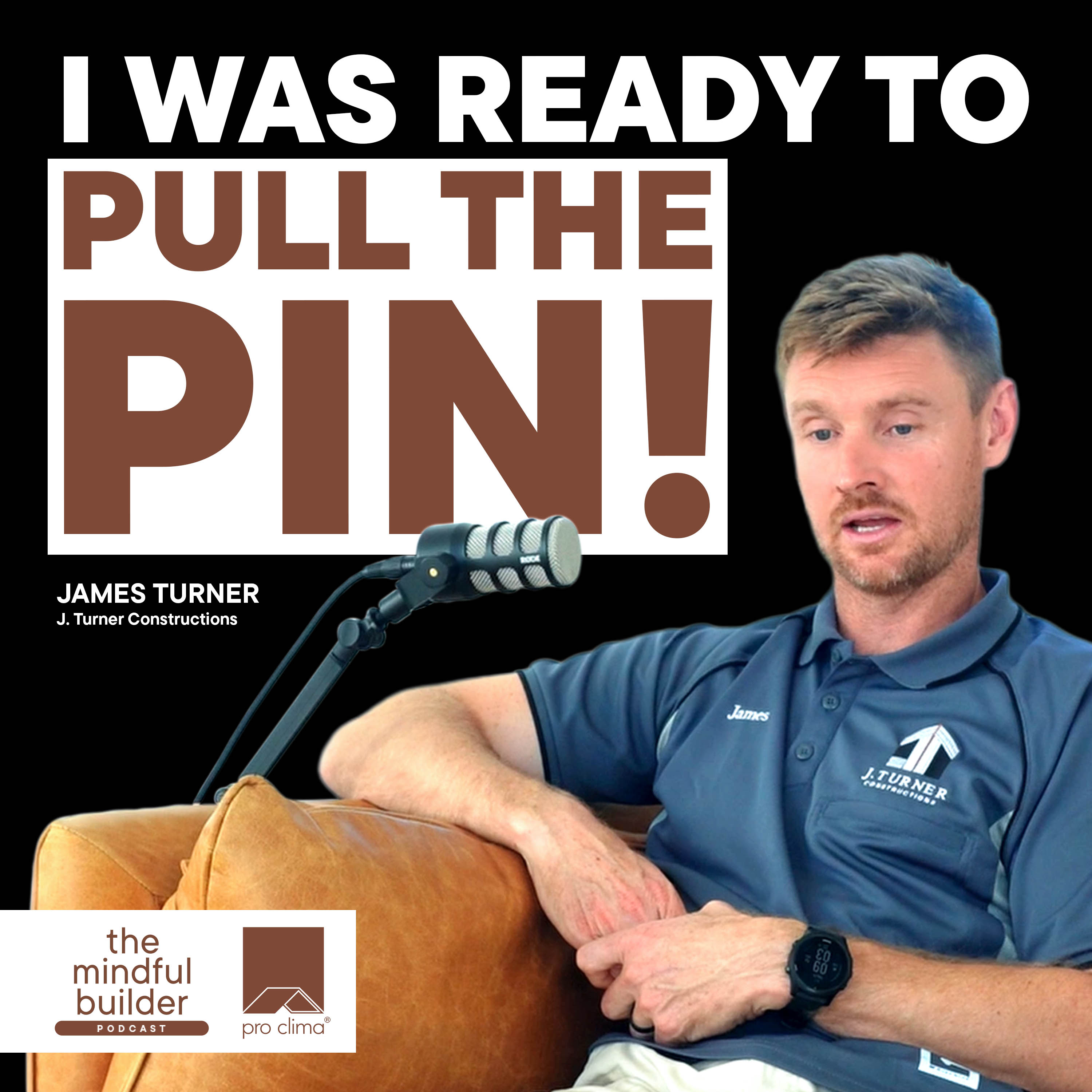
The Day I Almost Quit Building for Good
3w ago00:52:51Tap to summarizeJames Turner from JTurner Constructions didn’t plan to start a building business. A torn ACL and a forced shift into subbie life pushed him into it, and he built the company the way most builders do: decks, renos, extensions, then new homes.Two and a bit years ago, he was ready to pull the pin. Bad estimating, people management gaps, COVID losses, and the mental load stacked up fast. A turning point came from an unexpected place: an eight-week men’s course (Rising Kings) that helped him rebuild structure through daily habits and exercise.From there, Zara D’Cotta’s course sparked a new interest in the health of homes, and Future Builder gave him the systems and support to start moving toward Passive House and high-performance building.This episode is a practical look at what it really takes to transition: filtering the noise, learning the fundamentals, marketing like a human, and selling health and comfort before you ever mention acronyms.CHAPTER MARKERS00:00 Intro01:00 Meet James Turner (J Turner Constructions)02:20 How the business started: ACL injury, subbie shift08:45 Exit meeting shock + the pivot into carpentry10:10 Nearly quitting: estimating, people, COVID losses11:30 Rising Kings: structure, habits, exercise, and the mental reset17:50 Zara DCottas course: holistic homes and health19:00 Kids health trigger: carpet, dust, mould, air filtration24:00 Future Builder call: systems, assets, and direction25:15 Discovering Passive House and high-performance building34:25 Marketing advice: document the journey, be vulnerable36:10 Content that works: face to camera, education, long game39:25 Fear of failure + getting comfortable in your skin44:05 Transition risk: don't shoot yourself in the foot49:00 PHPP as an optimisation tool + right-sizing systems50:20 MEGT Mindful Moment: resilience and career pivotsOur Sponsors:Pro Clima - https://mindful-builder.captivate.fm/proclimaMEGT - https://mindful-builder.captivate.fm/megtConnect with James:Website: https://jturnerconstructions.com.au/Instagram: https://www.instagram.com/jturnerconstructions/Connect with us on Instagram: @themindfulbuilderpodConnect with Hamish:Instagram: @sanctumhomesWebsite: www.yoursanctum.com.au/Connect with Matt: Instagram: @carlandconstructionsWebsite: www.carlandconstructions.com/Mentioned in this episode:Proclima Sponsor
Transcribe →
The Tradie Who Lost It All and Came Back
4w ago01:03:57Tap to summarize“The difference between a good businessman and a bad businessman is the good one fails and learns.”A tradie builds momentum fast. Makes money fast. Spends it faster. Learns the hard way about GST, tax, super, and the cost of looking like you’ve “made it”. Then the pressure stacks up, burnout hits, and the whole thing starts to wobble.Andrew Hopkins (Hoppo from Hopkins Construction) walks through the real comeback: rebuilding a construction business with better boundaries, a stronger brand, and a work week that actually fits parenting. It also gets practical on social media for tradies (recording vs editing), why AI in construction is useless without clean systems, and how to handle trolls without losing sleep.If you’re a builder, carpenter, landscaper, or tradie thinking about starting a construction business, this is the reality check and the roadmap.CHAPTER MARKERS00:00: Intro04:36: Meet Andrew “Hoppo” Hopkins (Hopkins Construction)06:09: Leaving school early and starting a carpentry apprenticeship07:00: Getting suspended from an apprenticeship08:50: Snowboard accident + income protection for tradies11:05: Starting a business naive (tax, super, entitlements)13:11: Tradie overspending (Rangers, trailers, debt)18:10: Partnership breakup + learning from failure22:07: Burnout: when the business runs but you crash23:10: Tradie dads being present is hard27:13: Rebuilding life and work after the split29:10: Boundaries and setting expectations with clients31:39: Social media on site: recording vs editing37:31: AI in construction: fundamentals first41:10: How many hours content creation really takes48:10: Weird brand deals, saying no, and not being a sellout52:15: Trolls, comments, and protecting younger tradies56:28: MEGT Mindful Moment: advice for apprentices starting a businessOur Sponsors:Pro Clima - https://mindful-builder.captivate.fm/proclimaMEGT - https://mindful-builder.captivate.fm/megtConnect with us on Instagram: @themindfulbuilderpodConnect with Hamish:Instagram: @sanctumhomesWebsite: www.yoursanctum.com.au/Connect with Matt: Instagram: @carlandconstructionsWebsite: www.carlandconstructions.com/Mentioned in this episode:Proclima Sponsor
Transcribe →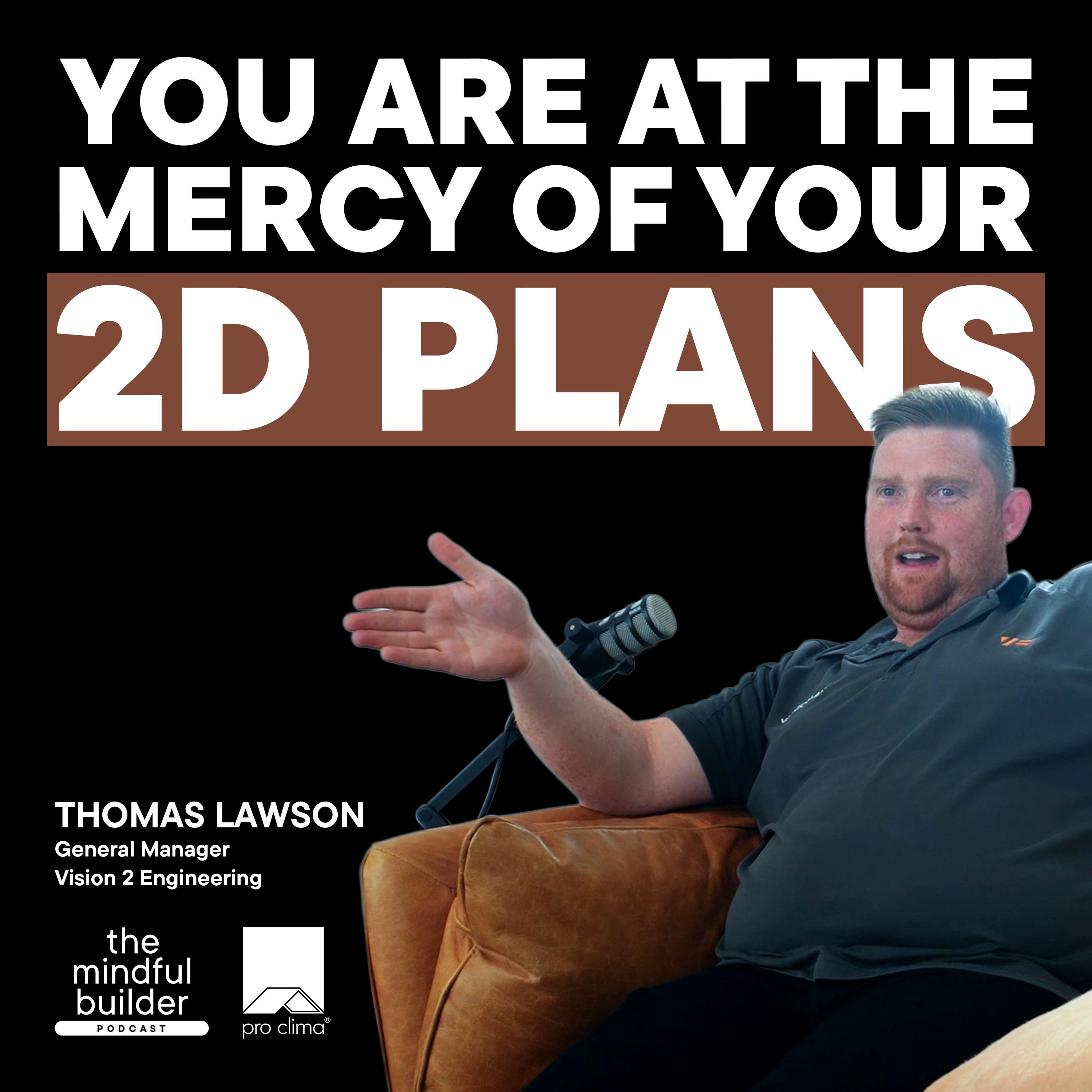
The Estimating Mistake That Costs You Thousands
Jul 1200:55:45Tap to summarize“You’re at the mercy of the quality of the 2D plans.”We sit down with Tom from Vision 2 Estimating (V2E) to talk about why traditional construction estimating and 2D-only take-offs are costing builders real money. If you’re quoting off PDFs, squinting at elevations, and hoping the details sort themselves out on site, this conversation will hit. It’s about accurate building estimates, protecting margin, and pricing work properly in modern Australian residential construction.We take a look at why 3D modelling for builders is not about pretty renders; it’s about clarity. Tom explains how 3D estimating, quantity take-offs, and a proper Bill of Quantities (BOQ) help you see what 2D drawings often hide: junctions, returns, missing scope, and the “we’ll figure it out later” details that turn into budget blowouts. This is especially relevant for custom homes, high performance builds, and any project where small misses become expensive fast.A big theme is what Tom calls your builder DNA. Every builder has a way they build: preferred details, standard inclusions, sequencing, and products. V2E’s approach is to model and estimate based on how you actually build on site, so your pricing matches reality. We also touch on modern estimating tools like PlusSpec (SketchUp plugin), digital BOQs, and connected workflows that make pre-construction smoother and reduce rework, disputes, and variations.If you’re a builder, estimator, architect, or construction business owner trying to improve construction cost planning, tender pricing, and job profitability, check this episode out. We talk estimating systems, pre-construction services, reducing risk, and why better estimating is one of the fastest ways to lift building business profitability without working more hours. CHAPTER MARKERS00:00 Intro03:07 2D plans miss scope and costs06:55 Builder DNA and estimating accuracy08:21 Who owns pricing and variations15:14 Vignettes standards and estimating workflow18:03 Coordination meetings, RFIs, design clarity21:27 PlusSpec BOQ export and take-offs23:16 Builder-friendly BOQ and trade breakdown24:53 Cost codes setup for builders26:27 Import BOQ into estimating software27:02 Four cost buckets for budgeting30:08 Master price lists and cost control32:36 Model collaboration for builders and architects35:14 Estimating as a repeatable system36:59 Model viewer app for site teams39:25 Charging for pre-construction estimating47:40 AI estimating needs clean data50:07 Apprentices: estimating and building careersLINKS:Vision 2 Estimating: https://www.v2e.com.au/Our Sponsors:Pro Clima - https://mindful-builder.captivate.fm/proclimaMEGT - https://mindful-builder.captivate.fm/megtConnect with us on Instagram: @themindfulbuilderpodConnect with Hamish:Instagram: @sanctumhomesWebsite: www.yoursanctum.com.au/Connect with Matt: Instagram: @carlandconstructionsWebsite: www.carlandconstructions.com/Mentioned in this episode:Proclima Sponsor
Transcribe →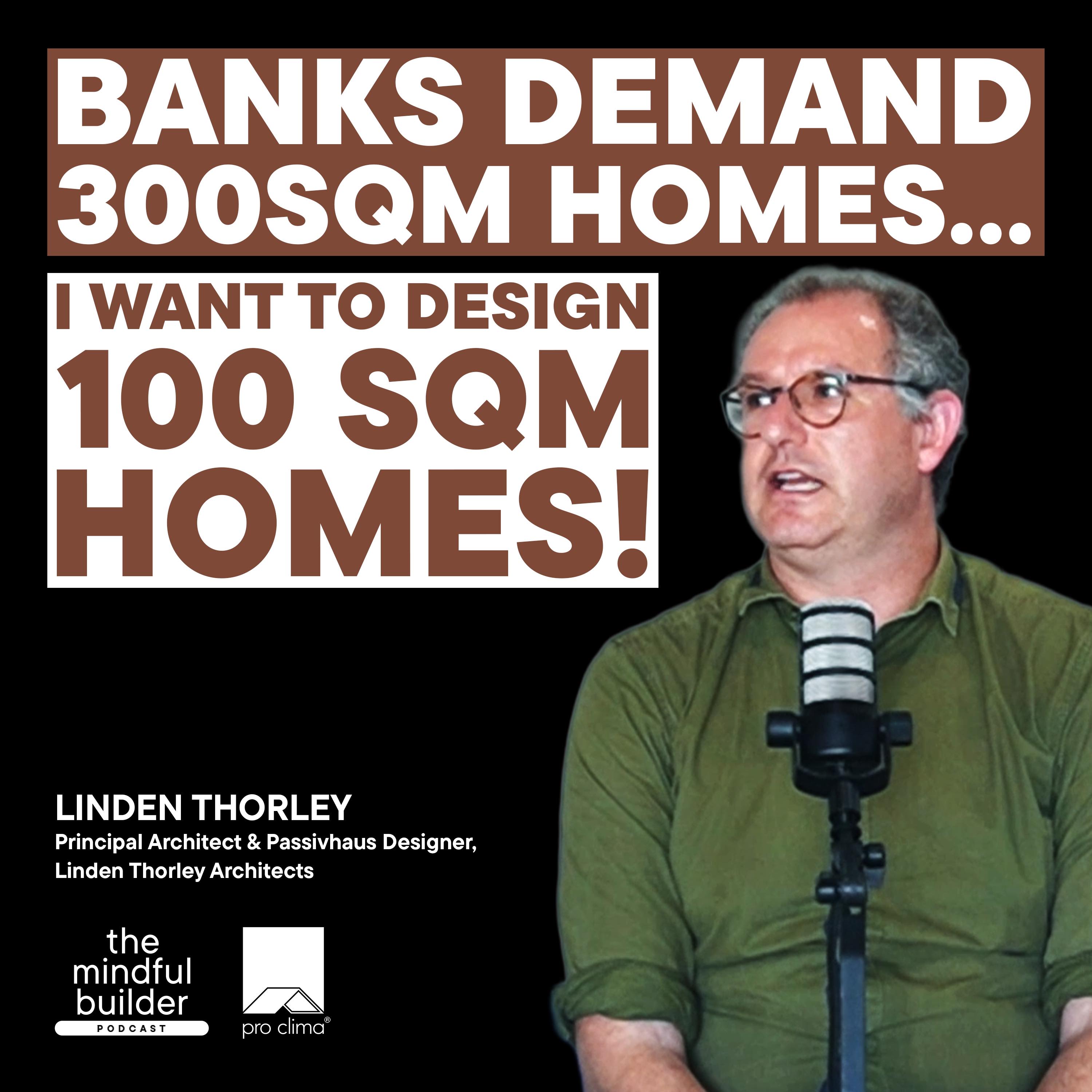
The Hidden Danger in Every Old House
Jul 501:13:07Tap to summarize“If you can’t hit 0.6 ACH on a brand-new build, you probably shouldn’t be building.”Let’s stop tip-toeing around the reality of the Australian housing market. We are throwing up volume-built boxes and high-density apartments that are practically end-of-life before they’ve even seen their first winter. We sat down with Linden Thorley, architect, Passive House designer, and chair of the Australian Passive House Association Retrofit Committee.We take a look into why retrofitting the existing 9.5 million homes in Australia is the single biggest business opportunity for trades over the next decade. Linden walks us through the differences between a cosmetic renovation and a high-performance retrofit, detailing how his team utilises the PHPP (Passive House Planning Package) to model data and manage moisture, insulation, and ventilation risks case-by-case.We don't hold back on the real pain points of the industry either. We talk about the skyrocketing costs of business insurance, why Australian labour rates are fundamentally shifting project costs, and how to structure building contracts using provisional sums for airtightness so builders aren't crushed by unexpected site variations.Linden also breaks down his frustrations with legacy bank valuations that prioritise bloated 300-square-meter floor plans over highly efficient, smaller family homes.Finally, we hit the political wall: how heritage advisors and council planners are actively preventing energy efficiency upgrades, and the clever, practical drawing tricks CHAPTER MARKERS00:00 – Introduction02:08 – The Passive House Association Retrofit Committee & Playbook04:12 – Finding the Ideal Market: How Long Does the Shift Take?05:45 – Passive House as a Design-Agnostic Calculation Tool07:11 – Can a House Be Great If It Doesn’t Reach Certified EnerPHit?09:00 – Retrofitting Multi-Story Blocks vs. Standard Residential10:38 – Managing Airtightness Expectations with the Builder13:36 – How to Contract for Airtightness: The Provisional Sum Solution15:21 – Dealing with Double Brick and Suspended Timber Floors16:23 – The Spray Foam Debate in Subfloors vs. Walls18:41 – The New Build Advantage vs. Retrofit Blind Spots19:16 – A Case Study: Turning a 25 ACH House into an 8 ACH Home22:27 – Threading Centralized MVHR Systems Through Bulkheads23:28 – The Necessity of the ECI Process for Architects26:16 – Why Don’t We Just Knock Them All Down?27:43 – Renovation vs. Extension vs. Retrofit29:47 – Do We Overcomplicate the Carbon Conversation?31:14 – Lessons from Toronto: The 100 Macnab High-Rise Retrofit32:38 – Drawing the Line: When to Demolish an Existing Fabric37:28 – Forcing Council’s Hand with Legal NCC Clauses39:34 – Is Passive House Actually a Premium-Priced Product?41:11 – Breaking Down the True Cost of Australian Site Labour44:46 – Linden’s Fire Loss & Installing His Own INTELLO Membrane48:26 – Thermal Envelope vs. High-End Cabinetry53:03 – The Intensity Slump on Modern Australian Building Sites55:26 – Overheads, Insurance Hikes, and Free Market Economics57:41 – The 3-Story Walk-Up: How Codes Limit Small Footprint Living58:21 – Why Banks Hate Small Homes and Force Massive Floorplates01:01:45 – Macroeconomics, Inflation, and Building for the Top 10%01:08:37 – MEGT Mindful Moment: Harnessing the Un-Jaded Apprentice Mindset01:11:16 – Connect with Linden ThorleyLINKS:Our Sponsors:Pro Clima - https://mindful-builder.captivate.fm/proclimaMEGT - https://mindful-builder.captivate.fm/megtConnect with us on Instagram: @themindfulbuilderpodConnect with Hamish:Instagram: @sanctumhomesWebsite: www.yoursanctum.com.au/Connect with Matt: Instagram: @carlandconstructionsWebsite: www.carlandconstructions.com/Mentioned in this episode:Proclima Sponsor
Transcribe →
The Builders Standing Up to a Broken Industry
Jun 2800:57:11Tap to summarize“On paper, six or seven competitive builders trying to run one organisation together makes no sense.”In this episode, we sit down with Bec Kempster, the brilliant Chief Operating Officer (COO) of the Sustainable Builders Alliance (SBA), to talk about the messy, necessary business of upgrading the Australian construction sector. Recording from Matt’s newly completed Grand Designs home, we strip back the hype and discuss how the SBA transitioned from a grassroots cause into a highly structured, professional association shaking up national building standards.Bec shares insights from her eclectic background. Spanning commerce degrees, corporate head office fit-outs, and co-founding business coaching systems for architects, to reveal how the SBA is systematically tackling the biggest bottlenecks in the trade. We break down the SBA’s Theory of Change, detailing their current work with TAFEs to build localised trade courses, and their mission to establish crystal-clear definitions for high-performance builds so the market can finally stomp out greenwashing.We also take a look at the data from the SBA's newly released State of the Market report. Bec details the hidden category of "transitioning builders". These are tradespeople who build above code but fail to market it, and drops the statistical proof that builders who explicitly sell health, comfort, and performance secure nearly double the forward pipeline of their competitors.We chat about the reality of custom build costs, volume builder challenges, and why vulnerability and education are a builder's best defence against insolvency in a volatile economy.Whether you are a seasoned builder, an architect looking for better site execution, or a transitioning tradie ready to stop faking it, this episode delivers raw, unfiltered site-level truths.Make sure to listen through to the end to grab your 15% SBA membership discount code!4. CHAPTER MARKERS00:00:Introduction01:32: Meet Bec Kempster: Managing Six Builders05:05: From Nightclubs to Architect Coaching: Bec’s Journey09:44: The Business of Architecture vs. The Building Trade13:16: Leaving the Past & Aligning with Sustainability21:20: The Material Lifespan & Circular Economy22:36: Unpacking the Five Pillars of the Theory of Change23:51: TAFE Collaborations with Melbourne Polytechnic28:41: Industry Collaborations: From Renew to Master Builders30:10: Changing the Name? Builders Alliance vs. Building Alliance34:49: Overcoming the Industry’s Lack of Education39:06: Volume Builders & The Impact of 7-Star Verification40:04: State of the Market Report: The Transitioning Builder41:41: Documenting the Journey: Content Strategies for Tradies48:07: High Performance vs. Custom Build Realities49:45: The Real Cost of Matthew’s Grand Designs House51:55: Celebrating Social Traders CertificationLINKS:Our Sponsors:Pro Clima - https://mindful-builder.captivate.fm/proclimaMEGT - https://mindful-builder.captivate.fm/megtConnect with us on Instagram: @themindfulbuilderpodConnect with Hamish:Instagram: @sanctumhomesWebsite: www.yoursanctum.com.au/Connect with Matt: Instagram: @carlandconstructionsWebsite: www.carlandconstructions.com/Mentioned in this episode:Proclima Sponsor
Transcribe →
Stop with the foil faced blanket
Jun 2100:49:59Tap to summarize“Money turns to water.” In this episode, we sit down with Dave from Pro Clima (Technical Innovation Engineer) to talk about the real transition from being on the tools to quoting jobs, running projects, and trying to keep cash flow under control.Dave’s story is a good one. He started as a carpenter, spent years in the trade, then went back to uni and completed a Bachelor of Applied Physics before landing at Pro Clima. That mix of site experience and building science makes him one of the most practical voices in the high performance building space, especially when it comes to building envelope design, condensation management, and the details that keep homes durable.We get into the building details that keep failing across Australian housing: box gutters, flat roofs, balconies over living areas, and planter boxes. Different details, same problem. Waterproofing risk. Dave breaks down why these designs leak, why minimum compliance is not the same as good building, and what builders and designers can do earlier in the process to avoid expensive failures later.We also take a look at the NCC (National Construction Code), DTS (Deemed to Satisfy), verification pathways, and why “compliant” does not always mean “safe” or “durable”. If you care about building quality, moisture control, airtightness, and building homes that actually last, this episode will give you practical language and a better framework for decision-making.👇 CHAPTER MARKERS 👇00:00 Introduction01:15 Meet Dave From Pro Clima01:57 Carpentry To Physics Path04:39 Subbie Cashflow Reality09:08 Profit First Bank Buckets13:18 Carpentry As Career Launchpad15:34 Learning Passive House Fast20:10 Pro Clima Role And Bad Details21:52 Box Gutter Flow Risks23:35 Minimum Falls and Roof Pitch25:31 Why Box Gutters Fail26:27 Window Flashing vs Code27:22 DTS and Compliance Paths29:13 CodeMark and Site Proof31:51 Air Seals and Spray Foam33:31 Passive House on a Budget34:40 Three Envelope Basics36:28 Anticon Mythbusting38:32 Warm Roof and Truss Heels42:44 Mindful Moment ApprenticesLINKS:Our Sponsors:Pro Clima - https://mindful-builder.captivate.fm/proclimaMEGT - https://mindful-builder.captivate.fm/megtConnect with us on Instagram: @themindfulbuilderpodConnect with Hamish:Instagram: @sanctumhomesWebsite: www.yoursanctum.com.au/Connect with Matt: Instagram: @carlandconstructionsWebsite: www.carlandconstructions.com/Mentioned in this episode:Proclima SponsorProclima Sponsor
Transcribe →
Chatting with Australias most dialled in builder
Jun 1401:09:39Tap to summarizeIn this episode, we sit down with Jackson from Enduro Builders in Adelaide to talk high performance homes, energy efficient construction, and what it actually takes to build houses that perform year after year. We recorded inside a Passive House, and once you feel that level of comfort and stability, it’s hard to accept what “normal” housing has been getting away with.Jackson has been building certified Passive Houses and energy efficient homes in South Australia for more than a decade, and he keeps it simple. No magic. No secret sauce. Just good design, tight detailing, and refusing to cut corners where it counts. We take a look at what makes a home feel consistently warm (or cool), how the building envelope does the heavy lifting, and why comfort is a measurable outcome, not a marketing line.One of the best parts of this chat is how practical Jackson is about targets. Not every project needs certification, and not every client wants the same thing. We talk Passive House principles, performance tiers, and how to choose the right materials and systems for the brief, the budget, and the climate. The point is not the badge. The point is building performance, durability, and homes people can actually afford to live in.We also get into the real-world negotiations builders face: design vs function, heating choices (including hydronic heating and wood fires), and what “cosy” really means in a well-built home. Plus, Jackson shares why he’s using Cross Laminated Timber (CLT) in his own build, and why systems and processes are the backbone of a sustainable building business. If you’re a builder, architect, designer, or homeowner who cares about sustainable construction in Australia, this episode will shift how you think about good building.👇 CHAPTER MARKERS 👇00:00 Introduction01:08 Enduro Builders And Climasure03:33 Scaling Passive House05:50 Cost Premium Breakdown07:54 Airtight Ceiling Strategy11:01 Performance Solutions16:20 Three Build Standards17:34 Design Build Debate22:56 Selling Comfort Not Tech26:20 Rammed Earth Benefits29:07 Solar Shading Tradeoffs31:35 Hydronic Negotiations33:52 Designing His Own Home36:39 Forever House Priorities37:48 Design Choices and Tradeoffs38:50 Healthy Home and Fire Safety41:28 CLT Structure and Insulation43:43 Bushfire and Wind Detailing44:51 Windows and Supply Chain46:01 Interior Finishes and Joinery47:29 Build Schedule and Winter Risks51:43 Business Numbers and WIP57:09 Coaching and Better Systems01:03:27 Mindful MomentLINKS:Enduro Builders: https://www.endurobuilders.com.au/Climasure: https://www.climasure.com.au/Our Sponsors:Pro Clima - https://mindful-builder.captivate.fm/proclimaMEGT - https://mindful-builder.captivate.fm/megtCR Kennedy - https://www.crkennedy.com.au/Connect with us on Instagram: @themindfulbuilderpodConnect with Hamish:Instagram: @sanctumhomesWebsite: www.yoursanctum.com.au/Connect with Matt: Instagram: @carlandconstructionsWebsite: www.carlandconstructions.com/Mentioned in this episode:Proclima Sponsor
Transcribe →
What is the end game of building ?
Jun 700:52:36Tap to summarize“Do we want 1.2 million crappy houses?” That’s the question Jesse Clark (pro clima) drops early in this episode, and it pretty much sets the tone. We talk about Australian housing supply, building quality, and why “more homes” is not the win if we’re locking in mould risk, discomfort, and expensive fixes for decades. If you care about better homes, healthier homes, and what the future of construction should actually look like, this one’s for you.Jesse’s whole approach is simple and repeatable building systems. We look at practical building science for real sites: the building envelope, airtightness, membranes, wraps, and the kind of construction details that can be done consistently across projects without relying on luck or one superstar tradie.A big focus is moisture management and ventilation, because moisture safety is the foundation of durable homes. We get into vapour-permeable assemblies, how leaky buildings happen, and why mould in Australian homes is often the outcome of small decisions made early. We also touch on the debate around energy efficiency and building codes (NCC), and how chasing energy targets without understanding moisture can create unintended consequences.If you’re a builder, architect, designer, certifier, or homeowner trying to understand high performance homes without the hype, this conversation will help. Topics include sustainable building, passive house principles, condensation control, indoor air quality, and what it takes to build homes that last in Australian climate zones.👇 CHAPTER MARKERS 👇00:00 Meet Jesse Clarke01:03 Simple Repeatable Systems01:36 Australia Study Origins02:12 Healthy Envelope Basics03:21 Tropics Mould Reality05:33 Future Building Trajectory07:17 Carbon Versus Health10:24 Energy Code Debate15:10 Density And Housing Targets19:13 Why Codes Move Slowly22:48 Standards Board Conflicts28:10 Membrane Standard Breakthrough30:57 R&D Heat and Vapour Tradeoffs34:48 Consensus Voting Explained38:22 Leaks and Insurance Policy Wraps42:04 Iterating to Build Better43:19 Builder Journey Timeline47:53 Mindful Moment ClosingLINKS:Our Sponsors:Pro Clima - https://mindful-builder.captivate.fm/proclimaMEGT - https://mindful-builder.captivate.fm/megtConnect with us on Instagram: @themindfulbuilderpodConnect with Hamish:Instagram: @sanctumhomesWebsite: www.yoursanctum.com.au/Connect with Matt: Instagram: @carlandconstructionsWebsite: www.carlandconstructions.com/
Transcribe →