← Daring Forever (Find your Extraordinary)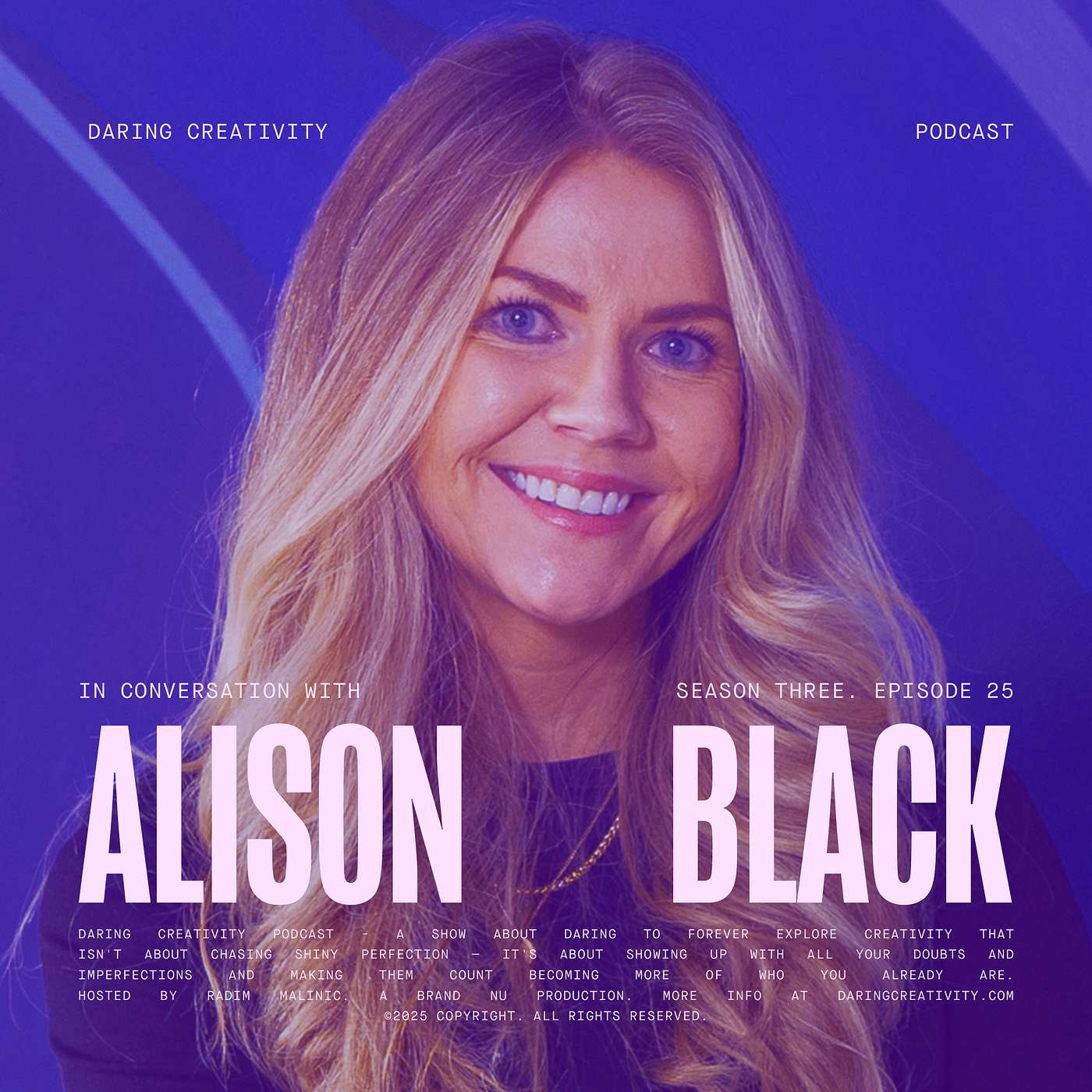
Loading summary
Transcript58 lines
- [00:11]
A
God, it's so interesting. There's a prison and the one I worked in, you know, it's been there since I grew up in this town, and it's always been there. And I always used to drive past and think, wow, I wonder what it's like behind those walls. It's a whole other world. I've just always been fascinated in that kind of thing. So when it came to the opportunity of looking for a job, when I was qualified and where do I want to go? I literally just reached out to them. I just sent an email and said, are you looking for any staff? And then one thing led to another and I ended up working there full time. And I guess, as you say, I always felt as though if you can work there, you could probably work anywhere. It's a very intense environment. It can be challenging at times, and I feel as though the skills I was going to learn there could definitely take me through another job, my next sort of career path, whatever that may be.
- [01:08]
B
Welcome to the Daring Creativity Podcast, a show about daring to forever explore creativity that isn't about chasing shiny perfection. It's about showing up with all your doubts and imperfections and making them count. It's about becoming more of who you already are. My name is Radim Malinic. I'm a designer, author, and eternally curious human being. I am talking to a broad range of guests who share their stories of small actions that sparked lifetime discoveries, taking one step towards the thing that made them feel most alive. Let me begin this episode with a Are you ready to discover what happens when you dare to create? Today, I'm speaking with Alison Black, Managing Director of Studio Craig Black. Alison's journey started with treating vulnerable patients behind prison walls, to now negotiating with Fortune 500 companies, always bringing the same commitment to clear communication, compassion in boundary setting, and refusing to let perfectionism compromise either quality or family life. In this conversation, Alison also talks about how working in an intense prison environment equipped her with unexpected skills for the creative industry, as well as why she's remarkably good at delivering bad news in ways that build trust rather than burn bridges. This episode follows on from my chat with Craig Black on the first season, and it's about how they both run their family art business. It's my pleasure to share with you my conversation with Alison Black. Hey Alison, it's great to see you today. How are you doing?
- [02:58]
A
I'm good, thanks Radim. It's lovely to see you too. And thank you so much for having me on your podcast.
- [03:03]
B
Well, I think it was just about Time that we got another member of Craig Black Studio to show up and tell us, you know, what you guys been up to, what you're doing and get a spotlight on you because you are in a family business with Craig and your daughter. And I wanted to talk about the fact, how do you see things from your side? Talked about a bit of your background and how does it all sort of add up into this commercial enterprise that you guys running that's taking over the world of art? So for those who may have not heard of Alison Black as part of Craig Black Studio, would you introduce yourself, please?
- [03:35]
A
Yeah. Thank you so much for that really lovely introduction to the podcast and I really appreciate you asking me to be on. Normally I'm the one more behind the scenes, so this is a bit new for me, but happy to be here. So, yeah, my name is Alison Black and I'm the managing director of Studio Craig Black. Craig Black is a visual artist based in Scotland, best known for its signature technique, which is called acrylic fusion. So essentially it's acrylic paints mixed together to make these really gorgeous mesmerizing patterns that he pours on, really any object you could possibly think of. It's worked on to date. So Craig's the creative and I'm the business side. So I deal with the overall running of the business. I do all the project management, the logistics, all the kind of client liaison conversations all go through me. So any sort of new inquiries that come through, I deal with that, I deal with the brief, I do the proposal. And Craig is the creative brain that sort of drives the fun part behind all of that. So we work together as a husband and wife duo. So as Radim, you mentioned, we are a family business and the bulk of our work is brand collaborations is what we've been doing over the past few years. So pre creates these really gorgeous high end artwork, but a lot of what he does is live performance art as well, where he creates artworks live in front of audiences and nuts. Taken us all over the world collaborating with all sorts of brands at different events. Brands tend to come to us looking for something a bit different to stand out from the crowd, to do something different from their competitors. And what Craig is doing is very, very different. So we've been really fortunate to be able to explore that space and to do it together. It's just been lovely, it's been a.
- [05:18]
B
Fantastic journey because Craig, as you said, was on his podcast, I think as the guest number five. And yeah, we are nearly up to 100 now. So it has been a fantastic story of watching what you guys have created and what he's created and watching his career iterations from a designer to typographer to what he's become now, which is a now world renowned artist with a very unique style. And I do remember through a conversation that I had with Craig on that previous episode, he said that at one point he realized that it's time to stop being everything to everyone. Trying to handle business inquiries, proposals and actually say, look, who is the person to help me? And it made absolutely natural sense for you to be in the business. What was it like for you to see it? Because obviously I know, for example, the view of my wife's, you know, experience of when you juggle a lot, you sometimes really don't think what is the right choice or decision to make because you want to handle everything and do everything well. But Craig obviously once put his hand up and said, I need help. So what was that thing for you to be able to actually help and create this thing together? Because obviously more people create a lot easier operation.
- [06:28]
A
Yeah, no, that's a really good question. And actually as a really interesting story of how it all came about. So it stems back right to the start of when Craig went out on his own. So that was first, that started as graphic design and he's a typographer and lettering artist running his own studio. And he's always been a one man band, always done it on his own. I was with Craig at that time, we were together and I seen him build the business from the start. So I could see the work he was doing, what went into it, what his goals were, where he was aiming to be, the amount of work he put in. I mean, you've spoken to Craig, you know him, he's very driven, he's very, you know, he's got goals, he works really hard to get there. So I was a sort of backseat passenger on that journey, sort of watching him on this journey, which was incredible. So he managed to run that business really successfully on his own for a good few years. But his ultimate goal was to be a visual artist, which he then sort of swapped over into about five years ago. So again, he was doing it completely on his own. I had another job, so I didn't work in the creative industry at all. I was a mental health nurse in a prison in our local town. That's where I work. You know, I went to uni for three years to train to be a mental health nurse. As soon as I came out of uni, I was always Very interested in that line of work. That was my world. I worked in a prison. I worked in Broadmere Hospital at first down in England, because Craig was down in England at the time. Moved down there for a bit, got experience there, moved back up home, got a job in the prison not far from where we live. That was my world. I was a mental health nurse in a prison. And I guess for me, it was really interesting to see what Craig was doing, but it was very sort of separate what I was doing at that time then. So, as I said, he became a visual artist. And during that time, that's when Covid happened. I was pregnant with our little girl at the time, so I was off work, I stayed home. I got to see more sort of firsthand what he did. He was also working from home. And naturally, because I was at home, it was before Olivia was born, he was quite busy with what he was doing. He was sort of saying to me, oh, Ali, can you help me with a bit of copy for social media? Can you maybe help me look over this contract? Just little things. So I naturally got slightly more involved with the business during that time. I had more of an understanding of what he was doing because I was seeing it there. I was in the background. So then time went on, we had the baby. I was off a maternity leave, same thing. I was there a lot more. He was at home and then he really quite quickly, as you'll have probably heard when you spoke to him, his career as a visual artist did start off quite quickly. He got busy quite fast. And I guess at that point it became a lot for him to manage on his own. The creative, the runner of the business, you'll know yourself, everything that goes into that, he was doing it all on his own. It was a lot. And at that time, we got asked Bocriko to do an artist residency in Nashville, Tennessee. Unbelievable opportunity. Unreal. I was still off work at the time, so we all went as a family. Craig, Olivia and I all flew out to Nashville for five weeks. It was insane. They put us up in this lovely house. Craig was doing this residency in a place called Cheekwood Estate and Garden. So he was there Monday to Friday. He was there creating art, sort of eight to four. I was pocketing in and out, but mostly looking after Olivia. She was only one at the time, roughly. But while he was doing that. So he was working in the American time zone, sort of near enough full time at Cheekwood, but also juggling work back home. He had a project that was ongoing in America and he Also had work back home in the uk, so really the hours he was putting in when we were over there was wild. He was working probably like close to 14 hours a day to manage all those different time zones and to keep on top of things back home whilst being over there in the state. So I guess as his wife and also as a mental health nurse, I could see the toll that that was taken on him. I could see that it was just a lot for him to manage. It was a lot of pressure. It was a lot for him as one person. And Craig is a perfectionist. He's not going to let anything slip. He always does everything to the best of his ability on time. The idea of missing a deadline is just unthinkable to Craig. So he was always very, he was always very strict with his time. But I could see the impact that was having on him as a person. So we sat down one night in this house in Nashville and I said, this seems a lot for you to manage, Craig. You know what, what are we going to do about this? You're getting so busy. It is just you. What do we do? Craig had always said to me from the start that he wanted this to be a family business and he wanted us to work together. But I guess my own self doubt and lack of belief in myself I guess led me to believe that I probably wasn't good enough to support him. I probably felt as though he needed someone better than me to make sure that he was going to succeed and be what he wanted to be. The last thing I wanted to do was to hold him back. But anyway, we sat down, we had this conversation and he said, I want you to be the person that comes on board to help me. It needs to be you. It makes sense, you know, the business, you've been there from the start. We've got the same goals, we've got the same aspirations of where we want to be and no one else cares as much as you do. As his partner, I obviously want to see him do well. I want to be there to support him to do that. And I thought, you know what, you're so right. If anybody wants this for you and wants this to be a success, then it is me more than anyone else. So I guess part of me thought, what have we got to lose? You know, let's try it on the flip side of that. There was the idea of me going back to work in the prison. We just had a little girl, you know, the shift work, the change of lifestyle, that would be. It would just be A completely different environment and shift than being away from her having to get up really early in the morning to be there for half past seven. And, you know, all that comes with being a parent and working full time. I knew that working together would just allow us that flexibility to do things like go to Nashville as a family and have the flexibility around her whilst also working on these really cool, exciting, creative projects, which for me is mind blowing because I'd never been in that world before to see what Craig was doing, what he gets to call work. All creatives. I look and I think, wow, that is incredible that, you know, one, you've got the talent to do that, and two, the opportunity to get involved with these really fun creative projects. So, anyway, while we were in Nashville, as I'd mentioned, Craig had this ongoing project that he was in discussions with with a coffee company based in San Francisco who wanted Craig to do the artworks for the packaging. It was probably the biggest project at that time in terms of the amount of work that was going to go into it that he'd had as a visual artist. All those conversations were happening while we were in Nashville. He was taking the calls, and he said to me that night in Nashville, he said that I really need you to step up and take the lead on these calls so I can take a backseat. And I said, oh, right, okay, let's. Aha. That's what you need me to do. So right there and then he made me an email. He said, I need to make an email address. We need to be official here. So he made me the email address, alisonraig Black, and he added me into the call the following day. And again, backstory to this is I was there the whole time, so I understood the conversations that were going on with this project. I didn't just go in blind. So I go on a call the next day. Craig's not there. It's just me. It's the CEO of this coffee company, it's their project manager, it's. They're working with an agency, it's their creative director, several creatives in their team. And me sitting there thinking, oh, wow, okay, how about I find myself in this position? But you know what? I don't know. I felt as though naturally, I just thought, well, what would Craig do? What would Craig say? What would Craig want me to say? And essentially, to cut a long story short, I took that call, followed that, then up over the next few weeks to get the project over the line, signed off, and moving forward with it, getting everything all lined up to go ahead and did it successfully. And I came off that. The back of that project seemed to, yeah, I think, I think I can do it. It was exciting, it was fun. I felt, I don't know, I surprised myself a little bit by being able to go on and do that. He was delighted. And from there we kind of came off of that and decided, okay, I think this is the way forward, this is what we're going to do and the rest is history.
- [15:04]
B
I suppose the rest is very much a history because I'm fascinated that you were a mental health nurse in prison and as you were describing the story of how you came on board and what happened next, you said, I had a self doubt. I didn't think I would be a good enough, good enough fit for Craig's business. But I'm thinking you must have compared to a regular project manager or creative, this plethora of, of a toolkit and sort of this arsenal of actually understanding how to deal with situations that can throw anyone massively. Because it's amazing to be as you describe it, you know, in the world of creativity where people do this for a job, but because sometimes the reality and heaviness is so detached from real problems, shall I say, you know, sometimes we as creatives argue about color of the blue or pink or is this the right typeface that people have opinions about something and you're thinking, then I'm gonna quote Sia's album title. That said, some people have real problems. When you take it from the world of creativity into somewhere where people are not only in prison, incarcerated, but also in need of medical assistance, that is very much a different side of the world to what we do.
- [16:23]
A
It's so true.
- [16:24]
B
I wanted to see how did you. This is going to be an interesting question, but how did you end up in prison? We'll be back after a quick break. This episode is brought to you by Lux Coffee Co. The first creative specialty coffee company building a platform to shine the light on emerging global talent. With a mission to make a positive impact on a creative industry and Beyond. Lux Coffee Co. Offers exceptional coffee sourced from around the world through ethical and sustainable practices. And you can discover the current range of signature blends and single origins coffee hardware and accessories along with exceptional apparel. @luxcoffee.co.uk you can use the code podcast to get 15% off your first order.
- [17:22]
A
Yeah, that is a very interesting question. I know. So I guess I've just always been fascinated with that world, I suppose how that people's backgrounds and how they can their Lives can lead them in different paths and where they can end up. And I feel as though some of the most vulnerable members of society are unpleasant and it's so important that they have support when they're in there to then get back on their feet and get back out and be, you know, members of society again and get their lives back on track. I suppose when I was doing my training to be a mental health nurse, I went to uni for a few years. You go on different placements and you go to different places to experience what it would be like working in each place. And actually knew someone who worked in a prison and they told me all about it and I thought, God, it's so interesting. There's a prison and the one I worked in, you know, it's been there since I grew up in this town and it's always been there. And I always used to drive past and think, wow, I wonder what it's like behind those walls. It's a whole other world. I've just always been fascinated in that kind of thing. So when it came to the opportunity of looking for a job, when I was qualified and where do I want to go? I literally just reached out to them. I just sent an email and said, are you looking for any staff? And then one thing led to another and I ended up working there full time. And I guess, as you say, I always felt as though if you can work there, you could probably work anywhere. It's a very intense environment, it can be challenging at times. And I feel as though the skills I was going to learn there could definitely take me through another job, my next sort of career path, whatever that may be. Although at the time I thought it would be in nursing, just in a different place, a different direction. I guess at that time I never saw myself doing what I'm doing now. Even some of my ex colleagues who I meet now, every now and again, they'll say, what are you doing with yourself? And when I tell them, it seems so strange to them how I've taken such a turn from where I originally was to where I am now. But you made a good point about the skills that I took from there into the job I'm doing now. Although it is two completely different world. There's interpersonal skills, there's communication skills, there's that 100% I probably didn't realize at the time, but have helped me and the role that I'm doing now because I guess one of the most challenging things when I worked in the prison was dealing with patients who perhaps were struggling to understand some of the things that I was seeing, some of the advice that I was giving them, and perhaps not really fully comprehending why they were given that certain advice, you know, in terms of changing their behavior, changing their lifestyle. And it's all about sort of framing that in a way to get them on board, to understand. There's a lot of negotiating, there's a lot of de escalation of challenging behaviours at quite an extreme level sometimes. But bringing that into this makes it seem much easier to deal with. You know, the types of clients that we work with now, if we need to have conversations that maybe could be a bit uncomfortable, they're nowhere near as uncomfortable as they were previously in the prison. So. So I guess it's good experience that way.
- [20:29]
B
I like that you have natural intrigue driving past the prison and thinking, I wonder what happens behind Earth? Yeah, I wonder what's there? Not to be a prisoner, but actually how to help these people. Because it made me think of like, natural intrigue and curiosity, of how you approach this from a place of compassion and empathy, of how can I be of value to society in a way, because talking about de escalation and how some people are struggling to understanding the advice, and I'm thinking that's most people, especially the creative ones, because we can be, and I say we, we can be so set in ways of this is what's happening, this is what I want to do, this is how I want to approach this. No, nothing else goes.
- [21:10]
A
Yeah.
- [21:11]
B
And as you said, that skill set that you've learned as a mental health nurse actually helps you to de escalate some of the situations now, because people might be thinking, like, wait a minute, you create a lovely artwork, travel around the world. Surely there's no need for de escalation, because I'm sure it's all sunshine and ice cream. Right. But it not really is. It's not really that all the time, is it?
- [21:33]
A
Yeah, exactly that. I mean, it's not that it's compensation in the same way sometimes that there could have been in my past job, like when you start conversations and there's a brief that changes and it's setting clean expectations about what's achievable and when that's achievable and being clear in that communication and feedback, honest feedback, that in a really nice, positive, constructive way. And that was both ways taking that from a client and also giving that back. But there's definitely so many skills that can transfer over, for sure.
- [22:04]
B
It's definitely Interesting when you said it's interpersonal skills, it's interpersonal relationships, because when we understand more of ourselves, we begin to understand more about others. When we stop sort of looking for answers, well, I don't think we ever stop looking for answers within ourselves. We always got something else to solve or sort or deal with. But the more we come to be at peace with who we are and what we do and how we think and where we've come from and what is in our DNA, then you can actually stop focusing on yourself as much and actually start looking outwards. And how can I help these people? Because I don't have to look for any immediate clues straight away. And I think in the case of creativity, creativity is a very good escapism of, okay, I don't have to deal with what I need to deal with because I can hide myself away. The phenomenon of being busy, it keeps things away from what you really need.
- [22:52]
A
To deal with 100%. That was one of the things when I worked there. If I had a patient that was working with who had a lot going on, one of the main things I would encourage them to do is create art to get themselves lost. And there was art classes. There's education within a prison. It's like a community in itself. So there's an education department. They can do art, they can do their examination. There's a gym, is to promote healthy lifestyles and positive behaviors instead of reinforcing the negative ones that perhaps have been brought up with. So that would be in most of my care plans. That would be, well, what are you doing today for yourself that makes you feel good? For some people, that's the gym. For some people, that's drawing. For some people, it's painting, whatever that may be. But that would be. Most of my advice would be to people who are locked in a cell for several hours per day. Okay, what can I give you to do in your cell to keep your mind off of what it's currently focusing on, whether that be creating art and drawing, whatever it is, writing. And there's some incredibly talented artists in there. Craig came in actually to do a talk with some of them when I worked there, to sort of show what can be done. If you have a skill in that creative world through so many paths you can go down, use those skills and turn them into something really positive. And it massively helped. It really did. The feedback was, I feel good when I'm painting, or I feel good when I'm lost in a drawing. I forget where I am for a Second, I'm able to switch off and that's in the prison. But I guess it's the same for creatives in any business. I see it in gray sometimes he'll come into the studio, he'll put his music on, he'll paint and he'll literally. He won't look at his phone, he won't be distracted by anything he saw in the Zone. And I can tell when he comes home at night that there's just. There's a spring in his step. He's happy. When he spent a whole day. Pain, it does something to him that just puts him on another level of just feeling really content, I suppose.
- [24:50]
B
Absolutely love what you describe it about options for the prisoners of actually how they can find escapism, I think is a good way to see us. As you said, we're able to create art.
- [25:01]
A
Yeah.
- [25:02]
B
Because potentially you are one of the first steps to their change, recovery, rehabilitation, to be actually shown what's possible. Because I feel that people like us are very lucky to know what our opportunities could be. We can make our own opportunities, we can go after them, we can be obsessive or some people from unprivileged backgrounds, some poor backgrounds they don't even know about potentially what's out there. So showing them that those are possibilities, I think must be so rewarding because compared to them, if we're very lucky, that's it.
- [25:35]
A
I guess sometimes. And you made a really good point before about sometimes it's about perspective. I think you can get so lost in your own world of what's happening in terms of deadlines or does that logo look okay? Is that the right shade of blue? And is that client going to be really upset that, you know, I've not done the exact angle that they were wanting. When reality is the perspective or what life can be like for other people, their problems are so much bigger than that. So Craig will even say to me, if we have a stressful week, which quite often we do in the studio with things like that, the stress is real. I've seen it within this business too, of course, but Craig will stop me if I get a wee bit stressed or anxious about something. You'll see. But listen, Ali, did anyone die? And it's such, it's such a good point because that is when you work in a. Not even just a prison, but a medical setting in general. There's people who, they come in and they are very unwell, they're potentially life threatening illnesses, whatever it may be. And there's people there whose Jobs are to manage that and to support them back to full health. And that is someone's job who then go home at night and they think about that and they hope that they're okay. And they pray that when they go in the next day, the patient will be okay. So it does just put it into perspective, I think, sometimes, and make you realize that your problems aren't quite always as big as perhaps you build them up to be in your head.
- [26:59]
B
This is what I want to know. Because when you are talking about Craig and say when he's in a state of flow painting and being happy and looking at his phone, that's a proper cleanse of mine. I think we all dream about a part of the creativity when you can actually focus on what the hell you want to do. But what I want to know, how did you metabolize your work before working with Craig? Because you seeing firsthand so many stories, life stories, so many people that you wish that there was hope for everyone. But you come home and once upon a time you were coming home from prison. Whereas now we see Craig being unhappy because he's been throwing pain around all day. How was it for you? What did you do? And how did you help yourself to. How do you metabolize it so you can go back in the next day and do the same thing again? And I hope that there's hope for these people.
- [27:46]
A
Yeah, that's a good question. And it was hard. Quite often I'd come home from work, Kate would come home from work at the same time, and I'd ask him how his day was. He'd ask how my day was. So I would listen to him and everything that he had going on, and then I would tell him about my day. And I guess that helped in itself where it's sort of. There's only so much you can tell because a lot of what happens is confidential. But the general overall just of what was happening, I would fill him in on. And even that in itself would be like, right, okay, I've offloaded that. I've done absolutely everything I could today. That was always my thing. I never, ever left until I knew I had ticked every single box. It's not the type of job you can just leave something half done. If there's something happening, you need to stay and see that through. So I always made sure when I was driving home in my car, I always ask myself, did I do absolutely everything I could today? Is there anything else I could have done? If there's not, which there never was, because I Wouldn't leave at that point, then I would just need to say to myself, okay, it's time to shut off now. It's family time. Go to the gym, watch a film, hang out with Craig, hear about what was happening with him and then go back in again the next day and do it all over again. So I guess it's kind of trying to separate that a bit, which can be hard sometimes. Sometimes I would think if there were situations happening there, I would naturally think of it. I think it's hard to switch that off completely. But always just think I've done absolutely everything I can. There's not. If I worry it's not going to change anything. There's people there dealing with it now and then I'll go back in tomorrow and then pick up where I left off sort of thing. But I guess in hindsight, I think when I was working in that world, that was just what I did. That's what I was used to. It's only now, I suppose that I realize that life is a bit lighter now probably when we have a debrief, Craig and I, we do still most night chat about how the day was, how things went, what we've got on the next day. And it's a whole different kind of vibe. The conversation's completely different as you could imagine. So it's different.
- [29:40]
B
Yeah, I like that you said the world is lighter, but you did alluded a little short while ago that work sometimes can be quite stressful because when you see the portfolio of what you guys produce, these amazing brand collaborations, the end pictures look shiny, glossy, full of contrast and color and vibrancy and saturation. We see the end result, this is what we get, but we don't see behind the scenes. And sometimes you think, how can this be stressful? If someone's looking at like why do you say stressful? So can we put a bit more color on what goes behind the scenes and how obviously you guys spend a lot of time together as a family, as a couple, as collaborators, as a business partners. We will talk about that bit because there must be again another set of tools and ways of how to do this. But what goes into these projects that people don't really get to see, especially from the production delivery, you know, strategy, logistics and that kind of stuff. So I'm really curious about that bit.
- [30:38]
A
Yeah, that's a good point. And maybe seeing stressful was the wrong word because I guess I don't want that to make me sound ungrateful for what we're doing, what we're doing is I feel so lucky to be doing it and to be a part of it. I guess there's times when it's just quite intense. So by that I mean, I guess I've never worked in a creative agency before that Craig has, so he's able to sort of compare how that works. So because it's just the two of us, the way Craig describes it is, say we get an inquiry come in from a brand who want quite a lot of work done, quite often in quite a short time frame. You know what it's like. Craig is the only creative that can do it. It's him and his paint and that's it. His technique. Everything is done by hand, by him. It's not as though we've got a team of people who come in and help do that. I think that's really authentic. Part of it is we want to keep it that way, where everything that goes out is completely handcrafted by Craig himself. So sometimes the timing can cause that can be a lot for him as a person, one person to churn out the amount of work sometimes that's been asked for. So I guess in terms of manpower, that can be quite stressful sometimes because Craig will say to me, ali, you're doing the job of what? In an agency, you would have an account manager, you'd have a project manager, you would have all these different people, maybe three or four people, doing the job of what you're managing yourself right now. Which I guess does put it into perspective of the more hybrid role that I do. I do a wee bit of everything. So does Craig, to be fair. So he dips in and out, really, with that side of things, what you need to do. So I guess sometimes it can just take up a lot of our time. So although we work in the studio every day, we talk a little bit at school and then we come work in the studio, won't pick it up. But sometimes when there's briefs that are quite full on, there's a lot of work needing done in quite a short time frame. We do need to work in the evenings. There's just no question about it, because if we don't do it, it's not getting done. So I guess that's what I mean when I say it can be stressful sometimes. It means we need to go pick Olivia up from school, take her home, dinner, bath, bed, and then once that's done, we start all over again. Craig and I will sit in the kitchen at home and we'll catch up. Sometimes he'll need to come back up to the studio and do a little bit, or if it's things that we can do at home, then we'll do that. And sometimes that can take us up to sort of 10 o' clock at night and then that can be a sort of persistent pattern until that project's done and signed off and we've met the deadline. So I suppose in some ways that can be quite intense, where we feel as though being a husband and wife family business is amazing. I love it so, so much. But sometimes we try so hard not to let it bleed into family time. So when Olivia is picked up from school, we don't work. We get her all sorted and when she's in bed, sometimes we do need to pick it up again, which can be a bit exhausting, a bit full on. You know what, it's like yourself, I'm sure there's no set. It's not set nine to five. When you've got your own business, you need to do the work. When you need to do the work, it's just part and parcel and there's not any other option there. You just need to get it done.
- [33:53]
B
It's interesting what you're saying. I didn't mean to sound ungrateful, because stress is our body's reaction to physical, mental and emotional reaction. It's a perceived demand or challenge that requires adjustment or response. I am reading Google right now, but we perceive stress mostly as a society, as a negative thing. But stress is the fuel that there's a good stress and there's a bad stress. And sometimes we use stress to positive action to actually spur our son, actually get stuff done. Because what you describe, and it goes back to what you said earlier about Craig. Craig never wants to miss a deadline. Craig always wants to do a good job. It comes from the point of care. Because if you don't give a shit, things are a lot less stressful, right?
- [34:33]
A
Yeah, that's true.
- [34:35]
B
If you didn't care about quality of your family life, you didn't care about quality of the business. I think the stress would potentially subside. But being stressed is just potentially just mechanics of delivering quality of life. So I think would you describe. And it just sounds like you guys really put a lot of focus in a lot of areas and do it really well. And sometimes, and I keep repeating this on my podcast and everywhere else, there's no such thing as end of problems. Something will always give. Even just if you line up everything perfectly, all the ducks are in a row. Doesn't Mean that they'll stay that way because the work looks so peaceful and mesmerizing. Thinking, surely that must be all easy, right? One of my analogies is that when we see that kind of stuff, we thinking, I've got expectations of this to go really well. And you do a couple of pieces and you feel like a superhero. But then the Lex Luther with kryptonite shows up and go, hey, listen, you felt amazing, you felt million dollars. But this is the reality of it all, because ultimately to get to the process of the final outcome, you have to go through so many blocks and obstacles and challenges. Because as you said at the beginning, what he does is very much a one of a kind sort of situations right now. So didn't seem like that was a. Was an issue whatsoever.
- [35:54]
A
Yeah, I know, and it's nice for you to say that. And I guess Craig, being the perfectionist that he is, he really provides himself on everything that he puts out there is 100% and that's the end product, is like that because of all the hard work that goes on behind the scenes to make sure everything is absolutely perfect before sharing that with the world. And I guess that's, as you say, if he didn't give a shit, life would be easier. He wouldn't need to probably spend four hours at night going over things and perfecting things and making sure everything was absolutely immaculate. He would just turn it out. But that's just not in his nature, not in my nature. And I guess that's what's gotten to where he is today, I suppose.
- [36:36]
B
Well, actually, I'm sure you had a quote that if you make easy choices, you got hard life. But if you make hard choices, your life gets easier. Because ultimately what you're building, it's a product of hard choices. It's difficult decisions that make the future a little bit easier. And I think how do you instill into people that caring a little bit more or wanting to be a little bit more, and potentially the work that you did with prisoners, you can put yourself in a position where, when you apply yourself, when you see what the possibilities can be, that could potentially create easier lives for them. And I think that's an interesting juxtaposition we found here that it needs to be hard to feel good. I say needs the hard part, needs to be there for the work to feel good. Otherwise, what are we trying to do? Because how quickly would we get bored if everything was super easy and things were coming together, there were millions of pounds in a bank and work would be great. No one would care because there is a friction that creates this amazing visual storytelling that you guys produce.
- [37:40]
A
Yeah, that's exactly it. Yeah, so true.
- [37:43]
B
So I've got a question. You said you do a lot of brand collaborations and then come to you asking for a lot and asking for it quickly. How do you manage that? Because as you just said, it takes a lot of time. It takes time to do handcrafted, unique pieces. So how does that sing and dance go with clients to encourage them to slow down a little bit and be more realistic?
- [38:06]
A
That's a really good question. And I guess that's probably what I was sort of referring to earlier when I was talking about the interpersonal skills and the communication skills that I learned through the prison. One of the girls I used to work with in the prison, a really good friend of mine, Kirsty, she used to always say to me, ali, you are so good at giving bad news. That's what she used to. And I thought, okay, that's a really interesting skill to have. I didn't realize I was good at that. But good to know. So I guess something I've always kind of thought in my mind and to be fair, to answer your question around what do we do when brands come to us and ask for work to be done in a super quick turnaround? I guess I just need to be good at giving them bad news. And a really nice way, sort of explain. If you want the quality of what we want to give you, then it's going to take just a little bit longer. Try and meet in the middle somewhere. Here's what we can do to try and speed up the process. But I'm afraid that what you're asking for isn't going to be achievable and it's just sort of having that conversation, which can be quite difficult, something. But I guess that's it's got to be done at times because sometimes they come along asking for things that just would be near impossible. And I'm a big believer in just setting clear expectations from the start. If you don't, it just causes so many problems to say, yeah, yeah, we can do it. And then to not be able to do it, as I say, that is Craig's absolute worst nightmare. To not meet a deadline. He would just, oh, no, he couldn't even bear the thought of it. So I guess we just need to have that conversation and try as much as we can to sort of explain that we need a little bit more time and come to an agreement together. And yeah, the people we work with are so reasonable and they understand and, yeah, it's not, to this point caused any major problem.
- [39:52]
B
What a compliment to be told that you're very good at giving bad news. It reminded me of the lyrics from song called Joyrides by Meatmouth and it says, give me the bad news first because good news is probably worse.
- [40:04]
A
Yeah.
- [40:04]
B
I feel like there's a T shirt somewhere there and it says, I'm good at giving bad news. Yeah, that comes from a place of self acceptance, you know, that you can handle the reality. Because most creatives would try to give very good news because they would be very bad at giving bad news, you know, Hence why we've got that sort of dance of, how much is it going to cost? How much you're going to pay me? How much budget have you got? How quickly do you need it? Because if you say, look, it's going to be a month, it's going to be 10, whatever figure, look, it's going to be a month, it's going to cost this much. This is what we can give you. That's what it is. You can take it or you can leave it. Because when you think about it, people in prison didn't have a power of negotiation. It was either this, it was either that. Because obviously, like, pricing the work can be quite tricky. Right. So do you have much negotiations with people about what it should be, or do people push back or do you. Ultimately, it should be priced from the top down. This is what we create. This is the value, this is the name, this is the OC association, this is what we charge.
- [41:07]
A
Yeah.
- [41:08]
B
How does it work with brand collaborations and commission pieces?
- [41:13]
A
Yeah.
- [41:13]
B
I'm curious if you can just sort of go around without telling too much detail, but I think, yeah, I'd like to know that. Because that's what you're involved with now.
- [41:20]
A
Yeah, no, for sure. So I guess because we've now got sort of four or five years of this under our belt, we've got a kind of blueprint as to what we do in terms of pricing and in terms of how we sort of lay that out, depending on what they're asking for. So nine times out of 10, a client will come to us asking for specific things that they're looking for and more often than not, they'll say to us, please, just sort of put that together in a proposal with a price and then we'll review it. Sometimes, obviously, we'll have discussion around budget upfront and then that allows us to give a really tailored proposal that we know is going to fit within their budget, if not what we normally do. Because there's so many different elements to create work. So there's a live performance of it, there's the content, creation, performance part of it, where the brand can have all the assets that show the process behind the creation of the artworks. There's the artworks themselves, there's different objects that can be painted, they can be hand painted, they can be vinyl wrapped like the Porsche was. There's so many different variations at different price points. So quite often what we'll do if the client's not being open with their budget is we'll give tiered option where there's a sort of top tier that's all super bespoke, hand painted, big involvement, live at an event, top level, and we'll give a price for that that will then give a sort of lower budget. One that's maybe the items aren't hand painted but they're vinyl wrapped, or there's less items or there's not the live art performance. You know, we got to move things around and we've got a blueprint because we've done so many similar. One, we've got an idea and a base point of how much each one would be. And we'll put that together and we'll send that across. And then quite often the client will either choose an option or they'll come back and sort of curate their own. Out of the options we've given, they'll request specifically one thing from one part and one thing from another part. And again, we'll put that together, put a new price on it and send it along. So it can be a bit of a lengthy process, especially if you don't know exactly what they're looking for. But this is quite an interesting thing about Craig, I guess, going back to me being good at giving bad news. Craig's really good, suggesting ideas that aren't even in the brief. And I think that it's a skill that I really admire in Craig where they'll come along. Quite often brands will come on along and they'll say, okay, we're looking for this, this and this. And Craig will say, oh, well, have you actually thought about that? Because this would be better. Sometimes I'm on the call going, okay, that's not what they've asked for. You know, just, they've asked for this, so just let's do what they're asking for. But Craig's probably got a confidence in himself, that brand really like, they respond really well to where he goes I really like what you're asking, but I think this would be better. And I think if you really want to make a difference, you should think about that, and here's why. And he'll explain the idea. And more often than not, they buy into it. They trust that he's the expert in his field and what he's saying and why he's saying it. So there's been a few times he's done that where you're in conversations with a client and he's coming up with all these new ideas and it's getting a bit out of control, but. But it worked.
- [44:34]
B
I think when I listen to this, when I think about a theme of the show, which is daring creativity, daring forever. This is how you move forever. Because you can easily think. Seeing Craig's staff going, oh, it's another one of. This is another one of those. Where's the deviation? Where's the longevity? Where's the future? Haven't spoken to Craig on the podcast and in social setups, there is so much vision. He lives and breathes being Craig Black. No one else is Craig Black. And suggesting things that are out of the box, suggesting things that are not. In the brief, what's the worst that can happen? They can just say no. So they can be good at delivering the bad news. But Craig is obviously there to lead this process because ultimately, if you both are not looking out for the future of what you create, then you're quite likely just to end up doing the same thing over and over again, sticking with your formula. And that was what we would be. So it's that element of actually looking ahead and doing things in a way that you potentially can see something that other people can't see. Because, again, they're not great Black. They're brand and need something doing, you know, so this is a fantastic way to hear, how do you find a pocket of opportunity by just being new and speaking up.
- [45:45]
A
Yep, that's exactly it. And as you say, like you mentioned at the start, Craig's massive into visualization. So there's a vision board, it's right there in the studio wall of where he wants to take his art, the different directions he wants to go in, what he wants to do, what he wants to achieve. And that's what he always says is you need to put it out there to get there. You need to ask the question. If you sit back and just take on very similar briefs after similar brief, then you're not going to get to where you want to be. So I guess he's got that ability to see where he wants to go and then know what he needs to do to get there and just has the confidence to speak up about it. So, yeah, it definitely is a very steering creator with Craig Black.
- [46:27]
B
I've got a question. I want to know. What do you put on your visualization board? What is your part half of driving things forward? Because Craig is very obviously well documented in saying what he wanted to do. He wanted to have a family business, live back in Scotland, live by the sea. We've heard from Craig, next to Craig, you've got almost this sort of untethered freedom to see things in a different way. Because Craig is going to be Craig work for a while. And before the next iteration, what he does and how he does it, he's aiming somewhere. But your input, your additions, where do you see the freedom of being daring and where do you see your freedom of pursuing things as couples and creative business?
- [47:08]
A
Yeah. So I guess we do have a lot of the same vision. So mine don't vary too much from his. The main thing for me is that it's a family business and we can travel together with our little girl. It allows me the flexibility to drop her at school every day, pick her up from school every day. I'm so grateful for that. Having been in a job before that would never have allowed me that freedom and flexibility. That's the main thing for me, is to continue to do this as long as physically possible, to have that lifestyle, because I know don't want to feel lucky. That's not the right word because we've worked really hard to get it. But how grateful we are to have that, I guess from the creative side, I mean, I don't have lots of creative opinions. I think that's why we work so well together and don't clash that much, is that Craig fully drives the creative vision of the studio, and I support him with that where I can. But in terms of the actual creative ideas, it's mostly him. I don't know if Craig's told you the story of how acrylic fusion all came about, and it was all off the back of my gym leggings that I had years ago. Yeah. So I would love, love, love to see a range of acrylic fusion gym leggings that I could wear to the gym, that there's a whole story about that. You know, Kay creates the artwork, and they do them in loads of different variations, loads of different colors. That for me would just be a full 360 moment. That would mean A lot to me and also I would just love to wear around town going to the gym and be so proud to say this is what we've done, this is where it started and look where we are now. So that would be a goal of mine is achieve that within the next five years or so.
- [48:47]
B
What an amazing story. Before I let you go, I want to link back to the beginning of this conversation when you said that when Craig asked you to actually come on board, you felt that there was some self doubt, you felt you might not be good enough. That sort of element of change, surprise, change of gears. How do you feel now this many years into the business? What have you learned and what has been the highlight of the things that of course you mentioned, all the freedoms and the things that you can do. What have you learned about yourself? Because I don't think you feel that there's any self doubt or not being good enough anymore.
- [49:22]
A
Thank you so much. It's really kind of you to see and it leads so nicely into the point that made me feel good enough is the reason I didn't feel good enough at the start as I just felt as though I was just this girl coming from a completely different world into this new creative world. And then I knew a little bit about through being with Craig and attending events and meeting people through the years, but I wasn't really part of that world. See how accepted I was by all the people within the creative industry when we announced that I was showing in the business. I can't even explain, I think you were one of them, Radin. So many people reached out to me personally to say, wow, this is amazing what you're doing. Please let me know if you need any help. Please let me know if ever there's anything at all you're struggling with. I'd love to help you. We think what you're doing is amazing. I'd never experienced such a positive welcome opinion on what we're doing. I guess my worry was that people would think what is she doing? What is she aiming to achieve here? She, she's out with her own remit. She's sort of outer depth here. That's what I had in my imposter syndrome brain. But very quickly I realized just how nice everyone was in the creative industry. People wanted to help each other out. I've seen it throughout the years. People who have helped Craig throughout the years and then those same people and more people since then have wanted to help me, to see us do well, to genuinely want the best for us. And I Guess that just gave me all the confidence I needed, that I felt welcome in this world. All the events that we go to. Craig was the main person that people would know. But very quickly there would be people who would be coming up to me and asking how we were getting on. I'd be asked to speak at events and obviously as an associate of Craig, but then to forge my own relationships with people and to have my own little network. I ended up getting a mentor, Tim Hughes. He's amazing. And he coached me through the first year or so to help me with any little bits that I was sort of struggling with. It's helped more than people probably realize feel part of that world, and I do very much feel part of it now. And it's just such a nice place to be. And I'm so happy that I made that choice and made that jump because it's been amazing.
- [51:34]
B
So happy for you. So happy that this is where you started. This is what's happening. This is where you guys going? Because you just said a short while ago that I don't want to say we lucky, but I had a guest on this show who's created an incredible sort of food business. And his story was about the fact that he said, put yourself in the Lux path. You put yourself in the path of luck. Because things don't happen in isolation, things don't happen in seclusion. You need to align yourself with something that can potentially change your life. Because when you talked about a positive energy, when people think of Craig, they think of it as positive. This is what he lives and breathes. I've never seen him on a bad day. I'm not there with you every day. But it's what he symbolizes. That's what he stands for, that's what he wants for other people, and that's what comes back. And in the same way, luck favors the prepared. If you go after what you want, it's usually a question of time. It's not a question of if maybe or when. It's more like, okay, it's gonna happen. It's gonna happen because you're working actively towards it. So everything that you describe having a mentor, being on a receiver, and lots of advice that only forges a creative network, that we are here for one another. Because it's usually those who haven't had time to think about their part in the creative industry or they haven't solved their own sort of careers, or they struggle with some of their self, no self doubt and feeling like they're not good enough, they Just need someone like us to say, look, you'll be okay. Because even though it's a sort of multifaceted world with no rules, to create a world, you need to make sense of it, and having other people to help you with that, it's priceless and invaluable because we need to do this.
- [53:12]
A
For one another for sure. And that is probably. I should have mentioned that at the start. When Craig listens to this, he'll be angry that I didn't, I'm sure. But Craig, being the positive, supportive business partner and husband that he is, he was the main driving force to give me that belief in myself for him to. After every call, I would say to him, you know, how was that? Is there anything I could have done differently? He'd always give me feedback. He'd always be really helped to build my confidence and push me forward because he wanted me to be the best that I could be. So I guess having him in my corner, without that, I probably would have struggled, to be honest. He's always been here. He's got my back. He's always there. And I guess very quickly helped me to build that confidence and just feel as though I deserve to be there alongside him as. As much as the next person. So, yeah, he. He's the one. I shouldn't thank him first. So, yeah, let's rewind and thank Craig first for that.
- [54:04]
B
I think when you think about it, your little girl, she's already living a story of her parents, that some people are just fun, can find it unimaginable. This is a life of a family that is driven, knows where to want to go, and creating something which is so of its unique sort of character and output there. It's incredible how much of Olivia's input goes into Craig's work.
- [54:29]
A
That's a really good question. I think the two of them definitely are more catered than I am. So she does get involved to some extent. He helps her come in and mix the paint. She wants to have a say in the colors, which sometimes doesn't go down too well with him because she wants every color of the rainbow just mixed in together and poured on things. So he needs to probably. That's where I come in and give her the bad news. Okay, let's maybe take out the yellow and the green and the orange and just mute it down a little bit. So that worked well. Together, her and Craig, probably once a month or so, have a craft day, just the two of them. They come into the studio, and she's got her own Little Craig, black T shirt. It's so cute. Logo on the back. They wear their T shirts, they come in, they create artwork, but she's got artworks on the wall in the studio. She's got her own little desk, she's got her own paint, she's doing her thing. She definitely is going to be a creative little girl as she grows up and as you say, just giving her exposure to the that world and shown her the different careers that are available through. I mean, we take her to a lot of event. We went to California, April, I think that was where we done the collaboration with Meta and we took her there to Meta hq. She met all these incredible creatives there who were all these just amazing piece of brain doing amazing things with lots of talks and people sharing the work that they do. And she sat through it all and got to watch it all. And just to see her take all that in and see what's possible and look at all the different careers and the different variations of the creative sector that she could get involved with, it's just so lovely. I don't think she does realize that that's a really, really privileged position to be in. But we're trying to explain to her, you should really take all this in and I mean, she has only five, but just let her see what's out there from a young age and then make her own decision as to what she wants to do. But, yeah, it's really nice to be able to gather these experiences and do it all together.
- [56:15]
B
It's lovely thinking about one time you actually gave good news. It was when you must have announced that you're working with Disney.
- [56:23]
A
Yes. Well, yeah.
- [56:25]
B
What did Olivia think of you guys working with Disney?
- [56:27]
A
Oh, she absolutely loved it. She was over the moon. Over the moon. So Craig teaches her a lot about logos, so he'll point for things and say, oh, look at that logo. And someone designed that and, you know, explains it all. And we got creek on the Disney D. And when that got delivered, we opened it all up and Craig had said, what logo is that that Daddy's going to paint Disney? No way. She was just so, so excited about it. So she got involved. She's in the video, the creation process, because she just did not want to miss that one. She stood and watched, nearing up the whole thing. She wanted to get involved. And then she loved Moana. So Moana was the kind of second part of that, where there was a Moana sand sculpture in Cannes at the Cannes Lions Festival. And Craig was doing the Stones. He painted the stones to go around the sculpture as well as the pearl that she was holding. So she was absolutely mind blown at the thought of Craig collaborating with Moana. She telling all her friends in school she's so proud. It's lovely. It's magical for her, really, it's unbelievable. Even for us. It blows my mind. Never mind her. It's really special.
- [57:33]
B
I can't only imagine what she's growing up to be become with everything that she's seen firsthand because that's a school of life, creativity and yeah, experience of what's possible. So Alison, I'm super proud and super happy with what you guys do and it's amazing to see from afar and from near and cheery cheer you from the sidelines because it's. You've created. Both of you are creating something which is unique, it's exceptional and I think you're inspiring not only your little girl, but everyone around you. So well done.
- [58:01]
A
Thank you so much. That really means the world. And yeah, I really appreciate you taking the time to chat to me. So thank you so much.
- [58:13]
B
Foreign thank you for listening to this episode of Daring Creativity Podcast. I'd love to know your thoughts, questions and suggestions, so please get in touch via the email in the show notes or social channels. This episode was produced and presented by me, Radim Malinage. The audio production was done by Neil Mackay from 7 Million Bikes Podcast. Thank you and I hope to see you on the next episode. If you enjoyed this episode and would like more accessible resources to help you discover your daring creativity, you can pick up one of my books on themes of mindful creativity, creative business, branding and graphic design. Every physical book purchase comes with a free digital bundle, including an ebook and audiobook to make the content accessible wherever you are and whatever you do. To get 10% off your order, visit novemberuniverse.co.uk and use the code podcast. Have a look around and start live in daringly.