Podcast
Minimum Competence
Hosted by Andrew and Gina Leahey · EN
Minimum Competence is your daily companion for legal news, designed to bring you up to speed on the day’s major legal stories during your commute home. Each episode is short, clear, and informative—just enough to make you minimally competent on the key developments in law, policy, and regulation. Whether you’re a lawyer, law student, journalist, or just legal-curious, you’ll get a smart summary without the fluff. A full transcript of each episode is available via the companion newsletter at www.minimumcomp.com.
www.minimumcomp.com
www.minimumcomp.com
119episodes
Episodes
Newest firstAll episodes
Legal News for Weds 7/22 - Meta AI Layoff Suit Chugs Along, Court Voids NLRB Union-Preserving Rule, Judge Saves Immigrant TPS Permits and CA Film Tax Credits Catching Strays
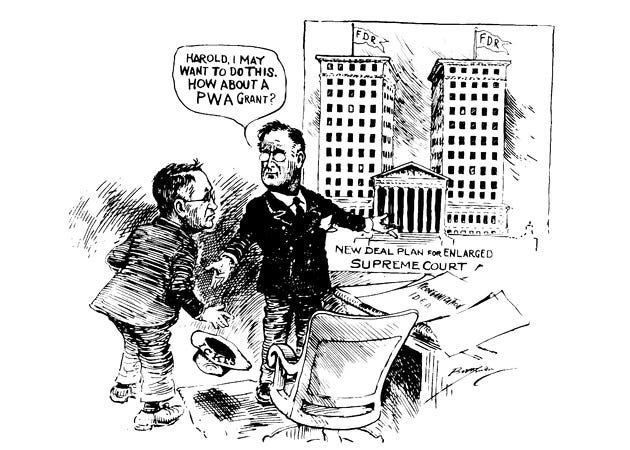
3w ago00:08:59Tap to summarizeThis Day in Legal History: The Senate Rejects Court-PackingOn July 22, 1937, the United States Senate rejected President Franklin D. Roosevelt’s plan to reorganize—critics said “pack”—the Supreme Court, voting 70 to 20 to send the bill to a quiet death. It was a stinging defeat for a president at the height of his popularity, delivered by his own party, and it settled a constitutional question that still shapes how we think about the independence of the judiciary.The background was a collision between the New Deal and the Court. Through the mid-1930s, a conservative majority on the Supreme Court had struck down key pieces of Roosevelt’s economic program as unconstitutional. Frustrated after his landslide 1936 reelection, FDR proposed legislation that would have let him appoint a new justice for every sitting justice over the age of seventy—which, not coincidentally, would have allowed him to add up to six new justices and swamp the opposition. He framed it as a matter of efficiency and helping overworked elderly judges, but nobody was fooled; it was a naked attempt to change the Court’s decisions by changing its membership.The plan backfired, and the reasons are the lesson. Even senators who supported the New Deal recoiled at the precedent—if this president could enlarge the Court to get the rulings he wanted, so could the next one, and the Court’s independence would become a fiction. Meanwhile, the Court itself defused the crisis: in the spring of 1937, Justice Owen Roberts began voting to uphold New Deal legislation, the famous “switch in time that saved nine,” which took some of the urgency out of FDR’s demand. The significance of July 22, 1937 is that it established a durable, if unwritten, constitutional norm—that the size of the Supreme Court is essentially off-limits as a tool for a president to overpower rulings he dislikes. The number nine isn’t in the Constitution, but the bipartisan rebuke of court-packing helped make it feel almost as if it were.An analysis of the closely watched lawsuit by Meta employees over AI-driven layoffs highlights a hard truth: even when workers suspect an algorithm decided their fate, proving it is enormously difficult. To recap, 26 current and former Meta employees sued, alleging the company’s internal AI tools flagged them for termination because they have disabilities or took protected medical, parental, or family leave. Their theory is mechanically specific: because tools like the “Metamate” system scored employees partly on data such as keystroke activity, workers who were lawfully out on leave generated fewer data points and were disproportionately ranked as low-value. Meta cut roughly 8,000 people—about ten percent of its workforce—and says humans, not machines, made the decisions. Here’s why these cases are so hard to win. Anti-discrimination law generally requires the worker to show the employer’s decision was tainted by a protected characteristic, but the employee usually has almost no visibility into how the AI actually worked—the models, the training data, and the weighting are the company’s closely held secrets. On top of that, many employees have signed arbitration agreements, funneling their claims out of open court and into a private process that’s harder to see into and to appeal. The significance is that this appears to be the first case of its kind against a major U.S. company, and it exposes a growing gap: as employers hand more consequential decisions to opaque algorithms, the legal tools workers have to challenge those decisions—built for an era of human managers—may not be up to the job of proving what the machine did.Analysis: Meta employees’ lawsuit shows that if AI fires you, proving it is the hard part | ReutersA split panel of the D.C. Circuit has struck down a long-standing National Labor Relations Board doctrine that protected unions after a business changes hands, ruling that it conflicts with federal labor law. The doctrine at issue is the “successor bar,” and it works like this: when a company is acquired and a new employer takes over, that employer generally cannot challenge or withdraw recognition from the existing union for a reasonable period—about six months—giving the union and workers a window of stability to bargain with their new boss. The court held that this Board-created rule isn’t consistent with the National Labor Relations Act. What makes this ruling bigger than one labor doctrine is the tool the court used to get there. The decision applies the Supreme Court’s 2024 Loper Bright ruling, which overturned the decades-old Chevron doctrine and ended the requirement that courts defer to a federal agency’s reasonable interpretation of an ambiguous statute. Without that deference, the D.C. Circuit felt free to substitute its own reading of the labor law for the NLRB’s. This is exactly the dynamic I wrote about in my Bloomberg column last week in the tax context—the death of Chevron doesn’t erase statutory ambiguity, it just moves the power to resolve it from agencies to courts. The significance is that we’re now watching that shift play out across the administrative state: settled agency doctrines, some decades old, are suddenly vulnerable to being reinterpreted by judges, and here the immediate losers are unions and the workers who counted on a bargaining foothold after a merger.US court says longstanding NLRB rule on post-merger union bargaining is invalid | ReutersA federal judge has temporarily blocked the administration from stripping work authorization from tens of thousands of asylum seekers and immigrants with Temporary Protected Status. U.S. District Judge Nathaniel Gorton in Boston sided with a coalition of immigrant-rights groups and labor unions, halting U.S. Citizenship and Immigration Services from moving ahead with a set of policies while he weighs a longer-term pause; he said he’ll rule by August 5. Here’s the stakes and the legal frame. A work permit—formally, an employment authorization document—is what lets many immigrants lawfully hold a job while their asylum case or protected status is pending. Yanking it doesn’t just threaten deportation down the line; it immediately jeopardizes people’s livelihoods and their employers’ workforces. The contested policies were designed to implement immigration restrictions Congress enacted last year as part of the administration’s signature tax-and-spending law, the One Big Beautiful Bill Act. The plaintiffs argue USCIS is implementing those provisions in ways that exceed what the law allows and skip required procedures. A temporary block like this one preserves the status quo—keeping people employed—while the court decides whether the government followed the rules. The significance connects to a theme we keep returning to: courts serving as a check on how fast and how far the executive can move in reshaping immigration, insisting that even policies rooted in a real act of Congress still have to be implemented lawfully and with proper process.US judge blocks Trump administration from stripping immigrants of work permits | ReutersAnd finally, in my column for Bloomberg Tax this week, I dig into a self-inflicted mess in California: lawmakers scrambling to rework a business tax-credit cap that they apparently didn’t realize would kneecap Hollywood film studios. My core argument is that California is directionally right to resist subsidy bidding wars, but wrong to rewrite the economics of credits it has already issued after companies have started relying on them.Here’s what happened. Since 2024, California has capped the total tax reduction a business can take from all its credits at $5 million a year. That cap was set to expire after 2026—right as productions were going to start claiming credits under a newly expanded film incentive the state had just touted as a centerpiece of keeping film jobs in California. Instead, a bill called SB 122 extended the $5 million limit through 2029 and then converts it to the greater of $5 million or 70% of taxes owed. The part that really gets me is the admission underneath it: lawmakers passed a $351.7 billion budget without apparently understanding how this cap would interact with the film credit they’d just enlarged. As one assemblymember candidly put it, “I’m not sure who knew what about what.” It looks like the cap was really aimed at large research-and-development credit stockpiles, and film credits just got caught in the crossfire.My argument is that the distinction between prospective and retroactive matters enormously here. It’s one thing for California to decide, going forward, that future subsidies will be smaller or conditioned—that’s legitimate fiscal discipline, and I don’t think Hollywood should get to dictate tax policy just by threatening to decamp to Georgia. But it’s another thing entirely to change the timing and practical value of credits after studios have already committed workers, facilities, and financing in reliance on the old rules. When a state does that, it makes itself a less credible counterparty, and it quietly reduces the value of every future incentive it offers, because businesses will start discounting California’s promises for legislative risk. So my prescription is targeted: protect the film credits already awarded under the prior rules, keep a real limit on the big accumulated R&D credits that were the actual target, and replace the ...
Transcribe →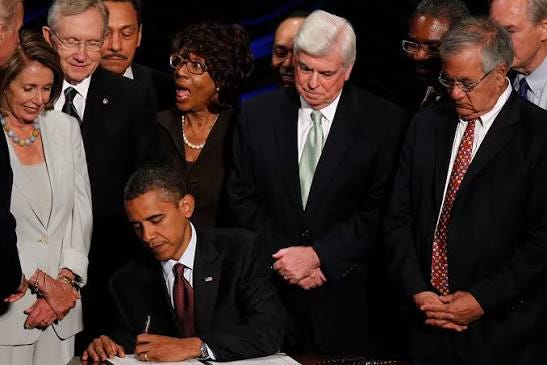
Legal News for Tues 7/21 - Paramount WB Merger Frozen, Anthropic $1.5b Copyright Settlement for Piracy, DOJ Launches Probe into Harvard
3w ago00:06:54Tap to summarizeThis Day in Legal History: The Dodd-Frank ActOn July 21, 2010, President Barack Obama signed the Dodd-Frank Wall Street Reform and Consumer Protection Act, the most sweeping overhaul of American financial regulation since the New Deal. It was a direct response to the 2008 financial crisis—the collapse that wiped out trillions in household wealth, toppled storied institutions like Lehman Brothers, and required massive taxpayer bailouts to keep the banking system from failing entirely.Dodd-Frank tried to attack the crisis’s root causes on several fronts at once. It created the Financial Stability Oversight Council to watch for systemic risks—the danger that one firm’s failure could cascade through the whole economy—and gave regulators new “resolution authority” to wind down failing giants in an orderly way, an attempt to end the problem of banks being “too big to fail.” It imposed the Volcker Rule, restricting banks from making certain speculative bets with depositors’ money. It brought the shadowy derivatives market under federal oversight. And, in its most visible legacy, it created the Consumer Financial Protection Bureau—a new agency dedicated to policing mortgages, credit cards, and other consumer financial products, born largely from an idea championed by then-professor Elizabeth Warren.Dodd-Frank has been contested ever since—fought over in rulemaking, trimmed by later legislation, and litigated all the way to the Supreme Court, including a major case over the constitutionality of the CFPB’s structure. But its core significance endures: it represents the country’s considered legal judgment that concentrated financial power, left unchecked, poses a systemic danger, and that the answer is robust administrative regulation. It’s a fitting anniversary to sit alongside today’s news, because so much of what we cover comes back to the same enduring question—how the law should restrain private economic power without strangling the enterprise that power creates.A federal judge has temporarily paused Paramount Skydance’s roughly $110 billion acquisition of Warner Bros. Discovery, siding for now with a coalition of twelve state attorneys general who sued to stop it. U.S. District Judge Araceli Martínez-Olguín issued a fourteen-day temporary restraining order, finding the deal “likely” violates antitrust law. Here’s the framework. Antitrust law exists to preserve competition, and one of its central tools is blocking mergers that would concentrate too much market power in a single company. The states, led by California, sued on July 13 arguing that combining these two entertainment giants would create a media behemoth with the power to raise prices across film and television and to squeeze rivals. A temporary restraining order is exactly what it sounds like—a short-term freeze to preserve the status quo while the court takes a harder look; the “likely violates” language signals the states cleared the initial bar of showing they’re reasonably likely to succeed. It is not a final ruling that the merger is illegal. The significance is twofold. First, it’s a reminder that even after companies strike a deal, they still have to clear the antitrust gauntlet, and state attorneys general—not just federal enforcers—can be the ones holding the gate. Second, the sheer scale here, a hundred-and-ten-billion-dollar combination of major studios and networks, makes this a marquee test of how aggressively courts will scrutinize consolidation in an industry that shapes what Americans watch.Judge orders Paramount to temporarily pause Warner Bros. acquisition | ReutersA federal judge has granted final approval of Anthropic’s $1.5 billion settlement with a class of authors who accused the AI company of misusing their books to train its chatbot Claude—the largest known copyright settlement in U.S. history. The deal works out to roughly $3,000 per work across an estimated 500,000 books, split among the authors and publishers who hold the rights. The legal backstory is important, because it’s more precise than “AI company pays authors.” The now-retired Judge William Alsup, who first handled the case, drew a careful line: he suggested that training AI on lawfully acquired books could qualify as fair use, but found that Anthropic had violated authors’ rights by downloading and storing more than seven million pirated books in a “central library”—copies it obtained illegitimately, regardless of whether they were ultimately used for training. In other words, the core wrong the settlement addresses is the piracy—the acquisition and hoarding of stolen copyrighted works—not simply the act of training itself. The settlement drew objections from some authors who argue it’s too small, overpays the plaintiffs’ attorneys, or wrongly leaves out certain rights holders, and the judge had to weigh those before signing off. The significance is that this sets a real-world price on one flavor of AI’s copyright problem. It doesn’t resolve the biggest open question—whether training on copyrighted material is itself lawful—but it establishes that how you got the training data matters enormously, and that building your library out of pirated books can cost you well over a billion dollars.US judge approves Anthropic’s $1.5 billion settlement of copyright lawsuit | ReutersAnd finally, the Justice Department has announced a civil-rights probe into Harvard University, this time over its financial aid programs. The Department’s Civil Rights Division says it has opened a “compliance review” to determine whether Harvard’s China-based financial aid arrangements discriminate on the basis of national origin by steering aid to foreign—presumably Chinese—students in a way that excludes American citizens. The theory rests on an unusual inversion of civil-rights law. Statutes like Title VI of the Civil Rights Act bar recipients of federal funding from discriminating based on national origin, and they’ve historically been used to protect racial and ethnic minorities. Here the DOJ is deploying that framework to allege discrimination against American-citizen students. The trigger, according to the Department, was an audit of Harvard’s foreign-funding disclosures showing the university has received more than $630 million from sources based in China, some of it allegedly earmarked, through donor restrictions, for aid to particular students. Harvard says it’s reviewing the letter and will engage with the government. The significance is that this is the latest salvo in a sustained campaign against Harvard and other elite universities, which have faced probes and funding threats over everything from admissions to campus protests. Whatever the merits of this specific allegation, the pattern is what’s notable: the machinery of federal civil-rights enforcement being aimed, repeatedly and pointedly, at a handful of institutions the administration has publicly targeted.US DOJ says it is probing Harvard over financial aid programs | Reuters This is a public episode. If you'd like to discuss this with other subscribers or get access to bonus episodes, visit www.minimumcomp.com/subscribe
Transcribe →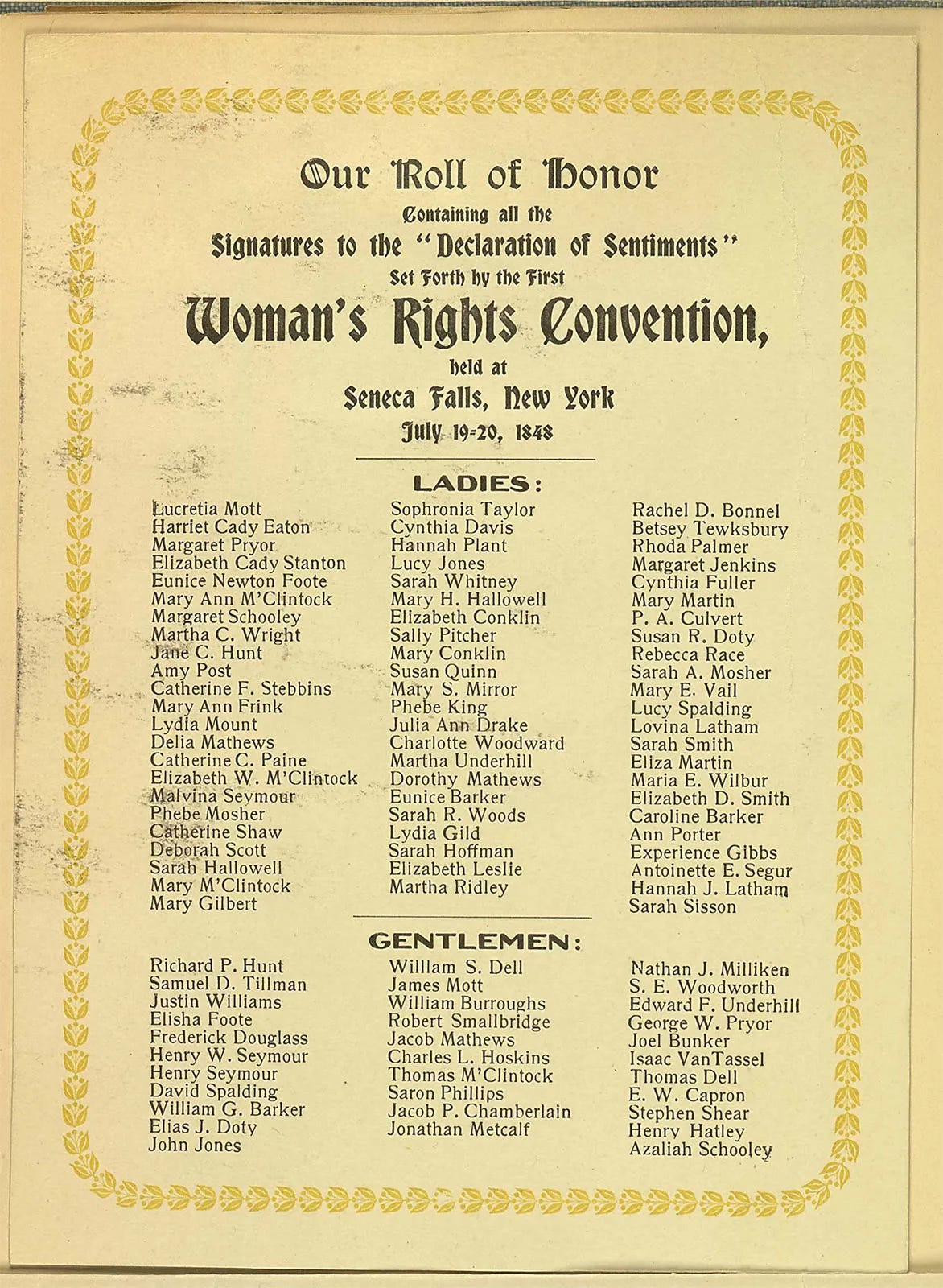
Legal News for Mon 7/20 - NJ Assault Weapons Ban Struck Down, Judge Stops Admin from Clawing Back Grants, Meta Greenlight to AI-Fire and IRS Top Attorney Out
3w ago00:07:39Tap to summarizeThis Day in Legal History: The Declaration of SentimentsOn July 20, 1848, at the close of the two-day Seneca Falls Convention in upstate New York, roughly a hundred people signed the Declaration of Sentiments—the founding document of the organized women’s rights movement in the United States. Drafted principally by Elizabeth Cady Stanton, it was a deliberate and pointed act of legal argument: Stanton modeled it on the Declaration of Independence, echoing Jefferson’s cadences but adding two words that changed everything—”that all men and women are created equal.”The genius of the document was to take the nation’s own founding logic and turn it on the exclusion of half the population. It then catalogued, in the form of a bill of particulars against “man” rather than King George, the specific legal disabilities women lived under. Married women had no right to their own property or wages—under the common-law doctrine of coverture, a wife’s legal identity was absorbed into her husband’s. Women could not vote, were barred from most professions and higher education, had almost no rights to their own children in the event of separation, and were governed by laws they had no voice in making. The Declaration listed these as concrete legal grievances, not vague complaints, framing the denial of women’s rights as a violation of the country’s stated principles.The most controversial demand was the resolution calling for women’s suffrage, which passed only narrowly and with the public support of Frederick Douglass, who attended the convention. The significance of July 20, 1848 is that it launched a legal and political campaign that would take seventy-two years to win the vote, with the Nineteenth Amendment in 1920, and far longer to dismantle coverture and the web of laws built on women’s legal subordination. It’s a reminder that constitutional principles are not self-executing—that “all men are created equal” had to be argued, expanded, and fought for by the people the original text left out.A federal appeals court has struck down New Jersey’s ban on assault firearms and high-capacity magazines, the first time any federal appeals court has invalidated a state assault-weapons ban. Sitting en banc, the Philadelphia-based Third Circuit ruled 10-5 that the state’s prohibition on semi-automatic rifles—not just AR-15s, but the whole category—violates the Second Amendment, as does its ban on magazines holding more than ten rounds. The reasoning flows from the Supreme Court’s recent framework, which asks whether a gun regulation is consistent with the nation’s historical tradition of firearms regulation; the majority concluded these bans are not. What makes this a genuinely big deal is the split it creates. Just last week, a different federal appeals court upheld Illinois’s ban on semi-automatic weapons—so we now have appeals courts squarely disagreeing on whether these bans are constitutional. That kind of circuit split is precisely the condition that draws the Supreme Court in, and the Court is already poised to take up whether bans on semi-automatic rifles violate the Second Amendment. The significance is that a question affecting roughly a dozen states with similar laws is now barreling toward a definitive answer. For the moment, New Jersey’s ban is unenforceable as to these weapons, but the durability of that outcome—and of assault-weapons bans nationwide—now depends on what the Supreme Court does next.US appeals court declares New Jersey’s ban on assault rifles unconstitutional | ReutersA federal judge has ruled that the Trump administration cannot rely on a White House budget-office regulation to cancel billions of dollars in grants simply because those grants no longer match its priorities. U.S. District Judge Indira Talwani in Boston sided with a coalition of Democratic-led states, rejecting the administration’s claim that a clause in Office of Management and Budget regulations gave it authority to revoke funding whenever an agency’s focus shifts. Here’s the underlying principle. When Congress appropriates money for a program and an agency awards grants under it, the government generally can’t just take that money back on a whim—grant recipients have relied on it, and the terms for termination are limited. The administration’s theory was that an OMB regulation let it terminate grants it deemed “inconsistent with agency priorities,” effectively a roving power to defund causes it disfavors. Judge Talwani found the regulation didn’t authorize anything of the kind. The significance connects to a theme we keep returning to: the limits of executive power over money that Congress has already directed. The administration has repeatedly tried to redirect or withhold funds to reshape policy without going through Congress, and courts have repeatedly pushed back. This ruling reinforces that a president’s control over federal spending, though real, is bounded—an agency can’t retroactively pull grants just because political priorities changed.Trump administration cannot cancel grants for disfavored causes, US judge rules | ReutersA federal judge has declined to block Meta from laying off 26 employees who claim the company’s AI tools singled them out for termination because they have disabilities or took medical leave. U.S. District Judge William Orrick in Oakland ruled that the workers hadn’t shown the “irreparable harm” needed for an emergency order halting the layoffs, which are set to begin July 22, and that the merits of their novel claims will be decided in private arbitration. The allegations are striking. The plaintiffs—engineers, managers, researchers, and designers suing anonymously—say Meta used a suite of internal AI systems to score and rank employees onto a termination list, including an assistant called “Metamate,” an employee-trained “second brain” that tracked workers’ communications, and a productivity score drawn from scanning keystrokes, screen content, emails, and browser history. Meta denies wrongdoing and insists humans, not algorithms, made the layoff decisions. This is a frontier legal question: when an employer uses AI to help decide who gets cut, and those tools allegedly disadvantage people with disabilities or on leave, is that illegal discrimination? The judge’s refusal to block the layoffs was procedural—losing a job usually isn’t “irreparable” because money damages can fix it—but he pointedly noted the case raises “serious questions” and said he might reconsider based on more evidence about how AI was actually used. The significance is that algorithmic management is colliding with anti-discrimination law, and courts are just beginning to work out who’s accountable when the machine does the ranking.US judge won’t block Meta from laying off workers who filed AI discrimination lawsuit | ReutersAnd finally, the IRS’s top lawyer has been forced out after refusing White House demands that would have drawn him into tax audits of particular taxpayers. Ken Kies, who served as the agency’s acting chief counsel and as Treasury’s assistant secretary for tax policy, told administration officials their requests would violate a federal law that bars the president, the vice president, and other White House officials from ordering the IRS to conduct or terminate an audit of any specific taxpayer. That statute is a direct legacy of Watergate-era abuses, when presidents tried to sic the tax agency on their enemies, and tax professionals regard it as the single most important safeguard against weaponizing the tax code. Kies apparently stood on that law—and lost his job for it. The story connects directly to one we covered recently: the administration’s $1.8 billion “anti-weaponization” settlement that would have given the president and his family immunity from IRS audits, which a federal judge struck down as a collusive arrangement with no basis in law. The significance is about the fragile independence of tax administration. The protections that keep audits free from political direction only work if the officials inside the agency are willing to enforce them—and when the person who says “no” to an unlawful demand is pushed out, it sends a chilling message to everyone who remains. Top US tax lawyer forced out after White House clash over tax audits | Reuters This is a public episode. If you'd like to discuss this with other subscribers or get access to bonus episodes, visit www.minimumcomp.com/subscribe
Transcribe →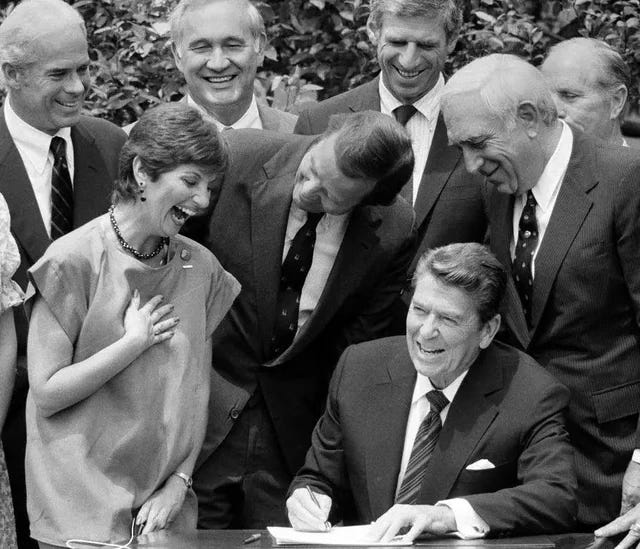
Legal News for Fri 7/17 - Appeals Court Restores Journalist Escort Policy at Pentagon, Judge Scolds DOJ Over Hallucinated Case, "Public Charge" Green Card Rule and DraftKings vs. Philadelphia
4w ago00:07:22Tap to summarizeThis Day in Legal History: The National Minimum Drinking Age ActOn July 17, 1984, President Ronald Reagan signed the National Minimum Drinking Age Act, the law that effectively set the drinking age at 21 across the entire country. What makes the Act a fixture of law-school classrooms isn’t the policy itself—it’s the clever, and constitutionally fraught, mechanism Congress used to achieve it.Here’s the problem Congress faced. Setting a drinking age is a classic exercise of state police power; the federal government has no general authority to tell states how old someone must be to buy a beer. So Congress didn’t order the states to do anything. Instead, it reached for its spending power. The Act directed that any state which failed to raise its drinking age to 21 would lose a percentage of its federal highway funds. States remained technically “free” to keep a lower drinking age—they’d just forfeit a slice of the highway money they depended on. Within a few years, every state had fallen into line.South Dakota challenged the law, and in the 1987 case South Dakota v. Dole, the Supreme Court upheld it. The Court laid out the framework that still governs conditional federal spending: conditions must be unambiguous, related to a federal interest, not otherwise unconstitutional, and—critically—must not be so coercive that they amount to “compulsion” rather than mere “encouragement.” The Court decided that losing about five percent of highway funds was just mild pressure, not coercion. That last piece became enormously important decades later. In the 2012 healthcare decision, NFIB v. Sebelius, the Court for the first time found that a spending condition had crossed the line into unconstitutional coercion, when Congress threatened states with the loss of all their Medicaid funding. The significance of July 17, 1984 is that a law about drinking age quietly established the constitutional playbook for how the federal government leverages its money to steer state policy—and where the limits of that leverage finally lie.A federal appeals court has reinstated the Pentagon’s policy requiring journalists to be accompanied by a government escort inside the building, handing the Trump administration a win in its press-access fight with The New York Times. A lower-court judge had blocked the escort requirement in June, but a three-judge panel of the D.C. Circuit put it back in place. The legal reasoning is worth parsing. The Times argued the escort rule was retaliation against the press in violation of the First Amendment. The panel disagreed—at least for now—finding the Pentagon likely to succeed on its argument that a “generally applicable escort requirement” isn’t a “sufficiently adverse action” to support a First Amendment retaliation claim. In other words, because the rule applies to all reporters rather than singling out particular outlets or viewpoints, the court was skeptical it amounts to unconstitutional retaliation. This is an interim ruling on a preliminary question, not a final decision; the Times says it looks forward to litigating the merits on an expedited basis. The significance is part of a broader pattern we’ve tracked this week—friction between the administration and the press over access and newsgathering. Here the court signaled that neutral, across-the-board restrictions on where reporters can roam are harder to attack than targeted ones, even as the deeper question of press access to the government remains very much alive.US appeals court keeps in place Pentagon’s escort policy for journalists | ReutersA federal judge has warned the Justice Department after government lawyers cited a court decision that does not exist—an apparent AI “hallucination”—in an immigration detention case. In the Michigan matter, DOJ lawyers argued that the Sixth Circuit had barred courts from second-guessing an immigration judge’s bond decision, and cited a case, Taylor v. Hott, that simply isn’t real. Notably, the judge who caught it was appointed by President Trump, and he observed that fabricated AI citations have fueled “a rash of cases” clogging the courts with fake authorities. If this sounds familiar, it should—we covered a nearly identical episode on Monday, when the Eleventh Circuit sanctioned a private lawyer for the same mistake. The rule is the same regardless of who commits it: when you sign a brief, you certify that its legal contentions are grounded in real, existing law, and generative AI tools routinely invent confident, well-formatted citations to cases that were never decided. What makes this one notable is that it’s the government’s own lawyers doing it, in a case about detaining a human being. The judge declined to impose sanctions but issued a pointed warning that future filings must not contain nonexistent authorities. The significance is that the AI-hallucination problem has reached the Justice Department itself, and the courts’ patience—already thin—is not going to extend just because it’s the government at the podium.US judge warns Justice Department about AI use in immigration case | ReutersThe Trump administration is reviving the “public charge” rule, a policy that can deny green cards to immigrants deemed likely to rely on public benefits. The rule appeared in the Federal Register on Thursday, will be formally published July 20, and takes effect September 18. Here’s the concept. “Public charge” is a very old idea in immigration law—the government has long been able to refuse admission or permanent residency to someone likely to become primarily dependent on government support. The fight is over how broadly to define it. The version being revived, first adopted in 2019, dramatically expanded the definition to sweep in anyone who received a government benefit—things like food stamps, Medicaid, or housing vouchers—for more than twelve months in any three-year period. The Biden administration abandoned that broad approach in 2022 and narrowed the grounds for denial; now the expansive version is back. Immigrant advocates warn of a powerful “chilling effect” beyond the green-card applicants themselves: the fear that using benefits could jeopardize their status leads people—including in mixed-status families with citizen children—to avoid the doctor, skip food assistance, or hesitate to file taxes. The significance is that a technical change to the definition of a single term can reshape the behavior of millions, deterring lawful use of public programs out of fear it will be held against someone later.US to revive rule that could deny green cards to immigrants using public benefits | ReutersAnd finally, DraftKings has sued the city of Philadelphia after receiving a subpoena, arguing that the city’s consumer-protection ordinance is preempted by Pennsylvania state law. The dispute is a clean illustration of a recurring structural question: who gets to regulate what. Gambling in Pennsylvania is heavily regulated at the state level, through a comprehensive statutory scheme and a state gaming authority. Philadelphia enacted its own ordinance and issued DraftKings a subpoena as part of an investigation into potential violations. DraftKings’ core argument is preemption—the principle that when a higher level of government has occupied a field, a lower one can’t layer on conflicting or duplicative rules of its own. The company contends the city ordinance essentially copies Pennsylvania law, and that gambling regulation belongs to the state, not the city, so Philadelphia lacks the authority to investigate and enforce in this space. This is the same preemption logic we’ve seen play out between the federal government and states—here it’s just one rung down, between a state and one of its cities, governed by state law and the limits of municipal power. The significance is both immediate and broad: immediately, it’s a bid to quash a subpoena and fend off a city investigation; more broadly, it tests how much room local governments have to police national sports-betting companies when the state has already claimed the field.DraftKings sues Philadelphia after receiving subpoena | Reuters This is a public episode. If you'd like to discuss this with other subscribers or get access to bonus episodes, visit www.minimumcomp.com/subscribe
Transcribe →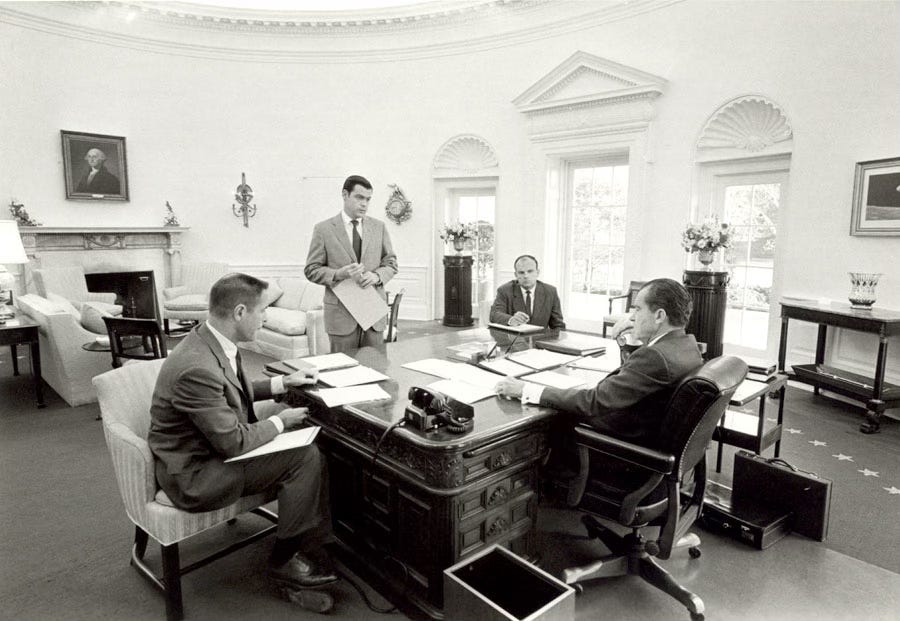
Legal News for Thurs 7/16 - Trump's Personal Lawyer Blanche Grilled, Second Pro-Trump FL Judge Gets Appointed to Fed Bench, FTC Backs Curbing ABA Role
4w ago00:06:13Tap to summarizeThis Day in Legal History: The White House Tapes RevealedOn July 16, 1973, before the Senate Watergate Committee and a live national television audience, a former White House aide named Alexander Butterfield answered a question that changed American history. Asked whether there was any kind of recording system in the White House, Butterfield confirmed that President Nixon had installed a secret, voice-activated taping system that recorded his conversations and phone calls in the Oval Office and elsewhere. In a single answer, the entire Watergate investigation pivoted.Until that moment, the inquiry into the Watergate break-in and cover-up had largely been a contest of competing testimony—Nixon’s word against that of his former counsel John Dean. The existence of the tapes meant there was now an objective record of what the President had actually said and known. Prosecutors and Congress immediately sought them; Nixon refused to hand them over, asserting executive privilege—the claim that a president’s confidential communications are shielded from disclosure. That standoff produced one of the most important separation-of-powers decisions in American law.In United States v. Nixon, decided a year later in July 1974, a unanimous Supreme Court rejected the President’s claim of absolute privilege. The Court recognized that executive privilege exists and has real constitutional footing, but held that it is not unqualified—that it must yield to the demonstrated, specific need for evidence in a criminal proceeding. No person, the decision made clear, not even the president, is above the ordinary processes of the law. Nixon turned over the tapes, one of which captured him plotting to obstruct the investigation, and he resigned days later. The significance of July 16, 1973 is that a single truthful answer under oath set in motion the enforcement of a foundational principle: that presidential power operates within the law, and that the courts, not the president, decide the limits of privilege.Todd Blanche’s bid to become attorney general is hanging in the balance after a tense confirmation hearing before the Senate Judiciary Committee. Blanche, who has been acting attorney general since President Trump fired Pam Bondi in April and who previously served as Trump’s personal criminal defense lawyer, spent hours fielding pointed questions—including a telling moment when he said he “is” the president’s lawyer before catching himself and correcting it to “was.” The awkwardness captures the central concern: whether a former personal attorney to the president can run the Justice Department as a neutral servant of the law rather than of the man who appointed him. Senators pressed him on the now-defunct anti-weaponization fund, the handling of the Epstein files, and Trump’s pardons for January 6 defendants. The math is what makes this precarious. The recent death of Senator Lindsey Graham left committee Republicans with just one vote to spare, and Senator John Cornyn—a lame duck—has said he isn’t sold, meaning Blanche’s advancement may rest largely in Cornyn’s hands. The significance is about the independence of federal law enforcement: confirming a president’s former defense lawyer as attorney general tests whether the Justice Department’s prosecutorial power will be insulated from the president’s personal interests, and the narrow margin means a single Republican could decide the outcome.Blanche to face Senate grilling in bid to be Trump’s attorney general | ReutersThe Senate has confirmed a second Florida state appeals judge who ruled in President Trump’s favor in his defamation suit against the Pulitzer Prize Board, giving him a lifetime seat on the federal bench. The vote was 51-46 along party lines to place Chief Judge Jeffrey Kuntz on the U.S. District Court for the Southern District of Florida. Here’s the connection that drew scrutiny. Kuntz sat on the Florida appeals court panel that ruled for Trump on a personal-jurisdiction question, allowing his defamation case against the Pulitzer Board to move forward—and Kuntz wrote that panel ruling. He is now the second judge from that same panel to be nominated by Trump and confirmed to a lifetime federal judgeship. At his hearing, Kuntz defended his decision not to recuse from the Trump matter. The significance is about judicial independence and the appearance of a quid pro quo. There is nothing unusual about elevating state appellate judges to the federal bench, and a favorable ruling doesn’t by itself prove anything improper. But when a president rewards judges who ruled for him personally with lifetime appointments, it raises an uncomfortable question about incentives—whether judges hoping for advancement might feel subtle pressure to favor the person doing the appointing—and that perception, critics argue, can corrode public confidence in an impartial judiciary even where each individual ruling was defensible on the merits.2nd Florida judge who ruled for Trump in Pulitzer case confirmed to federal bench | ReutersAnd finally, the Federal Trade Commission and the Ohio State Bar Association have thrown their support behind an Ohio Supreme Court proposal to loosen the American Bar Association’s long-standing grip on who gets to become a lawyer. The proposal would let graduates of non-ABA-accredited law schools sit for the Ohio bar exam and would move toward a state-run accreditation process. Here’s the structure worth understanding. In most states, you generally can’t take the bar exam unless you graduated from a law school the ABA has accredited—which effectively makes the ABA the national gatekeeper of legal education. The FTC’s objection is framed in competition terms: it argues the ABA’s accreditation standards “go beyond what is reasonably necessary” to ensure lawyers are prepared, and that restricting the supply of lawyers this way may boost incumbent lawyers’ pay while raising costs and reducing access for ordinary people who need legal help. Ohio isn’t alone—Florida and Texas have already amended their rules so the ABA no longer has the final say, and Tennessee is weighing a similar move. The significance is a real shift in how the profession polices its own entry. Supporters see it as breaking up a monopoly to expand access to legal careers and legal services; critics worry that weakening a uniform national standard could erode the quality and consistency of legal training. Either way, the ABA’s decades-long role as the sole gatekeeper is eroding, state by state.State bar, FTC back Ohio proposal to limit ABA role in lawyer admissions | Reuters This is a public episode. If you'd like to discuss this with other subscribers or get access to bonus episodes, visit www.minimumcomp.com/subscribe
Transcribe →
Legal News for Weds 7/15 - Blanche BS AG Hearing, Free Speech Challenge to Trump ICC Sanctions on Judges etc., and End of Fed Oversight for LA School District
4w ago00:06:16Tap to summarizeThis Day in Legal History: The Housing Act of 1949On July 15, 1949, President Harry Truman signed the Housing Act of 1949, a centerpiece of his “Fair Deal” and one of the most ambitious housing laws in American history. Its stated goal was breathtaking in scope: “a decent home and a suitable living environment for every American family.” To get there, the Act poured federal money into public housing construction, expanded federal mortgage insurance, and created the urban renewal program to clear and redevelop so-called “slum” neighborhoods.The Act’s legacy is genuinely double-edged, and it’s worth telling honestly. On one hand, it expanded homeownership for millions and built hundreds of thousands of units of public housing. On the other, its implementation became one of the great engines of racial segregation in the twentieth century. Urban renewal too often meant bulldozing established Black neighborhoods—critics bitterly renamed it “Negro removal”—and the public housing built in their place was frequently segregated by design and concentrated in already-poor areas. Meanwhile the federal mortgage machinery it fed continued the practice of redlining, steering the benefits of homeownership toward white families and away from Black ones.That mixed legacy is why the Housing Act belongs in a legal-history conversation about civil rights. The same federal government that would, within a few years, order schools desegregated in Brown v. Board of Education was, through its housing policy, actively entrenching residential segregation—and residential segregation is what makes school segregation so durable, because in America where you live largely determines where you go to school. The story of July 15, 1949 is a reminder that the law’s effects depend enormously on how it’s carried out: a statute promising a decent home for every family became, in practice, a tool that shaped the segregated geography we’re still litigating over today.Todd Blanche faced a high-stakes Senate Judiciary Committee hearing today in his bid to become attorney general on a permanent basis. Blanche has been acting attorney general since President Trump fired Pam Bondi in April, and before joining the Justice Department he served as Trump’s personal criminal defense lawyer—a background that sits at the center of the concerns about him. The confirmation process exists because the Constitution’s Appointments Clause requires the Senate to advise and consent on the nation’s top law-enforcement officer, and the attorney general is supposed to serve the United States, not the president personally. That tension drove the questioning: senators pressed Blanche on the Department’s $1.8 billion “anti-weaponization” fund, its handling of the Jeffrey Epstein files, and its prosecutions of figures perceived as Trump’s political enemies, including former FBI Director James Comey and New York Attorney General Letitia James. The significance is about the independence of the Justice Department. An attorney general who was recently the president’s private defense attorney raises the question of whether federal prosecutorial power will be wielded neutrally or as an instrument of the president’s interests. With a pair of undecided Republicans—Senators Cornyn and Tillis—holding real leverage, the hearing was Blanche’s chance to reassure a narrowly divided Senate, and most observers still expect him to be confirmed by a slim margin.Blanche to face Senate grilling in bid to be Trump’s attorney general | ReutersTwo U.S.-based advocacy groups have sued the Trump administration, arguing that its sanctions targeting the International Criminal Court violate the First Amendment. The groups—Democracy for the Arab World Now and the Taxpayer Alliance Against Genocide—are challenging the February 2025 executive order under which the administration has sanctioned ICC judges, prosecutors, and Palestinian human rights organizations, and which officials pledged this week to expand. The free-speech theory is the key. The plaintiffs say the sanctions regime is so broad that they have stopped doing constitutionally protected things—filing submissions with the ICC and coordinating advocacy with sanctioned people, like the U.N. special rapporteur for Palestine—out of fear that doing so could expose them to fines or even prison. In First Amendment law, that’s a classic “chilling effect”: when a law is vague or sweeping enough that people self-censor protected speech to avoid the risk of penalty, the law itself can be unconstitutional even before anyone is actually punished. There’s notable precedent here: a similar Trump order in 2020 was blocked by a judge who found it likely violated the First Amendment, before the Biden administration rescinded it in 2021. The significance is a direct clash between the executive’s broad power over foreign affairs and sanctions on one side, and Americans’ right to speak, associate, and petition on the other. Three ICC judges have separately sued over the same sanctions, so this order is now being attacked on multiple fronts.Trump’s ICC order violates free speech, advocacy groups say in lawsuit | ReutersA federal appeals court has ended more than sixty years of federal oversight of the Concordia Parish School Board in Louisiana, lifting one of the desegregation orders that dates back to the Civil Rights era. The Fifth Circuit’s decision hands a win to the Trump administration, which has pushed to wind down these long-running cases—a striking reversal for a Justice Department that spent decades on the other side, fighting to enforce them. Here’s the legal framework. After Brown v. Board of Education, hundreds of Southern school districts were placed under federal court supervision and ordered to dismantle segregation. A district can be released from that oversight when a court finds it has achieved “unitary status”—meaning it has eliminated the vestiges of segregation, to the extent practicable, in areas like student assignment, faculty hiring, facilities, and discipline. The dispute in cases like this one is whether that’s really been accomplished. Louisiana officials argue the orders are relics of a bygone era and no longer needed. Civil rights advocates and some parents counter that the vestiges persist—in racial disparities in student discipline, access to advanced academic programs, and teacher hiring—and that lifting oversight removes a crucial tool for addressing them. The significance is part of a broader push to close out Civil Rights-era decrees, and it raises a hard question: whether these districts have genuinely outgrown the need for supervision, or whether ending it prematurely risks letting old patterns quietly reassert themselves.Appeals court ends US oversight of Louisiana school system related to desegregation mandate | Reuters This is a public episode. If you'd like to discuss this with other subscribers or get access to bonus episodes, visit www.minimumcomp.com/subscribe
Transcribe →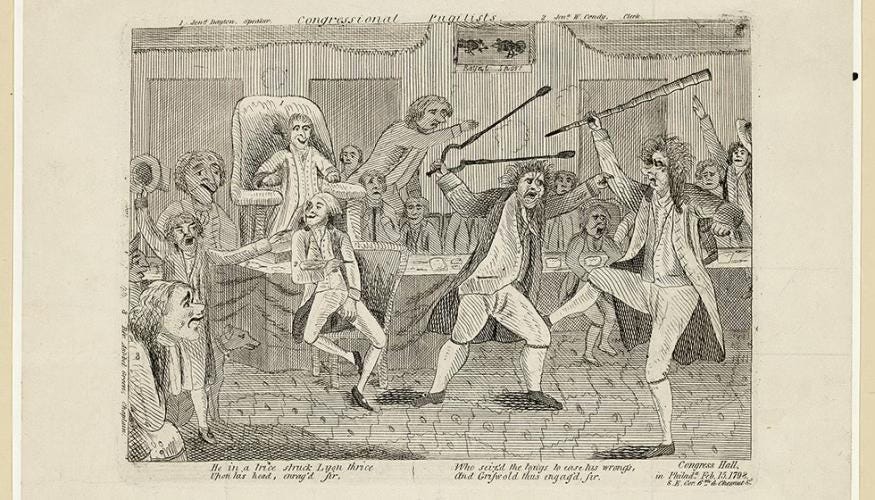
Legal News for Tues 7/14 - Subpoenas for Times Reporters, Trump's IRS Deal Void, More Tylenol Autism Nonsense and Big Companies May Yet Miss Chevron Deference
4w ago00:09:08Tap to summarizeThis Day in Legal History: The Sedition Act of 1798On July 14, 1798, Congress passed the Sedition Act, the most notorious of the four laws known collectively as the Alien and Sedition Acts. The Sedition Act made it a federal crime to write, print, utter, or publish “any false, scandalous and malicious writing” against the government of the United States, the Congress, or the President—with the intent to defame them or bring them into disrepute. In plain terms, it criminalized criticism of the government.The context was a Federalist administration, under President John Adams, gripped by fear of France and of domestic dissent, and eager to silence the opposition press aligned with Thomas Jefferson’s Republicans. And that’s exactly how it was used. Federal prosecutors went after Republican newspaper editors and even a sitting congressman, securing convictions for the crime of harsh political speech. Notably, the Act was written to expire in 1801—conveniently, the moment Adams’s term would end—so that it could be wielded against his critics but would not outlive his own hold on power.The reaction was fierce and consequential. Jefferson and James Madison drafted the Kentucky and Virginia Resolutions arguing the Act was unconstitutional, and the ensuing backlash helped sweep Jefferson into the presidency in 1800; once in office, he pardoned those convicted under it. The Sedition Act was never tested at the Supreme Court, but history rendered its verdict. More than a century and a half later, in New York Times v. Sullivan, the Court looked back and declared that the Act’s assault on free expression had been repudiated “in the court of history,” using it as a touchstone for modern First Amendment law. The lesson of July 14, 1798 endures: laws that punish criticism of the government are almost always tools of the powerful against their critics—and a free press is most necessary precisely when the state would prefer it silent.Federal prosecutors have issued subpoenas seeking to compel four New York Times journalists to testify before a Manhattan grand jury, part of a leak investigation into the paper’s reporting on security concerns surrounding President Trump’s flight on the new Qatari-donated Air Force One. Federal agents delivered some of the subpoenas to the reporters’ homes. Here’s the legal terrain. There is no absolute federal reporter’s privilege—the Supreme Court held decades ago that the First Amendment doesn’t categorically shield journalists from grand jury subpoenas—but the Justice Department has long operated under internal guidelines that made going after reporters a last resort. Those guardrails matter here, because in 2025 Attorney General Pam Bondi rescinded the Biden-era policy that had sharply limited subpoenas against journalists, restoring broader authority to pursue them. The Times says it will fight, and can ask a court to quash the subpoenas as overbroad, issued in bad faith, or violating the First Amendment. The significance is the pressure this puts on newsgathering: when the government can subpoena reporters to unmask their sources, sources stop talking, and the kind of national-security reporting at issue here gets harder to do. Press-freedom groups warn this administration has reached for subpoenas and search warrants against journalists—at the Times, the Post, and the Wall Street Journal—more freely than its predecessors.Explainer: Can prosecutors compel New York Times journalists to testify in leak probe? | ReutersA federal judge has voided President Trump’s roughly $1.78 billion settlement with the IRS, delivering a scathing rebuke and referring his lawyers for possible discipline. The backstory is unusual. Trump sued his own administration in January over the leak of his tax returns, and by late May had reached a deal with the IRS to create an “anti-weaponization” fund and to “forever bar” the government from any action related to his past tax returns—protection extending to his family and businesses. U.S. District Judge Kathleen Williams found the whole thing was a setup. The core legal defect is the absence of what courts call adverseness. Federal courts can only decide genuine “cases or controversies”—real disputes between opposing parties. Here, Judge Williams wrote, “there was never adverseness between the Parties; there was never a case or controversy; and there was never a question as to who would prevail,” because Trump was effectively suing himself, with his own Justice Department on the other side agreeing to lose. She found the case was brought for an improper purpose: to get a court’s stamp of legitimacy on a settlement with no basis in law or fact. She sanctioned Trump’s attorneys and referred one, Alejandro Brito, to the Florida bar, and suggested Acting Attorney General Todd Blanche should face discipline too. The significance is a court refusing to be used as a rubber stamp—insisting that its legitimacy can’t be borrowed to bless a collusive deal dressed up as litigation.US judge voids Trump’s settlement with IRS | ReutersA federal appeals court has revived more than 500 private lawsuits against Kenvue, the maker of Tylenol, alleging that acetaminophen use during pregnancy caused autism and ADHD in children—and here it’s worth being clear about the science before the law. There is no firm scientific evidence that Tylenol causes autism or ADHD. The most rigorous recent research, including a large Swedish sibling-comparison study of millions of children, found no causal link once you control for genetic and environmental factors shared within families; mainstream medical bodies continue to regard acetaminophen as one of the safer pain and fever options in pregnancy, and untreated high fevers carry their own real risks. So this ruling is not a finding that Tylenol is dangerous. What the Second Circuit actually decided was narrower and procedural: that the trial judge had wrongly excluded the plaintiffs’ expert witnesses. Under the rules governing expert testimony, judges act as “gatekeepers,” admitting expert opinion only if it rests on reliable methodology. The district court had tossed the plaintiffs’ experts as unreliable; the appeals court, per Judge Guido Calabresi, said their methods reflected approaches other scientists use and amounted to “acceptable interpretations of scientific evidence where scientists may, and in fact do, disagree.” Crucially, the court stressed it was not deciding whether Tylenol actually causes these conditions. The significance is about who weighs contested science—the ruling lets juries, not just judges, hear the dispute, which is a real win for the plaintiffs procedurally even though the underlying causation case remains, on the current evidence, weak.US appeals court revives private lawsuits linking Tylenol to autism, ADHD | ReutersAnd finally, in my column for Bloomberg Tax this week, I take on a counterintuitive idea: that big corporate taxpayers may come to miss the boring, predictable world of administrative tax law now that the Supreme Court has overruled Chevron deference. My argument, in short, is that a weaker IRS and Treasury is not the unalloyed win a lot of multinationals assume it is.Here’s the setup. For forty years, under Chevron, courts deferred to a federal agency’s reasonable interpretation of an ambiguous statute. With Chevron gone, courts no longer have to defer to Treasury’s reading of the tax code just because the statute is vague and the agency has expertise. A lot of corporate taxpayers cheered that—less agency power sounds like more freedom. But my point is that killing Chevron did nothing to remove the underlying ambiguity in the tax code; it just moved the job of resolving that ambiguity to a different desk. And there are only two other desks it can land on, and I don’t love either one for a company that wants predictability.The first desk belongs to the courts. If Treasury can’t issue as many binding, prospective rules, then more of these questions get resolved through litigation—case by case, on particular records, often years after the transactions are done. Courts are built to handle controversies, not to administer a global corporate tax system. The Coca-Cola transfer-pricing fight is the stress test I point to: a company may win a great refund that way, but you can’t organize a multinational’s affairs around the hope that every ambiguous question turns into a bespoke judicial adventure. The second desk belongs to Congress, which is the more democratically satisfying answer—Congress writes the code and is politically accountable. But in practice Congress moves slowly and episodically, usually only when tax changes ride along on some bigger budget deal. By the time Congress fixes an international tax problem, the business model that created it has been reorganized twice and pivoted to something involving AI.So the core of my argument is that corporate taxpayers need to distinguish between a useful litigation win and a stable legal environment—those two things don’t always travel together. A bad but clear rule can be modeled and planned around; an ambiguous rule, as I put it, isn’t really a rule, it’s a threat in the shape of a Treasury notice. My prescription is that Congress should make clearer, more deliberate delegations where technical administration is unavoidable—transfer pricing, international tax, anti-abuse rules—and that Treasury should do a post-Chevron audit of its own regulations to ...
Transcribe →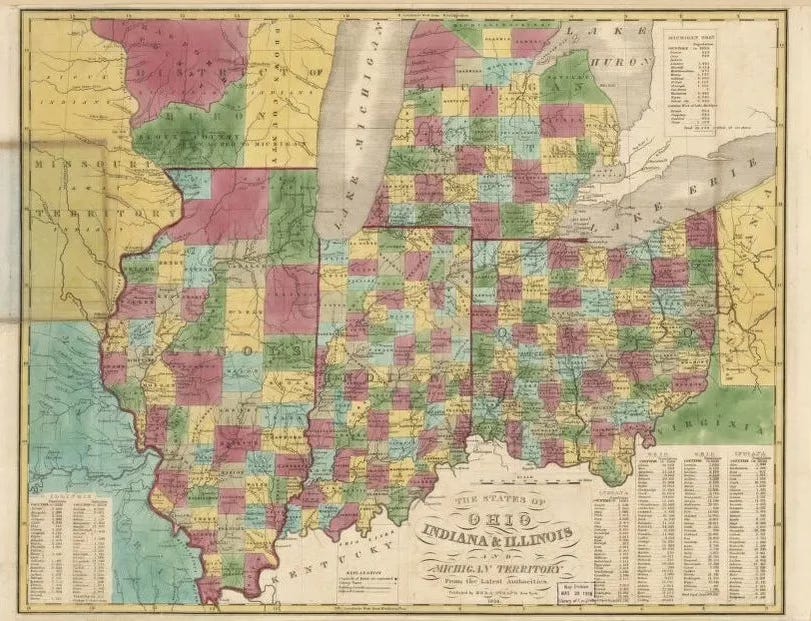
Legal News for Mon 7/13 - Apple and OpenAI in Legal Fight, Disability Telework Rights, TPS Work Permits for Haiti and Others Extended and Sanctions for Hallucinated Case Cites
4w ago00:06:41Tap to summarizeThis Day in Legal History: The Northwest OrdinanceOn July 13, 1787, the Confederation Congress adopted the Northwest Ordinance, one of the most important laws in American history—and one passed under the Articles of Confederation, before the Constitution even existed. Its formal subject was dry: how to govern the vast territory north and west of the Ohio River. But in answering that question, it set precedents that shaped the entire future of the nation.The Ordinance did several remarkable things at once. It created an orderly process by which frontier territories would move through stages of self-government and eventually be admitted to the Union as new states—fully equal to the original thirteen, not as colonies or dependencies. That single principle, that new territory would become co-equal states rather than subordinate possessions, distinguished the American project from every empire that had come before. The Ordinance also guaranteed a set of rights to settlers in the territory: freedom of religion, the right to trial by jury, habeas corpus, and proportionate representation—a bill of rights in miniature, adopted before the Bill of Rights.And in its most consequential provision, Article 6, the Ordinance banned slavery throughout the Northwest Territory—the future states of Ohio, Indiana, Illinois, Michigan, Wisconsin, and part of Minnesota. It was the first time the national government prohibited slavery in a defined territory, drawing a line that would harden over the decades into the divide between free states and slave states, and setting up the bitter fights over the expansion of slavery that culminated in the Civil War. The significance of July 13, 1787 is that a Congress often dismissed as weak and ineffectual produced a statute of enduring genius—a template for national growth, an early charter of liberties, and a foundational stand, however partial, against slavery.Apple has sued OpenAI in federal court in Northern California, accusing the AI company of a systematic scheme to steal its trade secrets in order to break into consumer hardware. It’s a striking reversal for two companies that struck a high-profile partnership back in 2024. Apple’s complaint alleges misappropriation of trade secrets and breach of contract, claiming OpenAI leaned on former Apple employees—more than 400 now work there—along with aggressive recruiting and supplier relationships to vacuum up confidential information. Apple points a finger at OpenAI’s hardware chief, a former Apple vice president, alleging he told job candidates still employed at Apple to bring “actual parts” to interviews for “show and tell,” and that another departing employee downloaded dozens of files on unreleased products. Trade-secret law protects confidential business information that gives a company a competitive edge, and the case will turn on whether OpenAI crossed the line from lawfully hiring talent—people are allowed to change jobs and use their general skills—into unlawfully exploiting Apple’s protected secrets. Given the two firms’ size and the stakes in the AI hardware race, this is shaping up to be a marquee tech dispute.Apple sues OpenAI alleging misappropriation of trade secrets, court records show | ReutersA federal judge has ruled that disabled Justice Department immigration lawyers can keep working from home while they press a lawsuit challenging the department’s return-to-office mandate. Two attorney-advisers at the immigration courts won a preliminary injunction from Judge Patricia Tolliver Giles in the Eastern District of Virginia, temporarily halting the no-telework policy as applied to them. Their claim rests on the Rehabilitation Act, the federal statute requiring the government, as an employer, to provide reasonable accommodations to employees with disabilities—here, remote work they say is necessary to protect their health. The administration’s broad directive ordering federal workers back to the office full-time collided with that individualized duty. A preliminary injunction isn’t a final ruling; it means the plaintiffs showed they’re likely to win and would suffer irreparable harm without relief. The significance is the tension it spotlights: a government-wide, one-size-fits-all workplace policy still has to bend to statutory disability-accommodation rights, and this ruling suggests courts will enforce that limit even against the executive’s management of its own workforce.US judge says DOJ lawyers can work from home pending lawsuit over telework policy | ReutersThe administration extended work permits for hundreds of thousands of immigrants with Temporary Protected Status from Haiti and six other countries just hours before they were set to expire. It’s worth being precise about what actually changed. TPS is a humanitarian designation that lets people from countries in crisis live and work here legally. Last month the Supreme Court cleared the way for the administration to end TPS for Haitians and Syrians—but what was extended here is narrower: the validity of the employment-authorization documents that workers and employers rely on for I-9 and E-Verify purposes. Haitians got two extra weeks, to July 24; those from Syria, Ethiopia, Somalia, Yemen, South Sudan, and Myanmar got one. The underlying TPS designations remain in legal limbo, awaiting district-court orders expected at the end of July. The significance is both humanitarian and practical: the reprieve came as some employers had already begun terminating these workers, and it underscores how much uncertainty TPS holders are living under—their ability to keep a job now measured in days and weeks while the courts sort out their status.US extends work permits for Haitians, other immigrants with Temporary Protected Status | ReutersAnd finally, a federal appeals court has sanctioned a lawyer for filing a brief riddled with fake, AI-generated case citations—the latest entry in a fast-growing genre. The Eleventh Circuit rebuked the attorney with a line destined for law-review footnotes: “Whatever the merits of artificial intelligence, it is no substitute for actual intelligence.” The problem is by now familiar: generative AI tools will, with total confidence, invent case names, citations, and quotations that do not exist—”hallucinations”—and lawyers who paste that output into filings without checking are presenting fictional law to a court. That breaches a basic professional duty. Under Rule 11 and the courts’ inherent authority, attorneys must certify that their legal contentions are grounded in real, existing law, and courts have been escalating the consequences—reimbursed fees, fines, and public reprimands—as the same mistake keeps recurring despite repeated warnings. The significance isn’t that AI is banned from law practice; it plainly isn’t. It’s that the tool doesn’t dilute the lawyer’s responsibility one bit. You can use AI to draft, but you still have to verify, because when you sign a brief you vouch for every citation in it—and “the computer made it up” is not a defense.US appeals court rebukes lawyer over fake, hallucinated case citations | Reuters This is a public episode. If you'd like to discuss this with other subscribers or get access to bonus episodes, visit www.minimumcomp.com/subscribe
Transcribe →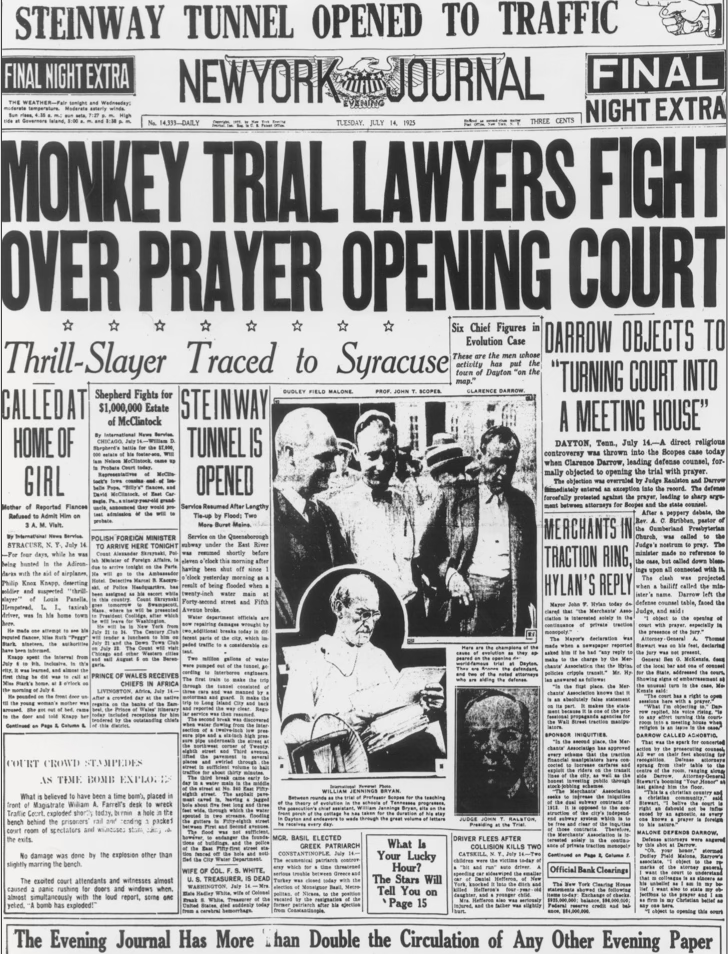
Legal News for Fri 7/10 - DOJ Sues Maryland Over Sanctuary Policies, Grand Jury Transparency, Simpson Thacher Malpractice Suit in FL and Trump Guts Election Commission
Jul 1000:05:57Tap to summarizeThis Day in Legal History: The Scopes “Monkey Trial” OpensOn July 10, 1925, the trial of John T. Scopes opened in the sweltering courthouse of Dayton, Tennessee. Scopes, a young high school teacher, stood accused of violating the state’s Butler Act, which made it a crime to teach human evolution in public schools. The case became one of the most famous trials in American history—less because of what happened to Scopes, who was a willing test defendant recruited by the ACLU, than because of the collision it staged between two national figures and two worldviews.On one side was William Jennings Bryan, three-time presidential candidate and champion of the anti-evolution cause, who argued for the prosecution. On the other was Clarence Darrow, the era’s most celebrated defense attorney, who took the case to defend academic freedom and the teaching of science. The trial’s most dramatic moment came when Darrow called Bryan himself to the stand as an expert on the Bible and cross-examined him mercilessly on its literal interpretation. Scopes was convicted and fined $100—a verdict later overturned on a technicality—so in the narrow legal sense, the anti-evolution side won.But the significance of Scopes lies elsewhere. It was one of the first trials broadcast live on national radio, a spectacle that turned a local misdemeanor into a referendum on faith, science, education, and the reach of the state into the classroom. It sharpened the enduring constitutional questions—about what government may compel or forbid teachers to teach—that would return decades later in cases like Epperson v. Arkansas, which finally struck down anti-evolution laws under the First Amendment. Scopes is a reminder that some trials matter less for their judgments than for the arguments they force a country to have out loud.The Justice Department has sued Maryland, alleging that the state’s sanctuary policies unlawfully obstruct federal immigration enforcement. The suit targets Maryland’s Community Trust Act, which limits how state and local officials may cooperate with federal immigration authorities—for example, by declining to honor routine detainer requests to hand people over. The government’s core theory is preemption: it argues that under the Supremacy Clause, states can’t erect policies that interfere with federal immigration law. Maryland and Attorney General Anthony Brown will counter that states have no obligation to affirmatively help enforce federal law—a principle known as anti-commandeering. This is the twenty-first such suit the administration has filed against sanctuary jurisdictions, part of a coordinated campaign, and it teed up the recurring constitutional question of where federal supremacy ends and a state’s right to withhold its own resources begins.DOJ sues Maryland, alleges state policies interfere with immigration crackdown | ReutersProposed rule changes would require greater public disclosure when federal grand juries refuse to indict—an unusually pointed reform prompted by a string of rejected charges. Grand juries almost never decline to indict; the old line is that a prosecutor could get one to “indict a ham sandwich.” Yet over the past year, grand juries in Chicago, Los Angeles, and Washington rejected charges in politically sensitive cases, including a failed effort to indict six sitting members of Congress. In response, the federal court in Chicago adopted a rule filing a redacted version of the foreperson’s rejection form on the public docket, and D.C.’s chief judge ordered that the judiciary be notified whenever a grand jury turns the administration down. Because grand jury proceedings are ordinarily secret, “no true bill” outcomes usually vanish without a trace. The significance is transparency: these measures would let the public see how often the government tries to charge people and fails—turning the grand jury’s quiet power to say no into something visible.Proposed rules call for DOJ disclosure when grand juries reject indictments | ReutersThe elite law firm Simpson Thacher & Bartlett is heading into a rare legal-malpractice trial in Florida next week, defending against claims seeking more than $200 million. The case comes from former Patriot National CEO Steven Mariano, who alleges the firm botched its legal work on a corporate stock transaction more than a decade ago; Simpson Thacher denies liability and argues that market forces, not its advice, caused the losses. What makes this notable is simply that it’s going to a jury at all. Malpractice claims against top-tier firms are almost always settled quietly or dismissed before trial, because both sides have strong incentives to avoid airing the details of a soured client relationship in open court. A verdict here could ripple outward—shaping how firms handle risk, how professional-liability insurers price transactional work, and how future clients frame malpractice claims against their own lawyers.Simpson Thacher prepares for rare malpractice trial in Florida next week | ReutersAnd finally, President Trump has removed the last sitting members of the U.S. Election Assistance Commission, the bipartisan federal agency that helps states administer elections. All three commissioners were pushed out at once—the two Democratic members fired by email, the Republican member asked by phone to resign—leaving the four-seat commission entirely empty. That vacancy is the whole point: with no commissioners, the EAC cannot take official action, and because replacements require Senate confirmation, the agency could be sidelined for months heading into the midterms. The EAC isn’t a powerhouse—it sets voluntary voting-system guidelines and distributes election funding—but it’s a piece of the federal election infrastructure, and emptying it entirely is unprecedented. Voter-advocacy groups and Democratic election officials called the move reckless, and it raises the same structural question running through this week’s news: how much a president may reshape or disable the machinery that oversees elections in the run-up to a vote.Trump terminates Election Assistance Commission members | Reuters This is a public episode. If you'd like to discuss this with other subscribers or get access to bonus episodes, visit www.minimumcomp.com/subscribe
Transcribe →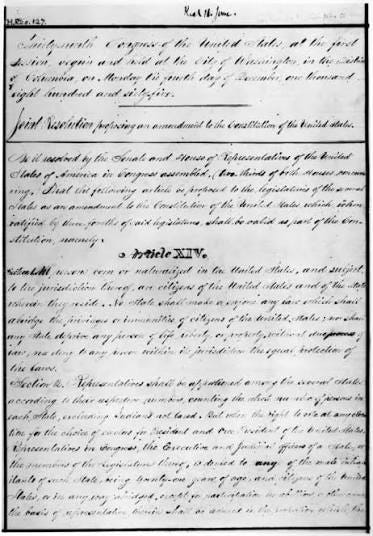
Legal News for Thurs 7/9 - SAVE Database Weaponized Against Voter Rolls, DOJ Threatens State Election Officials and ex-Olympians Bogus DC Reflecting Pool Charges
Jul 900:08:34Tap to summarizeThis Day in Legal History: The Fourteenth Amendment Is RatifiedOn July 9, 1868, South Carolina and Louisiana became the final two states needed to push the Fourteenth Amendment over the three-quarters threshold, and with their votes the amendment was ratified into the Constitution. It is, by almost any measure, the most consequential of the Reconstruction amendments and arguably the most important addition to the Constitution since the Bill of Rights.The amendment was written to answer the central question left open by the Civil War and the abolition of slavery: what did freedom actually mean, and who was entitled to it? Its first section does an enormous amount of work in a single sentence. It establishes birthright citizenship—declaring that all persons born or naturalized in the United States, and subject to its jurisdiction, are citizens of both the nation and their state. It then forbids any state from abridging the privileges or immunities of citizens, from depriving any person of life, liberty, or property without due process of law, and from denying any person the equal protection of the laws. Those three clauses—privileges or immunities, due process, and equal protection—became the constitutional text on which vast stretches of modern American law are built.The historical purpose was direct. The framers of the amendment, led in the House by John Bingham, wanted to overrule Dred Scott, which had held that Black Americans could not be citizens, and to constitutionalize the civil rights protections Congress had already tried to enact by statute—putting them beyond the reach of any future hostile Congress or Southern legislature. They understood that emancipation without citizenship and equal protection would be a hollow victory, and they wrote a guarantee that applied against the states, not just the federal government.The significance of July 9, 1868 is hard to overstate, because so much of what we argue about today runs directly through this text. The Equal Protection Clause is the basis of Brown v. Board of Education and school desegregation, of Loving v. Virginia striking down bans on interracial marriage, and of Obergefell recognizing marriage equality. The Due Process Clause became the vehicle for incorporating most of the Bill of Rights against the states, so that free speech, free exercise, and protections for the criminally accused bind state governments too. And the Citizenship Clause is the reason that birthright citizenship is a constitutional guarantee rather than a policy preference—as the Supreme Court reaffirmed just this past term. When you hear debates about who counts as a citizen, what process the government owes a person before it takes something from them, or whether a law treats people equally, you are hearing an argument about the amendment ratified on this date.A federal judge in Florida has ordered the Department of Homeland Security to keep giving four Republican-led states—Florida, Iowa, Indiana, and Ohio—access to a federal database those states use to check whether registered voters are citizens. The order, from U.S. District Judge T. Kent Wetherell II in Pensacola, lets the states continue using the system while the underlying legal fight plays out.The database is called SAVE—Systematic Alien Verification for Entitlements—a federal system historically used to verify immigration status for benefits. After a revamp last year, it became far more powerful for election purposes: users could search many records at once, and it exposed individuals’ Social Security numbers. Several Republican-led states began comparing their voter rolls against SAVE and canceling the registrations of people the database flagged as noncitizens. The problem is what happens when the database is wrong or out of date—people who are in fact citizens can get flagged and purged.That risk is exactly why this ruling sits in tension with another one. Just weeks earlier, on June 22, a different federal judge in Washington, D.C., restricted broader use of the database, warning that relying on it could result in eligible voters being wrongly stripped from the rolls. So you now have two federal courts pointing in different directions—one worried about wrongful purges and limiting the database’s use, and one ordering DHS to keep the spigot open for these four states. When trial courts split like this, the disagreement typically has to be resolved higher up, and it means the rules can differ depending on which state and which courtroom you’re standing in.The significance is that this is a live fight over the machinery of voter-roll maintenance heading into a midterm election year. There’s a genuine and legitimate interest in keeping noncitizens off the voter rolls—but there’s an equally real risk that a blunt, error-prone matching process disenfranchises actual citizens who then have to fight to get back on. This ruling tilts toward giving states the verification tool; the D.C. ruling tilts toward protecting against wrongful removals. Watch the appellate courts, because the boundary between list maintenance and unlawful voter purging is about to get drawn more sharply.US judge orders four states be given access to citizenship data for voter checks | ReutersIn a closely related development, the Justice Department has sent letters to all fifty states warning that state and local election officials could face criminal prosecution if they allow noncitizens to remain on their voter rolls. The letters, from Harmeet Dhillon, who leads the Department’s Civil Rights Division, give officials just five days to respond with a plan to comply. The federal government does have statutes on the books aimed at protecting the integrity of elections and barring noncitizens from voting, and the letters invoke several of them. But the ordinary way these laws work is that you prosecute a person who actually votes illegally, or who knowingly facilitates fraud. What’s unusual here is the target: the letters put state and local election administrators—the people who maintain the rolls—on notice that they personally could be charged. That reframes routine election administration as potential criminal exposure for the officials doing it.Think about the position this puts an election official in. Maintaining accurate voter rolls is genuinely hard—people move, die, naturalize, and occasionally register in error—and every state already has processes for it. Now imagine being told by the U.S. Department of Justice that if the federal government later decides your rolls were inadequate, you could be a criminal defendant, and you have five days to send in a compliance plan. Even if few or no prosecutions ever materialize, the threat itself is designed to change behavior—to push officials toward more aggressive purging out of fear of personal liability. Critics call that coercion; the Department frames it as enforcement.The significance is about federal pressure on the decentralized American election system. Elections in this country are run by states and localities, deliberately, so that no single national authority controls the vote. Democratic officials in states like Michigan pushed back hard, noting they’ve already taken extensive steps to ensure only eligible voters can vote. The letters, arriving alongside the SAVE database fight, are part of a coordinated push ahead of the midterms, and they raise a serious question about the line between legitimate federal enforcement of election laws and using the threat of prosecution to lean on the officials who administer them.US Justice Department tells state officials they could be prosecuted over noncitizen voting | ReutersAnd in a very different kind of case, a former Olympic canoe racer, David Hearn, pleaded not guilty in D.C. Superior Court to a felony charge of deliberately damaging the recently renovated Lincoln Memorial Reflecting Pool. Hearn, who is 67 and competed in three Summer Olympics, entered his plea through an attorney at his first court appearance, and his lawyers have described the prosecution as an abuse of power built on what they call a “concocted narrative.”The Reflecting Pool sits on the National Mall between the Lincoln Memorial and the Washington Monument and had just undergone a roughly $16 million renovation. Hearn has said he was stopped by National Guard troops and U.S. Park Police and detained for about five hours after pausing at the pool during a 64-mile bike ride in June. He was later indicted on a single felony count of property destruction. The top federal prosecutor for D.C., U.S. Attorney Jeanine Pirro, said six other people were arrested on misdemeanor charges connected to damage at the same site.The legal question worth watching is the gap between the charge and the conduct. Property-destruction law generally requires proof that the defendant intentionally caused the damage, and a felony charge usually turns on the dollar value of that damage. Hearn’s defense is essentially that the government has manufactured intent and seriousness out of an innocent encounter—that a man pausing on a bike ride has been turned into a felony defendant. The judge apparently agreed there was little flight or danger risk: Hearn was released without court supervision pending an August 5 status hearing, which tells you something about how the court currently views the threat he poses.The significance here is less about one damaged pool and more about the exercise of prosecutorial discretion. Deciding whom to charge, and whether t...
Transcribe →