← Miss Understood with Rachel Uchitel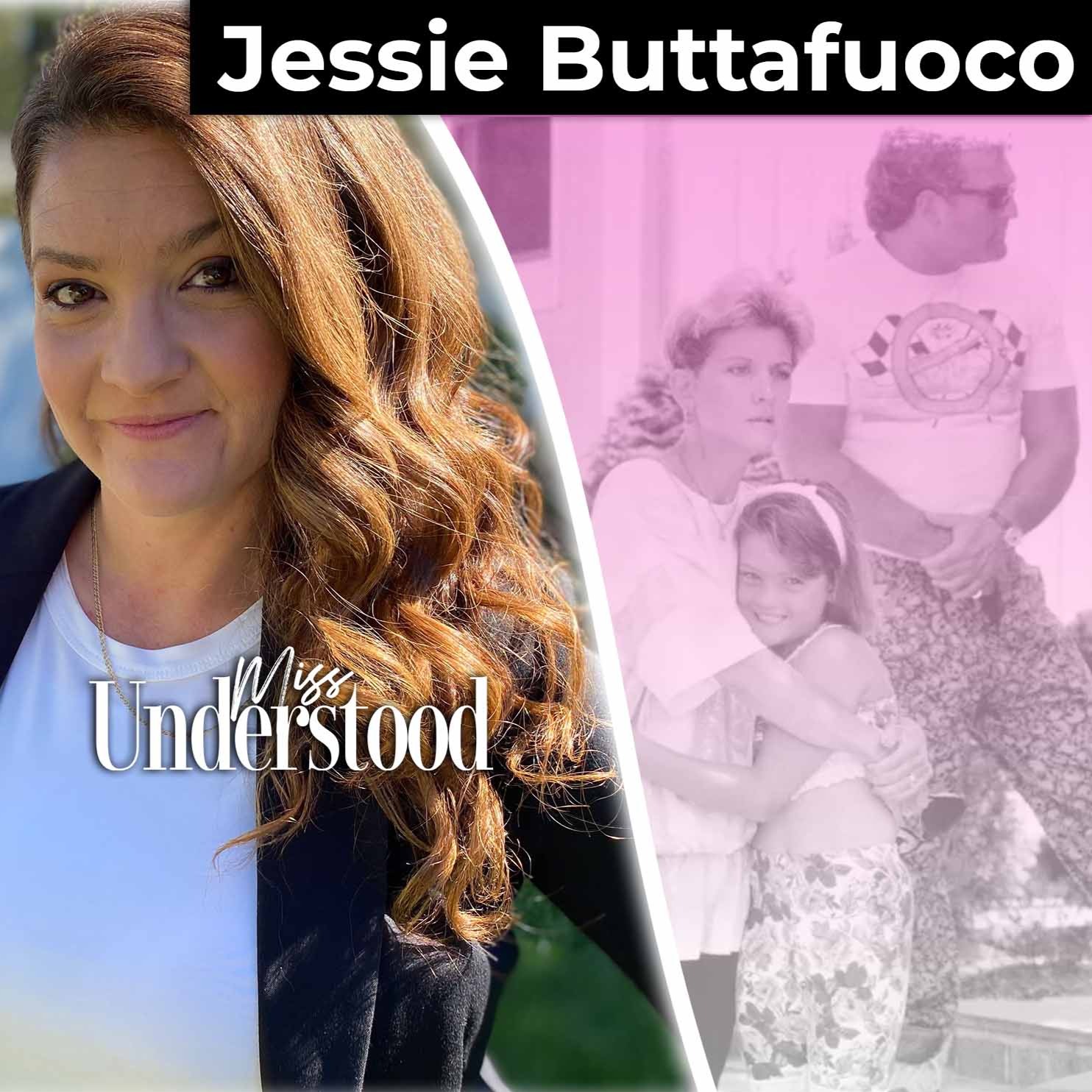
Miss Understood with Rachel Uchitel
Growing Up Buttafuoco: Jesse Buttafuoco on Living in the Shadow of the Long Island Lolita Scandal
01:07:52
Loading summary
Transcript179 lines
- [00:00]
Podcast Sponsor Announcer
This podcast is sponsored by Talkspace. You know when you're really stressed or not feeling so great about your life or about yourself, talking to someone who understands can really help. But who is that person? How do you find them? Where do you even start? Talkspace. Talkspace makes it easy to get the support you need. With Talkspace, you can go online, answer a few questions about your preferences, and be matched with a therapist. And because you'll meet your therapist online, you don't have to take time off work or arrange childcare. You, you'll meet on your schedule wherever you feel most at ease. If you're depressed, stressed, struggling with a relationship, or if you want some counseling for you and your partner or just need a little extra one on one support, Talkspace is here for you. Plus, Talkspace works with most major insurers and most insured members have a zero dollar copay. No insurance, no problem. Now get $80 off of your first month with promo code SPACE80 when you go to talkspace.com, match with a licensed therapist today at talkspace.com save $80 with code SPACE80@Talkspace.
- [01:01]
Allie Jackson
If you're a podcast host, listen up. This one's for you. My name is Allie Jackson. I'm the host of Finding Mr. Height, a dating and relationship podcast that I've been doing for four years now, sharing my positive and practical approach to dating that's built on my own life experience. And I wanted to share another experience that I've had my secret behind monetizing my show. It's called Red Circle and I was just telling my colleague about how much I love their platform. With Red Circle, not only am I getting a seamless hosting experience, but I also love the support I receive in ad sales. I it's not just typical ad sales either. It's targeted opportunities based on my show and my life. And the platform is super simple. You just set your preferences and Red Circle matches you with sponsors that align with your show. You can vet every opportunity and their platform gives you great analytics. More recently too, my Red Circle team has brought me opportunities outside of my podcast on social media to really augment the podcast partnerships. Bring them full circle. I just can't recommend them enough. If you want to give it a try, go to redcircle.com to get your free trial. That's redcircle.com for a free trial today.
- [01:58]
Rachel Yucatel
On Misunderstood with Rachel Yucatel. Tonight we begin with a mysterious shooting in the suburbs on a street in.
- [02:04]
Jesse Buttafuoco
Massapequa on Long Island. It's the Story of a married man.
- [02:07]
Rachel Yucatel
With the unforgettable last name Buttafuoco.
- [02:11]
Jesse Buttafuoco
So they told me my mom was hurt and in the hospital, but she didn't tell me what. No one knew who did this. They just thought a shooter was on the loose, so it was not safe for me to return home. They didn't know it was even Amy until my mom woke up and gave him the clues.
- [02:24]
Rachel Yucatel
She's charged with shooting her lover's wife.
- [02:26]
Jesse Buttafuoco
My parents were like, popular in the neighborhood. Everyone came to our house like it was like fun and vibrant. Such a beautiful great time. And my parents, I never saw them fight. Looking back, my dad is a serial cheater. After the shooting, paparazzi started showing up. My house became a tourist attraction. The weird social interactions of people thinking they know us.
- [02:52]
Rachel Yucatel
Has your father apologized to your mother, to you?
- [02:58]
Jesse Buttafuoco
He was denying the affair the whole time. He never admitted it until I was like in my 30s.
- [03:12]
Rachel Yucatel
There are some stories that live forever in the American tabloid psyche. The kind that play out on the evening news, get immortalized in Lifetime movies, and then disappear. At least for everyone except the people who actually lived them. In 1992, a 17 year old girl named Amy Fisher showed up at the Buttafuoco family home in Long island and shot Mary Jo Buttafuko in the face. The reason Fisher was having an affair with Mary Jo's husband, Joey Buttafuoco. And the scandal instantly became a national obsession. The press called Amy the Long Island Lolita. Joey became a household name overnight. Skits were done on Saturday Night Live and Mary Jo, the victim, was forced to live out her recovery in public while the media devoured every detail. But what about the people who were not on camera? The ones who did not choose the spotlight, the ones that were one degree of separation from the scandal? That's where today's conversation begins. Because scandals don't just consume the people at the center of them, they ripple outward. They leave a trail of collateral damage that lasts long after the headlines fade. My guest today is Jesse Buttafuoco, the daughter of Mary Jo and Joey. She was only nine years old when her entire world was shattered. When the people she loved the most became the center of one of the most infamous tabloid stories of the 90s. We're talking today about what that was like growing up in the shadow of that chaos. What it felt like to be the daughter of. To live with a name that carried so much baggage. And how Jesse has learned to separate who she is from who the world decided she must be. We'll talk about that day, the aftermath, and her complicated feelings towards Amy Fisher and how her relationship with her parents has evolved all these years later. But most importantly, we'll talk about what it means to find peace and identity when the world already thinks they know. Your own story. Because on Misunderstood, that's what we do. We look past the headlines to find the human being underneath. Jesse, thank you so much for joining me today on Misunderstood. It's really great to have you here.
- [05:46]
Jesse Buttafuoco
Thanks for having me. I. I truly appreciate you reaching out and continuing to further the mission of amplifying people's stories and reclaiming our narrative. So thank you.
- [05:56]
Rachel Yucatel
Of course. You know, even though we have completely different stories, I feel like we share something in common, which is our name precedes us, right? Our last name especially. You hear it. People are like, oh, I think I know her. Wait a minute, what happened? Or they actually know the story, but they really do have no idea who we are. And I have spent decades feeling anxious, nervous, sometimes shy, sometimes angry about the fact that people thought they knew me, when all I really wanted was to really be known, but felt like I was just known for something that was so wrong and it wasn't who I was as a person. Now, you're interesting because you are one degree of separation from a scandal itself. You are a child of two parents who were involved in a. In a scandal, I guess you could call it more so something that just was on the COVID of all of our tabloids, was in the news for a very long time, so much so that it remains to be one of the stories you think of from the 90s, but it still has haunted. And I don't want to speak for you. We'll get to that in a minute. But your life, I mean, that's what people know you as. So I find it fascinating. I love that you're here, but I feel like we share that feeling a little bit and correct. Correct me if I'm wrong.
- [07:18]
Jesse Buttafuoco
No, no correction needed. It's 100%. I, too, have been dealing with the same thing for decades. You know, my name enters a room before I do, everywhere I go. And because of that, a lot of expectations I feel are put on me and expectations that were created by mainstream media. Right. And so my entire life has kind of been navigating who am I, you know, and. And who am I outside of being a Buttafuko and, and. And figuring out how to grow up under that. I was nine years old when this all happened, so I. I understand what it's like to navigate this kind of stuff as a child, as a teenager, which was horrible, as a young adult, which was traumatic. And now as a middle aged woman, you know, other side of, of all the, the trauma and chaos that we'll get into shortly. So, yeah, I resonate with your story too. And especially when your digital legacy is kind of created for you by other people and you have no control over that. And no matter how much you put your own side of events out there or try to explain to people, like that massive public, you know, version of you is always going to kind of supersede that. And so it can really impact people on levels of identity formation, emotional well being, and what part we play in society. You know, it's really hard to navigate.
- [08:34]
Rachel Yucatel
You know, you said you were 9 years old, and I was thinking back, my daughter's 13, and I remember when I was 9 years old too. And the feelings you're going through is that fifth grade, sixth grade, what?
- [08:44]
Jesse Buttafuoco
Third grade, baby.
- [08:46]
Allie Jackson
Oh my God.
- [08:47]
Rachel Yucatel
Okay, so I'm getting on my date, my years wrong, but okay, third grade, baby. But this is when you're like, really? Were you connected with your parents then? I'm trying to remember for me. I mean, my daughter really relied on me for everything back then. And you really, did you idolize your parents back then?
- [09:04]
Jesse Buttafuoco
Oh, yeah, I did. Listen, my parents were like popular in the neighborhood, Mr. And Mrs. B. Like, we had the coolest pantry out of everybody. You know, everyone came to our house. Like, it was like fun and vibrant and we had a big boat and we had a beach club and it was just such a beautiful, great time. And my parents, I never saw them fight, they never argued in front of me. Like, it just was so idyllic and beautiful until it literally just shattered into a million pieces. And those early times were. It was hard for me because it was so great and so lovely that when all of a sudden, you know, murder enters the chat, literally. And now this sex scandal and all this attention and fame and I was kind of young, so.
- [09:47]
Rachel Yucatel
Did you know what that meant?
- [09:49]
Jesse Buttafuoco
No, because they sheltered me from a lot of that stuff. Like I wasn't really watching TV or the news or Hard Copy. I'm watching Full House, you know, and so I knew that we were famous, but I didn't really understand the, like, the how, how big it truly was. Like, I knew Jim Carrey was playing my dad on and Living Color all of a sudden when I just wanted to be a fly girl like JLo, you know, or Danny DeVito all of a sudden is playing my dad, and all of a sudden these people are parodying. And, like, I wasn't bullied by my peers. I was bullied by my. My idols, which was kind of weird, you know, and, like, everyone's making fun of my parents all of a sudden. And it was. It was just. It was very confusing and challenging. And honestly, I don't even think the media part really impacted me as much as the actual, like, attempted murder of my mom's life. Like, that really sent me into a lot of fear and terrified that someone was waiting in the bushes to kill me, too. And, like, in that 90s, I was like, I knew, like, John Walsh and, you know, all those stories of, like, celebrity kids getting kidnapped and stuff. Like, I. I knew I was that now, and I was just terrified of being kidnapped or hur. Or, you know, or exploited myself. Like, once I got a little older, too, 12, 13, you start to view the world a little differently. And I was fearful of being exploited. And so I really tried to be perfect, not do things that were going to become a headline. Like, my family got very busy, and so I recognized early as a child my role was to just be perfect as possible. Fly under the radar. Don't worry about me. You guys can handle that over there. Even though I was dying inside and completely anxious. Yeah, terrified. But I just was. I was pretending I was training to be an actress.
- [11:41]
Rachel Yucatel
Yeah, it's funny. I've heard a lot about this fawn response. Is that what you call it? And I totally get that. Like, when somebody's hurting you or doing something, you kind of laugh it off. And sometimes they even use this in courts to be like, well, you were laughing. You were going along with it. But at the same time, you want this person doing these terrible things to think that you're okay because you don't want to start more conflict.
- [12:04]
Jesse Buttafuoco
So, yeah, I totally survive. Survival.
- [12:06]
Rachel Yucatel
It's.
- [12:07]
Jesse Buttafuoco
It's survival. It's. Some people fight, some people flight, some people freeze, some people really fawn. And it's based in survival. It's. And. And you. My need for you to like me was so strong because the whole world hated my family. And I knew that. Right. And so it's almost like my whole life I've been chasing this, like, unattainable goal of, like. Like me. Validate me. Look at me. I'm great despite all odds. And it sent me to a mental breakdown at 35. We'll get into that.
- [12:37]
Rachel Yucatel
But, yeah, yeah. I'm so sorry you went through that. I just Want to swirl back a minute to. To the day that it happened because you talk about how your life was, was pretty great up until then, and your family was popular and well known, and you didn't see any rifts between your parents. And you go to school and what happened that day that, like, we didn't read about in the papers? Like, did they take you out of school early? Did you just come home off the bus? And there was all these cops there, like, what. What you're doing?
- [13:04]
Jesse Buttafuoco
Yeah, unfortunately, I couldn't go home for at least a week or two because of the open investigation. Paparazzi started showing up. My house became a tourist attraction. So, you know, that day I wound up after the shooting because it was before lunch. It was like 11am I wound up being picked up early and take him to my dad's auto body shop, which was a family business. And all of my aunts and uncles were there, and my mom's one of five, and my dad's one of five. Oh, wow. So it was a scene. I'm nine, and all of the adults around me are clearly in a state of shock. And I can tell.
- [13:37]
Rachel Yucatel
Who picked you up from school?
- [13:39]
Jesse Buttafuoco
My godmother.
- [13:40]
Rachel Yucatel
Okay, so not a police officer, but somebody.
- [13:42]
Jesse Buttafuoco
No, nothing like that. Family member picked me up, took us back to the family business. But I just remember knowing something very severe and tragic was happening, but no one was letting me know what was happening. So they told me my mom was hurt and in the hospital, but she didn't tell me what. And at that point, you know, Amy was not caught. No one knew who did this. They just thought a shooter was on the loose, so it was not safe for me to return home.
- [14:08]
Rachel Yucatel
Right.
- [14:09]
Jesse Buttafuoco
And so they didn't know it was even Amy until my mom woke up and gave them the clues. And so.
- [14:14]
Rachel Yucatel
And was your dad consoling you when you got to his work?
- [14:18]
Jesse Buttafuoco
Interestingly enough. I mean, I think we know my dad's not the father of the year, but I didn't even see him for, like, two days. I think he was with my mom. And I think because of. I had such an extensive close family that everyone was like, they're fine over there. But I remember being like, where's my mom? Where's my dad? Like, my dad dropped off a bag of pajamas and clothes, but I remember the worst pajamas. Like, of course dad packed these pajamas. Mom would have known. What pajamas?
- [14:44]
Rachel Yucatel
Yeah, it's a thing dads do, you.
- [14:46]
Jesse Buttafuoco
Know, feeling just really sad and confused, and I knew everyone was lying to me, but they were just gaslighting me because, like, what do you tell a nine year old?
- [14:54]
Rachel Yucatel
You know?
- [14:55]
Jesse Buttafuoco
And so it was just a very confusing time for me. And then, you know, within a week, I was finally told what really happened. And even then, they didn't know what. How to tell me. And they handed me a newspaper with my mom's face on it. And the police in my house with police cars, and it was like, local woman shot in the head. And, like, I have a reading comprehension problem, girl. I got ADHD, and I was undiagnosed until 32. So I'm like, what's happening here? I'm figuring, trying to figure out, put the pieces together. And I couldn't. And then eventually my mom said, well, you know, I mean, my aunt said, well, you know, what. What happened? She didn't just fall in the back that day, which is what they initially told me. You know, someone actually shot her. And then it was just like. I didn't. I don't even think I, like, under really understood it all. I knew. I was like. I knew it. I knew something was like, other than what you guys were telling me. But honestly, I was really just so young that I don't think the severity of the situation really registered for me. I was just happy that my mom was alive.
- [15:54]
Rachel Yucatel
Right.
- [15:54]
Jesse Buttafuoco
Of course.
- [15:55]
Rachel Yucatel
You know, so did you. Did you go visit her in the hospital? Was she there a long time? I don't really remember.
- [16:00]
Jesse Buttafuoco
I think she was there for at least a week or two. I wasn't allowed to initially see her, and the excuse they said, was that children aren't allowed in hospitals, which I got silly. And then eventually, yes, I was allowed to see her, and she wasn't the mom I knew anymore. You know, her head was bandaged up and her face was paralyzed, and her throat sounded like Kermit the Frog. And, you know, I don't have many memories of that because I blocked it out, but I do remember my mom still trying to make me feel okay. Like when I walked into the room. Hi, honey. I'm okay. I'm gonna be fine. Like, even in her worst state, she was still trying to be a very protective and nurturing mother, which I find to be, you know, just fascinating. Yeah, she's always maintained that throughout this entire journey.
- [16:48]
Rachel Yucatel
Wow. You guys are so close.
- [16:50]
Jesse Buttafuoco
Yeah, we're so close. We actually live together now, and it's lovely. And we've been.
- [16:54]
Rachel Yucatel
No way.
- [16:55]
Jesse Buttafuoco
Yeah, it's lovely. We've been making up for a lot of lost time. You know, when I was 9, when my mom got taken away from me, you know, and as much as she took me to ballet class and was there at my basketball games, she became this. This huge entity and was also a trying to survive a gunshot wound to the head. And so our relationship really suffered from that, and we missed out on a lot of milestones. And so we've been living for the last, like, five years now. And it's. Honestly, I love it. It's calm, it's peaceful. We're. We're just living our authentic selves. And, you know, we sing and we dance and we watch movies and we cry together and we support each other, and it's. It's really phenomenal, and it's not toxic and it's not super codependent. I'm a therapist, so I know, and it's really lovely, and I'm so blessed, and I'm so grateful because she's 70 years old now.
- [17:45]
Rachel Yucatel
Oh, my God. And I've seen some pictures of her. I think she looks great.
- [17:49]
Jesse Buttafuoco
Yeah, she looks great. She's. She takes care of herself. She's also got a great plastic surgeon, Dr. Azizadeh, who's helped her with her facial paralysis over the years. And, you know, maintaining, you know, what happened to her, you know, being shot in the face is going to come with a lot of physical ailments. And throughout the years, thankfully, she's been able to work with Dr. Aziza Day and start the facial paralysis institute and not only help herself, but and regain her smile back and things like that, but helped so many people with Bell's palsy or facial tumors or facial paralysis or facial differences. So it's really remarkable.
- [18:23]
Rachel Yucatel
So I love hearing that. So let's go back to your childhood for a minute, because it's fascinating. Well, as we all know, you don't have to go through some huge trauma like you did to know that your childhood really shapes who you are, how you have relationships with men or women later in your life. So after this time, you know, you had talked about being close with your parents before. So what ended up happening with your father? I mean, I know you're. For those of you who are listening that don't know. Jesse's parents stayed together after this, it ends up that we do find out. He. I think he denied the affair. People even knew of affair. How did that. How did that play out? No one knew it was an affair, and then he denied it. When that did come out.
- [19:05]
Jesse Buttafuoco
Yeah, at the time, it was a very he said, she said kind of debate. He was denying the affair. The whole time he was maintaining that.
- [19:13]
Rachel Yucatel
But they found out it was her. Only because of your mom.
- [19:16]
Jesse Buttafuoco
My mom woke up and was like, someone named Ann Marie shot me. And they held up a T shirt. And then that T shirt was connected to my dad's auto body shop. And he's like, I gave that t shirt to Mr. Fisher's daughter. And they were like, oh, who's Mr. Fisher's daughter? So then the police actually had my dad call Amy and have her meet up, and that's how they arrested her, which is messed up. Nassau county police did not do a good job, and they wound up questioning her for eight hours without a parent involved because she was under 18. Right. Her parents actually called to say, hey, I want to report a missing child. And they're like, no, just come back later. Meanwhile, she was actually in their custody. So that's also a big reason of why the case never went any further. And she pleaded to aggravated assault because I messed up the investigation. But that's for another time. Right? But when it comes to my father, you know, he was. He denied ever having anything to do with her. Just maintain that she was crazy and that she, you know, just took this upon herself. And we believed that. I mean it. He is a very good liar and master manipulator and a gaslighter. And when you ask someone, did you do this? And you're staring directly into their face, and they tell you, no, I would never. I love you too much. I swear on my mother's grave, I would never do that. You're going to believe it. You know, he's my dad. He's your husband of 16 years. It is what it is. And so. And also for my mom, and you can read this in her book is why she stayed. For her. First of all, she was bullet to the head. She's on 100 pills, opiates.
- [20:50]
Rachel Yucatel
Where is she gonna go? Who's gonna take care of her?
- [20:52]
Jesse Buttafuoco
Yeah, what's gonna.
- [20:53]
Rachel Yucatel
What.
- [20:53]
Jesse Buttafuoco
You know, what. What are we doing here? And at that point, too, the whole world kind of went whoosh on our family. And I think anybody's initial reaction is to play a little defense and be like, y' all don't know me. I know him. He would never do this to me.
- [21:06]
Rachel Yucatel
Yeah. Yeah.
- [21:07]
Jesse Buttafuoco
And so I think that really perpetuated us all. Ra. My dad. And it wasn't just me and my brother and me. It was. And my mom. It was all those aunts, all those uncles, the neighborhood. Like, no one could ever think that Joey would do this, he became a different person when he left our house.
- [21:23]
Rachel Yucatel
Did that change when we found out or when you guys found out that it was, there was truth to it?
- [21:29]
Jesse Buttafuoco
Well, what's interesting is he never admitted it until I was like in my 30s.
- [21:35]
Rachel Yucatel
Oh, my God.
- [21:36]
Jesse Buttafuoco
Yeah, bro. Like, he really maintained that for a long time. And, and, and I will say, you know, as I was growing up and you know, along the way, looking back, my dad is a serial cheater. And he proved that throughout. Like you would think, oh, you do this horrible thing and this, your wife almost gets shot, so you, you're on your best behavior for the rest of your life, right? That wasn't the case for my dad. He continued to be a womanizer and cheat and, and have multiple women at the same time. He's still up to. And so he's, he's a sex addict. He's an addict. He was a coke addict. He gave up coke and that transferred to a sex addiction. And I believe wholeheartedly that's how him and Amy met, whether or not it was to solicit her services because she was a sex worker at that time, although under age and can't consent to that. I know plenty of, I actually work with 17 year olds now who engage in sex work. So it's not like it's something that's never existed before. And, and so throughout the years when he maintains his innocence and at the same time he's putting a roof over my head and sending me to college and, you know, taking care of my needs in that way and not directly abusing me or putting me down or being verbally abusive, physically abusive like I, I had, I was the, I had to deal with a lot of consequences of his actions, but they were never directly directed to me. And so it was complicated relationship with him throughout my life. And then I think for me, once I really had a mental breakdown at 35, I couldn't keep it up anymore. And I was either faced with killing myself or like pulling myself out of the gutter. And so I was like, let me just try to pull out of the gutter before I really pull the plug here.
- [23:24]
Rachel Yucatel
What if I told you that the idea that you only get parasites when you travel to some exotic country is flat wrong? Millions of Americans carry parasites right now, often without symptoms. For example, it's estimated that millions in the United States have been exposed to toxocera, a parasitic worm, yet most never even know it. Parasites do not need a plane ticket. They can enter through tap water, sushi, undercooked, foods or contaminated produce. Some strains live in all stages. Eggs, larva, adults hidden in your gut, releasing toxins that sabotage your energy and digestion. That's why I'm excited about Parafi. Kim Rogers, 30 day full spectrum parasite cleanse. The kit works by clearing parasites, worms, candida and heavy metals, parasites in all life stages, supporting gut health, detox pathways and toxin removal. It's taken orally daily for 30 days with precise dosing. I'm actually doing it myself right now. I started with the lymph cleanse, then I'm doing the parafi. Wanna dive deep? I did a full interview with Kim Rogers, the worm queen herself, where we expose all the myths, understand the facts, and show how to protect your body. Listen to that episode if you haven't already. Meanwhile, go to rogershood.com and use the code Rachel to get 10% off of your order. That's R A C H e L for 10% off. Give it a try. Maybe your body's missing link is hiding inside. Let's do this together again. It's rogershood.com R O G E R-S H O-O-D.com and use the code Rachel for 10% off. What was the breakdown? What, finally caught up with you?
- [25:04]
Jesse Buttafuoco
Sure. Well, I mean, it was a lifetime of pretending that I was fine. So I never received proper mental health help. Mental health in the 90s was very stigmatized anyway, and the last thing I needed was to be labeled crazy. And so my perfectionism really kicked in and I just made sure to get straight A's, be the captain of the team, you know, soloist in the choir, successful business, like my entire life. I've always. I've never give anyone a reason to think that I'm falling apart. And then. And I was very good at deflecting my problems onto others. Like if people were to ask me about me, I said, oh, I'm great. How are you doing? You know, and just. Right. I'd never processed my life or the trauma. I didn't even think my life was traumatic. It was just like Tuesday when my dad went to jail this time, you know, like, there was always something like it didn't just. It didn't just end with the shooting. Right. Like, my parents became this like, pop culture phenomenon, mega entity. Right. And then there was a ton of exploitation in there. And so I became very fearful of being exploited myself, which you mentioned earlier impacted my ability to have relationships with people, fully trust people. You know, there were times where our neighbors would sell videotapes of. Of Parties to Hard Copy, or people would wear a wire and come in and talk to my mom, and then that conversation would wind up on a media outlet. And so, like, I really couldn't trust anyone.
- [26:27]
Rachel Yucatel
And isn't it interesting, because a lot of people listening or watching this from reading things on the tabloids would be like, well, they love the fame, you know, now they're famous. And. And can you explain that? Because I get it that it's. It's traumatizing and changes you as a person. But explain it, because I think a lot of people are like, oh, please, you were so famous. You were making money. It had to be fun.
- [26:47]
Jesse Buttafuoco
Sure. Well, let's just put that out there. People in True Crime are not really making money like that. We're not actors and actresses signing True that. They are not allowed to pay you for your story if it's considered new. So let's just put that out there. And actually, I was just on the Drew Barrymore show last week, and I was reading. I should have stayed out of the comment section, but I didn't. But I was reading one of the comments was like, yeah, right. She loves the fame and attention, all that stuff. And it's like. Like, actually there's truth and there's fix or, you know, fiction to that. I do like fame and attention. I grew up in the theater. I love to put on a show. I love a 5, 6, 7, 8. I love when the audience claps. I'm not gonna lie. However, I feel it's important to use this fame and attention that I do have to advocate, because growing up and this leads to my mental breakdown, I never saw anyone like me on tv, in the papers. I felt very alone in my experience. I. That's why I kept it to myself. And. And I. Until I read Tanya Brown's book, who is Nicole Brown Simpson's sister, she wrote a book on her mental breakdown, depression, and how to get through it. And that was. It was at a time where I was on that mental breakdown break, right? And so I was extremely depressed and suicidal. My mom actually gave me her book, and I read it, and it was the first time I ever, ever heard my story on a public, you know, setting like that. And it started on my journey of, oh, maybe I can heal from this. Oh, she's afraid of. Of relationships, too, because she had a boyfriend that just pretended to be in love with her and was selling information to the news in Mexico. And, like, all of my fears were legitimized in her book. And I. And it saved My life. And so that's why I do what I do now in terms regards to fame and attention. Because I think it's important for the future generations of people like me, children of people who are infam, scandalous, or even viral. I mean, all these influencers, family vloggers. These kids are going to grow up and have a lot of problems. And if they see someone like me sharing my vulnerable, messy story with authenticity and truth and hope, that's why I do what I do. You know, I can handle the fame because I'm a trained actress.
- [29:00]
Rachel Yucatel
Right. You know, but, you know, do you think that the trauma was more for what actually happened? Like Amy Fisher trying to kill your mother or. And your father with the adultery and all that? Or do you think the trauma was more so from the fame and what fame can do to you?
- [29:15]
Jesse Buttafuoco
All of it. I think it was a nice pie chart of everything. You know, the. The fame part was a lot, simply because even just like, you know, moving across country in school, like, are you coming over to my house because you want to be friends with me or because, you know, I'm Joey? But if you go's daughter and you want to say you were inside that house and take a picture, it was very any job I've ever been on. Keep in mind, too, I was a kid and a teenager, an adult. And so, like, dating, that was horrendous. Because what do I say? The first date? This is who I am and who my parents are. Okay, well, that never happens. And then if I don't say what my name is, and then I go three.
- [29:54]
Rachel Yucatel
Wait, did kids think that was. Did kids think that was cool? Or guys were like, I'm never gonna date the daughter of Joey. But if you think a little bit about.
- [30:03]
Jesse Buttafuoco
I think a little both. And I couldn't decide which was which, so I kind of just went like, God bless my prom date. I love him so much. He got my dad's permission and, like, did a whole promposal at my dad's house and, like, popped out of my closet in my bedroom with, like, roses and a cookie cake. But, like, he's the only person that really, I think, you know, was able to do that in regards to my dad. But it's like, it just was so much pressure. And so it was hard for me for in that realm. And then as I'm figuring out, who do I want to be in society, who's hiring me, who's bringing me into this interview? Because this is my name on a piece of paper and Then I don't get the job. Even though, right.
- [30:41]
Rachel Yucatel
How do you find your purpose when someone's already written. Written off or written what your purpose is?
- [30:47]
Jesse Buttafuoco
And a big part of my advocacy now is, you know, my digital legacy was, has been imprinted in me since a child. So if anyone googles me, and much like you, I googled you and your scandals came up first, not all the amazing other work you do, right? And so like, that's followed me everywhere I go as well. And so it's like, I can't escape this notoriety if I wanted to. Another comment in the comment section was like, she should have just changed her name and moved to middle America. And I was like, why didn't I think of that before? Like, come on, people, like, let's, let's be real here. Like, you know, my situation is extreme.
- [31:23]
Rachel Yucatel
Can I stop you on that for a second? Because I've had plenty of people say that to me, including my own mother, and I find it offensive because why should I be ashamed of who I am? And that situation doesn't make who I am. I mean, I know I was involved in a scandal, which is different than you, so I made some choices there, sure, but. But I'm not. I. I love my last name. It's my father's last name. He's. He died when I was 15. I would never change it. I'm getting married at the end of the year. I'm not changing my last name because I'm proud of my name. So that's the first thing. The second thing is, is that, that I feel like I can't hide from that. What am I supposed to do? Lie about, change my last name? And then when you have to show your ID or if people finally find it, then it's like, oh my God, you lied.
- [32:04]
Allie Jackson
Right?
- [32:05]
Rachel Yucatel
It's like, where do you, where do you find yourself? But with you, what I find interesting is that, you know, I want to know what that's like to have people that talk about such a big scandal story situation. But it doesn't directly. I mean, it directly affected you because you were in that house. But the story isn't about you. It's about three people. So it's almost like it would feel and explain if it feels like, you know, you almost didn't have a voice, that they were so big and it overarched who you could be or who you were. And how did you find your purpose and your importance? Because I think as a kid growing up, I would worry that that child would feel like well, I'm nobody. My parents are always going to be more famous and for good reason. And so who, who can I actually become that overshadows them? Because I will always be the comma, you know, I always feel like I'm Rachel, you could tell, comma, Tiger woods mistress.
- [33:03]
Jesse Buttafuoco
Like, sure, I'm sorry but if you.
- [33:05]
Rachel Yucatel
Go comma, the daughter of, of Joey. Yeah. So what are your thoughts on that?
- [33:10]
Jesse Buttafuoco
Well, I think you bring up an interesting point. And, and you literally said my wholehearted experience, you know, and it's, it's challenging. I've always, I think that's why I was such a people pleaser and achieving trying success. Like I've, I've always been trying to kind of strive for the attention that I never got. You know, even as a kid I was always like me, like me. You know, I'm, I'm doing great, I'm the star, I'm this. But it was like never enough. And I think it had a huge impact on my identity. That's why I'm getting a PhD in media psychology right now. To make my experience scientific data and research and that it impacts how you form as a person on this planet. It impacts your emotional well being, your social roles. Like it literally has infiltrated its, its way into the fabric of my being. Like it's a part of my DNA now. And I think for a long time I tried to like forge my own path like and, and kind of not even addressing that these are my parents. And yeah, that happened, but like this is who I. Right. And then doing that is also what led to my mental breakdown because I wasn't being my authentic self. I was being the version of myself I thought other people wanted me to be. Right?
- [34:25]
Rachel Yucatel
Sure.
- [34:26]
Jesse Buttafuoco
And so I think once I was able, and I did a lot of work with my therapist, I had to find my authentic self. I had to figure out my values. I had to start living by them. And then I think honestly, once I broke down and started building myself up in recovery, I had to quit drinking. I had to change my coping skills. You know, I had to learn how to share my story out loud. Before that I never. My story was z lip tight. And if anyone ever asked me to do media, it was just to like what you alluded to to tell the story of my parents. They just used me as a narrator. Tell me this is what happened on May 19, 1992. And only until recently have people been interested in my story and what happened to me as a co. Victim of crime. Because I, like you said I was not. Not in that spotlight, but I was dealing with the entire aftermath of the tornado. Of that. Yeah. For decades.
- [35:21]
Rachel Yucatel
Right. And the question is, how do you find your own spotlight that doesn't relate to it? What's. What. What's interesting is you said someone commented, like, oh, she just wants the fame and attention. What people don't understand, it's going to follow you no matter what. You can't do anything about it. So if you go be a dentist or something. That has nothing to do with it, you know, it's kind of like, like, are you really living your truth then? Even if you go to school and become a dentist, because people will still be like, oh, my God, you know, who does my teeth?
- [35:47]
Jesse Buttafuoco
Right.
- [35:47]
Rachel Yucatel
Let me tell you. And then as they're, like, under the gas, they'll be like, tell me all about Amy Fisher.
- [35:52]
Jesse Buttafuoco
Exactly.
- [35:53]
Rachel Yucatel
Whatever.
- [35:53]
Jesse Buttafuoco
I'm a therapist at a treatment center right now, and my. I am both. I am on Drew Barrymore on Wednesday, and then I'm talking to you about your drug addiction and your family problems on Friday.
- [36:04]
Rachel Yucatel
And I love that you've made it, by the way. Wait, and doesn't that mean that that's becoming. That your purpose was now found out? Like, what happened to your parents shaped you, but that is maybe your path. Maybe you were supposed to go and be on this path and you would have found it, maybe somehow. But now you. You can speak not only through studying it in school, but through actual life experience, which, by the way, I've been to plenty of therap therapists who have not been through losing your fiance on September 11th or one of the biggest sex scandals in our decade or in our, you know.
- [36:37]
Jesse Buttafuoco
Right.
- [36:37]
Rachel Yucatel
In our lifetime, whatever. So it's like, how do I have conversations with people like that if they don't get it? So. So when people want to talk to you about what it's like to be a child going through whatever, you get it. And I think that is what's amazing. Yeah. I want to ask a specific question about that because you mentioned before about Amy being not of age. She was. She was what, 16? 17.
- [37:02]
Jesse Buttafuoco
Yeah, 16. 17. Like on that cusp, do you have.
- [37:05]
Rachel Yucatel
A different feeling about her or what was your feeling at first and what's your feeling now that you do this kind of work and you spend time with kids who are struggling or going through sex work stuff at that age? Do you have a sense of empathy? Do you hate her still? Like, what. What are the feelings?
- [37:23]
Jesse Buttafuoco
I definitely have a sense of empathy. She's still A trash bag.
- [37:27]
Allie Jackson
But.
- [37:29]
Jesse Buttafuoco
She'S. And I say that because she has done nothing with her trauma or her pain or whatever, she's just continuing to perpetuate trauma. She brought three children into this world who are not doing well. And she just continues to be a webcam girl, sex worker. Like, do you. Girl, 50 year old tech worker online. Like, live your life, make your money. Sex work is work. However.
- [37:52]
Rachel Yucatel
Oh, is that what she's doing?
- [37:53]
Jesse Buttafuoco
The opportunity to help others? Yeah, that's what she's doing. The opportunity, help others. She never took that opportunity. And I will say, learning psychology and being able to see my number one op, the number one villain of my life as a textbook trauma response was really helpful to me. So it's in court papers that she was sexually abused by her father for a majority of her life and her mother never did anything about it. It. And so that's not an excuse to murder anybody, but it's a little bit of an explanation. And in this sense, because when that goes untreated, not everybody, but some people can become homicidal and some people can become hypersexual and some people can become obsessive. And so it makes sense based on her childhood trauma, how she turned out to be so mentally ill.
- [38:52]
Rachel Yucatel
Right. Well. And as you're saying that. Sorry, go ahead.
- [38:55]
Jesse Buttafuoco
Oh, no. So I was gonna say, so when someone like my dad comes into the picture and maybe gives her a sense.
- [39:01]
Rachel Yucatel
Of love and as a savior. Yeah.
- [39:05]
Jesse Buttafuoco
She's gonna do whatever she needs to do to get that. And some people are suicidal, some people shut down and isolate. Some people are get homicidal, and that's just a trauma response. And I also think she might have some psychopathy or borderline personality disorders, because when you get sexually abused by a parent early, that's gonna mess you up and your, your body and your brain do things to protect it. And so I saw her as that. Now, that doesn't excuse what she did. There are plenty of people that get abused by their parents, and I can't reiterate this enough, that don't hurt others, inflict pain on others, or go to the extent that Amy did, but I can at least understand why and how, you know, and that helped, I think, release a lot of anger, maybe some resentment towards her. I was also able to do that with my dad. Dad, My dad is a sociopath. And so when you don't have feelings of empathy or remorse or guilt or shame, some people might think that's a blessing. Right. Because I feel like I'm sorry I'm sorry. I'm sorry all the time. But when you don't have those feelings, you don't have the barometer to determine what's right and wrong. And if you don't have the barometer to determine, you're going to make choices that serve you and make you feel good, no matter how it impacts the people around you. And so once I saw my dad, is that. And that, oh, I'm just this person in the wake of his path, of his destruction. And. And so that was a big reason of why I had to cut him out of my life and really set a boundary with him, because I couldn't trust him to change, because it was clear his actions for the last at least 33 years continued to just be this path of destruction. And so I was like, you know, what? If he's not capable of change, I'm capable of change. And I needed to and just lay that boundary down and do a lot of work in that and, you know, cut him out of my life. And seven years later, I got two master's degrees and I'm thriving. Queen. So do what you got to do.
- [40:50]
Rachel Yucatel
Wow. So has there been any closure, though? Like, has Amy apologized to you, your mother, your father have. As your father apologized to your mother, to you?
- [41:03]
Jesse Buttafuoco
I mean, so Amy, I think, gave an apology to my mother at one point, but it was just so she could get out of jail, and she never meant it. To this day, if she's asked about my mom, she's like, I made her a lot of money or something like that. So, yeah, it's up, girl. That's all my. All right.
- [41:20]
Rachel Yucatel
You can't even, like. Like, get upset by that because she just sounds like she's such a mess. It's almost like she doesn't know what she's saying.
- [41:26]
Jesse Buttafuoco
Exactly. So go ahead.
- [41:28]
Rachel Yucatel
Like, we would never talk that way, and if it came from us, you would be horrified. But it's sort of like, what do you expect her to say? Because she's not. And if that has no clue what's.
- [41:37]
Jesse Buttafuoco
Going on, you cuckoo right over here. And so. And then my dad, you know, well, first he denied it forever, and then.
- [41:47]
Rachel Yucatel
You'Re telling me he denied it for, like, an extra 20 years, even to your mother?
- [41:51]
Jesse Buttafuoco
Wholeheartedly. Queen. When the guy committed commits, he commits. Like.
- [41:54]
Rachel Yucatel
Yeah, but no one believed this, right? I don't recall. I mean, from the media's perspective, I thought it was like, we all knew that it happened.
- [42:06]
Jesse Buttafuoco
Well, and I think that was a big part of it. Like, People on the outside that weren't on the inside. Like, now that I'm so far removed from it and I look at it, I could, like, happen. But when you're in it and you're being gaslit by the main culprit, you know, it's. It's. You don't see it for that. And so I think the public had a view, and then the people on the inside had a view, and those were just clashing for years. And honestly, for me, it was more so. I think it was when I was in college, maybe. I don't know. He did a lot of, like, celebrity boxing and, like, that reality TV that really started to come out in the early 2000s, like, reunion shows and, like, all that stupid stuff. And at one point, he. He was working with a really shady producer who I cannot stand, who he still works with. His name is David Kieff. He's a monster. Was getting him into a lot of those things. And one of those things was, like, they were pitching him, and Amy wound up under an umbrella, kissing in the streets of New York City. And it was like, I think my senior and I was for money. For a show.
- [43:06]
Rachel Yucatel
You mean for a show or just for a photo op?
- [43:08]
Jesse Buttafuoco
For a show. For a photo op that was going to lead to a show. And I just remember being like, are you serious? Like, this woman literally tried to murder your wife? My mother. And. And you're doing this for a dollar? Like, what's happening? You know? And so, like, I don't even know where this question started, girl, but it got. Oh. So when he apologized, he said the words. However, his actions prove otherwise. So it's. He didn't start apologizing to me until I cut him off, and he felt that's what he needed to say to get me back in his life. But it's like, bro, sorry, your words don't mean shit. Plain and simple.
- [43:50]
Rachel Yucatel
And I'm just curious because you talked about how everyone kind of came over. Like, the whole world was talking about you guys and the three of you guys, or four of you, your brother. Right? We're all in this house. Did it actually bring you closer for a while? I mean, listen, your mother stayed. I'm imagining. And please tell me if I'm wrong that he was like, this didn't happen. I'm so sorry. I love you. I'm going to be better. I'm going to make this work, whatever. And that must have lasted for a while. And so maybe you guys felt closer, or was it chaos inside that House.
- [44:19]
Jesse Buttafuoco
House. Little bit of both. So it wasn't necessarily chaos inside the house. It was us dealing with the chaos outside of the house.
- [44:27]
Rachel Yucatel
Right. Okay.
- [44:28]
Jesse Buttafuoco
When our. Our home became a tourist attraction and people would drive by at all hours of the night, honking their horns, screaming things, throwing eggs, that was a very terrifying experience. Or when we are, you know, all. My mom's injured, right. She has a bullet in her head, and we're all sitting on her bed. Me, my mom, my brother, and her and my dad, and we're watching the live news, and we. We make, you know, we started flicking the lights on and off, like, look at this, look at this. You know, like, trying to find ways to cope with the insanity. And so much. So do I remember one time my aunt called and was like, I saw you guys flicking the lights. Are you okay? Like, and like, just weird stuff like that. People coming on our. Up to our door, knocking all the time, looky loose, taking pictures. Prank calls. The prank calls were horrendous. I know. I'll never forget at picking up the phone those first few months, be like, I'm gonna kill you and your whole family, little girl, you know, and stuff like that. And so I think it did create our family to get more of a. A tighter unit and rely on each other more for support during those times. For sure.
- [45:33]
Rachel Yucatel
Yeah.
- [45:34]
Jesse Buttafuoco
It was wild. It was crazy.
- [45:36]
Rachel Yucatel
And I never hear anything about your brother. It. How did he end up. You know what? He kept him different than you maintain.
- [45:43]
Jesse Buttafuoco
A private life, so I'm gonna respect that for him.
- [45:46]
Rachel Yucatel
Okay.
- [45:46]
Jesse Buttafuoco
And when he' to share his journey publicly, I'll have him reach out to you. But it hit him hard, too. It did hit him hard, too. It was all hard. We all had a really, really difficult time.
- [45:59]
Rachel Yucatel
Yeah.
- [45:59]
Jesse Buttafuoco
We're just starting, I think, to now, meaning when I say me, my brother, me and my mom are now, I think, on the other side of things.
- [46:07]
Allie Jackson
Good.
- [46:07]
Jesse Buttafuoco
That's like recent last few years, you know?
- [46:09]
Rachel Yucatel
Yeah. So now talk about what it is that you do and you're looking to do by. By day, by night. You are a therapist, right? You're a trained therapist and you're our PhD in media psychology.
- [46:23]
Jesse Buttafuoco
Yes, that's right.
- [46:24]
Rachel Yucatel
So what does that mean?
- [46:26]
Jesse Buttafuoco
So I went back to school in 2020 because I was running a theater business. I was facilitating children's theater for 15 years. And then once pandemic happened, school shut down. I was not about to reinvent musical theater online, so I was like, let me school. And I've gained a lot in Therapy, like, my mental breakdown happened in 2018. And by 2020, I was like, really feeling better and doing better. Better. And so I was like, maybe I'll learn how to be a mental health professional. Like, I never thought of being that ever. And so.
- [46:56]
Rachel Yucatel
But does that mean. Sorry to stop you, but, like, you got, you got such good and thorough help to get you out of this breakdown that you were like, I. I want to do this for others.
- [47:07]
Jesse Buttafuoco
Yeah, yeah, 100. And I said, if it can work for me, it can certainly work for other people. And so I was just like. And I graduated in College in 2005. I was 37 when I went back to college. Okay. And so doing it mind was like, kind of intimidating and like, I don't even know if they're gonna let me, like, what's the last time I wrote an essay or took a Scantron? Do they even use scans? It was very. An interesting choice, but I listened to my intuition and it was like, go back to school. So I was like, all right, let's go. And so I found Pepperdine University out here in California. And I applied. And not thinking, I'm gonna get in, girl. Like, I. I was never going back to school if I didn't have to kind of a thing.
- [47:48]
Rachel Yucatel
Do they ask for transcripts from like decades before?
- [47:52]
Jesse Buttafuoco
Right. And so I had to get all that stuff and I was like. And I looked at my transcripts from decades before and I actually did a pretty good job the first.
- [47:58]
Rachel Yucatel
Oh, that's good.
- [47:59]
Jesse Buttafuoco
I was like a 3.4 GPA. Like, considering Amy got out of jail, my dad went to jail, there was so much trauma while I was going on. I was an active alcoholic in college, heavy cocaine user, like your girl party. And I wrote that in my essay. I was like, this is how I was my first time in college and I still wound up with a 3.4 GPA. And. And right now I don't have any of those things going on in my life. So I really think I'd do good if you guys accepted me. And so they did. And then I wound up getting a degree in clinical psychology. And so the clinical psychology route was to learn how to be a therapist and a mental health professional. So then I actually wound up my final years, like an internship working at a high school. And all of my clients were 17 year old girls, which I found to be just an interesting full circle of like, had someone like me maybe been a part of Amy Fisher's life at that age, maybe none of this would have happened right and so now I'm in the position to help 17 year old girls who have had abuse and have turned out maybe some hypersexual obsessive and I'm able to actually help them, you know, instill boundaries and just change. And so like I found that to be just an interesting like I think I'm on the right path kind of moment. And then once I graduated and I'm working as a therapist, I still am, am, but I wasn't fulfilled. I was like, there's more here. And I found a program that offers media psychology. It's at a school called Fielding Graduate University. It's the only university in the United States that offers a doctorate degree in media psychology. And so I knew that's what I wanted to do. I knew I needed to tackle the piece of true crime and mental health because I'm not the only person who has suffered greatly from that. And so I applied, I got in, I got a letter from the head of the school that was like, I'd love to mentor you. We love, absolutely, come on in. And I was like, okay. And I've been doing that for the past few years and I recently just got a master's degree in media psychology and I'm working on my doctorate, I'm in my dissertation phase. And what that's about is I am focusing all of my research on the impact of true crime on subject subjects of true crime based programming too. Because anytime anyone's real identity is wrapped up with entertainment, things get messy. I found is that the research really just doesn't even exist. There's tons of research on audience engagement in true crime and marketing purposes of true crime, but not what happens to people like me at the center of the story.
- [50:27]
Rachel Yucatel
Yeah.
- [50:27]
Jesse Buttafuoco
And, and so I am you, you know, you type in a, in Google Scholar like an article for depression and hundreds of thousands of articles come up but you, you type in psychological impacts of true crime media media and not many come up. And so there's a need there. And I'm like, all right, cool, I'm gonna be that and I'm gonna create the research and I'm gonna make this my experience scientific data. So then hopefully I can take that and maybe create some legislation. I have the dream of protection of true crime victims in the Media act. And so we can start making media professionals like hold them accountable for unethical media practices that are creating a lot of psychological trauma, identity issues and, and emotional well being issues for people like me.
- [51:08]
Rachel Yucatel
Well, what I wanted to say to you is that it Reminds me somewhat like we had an intimacy coordinator on our show and I said I'm going.
- [51:15]
Jesse Buttafuoco
To talk about next. Yeah.
- [51:16]
Rachel Yucatel
And I find it fascinating and, and I was going to ask if this is a job that you will then talk about when people are filming true crime things like I had Sherry Papini on. Do you remember her story? There was someone else I was thinking when you were talking. Oh, like a Karen Reed. You know, when they're, they're obviously going to be filming her, filming her story soon. You know, things like that, where you're required to be on set to really be with them and walk through them, their lifestyle.
- [51:43]
Jesse Buttafuoco
That's exactly what I'm trying to do now. And so with this PhD, with these media degrees, I started kind of a consultancy, Mental health Media Services. And I'm one of a few groups of people that are advocating for mental health coordinators. So kind of like an intimacy coordinator, but geared towards more people, stories of trauma and things like that. So like as a therapist. Therapist, I hold people's stories of traumas daily. Right. And I'm held accountable by a board of behavioral sciences and mess up in my duty of care to not harm people, you know, impacts others. My license gets taken away. There's a lot of consequences. Yeah. And what I know to be true and not as well as personal experience. And also as a therapist, I have shared my stories of trauma on camera so many times and I have not, not been set up to succeed in those areas in regards to my mental health. Right. And psychological safety because that's really what I'm, I'm coming for. And so I think we need mental health coordination on reality based shows as well as true crime productions. And, and that's just whether that's a liaison on set to help someone just, hey, maybe we can take a break or maybe, you know, just to protect people's psychological safety, we need trauma informed training, training for media professionals on how to talk to people like us after care. You know, you chew people up and you spit people out and then you just let them, you know, ride the wave of whatever comes. I think we should be offering mental health services or spa package or something to start taking care of the mental health of people like us and you know, accurate storytelling and, and we can do that through mental health coordinators too. Like I said, when, when people's real identities are mixed up in this form of entertainment, it gets really messy. And so reporting accurate information is also quite important. And less sensational storytelling, less exploitative storytelling and just more storytelling based in sensitivity and empathy.
- [53:47]
Rachel Yucatel
Well, I get that people have a lot of questions, right? So when you do an interview or you're part of. On a set, in a show, shows about you and your family, I get the curiosity, right? And there's so many questions, but people have to remember, like, when you're interacting with someone, there's a connection. So people are asking you questions. This is. They're curious, but it's about you. So you are being vulnerable. You're talking about feelings and trauma you went through. And then it's kind of like they portray it. I mean, I can think of a podcast I was on recently where it's like they're asking me all sorts of questions, things that I don't necessarily want to talk about, but I get it. I'm on a podcast. That's what people want to hear. And I do get into the other stuff in my life, but, you know, and then it's kind of like, okay, well, our hours up, bye. And they go on their life, and I've just had to uncover this stuff again, and it feels gross, and I don't. And I feel alone again. And I think that that sucks. And I don't think people understand what that's like, to have to regurgitate things.
- [54:44]
Jesse Buttafuoco
Right. And then people go, well, you shouldn't have done it anyway. And it's like, we're missing the point. Point right here.
- [54:51]
Rachel Yucatel
But. But also, you know, the thing of where people are like, oh, it's a safe space. Come, I'm going to tell your story. And then you're not an editor. You know, we're not editors. We're not going to sit there and do every single thing to make sure the tone even represents some empathy or the feeling that we went through. And the slightest bit off is like bringing the trauma in again. Because you're like, that's not what I said, or that's not what I meant, or that's not. That's not how I felt, or you're portraying me to be, you know, someone who. Who people should be threatened by or something. And that's just wrong.
- [55:24]
Jesse Buttafuoco
And.
- [55:25]
Rachel Yucatel
And that stuff, to me, can just be trauma in of itself as well.
- [55:29]
Jesse Buttafuoco
Exactly. And that's kind of the systemic change I'm coming for. Media companies are the one perpetuating that in the first place. Unethical media practices, the way they frame people, the way they edit. Sometimes I've had. They literally chopped up my words and then made their own sentence. And I'm like, if that's what you wanted me to say, just tell me, I'll give you the line, what are we talking about here? And they call that the loss of agency. And that impacts people at a core level. When your narrative is taken from you and someone else now is in charge of, really creates a lot of trauma for people inside. And it's kind of this double edged sword because you want to share your story and advocate and use it to help others, but at the same time you're letting go control of what that looks like in the end result. And then unfortunately that end result is sticking with us for the rest of our lives. I can't get it taken down or I can say, hey, I didn't like that edit you made, but too late, it's already out there. So it's like walking a tightrope, you know, and it can be really traumatizing. And I think if you don't have, have the proper coping tools or like stable relationships or support systems, you're going to really be impacted by that. And that might increase anxiety levels, depression levels, substance use. I mean, you know, when you can't handle something like that, oh, go get a drink, let me smoke a bunch of weed, let me take some pills, let me get escape from that, you know. Yeah. So these, they have really significant consequences that I just don't think people, especially media professionals, truly care about right now. And so I think that's where the trauma informed people training comes in. Like when you guys choose to do these or make these edits or you know, present your product in this way. This is what's happening to the people that you're chopping their lives up for. Yeah, not an actress. Right. Like this is my real identity. And so now this is what the public knows about me and will continue to know about me. So it's, it's, it's very, it's powerful. And unfortunately people are being put through the ringer and media professionals are not holding themselves accountable. Even though there are ethical guidelines, they're just not following them. And I know this to be true because my best friend on this planet planet is a reality show producer and has an Emmy for doing just that. And I am privy to all the behind the scenes tactics, things, situations that they do, especially in like reality based programming. Like, you know, they'll starve you, they'll get you drunk, they'll bring up the worst times of your life, they'll cut the AC so you're uncomfortable and you're hot, so you cry, you know, and it's really, these tactics are really being employed. And they're also being employed in true crime media as well. Like I'll give you an example. I did a special and a piece of information that my family was unaware of for 20 years. Case in point, someone had shot a bullet through our window about four months before my mom was shot in the head. And we all just thought it was like neighborhood kids or something like that. Like the police never took it seriously. And then in our ABC 2020 special, their research team tracked down the person that did it and said, oh no, Amy told me to do it and I just didn't want to hit Mary Jo. So I just shot it at end the house. And we were not privy to that information and they only gave us that information on camera without letting us know. So they would get our shocked reaction of it on camera. And so even something like that, that's a very exploitative tactic. If you came across this piece of information of a family that you know and, and you're waiting to, you're sitting on that information for weeks until you get them on camera and then you tell them like, what is that? That. Yeah, you know, that's just one of many tactics that, that media professionals use to get that shock value or that exploitation value or that moment. And it's like, I don't think our audiences really want that kind of stuff anymore. I think need more stories of empathy and sensitivity and resilience and like overcoming trauma. But I think media professionals are like, well, that's not what the research says. The research says we need exploitation. We need, need this and that and gore and, and all that. And it's like, yeah, well that's maybe what the research says because you're, you're, the research is coming from production. Like there's no other productions that we're getting research from. This is, yeah, market is right now, so of course that's what it's going to reflect. But if you give people a chance to, I think, feel and, and, and dive into a story based on more than just sensationalism and exploitation, I think people will like that.
- [59:57]
Allie Jackson
That.
- [59:58]
Jesse Buttafuoco
Yeah, yeah. You know.
- [59:59]
Rachel Yucatel
So how much longer do you have before you get your PhD?
- [60:03]
Jesse Buttafuoco
So hopefully within the year. So I'm in like prep phase now. My next is I have to conduct a research experiment. So I'm going to be talking with six to 10 victims of crime or co victims of crime who've been in the media. And then I interview each one of them and then I take all their answers and then I do what's called Inter. Hold on. What's it called? It's a big fancy word. Interpretive phenomenological analysis. And so basically, basically, I take everybody's stories and I find themes and then I, through scientific, you know, methods and methodology, I therefore then say, okay, these are what these people are reporting about their experience of being the subject of true crime media. Yeah, that might be positive impacts. Like. Like there is some research out there conducted by Kelly Bolling and Dr. Danielle Slaykoff that is geared towards the co victims of experience in media media. And they have found that there are some positive effects, like, especially with people with. With missing people. You know, being public can help, you know, find information, potentially even help find their loved ones, put some pressure on police to take the case seriously, stuff like that.
- [61:11]
Rachel Yucatel
Oh, sure, yeah. And so there's a couple of those I could think of. Like the Ellen Greenberg case. I don't know if you follow that.
- [61:17]
Jesse Buttafuoco
Absolutely.
- [61:18]
Rachel Yucatel
I'll tell you, you know, I was in the COVID of every newspaper in the world when I lost my fiance.
- [61:24]
Jesse Buttafuoco
That's right.
- [61:25]
Rachel Yucatel
That was one of it was. It was hard to be in the media. But the positive was that I wasn't grieving by myself. Everyone wanted to know where Andy was. Everyone wanted to have the conversation. So it wasn't like my fiance got hit by a bus and only me and the family was dealing with it. The whole world had lost someone that they knew right. At some point, you know, in some degree of separation. But if they did, they got to connect with this girl that they saw on the COVID of the news looking for her fiance, and you heard a little bit about their story and you were really pulling for her for me to find him or pulling to make sure I didn't, you know, jump off a bridge. So that was the positive and the helpful of the media being involved.
- [62:05]
Jesse Buttafuoco
Exactly. And so I, of course, I don't want to just come and say media is bad and blah, blah, blah. There are benefits, right? Unfortunately. And there is a cultural component to that. There's something called missing white woman syndrome, where mostly white stories are broadcasted on national network levels like that. But that's just kind of how true crime is at the moment, unfortunately. Yeah, but. So as long as there are some benefits. But we're starting to see that actually there's a lot more negative sides to that. And so a lot of these people in these research are. Are talking about, you know, inaccurate reporting and the impact of that, the mental health aspect, the social warriors, the community engagement, the weird social interactions of people thinking they know us and care.
- [62:46]
Rachel Yucatel
Yeah.
- [62:47]
Jesse Buttafuoco
Talk to me about the case. Or like, I'm getting my going to the bank and they read my name on the, on my card and they're like, oh, that's a famous last name. I love true crime. How's your mom? How's your dad? I'm like, can I just deposit my cash today? Like, you know, things like that. And so. But that's just one article that has been focused on the subject of true crime media and some really amazing personalities and true crime were a part of that recently. Research. Kim Goldman, Tara Newell, Amy Chesler. There's like some really heavy hitters in that research as well. And so I'm kind of going to be doing something similar to that research project. So as soon as I kind of get that research project, I gotta write like 500 pages of a dissertation, do all this kind of stuff, and then I have to go in front of my whole school board and present my research and my information. And then they're going to be like, yes, Dr. Butter in the house, let's go. And then I'll have my PhD in media psychology and be a media psychologist and really know, do what I can to improve the state of true crime so people like me don't continue to get hurt and you know, just, just kind of take turning my pain into purpose. That's, that's how I deal with my trauma. Helping others is really helps me feel better about my life and, you know, why I was put on this planet with this weird story and this crazy experience, like, you know, keeping it to myself, I think would be a disservice to humanity.
- [64:09]
Rachel Yucatel
Right, right. I love that you brought up Tara Newell. We actually had her on the show in the early days of this show as well. What a story she has too. So. And surviving, I mean, she was a part of it because she killed him. But you know, the Dirty John story for people that are just catching up with that. But anyway, so what is next for you besides your work? Stuff like, do you want to get married? Do you want to have kids? Like, what's the.
- [64:33]
Jesse Buttafuoco
No, absolutely not. Never. I am living happily single and I will be single for the rest of my life if I can. Unfortunately, my life circumstances really make it hard for me to trust people in intimate settings just because I have witnessed so much crap growing up and I've worked on it with my therapist, I've tried the dating thing, and it was just like, I hate it, I hate it, I hate it. I hate who I am in relationships. Like That I am not myself. I'm constantly ruminating and anxiety, and I am just loving. I feel like I'm just asexual and I live my life and. And I'm cool with that, and I'm fine with that, and it's great. And so, honestly, I'm just focused. My life is very calm right now. I don't have kids. I don't have, you know, a man or a woman. I don't have a partner. None of that. And so will you.
- [65:20]
Rachel Yucatel
Do you hope to speak to your dad? So you haven't spoke to him in years, right? Is that what you were saying?
- [65:25]
Jesse Buttafuoco
Yeah. No, I haven't spoken to him in like, five or six years now.
- [65:28]
Rachel Yucatel
Do you. Is that important to you to make amends with that at some point or.
- [65:33]
Jesse Buttafuoco
Yeah, there's no amendments to be made, so. My work with him and cutting that relationship off, I did a lot of work. I had to make a long timeline of every memory I had with him, positive and negative. And so once I really made that timeline and it was like a long paper girl, it was like a medieval scroll, length of a timeline. And I really just saw the destruction he caused. And he's the common denominator of my problems. And so I really just closed the door on that. I thanked him for the good times when I was like, but these are the times I'm just really, really not willing to put up with anymore. So, you know, good luck with the rest of your life type thing. And I always check in with myself of like, if he were to die tomorrow, would you be okay with this choice? And the answer is yes, because the proof is in the pudding with me is when I cut that relationship out, I started thriving. I am surviving. I'm thriving. I'm living my life. I'm the best I've ever been. And so I know it's the right choice to me, so I have no desire to incorporate him back into my life every day. We did.
- [66:31]
Rachel Yucatel
Amazing. Okay, last question. What do you wish everyone knew about your story that no headline ever captured?
- [66:41]
Jesse Buttafuoco
What do I wish people knew about my story that no headline ever captured? Oh, my God. So many things about my story, about my parents story.
- [66:56]
Rachel Yucatel
I. I mean, it's your story, really, but. Or. Or it could be about your parents, whatever. Something that. That people would be surprised because they haven't read it. You know, something about youth.
- [67:08]
Jesse Buttafuoco
I mean, honestly, I'm just gonna stick with the theme of, like, you know, the psychological impact of being the subject of true crime. Media is intense, insane, and overwhelming. And that we're real people on the other end of the news article that are really struggling to survive, to navigate. And that moving forward, I think this might even be a better one. As a consumer of true crime, it's important to understand what you're consuming. And are you consuming something that's perpetuating harm for people like me? Me? Are you consuming something that's amplifying the voices of people like me? And if you find yourself consuming stuff that's just perpetuating harm, then you might want to reconsider what you're watching.
- [68:02]
Rachel Yucatel
I love that. How about tell people where they can. Tell people where they can find you. Look up your work. Follow you.
- [68:08]
Jesse Buttafuoco
Sure. So you can. I mean, I'm, I'm kind of basic. I just got a website, Jesse Buttafuco.com Instagrams @Jesse Butafuch. YouTube's @Jesse Buttafuoco. Pretty much everything's Jesse Buttafuoco. So you can find me there.
- [68:26]
Rachel Yucatel
I wish you the best of luck. I can't wait to see how things turn out for you. I hope that we will meet in the future.
- [68:33]
Jesse Buttafuoco
Absolutely. I love talking to you today. I feel like we've been friends forever. I just. Sorry, my cat's getting crazy over there. But I just wanted to reiterate to you how comfortable this interview was for me. I appreciate your perspective and your point of view. You ask great questions and it's. And I just feel like you understand my experience and I know that because you've kind of also lived your own experience in the same way. So I just want to appreciate. I tell you, I appreciate you for that.
- [69:05]
Rachel Yucatel
Thank you so much. I feel like we do have a connection and we always will from here on out. So thank you so much.
- [69:14]
Jesse Buttafuoco
Foreign.
- [69:19]
Rachel Yucatel
Thank you so much for listening to Misunderstood. I'm your host, Rachel Yukatel. Please be sure to subscribe to the show and give us a five star rating and review. You can support the show by joining our patreon@patreon.com misunderstood with Rachel Ukatel. Do you have ideas for the show or want to reach out? Email us at info misunderstood podcast podcastmail.com that's spelled M I S S. Understood. Thank you so much and I'll see you next time.
- [69:51]
Allie Jackson
If you're a podcast host, listen up. This one's for you. My name is Ali Jackson. I'm the host of Finding Mr. Height, a dating and relationship podcast that I've been doing for four years now, sharing my positive and practical approach to dating. That's built on my own life experience and I wanted to share another experience that I've had. My secret behind monetizing my show. It's called Red Circle and I was just telling my colleague about how much I love their platform. With Red Circle not only am I getting a seamless hosting experience but I also love the support I receive in ad sales. It's not just typical ad sales either. It's targeted opportunities based on my show and my life. And the platform is super simple. You just set your preferences and Red Circle matches you with sponsors that align with your show. You can vet every opportunity and their platform gives you great analytics. More recently too, my Red Circle team has brought me opportunities outside of my podcast on social media to really augment the podcast partnerships. Bring them full circle. I just can't recommend them enough. If you want to give it a try, I go to redcircle.com to get your free trial. That's redcircle.com for a free trial.