← Miss Understood with Rachel Uchitel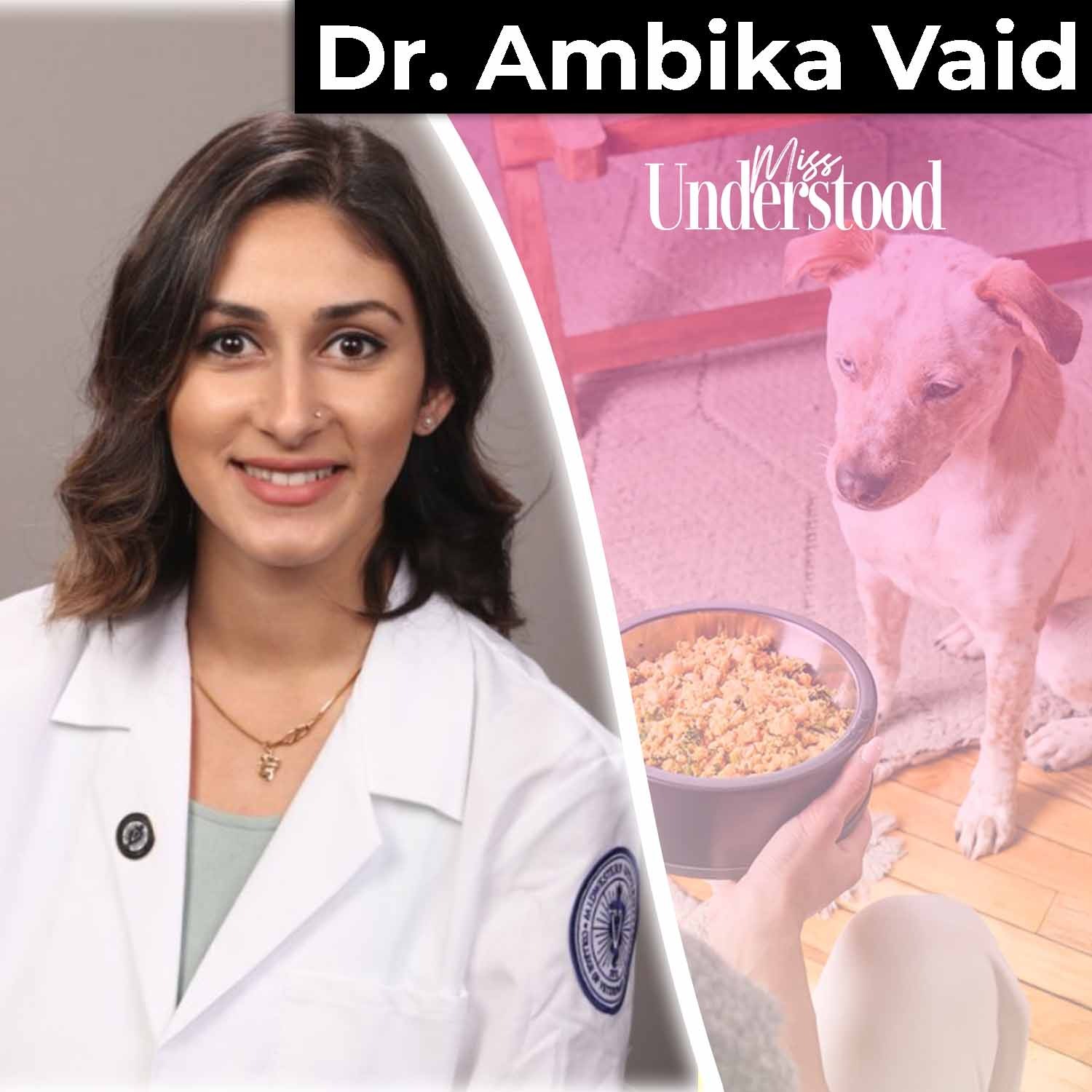
Miss Understood with Rachel Uchitel
How to Help Your Pets Live Longer with Dr. Ambika Vaid-Sidhu
00:43:50
Loading summary
Transcript129 lines
- [00:00]
A
Your business is one of a kind, so your website should be too. With wix, it's easy, almost too easy to create a website that's perfectly yours. Just tell AI what kind of site you want to build or choose from thousands of templates, change whatever you want whenever you want and get everything you need to start running your business your way. No matter what you sell or what you aspire to be, you can do it all yourself on wix.
- [00:27]
B
Today on Misunderstood with Rachel Yukatel.
- [00:29]
A
Human food doesn't have the nutrients that dogs need. I just felt like there was something we were doing wrong. I realized I wanted to take a different look at things. Any kibble out there is just cooked at such high temperatures that all the nutrients you think you're getting out of it is just gone. So giving them a dry food is just killing them internally. Anything goes a long way. Exercise is so important. Filtered water. If you're drinking filtered water, your dog deserves filtered water as well. Veterinarians will recommend changing their diet to a prescription diet. Well, there's actually supplements that you can take to help fix that instead of putting them on a new prescription diet. 70% of the immune cells are in the gut. So if your gut's not healthy, your entire body is going to fail. People are getting on board with the fresh food diets. I think it's going to get bigger and things are going to change and shift a lot.
- [01:44]
B
Welcome back to Misunderstood. I'm your host, Rachel Yukatel. Well, we all know we go to the doctor when we are sick. We invest in nutritionists, supplements, energy, healing and longevity clinics for ourselves. But how often do we think about our pet's health therapy the same way? Today's guest believes that our pets deserve wellness routines as thoughtful as our own. Dr. Ambika Vade is a veterinarian who bridges the conventional medicine with holistic healing. She's the veterinarian advisor to Katherine Heigl's Badland Ranch, and she's on a mission to extend the lives of the animals we love most, from gut health to energy medicine like acupuncture. She's challenging what we think we know about veterinary care and giving us the roadmap to keep our pets healthier longer. Want to keep your pet happier, healthier and have them potentially live longer? Definitely. Listen to this episode with Dr. Vade. Dr. V, thank you so much for joining me today on Misunderstood. How are you doing?
- [03:11]
A
I'm good. Thank you so much for having me. I'm excited to chat with you. So where are you Located I'm in Denver, Colorado.
- [03:17]
B
Oh, very cool. All right, well, as I was saying before we started, this is one of my favorite type of episodes to do because if anyone is like me, and I'm sure you somewhat are, we all love our pets like they are children. And for some of us, we like them more than we like human beings. So, you know, anything we could do to make our pets live longer, we're all here for it. So I think that there is a huge misunderstanding because, you know, we put so much into our own health, to human health. You know, we go to doctors, we seek out different kinds of doctors for longevity, for anti aging, for certain issues within the body and spend hundreds of thousands of dollars in supplements you throughout our lifetime and all these crazy things. And you know, there's so much for humans, but it's not as well known, I don't think, for pets. And they go to their standard veterinarian. They listen to what they're told and food is a huge part of it too. But I want to have you uncover all of it. And so I think it's great that you're here.
- [04:21]
A
No, I'm excited to dive into it.
- [04:23]
B
So. All right, first, can you let our listeners know your background? How did you get into becoming a vet and then kind of decide the course that you were going to take within veterinary medicine?
- [04:33]
A
Yeah, absolutely. So I've always known that I loved animals. I was one of those people that like, was just born with an intuition that I wanted to be a vet. My parents were a really big part of it. They helped me find a place to volunteer when I was 16, and I just kind of stuck to it since then. So I started off as a kennel tech, picking up the poop, cleaning the kennels, and I moved my way up to reception, then vet, assistant vet tech, and then I went to vet school. So I've kind of done it all, which is wonderful. I get to be a part of all the little pieces of it, which makes me just feel like I just know it all. Like that's all I know how to do with my life. If I ever stopped being a vet, I think I would lose my place in this world. So then I went to, I went to undergrad in California. I'm from California. I went to vet school right after in Arizona. I did a lot of shelter work while I was in Arizona. I was in a brand new school. So we, we were close enough that we could drive out to Mexico, take a bunch of things with us and do free care. For the people there, which was wonderful. It was a great way for us to learn, but also help them. And then I, you know, got out into practice, went to corporate. Kind of the standard thing to do for a lot of people who are starting off. They want mentorship. You don't learn as much as you want to in school. But I had a dog who was about 15 who was just, you know. You know, those type of dogs that are so mentally there, but their body's just given out completely. And it's the saddest thing in the world because, you know, they want to. They want to stick around, but their body's just not allowing them to. I just felt like there was something we were doing wrong. So after three years of practicing, I realized I wanted to take a different look at things. And that's when I really got into the acupuncture. I got certified in that I'm getting my master's in the herbs. I go to all the conferences. I'm really big on food nutrition and just taking care of the whole body and seeing how much of a different difference that makes than I'm just throwing medications at things.
- [06:20]
B
Right. So I think the biggest misconception, and it's. Is that it's fake, right? That this is just a bunch of hocus pocus stuff and it doesn't really work. So I really want to hear, okay, is this. This falls under what? Holistic medic?
- [06:35]
A
Integrated, Holistic, integrative. Yeah. Or alternative. You don't have to use it all all at once. You can do it with modern medicine. It could be complimentary. Right.
- [06:45]
B
So. But you know what I mean, right? That this. When you must suggest to. To a parent of a dog, to a human, listen, let's try this. I'm sure you get a lot of pushback. Like, oh, come on, is this really going to work? How does this affect dogs? Like, what do you hear?
- [06:59]
A
Mostly 100%. I think the one thing is that it's a little bit more pricey and it takes longer to get effects. And people are like, I want answ and I want something that's going to fix my dog today because I don't have time to deal with it. That's not the case with alternative medicine. It takes a little bit longer because you're working on fixing the body. You're not just masking the symptoms. So, yes, whenever I recommend it, some people are like, no, I'm not doing that. Don't even talk to me about it. Luckily, I work at a holistic hospital as well. That I see people who are so into it and that helps me to kind of get the message across.
- [07:31]
B
Got it. Okay, so now can you explain to our listeners what falls under the umbrella of this holistic and integrative medicine?
- [07:39]
A
So much so food therapy is a really big part of it. Acupuncture, herbs, Chinese herbs and western herbs. You can do ozone therapy, stem cells, you can do PT rehab, chiropractic. Some people are even doing Reiki on their animals. There's so much that we just haven't dived into yet as a veterinary community.
- [08:00]
B
Right. So I know you've written about food as medicine. What are the biggest mistakes that we are making in feeding our dogs?
- [08:09]
A
Feeding kibble. Kibble is just. Any kibble out there is just cooked at such high temperatures that all the nutrients you think you're getting out of it is just gone. They're not getting anything out of it. Especially cats. They're carnivores, they grow up on meat. That's how they were made. So giving them a dry food is just killing them internally. And so that always hurts my heart when I see a cat that's getting kibbled because they need to be on a meat only diet. The allergies that we're seeing in animals, they're so prone to allergies and ear infections and sneezing and things like that. That's all food related. 70% of the immune cells are in the gut. So if your gut's not healthy, your entire body is going to fail.
- [08:49]
B
Okay, so let's talk about that a little more. So I've seen so many commercials and I use farmer's dog.
- [08:56]
A
That's great, that's wonderful.
- [08:58]
B
But here's the problem. But my dogs are over it because it only comes in like three flavors. It's like turkey, chicken, pork, beef, maybe I can't remember more flavors. And you he. So for people that don't know it comes frozen, you put it in the freezer, you take it out the night before, you add water to it, you mush it up and then it's like supposed to be real food. The issue is my dogs are completely onto me. So now I have to order rotisserie chicken four days a week and put it in there with it or make salmon or my fiance makes steak. And then I assume I'm doing bad things to my dogs gut. But you tell me, I mean, are eating human food like that? And I'm not talking about human food, I'm just talking about like chicken, steak, fish. Is that bad to be Giving them?
- [09:43]
A
No. As long as you're not adding any, what's it called, seasonings to it, that's fine. If you're just doing it bland and you're adding it as a topper, that is absolutely fine. Because they're still getting all of their nutrients from their food that you're still giving them. If you were to replace it with just rotisserie chicken and salmon, I would say don't do that because they're not getting a full balanced meal. Human food doesn't have the nutrients that dogs need, which is why these commercial companies are formulating them for us.
- [10:09]
B
Got it. Okay. And what about the dry food? You know, you see the dried beef, a lot of snacks have that, but.
- [10:16]
A
Like the freeze dried.
- [10:17]
B
Freeze dried? Yeah.
- [10:18]
A
Excuse me.
- [10:19]
B
So does that still count?
- [10:21]
A
No. So that's great. So that's a great question. Kibble is different. That's excluded and it's, you know, has a lot of filler and a bunch of stuff in it that's not good for dogs. Air dried stuff. So for example, Badlands ran superfood complete is an air dried, slowly cooked food. So that means that they've gently cooked it, all the nutrients are still intact and then they've air dried it. That's fine. The raw freeze dried foods, fine. If you're giving them like you know, the salmon freeze dried treat, that's just the protein that's raw and then been freeze dried, that's completely fine because that still has the nutrients in it.
- [10:55]
B
Okay, love that. What about. So tell me more about this gut health because I know you said that has a lot to do with their allergies. So if somebody really is like, you know, they think that they're buying top of the line stuff that they're getting in the grocery store or at their vet, what should they be getting? I mean I know you guys have a food. You have Badlands Ranch, right?
- [11:15]
A
Yes.
- [11:16]
B
So is that something you can order from anywhere in the United states?
- [11:20]
A
Anywhere? Yeah. Chewy.com Amazon.com you can get it anywhere. Badlands Ranch has their own website as well. But honestly my biggest recommendation is fresh whole foods. Whatever is giving you fresh whole foods, any type of kibble not going to do that for you if you can't afford because I know it's expensive. Expensive. If you can't afford to do all of the Badlands Ranch superfood complete or all of a fresh food diet like farmer's dog, even just a little bit and portioning it, portioning it out is a great way to start getting them that nutrients that they need. So let's say you're doing half kibble and half fresh food. It's better than nothing.
- [11:54]
B
Got it. Okay. And should we believe in the stuff that they say on the packages? Like, this is just for puppies. This is for old dogs. Like, is that a real thing?
- [12:02]
A
Yes, that is. That's a great question. So puppies need higher amounts of calcium than adult dogs do. So it's really important for dogs to be getting a growing diet if they're growing. Badlands Ranch does that as well as some of the other foods have a growing food. Some of the foods will say all life stages. That means it's good for puppies. Adults and seniors, they just have different requirements as they age.
- [12:24]
B
Okay, now a little bit more on food for one second, because I have a very beloved dog. Who? She is a Pomeranian, and when I got her, I was like, oh, I want a teacup Pomeranian. Like one I can stick in my bag and bring everywhere. Well, this one has expanded like gremlins. You're too young maybe to know that movie. You add water and they blow up to be this big animal. She is a monster. She's 20 pounds, and she's been on a diet. She's probably six years old. She's been on a diet for maybe four years, but I love her so much that I can't starve her. And then she makes these puppy eyes at me, and then I want to give her a treat. So what are your recommendations for people that have overweight pets? Because I know that it's dangerous and not only for them inside, but for their bodies. Like, she's, you know, they're lit that.
- [13:13]
A
That.
- [13:13]
B
That breed is little. They develop knee problems. So, like, joint healthy. Yeah. We need to keep our pets at a healthy weight. So how do we do that? How do you get them to slim down?
- [13:24]
A
So exercise is huge. Making sure that you're exercising them is big, especially if they're on a weight loss diet. I think the biggest misconception people have is if I reduce their food, they're going to lose weight. That's not necessarily true. When you reduce their food, you're taking away the amount of nutrients that they need. So, like, imagine yourself if you ate six blueberries a day and that was it. Because you want to lose weight, you're not getting any other nutrients. Right. Same thing for dogs. We want to keep them on a good diet so they're getting all their nutrients. Because if we reduce it too much, their body doesn't have enough to get energy from so they're holding onto it longer. So a good food like farmer's dog that you're feeding or Badlands ranch, something like that is great. Don't do any kibble when it comes to treats, try just broccoli, carrots, green beans, things like that, which will make her full. And it's full of fiber so she won't feel like she's missing out on anything if she likes them. Apples, blueberries, all that kind of stuff is wonderful. The other thing you can do is if you're going to reduce her food, let's say instead of giving her a full cup, you're giving her 3/4 of a cup. You have to replace that 1/4 of a cup with something, whether it's pumpkin puree, sweet potato, something that's full of fiber so she still feels like she's full, but it's coming right out of her system. Got it. So that's a really great way to help them lose weight. And then also of course, the exercise, a huge component of it. She needs to just walk around a lot more to help get that weight off. How many times have you wished you.
- [14:46]
B
Could be in two places at once?
- [14:48]
A
With wix, you practically can. Wix's website builder is packed with powerful AI tools to make running your business online easier. Build a full site just by talking with AI, get an AI agent to manage your sales and marketing, or work like a 10 person team, even if it's just you. So you don't need superpowers to get everything done, you just need Wix. Try it now for free@wix.com if I.
- [15:12]
B
Told you that the idea that you only get parasites when you travel to some exotic country is flat wrong. Millions of Americans carry parasites right now, often without symptoms. For example, it's estimated that millions in the United States have been exposed to Toxicara, a parasitic worm. Yet most never even know it. Parasites do not need a plane ticket. They can enter through tap water, sushi, undercooked foods or contaminated produce. Some strains live in all stages. Eggs, larvae, adults hidden in your gut, releasing toxins that sabotage your energy and digestion. That's why I'm excited about parafi. Kim Rogers 30 day full spectrum parasite Cleanse. The kit works by clearing parasites, worms, candida and heavy metals, targeting parasites in all life stages, supporting gut health, detox pathways and tox removal. It's taken orally daily for 30 days with precise dosing. I'm actually doing it myself right now. I started with the lymph Cleanse. Then I'm doing the parafi. Wanna dive deep? I did a full interview with Kim Rogers, the worm queen herself, where we expose all the myths, understand the facts, and show how to protect your body. Listen to that episode if you haven't already. Meanwhile, go to rogershood.com and use the code Rachel to get 10% off of your order. That's R A C H e L for 10%. Give it a try. Maybe your body's missing link is hiding inside. Let's do this together. Again, it's Rogers hood.com r o g e r s h-o o d.com and use the code Rachel for 10% off. Okay. Amazing. And one other brand, because some people wrote in some questions. Dr. Marty's, have you heard of it? Is a big brand that is promoted a lot and it says it's by a doctor. Are you a fan of that brand?
- [17:02]
A
Yeah, Dr. Marty's is actually. He has a lot of information and a lot of knowledge and that's also a great food.
- [17:07]
B
Okay, good. Now, you talked about fruits before. I think that fruits are something that people. It's a misunderstood thing. I have people that are like, oh, I give my dog avocado. Where I've read avocado and grapes are completely dangerous. So can you give us a list of the foods we should avoid completely with our animals?
- [17:25]
A
Well, you're right. Avocados have a lot of fat in them, so they can lead to pancreatitis in dogs and cats. I would stay away from it. Same with grapes. Grapes can cause acute cancer, kidney failure in cats. So definitely stay away from that as well. Any type of nuts, like walnuts, almonds, things like that, they have a little bit. It's a healthy fat, but they have more fat in it than some of the other foods do. So stay away from all of that. Onions and garlic can also have, you know, that kind of effect if given too much, can cause anemia. I would stick to apples. Blueberries are really great. Blackberries are fine. Watermelon is fine. But everything in moderation. Too much of anything is going to cause an upset tummy.
- [18:01]
B
Right. Okay. And what about, like, things that we all have in our home, like bananas, applesauce, like, are those all things that are fine?
- [18:09]
A
I would be careful. So the things that we have in our food nowadays, like they contain xylitol, which is a sugar, a type of sugar that's toxic to dogs. Same with peanut butter. So some peanut butters also have that. So that's something to just warn people about. Is, yes, peanut butter is okay for dogs, but you need to make sure it's xylitol free because xylitol is toxic.
- [18:29]
B
Wow. Okay. Well, that's a good piece of information because I know a lot of people use like peanut butter to put pills in or whatever to make them take their pills. So. Yeah, I didn't know that. That's a very good piece of advice. All right, let's talk about supplements. Now, I want to find out from you which supplements because you see, again, shelves are lined with stuff like this. I just walk by them because it's too much information. And I always, I feel like I never believe in it. And the CBD stuff like, tell us all about that.
- [18:59]
A
That. Yeah, that's a great question. I would say that if you have a good diet that your dog is on, you shouldn't need to supplement anything else. They should be, you know, completely fully balanced. Nutrition, nutritious nutritionally, when your dog starts to age. For example, I have a nine year old, she's not limping or showing signs of arthritis, but we just assume that once they're seniors, they're going to have some type of arthritis. I have put her on a joint supplement. I use the Mobility by Badlands Ranch because it has glucosamine and all the good things that I want to help keep her joints nice and healthy so that I'm not dealing with a dog that's debilitated later on. Same with like some, some dogs on their lab work can have like crystals in their urine because of what they're eating. And some veterinarians will recommend changing their diet to a prescription diet. Well, there's actually supplements, urinary supplements out there that you can take to help fix that instead of putting them on a new prescription diet. So I would just, I would do the labs and things like that first before you go and just put your dog on a bunch of stuff. Because if they're eating a food like farmer's dog dog, they don't need to be on any supplements. They're getting all their nutrients from their food.
- [20:05]
B
Okay, but so what about dogs? Like, my dog just had double ACL surgery. She's limping all the time. It's always a problem. And they're like, oh, you should give them, give her supplements. But does a joint supplement mean anything at this point? Because she's already having problems with her joints.
- [20:19]
A
Yes, it'll help it, it'll help her feel better. So most supplements that joint supplements have glucosamine, they have turmeric in them that's anti inflammatory. Something you might also want to consider is physical therapy and acupuncture would so helpful to take some of that pressure and get deep into her fascia to help with that pain response.
- [20:39]
B
Okay, I want to talk about energy medicine for a second because how does that even present itself? Do they have to be sedated? How do you get a dog to sit down?
- [20:48]
A
So the first. Yeah, that's a great question. The first session for acupuncture, I feel like is a hit or miss. Like, dogs are usually like, what are you doing to me? Don't touch me. What is happening? But I always do it with the owner. So I have the owner sit in the room with us. The owner's feeding treats, and while they're distracted, I'll stick my needles. Usually the dog feels better. So the second time they're coming in, they're a little bit calmer. And by the fifth or sixth session, they're letting me do whatever I need to do, really. So I'll focus mainly on back points in the beginning because that's easy to get to and they don't really care about them. And as we do more and more sessions, I can start doing the legs, the head, the eyes, whatever else I need to, because they're a lot more comfortable with it.
- [21:28]
B
Got it. But how long do the needles have to be in the.
- [21:31]
A
20, 30 minutes. So they'll usually I'll put one on the head, which is a calming point. So once I put that and it sits for a little bit, they'll kind of relax. I'll leave the room. So it's just mom and dog and they'll just hang out for 20 minutes and then someone comes in and takes needles out.
- [21:46]
B
So that sounds really scary to me. Like, we live across the country from each other. So like I would have said, okay, after this, I'm making an appointment with you for my dogs. But how do you actually find someone that really knows, knows how to do this and is trained properly in dog acupuncture? Is it easy to find someone in your area?
- [22:04]
A
Yes, it is. So there's a website called ivas.org that has all of the certified acupuncturists in your area. So if you really wanted to go to someone, all the veterinary certified acupuncturist, it'll pop up their location and their names. Most acupuncturists are mobile. They'll come to your home and they'll do it in the comfort of your home, which is really nice.
- [22:22]
B
Yeah, wow. And okay. But is, but is there some sort of major certification that is different on a dog than in a human? Or are the body parts all sort of the same? Like if you use one part of the body, it's going to something.
- [22:38]
A
That's a great question. It's. I did an animal certification course, but I've seen human acupuncturists do acupuncture on dogs and have the same response. So I think, you know, it's, it's really how comfortable you are with it. I don't really want to touch humans, I don't want to learn about humans. So I focused just on doing the veterinary medicine portion of it and I really focused on just the animal aspect of it. But I have seen some human, but human acupuncturists who had, who went and got certified in dogs as well.
- [23:08]
B
Got it. And just so people understand what falls under the umbrella of things that you should go to an acupuncturist for for your animal.
- [23:17]
A
Everything. So people think it's just joint related. It's not. I've seen people come in for masses and you can do things around the mass to help shrink it a little bit for poor energy. There's points that you can do for that for chronic kidney disease. You can do it for GI issues. Some, some really great, wonderful, holistic doctors don't treat diarrhea with anything but acupuncture points. They'll do a couple points. They don't even put them on any medication or diet change. And that's all they do. And it's, it's true, it works really well. You can use it for, for moods. So like if you have a dog that's really anxious or really nervous, you can use it for things like that as well. So you can really use it for a lot of things. I used it once, came in for an ulcer scratch on the cornea. I got a little bit of blood from him and I put it right back under his eye of an acupuncture point and that I healed up more than it would have with an antibiotic ointment. So it's, and there's science behind this. It's evidence based. It's not just like you said, it's not just like magic. There's actual evidence behind how the body functions together.
- [24:18]
B
Right. A lot of people have written into me and talked about dogs itching or biting on their paws. Now I think there's been some studies that this is. It could be allergies from your grass, from your Food, it could be anxiety or they're bored. How do you, what, what would you do for, for dogs that have itch, you know, biting on their feet?
- [24:39]
A
So first we want to rule out what type of allergy it is. And I always, the first thing I do is a diet change. That's the first thing I do is if your dog is on kibble, I always try to get them onto a fresh food diet and I always try to change their protein source. That's why I'm such a big fan of Badlands Ranch. There's, you know, there's absolutely no fillers in it. There's no corn, there's no wheat, there's no soy. Those are the things that cause allergies if you don't have a protein allergy. So getting fresh, fresh food or food like that, you're taking all the allergens out of this, out of the equation. If the food doesn't help, that means, yes, you have an environmental allergy. Topical therapy is the best for that. I know a lot of people like the steroids and the appoquil and medication like that for allergies, those are immunosuppressive. So, yes, it may fix one problem, but eventually it's going to cause tons of other problems. And we're just fixing, you know, we're masking the whole thing. So I will do a lot of topical therapy. If you know that your dog's allergic to grass, when you bring them back home, clean their paws out of, take a couple extra minutes, clean their paws with a little, you know, paw wash, put a little medicated wipe on them, and usually that does the trick. You don't need to do anything more.
- [25:43]
B
Right? Okay. So if I'm a pet parent and I want to give my dog or cat the longest life possible, obviously we've talked about a couple of things. Change from kibble, that, that kind of stuff. Maybe look at what, you know, doing some acupuncture, looking at the gut health. First of all, how do we, how do we know if they're starting to feel sick or, or that their age is starting to show? Because it represents different in pets than it does in people.
- [26:10]
A
That's a great question. So in holistic medicine, we do a very specific type of exam. We'll check their pulses, we'll check their tongue, but we also check their coat. And all of those things show us signs of early aging and things that we need to start working on. So in conventional medicine, you're checking baseline lab work, which is your basic blood work, right? You're checking your liver, kidney values, your urinalysis, and maybe you're checking for anemia. In holistic medicine, we take it a step further. We check for vitamins that are essential for dogs to live and age naturally. If vitamin D, magnesium, cobalamin, folate are low, that's a sign that they're not getting it nutritionally, and they're going to start showing signs of aging and disease soon. So then we'll supplement those things into their diet with liquids or capsules, things like that, and retest them every few months.
- [26:57]
B
Is there some sort of warning sign that. That, you know, that you would like people to. To hear that, that they should look out for. That they should immediately, like, start changing something, Go to a vet like you that way that we may not know of.
- [27:14]
A
Yeah. If your dog has chronic ear infections, is slowing down, is not wanting to eat anymore, always has diarrhea, that you're having to get treated every few months, that's not normal. Like, that shouldn't be happening. That's a sign that there's a bigger root cause that we're not treating, and we need to dive in deep.
- [27:31]
B
Right. Because it's interesting. You. You know, I follow a bunch of people that talk about their dogs all the time, and next thing you know, the dog's, like, dead, and they just found out the dog had cancer. And it's really upsetting for the entire Internet to watch this happen, but it seems like it comes on so quick. And, you know, that's a. That I just feel like there's gotta be ways to have seen these signs a lot earlier. I mean, I feel like, as a pet owner, you really know your pet, almost like, you know your kids. So, you know, when something's off, you know, people kind of hesitate to bring the dog to the vet because sometimes we don't even feel like, you know, it's not that vets don't know what they're doing, but vets sometimes just look in the ears, look around, look at the gums, and they're like, nope, let's just put them on this for a couple days, and you'll be fine. And you have a $500 vet bill. So people, I think, hesitate, and they just wait it out.
- [28:22]
A
And I understand that. I think the cost of veterinary medicine is a big topic right now. And I think when we're like, I want to do blood work and I want to do this, it's really scary because insurance doesn't always cover that, you know, and so people are like, well, I'M not going to do that. My dog is fine. The other thing as well is that dogs are like family nowadays. They're like kids to people, so they can't even imagine anything being wrong with them. So it's really hard to kind of get through to that. I had one client who came in recently. She's my favorite lady, but she adopted a dog from a rescue. And the dog has terrible anxiety and then started itching. And she's like, I just want my Applequil, because I know it works, and it's quick and easy and it's fast. And I fought her so hard on it. I was like, I promise you, if you change the diet and it doesn't work, I'll pay for your bill. Like, I'll. I promise you the dog, she begrudgingly changed. She was so upset with me that I wouldn't give her the app. Well, changed the diet, gave it six weeks, came back, his anxiety was gone. It wasn't itchy anymore. Now you don't have a bunch of bills for medications that you didn't need in the first place. All you're doing is feeding your dog. That's all you're doing. You don't have to worry about medicating them or anything. Yeah, I think that's a concept that is really hard to understand for some people.
- [29:33]
B
People, right, right. You talked. You talked about herbal medicines earlier. That sounds like a bunch of Chinese stuff. So tell me about that.
- [29:43]
A
Yeah, that's a great question, too. So when we look at baseline lab work in holistic or integrated medicine, we look if it's in the normal range, but on the verge of too high or too low. We look at things like that because we want to catch things before they happen. We want to prevent things. So I will put patients on herbs to help support their thyroid or their kidney if I feel like they're on the verge just showing signs of disease. Some conventional doctors see normal, and that's it. They don't really go that extra step, which is when we start to see disease. And then you treat the disease after it's already occurred. We try to do that before it happens. So that's where the herbs kind of come into play also, you know, I've used herbs. So some things we can't. We can't treat, and we have no way of making sure it doesn't happen. Like, Pomeranians are prone to collapsing trachea as they age. They have, you know, that cartilage gets weaker as they get older. They start to have this gross goose Honking cough.
- [30:37]
B
My dog has.
- [30:38]
A
Yeah. Slippery Elm, which you can get online and I can give you. It's a wonderful herb. It's an absolutely wonderful herb. It really helps to moisten the. In any mucous membrane. It's also really good for digestion, but I use that for collapsing tracheas. And you don't need to go on any other medication, any cough suppressant, anything else.
- [30:58]
B
Yeah, they put her on so many things. They put her on cerenia. Is that. Do you know what I'm talking?
- [31:02]
A
Yeah. Yes. Yeah.
- [31:04]
B
But it's like the middle of the night, she wakes herself up and me five times a night with this terrible.
- [31:09]
A
She's coughing.
- [31:10]
B
And when other people hear it, they're like, oh, my God, is she okay? And I'm like, this has been happening for four years. This is just what she has. I knew immediately it was a collapsing trachea, which, of course, that scares me because you never know when that's gonna be so serious that she can't breathe. But I've been managing it with. With regular medicine. And so. No, I'm glad you brought that up because I will try the slippery elm because, you know.
- [31:32]
A
Yeah. And just remember, it's. It's an herb, so it's going to take longer to take effect. And I think that's something that, like, some people will get impatient about, is I gave it a week. It didn't work. I'm over it. Yeah. Holistic medicine, alternative medicine, it takes time. It's making changes in your body. It's going to take time to do that. So just don't give up on it. So I would say do it for a month. Month. And then see how things go.
- [31:55]
B
Right. Which is similar to the advice they give you with stem cell treatment. And too, like, you go, I just went to Panama and I got stem cells. And part of the thing that they were explaining to me is like, don't think that, like, tomorrow you're going to feel better. This is within. It takes a while. And that's been the worst part of coming home from it, because I'm like, okay, I should be looking like, I'm 17. I'm still 50. So, like, what's happening? But it's only been. And they keep saying, you know, like, you got to give it a couple months to really find its way through your body and integrate. And do they do stem cell treatment within pets as well?
- [32:35]
A
They do. They do. It's really cool. You can do stem cells into the joints. You can do it. You can do it. For a lot of different reasons. I've seen it mainly in the joints. For dogs that are really showing debilitating signs of arthritis. They'll put it into the joints to help them walk better and save their joints while they're can.
- [32:51]
B
Amazing.
- [32:52]
A
All right.
- [32:52]
B
When is the point that, you know, you have to integrate the two medicines though? Like what you guys offer might not be enough that you have to call in the red the regular veterinarian medicine.
- [33:03]
A
So believe it or not, usually holistic medicine is a second opinion. So we get all the really hard, complicated cases because they can't just figure out what they're. What's going on. So cases like immune mediated diseases, like a dog that has immun media hemolytic anemia, they need to be on steroids to help manage this because if they don't, their anemia gets so low that they'll die. I will still keep them on their medication, but start doing things like acupuncture, ozone therapy. Maybe we'll do some herbs to help support their immune system and their health so that they can taper that dosing of steroid to the lowest affected dose instead of being on a high dose of it and still staying healthy. Dogs that have no, like if you have a uti, of course I'm going to give you antibiotics. It's not that we don't believe in antibiotics, but there's. If we're going to do that, you need to also give a probiotic. You need to also support the immune system because antibiotics are still killing that gut health that we need.
- [33:56]
B
Right, right. You said ozone therapy. What is that?
- [34:00]
A
Ozone therapy is a. It's been around for 100 years. It's a big tank that you sit in. Well, no, that's hyperbaric chamber. Ozone therapy is when you have an oxygenated. It has an extra piece of oxygen attached to it. And so it's just ozonated air essentially. And it helps with cancer, immune system wound healing, so many things. I had a friend whose dog had osteosarcoma that she was. She bought an ozone machine and was doing it herself at home to give herself energy to give her dog energy while they were dealing with the cancer. And so it's a really, really great way to help boost the immune system. It's a healing. It helps with healing. People do it in humans as well.
- [34:42]
B
Does red light therapy work in dogs? Like it doesn't and yeah, it does.
- [34:46]
A
Laser therapy is wonderful. I'll use it sometimes as a secondary thing to acupuncture. I'll do Acupuncture and I'll do laser on top of a part that's really painful or if I notice that I got a pain response somewhere during my needle, I'll do like a little bit of a localized laser there. We use laser therapy for wound healing as well. So after I spare neuter if I took a bunch of teeth out, we'll do some laser therapy there for inflammation.
- [35:09]
B
Got it.
- [35:11]
A
Okay.
- [35:12]
B
How do you measure success in extending a pet's health span, not just lifespan?
- [35:19]
A
So I look at again, the whole pet. If, if your pet is debilitated and yes, they're eating, but you have to force it and they're not really going on walks and they don't have a good lifesty, that doesn't mean that I'm doing my job well. I want the dog to be able to do the things that they love. You know, I want him to go for his walks, I want them to play if they want to and eat and be happy when they eat. And so those are the things that we really look for. And, and the owners are a big part of that. You know, like you guys are giving us the history, you're telling us what's normal and what's not normal for your pet. That's a really big part of making sure that we're successful.
- [35:53]
B
Yeah. And this is totally off topic, random question, but do dogs get headaches?
- [35:59]
A
Not that I know of.
- [36:00]
B
Like, how do we know, you know, like we know when we have aches and pains all the time and sometimes we don't complain about it, but we still don't feel well. And you look at a dog and they might be sleeping, but as soon as they see you, they're happy to see you. They want to run around. I mean, unless they really don't feel well, you know it because they're not eating and by then you really got a problem. But like, how do we know if they kind of don't feel well? Like, like us. Do they get that feeling of feeling nauseous? And okay, they will.
- [36:29]
A
So like some dogs who are nauseous or are not feeling well, tummy wise, they'll start eating grass or be slower to eat their food instead of eating it immediately. Maybe they're staying in bed later than usual or napping more than they usually do. Maybe they're not limping, but they're licking in one location over and over again. That means that spot is painful. They're licking it because it hurts. So that's usually a sign as well that something is to going Going on.
- [36:52]
B
Interesting. Okay. All right, let's just get into the myths and misconceptions a little bit before we end. What do you think is the biggest misconception about holistic vet care?
- [37:03]
A
I think it was what you said earlier, that it's just a bunch of hocus pocus and it's not real. But a lot of things that we're doing is evidence based medicine. We don't want to just throw things at your dog that don't work. We're using it because it has shown to work. We use a lot of studies from human medicine because there's not a lot in dogs yet. So a lot of the microbiome studies and things, we're getting that from kids and from people and using that in animals. And if it's been working for us, it's going to work for our pets as well.
- [37:30]
B
Right. I'm curious what your biggest frustration is within the pet health industry right now. Any sort of information they're coming out with or the fact that people get so much of their information on TikTok or Instagram or whatever. What. What is frustrating about that? That's incorrect. That, like, you want to clarify. Clarify.
- [37:49]
A
I think there's so many people out there who are not licensed or certified to be giving advice. And so if you're going to be getting advice from people, just check their credentials and see who they actually are. Like, just because they say they're nutritionist doesn't mean that they're a veterinary nutritionist who has. Who is board certified. That's one thing. The other thing is there's a huge divide in veterinary medicine. Most conventional veterinarians don't really believe in fresh food. They still think that kibble is fine and prescription diets are fine. And so they're pushing that, which can get really, really confusing for clients and for people who just want to care for their pets. But if you think about it, if you are want a good food for yourself, doesn't your dog want the same? So I think there's a lot, you know, there's sometimes there's a lot of pushback from just. You have to change the way that you think if you're going to be in the holistic space.
- [38:37]
B
Yeah. Okay.
- [38:40]
A
All right.
- [38:40]
B
You're advising Badlands Ranch, which is all about elevating pet health. Can you talk a little bit about that? This is Catherine Heigl's brand, right?
- [38:48]
A
It is, yes. Yeah.
- [38:50]
B
It's a brand or a place?
- [38:52]
A
It's a brand.
- [38:53]
B
Okay.
- [38:53]
A
I think it's a place Too. I think it's named after her ranch. Deanna can probably tell us, but I.
- [38:59]
B
Think I read that, that it was named after her ranch, but I didn't know if the food was made there or what.
- [39:03]
A
But no, the food is made in an actual food facility.
- [39:06]
B
Okay, so it's a, it's a brand of fruit. Can you tell us a little bit about it? You talked about it a little bit at the beginning, but tell us about it and then the other products maybe that you guys sell.
- [39:16]
A
Yeah, absolutely. So we have the biggest thing is a superfood complete, which you can use as a topper or a full meal. They have a variety of different flavors, different proteins that they use and organ meats. So that's really special. Organ meats are full of nutrients, vitamins and minerals and amino acid profiles. So you're getting a lot of that in the meat, in the food itself. They also use superfoods. So they're, you know, they have the blueberries, they have the lion's mane mushroom which is really good for cognitive health. So if, if you have an older dog, it's really good for, for preventing dementia and preventing those slowing down of symptoms. Blueberries, turmeric, that kind of stuff is a really good antioxidant, anti inflammatory. So they have all of these real ingredients in their food and like I said, no corn, no soy, no wheat. So you're not worried about the allergens. If you have a dog that's allergic to chicken or beef, you have different options. They have a turkey, they have a venison, they have a lamb, my dog loves the lamb and I use it as a topper. Just, it's a crunch, it's a different type of top texture. The best thing about it is that it's gently cooked. So we're not worried about the nutrients being taken out of the food. We know that it's going to be in there and we're getting what, what we're paying for essentially. They also have tons of supplements. They have a freeze dry, they have freeze dried treats. They have the different, different single ingredient freeze dried treats. So just protein based salmon I think is the one you have beef or chicken. It's just freeze dried protein. That's all you're getting out of it, nothing else, which is what wonderful. You don't have to worry about what else is in it. The supplements are also wonderful. So my dog has itchy skin. I'll put her on the supplement during the summer, the skin and coat supplement. And they love the taste of it. Like my dog will lick the bowl clean when I have that powder in there.
- [40:57]
B
Okay.
- [40:58]
A
So, yeah, that's wonderful. I like working with the brand. I believe in their product, but they also do a lot of philanthropic work. So proceeds from the food will go towards shelter animals and we're, you know, that's awesome. And I spent a lot of time doing shelter work when I was in vet school, so that spoke to me a lot. Just to see Katherine out there and helping shelters and helping rescues, that's amazing.
- [41:21]
B
So that's part of the Heigl Foundation.
- [41:23]
A
Yes, the Jason Adibus Heigl Foundation.
- [41:26]
B
Yeah, got it. Amazing. Okay, just two more questions, basically, just to be succinct and if anyone listening today has listened to this and said, well, what change can I make today? I think we've all realized that you got to get your dog off of kibble. But if we want our dogs to live long, longer. Is there one thing you would say, guys, that really would change this? Whether it's eat blueberries, whether it's, you know, change the water, I don't know. But what would you say is the one thing to make sure they start living longer now?
- [41:53]
A
It's, you're going to hate this, but it's the food. It's 100% the food. It's. If you can't afford the fresh food or the air dried or the freeze dried, start incorporating a little bit into their diet. Anything goes a long way. And again, like a routine is so important. Exercise is so important. Filtered water. If you're drinking filtered water, your dog deserves filtered water as well. So just think of what you would want out of your self care routine and think of your dogs in the same way. Amazing.
- [42:20]
B
And if people are going on Badlands Ranch, which supplement is A1 standard, like a multivitam or something that we would get, what would you pick for the.
- [42:29]
A
For that they have one which I can't. It's the Super 20. The Badlands Ranch Super. Super 20 is the all in one multivitamin that you can, if you want to start early, you can start on that one.
- [42:41]
B
Amazing. Last question. Where do you see veterinary medicine in the next 10 to 20 years? Do you think holistic medicine will become a much bigger deal and part of medicine, veterinary medicine than it is now?
- [42:54]
A
I do, I really do think in the three years that I've been doing it, I think there's been a huge shift already. People are getting on kind of on board with the fresh food diets. You see these big, you know, the prescription diets you see that they're starting to make fresh foods as well because they know the trend is changing and that's wonderful for our pets. I think it's going to get bigger and things are going to change and shift a lot. I also think it's location dependent. When I worked in California, I had a lot more people who are interested in holistic medicine than they are in Denver. So it's just getting people educated about it enough to have them come back and consider it amazing.
- [43:31]
B
All right. Tell people where they can find your more information about you. You have an Instagram, right?
- [43:38]
A
Yes, my Instagram. So you can follow. Follow me there.
- [43:43]
B
Amazing. And they can get Bedlands ranch where.
- [43:48]
A
On badlandsranch.com as well as Amazon.com and chili.com amazing.
- [43:53]
B
You're awesome. I really appreciate your help. I'm gonna order some of this stuff today and I love it and I will let my listeners know how it goes. But I wish you the best. Thank you so much for this conversation.
- [44:04]
A
Thank you. It was so nice to chat with you. You foreign.
- [44:14]
B
Thank you so much for listening to Misunderstood. I'm your host Rachel Yukitel. Please be sure to subscribe to the show and give us a five star rating and review. You can support the show by joining our patreon@patreon.com misunderstood with Rachel Ukitel. Do you have ideas for the show or want to reach out? Email us@infomisunderstoodpodcastmail.com that's spelled M I S S. Understood. Thank you so much and I'll see you next time.
- [44:45]
A
Your business is one of a kind, so your website should be too. With wix it's easy, almost too easy to create a website that's perfectly yours. Just tell AI what kind of site you want to build or choose from thousands of templates, change whatever you want whenever you want and get everything you need to start running your your business your way. No matter what you sell or what you aspire to be, you can do it all yourself on wix.