← Miss Understood with Rachel Uchitel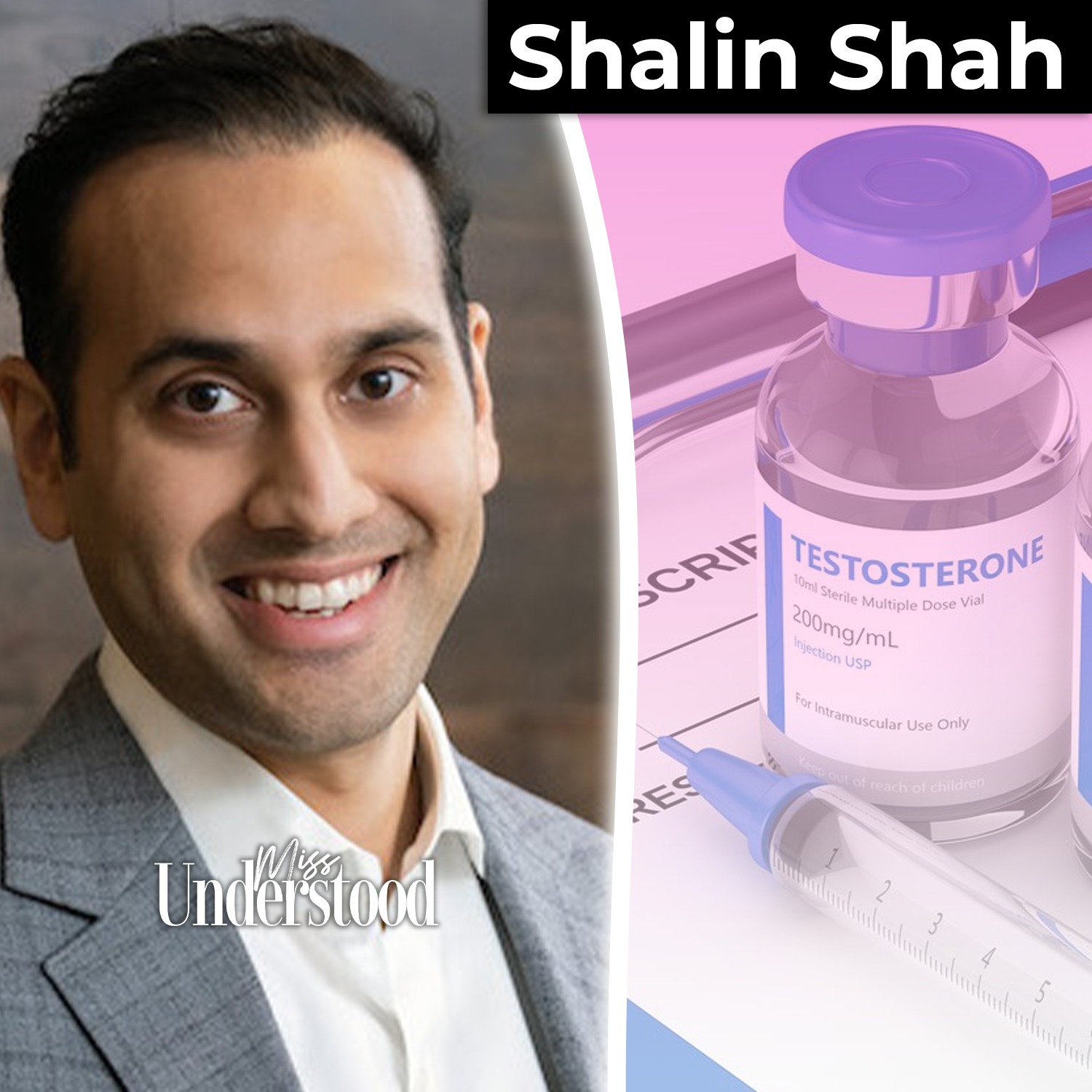
Loading summary
Transcript112 lines
- [00:00]
A
Today on Misunderstood with Rachel Yukatel. I speak to men all the time that think they know everything about testosterone. And I think the stigma is when you hear testosterone, you think of these, like, meatheads in the gym or guys who are having trouble having sex, and so they think they need to take testosterone. So everyone seems to think that they're the expert in it, but no one really knows what the hell they're talking about.
- [00:20]
B
Testosterone is actually a controlled substance, and this happened in 1990. It's the only hormone that's controlled. Congress actually went ahead and scheduled testosterone, even though testosterone is only a small component of these doping protocols, is really not the driver. But that gives it a bad rap. From that perspective.
- [00:38]
A
If you could correct one thing the public misunderstands about testosterone, what would that be?
- [00:43]
B
How critical low testosterone is. Low testosterone is implicated in what are today referred as the Four Horsemen of disease. This is cancer. This is dementia. Type 2 diabetes. This is obesity. It is the single best biomarker into your overall health. It does tell you about your. Your cardiovascular and your endothelial health, your state of inflammation, your glucose control, and your insulin sensitivity. For something that is so telling and so easy, it's really surprising. It's just not checked more. Most guys are taking a shot once a week. The equivalent analogy is, is waking up on Monday morning and having 10 cups of coffee. You just have your whole coffee for the week. That doesn't make sense. And that's not how the body produces testosterone.
- [01:36]
A
We live in a world obsessed with feeling younger, living longer, having more energy, and somehow doing it all without ever looking tired. We talk about diet, sleep supplements, peptides, ozempic. But there's one topic that people whisper about, joke about, or dismiss entirely, and that is testosterone. The truth is, testosterone has become one of the most misunderstood parts of modern health. For years, it's been lumped together with bodybuilding, steroids, cheating athletes, and aging men in cris. And because of that stigma, millions of people, men and women, suffer quietly with fatigue, mood changes, weight gain, low libido, brain fog, and declining vitality without ever knowing that hormones might just be part of the story. Today's episode is about understanding a hormone that plays a critical role in metabolism, longevity, mental health, sexuality, muscle preservation, and, frankly, quality of life. It's also about why the medical world has gotten testosterone wrong for so long and why that misunderstanding has cost people years of their lives. Feeling like a dimmer switch has been turned down. To unpack this, I'm talking to someone who has been at the center of redefining this conversation. Sha Lynn Shaw is the CEO of Marius Pharmaceuticals, the company behind the first truly accessible oral testosterone therapy approved by the fda. He's not a doctor. He's a biotech and health innovation executive who became obsessed with the question of why are we treating testosterone like a dangerous drug instead of an essential hormone? Under his leadership, he helped drive a major shift in the FDA's stance on testosterone therapy and has become one of the leading voices calling out misinformation, outdated studies, and unnecessary fear surrounding men's hormone health. He has spent years talking to researchers, clinicians, regulators, and patients, and what he learned is this. We have been completely wrong about testosterone, wrong about what it does, wrong about who it helps, wrong about the risks, and definitely wrong about the stigma. So today, we're stripping away the myths, the cultural baggage, and the fear, and we're getting to the heart of what testosterone really means for longevity, aging, vitality, and feeling fully alive. This is not a commercial. This is not medical advice. This is clarity. This is what has been misunderstood. And now here's my conversation with Shailen Shaw.
- [03:57]
B
Sam.
- [04:28]
A
Sholom, thank you so much for joining me today on Misunderstood to talk about what we don't know about testosterone. So thank you.
- [04:36]
B
Thanks for having me, Rachel. Pleasure to be here.
- [04:38]
A
Of course. So before we get into what you're here for, can you give us a little background for those of us who don't know you about how you even got into this?
- [04:46]
B
Sure. So it's been about 10 years now. It's been a really deep dive on testosterone naturally. But I approached Marius actually as an investor. We were looking at the drug. It was in development at the time. We started doing some research. It looked really interesting. But there's a lot of stigma and sort of myths around testosterone at large back then that still continue to this day to some degree. But again, that was really what got us interested, was there's such a difference between how important the hormone is based on our research versus what people actually understood.
- [05:20]
A
But did you get on this journey? I mean, you were. You didn't study, you know, pharmaceuticals and all these things growing up? So, like, what got you to this point? Is it something that you personally were interested in?
- [05:31]
B
So I have. I have a health care family, sort of. So I've had that influence, but I was always more inclined on the business side. You know, studied finance, worked in private equity. And. And again, it sort of was just a perfect meeting and match, honestly, when it came across my desk. And as we got it wasn't on day one that we decided to be this in, if you will. But, you know, as we got further along into the project, it just became more and more compelling.
- [05:59]
A
Got it. Okay. And I'm just curious because I speak to men all the time that think they know everything about testosterone. And I think the stigma is when you hear testosterone, you think of these, like, meatheads in the gym or guys who are having trouble having sex, and so they think they need to take testosterone. So I don't think, you know, everyone seems to think that they're the expert in it, but no one really knows what the hell they're talking about, which is why I'm excited that you're here. But, like, for you, were you finding that you got to a stage in your life where you're like, oh, hey, let me look into this for myself, or no, this was just an opportunity that you were like, this makes sense financially.
- [06:33]
B
So it actually, it was around the same time where, again, the opportunity looked really interesting. But then I started to look into it for myself. And again, lo and behold, you know, relatively active, ate well, did all the right things that, that most people think they're doing. And again, my testosterone was at the lower end of normal. So it did, it did make me stand and say, okay, what is going on here? And is there more to this story for, like, you're saying the general population because it gets the stigma of, yes, the gym guys or sexual health only, but as a metabolic hormone, what it does across the entire body is where I think this becomes sort of every man's issue that they need to think about.
- [07:15]
A
Right. Okay. Can you tell you're the CEO of Marius Pharmaceuticals. Can you explain what, what you guys do there?
- [07:23]
B
Yeah. So we developed a drug called Kaisertrex, which is an oral. An FDA approved oral capsule for low testosterone. So we developed that, brought it through clinical trials, took it through FDA approval, and then launched the drug back in 2022. And what we've done here is a little different. Like, again, yes, Mary's Pharmaceuticals, but we're not a typical pharmaceutical company. We took the drug, we launched it as a cash only product. So we looked at the traditional insurance system, traditional medical system, and said, this doesn't work for a lot of reasons. And the only way that this is going to work is if we go directly to the patient. So a lot of the direct to patient models you hear about today that are getting a lot of attention in the news, that's how we launched the drug. So we really took a different approach from Day one.
- [08:12]
A
Okay, so let's start with testosterone as a topic to begin with. Can you kind of explain in layman's terms what this is and what it does and why people need it?
- [08:22]
B
Sure. So it's a. It's a hormone. So testosterone is hormone similar to things like vitamin D or insulin. These are hormones in your bodies. In your body, and it actually plays a role in every organ. So there's an androgen receptor on every organ in the body. So this means from your brain to your heart to your bones, muscles, and all the way through. And it works. At most people realize there's something wrong because there's symptomatic things that come up, whether that's energy. Yes. Loss of libido, inability to put on muscle mass. So those are pretty apparent symptoms, again, especially as men and women age. But testosterone actually works all the way down to a cellular level. Right. So that. That is the depth of. Of the role of testosterone.
- [09:11]
A
Is there a certain age that you guys have really found that people need to start looking at their testosterone? I mean, I feel like, you know, the younger people are. They'll have symptoms, but they won't even know that that's what it could possibly be. And is it only for older people or people over 50, whatever?
- [09:28]
B
So I think the sweet spot that we've seen is actually starting to pay attention is at 40. And I think this number has continued to decline sort of decade over decade because we've had lower testosterone levels across the population decade over decade. So that's why 40 is really the sweet spot, I think, where you have to start paying attention to this. But that said, because of these population level declines, not just because of lifestyle and say, obesity that are driving pretty rampant in our population, but also because of a lot of other endocrine disruptors that we have in our system, whether that's in our food, whether that's our water, whether that's fragrances, you know, what we're putting on our body. So you see actually even younger guys today with lower and lower testosterone levels.
- [10:15]
A
Right. And it's not just a men's only testosterone is just not for men. I mean, I think that women start to look at it during menopause, like that's the first time you start to get tested and really look at it. I know. I just. I went away to Panama and did stem cells and they tested all my hormones. I'm 50, so I'm in perimenopause, whatever stuff you don't really care about. But, but the testosterone thing, it Is. But the testosterone portion of it was really interesting. I found, I guess for women, you're supposed to be between 2 and 5. Am I getting my numbers right? Something like that. And I was.
- [10:51]
B
Yeah, so there are a couple different scales, but. Yeah, but that would be 20 and 50. So. Yeah, that makes sense.
- [10:57]
A
I was at like 0.2, whatever that would mean. So they gave me a cream, and now I want to talk about it because you do an oral thing. So there's creams, there's oral, and there's a pellet. Right, Right. Oh, and there's a. Is there a shot?
- [11:09]
B
There's also injections. I mean, females don't use injections too often. It's primarily on the male side, but it's an option.
- [11:16]
A
So for women, I think more often than not, especially if it has to do with perimenopause, they give you the cream. Now, I've never understood creams. I want to know your thought on creams. I think it's. It's like a placebo thing in my head because we've been taught our whole lives, you have lotion, you have fragrance lotion, you have perfume. That's what you put on your wrist. I never knew this was something that could go in my wrist and actually affect me on a cellular level. So I somehow, in my head don't think it works. And I'm like, I would rather get an injection or a pellet, but they haven't offered me that at this point. What are your thoughts on the different.
- [11:52]
B
Types of creams are the easiest entry point, especially for the. For females. Right. The issue with creams are there's a lot of variat variable absorption, like you're saying, you don't know if you're getting it. So everybody's, you know, dermis or skin is. Is different. So that there's a lot of variable absorption that happens with that. That's part of it. And then obviously there's a lot that goes in terms of, okay, I put this on. Is it inconvenient? Can I shower? Can anybody be near me? Transference to my children. Right. Like, or my pets, whatever it might be. So there's a lot of considerations that go along with that that make it less than ideal for the creams.
- [12:27]
A
Right. Okay. So then going back to what you created, why did you guys even come up with an oral version?
- [12:36]
B
So, two main reasons. One is, historically there were other versions of testosterone that were oral or pills, and those were liver toxic, so they were never really used. And again, that. That just Creates a big barrier. So that leads us to the second reason is that it creates a big barrier to use. So when you think about how big of an issue testosterone deficiency in terms of sheer number of people that have it, both male and female. But then as we were discussing in the beginning is why is it so important, right. This metabolic hormone, if the only method or the by and for a large method is, is via an injection, how many people can you really help? Because you're going to have a huge portion of the population that are just going to say, I'm not willing to inject myself.
- [13:23]
A
Right.
- [13:24]
B
And this started as like deep intramuscular injections that they've moved now into what's called sub Q. You know, you kind of pinch a pinch of belly fat and take the shot. But still I run into people every day that are like, I'm not going to take an injection.
- [13:37]
A
Right. So the oral is what, once a day, once a month, how often?
- [13:41]
B
So for, for males is actually twice a day. And, and yeah, a couple capsules twice a day.
- [13:48]
A
And how long does an oral take to the effects in the body?
- [13:52]
B
So you can start to see the change in your blood levels in as soon as seven days. So it's relatively quick. And patients have reported symptomatic shifts within that time period as well.
- [14:03]
A
Okay, so you're. So are you guys saying that there is no difference? I know plenty of guys that do the shot, right? They do, I guess their own shot. I guess originally what you're saying, people used to have to go into the doctor. It was like in the ass. It was a whole bigger.
- [14:15]
B
Correct, exactly.
- [14:17]
A
Now it seems easy and easy to get. You don't even have to see a doctor. You can do the television, pathic, whatever And. But what's interesting is that they are doing it for different reasons and they can over use it, right? I mean, is that what you see in the gym?
- [14:35]
B
Well, that's what happens almost inevitably by taking a shot. So most, most guys are taking a shot once a week. This used to be twice a week. Now it's down to once a week, which is good. But it's, it's the, the, the equivalent analogy is, is waking up on Monday morning and having 10 cups of coffee, right? So you just have your whole coffee. That, that doesn't make sense. And that's not how the body produces testosterone. We produce it every single day while we're sleeping and it peaks in the morning and then gradually declines throughout the day. So if you're taking an injection, you're Going to a super physiologic high and then coming down throughout the week. And often that second half of the week looks very different than the first half because now you're below a certain level and you're just not feeling the same. So that roller coaster that patients are on not only affects how they feel, but also drives a number of the side effects that occur on testosterone because again, primarily because they're going to these super physiologic highs.
- [15:34]
A
Right, so what are some of the side effects? The negative.
- [15:37]
B
So one of the big ones is high hematocrit. So this is your red blood cells. And it again, on these higher doses of testosterone, it gets elevated and it leads to a blood thickness where a lot of guys actually go and give blood every six weeks to keep that number in check. Right? So they're going to the blood blood donation or blood bank and giving blood every six weeks to make sure that number doesn't get too high.
- [16:01]
A
Okay.
- [16:02]
B
That's one of the big ones. Another big one is that like your, your brain signaling for testosterone. It's called LH and fsh. That actually shuts off completely because your body is saying, hey, look, I got so much testosterone in here, I don't need to do anything. So it shuts those signals off. And those are the things that actually give rise to like testicular atrophy, like ball shrinkage. Right? That's a real problem for guys on, on TRT injections and that, that's effectively the link there.
- [16:34]
A
Okay, I was going to make a joke, but I won't. Probably all the women out there don't give a shit about small balls, but you guys probably do.
- [16:44]
B
That's, that's what they say, but I think there's a lot of guys that still don't want to that to happen.
- [16:49]
A
Right? Okay, well, fine. All the power to you guys. What if I told you that the idea that you only get parasites when you travel to some exotic country is flat wrong. Millions of Americans carry parasites right now, often without symptoms. For example, it's estimated that millions in the United States have been exposed to Toxocara, a parasitic worm, yet most never even know it. Parasites do not need a plane ticket. They can enter through tap water, sushi, undercooked foods, or, or contaminated produce. Some strains live in all stages. Eggs, larvae, adults hidden in your gut, releasing toxins that sabotage your energy and digestion. That's why I'm excited about Parafi. Kim Rogers, 30 day full spectrum parasite cleanse. The kit works by clearing parasites, worms, candida and heavy metals targeting parasites in all life stages, supporting gut health, detox pathways and toxin removal. It's taken orally daily for 30 days with precise dosing. I'm actually doing it myself right now. I started with the lymph cleanse, then I'm doing the parafi. Wanna dive deep? I did a full interview with Kim Rogers, the worm queen herself, where we expose all the myths, understand the facts and show how to protect your body. Listen to that episode if you haven't already. Meanwhile, go to rogershood.com and use the code Rachel to get 10% off of your order. That's R A C H e L for 10% off. Give it a. Maybe your body's missing link is hiding inside. Let's do this together. Again, it's rogers hood.com R O G E R S H o o d.com and use the code Rachel for 10% off. Okay, so now how do you determine what is going in your mouth daily, twice a day versus what is in the shot? Like how do guys know that if they get a hold of you or they want to do the oral thing? Because now all of a sudden this sounds better. Are they still getting the same amount that their doctor has given them once a week?
- [18:47]
B
So it's not an apples to apples conversion because again, it's going into your lymphatic system and that's how it's being absorbed. But generally there's optionalities on the oral too. So you can start at a dose and see how that's working after a couple weeks. And then if you need to, you can always go up or go down in dosage. So it's very flexible depending on how you respond to it. And most patients, I mean, 75% of our patients from our clinical trials were on, you know, this was called either 300mg bid or 400mg bid. And that dosing seems to work for the overwhelmingly majority.
- [19:24]
A
And are they seeing the same results as doing the injectables, which are all of a sudden they're getting more muscle mass, they're feeling better, they're having more libido, libido increases as opposed to just seeing it within the blood work?
- [19:38]
B
Right. So symptomatically we've seen statistically significant changes in a lot of those outcomes. Right. Whether it's energy, mood, sexual encounters. So based on the data and anecdotally what we've seen in a lot of patients. Yes, you're seeing that. The one exception I'll say is if, if the guy is used to, again, very high levels of testosterone, and he's been doing that for a very long time. That's just a different animal, Right. And you probably, you know, that's not necessarily the right patient for oral, I think. But when we talk about.
- [20:11]
A
You mean. Because they like that surge of it. And you're not going to get that with the pill.
- [20:16]
B
Yeah, you're not. I mean, you will feel different again. You feel your energy, you feel better. So I don't want to say that you don't, but I think there's probably 10% of the population that fits into that bucket where they need that, that very big surge, and they're just looking for something else that they're probably gonna have to stay on. Injections.
- [20:34]
A
Yeah. Why do you think that testosterone got such a bad name or bad rap for so long?
- [20:41]
B
So, I think, I mean, a couple things, right. One was definitely sports, right? So. So testosterone is actually a controlled substance, and this happened in 1990. It's the only hormone that's controlled, and it happened after the Olympics. So Congress actually went ahead and scheduled testosterone. And then we continue to see things, right. Steroids in baseball and so forth. Testosterone is only a small component of these doping protocols. It's really not the driver, I would say. But that gives it a bad rap from that perspective. The second is also sort of the societal categorization of testosterone. Right. Like this male hormone, crazy sex drives and masculinity. I think that all got rolled up into one. And testosterone as a therapy had become sort of the fallout, if you will. Right. So I think the societal sort of norms around it have impacted it. And the last one I'll say is traditional medicine. Right. Traditional medicine is not really taught on hormones. So when you go to your doctor. I go to my doctor or primary care. That's not the first thing they're looking at. Or it's often. They're never looking at it. Right. To understand what is happening. But. But the interesting thing is definitely on the male side, testosterone as a blood test, Right. It's very simple, it's cheap. You can take it alongside your cholesterol, all your other stuff. It is the single best biomarker into your overall health because it will tell you your state of inflammation. You'll have an idea. If you're in an inflammatory state, it will tell you more about your glucose control and your insulin sensitivity. It does tell you about your cardiovascular and your endothelial health if it's. If it's low. So for something that is so Telling and so can be so easy. It's really surprising. It's just not checked more.
- [22:41]
A
Right. And so why are doctors not prescribing the oral as much as they are shot, do you think?
- [22:50]
B
It's purely an education bit. Right. So it's one that this exists and we have to go out there. Remember, like doctors are notoriously regular doctors, if you will, are notoriously hard to reach. Right. They're running very busy practices. They don't really spend time, spend as much time sort of learning about the new therapies because the business of medicine has changed. And I don't blame them, frankly, because they, that's how practices have had to adapt to survive. Right. They don't, they don't have this one hour with a patient. Right. That's gone. So subsequently. Yeah. They don't have hours to keep up with everything. I get it. They have to practice the way that they were taught.
- [23:27]
A
Right. So is your, is your product available right now and your doctors are using it and prescribing it?
- [23:34]
B
Yes. So it's available right now. We've, we've spent considerable more time. We started with academics and urology because that sort of gives you that leadership perspective. Right. If we have Cleveland Clinic is using it, Mayo, Baylor, ucla. Right. These, Sloan Kettering, these are, these are massive institutions that are, that are using the product. So that's really where we started. And then we've moved more into concierge medicine, longevity and the areas that they really understand how important testosterone is. So it's already part of the treatment protocols. And then next is kind of currently, right now we are moving our way back into traditional medicine, whether that's through, you know, endocrinology or primary care and trying to educate folks there on one again, why they should be looking at testosterone and two, you know, KaiserRex as an option.
- [24:27]
A
Yeah. And I want to get a little bit more thought from you on why testosterone is so important in people's medical regime. You've said this isn't about adding years to your life, but adding life to your years. What does that mean to you?
- [24:42]
B
So it's really about, again, that is the major portion of longevity to me. So being active, being both cognitively and physically, being able to pursue the activities that you want to into, you know, your, your later years, that's, that's really the key here. And you can't do that with hormones outside of sleep, nutrition, exercise and stress being foundational items that are non negotiable hormones. If you look at a longevity period, I Mean pyramid are effectively the next layer. Nothing else is going to work properly if your hormones are out of whack.
- [25:19]
A
Right, Right. That's what I've heard over and over again for women, especially again, going through this menopause stage in their life. But, you know, it's, it's more than that. It's before it, it's after it, it's continuing it. And the same thing with men. You guys don't have that one period in your life. So it's something that I feel like men forget about or all of a sudden become overly obsessed with it. Do you know what I mean?
- [25:45]
B
Yeah. Either you're not paying enough attention later.
- [25:47]
A
In life or something.
- [25:49]
B
Yeah. You're either not paying attention to it, so it gradually, like, sneaks up onto you and that becomes your new normal. So that's, that's the other issue with, with only looking at symptoms and not testing is a lot of people don't realize, like, the state you're in. It's sort of like again, when you're gaining weight, you don't, you know, you don't really realize how much until you've, you know, it's, it's way far past. And, and your clothes absolutely don't fit you. Right. Like, these are all gradual scales. So I think the same thing comes to hormones and how you're feeling. You just. And then you forget how good you could feel or how you should feel. And that's sad, frankly.
- [26:26]
A
Yeah. And by the way, I mean, I've been living with my fiance, I guess a year now, and I notice when he takes a shot, but I'm going to tell him about your oral thing for sure. But he takes a shot once a week. When he doesn't take it, I notice within a week or whatever it is, it very much works very quickly. And I don't know if it's just him or that is what testosterone does in men. I've been on the cream for a year. I haven't noticed a bit of a muscle on me. He walks in two weeks later, I'm like, holy shit, what have you been doing? Because he has the line down his arms and he's jacked and he's like, I didn't do anything. I took the shot. So it is fascinating what it can do for the people that it works well in their body.
- [27:09]
B
Absolutely, yeah. And again, it's about finding the right levels, too. So that's why I'm big advocate for testing even at younger ages. Right. Say you start testing yourself at 30 and you may not have, again, you may not have symptoms or anything like that. But at least at 30, you understood as an individual what your ideal level might have been, right? So when you're 40, 50 and 60, if you need to optimize or if you need to restore, you have a better idea of where you were as an individual prior to that. And that's important, right?
- [27:39]
A
And can you express that it's never too late also like you can get on this program and this path and it can help you now?
- [27:45]
B
Yeah, absolutely. Again, this, all the, your body is, is quite resilient and smart, right? So the second it realizes that it's getting what it needs in terms of let's call it fuel, right? And testosterone being that in this discussion, then it starts adapting. The genes start turning on. They're not, they're not lost and totally forgotten, they're just dormant, if you will. And they can turn on very quickly and just quickly.
- [28:11]
A
For people that I know have asked me to ask you about what your thoughts are about pellets. So what you, you do versus pellets, why not a pellet?
- [28:20]
B
So pellets serve again there's, there's different reasons, they exist for different patients. But to two main things when it comes to two pellets. One is the good thing is it allows people to sort of set it and forget it, right? So they can get it in and then they don't have to remember it's not part of the routine and so forth. The real downside here is that it's not physiologic, right? Again, you're producing your testosterone every day and pellets are giving you these extended high levels. Even more so than that injection is giving you for that one week. Imagine it's giving you this, this is a multi month period, right? So you're often again having these super physiologic levels and that's just not how your body produces. So the side effect profile is going to be greater. And then again you also have like in today's day and age, you have this, this minor procedure. You know you're going to have scars all over your rear end for the rest of time. And then pellets also often come out, they extrude from those incisions and pop out and you can't exercise for a week, right. So there's a lot of things that really don't make it conducive to, to most patients thinking about hormone therapy, right.
- [29:40]
A
What's the next frontier for this? Like where do you see hormone health going in the next decade.
- [29:46]
B
So two main areas in terms of where it's going. One is it comes back full mainstream. Right. So this is both on the male and female side. Hormone health is going to be like a non negotiable when people are looking at their overall health and well being. It's going to be in your blood panels, it's going to be checked regularly, you're going to have your doctors understand it and treating it properly. So I think that's going to do wonders for patient health overall. Right. Like well being of our society and how they're doing in terms of again, how they're feeling. I think it's going to make massive impacts on preventative health and even healthcare spend because this is a very effective therapy in terms of overall health. So it will stave off a number of the other downstream conditions that we are facing and actually do so at a very low cost compared to what most therapies are doing today.
- [30:44]
A
Right.
- [30:44]
B
So I think this just fully mainstream is going to be one part and then within that the second bit is testosterone. Females, this is going to be again, rights alongside. It's, it's kind of there today if you look at, you know, the discussions around menopause and how it's coming into play. But again, more and more so people are going to realize how much of the equation it actually is.
- [31:09]
A
Yeah. So are women now taking your oral or is it kind of reserved for men at the moment?
- [31:15]
B
So it's not approved for females. That's, you know, individual clinicians discretion to use. Again, typically female doses are 1:10, so that's a little bit more difficult to achieve today. But we are, we are pursuing a program for it. Yeah, no, absolutely.
- [31:36]
A
I want to be part of it, but I also. So, so right now, is your method of choice for women the creams? I know you're not a doctor, sort of.
- [31:47]
B
Yeah, I mean, I've seen firsthand, you know.
- [31:49]
A
All right, well, if I was your sister, how would you tell me to take it?
- [31:54]
B
Yeah, it would probably be a cream or if you could stomach an injection, you know, oh, I love it.
- [32:00]
A
I would do that all the time. But you think that's, that's good for women too?
- [32:03]
B
It's fine, yeah. Again, but what you want to do is really have the, the frequency as, as tight as possible. Right. So if it's three times a week, that's, that's probably where you're not going up and down. Exactly, exactly.
- [32:19]
A
And is that more. So you believe for women it matters or for Everybody.
- [32:23]
B
For everyone. For everyone. And males, too. Yeah, absolutely.
- [32:26]
A
Now, to recap, I think part of the reason why people hesitate in even doing this because it's a pain in the neck to go see their doctor or whatever, and they've all moved to just meeting some doctor they don't know online. So I just want to run through this. The first step is to get your hormone levels tested. What are the ways to do that? If someone's like, well, it takes me three months to get in to see my doctor. I don't have time, or whatever.
- [32:49]
B
The best way is to do it. Yeah, through a telehealth provider. I mean, you. You have. You have options online that are solely labs. So you can just get your comprehensive lab work done, and then from there you decide to either take it to your regular doctor or you can take it to a telehealth doctor, or there are online providers that are comprehensive. Right. They'll do your testing, then you'll meet with a clinician, and if it makes sense, you can get prescribed hormone therapy. So there are, you know, there are a number of people, I mean, players today, if you will. So the spectrum is pretty wide, but there are definitely good players to. To. To utilize.
- [33:25]
A
So with telehealth, though, is it as easy as you have your meeting, they give you the. The paperwork. Let's say that you bring into a Quest, diagnostics or lab, whatever it is, and then those results you get and you decide whether or not you bring it to somebody. Or there's obviously the concierge doctor version where they just come to your house and do it all there, Right?
- [33:44]
B
Correct. Well, they'll both result. Like, either you can show up to quest or you can. Yeah, they'll come to your house and draw those labs, but then you still want that provider visit virtually. Right. So they're going to review those labs with you and help you understand where things are and what might need to be shifted.
- [34:01]
A
For people that haven't done this, there's usually a, you know, an area where you're supposed to fall in. Right. With your. All your hormones, with testosterone, we're talking about. And you will know from having your doctor then look at this or your provider, they will say you're on the low end, on the high end, or right in the middle. And from there, that's when you decide if you get the therapy. Now, with someone, like, with using your product, it either is described, prescribed by a doctor, or because you're part of this pharmaceuticals thing, do you guys have your own pharmacy?
- [34:33]
B
So we don't, we don't have our own. We've partnered with a number of other players out there to effectively for Kaisertrex to patients. So again, depending on what suits you and sort of how comprehensive you need, I mean we've worked with, with full blown longevity platforms so you're looking at hormones and more. And then we've also partnered with people that they effectively just look at your hormones and if you know that's an issue, you can go there. So we've, yeah, we've, we've for, for us since day one. Again, part of the reason that we've decided to make this a cash product and not go through insurance was actually for access. This is a better way for patients to get access to an innate, an innovative product than they would have otherwise.
- [35:16]
A
And are there any platforms you can mention that if people are interested in just getting an oral product from you where they can go like. Yeah, so there are a couple or whatever those are.
- [35:25]
B
Yeah, a couple. So, yeah, actually, so, so we did do a partnership with hims and they're going to be launching in 2026. So that's going to be a good outlet. But as it stands today, there's a, there's two that I'd mentioned to, to check out for both male and female hormones. There's a platform called Thrive. This is actually thrivebetter.com and they are again, it's almost a longevity platform but they can also do just hormones. And then also on the mail side we have a partner called Gatlin, Gatlin.com that, that also does a whole host of mail tailored solutions.
- [36:00]
A
And so when you do a platform like that, as the user do you have to just know that you want it and need it or you have to actually show your, your lab work to this online platform.
- [36:12]
B
So you still have to give them your lab. Either you have to go and get new lab work or you can submit lab work as well. Right. If you've just got your, your levels checked and you have that lab work, you can also submit it. So it's a little bit easier for you.
- [36:22]
A
Okay, got it. Because I know on some of these platforms you can just say for like Ozempic, I'm fat. And I want, you know, to get Ozempic when somebody's like 115 pounds and they just want to be.
- [36:34]
B
Right. Yeah, so that's the good thing with this. You can't really game it in that sense. Right. I think that's, that's been a bit of a problem for the GLP1 space. And there's just a lot of play, a lot of different companies out there amongst the whole spectrum.
- [36:47]
A
Yeah. Which give it a bad name because people that don't need it, need it. You know, it's like a whole thing and people aren't really taking it the right way and taking.
- [36:54]
B
Exactly. We don't want that to happen with, with hormones because it's that important and not GLP ones are important as well. But, yeah, we don't want this space to get, you know, it doesn't need any more stigma or bad raps. Right. We need to make sure that this is. And that's why we focus on education, honestly. Right. Like, I'm out there speaking all the time just on. On testosterone and its role and I think that's what we're trying to change here so people can really understand that and then eventually again find their way downstream to the right provider.
- [37:25]
A
Yeah. Great. All right, so last question. You kind of covered it, but just so people really get it to hit home, if you could correct one thing the public misunderstands about testosterone, what would that be?
- [37:38]
B
One thing I think I would mention that's important to know here would be how critical low testosterone is or what the impacts of that are. Right. Because again, people sort of disregard it as a. As a general hormone. But I think one, one, one simple fact for everyone to know is low testosterone is implicated in what are today referred as the four horsemen of disease. So this is type 2 diabetes, this is obesity, this is cancer, this is dementia. These are the four big ones that, you know, Peter Attia, he coined and talks about pretty much daily. Low testosterone is implicated in each of these, and that's how important it is.
- [38:24]
A
Wow. Okay. And also, I would add that. And it's not just for men, it's just as important for women.
- [38:31]
B
Absolutely. 100% agree.
- [38:32]
A
Okay. Shalin, let people know where they can find you and get more information on your product.
- [38:39]
B
So you can find me at the Metabolic CEO on Instagram, post a lot of content there and find out more about the product. Kaisertrex, It's K Y Z A T R E x dot com.
- [38:51]
A
Amazing. Well, I'm going to stay in touch with you and if you ever need someone on a trial basis, I want to do it.
- [38:57]
B
I will definitely let you know.
- [38:59]
A
Okay, awesome. Have a great day. Thank you so much.
- [39:01]
B
Thanks, Rachel.
- [39:10]
A
Thank you so much for listening to Misunderstood. I'm your host, Rachel Ukatel. Please be sure to subscribe to the show and give us a five star rating. And review. You can support the show by joining our patreon@patreon.com misunderstood with Rachel Ukatel. Do you have ideas for the show or want to reach out? Email us@infomisunderstoodpodcastmail.com that's spelled M I S S. Understood. Thank you so much, and I'll see you next time.
- [39:41]
B
Dude, this new bacon, egg, and chicken biscuit from AM PM Total winner, winner, chicken breakfast. Chicken breakfast?
- [39:47]
A
Come on.
- [39:47]
B
I think you mean chicken dinner, bro. Nah, brother. Crispy bacon, fluffy eggs, juicy chicken, and a buttery biscuit. That's the perfect breakfast. All right, let me try it. Mmm. Okay. Yeah, totally.
- [39:58]
A
Winner, winner, chicken breakfast.
- [40:00]
B
I'm gonna have to keep this right here. Make sure every breakfast is a winner with the delicious new bacon, egg, and chicken biscuit from AM PM AM P. M. Too much good stuff.