← Miss Understood with Rachel Uchitel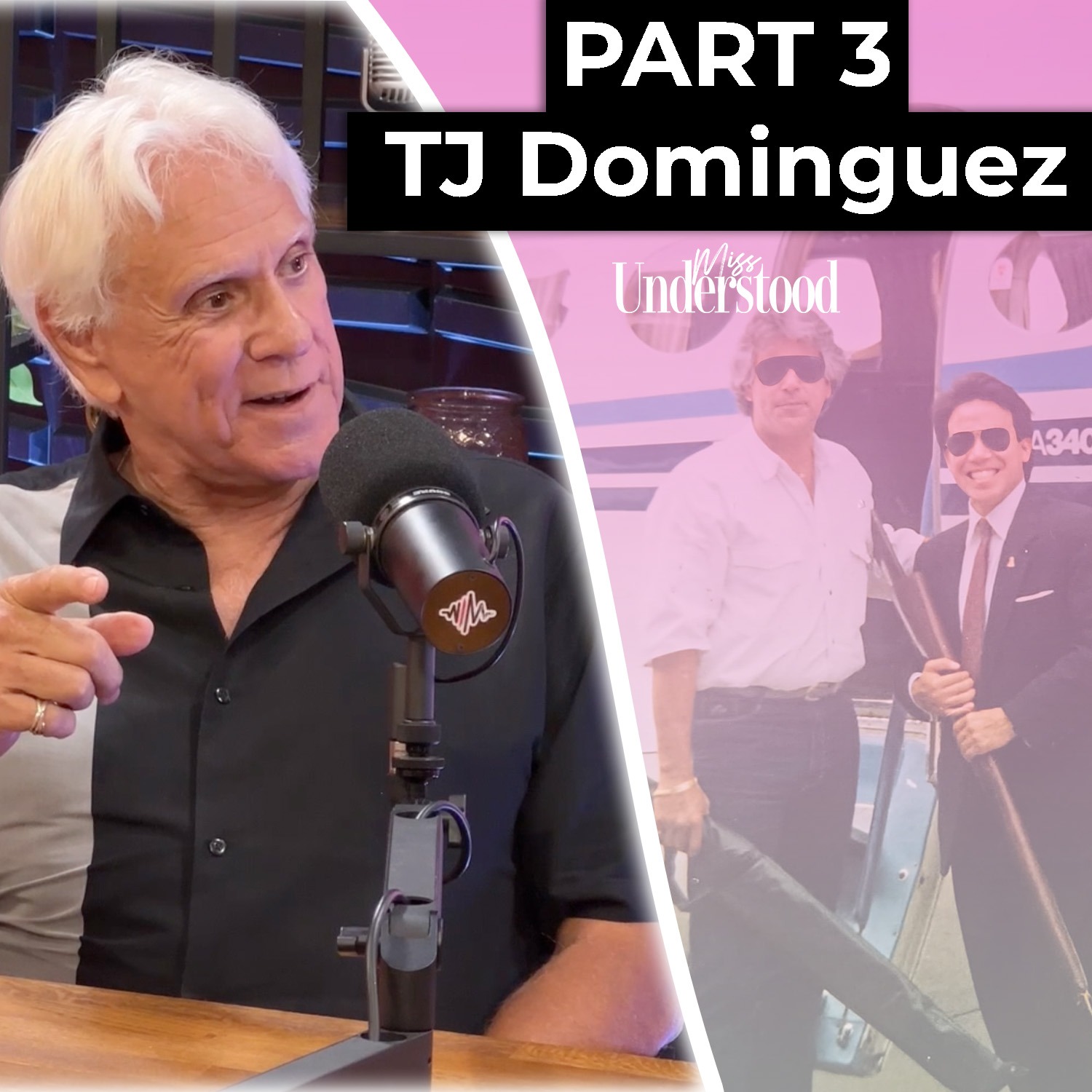
Miss Understood with Rachel Uchitel
Pablo Escobar’s Cocaine Pilot: The Untold Story of TJ Dominguez (Part 3 of 3)
01:20:24
Loading summary
Transcript489 lines
- [00:00]
Tito
My name is Tito. They call me TJ Tito. Pablo says he knows me, and he says I was his biggest transporter. Door bursted open and they came in like something out of a movie. They had blocked off the whole neighborhood. Dozens of these guys with automatic weapons, rifles on my head.
- [00:25]
Rachel Yukatel
I want to know what solitary is like. Because you did two to three years.
- [00:28]
Tito
What's it like? Picture being dead. They don't turn off the lights. The lights are on all the time. I couldn't even flush my own toilet. I bought a helicopter, got a pilot. You know, I want to pray, go to prison. Took 120 homes away from me. I had to give everything up. I always joke about putting Humpty Dumpty back together again. I'm doing it well. My name is Tito. They call me TJ Tito. I like to consider myself really a professional at whatever I do. I got into the car business. I became the number one Lamborghini dealer in the world. Nobody sold more cars than I did. Also, I was the biggest cell phone company of South Florida. And then when I became a smuggler, I got all the way up to Pablo Escobar. And then I became. Don't quote me, buy his book. He says I was his main transporter. So it's easy for me to say Pablo this and Pablo that. Pablo's dead. But Pablo says he knows me, and he says I was his biggest transporter. I did the complete leg. I landed in the jungle. Brought it door, too. I kind of considered myself kind of like FedEx. I deliver for you.
- [02:12]
Rachel Yukatel
Tito. Welcome back. I'm so happy that you are here for part three of our series on youn Life. I know people could not wait for this episode to finally come out. Let's recap really quickly, you know, in a few minutes or less. Let's just talk about where we are in the story. You became a con artist essentially because you were. You were conned.
- [02:34]
Tito
I'm a smuggler, not a con artist. I've never conned anybody.
- [02:36]
Rachel's Co-host or Guest
Okay.
- [02:37]
Rachel Yukatel
Excuse me. Yes? I don't know the terminology, but you were conned at the beginning of your life. After your father died. You wanted to fulfill what he said to you to make his sugar mill into existence. And you were unable to do that because of somebody that conned you continuously.
- [02:57]
Tito
I just got continuously kicked to the curve. Conned. They told me I was whipped behind the ears. I was an inexperienced young kid. And then circumstances that happened kept pushing me further and further into just taking control of my life. And that's when I decided to Become a smuggler. And I did. I bought a small speedboat and I went to the Bahamas and I brought back some weed and marijuana. And, yeah, circumstances in my life that happened that, yeah, maybe I made some bad choices. I don't know they were good or bad, but at the time, choices I made. And I live with them. I live with them. And unfortunately, you know. You know, name of your podcast, Misunderstood. It's kind of sad that people classify you for one mistake that maybe you made in life. So it's a little misunderstanding there. You know, I lived a long life, and there's other things that I did that I considered to have been great, but I'm just remembered for being Pablo's main transporter.
- [03:54]
Rachel's Co-host or Guest
Right, right.
- [03:54]
Rachel Yukatel
Well, I love that you said that. All right, so where we are in the story, though, is that you have everything right? You are at the top of the game. You're making, what, $5 million a week?
- [04:04]
Tito
No, let me tell you this. I walked on water. That's what I believed.
- [04:08]
Rachel Yukatel
Okay, so you had a fleet of planes, of boats. You had dozens and dozens of people working for you.
- [04:14]
Tito
You were hundreds.
- [04:15]
Rachel Yukatel
Okay, Hundreds. You were the man. You were making essentially, what, $20 million.
- [04:19]
Tito
A month back in those days, with today's money would be like, 80, 75, 100 million.
- [04:24]
Rachel's Co-host or Guest
Right?
- [04:24]
Rachel Yukatel
And not only that, we were at the point where Pablo Escobar says he cannot pay you in cash, so he's gonna pay you in. You become a cocaine kingpin in your own right.
- [04:36]
Tito
I don't like that at all, Rachel. You know, I didn't want to be a drug dealer because, in essence, he forces me to become a drug dealer. And I hate that word, Right. I consider myself a smuggler. And that's the world that I wanted to stay in. Just doing delivery, right? But because he couldn't pay me quick enough, you know, I'm bringing in 1,000 kilos. He owes me 5 million in cash, so I gave him half of the product. And why half? Because I'm not chasing anybody for money.
- [05:06]
Rachel's Co-host or Guest
Yeah.
- [05:07]
Tito
Now I'm actually becoming my own Pablo Escobar in my world.
- [05:10]
Rachel Yukatel
Wait, did he consider you a competition at any time?
- [05:13]
Tito
No, not at all.
- [05:14]
Rachel's Co-host or Guest
Okay.
- [05:14]
Tito
But I know that if I put myself out there, now, all of a sudden, I'm owed $5 million. He wants me to go again and do another trip. So it's $10 million that I would be owed by Pablo Escobar. How do you collect on Pablo?
- [05:29]
Rachel Yukatel
Well, that's a great question, but my question is, why didn't he have the cash to give you.
- [05:34]
Tito
Because from a business point of view, cocaine back in those days, even today in Colombia, was less than $1,000. So if he pays me with coke, he doesn't have to reach for 5 million in hard US currency.
- [05:49]
Rachel's Co-host or Guest
Got it?
- [05:49]
Tito
He's paying me with cocaine that the value to him is maybe $300 a kilo.
- [05:54]
Rachel's Co-host or Guest
Right.
- [05:55]
Rachel Yukatel
Okay. So as we've already gotten to in the story, there have been plenty of times where you thought your luck had run out and thought that the cops were onto you, the feds were onto you. There was a couple times they were right in front of your home. It ends up being for a different situation and a different person. So you got to celebrate. So in our last episode, we really get to the point where your luck has run out and your family up until this point has had no idea of the kind of business you were in. And the person that you trusted, that we talked about in episode one, this guy Jack, who was living in the guest house of some woman not even able to pay rent, is now making millions of dollars, has a drug and women problem and essentially screws you and turns you in at the end of the day. So let's talk about. Cuz we didn't really get into it the day that you were arrested. That's gotta be a huge story. So can you walk us through that day, that moment?
- [06:58]
Tito
Slowly but surely. I kept seeing that the end was nearing. I just didn't know how close it was. At one point in time, I actually had people in the grand jury. So I had a copy of the indictment before it came out.
- [07:12]
Rachel's Co-host or Guest
Ah, yeah, Okay.
- [07:13]
Tito
I had the names of everybody that was getting indicted. And so the only question that remained in my mind was, when is this going to happen?
- [07:21]
Rachel's Co-host or Guest
Got it.
- [07:22]
Tito
And then one night, every night, I went to sleep. I went to sleep thinking that I might. This might be my last day that I'm free and be with my family.
- [07:33]
Rachel's Co-host or Guest
Wow.
- [07:33]
Rachel Yukatel
And who's in the house at this point? You're married?
- [07:35]
Tito
Yeah, at the time, I'm with my girl. And then my sister had developed cancer from smoking, so she was in the hospital. So it was my sister, my other sister. I got two sisters. One passed away and then my sister Christy, she was in the house. My wife at the time, we weren't married, but we were already engaged to get married. And I actually remember saying to her one night, if something happens to me, would you stand by my side? And she said, I'll always be by your side. And that night, about 4 o' clock in the morning, 5 o' clock in the morning. The door bursted open and they came in like something out of a movie. There were dozens and dozens of them. I get done by four, five agencies. So when you tally up, there were probably a few hundred people had helicopters, they had blocked off the whole neighborhood, not one block, but they had cored off everything, barricaded it, and it was amazing. I walked up to the doors, they were all running in at me like an army. I mean, it's only one guy. Come on. Hello, it's me. You know, I might be bad, but I don't think I'm that bad, you know, so there's like dozens of these guys with automatic weapons, rifles on my head. I tell them, I put my hands up in the air and I said, I've seen this in the movies. I no need for that violence. My hands are up, I'm gonna kneel down. I get on my knees, lay down. They put me on the floor and I got rifles all over my head, pointing and hitting me with the point of the rifle. These guys were so hyped up, they looked like they were on drugs. I said, man, get the goddarn rifles off my head. One of you guys is so nervous you're gonna shoot me by accident. And they're like all hyped up, you know. Then the lead agent was his name, the lead agent of the dea. He says, get the rifles away from him, let him sit up. And then they set me on a chair, and then they started parading through my house like a circus.
- [09:35]
Rachel's Co-host or Guest
Wow.
- [09:35]
Tito
Yeah.
- [09:37]
Rachel Yukatel
Okay, a couple questions. Why, you know, what was your mindset? I'm assuming it sounds like you didn't have guns all by your bed because you thought you wanted to end it if they were gonna come in, I mean, so you were okay with going to prison? I mean, it's not like, I don't.
- [09:51]
Tito
Know, how could I be if I've got any regrets that I got popped, ok, to be totally honest with you.
- [09:56]
Rachel Yukatel
But I mean, it's not like if they were coming in. I know you've told a story before that you, you didn't want to go to prison, so there was a guy who was gonna shoot it out until there was an ending.
- [10:04]
Tito
That was that guy.
- [10:05]
Rachel Yukatel
Yeah. So you didn't feel that way.
- [10:07]
Tito
No. No. Because look, no one gun's gonna stop the federal government.
- [10:11]
Rachel Yukatel
Yeah.
- [10:11]
Tito
You know, so it'd be foolish.
- [10:12]
Rachel's Co-host or Guest
Right.
- [10:13]
Tito
So there's other ways of getting around this thing.
- [10:15]
Rachel Yukatel
Yeah.
- [10:15]
Rachel's Co-host or Guest
Right.
- [10:15]
Tito
You know, and at that point, I wasn't thinking that far ahead.
- [10:19]
Rachel's Co-host or Guest
Got it.
- [10:19]
Tito
I was just living the moment and dealing with the moment as it came up.
- [10:22]
Rachel Yukatel
So you weren't saying, I'm gonna take my life before I'm gon.
- [10:25]
Tito
I love myself too much. Are you kidding me? I just.
- [10:28]
Rachel Yukatel
Okay, I like hearing it.
- [10:29]
Tito
I love myself.
- [10:30]
Rachel Yukatel
But what about the options? I mean, you had planes, you had boats. What about if you knew this was gonna come to an end? Why not go to a country that, you know, could have.
- [10:39]
Tito
That would be a coward thing to do. And I'm not a coward. I'll man up to whatever the situation is.
- [10:45]
Rachel's Co-host or Guest
Right.
- [10:46]
Rachel Yukatel
And what about the loose cannon? What about Jack? Did you ever think, this guy's gotta be taken out?
- [10:53]
Tito
Of course.
- [10:54]
Rachel Yukatel
Killed, Whatever.
- [10:55]
Rachel's Co-host or Guest
I mean.
- [10:55]
Tito
Of course. Of course.
- [10:56]
Rachel Yukatel
And do you regret that that didn't happen? I mean, what are your thoughts on Jack?
- [11:00]
Tito
When I got rid of Jack, not physically, verbally, told him, you're off my umbrella, you know, I don't want to see you again. That same moment, I had divided my organization into departments. I had an intelligence department, I had a marine department. I had an aircraft department. I had a transportation. I had the accounting department. And I ran it like a corporation. And so I called for a meeting with all the heads of every department, including security. And then I said to the guy, which is, yeah, you're like Al with a gun. He's, you know, crazy nut. And, you know, and I had to be careful. I would say, like, yeah, I didn't say shoot him. I said, I don't like him. You know, I had to be very clear with that guy. So I called for a meeting and I said, we got a major problem. Jack is going to bring us all down. I actually saw this in a crystal ball. I predicted it. I said, and if you don't believe me, put it. Get a piece of paper, put a date on it, put my name on it, and I'll sign it. He's gonna bring us all down. We gotta do something about Jack.
- [11:59]
Rachel's Co-host or Guest
Right?
- [11:59]
Rachel Yukatel
And so ultimately, the feds or someone catches Jack because of his cocaine problem, because of whatever problems he had, and because he was such a nobody, essentially, he needed to basically out you to get himself a deal. I mean, what did he end up?
- [12:15]
Tito
It's really sad because as soon as he got popped, I heard about it. I provided him with lawyers. I went to see his wife. I put tons of money in her bank account. I put $10,000 in his operating prisoner account, which I think was a max or something like that. I wanted him to understand I'm here for you.
- [12:34]
Rachel's Co-host or Guest
Right.
- [12:34]
Tito
I sent him a message. I'll break you out of prison. I'll bring you over to South America. Brazil was a country that there is no extradition if you marry a local. I planned that whole thing out. And then he decides to flip on me and give me a. Which is pretty sad.
- [12:49]
Rachel Yukatel
Okay, so let's go back to the point where you're in your bedroom, you're sitting in a chair. They have guns pointed at you. They're going through your house. What, they cart you off to jail?
- [12:59]
Tito
Yeah.
- [13:00]
Rachel's Co-host or Guest
Okay.
- [13:01]
Rachel Yukatel
You don't get out on bail, obviously.
- [13:03]
Tito
No, my bond hearings are like maybe 5, 10, 20 minutes of bond hearing. My bond hearing is on record in Broward County. It went almost three days.
- [13:13]
Rachel's Co-host or Guest
Right.
- [13:13]
Rachel Yukatel
So we talked about that in the last episode. So you're in jail now. Doors closed. That's it. How many. How often had you been in jail before this?
- [13:22]
Tito
Never.
- [13:22]
Rachel Yukatel
Never. Okay. So for someone who's living the life of radical change. Yeah, it is a radical change, to say the least. What was that, like.
- [13:34]
Tito
Helpless feeling at the very beginning? Actually, it was a satisfaction that I felt when I got popped. When I got arrested, you would say, wow. Why would you say that? Because the cat and mouse game got to such a point, being followed with helicopters. Every day, two, three times a day, there was a chopper in my house or my parking lot following me in a car with a helicopter on top of my car. The pressure was so great. Having dinner, they're sitting three tables away from me. And that came to an end. So when that happened, I felt a relief of pressure. And I said, okay, new game, new set of rules. Now I've got to fight for my freedom. So that was kind of a different type of feeling. Now I'm going to go and defend myself. And I felt helpless, but I still felt like I could walk on water. So I believed in the American way. You got to get your hand caught in the cookie jar. All that was a rude awakening. No, you don't under the word conspiracy. You just need three people to lie and back up the lie, and that's it. You're going away for a long, long time. So that was a real awakening to the real hard facts of life.
- [14:49]
Rachel's Co-host or Guest
Right?
- [14:50]
Rachel Yukatel
And even if you had the best lawyer, it really seems like it didn't matter.
- [14:53]
Tito
I had the best lawyer. I had Fleet Bailey, at the time, one of the world's most famous lawyers. I told him to buy a remote control, to start his car up every morning unless he gave me my Money back.
- [15:02]
Rachel's Co-host or Guest
Right.
- [15:03]
Rachel Yukatel
And we talk about that in one of the prior episodes, too. So eventually, he gives you your money back.
- [15:07]
Rachel's Co-host or Guest
Right.
- [15:08]
Rachel Yukatel
And you're able to hire some other lawy and you are up for life in prison.
- [15:14]
Tito
Yeah.
- [15:14]
Rachel Yukatel
And tell us how you got out of that. I mean, essentially, you had to cut a deal.
- [15:18]
Tito
I was kind of funny too, because one prosecutor told me, I'll indict you over every state you flew over. I get indicted in Georgia, New York, Florida, Southern District, Middle District, the Bahamas, Detroit. One prosecutor in Detroit says, blah, blah, blah, blah, I'll indict you over. I said, you know what? I don't really care how many times you indict me, you know? I said, yep. I don't believe in reincarnation. I've only got one life to give, so I'm only gonna give it. I'm only gonna get worried about one life. I don't care if you indict me in 20 different states. I'm only gonna die one time.
- [15:53]
Rachel Yukatel
And it's indict you because what? You flew over the state?
- [15:56]
Tito
Yeah.
- [15:56]
Rachel Yukatel
Did you land there? Did you drop cocaine there?
- [15:58]
Tito
You flew over airspace. They technically, under the term conspiracy, can indict you if you use a phone in that area. If anything that happens regarding a location, the conspiracy becomes an entity and it takes a life form. If I have a conversation in your life, in your house about smuggling, and you were aware they can come and take your house, Right?
- [16:23]
Rachel's Co-host or Guest
Wow.
- [16:23]
Rachel Yukatel
Unbelievable.
- [16:24]
Tito
That's a fact. They made a believer out of me. They took 120 homes away from me.
- [16:29]
Rachel's Co-host or Guest
Wow. My gosh.
- [16:30]
Rachel Yukatel
Okay, so F. Lee Bailey is telling you, listen, I could get you 18 months, but you gotta flip on people. You gotta become a rat.
- [16:37]
Tito
Right? Correct.
- [16:38]
Rachel Yukatel
You say no to them.
- [16:39]
Tito
Absolutely not.
- [16:40]
Rachel Yukatel
But you ultimately say, okay, I'll cop a deal. I'll tell you where the money's stored, the drugs, fighting, everything, and I will give you the playbook as to how I did this.
- [16:51]
Tito
Correct.
- [16:51]
Rachel Yukatel
And for that they gave you 13 years?
- [16:54]
Tito
Well, I didn't get the 13 years all at one time. I end up doing two split sentences. I get out on a thing called parole. Back in the day before 1988, you would get a 10 year sentence. And you're doing 18 months in.
- [17:07]
Rachel's Co-host or Guest
Okay.
- [17:07]
Tito
And then the rest you're doing in parole.
- [17:09]
Rachel's Co-host or Guest
Okay.
- [17:09]
Tito
You know, but it's very strict.
- [17:11]
Rachel Yukatel
But why? So why'd you go back?
- [17:13]
Tito
I go back because I get re indicted and I get violated.
- [17:17]
Rachel's Co-host or Guest
Got it.
- [17:17]
Rachel Yukatel
Did you do something to violate your parole?
- [17:20]
Tito
Association with somebody that has A criminal history. Even though I may not know it, it's recent to put me back.
- [17:26]
Rachel Yukatel
Oh, I see. Okay, so you were fraternizing with somebody who was a former criminal.
- [17:30]
Rachel's Co-host or Guest
Okay.
- [17:30]
Rachel Yukatel
But it wasn't like you were up throwing cocaine around to people.
- [17:33]
Rachel's Co-host or Guest
No, no. Okay, fine.
- [17:35]
Rachel Yukatel
So you've done at this. So now, as of today, you've done a total of about 13 years.
- [17:40]
Tito
13 years. Somebody would say, would you not know how much? No, you don't look at calendars when you're in prison.
- [17:46]
Rachel Yukatel
Yeah. What is that like? I mean, if somebody told me I had to stay in my own house, which is very nice, for a month, and not leave, I couldn't do it. I don't know if I could do that for a week. I mean, it's terrible to think, well.
- [17:58]
Tito
You know, doing time, you gotta learn how to do time. Otherwise Tommy's gonna do you.
- [18:03]
Rachel Yukatel
So you have to mentally say, I'm here. I've got to commit to this. What does that mean? You have to make friends. You have to have a job.
- [18:09]
Tito
No, I didn't even go in there. I had some horrible experiences that I can tell you about friends in there. You know, one guy says, you know, you're really a big guy. And I said, oh, wow, I know. You know me. I know I've gained a little bit of weight. This guy was built like a gorilla, okay? And so he wanted me to pay protection, if you could believe that. So I said, protection? I said, let me explain something to you. I didn't come here to be your buddy or your friend. And I stand back, I'm gonna hit this guy. But you almost have to take that type of an attitude. Otherwise, Rachel, they're putting an apron on you, and you're mopping floors and becoming, you know, a high voice in your tone. So I looked at the guy and I said, I didn't come here to be your friend. You don't want to mess around guys like me. I said, I will hurt you. I will hurt you. I will hurt. You got a family. I'll hurt your family. And the day you get out, I'll be out there. I'll have people waiting in the parking lot, you know, for you. I said, you don't even. Don't even say hello to me. Don't ask me what time it is, because I'm not here to be your buddy. So you have to take that attitude sometimes. Yes. You have to fight.
- [19:19]
Rachel's Co-host or Guest
Right.
- [19:20]
Rachel Yukatel
So that's gotta be pretty lonely. If you can't really, obviously, you can't trust Anybody. And we'll get into that because you did trust somebody and they ruined.
- [19:27]
Tito
Your biggest routes are the ones that are in there. They're sitting here at the table with you, breaking bread with you and giving you up to a guard for an extra meal or cheese or whatever.
- [19:37]
Rachel Yukatel
So when you think of that time in prison, though, and I want to get into the two to three years you spent in solitary, but in prison in general, was it, I mean, just absolutely terrible or was it okay at some point?
- [19:50]
Tito
Well, you know, one thing about prison, they have different categories depending on who you are. I was what they call central monitoring category. Washington, D.C. always had to know where I was at. I couldn't just change rooms from A to B, which like a regular prisoner could do. You go up to the guard and you know, hey, I want to move to another room. If it's available, they'll let you move in my case because of who in my history it would have to be cleared by? Washington. It's called central monitoring inmate. So I did hard time. I was always. I didn't go to one of these camps where people are playing golf, you know, I didn't do all that. I was in solitary at penitentiaries. I saw stabbings, all that type of stuff. So it was hard time that I didn't.
- [20:39]
Rachel Yukatel
And outside of solitary, how were you in a cell with roommates, was it?
- [20:45]
Tito
Yeah, yeah. Outside of solitary I was in one man's. A two man cell.
- [20:49]
Rachel's Co-host or Guest
Okay.
- [20:50]
Tito
Yeah.
- [20:50]
Rachel Yukatel
Could you read a book? Could you play cards?
- [20:52]
Tito
Oh, yeah, yeah, yeah, I could read a book. I got a lot of magazines. I probably got one, two magazines a day. I became like, like the goat, the go to guy for magazines, you know. So in the little world that I was in, I did the best that I could. I actually wrote a book when I was in there. You couldn't have a typewriter, right? In prison? It's impossible. Well, I didn't have one. I had two of them.
- [21:14]
Rachel's Co-host or Guest
Wow.
- [21:15]
Tito
And you know, when somebody came up to me, how'd you get that typewriter? Can I borrow it? No. Well, but you've got one. I said, no, you're wrong. I don't have one. I've got two. They're hard to get.
- [21:25]
Rachel Yukatel
How'd you get that?
- [21:26]
Tito
Well, you know, I'm very good at whatever I decide to do.
- [21:29]
Rachel Yukatel
Well, does that mean though, that the guards, you paid them off, like, I.
- [21:33]
Tito
Mean, well, you gotta get creative.
- [21:35]
Rachel Yukatel
They look the other way.
- [21:36]
Tito
You have to get a little creative.
- [21:38]
Rachel's Co-host or Guest
Okay.
- [21:38]
Rachel Yukatel
Because you can't stick that up Your shirt when you go visit someone.
- [21:40]
Tito
No, it's a large typewriter.
- [21:42]
Rachel Yukatel
Yeah. Okay, so someone had.
- [21:44]
Tito
And then not only the typewriter. How about the ribbons that go with it? How about the paper? How about the magic markers? How about. I need now copies.
- [21:52]
Rachel's Co-host or Guest
Wow. Wow.
- [21:53]
Tito
I was able to do all of that.
- [21:54]
Rachel Yukatel
And could you have visitors?
- [21:56]
Tito
When I was in solitary confinement? No. One phone call, 10 minutes, once a month. And then the guard would give me the phone and say, nobody home. Try next month. And it was an outright lie.
- [22:06]
Rachel Yukatel
All right, let's talk about solitary. But before we get into that, let's talk about what got you into solitary. You spoke in our last episode about how you came up with a plan with a helicopter and you were gonna escape. So let's talk about that a little more. So you come up with this plan, you're like, I'm not staying here. What was the plan?
- [22:23]
Tito
Well, the plan was really simple. You know, let me go back to what I said before. I didn't want to leave because I'm not a coward. So why would I be now cowarding up and leaving? Well, because I noticed that the deck was stacked. Three days in trial for bond hearing, and everything was just coming up on their side. And I said, well, you know what? Neat set of rules. I need to go ahead, get the heck out of Dodge, and then I will regroup, circle the wagons, and maybe we could talk and wait.
- [22:51]
Rachel Yukatel
Sidebar. At any point, were you thinking, now Pablo has a lot to lose. If I turn on him, he's gonna come save me, he's gonna find a way to get me outta here.
- [22:59]
Tito
Oh, absolutely. Absolutely. Not that he's got a lot to lose, cuz he's one of the richest mans in the world. But he would have to revamp his organization.
- [23:07]
Rachel's Co-host or Guest
Yeah.
- [23:07]
Tito
Because I knew all the players, I knew the reps, I knew the houses, I knew the cars, you know, so.
- [23:12]
Rachel Yukatel
And he just didn't show up, right?
- [23:14]
Tito
No, no, he sent me. Well, Pablo couldn't come, right? But he sent me a lawyer.
- [23:19]
Rachel's Co-host or Guest
Okay.
- [23:20]
Tito
An American lawyer paid by him.
- [23:21]
Rachel's Co-host or Guest
Okay.
- [23:22]
Tito
And a private detective that was from Columbia. And so I was able to talk about certain things that I knew, that it actually came from them.
- [23:32]
Rachel's Co-host or Guest
Got it. Okay.
- [23:33]
Tito
So he asked me questions about what I was planning on doing.
- [23:36]
Rachel's Co-host or Guest
Okay.
- [23:36]
Tito
If I was going to cooperate, I told me, I'm going to cooperate, but I'm not giving anybody up. I'm going to tell them anything they want to hear now. But I have a different set of plans. I bought a helicopter, got a pilot. You know, I want to. I'm going to, you know, break out of prison. You know, I don't know.
- [23:54]
Rachel Yukatel
Okay, so how? If I was sitting there as your cellmate and you were going to be like, here's what's happening. What was the plan?
- [24:00]
Tito
The plan was really simple. It was actually a great plan. I made a mistake of trusting one person. There you go. You know, you have to. I guess the plan was really great. I bought a helicopter. It flew over the prison a couple of times. The purpose of the helicopter was only to jump me over the fen.
- [24:19]
Rachel's Co-host or Guest
Okay.
- [24:19]
Tito
Okay.
- [24:19]
Rachel Yukatel
So it was gonna land inside the prison, take you over, let you out?
- [24:23]
Tito
Yeah.
- [24:23]
Rachel's Co-host or Guest
Okay.
- [24:24]
Tito
What I. Most people would, I buy a helicopter. The purpose was take me over the fence. Now, the way I laid out the plan, and obviously I didn't talk to my roommate or anybody else, I did a lot of homework on what it would be, the downsides on these things. The pilot, I told him, the money I'm gonna pay you, break it down. The maximum you could get for this by the guideline is five years. So break down 100 grand, 150, 200 grand into five years. It'll be worth it.
- [24:53]
Rachel's Co-host or Guest
Okay.
- [24:54]
Tito
Okay. So then they don't shoot at you because they don't know if I have a family of yours hostage. They won't shoot at you, they'll shoot at me. They won't shoot at the chopper pilot. I say, and this is not a James Bond movie, so I'm not gonna jump like Tom Cruise and hang on to these kids. I'm gonna walk up to the God darn thing. Anybody else that you see that doesn't look like me, shoot at their feet.
- [25:17]
Rachel's Co-host or Guest
Got it.
- [25:18]
Tito
So I'm gonna walk up to the chopper. I laid all this out very carefully. I found out that the DEA had a Black Hawk helicopter in Tamiami, not far from where I was at. But it would take them about five minutes to get that chopper up in the air looking for me.
- [25:33]
Rachel's Co-host or Guest
Okay.
- [25:33]
Tito
In this length of time, I fly over the fence, I take the chopper to a lake, and I put the chopper in the lake.
- [25:42]
Rachel Yukatel
Like drown it?
- [25:43]
Tito
Yeah, exactly. With me in it.
- [25:45]
Rachel's Co-host or Guest
Okay.
- [25:45]
Tito
Yeah. The idea is to disappear the chopper. So everybody's looking for a chopper.
- [25:51]
Rachel Yukatel
Oh, right. So they're looking in the air instead of on the land. Right, got it. And in the time they're going up, you're coming down.
- [25:57]
Tito
Right.
- [25:57]
Rachel Yukatel
Oh, great plan. Okay.
- [25:59]
Tito
It really, really was.
- [26:00]
Rachel Yukatel
Wait, so had you guys ever practiced putting a helicopter in the water?
- [26:05]
Tito
No, but common sense says to me that when, as soon as the. The blades hit the water, they're gonna stop. So you gotta hold your breath long enough. I told him, bring a small tank. I used to smoke back in those days. I don't know how long I can hold my breath. So I said, bring a small air tank, put it in my mouth. The kind you see that's maybe, you know, just about the size of a foot or so. And all I needed is 10 minutes, 5 minutes of air. So we put the chopper down on the lake, and then I wait for the rotor to stop spinning.
- [26:34]
Rachel's Co-host or Guest
Right?
- [26:34]
Rachel Yukatel
Cause you can't jump out first because you get killed by the.
- [26:37]
Rachel's Co-host or Guest
Okay.
- [26:38]
Rachel Yukatel
Yeah.
- [26:38]
Rachel's Co-host or Guest
Propellant.
- [26:39]
Tito
And then I have a car waiting.
- [26:40]
Rachel Yukatel
For me there at the lake.
- [26:42]
Tito
So I go from the chopper to the car. Now I go to Tamiami, the same airport that DEA is going to come out of. I've got an airplane over there waiting for me.
- [26:53]
Rachel's Co-host or Guest
Okay.
- [26:53]
Tito
So then I jump on the airplane. I fly to Haiti. My dad's old sugar mill had a landing strip there. So I made arrangements with Haitian individuals to have fuel for me on the. On the air. It was on landing strip, there was dirt, you know, grass. So I made arrangements for them to expect me to fly in. Then what I was planning on doing was staying in Haiti for a few days until kind of like settled down, and then taking that same airplane, which didn't have the capacity to go all the way straight down to the jungles in Colombia, and then take that airplane and fly into the same lab where I was landing, and then just then adjust to the situation, whatever it called for. I was planning on going to Colombia in the jungles and then sending a lot of cocaine. And then a new chapter begins again.
- [27:43]
Rachel Yukatel
Exactly. Okay, but what about your family then? Would you have called you family? No, I.
- [27:46]
Tito
At that point, no. No, I couldn't. It was my wife. She was 19 years old. Great looking girl. Beautiful.
- [27:57]
Rachel Yukatel
How old were you at this time?
- [27:58]
Tito
I was probably like, 30 something.
- [28:00]
Rachel's Co-host or Guest
Okay.
- [28:01]
Tito
And she was one of the few people that I could trust.
- [28:04]
Rachel's Co-host or Guest
Okay.
- [28:04]
Rachel Yukatel
So she knew that this could be the plan, and she was willing.
- [28:06]
Tito
Yeah.
- [28:06]
Rachel Yukatel
Willing.
- [28:07]
Tito
Now it's been 30 years.
- [28:07]
Rachel Yukatel
Yeah. So she was willing to go help me.
- [28:10]
Rachel's Co-host or Guest
Okay.
- [28:11]
Rachel Yukatel
Side note. Did she end up divorcing you?
- [28:13]
Tito
No, I ended up. Basically. She's a great girl, but I don't like to argue. And then all of a sudden, life is different. When I came home, you know, I mean, now I have to work, now I have to do this. And, you know, she wants. She's Demanding more and more of my time. I can't give you any more of my time. I've got to get out there and work.
- [28:33]
Rachel Yukatel
So she stayed with you through your prison sense?
- [28:35]
Tito
Oh, my God. She was the first one there, the last one to leave. She was amazing to today. I've got the highest respect for that girl.
- [28:42]
Rachel Yukatel
Oh, that's amazing to hear that. I'm sorry it didn't work out.
- [28:45]
Tito
Well, things happen. Yeah, things happen a few more times. I've been married in divorce.
- [28:49]
Rachel Yukatel
Oh, okay, so that wasn't the last one.
- [28:51]
Rachel's Co-host or Guest
All right.
- [28:51]
Rachel Yukatel
Anyway. Okay, so how. How far out from the plan did it all come down on you? Well, I had, first of all, wait, were you. Like, this is foolproof? Like, this is it?
- [29:04]
Tito
Well, it was definitely foolproof.
- [29:05]
Rachel Yukatel
Okay, so you're like, I know it. This is the plan. Is it happening on Thursday and Tuesday you get caught?
- [29:10]
Tito
Essentially, yeah, it's happening. I have my chopper fly over the prison to pick the spot.
- [29:15]
Rachel's Co-host or Guest
Okay.
- [29:16]
Rachel Yukatel
Do you see the chopper? You're like, oh, wow, we're in.
- [29:18]
Rachel's Co-host or Guest
Okay.
- [29:18]
Tito
I had a guy by the name of John Chaney. He's dead now, so I guess I could say his name. He had 57 priors. He was a professional hitter, you know, a racer, whatever you want to call him.
- [29:29]
Rachel's Co-host or Guest
Okay.
- [29:30]
Tito
And he was part of my crew. And then so I made one mistake. I knew that. And I liked him. I liked him real well. And I said, john, I can't take everybody, but I could take you because you're facing a lot of violent time from before, you know? And he says, you know. You're kidding me. I said, no. Matter of fact, the chopper's coming by today to pick the spot. So the chopper flies over. He sees that it's real, so he says, what about everybody? What are you gonna do about the rest of the crew?
- [29:58]
Rachel Yukatel
So I said, so at this time, sorry. Did you pick him because he was a friend of yours? Kind of. Or.
- [30:03]
Tito
Well, the fact that he had a really violent passing. I thought that they were gonna try to slam him.
- [30:08]
Rachel's Co-host or Guest
Oh, got it. Okay. Okay.
- [30:10]
Rachel Yukatel
But. So it's not like you wanted to bring him. Cause you thought he would be helpful in the future.
- [30:13]
Tito
I could only fit one guy in.
- [30:14]
Rachel Yukatel
The chopper with me, but why tell anyone? Why bring anyone?
- [30:19]
Tito
I liked him. He was a good guy. And he had no family here, no kids. And I thought that, well, you know, maybe I could use him.
- [30:28]
Rachel's Co-host or Guest
Got it. Okay.
- [30:30]
Tito
Because he will shoot you quick.
- [30:31]
Rachel's Co-host or Guest
Right?
- [30:32]
Rachel Yukatel
So what happened? Why did he decide to rat you out? Well, this would have been A great opportunity for him.
- [30:40]
Tito
Yes, it was.
- [30:40]
Rachel Yukatel
And was he there for life?
- [30:42]
Tito
No, he was in there. He was like my number three or four. He was at one point, when I first started out smuggling, he became kind of like a half assed partner because he was my buyer of marijuana. But he was such. He was always around me, always around me. And I mostly started depending on him a lot. I didn't have to go shopping for buyers. He handled all of that. The problem was he was a real, real loose cannon when it came to irresponsible. And I basically terminated that partnership, sort of, you know, but he was likable.
- [31:19]
Rachel Yukatel
But he was in prison with you at the same time. Okay, so. But how long, how much more of his time did he have to go?
- [31:25]
Tito
Well, what I know, we all got arrested at the same day.
- [31:28]
Rachel's Co-host or Guest
Okay, I hit him.
- [31:29]
Tito
So you didn't know 14 of us at the same time.
- [31:31]
Rachel Yukatel
Got it. So he didn't know how long he was up for life or whatever. You guys didn't know how long.
- [31:35]
Tito
I was the number one in the indictment. And then he was like number two or three or four.
- [31:39]
Rachel Yukatel
Got it.
- [31:39]
Tito
And according to the indictment, names, how they appear, your ranking value.
- [31:44]
Rachel's Co-host or Guest
Got it.
- [31:45]
Tito
You know, and he was up there in the top four or five.
- [31:47]
Rachel Yukatel
So what happened? He thought that if he.
- [31:49]
Tito
What happened was I didn't know anything. I trusted him because I didn't know not to trust him. You know, I knew he was irresponsible, but he was a real man's man from the point of view of, you know, you know, facing up to a situation. So I actually thought that I could use him. And that was another reason why I handpicked him. And so he says, what about the guys? What are you gonna do about the guys? So I said, pablo sent me a rep and he wanted to know what I was gonna do. So I told Pablo I have four problems. So he said, what were the problems? I said, one problem with Jack. One problem was cj. Another one was, I forget the other two guys names. Those are the problems I've got. And I said to Pablo, I don't have to tell you how to handle this situation, do I? I said that to his rat, the private detective that came to see me. I said that to him in prison. So he says, no, we got this. Where are they? I say, jack is in such and such a location, and I give him the locations of these people. These people go away, the case is beatable because there's no other witnesses unless people start folding and flipping, you know, so that being said, he goes, okay. Now, little did I know, he runs to a phone, calls the prosecutor, tells the prosecutor that I ordered a hit on the federal judge and on the agents and that I bought a helicopter to escape. And you witnessed a helicopter coming, flying low over the prison. So needless to say, you don't order a hit on a federal judge. And, you know, and there's repercussions that have. So I got picked up immediately by what they call the Swords team, a bunch of goons, and taken into solitary condition.
- [33:35]
Rachel Yukatel
So you were just in your cell when this happened?
- [33:37]
Tito
Essentially, I was in a regular, regular prisoner with everybody else. I held everybody together, you know, I paid for a lot of the other lawyers for my other co defendants. We ate lunch together, we sat together, and I made sure that I kept everybody a grip as long as I was out there. Nobody was folding. Everybody was tight, you know, nucleus, right. Except for, except for John. John had done this on the side.
- [34:01]
Rachel's Co-host or Guest
Got it.
- [34:01]
Rachel Yukatel
But I mean, the moment they came in and said, we now know what you're doing. You're going to solitary. Were you reading a book and you.
- [34:07]
Tito
Felt, no, they didn't tell me anything. They slammed me in solitary. They had one guy in there with me, which was really funny because later on I find out the one guy that was in the cell with me was an agent.
- [34:19]
Rachel's Co-host or Guest
Wow.
- [34:19]
Tito
Yeah, wow.
- [34:20]
Rachel Yukatel
Why they thought they could get more.
- [34:22]
Tito
Out of that because they want, you know, now he receives me as well. What did they put you in here for? What's going on with you? You know, oh, I heard about you, you know, and then he starts asking me questions about are they coming, this hit squad that's gonna kill these federal judge and all this, are they coming from abroad? A lot of times you bring in somebody from South America to do a hit and then you put them back on the plane, you bring them back.
- [34:47]
Rachel's Co-host or Guest
Got it.
- [34:48]
Rachel Yukatel
So they're more. They want to know more about this hit that wasn't a real thing.
- [34:51]
Tito
They didn't really care that point about the helicopter. They wanted to know about what agents been targeted and what judge. Well, the judge went under. The U.S. marshals gave the judge federal protection for a long period of time.
- [35:04]
Rachel's Co-host or Guest
Right.
- [35:05]
Tito
Because of this, I'm curious. Which is a lie, by the way, I have to say. It was not true.
- [35:10]
Rachel's Co-host or Guest
Right.
- [35:11]
Rachel Yukatel
I wanna know what solitary is like because you did two to three years there. And is it really what it's like in the movies where it's dark and it's cold and it's small?
- [35:22]
Tito
No, it's actually just the opposite. They don't turn off the lights.
- [35:25]
Rachel Yukatel
Oh, wow.
- [35:26]
Tito
The lights are on all the time. All the time. All the time. And what's it like? Picture being dead. Picture yourself being dead. There's nobody to listen to you. No complaining. You're totally helpless. So helpless, Rachel, that the solitary confinement that I was in, I couldn't even flush my own toilet. Had to be flushed from the outside for fear that you flood the room. So self contained, 24 hours of light. In order to sleep, I had to wrap like a T shirt around my eyes. And I remember sitting there saying to myself, am I talking loud or am I talking low? Because you just don't know. And then no mirror, which is really crazy. You stop or you start to forget what you look like.
- [36:13]
Rachel's Co-host or Guest
Oh, wow.
- [36:14]
Tito
Which is pretty crazy. Yeah, it really is. And you know, two years into this thing, am I getting gray? Is my hair falling out? I try to see myself in the toilet water. You know, I remember the only thing that opened up on that door was a little like maybe 3, 4 inch slit on the door. And then I would get on my hands and there was another cell opposite of me. And I'd ask that guy, whenever they came time to feed you, that's a door that they slide the tray because they're not bars. It's solid steel door.
- [36:43]
Rachel's Co-host or Guest
Right.
- [36:44]
Rachel Yukatel
So it's not like you can even talk to the guy across the street.
- [36:46]
Tito
No. So when they open up this little door, I screamed out to that guy across, hey man, what do I look like? Is my hair white? Is it gray? Yeah, you look good, man. You know, it was sad.
- [36:59]
Rachel Yukatel
That makes me really sad for you.
- [37:01]
Tito
What?
- [37:02]
Rachel Yukatel
And what could you do all day? No books.
- [37:04]
Tito
No, no. Yeah, you could have books. You could have nothing metal. You could have books as long as they were paperback. No hard books.
- [37:12]
Rachel Yukatel
Could you take your typewriter? I assume not.
- [37:15]
Tito
Can I do one?
- [37:15]
Rachel Yukatel
Take your typewriter.
- [37:16]
Tito
No, typewriter came afterwards when I came out of solitary confinement.
- [37:19]
Rachel Yukatel
Then you got it. Okay, so could you get a pen and a paper? Could you write?
- [37:23]
Tito
Pencil.
- [37:24]
Rachel Yukatel
Pencil.
- [37:24]
Tito
And no sharpener. So you have to basically bite the pencil, the lead off in order for you to sharpen it. Or on the concrete floor.
- [37:33]
Rachel Yukatel
What about a window?
- [37:34]
Tito
Yeah, you had a little slit window, you know, and then they take you out three times. I think it's three. Every three days you get a bath. They put me in a cage, handcuffed, inside a telephone. You've seen these old telephone booth, you know, from England, where they're like a Little cubicle type thing, you know, two by two way. And they put you in there with a faucet on top and then handcuffed. Okay, you say, how can you take a shower being handcuffed? Well, they take the handcuffs once you're in sight, locked in that little cage like a shark cage. Now they sit you there and they turn the water on. And now it's cold as hell, by the way. And they keep you there until the guy finishes reading his little Playboy book or whatever the hell he's doing. And yeah, so you sit there and you're shivering. Okay, man, I'm ready to go back in my cell. Yeah, I hear you. Shut up. You know, and then they handcuff you again and they bring you back into there. And then I think it's like once a week they give you a little bit of sunlight inside. Another four walls with a cage on.
- [38:38]
Rachel Yukatel
Top so you couldn't go out into the open.
- [38:40]
Tito
No, I hadn't seen the moon or I hadn't seen anything, the sun or anything like that for a couple years.
- [38:45]
Rachel Yukatel
And did they give you a newspaper? Like, could you tell what was going on in the world?
- [38:48]
Tito
Yeah, they did a newspaper.
- [38:49]
Rachel's Co-host or Guest
Okay.
- [38:50]
Tito
And a lot of times, you know, it didn't get there. You know, they just play a lot of mental games with you. I'd rather get beat up with a two by four than have these. I'd like to share one quick story with you, if I may, with a guard. It's got a little window, about 4 inches wide, square Plexiglas, probably 3 inches thick and perforated. And a guard goes, hey, you, Dominguez. I'm alone. There's nobody in there. I never had any roommate because of who I was. And so I look around, I act kind of stupid and I go, who, me? Yeah, you don't look so tough in there. You're screaming at each other because it's very hard to hear because it's 3 inch door steel, you know. And so I slowly walk up to the window and I say to the guy, what do you mean I don't look so tough? He said, yeah, you don't look so tough in there. Now, was it worth it? And then I said, that's a fair question. Was what worth it? He says, everything you did, was it worth it? Look at you now. You are helpless. You're pitiful. And I say to the guy, hey, let me ask you something. I'm gonna give you an answer to that question, but before that, I want you to just take me out of, like, a couple questions in my mind, you know, how do you get here every day? You know. You know how I got here? I got arrested by 5, 6, 7, agency handcuffed to my neck. They kicked my ass all the way to this cage. On the other side of the coin, how do you come here every morning? You jump in a car to drive over here, to provide me with security, to bring my breakfast, lunch and dinner, to flush my toilet. I said, you don't even have the freedom to call your wife, hi, honey, wanna come over for lunch? Cause you're inside a goddamn cage. I said, so let me ask you something. If worse in the best scenario, if you don't get fired, you're going to do what, 20, 25 years? You're going to have more time in prison than I have. And you come here by your own accord, out of your own free will. Let me ask you if that's worth it. You're going to do more time than me. I'm old law. So the guy shook his head and walked away. Three days later, he comes back, knocks on my door again, and he says, hey, Dominguez, come over here. I said, yeah, now what? He goes, I haven't slept in three days, man. I said, why is that my problem? He said, because of what you told me, I'm gonna do more time than you. Yeah. If I don't get fired, I'll do 10, 25 years, you know, in prison. So I said, well, you know, it's your choice, right? Now, you know how I got here against my will. So he goes, no, you really mess with my head. I said, I didn't mean to, man. I was just telling you facts away from my point of view. So two weeks went by, and he comes back and he says, hey, Dominguez, come over here. So now? I said, now what? I go over there and he says, hey, listen, man. Couldn't stop thinking about what you told me? I applied at Miami Beach Police Department. I got accepted. When you get out of here, come by and we'll have a beer together. Man, you changed my life.
- [41:53]
Rachel's Co-host or Guest
No way.
- [41:54]
Tito
No way.
- [41:55]
Rachel Yukatel
Have you ever seen him again?
- [41:56]
Tito
No, because I was too many years in prison, right?
- [41:59]
Rachel Yukatel
Oh, gosh. Well, maybe we should look him up and find out whatever happened to him.
- [42:03]
Tito
Kind of cool.
- [42:04]
Rachel Yukatel
Yeah. That is a great, great story. Okay, so you get out of solitary, you're in prison. At what point did you find out you're getting out? At what point do you find out there's gonna be an end to this? You're gonna go home.
- [42:18]
Tito
Well, I don't know the end. I don't know that I'm gonna get out. Even when I decided to cop, I hired a guy by the name of Fred Schwartz, who was the head of the United States of America Organized Crime Task force for many, many years. Top prosecutor in the nation. He went private and then I hired him because I found out that everybody is home. I'm the only guy left in prison. All my co defendants, everybody had carved the deal. And the guy I think that did the most, maybe a month, month ago, yeah, they all went home.
- [42:53]
Rachel's Co-host or Guest
Wow. Okay.
- [42:54]
Tito
Now something happened in prison. The same guy that ratted me out, John Chaney, he gets re indicted on some other charge. So they bring him into solitary confinement. When I'm sitting getting a shower, I see him walking by and I say, John. And he goes, tito, what the hell are you doing in here? I said, no, what are you doing in here? So he tells me what happened. He said, they're going to give you life. He said, they're going to do what? They're going to give you life. How do you know that? He said, the prosecutor told me, I'm cooperating. I've been home, everybody's home. That's when I find out that everybody had left. Because the lawyers are not really telling me what I want. They're telling me what I want to hear.
- [43:34]
Rachel's Co-host or Guest
Right, right.
- [43:34]
Tito
But they're not telling me the truth.
- [43:36]
Rachel's Co-host or Guest
Okay.
- [43:36]
Tito
So I decided to fire all those lawyers and had a truckload of them. And then I went and hired Fred Shorts. He changed my life.
- [43:44]
Rachel Yukatel
Amazing.
- [43:44]
Tito
He was the catalyst and what? Actually the government hated me, you know, so now I'm hiring one of them. And he was able to spin the story where, wait a second, my guy's not all that bad. So he worked out a deal. The deal was that I would give them my day. One story wasn't writing anybody out. They wanted to know how I did what I did, the intelligence, how I broke it down in department. And then they wanted me to stop fighting 120 homes. I was the biggest cell phone company, my construction company, the money that I had in Europe, the cars. I was the number one Lamborghini dealer of the world. The property sold for like, I don't know, 30, $40 million later on. So they wanted me to stop fighting everything. I would fight a Rolex watch. I'd fight everything. Oh, yeah, yeah, yeah, yeah. I'm fighting, I'm fighting for every goddarn thing.
- [44:37]
Rachel Yukatel
So let me ask you a question. At that point did they take everything? Was there anything you could keep?
- [44:42]
Tito
Everything they brought me.
- [44:44]
Rachel Yukatel
Did you hide anything?
- [44:45]
Tito
No. Yeah, it's Great. I have $5 million for slush fund in case, you know, the shit hit the fan. And I needed money quicker than Europe and so I kept money hidden. In situations like that, I had to give everything up because the deal that I signed with the federal government, I had to be total honest. I couldn't hold back anything. So now, Rachel, I'm my worst enemy myself and that I forget something? Oh my God. I got a. An old Corvette that I left in such and such a place. Hey, Fred, tell him that I've got another car. It was a one sided deal. When they first gave me that plea agreement, I looked at Fred and I said, I cannot sign this. It's impossible. It's all one sided. I might not be the brightest crane in the box. Well, Jesus, I'm not the dollars either. I can't sign this thing. It's an open plea. I'm going to get life if I make any mistake here, you know. So he said, that's the only deal that their government is offering you. What am I going to tell the government? Pablo Escobar is a drug dealer. You know, there's nothing for me to talk about, right? They wanted to know how I did what I did because I was so successful at what I did. So they actually sent agents from Washington D.C. to record me. And then they put a manual out which is distributed worldwide on how I did what I did. And then they wanted me, when I got out of prison, they wanted me to teach and do seminars to the federal government agency. Which of course I said, yes, yes, yes. Until that time came. And then I said, no, no, no, no.
- [46:16]
Rachel Yukatel
Why?
- [46:17]
Tito
Well, that part of me died, you know, it was over. Now I have kids. My kid was born when I was in prison. I've got a family. It's a whole completely different side of. That's why I never told my story before. My kids are now older. And I asked them, I said, how would you feel about me talking about this? One of them is a policeman. I'm very proud of him. And they say, dad, you know. And then he says, I've shared your story with some of his fellow policemen. And I said, why would you do that? And it was really kind of funny because he said, you know what they told me? Justin, you got the coolest dad. Our dads are boring. When can we go down to Florida and meet him?
- [46:55]
Rachel Yukatel
Wow, that's great. But you know, it seems like, that would be a path that would make sense for you. I mean, you could kind of take your expertise that no one else has. Right. And know how to catch criminals like you.
- [47:09]
Tito
I did. I told them.
- [47:10]
Rachel Yukatel
Yeah.
- [47:11]
Tito
And they wrote it down.
- [47:12]
Rachel Yukatel
I mean, so is that off the table? Will you never do that? I mean, if all else fails, like, you know, I know you have a business and we'll talk about it, but is that something you would ever consider? You know, it's like the guy from Wolf of Wall street or, you know, these guys that went back and decided to help and made a career out of it and did speaking engagements, you know.
- [47:32]
Tito
Yeah, I don't mind doing that. Listen, I spoke in a few schools. I've lectured in front of a few schools, including Miami University. I was there for over an hour, talking the bell rung, and nobody got up. The professor told me later on, they had three people, three speakers, separate times. One was a judge, one was a prosecutor, an agent. And they said, who was the most interesting guy that you. That you know, out of all these? And they said, by far, Tito. The bell rung. Nobody wanted to get up. They told me, society's supposed to say, we're not supposed to like a guy like you, but we loved you.
- [48:05]
Rachel's Co-host or Guest
Right?
- [48:05]
Rachel Yukatel
Well, everyone deserves a comeback.
- [48:07]
Tito
Thank you.
- [48:08]
Rachel Yukatel
That's for sure. Okay, so you find out eventually you're getting out. I mean. Cause you're here. You're sitting in front of me.
- [48:14]
Rachel's Co-host or Guest
You're out.
- [48:15]
Rachel Yukatel
What was that day like when they opened the doors and you.
- [48:18]
Tito
An amazing day. An amazing day. An amazing day. I didn't think I was gonna go home. And then Veronique, my wife, she had a premonition, and I didn't want. I don't rearrest myself so I could reach for the highest cloud, but I'll keep on toeing the ground. Because the downside is rearresting yourself again. And you're living that turmoil, that moment. And I don't put myself there, so I don't go spending money that I don't have.
- [48:47]
Rachel's Co-host or Guest
Right.
- [48:48]
Rachel Yukatel
So. Meaning the lesson out of this is you never want to go back to that low level. You do not want to go back to prison.
- [48:55]
Tito
I don't want to, even around that.
- [48:57]
Rachel Yukatel
Yeah. So you may be a hustler, but you're hustling on the legal side of things.
- [49:01]
Tito
I'm going to work harder. I'm a hard, dedicated guy. Whatever I do, whatever I choose to do, I'm going to give it my all. And I didn't want to make a Life out of working for the government, telling them what I. So I did that already. I gave them playbook, stuff that they never even dreamed of, you know, like a crash car following my car full of drugs. You know, I think I might have mentioned that to you. You know, that wherever he went, my car and back on me went. We were in communication with an FM transmitter at that point in time. If I'm going to get pulled over, his job is to hit the police car or whatever car is pulling me over on the corner, spin him around, get out, throw your door open, throw a bottle of booze out. They're gonna think that you're drunk, right? In the meantime, all this drama is unfolding. I'm driving away. These are all little things that make a difference between being successful and failing. So this is the kind of stuff that I provided the government with, how I did what I did. I don't move cocaine in the middle of the night. I move cocaine 9 to 5 during rush hour with a crash car behind me. Now my odds increase. There's more cars out there. You know, when I'm offloading a boat, I'm offloading the boat during the daytime. Because if I'm out there at two o' clock in the morning offloading a big sports fisherman, my neighbors are going to call up, somebody's breaking into your boat. The speedboats, for example, that we're using. We're using monster speedboats, you know, thousand horses or 2000. I don't keep those boats in back of the house because it draws a lot of attention. That boat comes in, we offload. It goes to a marina and a little dinghy, a little stupid little boat sits behind a multimillion dollar house. I don't want to draw attention to it. Big smuggling boats that you see like on the movies with all these great graphics and these great paint jobs. That's not a smuggling boat. The government will fly over, take pictures of you. Now they're looking for that boat. You want no marks on the boat.
- [50:58]
Rachel Yukatel
You know, so when you got out of prison, you got out with $000.
- [51:05]
Tito
You know, people talk about, you know, oh, wow, you know, no, listen, I had lost. I went from one of the top rated platinum cards in the nation. It was one of the first 550 cards issued. I went from spending 100, 120,000 every month on my American Express back in the 80s to being totally broke. Lost the credibility, you know, that's why I see these people that say, I can't do this. I'm Too tall, I'm too short, I'm too ugly. Hey, man, just stop complaining. Just get out there and do it. You can do it if you believe in yourself. And I did. And I put myself back together. I always joke about putting Humpty Dumpty back together again. I'm doing it.
- [51:43]
Rachel Yukatel
So what did you decide after? First of all, while you were in prison, you were like, okay, here's what I'm gonna do when I get out, or when you got out, you kind of saw what your options were.
- [51:53]
Tito
When I was in. Actually in solitary confinement in prison and one of my lawyers could testify to this, I drew a logo of what I was gonna do. I came up with a business plan that I thought would have continuity. I'm a builder, right? Building business is kind of like cannibalizing yourself. Why would you say that? Simple. You build a building. The name of the game is finish it quick. Now I gotta start all over again. There's no continuity to it. So I wanted something to do, like Coca Cola. You can have the dumbest kid in your family. He's not gonna ruin it, you know? Well, it's true. So I came up with something that. Sunscreen, skincare. And I came up with a plan. Something that would be good for society, something to help people live longer and something that would have continuity. So I put together a plan. I use that dead time as profitable to me to plan my future. It kept me in a very positive attitude. I don't get angry, I don't get bitter. I tell people I can't afford to get depressed. So depression is not something that enters in my world. I just can't afford that.
- [53:04]
Rachel Yukatel
So how long have you been out of prison now?
- [53:06]
Tito
I've been out of prison now. I'm not counting again. Somewhere's around three years.
- [53:10]
Rachel's Co-host or Guest
Okay.
- [53:11]
Tito
Yeah.
- [53:11]
Rachel Yukatel
And so how is normal civilian life going for you?
- [53:15]
Tito
It's funny you should ask me that because I'm doing 82, 83 on the way up here. I do have a problem with speeding, and I do. I really do.
- [53:23]
Rachel's Co-host or Guest
Yeah.
- [53:24]
Tito
And I'm getting passed up by a cop. So this is amazing. One thing I have noticed that notice a lot of changes, but one major change. Life has become a lot quicker, a lot faster pace than from before. And people seem to be. They don't seem to have the patience or the tolerance level that people had before. It seems like we're living in a faster life. And it's also. I've noticed that it's more of a me, me, me, and just get out of my way. I don't have time for the nonsense. That's kind of sad. Yeah, it is really kind of sad, you know, and especially coming from a guy like me who had, like, okay, three girlfriends and a wife.
- [54:04]
Rachel's Co-host or Guest
Right?
- [54:06]
Tito
So, yeah, it's amazing. Right? It's a great life. But the problem with that is that I never really.
- [54:11]
Rachel Yukatel
How do you have three girlfriends?
- [54:12]
Tito
Yeah. In the morning, I get up, I work out for an hour. I go see the first girlfriend, hang out with her for an hour or two, and then after that I go, you know, I had a cell phone company, so I do a lot of work. So then from there, I'd go to one of my businesses. I'd go to one business one day a week to each one, and then I go there for, like, lunch. Then I break away from lunch, I go see my other girlfriend for another hour or two, stay with her, and then at three or four in the afternoon, that's the last one. I would then go with her and hang out for two or three hours more and then go home. I did this five days a week. Saturdays and Sundays were my days I believe in.
- [54:49]
Rachel Yukatel
Did they know about each other?
- [54:51]
Tito
The last one knew about the others.
- [54:53]
Rachel's Co-host or Guest
Oh, okay.
- [54:53]
Tito
You know, and they knew one thing. I'm not getting divorced. Don't put pressure on me.
- [54:59]
Rachel Yukatel
Oh, they all knew that. They were misgiving.
- [55:00]
Tito
Yeah. I don't like lying to anybody.
- [55:01]
Rachel's Co-host or Guest
Okay.
- [55:02]
Tito
So I'm kind of the only one that I actually. I didn't lie, but I withheld the truth was my wife. And then one day she asked me, are you having an affair? And I told her, don't ask me any questions so I won't have to lie to you.
- [55:17]
Rachel's Co-host or Guest
Okay?
- [55:17]
Rachel Yukatel
And she accepted that?
- [55:18]
Tito
No. She said, maybe we should go to a marriage counselor. And I said, no, maybe you should go see a lawyer.
- [55:23]
Rachel Yukatel
Really?
- [55:24]
Tito
Yeah, really.
- [55:24]
Rachel Yukatel
And you divorced her?
- [55:26]
Tito
Yeah, and it hurt me tremendously. I went to a hotel for three days. I didn't come out.
- [55:30]
Rachel's Co-host or Guest
Okay.
- [55:31]
Tito
I loved her that much, but I didn't love her anymore as a wife.
- [55:34]
Rachel's Co-host or Guest
Right.
- [55:34]
Tito
And she said to me something that really broke my heart. That's why I went to a hotel and stayed by myself. My mom was a devoted wife. Storybook marriage, you know, unfortunately had the best example a man could ever have. I just wasn't fortunate like that. And on my dad's dying bed, I was there in the hospital. Mercy Hospital, where my mom moved into the hospital for a few weeks until my dad passed. She. Her last words to my father was, and with you, you Take my heart and the day that I set up with Tammy, all night we talked about separating. When I remember, I had my Lamborghini in the garage. And back in those days, it was a thing called intercom system. So as I'm getting into my car, I hear the voice coming through the intercom system. And with you, I'm gonna tell you what your mother told your father. And with you, you take my heart.
- [56:27]
Rachel's Co-host or Guest
Aw.
- [56:29]
Rachel Yukatel
Tell me about your mother a little more, because I know we talked in the last episode that she was heartbroken when you went to prison, Right. Did she come visit you?
- [56:40]
Tito
Yeah. The hardest thing. One of the hardest things, you know, look, I faced dea. I faced the federal government a hundred times. No big deal. Bring it on. You know, I'm a tough guy. The hardest thing was facing my mom. Yeah, my mom, because she looked at me in prison and I went from being, you know, her only son, you know, she only had one boy, me. And she said to me these words, she said, son, tell me what they're saying about you is not true, right? And then I said, well, mom, it's been just greatly exaggerated. You know, I sold airplanes, I sold cars to these guys. They're associating me with a lot of these people. There's some truth to this. I said, but let's just not dwell on that. Let me get out of this mess that I'm in right now. And, you know, I gave her something to hang a hat on and a little bit of ray of hope. But they were saying some really ugly things. They were saying that I killed these four people. You know, guys that died in an accident that couldn't be explained. And I couldn't bring it up to anybody. I had two guys that died in a boating accident. One body was found eaten by sharks. The other one was not. The boat was gone. Another pilot that crashed, you know, and so you have situations like that where the feds picked that up and they said, he killed these people and fed them to his lion. You know, these are the kind of things that are being said about me. So I'm not a monster, man. I'm just like, you know, guy you went to school with. I just happened to have been good at what I do. I became his mother.
- [58:03]
Rachel Yukatel
Did she make it to see you get out of prison?
- [58:06]
Tito
Yes, she did. And as a matter of fact, it's funny, because she said to me, I was gonna bring it to you, Rachel, but I gotta show you that I told my mom they offered me the first cocaine cowboy offer. You know, at that point I had not been sentenced. And my lawyer said, I don't think it's really a good idea for you to promote yourself like that when you're still waiting to be sentenced. And then I had mentioned that to my mom. I said, mom, they're offering me like a book deal, a movie deal. And then my mom said to me, oh, wow, a book deal, huh? She says, you know, son, they wrote about a book about your father too, which the government of Cuba wrote a book about my dad, all the great things he had done for the country, the laws that he passed in Congress as a senator. So she said to me, they wrote a book about your father too. What is your book going to say? And I said, I don't know what you're talking about, Mom. What book? You know. So she then said to me, haven't you brought enough shame to the family? Now you want to promote it? Those were tough words that I still live with. And then my story came about because Jonathan Walton, who was with the History Channel at the time, and he was also one of the producers of Shark Tank, American Ninja Warrior, he approached me along with a guy by the name of David Fisher. And then they wanted me. They were producing a show at the time called 10 Things yous Don't Know About Abraham Lincoln. Whatever, whatever. And it was one show, 10 Things yous Don't Know About Pablo Escobar. Well, I was one of the ten things. And then we became friends. And then he, you know, and I, after I came now home three years later, or, you know, after I just came home now, Jonathan said, why don't we do a podcast and call it Cocaine Air?
- [59:47]
Rachel's Co-host or Guest
Right.
- [59:47]
Tito
You know, and then that's how this story came out.
- [59:50]
Rachel Yukatel
You started to tell your story.
- [59:52]
Tito
My kids, I asked for their approval.
- [59:54]
Rachel's Co-host or Guest
Right.
- [59:55]
Rachel Yukatel
Amazing. A couple quick questions so I'm sure our listeners are gonna wanna know. What's your situation now? Are you married?
- [60:04]
Tito
No, I'm not. I'm not married.
- [60:05]
Rachel Yukatel
Are you on Bumble?
- [60:07]
Tito
On what?
- [60:08]
Rachel Yukatel
A dating app?
- [60:10]
Tito
No, I'm not. But maybe I haven't. You know, I'm still fooling around with the app world.
- [60:15]
Rachel Yukatel
Okay, got it. Maybe we'll put you on Bumble and see how that works. Cause you sound like you like being married.
- [60:20]
Tito
I like being with a beautiful, nice lady.
- [60:23]
Rachel's Co-host or Guest
Right.
- [60:23]
Tito
And I mean beautiful out and in, such as yourself.
- [60:26]
Rachel Yukatel
Oh, thank you.
- [60:26]
Tito
You're very stunning.
- [60:27]
Rachel Yukatel
Thank you, thank you.
- [60:28]
Tito
And I like brains, too. They have to go with the beauty.
- [60:30]
Rachel Yukatel
Yes, well, you don't want some dumb girl. Cause you're too smart. Anyway, you want someone. You can have a conversation.
- [60:36]
Tito
And I don't want a yes girl either. I want one that challenges, you know, don't argue.
- [60:41]
Rachel Yukatel
I know people that. Yeah, I know that people that have listened now to all three episodes are gonna wanna know about your father's legacy and if you have any regrets that you didn't get to bring that sugar mill to fruition.
- [60:57]
Tito
No. I actually went to Haiti to do the sugar mill. And now I could do the sugar mill out of my back pocket and not even feel it because I'm making so much money. Money because I wanted to retire because I was making too much money. If you could believe that, just too much. I would never spend the money that I have. I went back to Haiti, brought my sister with me to do the sugar mill that my dad wanted me originally to do. And at that time, my sister caught this thing called pink eye. I don't know if you ever heard of that. Her eyes swelled up, and she had pus coming out of her eyes. Haiti, AIDS was rampant. It was a tremendous amount of diseases. And I looked around and I re evaluated that moment. And then I again talked to my dad. I said, dad, this is not the place to raise a family anymore. So I did what you wanted me to do. Be a provider for the family. I provided for the family. But I can't do the sugar mill here in Haiti. I want to have kids and I want to have a family.
- [61:58]
Rachel's Co-host or Guest
Right?
- [61:58]
Tito
And then that's when I decided to pack up. I said to my sister, come on, let's go home and get you to a real doctor. And then I jumped on my jet and I flew back down and. And took my sister to the doctors.
- [62:08]
Rachel's Co-host or Guest
Right.
- [62:09]
Rachel Yukatel
Speaking of that, are you still flying? Are you still doing anything?
- [62:14]
Tito
I learned how to fly for one purpose. I didn't want a job with American Airline.
- [62:18]
Rachel Yukatel
Okay.
- [62:18]
Tito
My whole purpose was to bring marijuana back from Colombia. I never got certified, you know, but you don't really need it.
- [62:25]
Rachel's Co-host or Guest
Oh, got it. Okay.
- [62:26]
Tito
I'm not landing in an airport. I'm landing in the jungle.
- [62:27]
Rachel's Co-host or Guest
Yeah.
- [62:28]
Tito
And then I've got Captain Jack next to me. And he was very, very good when it came to navigation and so forth. And then I brought the. Yeah, we're doing this attitude, right? I remember one couple of times, you know, we blew a strut. We had problems with the airplane, and he wanted to abort us. And we're not aborting anything.
- [62:46]
Rachel's Co-host or Guest
Right.
- [62:47]
Tito
You know, we're going through with this thing.
- [62:48]
Rachel Yukatel
I have a question. You were Talking about prison earlier, this is totally off topic, but I want to know someone like you, your opinion on Epstein and whether or not somebody in jail like that could have killed him in prison. You were.
- [62:59]
Tito
Yeah.
- [63:00]
Rachel Yukatel
Oh, my God. Tell me. So first of all, can you explain to people what that prison was like?
- [63:05]
Tito
That's one of the highest security prisons in the world. Why? Because New York is the centerfold for terrorism. He was in that old prison, the same place that I did, about three years. Two, two and a half years. No, no, I'm sorry. Maybe less than a year. But I was there. I was on the fifth floor. I think it was very, very high security prison. Some of the people that were there, they do suicide watch, which is done by inmates. And it's funny because it's right by the courthouse, and you go there through underground tunnel.
- [63:43]
Rachel Yukatel
Oh, wow.
- [63:44]
Tito
The security is like nothing I've ever seen.
- [63:47]
Rachel's Co-host or Guest
Okay.
- [63:47]
Tito
And even the lawyers, I don't think it can even bring in watchers. Very, very high security. And the walls are lined with. Even though it's a concrete building, the walls are lined with steel.
- [64:04]
Rachel's Co-host or Guest
Wow.
- [64:04]
Tito
So in the dead of winter, the steel, it just. You got condensation, you got water dripping from the walls.
- [64:12]
Rachel's Co-host or Guest
Right.
- [64:13]
Tito
The plumbing. This prison should be shut down. It's so God darn old and nasty. The rats are the size of a football. And they're looking at you like, why are you staring at me? I was here before you. They don. They don't. I swear to God, they don't run.
- [64:26]
Rachel's Co-host or Guest
Wow.
- [64:27]
Tito
They're there, you know, and they're eating whatever little food you've got that you buy in common. Horrible place. Did Epstein kill himself? If that's what the question that you wanted to ask me. Listen, it'd be really hard to get just a pencil in there. So I don't think Epstein is the kind of guy. His ego. I don't know anything about him other than what little I've read and what little habits he seems to have had. Preference for beautiful young girls. I don't think a guy like that wants to commit suicide because he had a lot of money. And then another factor that comes to play. He had already gotten himself in trouble once before, and he fought his way out. So what makes you think that he doesn't think that? For one New York second, he must have a lot of stuff in his playbook that he could push button, make calls and things drop, disappear. Unless somebody decided to disappear him.
- [65:23]
Rachel Yukatel
I totally agree with you. I had a guy on my show who had been there and Spent about five months there as well. Who explained what the bedding was like, because I believe they said steel beds. Yeah. And I believe that they said that Epstein had hung himself. And he said, listen, in my experience, the sheets weren't strong enough to hang yourself.
- [65:42]
Tito
I don't think that's necessarily true because what you do is. I taught a guy how to hang yourself.
- [65:46]
Rachel Yukatel
Okay, how do you do it?
- [65:48]
Tito
Well, you take your sheet and you braid it into a rope.
- [65:51]
Rachel Yukatel
Interesting.
- [65:52]
Tito
And you don't really hang yourself, Rachel. You snap your neck, okay? The bets are bolted to the ground. And I told this roommate that I had. I'm gonna kill myself. I'm gonna kill myself. I'm so tired of hearing him telling me. I said, all right, let me help you kill yourself. Let's make your dreams come true. So I moved off the side. I said, I gotta blade, which is illegal to have. I had a blade like a razor blade broken. I said, I got an extra sheet. What are you, about 180, 190 pounds? I said, let's braid these things to be able to withstand that type of weight. So we braid a rope out of the sheets, and then you have maybe, maybe four feet long. You tie it to the post, you sit on top of the bed, you fold your knees, and then you jump on. You're supposed to. If you do it properly, you're supposed to snap your neck. And that's how you die. So at that time, I said, listen, man, I'm going to help you with this. I said, but I would prefer if you hang yourself outside the room. Because I've been in solitary confinement for a long time before. When you hang yourself here, first of all, you're going to poop and pee all over the God darn floor. I'm going to go into solitary again, under investigation. So I said, so if you want to do me a favor before you check out, do this out there, the other option that you have. I'll give you this little razor blade. Go into the shower, cut yourself. Don't cut yourself vertical like this. You got to do it long ways so you bleed out quicker. And if you're not going to do A or B, shut the F up. I'm tired of listening to your shit.
- [67:24]
Rachel Yukatel
So what do you do?
- [67:25]
Tito
Shut up.
- [67:27]
Rachel Yukatel
Okay.
- [67:29]
Rachel's Co-host or Guest
All right.
- [67:29]
Rachel Yukatel
So your point is, though, to do it so it doesn't matter that the sheets are thin. If he braided it a certain way, there was a way you could always.
- [67:37]
Tito
Get an extra sheet. But I don't think that. I think this guy's mindset. I'm gonna get out of this mess. I have enough dirt on people that I can call some favors.
- [67:49]
Rachel Yukatel
One question we didn't get to at the beginning, which I think is an important question. What was the craziest or most surreal moment of your smuggling career?
- [67:57]
Tito
Wow, that's a good one. Comes to my mind. It was really kind of cool. We're flying through the outside of Dominican Republic, which is Haiti, between there and Puerto Rico. We're coming over land, maybe at 300, 400ft, flying very low, and we flew over a coast guard cutter, if you can imagine that. It was dusk, it was just starting to turn dark, and we fly right over the deck. And this coast guard cutter had a balloon, tethered radar, and they were there to detect low flying airplanes and speedboats. They were not supposed to be there. So now Jack, who would stutter whenever he got nervous, he says to me, do you think they saw us? I said, did you see the goddamn guy's glasses? I said, we flew right over the deck. Of course they saw us, you know, right over the deck, you know, and lower than the balloon that they were floating. So what do we do now? I said, I don't know, man. Let me think, you know. So after a couple of minutes, we were heading, let's say, left, right in that direction. I'm just saying left and right just to make it simple. And so I said, okay, let's climb. Let's climb. So we climbed to about 4,000ft. He says, where are we going to climb? They'll be able to spot us on the radar. I said, they already know we're here. So we're in a light airplane. How the government then at that point, how they think is they look at the kind of airplane that you've got. They do a radius and they say, well, based on this type of an airplane, even with extra fuel, they can only land here, here, and here. So they dispatch a group, reception group, where they think that you have to land because you're going to run out of fuel. So if we're going to the left, and now we're at 4,000ft, and they say, okay, you got these three, four islands. These are the only places that they could land. So we fly like that for about almost 40 minutes. And we're giving them a target, a directional target. Then we dropped out of the air and got on the deck. I set the altimeter on the airplane at 75ft, 80ft, and now it's almost total darkness. You could fly the plane Right into the water. Very, very dangerous. And we're flying right on top of the water. And we doubled back those 30, 40 minutes and we went right instead of left. And I landed the airplane with about maybe 10, 15 minutes worth of fuel. And that was pretty scary. And it was kind of cool because they were looking for us over here. We doubled back below radar and went the opposite direction. That was one incident. Another incident was we're running out of fuel. I couldn't find the landing strip. In Colombia, the trees are very tall in the jungle, you know, and they're telling me they could hear me, but we can't see them. Where we land. We set two lights and we land in between these two lights, okay? So at that point in time, you know, I couldn't see that. So I said, light some God darn tires on fire so we could see smoke coming up through the clouds. So we were able to land the plane. At that point I said, this shit's never going to happen to me again. I came back, I went to my guy Q and I said, man, we almost died out there. We couldn't find the landing strip. The clouds were too thick. It was a low ceiling high trees. He says, how can we correct this? Let's make an airport out there. How are we going to do that? Well, then we set like a transponder, like a signal that'll go beep. Automatic directional signal finding. So at that point we send this equipment down there that would send a signal. My airplane had the capability honing in on that signal. And now we were just directly flying. No matter what, we flew directly to that spot. That was kind of scary. Two moments that come out of my, you know, that I remember that stand out, right?
- [71:39]
Rachel Yukatel
Something that's interesting about you and probably a skill or I don't know what I would call it that you possess is it seems like you are someone who doesn't deal with problems, you deal with solutions.
- [71:52]
Tito
Oh, absolutely.
- [71:53]
Rachel Yukatel
And so that's probably what made you as successful as you, you know, as you became. And what gives you the opportunity to succeed now that you've changed your life.
- [72:03]
Tito
Yes.
- [72:03]
Rachel Yukatel
And the second thing that I've noticed is you're not scared to fail. Almost like it's okay because you've learned the lessons. It's okay because, you know, there's another option. Talk a little bit about that. Cause I think people, you know, you were talking about what people are like now and how much different it is from the 70s and 80s, but so many people are so quick to do Things and try things, and they don't wanna fail. They're scared of failure. Where if you really study the biggest, most successful people, they failed. They failed. And that was the turning point in their career where they learned how to succeed. Succeed.
- [72:37]
Tito
That's right. Yes. It's funny you should say that because I've had to repeat that over and over in my private world. You know, like, I tell people that I don't want to hear the problem one more time. I can't change that. But what I can change is the solution. So I can't deal in that. Let's concentrate and focus on how we can better the situation. I'm only going to make that mistake one time. I used to say all the time, that dog bit me once, it's not gonna bite me twice. I don't make the same mistakes twice. You know, and failure to me is when you decide to quit on your own, when you decide to give up, that's failure. You know, the fact that you fall down. I always tell people, try to fall forward. That way when you get back up, you're three steps ahead.
- [73:22]
Rachel's Co-host or Guest
That's great.
- [73:23]
Tito
And, you know, and when I've heard people say, oh, Tito, you're really lucky. Luck is for the church. I don't want to sound, but, you know, I found out the harder I work, the luckier I get.
- [73:33]
Rachel's Co-host or Guest
Yeah.
- [73:34]
Tito
So. And that's the truth. You gotta dedicate yourself, stay focused, don't give up when everybody else is throwing their arms up in the air and quitting. No, not if you wanna be successful. You just gotta keep at it and you'll turn the corner.
- [73:48]
Rachel Yukatel
That's a good point that you make. I wanna talk about a message that you would give to young people that are listening, that, you know, they're drawn to Quick Money, which a lot of people are right now. What would you say? And kind of a sidebar with that question is, do you have regrets? Like, you know, what would you say to people that are just in it for Quick Money and how it's affected your life by doing that?
- [74:12]
Tito
Well, it's a great question, you know, and I've spoken in front of schools before, and it's hard to tell you that I didn't like what I did because I got caught up in the whole thing. It wasn't just the money, it was the power that it brought. The highs were highs, but the lows are so low that you will never be able to outlive it. And it's just not really worth it. You know, I told in Prison. I changed a lot of people's lives around by telling them, listen, the same effort that you put in selling a bag of weed or whatever, put that same effort into maybe going out and getting a $200 car. Cleaning it. Armor all the tires. Put it on a street, you don't have a lot. Put it on a street corner that's busy, put a for sale sign on it. You bought it for 200, sell it for four, you doubled your money. And you don't have to turn around and be looking over your shoulder. You put that effort, set realistic goals. Don't try to become a rocket scientist or a doctor. There's a lot of honor in being a carpenter and just doing different types of jobs. I'm proud to say that two or three of the people that I influenced, one of them is very rich. Into the millions of dollars, not dozens of millions. You know how landscaping started out with one lawnmower. You know, one lawnmower, push lawnmower. And from there, he's got 20, 30 employees. So these are attainable goals that you can actually achieve. Be realistic about yourself and don't give up, man. Giving up is for losers.
- [75:47]
Rachel's Co-host or Guest
Yeah, yeah.
- [75:48]
Rachel Yukatel
What is on your bucket list? Do you still. I mean, you have had so many different lives, and it sounds like when you hear your story, you really realize that life almost goes slow because you've had so many things happen. Right?
- [76:00]
Tito
Yeah.
- [76:02]
Rachel Yukatel
Tell me, what is next for you?
- [76:04]
Tito
Next for me? I've got, you know, mixed feelings, and I've discussed this with you, Rachel. I'm doing skincare. Out of all the crazy things, why skincare? As I mentioned before, I was looking for something that would have continuity. So I got into the idea of doing, like, sunscreen. Created a company called Miami Sun. I didn't want to really say the name because I wanted to isolate that from what I'm doing now. I don't need any money from anything here. Miami Son is standing on his own two legs, and I'm very proud of that. And at the end of the day, when I'm dead and gone, you know when somebody says to my kid, well, your dad was a big time smuggler. Then my kid could turn around and say, yeah, but he also became the number one guy in skincare, Miami Son. And he's done a lot of good for society. Part of the money is going to go back into kids, and I want to create, like, a foundation for children to be able to. To be exposed to a guy like me, to be able to sit there and say, listen it's not all that's cracked up to be. It really isn't. You know, hard work really pays off. And look at me now. I'm doing it. It's happening, and I'm doing it again. No credit, no credibility, and a tainted history that I'm gonna turn around and polish it up and be brighter than I was before.
- [77:24]
Rachel's Co-host or Guest
Yeah.
- [77:24]
Rachel Yukatel
Is there any, by the way, with no doubt? I mean, thank you.
- [77:28]
Tito
You give us a vote of confidence.
- [77:30]
Rachel Yukatel
Is there anything on your bucket list, though, you haven't done a place you haven't been that you want to go to something you really want to do?
- [77:37]
Tito
You know, I've done pretty much everything.
- [77:39]
Rachel Yukatel
I know you have.
- [77:39]
Tito
I told one prosecutor that threatened to give me life. I said, listen, man, don't threaten me anymore. Set me down on an electric chair and I'll push my own button. Because I'm the kind of guy that you pay money to go to the movies to see a guy like me. I've done it all. I've been there and really done it. So, no, I haven't. Regrets, even the downside was an experience, so I don't have any regrets. It made me appreciate this moment with you. A cup of coffee. I don't need four women in my life anymore. I need one good one.
- [78:12]
Rachel's Co-host or Guest
Right?
- [78:12]
Tito
And it just really made me appreciate more of the moment. When you're living such a fast life, Rachel, you never enjoy the moment. I'm with one girl, I'm thinking about the next one that I'm gonna be with. So I don't even get to enjoy that. Holidays were a pain in the butt. Days like Christmas. I have to go to four different homes and come up with four different lies to be able to survive that.
- [78:35]
Rachel Yukatel
And remember who's getting what gift.
- [78:37]
Tito
No. It's funny, because I gave them all the same cards. Oh, and I gave them all dogs, and I named them the same, and they were all baby.
- [78:44]
Rachel Yukatel
Oh, my God.
- [78:45]
Tito
I eliminate mistakes that way.
- [78:47]
Rachel Yukatel
That is a great way to eliminate mistakes, that is. Sure, you talked a little bit about what your son would say about you, but how do you want to be remembered? What would be your legacy? Would it be as a smuggler? A survivor? A cautionary tale?
- [79:01]
Tito
I'll tell you what I told one of my wives. Don't give up. I don't give up. And remember, when I die, here's what I want you to write on my tombstone. She goes, what? I says, he might just come back.
- [79:18]
Rachel Yukatel
I love it. This is the perfect place to end. Tito. It has been my honor to have met you, to be friends with you. Now I can't wait for this to be made into a book, a movie. Everyone needs to hear your story and I'm excited for us to be friends in 2020.
- [79:31]
Tito
Oh, I would be honored. I would be honored. I really thank you so much for this moment and the opportunity to just show people that I'm just a regular guy that just dedicated to what he commits to. The only way I could say it right.
- [79:44]
Rachel's Co-host or Guest
Love it.
- [79:44]
Tito
Thank you so so much.
- [79:45]
Rachel Yukatel
Thank you. Thank you so much for listening to Misunderstood. I'm your host, Rachel Yukatel. Please be sure to subscribe to the show and give us a five star rating and review. You can support the show by joining our patreon@patreon.com Misunderstood with Rachel. You could tell. Do you have ideas for the show or want to reach out? Email us at infomisunderstoodpodcast@gmail com. That's spelled M I S S. Understood. Thank you so much and I'll see you next.