← Miss Understood with Rachel Uchitel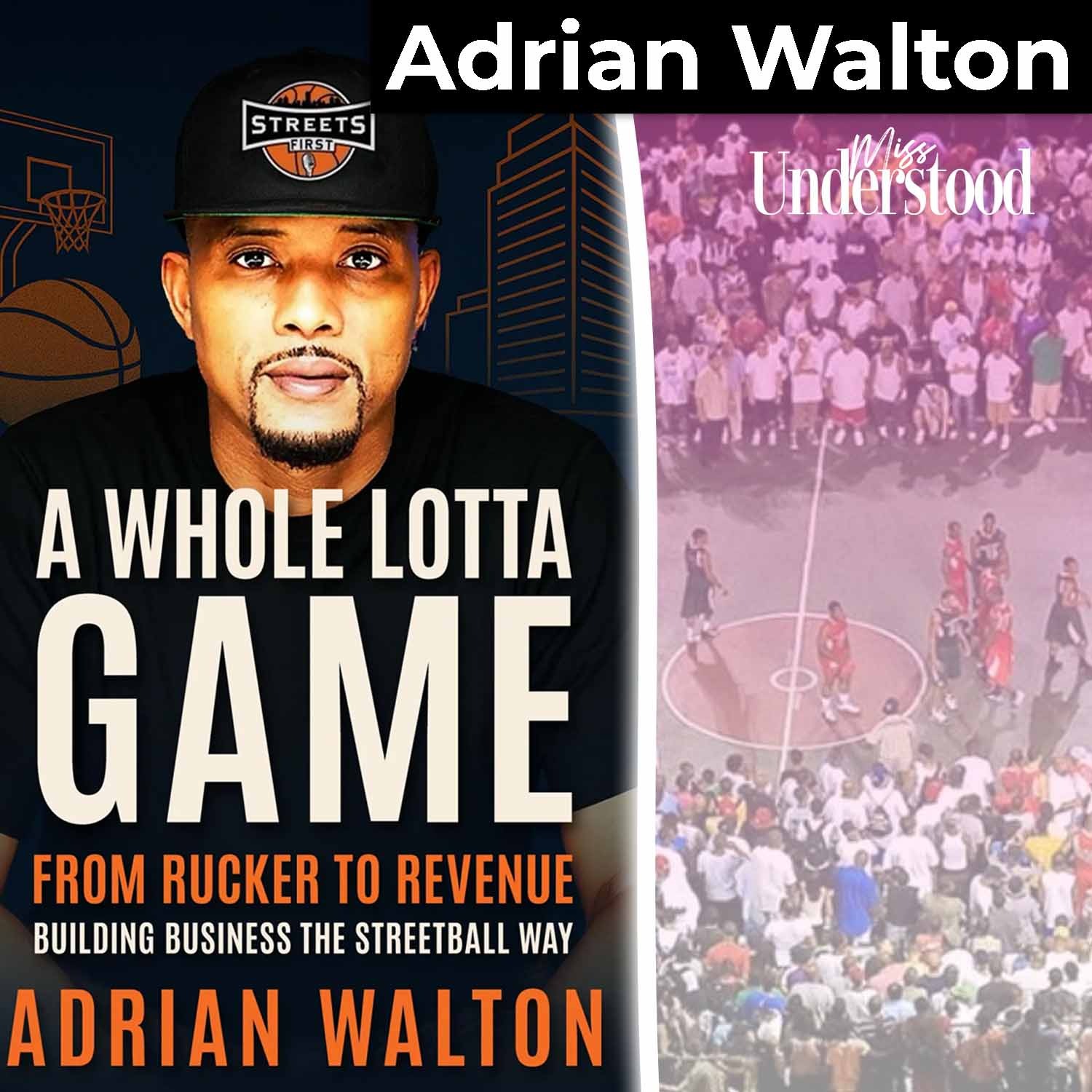
Miss Understood with Rachel Uchitel
Streetball Legend Adrian “A-Butta” Walton: From Rucker Park to Real Life
00:44:40
Loading summary
Transcript93 lines
- [00:00]
A
Today on Misunderstood with Rachel Yucatel.
- [00:03]
B
Since the 50s, Rucker park in Harlem had hosted summer tournaments that brought names as big as Wilt Chamberlain and Connie Hawkins to the blacktop to play a version of the game where style was essential to the substance. Rucker park in New York City now is a landmark. It's very legendary. So many players and people have came through to Rucker Park. Fat Joe, Jay Z, Kobe Bryant. Bryant, rest in peace. Allen Iverson, Vince Carter. He came to play at Rucker in 1999. I was 17 years old, my first year playing in Rutger, and I have 40 points on the NBA rookie of the year. And that is how I became legendary. I've played on all levels of basketball. Street ball, high school, college. I know professionals. I've played professionals. I have access and resources as professionals. Every kid is not going to make it to the NBA. I'm always teaching people how to learn how to be better within themselves. You know, I don't like to tell people what to do. I just like to tell and direct people where to go so that you can find how to figure out who you are and how you can be used. We think that there's no opportunities out there when we don't realize there's infinite possibilities within us.
- [01:38]
A
Welcome back to Misunderstood. I'm your host, Rachel Yucatel. What? Most of us grew up thinking of basketball as what we saw on tv, The NBA March Madness, maybe a local high school game. But in Harlem, New York, there's another arena that's just as legendary and maybe even more raw. The blacktop at Rucker Park. It's not just a court. It's a stage, a proving ground, and a place where reputations are made in front of a roaring crowd. And right in the middle of that world was Adrian A. Butta Walton. If you. If you don't know his name yet, you will definitely feel his impact in this interview. He was a streetball star at Rucker, a player whose game and presence drew crowds, inspired future NBA pros, and helped cement Harlem as the heartbeat of basketball culture. But Adrian's story isn't just about flashy moves or highlight reels. It's about pressure, resilience, and what it means to succeed when the spotlight is brutal and the crowd will either crown you or crush you in a single game. Today, Adrian has a new book out called A Whole Lot of Game From Rucker to Revenue, where he takes the lessons of the court. How to perform under pressure, how to read people, how to bounce back and translates them into Real life and business. His journey proves that street ball wasn't just a sideshow. It was a classroom. And the lessons he learned there apply to anyone who's ever had to earn the respect, fight for the opportunity, or turn a tough break into a new lane. This isn't just a basketball story. It's a story about grit, identity, and finding your voice in a world that doesn't always hand you the mic.
- [03:11]
B
Understand?
- [03:36]
A
Adrienne, thank you so much for joining me today on Misunderstood. How are you?
- [03:40]
B
I'm doing good. Thank you for having me. Ms. Rachel, good to see you.
- [03:44]
A
It's great to see you. I'm so excited you're here. I pretty much can tell you probably 75% of the people listening to my show do not know anything about street ball. So I'm so excited to get into it with you. But before we tell that story and explain your whole history with it and promote your book, I just want to hear a little bit about you growing up. Can you tell our listeners, like, what your, like, life was like, how many siblings you had, where you grew up, and what childhood was like for you?
- [04:14]
B
Well, my name is Adrian, and I grew up in Harlem, New York City. I have two brothers. I lost a brother already to gun violence. I grew up in Harlem, you know, poverty, you know, really trying to strive and really trying to understand, you know, what was my place in my city. And from there, I kind of, like, found basketball. Basketball was something that allowed me to kind of, like, escape poverty, and I kind of, like, became a legend in New York City, which is kind of hard to do, but I did it at an early age, at the age of 17.
- [04:55]
A
Amazing. Can we talk a little bit about losing your brother for a second? How old were you and how old was he when he died?
- [05:02]
B
I was about, let's say, 12, 13. My brother was about 21, 22. He had me about eight years. And again, this was something that was close within my family. You know, he was killed by a close family member. But again, my brother being the person that he was in the streets, the person kind of, like, got off on self defense. It was in their home. So, you know, that kind of, like, changed me at a young age, you know, looking at what was in the streets and what the streets was all about. So I kind of, like, shied away and, you know, stayed away from it, but didn't really stay away from it because again today, I have a podcast out named Streets First.
- [05:46]
A
Got it. Got it. Okay. So how did you first get into basketball for, like, in school, was it offered as a sport that they teach you or you really had to go to the streets to kind of just play around?
- [05:59]
B
I mean, the basketball kind of like starts where they call this thing called aau. So I was fortunate in New York City to play for two powerhouses, which was New York City Gauchos and Riverside Church. At this time, these were non profits that, you know, allowed a safe haven for kids to come and be able to get into Catholic schools if they were talented, or prep schools. And these places would pay for it because of being a nonprofit. So again, a lot of this stuff that I learned at a young age, I'm realizing today, at an older age is good to try to like, understand what financial literacy and being an entrepreneur is all about. Because in my community, that's what people were doing before me.
- [06:44]
A
Right, right. I get it. All right. So for listeners who don't know, can you tell us exactly what is street ball and how is it different from regular basketball?
- [06:54]
B
So street ball is, you know, I'll give you a great example most people might have heard of and one most people might have heard of Rucker Park. Rucker park in New York City now is a landmark. It's, you know, have you heard of Yankee Stadium? Or if you heard of Madison Square Garden, I'm quite sure you heard of Rucker Park. Fat Joe, Jay Z, Beyonce, Kobe Bryant, Rest in peace. So Allen Iverson, so many players and people have came through to Rucker park through this one tournament at the time, which was named EBC Entertainers Basketball Classic. So again, ABC was kind of like formed in like the 1980s, if I'm not mistaken. And then it kind of like went on until about the late2010, about close to 2010. And then it became like the entertainers after the owner, Greg Marius, he passed away.
- [07:56]
A
Got it. Where in Manhattan is it located?
- [07:59]
B
This is located. Rucker park is located on 155th and 8th Avenue, Frederick Douglass Boulevard. And again, I became a legendary Vince Carter, you know, that just became a Hall of Famer in the NBA. He came to play a Rucker in 1999. And I was 17 years old, my first year playing in Rucker, and I had 40 points on the NBA rookie of the Year.
- [08:26]
A
Wow.
- [08:27]
B
And that is how I became legendary. So that is what street ball can do.
- [08:31]
A
Right? Right. Why do you think Rucker park became so famous?
- [08:38]
B
Rest in peace. To Greg Marius, he created a platform where he wanted to bring the culture together, meaning he wanted to show the world how to get the politicians, the Hip hop, you know, the street guys, everybody to come together. And it also gave opportunities to a kid like me that went to alternative school or public school and wasn't fortunate to have enough money to go to Catholic school. These things matter in basketball because of exposure. Okay, so again, when AAU came in, AAU now gave you a chance to leave New York City and go play in other tournaments against other competition, which is about exposure. So again, we're, you know, New York City was grateful for powerhouses like New Gauchos and Riverside Church to create what they created for kids like myself. So again, Greg Marius kind of like followed that path. And again, he had people like Beyonce. I just want to tell you, I don't know no president that will put a street ball tournament on their itinerary. Bill Clinton came to watch the games at Rucker Park.
- [09:52]
A
Wow. Wow. And that's because it had such well known names or because the ball that was being played was so elite.
- [09:59]
B
Yes, it was all the players. If you played in the NBA, you wanted to come to play in this tournament. And mind you, this is concrete, this is outside, outdoors. But again, it's the feeling that you want. If you ever been to Madison Square Garden and when you hit a shot, the crowd is so loud, you feel that if you go to the Rucker park, everybody that you know comes from around the world, they go and they just visit that park, they go and stand in there and take pictures. It's very legendary.
- [10:28]
A
Wow. Okay, so here's what I want to understand because I've heard it has like mcs and music, and so it's, it's more of a whole cultural thing too.
- [10:39]
B
Chris Brown started there.
- [10:41]
A
Oh, wow. Okay, so. So for Pete, paint a picture. Like if you're coming down the street on 8th Avenue and you're coming up 150th and you get to 155th, explain it. Tell us the sounds, the sights, the smells. Like, what are we, what are we seeing when we come down the street?
- [10:57]
B
So by the time you get to 155th, you're probably gonna see a bunch of people standing on the line. And you might see the line wrapping around the corner. And I mean, these people, the games doesn't start until 6 o'. Clock. These people know to come and get online. 2, 3 o', clock, depending on who they're saying is going to play. These lines can be wrapped around the corner and you can be on that line for two, three hours just to make sure that you get a good seat. So again, if you know that you come in there to get a good seat to see a game. They also know to make sure that they have entertainers. So in between a halftime of a game, you might start, you might see a Chris Brown or a Teyana Taylor and these, at the time, we didn't know, you know, who these people were, but look who they became. And a lot of talent. You know, Bow Wow even came, you know, with Jermaine Dupree when he was a little kid. And you can find all of these things on EBC's Rucker page on Instagram.
- [11:57]
A
But when you say they're, like, performing, are they doing, like a halftime show or. Yes, they have the mic during the whole thing and they're just talking.
- [12:04]
B
No, they come on, they come on at halftime and they perform their song or they perform their talent. And again today you turn around and you see, wow, I, I, I was playing in a game and this guy did a halftime song and then turn around today, and that's Chris Brown. Yeah, that's, that's what that platform created. It gave a chance for, you know, regular people to become iconic. Right. Who would ever thought that, you know, a street ball tournament would be able to do that?
- [12:34]
A
That's amazing. So now, so I'm still picturing it. Is it fenced in and people are.
- [12:40]
B
Yes. Okay. So basically, it's like a regular playground in New York City. You have a lot of what you call NYC city and parks.
- [12:48]
A
Yeah.
- [12:49]
B
So a lot of parks are, you know, filled with playgrounds. And then they have a basketball court and maybe a tennis court. So the basketball court is normally fenced off. So now you have all of this fencing. And the people that run the tournament, they kind of like put security and fencing all around the basketball court to make sure, like, the crowd can't get on the court.
- [13:12]
A
Got it.
- [13:13]
B
So again, when you got all of these people scoring, I'm talking about, you get to hear if you missed a shot or anything, a player or a fan is right there in your face. Right?
- [13:23]
A
Oh, I got it. Okay.
- [13:24]
B
And it's very intense.
- [13:26]
A
Is it one court or you have a couple of games going on?
- [13:28]
B
It's just one court. It's always one court, one game.
- [13:32]
A
Got it. Okay, now tell me about how they're, who are the organ? Like, who's organizing the game, who's. Who's deciding who's playing who? Like, explain, is it like a real game in terms.
- [13:43]
B
So again, it's, nowadays it's for, let's say there might be a pot, there might Be a prize. There's a girl by the name of Queen of Harlem. She has a tournament in New York City called Ballin up in Harlem. And the prize is a hundred thousand.
- [13:59]
A
Oh, wow.
- [13:59]
B
I back then used to play for seven foot trophies. So this is how street ball now has evolved. This is why financial literacy is very important, even in street ball. But again, when, when I first was playing, you had seven foot trophies as the prize. So because that was the prize, you know, you would have the owner, he probably would have different sponsors like Hot 97, Def Jam, you know, Rough Riders, Terror Squad. So when he first started, because it was a street tournament, he dealt with rap groups. The rap groups turned into rap labels. This is when Puff Daddy and Terror Squad and Jay Z started to get into the tournament. And then the rap groups turned into the labels wanting to have a part of it. So Def Jam came in and he grew with the different sponsorships. That's what street ball is all about. Sponsorships. Getting involved with these nonprofits or these businesses. And again today, you have Jordan Brand, you have Nike, they all sponsor like the tournaments in New York City. Wow. So, you know, this is why I said we could teach a little bit more financial literacy. Because if we show them where the game is going, this girl, Queen of Harlem, she's went from 30,000 as the prize to 50,000 as the prize to just this summer it was 100,000. And half of that money automatically goes to the coach. The players get to split this money, the other half, but half of her money, half of the prize. If you win the championship, the money go. Half of the money goes to the coach.
- [15:45]
A
Okay, so now explain the kids that are playing because you. This is how you got famous. This is how you became a legend. You were young when you were doing all this. So do you just show up at the court during the day and try and get involved in a pickup game?
- [15:58]
B
So again, if you start, if you start young, like I said, most people know who you are, your talent, because you're either playing with powerhouse AAUs or you're playing in a top high school or you're playing in. So again, I was fortunate, you know, to go from graphic arts to playing for Milford Academy. And that is a prep school. And I was able to go from prep school to get a scholarship to go to Fordham University. I verbally committed to University of Miami, but I wound up having a daughter at 17. So I wound up choosing to go to Fordham to stay home to be close to my daughter.
- [16:39]
A
Amazing. So go ahead.
- [16:41]
B
I was Just saying that this is how you're able to get onto these teams. Most people would already know you and if they're paying an entry fee to get into these tournaments, so say for instance they'll say the tournament is worth for the seven foot trophies and you want to make sure that you get in, you probably paying 2500, 3500 to get your team in. So again with street ball there's no union. So there you, you, if you really want to win, you got to have a budget to get the top players in the city to play for you.
- [17:14]
A
I see, I see. What if I told you that the idea that you only get parasites when you travel to some exotic country is flat wrong. Millions of Americans carry parasites right now, often without symptoms. For example, it's estimated that millions in the United States have been exposed to Toxicara, a parasitic worm. Yet most never even know it. Parasites do not need a plane ticket. They can enter through tap water, sushi, undercooked foods or contaminated produce. Some strains live in all stages. Eggs, larva, adults hidden in your gut, releasing toxins that sabotage your energy and digestion. That's why I'm excited about Parafi. Kim Rogers 30 day full spectrum parasite Cleanse. The kit works by clearing parasites, worms, candida and heavy metals, targeting parasites in all life stages, supporting gut health, detox pathways and toxin removal. It's taken orally daily for 30 days with precise dosing. I'm actually doing it myself right now. I started with the lymph cleanse, then I'm doing the parafi. Wanna dive deep? I did a full interview with Kim Rogers, the worm queen herself, where we expose all the myths, understand the facts and show how to protect your body. Listen to that episode if you haven't already. Meanwhile, go to rogershood.com and use the code Rachel to get 10% off of your order. That's R A C H e L for 10% off. Give it a. Maybe your body's missing link is hiding inside. Let's do this Together again, it's Rogers Hood.com R O G E R S H o o d.com and use the code Rachel for 10% off. And so like the coach, every year is scouting for these new hot, young, talented kids or are the kids kind of coming every day and trying to show themselves? I mean I get it that they are well known for the most part, but if the coach wants to put together the best team, how hard is it every year to get to get picked to be on the team?
- [19:11]
B
So again, you have to Be in it to win it. You got to make sure that you're either, like you said, scouting, which is high school or AAU teams or again, now, what we were, what we're talking about when it comes to the Rucker, they have a high school division and they also have an unlimited division. So if you're talented at 16, 17, 18, you might be able to play on a team in unlimited. So at the time, I was young and I was able to play on Unlimited at 17 years old. So again, that's when you start getting paid. And as you can see today, look what that turned into. Nil. Name, image and likeness. Now, you know, if you have an image of coming in, playing in these type of tournaments, this also gives you an advantage going into college because now people are hearing about you playing against grown men in these top tournaments that been getting notoriety for a while before you. So it even helps you now going into college.
- [20:15]
A
Right, I get it. So explain Nil, just briefly, I know you said name, image and likeness, but we did a whole episode on this. So for people that don't understand, can you talk a little bit about that? And is it something that is being applied to streetball kids right now?
- [20:32]
B
So, yes, right now, name, image and likeness, which is nil, is basically about, you know, you are the product, you are the person, and how could you get paid off of that with different people knowing that the notoriety and following comes from you? So again, a lot of young kids today, they're, before they even go into college, they're able to get, hypothetically speaking, in their communities, businesses that may know about them and being ranked and you know what colleges that's looking at them to sign them, those businesses can now get those, pay those kids to promote their businesses in order for them to accept that check. And before that wasn't legal, you weren't allowed to do that. Again, only the universities were able to sell your jersey and you were the star in talent. You still couldn't get paid off of that. So now universities are paying kids that are top talent to come to their school knowing that this is a package deal of what you can get in order for you to now not have to even, you know, maybe make it to the NBA, you now have an opportunity to. And that's a great thing if you ask me, because from where we came from, we are the talent. So we should be able to get paid off of our talent. But again, understanding, you know, financial literacy and learning these things, these things adds on to helping us as we go further.
- [22:10]
A
Right so you have a new book called out. It's called A Whole Lot of Game. Why did you decide to write it now of all times?
- [22:19]
B
I kind of like wanted to wait. You know, I took my time in trying to learn when it was time to tell the story. And I felt that, you know, this is the perfect time. I grew up in an era where the game was to be sold, not to be told. And I think that we're living in an information warfare game right now. So free game is always helpful. The more knowledge that we know, the more misinformation we won't believe. So again, I'm very key in knowing that I've played on all levels of basketball, street ball, high school, college, junior college. I know professionals, I've played professionals. I have access and resources as professionals. So again, how does that help the student athlete today realize that the word pro means professional? Every kid is not going to make it to the NBA. How do I expose them to learning other trades, which is part of being professional? So I use my platform just like I saw Greg Marius rest in peace before me. Try to figure out how to use your resources to be able to help the next generation, educate them a little bit more on what they're getting ready to deal with and go into when it comes to real life. Right now, when you plan, it seems like everything is going to go your way. But real life eventually hits us all. And this is just a, you know, a little blueprint to let you know how to build and use your resources to be able to get over humps and get, you know, get around detours.
- [24:02]
A
Well, I. Adrienne, I really think you're onto something there. Because listen, I interview athletes all the time. I know plenty of them and they are so focused and so driven when they are in a. When they are a professional athlete. And what ends up happening is after that, when they retire, when they have to end their career for whatever reason, they are completely stuck because they've lost their sense of purpose and they have no other skills. And a lot of them turn to drinking or drugs or get in trouble or get divorced because they're cheating on their wives or whatever. All sorts of things happen because temptation happens and they are living in this world in their head as now it has been because they are now a soccer dad instead of someone who hundreds of thousands of people are cheering for them and it becomes detrimental to their well being, to their mental health and it ends terribly. So you don't have to be a professional to understand that, you know, and go through that to understand that you could be really good at something when you're younger and learn all these traits. But that learning financial literacy, like you talk a lot about, or learning purpose, learning other skills so that you can continue on and have a second act, is very important and should not be overlooked. So I think that that's amazing, and I think that everybody should be reading your book because of that.
- [25:25]
B
Thank you. And that's the key to make sure that I'm reaching out to all the student athletes and being able to help them see that. You know, I know I was a street ball legend, but again, I now have a book, I'm an author, and that should let you know that there is life after basketball. And how do you teach them that? We all have a story. And again, even though we all have a story, we still have more work to do. So that's part of my work, that how do I use my legendary status to not just make people say, all my life, wow, he was nice. So he did this. So he did. Like, there is life after that. So again, even though we might NBA players or guys like you said, athletes, they might have found out what their gift was, but they might have not learned through the journey who they were. Right. And that's what I'm more, you know, proud about, that I'm trying to help the next generation. Don't just focus so much on your gift. Learn more and more about who you are and what more you can become as a human being and a person. Because there's infinite possibilities. And a lot of us that call ourselves dreamers and visionaries, right? Those are the people that I'm targeting, you know, to be a dream and a visionary, you have to, you know, also be a doer.
- [26:47]
A
Right.
- [26:48]
B
So, again, I always wanted to show that I kind of, like, learned and always knew who I was and who I wanted to be. And there's a lot of people out here that, you know, in poverty that comes from that they know who they want to be, but they don't have like a. A pat. A guidance path to teach them how to deal with adversity or how to, you know, use the people that you know, versus just taking pictures with them and just getting likes.
- [27:14]
A
Right.
- [27:15]
B
You know, are you interviewing people and then trying to do business with them or you just want to talk to them? I mean, there's little things that you can help people, you know, push a little bit more. And that's what a whole lot of game is. You know, I'm giving out free game. You Know, because there were a lot of people that I was exposed to that helped me see that there's more to me than just basketball.
- [27:37]
A
That's amazing. I'm so impressed. Are there a couple like tips or tricks? If you have anyone that's listening right now that is kind of stuck and having some issues and can't get from one spot to the next spot, like in writing your book or in your life, did you learn some things that you feel like are on the tip of your tongue of like, yeah, this is what everyone needs to, to be thinking about or start doing.
- [28:00]
B
One of the first things I would tell you is live, love and serve every day we all wake up and abundance is your birthright. So I feel like if you get right with God, watch God get you right. I'm always going to preach to kids into the next generation. A lot of people tell you who God is, but now that we have all of this information out here, go try to learn who he is for yourself. And you may unlock something that's hidden within you that you know, you would be surprised about. So again, if it's one thing that I want to help another person get to the next step, try to build with God because he's the only person that could reach you. I can tell you something that at the end of the day was only really for me in my life. So again, you know, love, that's the key. You know, we, we all have to learn how to love and realize that we're stronger together. So I'm always teaching people how to learn how to be better within themselves. You know, I don't like to tell people what to do. I just like to tell and direct people where to go so that you can find how to figure out who you are and how you can be used. Yeah.
- [29:18]
A
I'm curious, looking back on your life, what are you proudest of your time on the court or like the impact that you're making now?
- [29:28]
B
I would say the impact that I'm making now. When I, when I was playing basketball, I really didn't know who I was. I was kind of big headed and just excited about everyone knowing me and loving the fact that I was good the more and more that I learned about who I was. I love basketball because it's a team sport and a team sport, you think about other people. So again, it's touching me a little bit more to stay within basketball and to stay within the culture and try to reach people and becoming better because I've watched a lot of people from poverty fall to that. The streets kind of was something that's hard to get away from and get over. And a lot of us haven't realized that it's within us to do it, but we just got to keep doing it. And I think that if they can see someone that came from that and is still doing that, our people are. My people is used to witnessing something versus hearing, right. A lot of my people don't go to church. So because I go to church, I try to say it from both sides to reach my people the same way. I'm talking to you just like a regular person, but you can hear the godly words and what I'm saying. I don't have to say the exact verses in the church words in order for you to understand it. So, again, I'm more proud about what I'm doing today because again, I know that I'm here for a reason. I'm still being used as a person that's from the streets that's trying to teach the people. If you can go through the streets first, you can get anywhere. You can become anything. And I'm an example of that. I'm living proof of what that God does exist. He can turn things around.
- [31:17]
A
I love that. Okay, if street ball. I have a good question for you. Like a fun couple questions. If street ball had a hall of fame, who deserves to be in it with you?
- [31:28]
B
One person I would say right off the top is Rafer Alston. He made it to the NBA. They call him Skip the Milo. He was like The man of Van 1. You can Google his name. And he made it to the Milwaukee Bucks from the streets. He's someone that made me feel like it was possible. He, Jamal Tinsley, he made it to the NBA. He's another guy that's from New York that, you know, I watched players, 13 years in the NBA, Indiana paces. You know, I was. I was just proud, you know, coming from the same tournament, playing in the same tournament against these people, to watch them have careers in the NBA, knowing that high school wasn't the best, college wasn't the best, but they made the best of it. And they reached those heights. It made me see as a person under them that it was possible. And sham God, you know, today, God, Sham God coming from Harlem, He's a person that I've watched go to Providence. I mean, excuse me, let's say first going to Cardinal Hayes, then going to Providence. Well, going to a Catholic school, then going to Providence College and then going to the NBA, but not really being able to play. I watched him turn around and then stay and become a basketball operation or a basketball skills teacher with the Mavericks. And then I watch him have his own shoe with Puma. I watched him Roc Nation sign him. I watch him now assistant coaching with Orlando Magic. And I'm watching him now with his own shoe again. And he has a book out too. So that those things are inspirational to me, watching street ball players reach those heights to where they raise the bar. So I have to put them in like the greats and the goats for me, with me.
- [33:25]
A
Right. And from what I've heard, that pressure of playing in Harlem was more so than that that you even see sometimes in the NBA.
- [33:34]
B
Oh, yes. I mean, if. If there's a. If there's a name, like I said, these names are names you can Google. There's a guy by the name of Joe Hammond. They called him the Destroyer. Most people in the street would think that he had a bad game if he had 40 points. This guy played against Dr. J, Julius Irving in them, and he was scoring 60, 70, 80 points. So to watch these people that played before you and to see what they. The impact that they had on the community and how people love. He turned down the Lakers because he was making more money in the street. Wow. And this is what, you know, we get caught up with in the inner cities that, you know, there's more provided to you trying to hustle in the street than opportunities to be able to see. And again, this is why I am helping and trying to help that within inner cities, everywhere, within communities everywhere, we all struggle with that, that, you know, we think that there's no opportunities out there when we don't realize there's infinite possibilities within us.
- [34:41]
A
Right. And it's really hard sometimes for people to find that, especially when they feel like their circumstances aren't providing a clear guide or path.
- [34:52]
B
I know like exposure, exposure does a lot to that when you can see that you're not the only one that has been through that. A lot of us get inspired by rappers and NBA players and really don't get a chance to hear their real story. So again, due to journalism and what's being asked on podcasts, a lot of people can't really learn from these conversations and people grab. Gravitate to what they gravitate to. And that's why I said, you know, I'm really trying to use the street way to reach people in a street way of how to grow.
- [35:28]
A
It's so true because a lot of people just interview these better known names about what they're doing now and the plays that they're doing and whatever. All the stuff that's more current as opposed to the real story that I think is so important, which is how you really got here, and talking about those really low times where you really thought you had no options and you were not doing as well and people didn't like you and didn't want you to succeed. And those are all the stories, I think, that are really helpful. I do have a question for you. Maybe this is a crazy question. How the hell do you guys get all these weird nicknames? Where did you get a butter? Was. Were you, like, sitting around eating a stick of butter and someone's like.
- [36:08]
B
So that was. That was the thing that I. I'm glad that you asked. The announcers. The announcers make street ball what it really is as well. I know that the people get on the line to watch the players, but the announcers, which is the guys that announces the game as you watching it. See, in the NBA, you don't have that.
- [36:27]
A
Yeah.
- [36:28]
B
And the street ball, as you bringing the ball up, there's a person that's saying what you're doing. He's keeping the crowd entertained. Right. He may have jokes, he may say things. But again, this is a personality thing. So today there's a kid by the name of David Teal Chaching. Nike and Jordan Brand, they signed him in New York to do all of the games. He dresses up, he wears costumes. He may come out one day and, you know, show love to Hulk Hogan that just passed away. He's dressing like Hulk Hogan. But again, this is what the people like as entertainment. And he's calling the game. Yes. When you hit a three, he'll say, cha Ching. So it's little things like this. So that's why I said that to you, to say when I was growing up and playing back then, there were guys by the name of Duke Tango and Al Cash. They were the Impact mcs for Rucker. So if you heard the Black Mamba, which rest in peace, Kobe got that name from those guys. They were calling him a certain name in a rucker that stuck to people. So my name became a butter. Because before muted was the finger roll.
- [37:32]
A
Okay?
- [37:33]
B
And the way that I lay the ball up and spin it, it's called the Butter roll. So everybody started calling me Butter. Hey, Butter, Butter, butter. He does it so nice. Look how he spins the ball off the backboard. And I can do it with either hand on either side, and it doesn't matter where it hit the backboard. I know how to. And today that's called the jelly roll. All the young kids, they all say, when you lay somebody like this with a finger roll, oh, he jellied on him. So again, you can see how the evolution has went on. It's a great thing. It's great things that could come from street ball. Exactly.
- [38:10]
A
I love it. Okay, so I know you told us you had one child. Is that how many kids?
- [38:13]
B
I have three daughters.
- [38:15]
A
All daughters. Okay.
- [38:16]
B
I was gonna say all girls.
- [38:17]
A
Played basketball. Do I any of them play basketball?
- [38:20]
B
My oldest daughter, she's graduated from Howard University. My second daughter's graduated from high school, and my first daughter, she's just now starting pre K. Yeah.
- [38:30]
A
All right, so what's on your bucket list for the future?
- [38:33]
B
Oh, man, the Boys and Girls Club. You know, I just want everybody to know that I'm building with the Boys and Girls Club. I'm trying to make this a national movement. You know, Madison Square Boys and Girls Club, they're helping me in Harlem do some real good things. Kips Bay Boys and Girls Club in the Bronx, they're helping me do some good things. I'm building with Mocha Phi, which is a financial institution like Chime In Greenwood that understands that by law, banks are supposed to invest into inner city communities. These are the things that you learn within financial literacy. So again, Mochafi. And on our block, I'm partnering with them, and I'm just trying to help my people, you know, be able to grow in different ways. Where if we figure out how to give back and do more with making sure that there's opportunities, maybe we could keep some kids out of the street. Maybe we could get them to feel happy about learning what AI is. You know, a lot of people don't really understand AI. A lot of people really don't use chat GPT. But again, if you get into detail and structure of what you really want to do and what you really want to become and with what you really want to target, those things can be fun. And again, I want to help my people learn that stuff through the people that I've watched, like Tiana, Tiana, Taylor, Davies, Cameron, all of these people. Mace, I grew up with these people. Fat Joe, and I watched all of them come from the street and become who they are. I want to bring them back to be able to help people learn their trades. They are all masters in their trades. And that's what I'm bringing to the Boys and Girls Club. A master class to learn how to Use my resources to come back and bring my product and teach them what I mean through my product, with them being able to see my resources and what they're doing.
- [40:33]
A
And is Rucker park still as big of a deal today as it was back when you were playing?
- [40:38]
B
Oh, yes. They have a big, big HBCU game there every summer. Right now they have the hitting opportunity summit there by Jordan is still what it was. It's not. I wouldn't say right now in New York City, the number one tournament is Dyckman. What Rucker was when I was playing there were all the stars and celebrities come. They go to the red carpet of street ball and dyke at Dyckman. Dyckman Basketball is sponsored by Jordan Brand. And they really, really. They had Luka Doncic there this year, this summer. So, you know, if that's the park where all of the stars come at now.
- [41:14]
A
Got it. Okay.
- [41:15]
B
But it's still going. It's still going.
- [41:18]
A
Yeah, yeah. And I'm sure kids are still looking for their opportunity to be a part of it. So I think that's the key. All right, last question. If a young person came up to you today and said, I want to make it like you did, what would one piece of advice be from you?
- [41:34]
B
Trust yourself. The one thing that I've done my whole life was trust myself. I've always had help, but without trusting myself and what I wanted to become, I wouldn't have became it. A lot of us fall victim to never really being able to have. So we might fall victim to when someone else around us or we may know or see become successful. And then we feel entitled to their success. And God gave all of us our own gift. So again, if I could help a kid today, I wouldn't want him to be such of a follower. A lot of our young kids today, they're followers, they're following somewhat of the wrong things because of what they see. You know, people have today without really understanding what those people had to become and learn how to be in order to have that. So again, my main message is to catch them young, to learn about who they are. That's the key. You know, a lot of us don't have that in the homes that we come from, whether they're single parent homes or broken homes, drug homes. So you gotta be able to help these kids learn who they are. We could teach them trades, we can help them get jobs, we can teach them how to get money. But we're lacking on teaching them character, morals, integrity. And that's what my job is. That's all I'm trying to do, help the young youth develop morals and character. My character has gotten me way more money than my talent has.
- [43:07]
A
Amazing, powerful, powerful words. Okay. Adrian Walton, a butter has just released his first book, A Whole Lot of Game. From Rucker to Revenue Building Business, the Street Ball Way. You guys, if you're interested in in reading it, Adrian, tell them where they can find it.
- [43:24]
B
You can catch it at my website. A whole lot of game.com you can catch me on Instagram @butter butterworld3. You can check my podcast out. Streets first is on YouTube. Streets first podcast and again I have up to about five seasons and many more to come. There's I have a documentary coming out on Netflix next year, 2026. Again I'm continuing to work just to show people that it's possible.
- [43:55]
A
Amazing. Thank you so much for joining us today.
- [43:58]
B
I wish you too have a blessed one. Foreign.
- [44:10]
A
Thank you so much for listening to Misunderstood. I'm your host Rachel Yukitel. Please be sure to subscribe to the show and give us a five star rating and review. You can support the show by joining our patreon@patreon.com misunderstood with Rachel Ukitel. Do you have ideas for the show or want to reach out? Email us@infomisunderstoodpodcastmail.com that's spelled M I S S. Understood. Thank you so much and I'll see you next.