← Miss Understood with Rachel Uchitel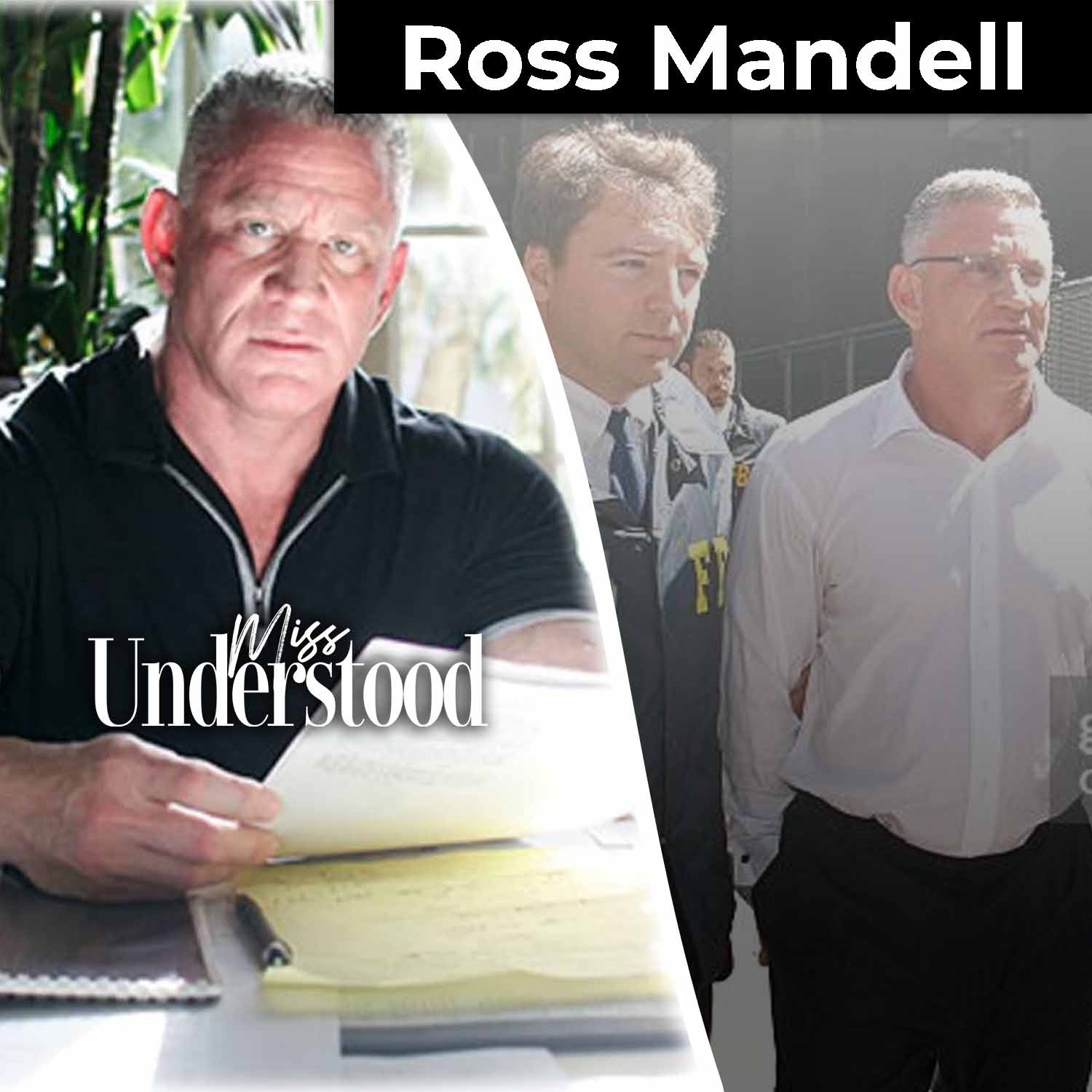
Loading summary
Transcript226 lines
- [00:01]
A
This is the story of the 1. As the purchasing manager at a manufacturing plant, she knows the only thing more important than having the right safety gear is having it there when you need it. That's why she partners with Grainger for auto reordering, so her team members can count on her to have cut resistant gloves on hand and each shift can run safely and efficiently. Call 1-800-GRAINGER click granger.com or just stop by Grainger for the ones who get it done.
- [00:30]
B
Today on Misunderstood with Rachel Yucatel.
- [00:33]
A
The big boys down on Wall street, you cost them, they figure $100 billion.
- [00:37]
B
What have you learned that people need to know?
- [00:39]
A
I was a victim of lawfare. I'm the first American to take a regulated American company and I put it on the stock market in a foreign country. I have the number one performing stock in Europe for four and a half years.
- [00:52]
B
Are you saying that nothing nefarious or illegal was going on within.
- [01:00]
A
The government wanted to use me? They actually told the jury, I'm the reason they all lost their jobs. I'm the reason for the mortgage crisis. I'm the reason that their homes lost value. The government took 65 million from me. Bob diamond, he was running Barclays Bank. He offered me $300 million for my company. He said, we're offering you a chance to walk away. We're offering you a chance to walk away.
- [01:29]
B
Welcome back to Misunderstood. I'm your host, Rachel Yukitel. Today's guest is Ross Mandel, a former Wall street power player whose name became synonymous with one of the most infamous brokerage fraud cases in the late 1990s and early 2000s. At the height of his career, Mandel ran Sky Capital, a firm prosecutors described as a classic boiler room. Aggressive sales tactics, market manipulation and investors allegedly mislead led out of roughly $140 million. In 2011, a federal jury convicted Mandel. In 2012, he was sentenced to 12 years in prison and permanently barred from the securities industry. For most people, that's where the story ends. A headline, a cautionary tale, and a full stop. But for Ross Mandel, it wasn't the end. It was the beginning of something else. Fast forward to now and Mandel has reemerged, not on Wall street, but on Instagram. He's amassed a large following, positioning himself as a commentator on success, masculinity, discipline and reinvention. He's visible, he's provocative, and he's intentional about controlling his narrative. Most recently, he's even appeared publicly alongside Sue Bell, a extra cast member of Members Only Palm beach, signaling a new kind of proximity to influence and cultural relevance. So why have him on Misunderstood? Because this show isn't about easy villains or clean heroes. It's about power, identity, and what happens when someone is reduced to a sin single chapter and then tries to write another. Mandel's story forces uncomfortable questions. Who gets to reinvent themselves? What does accountability really look like after punishment? And can personal reinvention coexist with a past that harmed others? Today isn't about erasing what happened. It's about examining it through his eyes, through the system that convicted him, and through the culture that now rewards reinvention in real time. This is Ross Mandel, misunderstood, controversial, and very much back in the conversation.
- [03:56]
A
Understood.
- [03:59]
B
Ross, thank you so much for joining me today on Misunderstood. How are you?
- [04:02]
A
I'm really terrific. Thanks for having me. I'm excited to meet you and I'm really excited to be here.
- [04:07]
B
I'm so excited to meet you too. So I've read a lot about you. I've watched the American greed story. You are a figure that people have read about. Not a lot of people necessarily know the man behind the headlines. So the place I'd like to start is like, who were you before this guy that got into the financial world, that even became somebody on everybody's radar?
- [04:30]
A
So, like, I like to say that I was a really good kid. I was a healthy young boy. I grew up on Long island in an upper middle class area. I wasn't deprived of anything. I had everything. I was told early on that I could do anything I want, be anything I want in the world. And I always thought everybody believed that. But I've come to learn that many people, that many parents were not empowering like that. I was told that I could do anything, I could be anything, I could have anything. And my mother used to drive us around neighborhoods and say, this is where this one, he's in the diamond business, he's worth millions. And this is. This man owns television networks. And, you know, we would go to these areas and look at mansions and people that have cars. And so she instilled that in my mind that there were things that we didn't have, even though we had everything that you could think of. And I never felt deprived of anything. And I was told that, you know, if I'm a good student, if I study hard, that I could be a doctor or a lawyer or an Indian chief or even the president.
- [05:30]
B
Right.
- [05:31]
A
So I bought into all that. You know, you listen to your parents when you grow up, that's your programming, you know, and then you become your parents later in life. That's happening, right?
- [05:40]
B
For good or for bad? Yeah, correct.
- [05:41]
A
And so I was a good kid. I was an athlete. I played two sports. I was a wrestler and a football player. And a great student. Ranked number six out of 624. Not that I was that smart, but I really worked hard and a lot of kids didn't work hard.
- [05:55]
B
Okay.
- [05:56]
A
And then my father dropped dead. I was 16. He was never sick a day. He was a bigger than life guy, a real man. People loved him and the life of the party kind of. When he walked in a room, everybody could feel that energy. And he got. We were at dinner one night, it was a big Jewish holiday on New Year's Eve. He didn't feel well. He went upstairs, he thought it was indigestion. Taken to the hospital later that night and never saw him again. So I was 16. I reacted very badly. Well, we buried him, right? And obviously I was in a lot of pain. He was my North Star, my father. My mother had two boys and didn't really relate to them at all. I guess she did her best and I just was very angry. I reacted badly. I was a God fearing kid. I was told if I studied hard and I worked hard, I could be anybody and have anything. And then two minutes after my father died, I learned that I had to change all my life plans. We were living the American dream. Everything was mortgaged, leased, borrowed, Right. We had no equity. We didn't really own anything. They were living to my father's next big sale, right? Social climbing, great neighborhood, couldn't afford anything. And so I was really, really angry. I can't explain it. I've been through seven years of therapy. When I became sober later in life. And so right after the funeral. We're Jewish, so in the Jewish faith, you put the body in the ground quickly, but then everybody comes and sits with the family. They call it sitting shiva. Whereas a lot of the Christian religions, they awake and they experience a time with the body before they bury him. So it was the shiva. The first day we literally come back from the cemetery. And my cousin, he was three months older than me. But you know, when you were a kid and you're 16, he was the first guy to smoke a cigarette, to kiss a girl, to do pretty much a lot of things.
- [08:00]
B
He seemed like the adult, right?
- [08:01]
A
He was like, you know, we looked up to him. He was a grade ahead of me. Cause I was born in March and he was a December Baby. And so he was one year ahead of me in school, and he had a lot of edges that way, and he was a pretty cool guy. To make a long story short, we took a walk around the block. I lived in a nice little neighborhood. And he took out a pack of Marlboro Reds. I could still see it. And he pulled out a cigarette. It was a joint. It was weed. It was pot. I had smoked some pot. I had. Had drunk. You know, I drank alcohol. I. Like, just like a normal kid in the neighborhood, you know, we steal some bottles from the. From our parents, and we'd hang out, and we'd drink a little and we'd smoke a little. We're trying things, right? Tasting life. But I remember when we were taking that walk, and he said to me, you know, you really. You really. You really messed up, man. And I'm thinking to myself, you know, I'm angry. I took a hit of that joint, and my life changed. The pain sort of went away. And I stayed stoned for 17 straight years.
- [09:04]
B
Wow.
- [09:05]
A
I went on a run unlike pretty much no other. And what happened was I became. I came to realize that I'm very. I got game. I get things done. I make things happen.
- [09:20]
B
You're a hustler.
- [09:21]
A
I can't be denied access anywhere. Something is in my mind. If I really want something, I get it. But I'm not afraid to work. I'm a communicator. But at this point, I'm kid, and I'm angry and I'm stoned, and.
- [09:38]
B
Are you starting to lose things like your mom is starting to consolidate? Do you have to move locations where you live? Is that why you're angry? Because you feel like, this is not the life I thought we had? This is not the life we want? Is that where I wish I could.
- [09:49]
A
Tell you in the audience that I could make up some really cool, you know, psychological reason? Yeah, I was just angry. White hot angry. Not a little angry. I was, like, a dangerous kid. And I had been a high school wrestler and high school football player. I was really fit. I was really, you know, physically more capable than most people, and I was just angry. And I just decided that it doesn't matter. I'm gonna live for the moment because you're not guaranteed anything. My dad was always talking about what he's gonna do, you know, at some point in life, we're gonna go here, we're gonna go there. We're gonna get this, we're gonna do that. They're saving for this. They're working for that. And I realized instantly that's all a lie. Everything's a lie.
- [10:36]
B
It's about the moment.
- [10:37]
A
We live in the present. And I became a guy and the only way I could get through the present was was to sort of not feel so much.
- [10:46]
B
Got it.
- [10:46]
A
So I like medicated myself.
- [10:48]
B
I can understand that. So did you have any aspirations before your father died? Did you know what you wanted to do?
- [10:53]
A
I was gonna go be a doctor. I was gonna study pre med and I was gonna go to medical school. That was my plan. I had all the grades to do it. And the guys that I hung out with all became cardiovascular surgeons and top, top guys in medical. All the guys, my crew, that I used to play basketball with, play cards with in the neighborhood. And my father passed away. I stopped hanging out with them that day. I gravitated towards a different type of crowd. And the crowd that I was around were kids that were generally from broken homes. Kids that were messed up. Yeah, I don't know if I can curse on here, so I'm trying to be very mindful of that. But I gravitated towards other kids that had a lot of pain. Yeah, I put it like that because they weren't losers. A lot of them became. Steve Madden was one of those guys. Okay, Steve Madden. We grew up together. Very close friend, you know, Danny Porush, who was the Jonah Hill character in the movie Wolf Walls, used to live right across the street here when I went via Meister. But he was one of the guys that I hung out with and grew up with. So it was just guys that became living in the moment because I was like sort of medicated and I didn't really give a shit about anything. Women found me very attractive because I was edgy and I was always happening. And I used to say, I'll sleep when I'm dead and all these different things. And I went to college because I got a wrestling scholarship and I was really. My grades were really, really high. I look at 92.7 average. The only reason I can tell you this is before I went to prison, the government did a deep dive on me. It's called a pre sentencing interview. Okay, A bunch of people interview you and nobody, you know, they're interviewing you, supposedly this criminal, and so they don't believe anything you say, but they start with your story and then they investigate. They actually went to my high school, got my records, got my college records in the psr, the pre sentence report that the judge uses as a basis to sentence you. I was like, wow, I forgot I was really, I was top shelf academically.
- [13:08]
B
Right. I'm just curious, do they do that to show you how far you've come and the fall from grace, or they do it to look at you as a whole and say, this is who this guy is. Let me consider that into where he is now.
- [13:19]
A
The judge uses it as a basis for. So like, you know, it might say that you were sexually abused, you know, or so they take it into consideration in theory. But I was sort of framed for like a big crime. The government wanted to use me. They actually told the jury I'm the reason they all lost their jobs, I'm the reason for the mortgage crisis. I'm the reason that their homes lost value. Right. I had nothing to do with any of those things, but they wanted me to be this bigger than life guy because all the, it was the too big to fail, time away, all the big institutions failed. They failed. Nobody did their job. Every one of these big banks had to pay billions back after we all bailed them out, taxpayers bailed them out and nobody went to prison, no one went to jail. So everybody was asleep at the switch. They had to find people to blame. And people would look at me back then and I would say, none of this even happened. I couldn't believe it. I was convicted of something that never happened. And now we have a 78 year old ex president who has never been arrested in his whole life, never used drugs or alcohol. All of a sudden he leaves office and he's charged with 92 counts of felonies in five different courts and he's actually convicted of 32 counts. And his businesses owe $500 million, $495 million. And people understand now how dirty the Department of Justices and the government, how they use the federal system, the doj, to hurt people, to get stuff in Trump's side. They just wanted Trump to be unavailable to run and win like he did now.
- [15:12]
B
Right.
- [15:12]
A
They want to put him in jail for the rest of his life. He's sitting in the White House right now. He's been convicted of 32 counts. He's awaiting sentencing right in the still it's been stayed. People don't understand. I was only convicted of four counts. I could be a senator.
- [15:29]
B
Wait, so let's go back to that for a second.
- [15:30]
A
Yes.
- [15:31]
B
I want our listeners to understand what you did on Wall street, what your companies were and get into where you're accused of something. Because you know, when people Google you, when they Google Sky Capital and the, and the fraud or the scandal that went on.
- [15:49]
A
Correct.
- [15:49]
B
It doesn't represent that you feel like you were completely misunderstood. You were innocent of this crime. It conveys that you were part of this crime.
- [15:58]
A
Well, if you read what they wrote.
- [15:59]
B
Right. That's what I'm saying, with what the media went with, with what the narrative is. And so I want to get to your side of it, but I just want people to understand what it is that you did. Kind of explain, you know, what Wall street is, how it works, what you were doing, and then get into the crime you were accused of.
- [16:16]
A
So I went to school. I was at University of Maryland. I was running with what I call fast crowd. We were with the prettiest girls. You would have been part of our crowd, Rachel, you know, and we were, you know, aggressively, actually, the kids that were throwing parties for all the other kids. So we would rent out the hot club in town. It was called the Pierre, Washington, D.C. and we'd print up, you know, papers, and we'd invite them out and invite all the. Make sure the pretty girls were coming first. Then we could tell all the guys the pretty girls were coming and where they're pretty girls. There were guys. And a thousand kids would show up and they would pay $15, and we would get the door, and we would do it on like a Sunday night or a Monday night when the clubs are dead empty.
- [16:58]
B
Sure.
- [16:59]
A
And the club would get to sell the alcohol, and so we would split the 15 grand. So before of us, we make like, you know, 3,500 cash. When you're a college kid, 19 years old, it's. It's real money, you know, So I was always looking at the prizing young man. And these were guys that all became. All found the most successful way to listen. We're not professional athletes. Right?
- [17:27]
B
Right.
- [17:27]
A
We were not blessed with those gifts, but we use our minds. And a lot of these guys that I hung out with, what became Wall street financial guys. What does that mean? So the biggest business in the world is called Wall Street. It's a business. Right. It's a marketplace. Just like a Whole Foods or a Publix. It's a place where people go to buy and sell things. Right. You go to Whole Foods. There are some. I have friends that have products in Whole Foods. They offer them for sale. But I go to Whole Foods to buy stuff. Right. And I go to Publix sometimes. There's Bogos. Buy one, get one free. It's like a new thing for me. I never really looked at these kind of things, but so I'm single for the first time in a long time. So I'm experiencing some of these things. Otherwise I would let the wife or the girlfriend take care of it, right? So It's a marketplace. $3 trillion every day trades hands. $3 trillion every day trades hands. Why would I want to be anywhere else? That's my thought. I even had a good business. I was 23. This is 1980. 81. 22. 23 years old, just got out of school. I'm making 150 grand a year. I have an American Express card. I could bang it out for four grand a month, no questions. I was a great sales guy. But I have friends now. They go to this place called Wall street. And they don't have to fly around the country. I was flying around carrying suitcases full of samples. I was selling ladies handbags, which I really didn't go for. But it was just the way to get money, right? Because at this time, I'm still very actively using drugs and alcohol. And I want to be a player. I want women like you to be interested in me. And that costs money. Manhattan, 1980. The disco era, right? Studio 54, Xenon Magic is the Limelight is a very famous type places. You know, I don't want to win online. I don't do that. Right? So how do I get to the front of the line?
- [19:20]
B
So how do you become the man?
- [19:22]
A
So I'll tell you what, down to Wall street, okay? And I went down to Wall Street. I started out in the E.F. hutton training program in 1983. They only picked 12 people for this particular program. It was a number two training program in the whole world. And I talked my way in. The other 11 people were lawyers, accountants and MBAs. And me, handbag salesman. But I, you know, I talked my way in because I'm a good communicator. I'm aggressive, and I can clean up nice, you know. And so I go down to Wall street, and here's the deal, here's what they say. It was the beginning of telemarketing. They're gonna give you these lead cards, people to call. You're gonna dial that phone 300 times a day. 290 people are gonna not answer. Would tell you, excuse me. Go fuck yourself. Don't ever call me again. Hang up the phone. But statistically speaking, it's fact. Ten people every day will answer the phone and listen to you. You're not selling anything. Put your checkbook away. Mr. Jones. All I'm asking is from time to time, we Isolate a very compelling situation in the capital gains sector of the stock market. Is it okay if I contact you back when we have one of these potentially money making ideas? You make money, sir? Do you make money in the market? Do you have investments? You try to keep them on the phone, get as much information as possible.
- [20:46]
B
Right.
- [20:47]
A
And I send my introductory package to them which is best addressed 1313 Mockingbird Lane. Okay. I'm going to thank you for your time today. I really appreciate it. And if and when we do have a compelling opportunity, I'm gonna give you a ring back. Thank you so much for your time. I'm taking notes on the call. I staple the card to a five by eight card. I hand it to my assistant. I just got 10 leads.
- [21:11]
B
Okay.
- [21:12]
A
Okay. And here's what they say over time. If you have 10 real leads that you got on the phone, three will always do business with you. Three will never do business with you. What you do with the other four determines how much money you're gonna make and if you could do.
- [21:31]
B
And is that also determined by what kind of a salesman you are?
- [21:34]
A
It's 100%.
- [21:35]
B
Yeah.
- [21:35]
A
That's what it really is, Period. How persuasive you can be. So at some point, I possibly the.
- [21:41]
B
Relationship you built, it sounded like you were good at making people trust you.
- [21:45]
A
It's not just trust. I really love people. For real. I'm a relationship builder. See, a lot of guys become successful, they don't really like people. I have a lot of friends, partners, guys that work for me. They really don't like people. I really love people.
- [22:00]
B
This episode is sponsored by BetterHelp. The new year doesn't require a new you. Maybe just a less burdened you. I think a lot of us walk around carrying things we don't even realize we're holding onto. Fear, pressure, the need to be perfect. Doubt about whether we're doing enough or being enough. And sometimes what really helps is having an unbiased perspective. Someone whose role is to help you better understand your relationships, motivations, and emotions so you can let go of what's weighing you down. BetterHelp makes it easy to get matched online with a qualified therapist. They work with fully licensed therapists in the US who follow a strict professional code of conduct. BetterHelp also does the matching work for you. You answer a short questionnaire, and they help connect you with someone who fits your needs. And if your first match isn't quite right, you can switch to another therapist anytime. With over 30,000 therapists and more than 5 million people served globally. BetterHelp has an average rating of 4.9 out of 5 for live sessions. Sign up and get 10% off@betterhelp.com that's B E T T E R h e l p.com and thanks for listening to Misunderstood with Rachel Yukatel.
- [23:09]
A
If you're the purchasing manage manufacturing plant, you know having a trusted partner makes all the difference. That's why hands down, you count on Grainger for auto reordering. With on time restocks, your team will have the cut resistant gloves they need at the start of their shift and you can end your day knowing they've got safety well in hand. Call 1-800-GRAINGER click granger.com or just stop by Grainger for the ones who get it done.
- [23:38]
B
What if I told you that the idea that you only get parasites when you travel to some exotic country is flat wrong? Millions of Americans carry parasites right now, often without symptoms. For example, it's estimated that millions in the United States have been exposed to Toxocara, a parasitic worm, yet most never even know it. Parasites do not need a plane ticket. They can enter through tap water, sushi, undercooked foods or contaminated produce. Some strains live in all stages eggs, larva, adults hidden in your gut, releasing toxins that sabotage your energy and digestion. That's why I'm excited about Parafi. Kim Rogers, 30 day full spectrum parasite Cleanse. The kit works by clearing parasites, worms, Candida and heavy metals, targeting parasites in all life stages, supporting gut health, detox pathways and toxin removal. It's taken orally daily for 30 days with precise dosing. I'm actually doing it myself right now. I started with the lymph cleanse, then I'm doing the parafi. Wanna dive deep? I did a full interview with Kim Rogers, the worm queen herself, where we expose all the myths, understand the facts, and show how to protect your body. Listen to that episode if you haven't already. Meanwhile, go to rogershood.com and use the code Rachel to get 10% off of your order. That's R A C H e L for 10% off. Give it a maybe your body's missing link is hiding inside. Let's do this Together again, it's rogershood.com R O G E R S H o o d.com and use the code Rachel for 10% off. So is what you're talking about something similar that people may have watched in the Wolf of Wall street when they Very similar. Just like that and boiler room correct?
- [25:23]
A
100%. I know all those People, by the way, they were all based on true stories. I know all the people in real life that played all those roles. I know the people that owned Boiler Room. John Moran lives in Raton.
- [25:33]
B
So how does this go from legal to illegal?
- [25:36]
A
Okay, so what happens is I become an outstanding stockbroker, like an athlete. I become recruited everywhere. People are paying me 300,000 upfront. This is in the early 80s to just. Instead of going from Yef Hutton, go to Oppenheimer and company.
- [25:53]
B
OK.
- [25:53]
A
It's a check for 300,000.
- [25:55]
B
Okay. And wait, when you say stockbroker, so people understand. It started from you understanding how to make these calls, get the leads, close the deals.
- [26:04]
A
Right, but that's how you get the clients.
- [26:06]
B
Yeah, that's how you get the clients. And then there's a portion of having to manage money.
- [26:09]
A
How do you keep the clients? Right, right. So I became really, really good. I'm a really, really good trader. Very famous, they call me. Some people say all these great things about me. I'm one of the. I've created more Wall street millionaires than anybody else. That's in books. I would never say that. I don't know it, and I know I have. Now that I'm on social media, I recognize I've really affected the lives of so many people. So many of them are very wealthy today. And they're all following me and they're all supporting me. My podcast just broke the top 50 on Apple. It's really amazing. I'm in my rookie season. I'm like. And Ben from Podcast Junkies was the original mentor that I patterned myself after, believe it or not, right here in this place. I love that special guy, Ben.
- [26:55]
B
Very special.
- [26:56]
A
And Podcast junkies, Boca Raton, 100 Plaza Real. If you don't know it, you should know it.
- [27:01]
B
Yes, I can concur.
- [27:03]
A
I mean, if Rachel, you could tell us here. Guess what, Guess what. What did I say? Beautiful women are here. You're all coming. What do you think, fellas? Wake up.
- [27:12]
B
Oh, gosh.
- [27:13]
A
So, you know, I became a really, really. A big Persona. I'm a big Persona, apparently. I love people. I'm charismatic, and I was single. And I'm drinking and drugging every night. I'm out seven nights a week. And a lot of those boys on the street, they work hard, they play hard. And so I would go out, I'd work my ass off if they told me I had to make 300 phone calls a day. I made 350. I made four. I've always been that worker. I'm not afraid to roll up my sleeves. I want what I want and I'm willing to go for it. And it was expensive to be a player. You understand what I mean?
- [27:51]
B
But also for people that are listening, that don't understand this is what you had to do to succeed. People were getting up at 4 in the morning, getting to work, staying till midnight, sometimes doing what they had to do. And part of it was taking out clients, part of it was cultivating those relationships, whether it was at dinners, strip clubs, whatever it may be, all the above to close the deal, Right.
- [28:11]
A
And I did all those things and I actually loved doing it. I had a bucket list life, they say.
- [28:17]
B
Which, by the way, I was on the other side of it. I ran the nightclub. So I. Yes. So I was known as the first lady of Vegas. I took care of all the customers in Vegas.
- [28:26]
A
Wow.
- [28:26]
B
And in New York, so my customers, my bottle service customers. I was the director of VIP operations. So I dealt with the VIPs. I dealt with people like you who were bringing in their clients, their associates, the guys that work for them, the brokers to blow off steam. I had to know their wives, their girlfriends, what they liked, what they didn't like. Yes, right. Yes. And their mistresses and know who was coming because I was their g. I love it.
- [28:53]
A
I had no idea.
- [28:54]
B
Yeah. I had to protect them. So I'm very familiar with it.
- [28:57]
A
So you really know me.
- [28:58]
B
I get the game. Yeah, I get the game. And no judgment. It is what people need to understand. That's the way it worked.
- [29:04]
A
That's the way it still works.
- [29:05]
B
Yes. I mean, not as much as it was. I mean, the money that was changing hands back then, like we had guys spending $450,000 a night, easy on girls, clients, everything going on and you know, went bankrupt later, lost their lives, lost their jobs, lost their wives.
- [29:23]
A
It does happen. But you know, you show me a guy that made it and lost it, I'll show you guys gonna make it again.
- [29:28]
B
100%.
- [29:28]
A
This is Ross 3.0 you're getting.
- [29:30]
B
Yeah.
- [29:30]
A
The government took 65 million from me. Yeah, right. Cost me 150 million at least. Because they created the crime. That's another story.
- [29:39]
B
Okay.
- [29:39]
A
But you know, at some point I became so good in the stock market, I decided I was money. People said to me, why would you ever work for anybody? Your business alone is bigger than a firm. Just so you know. I was flying in private jets in 1985. There were no friggin athletes flying private jets and were rappers.
- [29:59]
B
Yeah.
- [30:00]
A
The only guys that were flying private, Robert Krepp, the guys that owned the football teams and the baseball teams. In 1986, the Mets won the World Series. And my mentor, me, and a bunch of us guys at 44 Wall street, we made a bid for the New York Mets. I wasn't interested in athlete money. I'm interested in owner money.
- [30:19]
B
I get it.
- [30:20]
A
I'm fucking one of these athletes. Who gives a shit? I want to own the leagues. You know, I want to. You know, like, what's going on now? I mean, it's. I was at a crypto conference yesterday. I met 30, 40 guys that are multimillionaires. They all bought fucking Bitcoin at 20 cents. They bought Ethereum at 0.1 cents. And I was like the celebrity. I was a VIP guest of the keynote speaker. And everybody just wanted to see Russ Mandel, because I have a real authentic resume. I did it.
- [30:52]
B
No question.
- [30:53]
A
If there was social media in the 80s and 90s, I would have been a Kardashian, probably. I'm serious. What? I recommended a stock on Wall Street. If the word got out in the Wall Street Journal, Wes Mandel was buying a stock. The stock went up $3 that day.
- [31:06]
B
Right. Okay, so. But let's talk about that. Because what you were ultimately accused of, to simplify it, correct me in how I'm wrong. Yeah. But Was essentially, you were selling stock. Selling. You were getting money from investors to fund this lavish life that you're talking about.
- [31:24]
A
So that's all a lie. And at trial, even the government conceded that was completely untrue.
- [31:30]
B
Okay, but let's.
- [31:31]
A
So you. But. So, you know.
- [31:32]
B
Yeah.
- [31:32]
A
And I did live big.
- [31:34]
B
You did.
- [31:34]
A
But it was money that I earned.
- [31:36]
B
But explain how, just to go back, how what you did originally can turn illegal like it did in Wall Street.
- [31:42]
A
I want to explain. The Wolf of Wall Street's a very different story. Jordan Belfort had the telemarketing thing down. And what he did was he recruited a lot of young guys on Long island showing Ferraris and flashing this and that and getting them to rob customers. They didn't really understand they were robbing customers.
- [32:01]
B
Okay.
- [32:02]
A
Because at some point, if a guy is so smart and so good at this business, instead of being a stock broker, you become a stock creator.
- [32:11]
B
Okay.
- [32:12]
A
I created stock. I still create stock. Okay. I created from zero, and I can offer it to you for a thousandth of one penny. So if it's in a penny, you just made a thousand times your money.
- [32:24]
B
Okay.
- [32:25]
A
This is real. Okay. So people that really understand the game. The big financiers, Everybody on the Forbes list, the billionaire list, understands what I'm saying. People can create companies. I teach this today. I taught this in prison. And all stock is. Is a piece of a company. So if I have one company, Rachel, and I sell it to you, you're gonna pay me between 2.2 and 3.7 times sales.
- [32:54]
B
Okay?
- [32:55]
A
Okay. If I made a million dollars in my little company, it's called the misunderstood company, on a market, it goes from 2.2 million to 3.7 million. That's literally a rule of thumb. And whether it's in the low end or the high end depends on a number of factors. The type of business it is, the industry is. Is it growing, Is it shrinking? A million little things, okay? But that's a rule of thumb. So if you take that same company and you take it to Wall street, it's worth 15 to 20 million, okay? That's called a price earnings multiple. And the reason is what we do on Wall street, it's like what drug dealers do. It's the only way that the inmates would understand it. We take the company and rather just selling it to Rachel. You could tell, I sell it to Ben, I sell it to Jerry, I sell it to Eric. We break it up into little pieces. And the people that buy these little pieces don't want to run the company, don't want to sit on the board, don't want to make decisions. But what they want to do is speculate. They say, hmm, I believe in Ross Manta. I believe in Rachel. You could tell, you know what? I'll buy a little piece of that company because I think I could sell it for a little more than I'm buying it. It becomes a speculation, which is really an investment Wall street has. These are the smartest guys in the history of the world.
- [34:12]
B
But is it up to that person to be able to sell it when they want and when they think it's at.
- [34:17]
A
These are all details, it gets very. There's a lot of details involved.
- [34:20]
B
But isn't that something that became the problem? These investors couldn't sell when they asked to. Am I getting that wrong? It seemed like that became the problem.
- [34:29]
A
What happens is these financial journalists, they put out pieces. Most of them are because they're actually hit pieces. Like the government puts out a piece, and then 18 other financial journalists just repeat it. It's a lot of horseshit. It's nowhere near the truth or it's a spin for a reason. If you were watching tv. President Trump is owned by Putin and the Russians. The Russian inclusion hoax. They create a narrative and then they get everybody to spin it out.
- [34:57]
B
Sure.
- [34:57]
A
Okay, so it's a lot of this is our government. And this is. I hate to say it, this is. The Nazis created this. Okay. Hitler had Joseph Goebbels who said, I got you. There was no TV then. Everything was just on the radio. Half of Berlin was shocked when the Russians came knocking them down the street because they listening to the radio and they're winning. You understand? Yeah. And the bigger the lie, the easier it is to sell. I heard a lot of things about you, I want you to know. And I've now met you, I've talked to you for like 10, 15 minutes. I met your beautiful daughter Wyatt. And I just want you to know. It's so much horseshit, of course, but people don't know. The people listening don't know.
- [35:37]
B
Yeah, right. No, but I'm only asking cuz somebody must have raised a flag to get someone to look into the company. That's what I'm trying to get at, yes.
- [35:45]
A
I'll explain to you now.
- [35:47]
B
I'm not accusing you of anything.
- [35:48]
A
No, no, no, no. It's o. You could shoot me. I've been there, I've done that. I've been. Seen it all, you know, what they did to me. It's crazy. That I'm sitting here is a miracle.
- [35:58]
B
Yeah.
- [35:58]
A
But so I built a really, really successful company. I'm the first American to take a regulated American company. I formed a company in my brain, on paper, with the lawyers, with bankers, but I formed it out of nowhere and I got it funded and I built it up and I put it on the stock market in a foreign country. Nobody had ever done that. In 350 years, nobody had ever taken a regulated American business and brought it public on. And I put it on the London Stock Exchange, which is the most prestigious. Our stock exchanges are patterned after the London stock exchange that's 350 years old. Founded by King George and his henchmen back in the days before we had anything. And brilliant. The English were brilliant. They ruled the world for 900 years. They took what they want and they left the rest. That's what my English friends say. Right. So to make a long story short, I became very, very big when I got sober. Eventually I was 33 years old. I got clean because I could no longer function. And I just wanted to clean up for a weekend. I wanted to go to a place where no drug dealers, no open bar. And I ended up at a rehab and ended up signing in for a 28 day program. And I walked out of there November 9, 1990, clean and sober for the first time in my adult life since that day. I smoked that joint when I was 16.
- [37:22]
B
Oh, no way.
- [37:23]
A
It was the first minute. When I tell you a lot of guys exaggerate this. I understate. I didn't go one single day where I wasn't stoned, drunk or worse, but functioning. It sounds like I be, I'm a high functioning guy. But what I found out eventually took.
- [37:40]
B
Out the feeling and emotion when you.
- [37:42]
A
Get all that out. And it was like I had to relive my life. I never, I'd never been with a woman without having some sort of cocktail or joint, something. I've been on a date, I had never traded a stock, I'd never done anything because when I was 16, I started using like an addict. And I entered the 12 step programs, AA, NACA, etc. And I found life to be so easy when you're not under the influence. I'm highly functioning person. I was at the doctor earlier today and I just a few things going on. She says, you know, you seem to be functioning at a very high level. I said, I am. And she goes, that's all you want, you're stable. I'm like, I don't want to be stable more. I want to be great, you know what I mean? But that's the stock. Is that so, they're so, you know.
- [38:36]
B
And that's your personality too. You want more and more.
- [38:39]
A
I do want more. I mean my drug of choice is more, right? Anything that makes me feel better. I like, I like listen, I like listen. I like to say this. Today I have a coaching program, mastermind program. I'm mentoring a lot of people. I'm mentoring several women now. I find women to be so much more brilliant than men. It's crazy. You just get it. You just get it. It's just women lack confidence in themselves. They still, they still, they can't help. But you bought into what the world has taught you from day one. The men do this, the men do that, and you got to go along with this, go along with that and all these different things.
- [39:15]
B
I think it's a little more than that though, what I've found.
- [39:17]
A
Oh, it is.
- [39:18]
B
Well, what I found is that is true. You buy into it. You, you know, women tend to downplay their own intelligence. Cause they don't know, you know, they don't know what, what they don't know. But also, I think that we've grown up with the mentality that it's easier or better or the goal is to be saved. Right? To. To get to a point where you marry someone who will take care of you. And so as a woman. As a woman, yeah. Yeah. So. So it's almost like, well, if I do that, then I don't have to work hard, I don't have to know a lot, which puts women in such a terrible position, because if that marriage doesn't work out, they have no escape, they have no skills. They can't be on their own. So I've come to find that when you are financially free, when you are okay on your own, you become that much more of an asset in your own life. But also it makes it so much easier to be with someone because you don't feel like they're just saving you. So it's just, you know, so you.
- [40:08]
A
Don'T need them for that.
- [40:08]
B
Yeah, it's. For women, you should always have a hobby. You should always know about what you, you know, you could day trade if you want, whatever. But it's really important for women to take some ownership in something of their own.
- [40:18]
A
But, you know, Stephanie used to say to me, she goes, I just wanted to be a trophy wife.
- [40:23]
B
I agree.
- [40:24]
A
She was my trophy wife. You know what I mean?
- [40:25]
B
But I'm sure she loves having a hobby or a purpose of some sort that she has.
- [40:29]
A
She wanted to have children and have a beautiful house. We had four homes and the best schools. And she always had people around her, meaning, you know, people that served her. We took them very good. They became family members all these years later. And we really had the perfect life. And, you know, and the government came in. And I'm gonna say this so, you know, I was a victim of warfare. You see, I did something amazing. I took an American business, right? To take that company public in New York, in America, it's a million dollars right off the rip. It's a million dollars right off the rip. Okay? I went to Europe and I found out the laws and the rules are very different. And for a fraction of that money, I was able to take myself public in London. I saved record. If it's a million dollars, I did it for 250,000. I'm lowering the numbers because my business was a little bit more complicated. So it was a few million in America, less than that in Europe. And I got twice the result, twice the capital, twice the liquidity. What a great thing. After I went public, the first Time I raised a little under a billion dollars by myself. And I created a fund, my own hedge fund called Sky Capital Enterprises. Bought eight, nine companies and I put that on the stock market. I had the number one performing stock in Europe for four and a half years. And everybody thought I was a genius. I had paparazzi waiting to follow me outside the Dorchester Hotel, etcetera, when I walked around in England. And the thing was, I did an amazing thing. However, what I didn't know and what came to was revealed to me when I was in prison by a very, very world famous lawyer who's in the news like pretty much every day now. He said, you know the big boys down on Wall street, you cost them, they figure $100 billion, $100 billion in fees, commissions and trading profits. Because after I created this footprint, this blueprint, how you could do in America what I did and then swing it back to America for a few bucks. 100 grand, yeah. 200 companies followed my footprint that would have went public with JP Morgan, Goldman Sachs, Morgan Stanley. So happens Special Agent Dengler with the FBI that instigated this whole thing against me. He's head of security at Goldman Sachs today.
- [42:56]
B
Okay.
- [42:57]
A
The very company that paid me to show them how I did what I did. I created a footprint, a blueprint. Never been done before. They said it was impossible. Never done it. 350 years. I did it. I did it twice before anybody did it once.
- [43:11]
B
Okay.
- [43:11]
A
And Goldman Sachs came at me, I was like, I couldn't get an interview with Goldman Sachs when I was a stockbroker.
- [43:17]
B
Sure, sure.
- [43:17]
A
You know, they were like the New England patriots of the friggin of the stock market. They're the big dog, right? The highest quality.
- [43:25]
B
So you essentially are saying that you cause some problems.
- [43:28]
A
I'm a disruptor. I saw an opportunity. I saw an opportunity and I was a disruptor. And I'm gonna say this to be fair. They tried to put me out of business first. Starting, they put me in Forbes magazine in 2005. They put me an honorable mention on the Forbes list. They did a big story. They quoted the senator and they quoted members of Parliament and how a leopard could. Cause I got in a lot of trouble during my years of getting stoned on Wall Street. Yeah, I was a wild guy. I said wild.
- [44:00]
B
The bad boy.
- [44:01]
A
I was literally a bad boy. But I did that already. You know, I did it. I done that. And I don't shy away from it. I'm happy to discuss it. I can give you details. They tried to put Me out of business by sending every regulator in America into my place. Just like they did to Trump, I hate to say it. Every single way they could get to him legally, they did and they couldn't. I'm a tough kid and I'm resourceful, I'm cagey. And I figured things out and they couldn't put me out of business. And then they tried to buy me a guy named Bob diamond, who was the biggest, the hottest CEO of the moment. Patrick Mahomes of the moment in the corporate world. He was running Barclays bank, huge international bank. We sat down, we had a coffee or tea in the Dorchester Hotel. He offered me $300 million for my.
- [44:51]
B
Coffee company to buy it out. Right, okay.
- [44:54]
A
And they wanted me to come aboard. I had to sign a deal where I would be now with Bar, overseeing, with Barclays. I look back now, I should have done that deal. I would be running Barclays, right? I would have worth 30, 40 billion. I would be retired. Bob diamond right now. God bless you, bro. Very good looking guy, very well put together. I was really entranced by him, the way his whole, that whole, you know, very, very Protestant demeanor. I don't have that, you know, I'm more authentic and gritty, but I respect people that, you know, can be who they are. This is who he was. And I said, you were offering me $300 million. At that time, I had 10,000 multimillionaires as customers. 10,000. None of them were American. They were from all around the world. Middle East, New Zealand, Australia, Africa, you name it. Dubai just coming up at that time.
- [45:43]
B
Yeah.
- [45:45]
A
And everybody wanted that access because you take over sky capital, you get 10,000 accounts with billions of dollars in them that we had.
- [45:54]
B
So you thought that number.
- [45:56]
A
He offered me 300 million.
- [45:57]
B
So you thought that was way below what you were worth.
- [45:59]
A
I said, bob, I already have 300 million. I said, my company has $200 million in cash and no debt. I have 150 million personally. And really, I'm the only. It's my company. So really, if you get it. 350 if you want. I said, you're offering me what I already have, I don't get, was worth double that.
- [46:22]
B
Yeah.
- [46:23]
A
He looked at me in this very serious way and he said, I said, what are you offering me? And he sat there like. And I could tell he was thinking how much he wanted to reveal to me. You know, he was, I called him a superior person. He was operating at a different level of us, me. And he said, we're offering you A chance to walk away. We're offering you a chance to walk away. And he handled it with such class and respect and all these good things. And I didn't accept it. And that was a mistake. Because at some levels, you got to play ball.
- [46:56]
B
Yeah.
- [46:57]
A
There were powers that be. People always come to me. There's special societies and clubs. 100%. Absolutely. Makes sense, right?
- [47:06]
B
So do you think that. Are you saying that nothing nefarious or illegal was going on within your company? I mean, at the end of the day, there was a big downfall, so.
- [47:16]
A
Well, the government caused the crisis. But I'm gonna say like this, okay. There were four or five guys, brokers out of. I had thousands of employees. And I was sort of just an ambassador at this time. The business was running itself. I was basically flying around, shaking hands, you know, going to races and doing all the things that you see some of these guys like guys like Jeff Bezos doing right now. I was at that level there then. And there was a couple of guys that were founders of Sky Capital, that were brokers at Sky Capital that knew me personally, that were cheating customers. They were doing some things, and they were doing them with my coo, a guy named Stephen Shea, okay. Who, when the government came at him, admitted to it and said, Ross Mandel knew nothing. If Ross. And this is on camera, on film, recorded in a conference room with two FBI agents undercover. And they said if Ross Mandel knew what we were doing, he would throw us to the curb. I would. I was, well, what. What am I going to play? I'm gifted, Rachel. I don't have to cheat. I'm good at what I do. I'm as good as I want. I'm elite, right? I'm as good as anybody on Earth at what I do most things. I'm very average. I'm a guy. I'm just very average.
- [48:32]
B
I get it. I get it.
- [48:33]
A
I'm not full of myself.
- [48:34]
B
So I just. For anyone that is, like, Googled the story.
- [48:37]
A
Yes.
- [48:37]
B
The narrative, to simplify it is that your company was calling people, getting these investors. And I didn't really understand what the end game was from reading these articles. It seemed like all you guys were doing was funding lavish lifestyle where there's gotta be an out.
- [48:55]
A
We were making millions of dollars legally.
- [48:57]
B
But at some point, the investors have to get their money back. It almost they all did.
- [49:01]
A
Let me say we were public on the stock market, okay? All my investors paid 50 cents a share. We were trading over $5 a share for four and a half years.
- [49:10]
B
Right. But the narrative is you took all this money, and no one was getting the money back. It was just funding a lot.
- [49:16]
A
That's the lie. So now the lie is this because all these people that made the money, they didn't want to say anything, because then the government's going to. Everyone's afraid of the United States government. Look what the government did to Trump. They arrested his accountants, his lawyers, his friends. They put people in jail for nothing. Okay, this is a. We live in a very crazy time when you're playing at a certain level, you know, I took on the United States government.
- [49:40]
B
Yeah.
- [49:41]
A
Huge mistake. I mean, this is crazy.
- [49:43]
B
Yeah.
- [49:44]
A
I should have just made a deal. And I said to my wife at one time, I said, you know, I could just do a deal. I won't even get a year. I write a check for 10 million, and we just start going with our lives. She goes, you're gonna go in front of the judge. And I was being covered by every newspaper, every magazine, Forbes, they came to every day of my trial. And you're gonna sit there and say you plead guilty. They make you plead guilty and say it over and over and over again to something you didn't do just so you could walk free. And I said, yeah, or we could leave. You know, I'm an international banker. You know, I have relationships everywhere. And we just leave. Just. You want to do. This is how you. This is the kind of father example you want to set for your children. You want to go in front of the whole world and say you stole money or you committed fraud, but you didn't.
- [50:31]
B
Yeah.
- [50:31]
A
So I fought them. Huge mistake. Because that's the way it is. I hate to say it.
- [50:36]
B
What do you think you should have done?
- [50:38]
A
I should have just. What I should have done. I didn't realize there's another element to this. My attorney was secretly representing his partner in my case, and I didn't know it. They had evidence of one of my lawyers helping to cheat the customers. They had him in a. They were in a bar on Wall street or a restaurant. Midtown Manhattan, fancy place. At the bar, one guy's wearing a wire, and the attorney is just outright talking about how they lied and forged documents and all that. I didn't know any of this. And his partner was representing me, but he was trying to keep his partner out of prison. He traded me for his partner. It's called the conflict of interest. But everything was rigged, from soup to nuts. Just like the judge in Trump's case that said, mar a Lago is worth 18 million. The bathroom in Mar a Lago, one of the 40 bathrooms, is worth 18 million. You understand what I'm saying?
- [51:37]
B
Yeah.
- [51:37]
A
Of just blatant lie, fraud, misrepresentation. Because his case is the president and former president was covered by every news outlet. What they did to him is so blatant and obvious.
- [51:51]
B
Yeah.
- [51:52]
A
But what they did. You think that the only case of misuse of the government is in Trump's case has been going on for many, many years. And I fought them like a real man. I spent over $3,200,000 just on legal fees. According to the government, I spent 23 million on legal fees. I'm a real criminal, right? I paid lawyers all around the world, the best law firms in the world, to get things right. Because what do I know? I know nothing about these laws. I paid people that were experts just so I wouldn't have trouble. And I never did have trouble until they wanted what I had and I didn't give it to him.
- [52:29]
B
Right?
- [52:30]
A
And just so you know, I was ultimately convicted of manipulating the London Stock Exchange while I was in London with no Americans. And let me tell you how you know I did nothing wrong. I'm gonna prove it to you right now. This is America. Jordan Belfort, when he got out of prison, he has over 200 lawsuits, civil lawsuits, 200. His victims have Facebook groups where they get together because they're so every single Wall Streeter, you do one thing wrong, you take somebody's money, you cheat them, they sue you. This is the United States of America. You know how many lawsuits I have?
- [53:07]
B
Tell me.
- [53:08]
A
Zero. Not one single person suing me. Oh, you know, the only people who want to take my money, the government. United States government.
- [53:18]
B
So how much did you have to pay back?
- [53:22]
A
They say right now. So they said I didn't owe any money because they had. They took. It was a $50 million forfeiture, which was satisfied now that I'm out of prison. I did all my prison, all the time. I did nine years and four months while I was in the system. They said I owed no money, but a $10,000 fine because I was very rude in court.
- [53:47]
B
Okay?
- [53:48]
A
And I was fined $1,000. Mr. Bail. A thousand dollars. Mr. Bail. One more, Mr. Mandel. We're evoking bail. I had to put up $5 million in bail, and I had it. But I acted out in court. Cause I was so frustrated because there was just one lie after the next after the next. And the guy that had said, I did it, Mandel, didn't Know anything. Harrington didn't know anything. I allowed this fraud to go on. They said, well, no, you're not taking responsibility. Because he wasn't giving the government narrative. The guy that actually committed the crime, they put him in prison. All the guys that actually stole the money, cheated the customers and admitted it, they didn't spend one day in jail. Not one. And that's another thing. The writer from Forbes, he's a very big guy. He says he's never seen anything like it, ever. All these guys admitted to being guilty, and not one of these guys spent a day in jail. That's unheard of. Right, because they all lied to this government narrative they were selling.
- [54:48]
B
So just to wrap this up, because we could do a whole other episode on plenty of other things. Tell me what you're doing now. Because you got out of jail, I'm assuming you can't get back into this business.
- [54:57]
A
I sure can if I want. Oh, yeah, I'm barred. That's another thing. I'm barred from nothing. No one ever heard of anything like this.
- [55:04]
B
Interesting.
- [55:04]
A
But I can't become registered, and I would never want to be registered ever again. I already gave up my license. And the funny thing is, the government says, no, you didn't. You're still registered. Because they can't do certain things to me if I was not registered.
- [55:18]
B
So I know you're doing a lot of things to help other people.
- [55:20]
A
I am.
- [55:20]
B
And to make money. And it seems like you're pretty successful. So are people that are listening. Tell people what you're doing and how they can.
- [55:26]
A
I'm podcasting. I have now a top 50 podcast on Apple, but I'm on every platform on YouTube, Spotify, right down the line, 14 different platforms. I post every day now. A lot of people have come to me asking me for advice, investment advice. I'm really good when it comes to these things.
- [55:41]
B
I mean, stock tips, that kind of thing.
- [55:43]
A
World class. I post now on Instagram every single day. Even Meta says, we love what you're doing. Like, encouraging me. And I'm talking to people about the markets, about crypto, et cetera. All my life, I was what I call a disruptor. At this point, I'm not interested. I just want to go with the flow. I'm not interested in politics. I'm interested in helping as many people as I can. You know, one of the things I've experienced, so many things, good, bad, and ugly in life. And there is. I'm a good communicator. And people are looking for authentic people you know, this whole thing with social media, all these guys that are really big and successful at social media, they've never actually done anything. Yeah, they've created.
- [56:25]
B
I agree.
- [56:25]
A
They've created this identity on social media.
- [56:29]
B
No life experience in what they're talking about.
- [56:31]
A
Correct. Listening Guys give business advice that never built companies. All these different things. I've done all of that. I manage billions of dollars successfully. I've taken over 100 companies. If you look at my trial, the government makes me to be the, you know, I'm like the Tom Brady of the stock market. I was a cult leader. Thousands of people would. If I said buy, they would buy that. Like it's a bad thing. I did good things, but that's the whole story. So I want to help as many people as I can. And like some of my team said, listen, we're not going to come to you for diet advice. We're not interested in how you work out. But, you know, tell us about the stock market. I went to a crypto conference yesterday and I'm listening to all these people and I see what they know, but I also, I see now what they don't know.
- [57:21]
B
Right.
- [57:21]
A
So today I commented on XRP and what's going to happen in a little bit, I'm going to start doing live. So I have a really quickly growing podcast, I have a mastermind program where I'm really helping people. And it's a new thing is a lot of women have reached out to me and I'm helping women. And I find these women to be absolutely incredible human beings that just off the rip were programmed a different way and all they have to do is really click over something in their head. And I've changed every single person in my program. Their life has changed almost instantly.
- [57:54]
B
Last thing, just to wrap this up in like one sentence, what have you learned from what? All the things you've been through that people need to know.
- [58:02]
A
Life is an experience from birth to death. You're not guaranteed another minute. Enjoy yourself. Live hard, enjoy your life. Love as much as you can. It's about relationships. And just be you. Don't pretend, don't act, don't think. You gotta be somebody you're not. Whoever you really are, authentically be that person. That's what God want from you, to be yourself. And you know, they say about frequencies and vibration, they say, you know, it's no longer love that vibration at the highest frequency. It's people that are authentic, that are real. And that's my advice to everybody.
- [58:35]
B
Everybody follow Ross Mandel. Thank you so much.
- [58:38]
A
Thank you Rachel. What a privilege this was.
- [58:40]
B
Thank you. Me too.
- [58:47]
A
Foreign.
- [58:51]
B
Thank you so much for listening to Misunderstood. I'm your host Rachel Yukatel. Please be sure to subscribe to the show and give us a five star rating and review. You can support the show by joining Our Patreon@patreon.com Misunderstood with Rachel Ukatel do you have ideas for the show or want to reach out? Email us@infomisunderstoodpodcastmail.com that's spelled M I S S. Understood. Thank you so much and I'll see you next. If you're an H Vac technician and a call comes in, Grainger knows that you need a partner that helps you find the right product fast and hassle free. And you know that when the first problem of the day is a clanking blower motor, there's no need to break a sweat. With Grainger's easy to use website and product details, you're confident you'll soon have everything humming right along. Call 1-800-GRAINGER call clickgranger.com or just stop by Granger for the ones who get it done.