← Miss Understood with Rachel Uchitel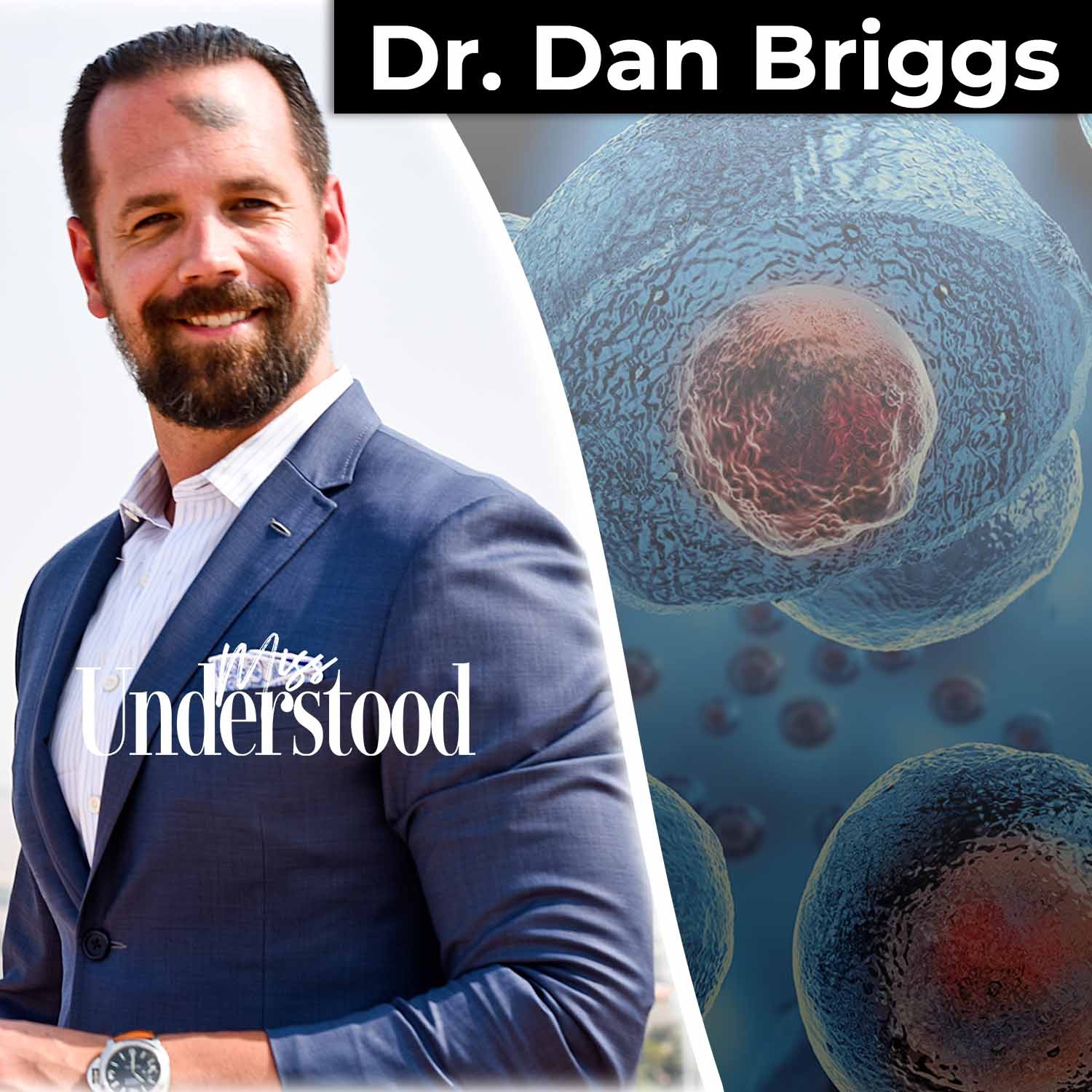
Miss Understood with Rachel Uchitel
The Truth About Stem Cells: What You’re Being Told Is Wrong with Dr. Briggs of Auragens
00:54:25
Loading summary
Transcript89 lines
- [00:00]
Podcast Advertiser
From walking barefoot in the snow to hiking for miles for a view, it feels good to connect with our simpler side. Simplifying your wellness with Kachava's all in one nutrition shake feels good too, with 25 grams of protein, 6 grams of fiber, greens, adaptogens and more. No fillers, no nonsense, just the highest quality ingredients. New customers get $20 off an order of two bags or more now through January 31st when they go to Kachava. K-A C-H-A-V A.com and use code News today on Misunderstood with Rachel Yukatel.
- [00:33]
Dr. Briggs
Mesenchymal stem cells, or exosomes. True exosomes is illegal in the United States.
- [00:38]
Rachel Yukatel
People are saying stem cells in America are legal. They are the same things that you're getting anywhere else. Can you talk about what's really true?
- [00:46]
Dr. Briggs
I was at West Palm beach there with the Hilfigers doing an event. The wife and the husband who owned the largest plastic surgery center there in West Palm. I told them what I did within stem cells and exosomes and they immediately stood back and said, that's illegal here. And I said, what? No, I do this in Panama. They went, fantastic. We want to learn more. We need to send our patients there. There are very few jurisdictions that have the proper oversight. The primary one is Panama. So Panama has an actual ethics review board. They have a governance system that allows you to operate with checks and balances. Our bodies are very capable of recovering on their own. And those exosomes are a protein that actually are messengers that teach your own cells how to repair.
- [01:34]
Rachel Yukatel
Welcome back to Misunderstood. I'm your host, Rachel. You could tell last August, my husband and I got on a plane and flew all the way to Panama for something a lot of people are talking about, but very few truly understand stem cell therapy. We spent five full days undergoing treatment, and since then, I've seen just about everything online about stem cells from TikTok clips that oversimplify it to, well, meaning doctors here in the United States who flat out say it's not real or it doesn't work or. Or you're getting the same stuff here in America that you get outside of America. And here's the truth. What most people are seeing and hearing or being offered in the United States is not the same thing. There is so much misinformation around stem cells. What they are, what they aren't, what's legal, what's effective, and why the most advanced treatments are happening outside the country. That's why today's episode matters. My guest is Dr. Briggs, the founder and CEO of Origins, and he's here to break down everything you've ever wondered about stem cells clearly responsibly, without the hype. We talk about why truly potent stem cell therapy can't currently be done the way people expect it in the United States. What actually makes stem cells effective and who these treatments may be relevant for, from anti aging and recovery to serious physical injuries and even neurological conditions. This is not a sales pitch. It's not a miracle cure episode. This is an education, one I wish I'd had access to before we started our own journey. And if you've been curious, skeptical, confused, or overwhelmed by what you're seeing online, this is the conversation you don't want to miss. So enjoy my conversation with Dr. Briggs from Origins. Doctor Briggs, thank you so much for joining me today on Misunderstood, all the way from Panama.
- [03:48]
Dr. Briggs
Rachel, thank you for having me.
- [03:50]
Rachel Yukatel
So the last time I saw you, I was sitting in a chair getting stem cells and exosomes put into me and was feeling great, and my now husband was there as well. We had the most amazing being at your spot, Origins, and we're going to get into all that and talk about what it's like there and what you're doing for people. But I really want to start with who you are because it's kind of fascinating. I was looking into your background. Can you tell people how you got into this kind of line of work and into medicine in general?
- [04:23]
Dr. Briggs
Yeah, absolutely. And it is great to see you again. We had some good times with your now husband, Dan. So I appreciate you taking the time to have me here as well. Of course. Yeah. So like most stories, it's very personal one to me, why I got involved with this and my. My route to it. Nothing was direct, certainly, but when I was 21, I had a abscess in my brain form size of a softball. So you can look at the size of your head. Imagine a softball. Now it's pushed my brain entirely to the back. And so my life was saved by a team of incredible physicians, scientists at St. John's Hospital down in Santa Monica. But it was to the point where my family was in grief counseling. They told me I would not survive. No one could pinpoint what this was. And it was only through what I would call revolutionary medicine. There happened to be a gentleman, Dr. Ellie Goldstein, who was coming through from Europe on a teaching mission. And he walked in, looked at me and said, I know exactly what this is, and we can treat it. And so managed to save my Life once, then immediately. And I was in the hospital for about three months at that point was just dismissed, went home, had a picc line on my arm, started to feel pains in my chest. I had been in the hospital bed for so long, I developed blood clots those had been dislodged from my legs, moved into my lungs, developed a pulmonary embolism and my lungs collapsed. So spent another few months in the hospital again. My mother was told that her son was going to pass away. There was no way to treat both the brain abscess along with the embolism at the same time without compromising the other. Except for the fact that happened in the right place at the right time. If I'd been in any other part of the world, with any other doctors there, I wouldn't be here today. That's what initially really opened my eyes to one, the inequalities. Knowing that if I hadn't been in Santa Monica, if I hadn't been at this hospital, I didn't have the same surgeon that took care of Ronald Reagan, I probably wouldn't be here. Two, when I left, I was then stuck with a seven figure bill, despite the fact that I had insurance. And so it really was a lesson very early on that one, people need access to the best possible health care. Two, we always need to be forwarding and furthering what can be done in the world of medicine, evolution and growth as to what can be treated and how we treat it. And three, we need to figure out a better way to make it accessible to all, regardless of location or financial standing. So that was the inspiration for it. Sorry for kind of a long intro on that, but ultimately where I am today stands from a significant podium of gratitude for even having the opportunity to do so.
- [07:14]
Rachel Yukatel
Right.
- [07:15]
Dr. Briggs
So it changed my life for the better, but then going through that and kind of staying with it for so long because this is now 25 years ago. So at that point, stem cells, stem cell process, what we do here at Origins, the regenerative medical side of things, was, was in its infancy. Stem cells, the mesenchymal stem cell product that we utilize and that we have developed, grown and created was first identified in 1993. So at that point there were seven, eight years into at least pre clinical. We are now 20, just over 20 years into clinical. Use of this. And going back to why I'm here and why we dove into it is again the misinformation around it. Right. There's a lot of issues with the way people make the claims, the way they develop Their product and the way it is sold to people. Knowing the impact that it's had in my life and the importance of being able to bring something new to market that will truly be curative and to help people, I want to break down a lot of those barriers, present something that is very predictable in outcomes and something that patients can rely upon.
- [08:24]
Rachel Yukatel
So before you started Origins, though, were you in the medical field? Were you. What's your background there?
- [08:29]
Dr. Briggs
Oh, it's very. It's varied. So. No. Well, before Origins, yes. So I'm also the chairman CEO of the Neighborhood Clinic, which is primary care behavioral health in the United States. We have locations Nevada, Arizona, Florida and Texas. Before that, I opened up laboratories. We actually did the biologics and the testing side of things as far as infectious disease blood panels. It actually became very busy, obviously, during the COVID period, where we became the largest testing facility in Nevada for Covid. Leading into that, prior to it, I'd been the president CEO of a large solar company, really based more around the financing side, being able to drive. And further that once I learned Ohm's Law, very straightforward, and how to actually create and generate the power store, it move forward. Prior to that, I actually was in the casino world in Las Vegas for a period of time where I oversaw marketing sales for casino marketing for MGM Resorts. So that's kind of a. And I got very fortunate there because I was put in and worked directly for, at the time, Jim Uren, who was the CEO. And so I was a party to a lot of the investor calls, shareholder calls that taught me really how to go out, raise capital and produce a company the right way. And so all those pieces eventually led into the opportunity to go fundraise, create the capital. And obviously during that time was finishing my doctorate, my PhD in those process, and I funded those opportunities as well.
- [10:01]
Rachel Yukatel
Amazing. All right, so you have a place in Panama called the Origins. And I want to know why Panama.
- [10:09]
Dr. Briggs
Yeah, great question. It's just Origins, by the way. It's social media. I was just saying the. There's a band out of Nebraska that is named Origins. And so all of our social media handles say the Origins, but.
- [10:22]
Rachel Yukatel
Oh, got it. Okay.
- [10:23]
Dr. Briggs
So very straightforward.
- [10:24]
Rachel Yukatel
Never heard of them, though.
- [10:26]
Dr. Briggs
They had six followers before we started. They now have like 2,000. One day they will log in and realize that we've given them a lot of publicity.
- [10:34]
Rachel Yukatel
Right, right.
- [10:35]
Podcast Advertiser
Oh, gosh. Okay.
- [10:37]
Dr. Briggs
As far as I can tell, they've only released one song. It's not bad. Anyway, so going through this process, this has been a 10 year journey to get here from the creation of biologics. Understanding the best products, what can be done. There are very few jurisdictions that have the proper oversight. One of those, and really the primary one is Panama. So Panama has an actual ethics review board. They have a governance system that allows you to operate with checks and balances. And I'm a big believer that you have to have regulatory environments for these to be safe for humans. Ultimately, I'm trying to improve the quality of life for a human being. The majority of spots. So there's, there's stem cell facilities that are popping up now left and right. We predate a lot of them. I think there's, there's a certain number that exists because of our success, which is fantastic as long as they do the work properly. The most important thing is that what we do is truly a medical intervention. We are creating a living biologic. We are taking that and it takes us, when you factor in the time of first introduction to when we were able to place it into a patient. It's a 15 month journey. It takes a long time to do it right. And then you have to have the right medical professionals around you to ensure the safety of the patient. In the United States, for instance, I see continuous advertisements for stem cell treatments. It's entirely different. What we do is providing mesenchymal stem cells or exosomes. True exosomes is illegal in the United States. That is what people have to understand. Now they get around that exosomes are delivered in the US are typically plant based exosomes. They are not what we are utilizing here. They're using adipost or when they're pulling from your own bone marrow or fat to then do essentially expensive prp. And they call that stem cell treatment in the United States. It is not. So when I talk about, I'm talking about mesenchymal stromal cells, which are the crown jewel of regenerative medicine. Very few have been able to do it exceptionally well. I'm very proud that Origins continues to win the awards for having the best product with the best facilitators of it. But Panama gave me the framework to do it safely and the checks and balances to be able to then showcase this to other regulators to that point, real quick. So we actually fully fund third parties to come in and verify us. So in two months we have the aabb, which is the association for the Advancement of Blood and Biotechnologies. They're an FDA proxy. So while they're not the fda, it's who The FDA empowers to go out there and provide oversight on things that we do like this to ensure safety. We have zero requirement to do it. No other stem cell facility, center, research facility like ours has it. We've spent the last two years preparing, creating the right processes, and now we have received our ready letter and we pay out of our own pocket to fly them all in, inspect us and make sure that we actually are adhering to all of these different requirements. And that's how I help ensure that our patients have the absolute best possible outcomes.
- [13:48]
Rachel Yukatel
Right. It sounds like transparency is like the number one thing for you guys.
- [13:53]
Dr. Briggs
It absolutely is. We publish constantly with our patient reports, our outcomes. We're very transparent. Transparency gets used too often. I like to ask people to please show me what you mean when you say you're transparent. Yeah. And you've seen it. You were here, you saw our laboratory, which is set behind glass. I want you to be able to actually watch your product being created. I want you to be able to read the books that we've written. We've had five best selling books now, and by best selling, it's in that field of nanotechnology. So it's not really anything to brag about since there's 12 total books, but we were 1 through 10 on those, so.
- [14:26]
Rachel Yukatel
Wow. So, all right, for people listening that are trying to catch up here, just explain what Origins is.
- [14:33]
Dr. Briggs
Yes. So Origins is a regenerative medical and research institute. So we strive to give people a better life through the utilization of biologics, and we do it in a luxury setting. So the idea is we know the potential that our bodies have and they're underutilized. There are too many things that happen with an individual that then a prescription is written for. Our bodies are very capable of recovering on their own. But as you age, that regenerative capacity drops. By the time you reach 37, you are at a fraction of where you used to be. When you're female, you're far more complicated than I am as a male, meaning you need additional support. You become far more likely for autoimmune disease. Perimenopausal menopausal states become an unknown because they've been unstudied here in the US when you start looking at things like basic diabetes type 1, and you go, okay, how do we keep these beta cells going? We see time and time, the ability to do so. And so what Origins has done has gone through this process now for quite a long time. And we track, monitor, and actually administer in a clinical Setting the ability for people to regain, not that hope, but actually have a curative effect on things that otherwise are told you're just going to have to live with, whether that is pain management or other. Other pathologies.
- [16:02]
Rachel Yukatel
Right. Okay. Can you explain what stem cells are and what their, you know, what their function is?
- [16:08]
Dr. Briggs
Yeah, real straightforward. Stem cells, as we use mesenchymal stem cells. They're derived from the umbilical cord of a mother. This is where there's a lot of misinformation. These are not fetal tissue. This is a consenting donating mother who we start working with as she enters her second trimester of pregnancy. We are then with her throughout the rest of the pregnancy and are in the operating room during her cesarean section. At that point, our physicians, we've OB GYNs on staff collect the umbilical cord. It's at the associated hospital to us, which is a Johns Hopkins affiliate hospital as well.
- [16:45]
Rachel Yukatel
And is that down in Panama?
- [16:47]
Dr. Briggs
That's here in Panama, yes.
- [16:48]
Rachel Yukatel
Got it. Okay.
- [16:49]
Dr. Briggs
Yep. So literally, it's attached to our building, the bill building. Right next to us is the Johns Hopkins facility. And so that's where the or is, and that's where our OB GYNs work as well.
- [16:58]
Rachel Yukatel
Got it, Got it.
- [16:59]
Dr. Briggs
So we collect that umbilical cord, we take it back to our laboratory here on site, at which point we are stripping out what's called Wharton's jelly. It's what's inside of, of the umbilical cord. At that point, we're pulling out and identifying certain markers within the Swarden's jelly that represent and are or lack the certain characteristics that make a mesenchymal stem cell. Those mesenchymal stem cells are what has created the baby. So for the last nine months, they had the blueprint. So they are the general foreman in the baby making process. We're saying, okay, does this baby have five fingers on the left hand, five fingers in the toes, nose, pulmonary. All of those things are all being run by this mesenchymal stem cell team. So we're taking those, replicating those en masse through our proprietary media and growth. And all we're doing is ensuring the purity. So we make sure there are no pollutants, we make sure you're at 98, 99% purity, the efficacy of them, their viability. So we give these living biologics that are programmed to support new growth, and then we introduce those to a person who has some sort of issue, whether it's anti aging, acute injury, and in doing so, Very universal. They enter your body and they start looking for anything that is amiss because they adapt to your body. And they start looking, they go, okay, Rachel has soreness in the shoulder. There's inflammation. We're going to wipe out that inflammation. We see that there's a micro tear here in the knee. We're going to go down, we're going to start repairing that. But they're not just repairing it. They're taking up a new home and they start to express what are called exosomes. And those exosomes are a protein that actually are messengers that teach your own cells how to repair themselves again as though you were a newborn. It's the same reason why as you get older and you have an extra glass of wine, you feel a whole lot more than you did when you were 19 or 21. So when you trip and fall and you're young, you scratch and it heals very quickly, is because you have this regenerative capacity still, we lose that. And so we've done several studies in conjunction with a number of universities showcasing that dip at 37 years old and at 65 years old. So that's where the anti aging component of this has become such a major piece of who we deal with.
- [19:18]
Rachel Yukatel
Just quick question on the side of something you were talking about that you have these women that are donating as they're having a C section. How are you finding these women? Is this something that when they're part of the hospital, it's something they're asked and they donate. I remember. So my daughter's 13 and a half now. I gave birth in San Francisco at a teaching hospital at ucsf and they're very into stuff like that. They asked me if I wanted to make my placenta into capsules to eat, which I thought was horrifying and I didn't understand it. And they asked me about the umbilical cord stuff and I remember just saying, do I need it? I don't understand. And I guess people at the time, maybe they still do. They, they take the umbilical cord or what you're talking about stem cells, and they like, put it in their freezer in case something ever happens to their child. What am I talking about? Like, is this something similar? Does that actually work? Do you know what I'm talking about?
- [20:10]
Dr. Briggs
I do, I do. You're talking about an umbilical cord blood banking. So, yes, very different than what we do. There are some, there is some value to it, what you're able to do there. And it's Limited strictly to the child itself, from who it came from or to their parents. So you can't go outside of of that scope for use. And also it's strictly limited towards bloodborne illnesses, things like leukemia, it can certainly help with, but it's limited in scope. But I think it's for the companies who are doing it. Well, kudos to them.
- [20:41]
Podcast Advertiser
What if I told you that the idea that you only get parasites when you travel to some exotic country is flat wrong? Millions of Americans carry parasites right now, often without symptoms. For example, it's estimated that millions in the United States have been exposed to toxocara, a parasitic wor, yet most never even know it. Parasites do not need a plane ticket. They can enter through tap water, sushi, undercooked foods, or contaminated produce. Some strains live in all stages. Eggs, larva, adults hidden in your gut, releasing toxins that sabotage your energy and digestion. That's why I'm excited about parafi. Kim Rogers, 30 day full spectrum parasite cleanse. The kit works by clearing parasites, worms, candida and heavy metals, targeting parasites in all life stages, supporting gut health, detox, detox pathways and toxin removal. It's taken orally daily for 30 days with precise dosing. I'm actually doing it myself right now. I started with the lymph cleanse, then I'm doing the parafi. Wanna dive deep? I did a full interview with Kim Rogers, the worm queen herself, where we expose all the myths, understand the facts, and show how to protect your body. Listen to that episode if you haven't already. Meanwhile, go to rogershood.com and use the code Rachel to get 10% off of your order. That's R A c h for 10% off. Give it a try. Maybe your body's missing link is hiding inside. Let's do this together. Again, it's rogershood.com r o g e r s H-O-O-D.com and use the code Rachel for 10% off.
- [22:19]
Rachel Yukatel
Okay, but that's good to know because I was always confused as to whether or not that was similar. Okay, so these women are signing these parts of them over their umbilical cords. And are you getting these daily? Like how often and how quickly do you need to use it? Can it be frozen? Do you have to put it into somebody within 24 hours? How does that work with timing?
- [22:38]
Dr. Briggs
No, fantastic question. I actually just got this question from a patient who changed the date of their trip and they said, but I don't want to make her. I don't want to force the mother to give birth sooner than she's ready. And I said that's not how it works. So it's a fantastic question. These are all we follow the blood and tissue donation programs of the US the way they're set up. The majority of them come through our OB GYNs who are already these patients, primary caregiver during the pregnancy process. So we have the discussion and the donation is made to us. And so we go through them with that. But once they're taken in, a single umbilical cord will accommodate approximately 500 individual patients. So when we process that cord, once it's done, and we've done all of our third party checks, all of the reviews, it then is put into cryopreservation. So in our laboratory right now, we have north of 100 billion stem cells that are in cryopreservation. And that's part of the difficulty here is when you create a great product, the thaw becomes just as important and the secondary check following the thaw, because then you have to verify again that there has been no abnormalities, no change to the percentages and this is still a viable product.
- [23:50]
Rachel Yukatel
How long can it be frozen where it's still good?
- [23:53]
Dr. Briggs
Upwards of 10 years.
- [23:55]
Rachel Yukatel
Wow.
- [23:55]
Dr. Briggs
Yep. So that's what we've seen thus far. But each time, and there are times where you have to, because we've shipped our product to utilize and to test elsewh and you see even during the shipping process that at any point, if it loses its, its freeze when they get refrozen, wake back up, it's a dead product. And that's what you see a lot happening around the world is people are shipping what is a good product, but there's no secondary check when it lands. And without that, someone's paying for essentially a placebo or, or a lack of a product.
- [24:25]
Rachel Yukatel
Right.
- [24:25]
Podcast Advertiser
Of course.
- [24:26]
Rachel Yukatel
Okay. You were talking about earlier about how the stem cells, some cells go into the body and they find where they need to be within that individual. I think there's a lot of misconception about how long that takes. People think that it happens immediately, some people say it happens after a year. Talk about the process of how long it takes for those stem cells to find what is wrong and what needs to be repaired.
- [24:49]
Dr. Briggs
Absolutely. So because it's a living biologic and there's an old joke that cells don't read textbooks, they do things on their own time and sometimes they cure things, we don't even intend for them to go go fix, vice versa. Depending on where a person is at, it can take longer or shorter periods of time. But what we know definitively is that window where they're going to work and they're communicating with your own cells and they're teaching them how to behave and how to act is day one when they enter. But that you won't notice the impact. This is not a pharmacologic where you're putting it in and immediately addressing a pain point, these actually have to go in and then start to work on the repair. So from day one till month nine, you're in the sweet spot as far as where these cells are retraining, teaching, and encouraging your body to regenerate itself. So we've seen recently we just had a gentleman come in, came in, who has significant pain within 48 hours because of the type of pain he had because of where we were able to administer this. And we actually went directly into the site within 48 hours. He felt the difference. Other patients. I had another gentleman who took six months before he called me and he said, it's like a light switch just was flipped. He goes, I'd given up hope. And I always say, don't give up hope. It takes different for each person. And he's come back again since and goes, I'm making this a part of my yearly journey. But it was six months before all the damage. Now, this is a man who had tremendous success very early on in life and then made the very most of that success for the following 30 years. He had a lot of work to go through, through. And so once he made that, that change for healthy living to repair himself, it took six months for us to get him back to a baseline. But that baseline was such a huge leap in how he felt, how he could move, how he could behave, even how he slept, that he's now become a very loyal patient. That being said, that was a solid six months before he noticed that. So the hardest part is you come down here, you have a great trip, you go home, and you twiddle your fingers and you go, I don't feel any different. And that's where we say you have to be patient. Those that wear biometrics monitoring, you see your VO2 max go up, you see everything improve internally. But that outward piece where day to day, you may not notice it for the first months, month or the first 90 days, but internally, your body is noticing a difference and it will impact you long term.
- [27:12]
Rachel Yukatel
Right? So it's interesting, I had a surgeon on, I don't know, maybe a year ago who had quit being a surgeon because of a whole journey he went on with his son who was autistic, and they went through years of clinical trials and all sorts of things. And at the time I saw him, his son was now 27. But when he was 20, I guess five or 23, they had finally gotten into this Duke study, I guess, with.
- [27:42]
Podcast Advertiser
Stem cells for this episode is sponsored by Better Help. The new year doesn't require a new you, maybe just a less burdened you. I think a lot of us walk around carrying things we don't even realize we're holding onto. Fear, pressure, the need to be perfect, doubt about whether we're doing enough or being enough. And sometimes what really helps is having an unbiased perspective. Someone whose role is to help you better understand your relationships, motivations and emotions so you can let go of what's weighing you down. BetterHelp makes it easy to get matched online with a qualified therapist. They work with fully licensed therapists in the US who follow a strict professional code of conduct. Better Help also does the matching work for you. You answer a short questionnaire and they help connect you with someone who fits your needs. And if your first match isn't quite right, you can switch to another therapist anytime. With over 30,000 therapists and more than 5 million people served globally, BetterHelp has an average rating of 4.9 out of 5 for live sessions. Sign up and get 10% off@betterhelp.com that's B E T T E R H E L P and thanks for listening to Misunderstood with Rachel Yukatel.
- [28:52]
Grainger Advertiser
If you're the purchasing manager at a manufacturing plant, you know having a trusted partner makes all the difference. That's why hands down, you count on Grainger for auto reordering. With on time restocks, your team will have the cut resistant gloves they need at the start of their shift and you can end your day knowing they've got safety well in hand. Call 1-800-GRAINGER click granger.com or just stop by Granger for the ones who get it done.
- [29:21]
Rachel Yukatel
For autism. And this was a kid. It's gonna make me cry talking about it. This was a kid who could probably say had 20 words right and was like not functioning and lived at home. And after they did the stem cell trial, within two days everything had changed. And I said, well how is he now? He said he lives on his own, he drives a car, he has a job, he has a girlfriend. And he started crying. He's like, I gave up surgery to now be a part of this program where I can Help people and use stem cells for people with autism and blah, blah, blah. It was so fascinating what it can do. So that brings me to the question I want you to talk about. I went there for anti aging. I'm 50, almost 51. I didn't have any specific aches and pains, although my whole body hurts all the time. So that was part of it. But that's just from aging, not from an injury and going through perimenopause into menopause. So for me, I came down for the sort of anti aging and the beauty side of things. My now husband came down also just to understand what it was like. He was a former athlete and had a lot of injuries and he immediately felt the difference. I mean, he still, he's like, we need to make this part of our yearly health journey because he immediately felt it cause he had specific aches and pains in shoulders. And you guys didn't even inject him in the spot. You just gave us both IVs where I know some people get it injected into the spot that they're injured. Right. But it's interesting because for me it's been a longer journey, I guess, in seeing the difference, whereas with him it was immediate. But I will say also, sorry, I'm talking too much here. The guy was telling me who I had on that he had given some stem cells to an older woman who had an injury in her elbow or something and she had stopped driving because she couldn't really use her arms well enough and she couldn't move around as much. And after she did this, all of a sudden she could see and she.
- [31:28]
Podcast Advertiser
Was like, this is incredible.
- [31:30]
Rachel Yukatel
Do you know that there's a side effect or is there a side effect where all of a sudden my eyes are better? And the doctor explained it just goes in your body where you need it. And obviously she needed it there. So I guess my question now to you is like, you know, let's talk about the different ways and different parts of your body that it can get into and help.
- [31:49]
Dr. Briggs
Yep. No, I love that story. And thank you for the feedback on yourself and on Dan. I'm glad to hear it. Yeah, it goes back to stem cells. Can't read a textbook. And so there are so many off target benefits. And one story after another where each week we have these groups come through because typically our treatments people start on Monday and then they're here until Thursday or Friday. And by then we've all gotten to know each other and we know the reason why they came and what they're hoping to achieve. And when you see kind of the Dan's reaction to it, where you see that. That benefit, it gets me very emotional. We had. We had a purple heart vet down here who had a young daughter. He'd gone through 29 surgeries, and we were his last resort. And so he said, all I want to do is be able to carry my daughter. That's it. He developed multiple sclerosis through it all, and he had all kinds of issues. Monday, he told us this whole story. He had his wife and his daughter. On Friday, as he finished up, he literally picked up his daughter and walked out the door. The whole place was in tears. We went. That was a Disney ending to this process, but it can go everywhere. We had a gentleman come in for a horrible knee. We helped him avoid a total knee replacement. Fantastic. His wife called us up in tears and said, he has stopped drinking. He no longer needs to drink. And I went, because of the knee pain. And she went, no, he had such horrible tinnitus, the ringing in his ears. He couldn't sleep at night, and it is gone. We had no idea that that was an issue he dealt with, nor were we trying to treat that. But that's where these cells decide they needed to provide some support and some help, right? So essentially, the first thing that mesenchymal stem cells do is take out inflammation. So almost every issue we deal with across the board, short of cancer, is caused by inflammation in your body. That's their primary directive. They walk in and they wipe out your inflam. Is why no matter what you come in for, we always recommend the IV treatment because that's going to put out the raging forest fire inside of your body. A lot of our professional athlete base, a lot of those folks come in that specific acute injuries, torn bicep, bad back, whatever that might be, a neck injury. We still do the systemic treatment to put out that inflammation. And then we'll go and we'll do direct injections to ensure that they are getting what they need in the right spot. We'll do the scaffolding and we'll do the exosomes as well to assist that quick response. But we still need to put this out. And the feedback that I am constantly getting and what we see through all of our studies is it's incredibly important to give them the license to go cure things, to go fix things, because they get healthier. Another professional athlete on the baseball side came and said, I'm here because every one of my teammates who's come to Origins is bouncier I can't define what bouncier is, nor could he, because there's a difference between when they come and see you and after they return. That I want. And we just helped this gentleman avoid an elbow surgery. And he's bouncy. So that's where there's. The key point is the inflammatory states that we live in. That's what causes so many of the issues that you deal with. I deal with. And look, I'm not only the president, I'm also a patient. I tore my Achilles one year ago. Just over a year ago. Every. All of my surgeons back in the States said, you have to have surgery. We have to anchor this, this. And I'm dumb enough to say, well, I wonder if stem cells alone can fix this. I don't. I don't play professional sports. I said, what's the worst case scenario? They go, you go through three surgeries instead of one to repair this. And I went, it's worth it for the case study.
- [35:30]
Rachel Yukatel
Right.
- [35:30]
Dr. Briggs
So I came in and I went through the origins process. Stem cells, exosomes, within three months. And I continue to get MRIs. You watch the tendons on the MRIs literally entwined themselves, like shoelaces coming back.
- [35:44]
Allie Jackson
Wow.
- [35:45]
Dr. Briggs
I have full range of motion. No surgery. And when you look at the MRI now, you can hardly tell there was ever any damage. It's not what we recommend necessarily, but I wanted to see how far we could push this. And there's no better person than myself to try it out on. Yeah.
- [35:58]
Rachel Yukatel
And it's interesting. When I was there, you know, most of the people there had been there multiple times, and they had expressed, you know, stories of how they've saved themselves from surgery and people. And these are like professional athletes or people that have really been through stuff, not just the average person, which actually meant more to see and hear these stories, because, you know, that, first of all, they're used to getting top, you know, medical advice. And number two, they are people who are really, you know, putting their bodies through the wringer. And so these are the people that really have aches and pains. So if they're coming to you and coming to you consistently, it was because they really trusted the outcome and they saw the results. I do want to get back to something you brought up, because there's such misconception, and I think it's mostly on Instagram and TikTok that, you know, people are saying stem cells in America are legal. They are the same things that you're getting anywhere else. You don't have to go outside the United States to get it. I know all my girlfriends are thinking they can get, you know, the exosome or the stem cell facials and that it's going to regenerate their skin and their face. Can you talk about what's really true in America versus any else?
- [37:11]
Dr. Briggs
No. Absolutely. And that is Instagram is certainly makes it a challenging piece to get through the noise at time, which is why I'm grateful for these platforms and for you, Rachel, being willing to talk about it. And I just had this conversation. So I was just in your backyard. I was at in West Palm beach there with the Hill figures doing an event kind of around charity that they support and one of the wife and the husband who own the largest plastic surgery center there in West Palm, which I assume gets quite a bit of business just profiling. But so they came up to me and they started talking about what we did and I told them what I did within stem cells and exosomes and they immediately stood back and said they didn't want to talk to me because I said that's illegal here. And I said, no, I do this in Panama. They went, fantastic, we want to learn more. We need to send our patients there. This was two weeks ago. And so those who are ethically bound and those that are truly not just chasing the financial gain understand very clearly what is legal and what is not to the point where they do have a very brisk business. And they were not going to go anywhere near this because they understood even as regulations change, you can't do it. Basically. In 2001, there was a bill that was passed that was meant to stop as an anti cloning bill. It was during the. The Dolly the sheep and all those kind of follow ups there. And so George W. Bush signed it. In doing so, they, they regulated it and made. Made anything that is more than minimal manipulation of a cell illegal except for compassionate use. And that's kind of what that Duke study that you're talking about because there are places. So I don't want to say it's. If you go to a teaching university and there's a compassionate youth study going on, then yes. But you cannot go to a commercial operator and expect to receive mesenchymal stem cells or true exosomes. The exosomes that are being typically purchased in the US are coming either from Mexico or India. I'm on these websites a lot, kind of watching the volume and the volume has skyrocketed in recent. And they're charging extreme amounts for exosomes that are plant based. Also they're lysized, lithosized means they're powder and they're reconstituted when they arrive. Recent study in Nature verified the same thing. I've been saying all along that the moment you do that, they've lost their efficacy. And nature just went through and said, life size doesn't work work. And so, and that's, that's with a real product. So in the US and this happens time and time again because we exist in this gray area where there's no enforcement. Right? And so if people are truly using mesenchymal stem cells and they're outside of a university setting, then they're getting them from somewhere illegally. And that also means that there is no oversight to what they're getting.
- [39:56]
Rachel Yukatel
Right.
- [39:56]
Dr. Briggs
You are injecting something into your body that nobody is looking at nor can, and they state with any certainty what is in it, where they got it from, if it is safe, or if you can expect any real outcomes. And that is scary.
- [40:09]
Rachel Yukatel
It is scary. And, but what's fascinating about that though is that if you push back and you say, well, where did you get this? They're like, nope, it's human grade. No, we know exactly where we got it. We get a special, you know, whatever. We've ordered this specially. We know exactly what we're purchasing and whether or not this is at like a med spa and it's, you know, some 20, 28 year old who is just, you know, saying these things because they don't really know or it's a real doctor. I mean, I feel like doctors are saying that they know what they're talking about and it's the real stuff and it's good for you and it's human grade. So I mean, are they just not educated? Are they lying? Like, what, what are, what's that conversation?
- [40:51]
Dr. Briggs
What we do doesn't exist in medical schools until very recently. Right. So they're, I don't think they're lying. I think oftentimes opportunity trumps the ethics that probably should be involved, unfortunately.
- [41:06]
Rachel Yukatel
Yeah.
- [41:08]
Dr. Briggs
And so look, the healthcare industry in the US I'm deeply involved in that as well, is very difficult and getting more difficult by the moment. And so they look for any edge they can. And if they can look at something and feel as though they're justified in saying it, they won't necessarily peel back the layer on the next level. But like I just said, if you're quote unquote, purchasing this human mesenchymal stem cell product, shipping is not easy. The Thought process is not easy. It requires expertise. Origins was just at Johns Hopkins University teaching their physicians how to culture and expand mesenchymal stem cells because they didn't know how to. And this is for their research. So I'm telling you, even the top universities, they don't have this process down the way that we do, because we have over 100 years of combined experience because we've been doing it internationally. So when you go to the med spa or even go to a physician who means well, I'll give them the benefit of the doubt. They still are not the expert in this. They were never trained in this. And if they're buying this, they're doing it either through a website that has some sort of anonymity, or they're doing it through some sort of broker that is dealing these things in the gray area and with zero oversight, again, medical interventions. This is so I get passionate about this because every time there's something negative that happens in this industry, it impacts what it is that we're doing. And so that transparency comes back and you go, I don't care if you go somewhere else. Just ask the right questions. Make sure they can source where these are coming from. Do they have a laboratory in house? Do they have a chief scientist that has the right background? Do they have lab technicians? Do they have licensed physicians with experience in exactly this product? Because each one is different. It'd be like going to an orthopedist and asking him to. To perform heart surgery. Great in what they do. Very dangerous if you try that.
- [42:56]
Rachel Yukatel
Right? Okay. So that's really important for people that are listening. I hope you got the point there. You should not be doing this in the United States. So I will tell you, the experience of Origins seems to be different than anywhere else because of the customer service that you guys offer as well. And, and I think it's important because now that people are listening, they know if they want. Want to participate in something like this, they should be going outside the United States to do this. As a person who is a client, I will say, you know, I have some bias. Cause I've done it. But it's really important to know that you can go and do this in a way that you feel like you're not just going to Panama, which, by the way, before I went there, I didn't even know where that was on a map. It's one of the most beautiful places ever. There are so much to do there outside of what you're doing. And the way you guys do it. Someone's picking you up at the airport, you have a driver, you're at a really nice hotel, there's plans for you for the most gorgeous dinners, staying, having a plan beyond getting the treatment. And I only bring that up because I met some people at a bar one night when we were there, they were at another location getting stem cells for the husband. And they were just saying how it was very cold. The experience was just, you were in there, you did the treatment, you left. It wasn't comfortable. And the entire experience from flying there on Copa Airlines, which also, I didn't even know what that was. I thought it was like spirit. It was fantastic. It was super easy. Panama's very close to the United States and it was an entirely, you know, I did not expect what we got. And it was fascinating. I loved being there. So can you just talk a little bit about the whole process of if people choose to come to origins, what they should expect?
- [44:41]
Dr. Briggs
Yeah, no, and thank you for bringing that up. It was 1A as far as what was important to us in creating this and the reason for it very simply is I'm a big believer that your mind is tied to your body. And so we want to put you at ease. We want to make sure you feel taken care of. So in addition to providing the best quality biologics and the best physicians, we want to also provide the most relaxing and engaged experience for you. And so, yeah, from the moment, the moment you reach out to us and you decide to book with us, you receive a patient experience executive who essentially think the concierge walks you through each step of the process. When you arrive, we usher you through customs, we pick you up in your own car, take you to your, to your airport. But then we're engaging with you and trying to make sure your restaurant reservations are set up, that your transfers are made. We set up tours because Panama is a gorgeous country that nobody is aware of. But it's incredible. It's on the US dollar. The majority of the infrastructure is built by the United States. There's tremendous wealth because of the banking down here and it's extremely safe. And so we want people to actually understand what that is because we also want them to speak highly of us and to potentially come back. That's going to continue to help their anti aging or their specific pathology. But that's been part of, part of our process from day one was to take Johns Hopkins and merge it with John with the Four Seasons. So it's Johns Hopkins Four Seasons, best in class medical care merged with best experience. While Here. And it's something and I think you experienced in that couple you were talking about. And we try to create the opportunity to make new friendships, create new relationships. The people that come down here are already better, have a higher awareness of what's available. And we want them to have that open dialogue so they can ask more questions. Right, so that couple that you're talking about, the husband, they just booked to come to Origins following is. It's part of your conversation with them. And they just returned from a cruise to Slovenia or somewhere at that point, Croatia. At that point they were here and they reached out because of the engagement with the folks that were here with us at Origins because we empower and we try to educate everyone here to such a point that they can go out and talk about it. Like you just said, you cannot do this in the United States. But we want to change that and we want to change it and force the regulations so that Origins can be. Be in the US and that there are the proper protocols as well as the proper sticks to stop people from doing what they should not be doing. But the best way to do that is to educate our patients, provide incredible outcomes, and let them go out and continue to spread the good word.
- [47:22]
Rachel Yukatel
Another thing I want you to talk about is you guys offer a treatment for male, what do you call it? Sexuality. Can you talk a little bit about that? Because I think that that's sort of fascinating us.
- [47:35]
Dr. Briggs
Well, yeah, it is. So we have both a male and a female package, if you will. So when it comes down to the male side, it's called a cavernous injection. So we will actually inject directly into the penis exosomes with stem cells and a little bit of substance for scaffolding that improves or removes erectile dysfunction. And it's a matter of trying to break down the. The stigma around that. Once you hit 40 years old, 20% of men have some form of ED. As you hit 50 year old, it jumps up to 35. When you hit 55, it spikes. So there's no need to be embarrassed about that. It's extremely normalized, but something that we treat directly and also create some, some fantastic stories. There was one, we had one gentleman who was in here a different time than you were here, who went through this process, process. And he was talking to another very well known, well, I'll say is on a show. So he was here with Dan Patrick, who's a big time sports podcaster. And Dan Patrick discussed this man's erectile dysfunction on the air and actually called him out by name. And he called me and went, well, I've always wanted to be on the Dan Patrick show, just not for that reason. But tell Dan, my wife says it works really well on the flip side. I mean, and so there's a lot of different processes we go through. We recently had had on the female side, we were doing a panel, realized that the woman we had in had a cyst on her ovary. No one had done ultrasound her since she'd had a child seven years previously. So we were able to actually drain that, get her healthy, she got her period back and now is very grateful to it. So we try and look at each person as an individual, understand why they're here. And if we see something that doesn't quite line up, we dig further to see if there's something we can do about it.
- [49:23]
Allie Jackson
It.
- [49:24]
Rachel Yukatel
Right. One other thing I wanted to ask about stem cells. Can you do they, can you grow them naturally? Can you eat something? I mean there's, I've read something that you can eat certain foods or do like more exercise and it will grow your stem cells. Is that completely false?
- [49:41]
Dr. Briggs
I have not seen or read any academic or research papers that would support that. I don't want to say that that is entirely false unless I see or cite this, the story that you're referring to.
- [49:52]
Rachel Yukatel
Well, they were saying like you can eat certain chocolates or you know, whatever, which I think sounded ridiculous. But I just wanted to address it and see. Have you if you've heard about that?
- [50:01]
Dr. Briggs
No. I mean, look, we're, we're in an industry. Last year, the wellness industry, the top $6 trillion, the majority of which are chocolates that are going to make you healthy. That's the problem. So thank you for asking. No, I, that absolutely is not even in the same ballpark as to what we do.
- [50:18]
Rachel Yukatel
Yeah, right, right. Okay. What do you see as the future of stem cell therapies? Research? Like what. What's going to be in the future?
- [50:27]
Dr. Briggs
Yeah. So it's really exciting when you start looking at where everything is going and you, you watch the, the talking heads of the world discuss living to be 125, 150. That is reality. We're getting closer to that. The what? The glue that binds it all together is our product, the mesenchymal stem cell product. Because our bodies, you can elong. Are still going to run out of time. But now we're 3D printing organs. We're growing organs in pigs that are now able to be transplanted. Pig's blood, very strangely is Very similar to human blood. So there's a lot of opportunities that are five to 10 years out. All this going to require the mesenchymal stem cell product coming through. We're deep and I call it the skunk works of what can we do. And it includes looking at things like natural killer cells along with CAR T cells. Cells. CAR T cells, very simply put, are chimeric cells. They're your T cells that we pull reprogram and they're specifically for fighting cancer. And so when you blend CAR T natural killers and mesenchymal stem cells, there is a real chance of eliminating cancer if the right allocation of funds were put against that. We're doing it on our own, but we're pushing it forward. But I think in 10 years as regulations come in and push some of the pseudoscience out and allow us to truly collaborate. We have univers with but we're limited based on what we can do because we have to handle all the processes here while doing collaboration with these universities. As that's opened up, there aren't, there aren't academics anymore who question the efficacy of what we do. It's where are they legally allowed to do it? And so so much of it falls back on our shoulders. That won't be the case in five years or ten years Day we started this, it was a ten year program saying we will have this large enough, enough and have enough influence to open up and really dive into the possibilities ten years from now. And so I think we're going to see this be completely normalized in a perfect world. It's in the US it is covered by insurance because on a prophylactic basis it would prevent so many of the issues that people have now that then require pharmaceuticals. It would save the taxpayer money, it would save the hospitals money. It would make a much more predictable and healthy American across the board and at scale. This becomes a very affordable treatment at scale.
- [52:52]
Rachel Yukatel
Right. And lastly, I just want to know because I think people listening will wonder, you know, because this is a pricey choice that you're making if you choose to come to Panama and do this, why do you need to continue the process? Like why do people come year after year? Is it something that only lasts for a year or the more you do it, the more it works? Explain that.
- [53:15]
Dr. Briggs
Yeah. Another very good question. The reason why we see 60% patient return rates is because they see whatever they came down for. The majority of time they have a specific issue and run the gauntlet on what the pathology may be. But they see so many side benefits from it. Not only do we help them with their issue that they originally came down for, they're now watching the recovery rate from the workout increase, increase. They're watching their no need for a sleep apnea machine anymore. Those sort of benefits trigger them to come back because no matter what we do, your body is always deteriorating. Right. So once these stem cells stop at nine months, at nine months to 12 months, you have aging, your body is going to continue to age unless you keep coming back for additional treatments. And so that's why people come back. Those that recognize the benefit, have seen it and choose to, to provide that maintenance. And you see it with obviously a higher net worth group because we aren't cheap, because our costs are significant. And that's the other piece I'll mention on this is it's very expensive process to go through. And so for us to create, I mean it's like I said, It's 15 months from the time that we start until we're able to place this into the human. Anybody who starts coming in too far underneath. Same with us offering you a $5,000 stem cell treatment is not doing it. It means that they are not investing the time our Microsoft.
- [54:42]
Rachel Yukatel
So it should be expensive until it.
- [54:45]
Dr. Briggs
Gets to scale like yeah, it should be. It has to be. Otherwise they're not doing the process that needs to be done. Our gross significant. Our net is very small because of the cost to do this correctly. And that's where I always warn people when they come back and say someone has offered to do this for $5,000. I went, that's absolutely impossible. You are not getting stem cells. They are purchasing them from somewhere and claiming something else. So exercise extreme caution if it sounds too good to be true.
- [55:15]
Rachel Yukatel
All of this is fascinating. Tell people where they can get more information about origins or if they'd like to book a treatment. Where should they go?
- [55:23]
Dr. Briggs
Yeah. So if you head to our website, it's origins.com it sounds like the word origins in the beginning, but it's spelled A U R A g e n s.com origins.com our socials if you want to see more of Rachel and of some of our other patients who are kind enough to share their stories is at the origins on Instagram and Facebook.
- [55:44]
Rachel Yukatel
Perfect. And I hope to be seeing you in the next six or seven months. We will definitely be back. So Dr. Briggs, thank you so much for your time.
- [55:51]
Dr. Briggs
Congratulations again on marriage. Please tell Dan I said hello. Thank you so much for having me. Foreign.
- [56:03]
Rachel Yukatel
Thank you so much for listening to Misunderstood. I'm your host Rachel Yukatel.
- [56:07]
Podcast Advertiser
Please be sure to subscribe to the.
- [56:09]
Rachel Yukatel
Show and give us a five star rating and review. You can support the show by joining our patreon@patreon.com misunderstood with Rachel Ukatel. Do you have ideas for the show or want to reach out? Email us@infomisunderstoodpodcastmail.com that's spelled M I S S. Understood. Thank you so much and I'll see you next time.
- [56:35]
Grainger Advertiser
If you're the purchasing manager at a manufacturing plant, you know having a trusted partner makes all the difference. That's why hands down, you count on Grainger for auto reordering. With on time Restocks, your team will have the cut resistant gloves they need at the start of their shift and you can end your day knowing that they've got safety well in hand. Call 1-800-granger. Click granger.com or just stop by Granger for the ones who get it done.
- [57:05]
Allie Jackson
If you're a podcast host, listen up. This one's for you. My name is Allie Jackson. I'm the host of Finding Mr. Height, a dating and relationship podcast that I've been doing for four years now, sharing my positive and practical approach to dating that's built on my own life experience. And I wanted to share another experience that I've had my secret behind monetizing my show. It's called Red Circle and I was just telling my colleague about how how much I love their platform. With Red Circle, not only am I getting a seamless hosting experience, but I also love the support I receive in ad sales. It's not just typical ad sales either, it's targeted opportunities based on my show and my life. And the platform is super simple. You just set your preferences and Red Circle matches you with sponsors that align with your show. You can vet every opportunity and their platform gives you great analytics. More recently too, my Red Circle team has brought me opportunities outside of my podcast on social media to really augment the podcast partnerships. Bring them full circle. I just can't recommend them enough. If you want to give it a to try, go to redcircle.com to get your free trial. That's redcircle.com for a free trial.