← Miss Understood with Rachel Uchitel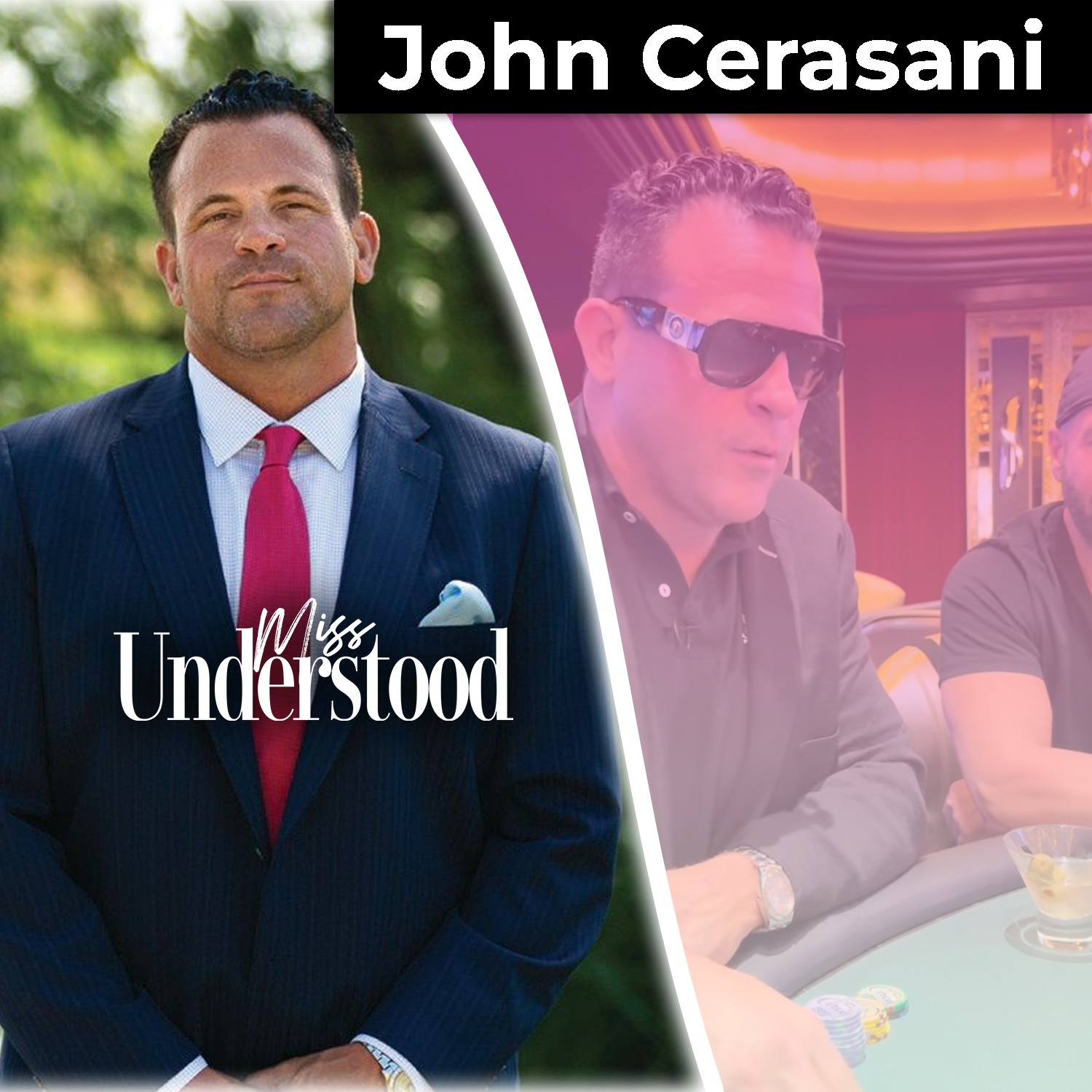
Loading summary
Transcript176 lines
- [00:01]
Wix Advertiser
Wix is the website builder that just keeps on giving. It's giving.
- [00:05]
Ali Jackson
I just built my whole site in under an hour.
- [00:07]
Wix Advertiser
It's giving. I actually made that.
- [00:10]
Rachel Yukatel
Whoa.
- [00:10]
Wix Advertiser
It's giving.
- [00:11]
Ali Jackson
Our sales are through the roof.
- [00:13]
Wix Advertiser
So whether you need help expressing yourself or just need something to make your life easier, Wix has you covered. Try it out@wix.com.
- [00:24]
Ali Jackson
If you're a podcast host. Listen up. This one's for you. My name is Ali Jackson. I'm the host of Finding Mr. Height, a dating and relationship podcast that I've been doing for four years now, sharing my positive and practical approach to dating that's built on my own life experience. And I wanted to share another experience that I've had, my secret behind monetizing my show. It's called Red Circle. And I was just telling my colleague about how much I love their platform. With Red Circle, not only am I getting a seamless hosting experience, but I also love the support I receive in ad sales. It's not just typical ad sales either. It's targeted opportunities based on my show and my life. And the platform is super simple. You just set your preferences, and Red Circle matches you with sponsors that align with your show. You can vet every opportunity, and their platform gives you great analytics. More recently, too, my Red Circle team has brought me opportunities outside of my podcast on social media to really augment the podcast partnerships. Bring them full circle. I just can't recommend them enough. If you want to give it a try, go to redcircle.com to get your free trial. That's redcircle.com for a free trial today.
- [01:22]
Rachel Yukatel
On Misunderstood with Rachel Yukatel. I think that people see you surrounded by blackjack tables. Women, money, power. I want to understand who you are behind that Persona.
- [01:38]
John Sarasani
If you're pretty and you're on Instagram, people are gonna call you an escort. And if you're high strong, people are gonna tell you you're on cocaine. Those are the two things.
- [01:47]
Rachel Yukatel
You're obviously very smart, and I think that is dumbed down a lot in what people see of you, because they mostly only see of, like, the gambling stuff. And people don't get it. So they just are like, oh, whatever. It's lucky.
- [02:00]
John Sarasani
In the insurance industry, most companies operate with about a 20% profit margin. But my profit margin was reversed. It was more like 82%. Then, boom, out of clear blue sky, my mom passes away, and I just started looking at life in totality with the consideration that it's not infinite. Life keeps going here. And now she's not a part of it. The people that actually know me will say, I'm a good father. That's my biggest flex. My kids. People don't really understand some of the adversity I've had to face with my kids. Last night, I was down. I only had 100 grand. Here I was down to my last 15 grand. I kind of like chalked it up like, we're gonna lose 100 grand at the Red Rack.
- [02:48]
Rachel Yukatel
Every once in a while, I do an interview with somebody and they completely flipped the script on who I thought they were. And that's exactly what happened when John Cerisani joined me for a conversation on our show. Most people know John as the larger than life guy from Instagram, the entrepreneur, the gambler, the storyteller with over 800,000 followers who tune in for the lifestyle, the wins, the energy. But what I learned in this conversation is that what you see online is only a fraction of who this man really is. Behind the Persona is someone who built his life piece by piece with grit, sacrifice, and a level of hustle that you don't often see anymore. John didn't just get lucky. He worked. He built businesses from the ground up. He made smart moves, he took real risks, and he showed up every single day with the kind of determination that cannot be faked. And he believed on the most important thing there is to believe in himself. Having a conversation with him, I finally got to understand how he did it and why. He gives some of the best business advice I've heard in a long time. Not the cliche stuff, but the real lessons that come from falling hard, rebuilding, winning big, and learning exactly who you are along the way. He breaks down how he made his money, how he navigated the highs and the lows of entrepreneurship, and what it actually takes to carve your own path without losing yourself in the process. But what struck me most was the human being behind the brand. John talked openly and bravely about the rumors, the accusations, the viral clips, and the online storylines that people think they understand and choose to talk a lot about without really knowing the truth. And instead of hiding behind the PR spin or playing into the hype, he told the truth. The real truth. Because sometimes being misunderstood isn't about controversy. It's about people never taking the time to see the person underneath it all. This conversation made me realize just how layered he is. He's funny, he's sharp, he's self aware, he's a strategist, he's reflective. And yes, he's inspirational, too. This episode is for anyone who's ever looked at someone online and assumed they know the story. It's for anyone building a business, chasing a dream, or trying to tune out the noise long enough to figure out who they really are. It's for anyone who's been misunderstood and anyone who's ready to understand John Sarasani in a way you've never seen him before. I walked away from this conversation really liking him, and I think you will, too. So please enjoy my sit down with John Cerisani. John, thank you for joining me today on Misunderstood. I have wanted you to be on the show for a very long time, so it is my honor and my pleasure to have you here.
- [05:49]
John Sarasani
I'm excited to be here now that I saw your intro. I mean, if I could get in front of Blagojevich or Kato and make it on the intro, that's my goal in life. So I'm trying to knock it out of the park for you.
- [06:01]
Rachel Yukatel
Amazing. I love that. Both of those were two. Some of my favorite interviews. They're my favorite people. Great, great people. So anyways, it's a pleasure. Thank you for joining me from Las Vegas. I think that people see you surrounded by blackjack tables, women, money, power. You're gregarious. You walk into a room, people know that you're there. I want to understand who you are behind that Persona. So can you start by, like, your childhood, where you're from, the family you grew up in, so we get to know you a little bit?
- [06:32]
John Sarasani
Sure. I grew up in Schaumburg, Illinois. Anybody that follows me knows I talk about Schaumburg a lot. And my dad was a high school PE Teacher. My mom was a Park District preschool teacher, and she actually retired early with disability because she. She had multiple sclerosis. So that was a big part of my childhood, you know, watching my mom go through that. But I would say me and my brother were both really good at football. And my dad was a head football coach, so kind of football dominated our family. My brother got a full ride to play a quarterback at Wisconsin. I got a full ride to play tight end at Notre Dame. Wow. And, you know, when you're. When. When. When you're good at something as a kid, especially me, when I was, like a foot taller than everybody, I've always been just big. And then I was athletic, too. So that kind of dominates everything in your life. And what's interesting right now is my son is 17, and he's not big. He takes after his mom. He's not built like me. At all or anything. And you know, he's on the football team. It's fine. Is on a really good football team. But football does not dominate his life. So watching him be able to do this, all this other stuff, it's almost like I live vicariously through my son. Oh, you're in this multimedia club. Oh, shoot. You're in this, you know, political science group, you know what I mean? All this stuff that I never like, you know, bother to do just because it was all football, football, football. It's kind of fun for me. But yeah, man, I went to college and then after college, I had an injury in college, ended up getting a job in White collar America and insurance and ultimately ended up leaving that job to start my own company and give what I call, I call myself. I gave myself a 2000% raise. That's what that means, right.
- [08:09]
Rachel Yukatel
I want to get into all that. But when you, before you went to college, like what did you think you wanted to do? Did you want to play professional football? Did you want to be in world?
- [08:19]
John Sarasani
Yeah. So the plan was always, always for me to play in the NFL. That, that was always kind of, kind of the plan. But I did have a knack very early on for, for making money. I was always money minded. Even like, you know, just a situation I would think about like the profit, the profitability of like any endeavor, you know what I mean? So yeah, the plan was to play football, but you know, when that got taken off of the table, me getting into a sales career, something commission based, was not fetched concept.
- [08:51]
Rachel Yukatel
Right. Okay, so where did you start working then? What'd you study in college?
- [08:55]
John Sarasani
I studied social policy. Not too many people realize this. So at Notre Dame I was an undergrad business major, but I ended up transferring to Northwestern and finishing there. And at Northwestern they actually don't have an undergraduate business school, which shocks a lot of people because they have a very, very good MBA program called Kellogg, but they don't have an undergrad business program. So I transferred Northwestern for football reasons and ended up picking the major of social policy, which is, which is cool. I find myself using little tidbits sometimes that I learned in like, you know, sociology, sociological classes or you know, things like that here, here and here in conversation. But I never went into that as my career, from a career standpoint that that would have been geared to like running a nonprofit or working for maybe a government agency.
- [09:40]
Rachel Yukatel
Right, right. So it's interesting because my ex husband went to Penn State, played football, thought he was in the NFL, played for like Oakland Raiders, got injured, went into insurance.
- [09:52]
John Sarasani
Oh, really?
- [09:53]
Rachel Yukatel
Yeah. Which is what he's still in now. And I feel like that at the time was especially what, what guys, athletes would pivot into this insurance industry. So how did you just do it? Because you were trying to make money and you thought this was an easy way to make some commission or like, did you kind of like it?
- [10:10]
John Sarasani
Yeah. So usually when you hear about ex athletes getting into insurance, it's a different end of the insurance business. I don't, I don't know anything about your ex husband, but usually it's like, okay, they're going to use their network, store like a Northwestern Mutual Agency or, you know, or whatever, and sell life insurance and whatever to their best network because they're popular people, they know a lot of people. What I did in insurance was nothing like that. I actually got a job working in the employee benefits arena. So at a young age, 23 years old, I was out presenting health insurance packages to companies with a thousand employees on why they should use us instead of like Blue Cross or United Healthcare. So it's really cool because at that time there was a lot of, like, small insurance companies. There's been a lot of consolidation now since. But the company was called Great West Healthcare and they definitely weren't dominant and we were competing against companies like Blue Cross. So I learned at a young age how to compete against much bigger companies that maybe look a lot better on paper. And, you know, ignorance is bliss sometimes, man. I, I, I look back at it and I'm sitting there doing the sales presentation, you know, believing everything coming out of my mouth, but I'm looking back at it. I was so naive. Like, I'm sitting there talking about how great we are. They could go work with Blue Cross for 20% less than premiums, but I was still getting my fair share. And I want to take that back for the world because that company was one of the few at the time. It's probably none that do this now that hire kids right out of college, train the heck out of us, not only on product knowledge of the industry, but also professional sales skills. And it really enabled me to pivot out and start my own company a few years later.
- [11:46]
Rachel Yukatel
So when you did that, how did you know that it was time for you to move on your own? How did it, how did you have that confidence to say, oh, I could do this?
- [11:53]
John Sarasani
Yeah. So in insurance, there's a wholesaler. So Great west was a wholesaler. But the intermediaries are what we call brokers, and they're in between us and the client. So the client is like the cfo, the HR director, or the president of whatever corporation the broke. The broker represents them and then us as the insurance wholesaler, we're really pitching the broker and trying to convince that broker to recommend us to his client. Okay. All ends of the industry are good in different ways. But I made the move to work at one of the biggest brokers in the world, Arthur J. Gallagher, when I was 24 and a half, 25, right around there. And it was the best move I ever made because I'm like, look at me, I got a job at Gallagher. Let's go. And anyone in the industry would know exactly what I mean by this. That's a Flex. You're 25. 5. You just got a job at Arthur J. Gallagher. Dude, you, you've arrived, bro. That, that's a big time job. And once I got there, Rachel, I'm looking around and it was kind of like the wizard of O. Like, like, okay, now that we peeled the curtain back, there's nothing really special happening here. Like, like these 40 year olds and 50 year olds, I know just as much as them. I, I'm just as smart as everyone here. And oh, by the way, I'm still working at 5pm on a Friday, working my rear end off, coming in on the weekends. I work in circles around these guys and I'm just as smart as them. So over time, you know what you're getting paid versus what you're bringing in in business becomes disproportionate, especially if you believe that you're doing it independently. You know, I was a superstar. I was bringing $800,000 of new business revenue to that organization. Organization. I was only getting paid about 140 grand. 140 grand is a lot of money, especially back then. But it turned into this conversation being, wait, are they paying me 140 or am I paying them 660? What are they doing for that 660? And once I started looking at it that way, okay, what are they doing? Well, they're giving me this office. Okay, Big deal. Oh, the Gallagher name, The Gallagher name. I'm getting these meetings because I say I'm with Gallagher. And that actually has a lot of truth to it.
- [14:02]
Rachel Yukatel
Yeah, credibility.
- [14:03]
John Sarasani
It gets you in the rooms they're going to call me. And that's true. But for me, it didn't really matter because I had started this niche working with like small colleges and universities. And almost these colleges and universities kind of started to feel like if they're with a Gallagher. They're a small fish in a big pond, which is true in a lot of ways. So over time I'm like, you know what, I got a whole value proposition here that I could do on my own. I went in and asked my company, for whatever reason in my head, I thought If I made 180 grand a year, all my issues will be solved. I have the world by the, by the rear end and I'll be in good shape. And I went in and asked for that raise and they're very nice, but they basically told me not to let the door hit me in the ass. And I resigned. I resigned and everyone thought I was nuts, man. But it, it worked out. It worked out for me.
- [14:55]
Rachel Yukatel
So did you have the, like the knowledge to say, okay, I'm gonna ask for this raise? If they say no, I'm going to be confident enough to just start on my own? Or did it take you a couple months to like get off the couch and be like, okay, I really need to do this?
- [15:07]
John Sarasani
I probably could have left about six months earlier than I actually did. I. And it wasn't because I didn't have the confidence. It was more because I was listening to everybody else tell me that it's a bad idea, that I'm never going to be able to compete. And I use the term don't ask. Don't ask a fat guy for dieting advice. Okay. Some 400 pound dude eating donuts all day. Hey, what's your diet plan? I mean, that's kind of a stupid idea, right? Well, that's exactly what I was doing. I'm asking W2 employees that never did this, right? What, what they thought of being an entrepreneur and starting your own company. Well, it'll never work. Not only do they not think who's.
- [15:46]
Rachel Yukatel
Never taken a risk for anything.
- [15:49]
John Sarasani
Precisely.
- [15:50]
Rachel Yukatel
Yeah.
- [15:50]
John Sarasani
And then I realized two things at that point. Number retrospect, I realized two things. Number one, they don't have any knowledge to give you because they never did it. But number two, they even if they did agree that it's a good idea and you're gonna knock the COVID off the ball. They don't want to admit that out loud because I'm this 26 year old that's walking around that office looking up to these 40 and 50 year old, everyone loves me because I was like a sponge. Taking information. Taking information. You're smart. You. Have you ever read Dale Carnegie, how to Win Friends and influence people?
- [16:23]
Rachel Yukatel
Yeah.
- [16:23]
John Sarasani
Okay. So the principles of that book, I apply. I Didn't read that book till I was about 28. I was 26 at the time. But a lot of those principles isn't fun. When you read that book, you're like, oh, good, I already do that. I already did that. You know what I mean? And there was a few things that I did where I'd really put people on pedestals if I could get knowledge from them. Not in an insincere way either. So, you know, they see me as this young, you know, fun guy that's working his rear end. Oh, John's gonna go. Go, go get him. Let's go. And. Oh, God. Sir. Sonic came in on the weekends. Well, now it's like, all right, he's gonna go work for himself. Well, wait a minute, hold on. He's probably gonna make a lot more money than me if he does that. Wait a minute. No, we like him. And done. So they're never going to admit it out loud that, yeah, it's a good thing. So that process there probably cost me about six months, Rachel. But when I finally pulled the trigger, I mean, we're. Let's go.
- [17:15]
Rachel Yukatel
So were you completely on your own or did you have people that were kind of working with you? And also, could you take your. Some existing clients with you or you were starting from ground zero?
- [17:24]
John Sarasani
Couldn't take any clients. They had non compete laws that are probably a little less. I think they've been challenged now a little bit. But at the time, no, if I messed with any of these clients, I would have got sued. There was a few that maybe are a little bit questionable, but honestly, no one ever screwed with me because I left there in such good terms.
- [17:44]
Rachel Yukatel
Yeah.
- [17:44]
John Sarasani
That like, my old boss was kind of rooting for me a little bit to a degree. So he would have been the one to initiate. Dude, Sarasotani, you can't be steal. Seriously stealing clients. Let's sue them or whatever. It wasn't like that environment. But if I would have taken my whole book of business, there would have been a problem. And a couple kind of follow me down the road. Not immediately. That's good. But initially, no. However, the non compete said you're not supposed to be able to. To work on any prospective clients that your old employer had. Well, for that industry, everyone's a prospective client. How do you define the prospective client? So if they really wanted to mess with me, they could. I did things the right way, though. So we're okay. Yeah, I think if I did that now, it was kind of fun back then, Rachel, being under the Radar screen without people, like, viciously trying to tear you down. Now, if I do say anything that isn't exactly what someone wants to hear, I. I get basted.
- [18:42]
Rachel Yukatel
Right? So you end up building a very successful company, one that was bought from you, and you can tell the story that you essentially bought three times over. If you want to say it like that. Can you tell people kind of how. How you did that?
- [18:57]
Ali Jackson
And.
- [18:57]
Rachel Yukatel
And one thing I want to. I really want to hammer home is the fact that you. You're obviously very smart, and I think that is dumbed down a lot in what people see of you, because they mostly only see of, like, the gambling stuff, and people don't get it, so they just are like, o, it's luck or whatever. Counting cards or luck, whatever. And the thing is, is that what strikes me is you have never been afraid to get dirty and to hustle and to, like, do all the jobs. There are so many kids now that are so entitled. People in general that are so entitled, that don't want to learn by experience, they're just. They're like, oh, I'm above that. And I don't get the feeling that you have ever thought that you are above it. And not that you were below it either, but, like, just that you needed that. That knowledge to learn, to take in, to be a sponge. So that when it came at you later in life, you were like, oh, I've got this. I know how to do that. And that is such a really good quality and a skill that not many people take advantage of in learning. So I wanted to point that out because I do want you to give us some kind of business advice as you're telling us the story.
- [19:59]
John Sarasani
Yeah, you got it. I. I think as I grew my company, you know, it's trial and error a little bit. I'd hire people to do stuff, and. Because what's the first thing someone asks you? You own a company. It's this big flex. Look at me. I own a company. Well, your neighbor or, you know, your friend or whomever, what's the first question they ask? How many employees do you have? So I'm hiring employees when I don't need employees, or I can just do this stuff myself to, like, impress my neighbors about all these employees I have. This is stupid. I never really, you know, understood. And I wasn't building the company to sell at that point. So I hire this person for 50 grand, this person for 60 grand, for what? I could do the job better than them. And why am I even having them here? Now, once we grew to a critical mass, yes, I did have to hire some people that were well under the six figures as employees, but it was trial and error on the way. And what's really cool about it all for me is that in the insurance industry, for what I did, most companies operate with about a 20% profit margin. Okay, 17, to, like, 22%. Okay. And the reason it's that is because you're not an insurer. You're just an intermediary, like a consultant, a broker. So why is it only 17 or 22%? Well, because when these companies scale, they hire salespeople, and those salespeople are going to want a large commission. And now you've got to give them maybe 40% of whatever commission that or whatever revenue that they're bringing in. Okay, great. By the way, Gallagher, I said. I said 800 grand. They're only paying me 140. If they were paying me 40% of that 800 grand when I was 26 years old, I probably wouldn't have left there. So thank you, Gallagher, for having a crappy pay schedule, because that's. You know, seriously, I. I never would have left. There was no way I would have left that job if I was making 300 grand. No. No way in the world would I probably still be working there right now. You know, probably not, but. But I wouldn't have left. So I learned that not only when you hire a salesperson, you got to build resources around them if they're any good, too. So now not only am I hiring a person paying them 40% commission, I also got to be able to flex and say, okay, we got a senior account manager. We got this technology all, like, you know, stuff in their arsenal that we could offer to compete with companies like Gallagher that. That good sales rep wants to work for me instead of my much larger competitors. When you start looking at it and it's like, what a freaking. You know, I'm trying not to swear as much, but shit, show that. That.
- [22:28]
Rachel Yukatel
That.
- [22:28]
John Sarasani
That leads to. Okay, no, screw. And I trialed in there a few times. I'm like, why am I doing this? F this. I'm gonna sell. I'm gonna knock on doors. And I developed a niche working with small colleges and universities. And instead of hiring salespeople, I was a marketer and hired a marketing department. So we're not only having these colleges, universities, clients. We're now going to their trade shows. We're going to their business meetings, the regional ones, the national ones, the local ones, where I meet them. Over and over and over again. So they keep seeing my name. John Sarasani. John Sarasani. John Sarasani. And now, when the time's right, where they want to make a change, I'm on their list of phone calls. And I always presented myself differently than our much larger competitors that have been, hey, we've been around for 100 years. We got 40,000 employees. We got, you know, 150 offices internationally. All right, guys, that's great. How many colleges and universities do they have as clients, though? Do they specialize in just colleges and universities like me? That's my differentiated value proposition that actually matters to you as the client, because I don't know what their office in fricking Tokyo is going to do for your account here. It's not going to do anything. So why do they have that in their presentation that they have an office in Tokyo on this account? Why are they talking about 40,000 employees that they have when 39,997 of them aren't going to have anything to do with your fricking account? Okay, so I had to change that paradigm to the buyer. And once I did that, Rachel, holy cow. It took me a while to polish it, but once it was polished, lights out. Over 100 private colleges and universities as clients in 18 different states. And it was going. It was going. And then, boom. Private equity entered the insurance space. And like the Godfather, they made me offer I couldn't refuse. So I was 37 years old. I sold the company.
- [24:11]
Rachel Yukatel
Amazing. What if I told you that?
- [24:13]
Wix Advertiser
Ever see an idea so clearly in your head but struggle to make it real? We've all been there. With wix, you can build a website for your business just the way you pictured it. Get the best of both worlds with AI and drag and drop tools all in one place. Stay in your creative flow and use AI when you want, how you want. Create a website your way. Try it out@wix.com does your child stress.
- [24:40]
Ali Jackson
About returning to school? It's time to check out Oregon Charter Academy. Our online school transforms learning into an empowering journey for your student. They will thrive in a safe environment with a dynamic and responsive curriculum. With personalized support. You'll see their confidence soar and feel the relief of knowing you found just what your child needs. Enroll today@oregoncharter.org and see the difference. Oregon Charter Academy. What learning should be.
- [25:08]
Rachel Yukatel
Start managing your data, not your infrastructure. Unified, simple, secure. Welcome to Data Done Right only with the Pure Storage platform. Get started@PureStorage.com. the idea that you only get parasites when you travel to some exotic country is flat wrong. Millions of Americans carry parasites right now, often without symptoms. For example, it's estimated that millions in the United States have been exposed to Toxocara, a parasitic worm, yet most never even know it. Parasites do not need a plane ticket. They can enter through tap water, sushi, undercooked foods, or contaminated produce. Some strains live in all stages. Eggs, larva, adults hidden in your gut, releasing toxins that sabotage your energy and digestion. That's why I'm excited about Parafi. Kim Rogers, 30 day full spectrum parasite cleanse. The kit works by clearing parasites, worms, candida and heavy metals, targeting parasites in all life stages, supporting gut health, detox pathways and toxin removal. It's taken orally daily for 30 days with precise dosing. I'm actually doing it myself right now. I started with the lymph cleanse, then I'm doing the parafi. Wanna dive deep? I did a full interview with Kim Rogers, the worm queen herself, where we expose all the myths, understand the facts, and show how to protect your body. Listen to that episode if you haven't already. Meanwhile, go to rogershood.com and use the code Rachel to get 10% off of your order. That's R A C H e L for 10% off. Give it a. Maybe your body's missing link is hiding inside. Let's do this together. Again, it's rogershood.com R O G E R S H o o d.com and use the code Rachel for 10% off. Okay, so you're 37 years old. What made you finally sell it? Was it the money? I know that at this point was this one. You had lost your mom, so.
- [27:11]
John Sarasani
Yeah. So the model for selling a company before private equity entered the space was to buy a business for one and a half to two times their gross revenue. Okay, so let's say. Let's say you're bringing in $10 million. Okay, these are fake numbers. But let's say your company brings in $10 million of revenue. They're gonna buy your company for 15 to 20 million. Okay, now that's a good deal. If you have a 20 profit margin and you're the owner making. Literally making only 2 million on that 10 million. And now you can sell it for 20 million. Boom. That's not a bad deal for a guy like me, though. I had a huge profit margin because I never hired these salespeople like I talked about earlier. So my profit margin was reversed. It was more like 82% profit margin.
- [27:57]
Rachel Yukatel
Oh, wow.
- [27:57]
John Sarasani
Where the industry again, is the opposite of that. So for me to sell the company at two times gross revenue doesn't make any sense. So if we're at 10 million and I'm making 8 million a year and we could sell the company for 20 million and I'm in my 30s, why the heck would I do that? I'm going to make that in the next two and a half years. Why would I grow in, by the way? So that don't make any sense. Well, that was the model. Then private equity changed everything. Private equity changed everything. They came in and said, we're not going to buy a company like that on the gross revenue. We're going to buy it based on a higher multiple of ebitda, which in this circumstance is the same as profit. So we're going to buy a company for 10 times EBITDA. And I get that phone call. I go, these guys are out of their freaking minds. There is no way they're gonna buy the company for 10 times EBITDA. And I told him, I go, guys, you think you know what my profit margins are? You don't. They go, it doesn't matter. We're buying it for 10 times profit. I go, no, you're not. Because in my head, I'm still thinking of that model of the two times gross revenue. And, and for me, it was a game changer. For everyone else in the industry, it wasn't really a big. Because everybody else in the industry was like the same difference. If you're at a 20 profit margin and you could sell it for two times gross, the math is the same where that's the same actually as 10 times EBITDA first. So for that it was kind of the same, but for a guy like me with huge profit margins, it was a game changer. I was in conversations in 2014 with this company that hit me up. We're going back and forth and we're like, all right, we're really going to do this. We're really going to do this. Then, boom, out of clear blue sky, my mom passes away. So that kind of, you know, just. We tabled everything at that point. And I didn't know if I was going to sell it or not because I, like I said, I. I really did have a cash cow and I really enjoyed working at the. Doing the. What I was doing with people I was doing it with. But after my mom passed, I just started looking at things, like, a little bit differently in life. I'm like, dude, I'm some guy from Schomburg that was literally making 140 grand a year, nine and a half years later, begging to please pay me 180. And they're offering me money now that I'm really never gonna have to work again for the rest of my life if I take this. And I just started looking at life in totality with the consideration that it's not infinite. You know what I mean? You're only here for a set period of time, which I think anybody that's lost a loved one maybe sees it a little bit differently because I never really saw it that way, and I never even thought about it. Then when my mom died, it's like, wait, wait, wait. Hold on. Life keeps going here, and now she's not a part of it.
- [30:34]
Rachel Yukatel
Yeah.
- [30:35]
John Sarasani
We only got so much time here, you know what I mean?
- [30:37]
Rachel Yukatel
Yeah. And. And I've been through that myself, and I. I think you start to realize, like, what's important, because for a long time, it's the power, it's the drive, it's the money. And a lot of things fall to the wayside because you're becoming successful, even if it's in the name of taking care of them. Right. I mean, were you married at this. Kids were alive.
- [30:56]
John Sarasani
Yeah, Yeah. I. Yeah, but I. We were. I was not married. We had just gotten divorced. That could also kind of help too. I mean, when I sold the company, my kids were older, but when I started the company. Yeah. Two different things, but, yeah. No, my kids. I wasn't married at the time I.
- [31:09]
Rachel Yukatel
Sold it, but I mean, I'm assuming it took away time that you could have been spending with your kids because you were working so much.
- [31:16]
John Sarasani
Totally.
- [31:16]
Rachel Yukatel
Yeah.
- [31:16]
John Sarasani
That was the mindset. I was looking at my two kids, and then my mom's gone. It's like, what am I doing? I'm working my rear end off. And then when the numbers came in, where I just did the math on this whole thing, even though I loved the company, I was like, holy cow, let's change things. My daughter was. What was she probably at that time? She must have been. My daughter was like 12 and my son was like 8 at the time.
- [31:36]
Rachel Yukatel
Right.
- [31:37]
John Sarasani
So this was a game changer for me in terms of that for sure.
- [31:39]
Rachel Yukatel
So you end up selling this company, making an incredible amount of money, but you stay on as an employee and take some stock.
- [31:47]
John Sarasani
The absolute worst, by the way, staying there five years. Five year employment.
- [31:51]
Rachel Yukatel
I would have. I would have thought you wouldn't, like, this is cool, because now I still have a job I like that you are not like that.
- [31:58]
John Sarasani
It was cool. And it is cool for the first like minute and then you have to.
- [32:03]
Rachel Yukatel
Report to someone else.
- [32:06]
John Sarasani
So I was involved in what's called a private equity roll up, where I'm not. They didn't just buy my company and operate my company. They were buying my company and other companies like mine and rolling it into one bigger organization. So at first that was great. But over time you start to realize how much people like, animosity is a mother effort. Rachel U of all people probably know that very well. You know, envy and jealousy. So again, I'm 37 years old. Who else is selling their company? 60 year olds. Those 60 year olds, guess what they have five partners. Guess what else they have 20 profit margins and not 80 profit margins. Okay, so they're coming in, look at us, we got 70 employees. We're part of this company now. We're gonna, we're gonna reply all on the emails it all at all the damn company meetings. We're gonna ask the most questions. We're gonna be the, you know, look at us, look at us. Look how busy we are. It's fine, dude. You're probably still working there, bro. Like, like, that's cool, dude. But like, over time it's like, dude, what are we doing here? You know, you got to work side by side with these people and they're like trying to flex on you constantly. And not everybody knows, not everybody freaking knows the economics of everybody's deal. So all you could really see amongst your co workers is how big they are and how many employees they had that they brought into the organization. You don't really see like the actual math behind it. But for me, for me, people figured it out over time because I would have like, you know, maybe a holiday party at my condo or something. I have this beautiful condo in the Trump Tower in Chicago. So like little things like that, they'd kind of see. They're on Facebook. Wait, where'd you just go on vacation too? And you know, I'm sitting there with the same job title as them and they're like, wait, wait, what the hell's going on? Did you come for money? You know, wait, oh, your dad's a gym teacher, huh? Like that, like, over time they're like, it turns into like, f this guy. You know what I mean?
- [34:02]
Rachel Yukatel
Right, right, right. So you stay on, you had some stock in there, long story short, and ends up tripling, I think. And you, you keep making money is the bottom line. And eventually, I'm assuming you get out. Completely correct.
- [34:15]
John Sarasani
Yeah. Yep, yep. So I, So I took 35% of my deal in stock and my timing was, was crazy because when private equity firms sell, a lot of times what private equity will do, you either go public one day or you sell it to another private equity firm, a bigger one. And when it sells, it's. When it sells to a bigger one, it's called an event. And in that event is a liquidation option, usually where all the shareholders could take some money off the table. Okay, so this private equity firm sells to this private equity firm two months after, I guess I closed April 30, selling my company, like July 8 or something. We get an email saying, hey, shareholder conference call. We're on the stamp. Conference call. And other people there had been waiting seven years for this to happen. Literally seven years. I waited two months. Oh, by the way, we're now going to be backed by a different private equity firm. And the stock just tripled as a result of that. Wow. So 35% now times three, that's 115%. So that minority stock is now worth more money than my whole deal combined. And at that point, we were allowed to take half the money off of the table if we wanted to. You had 30 days to make it. Make a choice. Well, my lawyer, my accountant, everyone's like, dude, bird in the hands worth more than two in the bush. I go, dude, I gotta work here for five more years. Like, I gotta stay motivated. Like, I wasn't planning on having this money anyway. And by the way, I'm gonna have to pay short term capital gains on it because we just converted my company into buying stock in their company less in less than 12 months. So I would have had to pay a much higher tax bracket than the rest of my deal. So I'm like, screw it, just leave it all in there. Everyone thinks I'm nuts. Well, at five year mark, I'm out of here. And at that five year mark, they're going to buy me out of that stock. Okay, what year? Four and a half. This private equity firm that bought us now sells it to a different private equity firm. So I'm literally on my way out the door to leave there, by the way, not getting along with very many at that company. At that point. We're all kind of. And, and largely because I was, had a lot more money than everybody else or a lot of people at least. And that company triples again, that stock triples again. So that 115 now tripled again. You follow me or. Yeah, the 105 turned into. It wasn't 115. 105 turns out of 315. So now look at all this freaking money I got and not too many people. This is the part of the story I usually leave out just because it gets in the weeds a little bit. But what was also interesting was that new stock certificate. When we sold, when we sold the new, the new stock certificate governs how the shares are going to be paid out. And before it was, the day you leave, they buy you out 100%. Well, this new stock certificate was like, no, no, no, what we're going to do is the day you leave, we're only going to pay 40%. The next 30% is 12 months from now at fair market value. 12 months after that is another 30% at fair market value. Well, that stock kept going up during those two years. So now I had sold the company seven years earlier and my net worth is still going up on this damn thing. And actually it was even longer than that because when I left it was under some kind of craziness and we end up working out. Lawyers had to get involved and anyways, they ended up having to pay me for an extra year and a half. So technically, even though I was at that four and a half year mark, I got paid for another year and a half. And then that was actually considered my, my last day. And then, and then the two years after that with the 40. 30. 30. So I was, I was literally getting paid in 2023. So.
- [37:51]
Rachel Yukatel
Oh my gosh. All right. So after all this happened, I mean, I have two questions. What was your relationship with money at this point? Because you had so much you probably didn't know what to do with. But also, I know you like to work. You can tell you like to be involved. You're not just going to sit around and do nothing. So what did you think your next move was going to be?
- [38:10]
John Sarasani
I didn't know. I didn't know. I started dabbling and I started dabbling in venture capital, doing angel. And at that time there was a million deals going on everywhere. Interest rates were super low. So people were just investing money because you could borrow it for almost nothing to invest. It started throwing my name in the hat and a couple things. And by the way, anybody out there that if you don't have friends and you want to find, make new friends or a lot of them, change your LinkedIn bio to say angel investor or early stage venture capitalist. You are going to make so many new friends so fast, let me tell you. And I Ended up. It was interesting. Somebody hits me on LinkedIn because they're just trying to be relevant, really, to be honest with you. They knew I played football. Hey, Aaron Rodgers just started this company. You should get involved. Well, I don't know anything about this space. Aaron Rodgers, yeah, he's involved, but like, he's not really running the company. And now I see how these startup companies will use celebrities to put them on the capitalization table as owners, to, to get people to invest. Really, this is exactly what happened with me. But I end up getting in this come becoming really good friends with the founder. He's part of the lac. You might know him actually. He's part of the Los Angeles scene and he used to be an actor and blah, blah, blah. Before I know it, I'm just some dad from freaking Schomburg, like watching Lakers games with like Zac Efron and stuff. I'm like, who am I, right? Yeah. And it was pretty. And it was pretty. It was pretty cool.
- [39:38]
Rachel Yukatel
Cool.
- [39:38]
John Sarasani
Now Rachel in Chicago and Schaumburg, like, you know, the big dog is like, who's someone good in your network you want to meet? Oh, hey, that guy owns that steakhouse. Oh, hey, that's that guy that owns a couple nightclubs. Or this guy owns three car dealerships. Dude, you go hang out in la, bro. That guy owns Kettle one. No, their family started Kettle One.
- [40:00]
Rachel Yukatel
It's a different level.
- [40:01]
John Sarasani
Yeah, yeah, it like literally is. So as I'm going out to LA more and more often, I start ending up in these circles. Make good friends with a guy that was a childhood actor, his girlfriend at the time, now they're married, actually owns one of the big sports teams there in la. Dude. All of a sudden, man, I go from this dude that didn't know what he wanted to do to his life to being in these rooms with literally billionaires. And I'm being widely accepted by these people, Rachel. And I think it's, it's. I like to think it's. I don't even know what I like to think. But, but, but, but my opinion is that so many people in LA are full of that. Here's this guy in Chicago that's actually not full of. Oh, he said he was going to throw in 50 grand, this stupid ass freaking startup idea. And he actually followed up and did it. And then people start talking, oh, hey, that's a cool. And now they see you in the room with this person. Then they see you in the room with this person. Boom, boom, boom, boom, boom. And it turns into all these different things. You know, I had a guy, Jaleel White actually told me this. He's like, dude, it's not the culmination of like one thing you do. It's. It's in totality. And at some point it becomes like exponential.
- [41:14]
Rachel Yukatel
Right?
- [41:14]
John Sarasani
Yeah. So. So that's what happened. And then at the same time, I decided to write a book and I started like doing a podcast run to promote the book. And at that point I started to realize I have something kind of going on here with social media.
- [41:31]
Rachel Yukatel
Right up until then, you hadn't done much with it.
- [41:34]
John Sarasani
Not really.
- [41:35]
Rachel Yukatel
Like, you know, what year is this? You're talking about?
- [41:38]
John Sarasani
2022. Between 2020 and 2022 recently.
- [41:42]
Rachel Yukatel
Okay. And as of today, you have like over 800,000 followers on Instagram or something. Is it. Is the book you're talking about called the 2000% raise?
- [41:51]
John Sarasani
Yep, it's this one here. And how about this for a name drop? The reason I even named it, this is one of the things that I've noticed that's really cool about like actors and celebrities and just athletes and stuff. They think it's cool to meet business people as much as we think it's cool to meet them. At least the ones I may do, because the reason they're in that room is because they're business minded. At least I'm sure there's the ones that don't give two shits. Right? Yeah, but, but it was actually Zac Efron that said that to me. He's like, he's like, so wait, you asked for 180 grand off of 140. That would have been like a 25 or 30 increase. He goes, yeah, I didn't take it though. And he goes, okay, well what percent raise did you give yourself when you actually ended up on your own? And I never thought about in that those terms before. And I go like 2000. He's like, what? And then my other buddy Ryan Ratman, who introduced us, he looks at me, goes, 2000%. And then it kind of just caught and I started like, I started name dropping that then. And podcasts I was on and everything else, and it turned into sold 2000% raise initiative.
- [42:53]
Rachel Yukatel
And is the book about how you got there and the mindset of being.
- [42:57]
John Sarasani
Yeah, it is. So initially I wrote this book called paid training in 2011. Both are available on Amazon. And this book is about entrepreneurship and it's about, hey, f corporate America, you're a pawn. Work for yourself. They're going to try to Convince you you can't compete. Sound familiar? And you're able to go and compete. Here's exactly how I did it. And it's filled with really, really good tips. This book was supposed to be just a new version of this, right? But now in 2022, it's going to be my victory lap. Like, hey, here's. I got more to offer you now than I said in this, because I was.
- [43:34]
Rachel Yukatel
Yeah, yeah.
- [43:34]
John Sarasani
You know, and as I was writing it, I realized this is so much different than everything in that book. And it just kind of morphed into 2000% raise instead. Now, that said, when young people read both of these, a lot of times young people like this one better.
- [43:48]
Rachel Yukatel
Okay.
- [43:49]
John Sarasani
Because they could feel it. The energy in my voice. You, like, feel the. You feel the grit that I was in the thick of it. That at that point, with, like, a chip on my shoulder where this is like, hey, I made it. You know what I mean? But both of them are filled with really good tips.
- [44:04]
Rachel Yukatel
Amazing. We'll put the in the show notes later. The Both books and links to the book so that people that are listening can get. Can get those. So at some point, how the hell did you get into gambling? Is this because you had so much money and you decided you could go waste it in Vegas? Like, tell me the first time you gambled.
- [44:23]
John Sarasani
Okay, so I've always been good at math. I've always been really good at blackjacking craps. And it was. So I sold my company. Then Covid hits the world, kind of stops during the pandemic. I sell my company that do the employment contract. Then we go into the pandemic, and I'm sitting there trying to promote my podcast, or not podcast, going on podcast, promote my book and everything else. Well, I'm talking about entrepreneurship and the freedom of being an entrepreneur. And, Rachel, I hadn't even mentioned gambling once, and I was at, like, 200,000. I call these people my OGs. The. The first couple hundred thousand people, like, were following me only because entrepreneurship advice.
- [44:58]
Rachel Yukatel
Okay, okay.
- [44:59]
John Sarasani
And then. And then it kind of morphed a little bit into, like, some lifestyle stuff. But, like, it was one post at, like, 2 in the morning. I met the Venetian. And this girl I was dating at the time, she wanted to go play out at the regular tables, not in high limit. And I sit at the damn table with her because she wanted to play $25 chips. And you can't do that in high limit. I sit at the table with her, watch finger play these $25 chips Rachel at blackjack. And there's a continuous shuffle machine, meaning that it just keeps going. There's no beginning or end of the shoe. And then I see her only getting paid 6 to 5 on blackjack. And then I see her, she's trying to call even money when she had blackjack and the dealer had an ace and they wouldn't let her take even money because the casino is already screwing you on 6 to 5 versus the 3 to 2 payout. So taking even money is actually a bad deal for the, for the casino in that shift. But it's just greed by the casino. And once I see that happen that they wouldn't let her take even money, I get up, I grab my freaking phone, I'm walking through the casino. And I called that area of the casino gen pop, or the general population. I go, guys, they're screwing you guys out here. There is no way you could freaking win. They don't let you do this. They don't let you. And I just let go off and I had a few drinks and then look at it. Go to bed, wake up the next morning, like a half million views. And then the comments were everything. Like, he's right FF Vegas. Like, people are going off and stuff. And then I realized, holy cow, I got something here. Because I just spoke reality here. A lot of people wait, like, wait, Vegas does that. No, they don't screw you over. No, literally, guys, they're taking advantage of you if you're not a high limit player. Like, if you bet a hundred dollars a hand, you get these rules. If you bet less than that, you get these rules. And these rules are a lot worse. And that's how it came off. And not rehearsed or anything. Most of my stuff's not. And then at that point, I started leaning into the gambling stuff more. And then there were certain milestones that kind of happened that kind of like what Jalil said. It's the culmination of things. The comedian Bert Kreischer did me a really solid thing. He invited me to play in the celebrity blackjack tournament. And I put literally 220,000 followers at that point. And I literally thought I was going as an audience member. I didn't really know what he invited me to. Yeah, most actually hang out and play them. There's like maybe 15 people there. It's like Anthony Pettis, Baker Mayfield, like, you know, Brooke Crusher, Tom Segura, Jason Kelsey. Like, that's who I'm with here. Barstool freaking takes a picture of it. Post it. But so that stuff goes viral now people are, you know, seeing me as a scambling guy now instead of just like, everything else.
- [47:37]
Rachel Yukatel
Right. It's fine.
- [47:38]
John Sarasani
Which is fine.
- [47:39]
Rachel Yukatel
So, wait, is there some skill to this? Or, like, tell me.
- [47:43]
John Sarasani
Yeah, there really is. People don't like to think that, but there is. There's ways to play blackjack where you could really reduce the edge that the house has on you to. To less than 1%. It's like 0.26 of 1%. Okay. Once you do that and you play, it's called perfect basic strategy. Perfect optimal strategy. Some mathematicians and actuaries put this thing together back in the 1950s, but a lot of people don't bother because they just want to go with their gut.
- [48:09]
Rachel Yukatel
But are you saying, like, don't hit on, you know, if they're showing a five or whatever? I mean by that? Okay, yeah.
- [48:16]
John Sarasani
It's all based on expected value outcomes for the long haul. So if you play it perfectly, here's when you should split, here's when you should double down. It's based on what your two cards are and what the dealer is showing as his or her up card.
- [48:27]
Rachel Yukatel
What about the outcome of people after you that are hitting or, you know, taking away cards that the. That the dealer should be, you know, busting on on their own?
- [48:36]
John Sarasani
So that's a misnomer. So a lot of people think people are screwing up the deck, and they are if it screws you up. Because, like, hey, if this guy hits on a 14 and the dealer was showing a 6 and he gets a 10, and that 10 would have busted the dealer, you see it, that just screwed us up. And you hate that guy. You get pissed. But the reality is him taking that hit could have helped you as well. There's really no. No way to know, you know? So people screwing up the cards for you. Yeah, it sucks. But mathematically, in the long run, it's not going to matter. You're just going to notice it when somebody does that. You're going to get pissed at them. So you don't, like, a lot of people don't like to play with people that don't play what we call by the book.
- [49:14]
Rachel Yukatel
Right? Okay. So there's no counting cards. There's no gut feelings. This is just a mathematical thing. And you're following by the book.
- [49:22]
John Sarasani
So counting. Yeah. Yes. But a lot of people know what I just said. I'm playing basics, right? The differentiator for me is the money management piece. So what I look at is say, hey, guys, Listen, what do you have control over? You have control over how much you're going to back bet and how long you're gonna play for. Okay, Rachel, if me and you were like, you know, go into the hallway right now and flip heads or tails, it's 50. 50. Right. But if I said one of us gets to pick how much money you're gonna bet and how many times we're gonna play or just could end it or be get stop, or you can just decide when we stop, would you want to be that person or would you want me to be that person? You'd want to be the person that has the. The ability. That option, right?
- [50:02]
Rachel Yukatel
Yeah.
- [50:03]
John Sarasani
Okay, well, on a calculator that doesn't show, it would still. They would still say it's 50. 50 game. And the calculator. You know what I mean? On a calculator that doesn't show anything. Okay, but we all know that's an advantage. So if you could be disciplined enough to stop when you're up, but also bring enough money with you to survive the ups and downs. Because in blackjack, it's just like flipping a coin. You might bet on heads, and he might get 10 tails in a row. Well, most people didn't bring enough money to survive that variance, and now they're out. Okay, so you bring enough money, don't try to triple it. Try to win 30 or 40% of it. And then once you do, make a little bit of a run, and then if you start giving us something back, just stop. All right? And I call that the Sarasoti Rules. It's. It's a pamphlet that I have available. I actually. I don't know if. I don't know if you get it at this moment, but. But, you know, it goes over that. And once people read this, it changes your entire paradigm, and a lot of want to hear it. You know why they don't want to hear it? Because they're betting $200 a hand, they're going to Vegas with two grand, and they're wondering why they lose the whole two grand literally every time they go, well, guys, because you didn't bring enough freaking money.
- [51:12]
Rachel Yukatel
Well, or would you suggest to someone like that that they should bet smaller or that, you know what the other. Well, answer that first.
- [51:19]
John Sarasani
You should have 100 times whatever your betting increment is. So whether that. Whether that means you're going to bring more money or reduce your bet, your Bankroll should be 100x of whatever you're betting. So if you. If you. If you Bring. If you're about 100 bucks a hand, you should bring 10 grand. I'll tell you right now, people that are about 100 grand, 100 bucks a hand, don't, don't bring 10 grand. They bring like three grand and that's why they lose it.
- [51:41]
Rachel Yukatel
Got it. And is there a strategy as to, if you're down by a certain point that you just say to yourself, all right, I'm done for the night and I'll come back?
- [51:49]
John Sarasani
Yeah, yeah. I look at it as a war, okay? So when I go to Vegas, I'm there Thursday to Monday, and it's a war. Okay. We're gonna lose some battles along the way. All right? So this session, hey, dude, we just lost. Get up, dust yourself off, don't go on tilt and make this worse, okay? You brought enough money where you have time to recover, okay? A lot of people, it's hard to do because they either live in Vegas or they go to their local casinos. I'm gonna tell you guys right now, you have literally no chance of winning at local casinos. And the reason is because it's a finite time, you're actually there. The Rivers Casino in Chicago has my fricking number. And the reason they have my frickin number is that I'm only there for three hours. So. So when you're down in a session, you're now trying to make that money back. And if it doesn't go your way, it doesn't freaking go your way. Whereas if I'm in Vegas for three days, hey, I got, I got till tomorrow to bring this.
- [52:40]
Rachel Yukatel
Yeah.
- [52:41]
John Sarasani
And that's why it's hard to win at local casinos. So I always say you should do a three or four day trip trip. Understand that you're going to lose some battles along the way, but when you leave Vegas and get back on that flight, follow these rules. And ultimately, if you're up a dollar more than you came with, you won the war. So that's how I look at it.
- [52:59]
Rachel Yukatel
Would you ever play slots?
- [53:01]
John Sarasani
No. No.
- [53:02]
Ali Jackson
Okay.
- [53:05]
Rachel Yukatel
We don't have to go further than that. Okay. What's the most money you've ever won playing blackjack in one day?
- [53:11]
John Sarasani
260 grand.
- [53:12]
Ali Jackson
Yeah.
- [53:13]
Rachel Yukatel
Okay. What's the most you've lost?
- [53:17]
John Sarasani
About that. Yeah, about that. Well, 24 hours ago or last night, I was down, I only had 100 grand here, and I was down to my last 15 grand. I kind of like chalked it up like, dude, we're, we're gonna lose 100 grand at the Red Rack. I'm at the Red Rock right now and ended up making it all back. So now there's been plenty of times where I've. Here's the way it works for me, Rachel. Well, the way I play, I'm gonna win 40 grand. I'm gonna win 70 grand. I'm gonna win 80 grand. I'm gonna win 120. I'm gonna win 20. I'm gonna break even. I'm win 30. There's gonna be a bunch of wins. A bunch of wins. And then once every about six months, the cards just went terrible, and you lost your entire credit line. My credit line's 250. So if I blow through that credit line, I kind of just have it in my head this is going to happen once every six months. Try to avoid it. At one point. It didn't happen for, like four years. And it was like this crazy run I was on where it literally didn't lose in four years. But now it's more ever since September of September 24th. I lost 250 grand at the win. And you would have thought, like, my dog died or something. It was the first time I lost literally, like four years. It sucked. And then it happened again in March at Caesars in March of 25. And I started to realize, okay, you know what, dude? The way I'm gambling, as much as I'm playing, this is going to happen every six months. So you dust yourself off, and that's the way it goes.
- [54:42]
Rachel Yukatel
Right? You spent a lot of time at different casinos in Vegas especially. But what are your thoughts on casino comps these days? When I used to work there, these were the guys that, you know, had had a lot of money to spend, had a big credit line, were out there losing, winning, whatever it was, but they were getting comped for everything. They were getting the most gorgeous rooms at the top hotels. They were getting drinks. They were coming to our nightclub. I ran Tao at the time, which was one nightclub in the world. And we were taking in the comps that were, you know, they were getting tables for 10 to $30,000 comped for them. So can you explain comps now?
- [55:21]
John Sarasani
Yeah. So you're really not getting a comps at that level unless you're a super high roller. Not only a super high roller, but a super high roller. That's. That's losing as well. I've learned the hard way, really, this last, probably year and a half math, that they don't like winners in Vegas. And. And, you know, well, duh. Well, you don't really think about it, because most people don't win. You go to a casino and you win, like, 10 times in a row, they're gonna. Everything's gonna start to change for you big time. I'll tell you. You just said Tao Phoenician's been very good about it. Red Rock, where I'm at, has been very good at it. I've lost. I've been a Venetian probably 20 times. I've lost once. I'm at Red Rock right now. I've been here 12 times, lost zero times. Okay. Neither of these two places took anything away from me from a comm standpoint. There are certain other places that have basically told me not to come anymore because I just don't want to hear it. You know, one of them, Seminole Hard Rock down in Florida, which sucks, because they. They have a brand now where the Seminoles bought out the naming rights for Hard Rock. So there's a Hard Rock in Chicago, right by my house that I was going to. I have a really good relationship with his people there. You can't go there anymore either.
- [56:31]
Rachel Yukatel
There.
- [56:33]
John Sarasani
Casinos typically are not going to, like, admit that they don't want winners there. That's not something that they want to publicly have out there, though. They might, like, pretend it's about something different than it actually is. They don't really have to give you a reason when they tell you not to come anymore. But I'm dealing with some stuff right now with Hard Rock, actually, that I'm appealing, and hopefully they change. Change their mind on it. I'll give Hard Rock credit. A lot of these casinos just ban you and tell you, you just get a letter, don't come, we're gonna arrest you. Hard Rock actually has an appeal process, and I wrote a written appeal to them. So I'm hoping they change, because I really like going to Seminole Hard Rock down in Miami. Is nice. Have you been there?
- [57:15]
Rachel Yukatel
No, I haven't. But really nice. I want to know. Well, I have been there, but, like, to the. Where you can go see a concert or something. Okay, but. But I want to understand. Well, first of all, I want to say one thing. I had a client, Sir Philip Green, when I worked in Vegas, one of many who always played at the Wynn. I brought him over to the Bellagio, and he lost a bunch of money there. And I wake up one morning to a knock at my door. It's a guy in a Rolls Royce, the head of the casino, essentially. And he brought me the most gorgeous Rolex you've ever seen as a thank you to me for bringing Philip Green, who had lost like $1.7 million the night before, which I thought was crazy that I was getting rewarded for being a client who lost money. And that makes sense.
- [58:05]
John Sarasani
It makes me so freaking mad. Yeah, that's how it works. And it sucks. It like literally sucks, man. And that's the thing. If it would have won. This is the misnomer about Vegas, right? Everyone thinks, oh, it's not about actual wins and losses. It's about what they call theoretical losses, which means, like, what's your average bet? How long you played for? So everyone's going to tell you comps and how you're thought of and how, how the hosts are compensated. Everyone's going to tell you it's about theoreticals. Meaning. Meaning that if I play blackjack at five grand a hand for four hours, theoretically over those four hour period, I should lose X. The math would suggest that, but then there's actual losses. Okay, I'm going to tell you right now, now if that guy won $1.7 million, even though his theoretical is the same, because the math would have suggested that you ain't getting that Rolex. Getting that freaking Rolex. And that guy getting comped 30 grand for bottle service at Tao ain't getting comps if he's winning. Okay? Now the, the exception is when it's a new person that comes and, hey, this guy won 2 million. But you know what? We're going to take care of him. We're going to make sure we get that 2 million back over the next year. Weird. If they don't get it back though, and they realize this person's a tight player and they're never going to get it back. Those comps go away so freaking fast. Like, so freaking fast. And I'm not even as big of a player. You talk about win and Bellagio, those kinds of guys that are getting the villas and stuff. Well, I get villa at the Wind, but like the really nice ones and stuff. These are guys with million, two million dollar credit lines. I have a 200, I have a 250 grand credit line. And I do that on purpose just in case the wheels fall off that, hey, you lost 250, okay? You know, we're not going to hang ourselves. You know what I mean? If I lost 2 million, even though nothing really would change in my life, I would not be very happy, dude. I would like really be up. I would really be mad. So, you know, so, so for me, you know, like Hard Rock for instance, I won there so consistently over time that. That, like, it really doesn't even put a dent in their bottom line. Hard Rock, Miami will have somebody come in and drop 3 million any given weekend, but they're going to be mad at a guy like John Sarasani that's up, you know, probably 800 grand over four years or whatever. I'm up on him. But it's not the 800 grand. It's the fact that I've been there, like, 20 times and barely. And lost once. Okay? We're never gonna get the money from this freaking guy. Like, you know, and that's how they look at it versus, you know, some guy wins 3 million. They don't have a problem with that guy. He comes a few more times and wins 3 million again. You're gonna see that guy banned like that.
- [60:35]
Rachel Yukatel
Can the casinos just ban you because of that? Or they have to give you a reason that makes sense. Not just, oh, you're up and you're taking money.
- [60:43]
John Sarasani
They don't give you any freaking reason. They're out of their freaking minds. Rachel. Like, listen. Well, I don't want to say too much because I want Hard Rock, because there's been a trickle effect from Hard Rock banning me with now some other casinos, because then they go, wait, Hard Rock? Ban them? Why? Why'd they ban them? So I'm kind of.
- [60:56]
Rachel Yukatel
And. Right, let's talk about that. Because there have been rumors that you've been banned from a bunch of casinos. So explain that. Explain if it's for a specific reason or because you're winning.
- [61:06]
John Sarasani
Yeah, no, it's because I'm winning. But the issue is, like I said, nobody wants to go and put it out there that they're not letting people come because they win. Nobody would want that out there. So the rumor started that I got banned from Hard Rock, which. Which is true. Which hopefully they're going to overturn it. But then a third party started a rumor that it had to do with me promoting a illegal sports gambling website on social media. And first of all, I have an international audience. And, you know, you said how many followers I got, I got probably 200,000 overseas in different countries. Okay? So if I put a platform on my social media that's not regulated in the United States and I say check legality where you're at, I don't think I'm doing anything wrong. Okay? And especially if they're not even paying me and I have a relationship with a marketing agency that we work something out to post some stuff. Okay, well, if I Want to get rid of John Sarasani. And I see that. Okay, let's make it about that, then. Let's get rid of him for this reason. And it just doesn't have any teeth to it, Rachel, because other influencers that are promoting these exact same platforms and websites are in these casinos that are not banned. So to pretend like I'm banned for that reason is like, oh, okay. It has nothing to do with me winning all the time. What if I was down a million dollars? Would you have decided this? Of course they wouldn't. And you got, like, big, big influencers that are way bigger than me that are out there doing deals with these exact same websites. You know, I'm not going to say names because I don't want to, like, pretend I'm talking and smack about anybody, but it's not hard to find. So Hard Rock banned me. I think they're gonna overturn it, hopefully. I really enjoy going there. And, you know, a couple casinos have just reacted to Hard Rock banning me and been like, well, wait a minute, don't come right now. And a lot of it has to do with. A lot of it has to do with the nature of Las Vegas right now with the Nevada Gaming Commission. The Nevada Gaming Commission did not look good about a year ago because of Resorts World and MGM was letting known what they call undesirable or unsavory characters in their casinos. If you're a known drug dealer, if you're a known criminal, like this guy. Guy, you know, like, for. He's not involved in this, but this guy named Joey Merlino in Philadelphia has a. He was a mob boss back in the day in Philadelphia. Now he has a podcast. Really funny guy to watch. He's a good follow. That guy can't step foot in any. Any casinos. He didn't do anything to the casino, but he can't because there's a known. A known freaking mafia guy. That's why he can't. So when known people were gambling and the Gaming board was happening right under, right under their nose, they came and find the hack out of Resource. We'll find the heck out of mgm. And they said, hey, listen, that's going to be a drop in the bucket if anyone does this stuff again. So now you got all these compliance departments of casinos scared shitless right now. Really scared of their own shadow. They don't want anything to come up. Oh, wait, illegal gambling. What's going on? And then they hear that. They're like, whoa, whoa, don't come in right now. Don't come in.
- [64:27]
Rachel Yukatel
Right, right.
- [64:28]
John Sarasani
But like. Like, for the win, for instance, you know, their. Their compliance people wanted to look into something. I'm like, dude, what are you guys even saying? Well, they said, you know, man, let's do a KYC on you. A background. KYC stands for know your client. And they did a full diligence on me. Three years of tax returns. Not just, like, the freaking highlights or the abstracts. They looked at the whole document. And my own. A lot of stuff. My tax returns are 600 pages each. They were looking at bank statements and everything. Normally, I'd be like, go f yourself. Why am I to jump through these soups to go gamble at your freaking casino where you guys have an edge over me? I'll go to another casino that they make me do this. But I wanted to go through the process with Wynn just in case anybody says crap to me, hey, call Win compliance. They looked into me fully. If you want to talk about rumors and hearsay, go ahead. And by the way, I don't give a If I come to your casino or not. Anyways, Just FYI, there's other casinos that. That, you know, could think for themselves and not listen to, but. Oh, who's letting you play? Oh, you the win. You ever heard of the freaking win? Is their compliance department pretty much the gold standard? Yeah, it pretty much freaking is. And they have no problem with me. So. Listen, man, people could talk all they freaking want, you know? Who talks, Rachel? The people that already don't like you anyway. Okay? Now. Now they got something. Oh, they already didn't like you. Anybody? Anybody with a brain that here's John Sarasoti got his money illegally. Like, there's no credence. No one. No one actually believes that, you know, so.
- [65:58]
Rachel Yukatel
Well, you bring up a good point, though. Do you think that people are looking at the casinos more now, too, because of this mainstream story with Ohtani and Matt Boyer and all the things going on there? And what are your thoughts on that situation? I heard from what he says is that the feds are now looking more into casinos and. And what's going on there?
- [66:16]
John Sarasani
Well, for sure, the Ohtani and Matt Boyer thing is. Is. Is what did it. That. That's what I'm talking about. That's what the Resorts World and mgm, it was all part of this whole. This whole thing. And Resorts World was doing something behind, like, Net boy's wife was his casino host, so his wife's getting paid on losses. And then they had, like, allegedly. I don't really know anything about it other than what I've read. But like, casino hosts and like illegal bookies, like, we're sharing information of players going back and forth. I mean, this is pretty bad. It's bad stuff. You. So the message has been made clear with all this stuff. And now recently, nothing to do with that. The FBI cracked down on Chauncey Billups and the illegal poker game and then the fixing game. So now that's on the horizon too. So somebody goes and starts a freaking rumor about somebody and oh, by the way, that John Sarah signed big loudmouth on Instagram and, you know, f this guy. You know what? Boom, let's run with this. And that's kind of what's happening. But I got to tell you, Rachel, who gives a. Who. Who effing cares? Like. Like, I started defending myself a little bit with this stuff when I first started hearing that from people. I'm like, dude, who gives a. Who gives a. Dude, what do you mean? Tell you? Like, go look at these 10 influencers pages. They've promoted the same thing. And I'm actually responsible about this. I talk about, hey, this isn't legal everywhere. Hey, I get perks and benefits associated with this money. Where you got other out there using fake money promoting freaking 17 year olds to go to illegal websites. Like, I don't do any of that. You know what I mean?
- [67:47]
Rachel Yukatel
Yeah.
- [67:47]
John Sarasani
So it's just funny how something snowballs one direction and people could just start going like this. But. But really, it's a function. I think the general public doesn't give a. I've tried to make a couple posts talking about this, Rachel, and the general public, I, like, don't. I don't think they care. Or if they hear something like, okay, big effing deal. Who cares? The problem is the compliance departments right now give a shit. And it's. It's all a function of everything that went down in the last year. That has obviously nothing to do with me, but it's more like, hey, we're gonna err on the side of conservative right now.
- [68:19]
Rachel Yukatel
Got it? Okay. On October 30th at Goat Gambling, Gains posted a viral reel. Do you know what I'm about to say? Steve will do it. Scammed. After inviting John Sarasani on stream to gamble, it hit 2.5 million views. What really happened?
- [68:36]
John Sarasani
Go gambling. Those guys are hilarious. And if you look in the damn comment section, I commented on it, and the guy that runs that page put a fish with a hook, saying that I just got baited. And yeah, that's Funny that you brought that up. Me and him were playing together at the Red Rock three years ago. Oh, my God. They. They clip. Farm to clip. And I was. I was drunk. Anyways, me and Steve had a deal set up. It was posted on his live stream on Kick or Rumble or whatever he was using, and we had a deal set up, and it was that I was gonna front the 40 grand, and then we were gonna split the profits, and we played together. Well, the plan wasn't to lose the 40 freaking grand. Okay. So then we didn't even talk about it. Just immediately, he takes 40 grand off. We keep playing with each other. We turn that 40 grand into, like 50. Well, Steve wants to give me my 40 grand back, which most people don't realize that based on the clip, that is. That's what happened. And, like, I was trying to, like, kind of check with him and make sure he's okay with that, because we didn't talk about what should happen in this scenario because the deal was I brought 40 and we're going to split the profits. Not we're going to lose 40. That's overhang level. But it was us playing together the whole time. We lost my 40. We took his 40 and made 50. It was off playing, and he was giving me the 40 grand back. And I was trying to talk to him, like, in code, like, how do you want to handle this? Are you sure you're okay with this?
- [70:08]
Rachel Yukatel
Right.
- [70:09]
John Sarasani
Because I didn't know if he wanted his audience to know that I put the 40 grand in initially. Okay. I didn't know if, like, he wanted them to not know. I didn't know what he. I didn't know what he shares with them or doesn't share with them or whatever. So I was kind of talking him into code on how do you want to handle this? Well, people take that freaking clip and are somehow thinking like that. And then they put a headline. Steve puts in an extra 40 grand, and Sarah signing, takes it from him or whatever. The. However they positioned it.
- [70:36]
Rachel Yukatel
Yeah.
- [70:36]
John Sarasani
It made it look like I scammed the guy out of 40 grand. He's never thought that. He's never done anything. And if you know who he is, it's kind of like he kind of has, like, a little bit of an awkward demeanor. A little bit. So as we're doing this, I'm like this big guy on his shoulder, and it looks like I'm like, like, you know, pushing him to give me. Give me his money or something.
- [70:56]
Rachel Yukatel
Right, right.
- [70:57]
John Sarasani
So his page is filled with a bunch of dudes, man, that. I mean, I never really understood the gravity of morons on the Internet until I saw some of these guys, like in these comments, I'm like, so what are you guys even suggesting that I stole 40 grand for? Like, what do you guys think happened? Then I'll get DMS, Steve, it's 40 grand. I go, what the are you guys talking about? It's the craziest stuff, Rachel. It's literally freaking crazy. The bad part about it, though, is, is, listen, I. I'm at last 30 days on Instagram. I'm at 56 million views, okay? My page is like going lights out. So what happens is, you know, they see that clip over there, they maybe saw one of my viral reels and didn't have an opinion about me. Then they see that and they. They think they're protecting Steve because they've been following him for 10 years, bro. Steve's not saying that. Steve doesn't think that. That wasn't on his page. Did he post that or some mean page post that? Come on, bro. And that's literally what happened. So whatever. Yeah, and I, you know, I make a real explaining this, and it's like, my followers are like, who the Steve will do. What are you talking about, John? And then the Steve will do it. Followers that actually follow both of us are like, no, you scandal, you guys.
- [72:09]
Rachel Yukatel
Right?
- [72:10]
John Sarasani
You know what I mean?
- [72:11]
Rachel Yukatel
So that brings me though, to this part where I want to know, you now have so many followers and they'll either they love you or they hate you, you know, based on what she posts. And that's. And that's, as I know, difficult. I mean, for me, I mostly try and post about my show and the clips because I don't like giving too much of my life away because it opens my comments up for people to be like, oh, fuck you, or oh, right, yeah, or whatever they say. And, you know, we're human. Sometimes it hurts. And so I don't like doing that. So you can be polarizing. You show that you're successful, you're obviously handsome, you are gregarious, like I said before. And then you show women all the time and they're all different. Different. So it's got to poke people in the eye a little bit. Do you care?
- [72:55]
John Sarasani
I don't care. And I just looked. I gotta actually catch a plane here in a little bit.
- [72:59]
Rachel Yukatel
But.
- [73:00]
John Sarasani
Yeah, but the questions. Okay, yeah. So just real briefly on that. The whole women thing was a function. I was actually, as my page was blowing up, I was dating this girl, we're not together anymore. She's pretty attractive girl. And I started to notice that when she's in my videos, they do pretty well, you know what I mean? So. And then we broke up.
- [73:19]
Rachel Yukatel
Up.
- [73:19]
John Sarasani
So as like just a function to kind of keep. Keep that general feel. I'll invite, like, just girls I'm friends with or something. And that always goes nuts because people call them escorts and everything. There's two things are certain. If you're pretty and you're on Instagram, people are going to call you an escort. And if you're high, strong, people are gonna tell you you're on cocaine. Those are the two things that, you know, it is what it is. You know, neither.
- [73:40]
Rachel Yukatel
It's not like you're treating these women badly or anything. That's completely misconstrued.
- [73:46]
John Sarasani
No, that's definitely misconstrued. And no one really ever even alleges that too. Some things have been taken out of context where people have said that. I go, what girl has ever said that about? No one's ever said that about me. And it's just people say they think that, but there's never been a girl that actually says that about me.
- [74:03]
Rachel Yukatel
Right.
- [74:04]
John Sarasani
It doesn't happen.
- [74:05]
Rachel Yukatel
Okay, to wrap this up, what's next for you? I mean, are you. I know that the gambling thing, now that I hear all this is just like a side hustle. It's fun. It's. It's given you a whole platform now to talk about, but are you going to pivot back into the, the business world? Are you going to do something different? Are you going to just stay within, you know, this whole blackjack, you know, platform?
- [74:27]
John Sarasani
I got. I'm gonna. I'm gonna probably just keep doing what I'm doing. You know, I. I put myself in a position where this influencing stuff's fun. I brought my daughter into it now where she's getting popular. That's. That's probably my biggest thing right now. My daughter, you know, she's doing three years of college. She's never really been like a college. So we start talking, it's like, stitch up, you're gonna get a job after college. What are you gonna do here? Like, she's not gonna go sit at a desk. And people tend to like her as I put her in my post. So now she's got her own little thing going on, and she's getting, like, deals set up with different. The one thing about the online influencing space is there's a lot of money being thrown around right now in the gambling realm. And there's not very many, you know, attractive young ladies. Yeah, there's not many females, period. Especially like, like a younger, attractive girl. So my daughter's, like, posting stuff with her and her friends at the club, playing, like, online gambling and posting and getting paid for it. You know what I mean? It's kind of. It's kind of a cool thing for her.
- [75:20]
Rachel Yukatel
Yeah. And beautiful girl, I will tell you that. All right, last question. What do you want people to understand about you beyond the bets? Like, what's the through line that connects it all for you?
- [75:31]
John Sarasani
Listen, I talked about those 200,000 people that were following my page that I. That I consider the OGs. I don't. I don't. They already know this. I'm not, I'm not misunderstood with them. The people I'm misunderstood with are the people that just come across me and they think they know me. That, that, that, that really don't. And the people that actually know me will say I'm a good father. That's my biggest flex. My. My kids. People don't really understand some of the stuff I've. Some of the adversity I've had to face with my kids. And, you know, raising both of them is. Is. Is prima.
- [76:03]
Ali Jackson
My.
- [76:04]
John Sarasani
My number one thing. And, and that really has been a function of so many other things, like this gambling stuff, what I talk about. Okay. Now, my daughter could get into it. I just set her up. Set her up for it. Okay. Why did I sell my company? Well, because I'm looking at my two kids and look at my mom that passed away. Okay. You know, if they're not in the picture, I'm probably going to sell the company. I don't got any. What do I need spare time for? You know what I mean? So I think. I think that's probably the biggest, biggest thing.
- [76:26]
Rachel Yukatel
Amazing. Well, I like you. I think you're great.
- [76:29]
John Sarasani
Thank you.
- [76:30]
Rachel Yukatel
It's been an honor to have you here. I can't wait to see what you do in the future and, and let people know one more time where they can buy your book, how they can follow you. Your books.
- [76:39]
John Sarasani
Yeah. So if you go to 2000%, raise. Com. 2000. The number, the word percent, and then the wordraise.com, all my. I kind of treat that page like a link tree almost. It's. All my stuff's on there, so. Both of my books are on Amazon. Instagram's kind of where I live, though. Most of my stuff's on Instagram.
- [76:56]
Rachel Yukatel
John Sirasani Amazing. John, thank you so much. I hope to see you next time I come to Vegas.
- [77:01]
John Sarasani
All right. Thanks, Rachel.
- [77:02]
Rachel Yukatel
I'll.
- [77:03]
John Sarasani
I gotta run. I'm gonna. I'll touch on.
- [77:04]
Rachel Yukatel
Have a safe flight.
- [77:05]
John Sarasani
All right, thanks guys. See ya.
- [77:14]
Rachel Yukatel
Thank you so much for listening to Misunderstood. I'm your host, Rachel Yukatel. Please be sure to subscribe to the show and give us a five star rating and review. You can support the show by joining our patreon@patreon.com misunderstood with Rachel Ukatel. Do you have ideas for the show or want to reach out? Email us@infomisunderstoodpodcastmail.com that's spelled M I S S. Understood. Thank you so much and I'll see you next time.
- [77:45]
Wix Advertiser
When you've got too many ideas and too little time, that's when you need wix for your website. Wix helps business owners like you and me get more done without burning out out. It's packed with AI tools that actually make running your business online easier. Build a full site just by talking with AI. Get an AI agent to manage your sales and marketing, or work like a 10 person team even if it's just you. Try it for yourself@wix.com Extra value meals.
- [78:11]
John Sarasani
Are back for just $5. Get a savory and sweet sausage, egg and cheese McGriddles plus hash browns and a coffee only at McDonald's for limited time only. Prices and participation may vary. Prices may be higher in Hawaii, Alaska and California. And for delicious delivery.