Podcast
Mission Forward with Carrie Fox
Hosted by TruStory FM · EN
Mission Forward with Carrie Fox
Hosted by social impact expert and B Corp leader Carrie Fox, the Mission Forward podcast explores what it really takes to move a mission forward in today’s society.
With her signature blend of heart and head, Carrie sits down with some of the world’s most-admired purpose driven leaders to dig into issues you’re experiencing right now: from how to navigate difficult issues, how to lead through uncertainty and how to tackle tough conversations with courage and care. With guests ranging from Pulitzer Prize winning journalists, purpose-driven CEOs, storytelling and fundraising experts, and people in the driver’s seat of social change, this show will inspire and activate you as a mission-moving leader, too.
* About the Host (https://www.missionforward.us/about-carrie)
* Listen to Past Episodes (https://www.missionforward.us/episodes)
32episodes
Episodes
Newest firstAll episodes
Leading Beyond Resilience with Tonia Wellons
Mar 500:33:30Tap to summarizeIn a recent staff survey at the Greater Washington Community Foundation, 100 percent of employees said they were clear on the organization's mission and vision.Six years ago, that number was 39 percent.That gap is what happens when an organization decides, at the height of a pandemic, to stop thinking in three-year cycles and commit to a ten-year framework instead. Tonia Wellons was thirty days into her role as president and CEO when COVID hit — canceling a 600-person gala, sending staff home, building a crisis response from scratch. And then, as the uncertainty stretched on, she and her board planned further out, not less. Because the plan isn't a prediction. It's a fixed point. And fixed points are most valuable when everything else is moving.What's moving right now is almost everything. In 2020, the crisis had a shape — federal resources flowing outward, community energy concentrating around visible needs. Now the disruption comes from a different direction. What Wellons calls "dispersed energy" has replaced collective momentum: people still care, but without a center of gravity, that care is very hard to organize — and very hard to sustain.Nonprofit leaders are resilient by training. But resilience and endurance are different capacities. Over ten consecutive years of crisis, the sector has been asked to sustain both, and the cumulative cost is real. Boards that aren't actively asking how to lighten that load are going to lose people — not in a single wave, but in quiet rolling exits. Some of those, Wellons is careful to note, are the right response. A thoughtful departure or sabbatical isn't failure. It's a sector populated by human beings.The same honesty shapes how she talks about the foundation-nonprofit relationship. The power dynamic is real, she says. But the way through it is relational, not structural — funders explaining why they stopped doing something, nonprofits naming the blind spots that foundations can't see from where they sit. The alignment the sector keeps reaching for will arrive person to person, or not at all.Last fiscal year, the Greater Washington Community Foundation granted approximately $70 million — a record — while donor giving and national philanthropic support both reached new highs. None of it happened because the environment got easier. It happened because the foundation had a fixed point, and a leader who understood that holding steady and standing still are not the same thing.Links & NotesRead the Insights on Purpose™ ReportThe Greater Washington Community Foundation (00:00) - Welcome to Mission Forward (01:22) - Introducing Tonia Wellons and the Greater Washington Community Foundation (08:12) - Making Room for Planning (13:52) - On Resilience (28:04) - A Spotlight on the Good
Transcribe →
Insights on Purpose + Part 2: Key Takeaways
Feb 1900:10:09Tap to summarizeSomething we've learned about good conversations is that they don't end when the recording stops. The best ones keep working on you — in the car, in the shower, in the middle of a meeting about something else entirely. That's the idea behind this episode, and behind a new format we're trying this season. After each full-length interview, Carrie is coming back with a shorter solo reflection — a chance to sit with the conversation, pull out what matters most, and share what's still turning in her mind. Think of it as a companion piece. The interview gives you the full picture. This gives you the underlines.And there's a lot worth underlining from the season 12 premiere. In that episode, Carrie sat down with Stacy Palmer of the Chronicle of Philanthropy and Brian Fox of Mission Partners to dig into the 2026 Insights on Purpose™ report, a national study drawing on more than 400 nonprofit and foundation leaders. The findings are striking, and Carrie walks through the ones she can't stop thinking about.What comes through most clearly in this reflection is something Stacy and Brian both named in the original conversation: that reports like this only matter if they spark real dialogue. Carrie closes by offering two questions for leaders to carry into their week. Where do you need fresh creativity? And...Who do you need to invite into the conversation? They sound simple. They're not. And that's the point.If you haven't listened to the full interview with Stacy Palmer and Brian Fox, start there. Then come back to this one. The two episodes are designed to work together — the conversation and the reflection, side by side. (00:00) - Welcome to Mission Forward
Transcribe →
Insights on Purpose with Stacy Palmer and Brian Fox
Feb 500:33:34Tap to summarizeWhat if the defining feature of nonprofit leadership right now isn’t burnout or bravery, but a kind of double vision—an ability to stare straight at worsening conditions and still believe, perhaps stubbornly, that impact can grow?As we launch season twelve of Mission Forward, Carrie Fox sits down with Stacy Palmer (CEO of the Chronicle of Philanthropy) and Brian Fox (Chief Strategy Officer of Mission Partners) to unpack the 2026 Insights on Purpose™ Report, built from interviews and a national survey of nonprofit and foundation leaders. The numbers land with a thud: nearly everyone says the environment is harder than it was a year ago, and yet large majorities still think their organizations can increase impact over the next five years. This is not optimism in the syrupy greeting-card sense. It’s optimism as a job requirement—paired with a private ledger of worries about cash on hand, staff departures, restructuring, and the creeping sense that “resilience” is something we describe more easily than we actually feel.So this week, we look at what nonprofit and foundation leaders are really carrying right now—what they’ll say out loud, what they’ll admit in private, and why the gap between those two versions matters. This is the story of confidence and strain living in the same institutional body. About “resilience” as something everyone invokes, but fewer people can define in a way that survives contact with payroll, boards, and the calendar. About why planning feels harder when the ground won’t stop shifting—and why the answer probably isn’t a bigger plan, but a different relationship to planning altogether.If you’re leading an organization, funding one, serving on a board, or simply trying to understand why so many leaders sound calm while feeling anything but, this episode gives you a lens—and a few powerful questions worth keeping close. The report, in their telling, isn’t a stack of charts. It’s a set of voices—unfiltered—trying to say what’s happening before the sector pays for it in closures, mergers, and communities left without the organizations they rely on.Our great thanks to the Chronicle of Philanthropy for their partnership in bringing this report to life. We hope you’ll take the time to read and share it broadly. (00:00) - Welcome to Mission Forward (02:30) - The Importance of the Report (03:41) - Doing the Research (13:51) - Risks Ahead in the Demand Experience (18:39) - Foundation Optimism (21:04) - Strategic Planning (23:54) - The AI Divide (27:42) - Looking Ahead
Transcribe →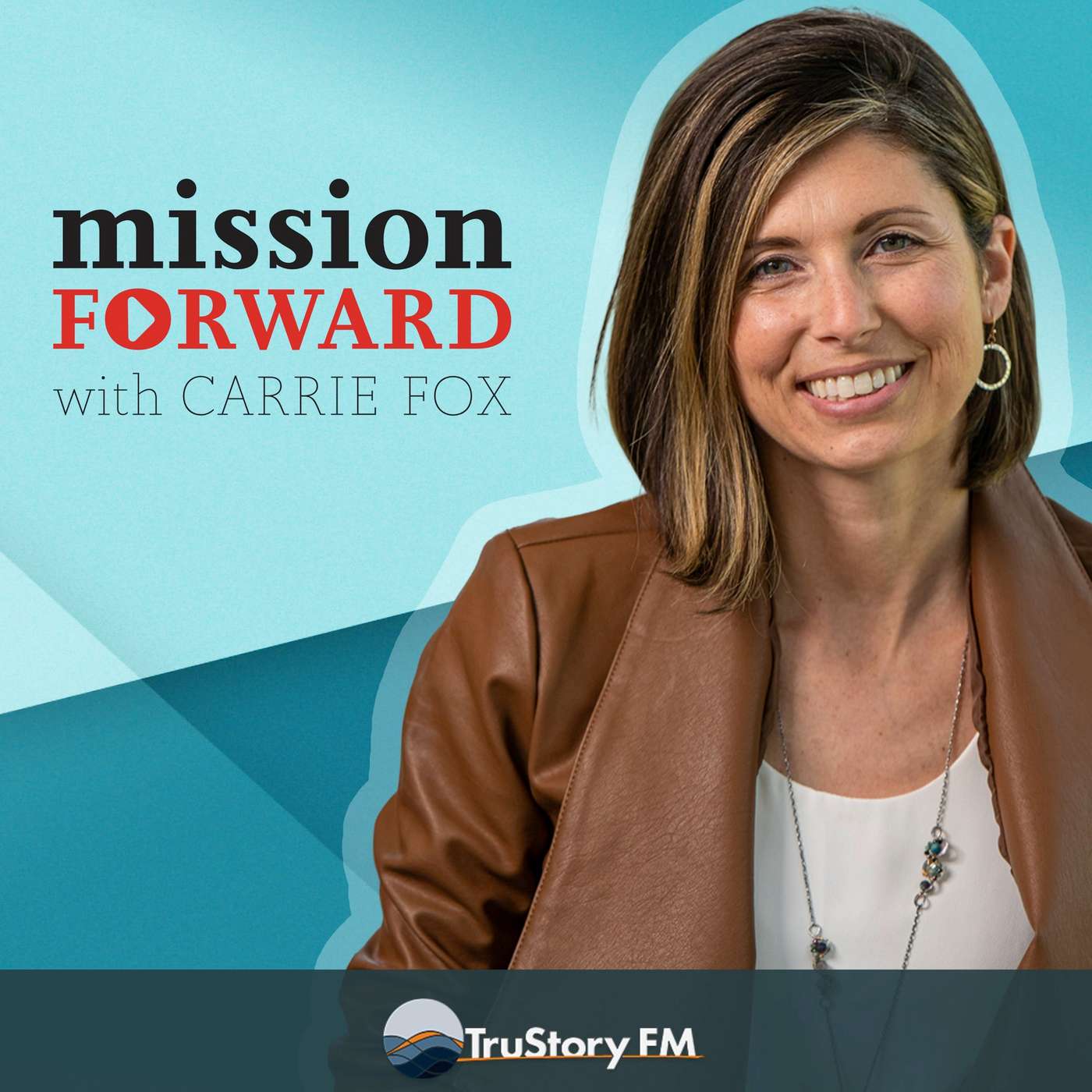
Season 12: A Season of Change
Jan 1500:02:00Tap to summarizeNonprofits and foundations have always done the quiet, essential work of holding communities together. Season 12 starts with the premise that the work hasn’t changed—but the conditions have. The pace is faster, the decisions are knottier, and “resilience” is being redefined in real time.This season, Mission Forward goes behind Mission Partners’ new research report to surface what leaders are seeing on the ground and how they’re responding: navigating financial strain while demand rises, filling emerging gaps, and leaning harder on collaboration, community, and responsible uses of AI to scale impact without losing the plot. It’s less a tour of what’s shifting than a close listen to the choices leaders are making inside the shift—so you can carry what’s useful back to your own mission. (00:00) - Welcome to Mission Forward
Transcribe →
Super Human • Finding the Words
Dec 1800:08:57Tap to summarizeLeaders want to bring more compassion into the culture of work, yet many wrestle with how to do it in a way that feels both authentic and respectful.The answer lies in the simple act of looking out for one another.This short-form episode is part of the Finding The Words column, a series published every Wednesday that delivers a dose of communication insights directly to your inbox. If you like what you read, we hope you’ll subscribe to ensure you receive this each week. (00:00) - Welcome to Mission Forward (02:23) - Super Human _____This episode is supported by The Johnson Foundation at Wingspread. At their Frank Lloyd Wright–designed campus, Wingspread brings leaders and communities together to turn dialogue into action. Learn more at johnsonfdn.org or wingspread.com.This episode is also brought to you by Positively Partners. When HR starts to slow down your mission, it’s time for a better solution. Positively HR is the fully outsourced HR partner that understands nonprofits—and acts like part of your team. Learn more at PositivelyPartners.org.
Transcribe →
A Good Hard Listen • Finding The Words
Dec 400:07:44Tap to summarizeThe volume of one-way communication is ramping up everywhere we turn—our feeds, inboxes, meetings, and media. All that noise leads to an increased feeling of distraction but rarely an increased sense of connection or understanding.All that noise affects our ability to listen to one another, too.This short-form episode is part of the Finding The Words column, a series published every Wednesday that delivers a dose of communication insights directly to your inbox. If you like what you read, we hope you’ll subscribe to ensure you receive this each week. (00:00) - Welcome to Mission Forward _____This episode is supported by The Johnson Foundation at Wingspread. At their Frank Lloyd Wright–designed campus, Wingspread brings leaders and communities together to turn dialogue into action. Learn more at johnsonfdn.org or wingspread.com.This episode is also brought to you by Positively Partners. When HR starts to slow down your mission, it’s time for a better solution. Positively HR is the fully outsourced HR partner that understands nonprofits—and acts like part of your team. Learn more at PositivelyPartners.org.
Transcribe →
How to Lead Through Change with Intention with Dr. DeRionne Pollard
Nov 2000:30:18Tap to summarizeWhen Dr. DeRionne Pollard talks about leadership, she doesn’t begin with titles or institutions. She begins with memory: a two-year-old child clapping cymbals in a community college classroom, a six-year-old sitting outside a glass-paneled door while her aunt trained to open an in-home childcare center, a young girl learning generosity from neighbors who showed love through casseroles and practicality through labeled Tupperware. These early stories might be sentimental details—but even more important: they form the foundation of a life devoted to service, community, and purpose.This week, Carrie welcomes Dr. Pollard at a moment of meaningful transition. After leading Nevada State University through a period of growth and change, she has stepped into a national role as President of the American Association of Community Colleges. The shift has asked her to reflect on the shape of her career, the communities that raised her, and what it means to lead with intention in a system that touches every corner of the country.Dr. Pollard shares how she prepared herself for the move—literally mapping out her goodbyes and thoughtful introductions on a whiteboard—and why leaving a campus was both a professional milestone and a personal test. She speaks openly about legacy, shaped in part by the loss of her mother at a young age, and how that experience continues to guide her toward work that feels both meaningful and deeply human.As she steps into this new chapter, her perspective on community colleges offers both clarity and optimism. She describes these institutions as engines of opportunity: responsive, resilient, and built to serve learners across every age, background, and ambition. Her vision for their future isn’t theoretical—it’s grounded in lived experience and in the communities that shaped her.Closing out the season, Carrie reflects on the generosity woven through this conversation. The entire arc of “hellos, goodbyes, and the space between” comes into sharper focus through Dr. Pollard’s story—one that reminds us that intention, humility, and connection can shape the work long before strategy ever appears on a page. (00:00) - Welcome to Mission Forward _____This episode is supported by The Johnson Foundation at Wingspread. At their Frank Lloyd Wright–designed campus, Wingspread brings leaders and communities together to turn dialogue into action. Learn more at johnsonfdn.org or wingspread.com.This episode is also brought to you by Positively Partners. When HR starts to slow down your mission, it’s time for a better solution. Positively HR is the fully outsourced HR partner that understands nonprofits—and acts like part of your team. Learn more at PositivelyPartners.org.
Transcribe →
How to Live Your Values When Pressures Rise with Amy Gross
Nov 1300:30:30Tap to summarizeSome stories begin with a single alarm bell. This one begins with dozens of small ones—nonprofit leaders quietly signaling the same thing at the same time: the ground under them was shifting, and shifting fast. Because the France-Merrick Foundation funds discrete, one-time capital projects across Baltimore, they hear from an unusually wide cross-section of organizations. And in early 2025, all those cross-currents pointed in the same direction: instability, delays, burnout, and a crisis arriving faster than anyone had planned for.France-Merrick chose to act. In this conversation, Amy Gross walks Carrie through how her foundation made the rare choice to increase its payout and launch the Meet the Moment Fund, dedicating 40% of their annual giving to rapid-response support. The board shifted from quarterly to monthly meetings. The application process was streamlined to a single stage. And the goal was simple: respond before inaction made the moment worse.Along the way, Amy offers a window into the larger questions philanthropy is wrestling with this year—how nonprofits survive when government contracts become unpredictable, why earned revenue has gone from “nice to have” to essential, and what it means for funders to collaborate when the sector is feeling squeezed from all sides. Her own hope rises and falls with the day’s news, she admits, yet intention and community remain steady guides.This episode makes a perfect connection to this season’s theme of hellos, goodbyes, and the space between. Amy’s answers—focused on connection, recognition, and leaving behind an impact that outlives her—echo the very principles her foundation brought to its decision: see people clearly, respond with purpose, and do the most good you can with the moment you’re given. (00:00) - Welcome to Mission Forward (04:45) - The Meet the Moment Fund (10:35) - Meeting the Moment Collectively in Baltimore (14:56) - The Volatility of Now (18:46) - Meeting the Moment _____This episode is supported by The Johnson Foundation at Wingspread. At their Frank Lloyd Wright–designed campus, Wingspread brings leaders and communities together to turn dialogue into action. Learn more at johnsonfdn.org or wingspread.com.This episode is also brought to you by Positively Partners. When HR starts to slow down your mission, it’s time for a better solution. Positively HR is the fully outsourced HR partner that understands nonprofits—and acts like part of your team. Learn more at PositivelyPartners.org.
Transcribe →
Purpose Under Pressure • Finding The Words
Nov 600:07:20Tap to summarizeTwenty-one years ago, when I started my first communications firm, a mentor offered a warning I’ll never forget: “Starting a firm focused on nonprofits is bound to fail. There won’t be enough work to sustain you.”Twenty-one years later, and we’re still here.This short-form episode is part of the Finding The Words column, a series published every Wednesday that delivers a dose of communication insights directly to your inbox. If you like what you read, we hope you’ll subscribe to ensure you receive this each week. (00:00) - Welcome to Mission Forward _____This episode is supported by The Johnson Foundation at Wingspread. At their Frank Lloyd Wright–designed campus, Wingspread brings leaders and communities together to turn dialogue into action. Learn more at johnsonfdn.org or wingspread.com.This episode is also brought to you by Positively Partners. When HR starts to slow down your mission, it’s time for a better solution. Positively HR is the fully outsourced HR partner that understands nonprofits—and acts like part of your team. Learn more at PositivelyPartners.org.
Transcribe →
How to Build Community by Design with Anne Kerns
Oct 3000:41:13Tap to summarizeIt starts with a handful of seeds.When Mission Partners’ design director Anne Kerns shows up at a civic rally with paper packets filled with flowers, herbs, and vegetables, she’s there to share. To spark a conversation. To see what happens when you hand a stranger something living. That image—Anne with her seeds—is at the heart of this week’s conversation. Because design, as she tells Carrie Fox, isn’t only what you make; it’s what you grow. It’s an act of attention, of cultivating curiosity in yourself and in others.From the geometry of a Frank Lloyd Wright logo at Wingspread to the exacting hues of red that pulse with both passion and danger, Anne reveals the hidden life inside design decisions most of us overlook. Every line has intention. Every color has memory. Every choice says something about who we are and what we value.Together, Carrie and Anne trace the invisible thread between creativity and community: how a refreshed logo can honor history without erasing it, how accessibility transforms good design into inclusive communication, how technology—from PageMaker 1.0 to AI—tests our understanding of what it means to create with soul.In the end, Anne circles back to red—the color she’s loved since childhood, the color that announces her presence to the world. For her, design isn’t a product; it’s a legacy of connection. The mark we leave behind isn’t ink or pixels—it’s how we made others feel seen. (00:00) - Welcome to Mission Forward _____This episode is supported by The Johnson Foundation at Wingspread. At their Frank Lloyd Wright–designed campus, Wingspread brings leaders and communities together to turn dialogue into action. Learn more at johnsonfdn.org or wingspread.com.This episode is also brought to you by Positively Partners. When HR starts to slow down your mission, it’s time for a better solution. Positively HR is the fully outsourced HR partner that understands nonprofits—and acts like part of your team. Learn more at PositivelyPartners.org.
Transcribe →