← Modern Love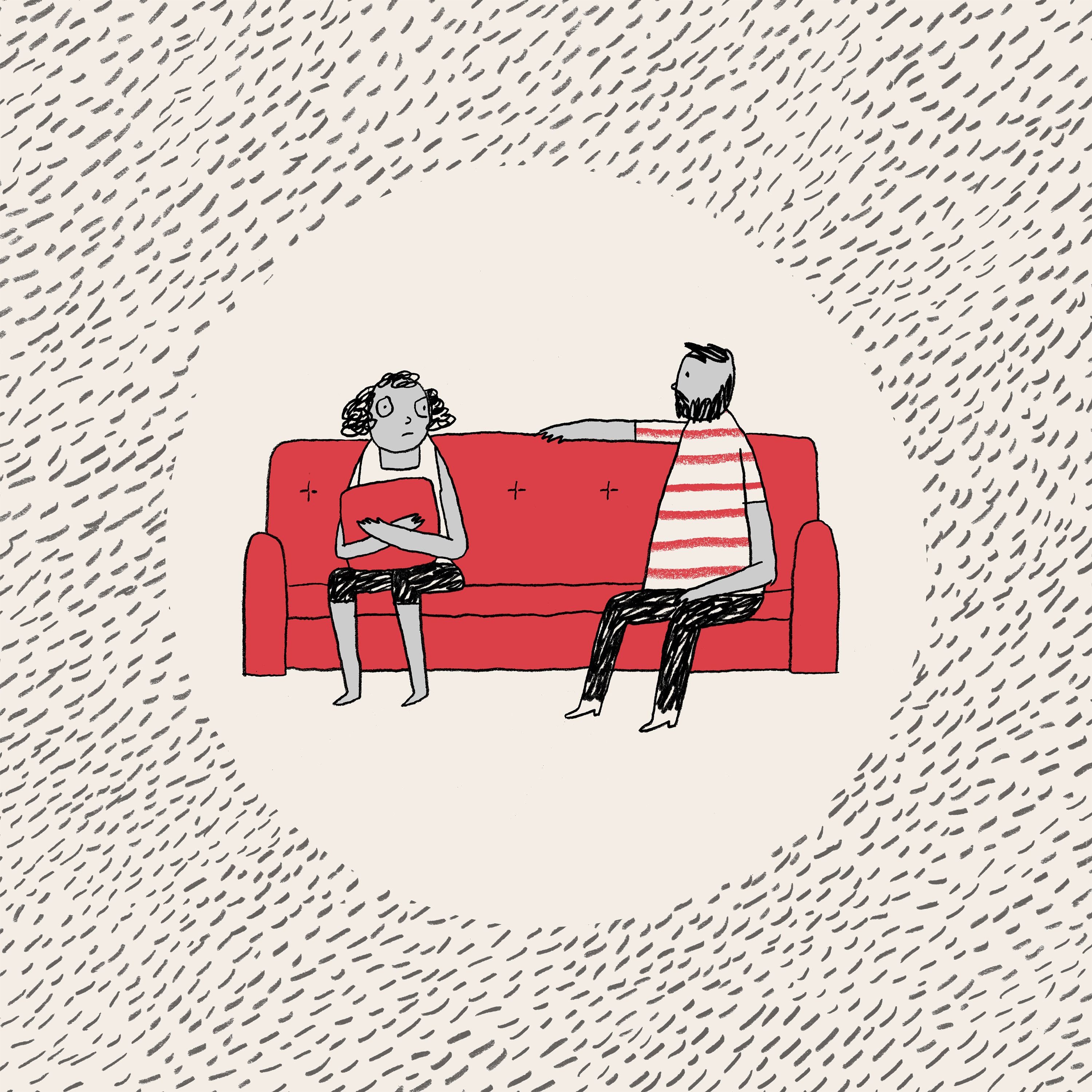
Modern Love
Am I Too Anxious for Love?
00:49:32
Jenny Singer thought she had a lung fungus. That would explain the shortness of breath that she was experiencing. The doctor’s other explanation was anxiety, which seemed completely out of the question to her. But as time went on, Jenny found herself increasingly focused on her “breathing problem,” as she called it, in a way that made it nearly impossible to connect with anyone. Eventually, Singer realized she didn’t have a lung fungus. She admitted to herself that she felt anxious and concluded that she wasn’t cut out for the kind of romantic connection she desired. Then, she met someone she absolutely did not want a romantic connection with, and hanging out with him felt great. Suddenly, she no longer felt anxious. It was exactly what she needed. This week on the “Modern Love” podcast, Singer explains how anxiety interfered in her love life, and what it took to find the kind of relationship she always wanted.
Loading summary
Transcript172 lines
- [00:00]
A
This message is brought to you by AppleCard. Shave Ice by the beach, a trip to the state fair, and a throwback flick at the local drive in. They're more than just items to check off the summer bucket list. They're also opportunities to earn 2% daily cash back when you use your Apple Card with Apple Pay. Apply for Apple Card now and use in minutes with Apple Pay. Subject to credit approval. Apple Card is issued by Goldman Sachs Bank USA, Salt Lake City branch terms and more@applecard.com hey everyone, it's Anna. Before we get into today's conversation, I want to talk to the New York Times subscribers who are listening right now, and I want to say thank you. Your support helps us make this show empowers all the other storytelling and journalism coming out of the Times. And now I want to talk to the people who are not subscribers. Yet we still want to give you access to all the amazing stuff coming out at the Times every day. So listen up now. When you download the New York Times app for the first time, your first month in. The app is free. That's 30 days of access to our journalism, including all of the Modern Love episodes from our archive. Totally free, no credit card required. Download the New York Times app now to get started.
- [01:14]
B
Love now.
- [01:15]
C
And did you fall in love last fella?
- [01:17]
B
I love her love. But stronger than anything, you love love. And I love you. More than anything, you're still loved. Love.
- [01:26]
A
From the New York Times, I'm Anna Martin. This is Modern Love. And today I'm talking to the writer Jenny Singer. Jenny is an anxious person. And while she always wanted a deep, loving relationship for a long time, her anxiety just kept getting in the way. She thought maybe the kind of relationship she wanted wasn't the kind her brain would actually let her have. But then one day, Jenny met someone, someone she found incredibly annoying, who she did not want a deep, loving relationship with. But still, Jenny kept hanging out with him. Because when Jenny was with him, she wasn't anxious. And that had never happened before. Today on the show, how one woman learned to live and love with her anxiety and why dating someone she found almost insufferable was exactly what she needed. Foreign. Singer welcome to Modern Love.
- [02:24]
B
Thank you so much for having me.
- [02:26]
A
Okay, Jenny, you recently wrote a Modern Love essay about how anxiety has shaped your love life. And I find this, I think many people found this deeply relatable. Many of us self identify as as anxious people. But anxiety can manifest in such different ways, like every single person has a specific flavor. So I'd Love for to describe the Jenny Singer flavor of anxiety. What does it feel like inside your brain?
- [02:53]
B
Thank you for asking. It's a truly terrible flavor. I think what's striking for me is that from the beginning it was hard for me to even figure out that what was happening to me was anxiety because it was so physical and visceral and I thought that I was having a medical problem. At first I got really bad shortness of breath. I get a kind of chest tightness. Sometimes I get headaches, I grind my teeth. All of these things that feel completely unrelated to anything going on in the moment.
- [03:28]
A
Is there a moment, a particular moment you can recall when you first started to feel this way? And you were like, what's happening to me? Is there a scene or a moment that comes to mind?
- [03:37]
B
It was in late high school. I was having this shortness of breath that seemed so random. And my dad took me to urgent care and the doctor said really, like quite sweetly and compassionately, you know, we often see with teenagers a sort of response like this that could be anxiety or he said, you could have a lung fungus.
- [04:06]
A
Okay, well.
- [04:07]
B
And I think my dad and I were both like, oh my God, I have a lung fungus. Like, the explanation that I could have anxiety and that a breathing problem could be a mental health problem was so foreign. But a lung fungus felt like it really made sense, huh? But then over the years, those physical sensations sort of metastasized and became mental as well. So I would obsessively overanalyze social interactions. Like I felt a feeling of fear that was like irrational. I start feeling hypersensitive. Is this person mad at me? Is this person mad at me? I need to ask this person if they're mad at me. What's a good way to make someone mad at you? Constantly dealing with digging into whether they are mad at you. That's really irritating behavior.
- [04:57]
A
Oh, God. Those follow up texts after the hang, like, was it weird when I said this thing? I have sent many, many of those. When did you start to realize that anxiety was impacting your romantic relationship specifically?
- [05:12]
B
I had this very early twenties boyfriend and I had always thought, I love romance. I thought, oh my God, it would be so amazing if I got into a, for example, loving and committed relationship with a person who I really cared about. And then when that happened in my early 20s, I felt like, I gotta get out of here right away. And I don't think I would have labeled it anxiety. I think only in retrospect. The things that my boyfriend wanted from me which were, like, really normal and reasonable. I would love to rewrite the past and say, like, oh, my. Was so needy and emotionally stifling and I needed to be free, but that's actually not true. I think he wanted to be in love and be together, which entails things like spending time together, planning time around each other, sleeping over, exchanging words of support.
- [06:08]
A
Okay, yeah. Those two are, like, sort of typical relationship vibes. And how did you react to those things? It's sounding like maybe not so well.
- [06:17]
B
I think I just felt like, oh, like, theoretically, that was such a good idea. But in reality, I am experiencing this as an obligation, a pressure. And I know it's not his fault. I know that it's not like I'm gonna break up with him and find another relationship that feels lighter. I know he's asking for a reasonable, reciprocal, loving exchange. And I feel particularly ill equipped to deliberate deliver on those otherwise lovely things.
- [06:52]
A
I mean, did you feel like. I guess I'm wondering, because the way that we teed this up was, like, when did you realize anxiety was sort of impacting your romantic relationships? And you're articulating something that's like, a dynamic that's certainly putting a wedge between you. But I wonder, like, how exactly did anxiety manifest in this relationship? If it did?
- [07:13]
B
I think there's. Specifically with the symptom of shortness of breath, I think that caused me to be so focused on, like, managing my physical body and managing my thoughts. And so I was constantly sort of thinking, like, am I going to be able to take a full breath in a moment? Oh, this discomfort of not taking a full breath is really grating on me. And it felt like anyone trying to have a close, intimate connection with me while I was focused on, like, kind of intense physical symptoms felt like distracting and grating, even though that would have been fine under other circumstances.
- [07:56]
A
Can I ask you, like, when you were feeling that and he said something loving or did something loving, would it make your breathing problem, your anxiety worse?
- [08:08]
B
I think any kind of emotional or physical contact was unfortunately somewhat unhelpful. Like, I feel like when you. For me at least, when my anxiety really ratchets up, it just. It feels like you're sort of just like the little animal who needs to go and crawl into your hole alone. And it doesn't matter how totally loving or understanding another person is being. Cause it feels kind of like drowning. Like, you wouldn't really want to cuddle while starting to drown. Maybe it's a little dramatic not fully drowning. Just, like, early stages Just, like, real
- [08:44]
A
risk just drown in, like, a tiny pond. No, I really get it. I'm really feeling for early 20s. I mean, at a certain point, does this relationship, this experience, your experience of this relationship, does it reach a breaking point?
- [09:00]
B
Yes. I broke up with my boyfriend and I felt immediately so much relief. Even though I had not stopped caring about my boyfriend or wanting to spend time with him or wanting to talk with him. I just felt so glad to be single in kind of a dirt baggy way that I couldn't quite identify, like, where this was coming from as someone who really liked, you know, old musicals and listening to Taylor Swift. But I was really glad to be done with him, and it felt like no fault of his own.
- [09:33]
A
I just have a side note, but hearing you say, you know, I'm a dirtbag, there's a bit of dissonance for me. Cause you're saying it in, like, this really pleasant way. Like, I was kind of being a dirtbag, but it seems like this was something you were grappling with. Like, am I a bad person? Am I dirtbaggy?
- [09:49]
B
Yeah. I think I felt like, what is this Persona I've taken on of, like, glad to be single? Hell, yeah. Don't have to deal with the old ball and chain anymore. I was, like, thinking that and then, like, opening up Pride and Prejudice and being like, I hope I fall in love.
- [10:11]
A
Did you write off romantic relationships? Were you, like, okay, love life gonna be on pause until I get this whole anxiety breathing thing under control? Or what, were you hoping for your romantic future?
- [10:24]
B
I immediately started dating again, and I wasn't so interested in finding the one, but I wasn't. I also wasn't interested in cutting myself off from any opportunity. So I started. I downloaded dating apps and I started going on dates. And it was really bizarre because I was, like, putting on mascara with a shaking hand. I was, like, having a stomachache on the subway on the way to, like, a, you know, bar in a basement. Yeah. But almost five minutes into the date, I was usually, like, completely relaxed. And it felt like this sort of bizarre exposure therapy where if I could just make myself get five minutes into a date, I would have kind of a delightful time. And part of it was maybe that I felt freed from the pressure to, like, fall in love and find a life partner, because that had so recently been unappealing to me. But I think there's also a feeling of a kind of, like, euphoria of the anonymity of the first date. It felt like going to a confessional In a way that I wasn't getting from anything else in my life.
- [11:30]
A
I have never thought about it that way. And that is so what it is. And I like what you're saying that it's like exposure therapy, you know, like, as an anxious person getting over that hump putting. I love that. The mascara with the shaky hand. I've totally been here. You're like, God, I gotta do it again, Whatever. Getting through that, you know, did it make you feel, I don't know, more resilient, more confident for the next one? Like, did these things accrue?
- [11:59]
B
I felt like, okay, I have really established that I can go on a first date and have like a kind of fun conversation for 60 to 90 minutes. And like, okay, that is a skill I have, even though it is hard for me to get there. And that was really nice. I felt like I was like, kind of triumphing in that area, and that was surprising to me.
- [12:21]
A
So first dates, you kind of got on lockdown. What about second, third? Like, was there follow up with these
- [12:28]
B
dates you were going on? Yeah, I went on so many first dates, and I would continue seeing people if I was interested in them and they were interested in me. But it did get harder. I really like that with first dates. Unless you're meeting the love of your life, it's probably wrapping up in 90 minutes max. And I love that. Like, with a friend hang, you don't know what's gonna happen. Even with my closest friends, I would get anxious feeling, oh, one of us is gonna need to go in a little bit. But there's no clear end time. And you just don't get that on the first date. You can turn. There's this directness that dating allows where you're like, I'm gonna go home now.
- [13:07]
A
I really like that. So did building a relationship still feel scary?
- [13:11]
B
Oh, yeah. I thought it was horrible. I think there's such a, like, sort of sanitary feeling to the meeting in the bar or whatever it is. It was just such a clear script that you can follow on an early date. We're gonna meet, we're gonn activity. We're gonna exchange ideas. We're gonna go home. Maybe we're gonna make out in the street. Maybe I'm gonna go over to your apartment. But, like, there is an exit. I will say, just to add one thing, please. I think part of why I found dating so fun and easy, even though I had incredible generalized and social anxiety, was because compared to the time before dating apps, when my dating life consisted of, like, hoping that my eye contact was fruitful in various social interactions. Dating apps removed so many of the anxiety ridden parts of dating for me that they felt like dating on easy mode.
- [14:12]
A
Interesting in the sense of you didn't have to go out and find these people or be found. You just opened your phone and a bunch of people were there.
- [14:21]
B
Yes. Because right away you're expressing interest and they're expressing interest. The interest has been expressed. And I feel bad for being so pro dating apps because I know for most single people they are instruments of torture. But I sometimes feel like, you guys, let's not romanticize in person dating. In person dating is like cruel and deeply personal. And what happens is that people swipe right and left on each other in real time. And that is a really intense social dynamic and especially for an anxious person. But I would think for most people, replacing that interaction with writing a little note was sort of revelatory.
- [15:03]
A
Whoa, man. Okay, I gotta have you on again. Because I think that is not. I love this take because I think it is not a popular one right now. Right. Like, a lot of people are like, let's get back. Why aren't people meeting at bars anymore? And you're like, guys, I'm always trying to make sure the sponsors are hinge.
- [15:21]
B
The apps are evil. The apps are evil. They're making life worse for people. Like, I don't wanna be like, why don't you guys just be more positive? I'm just like, there is a small percentage of people who can be really proactive in bars and at their softball rec leagues and then there's everyone else. But I acknowledge that the dating apps are putting barriers in people's ways at this point. Sorry.
- [15:45]
A
Why are you saying sorry? I love this take. I really, I genuinely do. So it's like you are nailing the casual dating.
- [15:56]
B
Thank you.
- [15:57]
A
You're welcome. But did a relationship still feel scary to you?
- [16:05]
B
I think it felt unappealing. I think I feel a little allergic to the idea of it being scary because there are so. It's such a sort of romantic comedy trope that the reason the people can't be together is cause one of them is afraid of and afraid of vulnerability. And I think I'm not just being defensive, but I think that the anxiety was a little different. That it wasn't exactly like, it wasn't even as romantic as I'm afraid to let someone in. It was like, I literally, literally, don't sit so close to me. Like, do not make life plans with me as it will stress me out, which I think is like a cousin of. Afraid of vulnerability, but not identical.
- [16:47]
A
It's really important. Okay, so I know from your essay that you meet in this sort of, you know, time in your life where you're dating and going around New York City, going on these wonderful first second dates. You meet this one guy in particular who treats you very differently than this early boyfriend we talked about. Tell me about this guy. What made you swipe on his profile?
- [17:15]
B
I think he was attractive and he had a cute dog. And we clearly had similar sort of interests in reading and the arts. So that was. That was all appealing.
- [17:27]
A
And how did you know you had. Just in the sense of like, he had the dog in the pic and he was reading, like a book you liked in the pic or how could you tell?
- [17:34]
B
I think by then I had been on dating apps enough that I was. I could tell, like, he was signaling pretentiousness enough that I was like, there'll be something there for me.
- [17:47]
A
He has the, like, New Yorker tote in one of his pictures, that kind of thing. Yeah, totally, totally.
- [17:51]
B
I understand.
- [17:51]
A
You know, and I will say, like, for me and my friends, when I go on dates, even before I go on dates, these people develop sort of monikers by which I refer to that. You know, it's not their names. It's like Mustache Guy or Tap Dancing Man. You know, actually, usually it's Mustache Guy because I sort of have a thing for that, you know, like, did you have a kind of name for this one?
- [18:16]
B
For this one? Yeah, I called him Dog Guy because my friends were the exact same. You had to have names for everybody. He had a really beautiful and sort of glamorous dog. Glamorous. And he brought the dog on the first date. And I think the guy knew, as many men do, that the dog was part of his appeal and they were sort of teaming up to attract women all over New York. And that was fine with me.
- [18:39]
A
Describe the first date. Like, so he brings the dog on the stage. First date. And you're good at first dates, as we've discussed.
- [18:45]
B
Yeah, I had been. I was nervous, as I was for every first date. But I liked that this guy with the dog had picked a pretty low key activity. We were just meeting in a park. He brought wine. He brought cups to pour the wine into. And we sat in the park with his dog and the wine. And he just sort of lectured me. Like, he had a mode of communication that was monologue.
- [19:11]
A
Like, okay, and so what was he lecturing you on?
- [19:16]
B
I recall I was just out of college. And he was two years older than me. And he did lecture me on my college thesis. And he lectured me on his college thesis. He told me that he had, like, connections in my industry, but he wouldn't put me in touch with them necessarily, but he wanted me to know that he had them. So he wanted to talk about, like, literature and philosophy. And I think he did want to connect over those things. He just had a sort of lecturing mode that I think was hard for him to break out of.
- [19:55]
A
And did you try to pop in, like. Well, I actually wrote my thesis on that.
- [19:58]
B
Yeah, I'm like a big talker. Like, I would say it wasn't like he was reducing me to silence, but it was hard to get a word in edgewise. Though at times I did feel like he was sort of quizzing me to ensure a level of intelligence that he was okay with. We had some fun back and forth. It wasn't just a lecture.
- [20:22]
A
So I'm gonna say, although you tell me your impression in the moment, this does not sound so fun. I would say someone lecturing you on your thesis that you've just recently. I mean, that sounds kind of not fun. How. How was this experience for you?
- [20:40]
B
I think it was so audacious and it was so absurd. And I so knew as it was happening that I would tell my friends about it that I thought it was funny. And it helped that he wasn't like a little bit annoying. He was acting. I felt absurd. And there was something compelling in that absurdity.
- [20:59]
A
And it was so extreme that for you it was hilarious. Is that what it is? It was like so bad that it was kinda good.
- [21:05]
B
She was such a character. He asked me about my college thesis. I described it. He described his college thesis, which was, you know, two years ago he'd written this, and he said, you should read it. And I said, do you think you should read my college thesis? And he was like, no, that doesn't sound relevant to me at all. But I think mine. I mean, the idea that anyone would recreationally read an undergraduate thesis was absurd, even as a 22 year old. And I think part of it was that I felt like I could relax because the standards for social engagement had been lowered by his absurdity. Yes, I felt like, because, unfortunately, because I'm judging him, I'm not as worried about him judging me. And I don't even know how he could judge me because he's so busy sort of giving these lectures. But I felt like, oh, I felt like, okay, he's pretentious he lacks self awareness. But I understand that it's both that he's impressed with his own intellect and also that he just doesn't know another way to communicate and that this, that he's sort of like doing his best here.
- [22:13]
A
He's like trying to connect with you, but the way he's doing it is by like speaking over you and being. It sounds like pretty deeply condescending.
- [22:21]
B
Yeah, definitely. And at the same time, I think that the story doesn't make sense unless I admit that like we were kind of vibing, like we had a good connection. I was attracted to him. We were at times when I was allowed to having what you could call banter. Like, despite everything crazy that he was doing, I was still certainly having an interesting time.
- [22:46]
A
Yeah, I wanna sort of circle back to. You're still dealing with anxiety, you know, with breathing. I assume this is not like a thing that you solved. How was your anxiety level when you were hanging out with this dog guy? Like, where was it?
- [23:01]
B
I felt like it was incredibly low most of the time. Either it was kind of relaxing to hang out with him or if I became anxious, like if I went to hang out with him and I was feeling anxious, he wasn't going to be like, whoa, okay, what's going on? How can I help you? He was just gonna not notice, which was perfectly pleasant for me.
- [23:21]
A
Interesting. Wait, okay, why was the anxiety level with him? Remarkably why?
- [23:27]
B
I think he didn't expect that much of me, but maybe more than that, I didn't expect that much of myself. I wasn't trying to impress him. I wasn't trying to be perfect and likable and clean and good smelling and like a future partner material. Yeah. I was just like, what up? What sort of offensive thing are you gonna say next? And that was sort of so freeing.
- [23:51]
A
Huh. So did you go on another date with this guy?
- [23:55]
B
We went on a second date and we went on a third date. We went to a jazz bar and then we, for the second date and for the third date we walked on the High Line and he just kept sort of checking off these cliches of like patronizing, pretentious man. But I kind of hung in there until on the third date he was just describing a movie that I had never seen or expressed any interest in. Almost shot for shot explaining the genius of this movie. I was kind of pushing back, like, I don't think I'm ever gonna see this movie. But he could not stop. And then he went into sort of more sort of Woody Allen. Analysis. And finally I was like, do you hear yourself? This is so annoying.
- [24:44]
A
And what did he say?
- [24:46]
B
He was like, yeah, I get that a lot. It was like a charming to me. He didn't get mad or annoyed or defensive. He was like, yeah, I get that feedback a lot that I'm pretty annoying. Sorry about that. And I was like, I don't wanna see you anymore cause you're being so annoying. And he was like, I totally understand. I hope you find what you're looking for. And I feel in retrospect, I felt kind of like, whoa. Like he sort of cast a spell on me with that. I hope you find what you're looking for. Because a few months later I texted him, texted this dog guy and was like, do you want to get a drink?
- [25:29]
A
We'll be right back.
- [25:37]
C
Sometimes that one thing you've been putting off becomes the thing that can change your life. Whether it's earning a master's degree, building leadership skills, or preparing to take your career in a new direction, Southern New Hampshire University can help with flexible online graduate programs designed for working professionals. SNHU makes it possible to earn your degree while balancing your busy life. So stop putting off your education. Start today at SNHU.edu NYT.
- [26:06]
A
If you're a parent of a teen or have teens in your life, it can be hard to figure out the right way to approach social media and technology. Ultimately, if you feel like your teens are ready to, there are tools to help. Instagram teen accounts have automatic protections for what your teens see and who can contact them. Plus time management tools like daily time limits and sleep mode. And Instagram will continue adding built in safety features to help create age appropriate experiences. Learn more about teen accounts and Instagram's ongoing work to protect teens online@instagram.com teenaccounts that's instagram.com teenaccounts Gun injuries are the
- [26:43]
C
leading cause of death for children and teens in the United States. Some people avoid talking about gun violence because they don't think they can make a difference. But every conversation matters when it comes to gun violence. We agree on more than we think. And having productive conversations about gun violence can help protect children and teens. Learn how to have the conversation@agreetoagree.org brought to you by the Ad Council.
- [27:20]
A
Okay. Ooh, I want to dig into this. So it's like the text a couple months later.
- [27:25]
B
Why?
- [27:26]
A
Why did you want to see him again? Like what, what drew you back?
- [27:30]
B
I think I had gone, gotten back into dating and met plenty of nice People. And I just felt like, wow, I. A, I'm still kind of attracted to that guy. And B, I liked the dynamic of feeling not closely observed or attended to or having much expected from me. And that guy was delivering it in a way that a more conscientious person would not have been able to.
- [27:58]
A
Whoa. I mean, I'm recalling how that observation and that care and that expectation was the very thing that made you wanna break up and made you break up with that first boyfriend we touched on in the beginning of our conversation. Right. Like this guy, in a lot of ways, the way he's treating you is like opposite to that, to that boyfriend.
- [28:19]
B
Yeah. He was not paying a lot of attention to me. And because of that, I felt more present and normal and relaxed. And I think I kind of wanted to chase that feeling. It seemed like he could deliver on having like a, a fun romantic experience without the traditional elements of a relationship. That for most people are a very nice thing. Yeah.
- [28:44]
A
How did your friends feel about him? Because I feel like if you were my friend and you were like, he told me to read his undergraduate thesis, I'd be like, okay, you're never seeing him again. Like, did your friends get it?
- [28:58]
B
My friends felt so bad for me, I think. And I feel that I would have felt this way too, that it sounds like, oh my God, this woman must have such low self esteem because she is hanging out with this guy who isn't that respectful or attentive. He isn't taking her on dates, he isn't labeling the relationship. That's so sad. And I felt really resentful of that, even towards my totally loving and caring friends, because I felt like this is a very gendered idea that like a woman must want a label and a relationship escalator and to be taken to restaurants with tablecloths. And if she's not getting those things, she's a victim and she's being taken advantage of. Whereas I felt like I am getting what I want and this is working out well for me. But I felt like people could only react to me with pity as sort of like a victim of like hookup culture gone awry.
- [29:54]
A
So how long did this relationship with the dog guy, how long did it last?
- [30:01]
B
Well, you might say five years.
- [30:03]
A
Oh, wow.
- [30:04]
B
But I will say there were gaps. There were year long gaps in between. We would be hanging out once a week and then one of us would travel. We would be hanging out once a week and then at a certain point he got into more than a year long relationship. We went for a final platonic dog walk. And I was like, see you later. They broke up. He was like, what are you up to? I dated some people. I stayed on. Dating apps. Yeah. It became almost a constant in my life with long gaps. And then I felt like, as time was going on, we were both changing in some ways and that he was changing in positive ways. Like, he was becoming, at times, more tolerable and even pleasant than he had been before.
- [30:48]
A
And still those changes, this was not. This did not feel like love was gonna develop. Even despite him sort of maybe asking you more questions or listening or whatever,
- [30:58]
B
there was never a second that I thought that in either direction. I felt like. At times I felt like he barely seems to tolerate me. And at times, I was extremely annoyed with him. And I think what would save it was that I would say, you're being so annoying. And he would always return to this sort of like, no, I know. Yeah. Wow, Totally.
- [31:21]
A
So he is good at at least receiving critical feedback? Let's say that.
- [31:25]
B
Yes.
- [31:25]
A
Is it too messy to ask, like, when did it end for good?
- [31:29]
B
No, not at all.
- [31:29]
C
Okay.
- [31:30]
B
It was. We'd been on and off, on and off, on and off. We had by then developed what really felt to me like a friendship. Not one of my closest friendships, but, like, by then, we had known each other off and on for five years. And then he met someone, and he was like, I have to stop seeing you. I met this girl. I really, really like her. And he invited me to his birthday party, which was unusual. We had barely ever socialized in public together. But I went to his birthday party platonically. I sat across the table from this woman. She was so lovely. And I just felt like, wow, thank God. Thank God there's no reveal that I've been in love with him all along. Thank God. This is not following the plot of a romantic comedy. I felt like, whew, close call. I'm totally happy for him. She seems great.
- [32:22]
A
You know, I'm just thinking that you said that when you were with him, it was a kind of. It was a relief from anxiety once you stopped seeing him in that way. I don't know. Did all that anxiety kind of come rushing back? Like, did it return full force?
- [32:39]
B
Yeah. I will say I don't think he was responsible for lowering my anxiety over time. I think he was responsible. Responsible for creating an environment in which I was like, I can have an intimate connection with another person and not feel tortured by anxiety. And at least I have this example to go off of. And over the Years, I divulged more to him about my anxiety disorder because at a certain point, we had spent so much time together that it was, like, hard for it not to come up. And also, I think I just felt more comfortable with him. And he really endeared himself to me by. I had thought maybe he would be like. Like, that's all in the mind. Like, mind over matter.
- [33:21]
A
I actually wrote another text about that. Yeah.
- [33:25]
B
He was like, sit down. Pet my dog, and let's do some breathing exercises. And it was his same kind of extreme overconfidence, but it was very charming.
- [33:36]
A
Whoa.
- [33:37]
B
I so preferred it to someone being like, oh, no, I love you.
- [33:41]
A
Yeah.
- [33:42]
B
Oh, no. He was like. He was like. Like, let's solve this problem together.
- [33:47]
A
I'm actually very professionally successful.
- [33:50]
B
He was supportive. By then, we had known each other for so many years that he was actually sort of supportive, like a friend
- [33:58]
A
as you sort of teased apart what worked for you and what didn't in this romantic relationship. Did it refine, like, what you were looking for next? Because, again, like, we started our conversation with this boyfriend who was, like, so attentive and observed you so closely and wanted to be there so much that it felt kind of suffocating. And then we had this opposite dog guy where he was like, I am in my own world. But there was a certain endearing quality to that. Like, you'd have these kind of extremes. What were you thinking about for the next chapter of your love life?
- [34:30]
B
Well, I think that the more I spent time with the dog guy, the less I saw him as just like a cliched caricature of pretentious tote bag guy. And I felt more like all of the. He may be very annoying, but he deserves to be with someone who does want to talk about these things more than me. Like, he deserves to be with someone who wants to go frame by frame through a film. And I think, because I knew that I was not that person for him and he was not the equal and opposite person for me, I did feel like, okay, what would it look like to have a relationship where we really are over? Not just not overlapping in interests, which I don't think matters so much, but where we really are serving each other. But I still kind of felt at that point, like, I don't know. I don't see that for myself. You know, maybe someday, but I don't see, like, a road to that at this point.
- [35:25]
A
But you'd experienced relief from anxiety in a romantic relationship, and you were like, it's possible. And I want that again.
- [35:35]
B
But I think I also thought maybe it's only possible with someone who's sort of inattentive to me. Like, what if what makes this possible would make, like the next level of a relationship unlikely?
- [35:50]
A
We'll be right back.
- [36:05]
C
This podcast is supported by Ollie, your wellness partner for all things Back to school. When the schedules get fuller and the alarm seems to go off sooner, Ollie Sleep helps you fall asleep, stay asleep and wake up feeling refreshed because kids aren't the only ones chasing big dreams this year. Head back to class with the One Gummy supplement brand and stock up on Ollie.com today. That's O-L L Y.com these statements have not been evaluated by the Food and Drug Administration. This product is not intended to diagnose, treat, cure or prevent any disease. A Better Help ad After my session and talking to my therapist and really
- [36:40]
A
feeling seen and heard for the first
- [36:42]
C
time, I just felt like a weight just was lifted off of my shoulders
- [36:46]
B
and I felt like it was a good match.
- [36:48]
A
From the first time we talked, I
- [36:49]
B
could tell people from lived experience that
- [36:52]
C
they should try therapy.
- [36:53]
B
I could really be myself again.
- [36:55]
C
And I have this continued support with
- [36:58]
A
better help wherever you are, that's where BetterHelp begins. Visit betterhelp.com New York Times to get started. Pay Testimonials Results may vary this message comes from Betterment Betterment Stan Egan talks
- [37:11]
C
about tax loss harvesting.
- [37:12]
A
Tax loss harvesting is a tax management strategy. When you have a position that's gone down over time. We intentionally sell out of it to realize a loss, which we then say to the irs, hey, we lost money. You get to use that to offset
- [37:26]
B
your ordinary income every year, decreasing your tax burden. Investing involves risk performance, not guaranteed. Betterment does not offer tax advice.
- [37:32]
A
TLH may not be suitable for all customers.
- [37:34]
B
Learn more at betterment.com TLH-terms.
- [37:43]
A
I'm going to go ahead and say spoil something, but it's not really spoiler because it's in your essay. You are engaged, so I would assume that you were proven wrong in the in your assumption that someone had to be inattentive in order for you to love them. Which is a very complicated way of saying, now we're going to talk about your fiance. You kept dating after this and eventually you do meet someone. Tell me about this next person who enters your life who makes big impression.
- [38:12]
B
I met my fiance right after the vaccines were widely released. At the end of like, it was like the summer of 2021 and I was like, I'm free. I'm gonna go on a million dates. Totally. He was like the second person I went on a date with. And I felt immediately like, oh, my God, this person is so different. Is so. Has so many qualities that I admire. He feels so out of my league to me. It didn't feel like I could treat it as like a fun little social experiment like other dating app dates. I felt like, oh, this is real. And I would really regret losing out on spending time with this person.
- [39:00]
A
Oh, my gosh. That feels very different than the sort of like, ah, low stakes, whatever, you know, way you'd been approaching these first dates. What was it about this guy that made you think in this, like, very different way about investing?
- [39:15]
B
I think this sounds so surface level, but he was attractive, he was interesting, he was smart. But he. I felt like he really radiated a decency and even a goodness. That is such a unusual thing to see on a first date in a wine bar. And I felt like, okay, don't lose sight of that. Don't take your eye off the, like, very good and attractive man sitting in front of you. Find a way to make it work.
- [39:46]
A
Whoa. I don't think that's service. I think that goodness and decency are. I mean, not that this is a hot take, but incredibly important and sometimes lost amidst flashier qualities. So you're like, this feels absolutely different when you meet this guy.
- [40:06]
B
What was.
- [40:06]
A
I am gonna check in on the anxiety, you know, again, because this is what we're here to talk about in part. What was your anxiety level like around this guy?
- [40:15]
B
I was like, act normal, act normal, act normal. Like, in the past, I had felt like, oh, this dating is so low stakes. I'm often going out with this dog guy who. And I'm not holding myself to too high of a social standard. Like, I wanna be likable. But with this guy, I was like, get him to like you. Which I think for anyone is like a totally unhelpful inner monologue. And for our third date, he asked to take me to dinner, which to me was so like, oh, my God, what do you. Do you wanna open a bank account? Do you wan get a mortgage? Like, why are you being so serious? Let's keep going to bars. It felt so serious, and I felt so horrified by the idea of going to dinner with someone I liked. Which was something I had certainly never done with the dog guy and had rarely had occasion to do in my whole dating history. Wow. Because things had been so casual, it
- [41:14]
A
felt like the anxiety returns. Yeah. The questioning the overthinking.
- [41:18]
B
It felt so anxiety provoking. For reasons that seem so absurd. I was like, eating while being watched.
- [41:25]
A
Babe, that's like the biggest universal fear besides public speaking. Everyone's worried about that.
- [41:30]
B
It was crazy because it wasn't like, oh, no, like, I'm gonna get spaghetti on my chin. It was more like, I don't want you to watch me have any human needs. For some reason, I want to be perceived as, like, seamless and without need. And there's something about a restaurant that really makes that impossible.
- [41:52]
A
It's like we're animals. You know what I mean? But also, you know, I will say there's something too beyond, you know, the mechanics of mastication. You know, you're looking into someone's eyeballs for hours. Two hours.
- [42:06]
B
I mean, yes.
- [42:07]
A
That's a lot. Talk about being closely observed. You know what I mean? Like, you're kind of under the microscope.
- [42:13]
B
That's exactly how I felt.
- [42:14]
A
So how actually was the dinner?
- [42:16]
B
Well, so I had a therapist who was a really good therapist. I had. Had okay therapists, but some helpful, some less help. But I had this cognitive behavioral therapist, and she was kind of like, okay, you need to go to this dinner. You need to think of the dinner as a behavioral experiment. And then I want you to push yourself. I want you to invite him over after dinner. Because I had been like, what if he wants to hang out after dinner but I'm too full? Or the. Or the feeling of dinner lingers in an unsexy way.
- [42:51]
A
She was the anxious brain at work. You're like, okay, well, if you go
- [42:53]
B
to dinner, what if. Okay, I love this.
- [42:57]
A
Okay, yeah. And.
- [42:58]
B
And she was like. She was like this wise sort of fairy godmother being like, bring him to your home. She said, do not seduce him. Offer him a bowl of carrots. So she was basically like, invite him over to your apartment and, like, try
- [43:14]
A
to act normal, basically. The carrots is interesting and feels very specific. And I don't. Did you ask her, like, why carrots, basically? Or was that sort of like.
- [43:23]
B
I think she was just like, I want you to have to open the refrigerator, take something out. I think she was like, I want you to do things that aren't easy and seamless and that feel, like, boring or gross to you. Whoa.
- [43:36]
A
Cause you were trying to cover up all of the humanness, right? To make yourself smooth. You said seamless so he'd like you. I don't chew, I don't burp. I'm not hungry. If I eat, I eat the Exact right amount. And your therapist is like, basically, be a human. Like, be yourself.
- [43:56]
B
She was like, stop trying to act above human concerns. Stop trying to avoid those things. Prove to yourself that you can be a part of an interaction that has those things and it can still be romantic.
- [44:09]
A
Did you do it with the carrots?
- [44:11]
B
Yeah, I think so. I put something in a bowl. I think it was carrots or maybe it was like olives or something. Like, I had to put something on, like damp in a bowl and be like, here, here's this. This has become available now.
- [44:25]
A
Something damp in a bowl.
- [44:27]
B
It's not wine, it's not water, it's like a damp snack.
- [44:30]
A
So, okay, so you do this and how do you feel around him after the dinner? After the damp snack, Might be carrots, might be olives. Like, as you start to open yourself up as like a person with needs, how is this guy? What are the kinds of conversations you're having as this thing gets more and more real?
- [44:51]
B
I think I would love to be like, wow, I felt so myself with him. I felt so relaxed. I felt very high anxiety the entire time. I felt like, go right, act normal. Don't break up with me, please don't ghost me, please. But we had really good conversation. He was great to talk to. He was so smart, he was so interesting and he, he was curious and he really, really let me talk. Like it was the complete opposite of my past dog guy situation. And so it wasn't relaxing. It was just really, really worthwhile to me.
- [45:30]
A
And did you talk to him about your anxiety?
- [45:33]
B
I think weeks, if not months in, I started talking about anxiety and he said, I also have anxiety. And I started talking about shortness of breath and trying to explain it. And he was like, I know what you mean. Cause I've also experienced that.
- [45:50]
A
And how did that feel?
- [45:52]
B
I thought it was so nice. Yeah, I felt. I don't think, you know, you have to be with someone who understands you completely. No, I'm sure I don't completely understand his anxiety and he doesn't completely understand mine. But it was crazy to not have. I know of a lot of couples where one person is anxious or high strung or however they define it, and the other person is like their rock and their supporter. And I feel like I can vouch for the relationship where both people are anxious and we just really take turns being anxious. If he's freaking out about something, I become very calm. If I am freaking out about something, he does not ratchet that up. He becomes like suddenly like incredibly rational. And grounded. And so I would say for anyone who's anxious, like, don't rule out a relationship with an anxious person. Cause they think it's really mutually beneficial sometimes. Probably not in every dynamic.
- [46:46]
A
Beautiful sort of counterbalances, like, you know, what the other needs in that moment. At the beginning of our conversation, we were talking about how your anxiety felt so overwhelming at times that you just didn't have space or room for a relationship. And now it's like you are still anxious, but you are engaged. So I guess my question to you is, like, how have you learned to do both to be anxious and to also be in love?
- [47:16]
B
Well, I don't want to discount the power of medication and therapy totally. I wish. I mean, I'm glad that I didn't have to wait to meet the right person to fix me. I think, like, treatment is helpful. Yes, I did see a lot of bad therapists, and I tried a lot of bad medications. But I just felt like it was so hard to be around people. And it really required the cocktail of medication, time, experience, and a therapist finally, like, really pointing out to me, you don't want to go on, like, a fourth date with anyone. Because you find being around people romantically to be sort of excruciating. And, like, you're never. We have to work on that thing where you get so where you can't do it because you feel like you're so on. And, like, you need to figure out how to not be on. And by the way, it's probably annoying to the people you're dating. Like, it's, like, not so endearing. And I felt like that it took all of those things in meeting a really, really amazing person who I felt highly incentivized to figure out how to be with. And I think, too, from me, what I learned and what was ultimately very positive was that to make the relationship successful, to make it, like, a real deep connection, I had to be really honest. And I think he had to be really honest. And once you establish that both people have to be sort of weirdly, radically honest, that it's going to be, like, pretty hard to offend the other person by saying the wrong thing. Because we're gonna come in with an assumption that both people are going to be out loud from their internal monologue, including the things that are, like, not that perfectly worded.
- [49:04]
A
So you do eventually figure out how to be with this other anxious person. But how did you do that? Like, how do two anxious people manage to be anxious together?
- [49:15]
B
I think when we were deciding to be in a relationship together. We both had this like, really unusual amount of honesty and that it felt like we were having these sort of like business where we were sort of like weighing the pros and cons of defining the relationship. Like weighing the. And then we did that for every milestone, like, for moving in together. We were like, whoa, let's talk about things that could go really wrong and ways either of us could like, completely freak out for getting married. We were having summits, sort of being like, okay, when do you think will be the right time? Like, I think for so many people this would be so not romantic. But we planned our together. Like, we, like, we're working sort of in a Google Docs on like, should we be together? Should we get married? How are we gonna get engaged? And I think that that was romantic to be with someone who is like in the same place as you and wanting to be incredibly direct and honest.
- [50:22]
A
I mean, I am now thinking that you two, you and your fiance are heading into another sort of classically stressful time, anxiety inducing time, which is planning a wedding. Have you two done anything together to make it less stressful?
- [50:37]
B
I think what is funny is that I don't find planning a wedding that stressful because I think like a lot of other anxious people, you get used to such a high baseline of anxiety that when something like kind of difficult happens, sometimes it kind of feels like whatever or like, I was already stressed out.
- [50:54]
A
I'm ready for this.
- [50:55]
B
I feel like napkin color. I have a high heart rate when I'm like sitting still staring at a wall. I don't care that much about napkin colors. I think we're both worried that we're going to ruin our wedding by being too anxious. And to that, I just feel like if that happens, that will be a day of really being ourselves. Like, unfortunately, I think most people show up at their weddings as themselves. And so if I'm anxious, it will be like, yep, that's pretty classic.
- [51:32]
A
That's authentic.
- [51:34]
B
So I think we both feel like, you know, planning is not a catastrophe, but I think we both want to feel as present as possible and also not ask ourselves to become different people for one day. Day.
- [51:57]
A
Jenny Singer, thank you for this conversation. I so enjoyed it.
- [52:00]
B
Anna, thank you for listening to me talk for hours about my mind and my relationship. Send me the bill. Whatever it, Whatever it is, it's. It's fine.
- [52:19]
A
The modern love team is Davis Language Land, Elisa Gutierrez, Lynn Levy, Reeva Goldberg and Sarah Curtis. This episode was produced by Davis Land with help from Reva Goldberg. It was edited by Lynn Levy. Our mix engineer was Daniel Ramirez. Original music in this episode by Diane Wong, Leah Shaw Damarin and Dan Powell. Dan also composed our theme music. Special thanks to Brooke Minters. The Modern Love column is edited by Daniel Jones and Mia Lee is the editor of Mine Modern Love Projects. If you'd like to submit an essay or a tiny love story to the New York Times, we have the instructions in our Show Notes. I'm Anna Martin. Thanks for listening.
- [53:06]
C
This podcast is supported by Ollie, your wellness partner for all things Back to school when the schedules get fuller and the alarm seems to go off soon. Sooner Ollie Sleep helps you fall asleep, stay asleep and wake up feeling refreshed because kids aren't the only ones chasing big dreams this year. Head back to class with the number one Gummy supplement brand and stock up on Olly.com today. That's O L L Y.com these statements have not been evaluated by the Food and Drug Administration. This product is not intended to diagnose, treat, cure or prevent any disease.