Podcast
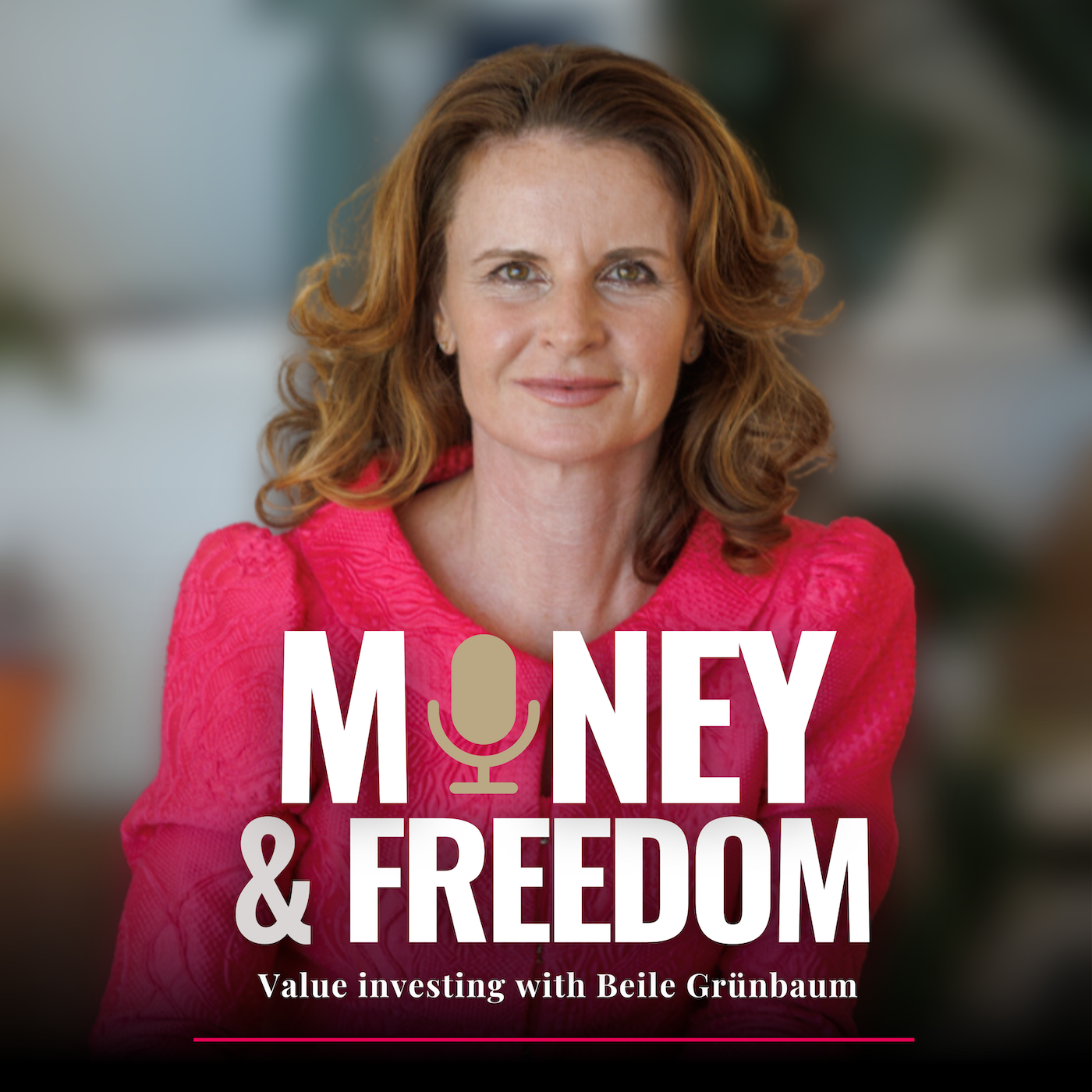
Money and Freedom with Beile Grünbaum
Hosted by Beile Grünbaum · EN
What if you could become financially free - and even build generational wealth - using stock market investing? Without fearing a crash?
On this podcast, value investor and fund manager Beile Grünbaum will take you through the stock market investing strategies that changed her life.
She talks about stocks and shares, in particular value investing and money mindset.
24episodes
Episodes
Newest firstAll episodes
Is the AI Bubble is Ruining Your Index Investing? | EP 40
Jun 1100:16:02Tap to summarizeGet your investing checklist her Yes, there is an AI bubble. Did you know that you are deeply invested in it even if you invest broadly in index funds? If it pops, what happens to your index fund? In this episode I break down: How the "safe," "diversified" S&P 500 has quietly turned into one of the most concentrated bets in the market How all of this rhymes with the dot-com bubble of 1999 And the disciplined value investing approach that protects you no matter when the music stops. Your job isn't to predict the day the AI bubble corrects. It's to know the difference between price and value, demand your margin of safety, and stay calm while everyone else panics about the AI bubble and when it bursts.
Transcribe →Guy Spier’s Checklist Is Brutal for Fund Managers | EP 39
Apr 2500:22:45Tap to summarizeEveryone loves the Buffett fee model. Zero management fee. No salary. Skin in the game. It sounds like the perfect setup for investors. Until you are the one running the fund. After reading Guy Spier’s latest shareholder letter—where he explains why he is shutting down his fund after being diagnosed with brain cancer—I realized something important: His checklist for choosing a fund manager is brilliant for investors. But brutal for the fund manager. In this episode, I break down Guy Spier’s checklist, the Buffett 0-6-25 fee model, and why running a fund this way can mean years of work without getting paid—even while outperforming the market. I share the reality of running my own value investing fund: zero management fee, no salary, high watermark, skin in the game, and the pressure of having your money, your career, and your identity tied up in one fund. I also talk about how Guy Spier’s diagnosis, the loss of Danish fund manager Thorleif Jackson, and my own skiing injury forced me to think about time, health, money, and what kind of life this structure actually creates. This is the part no one talks about. The emotional cost. The financial pressure. The investor expectations. And whether the Buffett model still makes sense today. If you care about value investing, Warren Buffett, Guy Spier, fund management, or building financial freedom through investing—this episode is for you.
Transcribe →Escape the Scarcity Mindset: How Fear Destroys Your Investing IQ | EP 38
Nov 2700:10:03Tap to summarizeWhen the stock market dips, most people slip straight into scarcity mindset without even noticing. And here’s the wild part: when fear takes over, your IQ actually drops. Research shows you lose about 15% of your cognitive abilities, 20% of your working memory, and you become more impulsive and reactive. In this episode, I break down the three mental states every investor slips into: Reptile, Autopilot and Visionary. I share why staying out of the reptile state is one of the biggest wealth advantages you can create for yourself. You'll learn: • Why fear instantly shrinks your thinking and triggers scarcity mindset • Why autopilot investing is better than panic • How to shift into visionary mode, where you think expansively and long-term I also share real-world examples from Rupert Murdoch, Jeff Bezos and even 11-year-old Warren Buffett to show how visionary thinking can carry you through uncertainty. If you’ve ever felt yourself panicking during market drops, questioning everything or wanting to hit the sell button, this episode will help you build the mindset that supports sustainable wealth and true freedom.
Transcribe →Did Michael Burry Just Shut Down His Fund? EP 37
Nov 1300:09:48Tap to summarizeDid Michael Burry — the investor behind The Big Short — actually shut down his fund? And if he did… why now? In this episode, we break down the real story behind Scion Asset Management’s sudden deregistration and why Burry is choosing to step away from public markets at a time when AI stocks are dominating the S&P 500. Burry has warned about inflated earnings, aggressive accounting, and a level of market concentration we haven’t seen in years. But behind the headlines is also the human story — the pressure, the experience from 2005–2008, and why managing other people’s money during a bubble can be almost impossible. We explore: • Why Scion’s SEC termination matters • What might be happening on “November 25th” • How AI-related stocks drove 75% of the S&P 500’s gains • Burry’s concerns about depreciation and overstated earnings • The parallels to The Big Short and his decision to gate investors in 2005 • Why he may be shifting his focus to a different setting Whether you admire Michael Burry or disagree with him, one thing is clear: when he goes quiet, he’s usually thinking — and positioning — for what’s ahead. If you’re serious about investing, risk, and financial freedom, this is an episode you don’t want to miss.
Transcribe →The AI Bubble and What It Means for Investors | EP 36
Nov 100:13:06Tap to summarizeGet your investing e-book here. Everyone’s talking about AI, and markets look unstoppable. But what does the data say? The Shiller PE is above 41, the Buffett Indicator is near 225 pct., and just ten mega-cap stocks now make up 42 pct. of the S&P 500. The numbers are actually insane. We’ll look at: - NVIDIA’s valuation (did you know they are worth 2 Canadas right now?) - The Hindenburg Omen that was triggered this week - The Berkshire Hathaway warning system (when they underperform) Most importantly, we’ll talk about what you should actually do right now — how to protect your portfolio without panicking, and how to focus on wonderful companies trading below their real value. 🎧 Listen to learn how to stay grounded when the market feels euphoric.
Transcribe →Francisco Paramés: The Value Investor Who Embraces Mistakes | EP 35
Oct 1800:11:42Tap to summarizeIf you’re right 99 pct. of the time, you’re not taking enough risk. That’s what Francisco Parames said when I saw him speak at a European Value Investor conference. In this episode, I share what I learned from him about mistakes, inflation, and conviction, and how his ideas connect with Mohnish Pabrai’s lessons on truth and cloning.
Transcribe →Mona Lisa Math: Warren Buffett on Investing in Art | EP 34
Oct 1100:13:33Tap to summarizeWhat if you’d bought the Mona Lisa 500 years ago? Would that have been a good investment? In this episode, I explore Warren Buffett’s famous “Mona Lisa math” — his way of showing why art, gold, and even crypto don’t qualify as real investments. Using a simple story about a painting and the power of compounding, Buffett explains what separates productive assets like companies from non-productive ones that just sit there looking beautiful. I also share my own story of buying art after the financial crisis and what it taught me about what creates true wealth. You’ll learn how to think like a value investor, how to calculate what an asset is really worth, and why compounding is the single most powerful force in wealth building. If you want financial freedom that lasts, start by understanding the math behind the Mona Lisa. Learn how to calculate owner earnings in this guide here.
Transcribe →Can You Time the Market? 3 Stock Market Secrets | EP 33
Oct 400:11:13Tap to summarizeEveryone says you can’t time the market. But what if that’s only half true? In this episode, I share three stock market secrets that most investors get wrong and how flipping them can make investing easier, more fun, and more profitable. What you’ll hear: Why timing the market isn’t about predicting dates — it’s about knowing the season you’re in Why crashes aren’t risky — your emotions are How to make investing simple with a system that cuts out speculation If you’ve ever felt stuck, frustrated, or afraid of making the wrong move in the market, this episode will change the way you think about investing. Chapters: 00:00 Stock Market Secrets 00:40 Can You Time the Market? 03:50 Stock Markets Are Not Risky 07:50 Investing is Simple Download your Investing ebook here
Transcribe →The Real Reason You're not Investing in Stocks | EP 32
Sep 2700:17:59Tap to summarizeTo get your free investing book, click here In this episode of Money and Freedom, I uncover the 7 hidden psychological barriers that keep intelligent, capable people from investing in the stock market. You’ll hear why identity is often the biggest obstacle, how waiting for “the perfect moment” erodes wealth, and why overanalyzing can be just as dangerous as not analyzing at all. I share real stories from my own teaching experience and show you simple ways to break through fear, perfectionism, and excuses so you can finally start building sustainable wealth and freedom. 00:00 Barriers to Investing in Stocks 01:28 The Identity Gap 03:08 The 7-Year Wait 04:38 3 Months Analysis Loop 06:38 Perfect Company Obsession 09:08 Information Overload 11:08 Not Enough Money Trap 13:48 No Time Trap
Transcribe →Are Dividend Stocks Stealing Your Wealth? | EP 31
Sep 2000:13:14Tap to summarizeDownload your free 7-step investing guide here. Are dividend stocks secretly holding you back from building real wealth? In this episode, I break down the truth behind dividends, and why they might not be the safe path everyone thinks they are. Many investors love dividends because they feel tangible — money in the account, proof that investing works. But here’s the problem: what feels safe often comes at the cost of growth. Dividends can be a sign of maturity, limited opportunities, and slower compounding. In this conversation, I share: Why dividend kings like Colgate and Altria aren’t necessarily great investments The hidden tax and compounding cost of dividend payouts Why share buybacks often beat dividends when it comes to long-term wealth If your goal is to build wealth instead of just feeling safe, you’ll want to hear this. 00:00 Are dividend stocks a barrier to wealth? 04:15 Structural problems with dividend stocks 05:50 Are share buybacks a better solution? 06:35 What are dividend kings? 08:35 The best way to build compounding wealth 10:25 When dividend stocks make sense
Transcribe →