Loading summary
Transcript61 lines
- [00:00]
iHeart Podcast Intro
This is an iHeart podcast.
- [00:05]
Oracle Cloud Advertiser
In business they say you can have better, cheaper or faster, but you only get to pick two. What if you could have all three at the same time? That's exactly what Cohere, Thomson Reuters and Specialized Bikes have since they upgraded to the next generation of the cloud. Oracle Cloud Infrastructure OCI is the blazing fast platform for your infrastructure, database, application development and AI needs where you can run any workload in a high availability, consistently high performance environment and spend less than you would with other clouds. How is it faster? OCI's block storage gives you more operations per second cheaper. OCI costs up to 50% less for computing, 70% less for storage and 80% less for networking better. In test after test, OCI customers report lower latency and and higher bandwidth versus other clouds. This is the cloud built for AI and all your biggest workloads right now with zero commitment. Try OCI for free. Head to oracle.com strategic that's oracle.com strategic.
- [01:11]
iHeart Podcast Intro
Feel off tired Moody? You might be missing minerals because 99% of us are concentrates daily Mineral powder helps support energy, mood and immunity from the inside out. Go to traceminerals.com and feel the difference minerals make. Run a business and not thinking about podcasting? Think again. More Americans listen to podcasts than ad supported streaming music from Spotify and Pandora. And as the number one podcaster, iHeart's twice as large as the next two combined. Learn how podcasting can help your business. Call 844-844-IHeart.
- [01:43]
Dexter Thomas
Are there any pictures of you online? Then you could already be in a massive police database without even knowing it.
- [01:49]
Clearview Advertiser
Clearview scrapes together images from Facebook, from LinkedIn, from Venmo accounts.
- [01:54]
Dexter Thomas
I'm Dexter Thomas, host of Kill Switch, a podcast about how living in is affecting us right now.
- [02:00]
Clearview Advertiser
Police. They are trusting the software with this magical ability to lead them to the right suspect.
- [02:06]
Dexter Thomas
In this episode we dive into how cops are using AI and facial recognition and sometimes getting it wrong and putting innocent people behind bars.
- [02:14]
Clearview Advertiser
So if your accuser is this algorithm, but you're not even being told that it was used, let alone given any of the details about how it works.
- [02:22]
Dexter Thomas
Listen to Kill Switch on the iHeartRadio app, Apple Podcasts, or wherever you get your podcasts.
- [02:30]
John Hope Bryant
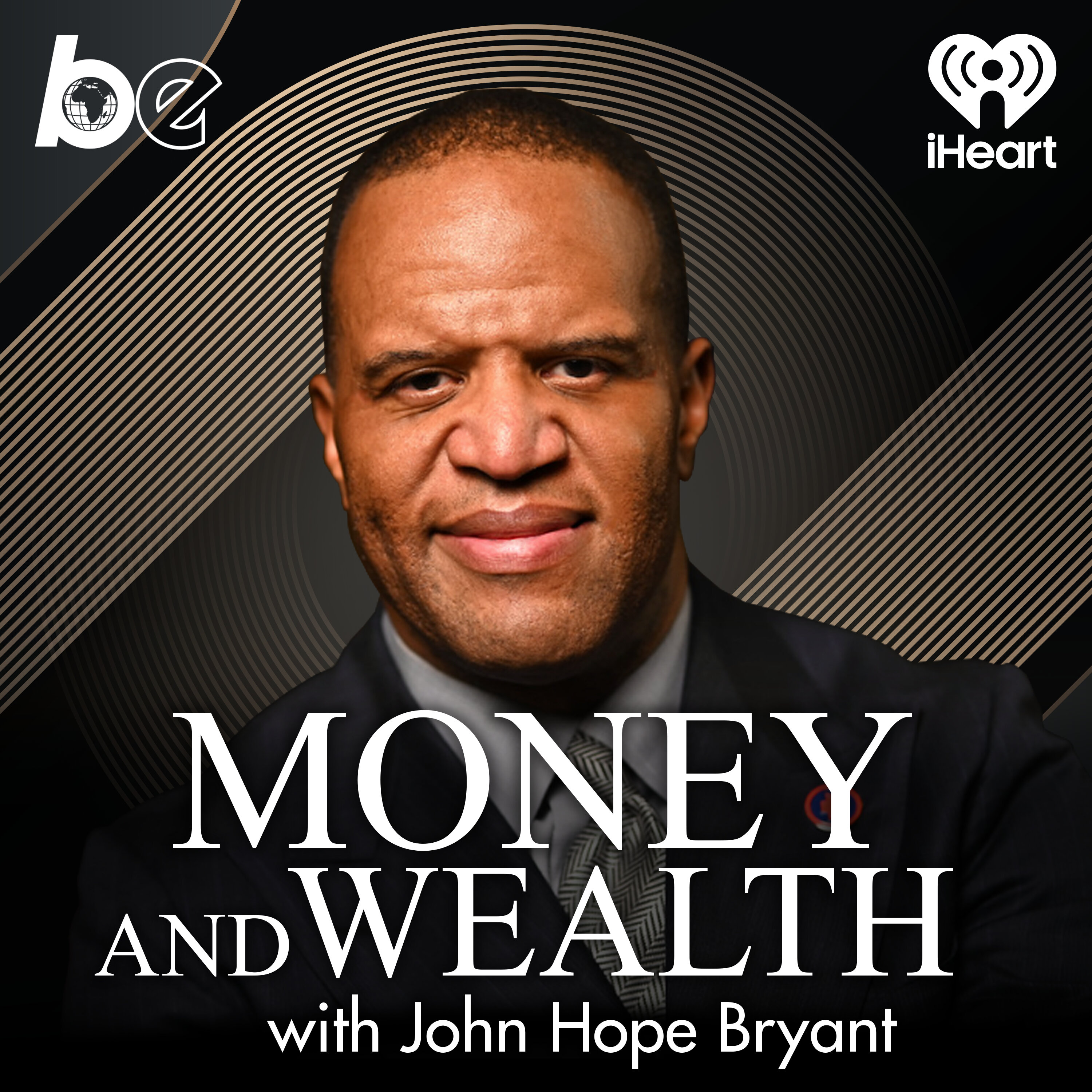
Welcome to Money and Wealth with John Hope Bryant, a production of the Black Effect podcast network and iHeartRadio. Hey, hey, hey. This is John Hope Bryant and this is Money and Wealth. I've always wanted to do this episode in general, but recently Straight Talk Live video that I Did. Well, actually, it was an interview that I did, a podcast interview I did for the Texas Black Expo when I was speaking. There was part of it was taken out in a clip. And if the clip went viral and it has millions of views just on Instagram, about one topic in particular, this topic. Are blacks and black Africans and black Caribbeans the same or different? And my answer, I like, you know, I just, I'm straightforward. My answer is yes, they're different. We are different. We're the same. We all come from Africa. Africa, the source of everybody, by the way, all human life originated from the African continent. We're all Africans. Okay? The sun was more direct. I love to joke about this just to cut the racial tensions so we can stop arguing about stupid stuff. But in Africa, the sun is sub Saharan African, direct. And for thousands and thousands, tens of thousands of years. And so black Africans are beautiful. This beautiful hue, this pigmentation. Their skin resists intense heat, absorbs it. And we don't know. Black Africans don't get skin cancer pigment. Their hair is kinky. So it absorbs, it absorbs the heat rays before it goes in the softest part of your body, which is over your brain and dissipates. And the nose is wide to cool the air as a natural air conditioner. Before that, before that heat, that heated air goes in your lungs and so on and so forth. And so blacks thrive and survive and, and have modified. They're not modified. Have adjusted to sub Saharan Africa. And as you get farther up on the African continent, the sun is less direct. And as you get into what they call North Africa, you have basically olive skin, blacks, and, and you go, you cross this little puddle of, of of water, the Mediterranean, and you get into Southern Europe, whether you have Italians and Spanish and Spanish and, and, and the French Mediterranean. And they are olive skin with curl, with loose curls. That's the sun over thousands and tens of thousand years is less direct. Literally, the hair is unfurling, right? Adjusting to the environment. You get into Central Europe and people are what you might call Caucasian white, if you want to call it that. But if you go to Nordic country, the Nordic countries, they, they, they, they make people in Central Europe look dark. Now let's go back to Africa. I've mentioned our nose is wider. I mentioned that we have kinky hair and the purpose of all that. And I didn't mention why we have big lips. I don't know, but everybody wants them. Okay? I just wanted to say that because it was funny. And so as you go up into the Nordic countries. You get to that this area and it's very cold. I went to go visit my friend, the Crown Prince of Norway a few years ago and it was December and the lady who picked me up, one of the security personnel, oh, so sorry for the delay, going through passport control, so on and so forth. Would you like to go to fishing with us tomorrow? So we're swimming with us tomorrow. It's December now. Heck no. It's freezing out here. I got on three parkas, a sweater, a beanie. This lady got on a T shirt and short pants talking about isn't it nice out? So she has long hair to cover her ears so her ears doesn't get cold. Her, her skin absorbs cold weather. Her nose is narrow to heat the air before it goes into her lungs. God has adjusted her to that environment. By the way, if you remove the water between the North American and South American continent, in Africa, in Europe and you, you look at that land mass. Click, click. Right. It was once one. So we're this whole racial thing is we just arguing over stupid stuff? That's not what this podcast is about, but it let me just sort of neutralize that as an issue and happy to go into that separately. If you want to obsess about our uninteresting differences some more. Let's now talk at minute five here in this podcast about what went viral and why it's relevant to your economy and our economic future and why I think you should it should matter to you and the opportunity for you because rainbows only follow storms. You cannot have a rainbow without a storm first. So I have said something pretty bold, but I don't think it is. Are black Africans, Black Caribbean and African Americans different? Yes. Even though I just told you we come from the same place. Black. These are generalizations, but they tend to stick. African Americans have, relatively speaking, a higher self confidence and a lower self esteem because we higher self confidence because we succeeded in the biggest market economy on the planet, we killed it. If we say something's cool, it's cool in Taipei. If we say something's cool, it's cool in North Korea is cool anywhere. We we have. We have created culture in defined culture all around the world. But because of the legacy of slavery, our self esteem tends to be and Jim Crow our self esteem tends to be lower. I'll get into why in a moment. Our African and black Caribbean friends tend to have higher self esteem and lower levels of confidence. Why is that? They experienced slavery for much longer, shorter periods of time, relatively Speaking now, some absolutists will say, no, John, that's not true. Those in Cuba, which is, by the way, technically Latin America, those in Cuba and those in Brazil experience it for longer. Yes, on a linear timeline, yes. But not the brutal institutional bad capitalism model of American slavery. I'm going to get to that in a moment. It matters. So all people experienced in the Caribbean, in Latin America, there were slaves, by the way, in Latin America before they were ever slaves in the United States, by the way, or in certainly much larger numbers. But it was institutionalized as a commercial business with machinery and bad capitalism here in the US and so this affected our self esteem. Okay, so this, let's, let's break some eggs first. People say, oh, black folks, you're, you're, you're stupid. You're, you know, black Americans, you're, you're lazy. Really? Knock it off. Hold on. So wait, so the, this, the, the, this, the 1600s was an agricultural age and the crops of tobacco, cotton, etc were just booming. And where that crop took off really was in the fertile soil of the southern, the American south, yes, Caribbean, yes, Latin America. But there was, it was a, like all the things lined up in the American south, but it was, it was hot, it was humid, it was, it was, the soil had died, would die easily, and no one knew how to work this soil or could work in this soil. Who are the geniuses of the land? This is not a trick question. Africans, they're used. I just told you, the sun is direct. In Africa, we're used to hot. And we used to working in these, these untenable environments, surviving, thriving. We've been doing so much with so little for so long, we can almost do anything with nothing. We're great at surviving and thriving. And so we were geniuses of the land. We could take dead soil and bring it back to life. So folks went halfway around the world not because they hated you, not because you were lazy, but because you're agricultural geniuses. Please understand this. You were geniuses. You are geniuses of the land. To this day, Africa is the largest untapped natural resource in the world. In the world. The African continent. I will be doing a podcast just on that topic coming up next. So, or soon, shall I say, I want to break this up so you get a little bit of everything. So in my podcast series, so they brought us here and so it's 12 and a half million, give or take, slaves, people who are enslaved, right? About 2 million or so died, killed, sacrificed in the middle passage, about 10 million or so get to this hemisphere. Here's some, some incredible numbers. Most of them go to the Caribbean or to Latin America. Only 350,000, give or take. Slaves, African slaves come into North America. This is stunning. This number is minuscule. So all the other places took slaves in and the numbers over time dissipated. Right. And it went from slavery to you know, indigenous servitude or something else. In America they mechanized it, they with the cotton gin and these things were created. Slavery was on, was a dying industry. And it got mechanized and rejuvenated to the point where half of all American exports were tied to cotton by the mid-1840s or 1850s. And that was the economic engine for America and the export for around the world. It touched everything and touched Wall street back. Wall street was born in this regard in the South. Montgomery, Alabama and other Alabama towns and Mississippi towns is where Wall street start. Don't trust me, look it up for yourself. These major Wall street firms had offices in Montgomery, Alabama. The wealthiest city in the world. Per capita was notches Mississippi in the 1800s. Yes, that misquote. African slaves were worth double railroads were, were the most valuable asset in, in the country for a long time. We built it all for free. Okay, so now you got this big brother, you bring him over here. He's an agricultural genius. You need his, his talent. He knows how to take this dead soil, bring it back to life, rejuvenate it, it create this, this, this crop which turns. But you don't need his attitude. You can't have him pushing back on you. He's twice your size and he's built from battle. So you take his, you destroy his hope. We're not human beings having a spiritual experience. We're spiritual beings having a human experience, right? You destroy his hope. You take his family members and you separate them and you sell the children off in different directions. By the way, here's good definition between good capitalism and bad capitalism. Good capitalism is where I benefit and you benefit more. An entrepreneur creating a comb that combs your hair. And then somebody, another merchant and free enterprise finds the right price, right price point where you find more value than cost. You buy that comb because it provides value to unkink your hair. That's good capitalism. I benefit, you benefited more. Everybody won. Bad capitalism is where I benefit. And you pay a price for it. This is an example of bad capitalism times a thousand. Wasn't personal. Well, it was personal too, but it wasn't primarily personal. Nobody brought you halfway around the world because they hated you. This was about business, just bad business. And this will become crystal clear before this podcast is over to anybody who likes math. I like math because it doesn't have an opinion. And I'm going to prove before this podcast is over that race, while incredibly destabilizing racism, is real. Racism is like rain is either falling someplace or it's gathering. So you might as well get out an umbrella in the color you like and start strolling through it because it's not going to change. So we muscle. It's real, right? But race is actually not the primary issue. And I'll explain that because I'm going to unpack race as part of this discussion. White, black, the whole thing, all in the course of an hour just to prove how simple this is and how people are hiding the ball from you and in plain sight in playing on our depression and our whatever else you want to call it. So black Africans came here with all this utzba. This big dude is sitting there and they have to destroy his spirit, not his body. They need his body. They sell the kids into different directions. So now his hope is gone. His wife is there for him to protect. They hold him down while they abuse her. And they abuse her and hold him down until he stops fighting back. Now he's lost his ability to protect the one he loves. So now his self esteem has been destroyed. Now it's time to put in work. And now you've got human machinery, which was the point. And this was a systemic effort to create machinery of the 15th, 16th and 17th centuries. And this went from 350,000 to 4 million. This the only place, America, where we manufactured slaves. Every place else, slaves came in and the numbers went down over time. And it's notable that in Latin America, by the way, the person who pushed the Spanish out of Mexico was a former black slave who was part black, part mestizo, Aztec, Indian, Mexican, Spanish, you know, Latino, Hispanio and black combination. He pushed, he led an effort to push the Spanish European colonizers of that time out of Mexico. So much so they made him president. Yes. The second president in Mexico, in 1829, I believe it was, was of African descent, a freedom fighter who outlawed slavery 40 years before Abraham Lincoln. Just under 40 years before Abraham Lincoln. Yes. This is a whole nother thing. If you want me to go deep on this, let me know in the comments when you see this outtakes and I'll be happy to break it down. His name is Guerrero. The only man in Mexico to have a state named after him is Guerrero. State. And, and by the way, little side note here, he outlawed slavery and the one area that was making money on slavery so was enraged by his efforts. They removed themselves from Mexico and that was an area that was called Texas. It became the state of Texas. And Texas literally is created. And I love Texas. I just came from Texas. I have plenty of friends in Texas. I love hanging out in Texas. I'm not hating on Texas. I'm just giving you the facts that literally, Texas was created because it was able to pursue slavery for another 20, 30, 40 years before slavery was banned in the Civil War. But this was the reason that Texas left Mexico and this was the reason for, indirectly, the Mexican American War and this was the reason for the Alamo battle and all that stuff. American citizens were taking citizenship in Mexico, not the other way around. People weren't coming here. We were going there because of the economic activity, the freedom, the land, et cetera, and the endorsement of slavery. Until Guerrero put his foot down and they ultimately killed him, by the way. So another story for another time.
- [19:10]
iHeart Podcast Intro
Tired of losing weight only to gain it all back? The weight loss experts@slimrank.com have done the research. Slimrank.com ranks the safest, most effective GLP1 programs that get and keep the weight off for good. Stop watching the scale go up and down. Go to slimrank.com and pick America's number one weight loss program today. Slimrank.com that's S L I M R A N K dot com. Your dream body is just a few months away. Slimrank.com run a business and not thinking about podcasting? Think again. More Americans listen to podcasts than ad supported streaming music from Spotify and Pandora. And as the number one podcaster, iHeart's twice as large as the next two combined. So whatever your customers listen to, they'll Hear your message. Plus, only iHeart can extend your message to audiences across broadcast radio. Think podcasting can help your business? Think iHeart streaming radio and podcasting. Call 844-844 iHeart to get started. That's 844-844, iHeart.
- [20:12]
Joseph Rees
Show me how good it can get today, God and show the rest of the world what we already know. It can't get. No better than being Hella Black. Hello Queer and Hella Christian. My name is Joseph Rees. I am the creator and host of Hella Black. Hello Queer. Hello Christian. A fully black, fully queer, fully human, fully divine podcast that explores society, culture and the intersections of faith and identity. Listen to Hella Black hello Queer, hello Christian to hear conversations about what it means to sound the way you look.
- [20:44]
Clearview Advertiser
I think what I've had to make peace with is, is that every iteration of my voice is given to me by God and I love it.
- [20:50]
Joseph Rees
Books that validated our identity.
- [20:52]
Clearview Advertiser
The library now for me is a.
- [20:54]
John Hope Bryant
Safe space as someone who is writing.
- [20:56]
Clearview Advertiser
Books that they're trying to take off.
- [20:57]
Joseph Rees
Of shelves and how we as black queer folks relate to our Christianity. Listen to Hella Black, Hella queer, Hella Christian on the iHeartRadio app, Apple Podcasts or wherever you get your podcast.
- [21:15]
Hot Agent of Chaos Host
Jan Marsalek was a model of German corporate success.
- [21:19]
John Hope Bryant
It seemed so damn simple for him.
- [21:22]
Hot Agent of Chaos Host
Also, it turned out a fraudster.
- [21:25]
Dexter Thomas
Where does the money come from? That was something that I always was questioning myself.
- [21:30]
Hot Agent of Chaos Host
But what if I told you that was the least interesting thing about him?
- [21:33]
Dexter Thomas
His secret office was less than 500 meters down the road.
- [21:37]
John Hope Bryant
I often ask myself now, did I know the true Rian at all? Certain things in my life since then have gone terribly wrong. I don't know if they followed me to my home. It looks like the ingredients of a really grand spy story because this ties together the Cold War with the new one.
- [22:00]
Hot Agent of Chaos Host
Listen to Hot agent of chaos on the iHeartRadio app, Apple Podcasts or wherever you get your podcasts.
- [22:17]
John Hope Bryant
So now you have all this economic activity going on in the southern states. It's based on this bad business model. And the result of that, after slavery and Jim Crow is that black folks had, I believe, a devastated self esteem. So if I don't like me, I'm not going to like you. Explain so much. If I don't feel good about me, I'm not going to feel good about you. If I don't respect me, don't expect me to respect you. If I don't love me, I don't have a clue how to love you. If I don't have a purpose in my life, I'll make your life a living hell. Whatever goes around comes around. So you have this brilliance now that is a bit of a lost soul that it hasn't healed. But we are now in the biggest economy on the planet. And the miracle of this story is we go from this slavery story to the President of the United States of America. Can I get an amen? President Barack Obama? That we have these heroes and sheroes that are symbols all around the world. Jay Z. LeBron, Robert F. Smith, the entrepreneur, Reginald Lewis, I mean, Oprah Winfrey. All these heroes and sheroes from all walks of life. Gayle King from every corner of Society who are just killing it on a global scale, in spite of what I just told you. Pretty amazing. We have mastered culture and cool all around the world. The problem is other folks have mastered capitalism and commerce. That's a mic drop, by the way. So we just need to stop just rocking the mic and start owning it. But you can't own it unless you understand that somebody else doesn't wants to distract you with being in entertainment alone. So I love my entertainment friends who now say, let me be a Johnny, show me how to be a businessman. Because it's a show business. It's, it's the business of show. It's, it's the sports business. It's a business of sports. Back to the topic. So now you have black folks who have this incredible confidence because we're competent. You've shown you're competent. That inspires confidence naturally. So you have high confidence but lower self esteem, which unfortunately can create things like crab in the barrel, trust issues and all that stuff that we all know so much about. If you're African American, your head should be nodding right now. And I think that the majority of African Americans are clinically undiagnosed depressed. That's the one thing I can't prove. I don't have any data around it, but I just, whenever I talk to people, they're like, yeah, that's real. And we never healed. This country didn't heal after the Civil War. We didn't say that the Confederacy was bad. And this is a nation under God of all of us. And we know that we won the Civil War, people moved on. And in many ways you still have the philosophy of the Confederacy and the philosophy of the Unionists. Anyway, that's another podcast for another time, which is one of the reasons we can't deal with we haven't healed. But I'm focusing on you healing and understanding the challenges now. My black African friends and my black Caribbean friends dealt with slavery for much shorter periods of time and more importantly had role models of nuclear families. Their mom and dad was there because Caribbean, the slavery model in the Caribbean, in Latin America, et cetera, didn't punish. It wasn't commercially brutal in the way I've just described the model in the US and families were oftentimes left together and were able to grow up together. Right? And then slavery just didn't last for long. So they were then able to organize their normal communities just didn't just had less rights and privileges. But they still said a mom and a dad and the nuclear family and they they, the, the governor was at, at some point black and the prime minister was black and the dentist was black and the, the, you know, the robber was black, the criminal was black, everybody was black. So you have this, you have this sense of belonging in this cultural sort of currency and so you have higher self esteem. But because these were not leading economies in the world, you had lower levels of confidence. It wasn't a market economy, it wasn't a leading market economy. The Caribbean nations, Latin American areas, et cetera. So you have black Africans and black Caribbeans who have higher confidence, a higher self esteem and lower confidence. And you have African Americans who have higher confidence and relatively speaking, lower self esteem. There's your difference and let me illustrate how this difference works in real time. So black Africans, black Caribbean. Let's take, let me pick on Ethiopia, my Ethiopian brothers and sisters. I've stayed at the Park Hyatt in, in Washington D.C. you see an Ethiopian brother working as the valet. After a couple weeks coming in, I see several other Ethiopians working as valets. And then I see some Ethiopians at the front desk. And then I see an Ethiopian assistant manager. And then I come back and I see there's Ethiopians driving taxis, they're picking up gas. And then, and then I come back. What's going on? Oh yeah, we, we, we, we, we figured out this, this is an economic model here. We, we're like, we're, we're working together. And then they've gotten, they've rented an apartment department together, they bought a house together, they've now bought a black car together for Uber or Lyft. They're now got, they're now trading information, trading, trading opportunities together. They got a little economic mafia going on, positive sense. The front desk to the, to the curb to, you know, transporting throughout the city is now at all an Ethiopian model. And those who are from the, from Africa, the Caribbean know exactly what I'm talking about. Right? And because they have no problem working together because self esteem was not their primary issue, it was a lack of opportunity. You give them two or three years here and they're killing it. Now somebody is going to now still be questioning whether this makes any sense. And for us to have the rest of this conversation, I've got to now deal with the issue of whether black and white. Somebody said, no, no, the real issue is white racism. Well, white racism is a big deal, but it's really just racism and power really. So blacks and whites worked together in the 1600s as indentured servants. That's True, blacks and whites were indentured servants together. Poor whites from Britain, they work together. They ran off together. When they came back here, the overseers said, boss, we have a problem. They run off together. They become friends. And it's a problem because we can have a race riot. We cannot have a class riot because we're the class. We got to break this up. And so they caught these runaways, and they told the white runaways, look, you can't do this again. Two more years of indentured servitude, and now you're in charge of the blacks. You're white like us. It was the first time the word white, racial word white, was created in 5 billion years of this world. 4 billion years of organism life, a couple hundred million years of Neanderthal life, a couple hundred thousand years of modern mankind. As you know, it's a thousand years of, you want to call it enlightenment, 3,000 years since Christ, that word, the racial word. White was created in North America in the 1600s for this reason. You're white like us, okay? So you're in charge of them. And then they told the blacks, you can't run away again because now you're. You're enslaved for life. That's where slavery began. It was a commercial penalty that separated the poor class, the poor whites, from the poor blacks who were getting along. Before that, they were friends. So it doesn't sound ridiculous now that poor whites and black, poor blacks are at each other's throats. That's another conversation for another time. Xa, We've been bamboozled. We've been tricked. We've been hoodwinked. We've been run amok. So here comes this differentiation. But now if you're poor white, what you didn't say, well, they didn't say to their overseers was, well, but am I wealthy like you? Do I have titles like you? Do I own property like you? That would have been a different conversation. Never asked because there was. It was a lack of education, lack of high frequency, lack of understanding. And so they didn't. They didn't know what they didn't know. They didn't know to answer question which speaks to mindset, right? You go to my book. My last book is Financial Literacy for all, number one still in the world on business finance and business economics. Financial Literacy for all Book before that, up from nothing book from that, the memo. And I talk about the five pillars of success, and I talk about the five things you need to be successful. As much education you can shove down your throat. Financial literacy understand which is the. Financial literacy is a civil rights issue of this generation. When you know better, you do better. We live in a capitalist democracy. Little big C, little D. If you don't believe that, look at the last election cycle. It's about the money. You need family structure and resiliency. You need self esteem and confidence. Those two things are different. I just described it. You need role models and environment. If you have five of those five things with all the barriers coming at you, you'll succeed. All the 200 ethnic groups that have come to America, some odd 200 ethnic groups have come to this country who found those five things, or come here with those. An obsession about education, understanding how economics and financial literacy work, family structure and resiliency, self esteem and confidence, role models and environment. No matter what the group is, you had those five things. You killed it. Just by the way, don't trust me, do your own research. Even my Jewish brothers and sisters, this is literally a signal of their success. But Italians, Polish, these were all groups that were called horrible names. They were called Italians, were called the N word in the early 20th century, the early 1900s in America. I mean, these were all groups who came from the Irish. All these hardscrabble groups came to America, were at the bottom of the social ladder. They needed things like the New Deal created for them so they can come up, and the Homestead act and all that stuff. We don't have time for that in this podcast. But they had these five things. The three groups that don't have five things, that have really less than the three things. Native American, Indians, poor whites and African Americans. Don't believe me. Do your own research. And it doesn't matter which of these five things that you carve out as much education, shove down your throat. Financial literacy, self esteem and confidence, role models and environment, family structure and resilience. If you have three or more of those things, you can kill it. You have three or four or less of those things, you get killed. Right? And because you don't have the mindset, the tools in order to succeed. And just to prove that race has been a distraction in addition to being a real problem, if this was all about race, then all white people would be wealthy, not having the largest population of poverty in this country, being poor, white. So the number one group dying in America, I believe it's still true, are high school educated white men dying of opioid addiction, which is really a lack of aspirational success. And the number one group of alcoholism, unfortunately, in this country are native American Indians. I believe that's still true on Indian reservations. It's depression. And we know that at the bottom of the economic pyramid is a group that built the country for free, which are African Americans. Now, let me give you modern data. Federal Reserve issued a study a few years ago in Boston. Boston Federal Reserve. And it was on the front page of the Boston Globe. And the front page at Boston Globe said this black American net worth, Black net worth eight bucks. I think it was seven bucks. But anyway, seven or eight dollars. I don't remember the exact number, but it's okay, you get the point. And it had to say in the headline, this is not a typo, because they thought no one would believe it. Let's just say it was seven bucks. The net worth, when you read the study, read the article, the net worth of Caribbean blacks in the same study was $1,200 now. And now the net worth of whites was $100,000 plus. But the point of this is if racism was the only issue and it would affect everybody the same and equally, because black is black is black. No one knows a black African or a black Caribbean from a black American per se. When you're chasing them down the street or discriminate against them, you don't say, pull out your ID cards and decide how much I'm going to discriminate against you. If it's all the same, that all black struggle should be the same and that net worth should be all 7 bucks or all $1200. Can I get an amen? Right. But it wasn't. It was different. And so I want you to understand where we come from, so we know how we can go forward together. So we need to be. To get on the same page. Because Africa is our home. Black Americans, in my opinion, in my opinion, should become to Africa the continent of Africa where Jews are to Israel, which is a resource we need to reconnect with our, with, with our heritage, with our background. I'm wearing right now an African band doing this podcast. And I wear Mandela's prison number here. And I wear these every day. I know that my DNA. I've done a DNA test, test through, through African ancestry. I know my DNA is from 71% Cameroon African next to Nigeria. I know I'm 26 per year, 26% European. This is Asian, Indian and other, which means whoever I hate, if I decide to hate somebody, I hate myself. And who. And by the way, if you want to mess up somebody's brain who's a racist, give, give him a DNA test for him and his family at Christmas a month before Christmas dinner and let them open up the the test at Christmas dinner and watch racist passed out on the floor because he might be in all likelihood has got some black blood in him.
- [36:45]
Happy Head Advertiser
There's a myth a lot of us grow up believing that hair loss is just a part of life. It happens, it runs in the family and once it starts, there's no stopping it. But here's the truth that's outdated thinking. Scientific understanding of hair loss has advanced in recent years. Today we have a deeper knowledge of underlying causes and we've developed science backed solutions that are both effective and safe. And that's at the very root of Happy Head. Dermatologists led innovation offering stronger FDA approved ingredients that work. But what really sets Happy Head apart is how personalized it is. They don't do one size fits all fixes. You fill out a comprehensive consultation and their board certified dermatologist assign a formula specifically specifically for your hair loss pattern, goals and lifestyle. And whether you're early in your journey or more advanced, Happy Head offers targeted options that actually work. Topical treatments, oral capsules or potent dual action bundles all deliver directly to you, discreetly and freshly compounded. In the US most people start seeing results in three to six months. But the real magic? It's sustainable. This isn't just about growing hair, it's about keeping it long term. So no, hair loss isn't inevitable anymore. Visit happyhead.com and find out what's possible when science, expertise and personalization come together. Hair happiness starts here.
- [38:00]
iHeart Podcast Intro
Run a business and not thinking about podcasting? Think again. More Americans listen to podcasts than ad supported streaming music from Spotify and Pandora. And as the number one podcaster, iHeart's twice as large as the next two combined. So whatever your customers listen to, they'll hear your your message. Plus, only iHeart can extend your message to audiences across broadcast radio. Think Podcasting can help your business. Think iHeart streaming radio and podcasting let us show you at iheartadvertising.com that's iheartadvertising.com.
- [38:31]
Joseph Rees
Show me how good it can get today God and show the rest of the world what we already know it can't get. No better than being Hella Black, Hella Queer and hello Christian. My name is Joseph Rees. I am the creator and host of Hella Black Hella Queer Hella Christian, a fully black, fully queer, fully human, fully divine podcast that explores society, culture and the intersections of faith and identity. Listen to Hella Black Hella Queer. Hello Christian. To hear conversations about what it means to sound the way you look.
- [39:02]
Clearview Advertiser
I think what I've had to make peace with is that every iteration of my voice is given to me by God and I love it.
- [39:08]
Joseph Rees
Books that validated our identity.
- [39:10]
Clearview Advertiser
The library now for me is a.
- [39:12]
John Hope Bryant
Safe space as someone who is writing.
- [39:14]
Clearview Advertiser
Books that they're trying to take off.
- [39:16]
Joseph Rees
Of shelves and how we as black queer folks relate to our Christianity. Listen to Hella Black, hella queer, Hella Christian on the iHeartRadio app, Apple Podcasts or wherever you get your podcast.
- [39:33]
Hot Agent of Chaos Host
Jan Marsalek was a model of German corporate success.
- [39:37]
John Hope Bryant
It seemed so damn simple for him.
- [39:40]
Hot Agent of Chaos Host
Also, it turned out a fraudster.
- [39:43]
Dexter Thomas
Where does the money come from? That was something that I always was questioning myself.
- [39:48]
Hot Agent of Chaos Host
But what if I told you that was the least interesting thing about him?
- [39:51]
Dexter Thomas
His secret office was less than 500 meters down the road.
- [39:55]
John Hope Bryant
I often ask myself now, did I know the true Rian at all? Certain things in my life since then have gone terribly wrong. I don't know if they followed me to my home. It looks like the ingredients of a really grand spy story because this ties together the Cold War with the new one.
- [40:18]
Hot Agent of Chaos Host
Listen to Hot Agent of chaos on the iHeartRadio app, Apple Podcasts, or wherever you get your podcast.
- [40:34]
John Hope Bryant
So this racism thing is really stupid, but our misinformation amongst ourselves is unproductive and we need to knock it off because we actually need to find a pathway together. So the African continent is a gold mine. But we suffer from misinformation about that and others are taking advantage of that while we're sleeping. Just recently, China had a meeting with a bunch of African leaders. While America was bombing a nation in the Middle East, China was cutting a deal with African business, African heads of state, because Africa does China. Their model is a low cost economic produce. And they realize that China, that Africa is the lowest cost, the largest resource of natural resources in the world and all of the resources in China. In Africa, China needs in order to continue to produce products at a low cost. And one of the growing groups marrying black African women in all 54 countries, by the way, are Chinese men. And they're not doing because they love our women. They're doing it to lock in their economic interests by creating family bonds. That's another podcast when I talk about Africa and China and the world. But I'm trying to get you to understand that we need to heal our pain and why. And it starts with understanding where these differences come from. So let me now talk about who we are and summarize it. Black Africans, descendants of slavery in America, Born from struggle, systemically oppressed, but also deeply American. Raised within a system that both marginalized and shaped us. We've been doing so much with so little for so long. We can almost do anything with nothing. We have succeeded against all odds. And as a result of that, we are a true north, I believe, for all people of color in the world. Africans, continental Africans growing up with a sovereignty and identity. However, often under economic instability, political conflict and colonial hangovers. Pride in ethnic origin and homeland. More likely to come from collectivism. Cultures versus individualist America. Intact family structures, largely African Caribbean's often straddling worlds. Post colonial struggle, Diaspora, identity, migration. Stories from there to here mean America. Strong family structures and entrepreneurial spirit. Deep cultural resiliency despite limited natural resource bases. Where they come from, temporarily lacking confidence because they come from a place where these are small island economies. So they need a moment to sort of get their sea legs. No pun intended. We are cousins from different houses. The tragedy is that we don't recognize our family resemblance. But the opportunity lies in learning each other's stories and respecting them. So I hope this was very helpful in understanding where we came from. Let's talk about now the economic power and unity. Black Americans represent about a $1.8 trillion annual consumer spending force. If we are a nation, we'd be one of the largest in the world. Africa is the youngest population in the world, richest in natural resources. As I've already mentioned, the fastest growing group of young people and the largest demographic, I believe in the world are Nigerians. I think that's still true. Caribbean is a gateway to trade, culture, tourism and policy innovation. And it's two hours off of our coast, in some cases as little as an hour off our coast in America. And as a side story, without Haiti, there'd be no American story. I'll tell this story very quickly. Haiti was the economic engine for, again, people saying we're stupid and all this stuff. Haiti was the economic engine for France. And it was so important to France as it waged war around the world that France's military leader sent his brother to oversee Haiti. Napoleon sent his brother Haitians over, decided they wanted freedom and did, you know, and ran Napoleon's brother out of Haiti. So Napoleon came, and the only place that's ever beat Napoleon is Haiti. And if Haitians had stopped there and just organized themselves, the story would be different. But they went on a rampage is why I say whenever you make an emotional decision, it's a bad emotional decision. It's a bad one. They went on a rampage and did some really horrible things to French citizens and all that kind of stuff. And they went next door to the Dr. Dominican Republic and did some not so nice things there. This is my opinion, by the way. Some people, I'm sure they're folks going to be all in the comments from, from who are Haitians. But I'm giving you a compliment. And at the same time, when they're messing up the economy that they, that the economic engine that they were creating all this money they were shoveling back to France. France was in negotiation to sell what we now call New Orleans to America, a very young America. But Haiti is so crippled the economic engine for France that in an instant France had to expand from this little place called New Orleans to what was called the Louisiana Purchase, which was more than a dozen American states at this time. This was the biggest representation of this new country of America. And they only did it because they were desperate because of what happened in Haiti. And now this last part is just my opinion. I believe France got so angered by that, having to do that and sell this land to America for pennies on the dollar, by the way, that they got so angry, they actually organized themselves with other European powers for which they would normally against it said we've got to now put Haiti in a poverty box as a penalty. No one else can rise up against us like this and they need to be an economic despot for 500 years, which effectively is what's the case. And actually Haiti had to pay reparations, if you can believe this, back to France. That's a whole nother thing for another time. And by the way, I don't want you getting angry about any of this right there, there, if you want to find reason to be angry, there are bums in all of our families. There are bums. You know, I call it bum factor. 20% of black folks are bums. 20% of white folks are bums. 20% Of Africans, Caribbean bums, 20% of Republicans and Democrats, Europeans, Asians, you know, are bums. There's bums. I got bums in my own family. You don't need to go to place blame. And by the way, there were Africans involved in the slave trade. How do you think people got to the coast? You know, they were Native Americans. There were Arabs and Indians and people in the Middle east and of course Europeans involved in the slave trade. So this is not about blame. This is about you understanding your history and repairing it so there's your little sideline on the debt we owe, I think, to Haiti and why I think people like President Bill Clinton and others have been trying to repair Haiti. Haiti to this day is just a sad and hopefully evolving story. But brilliants have come from Haiti. I know several brilliant businessmen and businesswomen. Harold Charles has an airport named after him in Turks and Caicos Islands. I mean, so many folks expanded, left Haiti and did incredible things once given a level of playing field and the tools to be successful. And I'm trying to give you the tools to be successful because I know when the rules are published and the playing field is leveled, it's a Jesse Jackson quote. Where the rules are published and the playing field is level, you kill it. Just like we did with the arts and professional sports and church and politics and the in the military. When the rules are published in the playingful level, we succeed. Now I'm trying to give you the rules and a level playing field on capitalism and free enterprise. So where are the possibilities? Black Africans invest in Africa in African infrastructure and businesses. Fintech, real estate, agriculture, trade. African entrepreneurs tap into African American markets and brand power. Everybody using their strength. Caribbean nations become hubs for culture, tourism and offshore financial centers for global black prosperity. We have invested in a Caribbean nation, Turks and Caicos, by me and my family. And I think this is just so natural to connect with the Caribbean nations and African Americans on your way to Everybody should go to Africa once a year in my opinion. You go there for a cultural exchange, find your roots literally, and then go. If you want to do business, you need to go there probably three times a year. But you need relationship capital. That's a whole Another video for podcast for another time. And imagine a black silicone valley between Atlanta, Lagos and Kingston or you know, Rwanda. My friend who is a president of Rwanda has tried to position Rwanda as a silicon Valley because they're landlocked. And I think he's doing a great job of looks like a vision for Singapore without the water in Africa. There's so many breakout incredible stories. My friend Strive Masayiwa, who is the Bill Gates of Africa, is the sixth richest man in Africa last time I checked. Dear friend of mine met him through Ambassador Young. We become dear friends and when you bring him in a room, he's smartest guy in the room. No one says he's a black guy. They say he's a brilliant guy who happens to be black. So as we wrap this this segment up and hopefully you've enjoyed this, we need to Go from division to collaboration. I need you to educate yourself on what you don't know. Read, watch, listen to each other's stories. God gave you two ears and one mouth. You listen twice as much as you talk. All right? Why Quincy Jones? How'd you get so smart? I'm just nosy as hell. He told me, I want to know everything about everything. So stop knowing so much and start, listen, be ear hustling and understand your history. I went and done my research. African ancestry and accessory dot com. If you were enslaved, your history only goes back, but so far because you weren't a name, you weren't a family legacy, you were an. You were property. Literally. If you have there's a bank with 150 year old history, they have slaves on their books. Because if they were going to finance a plantation or farm, that plantation or that farm had assets which include livestock, include the, the real estate, physical assets. But it also included, unfortunately, slaves were not humans. They were considered property. You weren't a human, you were property. And so literally, banks are over 150 years old today, have slaves on their books. Don't trust me, go do your own research. So just understand the history and have compassion and empathy for where people have come from and how their stories are different. And let's meet in the middle. Travel, get a passport, visit the motherland, or if you can't, at least the islands. Collaborate. When you get to the islands, do more than party. Collaborate on business, on art, on entrepreneurship, on culture, on trade. Build relationship capital. Start a Pan African economic circle. Invest with intention if you like. Start a financial literacy circle. Teach your brothers and sisters how there's a system works. Again, I think this is the civil rights issue of this generation. Financial literacy heal. Acknowledge the trauma and begin the work of reuniting us with us. If we unify, we're not minorities, we're a global majority with leverage. I've been to 100 countries. I've been to more than 30 countries in Africa. Just, just more than, just more than half the countries in Africa. I've been to South Africa more than 40 times. I had offices in South Africa, Morocco, Saudi Arabia, which I consider a sort of north North Africa and the uae but proper Africa. I've been to many, many African countries and I just love the Africa coach. Me and my wife were engaged in South Africa on safari. It is, it just. The earth feels different, the air smells different. The experience will change you. Don't laugh at Africa. Love Africa. Understand that it is no laughing matter that that is your if you're African American, that is your home. Well, it's all of our home, but it's really your home. And it's the missing link is why we don't feel complete. Where we spend too much time and for too long separated by oceans and pain. It's time to build bridges with our minds, our hearts and then our money. We want global black prosperity, not just black lives matter, Black capitalist matter. I want you all to tell your friends about this podcast which is number which is top 100 or 125 in the world for black on Apple platform for business and top 50 in the US for entrepreneurship. It's also top on every continent, including the African continent, South Africa in particular in the UK for Europe, Chile for Latin America, Saudi Arabia for the Middle East. I'm sure I miss Hong Kong for Asia. This is a global conversation. We're all in this together. Where this country in this world is going to live or die, prosper or not, based on how we embrace each other and find our common similarities with our versus our very uninteresting differences and find common ground. But we need to understand the what, the why, the where so we can figure out the destination of how we all get there together. This is John o' Brien. This is Money and Wealth, the Black Effect Network podcast episode in season two. And tell your friends to go to Operation Hope. Get your coaching and counseling. We're the largest financial literacy coaching organization in America. 1500 offices in 40 plus states. We're the only organization allowed to operate inside of a bank branch. Getting the bank out of the no business back in the yes business. Moving people up and out of poverty at scale, getting your credit score up, your debt down, your savings up. So the bank can say yes, because the bank just wants a good loan. The bank's not discriminating against you today because you're black. It might have been 40, 50, 100 years ago for sure when the bank was privately owned by some racist family. But now, you know, everybody owns some stock in money center banks if you're in the stock market. These banks just want to make good loans and I want them to make a good loan to you. So I want to get your credit score up to 700 so the bank just says yes, like they did to my mother. So you can become a homeowner, a small business owner, an entrepreneur to send your kids to college so that you can travel and get your get an expansive experience. You can get a good job either writing it, either cashing a check or get or create A business and write a check so that you build wealth at scale. This is a civil rights movement. From civil rights to civil rights. From civil rights, civil rights to civil rights. From the streets to the sweets. This is an ownership agenda and you can participate in it. You can be a positive force in this world. And you don't have to hate on anybody else to do it. Hate actually is a problem if you do it. Dr. King once said that hate and evil have within it the seeds of their own destruction. I'm paraphrasing what Dr. King said, so don't hate on somebody else. That may ricochet back on you because thoughts are things. To rationalize is to tell rational lies. And disease is often dis ease. And you die at 61 years of age. If you have a 500 credit score with a surviving mindset, you don't even get the Social Security age, which is 65, I believe. But if you have a thriving and winning mindset, a building mindset, you're optimistic. You believe in. In opportunity and potential, and you get your credit score up to 700. You lived at 81 years of age or better. And now you can live the American dream for yourself and expand your legacy on for others. Let us now be a light for the world. A light for the world. Let's continue this work that we're all in. The world actually needs us. A world. America cannot succeed unless black and brown people do. Yes, you heard that here. And we need to embrace our poor white brothers and sisters. Need to embrace our Native Americans, our Asian, our Indian women. We all. I need white folks to succeed, right? If you're proper and if you mean well, I'm with you 100%. We need all everybody to come up. Because if you live in America, your enemy's not a black or white person next to you or a Republican or a Democrat. There are four countries trying to take you out. Iran, North Korea, Russia and China. They want your way of life, but they can't get in that fair fight. They need for you to argue with each other and get into fistfights. And everybody wants to be an American. But Americans. Yes, I said it's. Capitalism and democracy are horrible systems. Except for every other system. Let's stop trying to do the perfect. Let's just get this system that we have here. This is imperfect as it is and created slavery. That I am a long descendant from my second great grandfather was a slave, George Young, fought in the Union army for the Emancipation proclamation. My grandfather, R.B. smith, was a sharecropper. My second great my second great grandmother, my mother's side was also a slave, so I know where I come from. My mother grew up in a shotgun shack in East Lewis. Juanita Smith, God rest her soul. But I'm not going to harbor on that. I'm not going to hate on that. I'm going to spend my time wrestling with that. I'm going to move up and out because I am God's child. And this is the rainbow after this storm, I'm out. John Hope Bryant, I'll see you. The finish line, Foreign wealth with John o' Brien is a production of the Black Effect Podcast Network. For more podcasts from the Black Effect Podcast network, visit the iHeartRadio app, Apple Podcasts, or wherever you listen to your favorite shows.
- [60:44]
Dexter Thomas
Are there any pictures of you online? Then you could already be in a massive police database without even knowing it.
- [60:50]
Clearview Advertiser
Clear View scrapes together images from Facebook, from LinkedIn, from Venmo accounts.
- [60:56]
Dexter Thomas
I'm Dexter Thomas, host of Kill Switch, a podcast about how living in the future is affecting us right now.
- [61:01]
Clearview Advertiser
Police, they are trusting the software with this magical ability to lead them to the right suspect.
- [61:07]
Dexter Thomas
In this episode, we dive into how cops are using AI and facial recognition and sometimes getting it wrong and putting innocent people behind bars.
- [61:15]
Clearview Advertiser
So if your accuser is this algorithm, but you're not even being told that it was used, let alone given any of the details about how it works.
- [61:24]
Dexter Thomas
Listen to Kill Switch on the iHeartRadio app, Apple Podcasts, or wherever you get your podcast.
- [61:31]
Hot Agent of Chaos Host
Did it occur to you that he charmed you in any way?
- [61:34]
John Hope Bryant
Yes, it did. But he was a charming man. It looks like the ingredients of a really grand spy story because this ties together the Cold War with the new one. I often ask myself now, did I know the true Jan at all?
- [61:53]
Hot Agent of Chaos Host
Listen to Hot Agent of chaos on the iHeartRadio app, Apple Podcasts, or wherever you get your podcasts.
- [62:01]
Joseph Rees
Show me how good it can get today, God, and show the rest of the world what we already know it can't get. No better than being hella black, hella queer, and hella Christian. My name is Joseph Reeves. I am the creator and host of Hella Black, Hella Queer, Hella Christian, a fully black, fully queer, fully human, fully divine podcast from iheartmedia to help Hella Black, hella queer, Hella Christian on the iHeartRadio app, Apple Podcast, or wherever you get your podcast.
- [62:31]
Mental Health Advertiser
When your car is making a strange noise, no matter what it is, you can't just pretend it's not happening.
- [62:39]
John Hope Bryant
That's an interesting sound.
- [62:40]
Mental Health Advertiser
It's like your mental health. If you're struggling and feeling overwhelmed, it's important to do something about it. It can be as simple as talking to someone. Or just take taking a deep, calming breath to ground yourself. Because once you start to address the problem, you can go so much further. The Huntsman Mental Health Institute and the AD Council have resources available for you at loveyourmindtoday. Org.
- [63:01]
iHeart Podcast Intro
This is an iHeart podcast.