← Money And Wealth With John Hope Bryant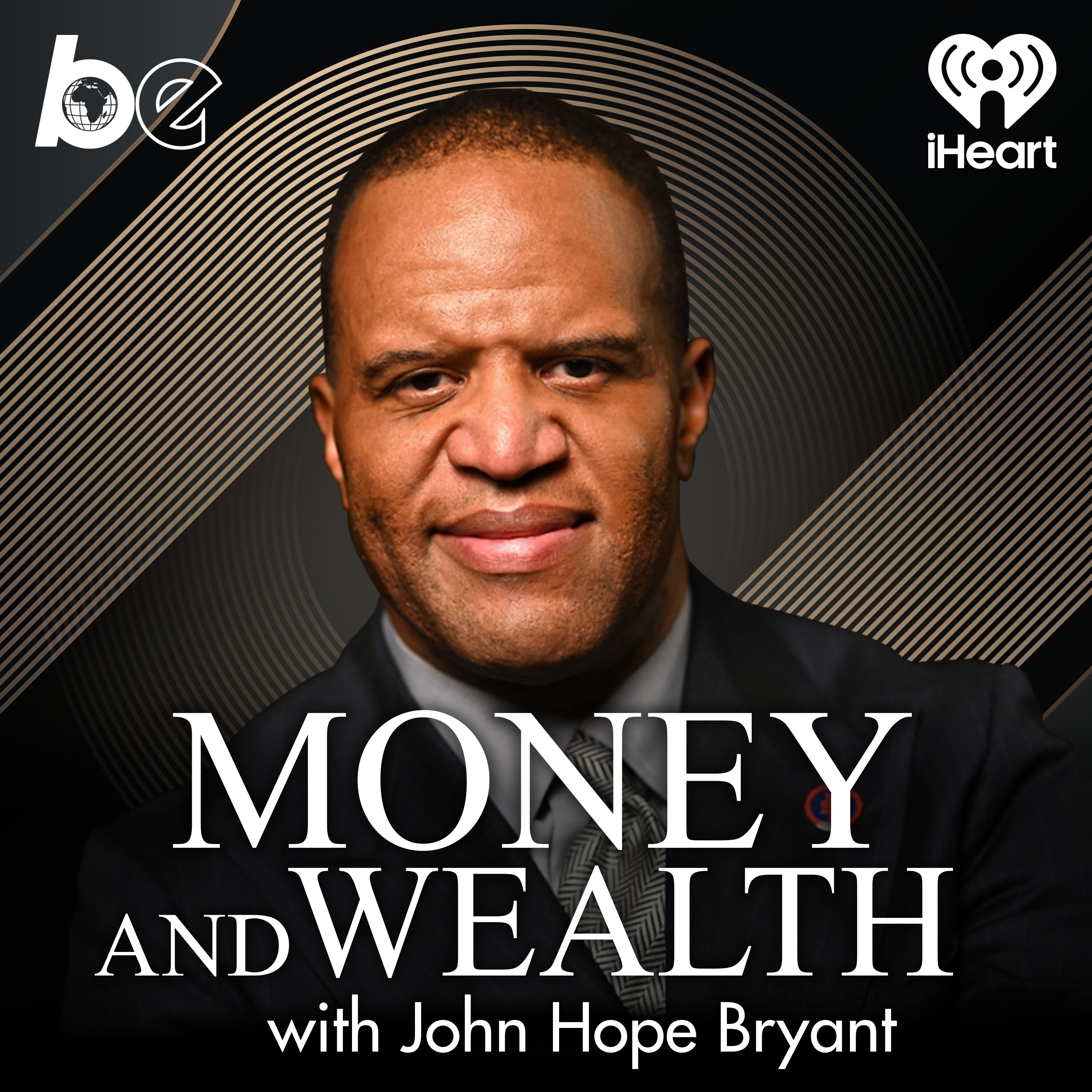
Money And Wealth With John Hope Bryant
Built for the Storm: How to Protect, Survive & Thrive in Uncertain Times
00:54:29
Loading summary
Transcript54 lines
- [00:00]
iHeartRadio Announcer
This is an iHeart podcast.
- [00:02]
Nissan Campaign Narrator
Guaranteed Human pressure has a way of revealing what remains steady. In the latest Nissan campaign, the Nissan Rogue was tested to the extreme to demonstrate that it's built to last through durability and reliability challenges inspired by real tests conducted by Nissan engineers. Brutal potholes, a steady force of water, even a jet powered sandstorm. Each challenge inviting a deeper look at how quality, durability and reliability hold hold their ground in real world conditions. Every test was 100% real. No CG, no AI. To see how the Rogue held up,
- [00:39]
Oppenheimer Representative
visit nissan-duordability.com@oppenheimer we're proven because we're grounded in discipline.
- [00:47]
John Hope Bryant
For 145 years we've been building and protecting wealth through every market cycle with precision, clarity and the courage to think boldly beyond the moment.
- [00:58]
Oppenheimer Representative
This is what market tested legacy looks
- [01:00]
John Hope Bryant
like for this generation and the next. Put the power of Oppenheimer thinking to work for you. Wealth management, capital markets, investment banking.
- [01:13]
Oppenheimer Representative
You bring the vision Twilio brings the platform. Real time messaging, AI driven insights, personalized customer journeys. It's all here, ready for you to build with. Twilio's Customer Engagement Platform is flexible, open and designed for builders who want to create unforgettable customer experiences that drive impact. No silos, no compromises, just the freedom to build your way. Twilio the Ultimate Builder's Toolbox learn more@Twilio.com whether you write code or shape strategy, if you build, you belong. Twilio's Customer Engagement Platform is the ultimate toolbox for developers, designers, business leaders and everyone in between looking to create truly memorable customer experiences. With Twilio, you can combine data, AI and real time communications in one open, flexible space so you can build without limits, without workarounds and without compromise. So what will you build today? Learn more@Twilio.com welcome to Money and Wealth
- [02:12]
John Hope Bryant
with John Hope Bryant, a production of the Black Effect podcast network and iHeartRadio foreign. Hey hey everybody. It's John Hope Bryant and this is Money and Wealth on the Black effect Network on iHeartradio. This is 2026 first quarter and this is an important podcast this episode because this deals with what happens not when everything's rosy and wonderful and the sun, the sun is shining outside. What happens when the economy shakes? For many, they are experiencing here and around the world a bit of an unstable time time that's making some folks feel nervous. So we're going to talk about how to protect yourself, how to survive and how to thrive in uncertain times. Some of you've heard me say, and this is how I live my life, that rainbows only follow storms. It's not only good theology and good theory, it's also a scientific fact. You cannot have a rainbow without a storm first. So let's weather the storm. Don't run away from it. Run to it, run through it. Because you cannot grow except through legitimate suffering. And as Warren Buffett has famously said, when folks are greedy, be afraid. When folks are afraid, well, be greedy. So there are fortunes to be made in down times. Yes, I said it, but not in the way you think. I need you to stop all the crazy stuff. Just let this out right at the top of this podcast. When the wind blows hard, you don't curse the wind. You strengthen the foundation. I told you a year ago, I told you two years ago not to not do it, but to be careful of cryptocurrency. I told you that the best of the cryptocurrencies was probably bitcoin. I told you that blockchain technology was something I actually believed in and would invest in. The underlying digital currency concept is already with us. Your, all your cards that you use, your ATM card, your payment cards are all for versions of digital currency. We're already using digital currency. We're not, we're increasingly not using a physical dollar being passed around. But crypto is a whole another thing. And to make it really blunt, the best of it has just taken a 50% off sale. So crypto went up, ran up to $120,000, give or take, and about now it's about half that. And so if you bought it at, you know, 20, 30, 40, 50, you're still all good at 70, say thousand dollars. But if you bought it at a hundred thousand dollars because you thought it was a sure bet, if you bought it at a hundred and twenty thousand dollars, and some people bought it at $120,000, that's why the price got that high. And now you're at $70,000. And if that was your nest egg, if you believe the hype because it's really built on promotion, then you are in a world of hurt unless somebody bids that price back up. And there is no cash flows to guarantee cryptocurrency. There are no assets. It's belief, hype, confidence, a tribe effect. I mean, unlike when a company goes bust and you can go and grab some real estate or client list or something, crypto's different. So I, I'm not telling you not to do it. And some people will do remarkably well, by the way, and some, there'll be some really big winners, but it's probably going to be the whales. It's going to probably be the really big players. I was talking to, I was in Dubai last week and at a dinner table talking to somebody, a very prestigious reporter from a very prestigious publication, financial publication, and they were talking about a conversation they had with one of the biggest crypto players ever. And he had put everything in, he'd run this thing up to a quarter billion portfolio. He owned $250 million of crypto. And not this crash, not this correction. I'm sorry, but when the whole FTX thing went down and all that kind of stuff and there was a market correction, he, he was involved with FTX and he went from quarter billion to zero. He lost. Well, not, not everything, but literally almost everything. And he said he would never invest in it ever again. Now I'm not telling you to do that. I'm, I'm saying that if, if you want to take 5%, here's the rule, by the way, so you can just ignore everything I've said in the last five minutes. If you are pro crypto, right? Here's my rule. If you want to invest in a speculative, anything in cryptocurrency is speculative, right? 5 to 10%. Take 5 or 10% of your investable capital, your portfolio, and invest it in crypto. Las Vegas sports betting, you know, lottery tickets, your cousin Pookie's, you know, newest idea. That's unproven. If you want to take a flyer on something, you want to take something that's high risk, that may be high reward, 5 or 10% maximum. So if you have a thousand dollars, you want to bet 50 to $100 maximum of that on something that might go kaplooi you. This is no time, this is no time to be fancy, my friend. Bishop T.D. jakes Chairman T.D. jakes would say let's make boring sexy again. You already know that. I would say let's make smart sexy again. It's time to get back to the fundamentals. So let's talk about these fundamentals. There's anxiety in the country and we're the biggest economy in the world where the, the flight to quality our currency and there's. So it's tough, you know, it's tough all around the world, it's the least tough in the United States, but it's still anxiety producing and the markets are volatile. Part of the concern is that they keep rocketing forward, feeding on their own promotion and their own encouragement and almost disconnecting, it feels like for many, like disconnecting from the real economy. And we have a K shaped economy here where the wealthy, well to do, myself included, are doing better and those in the middle of the bottom seem to be doing and feel like they're doing worse. I cover all this in my upcoming book, Capitalism for All, by the way, which comes out in April of 2026. We'll get your copy for that. It's a Capitalism for all is released on the 250th anniversary of America. But we have markets that are volatile and things don't go up forever. So there's probably going to be a correction at some point. I think you're seeing a little bit of that with cryptocurrency because basically the market's just taking the weakest part of the stool and putting pressure on it and that part is starting to dip. The weakest part of any investment portfolio in these markets will get pushed out. You're seeing some technology plays that are getting squeezed. Investors are starting to ask real questions and not just believing the hype. So markets are volatile. These are anxiety, right? You know, anxiety producing things. Inflation is still sticky. There's AI disruption, layoffs in tech and finance, political division, small business pressure, consumer confidence, fragility. These things, any, a couple of these things would produce anxiety. All of them together, get people freaked out. Some people. But again, there's opportunity in the middle of the storm. I've lived long enough to know something. Recessions don't destroy disciplined people. Panic does. Don't panic. I invest alongside billionaires. Why? Because the likelihood of them going down is very, very low. So if I'm, if I'm hiding under the same tree they're hiding under is going to be the safest tree in the forest, the strongest tree in the forest, maybe in the whole region. And so I also would give that philosophy around what to invest in, not just who to invest alongside of to sort of parrot strength behavior, but what things do you use every day? Like do you, you know, do you use toilet tissue? Do you use, you know, do you buy groceries? Right. Okay, so let's think about the fundamentals that you, you get gas, you know, what do you use in your life? Right. I'm, I mean Walmart, which is a basically old school retailer created by Sam Walton with a pickup truck in the storefront just by adding digital and AI. And the future, basically leaning to the future by, but staying true to their roots, just hit a trillion dollar market capitalization. The first traditional retailer ever to do that. I, I think Walmart's a safe bet. You normally, you'll never hear me promote a stock. I just think that, you know, there are, there are a couple that are just fundamental. Now you're not going to get huge returns, but I think your foundation is going to be pretty solid. There are some tech companies that I think aren't going anywhere. I don't think Apple is going anywhere. In all likelihood, Google's not going anywhere. Walmart I don't believe is going anywhere but up. But it, but in these times, you don't not looking for up, you're looking to not fall through the floor. Right? You don't, you don't want to be My family that invested in Enron put their life savings a member of my family in Enron and when Enron exploded, they end up with absolutely nothing.
- [13:51]
Valspar Advertisement Voice
When you're a pro, you gotta do a little bit of everything.
- [13:54]
John Hope Bryant
A little,
- [13:57]
Valspar Advertisement Voice
a little and even a little. And it helps to have something that works as hard as you do. That's why Valspar has durable high coverage paint for every job, every time made for more Valspar pros head to lift those today and talk to a pro rep about saving time and money on your next job with Valspar. Signature paint exclusions apply. See valsparpro.com for details.
- [14:21]
iHeartRadio Announcer
Run a business and not thinking about podcasting? Think again. More Americans listen to podcasts than ad supported streaming music from Spotify and Pandora. And as the number one podcaster, iHeart's twice as large as the next two combined. So whatever your customers listen to, they'll hear your message. Plus, only iHeart can extend your message to audiences across broadcast radio. Think podcasting can help your business? Think iHeart streaming radio and podcasting. Call 844-844-iHeart to get started. That's 844-844-iheart.
- [14:52]
Hans Charles
Welcome to the A building. I'm Hans Charles our Menelec Lumumba.
- [14:55]
Inalec Lumumba
It's 1969. Malcolm X and Martin Luther King Jr have both been assassinated and black America was at a breaking point. Rioting and protest broke out on an
- [15:05]
Hans Charles
unprecedented scale in Atlanta, Georgia at Martin's alma mater, Morehouse College, the students had their own protest. It featured two prominent figures in black history, Martin Luther King Sr. And a young student, Samuel L. Jackson.
- [15:22]
John Hope Bryant
To be in what we really thought was a revolution.
- [15:25]
Inalec Lumumba
I mean people were dying.
- [15:26]
Hans Charles
1968, the murder of Dr. King which traumatized everyone.
- [15:31]
John Hope Bryant
The FBI had a role in the murder of a Black Panther leader in Chicago.
- [15:37]
Inalec Lumumba
This story is about protest. It echoes in today's world far more than it should and it will blow your mind.
- [15:45]
Hans Charles
Listen to the a building on the iHeartRadio app, Apple Podcasts, or wherever you get your podcasts.
- [15:52]
John Hope Bryant
Segregation in the day, integration at night.
- [15:57]
Atlas Obscura Narrator
When segregation was the law, one mysterious black club owner had his own rules.
- [16:02]
John Hope Bryant
We didn't worry about what went on outside. It was like stepping in another world.
- [16:08]
Atlas Obscura Narrator
Inside Charlie's Place, black and white people danced together. But not everyone was happy about it.
- [16:15]
John Hope Bryant
You saw the kkk. Yeah, they was dressed up in their uniform. The KKK set out to raid Charlie, take him away from here. Charlie was an example of power. They had to crush him.
- [16:32]
Atlas Obscura Narrator
From Atlas Obscura, Rococo Punch and visit Myrtle beach comes Charlie's Place, a story that was nearly lost to time until now. Listen to Charlie's place on the iHeartRadio app, Apple Podcasts, or wherever you get your podcasts.
- [16:54]
John Hope Bryant
So let me tell you about a personal lesson that I learned. As I always say, don't do things emotionally. I had exited a deal and wanted to put some money into the market, but really it was a savings account disguised as a market investment. I just, I didn't need it to go up. I just needed to, to be safe, to not go down. And so I'm just going to pick a number. I invested $3.5 million, give or take. The timing was first quarter of 2022. Within three months, I had lost about $500,000 on a 3.5 million dollar basis. And that didn't feel good. And my sense is it was going to go down some more. The market was, I mean, there was no place to hide, like everything, interest rates were going up and, you know, the market was just not in a good place. And so I told my people to go to cash. I don't mean literally cash, but treasury bills. And I don't regret that in that decision because my goal was just to protect that little nest egg. I had other things, you know, other things going on, other places, but that was just like an emergency pull strap, you know, fun. Like, you know, when all the gold, when everything goes bad that's there and I just didn't want it touched. So when it went down, that was against my strategy. Now if I was, you know, in hindsight, maybe I should have just invested in treasury bills to begin with. But because what, here's what came next was I didn't factor in, I'm sorry, I did factor in the downside, but I didn't make peace with it. So What I now know is if I had stayed with that investment, it would have gone down another $250,000. It would have gone down a total of $750,000 against a 3 and a half million dollar basis within a year of putting that money in. But if I had done nothing, because I've invested in. Very stable, very good stuff, very, you know, traditional, conservative, boring. If I had done nothing and just left it there, within two years, two years, within 18 months, actually, it would have recovered the 750 that was lost and made another 750, $750,000. So it corrected, it went down $750,000, corrected 1.5 million. If I had just done nothing, right? So lesson learned. Which was my own lesson. Don't freak out, don't panic. Now I'm being a little hyperbolic because if I had put $2 million in an investment account or two and a half million dollars in an investment account in, let's say, 2000, and it had run up to $3.5 million, and then I lost $500,000 or $750,000, I would just let it ride because it's, you know, I'm basically playing with profits, playing with capital gains, as they call it. But this was house money. So just depends where your psyche is, depending where you're in the system. But typically, I'll say, if you've invested well, leave it alone now. Down cycles are not new. America has survived wars, depressions, 9, 11, 2008, which is a mortgage crisis. Covid, the question is not whether storms come, right? The question is, are you built for weather?
- [20:58]
iHeartRadio Announcer
Run a business and not thinking about podcasting, Think again. More Americans listen to podcasts than ad supported streaming music from Spotify and Pandora. And as the number one podcaster, iHeart's twice as large as the next two combined. So whatever your customers listen to, they'll hear your message. Plus, only iHeart can extend your message to audiences across broadcast radio. Think podcasting can help your business. Think iHeart streaming radio and podcasting. Let us show you at iheartadvertising.com that's iheartadvertising.com welcome to the a building.
- [21:29]
Hans Charles
I'm Hans Charles.
- [21:30]
Inalec Lumumba
I'm inalec Lumumba. It's 1969. Malcolm X and Martin Luther King Jr have both been assassinated. And black America was at a breaking point. Rioting and protest broke out on an
- [21:41]
Hans Charles
unprecedented scale in Atlanta, Georgia. At Martin's alma mater, Morehouse College, the students had their own protest. It featured two prominent figures in black History. Martin Luther King's son, senior and a young student, Samuel L. Jackson.
- [21:58]
John Hope Bryant
To be in what we really thought was a revolution.
- [22:01]
Inalec Lumumba
I mean, people were dying.
- [22:03]
Hans Charles
1968, the murder of Dr. King, which traumatized everyone.
- [22:07]
John Hope Bryant
The FBI had a role in the murder of a Black Panther leader in Chicago.
- [22:14]
Inalec Lumumba
This story is about protest. It echoes in today's world far more than it should, and it will blow your mind.
- [22:21]
Hans Charles
Listen to the a building on the iHeartRadio app, Apple Podcast, or wherever you get your podcasts.
- [22:28]
John Hope Bryant
Segregation in the day, integration at night.
- [22:34]
Atlas Obscura Narrator
When segregation was the law, one mysterious black club owner had his own rules.
- [22:39]
John Hope Bryant
We didn't worry about what was going on outside. It was like stepping in another world.
- [22:44]
Atlas Obscura Narrator
Inside Charlie's Place, black and white people danced together. But not everyone was happy about it.
- [22:52]
John Hope Bryant
You saw the kkk. Yeah, they was dressed up in their uniform. The KKK set out to raid Charlie, take him away from here. Charlie was an example of power. They had to crush him.
- [23:09]
Atlas Obscura Narrator
From Atlas Obscura, Rococo Punch and visit Myrtle beach comes Charlie's Place, a story that was nearly lost to time. Until now. Listen to Charlie's place on the iHeartRadio app, Apple Podcasts, or wherever you get your podcasts.
- [23:28]
John Hope Bryant
And the winner of the iHeart Podcast Award is.
- [23:31]
Valspar Advertisement Voice
You can decide who takes home the 2026 I Heart podcast Awards Podcast of the Year by voting@iheartpodcastawards.com now through February 22nd. See all the nominees and place your vote at iheartrading podcast awards.com Audible is
- [23:45]
iHeartRadio Announcer
a proud sponsor of the Audible Audio Pioneer Award. Explore the best selection of audiobooks, podcasts and originals all in one easy app. Audible. There's more to imagine when you listen. Sign up for a free trial@audible.com.
- [24:03]
John Hope Bryant
Today. I want to talk about three things. How to protect yourself, how to survive, and how to position yourself to thrive while others freeze. Part 1 Protect your liquidity Cash is oxygen. What? What did I just tell you? What's the story I just told you about myself? You know, supposedly the financial literacy, you know, leader made, created policy for the federal government under three us, worked for three US Presidents, created policy for financial literacy under President Bush and President Obama. You know, this is my. This is my jam. But I still made an investment that wasn't perfect, but the. But I stayed consistent with my objective, which was cash, right? I got other things in real estate and business ventures and technology and all. I got all kind of things going on, right, Some bonds over, but I wanted something I could grab a hold of tomorrow Cash. And I was willing to lose on return in order to retain access to cash. Because when things go south of the border, anything that's illiquid freezes up and you cannot access it. So anything that's flaky, any flaky investment, any flaky whatever, it just locks up. If you're flaky, you'll find your line of credit freezes up. I, I've had situations where, going back, you know, the 2008 crisis, I had a line of credit. Let's just say it's $500,000. I had a, you know, at accessed that line, let's say $350,000. And so $150,000 to play with. I thought that 2008 crisis hit, and I look up to my bank statement and the new limit is $350,000. I'm going, that has to be a mistake. But it wasn't a mistake. The bank didn't call me. They didn't communicate. They didn't, they didn't, you know, they were, they were just nervous. They weren't nervous about me. They're nervous about the world, the markets. And I just wasn't, you know, on the top of their. In 2008, I wasn't on the top of their client. You know, we're completely comfortable. Listen, so versus canceling me, which they could have done, and that would have been nice. They would, they could have called the loan. I'm sure they could have found some, you know, funky reason to call the line of credit or just review my financials. Right. You know, at a moment's notice and cite some problem. They did. They were dignified about it, but essentially they said, no, don't, don't borrow anymore. You know, so versus having a cushion of $150,000 in an instant, I found I was at my limit. So that, that was a very powerful lesson. I, I, I've, I've, I've got lessons that go back eons, and I've learned all of them. You never have to tell me twice, right? So ox cash is oxygen. Build or rebuild. Six months of reserves, cash reserves, a minimum of three if you're starting from scratch. So you want three months, ideally, where if you don't work and let's say you make, you know, $3,000 a month. You want cash reserves of $9,000, minimum. Now, I know you're saying I can't do that, John, and you're right. Most Americans don't have $9,000 cash. But I want you to be creative. When I Say cash reserves, I mean cash availability. So credit card cash, credit card, savings accounts, stock you can access through a margin account or have you if you have to to sell it. Emergency access to 401k. I don't really recommend you factor that in. But you, you should never, you should just would not touch your 401k ever. But you want to know that you got three to six months worth of cash in Thomas. If in fact a storm comes, stop lifestyle inflation spending immediately, all the bling, all the player player, all the drama has to go that, that party is over. It wasn't worth it when it was going. That party is definitely over five hundred thousand dollar bottles at some funky club. No, just go to the store and get you know 25 bottle out of the, out of the cabinet and take your butt home. Don't go to get, don't go to the expensive coffee shop and spend 25 for a latte. Go get your cured machine for $125 and make as much latte as you like. This is no time to be profiling and flossing. No ego spending delay, big liabilities unless they are strategic in uncertain times. Optionality is wealth. Let me give you an example of this. This is career optionality. So a friend of mine in New York City, high fashion executive on the sales side, brilliant, talented, all that stuff, you know, putting numbers on the board, ran into a situation at an employer and they parted ways. This is a high end employer for. And so this person decided at this moment they were going to travel the world. They were going to, you know, I don't know, I forget what, they write a book and they were going to, you know, start a business and you know, all the stuff that they've ever wanted to do, they were just gonna do all that stuff that moment. And this was in 20, early 2025, in the middle of all this growing upheaval and political drama. And this person happens to be a person of color by the way. This would be full disclosure, full context, Black female. So Black females lost 300,000 plus jobs and this lady had just lost her job and she was going to go live her best life. And she asked me my, I would never have asked given her advice unless she asked me. My mother always said, don't offer advice because wise men don't need it and fools don't listen. But she asked me my for my advice and so I gave it to her hide. She said what do you mean? I said knock it off. Stop doing all that stuff you're doing. Go find you a place, a safe place to hide. You want to find your safe place to hide based on your skill set, on a job that you don't think you'll be removed from or disturbed by that will pay you your bills and your health insurance and everything you need to live a dignified life for about a year to 18 months. This is no time to be going out being Superman or jumping up, jumping, leaving tall buildings and, and, and jumping out of planes without a parachute. You, you, this is no time for, you know, unless you have a trust fund.
- [30:59]
Hans Charles
Right.
- [31:00]
John Hope Bryant
You know, go find a safe place to hide. She didn't like what I said. Later on she told me that it, it offended her, but she thought about it and she decided to take my advice. And later she called and said thank you. Right. That person's probably listening to this podcast. So I didn't, you know, I didn't, I'm not mentioning your name, but they're probably smiling because that, it, they're now, they are now living their best life. They have a great, great job at a new fashion house doing what they are trained to do. And they also have a, a blog that they write on and they've got a, I think a podcast they're doing and they're still living their, their best life. They're just doing it part time that you're nine to five. Financial five to nine. Right. So this is no time to be, you know, out here playing games. Find a safe place to hide and go be, you know, Wonder man or Wonder Woman. A little later. Protect your credit score number two, 700 credit scores plus equals access. Your credit score is like your, you know, it's a personal version of a, of a corporate AAA bond rating on Wall street or for, for a nonprofit, a four star charity navigator rating. That's what Operation Hope has. It's a pristine credit rating. And when you need, when you don't have the cash and if you grew up in an underserved neighborhood like I did, then good debt is your form of capital. If you don't have equity, trust fund, inheritance, insurance, proceeds from a mom and dad who hooked you up upon their passing away, if you don't have one of those things going for you, if you not hit the lottery, then you probably are going to use debt to try to fulfill your dreams because you don't have other alternatives. That's what I did. Just make sure it's good debt. Cheap debt, flexible debt, structured debt and, and debt that's tied to something that appreciates. If you're going to apply it to something, but you can't get that your credit is toe up from the flow up. So make sure you have a 700 plus credit score because then the answer about, you know, as long as you're working, good job. Under $100,000 we're talking about here. The answer is going to be yes. The bank's going to give you 20, 30, $50,000 just because you're a great credit risk and you want that in particularly in tough times. Access equals power, power equals options. In America, your credit score is your economic passport. So here are your action steps. Pay everything on time. Keep utilization, which is the percentage of the credit limit that you access and you use to charge something under 30%. There's nothing that pops your credit score more than consumer credit management of your utilization against your limit. So if you have a limit of $10,000, you don't want to spend any more than $3,000 on that card. And, and you don't believe me, go to talk to one of my hope financial coaches. We'll give you $1,000 free coaching scholarship right off the bat just to go to my team cost you nothing. And they'll, they'll literally show you that the, the number one way you move your credit score up is to reduce consumer credit down. Sometimes it's just a movement of a few hundred dollars will pop the credit score versus even you have a consumer loan, you know, for $30,000 for, for car or a mortgage loan for six for six figures. That does not move. Paying those on time or whatever or paying those things down does not move the needle like moving consumer credit does because it's completely unsecured. It's most at risk to the bank or the issuer. And, and when people get in trouble, it's the first thing that they run up. So people, so, and banks can't catch it. You know, by the time they turn around, you've gone from $3,000 limit to $9,000 limit. And if you can't pay it back, they got to write that off. So they're very careful on who they give a credit limit to and they're very skittish about that whole situation. So if you, if you can keep it utilization at a low level, it shows that you are not desperate. So here's a, here's what a joke about banking happens to be true. A bank will lend you money when you can prove you don't need it. Okay, it's a joke, but it's pretty true. Don't close seasoned Accounts, you don't need the account. Cool. Just leave it there, right? Why close it? You, you paid it from $10,000 to $5,000 to $3,000 to $1,000 to zero. Fantastic. Good on you. God bless you. I don't agree with the folks who say you should close all your credit accounts. No, no, no. If you broke and poor and toe up from the flow up, you need every option that you can get. When you've been doing so much with so little for so long, you can almost do anything with nothing. And you need every option that you can get. So if you have a credit credit card with a $10,000 limit and you own zero on it, guess what? That's capital. That's a reserve account. That's a cash. I was talking, that's that three months. I was talking about, about earlier. Keep making that minimum payment, you know, you know, and keep that account open because you may need it one of these days. Don't use it to go on a spending spree. Don't use, you know, shopping therapy, but use it as part of your reserve arsenal. Avoid emotional borrowing. You're depressed, you're distressed, okay? Walk around the block, you know, get some air, get some sleep, but don't get, don't get, don't get a shopping addiction. So you can, you know, access information on your credit score at opera shows Financial wellness index. By the way, you tell me your zip code, where you live, I'll tell you your neighborhood and your environment around you and what that credit score is. Because if you live in a 500 credit score neighborhood, you live to about 61 years of age. You live in a 700 credit score neighborhood, typically 15 minutes apart. In an urban community, by the way, you live to 81 years of age. So a 20 year difference, 15 minutes apart. Not just on credit score, obviously, but that's a trending indicator of hope, wellbeing, belief, confidence, faith, joy. It's, you know, whether you believe, whether you believe you can't, whether you believe you can, or whether you believe you can't. You're right theory. And so as I keep saying, wealth is a mindset, right? So there's a difference between being broken, being poor. Being broke is economic, being poor is a disabling frame of mind, depressed condition of your spirit. You must vow never to be poor again. You need to have the right mindset and you have the right environment. So if you hang around nine broke people, you'll be the tenth. If you're living in a 500 credit score neighborhood, you're living in a surviving mindset, you need to get out that or you need to get your mindset. So it's to a point where it doesn't matter who's around you, but you need to focus on success. And if you either change your mind or change your environment or change both. But if you're around depressed, distressed, desperate people, unless your mentality is bulletproof, unless your mindset's bulletproof, unless your self esteem is bulletproof, don't be surprised. And if you don't join them. So watch your environment. So protect number three, protect your reputation and your relationships. I cannot stress this enough. When I was coming up, I did not have inheritance, I did not have a trust fund, I did not have financial capital, I did not have equity of any sort. So I had to rely on some debt capital. Yes, debt is a form of capital and relationship capital. I was a likable person. I got to know people, they trusted me and they then would invest with me or open doors for me or introduce me to people. But relationship capital became really important. So watch what you do online. Please hit three in the morning, drunk. Please watch what you do online because the Internet is undefeated and it lives on forever. Okay? So in uncertain times, people hire who they trust. Capital flows to credibility. Partnerships matter. Your brand is recession resistant. If your character is intact, watch what you place online. Your employer, your partner, your investors or potential thereofs are watching you. That's exactly the first place they're going to go to see who you are. When somebody meets you, they Google search you or you know, whatever search engine that you use and then they go to your social media and they, they snoop on your life, what are they going to see, right? And if you're a woman or minority or a person of color or whatever, somebody who's not part of the political structure, the power structure. Even you're white and working class or whatever, white middle class, you're not part of the power structure. You got enough problems, you got enough headwinds, you don't need to add any addition to them. So you watch, watch your environment and watch your brand. I want to encourage you to over communicate when. Don't wait if you're in trouble, don't wait for your creditor to call you. You know, don't be surprised when the 1, 800 number calls. And what's that? You know what it is, you know you didn't pay that bill, right? Don't, don't let it voicemail. People don't like chasing you. It irritates Them. Call them. Don't wait for them to call you. You know the call's coming. Call them. Hey, this is Joe. This is Joanne. I owe you some money. We're looking for you. No, I'm looking for you. Right, we know. We want our hundred dollars. Well, I don't have a hundred dollars, but I'm gonna give you $20 today. I would like to work out a plan. Well, we really like our hundred dollars, but that's nice. I like to go to the Pluto. I like to go to the Moon. Right. I'd like to get to win the lottery. None of that's working out for me. I got 20 bucks, and I'll pay you 20 bucks every, you know, whatever. Six. Six weeks plus every four weeks, plus the regular payment, and they're going to say yes. They're going to go to their supervisor. They're going to ask who called who. Oh, they called us. Okay. Good character. They're going to cut a deal with you. Right? So. And you can cut deals, by the way, in bad times. That's a maybe. If I got time in this podcast where I finish, I'll. I'll come back to that. But I. Bad debt get. Debts get written off pretty quickly on credit cards and things like that. And I found that we are. My operational team. I guess I'm getting in this now. My operational team. If something's written off and it's been, you know, sold to a credit. Not a credit repair agency, it's been credit. It's been sold to a bad debt company, basically, that. That bad debt company bought it for, let's say, five cents on the dollar. Okay, so it was $100 debt. They bought it for five. For five bucks. What do they want? They want to double their money. They want 10 bucks. I'm probably giving you a bad example. This is. This number is very low, but let's say it's $1,000 bill. They bought it for 50 bucks. They want 100 bucks. And they're going to chase you and track you down and try to find you. They can't. They're just going to sit there for a minute, hope they get lucky and they trip on you. But if you call them and shock them, which my people do, and we say, look, we want to pay this off. We want 100 bucks. And we say, no, no, we're going to pay you 200 bucks. People like, why would you double pay me? Because. And I want to speak to your supervisor. Tell me you did a good job, because I want to make sure, that, that when you got to take this off her credit and when it shows up again because bad debts continue to show up repeatedly in these databases, you're going to take it off again and again and again. You got to give me a letter in writing saying that this is resolved and I'm going to speak to your supervisor and commend you and, and build a relationship with supervisor in case you get an attitude or you quit or you get amnesia because you've already made your commission on this deal. You want to talk to me anymore, I can go to your supervisor, who's their supervisor, because their management material and they're going to keep their word. They made to me, which is yes, we will honor our obligation and make sure this is, you know, taken off for the fifth time off your credit report that pops your credit score 30 points or 40 points when you do something like that. So you owed 100, you owed a thousand dollars, you pay 200. In this example, you got an 80% discount and they got a 200% profit. Everybody won fair exchanges, no robbery over. Communicate, deliver excellence. Stay visible, don't hide. Stay visible, got problems. Stay visible. People respect folks who can deal with their drama. Life is 10% what life does to you and 90% how you choose to respond to it. Everybody's got problems, everybody's had problems. It's not about having a problem. It's not how you deal with it. You've had a problem, you're not a problem. Don't become the problem. Don't self manifest something by, you know, beating yourself up about something that is happening to everybody. Everybody's just struggling. They just make it. They just trying to look like they're not struggling. Right? If you're just honest about it and you approach your creditors before they approach you, you're going to be able to work out a situation. Just stay visible and stay leaned in to your own solution. Surviving, right? I want you to reduce fixed expenses. Freedom lives in your margin, right? Renegotiate everything. Refinance strategically if appropriate. You know, take 10 credit cards and try to roll them into one. If you can roll 10 credit cards in a 1:1 credit facility, that frees up the. And then don't close the credit cards you just paid off. That frees up that credit availability on those other cards, which will pop your credit score and also give you more access to capital. And the term loan is going to be much cheaper than the credit cards that you're paying off, by the way. So try to refinance credit cards. Into a term loan. In this example, if you own a car and you don't own any money on it, go get and you have a set on a credit score. Go get your bank to give you a modest loan. Yes, you can get them a loan against that car. You had a loan on the car. If it's a, if it's a car. I'm talking about not beater. I'm talking about a car, you know, that's reasonably modern and in good shape. You can get a. Typically a loan against that car and don't leverage the hilt. Get a modest loan that car. It becomes a temporary asset for you in tough times. Kill unused subscriptions. This is a big one. You go to your phone and there's all kind of stuff that's auto renewing monthly, weekly, monthly, yearly. It's killing your bank account and you've forgotten about it. Go kill unwanted subscriptions. I'm guilty of that. Now. I do it once a quarter is kill unwanted subscriptions. I hate wasting money and I've, I can't tell you many times. I found subscriptions that I had no use of. I signed up three years ago and these folks are just caking because they're just cashing my check because I'm too lazy to manage my subscription portfolio. Simplify housing if necessary. There's no shame in that game. Just simplify, simplify, simple, simplify and reset. So look, survival is not failure. It's wisdom. It's just they all come to an experiment of, you know, a failure. Just an outcome to experiment. That's all it is. You did, you're not, you know, you didn't make a. You're not a mistake. You just made one. Next item. Rainbows after storms. I take no for vitamins. I mean, success is going from failure to failure without loss of enthusiasm. Never give up your optimism. Diversify your income streams. Right? One paycheck is vulnerability. Okay? I want you to develop a skill, a skill based income. So something that you can do that can't be aied out, right? Find that thing. Become a notary. If you're, if you, if you can do it, get a trade like become a plumber or electrician. Find something that you love or don't utterly dislike. And that is a unique skill that's needed, necessary, it can't be removed completely by AI and you can do it and you can get certified within a reasonable period of time. And that's your backup plan. It might become your backup plan, might become your primary plan. Who knows? Advisory consulting, digital products. Invest in learning AI tools. Get AI certified. I just told you a young lady I just met at the front desk of the hotel. I checked in, she was going into healthcare and I told her go get her AI credentials or an AI certificate and add it to healthcare, which is a growing industry. And she'll differentiate herself amongst other employer employer applicants to the employer that she's going to. She goes right to the front of the line because she's got the healthcare credentials. She just out of school and she's got the AI credentials. She had even thought about it, but the light came on instantly. She said she's going to get that going next week and you should too. Your. Your job's not going to be taken by AI. Your job's going to be taken by somebody who can use AI. That's another podcast for another time. As some of you know, I'm the co chair of the AI Ethics Council with Sam Altman and we've launched Hope AI at Operation Hope and AI LP3 with Georgia State University. I'm all in on AI. I'm not scared of it. I'm not using it 50 times a day. I love it. But it's. I'm going to master it. It's not going to. It's not going to master me. It's not going to own me. The new job security is skill security. All right. I want you to control your emotions. Psychology of downturns is really important. I've been talking about this this entire podcast episode. Basically fear causes bad decisions. Bottom line. And the worst thing to fear is fear itself. Ambassador Andrew Young just told me that earlier today. That's the first thing he learned as a young man is the worst fear is fear itself. I found 99 times out of 100 that whatever I was afraid of or concerned about it wasn't as bad as the fear of that thing. The reality was never as bad, never even close as bad as how much I had built it up in my own head. So just release all that comparison creates pressure. Don't stop comparing yourself Jojo, Pooky and them Boo Boo, whoever they bro out here flossing, right? They don't you know they're six square block celebrity. Who cares, right? Stop comparing yourself to somebody. Become reasonably comfortable in your own skin. This is time for you to grow inside of your own wisdom. God made you unique. Why would you want to compare yourself to somebody else? It's gonna make again cause you to trying to impress somebody you don't even want to be like with money. You don't have media amplifies panic. Right. Recessions are as much psychological events as financial ones. Going public on Wall street is. Is. Is a narrative. It's storytelling. Right? So going up is storytelling. You know, in other words, telling the story about this company and why it's going public and why the stock is worth it. Well, going down, storytelling too. Markets are highly. Well, they are. They. I don't say they're emotional, but markets these days are built a lot on sentiment, Mark. I mean, the financial markets. Well, heck, I mentioned one beginning this podcast, which is. Which is. I'm not picking on cryptocurrency, but it's just the easiest one to pick on because it's complete sentiment. It's complete emotion. But there are a lot of stocks that. Not just meme stocks, but there are a lot of stocks that are just overpriced, overvalued, because people feel a certain way about them. There's no fundamentals, no economics that support it in one of the days, make it, may, I believe, come crashing back down to earth. Assets go on sale in tough times, and if you've got a good credit score and some cash, you could be the beneficiary of somebody else's woes. You didn't create their woes. I mean, I'm not saying to be a bottom fisher or, you know, in any way suggesting you should be looking for somebody else's pain, but if somebody's having pain, shouldn't you be the nice person that helps them out and maybe benefits from it? It's going to happen whether you like it or not. It's happened that you have no control of it. It's somebody else's life. Businesses become affordable, real estate softens, talent becomes available. I mean, I'm hiring folks right now because I've got cash and opportunity in a growing company like hiring people I couldn't hire a few years ago, only invest from strength. That's what I've been telling you this whole podcast. No reckless speculation. I've been telling you this entire podcast, right? You don't hurt. You don't hurt if you're strong. If you're strong, you just brush it off, right? And you don't hunt in a storm unless you have shelter first. And we're all hunters. If you listen to this podcast, we're all hunters. I want you to invest in yourself aggressively. Certifications, AI literacy, financial literacy, communication skills. I mean, financial literacy is a new sexy all day, all night in the civil rights issue of this generation. Communication skills. I've Talked about that already. And it's little things like, don't say, because I saw this young man who works for his mother, works for our family, and this young man is really smart. And he came in the house saying, hello, and how you doing, Uncle John? I'm great. How are you? He said something like.
- [53:01]
Inalec Lumumba
Because
- [53:03]
John Hope Bryant
I asked another question and I said, why do you like that thing? He said, I said, don't. It's not because. Because when you're black, you know, of course this advice goes to everybody. But if you're black, you're born on probation in America, you gotta be twice as smart, twice as intelligent, you know, twice as early, stay up twice as late, be twice as good. And by the way, haters make you better. I don't mind that. And so I, I naturally articulate every word, put a pause between the words. It communicates your strength. Watch your health. Health is wealth. Your mind is the one asset that the pre. That appreciates in any marketplace, right? So, Mark, watch your, Your mindset. Watch your, your, your. Your health, your health set. Keep it all set. Because it. The really the asset that is the most valuable in your life. So I want you to think like an owner, not a victim, right? You can't be a thermometer reacting to the temperature. You can be. Right? But I'm saying you can't be. You shouldn't be a thermometer reacting to the temperature. You can be a thermostat setting it. I want you to think about equity, equity thinking, ownership thinking in bad and tough times. Ownership mindset, buying businesses from retiring boomers. Baby boomers who just like, I'm tired of this. Life's tough. Life's too complicated. I want to go sit on the beach somewhere cool. You got a lot of energy. You're 30 years old, 40 years old, 50 years old. You're ready to get to it. By the way, people become millionaires into their late 50s. I'm a testament to that. Mid to late 50s. Yeah, it was mid-50s for me. Multi millionaire. And so just, you know, you don't, don't get tired. And when other people are tired again, take advantage of their, their. That's their problem. They're tired. You have nothing to do with it, but you got energy, and that's a trade. You trade their tired and their desire for a check at a discount for your energy and your ability to get in there and, and hustle in that business and grow it and build equity. Buy businesses from retiring boomers. Acquire. Don't just apply. You can apply for the job. Or you can say, will you just sell me the business? I did that several times. By the way. There's $100 trillion wealth transfer that's going to happen in the next 10 to 15 years. I've done a podcast on that. Go back and listen to that podcast. It ties back to the baby boomer comment I've already made. All right, we're almost at time here, so you never want to be the old guy in the club. So before you kick me out of this podcast, I'm gonna leave. Right? So let's wrap this up. This has been fun. This has been. This has been a fun podcast. I don't know if you enjoyed it, but I have. Look, let's zoom out for a minute and why you should not be too freaked out. America still has a rule of law. Crazy, Crazy. You know, off the chain, America still has a rule of law. We're still the, the flight to quality for every investor in the world. People in Russia, people in China, North Korea, Iran, talking all kind of mess about America. But after the cameras go off, guess where they're trying to invest their money. Guess what currency they're trying to take to own. Guess where the gold is they're trying to get from. Right. Guess where the stocks that they're trying to buy with the real estate they're trying to buy, the business they're trying to buy America. America has strong capital markets, innovative innovation, leadership, demographic diversity, which is a strength betting against America. Historically been a losing trade. Right. There's three things that have always gone up. Gdp, gross domestic product, real estate values, and stock market values. Yes, they go up. There is a recession. We may be entering some version of a partial recession or have recessionary elements and recessionary segments of the market. Now the next three, you know, two, three years or so, which is why I'm giving you the signal bearer of this podcast. But it. So that means that markets go up, they risk. There's a recession, they recede, recede. And then what happens? It corrects above the line every time. So that's why I said earlier, if I just, if I had an investor mindset versus a versus a savers mindset on that money I put in that account, I would just let it ride and it would have come back. It did come back and doubled it. I'd have doubled the money on, on, on a down investment. Betting against yourself. That's fatal. Right? So don't argue with yourself. Don't, don't get into. Don't, don't, don't question good common sense even when other people are not talking. Since other people, people around with somebody giving you advice, consider the source. If somebody's telling you not to do something or do something and they're broke, you probably shouldn't listen to them, right? Somebody tell you to sell your house and they don't own one, probably shouldn't listen to them. I want you to build local strength. 90 of the GDP Gross Domestic Product in this country. Yeah. The income in this country comes from cities. Not the, not, not the national government, national economy from cities. So help your mayor, help your school board, you know, volunteer with your council person, you know, vol, you know, join a local committee. That's how I get, that's how I built my first relationship capital. I wouldn't join committees of Mayor Tom Bradley and other small city mayors. That was a big city mayor, mayor of la Mayor Tom Bradley joined committees and I found myself right next to people and in committee meetings I was trying to getting their front door to their business and couldn't. But they're right there next to me volunteering for city government. Successful people like doing civic leadership. So it's the right thing to do to volunteer in your local school and this and that, you know, and just in government. But also it's, it's, it's, it's good smart for your brand and for your, for, for you building the kind of credibility of somebody you can call who might be able to sell your business or help you buy a business or partner or something. Strengthen your communities, build your local strength in the community, improve your household credit. Okay. Move from consumption to ownership. If you, if we look, if we uplift the bottom third of society, we stabilize the whole economy. And that's my new book coming out Kaplan for all Statues about, you know, the bottom third is about the whole economy. But that is certainly one of the, the messages. Here's some recession rules. Okay, five recession rules. Cash is oxygen, number one. Number two. Credit is power. Number three. Skills be titles number four. Calm beats panic number five. Owners win. Long term storms don't last forever people but strong people do. Protect yourself, survive wisely. And when the sun comes out, be positioned is an old African saying is something like, you know, when the sun comes up, you know, the lion is looking for the gazelle, you know and, and the gazelle is, you know, got his eye out for the lion or something like that. But one thing's for sure, whether you're the lion or the gazelle, when the sun comes up, you better be running right. I'M sure I didn't get that story exactly right. But you get the point, right? You just gotta. You gotta. You gotta be leaned into your life. You gotta be positioned to win. And you can't be lazy or you'll be a prey. If you're not at the table, you're gonna be the. You know, if you're not. If you're not at the table, you're on the menu. So look, this is John o'. Brien. I love you. I want you to win. This is not just about money. When I told you this last 45 minutes, it's about dignity. It's about ownership. It's about agency in your life. It's about building a life that can withstand any weather in any storm. I know you can win because I did it. And I know you can do it, too. So let's go get at it. When I see you in airports and grocery stores, wherever you. Wherever you find me, let me know whether the advice I gave you is working for you. Remember what Warren Buffett said, when people are afraid, be greedy. When people are greedy, be afraid. Right. But what I want you to do is to be ready. John o', Brien, money and wealth. I'm out. Oh, by the way, I want you to vote for the podcast for the. We just wanted it. We were nominated for NAACP Image Award. Thank you very much. Now go vote for this podcast. Even though Michelle Obama is in the same category, I know you want to vote for her. I won't feel bad. You vote for her. I might vote for her, actually. No, no, I gotta vote for my podcast. I voted for my podcast. No, officially, I want you to vote for my podcast, but I understand you. Money and wealth with John o' Brien is a production of the Black Effect Podcast Network. For more podcasts from the Black Effect Podcast network, visit the iHeartRadio app, Apple Podcasts, or wherever you listen to your favorite shows.
- [62:42]
iHeartRadio Announcer
This is an iHeart podcast.
- [62:44]
Atlas Obscura Narrator
Guaranteed Human.