Loading summary
Transcript28 lines
- [00:00]
John Hope Bryant
You're listening to an iHeart podcast.
- [00:06]
Coca-Cola Advertiser
The best moments happen when you're with your people, laughing, vibing, just enjoying life. Coke is making those moments even sweeter. Share a Coke is back and it's all about sharing with the whole crew. Doesn't matter if it's your bestie or bro, there's a can with their name on it. So grab one for the squad and make some memories. But hurry because these Coca Cola limited edition bottles and cans won't won't be here forever. Don't miss your chance to share a Coke with your favorite people.
- [00:36]
Better Man Advertiser
Men. If you're ready to reclaim your edge, listen up. I used to be held back by constant bathroom trips with multiple wake ups during my sleep and looking for restrooms whenever I was out. Then I discovered Better Man. After just two months, I started experiencing fewer trips to the bathroom, less urge to go, and I even slept through some nights. I feel a noticeable boost to my overall well being, even even sexual stamina. It gives me the freedom and confidence to live life on my terms. Better man is clinically tested and trusted by thousands of men over 25 years, ready to take back control. Go to be better now.com to order your supply today. That's be better now.com these statements have not been evaluated by the FDA. This product is not intended to diagnose, treat, cure or prevent any disease. Use as directed. Individual results may vary.
- [01:21]
iHeartMedia Advertiser
Run a business and not thinking about podcasting? Think again. More Americans listen to podcasts than ads supported streaming music from Spotify and Pandora, and as the number one podcaster, iHeart's twice as large as the next two combined. Learn how podcasting can help your business. Call 844-844, iHeart.
- [01:38]
Shannon Schuyler or Will Pearson
In a world of economic uncertainty and workplace transformation, learn to lead by example from visionary C Suite executives like Shannon Schuyler of PwC and Will Pearson of iHeartMedia.
- [01:50]
Coca-Cola Advertiser
The good teacher explains the great teacher inspires.
- [01:54]
John Hope Bryant
Don't always leave your team to do.
- [01:56]
Better Man Advertiser
The work that's been the most important.
- [01:59]
John Hope Bryant
Part of how to Lead by Example.
- [02:02]
Shannon Schuyler or Will Pearson
Listen to Leading by Example executives making an impact on the iHeartRadio app, Apple Podcasts, or wherever you get your podcasts.
- [02:11]
John Hope Bryant
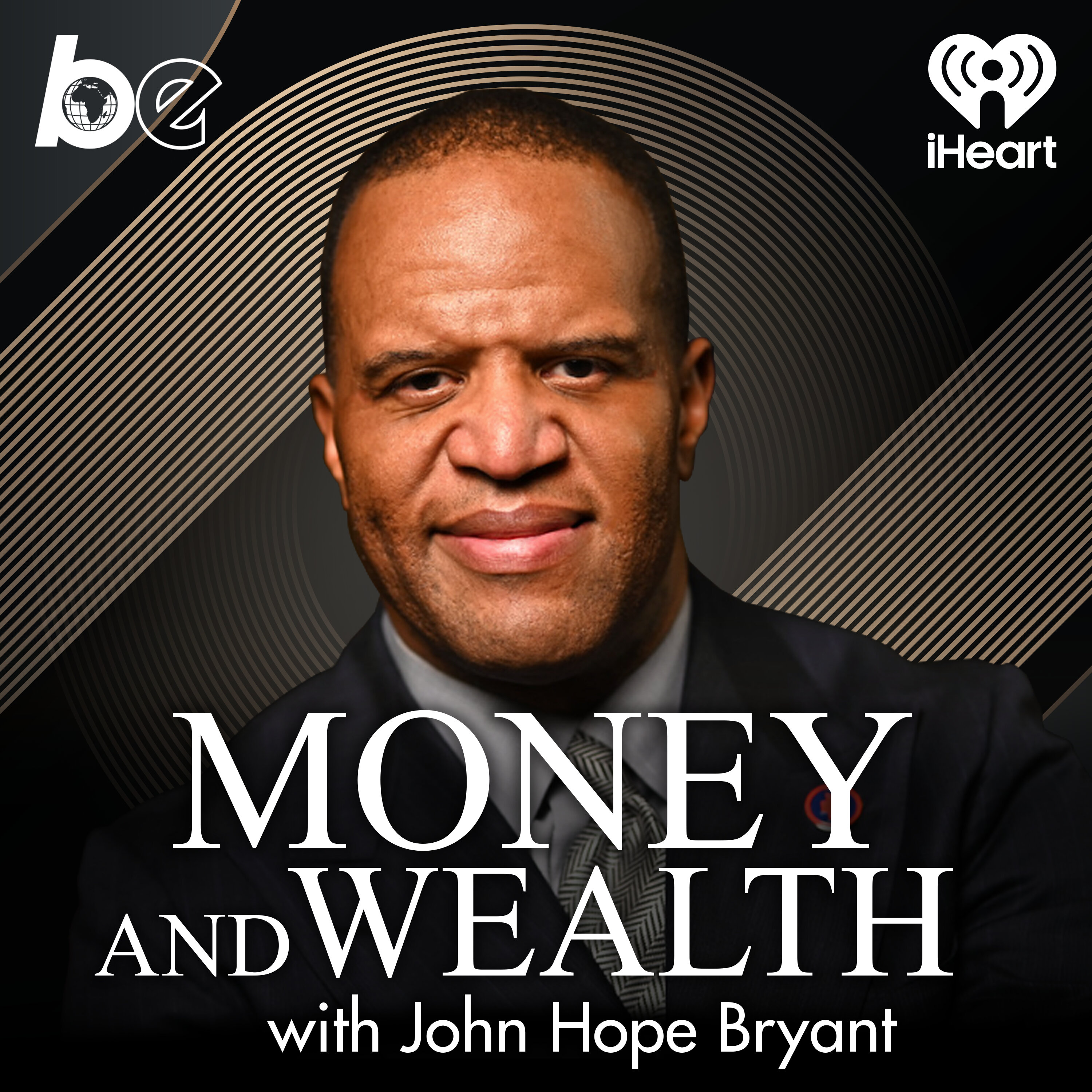
Welcome to Money and Wealth with John Hope Bryant, a production of the Black Effect Podcast Network and iheartradio. Yo yo. This is John Hope Bryan and this is the Money and Wealth podcast series on Black effect network on iHeartradio. I want to thank you for making this one of the top 100 podcasts for business in the country and top 40 podcasts for entrepreneurship in the country. It shows that this is the aspiration generation. We are about the opportunity. The color is not black or white or red or blue. The color is green. We want some more of it. Oddly enough, talking about the color green, we're talking about a colorless green or colorless currency in a minute. We're talking about digital currencies and cryptocurrencies. On this episode. This is going to be hot because people are hot about this topic. They're fast, they're passionate about this topic of cryptocurrency. So I figured I'd just finally deal with it. So let's, let's get into this. Tell all your friends to check this out. Sit around the coffee table or your coffee maker or your fraternity or sorority club meeting or your links meeting or your boule meeting or whatever meeting you guys go to or have on a regular basis and let's have this conversation. Let's get into this now. Whenever folks get all emotional about something, I know there's a problem and there needs to be sort of worked out. And there's folks. Every time I bring up the topic of cryptocurrency, even just innocently. I just did a Forbes black interview, my brother Jabari Young, who's editor in chief, and I just, I just covered this, I think in the most neutral way possible. And folks in the comments, just a couple of the outtake pieces, just going all in, just selling me, I guess on cryptocurrency, whenever you start selling me on something, I'm concerned. Whenever anybody gets defensive or emotional, I'm. I'm concerned. Whenever you make an emotional decision, it's going to be a bad decision. Let me make this very, very clear. I'm not against cryptocurrency. Now this was, this was already in it, the two minute mark on this podcast. So you want to spread something? Spread what I'm actually saying. Okay, I'm going to repeat it one more time. John o' Brien is not against cryptocurrency. I hope it's successful, right? And I love innovation. In fact, I'm a promoter. A promoter. I am an advocate for, a believer in blockchain technology. Many of my friends are involved in this space, from the well known individuals like Anthony Scaramucci, who is on Wall street and has done a great job with this, to folks who are fairly new in this space but very credible like Carrie Lynn here in Los Angeles, where I happen to be right now, there are just a number of folks who are trying to educate People who are trying to do the right thing. There are folks who made money on cryptocurrency. My wife Shaitra has made money on bitcoin. She was an early investor, but my wife has me in case things go south of the border. And I keep saying to folks, don't. Don't bet your rent money, because, well, this is not traditional investing. This is, at most, investor speculation. Again, nothing wrong with that as long as you acknowledge it for what it is. So let me get. I mean, in my normal style, let me just be direct so, you know, everything's gone digital. Okay, I'm gonna break this down as simple as I can next 45 minutes. And if you want to quote me, quote me in context, right. Why people go to dating apps. Okay. What's the purpose of a dating app? The dating app is digital now. Okay, so you're in a dating app. There's a number of these dating apps. What's the purpose of the dating app? To meet someone. Hold on. In person. So you're using the data app, the dating app, to actually meet a human. Right. Why is this relevant to this conversation? What if I told you that the overwhelming purpose of cryptocurrency is to get cash? Again, I'm not jamming anything up. I'm just trying to be real with you and into, like, cut to the quick. The vast majority of cryptocurrencies are, in reality, trying to get to a cash basis. They're trying to cash out with US Currency. That's just the reality. So let's start with that, that this is not some panacea of a new. I'm gonna deal with. I'm explain. I am going to explain, explain what an actual currency, a currency is. But let me be very clear about what the promoter, the goal of most cryptocurrency promoters happens to be. And I'm gonna talk about how many cryptocurrencies there are and which ones are successful and all that stuff. So, again, I'm going to give you both sides of this conversation. The goal of most cryptocurrency promoters and early investors is to eventually exit or cash out in what's called fiat currency. In this case is usually the flight quality in the world, the US Dollar. Here's why crypto is still pegged to the US Dollar psychologically and practically. Even though crypto is marketed as an alternative to fiat money, physical currency, the US Dollar as an example, its value is almost always quoted in dollars. What do I mean by that? People don't say, oh, and by the way, bitcoin is an example of so far a very successful currency. And somebody came into my comments like, yo, man, you're wrong about bitcoin. Like, it's adop all of Wall Street. Not true. Okay. It's been adopted, by the way, by a Wall street firm. I believe it's Black Rock. It's either blackrock or Blackstone. Somebody will clearly correct me in the comments. I'm doing this by memory. They have 95% of all of the, the inventory of, of crypto. And they have that inventory, by the way, on behalf of their customers who supply and demand, who said they wanted it. So they have the currency because their clients pretty much demanded that they were demanded, requested that they keep it for them in trust. So it's not like in this example, the company went and bought these currencies and so making a market on it. They're responding to customer demand, which is encouraging, by the way. They responded to customer demand and they're keeping this currency. So again, the concept that Wall street has now fully adopted, Bitcoin, is just not true. It is true that there is a major Wall street firm that is now holding Bitcoin, lots of it, relatively speaking, in trust for their clients. People don't say, I'm going to buy one bitcoin or say one bitcoin buys 1,000 loaves of bread as an example. They say bitcoin is worth $60,000. You say, what's the point? Well, you're tying it to. Not an exchange tied to a stable valuation. You're tying it to. Well, the US Dollar is what I was just saying. Crypto wealth is only real wealth when it's converted. Gains are on paper until converted to fiat money. You can spend, invest, or pay taxes with fiat money. Again, in this example, US Currency. Some people say, yeah, well, there are people where, There are places where you can actually exchange this with vendors and barter and trade. Essentially, yes, this is true. I'm talking about for the masses, for the classes, for the general public. Okay. You know, you cannot go to the store, any store, and look at a stable price and say, this is. I'm going to exchange this cryptocurrency for. I want to get that robe, I want to get that brush, whatever. And it's the same price. In fact, the prices will change at this moment daily. I'm going to get into this. So the gains are on paper until converted to fiat money. A 10x gain in, in say Ethereum means nothing if you can't use or convert it into a stable, acceptable form of. Of value. So the exit strategy is the US Dollar. Most early adopters or project founders hold or sell tokens during a price boom and then convert to cash or assets like a home or a business. Right. That accepts the currency. Some even raise. So if you're having a problem selling your house, you might say, or your business, hey, I'll accept cryptocurrency as another form of value because they believe in it. A 10x gain in Ethereum means nothing if you can't use it to convert into a stable, acceptable form of value. So some even raise funds in crypto and immediately convert to US Dollars to protect against volatility. Okay, that's just funny to me, right? Because this sort of. Isn't that the point that you're getting away from the US Dollars? Wasn't that sort of the point of the matter? Because the cryptocurrenc into, into, into fashion after the global economic Crisis really, of 2008, people, rightly so, were upset with the mainstream economic system and they wanted a better or different system. And so they, they really came after. They said, well, cryptocurrency is going to be the way that I level the playing field and, and create another alternative financial system. Again, I'm going to get into why this is important in a moment. So it was created in the moment of emotions. I've already said you never do anything based on emotions. That doesn't mean it can't work out. Right. But it means that the start, because it was based on emotions and not, you know, just trying to solve a business problem. It means that you got an uphill battle sort of ready, fire, aim. Crypto as a speculative vehicle. Okay. The game for many is not building a new financial system. It's getting rich quick and exiting before the thing crashes. Right now, somebody said, no, things don't. This crypto doesn't crash. Just hold on a minute. We're only in this 11 minutes and I'm already breaking eggs and upsetting people. Yes, cryptos have mostly crashed. Right. Are there other survivors? Are there folks who have been very successful? Yes. All right, but there's over 20,000 cryptocurrencies in the last 10 years and 95% of them are done. Crashed, failed, poop, poop, gone. It's not my opinion. This is just the facts of the matter. So you see the rug pull, they call this thing rug pulls where you pump and dump in these pump and dump schemes where the goal is to leave with fiat wealth, not build lasting cryptocurrency so you pump this stuff up, you get somebody excited about this thing and then you bounce. All right? You leave and leave other folks sort of holding the bag. If cryptocurrency was the revolution, why does everybody still want dollars? It's a question. So that tells you the game. It's not about changing the system. It's about gaming the system and getting out before it breaks. Now these are, these are the promoters, okay? These are not the legitimate people. They're legit. I've already said there's a legitimate folks that are, that are market makers. Legitimate market makers. Anthony Scaramucci is but one that I trust who I know personally. There are others that are legitimate. There are educators and I mentioned one of those educators that I trust in in this conversation. So let's, let's get into this. Cryptocurrency was supposed to be the great equalizer. So why does it feel like the wild, wild west? A billionaire friend of mine was at a major conference, Milken Global Conference last year, I believe it was. And he's not a boring guy. He's a proper entrepreneur, proper businessman. He's willing to look at anything that makes any sense. He's like the 200th richest man in the world. And somebody asked him about cryptocurrency, he said, this is very simple to me. If somebody can tell me why the value goes up and why the value goes down of cryptocurrency, I'll buy some. Right? And no hands went up because nobody could explain it. Let me tell you what you can explain why certain folks have responded emotionally to this because they don't trust the government, they don't think the financial system has worked for them. Both things, they're legitimate reasons for this. And so they sort of played on the promoters that played on the emotions of certain groups. So you didn't play on the emotion of my billionaire friend. But check this out. 25% of black Americans just about have invested in crypto, much more than white Americans. So this was such a great deal. Why aren't all the sophisticated, so called sophisticated white folks in the country who are make up most of the stock market, right? Why aren't they piling in to cryptocurrency? Again, I'm not saying not to do it. I'm just saying they haven't done it. That 25% of black Americans, of all black Americans have invested in crypto. It's a scary number. When I tell you what comes next. Nearly three in four crypto investors lost money in 2022. Hello. I just like math because it doesn't have an opinion. I'm not, I'm not. You know, I'm just giving you the facts. You make your own decision. By the way, I've had. I have an account. Had an account with crypto. I just wanted to see what would happen. I'm a pretty good investor. Whatever. Anyway, I bought it. I bought the crypto and let it sit there and. And then at some point I, you know, close the account. I lost money, but my wife made money. Okay, which is why I'm getting to the point of saying, don't use your rent money for this. So I'm not telling you not to do it. I'm telling you this vester is speculation, not proper investing. Okay.
- [17:58]
Shannon Schuyler or Will Pearson
Some of the best memories aren't just about where you are. It's about who you're with. Your crew, your day ones, the folks who always got your back. The ones who turn the most random moments into inside jokes you'll be laughing about for years. And now. Share a Coke is making those moments even sweeter this time. It's not just about sharing a Coke with one person. Nah, it's about sharing with the whole squad. Because what's better than drinking an ice cold Coke? Sharing one with the people you love most. Whether you're kicking it at the cookout, vibing at the game, pre gaming before a night out, or just hanging out and catching up, there's a Coke with your name, or better yet, your nickname on it. From friend, bro, bestie or girl, to classic names like Sarah, Riley and David. These cans and bottles are all about your people. But it's bigger than just having a name on a can. It's about uplifting your friends and celebrating real connections. It's about appreciating the moments that matter. The road trips, the late night talks, the big wins, even the L's we take together. It's about the little things. The inside jokes, the group chats, the remember that time when. Moments that turn into the best stories. Because Coke is here for all of it. To make sure you enjoy those moments with the people who matter most. Because sharing a Coke isn't just about what's in the bottle. Nah, it's about the laughs, the love and the connections that keep us together. So go on, grab a Coke for everybody. Raise it up and turn a regular day into a memory. But don't wait too long because these limited edition cans and bottles won't be around forever. So next time you're with your people, don't miss your chance to share a Coke because the best moments are meant to be shared.
- [19:34]
Better Man Advertiser
Men if you're ready to reclaim your edge, listen up. I used to be held back by constant bathroom trips with multiple wake ups during my sleep and looking for restrooms whenever I was out. Then I discovered Better Man. After just two months, I started experiencing fewer trips to the bathroom, less urge to go, and I even slept through some nights. I feel a noticeable boost in my overall well being, even sexual stamina. It gives me the freedom and confidence to live life on my terms. Better man is clinically tested and trusted by thousands of men over 25 years ready to take back control. Go to be betternow.com to order your supply today. That's be betternow.com these statements have not been evaluated by the FDA. This product is not intended to diagnose, treat, cure or prevent any disease. Use as directed. Individual results may vary.
- [20:19]
iHeartMedia Advertiser
Run a business and not thinking about podcasting? Think again. More Americans listen to podcasts than ad supported streaming music from Spotify and Pandora. And as the number one podcaster, iHeart's twice as large as the next two combined. So whatever your customers listen to, they'll hear your your message. Plus, only iHeart can extend your message to audiences across broadcast radio. Think podcasting can help your business? Think iHeart streaming radio and podcasting. Let us show you@iheartadvertising.com that's iheartadvertising.com of.
- [20:54]
John Hope Bryant
The 20,000 plus cryptocurrencies currencies launched in the last decade, fewer than 10% are still active. Hello. So if you had, you know, in your neighborhood, 90% of the businesses failed in five or eight or 10 years, would you say that's a stable investing environment or would you say that's it feels like the wild wild west, something's going on. That's what I'm telling you here. That 90% of these things have just, poof, gone. And somebody made some money and left. And I call that a Ponzi scheme. Somebody made, pumped, dumped and left and then left somebody else holding the bag. But this episode is not about fear. It's about financial facts and future proofing your mindset. If you there are people who've done very well crypto and they're folks who've lost their shirt. I don't want you losing your rent money. If you want to quote something, quote that right. So that we're real clear on, on what I'm saying. I just, I'm just trying to give you financial literacy so you make the best decision for yourself. According to Pew Research, 25% of black adults, 23% of Hispanic adults, and 17% of white adults said they had invested in, invested in, traded or used crypto. Okay, so the vast majority of this market, like half of it, are people who are locked out, who feel locked out of the traditional financial system. And we're looking for some other way to get paid, get rich, get over, whatever. And I believe somebody have been playing on their, what emotions and lack of financial literacy. Black Americans adopted crypto faster than any other group, in my opinion, driven by mistrust in traditional banks, barriers to stock market entry, and a hunger for financial independence. Which is, by the way, an admirable thing. I love those as motivations. I just don't like what the answer is. So crypto promised lower fees, no middlemen, global payments with no discrimination. Fast profits in an instant world. I hate that last one. Fast profits in an instant world. But access without understanding is not empowerment, it's exposure. Hello, can I get an amen? Access without understanding is not empowerment. It's just exposure. So let's get into this next piece. You can't win the game if the rules keep changing. Okay, this is data from the Federal Reserve and CNBC. Nearly 70 to 75% of crypto investors lost money after market crashes. You listening to me? 70 to 75%. So 70 is the smallest number of crypto investors lost money after market crashes. Black investors were more likely to invest late and be hit harder. Hello? Because we will. We're writing the speculation, we're looking at the headlines we're hearing and stuff. And somebody knows that we're emotional and we're going to come in and provide an exit for the folks who are trying to get out and go to what? Fiat currency, Cash out with cash. So here's a Wild west warning. Over 20,000 cryptocurrencies launched since 2013. Fewer than 1500 to 2000 of these currencies have meaningful value or any activity at all today. Some estimates show that between 90 and 95% of all coins fail or become inactive. Failed or become inactive or became inactive. Sorry. Let me give you some examples. The Luna Terra collapse wiped out $60 billion in value. That's real money for consumers and investors. The FTX Crowd affected over 1 million customers, including friends of mine who were involved with this. Many small investors, including working class and minority investors. In fact, my friend Anthony Scaramucci apologized for this particular thing. He thought he was very sophisticated and got took by a professional scamster. Who looked innocent as snow is snow white and ended up being the thief in the thief in the darkness. So again, if a neighbor had 20,000 businesses open and 90% failed, you wouldn't call that an economic empowerment story. You call that a trap? Right. So understanding. Let's understand the technology that and what's real and what's not and how crypto actually works. So blockchain is a public decentralized ledger, Right? Like a transparent notebook in the cloud. Right. I like blockchain. Be very clear. Okay. Most proper cryptocurrency use blockchain technology. I think blockchain is going to become very valuable. Bitcoin is considered by many, many to be digital gold. It has limited supply and is decentralized. And there's a maximum number of blockchain you can mine. So I like that. Ethereum is programmable blockchain for apps and contracts. Altcoins, thousands of tokens. All right. With often no utility or business model stable coins. Listen now this is an attempt to peg value to United States dollar. This is an attempt, stable coins are an attempt to peg the value of cryptocurrency to the, to, to United States currency or another currency. Again, fiat currency. An exit through US or other viable cash mechanisms. Again with the purpose of dating app to meet a woman or guy in person. What's the purpose of cryptocurrency? Oftentimes is to get cash on the back end. So let's not playing a game, let's just be honest with what we're doing. There's no FDIC insurance, no call centers, no undo button. You, you, you hit the wrong button, you lose your password, whatever. It's not a good day. Crypto is not evil. Okay? But a hammer can build a house or can bust you over the head. It's all about how you use it. Right? A knife can butter bread or cut your throat. Right? Or cut your wrist. It just depends on how it's used. Right. So opportunity still exists, but only for the prepared. Right. So long term innovations require long term thinking. I don't like this whole, you know, in it to win it, you know, make money fast. If something looks too good to be true, it normally is. The underlying technology, blockchain, smart contracts, tokenization, they're real and revolutionary in many ways. Right. And by the way, I'm explaining between digital currency and cryptocurrency, so hold on for that. Legitimate long term players. I think Bitcoin is a legitimate long term player. The Ethereum ecosystem is considered, I think, a legitimate long term Player blockchain, infrastructure companies, legitimate long term players, but the boot. But the rules of investing still apply. Dollar cost averaging, portfolio diversification. Only invest what you're willing to lose, I. E. Don't lose your rent money, right? Don't bet your rent money. Most black investors going into crypto, 2022, 2020, 2020 and 2021 at peak high prices. That means most bought high, hello, and so low. Here's some street rules for crypto and here's a key concept. The underserved communities that I come from and that you understand so well can't afford to gamble with what little we've got to play with in the first place. We must invest with wisdom, not emotions. Here's some street rules. If you don't understand it, don't invest in it. If everybody, if everyone's getting rich quick, someone's about to go broke slow. If everybody's getting rich quick, somebody's about to go broke slow, I don't want it to be you. Use crypto to learn how to understand this new innovation, this system, but don't lean on it to try to think you're creating a new system. I had said that very slowly because I don't want anybody thinking again that I'm downing crypto. I'm saying it's the wild, wild west. Like you can't lean on something that might fall over. And if 90% of anything that's tried fails, well, there's a 9% chance that you're going to lean on it. It's going to fall over. It may be okay, right? You go to Las Vegas, you might hit it big. Just remember that Las Vegas, the buildings keep getting larger with every plane that goes in and out of Las Vegas. You know, yeah, people hitting big, but somebody's losing their shirt. You got to ask yourself, is this wealth building or wishful thinking? Never put more money into crypto than you put on a roulette table. Hello. Crypto is a tool, not a ticket. Right? People need to come to Operation Hope and get your financial literacy education on before you start doing some crypto investing anyway, in my opinion. So you can go in armed and prepared. I mean, as a simple rule, you shouldn't have more than, in my opinion, 10% of your portfolio investing portfolio set aside for, for speculation. And this is speculation. And so if, if you can afford to use, lose 5 or 10% of your portfolio or win big, lose big, win big, then, then fine, knock yourself out, go do it. But if you, you absolutely need this for your retirement as Example, right. Then, then, no, you should not be thinking that this is some get rich quick scheme or some sure bet, right? Nothing's a sure bet. Everything has risk. Investing in real estate has this. Investing in the stock market has risks. Right? There, there are stock market companies, There are, There are companies on the stock market who've gone bust that were frauds like Enron. My mother lost money. My mother, Winnie Smith, who was a proper investor, God rest her soul, lost money on Enron. There are many companies that just fool people, right? But those companies at least have assets underneath them that you can sell the assets, they have cash flows. Unless it's a complete fraud. They have cash flows, they've got profit margin, they have customers. And if the thing goes bankrupt, if the thing goes bust, at least a trustee can come in and try to figure out what's the fog and the fake from the real and then give investors back part of their money. If crypto goes bust, nine times out of nine. Right? Okay, I would be generous. Nine times out of ten, the money's just gone. Right? So let me now explain to you why this is not a true currency. Okay, Start, start with what is not. And then I've sor. I've said a little bit about what it is. Let me tell you what is not. Cryptocurrencies are not true currencies in the traditional economic sense. Here's why. Here's what makes up a true currency. One, it's a medium of exchange. So it's used to buy and sell goods and services. Okay, stop. So just understand it's a universal medium of exchange. Number two is there's units of account. Prices are measured through this unit of account and the prices are uniform. Number three, it stores value. There's a store of value and it retains value over time. Really important point. Okay, okay, so let's think about how, how cryptos measure up in this example. So is it a medium of value? Well, partially is accepted by some merchants, but it has limited adoption. So for anybody thinking I'm jamming up crypto, just hear me now. I did say it's accepted by some merchants. Right. But it has limited adoption. I don't go in stores every day and see that they say we accept crypto. I see it every now and then, but I just gave you a compliment, crypto promoters, that it is exchanged in some places a unit of account. No, prices are still in dollars, in euros, in the yuan, you know, in pesos. Right. The unit of account are prices in, primarily in dollars. Is it a store of value? Well, it's extremely volatile. Some argue Bitcoin is digital gold. But prices still swing widely on even the most premium of these currencies, which are, which is, which is Bitcoin. And that undermines, that's. Those price swings undermine what I call here stability. So most experts would say that this is not a currency yet. Actually, I think it's an asset, not a currency. But here's why. Volatility. Prices can rise or fall 20 to 50% in days. Unacceptable for daily transactions. It's unacceptable. The price swings 20 to 50%. One day you go to buy a car and it's, you know, $10, $10,000. Next time you go to buy the car, it's $15,000. I mean, who can, who can, who can absorb that? You go to buy some bread, one day it's two bucks, and next day you go buy a loaf of bread or whatever, probably two bucks, but let's say it's five bucks and you go to the next day, you know, the next day you go to buy it, it's seven bucks and 50 cents. You know, that's just not acceptable. Adoption while growing crypto is not widely accepted like dollars or euros. Regulatory uncertainty. Governments don't treat it like legal tender. Right. The U.S. government is talking about this right now, by the way. I think it's a great idea for it to be regulated. Most things that get regulated actually end up doing well. The stock market was unregulated. It was a wild, wild west. It got regulated, and that's where the wealth really came from. The securities and Exchange Commission banking industry was unregulated. It was a wild, wild west. And of course, you had this huge boom and bust in the 1930s. Banks are regulated now and they're very, very profitable. You want to do well, buy some stable bank stocks and hold it over time. Banking business is a very stable business. I can name other sectors, but basically anything that gets regulated because now you have the rules of the game and you can feel comfortable getting into it and you have a place to call somebody to complain to. You can, you know, report folks. And then you tend to have more credible people that involve themselves in a regulated environment also. And you tend to have a deep capital stack in a regulated environment. Capital stack, meaning people have, have enough money so the thing that they're promoting doesn't go poof like most of the cryptocurrencies have in the first, in the first run up here.
- [36:41]
Coca-Cola Advertiser
Some of the best memories aren't just about where you are. It's about who you're with, your crew, your day ones, the folks who always got your back. The ones who turn the most random moments into inside jokes you'll be laughing about for years. And now. Sherrah. Coke is making those moments even sweeter this time. It's not just about sharing a Coke with one person. Nah, it's about sharing with the whole squad. Because what's better than drinking an ice cold Coke, Sharing one with the people you love most? Whether you're kicking it at a cookout, vibing at game night, pre gaming before a night out, or just hanging and catching up, there's a Coke with your name on it. Or better yet, your nickname on it. From friend, bro, bestie and girl to classic names like Sarah, Riley and David, these cans and bottles are for your people. But it's bigger than just having a name on a can. It's about uplifting friends and celebrating real connections. It's about appreciating the moments that matter. The road trips, the late night talks, the big wins, and even the L's we take together. It's about the little things, the inside jokes, the group chats, the remember that time when moments that turn into the best stories. Because Coke is here for all of it. To make sure you enjoy those moments with people who matter most. Because sharing a Coke isn't just about what's in the bottle. It's about the laughs, the love, the connections that keep us together. So go on, grab a Coke and raise it up and turn a regular day into a memory. But don't wait too long because these limited cans and bottles won't be around forever. Next time you're with your people, don't miss your chance to share a Coke because the best moments are meant to be shared. Hey friend, I know how it feels waking up exhausted after multiple trips to the bathroom and feeling embarrassed by sudden leaks. I used to be constantly on edge, searching for a restroom whenever I was out. Then I discovered better women. I was skeptical at first, but two months in, everything changed. I experienced improved bladder control. No more heart stopping moments when I laugh or sneeze, less urge to go deeper and more restful sleep. I finally felt like myself again, confident and in control. Better woman is natural, effective and trusted by Women for over 25 years. Ready to take back your control? Head over to bebetternow.com to order your supply today. That's be betternow.com these statements have not been evaluated by the FDA. This product is not intended to diagnose, treat, cure or prevent any disease. Use as directed. Individual results may vary.
- [39:36]
iHeartMedia Advertiser
Run a business and not thinking about podcasting? Think again. More Americans listen to podcasts than ad supported streaming music from Spotify and Pandora. And as the number one podcaster, iHeart's twice as large as the next two combined. So whatever your customers listen to, they'll hear your message. Plus, only iHeart can extend your message to audiences across broadcast radio. Think podcasting can help your business? Think iHeart streaming radio and podcasting. Call 844-844-IHEART to get started. That's 844-844-iHEART.
- [40:11]
John Hope Bryant
Stablecoins like USDC or Tether try to address volatility, but even they aren't official currencies. But they're stable coins, meaning they are tying themselves to the US currency to try to make themselves more attractive. But even those aren't considered official currencies. So today cryptocurrency is more like digital property than digital money. It's an asset you trade, not something you live on until it's stable, trusted and widely accepted. It's just not a real currency. It's an experiment. Now it's an experiment that might make you a bunch of money because again, you're in the early days of something that's going to go up and down wildly. So if you again got enough risk tolerance or you like that kind of investor speculation, I'm not going to call it investing investor speculation. And you've got bidding your written money. Fantastic. Or you got a coach. Like I mentioned to you, Carrie Lynn and others who are proper teachers in this area, I believe that Earn your Leisure has been doing some education in this regard. I don't think Ash Cash is a guy you can trust who generally speaking is a good educator in these areas of financial literacy. Just make sure you're financially literate before you go in these areas. So over the past years again you've had 20 to 25,000 cryptocurrencies launched and most of them failed. 8,000 to 10,000 of them are still listed or tracked on major sites, but they don't do much, they're just inactive. 80% plus either failed, completely abandoned, delisted, became zombie. Coins still technically exist, but no activity or value. Or they just turn out to be scams or exit schemes. The peak time for all this activity was 2020-17-2018. Thousands launched of these cryptocurrencies launched during the crypto bubble 2020-2022. That was the DeFi and the NFT boom. Another huge surge. Here's the Reasons for failures, no real use for the coin or no real use case for the coin. Poor management or development of the coin by its promoters. Regulatory shutdowns because folks were scamming Market crashes, rug pulls, developer scams. Starting to get the gist what I'm saying here. So you read this however you want. I mean, I'm just giving you the facts of the matter that this is just not for the faint of heart. I'm not telling you not to do it. I'm telling you it's not for the faint of heart. Now let's deal with something that it's just not obvious. What's the difference between digital. So, John, do you like digital currency? Do you like digital money? Sorry, yes. I love digital money. I love it. It's like with no exceptions, I love digital money. But that's different from cryptocurrency. So let me explain. Let me explain the difference because this is a good sort of place for you to plant your flag and start your educational process just by knowing what cryptocurrency is and what it isn't and how these things differ. So digital money, or digital currency. Right. Refers to any form of money that exists only in electronic form. Is not a. Is not physical, like coins or bills. You can't. It's not even in this example, writing a check. The old joke coming it up, you can't be broke. I can't be broke, Mom. I still have checks left. But. So it's not a physical anything, but it still can be used to buy goods and services. Okay. Which meet the criteria I said to you earlier of what a real currency means. So here's an example of digital digital money. Your bank account. Okay. Your bank account balance you view primarily online. Okay? That's right. Tell me if you agree with that. So a credit or debit card transaction as an example, or a credit or debit card. A credit card or debit card is an example of digital money. Okay, moving around. Zelle Venmo, PayPal, Apple Pay digital money, central bank, digital currencies, CBDC, such as China's digital yuan, which is in development globally. That's digital money. These are the key features here are is issued by centralized. By centralized authorities, usually banks or governments pegged to national fiat currencies like the US Dollar. Did you know what a fiat currency was before this session? By the way, this podcast? Just curious. Transactions are processed through traditional banking or payment systems, right? You know, what's the purpose? Increase payment speed. So checks were better than checks were more reliable? Well, checks Were, were, you know, it was more reliable. System moved faster. Checks, checks made the system move fast. You could write, you know, do you know you can write a check on the back of your T shirt? By the way, technically you write to pay to the order of Joe Blow, write his routing number and account number, all this stuff, sign it and you could take somebody's T shirt to the bank and you get into a nice argument with the teller and the manager about whether they have a right and responsibility to cash your T shirt. Right? I don't suggest you do it. I'm just saying that a check is not just a piece of paper. But, but we move from cash and coins, right? Having to carry all that around and low down your pockets and all this stuff and all, you might get robbed to actually writing a check. And those checks people would float. I used to float checks back in the day. You'd write a check and send it in to a vendor, then they got a pass, they have to deposit it in their bank. The bank would process that, it would float for three, four, five days. Meanwhile you're running around trying to figure out how to cover that check. Remember that. Don't act like you don't know what I'm talking about by the way. But digital, the digitization of money solved all that. The transactions happen right? Instantly. So increase payment speed, reduce cash dependency, make transactions traceable and manageable in a modern economy. So as a step towards are similar to blockchain. Right. And now, now what's cryptocurrency? Okay, I'm about to give you a compliment now crypto promoters. Cryptocurrency is a new asset class so I just called it something other than a scam. Proper legal. Proper cryptocurrencies that follow the rules, have rules of engagement, are trackable, traceable and you know, fit the criteria I said earlier of legitimacy. Right. Are a legitimate new asset class. Right. And need to be taken seriously. Cryptocurrency is a form of digital currency that uses cryptography and decentralized technology blockchain to secure transactions and control the creation of new units. So example Bitcoin btc. The first and foremost well known cryptocurrency Ethereum eth enables smart contracts and decentralized apps. Solana, Cardano Ripple. You get them, you get the gist. Key features decentralized. No central bank or government controlling it. Limited supply usually. Bitcoins for example supposedly is capped at 21 million coins store of stored on a blockchain public ledger that verifies and records transactions. It can be anonymous. You can transact without tying it to your real identity, which, by the way, is a plus and a minus. A lot of criminals love this because, for obvious reasons, it doesn't track to a person. Scamsters love this, people. You might hear folks sending you a note saying, I'm going to do something bad to you and embarrass you or whatever, and I got this information on you. You need to pay me in cryptocurrency. They want that because it does not have an identity attached to it. And technically you can't, once they transfer that money out and turn it into cash, by the way, that you can't find them. So the key differences between digital money and crypto cryptocurrency is, you know, you've got a, you know, an issuer of digital money that's a central bank, a government or an institution. And with cryptocurrency, it's typically decentralized and no central issuer, right? With digital money, there's a lot of control. It's centralized with course, cryptocurrency is decentralized digital money. You use traditional banking and payment rails and technology that's proven. And cryptocurrency is built on blockchain technology. With digital money, you have an identity tied to a user's verified identity. And of course, cryptocurrency is pseudonyms and anonymous identities. Anonymous, folks. Well, anonymous something, right? You don't know what. You have no idea what's on this side with cryptocurrency. So digital money is really, you're looking at stability backed by fiat currency, a major US or other government currency. Cryptocurrency is somewhat volatile, driven by supply and demand. I would often say you're not going to like this at all. When I was more smarty pants about this, I'd say cryptocurrency is like a fancy gym membership. Like when you're using it, when you're excited about that gym membership, you get it and you go there and everybody's excited about it. Everybody's going to the gym and the equipment's all shiny and new and you're meeting girls and guys or whatever and whatever you use reason going to the gym, it has a lot of value. The minute that the lure falls away and you don't want to go to the gym anymore and you found another place that's cool. And whether the gym just loses value overnight, like it is based on hype, it's based on emotions, based on whether it's popular. A lot of cryptocurrencies are like that, based on hype and not based on your feelings and your emotions, not based on anything that's underneath it and that has real stored value. Anyway, I think I've talked enough about that. Digital money modernizes our current system. Modernized our current system. It's like cash and credit going digital, right? Where cryptocurrency challenges the system. In total, it's a new system altogether built by and for the digital age. So digital money is the evolution of the old system. Cryptocurrency is a rebellion that created a new one. But every revolution needs rules or it burns out. That's why financial literacy is so important. That's why I think financial literacy is a civil rights issue. As I keep saying over and over again of this generation, when you know better, you do better. Now, I, I, we're at 43 minutes here, so I can probably suggest that you sort of got the memo, so to speak on this and why it's, it's so, it's so important to get this, get this right and why I have, you probably understand now why I have been concerned about people going into this thinking that it's some kind of a sure bet. If something is too good to be true, it's probably a lie. Only in the dictionary does the words success come before the word work because it's alphabetical. There's only work. Right. And I want you to do the work. I want you to do the research of understanding what's what. In this particular case, what is a cryptocurrency? What is backing it? Typically nothing. There's typically no asset. Okay, let me give you another example. So people say US currency is nothing. It's back. It's fiat currency. Is, it is fiat currency. It's not backed by gold anymore. Correct. That was a Bretton woods agreement way back when. So it's not backed by gold anymore. Correct. It's a flimsy currency supposedly backed by the US Government. Incorrect. US Currency is fully backed by the full faith and credit of the United States government, which happens to be the biggest economy, the most stable legal system, the sole superpower in the world. And it is a flight to quality for everybody in Russia who say they don't like America. They're putting their money in, putting their money in America while they're complaining and criticizing the country on tv. All these billionaires and I would argue government officials in Russia are putting their money legitimate and ill gotten gains. They're hiding in America because it's safe. China, a lot of the Chinese billionaires and Chinese officials, they're putting their money in the US or buying US real estate or stocks, et cetera. Because. Because America is what I call what investors call a flight to quality. It's the best, most stable system in the world. And China owns a lot of our U.S. treasury bills, right? A lot of our debt. Because they believe while they're criticizing us, they realize there's no deal better than than than the US Dollar. And the.
- [54:44]
Coca-Cola Advertiser
Some of the best memories aren't just about where you are. It's about who you're with. Your crew, your day ones. The folks who always got your back. The ones who turn the most random moments into inside jokes you'll be laughing about for years. And now, Sherra Coke is making those moments even sweeter. This time it's not just about sharing a Coke with one person. Nah, it's about sharing with the whole squad. Because what's better than drinking an ice cold Coke? Sharing one with the people you love most. Whether you're kicking it at a cookout, vibing at game night, pre gaming before a night out, or just hanging and catching up, there's a Coke with your name on it. Or better yet, your nickname on it. From friend, bro, bestie and girl to classic names like Sarah, Riley and David, these cans and bottles are for your people. But it's bigger than just having a name on a can. It's about uplifting friends and celebrating real connections. It's about appreciating the moments that matter. The road trips, the late night talks, the big wins, and even the L's we take together. It's about the little things. The inside jokes, the group chats, the remember that time when. Moments that turn into the best stories. Because Coke is here for all of it. To make sure you enjoy those moments with people who matter most. Because sharing a Coke isn't just about what's in the bottle. It's about the laughs, the love, the connections that keep us together. So go on, grab a Coke and raise it up and turn a regular day into a memory. But don't wait too long because these limited cans and bottles won't be around forever. Next time you're with your people, don't miss your chance to share a Coke, because the best moments are meant to be shared.
- [56:30]
Better Man Advertiser
Men, if you're ready to reclaim your edge, listen up. I used to be held back by constant bathroom trips, with multiple wake ups during my sleep and looking for restrooms whenever I was out. Then I discovered better man. After just two months, I started experiencing fewer trips to the bathroom, less urge to go, and I even slept through some nights. I feel a noticeable boost in my overall well being, even sexual stamina. It gives me the freedom and confidence to live life on my terms. Better man is clinically tested and trusted by thousands of men over 25 years ready to take back control. Go to be betternow.com to order your supply today. That's be betternow.com these statements have not been evaluated by the FDA. This product is not intended to diagnose, treat, cure or prevent any disease. Use as directed. Individual results may vary.
- [57:15]
iHeartMedia Advertiser
Run a business and not thinking about podcasting? Think again. More Americans listen to podcasts than ad supported streaming music from Spotify and Pandora. And as the number one podcaster, iHeart's twice as large as the next two combined. So whatever your customers listen to, they'll hear your message. Plus, only iHeart can extend your message to audiences across broadcast radio. Think podcasting can help your business? Think iHeart streaming radio and podcasting. Call 844-844 iHeart to get started. That's 844-844, iHeart.
- [57:50]
John Hope Bryant
So capitalism and democracy are horrible systems, except for every other system in the world, right? And even communist countries like China and Russia have adopted capitalism. On one of these podcasts, I'm going to break down the different systems. Communism, socialism and capitalism. You want me to do that? Tell me in the comments and I'll spend a show talking about that. But I want to get the fundamentals of all these things out of the way so you can actually operate in this world effectively and smartly. So it is a fiat currency. The US Is based on a fiat currency, but that currency is fully backed by the US the full faith and credit of the US Government. Cryptocurrencies are not backed by assets. Bitcoin has the benefit of it being mined and having limited supply and all that. And so it has more inherent value. Okay. Because it's a, it's a closed loop system and I have some confidence in bitcoin and my, my wife owns some. But most cryptocurrencies is just, it's just somebody who issued something. Think about in the early days of the United States, anybody could issue a currency. A grocery store could issue one and did a lumber store could issue currency and it did a bank in this town, a bank in that town could issue their own currency. A town could issue a currency. And so of course inflation was rampant and the coins and the currencies died almost as quickly as they were created. And you had no Assurance that your money was worth anything. So America, the country, regulated this and created a central bank. Hello, the Federal Reserve, a U.S. treasury Department, also within the government and put rules in place and created a national currency that survives to this day and is the envy of the world. Essentially, that's what's happening now in a smaller way with cryptocurrency. You have all these folks running around starting this, starting that, and calling it a currency. People who are not financially illiterate believe the hype because it's a celebrity or whoever, or politicians, they buy these things. There's a rug pull. Often the celebrity or whoever or whoever's backing that celebrity, who's a real financier, they get the. They pump. They pump a dump. They pump the price up, they pull their money out, the price drops, and those who are in the middle get slaughtered. I don't want you in the middle, and I don't want you to end up at the bottom. Did you get that? Did you understand that? So I'm not jamming up cryptocurrencies. I'm telling you that I don't want you betting, once again, your rent money. I feel like I could talk about this all night, but that's probably like, you never want to be the old guy in the club. So before you kick me out of this conversation, I'm going to leave. I may kick myself out of the conversation. I want just to make sure before I end up talking myself into a coma, just making sure I've covered all of the ground on this and that you don't walk away from this sort of scratching your head, that you understand that there are risk and rewards, there are clear opportunities if you get the right currency at the right time and you ride the price up right. But what is somebody trying to do upon. Are they trying to build an economic system where you're buying things with the cryptocurrency and you're trading it and it has a stable price? And no, that's not what's happening right now. What's happening is that people are bidding up the price with US Dollars. They're saying, again, bitcoin's worth X dollars. And then at some point, folks are trying. So if you're a millionaire, you're a millionaire on paper, and you can wake up tomorrow and that is worth zero, by the way, or you lose your key or something, but that has no value until you convert that, until you sell it and get what US Currency. I dare somebody to correct me on that. The whole purpose of this currencies most of these cryptocurrencies is not to create. This is not some effort to create this community of merchants and those who are buying and selling and using this. That's not the primary purpose. The primary purpose is to use it as an asset that increases in value. But this asset doesn't have any assets. It has hype and hope tied to it. My middle name. If you're buying a stock, buying real estate, it's secured by real property. You can go tomorrow, the property's going to be there. You'll need a key. You lose your key, you get somebody to come, make you another key. It opens the door to your real property. There's a property ledger. It's called a title, and it's insured by title insurance. And you come up tomorrow, you leave for 500 years. Well, not 500 years. For five years, come back, and your property's still there. No one's going to pick up your property, steal it, and take your property someplace else, whatever. My property. Somebody stole my property. Anybody seen 15502 South Fraley? My home address when I, when I, the home I grew up with, the house my mother bought when I was very young. Me, my brother and my sister. No, the house address is still there. A stock, you know, Ford Motor Company or whatever company you, you Walmart or whatever company that you love, that company is there. It has employees, it has customers, it has cash flows, it has buildings, it owns, it has real estate, it has trucks, it owns, it has a reputation, a brand. It has a stock price based on price on earnings. It's called a PE ratio, price to earnings ratio. There's some rationale of why that price is going up or why that price is going down. It's not totally rational. There is sentiment and there is emotion in the stock market. But if that company goes bust, goes bankrupt, as I said earlier in this podcast, then there will be a trustee that comes along and sells the assets or tries to sort it out as a chance. You get some, if not all of your money back. So an example of a stock market, unless it's a complete fraud, you get some or all your money goes back. If the company goes bust. In the case of, of a franchise investment you make, same thing. There's a building, there's a franchise, there's a business plan, there's customers, as you know, there's a franchise license. You're going to get something out of that. In most cases, an insurance company goes bust, same thing. In all likelihood, you're going to get Your money back or some of your money back. Real estate, I've already covered that. Nobody's stealing the real estate. The stuff is still there. But in US currencies, I already covered that. Treasury bills, the Tanzan. If the US government goes out of business, the whole world's toast anyway. So don't worry about it. There'll be nothing to worry about because we're all done. But with cryptocurrencies in rare, in, in the other than the rare instances of the ones that I've already mentioned, and stablecoins, which use the US dollar as a foundational credibility piece, the way, you know, they get stable coins tied to US currency, but even those are not asset based, I don't think in total. So in many of these currencies, these cryptocurrencies are just hoping and praying that they hit and they, they create a buzz and sustainability and, and when they do, you do incredibly well. Like bitcoin. Folks who went in early on bitcoin, like my wife and others, just absolutely killed it. They're still trying to cash that for cash when they're trying to get out. By the way, although some people have traded bitcoin for cars and real estate, they find other people who love bitcoin and are willing to trade it. Okay, I hope I have in 54 minutes demystified this for you and now you feel more empowered. Financial literacy is a civil rights issue of this generation. I want you to know better so you can do better. I know this is going to call. This is going to be a hot episode. People are going to be hot that I did it. The promoters of bitcoin who are just, they have bitcoin, not bitcoin, sorry, cryptocurrencies, they have a tattoo on their shoulder for cryptocurrencies and they don't want anybody criticizing it or talking bad about it. I'm not talking bad about it. I'm talking. I said things that are positive. I've said things that are not so positive. That's called life. Get over it, right? I love members of my family. Other people in my family drive me nuts. Right? It's called the bum factor. 20% of everybody are bums. And 20% of cryptocurrency, or more because it's new and innovative, are just bums. Just acknowledge that there are bums all everywhere and you don't want bums in your family. I don't want bums in my family and I want to do business with bums. I don't want to be. I Don't have friends that are bums, but there are bums everywhere. And I'm just saying you don't want to make a bum investment. What's wrong with that? If you're a crypto promoter, you should love what I just said. You should take this podcast and share it with everybody and say, do what John Bryan says. Be careful, be, be thoughtful, know, know what you're investing in, who you're investing in, what kind, what the company is, what the credibility is. And, and then be thoughtful about it because why wouldn't you want that? Right? You should have complete transparency. And if you do that, people can trust you too, because you don't have anything to hide. So there you go. This is John o' Brien. This is money and wealth on the Black Effect network. Talking about cryptocurrency and digital currencies, all that come with it. If you love this space, go into it with both eyes open and go in with both feet and do very well with it. Have a long term perspective and I wish you, I hope to see you at the finish line. Telling me, John Bryant, I did it and I made a fortune. There's only about my numbers are correct. About 1% of billionaires who made their billions, billionaires and millionaires, by the way, about 1% who made that their tens of millions and billions in cryptocurrency. Okay, just so you're clear, that's in other words, the source of their wealth is cryptocurrency, only about 1%. It doesn't mean it is not possible. I'm just telling you this is separating the hype from the reality. I want you to go to Operation Hope, get your financial coaching scholarship so that you can go deeper in these areas and they can give you some good advice on what things to do and what you should be looking out for as you become an investor, which I encourage you to do, have a full portfolio, including some. You can have a risk tolerance, a riskier part of your portfolio, in which case you might decide you want to go all in on cryptocurrency. And after you heard this and got everything, all your knowledge, go do it. Great, that's what you want to do. But balance it out with other things which you know well. It's a balanced approach. So $1,000 free coaching scholarship, you got that from me. Tell my people at Operation Hope I sent you. You can download the Hope in Hand app and sign up for coaching online on your Android or Apple phone. You can go to our 1-800number. You can call go to our website at operationhome.org, just tell them John Bryant sent you. I'm the founder, Chairman, CEO. We're the biggest in the country for financial literacy coaching. 1500 offices in 42 states and growing the only nonprofit allowed to operate inside of a bank branch in US history by four and a half billion dollars invested in you raising credit scores, lowering debt, increasing savings so and change your life and make you bankable. Can I get an amen? Get my book Financial Literacy for all is number one for 14 months now. Bestseller in hardcover copy and the new paper book paperback version are out. It's a bestseller on Amazon and Walmart and you can also get it your local black bookstores which is cool if you can support them. And of course tell your friends to follow this podcast where I go deep in my ministry of finance once a week on some topic. This week was cryptocurrency and digital currency. John o' Brien I'm out. This is the civil rights movement. From Civil Rights to Civil Rights. Let's go Change the world. Peace, Money and Wealth with John o' Brien is a production of the Black Effect Podcast Network. For more podcasts from the Black Effect Podcast network, visit the iHeartRadio app, Apple Podcasts or wherever you listen to your favorite shows.
- [72:12]
Coca-Cola Advertiser
The best moments happen when you're with your people, laughing, vibing, just enjoying life. Coke is making those moments even sweeter. Share a Coke is back and it's all about sharing with the whole crew. Doesn't matter if it's your bestie or bro, there's a can with their name on it. So grab one for the squad and make some memories. But hurry because these Coca Cola limited edition bottles and cans won't be here forever. Don't miss your chance to share a Coke with your favorite people.
- [72:43]
Shannon Schuyler or Will Pearson
In a world of economic uncertainty and workplace transformation, learn to lead by example. From visionary C Suite executives like Shannon Schuyler of PwC and Will Pearson of.
- [72:54]
John Hope Bryant
Iheartmedia, the Good Teacher explains the great teacher inspires. Don't always leave your team to do the work that's been the most important.
- [73:04]
Better Man Advertiser
Part of how to lead by Example.
- [73:07]
Shannon Schuyler or Will Pearson
Listen to Leading by Example executives making an impact on the iHeartRadio app, Apple Podcasts or wherever you get your podcasts.
- [73:16]
John Hope Bryant
You're listening to an iHeart podcast.