← Money And Wealth With John Hope Bryant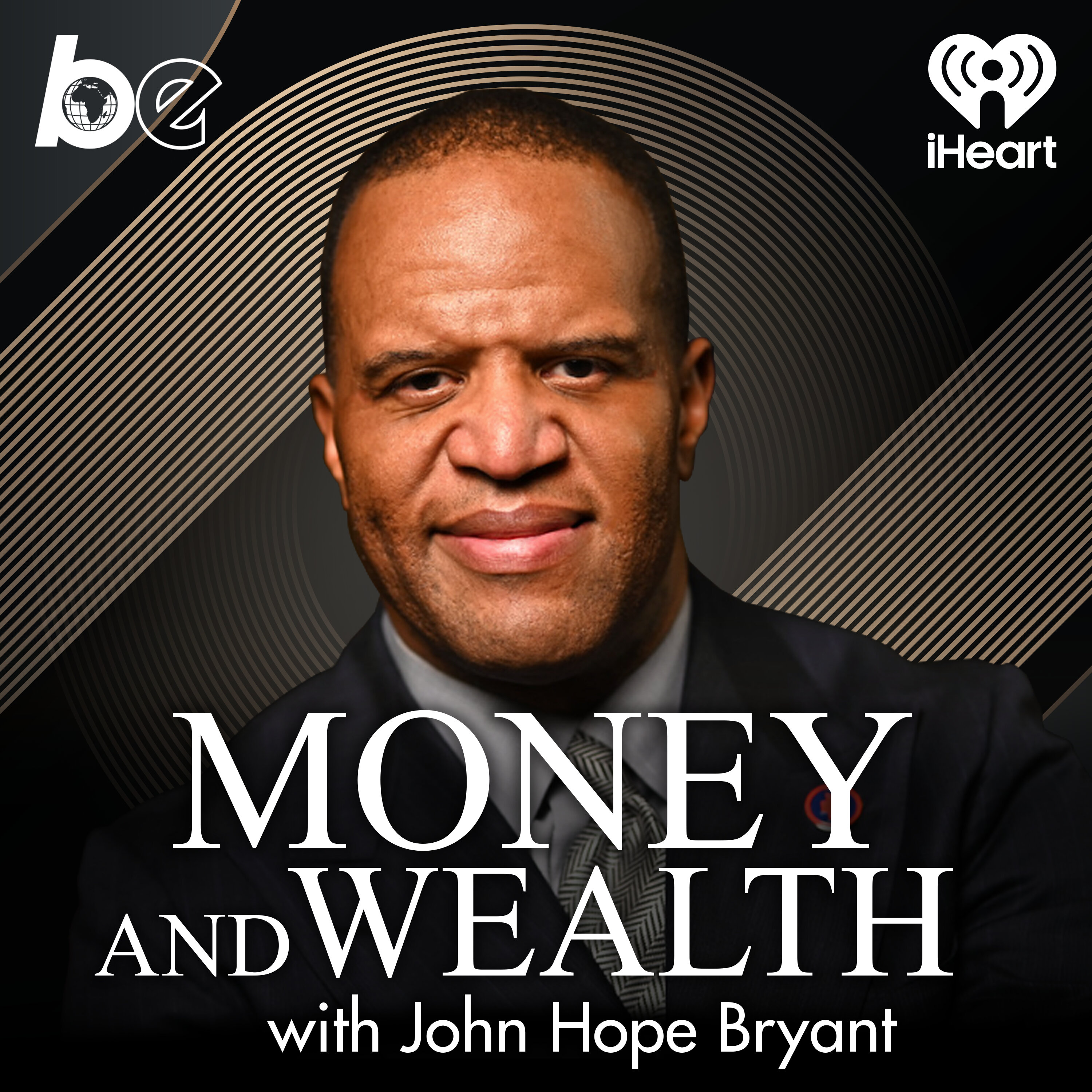
Loading summary
Transcript120 lines
- [00:01]
John Hope Bryant
In a world of economic uncertainty and workplace transformation, learn to lead by example. From visionary C Suite executives like Shannon Schuyler of PwC and Will Pearson of iHeartMedia. The good teacher explains the great teacher inspires.
- [00:17]
Charlamagne Tha God
Don't always leave your team to do the work. That's been the most important part of how to lead by example.
- [00:25]
John Hope Bryant
Listen to leading by Example executives making an impact on the iHeartRadio app, Apple Podcasts, or wherever you get your podcasts.
- [00:34]
Nadir Settles
Peace to the planet.
- [00:35]
Charlamagne Tha God
I go by the name of Charlamagne Tha God and guess what? I can't wait to see y'all at the third annual Black Effect Podcast Festival. That's right. We're coming Back to Atlanta, Georgia, Saturday, April 26th at Pullman Yards. And it's hosted by none other than Decisions, Decisions, Mandy B. And Weezy. Okay, we got the R and B Money podcast with Tank and J. Valentine. We got the Woman Evolved podcast with Sarah Jake Roberts. We got Good Moms, Bad Choices, Carrie CH Champion will be there with her Neck in Sports podcast and the Trap Nerds podcast with more to be announced. And of course, it's bigger than podcast. We're bringing the Black Effect Marketplace with black owned businesses, plus the food truck court to keep you fed while you visit us. All right, listen, you don't want to miss this. Tap in and grab your Tickets now@blackffect.com podcast festival.
- [01:20]
Nadir Settles
Welcome to Money and Wealth with John Hope Bryant, a production of the Black Effect podcast network and iHeartRadio foreign. Hey, hey, hey. This is John Hope Bryant, and this is the Money and Wealth podcast series, season two. I want to thank you all for making this one of the top 30 entrepreneurship podcasts in America and one of the top 100 for business and one of the top 5% of all podcasts out there, period. We are breaking down and making real the entrepreneurship opportunity and the opportunity economy. We are acknowledging you as part of the aspiration generation and we are never taking you for granted. You are brilliant, you are amazing, you are talented. But no one ever told you how capitalism works. No one ever told you our free enterprise works. There's no seminar or classes for that in school unless you were raised, got lucky, and raised by wealthy parents. So it's what you don't know that you don't know that's killing you, but you think you know. So we're going to step by step, week by week, unpack the mystery. This week, you're going to get a double barrel beautiful surprise. On the one hand, we're going to Talk about institutional investing. Those are two phrases that you may not be familiar with. Certainly not used in a sentence, institutional investing. We're also going to introduce you to a certified role model and I believe hero in business for people of color, certainly black America. He's a professional and somebody who everybody should respect, period, irrespective of race. But when you have the bonus of having someone who's not a black leader but a great leader who happens to be black, well, that's just extraordinary. And that person is Nadir Settles. He is the global head of Real Estate Impact. We'll explain what that means at Nuveen. We'll explain what that means. You probably never heard of him. Probably never heard of it. It's underneath all aspects of your life that you're unaware of. It gets deeper. Nuveen is a company, part of a larger company called TIAA Cref. And now you're like, well, who in the heck is that unless you're an Investment Professional. Well, TIA, TIAA, I think it's still called TIA Craft. But TIA, TIA for short, is a just about 2 trillion dollar company. It's trillion with a T. And the CEO of that company, a friend of mine, the Sunda Duckett, also happens to be a sister, meaning a black woman again, extraordinarily competent, was CEO before that of the consumer bank of JB Morgan Chase. So she no one gave her anything. She had to earn it every step of the way. And so is the case for Nadir Settles. Before I bring him on, let me tell you a little bit about him. He graduated with a BA in Business Administration from St John University, an MBA from Villanova School of Business, a master's in real estate finance from New York University. Before he worked at Nuveen, he was a professional in asset management. We'll explain that. Portfolio management will explain that. Acquisitions will explain that. Although it's a little self explanatory strategy and product development. He joined Nuveen in 2011 and before that was involved in asset management and acquisitions at Silverstein Properties and RLJ Development, Urban Lodging Trust. Rlj, you would know that. Is Bob Johnson one of Bob Johnson's companies if I'm not mistaken. He'll correct me if I'm wrong. So in short, this is a bad brother. Welcome to the podcast Nadir.
- [06:28]
Hey John, thank you for having me. Thank you to your audience. I think this is an important topic and appreciate all you're doing to bring the education, right? The education helps us to then go after and try to find and Identify those opportunities that can help to, again, improve, you know, our, our wealth positioning. So thanks for all you're doing, brother, and for those.
- [06:54]
My pleasure. For those who are listening to this and you aren't seeing him, normally when you introduce somebody with these kind of credentials, whether a national figure, they are, you know, dealing with lots of money. You're used to somebody who is blinged out. They're in the entertainment business. They've got fancy clothes on. They've got a bunch of jewelry. They're flossing. For those who can't see him, my man's got a hoodie on. He's slightly unshaven, but he's, he's. He is dangerous from the shoulders up. He's reasonably comfortable in his own skin. I know him because he's a friend. I can say that no one's comfortable in their own skin. We're all a little insecure, all of us, including me. But in fact, courage is nothing more than your faith reaching through your fear, displaying itself as. Displaying yourself as action in your life. Courage is nothing more than your faith reaching through your fear, displaying itself as action in your life. In order to be Nadir Settles, you got to be courageous. In order to be me, you got to be courageous. He is courageous. He is real. He is a good guy. He's a good man. And he is reasonably comfortable in his own skin, which is why he doesn't need to wear his credentials on his arm around his neck. Why am I saying this? Because he manages $8 billion in assets. Drop the mic. All right. For hopefully anybody driving a car didn't swerve off the road. You didn't hit a ditch. You didn't hit a. You didn't hit a bump and your phone fell. You didn't fall out your seat. I didn't say $50,000 or $500,000 or 5 million or 8 million or 10 million or. I didn't say 800 million. That would be impressive. I said he manages $8 billion US currency, not. Not Mexican pesos, US currency. And my man is rocking end of the day as he's had meetings all day. A hoodie and a barely shaved face because he's been working all day is my guess. And most of that stuff, people don't see him. And I want you to model him. He's also talking to his wife before this. He's also taking care of his kids. He's trying to figure out how to get them to their after school activities. Like he's a real man and a Full example of what you want to role model for the future. Bishop T.D. jakes told me recently, Nadir, he said that boring is the new sexy. I agree.
- [09:38]
We got that slogan around our shop as well.
- [09:41]
So explain to people, first of all, the 8 billion got their attention. How many black men in the world are managing the likes of $8 billion, give or take?
- [09:57]
I mean, it's. Well, one, thank you for the kind words, John. And two, it's not that African Americans can't manage 8 billion or we don't have the competency to do it. Right. We just haven't been given the access and opportunity to go ahead and manage 8 billion. So, yes, today I'm an exception, but there were people that paved the way before me. And to your point, hopefully I'm paving the way. By the way, I'm conducting myself as a businessman in the investment arena. That's going to pave the way for more diversity to come and manage even more money than I'm managing today. But when you look at today, it's actually a disgrace. It's. Right. It's not something we could be proud of. You got Robert Johnson, you got Robert Smith. You have. And they're managing more than 8 billion, actually. But I'm just saying, for folks that are even at that level, there's probably a couple of other investment managers maybe even managing a billion dollars that are diversified. And so let's even just lower the bar to say a billion. A billion is very qualified, ready, very credible. And it's not enough of us even managing a billion dollars. And it's not due to our competency. Right. It's due. Access isn't given out equally. And so, you know, right now there's a handful of folks that are managing a billion dollars and we got to continue to continue to perform. Performance is everything. Doesn't matter if you're black, white, performance is everything. Right. We continue to perform, people will look at that and say, I don't care that Nadia was black. Yes, I acknowledge he's black. That's visible. But he performs. And then when we perform, we'll continue to not only open the door, but kick the door open for all of our people behind us to be able to come in and have people have confidence that it's not about DEI and I'm giving some concession to a job is that, no, these applicants that are coming behind them, they're qualified and they can manage this money.
- [11:52]
So let me tell the audience how I met Nadir to this point. So I was in Switzerland as I recall I was heading to the World Economic Forum for their annual Davos meeting. I think I was speaking. I was speaking and heading to my speaking venue. And I was on the phone with a friend from a major consulting firm who was helping my team then at the Promise Homes company. I sold the company since. But I. At that point, I was principal owner and chairman of the Promise Homes company and founder. And we were trying to access additional capital to grow that company. And this gentleman, Caucasian, very powerful at this major consulting firm, wanted to introduce me to someone who could help. And my team had already been talking to someone at this company, but he's like, no, John, you got to meet the boss. And I was like, okay, well, that's cool. And he said his name is Nadir Settles. And I thought that was an interesting name. And I made the presumption, wrongly, that it was from the Middle East. It was some sheik or something like that, and part of some royal family or something, who knows? But I said, fine, great. I'd be happy to talk to him. And he put me in touch with Nadir, I think, by email. And Nadir was very responsive, very gracious. We did not end up doing business with Nuveen. In other words, Navy never wrote a check to the Promise Homes company. But we built a nice friendship, a wonderful friendship, actually, and a bond and a relationship which is even more important. Naveen's done well. Promise Homes did well. I did well. All good. But the real richness was in my awakening that here was a black man sitting on top of an $8 billion pool of funds, and nobody knew him. Not nobody. People in the Wall street and investment communities knew him well, like this gentleman who introduced me to him. But the average everyday person didn't know him. My community didn't know him. And I thought, wow, what an inspiration, right? And he made it clear, you know, you get no breaks because you're black. Right? You got to come at this. Right? He didn't say that. He didn't have to say it, but it was clear. I'm gonna give you a shot. I'm gonna open the door for you. You got to walk through. And you. You know, my team has to buy into what you're saying. And that's exactly the right. Right answer. That's exactly what was supposed to happen. And too many of us feel that you get some extra advantage because it may be a black person talking to a black person or a Latino person talking to a Latino person, whatever. No, you just get a shot to show out and show up or show up and show out. But you gotta deliver as he just said. So I'm letting you under behind the sheets, behind the curtain to see how relationship capital works and how the mechanics of investment works beyond your brokerage account, beyond your 401k account before you trading, beyond you trading stocks or people hear about investment, thinking about Bitcoin, all kind of things. I'm talking about a very sophisticated version of investment. And he's about to show you some gain. In the Next, let's say 30 minutes, I'm going to do very little talking other than queuing him up for questions. You tell all your friends to come around the radio, come around the phone, come around the tv, listen, open your. God gave you two ears and one mouth, so you listen twice as much as you talk. He's about to give you a bunch of game, but none 99, which means you're not paying a dime for this. I want you to listen, I want you to absorb it. This guy is tight, right? And smart. By the way. You're also related, we found, to someone who actually they do know, this audience would know, which is somebody who's done a lot, given a lot of good information and helped to pioneer mainstream financial literacy advocacy. One of your relatives, right?
- [16:18]
That's right. Rashad Bilal in the earn your leisure group.
- [16:22]
Is what to you? My cousin can't make this up. First cousin coincidence is God's way of remaining anonymous.
- [16:30]
Yeah.
- [16:31]
Okay, so I'm gonna back into your.
- [16:34]
Background and I'll say, I'll say one thing and I just want to, because I don't want to lose that just for the audience and whatever they decide to do. It is our obligation as leaders and diverse leaders to create diverse teams. Diversity is good business. And that's been proven over and over again, even if the world doesn't want to agree. Right? And so from that perspective, it is our obligation as leaders, as anyone on this call is rising. Doesn't matter where you're at in your leadership level, at whatever level you're at, your obligation is to understand that if I can create a diverse team, if I can be an advocate for creating a diverse team within my team, that is your obligation. We need to open those doors. But the candidates and the people we're referring, there is no handouts. And they have to walk through that door. And they have to walk through that door confidence and be able to perform. So I just wanted to build on that, John, because it is once we get in the doors, it is our obligation to make sure we open them, but we got to open them with folks that are coming in and they're dedicated and they're motivated and they're ready to perform. And that doesn't mean we're not going to make mistakes. We're all going to make mistakes. But that means that you don't take this as I cannot have the hand I cannot put in the work before. Whether that's schooling in the way that I went to conventional schooling, or you can educate yourself in whatever way you got to prepare yourselves to be effective in whatever you plan to pursue.
- [18:03]
Well, I agree with that, of course. And I'm going to go one step further. I believe in the James Brown version of affirmative action. Open the door. I'll get it myself.
- [18:19]
Charlamagne Tha God
Yo, K Pop fans, it's your boy, Bom Han, and I'm bringing you something epic. Introducing the K Factor, the podcast that takes you straight into the heart of K Pop. We're talking music reviews, exclusive interviews, and deep dives into the industry like never before. From producers and choreographers to idols and trainees, we're bringing you the real stories behind the music that you love. And yeah, we're keeping it hunted, discussing everything from comebacks and concepts to the mental health side of the business. Because K Pop isn't just a genre, it's a whole world. And we're exploring every corner of it. And here's the best part. Fans get to call in, drop opinions, and even join us live at events. You never know where we might pop up next. So listen to the K factor on the iHeartRadio app, Apple Podcasts, or wherever you get your podcast. This isn't just a podcast. It's a movement. Are you ready? Let's go. Let's go.
- [19:24]
Nadir Settles
Now that you've said that, I think we probably need to go to your. Your background first.
- [19:28]
Yeah.
- [19:30]
So that no one believes that you had this silver spoon that was shoved in your mouth and that somehow you made it and they can't. Can you tell? Share with the audience a bit of where you came from, your background, mom and dad story, your coming up story. So they're clear.
- [19:44]
Absolutely. So I'm from a single mother in the Bronx. We grew up in the Bronx till. And we grew up with a lot of love. And you know, Rashad and his family, Rashad Bilal and his family were from the Bronx as well. We grew up a little bit farther south in the South Bronx, but we had a lot of love as families. But my in particular family, my mother was, was, was, you know, basically carrying A load of our family. I got two brothers and one sister and basically we got a great break. By the time I was about to go to high school and this is a break in a very unfortunate way and. But it was a break is that by the time I was about to go to high school, my mom got into a car accident. Was able to get a. And she's okay. I seen your face, John. She's okay. But was able to get an insurance check because somebody rear ended us. So back then she had to go through the therapy and everything like that. But from the proceed from the proceeds of she was able to move. Move us up to what was Spring Valley, New York, Rockland County, New York. Not by any ways a wealthy town. It's a town of actually a lot of immigrants. So a lot of Haitians are there and a lot of people that migrated came there because it was already very affordable place, you know, back 20 something years ago. But it had great school districts as well. And as she looked at, you know, the forward prospect of me growing up in the city as being the last. My sister was younger than me, so we would be the last people to go through the city school system or trying to get out of there and provide what could be a better version of academics and as well as civility, like living in a home. The city is really hectic. It just allows and opens the door to various different things you probably don't want exposure to. And so just moving up there gave us that sense of calm, that sense of difference, different exposure, that sense of. That sense of life actually could be better. And you actually saw it for the first time. I think one of the biggest things about me as a kid growing up poor is that I always thought about, I don't want to be poor. And that sort of drill drove my motivation. But I actually never seen an African American that looked like something I wanted to do. And I always say that that in itself is a disgrace. And so that's why I show up in the communities and we'll get to how I invest. But I show up in the communities and I show up like this or I'll show up a tie in. In whatever way if I got. But I'm showing up in a way to show these young African American boys or. Or females that, hey, somebody looks like my uncle or my dad or somebody that looks like my brother actually has a profession that she will be. You want to join if. And. And it helped to educate them on what is institutional real estate. And we could talk. We'll talk a little bit about that. But I'll tell you, when I came up, I never seen African American male that looked, had, had a, had a job that I was like, oh, I wanted to do now when I moved to the suburbs, I actually did. Now, I don't know what those African American men did, but actually seeing people enclosed, that I thought was like, wow, I would like to, you know, understand what this person does. So that was the benefit of moving to the suburbs. It was sort of this, this, this access and this ability to be able to take my dreams and merge them with reality and say, oh, this is real. Like people live in these homes and this is what this looks like. And so that's sort of how I grew up. So I grew, you know, I did high school in Spring Valley and then from there sort of bumped into a lot of good fortune by the grace of God for sure, first and foremost. And then by people kind of talking to me and me extracting, hey, that's an opportunity I want to pursue. Because if, if you asked me as a kid what I thought about real estate, I would have told somebody, real estate is not something you got to go to college for. But the kind of real estate I do is very sophisticated to the type of real estate someone does that's hanging up a sign on a yard and selling a home. Right. But that's all the real estate I would have seen. And so it's this access that is another obligation of folks to go and, you know, and, and, and, and back to our communities and what you're doing here, John, around spreading the word more wide. Somebody's going to hear this and say, wow, Well, I didn't actually know the distinction between real estate agent and somebody hanging a sign on, on a, on a front lawn to what Nadia was talking about. And maybe I don't even totally understand all that Nadia was talking about. And we'll try to keep it as simplistic as possible, but, but that's going to allow someone's mind to roam to say that there's something more that I don't understand that I'm going to go try to unpack and pursue. And that in itself is spreading the message and allowing folks to know that there's something better out there.
- [24:40]
So I want to go back, great summary of your background. I'm going to go back a little bit to a decision your mom made. Single mom, single parent household. So no one thinks that this was, this guy had it made. He grew up in an underserved area and mom Got into an accident. Nobody wishes that on anybody. She survived, got an insurance payment and she had a decision to make. Go floss his money off. Go shopping, go traveling the world, blow it, whatever. Or let me move my kids out of this neighborhood to a another neighborhood. And I assume. But I may be wrong. She bought a house. That's right. I didn't know that. Just. Just making the assumption. Yes, she bought a house with the proceeds. And what I want the audience to hear was that choice was very intentional. A wealthy neighborhood, a wealthy Jew neighborhood, a middle class neighborhood. Starts with really middle class and goes from here. Are quiet. Poor neighborhoods are noisy. I want the audience to think about that. A poor neighborhood is noisy. It's distracting. It's got your head spinning. You're always looking, your head's on the swivel, you're looking over your shoulder. You're full of anxiety. You can't focus on your dreams. You're too busy trying to save your life. But when you move to these suburbs, any kind of middle class or upscale neighborhood, they're very quiet. Wealthy people love quiet. Rich people love quiet so they can think, so they can process, so they can dream. And that's not obvious to somebody. I just wanted to make it plain that the mother made a move that was actually very elegant and very sophisticated and was transformational for her family. And for this young man, it put him in a place where he could dream.
- [26:37]
And you know what? My mom was always actually very without. She never had any financial training by sort of formal education. Went to, you know, she didn't go to.
- [26:52]
What's her name?
- [26:54]
Cynthia settles.
- [26:55]
There we go.
- [26:57]
But, but she just was very businesslike and it was just some things are in folks and one, and she was very disciplined around thinking about, I think looking around the corner around things that will add to the family's nest egg to say, I wouldn't even say we created a whole bunch of wealth, but that was a way to create wealth for sure around this household. So by not, by no means did we move into like we moved into a very middle class neighborhood. It was very, it was very much civilized in the Bronx for sure, but it still was people where my mom had to work, you know, two and three jobs and then when she got a really good job at the group home, you know, the group home is a 24 hour operation. So there was times my mom, my mom literally worked 18 hours. She, she, she worked as much overtime and just her eyes couldn't hold up anymore. Came home to sleep and then go Back at it again. Right? And that. And that's what it took to sustain the family and to sustain the household and everything like that. But what was important in that. And I didn't realize that so much later because you're right, she could have took those proceeds and just moved up to Spring Valley and reaped the same benefits of the access to the good schools and the civility. But she went and did everything she could to own a home. And that was the conscious decision that I didn't realize actually till much later, but that was just her from like what she had pulled together with, with, with her own wherewithal, you know, not necessarily talking to, you know, not necessarily something that was formally given to her around, hey, I'm gonna create wealth with this, like, to that intentional decision. Not only I'm gonna move my kids to Rockland, but I'm also gonna purchase this home and I'm gonna do whatever it takes to sustain this home. So then I ultimately create wealth out of this home off this check that I was just fortunate to be living still and get.
- [28:49]
My mother did the same thing. For folks who know my story. So you now know that there is a. There's a system, there's a process, there is a business plan for going from surviving to thriving to winning. And if you look at my mother's story in up from Nothing, or my book Financial Literacy for All, or the Memo, you listen to this story by Nadir, it's very consistent. And so you just need to follow this model. Don't complicate it. Just follow the model and you'll be successful. Five pillars of success. As much education as you can shove down your throat. Learning financial literacy, family structure and resiliency, self esteem and confidence. Those two things are different, are different role models and environment. If you have three of those things or more, you'll be very successful as long as you never give up. As my friend Tony Rusher would say, if you don't give up, you can't fail. As you listen to Nadir's story, I think you heard almost all five of those things. Education, you heard his credentials. Financial literacy. That seems pretty obvious. He understands money, family structure and resiliency. Second, a single parent household, but not a broken home and not a broken mother. In fact, very well put together. She gave him self love, which gave him self esteem. And he started looking around for people doing interesting things and saw black men in the suit and go, wow, maybe I can do that. That led to role models in the environment. That led to this Guy in front of you who's managing $8 billion. Let's get into the what of this, what is Nuveen, how does it manage, why does it manage $8 billion and what does it do with that money and how does it make money? How does an investment, how does an institutional investor like Levine, for the audience, benefit? How do you make money?
- [30:44]
Yeah, so at the very basics of what we do, and I know we talked about the 8 billion and that's, that's, that's, that's humbling and a privilege to manage, you know, to be the leader and manage that kind of money. But more important is the intentionality and the purpose of what I do. So I manage $8 billion of affordable housing. And we're talking about affordable housing in the retirement crisis being two of the most prevalent crisis we got to solve not only globally. Globally, but certainly domestically. Right? So, you know, when we think about the sort of housing that we own, we own, you know, assets with a Section 8 contract. We own assets capitalized through what is a mechanism that allows for capital efficiency, which is a tax credit, low income housing tax credit.
- [31:45]
You just lost everybody who's not a Wall street professional in a sentence. Right? Hold on, what's Section eight? What's the mechanism? Right.
- [31:55]
You know, so I, I thought, you know, I thought because we're so used to landlords that we've, you know, a lot of us are used to Section 8, we live in it. Right.
- [32:08]
I thought I was, as a subsidy, 100%.
- [32:12]
100% right now where, where what we're used to and how we actually own and operate and manage this is very different. So like how I grew up, we, we, we, we had subsidized living and we had support when we were in the city for sure. And I know a lot of the viewers here do a lot of those buildings those landlords manage are, are not quality standards, not dignified living. And, and, and, and don't represent what allows the residents to be prideful of the building they live.
- [32:51]
Okay?
- [32:52]
And we just managed the opposite of that. So we buy buildings that could be a Section 8 building. We'll talk one by one. But overall, you know, we're, we're emphasizing the S, right?
- [33:05]
So you're good capitalism. You're trying to do well and do good at the same time.
- [33:10]
And we, and we know we can do that, right? So we know we can get the real estate, right? So if we break down the component, forget whether it's, it's how, it's, how it's Sort of subsidized or anything like that, but it's real estate. And when you buy real estate, the one thing I'd love your audience to also walk away with is ownership. Always think about how I can be a owner of something. Right. And so real estate as an investment manager, our capital is the ownership. I represent the actual operations of how to run that real estate and make sure we make money out of it. But at the end of the day, the capital is ownership to real estate.
- [33:53]
Nadir, what is investment manager? Okay. Yeah. And what is capital? Yeah, what is the investment manager?
- [34:01]
So the investment manager is going to get paid a fee by, let's call capital being a pension fund, any pension fund. Everybody here has some, some form of a retirement, right? So. Yeah, right. So that's why I say some sort of retirement. So just think about your retirement provider. In order for you to sustain what is going to be. To get you to and through retirement, they have to allocate and allocate means they have to. To decide where to direct your investments. Right. And so that person that's. That you're. That's your retirement provider. They're figuring out, okay, what's your age, how much should be directed to stocks, to bonds, and to what we call alternative investments. And within, within alternatives investments, there's real estate, there's infrastructure, there's agriculture, there's a number of different private credit. There's a number of different investments within alternative investments. And we could do another segment on breaking down all this kind of stuff, but then I fall in altern investments as a real estate alternative investment manager.
- [35:15]
Right? So, so it's short version. Everybody, your. Your money that you get for your retirement through whatever retirement vehicle you. You have, the returns that come from that are in part because there's an investment manager that's been entrusted with that money or part of that money, like Nadir, like the son of Duckett, who takes that money and invests it in prudent, smart things, gets a return from that. That's more than the cost of their capital. Capital is debt and equity, by the way. Both debt and equity are forms of capital, and they take a little fee for managing that and they return a large return to their investor. And the core investor in this example is you. So he's investing your money. If you're a teacher, there's a good chance he's investing your money. It's pretty.
- [36:07]
That's right. That's right.
- [36:09]
Yeah.
- [36:09]
And then we invest across various different. Through affordable housing. And I won't Even go into the different segments. What I will say is our affordable housing largely is directed at those that have made 60% or below the area median.
- [36:27]
To put glass person.
- [36:29]
Exactly, exactly. So this is our art. What we own is truly for the audience here. We don't, you know, within nuveen more broadly, we're a diversified real estate investment manager and so we have stuff that are luxury. But for what my book of what I own of 8 billion in real estate and manage is truly for the average working class person that that's where as a nation we're falling very short of providing the right affordable housing for them.
- [37:00]
And the book for those people who again, I don't want anybody to think, oh my God, I don't see what these acronyms. A book is a portfolio. It is a, it is literally a book, a portfolio of assets. So portfolio, book, same thing. But a book might consist of several portfolios. So his book of business, all the investments he's made, so they out of the 8 billion, maybe he's invested, I'm making this out 7 billion. You don't want a lot of money sitting around not earning money on money.
- [37:36]
Charlamagne Tha God
Yo, K Pop fans, it's your boy Bom Han, and I'm bringing you something epic. Introducing the K Factor, the podcast that takes you straight into the heart of K pop. We're talking music reviews, exclusive interviews and deep dives into the industry like never before. From producers and choreographers to idols and trainees. We're bringing you the real stories behind the music that you love. And yeah, we're keeping it 100, discussing everything from comebacks and concepts to the mental health side of the business. Because K pop isn't just a genre, it's a whole world. And we're exploring every corner of it. And here's the best part. Fans get to call in, drop opinions, and even join us live at events. You never know where we might pop up next. So listen to the K factor on the iHeartRadio app, Apple Podcasts, or wherever you get your podcasts. This isn't just a podcast, it's a movement. Are you ready? Let's go, let's go.
- [38:40]
Nadir Settles
Now we decide. We, we've explained you, we've explained the what. Let's get into the a little bit into the how and the where. So you're national. By the way, the reason that they didn't invest in my then company, that I'd sold the company since, but wasn't that he didn't like me. It wasn't that his people didn't like me. They were not at that time investing in single family residential rentals. They were doing multi family. And his bread and butter is multifamily. So I couldn't take that personal. And to the extent they were doing it, they weren't doing it at that time. So it wasn't their core business. And the timing was wrong. So it was not personal to me. Don't take business personal. It's just business. Business is a gladiator, sport. But the gift I got was he and I got to have three or four lunches together, breakfasts together over time. One time was at this little dumpy restaurant under the bridge on a Saturday morning. You remember that?
- [39:42]
In Harlem.
- [39:43]
In Harlem. I love that. I knew that he was a real dude after that. All right.
- [39:49]
Yeah.
- [39:50]
When you find an investment, let's get into a transaction that you can talk. You found an investment, you underwrote it, which means you did the analysis of whether you wanted to invest in it. You did an analysis of the management team that was bringing that investment to you to see where they were credible. We wanted to make sure they had the experience.
- [40:09]
So one thing on that is we. I'll just take you through that process. So we actually own, operate and manage everything ourselves. So we're fully. So we're fully. We're vertically integrated. For everybody that wants to know what that means. We're not disintermediated from our operating partners. So. Right. Like we're not just the ownership group that then is to the point John was making, trying to find a day to day operator to make day to day decisions. We're making day to day decisions.
- [40:38]
By the way, another reason why they didn't do a deal with me, because I was. I'm an operator and they don't. They weren't making outside. I didn't just got this just now, like, they weren't making outside capital allocations. They were like everything that we manage, we own.
- [40:51]
Yeah.
- [40:51]
Yeah, that's cool. Okay.
- [40:53]
And we think. And we think that's the best way to. To execute on the 2bront 2prong strategy. One is at the end of the day, we're investing in real estate and we are fiduciary.
- [41:06]
Right.
- [41:06]
And so when we go through that process. Oh, yeah, yeah. So we, we are so. Yeah, let me, let me break that down. I forgot. So, so. So, you know, we are to make. We are to make the best decision on behalf of the people. People invested in us. And the best decision will always. Will always be right. And that will always be to make sure that we're not taking any concessions on return and we best risk adjusted return.
- [41:34]
That means in English that without taking undue risk, they're making the most, most money for you as the investors they can while protecting your money.
- [41:44]
Right. And so, and then so with that we approach the business then as, as a 550 person team and then from the real estate side and then I'll get into the intentionality of the double bottom line. But from the real estate side we have everything. So when we go into dd, we have our own construction team, we have our own property management. On the construction side we're a gc, a general contractor as well as we provide project oversight. We have our own development team, we have our own security team. We go into tough neighborhoods sometime and we're not afraid of that. We change communities and make sure that any community that we are operating in, that there's a quality of life there that will not be compromised. We have asset management. So asset management is the folks that are actually day to day the strategy, looking after the assets, I'll call them the CEO of the asset. We have the underwriters, right. So John talked about acquisition and the underwriting that seems pretty self explanatory but those are the folks that actually underwriting the deal, understanding what the returns are, putting together the cash flow models so that we can discuss are we getting the best risk adjusted return and really walk through what are the risk of these various different deals that we see. And we also have a impact measurement and management. And that sort of takes me to what is like the double bottom line of, of how we invest and how we really view affordable housing. As you're intentionally transforming communities right? In this, in this, in this transformation creates greater economic integration. So you cannot separate affordable housing from economic development. To me, as you build density, as you build, as you build security and ensure housing stability at an affordable price, right? So today you know, you got, you got many Americans paying 50 and 80% especially in New York City where I'm at of their net take home pay for rent. Well, how much, how much more can you do with that, right? But if you can create this affordability, you can create, you know, economic participation because people can go and, and spend money in their neighborhoods also what we want to make sure we try to create in the neighborhoods that we go in is people to participate. If we're doing large developments, we want to figure out how we get these entrepreneurs and to be able to participate in the barbershop. How do we do that, right? So we are really intentional about what we can do within the four walls, right? How do you make sure that you're building, your building management systems are efficient, your building is very sustainable. It's energy efficient. You can maybe tap into renewables. That's all good. But then we want to be the catalyst for how do we create this community that can thrive as. As we're making these investments? How do you emphasize the S? A lot of times I tell folks we're not an ESG integration group, right? Like, we're a real estate investment group. But the reason why we just don't call ourselves affordable housing and we call ourselves Impact. You see my title, Impact Investing, because we do emphasize the S. And we think about that.
- [45:01]
What do you mean by the S? And then I want to get into an actual deal that so people can get their hands around this. So it's not like.
- [45:10]
So the S. When you hear about environmental, social and governance, right? Like, everybody has leaned too much. When you think about real estate in esg, everybody has leaned too much into the E because it's easy. It's the sustainability side. It's how do I create the lowest carbon footprint for building the buildings, operating buildings and things like that. And it's easy to do. But when you start to lean into the S, a lot, a lot of people start to feel like, hey, what does that mean? It's a little bit more of a commitment. It's a little bit more complicated, all right? And so we do a lot of that, right? And like, and we'll get into some examples as a part of complimentary to a deal. But when we're doing that, we're focusing on things like exactly what we're doing here, right? Like financial literacy. And you and I talked about between what you do from the financial literacy, how do we maybe set up little outposts and maybe some of our buildings. And that's still something that we're discussing, right? So like financial literacy, education, job training, we're doing, you know, health, healthcare. Health care is a big, A big issue in the black community and underserved communities and people's zip codes has determined how long they live. And that shouldn't happen either. So we're focusing on health and wellness, right? On different ways for people to understand, hey, you know, why not, why buy that soda when you can take that same amount of money and save that and see how much you save by not killing yourself with diabetes, right? So it's these kind of things. And that's just an Easy example. We got real sophistic around this, but we've seen the digital divide happen. Right. And so how do we go and work with the various different. We've seen this very prevalent during COVID How do we go work with the various different Internet service providers to provide free WI fi into some of our buildings and things like that. So that's the stuff that we do from a really intentional way to be able to create what is ultimately. And this is very bespoke. So we own senior. Senior, you know, buildings that you have to be 62 or older to qualify, or families where you got to have a family and you qualify for it. In any event, we make sure that the services we provide are very intentional around ensuring that those residents are benefiting and becoming a better version of themselves as we're the landlord involved in this investment because it is an investment.
- [47:26]
So let's get it in 15 minutes. I want to get into some details. We got 15 minutes left of just give or take. Let's get into some to one or two deals so people can get their hands around an actual project.
- [47:38]
Yeah, so we, so you take. We got a project in New York City, right. So, or, or so we, we, we, we will identify a project whether it's off market. And when I say off market means it wasn't solicited broadly through some sort of broker or intermediary. Somebody's sort of acting on behalf of an owner trying to sell something.
- [48:00]
Right, Right.
- [48:02]
So whether it was marketed or off marketed, we'll come in, come under an opportunity. When we come under that opportunity, we'll sign NDAs if necessary and do some of that formal stuff. But then we'll start to underwrite it. And we're trying to, and we're trying to underwrite. So what exactly. You said we got a cost of capital. And, and you explained that earlier.
- [48:25]
Right.
- [48:25]
And we got, and we got to make sure as we invest any dollars that this deal measures up to our cost of capital. So now we.
- [48:34]
So audience, cost of capital. So if the bank here is a bank, your savings account is paying 2%, then administrative costs is another 3% to run the company, run the bank. Then they're going to add profit to that. Let's call that 2 and a half, 3%. So 2% plus 3% is 5% plus profit is 2 to 3%, 7 to 8%. That's the interest rate that you're paying to borrow the money to buy a house or rent a, to buy a car or whatever. So the cost of capital in that example was 2%. His cost of capital is what he's talking about here. And he's got a layer on his cost of doing business, the administrative costs, the cost of the vertical integrated model and then a modest amount for profit so that the teachers get a return on their capital so they can retire. Okay, continue.
- [49:27]
That's right. So, so we'll look at those deals. Understand from cash flows and cash flows are extremely important. And for the, for the group here, as you think about cash flows, it's just the annual income you will get from this property. Right. And to make it very expensive, very easy, it's your revenue. So what? And you know, and this could be from any business to say. Right, we're going to make it really simple here. What's your revenue minus your expenses is your income.
- [50:01]
Right, right.
- [50:02]
And so, so we're looking at the, the, the, the annual cash flows and we're using, we're usually looking at. Because real estate is a long term hold, we're usually looking at 10 year cash flows.
- [50:14]
There you go.
- [50:15]
And, and then we're looking at the return from those cash flows. Does this make sense for the investment that the seller wants us to buy the real estate for?
- [50:23]
Got it. So you bought this project in a question in New York, right.
- [50:28]
So we purchased, we, we got over 12,000 units in the tri State area.
- [50:34]
Wow.
- [50:35]
We've purchased, we've purchased a lot of units in New York. We have over 32,000 units domestically. So we, we do business everywhere. We've purchased a lot of deals. That was just sort of illustration of sort of one, you know, what a deal could look like that we purchased in New York.
- [51:01]
Charlamagne Tha God
Yo Kiba fans, it's your boy Bom Han and I'm bringing you something epic. Introducing the K Factor, the podcast that takes you straight into the heart of K Pop. We're talking music reviews, exclusive interviews and deep dives into the industry like never before. From producers and choreographers to idols and trainees. We're bringing you the real stories behind the music that you love. And yeah, we're keeping it a hundred, discussing everything from comebacks and concepts to the mental health side of the business. Because K pop isn't just a genre, it's a whole world. And we're exploring every corner of it. And here's the best part. Fans get to call in, drop opinions and even join us live at events. You never know where we might pop up next. So listen to the K factor on the iHeartRadio app, Apple Podcasts or wherever you get your podcasts. This isn't just a podcast, it's a movement. Are you ready? Let's go.
- [52:05]
Nadir Settles
So you purchased the building. In this example, you paid a brokerage fee, unless it was directly to the seller. You paid a brokerage fee to the real estate.
- [52:15]
The seller usually paid a broker's fee.
- [52:17]
The seller pays a brokerage fee.
- [52:19]
Right.
- [52:19]
Okay, good. Right. And there's a commercial broker involved with that. The seller paid that brokerage fee, so they didn't have to pay it. So the pensioners didn't pay for. Didn't have to pay for that. You guys didn't did an underwriting of that transaction. How long did the consideration period take before you made a decision?
- [52:37]
So after you really get going, let's say from start to finish, and let's put aside the fact that these deals are all largely, these deals are all regulated deals. So there is an approval process that is from the housing authorities and so forth, like New York City Housing Authority or something like that. Because these are de restricted. Let's put that aside because then these. The time frame could get a little longer. But let's just say if we from start of identifying the opportunity, so no complexity around approval from any regulating authority, we can get a deal closed and call it 120 days.
- [53:21]
Wow, that's pretty fast. Yeah, that's. That's four months from starting. Yeah, it could be four. It could be four months. It could be. It could be a year, but it could be.
- [53:30]
It could be. Exactly. That's why I didn't want to go to what the. Normally, just because we're going through various regulatory approvals, it can easily be six months or longer. But just typically if we, if everything worked our way, you could do it. You can from, from evaluating and first getting the opportunity to closing could be four months.
- [53:52]
So I want to cut to the chase. I want to leave a little room for you to give advice about if somebody wants to become a you, how do they do it? And I want you to think about advice you give to people, the steps they could take in five years to become a you. But on this deal, someone listening to this is going okay. They're buying a building that already exists. And after four months to eight months or 12 months, they now own that building. They've given the capital to the seller that no one knows. Like there's no new owner sign on the side of the building. No one really knows that Nuveen now owns this building. Somebody might be saying here, what's the big deal? Why does it matter whether they own the building or the farmer owner owns a building. Of course I know the answer. But why don't you educate people about why it is important of who owns that building.
- [54:47]
Yes. So we do acknowledge that there's been a management change. We don't put Nuveen as the owner or anything like that. We are in the back. Well, our capital is in the background. Naveen is the. The manager, but our capital is the ownership. But just as a part of the business we put our property management as hey, there has been. There is a new owner and is a new property manager. And we do, we do notify residents of that and we'll start to have community meetings to actually inform residents of what new programming that's going to support them and start to listen to residents a little bit more to make sure that we actually get it right as well. That we don't actually too presumptive. Oh, go ahead, John.
- [55:29]
Stop right there. There's your answer audience. They notify. There's not. This is legal. They notify the residents there's a new owner. No big deal there. Then they put programs in place that are Nuveen approved for the residents. There's no, there's no requirement to put a program in place. All landlord has to do is to collect rent. Really. And they. And some landlords will starve you to death on resources, will squeeze you, will give you fees and, and give you rate hikes every time they can. And they're giving you the lease and charging you the most. They're gonna put programs in place and. Hold on. What did he say? We're gonna meet with the residents. They want to hear what you have to say. Okay, now you're starting to see the Nuveen difference. The. The nadir settles difference. This is why it matters who's in charge. This is why having people in this example in of color who are really overly qualified to do this job could be doing something else. But to have them in charge, they're going to be more sensitive to you because they are you. They came from where you came from. And he remembers his involvement.
- [56:36]
It resonates with me so much that you say that, John, because I often say when I walk our communities, because I walk our communities is I look at some of those residents and like that's my uncle.
- [56:46]
That's right.
- [56:47]
That's my brother.
- [56:48]
That's right.
- [56:49]
And it. And we do and I have to ensure that we're investing and operating our assets in a way that is making a profit for sure. And so and so that's why it's very. Exactly. So it's not like I'm looking at this person saying, like, oh, okay, that's my brother, so let's go and do something that makes no sense, no business sense. I'm not saying that. It's just the fact that that actually is where the purpose driven of what myself and our whole team does is that we underwrite it. We, we. We are. We're constantly out there talking to various different nonprofits, trying to understand how we can coordinate with them, because they actually got a mission. They actually have capital. Sometimes they just don't have a population. So we're doing the work. And that's where, you know, as a leadership team, we're helping to drive that. And that's where that's meaningful to me because I say, I know any building that we're owned there is going to be an improvement in the resident's life 100%.
- [57:44]
That's right.
- [57:45]
Not only just from the housing that they're living in that we're going to improve, but also from the services and how we touch them personally. And that part, when I'm walking our communities, when it, when it does hit me, and it resonates that that could be my uncle, that could be my grandma, that could be my mom. I know that we've done the responsible way of approaching the. To ensure that our residents are taken care of.
- [58:06]
So it's personal to you, not just professional.
- [58:08]
Right. And I think that kind of transitions to when you say what advice I would offer folks. Yes, the first. The first advice I would offer folks is don't chase money.
- [58:20]
Boom.
- [58:20]
And, and I know that, and I'm a contextualize that a little bit, but I know people are like, oh, well.
- [58:26]
Like, you're talking about money.
- [58:29]
People that have money, they like, always tell people not to chase money. And I'm not somebody that comes from money money. And, and I also always say this, which is going to be second to me first saying, don't chase money. Reason why I tell whoever's listening to this, and this is why I say, prepare yourself. Prepare yourself for whatever you want to do and don't chase money, because when you have talent, people will pay you for that talent and you'll make the money you're supposed to make. Don't do it. So don't chase money. Go prepare yourself. And so I. So go prepare yourself for what you want to be. And the only way to prepare yourself for what you want to do be is go find what you're passionate about. So that's my other connection. So. So kids coming out of school saying idea like, how'd you end up in real estate and do this and that. I kept seeking things and asking questions until I found something that I could be passionate about. And I was passionate about real estate. And then now I'm even more passionate about what I'm doing in real estate today. But I always was passionate about real estate. I love being an owner. I love investing. I love figuring out how to fix a building up and sell it and make money. So that was always a passion to me. And so with that, I went to all these schools and tried to become better as a business person, as a finance person. I spent hours just trying to look at models and understand. And you know what? It never ever dawned on me that it could be 11:00 some nights, and I'm still doing this, and I'm not even getting paid for it, because I loved it and I was passionate about it. And it goes to the, you know, the great Kobe Bryant, right? Kobe said he would. He. He'd be practicing while folks was coming in from partying. And that wasn't because Kobe wasn't already wealthy. It was because he was passionate about being great at what he was doing. And guess what? To him, that wasn't work.
- [60:08]
That's right.
- [60:08]
Like other folks that are practicing basketball or that work, when I'm at practice, I'm at work. To Colby, it was the pursuit of being great because he was passionate. So that's what I tell folks. First, go find whatever you are passionate about. And then from there, I guarantee you, you will make money because you will get that good. You won't even know you're getting that good because you're just driving. You're getting paid sometime doing it, and you're not getting paid sometimes doing it. But the culmination of that is you're getting better at whatever it is you're pursuing. And then someday, somebody's gonna turn around and say, this person got great skills, and you're gonna make a lot of money from that.
- [60:44]
Boom. Drop the mic. I mean, the reality is you should try to figure out what you'd be willing to do for free. What would you be willing to do for free? If you. If money was not an issue, would you do this because you love it? There's your answer.
- [60:57]
That's right. That's right. And so that's what I tell everybody, right? Like, we got to prepare ourselves. We got to continue to educate ourselves. We can't get left behind in what is a. It's a service orientated, it's a higher intellectual economy. So we got to continue to do that. But while we're doing that, just because you started in economics and now you're like, wow, I want to shift to business, like, be willing to make that pivot, to continue to find what you're passionate about. And then once you find that you're going to go so hard at that, that you are going to build so much skills and that is going to be a life you enjoy because you're getting paid, to your point, John, for doing something where you're like, I do this for free.
- [61:34]
That's right. My end, where I started, Andrew Young quote, coincidence is God's way of remaining anonymous. I didn't know where he was going to go in this conversation and I don't really know. Didn't know why I mentioned this, but I mentioned it and I knew it was purposeful and it would make sense. I mentioned something odd, that we have not actually done business together yet. We did. We don't have a transaction that we've done yet. We had several lunches, a few dinners. I've flown in New York, he's flown to Atlanta. So we spent money. We looked at a transaction a couple times. Just didn't work. We tried. He put me in the room, I put him in my room. Didn't work out, but I would have done that for free. In fact, I did it more for free. I paid for it. I mean, literally paid for it. It cost me to have lunch, it cost me to have dinner. Fly. It cost me to fly in. But it was wonderful because I got to know him because the relationship was authentic. It was about him and about us becoming friends and getting to know each other and really being genuinely interested in his rise and his success and the success of Nuveen in this example. And then, and while, and then while we stopped talking about doing business commercially, he said, well, what about this Operation Hope thing? This is your philanthropy. Maybe we can do some financial literacy for our residents. And we're still talking about that. That may take some while a while or may or may not happen. That's fine too. But we, we didn't come with a transaction. We didn't come with our handout. We came with our heart out. It wasn't about what we had to get is what we have to give. And, and at the end of the day, he said, what did he say? Essentially, what would you do if you're just doing this for free, what would you do? What are you passionate about? And we were passionate about that relationship and we're friends to this, to this day. And we became friends oddly because of a potential business transactions. A lot of times people have a friendship that leads to a business transaction. We had the opposite, a business proposition that didn't happen that led to a friendship. And then I wanted the audience just to know who this great man was. Any closing comments, thoughts you want to share with the audience today?
- [63:56]
No. Well, John, just want to say again, appreciate everything you're doing to move the race forward. It's impactful work, it's purposeful work. And, and you can continue to count on me in any way, whether it's someone in New York that you run into and says, hey, they're 17, they're trying to figure it out. You know, you could always call me up. I'm happy to be an extension of everything you're driving forward, brother. So thank you for all that you're doing and in any, anytime you, you, you need me, I'm here for you, John.
- [64:29]
And how, thank you for that. And how can people research you? Find out a little bit more. What, what's the website or something they can check out?
- [64:36]
Yeah, so people can reach out to me. LinkedIn. My name, Nadir N A D I R Settles is the last name. S E T T L E S. You put that in LinkedIn, I'll pop right up. You can certainly inbox me and we can, you know, take it from there.
- [64:52]
How many folks managing $8 billion gives you a direct link to them? I told you, he's a good dude. And if they, and they want to learn more about Nuveen is nuv.
- [65:03]
That's right. If you want to learn more about Nuveen, you're into financial services, you can go to Nuveen N u v E-E-N.com and you'll see that we're a diversified asset manager of about 1.2, 1.3 trillion on any given day. And as you, as you click through that, you'll see our broader real estate portfolio. We're the fifth largest real estate investment manager. And then you click through that, you'll sort of, you'll see the Impact Investments League, which were 8 billion, the largest real estate impact investing outfit. And just remember, right, being big doesn't make you good. So you got to put in the work to perform to build the execution that could allow to deliver the results.
- [65:46]
Here's a goal for some of you. Make it your objective to become an intern, an apprentice of some sort, an entry level employee, maybe at Nuveen or TIA Crest and they don't have a program. Maybe you recommend one. Send a note, say, have you ever thought about creating an internship program? In other words over to round it through it you want to get to it. Never, ever, ever give up. Dreamers are believe are are foundational to success. My friend Dr. Dorothy Height, God rest her soul, said John, I like you because you're a dreamer with a shovel in your hands. Nadir and I want all of you you to be dreamers with shovels in your hands. This is John O'Brien. This is Money and Wealth on the Black effect network at iHeartradio. We're out much money and wealth with John O'Brien is a production of the Black Effect Podcast Network. For more podcasts from the Black Effect Podcast network, visit the iHeartRadio app, Apple Podcasts, or wherever you listen to your favorite shows.
- [68:32]
John Hope Bryant
In a world of economic uncertainty and workplace transformation, learn to lead by example from visionary C Suite executives like Shannon Schuyler of PwC and Will Pearson of iHeartMedia, the Good Teacher explains the great teacher inspires.
- [68:48]
Charlamagne Tha God
Don't always leave your team to do the work. That's been the most important part of how to lead by example.
- [68:56]
John Hope Bryant
Listen to leading by Example executives making an impact on the iHeartRadio app, Apple Podcasts, or wherever you get your podcasts.