← Money And Wealth With John Hope Bryant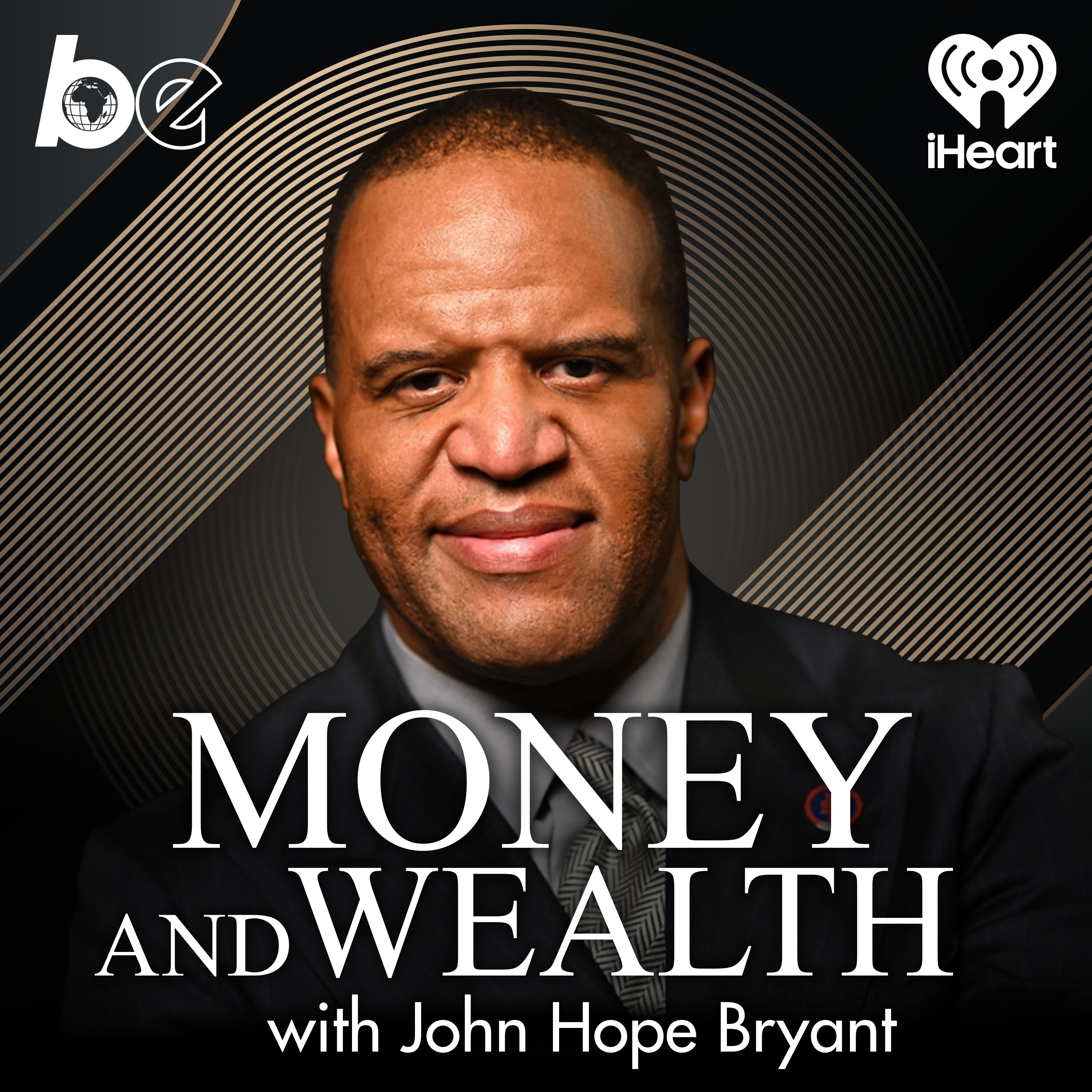
Loading summary
Transcript35 lines
- [00:00]
John Hope Bryant
This is an iHeart podcast.
- [00:02]
Nissan Campaign Voiceover
Guaranteed Human pressure has a way of revealing what remains steady. In the latest Nissan campaign, the Nissan Rogue was tested to the extreme to demonstrate that it's built to last through durability and reliability challenges inspired by real tests conducted by Nissan engineers. Brutal potholes, a steady force of water, even a jet powered sandstorm. Each challenge inviting a deeper look at how quality, durability and reliability hold hold their ground in real world conditions. Every test was 100% real. No CG, no AI. To see how the Rogue held up, visit nissan-duordability.com youm've been working in the
- [00:43]
State Farm Advertisement Voice
garage with your dad every week, Monday to Sunday, trying to get the old school up and running. Today, after all the hard work, y' all finally finished it. Even better. Your dad says all yours, son. Yep. Same car that belonged to your grandpa and that your dad helped him fix. It's yours. To really keep the tradition going, you need to get State Farm insurance just like them. Generation to generation. Remember to choose the agents that your family counted on. Like a good neighbor, State Farm is there.
- [01:12]
Shopify Advertisement Voice
March is when we're officially out of reset mode and ready to make real moves. It's the month of momentum for small business owners looking to take things to the next level. Shopify can handle anything you throw its way. My personal merch store is powered by Shopify, helping all reality with the king fans, connect to the show. Whether you're selling a few products or a full catalog, Shopify grows with you. March is about execution and Shopify helps you keep it moving. If you have a business idea, whether it's big or small, Shopify is the best platform for that business. Check out shopify.com ben to see why millions of businesses have chosen them to build their empires and maybe even start yours.
- [01:56]
Oppenheimer Advertisement Voice
At Oppenheimer, we're proven because we're grounded in discipline. For 145 years, we've been building and protecting wealth through every market cycle with precision, clarity and the courage to think boldly beyond the moment. This is what market tested legacy looks like for this generation and the next. Put the power of Oppenheimer thinking to work for you. Wealth management, capital markets, investment banking.
- [02:25]
John Hope Bryant
Welcome to Money and Wealth with John Hope Bryant, a production of the Black Effect podcast network and iHeartRadio foreign. Hey, hey. This is John Hope Bryant and this is the Black Effect Network. IHeartRadio presented money and wealth podcast series. This is going into season three and I promised to unpack this thing called capitalism for you and to repack it with you in mind. I promised you that from the first season, when you finish with season three, you should be able to send your kids to college. You should be able to raise a family from scratch with this like as your home economics class. You should be able to reset your life midway through career and have something in those three seasons that speak to you in detail. Not theory, not conceptual, not hype, but the substance of the matter. PhDs are good. PhD are even better. So I promised you that I would get down to the real with you and I'm keeping that promise. I think today, the last time I touched this series of capitalism, for all my new books that's coming up, I'll be doing this as a run up to that book release and how capitalism actually works and why you should have any faith in it whatsoever because it has, for good reason, disappointed you. The last time I dealt with this topic, I dealt with cities and the millionaire next door. Okay? So this one is entitled building on that, the 50 businesses that every City Can't Live without and why They're Recession Proof. Maybe even AI proof some of them. So let's get into this because I think that this 45 minute, 50 minute episode just might be the new leash on life lease on life that you're looking for. Not you. Someone in your family, a loved one, a friend, a co worker, the future version of you, your child. Somebody who is looking to live their best version of their dreams in real time, in real life. I like what Dr. Dorothy Height told me and I want to apply to you. She said, john, I like you because you're a dreamer with a shovel in your hands. So in the last episode we talked about how cities really work. Not as places, but as economic machines. Today we're going to get very specific. Every city in America, no matter the size, must buy certain things. Not because it wants to, but because it has no choice. Trash must be collected, okay? Water must flow. Lights must turn on. Buildings must be cleaned. Systems must be maintained. These needs don't disappear in recessions. They don't go away during elections. They don't stop because of technology, including AI, which I'm a big believer in, by the way. And here's a quiet truth spoken out loud. Most of the safest, most durable businesses in America live right here inside the everyday needs of cities. That's right. Millionaires are more often than not the person, the family right next door. It's nothing sexy, it's nothing fancy. It's not a new tech startup, right? You didn't invent anything Today I want to walk you through the businesses every city can't live without. Which means you can provide these services and why these are some of the most recession proof path to ownership and wealth creation in the country. Let's get into it. Why non optional demand matters. In capitalism, the fastest demand is non optional demand. What do I mean by that? Optional demand is, you know, are things that people buy when times are good. Non optional demand is what must happen no matter what. So you think about which business you want to be in. Cities operate almost entirely on non optional demand. That's why these businesses tend to survive downturns better than trend driven industries. Is why I always say I love boring businesses. So called boring businesses, not boring to me. But that's what some people say. When people get tight, when money gets tight. Cities may delay projects, yes, but they don't cancel necessities. No. If you want stability, study what cannot be postponed. That's one of the reasons that I love things like, you know, real estate, affordable housing, you know, the, the businesses that I'm involved with personally finance and things like that are things that are core to the life bread, the lifeblood and the heartbeat of society itself. It's also good capitalism. It's doing well by doing good. Doing well and doing good. Doing well by doing good where I benefit and you benefit more. That's good capitalism. Bad capitalism is where I benefit and you pay a price for it. Right. That's a different podcast for another day. So here are the five categories of businesses every city must buy. Please take note. Come back to this if you have to. If you're driving, don't take be, you know, don't drive in text, don't drive in note. Either have somebody in the car take this down for you or do this on replay and take notes down later in your phone, your iPad or long form. If you still write things out in a pad. But for a moment, just commit this to memory. So slow down here. This is the heart of the episode right here. I want you to really dig into this right, Core infrastructure. That's category one. Cities cannot function without core infrastructure. These are the backbone businesses. Write these down later. Trash collection and recycling. Don't hate on this. It's a very profitable business. Trash collection and recycling. Landfills and waste transfer stations. Street sweeping, snow and ice removal. Yes. Private companies, more times than not, other contractors doing this for cities. You may see a snowmobile in your town. If you have snow and it looks like even a city vehicle, it could be a contractor doing the function. On behalf of the city under contract with a city logo on their, on their truck, on their bus, on their machinery. You've got to, you've got to actually go and ask that person a question. Do you work for the city or do you work for a private company?
- [10:38]
Shopify Advertisement Voice
Right.
- [10:39]
John Hope Bryant
Snow and ice removal, road paving and stripping. Striping they call it. Right. So all this is the same thing. These could look like it's the city or the county, but in reality, this could entirely be a private business. In many cases it is a private business, and certainly in small cities. Sidewalk and concrete repair. This is what my daddy did, the business he was in, the concrete business. Johnny Will Smith. Johnny's contract. Johnny's cement work is what it was called. I know, he drugged me out to do it with him. Plumbing and sewer maintenance. I love plumbing. We need 50,000 new plumbers a year. You'll never AI plumbing, right? And most plumbers make more money than folks walking around in suits and ties, you know, bragging about their six figure income. Water treatment services. Okay? Storm water drainage, electrical grid maintenance. Traffic signal installation and repair. Street lightning. Not lightning, but you know, street lighting. You might get like, might get lightning too, but street lighting. These businesses don't get applause, okay? They get paid repeatedly. This is making smart sexy. We've been making dumb sexy for way too long. We've dumbed down and celebrated. It was time to make smart sexy again. As my friend Bishop T.D. jakes, Chairman, T.D. jakes would say, it's time to make boring sexy. Category 2 property and facilities maintenance. Pick your lane, people. Pick your lane. I don't care which lane, just pick one, okay? Every city owns buildings and every building, ages, janitorial. I mean, what is entrepreneurship really? It's. Or what is business? It's solving problems. What is entrepreneurship? It is creating a new solution to maybe an old problem or creating a new solution to a new. A new interest. A new defined interest, right? And you think about every. Everything that I've created is pretty much that. That model, right? All the businesses I've created are essentially that same model. People didn't even know that they needed financial literacy until we pioneered, pioneered it in AI literacy and hope inside the workplace and hope and one me and black business. The need, the program, the way we developed the Promise Homes company in the first iteration. Not the folks who own the company now. I don't, I don't have any control of it now, but when I owned it is a very, very interesting business model. A twist on, on, on, on single family rentals and Folks gave folks a path to rent, to own. As an example, what I'm doing with CIM Group. Anyway, okay, so the point is that entrepreneurship and business is, is. Is solving problems, Value added resolutions. So prop the property and facilities maintenance, okay? That category includes janitorial and sanitation services, H Vac installation and maintenance. So you know, air conditioning essentially and heating again. That's another 50,000, 60,000 jobs needed a year. Never go out of business. And the hotter the place is, the more bulletproof that business is. Texas, you're going to need it forever, right? Elevator maintenance, by the way, air conditioning, H Vac. Think about all the southern states. Think about Mississippi, Alabama, think about, you know, Florida even. I mean a locked in need. Fire suppression services, roofing and waterproofing, pest control, landscaping and groundskeeping, tree trimming. Okay. Graffiti removal, parking lot repair. And you know, this is maintenance on reboot, right?
- [14:44]
State Farm Advertisement Voice
This past weekend, like every other Sunday, you were on the court with the guys playing ball. Just a quick pickup game, living out your hoop dreams. No triple doubles, but mean set of threes in between buckets. One of the homers mentioned, he closed on a new crib. This is big. And while everyone's asking about housewarming and making plans to celebrate, you're asking the real questions. Like, has he spoken to his State Farm agent yet about coverage? See, homeownership is one thing, but the right coverage is the real game changer. Even more than your last hot streak, it's how you protect your legacy. Dropping buckets and bars on the court. A State Farm agent can more than assist you with finding the right coverage for your new place. If you have a claim, your local agent can help you file it. Yup, that's right. Over the phone, in person, online or on the app, they are ready to help you and they don't drop the ball. You know what I mean? Like a good neighbor, State Farm is
- [15:39]
Nissan Campaign Voiceover
there Peace of mind starts with knowing what supports the journey is steady, grounded and dependable, especially during seasons of change. That's why Nissan engineers push their vehicles to the limit, to demonstrate quality, reliability and durability, making those principles a foundation across every vehicle built. That commitment has earned recognition from J.D. power, ranking Nissan number one in new vehicle quality among mainstream brands. Because when trust is built into the foundation, it creates more space to move through life with clarity, confidence and intention, getting the most out of the journey wherever it unfolds. For J.D. power 2025 U.S. initial Quality Study Award information, visit J.D. power.com Awards Awards based on 2025 model year newer models may be shown at Oppenheimer.
- [16:29]
Oppenheimer Advertisement Voice
We're proven because we're grounded in discipline. For 145 years we've been building and protecting wealth through every market cycle with precision, clarity and the courage to think boldly beyond the moment. This is what market tested legacy looks like for this generation and the next. Put the power of Oppenheimer thinking to work for you. Wealth management, capital markets, investment banking.
- [16:56]
Odoo Advertisement Voice
Running a business is hard enough, so why make it harder? With a dozen different apps that don't talk to each other, One for sales, another for inventory, a separate one for accounting. Before you know it, you are drowning in software. Instead of growing your business, this is where Odoo comes in. Odoo is the only business software you'll ever need. It's an all in one fully integrated platform that handles everything. CRM, accounting, inventory, e commerce, HR and more. No more app overload, no more juggling logins. Just one seamless system that makes work easier. And the best part, Odoo replaces multiple expensive platforms for a fraction of the cost. It's built to grow with your business, whether you are just starting out or already scaling up. Plus it's easy to use, customizable and designed to streamline every process so you can focus on what really matters running your business. Thousands of businesses have made the switch, so why not you try Odoo for free@odoo.com that's o d o o.com maintenance
- [17:58]
John Hope Bryant
is really forever revenue, right? Because you're going to always need it, right? Category 3 safety, compliance and regulation. Now this category scares people, which is exactly why it's profitable and why you can, why you can easily create a, almost a, a lock on the market if you will. If this, if this becomes your expertise. Private security services, okay. Alarm monitoring, fire inspection, environmental compliance. This is a very strong niche and that's, and this is a great example of good capitalism. OSHA and workplace safety services, Hazardous material disposal. This is a huge business that, that, that, that only a few companies really have dug into. But it's something that every city is going to need, right? You don't need it all the time, but when you need it, who are you going to call? That person's under contract or that company, right? So regulation doesn't kill opportunity, it protects incumbents. Want to be one of the incumbents? Once you're in, it's hard to push you out. Category 4 Professional and Technical services. As cities grow, complexity grows and thinking becomes the product. But most folks are too busy on the urgent to focus on the important. Why don't you focus on the important while folks, folks are running around. I was in the city, I was in the state capitol named, gave me John O' Brien Day, February 17th here in the state of Georgia. And I was there for entrepreneurship. Also used entrepreneurship day, saluting these young entrepreneurs and thank the us the state senator and the lieutenant governor for hosting me and making this possible. Anyway, he would just run around like chickens with their hair cut off. Everybody's like, I mean, no one. There was no calmness any place. Everybody's just running around. And I realized this is their normal state of affairs. They're running around all the time in a state of urgency. So anybody who can bring calm to that situation and handle the important underneath it, the details, you got a job for life. These are contracts for life that I'm explaining. So Category four now, Professional and technical services. As cities grow, complexity grows and thinking becomes a product. So IT support and managed services works. Cyber security works. All right, are you starting to get this? Records digitization and archiving. Okay, you, you know that the, this generation of young people can do this with their eyes closed. Payroll services, grant writing, engineering firms, urban planning consultants, transportation and traffic studies. Yes, studies. Not just the transportation, the studies. That's a business. GIS mapping and data analysis, compliance reporting. Okay? These businesses scale with knowledge, not trucks. What's in your head, not what's in your hands. Category 5 Human and Community services. Cities don't just manage assets, they manage people. You know, I buy a company, I don't buy the furniture and the chairs and even the buildings, right? I'm buying the management team. I'm back. I'm buying a culture, right? How they do what they do, that's what differentiates. Most important thing in business is culture. Most important thing in life is culture. What goes on in your house has a culture. What goes on in your block has a culture. What comes all goes on in your city has a culture. What goes on in your county as a culture. What goes on in your state has a culture. If it was not the case, you would not travel any place because you stay right at home. Because everything is the same. So things have culture, things are different, and that gives them a unique twist. What's your culture? All right, so here's some examples of human and community services, right? And your twist can be how you deliver these services. Elder care services, child care and after school programs, public health outreach, mental health services. My God, that's a big one. Homelessness services, food services and meal programs. Now you Know this, this is something that black folks and brown folks, we, we don't do anything. We can cook some food now and why, why just sell that as a one off meal here on a one off meal there? Why wouldn't you sell 100 meals, 200 meals, 500 meals at a time under contract to the city, to the jail services, to the juvenile, you know, justice services, to the court services. It's not just a city government, it's all these sub to the school district, right? These are sep different parts of government that all need these same services. Workforce training providers, transit support services, event logistics and permitting. Now you know all these event planners out here doing these parties, whatever you can be doing this, you can do parties on the weekend and doing your contracts with the city during the day. And let the city let your 9 to 5. Financial 5 to 9. You should write that down. Let your 9 to 5, whatever it is, finance your 5 to 9 non profit operators under city contract, right? That's, that's also a business. So this is where purpose and profit often meet.
- [23:34]
State Farm Advertisement Voice (Alternate)
So.
- [23:38]
John Hope Bryant
These business are recession proof because there's a constant uninterrupted need. Let's talk plainly about risk. These businesses share for protective characteristics. All right. One, recurring demand, cities don't negotiate necessity. Two, long term contracts, multi year agreements stabilize revenue. Can I get an amen? You make money during the day, you build wealth in your sleep. If you have a contract for five years, it's not just some cash flow or weekly or monthly revenue you can capitalize. You can take the value of that five year contract and sell it. Take the value of that contract, take it to the bank, right? You have that five year contract becomes more than cash flow at that point it becomes an asset. I hope you caught that, that was like a drop the mic moment. Three, local advantage, okay? Proximity and trust matter if you are the one of the most trusted, most well respected people in your city. A second tier city, a third tier city, meaning a smaller city. Not in New York, not in la, not in Atlanta, right? Not a household name city. And you're well known and well respected. You are prime targets, positively discussed, positively described to get and maintain the contracts that I'm talking about. Once you have also proven you have the capacity and expertise to pull it off. Four, switching costs. Once a city trusts you, they hesitate to switch. Now this is gangster, right? Because this is guaranteed cash flow. People are lazy, they don't want to change. So that's not love, that's structure, right? So I, I've learned when approaching businesses, approaching anybody. If you want to get a no to something, go to middle management, right? Because they don't get fired for saying no, get fired for saying yes to the wrong thing. So the answer is no. Which means if you already have a contract, you're part of the predefined yes. Somebody else is coming to try to get your contract, then they require a new yes. And the manager, hiring manager, whatever, is oftentimes more inclined to tell that person no because they don't get fired for saying no. The boss, whoever the boss is in that department or city, they are in the yes business. So if you're, if you're trying to get that contract, go to the boss, the boss's boss, the mayor, whoever, the county official and try to get, inspire them to hire you. Now if you already have, if you get a contract that didn't exist before, you've got that contract. If you do a good job there, inertia loan is, you know, likelihood that you're going to get renewed year after year, provided you're performing again. It's not luck, it's structure.
- [26:42]
State Farm Advertisement Voice
The wait was worth it. Positive affirmations and all the hard work, the keys to your dream home from the vision board have been secured. I see you. A whole new future awaits your planning. From top notch decor but on a budget to the late night backyard summer cookouts, life feels good. Now comes time to fill it with memories. What will you host first? Maybe a movie night, game night stories that make us laugh and space tournaments that make us cry. First you need to get movers and new furniture. And what about party favors? Will there be a theme? Of course it's a theme because you're always doing the most. Oh yeah, the food to cook or to order out. Don't forget to put it in the group chat so everyone can already see who all going to be there. All the planning can be stressful, but ensuring your home shouldn't be. And that's where State Farm comes in. Because State Farm agents can help you choose the coverage you need. Just call, go online or check out the app. Any agent is ready to help so you can focus on showing off your new home. If you know, you know like a good neighbor, State Farm is there.
- [27:42]
Nissan Campaign Voiceover
Pressure has a way of revealing what remains steady. In the latest Nissan campaign, the Nissan Rogue was tested to the extreme to demonstrate that it's built to last through durability and reliability challenges inspired by real tests conducted by Nissan engineers. Brutal potholes, a steady force of water, even a jet powered sandstorm each challenge inviting a deeper look at how quality, durability and reliability hold their ground in real world conditions. Every test was 100% real. No CG, no AI. To see how the Rogue held up, visit nissan-duordability.com
- [28:21]
Oppenheimer Advertisement Voice
At Oppenheimer, we're proven because we're grounded in discipline. For 145 years, we've been building and protecting wealth through every market cycle with precision, clarity and the courage to think boldly beyond the moment. This is what market tested legacy looks like for this generation and the next. Put the power of Oppenheimer thinking to work for you. Wealth management, Capital markets, Investment banking
- [28:50]
Odoo Advertisement Voice
Running a business is hard enough, so why make it harder? With a dozen different apps that don't talk to each other. One for sales, another for inventory, a separate one for accounting. Before you know it, you are drowning in software. Instead of growing your business, this is where Odoo comes in. Odoo is the only business software you'll ever need. It's an all in one fully integrated platform that handles everything. CRM, accounting, inventory, E commerce, HR and more. No more app overload, no more juggling logins. Just one seamless system that makes work easier. And the best part? Odoo replaces multiple expensive platforms for a fraction of the cost. It's built to grow with your business whether you are just starting out or or already scaling up. Plus it's easy to use, customizable and designed to streamline every process so you can focus on what really matters running your business. Thousands of businesses have made the switch, so why not you try Odoo for free@odoo.com that's o d o o.com
- [29:52]
John Hope Bryant
so who are these businesses perfect for? Let me be clear. These paths are not equal opportunity hype situations, right? They are practical opportunity systems. I consider myself economic plumber, right? I have to know what I'm talking about. They work especially well for skilled tradespeople. Veterans, immigrants, first generation wealth builders. That was me. Black and brown entrepreneurs. We've been doing so much with so little for so long, we can almost do anything with nothing. Our middle name is hustle Families looking for legacy businesses. These are businesses you can hand to your children, not just your resume. If you're been listening carefully, something by now should be clicking in your head. Opportunity isn't hidden people. It is not hidden, it's just overlooked. Every city is surrounded by businesses that quietly keep life running and quietly build wealth for the people who own them. Let's deal with own for just a moment. I want you to own something, right? Because nobody washes rental cars, right? I want you to own a home. First of all, I want you to own you. I want you to own your narrative, your knowledge, your. Your. Your value proposition as soon as possible. I want you to buy a house near jobs, near economic activity. Would you become a stakeholder? Because that changed your entire mindset. All the endorphins on the right side of your brain, where creativity and, and hope and opportunity and belief, all that changes once you become an owner. No one washes rental cars. No one. Meaning mostly no ones. You may be the saint out there that drives a rental car and takes it to the car wash and washes it, but you are the exception, not the rule. Most people take the car, let it get dirty. You can so dirty, you can write your name on the side of it, and they take it back to the person who owns it. So the minute you become part of the ownership mindset, the ownership mentality, the better, your whole life will change, right? So no different than getting married. You're committed to something larger, more important to yourself. Having a child, typically for a mature person, it helps you grow up quickly, right? You realize life is not about you. You know, not like I'm tired talking about me now. You talking about me. It's about we now, not just me. So owning a. Your own narrative, owning your own life, owning your education, owning a business, owning. Owning a home, owning a business, owning. Owning stock. I want you to have an ownership mentality. And then you'll, you, You'll. You'll begin to elevate your thinking to the next level. Once you do that. So you don't need to do. Assuming that you want to do one of these businesses. Okay, you're interested. You don't need to do all 50, right? You just need to choose one, right? I just gave you 50 alternatives so that no one had an excuse here of, no, I can't do this. Just pick one. Do you know that success has a thousand mothers and failure is a bastard child? Like, nobody wants to claim the failure. Everybody wants to claim the success. So I take no for vitamins, right? I. I may get no, no, no, no, no, no, no. I ignore that. I'm focusing on the yes. So you tend to give me 20 or 50 or 99. No's fine, just deliver to me one yes and I'm happy. And then once I lock in that one yes, and then I one of these businesses, and once I achieve and I succeed and I kill it and I read the book, that book outlier Malcolm Gladwell 10,000 hours committed to anything and you'll become the expert, the NBA player, if you will, professional athlete in that category. You'll always have a job. You'll always have an opportunity, right? Because you're the flight to quality. Just become excellent at one thing and obsess on it like nobody's business. And you'll always have opportunity. Just pick one thing and focus on it like no tomorrow and become good at it. So learn it that thing deeply, serve it and the people well, and give all the credit to the mayor or the county officials or whatever. You're not running for office. You're trying to get your, you're trying to get your cash flow, your contract renewed. You're trying to get your business. Take care to get the, get your ego out of it. Give them the credit. The elected officials are elected officials, right? You're. You're trying to be a contracted citizen, right? So serve them well. Build trust is better to underestimate and overperform than to underestimate and overperform. Rephrase that. It's better to underestimate and overperform than to overestimate and underperform. I'm going to say that one more time. It's better to underestimate and overperform than to overestimate, hype, hype, hype, hype, hype. And to underperform. Build trust by delivering more than you're asked for. Every now and then. I'll give you something extra, something else to chew on between weekly episodes, new episodes every Thursday. Drop they auto drop into your feeds. If you subscribe to this podcast. Tell your friends to subscribe to the Money and Wealth podcast. And thank you for being causing to be one of the top podcasts for entrepreneurship in the biggest economy in the world, the United States of America. Top 50, sometimes top 25 top business podcasts. Also, thank you, thank you, thank you, NAACP image award nominee, etc. Etc. And we've only gotten started. So here is the bonus track for this week. It's Unpacking Capitalism and the Negotiating Table. I'm going to explain in different ways what capitalism is as I lead up to the publishing of my new book, Capitalism for All, which is subtitled Inclusive Economics and the Future Proofing of America. And just to prove that it's an everybody's subject, the forwards for this new book are Ambassador Andrew Young with regard to social justice and dignity. That's Dr. King's last living lieutenant in the civil rights movement, Michael Milken, the vaulted, legendary Wall Street Financier and Ed Bastion, the CEO of Delta Airlines, the most profitable airline in the world, coming at it from all angles. So now let me call. Come at this issue of capitalism from the. The basic common sense angle, because common sense is not so common. Let's just not assume anything. Let's break this down. Okay? So I'm gonna do this real quick. Take your notes. Capitalism is really easy to actually explain, okay? So I'm gonna have in this example, a producer of a product, and I'm gonna have a consumer of a product. And in this example, you're gonna be the consumer. Okay? So I'm the, I'm the capitalist. I'm the bad guy, if you want to call it that. Okay? So my job, okay, my job is to sit across from that negotiating table with you. We're sitting across from a table to get that in your mind. My job is to extract as much money from you as I possibly can, as much value from you as I possibly can, while giving you the least amount of value in return. That's my job. The difference between what I give you and what I keep is margin, profit. Your job. Before you start thinking that I'm the bad guy in this example and you're the saint, let me tell you what your job is. Your job sitting on the other side of that table is to negotiate with me in a. In a market environment where you know prices in the places like the United States of America, United Kingdom, et cetera, et cetera, developed economy, prices are pre negotiated. You go to the store, it says the price on the package. But in developing countries, third world countries, and in flexible economies, you negotiate your price in real time. Okay? So in this example, you're a negotiator. So on the other side of this table, and if you're, by the way, signing a professional services contract, you're doing this, you're negotiating, you're signing an NFL or NBA contract, professional athletic performance contract. This is your situation, okay? So you're on the consumer side of this table, okay? And your job is to ex. To. To pay the least amount of money to me, the capitalist, while extracting the greatest amount of value. Did you get that? I'm gonna repeat this now slowly and bring it together. The capitalist job is to extract the most amount. Well, to offer the least amount of value while paying, while requesting the most amount of money from you. Your job as a consumer is to extract the most amount of value from that capitalist while paying the least amount of money. That exchange, that negotiation, that dynamic tension. The Bible says every, you know, good. I mean, we all, we grow through constructive friction, essentially. And I've said that rainbows only follow storms. You cannot have a rainbow without a storm. First. Every good negotiation, everybody leaves the table slightly annoyed. Every good negotiation in life, everybody leaves the table slightly annoyed because no one got everything they wanted. If, if, if you left the table and you're ecstatic, then it's. There was probably an unbalanced negotiation. If you left that table and you were absolutely annoyed, it was a slightly. It was probably an unbalanced negotiation. But if everybody leaves that table slightly irritated but basically okay, then that's a successful negotiation. That's that dynamic tension again. That could the capitalist job is to extract as much money while giving you the least value. Your job as a consumer, in this example, is to pay the least money while extracting the most value. Fair exchange is no robbery. As my friend Robert Grew would say. There is no perfect here. There is no villain here. It's an exchange of good and services. This is what the system, the free enterprise system, provides, with capitalism as the trigger, as the execution mechanism.
- [41:13]
State Farm Advertisement Voice (Alternate)
This past weekend, like every other Sunday, you were on the court with the guys playing ball. Just a pickup game, living out your hoop dreams. No triple doubles, but a mean set of threes in between buckets. One of the homies mentions he closed
- [41:29]
John Hope Bryant
on a new crib.
- [41:30]
State Farm Advertisement Voice (Alternate)
This is big. And while everyone's asking about the housewarming and making plans to celebrate, you're asking the real questions. Like has he spoke to his State Farm agent yet about coverage? See, home ownership is one thing, but the right coverage is the real game changer. Even more than your last hot streak is how you protect your legacy. Dropping buckets and bars on the court. A State Farm agent can more than assist you with finding the right coverage for your new place. If you have a claim, your local agent can help you file it.
- [42:02]
State Farm Advertisement Voice
Yep, that's right.
- [42:04]
State Farm Advertisement Voice (Alternate)
Over the phone, in person, online or on the app, they're ready to help you. And they don't drop the ball, if you know what I mean. Like a good neighbor, State Farm is
- [42:15]
Nissan Campaign Voiceover
there peace of mind starts with knowing what supports the journey is steady, grounded and dependable, especially during seasons of change. That's why Nissan engineers push their vehicles to the limit to demonstrate quality, quality, reliability and durability, making those principles a foundation across every vehicle built. That commitment has earned recognition from J.D. power, ranking Nissan number one in new vehicle quality among mainstream brands. Because when trust is built into the foundation, it creates more space to move through life with Clarity, confidence and intention. Getting the most out of the journey wherever it unfolds. For J.D. power 2025 U.S. initial Quality Study Award information, visit jdpower.com awards Awards based on 2025 model year. Newer models may be shown we believe in starting with your financial goals, not a formula. At Oppenheimer, we put the full strength of our long standing expertise to work understanding your life and your ambitions and designing the precise strategies that build and protect your wealth. With confidence across this generation and the next, put the power of Oppenheimer thinking to work for you. Wealth management, Capital markets, Investment banking
- [43:32]
Odoo Advertisement Voice
Running a business is hard enough, so why make it harder? With a dozen different apps that don't talk to each other. One for sales, another for inventory, a separate one for accounting. Before you know it, you are drowning in software. Instead of growing your business, this is where Odoo comes in. Odoo is the only business software you'll ever need. It's an all in one fully integrated platform that handles everything. CRM, accounting, inventory, E commerce, HR and more. No more app overload, no more juggling logins. Just one seamless system that makes work easier. And the best part, Odoo replaces multiple expensive platforms for a fraction of the cost. It's built to grow with your business whether you are just starting out or already scaling up. Plus it's easy to use, customizable and designed to streamline every process so you can focus on what really matters running your business. Thousands of businesses have made the switch, so why not you try Odoo for free@odoo.com that's o d o o dot com.
- [44:36]
John Hope Bryant
So you'll hear sometimes, you know, traditionally recording artists, music entrepreneurs who just love performing, they love singing, they don't want to deal with the business. And you'll hear later on after they got the Rolls Royce and they got the, you know, excuse me, they get the Rolls Royce, they get the, the mansion. And they were happy when the bank gave them all of that. But with then if they didn't pay, if things didn't turn out right and they, and the bank comes after the car and the mansion. All of a sudden now the bank is, you know, they're bad people. I mean look, look, if I loan you money and you don't pay me back, I'm coming after my stuff. You know, call me racist if you want to. I'm. I'm black just like you. I want my money. Though. It's not the color. It's not black or white or red or blue. The color is Green, give me my money. So sometimes you'll hear. So that doesn't. Spilled milk. That's just like, you know, financial illiteracy. You didn't pay attention to the contract when you signed it, or your business turned sour and now you want to blame the. Provide. The person who you sign a contract with, they've set up, they, they've, they've lived up to their obligations that gave you the. At the asset to use, whatever, but you're not living up to yours. Now this is different from if you buy something and it's defective. That's not what I'm talking about. I'm gonna give you a more pointed example. You have a, again, an entertainer. Typically in this example, it's a creative artist and they've signed a contract without paying much attention to it, didn't get a lawyer to review it. Later on, they get upset with the music mogul, the music company, whoever, the lawyer, whoever it is, call them crooks, say that they're, you know, discriminated against them and racist. You know, racism exists. That's not what I'm talking about. It's entirely likely in this situation. You just got, you just got beat. They, they knew that contract. You didn't. They prepared a contract or they had a lawyer look at their contract. You said, oh, I'm good. You were focused on the girls, you were focused on the bling. You were focusing on the scene and the song, not the thing that could go wrong. Quincy Jones once told me, God rest his soul, if you think you're in the music business and you don't own music rights, licensing rights or publishing rights, some kind of rights, intellectual property rights. If you don't have those things, you're not in the music business. You're a temporary performer. Drop the mic, right? And you're gonna have to drop the mic one day because you'll be replaced by somebody because you are just a performer, right? So we got to go from just rocking the mic to owning it. Owning it means reading your contract. Owning it means getting a lawyer, paying a proper fee to a lawyer to, to protect your. I mean, it's just risk management. It's just, you know, legal at a certain point. I have a legal fund now. I didn't have a legal fund five years ago, but I just, you know, as you, as your business grows, your, your needs expand. So risk management becomes part of growing a brand. So if you did not have an attorney look at a contract and the other person had an attorney draft a contract, how in God's Name or even in common sense world, do you believe you're going to be okay if something goes sideways, you're unprotected, and there's maybe some clause or something in that contract that has you disadvantaged. There's a friend of mine who helped someone. I can't give too much detail here. You'll figure it out. But I want to give this example. A friend of mine who helped another friend to get a business contract that he couldn't get on their own. And friend number one, the celebrity, helped friend number two, the business person, to get this contract. This is about a decade or maybe even two decades ago. It was a long time ago, very prominent business here in Atlanta. And to make a long story short, they got a little bit of cash flow and some benefits from this business, but they weren't really focused on the details. But their arrangement was, you know, I want 10% of the business. The business is yours. I want 10 of the business up. Unfortunately, I didn't sign a formal contract, so there's not a. You know, when you assume, you make an ass out of you and me, right? So a lot of misinformation when you don't tie it down with paper. If it's real, write it down. So they. My sense is they did not have a written contract. They'd have a verbal agreement, okay? And the celebrity person just kept saying, don't worry about it. I'm good. It's not my priority. So the other person being the business person, assumed that was literally true. So they 10, 10 so kept their promise. 10% of cash flow and all that stuff and benefits the business. They sell the business and the celebrity gets nothing from the sell the business. That was a big cash flow. That was a big like liquidity moment, we call it in business. What happened? Misalignment of perceptions, ass assumptions and presumptions. The presumption of the celebrity was, well, 10% is 10% cash flow and profitability. Of course, when you sell the business, the owner of the business, the business person was like, no, no, no, cash flow of the business when he was operating. But when I sell it, that's a whole different situation. That's equity and that's mine as in his. And. And he did not pay the celebrity. And the celebrity in this example had no grounds to go back and what called claw back some of those profits and can't complain about it because they did not get an attorney, review it, et cetera, et cetera, et cetera. So business is not personal, people. Business is just business stop making it personal, stop calling people's names when you end up on the wrong side of negotiating terms and conditions when you didn't pay attention and just learn the lesson and do it right the next time. I, I have, I've learned lessons. I mean, if I make a mistake once, shame on me. I mean, shame on if, if someone best me in a situation, shame on you, right? But if I make that mistake twice or three times, shame on me. I should have lear the first time. So this is John o'. Brien. This is some bonus content on unpacking capitalism through negotiation. And again, I'm going end where I started. I'm going to go back and say this again, that the capitalist job in that negotiation is to get as much as they can from you and paying you the lease. Your job is to pay the lease and get as much as you can from the other person. Fair exchange, no robbery. And when you do this intelligently, thoughtfully, non emotionally and with good legal counsel and an understanding of risk and reward, you leave the table slightly annoyed but pleased. And that's just like, you know, I don't know, marriage, partnerships, friendships and life. There is no perfect. It's just don't let the perfect become the death of the death of the good. Show up and show out and do the very best you can and negotiate greatness up front. This is John Hope Bryant. Money and Wealth Bonus content content Season 3 See you in the next episode. Money and wealth with John o' Brien is a production of the Black Effect Podcast Network. For more podcasts from the Black Effect Podcast network, visit the iHeartRadio app, Apple Podcasts or wherever you listen to your favorite show.
- [52:07]
Ryan Reynolds (Mint Mobile Advertisement)
Ryan Reynolds here from Mint Mobile with a message for everyone paying Big Wireless way too much. Please, for the love of everything good in this world, stop with Mint. You can get premium wireless for just $15 a month. Of course, if you enjoy overpaying. No judgments. But that's weird. Okay, one judgment anyway. Give it a try@mintmobile.com Switch upfront payment
- [52:29]
Ikea Advertisement Voice
of $45 for 3 month plan equivalent to $15 per month required intro rate first 3 months only, then full price plan option available, taxes and fees extra. See full terms@mintmobile.com ever feel like your bedroom's shrinking? Don't worry, you don't have to sell your favorite things to make space. With Ikea bedroom storage solutions. Think dressers, wardrobes, full closet systems, even storage boxes. You can keep it all. Your vintage band tees safe, those limited edition sneakers, plenty of room. And yes, your childhood teddy bear gets a spot too. Don't sell what you love. Store it instead with Ikea Bedroom Storage Solutions. Shop now@IKEA. US bedroomstorage.
- [53:08]
Sean Duffy (US Transportation Secretary)
I'm US Transportation Secretary Sean Duffy. We all get distracted when we drive, whether it's from our phones or kids in the backseat bickering. But how we handle these distractions can be a matter of life or death. Before before you get on the road for your next road trip, please put your phones on silent and take a mental note to focus on driving. Paid for by NHTSA
- [53:37]
State Farm Advertisement Voice
this is Jacob
- [53:38]
Ryan Reynolds (Mint Mobile Advertisement)
Goldstein from what's yous Problem? When you buy business software from lots of vendors, the costs add up and it gets complicated and confusing. Odoo solves this. It's a single company that sells a suite of enterprise apps that handles everything from accounting to inventory to sales. Odoo is all connected on a single platform in a simple and affordable way. You can save money without missing out on the features you need. Check out Odoo at o d o o dot com. That's o d o o dot com.
- [54:10]
John Hope Bryant
This is an iHeart podcast.
- [54:13]
Odoo Advertisement Voice
Guaranteed Human.