Loading summary
Transcript24 lines
- [00:00]
Coca-Cola Advertiser
The best moments happen when you're with your people, laughing, vibing, just enjoying life. Coke is making those moments even sweeter. Share a Coke is back and it's all about sharing with the whole crew. Doesn't matter if it's your bestie or bro, there's a can with their name on it. So grab one for the squad and make some memories. But hurry because these Coca Cola limited edition bottles and cans won't be here forever. Don't miss your chance to share a Coke with your favorite people.
- [00:30]
iHeart Radio Advertiser
Run a business and not thinking about podcasting? Think again. More Americans listen to podcasts than ad supported streaming music from Spotify and Pandora. And as the number one podcaster, iHeart's twice as large as the next two combined. Learn how podcasting can help your business. Call 844-844-IHeart.
- [00:47]
Shannon Schuyler
In a world of economic uncertainty and workplace transformation, learn to lead by example from visionary C Suite executives like Shannon Schuyler of PwC and Will Pearson of iHeartMedia. The good teacher explains the great teacher inspires.
- [01:03]
John Hope Bryant
Don't always leave your team to do the work.
- [01:06]
iHeart Radio Advertiser
That's been the most important part of.
- [01:08]
John Hope Bryant
How to lead by example.
- [01:11]
Shannon Schuyler
Listen to Leading by Example executives making an impact on the iHeartRadio app, Apple Podcasts, or wherever you get your podcasts.
- [01:20]
Charlamagne Tha God
Peace of the Planet. I go by the name of Charlamagne Tha God. And guess what? I can't wait to see y'all at the third annual Black Effect Podcast Festival. That's right, we're coming Back to Atlanta, Georgia Saturday, April 26th at Pullman Yards. And it's hosted by none other than Decisions Decisions, Mandy B and Weezy. Okay, we got the R and B Money podcast with Tank and Jay Valentine. We got the Woman of All podcast with Sarah, Jake Roberts. We got Good Moms, Bad Choices. Carrie Champion will be there with her Neck in Sports podcast and the Trap Nerds Podcast with more to be announced. And of course, it's bigger than podcast. We're bringing the blog Black Effect Marketplace with black owned businesses plus the food truck court to keep you fed while you visit us. All right, listen, you don't want to miss this. Tap in and grab your Tickets now@blackffect.com podcast festival.
- [02:05]
John Hope Bryant
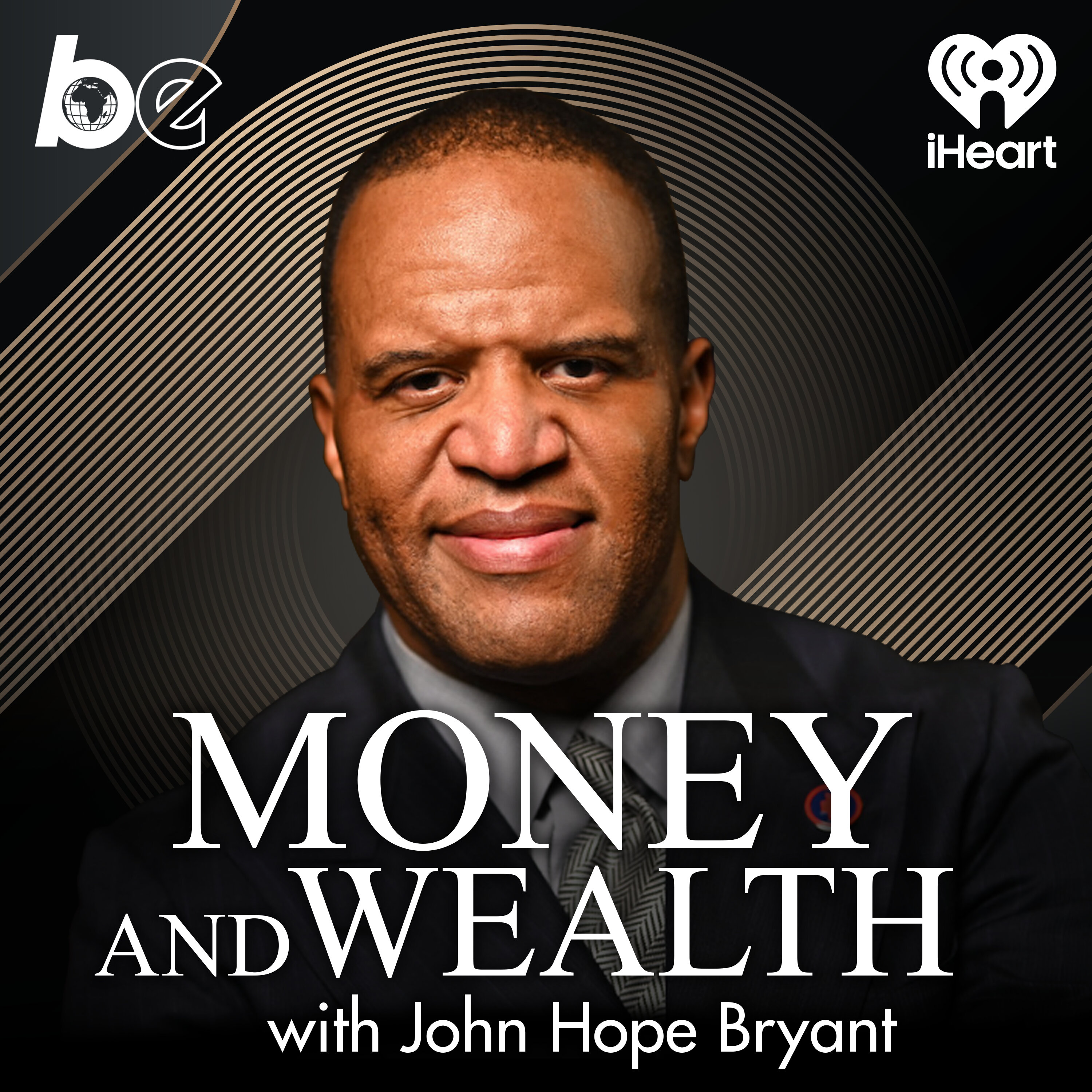
Welcome to Money and Wealth with John Hope Bryant, a production of the Black Effect podcast network and iHeartRadio. Yo, yo, this is John Hope Bryant and this is Money and Wealth on the Black Effect Network. Tell all your friends about it. It is one of the top entrepreneurship podcasts in the nation. Last time I checked number 32 or so of all entrepreneurship podcasts and top 5% of all podcasts in the country. Let's keep it going. This is the opportunity economy and this is the aspiration generation and you are the people who are aspiring. And thanks for all the feedback that you give me on social media, the podcast, or stopping me in airports or when you see me in the street or in conference conference rooms. When you pass by a conference room and see me there with your boss or whoever and you're stopping by to give me some love, I appreciate that and I love the feedback and I take the feedback and I put it back into the podcast series and try to be responsive to that, like literally. So if you want to make sure that I am listening to you, leave comments when you see snippets from the podcast in social media. My Straight Talk Live series I do every day. Leave comments. I'm the one who reads the comments and respond to them. Are you getting response? That's for me personally. Let's get into this week's podcast, which I'm building on the business plans that I created for America and I'll be getting. I did one called the Business Plan, the economic Business plan for Black America last week tied to Dream Forward, which was introduced on the 57th anniversary of Dr. Martin Luther King Jr's assassination. His memorial that we did with Dr. King's daughter Bernice, Bernice A. King, who is a board member of Operation Hope and a friend and a partner in our work, and Ambassador Andrew Young, who was on that balcony with Dr. King when he was assassinated, and the Memphis mayor, Paul Young. We did that and launched it. And there are other business plans that we will get to the business plan for Latino, Hispanic America, the business plan for women, the business Plan. These are economic business plans for Native Americans and rural America and Asians, et cetera. I'm going to map all these out. But as I thought about the last business plan, that's very opportunity. Rich people are hurting right now. They are in pain, they're frustrated, they are sometimes lacking confidence and that needs to be spoken to. That like that has to be addressed like that's real right? And there's nothing wrong with you. If you're feeling a certain kind of way right now, there's nothing wrong with you. In fact, if you're not feeling a certain kind of way in the current environment, then something's wrong with you. If you're not feeling a certain kind of way, there's reason. If a bear or a tiger is chasing you Or a lion is chasing you and is within, I don't know, 100ft. You should be petrified. Like, there's reasons for that, right? Fear is in your system. God put fear in your system for a reason. Fight or flight, your critical thinking skills. But it should not overwhelm you. It should not paralyze you, right? It's something that should not define you. I take no for vitamins. That's me. I've been doing so much with so little for so long, I can almost do anything with nothing. Right? I've said over and over again, success is going from failure to failure without loss of enthusiasm. My most prized trait that I have of me, other than my spirituality, is my resiliency and that I never give up. I just, you know, I just brush it off, whatever it is, and know that God made me to win. Like God made you perfect and unique. Perfectly unique, right? And there, the five fingers that you have on each hand are, have fingerprints which are not reproduced anywhere in the world. They're unique to you. Isn't that amazing? 8 billion people on the planet. There's nobody just like you. You just need to find your specialness, find your G shift, find your groove. Here's another one for you. And the title of this podcast week episode is why smart people Fail. Not when smart people fail. You will fail. If you're, if you're trying to do anything, you're going to slip and fall. You're going to fail. But failure is not a determination of who you are. It's an outcome to an experiment. That's all it is. So if you try anything, you're going to slip and fall, you're going to fail. You're going to fall short of the glory of God because rainbows only follow storms. You cannot have a rainbow without a storm first. It is a scientific fact. So I want you to get used to failure and I'm about to now show you some examples and benefits of failure. You can't fall from the floor. And I'm going to share with you my own stories, as I often do, of failure and why it has become something that I've inter, I've interrelated, I've ingrained, I have, I have, you know, interlaced into my life. Look, success is, is easy. Going shopping is easy. You know, saluting, you know, your achievements is easy. But you want to know what somebody's made of. Trip them up, let them, let them fall and see how they get back up. Life is 10%. This is from my last book, is Financial literacy for all. Make sure you get it. I've had six books. The book up from Nothing is all about my failures. But my book, my first book was Love Leadership. And I talk about, indirectly, failure. I say that believing in yourself and not believing you're worthy to be yourself. I talk about courage as being nothing more than your faith reaching through your fear, displaying itself as action in your life. I'm gonna repeat that in this book, Love Leadership. I talk about faith. That courage is nothing more than your faith reaching through your fear, displaying itself as action in your life. I go further and say that vulnerability is not a weakness, it's a strength. But very few of us are tough enough to be soft like. See, we have it backwards, right? And I want to teach you courage. I want to teach you the power of vulnerability, the power of transparency. It relieves so much stress and pressure when you just acknowledge that you're human and then you grow and build from there. Like, again, you can't fall from the floor. You can mess up and screw up and not be a screw up. So even the smartest people. Here's a fact. Number one, even the smartest people in the world stumble. What separates them is not the brains or are not the brains. It's the bounce back. Okay? So we're going to dig into some powerful truths. Smart people do fail. It's a fact, and they fail a lot. The question isn't if you're going to fail, it's what do you do after you hit the ground? Let's get into that. So there's some myths, okay? We live in a world that worships intelligence and degrees and titles and IQ points. Intelligence, perfect lives displayed on, say, Instagram or, or, you know, tick tock or whatever. Okay? Seemingly perfect lies. But there is no perfect. Right? That's a lie. Okay? The word personality comes from the Latin root word Persona, which literally translates quotation marks, in other words, broadly speaking, but translates in to perform. So your personality is your performance you're putting on for the world. It doesn't mean it's a lie. It just means that it's separate from you. It is your character. It's your personality again to perform. And when you meet somebody, you're meeting them, you're meeting the best version of them often, or you see somebody, you seen the very best version of them, right? Because they're going to present to you the part of themselves that they want you to be compelled by. Right? I like showing you who I am. I think that you're going to be more Impressed with my authenticity than any game that I might have of showing you a version of me. That's just not true. And everybody knows perfection doesn't exist. Everybody knows that somebody who says that everything is going right in their life is lying. Right? We want to believe the hype, I guess, which is why we keep falling for charlatans and fake this and fake that. But the reality is we're all just trying the best we can. And I think the real hero is the one that just keeps getting back up. Can I get an amen? You hit me, you kick me, you knock me down, and I just keep. That's why we always root for that underdog in the fight, in the prize fight, right? Who just keeps getting back up. So again, we live in this world that worships intelligence and degrees and titles and iq, all important things, but intelligence alone does not equal success. Ambassador Andrew Young, my personal hero, my mentor, would say that he's met, over the course of his life, a whole series of educated fools. They have all these degrees and can't do anything and haven't done anything. They think that being smart enough and being smart is important, but they think that that is enough and it is not so. There are Harvard graduates who are broke and brilliant people who are stuck in self doubt. The cemetery is full of people with unfulfilled potential. I've met brilliant people who are homeless, and I've met idiots and fools who are massively successful. So intelligence alone is not enough. It's one of the pieces. So here's one cheat sheet for you. Success equals intelligence plus resilience plus emotional agility plus grit. Did you get that? So if you have that combination, you are amazing, right? It's hard to hit a moving target or one that just never gives up. My brother and friend, the hyper, hugely successful businessman Tony Ressler, who happens to own the Atlanta Hawks, is how some of you might know him. But I know him from his business successes and his humanity. He would say, and I can't give this quote exactly because it's got some French terms in it. You figure that out on your own. But Tony would say, and I'm gonna clean this up. He would say, if you don't quit, you can't fail. If you don't quit, you can't fail. Just keep at it. Just keep getting up.
- [14:18]
Coca-Cola Advertiser
Have you ever looked around at your crew and thought, man, these are my people? The ones who turn the smallest moments into memories. You'll be talking about for years. The folks who show up when you need them. And make your life so much better. Well, now you can make those moments even sweeter because Sherra Coke is back. And this time it's all about celebrating friendships. Whether you're hanging out, watching the game, or just chopping it up. There's a Coke for everyone, from bestie and bro to classic names like David and Sarah. These special cans and bottles are made for your whole squad. So grab one, crack it open, and toast to the people who make life worth celebrating. But don't wait. They won't be around forever. So grab one for everybody, pop the top and keep the good vibes flowing. Next time you're making memories, don't miss your chance to share a Coke with all your favorite people.
- [15:18]
iHeart Radio Advertiser
Run a business and not thinking about Podcasting? Think again. More Americans listen to podcasts than ad supported streaming music from Spotify and Pandora. And as the number one podcaster, iHeart's twice as large as the next two combined. So whatever your customers listen to, they'll hear your message. Plus, only iHeart can extend your message to audiences across broadcast radio. Think podcasting can help your business? Think iHeart streaming radio and podcasting. Call 844-844-IHeart to get started. That's 84844, iHeart.
- [15:53]
John Hope Bryant
Let's now get into some actual stories of success and failure, including my own. So let's talk about Steve Jobs, who, I will add, and I didn't know Steve Jobs, but I've done enough research to say one, he was a genius, an absolute genius. Changed the world for all of us. 2. Probably not the greatest person on the planet. In other words, not a really nice human being. It appears from all reports, not very philanthropic, did not believe in philanthropy, did not have a personal foundation. His ex wife is now incredibly philanthropic. So God bless her for using his largesse to heal the world. So in other words, I'm not advocating for Steve Jobs as a human being here. I'm giving you an example of a faulty, maybe unhappy, highly imperfect person who succeeded anyway and changed the world. But that's not the part of Steve Jobs that I want you to focus on either. That's just, I'm just trying to break it down so you get him off of his idle perch, right? And you get him. I want Steve Jobs to be approachable for you. I want him to be somebody that you can reach out and relate to. So the first thing I'm telling you about Steve Jobs is he was fired from the company he started. Now I want you to think about that. He created Apple. Think about I mean, I founded Operation Hope and think about one day my board of directors, after 30 years or whatever of building this thing into a behemoth, they just fire me. They have the right if with the majority, they have majority votes and I'm the founder, chairman and chief executive officer, they could fire me. And the board of directors of Apple did fire Steve Jobs, but it was the best thing that ever happened to him. And this is only one or two parts of the Steve Jobs story. This is the one that you don't hear, but you could, you might know about. But I'm gonna tell you this one. First, I'll tell you the story that I'm absolutely convinced you've never heard of, heard about. The second story, in my view, is more stunning than the first. The first is pretty amazing. So he builds Apple, grows it from nothing. With Wozniak, his co founder. Did you know he had a co founder? And at some point loses confidence from the board of directors and they fire him. He's off in the wilderness of self doubt and he picks up a new idea, a company called next. And for about a decade, NEXT underperforms like Next was next. The world begins to question the brilliance of Steve Jobs. And he begins to question himself importantly again. He never gave up. He then found some massive success that I believe even more important than his Apple success, at least to his net worth because he sold a lot of the Apple stock when he was fired from Apple because he was personal. And he, I'm sure felt some kind of way about that, right? Not positive. So he starts Pixar and Pixar becomes just this absolutely massive, massive success story. And that in many ways is the saving grace of Steve Jobs financially. It reimagines him. In fact, let me give some credit. Steve Jobs was not the only founder of Pixar. It appears there were a couple of them, including Edmull Catmull, who doesn't get the credit he deserves. But it appears that Steve Jobs takes this idea and grows it beyond anybody's wildest dreams, including his own. Then he comes back to Apple and kills it. Right? But that's not the story of Steve Jobs I want you to obsess on. Here's a story I want you to sit down for because it's going to blow your mind. Steve Jobs was the child of a Jordanian immigrant from what we call the Middle east region, North Africa. Quotation marks that area. And a white mother. The parents of the white mother of Steve Jobs did not approve of Steve Jobs. Father, mother, sorry, the. The Father Steve Jobs, the immigrant being in being part of his daughter's life. The parents of the Caucasian woman who had a child with this Jordanian immigrant, okay those the parents did not approve of the Jordanian immigrant and put and wanted to put the child up for adoption. That that child was Steve. I'm a paraphrases the the parents decide they want that Steve to go to a wealthy well heeled family. As I understand it, that family selected Steve and then something happened and the adoption fell apart. And when the adoption fell apart they the family had to scramble to find a new suitor, a new adoption adoption host for young Steve that was not their best choice or their first choice. It was a last choice. Well that was his middle class family called the Jobs family can't make this up in Silicon Valley. They adopt this young man, bring him into their household and name him Steve Jobs. And he wrote, you know, hangs out in the neighborhood and around the corner is this brilliant dude named Wozniak. The rest of the story you may know they go in the garage and create this amazing idea from nothing called Apple. Now you can put the rest of this piece together. Apple today is a, is one of the most valuable companies in the world. Last time I checked over $3 trillion of market cap and tons of cash on demand. It's like they got a GDP of most that they've got a wealth equation that's bigger than most countries. But what would have happened if Steve Jobs and we don't discount his genius now what would have happened if Steve Jobs was instead adopted by a single parent mother on the south side of Chicago in that same period? Keep in mind Steve Jobs is brilliant. Now I tell you what would have happened. He would have been, he would have become the biggest, most successful drug dealer the south side of Chicago had ever seen. Because God's not going to deny you your genius. And he would have found a way to use that brilliance and that genius in a broken neighborhood to create enterprise for himself. I mean what do you think a drug dealer is if not a unethical, illegal, inappropriate business plan structured entrepreneur. They understand import, export, finance, marketing, wholesale retail, customer service, security territory, logistics. Right? And what do you think a gang leader is in those neighborhoods other than a frustrated union organizer? These are genius, brilliant, amazing people with the wrong business plan, the wrong relationship capital, the wrong environment, the wrong, you want to call it luck, right of the gene pool, but they're not lacking intelligence, right? And you hang, that's why I say you hang around nine broke people. You'll be the 10th. A lot of life is relationship capital. It's either luck of your zip code or reimagining your environment. And I keep trying, trying to get you to reimagine your environment. And what am I trying to do today? Reprogram your mindset. If you can't change where you are, change how you see where you are and change what you do about where you are and what you're going to do to move away from the environment that may be keeping you from being the best of who you are. Hello, can I get an amen? This is the church of what's happening now? What have you done for me lately? So, Steve Jobs, that we all champion as a hero, who literally changed the world. Every device you're looking at right now, whether it's an Apple device or a Samsung or whatever it is you're using, or even an Android, that glass, like Surface, that is touchscreen, right, that you use, that was Steve Jobs. Everybody uses that technology and that approach. Basically. Remember, some of you remember the, the handheld device or devices that were literally, you had your, you punched the keyboard. You know, it was a little bit of a keyboard on it, you little screen, and you had these key, these keys, and you punch the keys on whatever the device you were using. It was, you know, tactile. In other words, you, you literally, you hit these little buttons, right? Or the rotary dial, the push button phone, or the rotary dial pH. I'm going too deep for some of you people, right? Like, what's a rotary dial phone? The point is that this technology of touchscreen technology is fairly new. And he revolutionized that. He revolutionized music, books, all these industries that this guy transformed. And he was a failure. He'd been written off by the world. And he was a Jordanian minority immigrant, Oprah Winfrey, who I absolutely adore. I count her as. I can't say she's a friend. We're not like, we hang out, but we are friendly. She allows me to communicate with her, stay in touch with her. She gave me the use your life award, which helped to set me on the world stage. You can still go and watch that online from her show, the Oprah Winfrey Show. I really thank her and appreciate her. And she's amazing. Well, she was told she was unfit for tv. In fact, she was fired, humiliated. She could have just walked away. Instead, she leaned in. She was a local broadcaster in Chicago. That's where I met her. She had Oprah Winfrey show there. Still based in Chicago, but she was started as a broadcaster when she started, she got sort of made her first public acclaim as a, as a news broadcaster, a talk talk show host in, in Chicago. And then she tried this new concept. Once she had some success of this way I describe it, going spiritual or becoming, you know, getting deeper about everything. And the audience initially didn't know what to do with her, how to deal with her. And so the audience, the ratings did not support her ascension. In fact, the audience walked away from her. And I'm sure she had questions about. She questioned herself, like, can I do this? Is this what I'm supposed to be doing? And she just stayed at it. She never gave up. And of course, the rest of the story is well known. She took off like a rocket. Once the audience clicked into that, if she didn't give up, the audience didn't give up. See what I'm saying? And it was once again, resiliency. And today she's iconic and singular in the world. President Barack Obama lost his first race. Told he wasn't ready. Four years later, U.S. senator. That's when I met him. I met him at the White House when he was a US Senator, four years after that. And by the way, when I met him at the White House, no one was paying him any attention. He had his assistant with him and whose system introduced him to me. And the assistant said, this guy is really passionate about financial literacy. And we talked very briefly. He didn't seem very interested in me, by the way, Mr. Obama at the time, I ended up serving him as a advisor. One of his advisors once became president. But I remember we met him, I met him at the Bush White House. President Bush, the sun for Black History Month. And I mean, I wasn't blown away by him. When I met him, it didn't seem like. Actually seemed like we became president. He became taller. He just seemed much more bold and audacious. Later on, again, I guess his confidence increased, right? His light increased, his confidence increase. It's natural. And success begets more success. And so I met him as a US Senator. Very nice guy, very articulate, very smart. Four years after that, first black President of the United States of America. And I will add, one of few presidents with no scandals. Can you believe that? Pretty amazing. President Abraham Lincoln, who is touted as one of the most amazing success stories, failed at everything. I mean, at everything. The only thing he actually succeeded at was being elected president, United States of America. Then once he did that, after State said, you're not my president, walked away from him. And that started the Civil War.
- [30:12]
Coca-Cola Advertiser
Have you ever looked around at your crew and thought, man, these are my people. The ones who turn the smallest moments into memories you'll be talking about for years. The folks who show up when you need them and make your life so much better. Well, now you can make those moments even sweeter because Sherro Coke is back. And this time, it's all about celebrating friendships. Whether you're hanging out, watching the game, or just chopping it up. There's a Coke for everyone, from bestie and bro to classic names like David and Sarah. These special cans and bottles are made for your whole squad, so grab one, crack it open, and toast to the people who make life worth celebrating. But don't wait. They won't be around forever, so grab one for everybody, pop the top, and keep the good vibes flowing. Next time you're making memories, don't miss your chance to share a Coke with all your favorite people.
- [31:11]
iHeart Radio Advertiser
Run a business and not thinking about podcasting, Think again. More Americans listen to podcasts than ad supported streaming music from Spotify and Pandora. And as the number one podcaster, iHeart's twice as large as the next two combined. So whatever your customers listen to, they'll hear your message. Plus, only iHeart can extend your message to audiences across broadcast radio. Think podcasting can help your business? Think iHeart streaming radio and podcasting. Call 848-444-844 iHeart to get started. That's 844-844, iHeart.
- [31:45]
John Hope Bryant
J.K. rowling. Broke, depressed, rejected 12 times. Harry Potter was her last shot. Can you imagine this? This, this thing that is touted around the world today? That was her last shot, right? Depressed, broke, and feeling like she had absolutely failed. Let me now go to some other examples of success and failure so that you can see that this is not a fluke. That, that this is not okay. John Bryan has mentioned some popular stories, but that can't be everything. Okay, let's go deeper. Walt Disney, fired for lack of imagination. Can't make this up. Fired for lack of imagination. Fired from a newspaper job for not being creative enough. His turnaround. Went bankrupt several times before launching Disney Studios. Today, Disney is a global empire. Thomas Edison failed 1000 attempts at his experiments. 1000 times. Can you imagine trying something a thousand times? This is not like casual. I mean, documented failures of a thousand times. Took 1000 tries to invent one thing. The light bulb that you take for granted every day. Tried 1000 times to invent it. Failed every time. His turnaround story, he said, I've not failed. I just found 10,000 ways. This won't work. His invention transformed, of course, modern life. Now, here's an untold story about Thomas Edison. Thomas Edison had a little intern that he paid no attention to and he rejected, named Tesla. No, not the car. Tesla's named after an inventor, right? So that's another story for another time. But Tesla was a mentee of Thomas Edison, and Thomas Edison just dismissed him. And they both created amazing inventions. Pioneered them, I think, going off memory here, but I'm pretty sure Thomas Edison, of course, the light bulb. And so you had one that created AC power and one that created DC power. But they were. They became competitors later on in their life. Colonel Sanders, this is the chicken dude, okay? Rejected 10, nine times. He kept a number. He kept a log of this. His chicken recipe was rejected. This is, you know, Kentucky Fried Chicken, right? His chicken recipe was rejected over a thousand times before KFC took off. Hold on. Now, at age 62. Hello. Did you hear that? But tell you another one, because, by the way, most millionaires become millionaires in their mid to late 50s, right? That was my experience, by the way. Again, we'll get into my success story, failure story in a minute. My success story is my failure story. I'll tell you one that is not obvious. Nelson Mandela went to prison at 47 years of age. Stayed in prison, Went to prison. An angry Black man at 47 years old, stayed there 27 years in prison. Turned it into Mandela University, unofficial name for the prison, because he was teaching everybody. He was an inspiration. He wasn't allowing his captivation to captivate and control his mind, his soul, his spirit. We're not human beings having a spiritual experience. We're spiritual beings having a human experience. And energy matters. He decided to turn his jailers into his pupils and his jail into a monastery of a place of education, inspiration and expression. He stayed there 27 years. And really, the thing that we know to be his success, right, he went in at almost 50 years of age, right? I mean, he didn't do that to close to 80 years of age. Really, you know, between mid-70s and mid-80s years of age is when he did all the stuff. President of the country. You know, an inspiration for the world. That basically, decade period, he changed the world. I mean, Moses didn't know what he was even doing until he was 80. That's biblical. If some of you don't know what I'm talking about. Vera Wang bringing this back to earth again. Vera Wang, the designer failed her Olympic dream, didn't make the US Olympic figure skating team, she pivoted into fashion. Now she's one of the most recognized bridal designers in the world. I often say if I got what I wanted in life, I would not have wanted what I got. Be careful what you ask for, you just might get it. Jeff Bezos 170 million dollar flop Amazon Amazon's fire phone was a major failure. Did you know there was a fire phone? He used the lessons though to help build what we now call Alexa and Amazon Web services, which is now. Hold on. A multi billion dollar success story. Fred Smith, FedEx founder. The company almost died. Fred's still running the company to this day in Memphis, outside of Memphis. The failure, well, the business was failing. It was not succeeding. Smith used the company's last $5,000 to gamble in Vegas to keep it alive. What's his turnaround story? FedEx is now a global logistics giant valued in the tens of billions. And no, do not take this advice that you think I'm giving you and take your last five grand to Vegas. I'm not saying doing that, I'm just telling you what he did is a symbol of just never giving up. Henry Ford and Henry Ford's great great grandson, great, great great grandson is a friend of mine, Henry Ford iii. Great guy who's on the board of my Motorsports Academy and on Operation Hope and, and we were great friends. I really love him and, and, and love this story. Henry Ford had two failed companies before the Ford Motor Company. His failure, his first two car companies failed. Investors pulled out. What was his turnaround? Built Ford Motor Company and revolutionized modern manufacturing. One step further. There were about 110 give or take car companies between the year 1900 and 1910. I believe that started in this revolution of the automobile that followed the revolution of horses, very much like we're in the AI revolution today. And all these companies jumping into the fray and throwing billions of dollars, tens of billions of dollars trying to be the first to market and trying to distinguish themselves. During this automobile situation, this decade. Most of these companies failed and you're seeing the remnants of some of those companies which are now brands in other companies. Chrysler was his own company. Dodge was his own company. A lot of these, you know, Cadillac, a lot of these things that you take for granted were standalone companies and some of them just failed and you don't even hear about them anymore. Well, one of the problems was cost containment and efficiency. And Henry Ford got an idea around manufacturing which was his revolution was the assembly line. But he couldn't get workers to do this what was became monotonous work on the assembly line. So we had to pay them more to do this monotonous work. Well, he ended up paying them enough to buy the automobiles that they were actually making, which they did aspirationally. And he ended up by accident birthing the middle class in America. It came from that experiment. He also then birthed a huge success with this growth of the Ford Motor Company. By the way, the founder of Motown music company Barry Gordy got the idea of his Motown music company and how he was going to become a production facility in house. Everything produced in house. Writing, producing, direct, not directing, writing, producing, manufacturing, talent development, all this stuff. The assembly line of talent came from him working at the Ford Motor Company. That's a little known story. And so out of failure came two successes, Henry Ford and Barry Gordy. It's deep, isn't it? Arianna Huffington, who I know rejected 36 times. Her failure, her second book was rejected by a publisher 36 times. 36 publishers said, no, this is stupid, get it away from me. Her turnaround. She later founded the Huffington Post, one of the most influential digital media brands in the world. And she's hugely successful and a nice person. Sarah Blakely, who I also know, failed her law career. Did you know she had a law career? Her failure scored low on the LSAT and got rejected from law school. Her turnaround invented Spanx with $5,000 investment and no outside investment investors, became the youngest self made female billionaire. And she's a pretty cool person and her husband is also an entrepreneur. But you wouldn't know that from, from, from the story. You just assume looking at her today, she's always been beautiful, successful and her life is perfect. No, not true. She's had to reinvent and reimagine every step of the way. Stephen King. Yes, Stephen King. He threw the movie Carrie in the trash. His first manuscript, Kerry, was rejected 30 times. He threw it away. What's his turnaround story? Listen now, his wife rescued it today. It sold over 350 million books worldwide. It was a book then of course adapted. And let me tell you now about my story. I grew up in Compton in South Central la, and if you're listening to this podcast, you'd probably know most of this, so I won't bore you with this. I want to get back around to some lessons I want you to take from this podcast episode that are practical and useful for you with regard to your mindset. But you may or may not know I'm going do this with crib notes for Me, I grew up in South Central la, in Compton. I was born at Good Samaritan Hospital. My mom and dad created a little conglomerate for a black family with a high school education. My dad was from Alabama, mother was effectively from Alabama also, but she grew up in East St. Louis. They got together, moved to South Central LA where they had me at Good Samaritan Hospital. They owned a gas station at Vernon in Normandy on the southeast corner. It's still there to this day. We owned a house on Santa Barbara Boulevard now called Martin Luther King Boulevard. We own an eight unit apartment building which we bought for $18,000. You could make the mortgage payment of 200 some odd dollars on the income of two of the units that were rented out of the eight units and they lived in the third one, which means the rest of it was profit. They just did that. That one property today is worth $8 million last time I checked. We owned our own home. We owned a semen contracting business, we owned a nursery business. They were hustlers. My mother was a seamstress part time. They lost everything. That's another podcast. You can go back and listen to the podcast I did on my mother. I did one, I think on my father did one of my, my own failure story. But they lost everything. My mother could have taken my dad to the cleaners because California is a community property state 50 50. And she could have taken literally everything he had because she had the children. She had me and my brother Donnie and my sister Monty. Mara, we call her and originally Mara Hoskins. And she didn't. My mother chose to leave with the kids and her own self determination and with the 854 credit score and hustle in her heart, working an hourly job, became a millionaire later in her life. Working an hourly job, buying and selling seven homes, putting down payments on my home for my sister, down paying home for my brother, getting me out of trouble. When I had a debt I owed of $70,000. She'd loaned me the money, I paid her back. But she did all that just as a working class woman with a high school education in a 15 to $18 an hour job for 32 years. And she made handicrafts part time. And so that to her employees she had a life insurance policy, a will and she had real estate that she just kept. She died with a million dollar net worth up from nothing, right. And my dad unfortunately passed away. Even though he was a businessman and very savvy as a businessman, he wasn't savvy on money and financially illiterate and refused to learn lessons and pride kills. I ended up having to take care of my dad for the rest of his life. Anyway, they've both been promoted, gone on the glory. I learned these lessons hard about money early on. My family net worth destroyed. We lost that apartment building, by the way. Destroyed by financial literacy. That's why I'm so passionate about it today. Rainbows after storms, you know. Operation Hope, which you all know about it by now, is the biggest financial literacy organization in America and by extension probably the world. The largest black male founded community based nonprofit ever founded in America. $75 million budget, $4.5 billion invested in communities, millions of clients, 1500 offices. You hear all this stuff. What you may not know is that it almost went broke several times, right? In fact, what was really embarrassing was you had this guy promoting financial literacy, but the organization was not financially solvent for many, many, many years. And I was talking about, I mean people. I raised some early money has media attention, but the world really wasn't ready for me in 1992 and the 90s. And people laughed at me, they dismissed me. And the organization struggled for sustainable funding and buy in from major corporations. The companies you see now, they weren't there back then. Nobody believed in me. People just sort of waved me away. We were trying to sell financial literacy before anyone knew what that even meant. People didn't, they just didn't get it. Banks didn't fund it, governments didn't support it and I didn't know how to scale it yet. There were moments, a real low point, where I really almost went broke with Operation Hope. My personal credit was shot after I founded Operation Hope. I was trying to save a nonprofit while losing grip on my own finances. I let my own business drift away when I was in my 20s trying to do something for Community. It may not have been the best thing in the world, but I was committed and I had a vision. Imagine trying to teach America about money when you're struggling to make rent. I had to decide whether the mission was worth my last dollar. I bet on hope. And I had to start over several times. And I just never, ever, ever gave up. I founded the Promise Homes company and that wasn't easy. And I had to learn the lesson and the language of Wall street, the structure of institutional capital, the discipline of enterprising building an enterprise and making it scalable. Yeah, I had a major success and I built a company and sold it. But that was not easy. I mean, I had missed deals, missteps, missed moments. I mean, I Had times when my partners were looking at me crazy when I, you know, I was growing the company but, you know, believed and turned it around. And again, I've done a whole episode on that and sold the company for north of $100 million and had a, you know, couple hundred million dollar credit facility tied to it. And I sold it into a joint venture for which I own as a limited partner, a stake in. And I'll probably be transitioning out of that soon. I was, I resigned as chairman last year because I'm just not involved in the business and if I can't control the narrative and know where it's going and have some influence over it, I, you know, I'm, I don't have an ego about it. I'm like, if I, if, if, if I, you know, been there, done that, had the T shirt, I proved I could build a company and sell it on Wall Street. They call it clip a coupon on Wall Street. I proved that I could build a company from the streets and sell it to Wall street institutional investors. And so nothing left to prove there. And so I'm still a limited partner but again, I'm going to probably transition out of that completely here soon. Let them go do what they want to do and I'm going to do something else and I'm good with that. Right? So you don't fall, you just, you just, if you're going to fall, fall forward. But you're not. It's not a failure when something doesn't work out the way you want it to. It's the end of an experiment. That's all it is, right? No one teaches you how to run a 200 million dollar business in Compton, California. But I learned by failing, by asking and by doing. See all these books around me, I'm constantly learning. Quincy Jones, dear friend of mine. How'd you get so smart? Quincy, answer. I'm just nosy as hell. I want to know everything about everything. God gave you two ears and one mouth, so you listen twice as much as you talk. So from failures, you know, the failures became a blueprint in many ways. Operation Hope today is a $75 million give or take budget. One of the largest black male founded and run nonprofits even to this day. Again sold, you know, built and sold a major real estate business. I co chair national initiatives including the AI Ethics Council with Sam Altman and Financial Literacy for all with Doug McMillan of Walmart CEO, who's a great guy. But none of this would have happened without my failures. I've been Broke. I've been underestimated. I've been embarrassed, but I'd never been done. Failure didn't stop me. It shaped me. Whoo.
- [51:34]
Coca-Cola Advertiser
Have you ever looked around at your crew and thought, man, these are my people? The ones who turn the smallest moments into memories you'll be talking about for years. The folks who show up when you need them and make your life so much better. Well, you can make those moments even sweeter, because Share a Coke is back. And this time, it's all about celebrating friendships. Whether you're hanging out and watching the game or just chopping it up. There's a Coke for everyone, from bestie and bro to classic names like David and Sarah. These special cans and bottles are made for your whole squad. So grab one, crack it open, and toast to the people who make life worth celebrating. But don't wait. They won't be around forever. So grab one for everybody, pop the top, and keep the good vibes flowing. Next time you're making memories, don't miss your chance to share a Coke with all your favorite people.
- [52:22]
iHeart Radio Advertiser
Run a business. And not thinking about podcasting, Think again. More Americans listen to podcasts than ad supported streaming music from Spotify and Pandora. And as the number one podcaster, iHeart's twice as large as the next two combined. So whatever your customers listen to, they'll hear your message. Plus, only iHeart can extend your message to audiences across broadcast radio. Think podcasting can help your business? Think iHeart, streaming radio and podcasting. Call 844-844, iHeart to get started. That's 844-844, iheart.
- [52:58]
John Hope Bryant
I ask failure, what lessons do you have to teach me? And I was there to be the writer of my last chapter. What about you? So, going back now to your lessons. Okay, here's some stuff I want you to spend some time on and understand. Number one, well, here's some useless emotions. Guilt, shame, blame, judgment. His Bible suggests, don't throw rocks in the grass, glass house, you might hit yourself. Right? So guilt, shame, blame, judgment. Who has a right to judge you? That's between you and God. There is no perfect. I started out by saying that. So, like, people want to judge you. Like, consider the source who's talking to you. If somebody's going to give you some. Some critique or criticism, consider the source. Are they successful? Right. We often spend our time trying to model or impress somebody. We don't even want to be like, who's telling you that you can't do it? Did they do it? Who's telling you can't succeed. Did they succeed at the. At a high level? Who's telling you can't be a homeowner? Do they own a home? Who's telling you can be a business owner. Do they. Have they had a successful business? Who's telling you can't buy a business, make a business and sell it on Wall Street? Have they made a business and sold it on Wall Street? Or on Main Street? Or on any street? Consider the source. I tell people all the time, I like what I'm doing much better than what you're not doing. That's right. I like what I'm doing much better than what you're not doing. Right. Criticism is a cheap sport. People standing on the sidelines throwing rocks cannot get in the game and play themselves. But they are professional critics. I don't need a chief criticism officer. I need a partner. I need a contributor. All right, hustle over everything. See my T shirt? Hustle over everything. That's what I'm talking about. Perfectionism, right? You're waiting to be perfect. You'll wait forever. There is no perfectionism. There is no perfect. This is the best you can do. So become perfect in your imperfection and leave the rest of that stuff alone. Just relax. I used to walk around my rear end tight all the time. I just wanted to be trying to be perfect, but give myself hypertension and anxiety, like, just chill, right? If you're going to pray, why worry? You're going to worry, why pray? Number two, you have fear of judgment. You care too much about what people think. That fear will trap you. Are we having church yet? Come on now. Talk to me, talk to me now. There are some people who have an imposter syndrome, right? They fear that they really are not who they purport to be. Well, without God, without a higher power pouring into us, without us having the humility of understanding that we are enlightened because we have been set in the light. We've been given a gift and we got to do something with it without help from the universe. Yeah, you might be an imposter, but if you know that you're God's child and you're special and you're here to make a difference and you got gifts to share. You're just catching up with your potential. That's all you're doing. But imposter syndrome is real mentally, particularly if you have depression, low self esteem, and a lot of people will leave. I was talking to a lady today when I came in the airport. She was my greeter and she was saying she's in a relationship and she just feels like her partner. Everything's going well. Her partner's trying to almost like destroy the relationship. She can't figure out why things are going so well. I told her it's imposter syndrome. That brother probably comes from an unstable family. Unstable situation, doesn't know what stable looks like and it scares him. And before you can leave him, he's going to leave you. Before you can leave him, he's going to create an environment where that is unsustainable in a relationship so he can't be disappointed, so he can't be hurt, so his heart is not broken. Doesn't that sound crazy? But people do this all the time. Hurt people, hurt people, hurt people, hurt people. It's an old Southern saying. No matter how much I love you, my son or my daughter, if I don't have wisdom, all I can give you is my. My own ignorance. And so out of love, we pass down habits from bad habits from generation to generation. If I don't like me, if I don't like me, I'm not going to like you. If I don't feel good about me, I'm not going to feel good about you. If I don't respect me, don't respect me to respect you. If I don't love me, I don't have a clue how to love you. And if I don't have a purpose in my life, I'll make your life a living hell. Whatever goes around comes around. So this, this, this dude who, he loves her, but he doesn't love himself, right? I asked a friend of mine years ago, why does a genius like John Belushi or Marilyn Monroe, these were, you know, for those who are not like movie buffs or entertainment celebrity buffs, these are heroes. And she rose of, you know, the 80s and 90s or Marylands before that 60s. Why did Marilyn Monroe and John Belushi go out like that, take their own life? And she said she was a rose. Catherine Pinkney was her name, is her name. Friend of mine, she was at an executive at a studio. She said the same thing that gives them creative genius, tears them up on a sunny day. They just can't handle normal. They need drama. This is deep. But when you're emotionally unstable, you don't want things to be normal. You need the drama of it all, which is going to ultimately destroy you. So it gives you brilliance. But that candle that's burning is going to burn you up too. So I need you to get into Your dharma head to heal your pain. 3. Overconfidence. Smart folks believe they can't lose, but they forget to prepare. They also failed the Andrew Young test of men and women. Fail for three reasons, he said. Arrogance, pride and greed. I'm dealing with some folks right now full of pride and arrogance and probably greed too. And they can't help themselves. They can't get out of their own way. And in my opinion, they can't help but fail even though they're really smart. So you got to step over mess and not in it, right? And always treat people as you want to be treated. And be gracious and kind and loving even if it costs you something, right? You want to be able to look yourself in the mirror. And I go to life. I go to bed. I go to life. I go to life too. I go to bed every night completely comfortable, well, reasonably comfortable with my own skin. But I sleep very well and you should want to do that too. So you want to have confidence, but you don't want to be overconfident. You want to be arrogant or cocky or you want to be light, right? Carry your gifts lightly and again. Treat others as you have them, as you want to be treated yourself. That's actually biblical. Number four, not asking for help. Pride will bankrupt your progress. Number five, ego and identity. Being smart becomes your identity. So failing feels like you are, you are the failure, right? Because that is your identity. It goes back to what I said before about low self esteem. You can actually have high confidence and low self esteem. Happens all the time. Or you have these tech geniuses from the Silicon Valley with a blind spot, some of them, some of them with a blind spot called people. Or you have also financial geniuses. And they think because they're tech geniuses or financial geniuses, they're literally geniuses. That means they are successful or genius. That means that they can translate that success into every other part of their life. That because they're smart there, that means they know everything else not true and they will fail massively. You can have high IQ and not have a high eq, right? Am I getting too deep here? So you have to have. You really have the humility. And knowing what you don't. Acknowledging that you don't know some stuff actually brings you credibility. A friend of mine is Sam Altman who I think is a modern day Steve Jobs. And when he talked about artificial intelligence, I asked him about the upside and the downside. He said, well, the upside is we may cure cancer in 10 years. The downside is Something really bad might happen and I don't know what it is. He said so that, I mean, that was humility. That took humility. For him to say that, that made me trust him more, not less. He's the founder of OpenAI or the CEO of OpenAI. 6. Overthinking analysis is paralysis, right? Action is the cure. Stop overthinking stuff. Stop. Stop navel gazing. Stop admiring the problem, right? So smart people fail because they think their brain is the tool, right? But it's the bounce back that builds wealth, power and purpose. So I tell people all the time, don't let the perfect become the death of the good. Just get up and do something. Why do you think your phone has. My phone is an iPhone and my phone is a 16 Pro. But the software upgrade that I last checked was 18 point something, which means every time you get that phone, within weeks of you getting it, there's a patch, a software upgrade they're doing because it's not perfect, right? It's just good. It's a good phone. It was good enough. They got it to market. They wait for it to be perfect. They never would issue a phone. They issue the phone, it's really a computer. And then they send you a software upgrade, a patch every few weeks. And you do it without thinking about it. So why aren't you treating yourself the same way? Understand you're in this world, God puts you in this world, right? He put you in the game. Don't wait for the perfect. It's not coming, right? Just get in the game, do the very best you can and keep getting software upgrades. Keep reading books, being nosy, keep learning. Listening to the podcast like this, realizing God gave you two ears and one mouth so you listen twice as much as you talk. Be humble, be nosy, be curious, be fascinated. Be a contributor, be a net giver in life. In life with opportunity. Okay, I'm almost wrapped up here. I hope you're enjoying this. Here are some practical tools and habits for you to build resiliency. And I hope you're enjoying this. Normalize failure. Expect it, don't fear it. Learn from it. 2. Reframe the story. Instead of I failed, say that was a lesson. What next? Again, I take no for vitamins. Number three, Keep a learning journal. A learning journal. Track mistakes, extract value. 4. Take micro risks, small bets, daily discomfort. It builds confidence. 5. Share the journey. Vulnerability invites support. People want to help those who are real. I ask for people all the time to help me. I don't understand this. I don't understand that. Can you help me figure this thing out? I'm nosy, I'm curious. I'm always trying to learn. And I go to experts who may know something more than me. And that asking if you. Somebody told me earlier today, a friend of mine who I really respect. If you. Phil Griffin's his name. If you ask for money from somebody successful, they'll give you advice. But if you ask for advice, they may give you money. Right? And that is really true. Right. That's another podcast for another day. But that actually is a crib note. That's like a cheat sheet. That's really true. People, you want to turn me off, come to me and ask me for money. Like just complete turn off. I mean, it's simplistic also. And also. And it just. Anyway. And yeah, just don't do it. Have genuine relationships and genuine interests. Number six, build a circle that checks. That checks you. Iron sharpens iron. Your brain needs a crew. Hello again. If you hang around nine broke people, you'll be the tenth. The opposite is also true. Number seven, detach your identity from your results. You are not your resume. You are your resilience. Number eight, play the long game. I can't say, I can't stress this enough. You make money during the day, you build wealth in your sleep. It's another Tony wrestler quote. Play the long game. Zoom out of your life. Zoom out. Stop obsessing on this thing in front of you. I walk through life constantly oblivious of most things because most things just don't matter. Zoom out. This failure you're obsessing on won't even register on your life's map. In five years, if you keep going again, making this, bringing this back home. What did my friend Tony say? If you don't quit, you can't fail. So if you're listening to this right now and you failed recently, good. That means you're in the game. The smartest thing you can do is to stay in the ring, keep swinging, and keep learning. Remember, the smartest people don't win because they're smart. They win because they're stubborn. They're stubborn about the vision and flexible in their approach. I want you to tell people about this podcast. Encourage them to subscribe. Get my book, which is now out. I'm now out in paperback. Financial Literacy for all. It's still a number one bestseller a year after its issuance, so thank you everybody for that. Financial Literacy for All. I have six books in total. Go to Operation Hope and tell them I sent you. They'll offer you a $1,000 coaching scholarship good for 12 months at an operation. Hope. Hope inside location, near you or online. This is a thousand dollars that will help you, like a private banker, wrap around you, wrap all the support around you, one on one coaching and counseling. Get your credit score up, your debt down, your savings up. So a bank can tell you, yes, bank, credit union, a credit provider of prime credit gets you in this game, in this opportunity economy. And I really run out of time here and I really should shut up because I've talked way, way too much. But I also want to leave you with some practical hope. So let's say you've been laid off from a job or you're one of the people that's been fired from the federal government or whatever, and you're trying to figure out how you're going to replace that income and how do you reset your life at 30 or 40 or 50 years of age? I'm going to give you a couple real practical examples you may not be thinking of. Did you know, and I'm gonna do a social media post just on this. Did you know that there's a massive need in the, in the age of artificial intelligence, there's a massive need for, by 2030 of almost a million plumbers and electricians. And you're like, John, did you save all that your breath to tell me that? Hold on, watch, check this out. There's a 6% projected annual growth rate for plumbers. There's a need of about 40,000 plumbers a year because people are aging, they're leaving the job. You know, there's not enough immigrants and young people coming up to take the positions, which is why we need diversity and immigration. That's a whole other conversation. Electricians, not a very similar story. 11% annual growth rate, 80,000 job openings every year. Same sort of situation. And you're like, I'm not interested in being a plumber or an electrician. Really, check this out. Because you, you can't AI your plumbing can't AI electric, your, your electrical grid. These are things that we're going to need forever and these needs are going to expand. And so check this out. Entry level plumber, about $52,000 a year. Hello. You can get, you can get a trade certificate for this. You don't need to go to a four year university or college and make $25 an hour. A journeyman plumber, 64,000, 65,000 a year. A master plumber, median income, hold on. $110,000 a year overall median income for a plumber, you know, $61,000. I mean, that's solid. Middle class electrician, entry level $58,000 a year, about 28 bucks an hour. Intermediate plumber electrician, two to four years of experience $68,000 69 almost $69,000 a year. A senior electrician, 46 years of experience. It's like going to college, right? But this is practical experience. You're making money while you're learning. $74,000 a year. This is like ball and middle class. Oh, and you're your own person. You set your own schedule. In many cases, you have your own business. The overall median for electrician $61,000 a year. Now, it could be more than that, less than that. But the point is, there are options everywhere. Just again, as my brother Tony said, never ever, ever give up. If you don't quit, you can't fail. John O'Brien this is money and Wealth. I'm Foreign wealth with John O'Brien is a production of the Black Effect Podcast Network. For more podcasts from the Black Effect Podcast network, visit the iHeartRadio app, Apple Podcasts or wherever you listen to your favorite shows.
- [72:02]
Coca-Cola Advertiser
The best moments happen when you're with your people. Laughing, vibing, just enjoying life. Coke is making those moments even sweeter. Sherra Coke is back and it's all about sharing with the whole crew. Doesn't matter if it's your bestie or bro, there's a can with their name on it. So grab one for the squad and make some memories. But hurry because these Coca Cola limited edition bottles and cans won't be here forever. Don't miss your chance to share a Coke with all your favorite people.
- [72:31]
Shannon Schuyler
In a world of economic uncertainty and workplace transformation, learn to lead by example from visionary C Suite executives like Shannon Schuyler of PwC and Will Pearson of iHeartMedia. The good teacher explains the great teacher inspires.
- [72:47]
John Hope Bryant
Don't always leave your team to do the work.
- [72:50]
iHeart Radio Advertiser
That's been the most important part of.
- [72:53]
John Hope Bryant
How to Lead by Example Listen to.
- [72:56]
Shannon Schuyler
Leading by Example executives making an impact on the iHeartRadio app, Apple Podcasts, or wherever you get your podcasts.