← Money For Couples with Ramit Sethi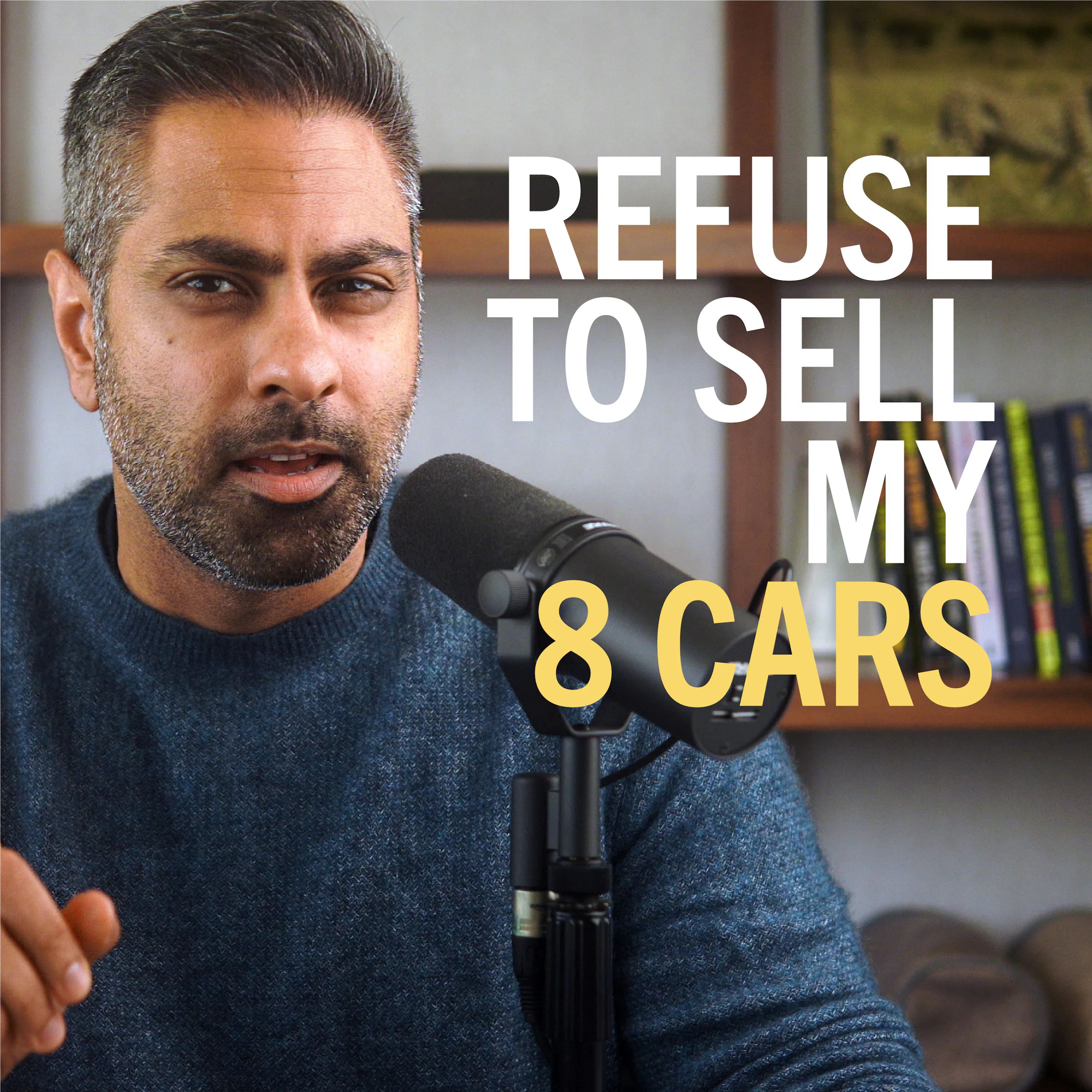
Money For Couples with Ramit Sethi
177. “We’re stressed about cash flow—but I refuse to sell any of my 8 cars” (Part 2)
01:02:36
Loading summary
Transcript312 lines
- [00:00]
Ramit Sethi
Planet Money helps you understand the economy. We find the people at the center of the story.
- [00:05]
Jason
Garbage in New York that was like a controlled substance.
- [00:09]
Megan
We show you how money influences everything. Tell me what you like by telling.
- [00:14]
Jason
Me how you spend your money.
- [00:15]
Megan
And we dig until we get answers.
- [00:18]
Jason
I had a bad feeling you're gonna bring that up.
- [00:19]
Megan
Planet Money finds out, all you have to do is listen.
- [00:22]
Ramit Sethi
The Planet Money podcast from NPR this.
- [00:25]
Unknown
January, I'm coming to a city near you. Tickets are now available for my money for couples live book tour. Now, if you love the podcast and you want to connect with hundreds of other people who are trying to improve their relationship with money, I would love to see you there. Go to iwt.com booktour and use the presale code richlife to get your tickets. Now, I can tell you nothing beats the energy of being in that room and seeing couples live on stage. I'm coming to New York, LA, Chicago, SF and more. So get your tickets@iwt.com booktour and use the presale code richlife. Every week on the show, you hear me coach a couple through their conscious spending plan. And I love looking at their CSP because it gives me so many clues why a couple is feeling anxious about money or why they're really fighting about a $17Amazon purchase. A lot of couples come here wondering, do we have enough for retirement? How do we build an emergency fund? If you want my help on your csp, I'm actually hosting a live group coaching call this month called how to create your conscious spending plan. It's happening on October 17th and the only way you can join this call is if you are in my money coaching program. I'll do a live walkthrough of setting up your conscious spending plan and you'll have the chance to ask me questions during the live Q and A. So if you've been listening to this podcast and if you, whether you're single or whether you're in a relationship, have wanted to set up your csp, but for whatever reason you haven't gotten around to it, this is the perfect chance to do it. You can access this live call as a member of my money coaching program. To join, go to iwt.com moneycoaching that's iwt.com moneycoaching to join me in this live call on how to create your conscious spending plan this October 17th. On last week's episode, I'm trying to.
- [02:18]
Ramit Sethi
Keep up with him and with lifestyle, but I also like know that I can't actually afford that with baby coming.
- [02:24]
Jason
How do we figure out how much is needed from each of us to support the fam?
- [02:27]
Unknown
We met 40 year old Jason and 34 year old Megan.
- [02:30]
Jason
I'm sure Megan got tired of me asking like, how much does that cost?
- [02:33]
Ramit Sethi
This is the first time he ever let me know how much money he makes.
- [02:36]
Unknown
Jason over focuses on the numbers and Megan avoids tough discussions.
- [02:40]
Jason
Whatever success we've seen here is only because of sis that I put in place.
- [02:45]
Ramit Sethi
When I say I want to do something rather than feel the pushback, I'd rather just put on a credit card. I'll figure it out somehow.
- [02:52]
Unknown
They've been together for eight years, but they aren't married and their finances are separate.
- [02:56]
Ramit Sethi
If it's not equal, I won't feel equal.
- [02:58]
Jason
I think that would drastically impact my interest and ability to change income.
- [03:03]
Unknown
Can they build common values around their finances and build some shared money rules?
- [03:08]
Jason
I don't want to go backwards. I want to be improving something.
- [03:12]
Ramit Sethi
I don't want this for my baby. I want them to have a healthy relationship with money.
- [03:23]
Megan
Real quick.
- [03:24]
Unknown
Last week in part one, you watched me review their csp. At the beginning of the episode, I read some comments on YouTube that their net worth wasn't adding up. And you were right. I didn't say their investments number, which is separate from their assets, was totally my mistake and I appreciate the comments. So here is the total breakdown. Assets, $3,070,000. Investments $859,095. Savings $27,455. Debt $778,835 for a total net worth of $3,180,715.
- [04:01]
Megan
I look at where you are today, I go, wow, some things in your numbers are incredible, really impressive. Some things are a little loose, maybe even sloppy, but they can be fixed if you have a reason to fix them. Right now it's like, oh, I have a bit of credit card debt, no big deal. I'll just go work a little bit more. That is probably an unhealthy way to think about money.
- [04:27]
Ramit Sethi
And I don't want this for my baby. I want them to have a healthy relationship with money.
- [04:31]
Megan
How are they going to have a healthy relationship with money? Tell me.
- [04:35]
Ramit Sethi
They have to have a good example.
- [04:37]
Megan
Oh, so you're saying, wow, in order.
- [04:39]
Ramit Sethi
To teach, I have to fix myself.
- [04:41]
Megan
Whoa.
- [04:42]
Ramit Sethi
Yes, I know, Rami. I know this from the beginning.
- [04:44]
Megan
In order for your kids to have a healthy relationship with money, you both have to have a healthy. Is that what you're saying, is there a book coming out that's going to demonstrate this in detail, pre order this freaking thing?
- [04:59]
Jason
It's already preordered. Don't worry.
- [05:01]
Megan
Okay. Love it. Love it. All right.
- [05:03]
Unknown
Wow.
- [05:03]
Megan
Okay, So I love that. What a. What a beautiful reason. I want this baby to see mom and dad talking about money. I want them to see mom saving money and saying, oh, I'm so thankful that I can save money, that dad can save money. Also spending money. We're so grateful that we can go out to eat sometimes. And that's because we save our money and we're careful with it. What do you think about that? You think that would be something you could do?
- [05:33]
Jason
Yes, definitely.
- [05:35]
Ramit Sethi
Yes.
- [05:35]
Jason
As a team, we do work better when we have a shared vision and goal. When it's like, hey, we're, you know, we're contributing towards this for this, or we're not buying this for this. Like, that's the only way I was ever able to buy houses and put, you know, cash down because you have to stack so much cash. Right. Was every single time that decision came up, do I want this more than the house? No. Going this way. Right.
- [05:59]
Megan
And you need a vision. You need a reason. When people have kids, it is one of the few times in their lives that they actually pay attention to money. It's no surprise that the two of you are here. It's like, it really changes everything. And you haven't even had the baby yet. Like, whoa, wait till that happens. So that's good news. That means you have a reason to change. And Megan, because you're going to be home and because you're both going to be talking about money differently, communicating about money, this is going to be a new chapter. Can I make some suggestions when it comes to your finances? Absolutely, yes. Personally, if I were in your situation and I was about to have a baby, I would be saying, what core values are important for the next one year? It's kind of like a wedding. What are the core values? You know, for us, one of our core values was relationships. Want to make sure that the people we love are here and are treated special. What are some of the core values for the first year of having this baby?
- [07:06]
Jason
I don't want to go backwards. I want to be improving something. So my first thing is like, risk reduction.
- [07:13]
Unknown
Listen, I talk to a lot of nerdy optimizers, and I can tell you that in 20 years of talking to literally millions of people, I have never heard a soon to be parent say, for my new baby, my Core value is risk reduction. What the. I'm not even a parent. I'm sitting here like, am I on planet Earth right now?
- [07:32]
Ramit Sethi
Intentional time together. Nice quality time. It's one of my love languages.
- [07:38]
Jason
I would like clarity on the plans.
- [07:42]
Unknown
All these are great.
- [07:43]
Megan
These are really good. Do these feel like they are your personal values?
- [07:47]
Jason
The ones I gave are the ones that I'm thinking about and trying to get confidence in.
- [07:53]
Megan
Okay. What about you, Megan?
- [07:54]
Ramit Sethi
Risk reduction. I don't really understand what that means for him or for us. What does that mean, buddy?
- [08:01]
Jason
How do we prevent, for example, more debt or not hitting our savings goals? Or I guess the big one I've been thinking about is can and should I take any time off? My current plan is. No, do not.
- [08:18]
Megan
Hold on, hold on. What's one of your core values? Quality time together as a family.
- [08:23]
Jason
Yeah, Risk reduction is above that for him.
- [08:27]
Megan
Yeah, well, now that's important. So you actually need to agree on which values are first priority because otherwise you'll be fighting all the time. That right there is a perfect example. He says no time. She might say, I want you to take time.
- [08:42]
Jason
Yes, she does say that. Yes.
- [08:46]
Megan
There you go.
- [08:47]
Unknown
These are.
- [08:48]
Megan
These answers are not determined by each of you going to your corners of the boxing ring. These are determined by zooming up and creating a list of values in order. To me, it's like, easy. I'm looking at your numbers right now. I'm like, I can manage this risk in 10 seconds. You're gonna have to make a lot of changes. It'll be easy for me to say, you'll have to do a lot of stuff, but like, risk wise. Yeah, with the income like that, we can fix all that stuff. But you only get that time once. Yeah, true, Jason. I want to go back to my 25 year old self or 23. It's like I would have said exactly the same thing. Gotta optimize, gotta optimize this risk. And I would've done it too. I would have crushed it. The problem is I would've missed the important things in life going on around me, like having a baby for the first few months of their life and my wife or my partner. Like, that is precious. So, yeah, I still would have fixed a spreadsheet. I probably would have loosened up a little bit on the risk. Instead of optimizing it a hundred percent, I would optimize it 92%. And I would have been like, there's something more important than that marginal 8%. And that is spending quality time with my partner. And my baby. I don't think there's anything wrong with, With. With you, soon to be mom, saying, hey, this is really important to me. We're creating a new family, a new structure, and I want us to start thinking differently. It's not just about just maxing out our 401k. That's not the most important thing anymore. Jason, would it be hard for you to take your foot off the gas a little bit?
- [10:32]
Jason
Whatever success we've seen here is only because of systems that I put in place when I was in my, you know, teens and twenties. And I. I'd say that I'm reluctant to undo systems that are working well.
- [10:50]
Megan
How about add on a new way of looking at the world?
- [10:53]
Jason
Always up for that.
- [10:54]
Megan
Yes. Okay. There is so much more to a rich life than simply optimizing work. Like, yes, work hard, definitely crush it, win. I love that. But what else? What about having a great meal? What about talking to your coworkers or your friends? What about going on a camping trip? All of that. Because me, a guy like me, left to my own devices, I'll sit there and just work. And yes, I'll win. I will crush it. But I'll probably let so many things go by in life. And what is the point of having millions and millions of dollars when you didn't take a few weeks home with the baby? What do you say we take a look at the numbers and try to make a few changes and some agreements? What do you say?
- [11:44]
Jason
I'd love to.
- [11:45]
Unknown
You can hear how Jason's instinctive reaction is to say, what got me here is saving and investing aggressively. So I want to keep doing that. Humans are really bad at knowing when to shift gears, to turn the page, to accept that they won and know that it's time to play a different game. But Jason also said he's always down to look at something from a new perspective. So I want to challenge both of them to get really specific about how they're going to incorporate their core values into their lives once the baby is born. Let's start with Jason, because I want to hear how he will create space for quality family time.
- [12:26]
Jason
I would figure out a work from home model so I don't have to go into the office.
- [12:32]
Megan
Great. Love that. Wow, that's beautiful.
- [12:35]
Unknown
Risk reduction.
- [12:35]
Megan
What would you do for that?
- [12:37]
Jason
Not stop working.
- [12:40]
Megan
Okay, not stop working. That's one way to go. What else?
- [12:43]
Jason
Fix the CSP fixed costs by getting rid of the debt so we get all that cash back.
- [12:50]
Megan
That's true. Yep. What else? Megan, let me hear from you.
- [12:54]
Ramit Sethi
I want to go have these very unique moments together in the very beginning of this baby's life where we're not distracted by work or money, and it's just we eat whatever we're eating, and it's not a big expense. It's just living in a van and go on little walks in New Zealand.
- [13:14]
Megan
Okay, I'm. I'm out of my element here, so. Sounds great to me. All right. Hey, listen, all the moms and dads who are watching this, I didn't say it. Okay. I didn't say a parent should go live in a van after three months. I did not say it. But if you want to do it, God bless. Interestingly, I didn't hear anyone say, stop spending $4,000 a month on guilt free spending.
- [13:34]
Jason
I think that'll happen anyway.
- [13:36]
Megan
That's the first thing I would do to reduce risk. Like, that's it right there. That's a ballgame. Who's spending $4,000 a month on guilt free spending anyway when they have a baby? So let's be intentional about it. Let's not just let it happen. Let's actually call it out and both agree on it. Hey, we're not going to go to the ballet. We're not going to eat out the same amount. We're going to change. We're. We're calm, which means we're going to be a fan building a family unit at home.
- [14:04]
Jason
Yeah, I do. I do agree with that. And we haven't gone and actually figured.
- [14:08]
Megan
Out, let's just do it right now. Debt payments.
- [14:11]
Unknown
1204.
- [14:11]
Megan
That's your credit card, right?
- [14:13]
Ramit Sethi
Yeah.
- [14:14]
Megan
All right, so, like, can you guys just pay that off? What the. Why. Why are you having a baby with. And going into that, this very, very stressful time with all this credit card debt?
- [14:27]
Jason
It doesn't feel like a stressful time.
- [14:29]
Megan
I actually love that. If it doesn't feel stressful, fantastic. Don't let a guy like me tell you it's stressful. That's like. That's like when people told me, oh, you're getting married, gonna be a tough.
- [14:37]
Unknown
Year planning the wedding, but shut the up.
- [14:39]
Megan
I could plan this wedding.
- [14:40]
Unknown
My wife and I love it.
- [14:41]
Megan
And we did. We loved it.
- [14:43]
Unknown
Okay, great.
- [14:44]
Megan
I love your response. You're right. It's not stressful. You're about to have an amazing time. This is going to be incredible. Wow, great. I stand corrected. All right. Still, can you pay off this credit card debt?
- [14:57]
Jason
Yes. I do want your advice, though. The easiest, I think Is the redirect from the savings and investment. Short term, knock it out and be done.
- [15:07]
Ramit Sethi
Well, you have a lot of cars. Do you think we could just sell a car or five of them?
- [15:14]
Megan
What do you.
- [15:14]
Ramit Sethi
What do you say about that?
- [15:17]
Megan
I would like to discuss this. I'm glad you brought it up. It's probably the right time. What are you going to do with those cars right now? As it stands, Jason, definitely going to keep them.
- [15:24]
Jason
I'm not. Not going to sell them.
- [15:26]
Megan
Really? Why?
- [15:28]
Jason
Because I don't want to and I don't need to.
- [15:30]
Megan
Well, you do have $26,000 of credit card debt.
- [15:33]
Jason
Sure. But I have other ways I can solve that, but I'm reluctant to because I like Maxine.
- [15:41]
Megan
You love Maxine.
- [15:42]
Jason
Yes, I love maxing you. Right.
- [15:47]
Megan
So let's. Let's put a pin in the car thing for a second, because what I. What I want to point out is that I don't see a category in your CSP for the baby.
- [16:01]
Jason
Right. I was playing with this number, and I think Migs, you walked away, and I was like, I don't know. I just put a number in.
- [16:07]
Ramit Sethi
I agree. We don't know what a cost of the baby will be. Uh, I know. At least as far as, like, this year goes, as far as medical costs, they're covered. It's fine. But I. I've personally spent less than $800 in preparing for this baby. I've gotten everything else secondhand or, like, most of that cost is your shipping costs from other places.
- [16:30]
Megan
I like it.
- [16:31]
Ramit Sethi
And I've kidded both of our homes.
- [16:33]
Megan
Whoa. So you're telling me you're not going to buy an $86,000 SUV and a new house with a backyard, Right. When you have a baby like every single American, My goal is to buy.
- [16:45]
Jason
Actually, to buy nothing. I don't want to buy anything.
- [16:47]
Megan
Wow. Okay. I respect. I like that the two of you have a shared, unified point of view on how much you're going to spend on the baby.
- [16:57]
Unknown
I like that.
- [16:59]
Megan
Okay. So that's what I want for all of your finances. I want you to have a point of view. When we go on a ski trip, this is how the finances break down for the first year. This is the change we're going to make to our finances. And then after a year, I think it's going to go like this, but we'll discuss it nine months in.
- [17:19]
Jason
Yeah.
- [17:20]
Megan
That's the point of view I want from you. Okay.
- [17:22]
Jason
I think that's a good call out because there are some Things where we understand it very well. We like to travel a certain way, we like to do it really efficiently and we spend very little on it because we know how to do it very well. Same with all the baby stuff. We're very well aligned. How stuff? We're well aligned. It's, it's really the whatever's hitting the credit card is obviously where we're not.
- [17:42]
Megan
Aligned, which is kind of a problem, right?
- [17:46]
Unknown
That car discussion was truly mind blowing to me. It's totally obvious, sell one or two or five cars and solve all the problems. But we have to remember that it's not my money and it's not my rich life. And that is exactly why I backed off. That actually reminded me of episode 151 with Peter and Megan where they were about to get divorced, but Peter would not sell any of his seven cars. What this really reveals is you have to be extremely careful about letting purchases become your identity.
- [18:20]
Megan
Because if one day you actually need.
- [18:22]
Unknown
To back out of that identity, it will be very, very hard.
- [18:27]
Megan
We'll be right back after this short break.
- [18:30]
Unknown
You know, a lot of people wonder what would their dog say if they could talk? And it's like, I'm hungry or I want to go for a walk, those kind of things. You ever wonder what a baby would.
- [18:41]
Megan
Say if they could talk?
- [18:42]
Unknown
I don't, but some people do.
- [18:45]
Megan
It's probably basically the same thing.
- [18:48]
Unknown
I'm hungry, I want to go to sleep, and maybe, just maybe, why don't you have term life insurance to protect me in case something goes horribly wrong with you? If you have people who depend on you, you need to make sure they are protected in case something happens to you. That's what term life insurance is for. Fabric by Gerber Life is term life insurance you can get done right here, right now. You could be covered right from your couch in under 10 minutes with no health exam required. Fabric has flexible, high quality policies that fit your family and your spending needs like a million dollars in coverage for less than a dollar a day. It's all online and all on your schedule, so apply when it's convenient for you. There's absolutely no risk and there's a 30 day money back guarantee. You can cancel at any time. They have over 19005 star reviews on Trustpilot with a rating of excellent. Join the thousands of parents who trust fabric to protect their family. Apply today in just minutes@meetfabric.com Ramit that's meetfabric.com/ramit M E E T fabric.com Ramit Policies issued by Western Southern Life Insurance Company not available in certain states. Prices subject to underwriting and health questions. If you're a private person, how does it feel to know that tons of your personal information is being sold online by unscrupulous data brokers? Data brokers are corporations that collect huge amounts of your information from sources like government, public records and social media. They pull it, analyze it, then sell it to other data brokers like marketing research companies and to me, I hate this. Having your data available online can make you much more vulnerable to identity theft. You have the right to stay private and protect your personal data. This episode's paid sponsor, Deleteme can help you do that. Deleteme is a subscription service that will remove your personal information that's being sold online. They'll remove your name, age, address, phone number, relative's name, all of it. And I personally use this service.
- [20:52]
Megan
I pay for it.
- [20:53]
Unknown
Here's how it works. You sign up, you submit your info for removal. Delete me experts search for and start removing your personal information. Within seven days, you'll receive a detailed delete me report with what they've found so far. And then they continue to scan and remove your information regularly all year long. Again, this is a service I personally use and I recommend to all my friends and family. So if you want to get your personal information removed from search results on the web, go to joindelete me.com ramit for 20% off a plan for you or your entire family. Again, that's joindeleteme.com RAMIT welcome back. I'm making progress in this conversation with Jason and Megan. We've established their core values. They've started talking about paying off the debt. They have a strong point of view on spending minimalistically on their new baby. But I noticed that Jason is still obsessed about maxing out his accounts.
- [21:55]
Megan
Have you all calculated how much money you're going to have in investments over time?
- [21:58]
Jason
Yeah, I have been doing it fairly regularly because what I want is basically a 200k salary out of, you know, that comes out without hitting principal. So that's depending on the years and the 4 to 5 million range. That's been my target for a long time.
- [22:13]
Megan
Are you on track?
- [22:15]
Jason
Yeah, I'm on track.
- [22:16]
Megan
How much do you put in your 401k every year?
- [22:18]
Jason
It's maxed. So what's that, 23, 5 or something this year?
- [22:21]
Megan
So just you alone, you're on track to have 5.3 million?
- [22:25]
Jason
If we could maintain what we're doing Minus the little bit we're going over or alternatively get the income back up. What I think only needs to be like 50k or so more and keep things the way they are. I think we're very, very happy living rich life and on track.
- [22:42]
Megan
Guess what's more important than that? The next five years. The money is more valuable in the next five years than is it going to be 180 or 200 at age 65. You're on track, by the way, for a safe withdrawal rate of $214,000. And that's. That does not include any raises, that doesn't include any bonuses you put into it. None of it. That's just a 401k. Let me tell you how I would approach it. My approach at 260k is wow. I'm so thankful to myself for starting to invest as a teenager, for having a diversified income and blah blah, blah and great low cost investments. I'm so thankful. And now I earned the right to ease off the gas a little bit, at least for the next two years. What that means is I'm going to take some of that money. I'm literally going to take the money that I normally would have, let's just say, maxed out my 401k and I'm putting it in a family fund. And this is going to force us to spend quality time together. It's going to force us to have calm. I am going to put money behind my core values.
- [23:55]
Jason
Yeah, fund the value.
- [23:56]
Megan
Fund the value.
- [23:57]
Unknown
Exactly.
- [23:57]
Megan
With time and money. And the money part is easy.
- [23:59]
Jason
Yes.
- [24:00]
Megan
The skill that I'm trying to emphasize for you specifically is turning the page and realizing what are the non financial parts of the rich life. Right. It's up to you to choose. Are they important? Do you want to wait? But it's just like it's so apparent to me you're a born and bred optimizer. You told me. I love maxing.
- [24:25]
Unknown
I get it.
- [24:26]
Megan
I like maxing too. But at a certain point I go, oh, that money's more valuable now than 25 years from now.
- [24:34]
Jason
I definitely agree with that. And we try very hard to live today. I don't think we would be happy if we were only planning for tomorrow. So we do both, right? And when I miss maxing, it hurts. I don't like it.
- [24:51]
Megan
Megan, how are you feeling hearing this?
- [24:54]
Ramit Sethi
I think like these next five years are so special and I've broken down this baby's life into like increments of six years and how much time that I expect to get to have with this baby. And so, like, the first six years, I can claim every single weekend. And I want to claim those with time as a family and building my individual relationship with this baby, getting to go skiing and rock climbing, doing all the fun things, and to, like, give them a diversified life and experiences.
- [25:24]
Megan
In order to do that, are you willing to be specific with your numbers? Are you willing to follow a plan that you and Jason come up with?
- [25:33]
Ramit Sethi
Yes, I. Yes. That sounds great.
- [25:36]
Megan
Yeah. It's about not charging credit card debt.
- [25:39]
Ramit Sethi
Yep.
- [25:40]
Megan
That's out. It's about having numbers and sticking to them, even if it means, yeah, sometimes I can't go on a trip, or sometimes we can't do X. That's it. The numbers are my guide because I created the numbers. That voice in your head that tells you, like, oh, it's fine. I'll just work more or, well, it's fine. It's not that big of a deal. You will have to find a way to replace it with a louder, more potent voice. A voice that says, no, I'm. I'm sticking to my plan because I'm creating a good example for my baby and for my family, and I am a active part of this business partnership. How much do you contribute to your 401k?
- [26:23]
Unknown
Before we hear her answer, I want to remind you that the I will teach you to be rich podcast is now the money for couples show. Please head over and follow money for Couples on Apple podcasts and take a quick second to leave a review on the podcast, which really helps my team.
- [26:38]
Ramit Sethi
And me a lot. A lot for me. I will have put in $4,000 into it by the end of this year.
- [26:47]
Megan
Great. All right, let's take a look. So this is the kind of specificity I want. Right now, you're annually adding 4,000 bucks, approximately 31 years to grow. You're a little younger than Jason. And let's see what we got here. All right, you're at $1.7 million.
- [27:05]
Ramit Sethi
If it's just $4,000, like, by little, I mean, like my annual edition.
- [27:10]
Megan
That's it.
- [27:11]
Ramit Sethi
And I still make 1.7. Okay. I won't be in the poor house.
- [27:16]
Jason
Because you started early.
- [27:19]
Megan
Yeah, it's impressive.
- [27:19]
Ramit Sethi
Compound.
- [27:20]
Megan
Just to give you an example, if you were to contribute, let's say, say, $10,000 a year, that would take that number up to $2.4 million, which is.
- [27:28]
Jason
Like 100k a year in salary. Pulled out right at 65, roughly.
- [27:36]
Megan
Jason, meet her where she is. She's not doing the Math like you are. She's just looking at the number right now. Meet her where she is. Let's slow it down. Yep, $2.4 million is a big difference, Megan, from 1.7 just for adding $6,000 a year. Yeah, it's almost like the flip of a switch. You could just change your automation. The money would automatically go, you wouldn't even know it went. And suddenly you have like almost a million dollars more invisibly. That's pretty cool, right?
- [28:08]
Unknown
Yeah.
- [28:09]
Ramit Sethi
That's great.
- [28:10]
Megan
All right, so what this tells me is you have a lot of control over your own finances. You talk about protecting your future self. I agree, protect, but I also see thriving. 1.7 million, 2.4 million. Hey, maybe there's a couple of years where you work way overtime or something and you take a bunch of money and drop in, you know, 30 or $40,000. I don't know. Oh my God. You really, you really have a lot in your future. What do you think about that?
- [28:44]
Ramit Sethi
That's great. That means no one will hopefully have to take care of me.
- [28:49]
Megan
I think you're on track to do very well and you've clearly invested a lot, which is really impressive. Great work. Okay, now let's get to some specifics in terms of the credit cards. So like you have lots of options. Okay. Number one, which you should is cut down your guilt free spending dramatically and take that money and start redirecting it. Personally, I would pay off that credit card debt immediately. If you were to cut, you know, let's say you cut this down to a thousand bucks, that means you have $3,600 a month to put towards credit card debt. It would take you several months and months. That's one.
- [29:33]
Jason
Yep.
- [29:35]
Megan
Another is you take some of your contributions that you're investing and you also put that towards the credit card debt. There are virtues higher than maxing out sometimes. And in my opinion, having zero debt and never going back into debt is even better.
- [29:52]
Jason
That's worth a lot.
- [29:54]
Megan
You could pay this debt off in like four to six months. Done.
- [29:57]
Jason
For sure.
- [29:58]
Megan
Megan, are you following?
- [30:01]
Ramit Sethi
I just added up all my current numbers and I saw where I have just money sitting in, in my gambling, which is coinbase.
- [30:11]
Megan
Okay.
- [30:12]
Ramit Sethi
I can just pull out my 7k and just pull 7k easily and bring it down to like $6600.
- [30:20]
Megan
That sounds good. Credit card debt, that sounds good. Just be advised of any tax implications you might have depending on if you have to sell anything. But yes. Great. That's. I would love that. Fantastic.
- [30:32]
Jason
Do you think, Megs, if we, if you did something like that and then I redirected to pay off the rest, that you could keep it empty.
- [30:44]
Unknown
If.
- [30:45]
Ramit Sethi
We set up a better plan. Why would I spend my cash? I might need my cash. What if I have to pull out cash for something so I could just put on my amex or my capital one or my Apple and then I can just spend on there and then pay off that amount right away?
- [31:00]
Megan
This isn't working for me. You're about to be a mom and the two of you are trying to get into a mature relationship around money. And you have to really turn the page on the way that you have been behaving with money. And part of that is starting to change. The way you talk about money, the way you behave about money, and then the way you feel about money. And right there what I heard was like this whole like, I'm so innocent. Oh, it's so funny. It's actually not funny to be in credit card debt. And it's not funny to be in debt when you're about to have a baby. And it's not funny to not have a shared vision and shared plan around money. That's what you called me for. That's why I'm telling you this. Where else is the rest of the credit card debt going to be paid from? The roughly $7,000 left.
- [31:53]
Jason
I'm volunteering to pay it.
- [31:56]
Ramit Sethi
Where would you get the money from for that?
- [31:58]
Jason
Some of the guilt free spending funds. But I think it would be a benefit to both of us to have yours paid off and then not filled up again. I'm suggesting we prioritize getting yours to zero. And then new rule is no debt carried over on the card.
- [32:16]
Ramit Sethi
I agree. That would be nice.
- [32:20]
Megan
Okay, I like that. So. So what you've done is, Jason, you generously offered, let me help pay off that card. And I want to set up a new rule in this family. No credit card debt. Is that what I'm hearing?
- [32:33]
Jason
Yes.
- [32:34]
Megan
Great. I love that. Megan, it sounds like you agreed. I feel like that's a big win. Let's take the win. Great job. Nice job.
- [32:41]
Unknown
Let's take a quick break to support our sponsors. There are a few things I never want to do in my rich life anymore. Number one, taking my own returns to the post office. I don't know why, I just don't like it. I love the post office.
- [32:54]
Megan
Great job.
- [32:55]
Unknown
Very reliable. I just don't want to have to take a bunch of boxes over there and do it myself. Next finding a doctor searching for who's in my network, calling around, waiting on hold with reception, not even sure if I need a podiatrist or a dermatologist and then their office is closed Wednesdays from 2 to 5. Finally you find one and then the next available appointment is nine weeks from now. Thanks to this episode. Sponsored Though ZocDoc, you don't have to deal with any of that. ZocDoc is a free app and website where you can search and compare highly rated in network doctors near you and instantly book appointments with them online. Once you find the doctor you want, you can book them immediately. No more waiting on hold with receptionists and these doctors all have verified reviews from actual patients. If I needed to find a doctor right now, this is what I would use. Go to Zocdoc.com ramit and download the Zocdoc app for free. Then find and book a top rated doctor today. That's Z O c d o c.com ramit zocdoc.com ramit I don't mind surprises on my birthday, but I do not like surprises in my business. I want to know how much we're going to make. I want to know if we have a problem and what we are doing to take care of it. Now, we can't predict the future, not with our investments, not with our business. But I want to be able as much as possible to see what's coming.
- [34:23]
Megan
Now.
- [34:23]
Unknown
Think about it as entrepreneurs. When you run a business, you have tons of different areas to focus on and you can get lost in the weeds, which means you're not looking ahead at growth. What if you could add all the important parts of your business into one place? That's what you get with this episode's sponsor, NetSuite. With one unified business management suite, there's one source of truth giving you the visibility and control you need to make quick decisions. With real time insights and forecasting, you can start to go on offense with your data and look ahead. If I needed a platform that integrated accounting, financial management, inventory and HR into one place, this is what I would use to be able to see the opportunities in front of me. Speaking of opportunity, download the CFO's Guide to AI and Machine Learning at iwt.com netsuite the guide is free to you at iwt.com netsuites n e t s u I t e iwt.com netsuite now.
- [35:25]
Megan
Back to the Conversation Baby Fund how much are you going to put in there? There always will be some unexpected stuff we should probably have some pool of money so that you don't get hit by a surprise, whatever.
- [35:39]
Jason
So the numbers I've got were range from like 12 to 20k. How do I keep this all within range and with. Without changing things like investments and some of the other bits and bobs, what's.
- [35:51]
Megan
The resistance to cutting investments by a few percentage points for like two years? Like, I don't have that worry. And I love investing.
- [36:02]
Jason
I think when you unwind something like that, I think it's harder to put it back. So I'm reluctant to do it because I don't want to go through another five, seven year whatever thing trying to get back to the, the investment model I want to be on.
- [36:18]
Megan
What I'm hearing, especially from you, Jason, is basically like my North Star is maxing out my 401k. Like that's crystal clear. I hear you. Being a new parent can be hard. Okay. There's lots of things that pop up that nobody really thought through, predicted. It just happens. And if it means that for a cup, two, three years, you have to cut some number, let's say you were. Your investment rate was 12% of net, let's just say. And you go, hey, for the next couple of years, I'm going to make it 6%. I personally have zero problem with that. I would literally cut it down a little bit practically just to have a little pool of baby money.
- [37:00]
Jason
Yeah.
- [37:00]
Megan
That way we don't have to have these painful discussions back and forth. Great.
- [37:05]
Jason
Yes.
- [37:05]
Megan
But that's my approach with money. It provides calm, a lot of calm with my overall financial system. Okay. That's up to you how you want to. If you want to do it or not. All right. Your guilt free spending is at 4,000 bucks. What number do you want to bring that down to? Because that is crazy.
- [37:23]
Jason
I have no clue.
- [37:24]
Megan
Well, think about it. You are about to have a baby, which means already by default, you're not going to be going to certain things, at least for a while. So that makes it super easy.
- [37:32]
Jason
Yes, totally.
- [37:33]
Megan
This is also going to help rapidly pay off your credit card debt. And in my opinion, look at this number here. Megan's savings, only $1,455. She has less than one month's worth of savings. That's a problem. So that needs to be filled up. What do you want to do here?
- [37:55]
Jason
I don't know. I think I'd have to go look at everything that's in there.
- [37:58]
Ramit Sethi
2K.
- [37:58]
Jason
Yeah.
- [37:59]
Megan
Maybe pick 2K. All right. All right. So from 4622, which is 33% in your guilt free spending. Let's see what happens if we put it at 2000. All right. 14%. That, that's, that's a pretty good number overall. What I like about that, I typically recommend 20 to 35%. 14% makes a pretty decent amount of sense because you have a baby, again, not going to be doing certain things for a little while. That's fine. You also have credit card debt. If it were me, I'd probably go a little bit lower just because I want that debt gone. How are we feeling?
- [38:39]
Jason
Still questions on like, how do we pay for things like the doula Megan wants or get towards a plan towards like the trip she wants to take.
- [38:48]
Megan
Listen, guys, that, that's what the baby fund is for. The doula comes from the baby fund. You need to fund that. That's why you need to have more than a thousand dollars.
- [38:56]
Jason
Yeah. So that, that's a good argument, right? If, if the, if, if that's from baby fund and we fund it there, then that's important to Megan, then I want to make that happen.
- [39:06]
Megan
Yes. Okay. So yes, that is like straightforward. However much the doula is going to be and then double it. You really don't want to be scrimping and pinching when you're going to select the doula. You really love E.T. okay, I'm not saying you have to spend it all. Megan, you want to check in on anything here?
- [39:27]
Ramit Sethi
I think that's great. I like the idea of planning, right. I feel a little useless because I don't have a real income right now.
- [39:36]
Megan
But hold on. Very important. You are not useless just because you don't have an income.
- [39:41]
Ramit Sethi
Okay?
- [39:41]
Megan
You can be a fully functioning member of a romantic relationship financial partnership with zero income. Your value is not just measured on this freaking spreadsheet. All right? In fact, this spreadsheet, we're too focused on spreadsheets. You're about to be a mom and a dad. Why the are we talking about spreadsheets all day long? Have you all noticed that this field.
- [40:08]
Ramit Sethi
Because we don't have a good system between us. I have an anxiety about it's not an equal, equitable conversation. We're not equal in this situation of going forwards. Like, yeah, let's save 1300, $13,000 or plan for that for like baby, that's what it's going to cost potentially in their first year. That's great. But like I'm, I still a don't know how I get to have like a very strong Opinion, I guess.
- [40:48]
Megan
Can I help you see how to do that?
- [40:50]
Ramit Sethi
Yeah.
- [40:50]
Megan
Okay. It's very important that in couples where there's wild divergence in income and sometimes one partner earns zero, still important for that partner to have some financial autonomy, because otherwise you're constantly having to go and saying, please, please, can I have money for lettuce at the grocery store? It's like, no, that. That's a systems problem. That's a communication problem.
- [41:19]
Unknown
So let's fix that.
- [41:20]
Megan
When the baby comes, who's going to be in charge of things like shopping?
- [41:25]
Ramit Sethi
Me.
- [41:26]
Jason
I don't want to shop. I really hate it. So I'll pay for it all if she'll do it.
- [41:30]
Megan
Okay, fantastic. Megan, listen to me. Let's recalibrate the power dynamic. Don't ask him. You're about to be mom. You're about to have to go shopping. It's time for you to set some expectations. Here's what I need. Tell him he's probably very receptive to it, but don't ask him. It's now time for both of you to start talking. What you need? Go ahead.
- [41:55]
Ramit Sethi
I need my own card if we're going to spend money together. So I don't want to have to ask you for it. I just would like your home street card. That's what we're going to spend out of and not use credit cards. I want to have my own home street card.
- [42:13]
Megan
So this is like a debit card you're going to use, Is that it? Yeah.
- [42:15]
Jason
Debit card is the debit card. Yeah.
- [42:17]
Ramit Sethi
Yes.
- [42:17]
Megan
Okay, cool. So she. I love what you just said, Megan. Here's what I need.
- [42:20]
Unknown
I need your home.
- [42:21]
Megan
I need a home street debit card in my name. Fantastic. Now tell him what you're going to use that card for. Be specific.
- [42:31]
Ramit Sethi
I'm going to use that for our groceries. I'm going to use that for our fuel.
- [42:39]
Jason
Baby stuff.
- [42:40]
Ramit Sethi
That's pretty much it.
- [42:41]
Jason
Stuff baby needs.
- [42:45]
Megan
Have you all calculated how much diapers are going to cost? Just out of curiosity.
- [42:52]
Ramit Sethi
Don'T you know.
- [42:53]
Megan
That you guys are the funniest parents I've ever met? It's so funny. Like the both, by the way. So for people just listening and not watching, I asked him. And then. And then Jason just, like, shakes his head and smiles, and then Megan was just, like, looking away. Megan, is there anything else that you're going to spend on this debit card?
- [43:11]
Ramit Sethi
No, because I don't need to spend anything else.
- [43:13]
Megan
Great. What else do you need to have agreements around?
- [43:18]
Jason
I think Some expectations on the guilt free spending front.
- [43:24]
Megan
Shouldn't you theoretically have his guilt free spending, her guilt free spending, and then your joint guilt free spending? Yeah, that's the way to do it. That's how you set it up. So that way Megan always has a certain number for guilt free spending. Even when she's earning $0, she's still getting money for guilt free spending. So Megan, you're like, oh, I'm good. And of course you can use that for whatever you want. You want to just save it, fine. You want to spend it also, fantastic. But it's up to you. But it's. That's the number. Same for Jason and then of course for both of you, which would be things like quality family time together. That's how you fund it.
- [44:08]
Ramit Sethi
That's a great idea.
- [44:10]
Megan
Yeah.
- [44:11]
Ramit Sethi
Do you think we get equal amount of money for guilt free spending?
- [44:15]
Megan
You tell me.
- [44:15]
Ramit Sethi
In an ideal situation, we get the same amount of money. So my understanding is we add up all the things we do together and that's our quality time, our guilt free spending, and then we each get a certain amount. If we don't get the same amount, this just goes back to it's not equitable and we're not on the same page. And I feel like, I hate saying it, like I feel bad asking for that because I know you work really hard for your money, but if we're going to move into this other equitable system where I'm not feeling, where feelings don't have to come into it, then I feel so much better.
- [44:57]
Megan
What are you asking for?
- [44:59]
Ramit Sethi
I'm asking for the same amount of money. Whatever that is, is if it's $50 and we both just get 50 bucks a month for guilt free. Sounds great. If we, if it's five hundred, a thousand, whatever it is, if it's the same. That sounds amazing to me.
- [45:15]
Jason
I wouldn't like that. And the way I think about it is, is if I'm going to like, if I go fix my income to earn more. More at my like time cost, energy expense, and then it's immediately halved. That feels weird to me.
- [45:35]
Megan
I totally get what you're saying, Jason. Like, optimizers are like, hey, if I make more, I should probably take more and you can make the case. And actually, if the two of you agree on that, I'm. I'm totally down with it. I guess I have to say I think there's a larger game to be played here. So, you know you're a high income earner, Jason. I am too. And I think that what I learned is I can afford to be generous. In fact, I can afford to be really generous. And so the person who that matters to most is my wife. I am the most generous with her. Not only can I afford to be, but I would be just as generous if I made one tenth of what I made. Another way to think about it is like we are creating a family unit together. There are three components in guilt free spending that matter. My money, your money, and our guilt free spending money. If it's 50, 50, great. I want you to have guilt free spending money. What do you think?
- [46:40]
Jason
When I did have higher salary, I was able to be, I felt able to be more generous. And do you think, you know, write a check, fund a thing? You know, I did a lot of that, gave a lot away and it does feel really good. But I also had like my plans and goals were in order. Whereas right now I have a to do list of funding priorities that Megan and I built together of here's all the stuff we agree that we want to spend on when we can. And I manage like saving and coming up with cash and trying to fund those. And I wouldn't want to stop progress on that or slow it down.
- [47:19]
Megan
The money is going to be in guilt free spending regardless. The question is, how is guilt free spending apportioned? Like if you have $100 in guilt free spending, theoretically it could be 20, 20 and 60 for the two of you. Megan, ultimately the important thing is you and Jason are going to agree on some number that you are going to get guilt free every month, even when you earn $0. Furthermore, you should also make a few rules about like, hey, if we're going out to eat, obviously that's coming from our joint. If you want me to go to the freaking rodeo and I don't like the rodeo, like, let's just make an agreement. The person offering it should be the one to say, hey, like let me, let me make sure that I cover that from my own guilt free funds. Right. It's their responsibility.
- [48:20]
Jason
Yeah.
- [48:21]
Megan
How do you both feel about that?
- [48:22]
Jason
The hard part has been we lost our feeling of guilt free spending with the income reduction.
- [48:31]
Megan
Yeah.
- [48:33]
Jason
Became guilt full.
- [48:35]
Megan
Right. Well, it's time to recalibrate. It's time to set some numbers. If the number again currently stands TBD, but it's 2000 bucks just for easy math. Easy math. It might be 500, 500 and 1000 for each of you jointly. Megan, what are you thinking?
- [48:52]
Unknown
Part of what I just did right there was to Help them recalibrate the relationship dynamic, specifically the one between Jason and Megan where Megan has to ask for money. And Jason decides this is a horrible.
- [49:06]
Megan
Dynamic in any relationship.
- [49:08]
Unknown
So change it.
- [49:10]
Megan
State your needs.
- [49:11]
Unknown
Then have a discussion based on your rich life and the numbers about what's possible. It's not about willingly placing yourself in a childlike position of asking for money. It's not even about your moral value.
- [49:25]
Megan
It's about this.
- [49:26]
Unknown
How can we use our money to live our rich life? We'll be back for her answer after this short break. I recently found one of the coolest classes on Masterclass, Think like an FBI Profiler with John Douglas. He was a legendary FBI profiler and author of books like Mindhunter. The course was fascinating because it covered things like how to avoid cults, narcissists and manipulators, how to spot a liar, and what signs might predict future criminal behavior. Now this is personally interesting to me because in college, one of my favorite classes I ever took was a class on lying and deception. That's where we learned a lot of the psychology of what happens when you lie and deceive others. As you can tell, I'm very interested in human psychology. It's why I like talking to people about money. Not just their mortgage rates, but how their lessons from their past and their present inform their relationship with money today. Now with Masterclass, you can learn from the world's best for just $10 a month. An annual membership with Masterclass gets you unlimited access to every instructor. And you can access Masterclass on your phone, computer, smart tv, or even in audio mode. One of my favorite things in this Think like an FBI Profiler course was how John Douglas discovered the idea that behavior might be more predictable than we think. And it reminds me of exactly the lesson that I saw when I was writing my new book, Money for Couples. Sometimes I'm speaking to a couple here on this podcast and it seems like I can read their mind. Like I can predict exactly what's happening, but it really is simply my exposure to tons and tons of people talking about money over the course of 20 years. Well, you could do that, or you could simply get the Masterclass program, which teaches you how to think like that. So right now our listeners get an additional 15% off any annual membership@masterclass.com that's 15% off@masterclass.com Ramit masterclass.com Ramit now back to our conversation with Megan about guilt free spending. And for those of you watching on YouTube, you'll notice that, yes, Jason, Changed locations for some logistical reason.
- [51:33]
Ramit Sethi
If it's not equal, I won't feel equal. And I'm just going to go back into old patterns. I strongly believe we should have the same amount of money and guilt free spending. Otherwise I will not feel equitable in our relationship.
- [51:51]
Megan
It's really important to know when you're talking about setting up your financial systems, like, what is really important, what's kind of important and what's like a gimme, like, all right, that's fine. So think about it. Just to take. To get a sense of how important is this decision. Which category do you think that this decision falls in?
- [52:14]
Ramit Sethi
I put it very high.
- [52:16]
Jason
I feel like it's low because I don't think it's. I think it's working with the exception of taking care of the credit card stuff, which we just came up with a plan for. Um, but if, if the pro. If the proposal is what we just talked about, then I would say it's high. Cause I think that would drastically impact my interest and ability to change income.
- [52:45]
Megan
First of all, it's very interesting that she instantly was like, it's high for me. And I agree. I could hear it in your voice. You're like, this is about feeling equitable. I totally agree. It's high for you, Megan. I respect that. I think, Jason, your response again reminds me so much of me because it's like, like it feels fair, it feels like justice. I make more, I should take more. I get it. But what changed for me in my own relationship was the realization that our future is together. It's not separate. This is really the crux of our conversation today. If you are building a separate life, then what you're saying makes perfect sense. Like you should do it proportionally, you should get paid more. It's incentive and all that stuff. But if you're building a future together, then most of guilt free spending is actually going to be together anyway.
- [53:39]
Jason
It is. And that's where this feels different. Because we set our goals together, we work on them together, save up for stuff, try to execute it. If I can find a way to go earn more for a specific goal, I will do it. But we've done a poor job when it's Megan on her own figuring it out or me on my own figuring it out. And it's not been that shared vision. So it's almost like if we had that worked out and we were like a little bit more mature in this journey, I think this could be more clear and understandable to me. And maybe we can Figure it out. But it does not feel like the right problem to work on now.
- [54:27]
Megan
Well, to me, this is indicative of the whole, the fundamental problem, which is you two are living separate lives. Okay? And also, more importantly, Megan says it's important. If it's important to one partner, it's got to be important to both. And your, your answer was kind of confusing. It was like, not that important. But actually it's really important. Because if I want to make more money, it's not provide the right incentive like all that stuff. She's just like crystal clear. She's like, this is really important to me. So if it were me, I'm sitting here saying, okay, I want Megan, my partner, soon to be mom, to feel good, to feel equitable. How can I do that and still honor what I want, which is make sure that we are moving together, investing, saving, all that stuff, Right? You can accomplish all these things, but right now you are so focused myopically on keeping every last dollar. And that is going to be the ultimate demise here of this system. Megan is telling you this is important. Here's what I would do. I would say, okay, great, let's do it. 50, 50. I want you to feel good. And I would tell her why. I want you to feel good. You're important. Even if you don't earn money, I want you to know that you have guilt free spending. You never have to ask me about it. One thing that's important to me is that we hit a 12% net investment rate. That's really important to me. That means we probably have to cut back on something. We probably have to da, da, da, da, da. Great, okay. She's like, okay, I think maybe 10, perfect. And then you might say something like, hey, for my performance bonus, when I get that bonus, whatever it is, you know, I work really hard for that. I'd like to have, you know, a little incentive, a little something, because I work really hard for that. So in other words, you're giving her what she wants, which is important to her, and you're saying this is also important to me. Can we talk about that? How does that sound to you?
- [56:26]
Ramit Sethi
I'm okay with not knowing the number right now, today, tomorrow, next week, but maybe by the end of the month or before this baby comes out, we figure out what that is and maybe that number changes.
- [56:42]
Jason
It's really hard for me to understand the impact and how to do that the way things are today.
- [56:52]
Megan
I don't think you understand when I say simple, how simple I really mean. Can I just tell you like how I would do this? You, you, you're so fixated on the numbers that you're missing what she really wants. She never once said, I want $650 for me, $650. She didn't even say an amount. What did she say she wants?
- [57:14]
Jason
Said equitable, but I immediately calculate it and.
- [57:16]
Megan
No, exactly. And that is, that is the problem. You are so numerically focused that you're, you're down in the weeds and you're missing what's actually being said here. You're actually blind to what is happening right now. She's not saying a number. In fact, it's the last thing on her mind. What exactly did she say?
- [57:35]
Jason
Said, I would like an equitable amount of guilt free spending.
- [57:40]
Megan
An equal number, because that would feel equitable. Yeah, great. Fantastic. It could literally be $5 each. And that is perfect. So if I were you, the one who has to take some of this 4600 bucks, pay off credit card debt, but still leave a little money, this is what I would do. I'd be like, listen, I love that you said that. I want you to feel equal. I want this to be equitable. Let's do this for the next few months. I'm not sure how long yet, but for the next few months we're going to have to really focus on reducing our guilt free spending. But we're going to do it your way. We're each going to get $250. That's what we have for our guilt free spending, each of us for the month. So it's going to be a big reduction. But that's going to allow me to take the rest of the money and apply it to the credit cards. Let me deal with that. Each of us gets 250. Do you feel good about that, Megan?
- [58:33]
Ramit Sethi
Feel great about what?
- [58:35]
Megan
Do you notice about my solution?
- [58:38]
Jason
It ignored the numbers.
- [58:40]
Ramit Sethi
Yeah.
- [58:41]
Megan
It met her where she is. She said, I want an equal number.
- [58:44]
Unknown
Give her an equal number.
- [58:46]
Jason
Yeah.
- [58:46]
Megan
Make it small. Make both of you have to cut your expenses. Right now. That still solves every problem. But the way that I got there was by not automatically calculating how much money am I going to lose. What's the calculation 25 years from now? It's like, hold on. Put all that out of your mind. This is my partner. She's telling me something's important. How can I start by saying I'm going to assume the answer is yes? Overall, what I take away from the way that you deal with the finances is pretty complicated. Now, some of it is just structural. It's what you've chosen to do. You're not getting married. You're not combining all your money. That's totally fine. That's your decision. It necessarily means that you're going to have more complexity. So that's the price of doing business the way you want to do it. Okay. Accept it. Create some rules, and there you go. I think a couple things I see are, like, knowing how much is enough? I don't think either of you know how much enough is.
- [59:50]
Jason
Yeah, I feel like if I can get to five. Good.
- [59:54]
Megan
Yeah, but you already got to five.
- [59:56]
Jason
Well, as you are, I'm on plan, but it's not there. Right. Until it's actually there, it's not real.
- [60:02]
Megan
You can't. You can't wait. You can't go 25 years feeling like you are behind. You're already there. You just need time. The turkey's in the oven. It just needs to cook. So right now you're playing defense. It's almost like you're playing scared instead of. Instead of, like, actually patting yourself on the back. Like, when was the last time you said yourself like, I did a really good job with this? Never.
- [60:30]
Jason
Probably never. Yeah.
- [60:31]
Megan
How funny. I say that all the time to myself. I'm like, this is on point. The system is simple. It's running, it's cooking. And I think that celebration is important. And I also think, Megan, you know, you know that Jason takes a lot of pride in this part. One of the things a great partner can do is to encourage that celebration. Like, oh, my God, you've come so far. Look at how far you've come. You've done this for us. You've encouraged me. Like, that's powerful. But what is enough? That's a core question, and I can see it written all over the CSP that you haven't answered that question. I think when you do, you will have more connection, more calm. I actually think your finances will improve even more because you can actually ease off of your finances at a certain point. Gives you time, rejuvenation. You're not worried. You're not constantly transferring money here and there. You're just calm.
- [61:25]
Unknown
Thank you to Megan and Jason for sharing your journey, and I am wishing you the best of luck with your new baby. I asked them to let me know how they felt about their experience on the show. Here's Jason's video.
- [61:37]
Jason
I thought that we were doing pretty well compared to folks I know and really appreciated. Ramit letting us know that the system is sloppy or has become sloppy and can be improved. We spent a lot of time understanding what does that mean and what can we do and how do we make those changes so that we can prove over time starting slowly and better understanding the vision or the goal can help with execution because everyone can get on the same page and you can then come to the numbers together. As for the specific changes, there were a few clear takeaways from the discussion. So one is redirect some pre tax investment so that you can take care of debt finance faster. Another one was using some of the liquid cash and savings first before the credit cards and then otherwise better become better at planning ahead and working together to build a system that will work for the long term.
- [62:26]
Unknown
And here's Megan's follow up.
- [62:28]
Ramit Sethi
It was a surprise for me to go through the process and to see what the emotional toll was taking on me that my relationship with money has been. I learned that I have a lot of trauma around money and that was really helpful to just learn about myself. I now know that I can express my wants and my needs rather than judgment from my partner. It's more of just like he's only looking for the facts, he's just looking for numbers. There's not a judgment call on my character. Biggest changes I've made and have been considering is how I want to live by example and be an example to this baby who's going to come to this world in the next couple of months. More transparency about our spirit as a couple and how we can do that together. It's been quite the journey this late in pregnancy to try to figure this out so we can have some standard operating procedures before we welcome this newborn.
- [63:20]
Unknown
One last thing. I actually just got another follow up message right before this episode went live from Jason and Megan that I would like to read to you. We have a new little baby boy born on Sunday. Megs is going to take off the whole first year from work. I'm working remotely for now to keep up the income. We decided to rent more rooms in our house to help with income and are now generating another $2,100 per month. Meg's has one credit card paid off and we're working on the others. I expect we'll have them clear by the end of the year. We now have much better conversations together about finances and planning and are trying to learn YNAB so we can put the envelope method in place for now. We also decided that our near term motivation is to plan a trip to New Zealand for a month in January with our little family. So we've lined that up and got.
- [64:12]
Megan
The cost down to 5k.
- [64:14]
Unknown
Having a joint goal and plan ahead of time, aligned with our vision of a rich life has improved the discussion about what we are not spending on. Ramit told me to start with the vision instead of the budget and and that change, along with our open conversations, is resulting in better outcomes that we.
- [64:32]
Megan
Are both happy with.
- [64:57]
Jason
They called it the happiest place on the high desert, home to a tight knit group of 30 somethings who like to party.
- [65:05]
Megan
It starts as a Playboy Channel fantasy, but this is real life where passion.
- [65:11]
Jason
Leads to murder and a killer seeks God's help with the COVID up. I'm Josh Mankiewicz and this is Deadly Mirage, an all new podcast from Dateline.
- [65:21]
Unknown
Listen to new episodes for free each week. Wherever you get your podcasts.