← Money For Couples with Ramit Sethi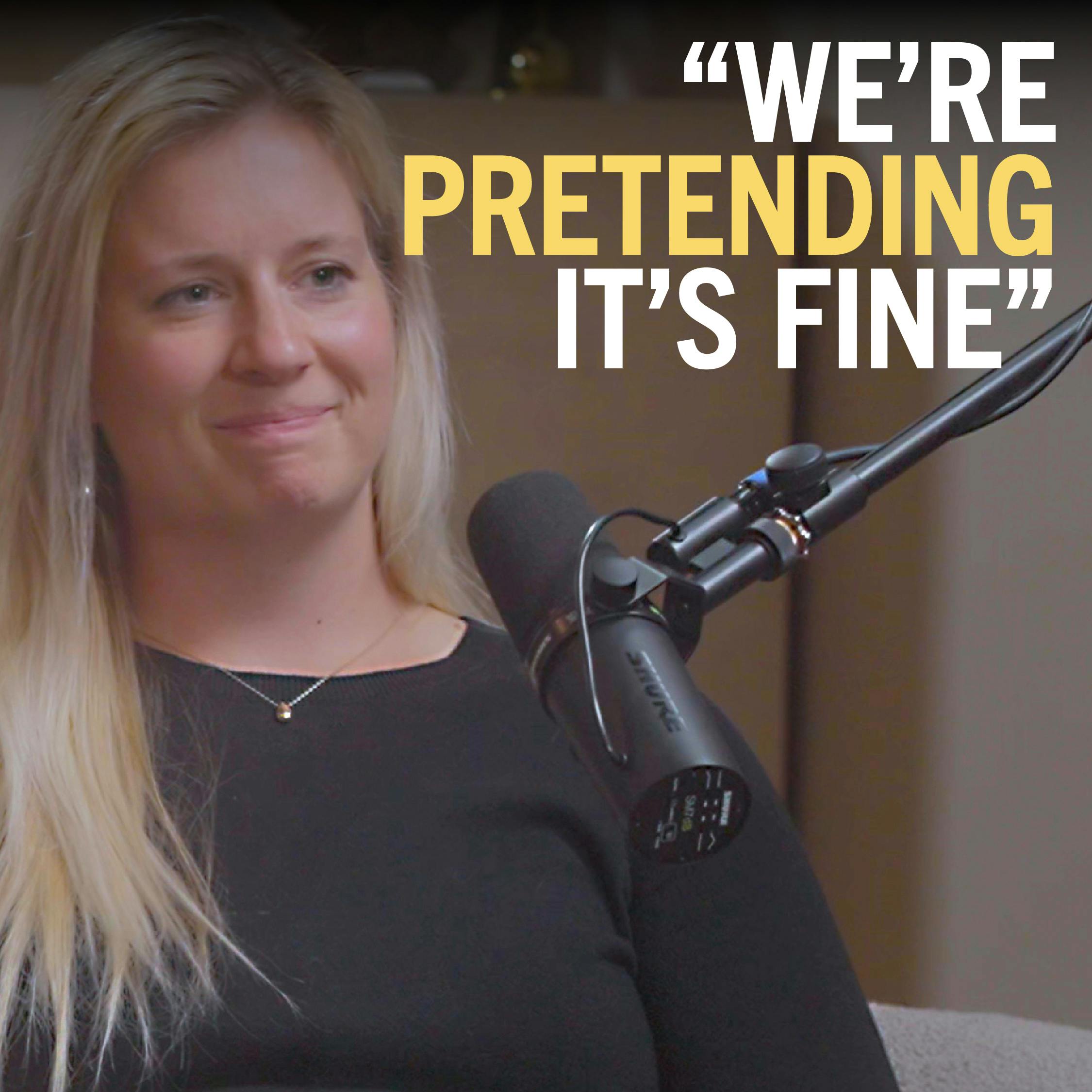
Loading summary
Transcript667 lines
- [00:00]
Ari
If I don't own a house by the time I'm 40, I will have felt like I've made a mistake somewhere.
- [00:05]
Athena
The house dream. I just feel like if I don't do that for Ari, it's going to let him down. So I feel like if I'm not scrimping, then I'm going to feel bad.
- [00:13]
Ramit
There's got to be more to life than just saving for some utilitarian thing that your parents did 50 years ago.
- [00:19]
Athena
We also were a part of a different sect of Christianity that some would consider to be like a cult.
- [00:28]
Ramit
Really?
- [00:29]
Athena
Yeah. The love of money is the root of all evil. It's something I'm working on rewriting in my mind. But it is hard when I have felt so constricted financially.
- [00:39]
Ari
Feel like we're so honest with each other, huh?
- [00:41]
Ramit
Definitely not. You two are incredibly polite to each other. So polite that you are not honest with each other.
- [00:48]
Host
This episode is going to be a little different. There are no dramatic fights or emotional outbursts. In fact, it's the quiet tone that.
- [00:56]
Ramit
Makes it stand out.
- [00:57]
Host
Today I'm talking to Athena and Ari. Athena applied because Ari wants to buy a house and she can't see a path towards making that dream a reality. And as we talked, I noticed their answers felt almost too polite, like they had practiced. And that made this conversation really hard for me. And when that happens, which is very rarely, I start to pay attention. Because sometimes the hardest part is not just fixing your spending, it's actually being honest with each other. So as you listen today, ask yourself this question. What are you avoiding? What are you avoiding bringing up? What are you avoiding talking about? What are you avoiding sharing that you're holding in deep down. Now I'm going to look at their conscious spending plan, their CSP. You can download your own for free at iwt.com CSP it's the exact same tool I use in every episode. Their numbers. Well, their combined income is roughly $100,000. Ari earns about 6,500amonth, or almost four times as much as Athena, who earns about $1,650 per month. Their fixed costs are high, 77%. Post tax investments at $0. Savings are at 11%. Guilt free spending is at 12%. It's a pretty tight plan, which you will know if you've filled out your own. CSP doesn't really leave much margin for anything unexpected. But here's what really stood out. The top of their conscious spending plan has four columns. Not one, not two, four. It's broken out into combined partner one, partner two, and joint. This is not how the CSP is supposed to look. It's way more complicated than my template, and that is a very big clue. It suggests a lot of overcomplication and maybe some separation of the finances, like mine, yours, and sometimes ours. Now let's meet Athena and Ari.
- [02:54]
Ramit
Athena, on your application, you wrote, my husband's dream is to buy a house. He mentions it almost every day. I don't see how we will ever be able to buy a house and have kids. Our dream and travel. My dream, which can work hard. But I'm not sure what we need to do to make both dreams a reality. Do you remember where you were when you were writing that?
- [03:21]
Athena
Yes, I was in my home office, and we had had another discussion about how we weren't saving enough money, how I wasn't earning enough, and Ari wishing we didn't have to live in our apartment.
- [03:34]
Ramit
What's the origin of the house? Why is it so important to you?
- [03:37]
Ari
Ari, a house always represented to me a great place to raise a family. A family is something that Athena and I both really want one day. It represents freedom, privacy, a safe place.
- [03:52]
Ramit
The house represents freedom and privacy to you. Can you tell me more about those?
- [03:59]
Ari
I love my car, so I would love to have a garage where I could fit my car in. Ideally, Athena's car, too. I love fixing things and working with my hands when I can, and doing that in an apartment is severely limiting. So there are a lot of physical reasons I want a house. I've also always believed it to be a great investment.
- [04:23]
Ramit
All right, and do you feel the same way?
- [04:25]
Athena
No, I think I want to support Ari's dreams. And I think a house could be really great for children and a family. And all the things that Ari mentioned about modifications and having space and privacy, I don't think that those things should outweigh other things, like being house rich, but also poor with other things. I feel like sometimes when you buy a house too early, you feel so restricted in every other area, there are so many things that are out of your control. So, again, that kind of powerless feeling, like stuff could break at any time and you're gonna have these big expenses, so. So, no, I don't feel that way.
- [05:02]
Ramit
Have you two had this conversation, like, a hundred times?
- [05:06]
Ari
Fifty.
- [05:08]
Ramit
What did each of you feel in this conversation?
- [05:11]
Ari
I remember feeling like there's just so much against us. The market being one, Athena's income, which I know she's working every day to get to some Kind of stable situation. During most of these discussions, we're, like, feeling pretty troubled because we don't know how to reach these goals.
- [05:29]
Ramit
So who's the one bringing it up?
- [05:32]
Ari
Me.
- [05:32]
Ramit
Okay, so you're bringing it up. Yeah. And Athena, what were you feeling when this conversation gets brought up over and over?
- [05:38]
Athena
Powerless. I look into the numbers and think about where we are now, what our dreams are, and I don't see how it can all happen even when I earn more or he earns more. So I feel like I have more. No ability to help change our situation.
- [05:54]
Ramit
Got it. How long have you been married?
- [05:56]
Athena
Almost nine months.
- [05:58]
Ramit
Oh, congratulations.
- [05:59]
Ari
Thank you.
- [06:00]
Ramit
Awesome.
- [06:00]
Athena
Yeah.
- [06:00]
Ramit
Okay. And had you been talking about a house before you got married and now after you've gotten married? Okay. Is it the same thing? Like, I want a house because it's freedom. It's for a future, potentially growing family. I want to be able to repair things. And then you, Athena, say, like, but what about repairs and what about being house poor? Is that how it goes?
- [06:23]
Athena
I would say for the majority, 75% of the time, they have been in that cadence.
- [06:27]
Ramit
And then what happens at the end of the conversation?
- [06:29]
Athena
Ari normally says something like hopeful, like, well, maybe when you earn more, these things will be possible. Or maybe the market will take a turn and we'll be able to afford a house on one income. We don't, like, fight. So it's very amicable, our differences.
- [06:46]
Ramit
You did say he mentions a house almost every day.
- [06:49]
Athena
Yes.
- [06:50]
Ramit
That's a lot.
- [06:51]
Athena
It is.
- [06:52]
Ari
It's a dream.
- [06:53]
Ramit
Yeah, I can hear that. I have a lot of dreams. I don't know that I bring them up every day, especially if my partner doesn't agree with the dream. What do you think about that?
- [07:01]
Ari
Yeah, that would probably get old. I think Athena wants a house one day in the future. I just don't think that time is right now. And like I said before, over the last year, nine months, I've been trying to. To grapple with that.
- [07:19]
Ramit
Okay, reality.
- [07:21]
Ari
We are on the same page.
- [07:23]
Athena
Yeah.
- [07:23]
Ari
That a house is not worth filing bankruptcy over. Yeah. A house is not worth stressing out every two weeks over groceries. It may be a dream, but that dream could turn into a nightmare really quickly.
- [07:39]
Host
The way Athena and Ari communicate is a major clue. Here's what I noticed. They clearly disagree about buying a house. But then Athena says, we don't fight. Our differences are amicable. But you can amicable yourself into 50 years of not having an honest conversation about money. What she's really saying is, we don't see eye to eye, but we're polite about it. This is one of the biggest clues in their dynamic, the way that they are overly polite, overly careful. You know, sometimes it's okay to disagree. Sometimes it's even okay to fight. Because when you spend all your time focused on the other person's needs, never your own, never being honest about what you really want, it doesn't actually create connection.
- [08:27]
Ramit
It creates resentment.
- [08:29]
Host
So listen, as I start to dig.
- [08:30]
Ramit
Deep, when was the first time you had a substantive conversation about money?
- [08:35]
Athena
December 2021, right after we started dating. We met in August and started dating in November. And then we worked at the same company, and I like talking about money. And so I said, this is what I make. What do you make? Because I wanted to have us rotate who pays for dates, because I think it's important for there to be some back and forth in our relationship. I don't want the man paying for everything.
- [09:00]
Ramit
And what was your reaction to the question?
- [09:02]
Ari
I was. I was fine with that.
- [09:05]
Ramit
It's pretty impressive, honestly. Like, you talked about money earlier than I talked about it with my wife, and I love the way you were so forthright about it. Hey, here's my vision with money. I like to talk about it. I want to put a light on it, and then I like your response to it. Yeah, let's talk about it.
- [09:25]
Ari
I saw a future with Athena pretty early on, so I was prepared to talk about things that would represent a solid foundation.
- [09:34]
Ramit
Wow. Okay. That's cool. What were the next couple of substantive conversations about? Money.
- [09:40]
Athena
We talked about how much we each had in savings, how we like to make decisions about money. Ari had bought, like, one of his dream cars and paid it off in three years and had worked really hard, and I thought that was really cool. So, like, I was curious, how does he have two cars? How does he make that work? So, like, we kind of talked about actual decisions. I was starting graduate school, how I was gonna pay for that. Came up normal conversations about your living expenses. When we go out, who picks up the tab. And then kind of, we started having more discussions about a house and down payments and debt and that kind of thing.
- [10:17]
Ramit
Hold on. What's with the tone? Talking about down payments? I noticed there's a little voice that came out there. What's that?
- [10:23]
Athena
When we were starting to talk about this, he felt like if I did wasn't able to match him on a down payment, my name should not be on the house even if we were married, so that would not be a joint asset.
- [10:33]
Ari
I Was stuck in this like, 5050 mindset. I related 5050 to being fair. Everything down the middle, that was wrong. Athena and I didn't have equal incomes.
- [10:45]
Ramit
Were you making more?
- [10:47]
Ari
Yeah.
- [10:47]
Ramit
Okay.
- [10:48]
Ari
It wasn't by an astronomical margin or anything, but Athena was still in school, paying her way through school and accruing debt.
- [10:58]
Ramit
Got it. So you had a belief until then that fair is 50 50. And then it sounds like the two of you talked about it a lot.
- [11:07]
Ari
We spoke about it. We had some disagreements about what does fair actually mean to us. Because it might not always mean cutting things down the middle.
- [11:17]
Athena
Yeah. Because I was kind of like, okay, so are you going to have half a baby? Like, there are certain things that you can't do. There are certain things I can't do. And if we're going to be fair about all of this, then it's important that we understand the bigger picture of what that looks like.
- [11:34]
Ramit
Wow. It's a very mature conversation.
- [11:37]
Ari
Athena's very forthright in nature.
- [11:41]
Ramit
It's pretty cool to hear because 50 50, that's kind of an invisible script that many people grow up having 50, 50 is fair. Where did we learn it from? I don't know, but it just kind of got absorbed. And to hear somebody challenge that view. Are you going to have 50% of a baby? It's like, oh, you probably never thought about that. I don't think most men grow up thinking about the logistics of having a baby, and especially as it relates to finances and childcare and all kinds of stuff. How long did it take you to adapt your view?
- [12:17]
Ari
Nine to 12 months at least. Long, you think longer? Yeah. I was going to say it's. It's hard to answer that because. Still doing that. Yeah, Every day.
- [12:27]
Ramit
How so?
- [12:29]
Ari
Athena challenges my views on a healthy, consistent basis.
- [12:36]
Athena
Maybe like a year and a half ago, it started becoming less prevalent because we were having a lot more serious discussions about getting married and our future and those kinds of things. So I would say when we moved in together, that became a little bit more. Punctuated our differences and my criteria.
- [12:55]
Ramit
What happened?
- [12:56]
Ari
We were talking about how to split rent. 5050 sounds fair to me, but my.
- [13:01]
Athena
My rent was less than half what our joint rent was going to be together. And I didn't see why I would have to move and pay more and be in school, even though at that time we were making the same amount. Why would I want to do that?
- [13:14]
Ramit
If anything, why doesn't he move to you and then he can save money? But I'm guessing you didn't want to move to probably what was a smaller place.
- [13:23]
Ari
Yes.
- [13:23]
Athena
Yeah, apparently this sounds.
- [13:25]
Ramit
This sounds very familiar to me.
- [13:26]
Host
Honestly, this is exactly what the conversation.
- [13:29]
Ramit
Was with my wife. And to do 5050 would not have been fair to her because the place I was living in was more expensive. But to your point, Ari, 50, 50 sometimes can be fair, but other times is not. So are you currently 5050 splitting rent?
- [13:48]
Athena
No, not even close.
- [13:50]
Ramit
Okay.
- [13:50]
Athena
Yeah.
- [13:51]
Ramit
Should we take a look at the numbers?
- [13:52]
Athena
Yeah, let's do it.
- [13:52]
Ramit
Okay, let's. Let's put them on screen as I throw them up there. What was it like to do the conscious spending plan together?
- [13:59]
Athena
We were talking about what our rich life would look like if we had this amount of money. Or, like, what were some of the ways in the last year that we really enjoyed spending money? Like, when was a good time that we loved spending money? So, like, those sorts of things are like, what could we see money doing for us?
- [14:13]
Ramit
Honestly, Great job. Because oftentimes when people do the csp, the first mistake they make is they don't do it together. So right there, that's a mistake. The point as a couple is to do it together. The second mistake people make is they think the goal is to do it as efficiently as possible. It's kind of weird. It's not really the way it works. We want to take time. Sometimes actually slowing down is the most powerful thing we can do. So I love what you did where you said, hey, what did we enjoy spending money on? What's up?
- [14:44]
Host
What if we had this much? Yeah, that's the real point of it.
- [14:47]
Ramit
The.
- [14:47]
Host
The numbers are just the output.
- [14:49]
Ramit
Right.
- [14:49]
Host
And we can always change the numbers.
- [14:51]
Ramit
Okay, let's take a look. So let's see here. Athena, can you read the word in bold?
- [14:57]
Athena
Sure.
- [14:57]
Ramit
And then the number in full next.
- [15:00]
Athena
To it, assets at $63,000. Do you want me to read over to the side or.
- [15:06]
Ramit
Actually, why are these numbers split out? I have never seen this before. What did you do to my csp?
- [15:13]
Athena
So Ari and I don't have fully joint finances right now. We have very much his and hers and theirs. So in the joint, money is money that we have saved together or money from our wedding. And then partner one is Ari, and partner two is Athena. And so everything that you see in those partner one and two columns are separated.
- [15:32]
Ramit
Why have you not combined your income?
- [15:34]
Ari
Great question, Ramit. That's what married couples do. I want to get to that point.
- [15:40]
Ramit
What's stopping you?
- [15:41]
Ari
Athena has debt, and I want to help her pay that off. But if I start paying off her debt now, I'm convinced we'll both be in a worse position because I'll have drained my savings. To me, that feels like starting from zero.
- [16:00]
Host
And how will she be in a.
- [16:01]
Ari
Worse position if we were to then combine, then our savings would be so much less. I would love for Athena to secure some kind of stable income before I start helping her pay off her debt.
- [16:14]
Ramit
Can I ask you, do both of you want to combine incomes at some point?
- [16:18]
Athena
Yes.
- [16:19]
Ari
Yes.
- [16:19]
Ramit
Okay. Does anybody want to combine it right now?
- [16:22]
Ari
I don't.
- [16:23]
Ramit
Okay, you don't because of the debt. Athena.
- [16:26]
Athena
I think it would streamline a lot of our discussions if we had joint finances. But I also think that it's kind of nice that we don't because we avoid certain conversations by not having it joint. There are certain purchases that we can make independently of each other that we don't have to confer about, and that is a nice thing.
- [16:45]
Host
I really appreciate the vulnerability in this moment. Ari admits that he's hesitant to combine finances because of Athena's debt. And that is not easy to say, especially sitting in a studio on a podcast, knowing that I'm going to ask a lot of questions to dig in. I could tell he didn't want to hurt her, and I respect that. But what stood out even more was how Athena responded. Remember, she has repeatedly said she wants to combine finances, but the moment Ari hesitated, she backed off, saying, well, it would streamline our discussions, but it's also kind of nice that we don't. That struck me as not being honest. I would have rather she said, no, I really want us to combine our finances. Here's why. What I'm seeing is agreeableness taken to an extreme, where you rewrite your own needs to fit someone else's comfort, to make sure that nobody rocks the boat. And I've seen this before when someone is used to walking on eggshells, when they have been trained, consciously or unconsciously, to keep things calm, they often start to lose track of what they themselves really want. There's a reason that Athena responds this way. I think you're going to be surprised by her. Why? I will tell you, I was shocked. For now, let's get back to the csp. You know that moment where you're just sitting there eating your breakfast and then you remember something you did in fourth grade and you go, for me? I remember getting absolutely roasted on YouTube not long ago for calling something an emoticon? I didn't realize they're called emojis now and they have been for over a decade now. I would have paid to have that memory wiped from my existence forever. But that's not the only thing I want wiped from the public record. I also want my personal information removed from the Internet to better protect my privacy. Data brokers are constantly buying and selling your information. Just go online and search for your name and the city you live in. You'll see how much information is already out there. If you want to better protect your personal information, check out Deleteme. This episode's sponsor, Deleteme will remove your name, age, address, phone number, relative's name, and more. And it only takes a few steps to set it up. You sign up, you submit your information for removal. Delete Me experts search for and start removing your personal information and in seven days you'll receive a detailed Delete me report with what they found so far. Then they continue to scan and remove your personal information regularly all year long. This is a service I personally pay for and I regularly recommend it to my friends and family. So if you want to get your personal information removed from search results on the web, go to joindeleteme.com ramit for 20% off a plan for you or your entire family. Again, that's joindeleteme.com SL Ramit R A M I T I've learned a lot of important things by traveling around the world, and one of the most surprising ones is how much Americans love soft furniture. Soft sofas, soft beds, soft everything. And it's actually not great for your back. That is why in our house we have a really hard sofa and we have a really hard mattress. We chose the mattress specifically because the first couple of nights feel a little uncomfortable, but after that, your back feels amazing when you wake up. That is why my wife and I specifically chose a Leesa mattress. It is supportive, it's high quality, and it has made a huge difference in how we wake up. Leesa offers a bunch of different mattress models. No matter whether you sleep on your side, your back, or somewhere in between, they have a specific model perfect for you. They use high quality materials, meticulous design, they assemble every mattress in America. And also delivery is free, returns are easy, and you now have 100 nights to try out your mattress in the comfort of your home. And with Leesa, your purchase has a purpose. Every year they donate thousands of mattresses to those in need, with more than 41,000 donated to date. Right now, Lisa's running their 4th of July sale. Go to leesa.com for 30% off mattresses, plus get an extra $50 off with my promo code RAMIT exclusive for my listeners. That's L E E S a dot com promo code RAMIT for 30% off mattresses, plus an extra 50 off lisa.com promo code RAMIT. Remember, no matter who you are, there's.
- [21:34]
Ramit
A Lisa just for you. Let me go through the rest of the numbers so that I can understand the entire picture. So assets combined are 63,000 and they're roughly equal. One has 36. One has 26. Investments are $136,000. Here we see a disparity. Partner one, I believe that's you, Ari, you have 84,000 invested. Partner two, Athena, you have 50,000 invested. Okay. Savings 50,000. Ari has 28,000 and Athena, you have 3,000. Okay, another disparity there. And then finally debt. Ari has zero and Athena has $20,000. Notably, you have $18,000 in joint savings. First of all, does any of this surprise you? Seeing it?
- [22:23]
Ari
No.
- [22:23]
Ramit
What's the story here? It sounds like Ari has more money. I think you have a higher income. And Athena, you have been in grad school. So you have some debt and relatively less investments.
- [22:36]
Athena
Yes.
- [22:36]
Ramit
Although $50,000 still solid.
- [22:39]
Athena
I've worked full time up until August and so for three full years of graduate school, doing full time of both. And so I slowed down investing to pay for school. So school total has been about 60,000 plus or minus some fees. So 14 of my debt is school and 6,000 is car.
- [23:02]
Ramit
Wow. So just so I understand, you've been working full time while being in grad school full time as well.
- [23:07]
Athena
That's correct.
- [23:08]
Ramit
Wow. Pretty impressive. Very well done.
- [23:11]
Athena
Thank you.
- [23:12]
Ramit
And you mentioned that your grad school in total will cost approximately 60k.
- [23:17]
Athena
Yes.
- [23:17]
Ramit
But you only have $20,000 of debt, so you've been paying it off as you've gone through.
- [23:23]
Athena
So I've paid like 45 towards school out of pocket and then 14 in in debt.
- [23:27]
Ramit
What do you make of this? Do you think that you are good with money?
- [23:32]
Athena
I don't know if I can say.
- [23:33]
Ramit
Yes if I have debt, because debt is bad. Is it?
- [23:38]
Athena
Yeah. Oh, I grew up that way. But I. I don't know how I feel about debt now. I feel bad having it. I feel like it holds us back to have it. It seems to come up a lot. I feel very proud of how little debt I've gone into and worked so hard to pay so much towards school and my living expenses and all of that. Plus we've been able to travel Some. So I feel proud of that. I'm very thrifty. What do you make of it?
- [24:05]
Ramit
I'm extremely impressed.
- [24:07]
Athena
Really?
- [24:07]
Ramit
Aw. Thank you very to hear. You know, first of all, you have $50,000 in investments. That's not an accident. Nobody trips and falls and gets 50k. You obviously did that consistently. You had 60k of grad school debt plus cars, and your current debt is only $20,000. And that's while being in grad school and working full time. That's incredible workload. I understand that there's differences of opinion on what is fair, but just looking at this, I'm very impressed. And also, I note that you have this reflexive feeling about debt being bad.
- [24:47]
Ari
Hmm.
- [24:47]
Host
I'm not so sure. In general.
- [24:50]
Ramit
Okay. I don't love debt, but it's not the worst thing in the world.
- [24:53]
Athena
I'm trying to rewrite some of the scripts that I grew up with. That's a big part of what I believe is important in life is growing.
- [25:02]
Ramit
I love that. Let's take a look at the income. Ari, can you read off the combined GROSS Monthly income?
- [25:09]
Ari
$8,158.
- [25:12]
Ramit
Okay, great. And what do you make of that number?
- [25:15]
Ari
Well, it's gross, so it's a little surprising to see almost six figures combined income while our accounts are static in terms of growth.
- [25:27]
Athena
Ah, let me just be clear. Ari's personal account is static in terms of growth. We have a joint savings account that's specifically for a house that has been consistently growing since we moved in together. That's what you'll see in the savings account for, like, the $18,000. That grows because that's automatic. We don't touch it. But Ari's personal savings account doesn't grow like it used to because some of that money is being put specifically towards a house.
- [25:52]
Ramit
What you're saying is very common. A lot of people, they feel anxiety about their money, and often people derive their feelings about money from what's in their checking account. Literally, that is where the vast majority of people get their information. What's going on right now. Is that true? Is that what happens in this relationship?
- [26:13]
Ari
Yeah. And that could be why I bring up my goals and my dreams. Yeah, so often.
- [26:19]
Ramit
So your savings account is growing by a lot. The one for the down payment, which you want to get a house one day, your checking account is fairly stagnant. And your conclusion is our finances are stagnant?
- [26:31]
Ari
Yes.
- [26:32]
Ramit
Okay, this sounds very familiar. Like, 90% of people I talk to, they don't take the whole picture into Account. What do you think about that?
- [26:39]
Athena
The feelings are different than the facts.
- [26:41]
Ari
Filling up CSP was a really great process because it did shed light on, like, the. The gross income, for example.
- [26:51]
Ramit
Higher than you thought.
- [26:51]
Ari
Higher than I thought. Athena's investments? Higher than I thought. Net worth for what it's worth. Higher than I thought.
- [27:01]
Ramit
Your net worth, if combined is $229,000. In your early 30s.
- [27:06]
Ari
Yeah.
- [27:06]
Ramit
What do you guys think about that number?
- [27:08]
Ari
That's impressive.
- [27:09]
Athena
Ari's worked very hard.
- [27:11]
Ramit
Just Ari?
- [27:12]
Ari
Not just Ari.
- [27:13]
Athena
I think the majority comes from him. Yeah.
- [27:16]
Ramit
Interesting. If my wife and I were talking about our net worth, I would say we've worked very hard.
- [27:22]
Host
We.
- [27:23]
Ramit
We're married. We.
- [27:24]
Athena
We.
- [27:24]
Ramit
Do you all see that with your money? Or is it we? Or is it my partner and me?
- [27:29]
Athena
We want it to be more from me to we.
- [27:31]
Ramit
Okay.
- [27:31]
Athena
Yeah.
- [27:32]
Ramit
It's not there yet.
- [27:33]
Athena
No.
- [27:34]
Ramit
All right, let's keep going. So you make $97,000 a year, fixed costs 77%. What do you think about that?
- [27:41]
Athena
Very high.
- [27:42]
Ari
Very high.
- [27:42]
Ramit
Okay, I agree. We'll come back to that. Investments are at zero. Are you taking any deductions? 401k.
- [27:49]
Athena
I'm not right now. Ari is.
- [27:50]
Ramit
You are. Okay. How much?
- [27:52]
Ari
6% plus employer match.
- [27:54]
Ramit
Okay, great. Savings are at 11%. And it looks like a house fund makes up most of that 500 bucks a month. That's where the savings growth is coming from. And then guilt free spending is at 13%. You know, when I looked at this first, I wasn't sure I believe that number, but talking to you, I actually kind of do believe it. Is that number accurate?
- [28:12]
Ari
Yes, yes, yes, I know.
- [28:13]
Ramit
Okay.
- [28:14]
Athena
Yeah.
- [28:15]
Ramit
Because you are talking about money frequently. You are not surprised by some of these key numbers in here. You know that your fixed costs are high. That's why I'm getting the conclusion. So let's talk about your fixed costs. 77%. This is right here explains a lot of the feelings of stress and constant conversations about certain things. So why is it so high?
- [28:40]
Athena
Because I make so little right now.
- [28:42]
Ramit
Okay.
- [28:43]
Athena
I think we've done a pretty good job of keeping most of our expenses reasonable. I make very little right now because I am interning and I work only part time. I graduate in three weeks and then I'm currently interviewing for jobs.
- [28:57]
Ramit
Okay, so you make $1,650 a month. We know that that is temporary. How much are you going to make when you get a job?
- [29:04]
Athena
Realistically, in the next two years, it'll be between 45 and 60 probably right around 53. And then after two years, it'll bump from 70 to 90. And then from there on out, if you. It's as much as I want to.
- [29:19]
Ramit
Work for planning purposes. What's the number?
- [29:23]
Athena
53.
- [29:23]
Ramit
Okay, great. Yeah. All right. Y' all looking forward to making some more money?
- [29:28]
Athena
I don't know if it's going to change that much because, I mean, it's going to be going to debt repayment and savings. So, like, we're not really going to feel that different.
- [29:36]
Ramit
Damn. So depressing.
- [29:37]
Host
You're going to quadruple your income, Like.
- [29:40]
Ramit
Oh, I don't know.
- [29:42]
Athena
I don't want to be that way. I'm sorry.
- [29:44]
Ari
Maybe another reason Athena's guilt free spending is so low is because it's hard for her to not feel guilty spending money right now.
- [29:54]
Ramit
Yeah, fair enough.
- [29:55]
Athena
Thank you, babe. Yeah.
- [29:57]
Ramit
So you said that the fixed costs are high because your income is low. I agree. Is there any other expenses that are disproportionately high?
- [30:06]
Athena
Don't think so.
- [30:07]
Host
I agree.
- [30:08]
Ramit
Your rent is within parameters. You have insurance and a car payment. Those two are $1,000. In a higher income couple, you could make that work. That disproportionately affects you because your income is less than 100k. Then you have groceries, normal 550. You have a 270 for therapy and 211 for subscriptions. So look, we could cut some of this down. Let's just play for a second. We'll drop the subscriptions by half. We'll drop it to 100. Your fixed cost drop from 77 to 75%. It's not a huge difference, really. The key driver here is income. Ari, what's your take on this? When the income increases in a matter of weeks, what's going to change?
- [30:51]
Ari
First and most importantly, our outlook and our attitudes will change. Because I'm really hoping that we feel a lot more freedom, a lot less burden.
- [31:02]
Ramit
Where would that freedom come from? If the money's all going to savings and debt, how would you feel freer?
- [31:09]
Ari
The fixed costs are around 77% right now. If we can get that down to like 40.
- [31:17]
Ramit
40. Okay.
- [31:19]
Ari
That would add a lot of relief.
- [31:21]
Athena
Ari also in the last two weeks, very proud. He got a 9% raise at work and that is not reflected on the CSP right now. I forgot to update that last thing.
- [31:30]
Ramit
Should we do it right now?
- [31:31]
Athena
That would be great.
- [31:32]
Ramit
All right, so what's the net going to change? Right now it's 4060.
- [31:35]
Ari
You can just add about $550 to that.
- [31:39]
Ramit
All right, watch the number. Wow, that's a big drop from 77% to 70%. That's really good. Great job.
- [31:48]
Ari
Thank you.
- [31:48]
Ramit
Okay, let's add the rest of this. What's the net going to be on your pay?
- [31:53]
Athena
Yeah, it should be 33, I think, after taxes, 3,300.
- [31:58]
Ramit
All right, let's take a look. Whoa, what'd that number drop down to?
- [32:02]
Athena
55%.
- [32:03]
Ramit
First of all, congratulations. Amazing work.
- [32:06]
Host
Really shows the power of a dual.
- [32:08]
Ramit
Income couple, especially as your incomes start to increase. That's amazing. You went from 77 to 55%. It's incredible. What will change on a day to day basis for you?
- [32:20]
Athena
The debt payments are also going to kickstart in six months, so that will be important. Now, bare minimum, which I'm not going to do is $250.
- [32:29]
Ramit
You can do more?
- [32:29]
Athena
Yes. I want to do 800amonth for that and then the same for our house fund and then I'll cut back on other things.
- [32:37]
Ramit
How do you both feel about this?
- [32:39]
Athena
Well, it's heavy. It's a lot of work to continue doing. It doesn't feel like there's going to be a break anytime soon. But in order to reach goals, you have to work hard, so you kind of sacrifice now for the future.
- [32:51]
Ramit
Okay, so it feels like purposeful. It feels gratifying because you both have a goal.
- [32:56]
Athena
It feels like the right thing to do.
- [32:57]
Ramit
Oh, you agree, Ari?
- [33:00]
Ari
Even though a house is what I really, really want, it doesn't feel right if Athena is contributing that much more than I am.
- [33:08]
Athena
Back to that 50, 50.
- [33:12]
Ramit
What do you make of that? Like, does it need to be 50, 50 for it to be fair? Even though years ago you talked about that?
- [33:18]
Ari
No.
- [33:18]
Ramit
Okay, so if she's paying more or saving more towards the house, what's the problem?
- [33:24]
Athena
Do you feel like I would make you feel a certain way if I was contributing more to our savings?
- [33:30]
Ari
That's a lot of money towards a house.
- [33:32]
Athena
Yeah, we'll be saving approximately $15,000 a year for a house, which is great. And we'll still have guilt free spending and I'll be aggressively putting over $1,000. So the 800 going to the school loans and 250 like I have been doing for my car, that'll be taking care of debt and we'll get through it now.
- [33:54]
Ari
Sounds good.
- [33:55]
Host
I want to jump in here because something about this exchange just doesn't sit right with me. Athena has said clearly, I don't think we can afford a house. She feels guilty spending money, but now she's doubling down on making Ari's dream happen. And then Ari rightfully gets uncomfortable with her trying to contribute even more. She admits it'll be hard, that she won't get a break. And then they both smile and agree it'll be fine. Do you see how they are not arguing, they're actually doing the opposite? It's like two magnets repelling each other. This pattern where one person downplays their struggle and the other person pretends to accept it just to keep the peace is actually exhausting to watch. It's not politeness anymore, it's actually contradiction. It's inauthentic. And it's actually making it really hard for me to understand what anybody in this conversation really wants. Listen now as I challenge them to stop avoiding the real issues. Have you ever heard the phrase abs grow in the kitchen?
- [34:58]
Ramit
Well, when I cut weight, especially for things like my Netflix show or my wedding, I know that the diet part was particularly challenging, but that actual process of of setting up a plan of what you're going to eat and sticking.
- [35:12]
Host
With it can be challenging.
- [35:13]
Ramit
You're talking about reading every label, learning how nutrition works. It's time consuming. You can see why it's so easy to give up on eating the way.
- [35:21]
Host
You actually want to.
- [35:23]
Ramit
Here's where this episode's sponsor Factor comes in.
- [35:27]
Host
Factor is a chef crafted dietitian approved.
- [35:30]
Ramit
Meal delivery service that helps you eat well without wasting time.
- [35:35]
Host
Factor Meals arrive fresh and ready to eat, perfect for when you're busy.
- [35:39]
Ramit
You can choose from over 45 meals.
- [35:41]
Host
Every week, from calorie smart protein plus.
- [35:43]
Ramit
To keto, whatever fits your plan. And they have a lot of variety. Unlike me, I've learned that a lot of people aren't content to eat chicken.
- [35:50]
Host
And rice for 10 years in a row. I gotta tell you, one of the.
- [35:55]
Ramit
Best things I have ever spent money on is making food easier. It means I don't have to think about it. It means I can stay on plan and it means it can taste good again.
- [36:06]
Host
Not everybody's ready for a personal chef. If I needed quick, healthy, heat and.
- [36:10]
Ramit
Eat Meals factor is what I would use.
- [36:13]
Host
Go to factor meals.com ramit50off and use code ramit50off to get 50% off plus.
- [36:23]
Ramit
Free shipping on your first box. That's code ramit50off@factormeals.com.
- [36:31]
Host
For 50% off plus free shipping. Factor meals.com ramit50off Imagine this mortifying scenario. You see some weird charge on your credit card Bill, you call the credit card company up. Then you walk in and ask your wife and daughter, did either of you use my card to buy something called Face Yoga? They look at you like you're insane, and then you realize with horrifying clarity that you bought it five months ago and you've been getting charged for it ever since. Yes, this actually happened to a friend of mine. First of all, what is Face Yoga? I have no idea. But thankfully, Rocket Money, this episode's sponsor, can help you find these unwanted, sometimes embarrassing subscriptions for you, so you can cancel them. Rocket Money is a personal finance app that helps find and cancel your unwanted subscriptions, monitors your spending, and helps you lower your bills so you can grow your savings. Rocket Money allows you to see all your subscriptions in one place so you know exactly where your money is going. And for any subscriptions you don't want anymore, Rocket Money can help you cancel them. Rocket Money has over 5 million users and has saved a total of $500 million in canceled subscriptions, saving members up to $740 a year when using all.
- [37:47]
Ramit
Of the app's premium features.
- [37:50]
Host
Cancel your unwanted subscriptions and reach your financial goals faster with Rocket Money. Download the Rocket Money app and enter my show name, Money for couples with Ramit Sethi in the survey. So they know that I sent you.
- [38:03]
Ramit
Don't wait.
- [38:03]
Host
Download the Rocket Money app today and tell them you heard about them from my show.
- [38:10]
Ramit
One thing I noticed is that the two of you are very considerate of each other. Almost overly considerate. I don't actually know what each of you wants for yourself. Have you noticed that?
- [38:22]
Athena
Yes.
- [38:23]
Ramit
Have you thought about what you both want? Like wave of magic wand, what would you want?
- [38:28]
Ari
I want to be with Athena. I want, above all for us to feel comfortable, whether that's in a house or renting. I also, I want a garage for my car, I want a yard. I want to continue to invest, and I want our accounts to grow steadily.
- [38:51]
Ramit
Great. What about for you, Athena?
- [38:53]
Athena
What I really want is if we're going to have a house, to not feel tight. So I want to be able to, like, buy socks, buy a throw pillow, not have it to all be, like, microscopically looking at prices, which is currently what I do. I would like to have a little bit more flexibility. I think money can be great when it gives you more options. I would like to have a family with Ari. A house would be great if we're able to afford it. And then I would like one international trip per year and one trip stateside.
- [39:23]
Ramit
Love it. Both powerful visions. I like it. Do you think that the way that you are planning to allocate your new incomes matches what you both just said you want?
- [39:33]
Athena
The short answer is no.
- [39:35]
Ramit
Okay, Ari.
- [39:36]
Ari
I would say yes. Just need to add a plan for debt.
- [39:41]
Ramit
Isn't the plan to. For her to pay it off? 800 bucks a month?
- [39:44]
Ari
Yeah.
- [39:46]
Ramit
All right. I'm not sure what's going on right now. What do you guys want out of this conversation?
- [39:51]
Ari
We want to make sure our next step, when Athena finds an income, can be our best step. It took a lot of adjustment and conversations, and it was difficult to get to the point where I accepted that a house isn't possible right now. So if a house isn't possible, then what can we change? What can we learn from today's show to make sure that the future is the one that we both want, even if it doesn't include a house?
- [40:19]
Athena
This is about how far our conversation goes. If this is not going to be the way that gets us there, what do we need to do to build infrastructure for that bridge to get to the place where we want to be? And then specifically for this conversation here, we wanted to talk like one year, two year, five year. So where would we like to be financially? Ideally, we would like to have kids in the next five years. Ari has asked that I stay home with the kids for a first couple of years. So there are like, certain things that would need to be anticipated costs with that. I'm not saying that we need to put 800 down to my loans. I know that they are ranging from 6.38% to 8% interest. So, like, there's no point in putting off paying them down, in my opinion.
- [41:05]
Ramit
Does it feel like there's like a lot of different variables that you're talking about? It feels a little overwhelming.
- [41:11]
Athena
Yeah, very much.
- [41:12]
Ramit
It feels like you both spin a lot. We have this, but we. But then there's debt, but we have our finances separate, but we want to combine them. But there's a 6% all the way up to a 12% and also kids. But then he wants me to stay home and I'm going to be doing training.
- [41:29]
Athena
Yeah, it's a lot of different things happening.
- [41:31]
Ramit
How do you make a decision when you have that many things floating in your heads?
- [41:36]
Athena
We're definitely still working on that. So I think that's where we're trying to do. What's the next right decision? And so that is me getting a job and us incorporating our finances together. So what would it look like for us to have more shared finances, simplify the process there.
- [41:49]
Ramit
Do you like complexity?
- [41:50]
Athena
Yes, of course.
- [41:51]
Ramit
Do you?
- [41:52]
Ari
No.
- [41:53]
Ramit
Sure. It's pretty complex to me. Okay. Athena, you mentioned microscopically looking at prices. What's an example?
- [42:01]
Athena
Uh, yesterday I was grocery shopping for us and I noticed the price of lettuce was $2 at one produce store and then it was 3:29 at the other one. And I was so grateful I bought it for $2 cuz I had a thought that it would be cheaper there, you know, so I saved like A$40.
- [42:17]
Ramit
Do you grew up religious?
- [42:19]
Athena
Yes. Yeah.
- [42:21]
Ramit
Which religion?
- [42:22]
Athena
My family is Protestant and so we grew up in the Baptist and Presbyterian faith. We also were a part of a different sect of Christianity that some would consider to be like a cult.
- [42:38]
Ramit
Really?
- [42:38]
Athena
Yeah.
- [42:39]
Ramit
Wow.
- [42:40]
Athena
Yeah.
- [42:40]
Ramit
Are you big family?
- [42:43]
Athena
There are seven children and two parents.
- [42:45]
Ramit
Wow. Interesting. Okay. Are you still religious?
- [42:49]
Athena
No, I'm a faith based person, but I don't attend church regularly.
- [42:53]
Ramit
Got it. Okay. How do you think that your religious upbringing and cultural upbringing affects the way you see money?
- [43:03]
Athena
Very moralistic. So many rules about money. I was going through different Bible verses I was taught and how they applied to debt.
- [43:11]
Ramit
Like what's an example?
- [43:12]
Athena
The borrower is servant to the lender. That's in proverbs. And then whenever someone asks and you're able to give to them, you should out of the abundance of your heart. And that's Matthew, the importance of tithing, putting yourself last.
- [43:24]
Ramit
I can see direct correlations to so many of those right here.
- [43:27]
Athena
Yeah.
- [43:28]
Host
Okay, now things are starting to make more sense. Up until this moment, the whole conversation has felt a little foggy, like I've been trying to find my way through a haze. Athena tells me that she grew up in a religion that has been compared to a cult. Now I'm starting to understand. Every so often I talk to someone who grew up in a very conservative religious background and you can see the clues in how they handle money, how they talk to their partner about money, how they even think about money and feel about it themselves. As Athena said, it shows up for her in the smallest ways. Shopping for groceries, buying a cup of coffee, even just talking about buying a house. And the message that we're seeing is don't stir the pot. Be quiet, be polite. There are rules and you have to follow them. Now in a minute we're going to come back to Athena's story, but first I want to know a little bit about Ari's background. How did he learn to think about money?
- [44:26]
Ramit
Ari, what do you think?
- [44:27]
Ari
Well, we probably couldn't have had more different childhoods.
- [44:30]
Ramit
What do you remember about money as a kid? What did they say?
- [44:33]
Ari
Just save. If you get money for your birthday, just put it in the savings account and just let it grow.
- [44:40]
Ramit
Okay.
- [44:40]
Ari
Did you like it as a young boy? No, because the money in the card just disappeared to me.
- [44:45]
Ramit
Yeah.
- [44:46]
Ari
But when I was older, I was able to trust my parents and listen to the lessons that they were trying to teach me. And one day it paid off.
- [44:55]
Ramit
Would you describe them as middle class or lower. Upper middle class? Poor. How would you describe it?
- [45:01]
Ari
Upper middle.
- [45:01]
Ramit
Upper middle. Okay, that's interesting. And what lessons do you bring from your childhood into your financial relationship today?
- [45:08]
Ari
Saving. That was the biggest one. And I think that could be why the checking account number is so influential towards me and my marriage.
- [45:17]
Ramit
What if you just put like $5,000 more in your checking account? What would happen?
- [45:21]
Ari
That would be a bad idea.
- [45:22]
Ramit
Oh, really? How come?
- [45:24]
Ari
Because the 5k from our HYSA has higher interest.
- [45:28]
Ramit
Higher interest?
- [45:29]
Ari
Yeah.
- [45:30]
Ramit
Maybe losing interest.
- [45:31]
Ari
We'll be losing interest.
- [45:32]
Host
5000 times 0.04 divided by 12. That's how much we'd be losing every month.
- [45:37]
Ramit
Thank you. Even though you would open up your checking account and feel so much better every single time you looked in it, that would be unacceptable to you because of the 15 bucks a month that you'd be losing in interest.
- [45:49]
Ari
Yeah.
- [45:50]
Ramit
Okay. So you bring that into your financial relationship, which is save a lot, optimize your money. Anything else?
- [45:58]
Ari
Athena said house. House was ingrained in 2005. A house was like the greatest asset that you could own. Plus most of the times if one person had a decent salary, then a house was a possibility and could be a reality. Times have changed.
- [46:16]
Ramit
What does it mean if you don't own a house?
- [46:18]
Ari
If I don't own a house by the time I'm 40, I will have felt like I've made a mistake somewhere.
- [46:23]
Ramit
Okay.
- [46:24]
Ari
Rather not go further down the line. Like 50.
- [46:26]
Ramit
What kind of person is 50 and doesn't own a house?
- [46:30]
Ari
Someone who's perfectly content with maybe living alone. Maybe they prefer smaller square footage.
- [46:36]
Ramit
Anything else? Like, what kind of person are you if you don't own a house?
- [46:41]
Ari
That's a great question. Like I said before, a house is a material thing.
- [46:46]
Ramit
So I. I like material things, don't you?
- [46:49]
Ari
I do. I'd prefer if they didn't affect how I view myself.
- [46:53]
Ramit
What does that mean?
- [46:55]
Ari
Well, I don't like to put material things over my wife for Example. I don't want to do that to myself out of respect.
- [47:03]
Ramit
Didn't you talk about a house every single day?
- [47:05]
Ari
Yeah.
- [47:06]
Ramit
A house is a material thing. Isn't that talking about a material thing every single day?
- [47:10]
Ari
Yes. Yeah, it is.
- [47:11]
Ramit
You know what? I don't mind the contradictions. Okay. I don't mind humans are contradictory. That's one of the joys I get in talking to us. It's like, I'll talk to people. They're like, I want this, this, this. And then I look at their numbers, and they're literally doing none of those things. That's happening here as well. You mentioned you want travel. There's almost no money put aside for travel. There's all this money put aside for a house and potentially thousands and thousands more. But Ari is saying, like, oh, I've realized we actually can't have a house, like, anytime soon. So there's a lot of incongruence happening. Think of the scripts that you're both sharing from childhood. Like, materialism is bad, but getting a house is good. We have to be honest with ourselves.
- [47:52]
Host
I want a house.
- [47:54]
Ramit
Not having a house makes me feel like a failure or it makes me.
- [47:59]
Athena
Feel poor or like people are going to judge me.
- [48:02]
Ramit
Yeah.
- [48:02]
Athena
I'm not going to be as much of a man. I'm not going to be able to provide for my family.
- [48:06]
Ramit
And there must be some of that, because there was a conversation about you staying home with the children, which is a very traditional perspective. And in a traditional perspective, where you are earning the money, Ari, then surely you must be able to provide a house for your family. How much of that is happening here?
- [48:24]
Ari
I'm growing into that role, starting with rent.
- [48:27]
Ramit
Meaning you're paying more rent. Okay. I'm curious. Sometimes the partners know best. They can read each other better than we can read ourselves.
- [48:35]
Ari
Yeah.
- [48:36]
Ramit
Athena, what do you make of the way Ari was raised and how he brings those messages into today's financial relationship?
- [48:45]
Athena
I think that Ari was raised very comfortably. Both his parents worked and are very hard workers. And I think even though his mom stayed home for a bit when they were younger, he was given a very hopeful, idealistic view of what could be. How great it is to own a house, how manly it is to own a house. I think his parents worked very hard, and a house was one of the ways that they were building well. And I think that when you're growing as an adult, you want to kind of show that to your children and you want them to follow that path. Even if each person's path might be a bit different. So I think the differentiation of what path Ari chooses to go on is where we kind of are, you know.
- [49:26]
Ramit
Oftentimes we will follow our parents scripts. Think about the kind of advice that parents often give it. Go door to door, hand out your resume, get a job, stay there for like 30 years, get a pension and you're like, none of those things exist anymore. And buying a house, I'm not saying it's a bad thing. It can be a good thing. The numbers are vastly different and the economic systems are vastly different than when our parents were growing up, were often on one income. They could comfortably afford a middle class house. Do we all agree that financial situation is different for our generation than for our parents?
- [50:00]
Ari
Wholeheartedly.
- [50:01]
Ramit
Okay, yeah. Great. So we may be able to follow the vision, maybe even the values of our parents, but copying their exact approach probably doesn't work the same way. I want to go back to you, Athena. I want to know how did your parents treat money when you were growing up?
- [50:20]
Athena
My parents never went into debt except for a mortgage. My dad was the only person working. My mom took care of all of us kids and homeschooled us. Um, and how did they handle money? Very strangely. That's a really hard question to answer. One of my sisters used to do all of their like downloads for financials when she was 10. My sister, when she was a teenager did their taxes. My mom tried to use cash for most of the purchases but was usually tight. She'd go back if she was overcharged a dollar. So she's very good at mental math. She would borrow money from us kids. She's also very thrifty like my parents. I give them a lot of credit. They raised seven. Very hardworking, like everyone is a hard working kid. And they did it on one income without debt. And they'd never have had a credit card, thank goodness.
- [51:11]
Ari
So were they transparent with you?
- [51:14]
Athena
Too transparent, I would say. Yeah. We always knew that we were tight with money. We knew that we had to wait until Friday to get groceries or certain things.
- [51:23]
Ramit
How do you think that that upbringing shaped your view of money today?
- [51:27]
Athena
I think sometimes I am concerned that I have a very small mind when it comes to money and earning potential because not only was it really tight, it was also seen that like, you know, where your treasure is, there your heart will be also. So you didn't love God enough if you were like materially wealthy or you had possessions and if your heart isn't with the Lord that you're not saved and then you're going to hell.
- [51:52]
Ramit
I see. Very moralistic.
- [51:53]
Athena
Very.
- [51:54]
Ramit
Yes, arguably, values based. You know, if you put your money here, we can see who you are and what you value.
- [52:01]
Athena
I get that the love of money is the root of all evil. You know, that kind of stuff. Yeah, so.
- [52:05]
Ramit
So do you bring that to this relationship?
- [52:08]
Athena
I think I do, unintentionally. It's something I'm working on rewriting in my mind. But it is hard when I have felt so constricted financially because I have chosen not to go into more debt. I'll second guess if we can get coffee or. First thing I do when I look at a menu is look at all the prices. You know, I want to make sure I get the cheapest thing because I'm worried we don't have enough.
- [52:33]
Ramit
You clearly have enough to order a hamburger or something.
- [52:36]
Athena
But we also have bigger dreams that we need to cut back in order to save for, because they are not possible unless if we make sacrifices now. And I am concerned that that is like a script of mine, that sacrifice is required for anything good.
- [52:49]
Host
You know, I'm struck by the way that Athena talks about her upbringing. It shines a light on her relationship with money and her relationship with her partner. I can understand. Many religions are patriarchal, so it's not a surprise that she is perhaps overly considerate of Ari's wants and needs. But I'm also struck by the way she so casually speaks about her experience as a child. These are obviously some pretty unusual experiences. Since I'm focused on money, I don't really think it's my place to probe more. But I want to say one thing. When she shared her story, in some ways, I could relate to it myself. Specifically the part about growing up in an Indian family. Indian culture and my family, not a cult. But there is a strong cultural belief of keep it in the family. No matter what happens in the family, somebody gets a bad grade or gets suspended or there's an illness, you keep it in the family. Many of us grew up with some type of cultural value that is never written down anywhere. But it is nonetheless incredibly powerful. And they affect us. They can affect us. Decades later. I'm wondering, does she realize how deeply her upbringing has affected her? Because I don't know if I even fully understand the ways that my culture affects me to this day. So when I hear Athena talk about her childhood, you and I realize there is something very, very unusual about it. But I'm not sure she truly gets it. And from the way that she Walks on eggshells, around money and in her relationship. I really hope that she can continue exploring her past to understand how that affects her today. You know, summer is a great time to get some big, meaningful things done. Now, I know that normal people think about backyard barbecues and grabbing ice cream. I use summer to get my trust and will in order.
- [54:42]
Ramit
Wait, wait.
- [54:43]
Host
I know what you're thinking. I don't have enough for a will. What's a trust? I'll do it later. You can protect your family and get this done faster than you think. That's why I recommend trust and will. There's no scheduling appointments. There's no digging through legal forms. You go online, answer a few questions, and it walks you through everything in less than an hour. My coworker actually recently created a will for her and her family on trust and will. Here's what she told me. Getting started was incredibly easy. I just followed their prompts, provided the info they needed about my beneficiaries, my assets, and my preferences. In less than an hour, I had a will, power of attorney, documents, last will and testament, and HIPAA authorizations, all of which I easily downloaded. And I could have them executed or checked by an attorney if I wanted to. Now, I personally used an attorney for my own estate plan, but not everyone has access to a great estate attorney. So if that's you, trust and will.
- [55:43]
Ramit
Is a great option because they make.
- [55:45]
Host
Estate planning accessible and affordable. With trust and will, you can create and manage a custom estate plan starting at $199. Let trust and will uncomplicate the process for you. Protect what matters most in minutes@trustandwill.com Ramit and get 10% off plus free shipping. That's 10% off and free shipping. @trustandwill.com RamIt.
- [56:16]
Athena
Ah.
- [56:17]
Ramit
Wow. It goes layers and layers deep.
- [56:20]
Athena
Yeah.
- [56:20]
Ramit
It's kind of a powerful admission. Honestly, the idea that, you know, you're proudly comparing the prices of heads of.
- [56:27]
Host
Lettuce, which is so silly.
- [56:29]
Athena
Yeah. And in the grand scheme of things, what difference does $3 on your bill make? But I was brought up that, like, it would make a difference. Mom did need the $3. Like, we didn't have that to spare.
- [56:39]
Ramit
Do you know, does $3 make a difference?
- [56:41]
Athena
I've thought of you every time I allow myself to buy coffee.
- [56:44]
Ramit
Oh, allow myself. Wow. Like, as if you have a cage around you and once in a while you have to reach outside and unlock it and say, I'm free to buy a $5 cup of coffee.
- [56:59]
Athena
Yeah. Wow.
- [56:59]
Ramit
That's quite a metaphor. Allowing yourself. Is that how everybody buys coffee?
- [57:04]
Athena
I hope not. Like I once ordered espresso. I didn't know what it was, but it was the cheapest thing on the menu.
- [57:11]
Ramit
Wow.
- [57:11]
Athena
So I thought it's 2:50 and regular coffee is 315. And so someone else was treating me and I didn't want to be an imposition.
- [57:19]
Ramit
Right.
- [57:20]
Host
So where's the reward?
- [57:21]
Ramit
Because surely you must be doing something good if you order the cheapest.
- [57:24]
Athena
No, I'm just not doing something bad. That is something that is still a challenge for me because I'm thinking through the filter of what is right, what is correct, rather than like, well, what do I want with Ari? What do we want to build together that maybe isn't going to be that kind of correct? Perfect.
- [57:43]
Ari
Morally, when we talk about what we want with each other, we try to speak in positives, as in, I want to have this, I want to have that. Compared to I don't want this to happen or I don't want this outcome.
- [57:59]
Ramit
Yeah.
- [57:59]
Ari
If we go down this path, that's good.
- [58:02]
Ramit
But it can also become very like, airy fairy. I want world love. Like, specifically, what do you want?
- [58:09]
Host
I want to stay at a hotel.
- [58:10]
Ramit
Where we have a view of the ocean. Oh, have you all ever said anything like that?
- [58:15]
Ari
I've said I want a garage, like a million times.
- [58:18]
Ramit
That's a good one. Yeah, I want a garage with my cars in there. But that's so utilitarian as well. It seems like there's an invisible script that materialism is bad, that wanting more is bad, and that we have to take all the money we make. And like, we have to do X, Y, Z, A, B, C before we can live our rich life.
- [58:36]
Athena
We gotta earn the life we live.
- [58:38]
Ramit
Yeah, well, you do earn it. You make 100k and you're about to make 130 plus k. So what's the day where the heavens open up and says, like, okay, you have earned it. Now you can buy a five dollar cup of coffee.
- [58:52]
Ari
I don't know if seeing the numbers will allow the heavens to open up.
- [58:57]
Ramit
Agreed. So what causes it?
- [58:59]
Ari
Communication and honesty about what we. What it is we want.
- [59:04]
Athena
I think knowing what we want, making a plan to get there. So, for instance, we had a very clear idea of what we wanted for our honeymoon and we ended up going scuba diving, which was so cool. It was like being in outer space. And that was expensive. And we had the cash, we planned ahead, so it didn't feel bad to spend it because it had a pre designated purpose, and I like doing that, and I think that helps us the same. For Ari's birthday, I wanted to do something really special for his 30th, so he's always talked about wanting to fly. I got him a flight lesson.
- [59:34]
Ramit
Cool.
- [59:34]
Athena
And we went and we flew to his parents. And so, like that I knew how much it would cost. I was able to save it up. And then we used that, so that felt good.
- [59:43]
Ramit
I love that. I do want to reflect that in your savings goals. Right now, you are currently saving $60 a month for vacations and $50 a month for gifts. Meanwhile, according to the CSP, you're putting aside $1,300 a month for a house which will take you at least five years, probably longer to save for.
- [60:02]
Athena
We really focused on more of, like, the saving for the future rather than looking at, like, what trip we want to take next year. And I think that's something that we want but just feels less important.
- [60:14]
Ramit
Athena, a lot of religions are patriarchal. Would you say that that was a situation for you growing up so much?
- [60:22]
Athena
Yes. In the subsect that in which I was raised, everything goes through the dad and then the leader of this group. And so, like, what you wear, what you eat, like a woman couldn't cut her hair without her dad's permission. Your dad was going to pick out who you were going to marry? You know, my dad told us we weren't going to get married till we were 25 at least. So, like, no dating, no boys, no interaction with a lot of other people.
- [60:52]
Ramit
Wow.
- [60:52]
Athena
But we were still all musicians and we still performed a lot of places, but we didn't, like, interact with peers.
- [60:58]
Ramit
Were you homeschooled until college?
- [61:00]
Athena
Yes, all of us were.
- [61:02]
Ramit
Would you homeschool your kids?
- [61:04]
Athena
Probably not.
- [61:05]
Ramit
Okay, got it. And reflecting on how you grew up, it makes it to me even more remarkable that you sat down and talked about money early on and said, hey, you know, how much do you make? Here's how much I make. I want us to talk about who pays for dates. That seems like quite unusual for somebody raised in a patriarchal culture. What do you make of that?
- [61:31]
Athena
I have really great siblings, and I went away to school, which was very uncharacteristic. All my other siblings lived at home, except one, and paid their way through college. I got to go away and live in Canada for a year, and I went to a program that was about critical thinking and really having those beliefs for yourself and making those decisions independently. And so because I was Away from my parents and my family and pretty isolated there. I got to be challenged in a new way. And then I was kind of like, I need to take more charge. Wanted to be proactive. Plus, my sisters weren't too keen on the whole patriarchal thing, you know? So even though parents may have a certain view that they want to have, there's only so much you can really do. Enforcing the thought police.
- [62:20]
Ramit
Okay, let's go back to the CSP for a minute. You've been leaning on your husband, financially speaking, as you've been in grad school. How has that felt to you?
- [62:31]
Athena
Terrible. I hate relying on other people financially.
- [62:34]
Ramit
Specifically, even your husband? Yes. Okay, that's interesting. And what about one day, if you have children and you've even mentioned potentially staying home? You would be relying on him financially, right?
- [62:46]
Athena
Yes. But that still is a little shaky in the back of my mind. I'm like, how am I gonna work while I'm pregnant or when the kids are little? What am I gonna be doing to make sure that I'm supporting us, but also having some autonomy?
- [62:57]
Ramit
Okay, and your mom stayed home, right, with the kids?
- [63:01]
Athena
Yes.
- [63:01]
Ramit
So you don't wanna do that. Is that the reaction to how your mom was financially?
- [63:07]
Athena
I think money can give you a choice in your life, and I wanna have choices. I tell this to Ari. I choose him each day, even though we're mar. Have a choice to stay with your partner. So I. I think having the money gives you choices.
- [63:22]
Ramit
Got it. And do you today feel squeezed with money?
- [63:25]
Athena
Yes.
- [63:26]
Ramit
Yeah.
- [63:26]
Athena
Yeah.
- [63:27]
Ramit
How does it show up? You mentioned, you know, you go to the grocery store and you look at every unit price. How else does it show?
- [63:32]
Athena
I'll call places for refunds. I'll make sure that, like, we get student discounts on everything possible from, like, our Internet to any kind of media that we're watching. So, like, being very meticulous about every dollar spent.
- [63:48]
Ramit
Yeah. Does it feel good?
- [63:50]
Athena
No.
- [63:51]
Ramit
Does it prevent you from feeling bad?
- [63:54]
Athena
I don't know. I also don't know how else I could feel because I've not ever not felt that way. Yeah, I've always felt this kind of, like, squeezed, like, can you buy a new pair of socks?
- [64:05]
Ramit
Mentioned socks twice now.
- [64:07]
Athena
Yeah.
- [64:07]
Ramit
How many socks do you have?
- [64:09]
Athena
Probably 10 pairs. I run, so I need to have, like, two pairs a day.
- [64:13]
Ramit
Okay, so you have 10 socks. And if you. If we were at the store and you saw, like, a pack of socks, what would go through your mind?
- [64:21]
Athena
You could sew up the ones you have at home.
- [64:24]
Ramit
Yeah.
- [64:25]
Athena
Or like socks aren't that important.
- [64:28]
Ramit
Right.
- [64:29]
Athena
You can use it up, wear it out, make it do or do without. You know what I'm saying?
- [64:32]
Ari
That's a more realistic mindset because it lets you just close that option off pretty quickly and move on.
- [64:39]
Ramit
Something kind of psychologically rewarding about telling yourself, I don't need that. They feel like you scratch a bit of an itch. Like, I'm not like them. I can make do with less. I can be thrifty, I can call around, I can sew it up. I'm resourceful. I'm seeing a lot of nods from both of you.
- [65:00]
Ari
Independence.
- [65:01]
Ramit
Yeah.
- [65:01]
Athena
Yeah. Knowing that if everything went south, you would still be fine.
- [65:05]
Ramit
I think you could probably go through life exactly as you are right now. I think that the two of you. Oh, shaking your head already.
- [65:12]
Athena
I don't want to do that. That's not much of a life. That's why we're here. It's such a survival mechanism though, right now, and I. I don't want that. I love when people are generous. I love being able to, like, treat my friends to a $45 brunch.
- [65:27]
Ramit
What if I told you you could?
- [65:28]
Athena
I'm not sure I'd believe you.
- [65:30]
Ramit
That's a great answer.
- [65:31]
Athena
Yeah.
- [65:32]
Ramit
I love the honesty. Well, the two of you make a hundred thousand dollars a year. If you wanted to treat a friend to a $45 brunch once every three months, you could do it. We don't even have to look at the numbers to know that it's possible.
- [65:44]
Athena
Okay. Frequency? Yep.
- [65:46]
Ramit
Would you do it?
- [65:47]
Athena
Yeah.
- [65:48]
Ramit
Okay, walk me through the situation. You don't have to tell me the name of the place, but visualize the brunch place.
- [65:55]
Athena
It's super cheap, but. Yeah.
- [65:56]
Ramit
How much is it?
- [65:57]
Athena
Like, I. I spent 11, 13 for my breakfast on Saturday with them.
- [66:02]
Ramit
So you go in to this place for brunch, you take your friends. Yeah, two friends. And they're each ordering like seven dollars for something.
- [66:11]
Athena
Yeah. Like $15 for like a breakfast platter instead of like a five dollar breakfast sandwich. Yeah.
- [66:18]
Ramit
And then the bill comes in. What would you do?
- [66:20]
Athena
Oh, no, I go to the bathroom in the middle of the meal and I tell the waiter that I'm taking care of it. So they wouldn't even bring us the check. And then when we're ready to go, we just leave.
- [66:31]
Ramit
But your friends would ask, hey, we gotta pay the bill.
- [66:34]
Ari
Right.
- [66:34]
Ramit
What would you say?
- [66:35]
Athena
And then I get to say, it's on me. Let's do this again. Sometime.
- [66:38]
Ramit
Wow.
- [66:39]
Athena
Yeah, I would love to be that. I see people who do that, and I want to be like them.
- [66:44]
Ramit
Okay, you could be. So that was nice and theoretical, but let's now make it real.
- [66:49]
Athena
Okay. Yeah.
- [66:50]
Ramit
So what would it take for you to do that?
- [66:53]
Athena
I feel like the house dream. I just feel like if I don't do that for Ari, it's gonna let him down. So I feel like if I'm not, like, scrimping, then I'm gonna feel bad. Like, let's say only putting $500 a month to the house.
- [67:06]
Ramit
Hers is 800.
- [67:08]
Athena
Right. And so that 300 would go towards taking our friends out.
- [67:12]
Ramit
Ari, what do you make of that?
- [67:14]
Ari
The house isn't worth it. If Athena had to sacrifice so much more than just part of her paycheck to get it. And once we're living in the house, it's not like her mindset would necessarily change.
- [67:28]
Ramit
Yeah.
- [67:28]
Ari
Towards money, more costs.
- [67:30]
Ramit
We have an AC thing that might break, and our roof one day is going to break. So let's keep scrimping, and then we'll feel better when we have this much in savings and that much in investments, which the day never comes. Outcomes.
- [67:41]
Ari
And now that we're living in a house, we can have children.
- [67:44]
Ramit
Right. Which will cost even more.
- [67:47]
Ari
Yeah.
- [67:48]
Ramit
What's the pattern that you notice as you talk about money and these purchases?
- [67:53]
Ari
I keep trying to look into the future that I think we both want.
- [67:58]
Athena
Moving the finish line.
- [67:59]
Ramit
Yeah.
- [67:59]
Ari
Moving the finish line.
- [68:00]
Ramit
Yeah. So the. The number always increases, the goals always increase. You move the finish line, you're never there. And like I said, you could go through life doing that. That's actually how most people go through life. They go through life feeling bad about money.
- [68:14]
Athena
I really don't want that for us.
- [68:16]
Ari
I don't want that for us either. Seems like we're. We're there right now.
- [68:21]
Ramit
Not only are you there right now, you've actually created a structure, like a crystalline structure, where when anything happens, it pulls tighter and it makes you even more scarce with money. Oh, we saved up this much for a house. Let's buy a house. Now we have to be even more scarce.
- [68:41]
Athena
Yeah.
- [68:42]
Ramit
Oh, we had kids more scarce. Oh, now you're going to stay home with the kids because more scarce. Do you see how the more you succeed, the more you actually lose?
- [68:51]
Athena
We've designed a very sad trap.
- [68:54]
Ramit
Yes. Hence the idea of unlocking your own cage. I can open the door for you, but actually, you two can unlock it yourselves. So let's step out of the Crystalline structure you've built for yourself. Let's just erase it for the time being. What would it look like to have the most amazing memories created over the next 12 months?
- [69:21]
Athena
Where I used to live was in the center of town. And I think our dream, if we didn't buy a house would be to spend a little bit more on where we live and actually enjoy it. So part of the reason Ari brings up a house so much is because he really doesn't like our current apartment. And if we were to move to an apartment that we liked, with a garage that maybe cost more, we'd have so much more fun.
- [69:45]
Ramit
Cool. What's next?
- [69:47]
Ari
I would love to travel.
- [69:49]
Ramit
Where to?
- [69:51]
Ari
Greece.
- [69:51]
Ramit
Okay. How long you want to go for?
- [69:54]
Ari
I don't know. Two weeks?
- [69:56]
Ramit
Sounds good. What are you going to do there?
- [69:58]
Ari
Eat nice and look at the ocean and.
- [70:03]
Ramit
Yeah.
- [70:03]
Ari
Have dinner together. We could have a room that looks out over the water and beautiful with the sunrise.
- [70:08]
Ramit
Great. So we got move a very vivid trip to Greece and you're going to eat and look at the ocean. I love it.
- [70:13]
Athena
So we're talking about rewriting the script, the narrative for what our money's going to look like in a year. Sometimes I think it would be beneficial for us because we're both long rage thinkers to be more in like the present and be like, what would make us more satisfied.
- [70:27]
Ramit
Trust me, I know right now you are only living for the future. And your future orientation is highly utilitarian. It's pay off debt, get a house, kids logistically stay home for two years. You could check the box on all those things and you won't feel any different. That's life for so many. And like I said, you're on track for that to be the life for you. On the other hand, you mentioned going scuba. Like you saved for it. It was incredibly memorable.
- [70:52]
Host
You both lit up.
- [70:54]
Ramit
We could do that. The trade off is some of the checkboxes you want to check off as quickly as possible might not get checked off in the way you thought. Sometimes I think that maybe for you life is about efficiency. The faster we pay off the debt, the better people we are. The faster we buy a house, the more successful we are. And if you want to, you could. We could put every single dollar you make towards buying a new house. You can do it. You can put every single dollar you have towards paying off student loans. You could knock them out fast. Is that the life you want?
- [71:28]
Athena
I don't think so. I think you could put a good chunk of money towards debt and still live a good life. I don't think that it needs to be at the detriment of all these other wonderful things to, like, have no debt.
- [71:42]
Ramit
Debt does not make you a morally bad person. If you can be extremely successful and live a rich life today with debt and a richer life tomorrow, there's only one catch. You just have to have a debt payoff plan. Yes, I like to take feelings about money, especially negative ones, from hot to cool. Hot is anxious, worried, like I'm behind.
- [72:04]
Host
Like I feel depressed.
- [72:05]
Ramit
I like to cool those down. I have debt. I went into debt purposefully so that I could pursue this career option, which I love, I'm good at, and I'm going to increase my income. I've made a debt payoff plan. This is the right reasonable amount which allows me to become debt free. Us to build up our savings and investments and to live life. What's the difference?
- [72:29]
Athena
I love what you're saying because it also gives us time to start reprogramming some of these scripts about always being tight and always moving the goalpost farther and farther and farther away.
- [72:39]
Ramit
So let's map that out. Because somebody making a hundred thousand dollars to be 130k as a young couple, no kids, they probably don't compare unit prices at the grocery store.
- [72:50]
Athena
Look surprised because I've never not done that.
- [72:53]
Ramit
Yeah. So what would it be like?
- [72:54]
Athena
I start experiencing what it is to want something, maybe choose organic over something else, you know, and not feel so limited in our options. And maybe even try cooking something new with something that's a little more expensive.
- [73:10]
Ramit
You know, you could probably accomplish all this by adding $50 a month to your grocery expense. $50 a month would allow you to get an organic packet of crackers and a couple of other things, and you would spend marginally more on some produce.
- [73:26]
Ari
Yeah, it's shocking that we're worried about crackers when our gross income is so healthy compared to our spending.
- [73:34]
Athena
It is healthy, but the way we talk about it is like, it's so bad and we have no money because we don't have a house and we don't have a growing checking account.
- [73:45]
Host
This is becoming painful. It's been too vague for too long. So imagine my surprise to find myself talking about the price of crackers. Now, normally this would be a special moment in hell for me, but I'm actually okay that we are here. That's because I'm trying to find a path, any path that gets Athena and Ari to let me in. In every episode. I'm like a Detective. I'm trying to poke down different paths and open up doors and see what's behind the curtain. And usually people let me in. They invited me here, so they genuinely want me to come inside. And this actually happened a couple times today, like when Athena talked about her religious upbringing and when Ari talked about wanting to own a house. But it hasn't happened a lot today. For a couple that applied and went through screening and came to New York from out of town, this all feels very unsatisfying. It feels like I'm being blocked at every turn. And at this point, my feeling is they actually did come here genuinely wanting help, but they can't get over their own dynamic of being polite to really talk about the real issues. You can polite yourself into a conversation where everybody says very nice things, and then three days later, you realize you didn't actually ask the things you wanted to talk about. Truthfully, I love working with guests on this show. I love what I do. I've actually enjoyed talking to Athena and Ari, but I can't help people who won't let me help. So I'm going to try something different. I'm gonna stop taking the burden on myself, and I'm gonna shift that burden back onto them. Watch what happens.
- [75:23]
Ramit
I don't own a house.
- [75:25]
Athena
Yes.
- [75:25]
Ramit
And I love that. And so can you tell me all the things that you tell yourself about how behind you are, how bad you are? Also, I don't compare the price of Ritz crackers. So I want you to tell me what goes through your head, because I do all of those things wrong.
- [75:44]
Athena
You don't earn enough to have this, and you could do better with less. And you need to make more room for the other things that are more important in your life, because other people want them more than you want this special cheese or this particular coffee. Because other people's needs are more important than yours. I would never endorse someone thinking that way to themselves. I think some of the thoughts that I think or the way that I talk to myself is very twisted and comes from a darker spot, and I would hate for someone else to have that. So it's painful for me to say it out loud to you because I don't want you to hear that. You shouldn't have to hear that. You are important. Your wants and needs are important. If you want the cheese and you can afford it, go for it.
- [76:34]
Ramit
What else do you tell yourself that you didn't say to me?
- [76:36]
Athena
If you want anything for yourself, you're greedy. I kind of cut it off there because I don't like. Like anything more. And the sooner I shut something down in my head, I. I won't go through all of that.
- [76:48]
Ramit
So you kind of put an end to those conversations, and you're saying, I don't want to go into that dark place.
- [76:54]
Athena
Yeah.
- [76:54]
Ramit
Okay. How often do you do that with yourself?
- [76:57]
Athena
Well, I don't always cut it off. I've gotten the ability to travel, and I've seen people who live in. In far worse conditions than I do. And I think about them, and I think, what am I doing? How am I not grateful for this? Why is this not enough?
- [77:10]
Ari
Athena, is there anything that you hear me saying to you when you're looking at the crackers?
- [77:16]
Athena
If I earn more than you, I wouldn't have to think like that. That's why sometimes it surprises me when you come home with so many groceries that we don't technically need. They're not a part of the meal plan.
- [77:26]
Ari
Like, I got two packs of chicken.
- [77:28]
Athena
Yeah. Or you got, like, chips and cookies.
- [77:30]
Ramit
What's the culture in your household around money?
- [77:32]
Athena
Scarcity.
- [77:33]
Ramit
Okay.
- [77:34]
Ari
Scarcity.
- [77:34]
Athena
Yeah.
- [77:35]
Ramit
Is it worry or joy?
- [77:37]
Athena
Worry.
- [77:38]
Ari
Worry.
- [77:39]
Ramit
Is it utilitarian or beauty?
- [77:43]
Athena
Utilitarian.
- [77:44]
Ramit
Okay. Yeah. You've created a culture.
- [77:47]
Athena
Yeah.
- [77:47]
Ramit
People create a culture. Whether they do it intentionally or not. It happens. Is that the culture you want?
- [77:53]
Athena
No.
- [77:53]
Ari
No, it's not the culture. I. It's not a happy culture. And the one that I really want for us and the kind of culture I want to raise a family in either.
- [78:04]
Ramit
Let's fast forward, say, 10 years. You have one, two, however many kids, they're five years old, six, seven years old, who knows? I ask them, what kind of culture around money have your parents created? What would they tell me?
- [78:20]
Athena
I would want them to say that we don't really think that much about money, but when we do, we get to choose how we spend. We get to have some autonomy with that. Even though we're young and money is a part of life, it's not the only thing.
- [78:35]
Ramit
Do they see mom and dad fighting about money? No, no, no.
- [78:40]
Athena
They see mom and dad discussing money and planning money and having kids. Be a part of some of the.
- [78:45]
Ramit
Discussions, but, yeah, they see mom and dad smiling and laughing over money.
- [78:50]
Ari
Yeah. Celebrating money.
- [78:52]
Ramit
When was the last time the two of you celebrated money?
- [78:54]
Ari
When I got my raise.
- [78:56]
Ramit
Oh. Recently.
- [78:57]
Athena
I took them out two weeks ago.
- [78:58]
Ramit
Oh, good.
- [78:59]
Athena
Yeah. Use some of that. Like $33 for a happy hour. We went out and made cheers to Ari working so hard.
- [79:05]
Ramit
Ah, the great Job. Okay. So they see. They see mom and dad celebrating money, talking about money, discussing it. That's awesome.
- [79:12]
Host
What else, Ari?
- [79:13]
Ari
They've seen mom and dad invest money intelligently. Mom and dad have rules around money that they both respect and they trust each other.
- [79:23]
Athena
I think whether or not you have a lot of money or not a lot of money, it's so important for children to know, like, how you can stretch a dollar and what it's worth.
- [79:33]
Ramit
Great. What's different about the way you want your kids to understand your money culture versus your actual money culture today?
- [79:42]
Ari
A lot.
- [79:45]
Athena
It's so much more focused on positive hope and making those things a reality than it is about guilt, shame, control, fear.
- [79:56]
Ramit
Kids like to win, but so do adults. And the map that you have given yourself is that you are losing today and actually, you can never win.
- [80:07]
Athena
You sound like my therapist.
- [80:09]
Ramit
The key is to apply it to the money. You can never win if you must have a house. And every day that you don't own a house, you're losing. You must pay the minimum at the grocery store and the minimum at the coffee shop, because if you don't, you're losing. You must take all the money from this considerable amount of raise and new income that you're going to make, and you must commit all of it to paying off your debt and to saving for a house, because if you don't, you're losing. Oh. And even when you do all these things, you're still losing because you didn't accomplish it five years ago. Adults like to win, so we have to change the way you look at money and behave with money to ultimately change the way you feel about money so that you can win today and win even more tomorrow.
- [80:54]
Ari
I feel like you were able to accurately identify where our hangups were and where they are right now as a couple. And it wasn't necessarily in the CSP that we made.
- [81:08]
Ramit
CSP is just output. The numbers just reflect how you both feel and don't communicate effectively about money. I also think there's a lot brought from both of your childhoods into the application and the csp. Can you see that the idea of we need a house, we need to put everything we have towards the house. We need to be debt free. Maybe, maybe not. You choose if a house is your number one goal as a couple, especially when it means putting aside most of your discretionary income and saving for years and years and years to get a house. Also, the idea of, you know, how you were raised, Athena, in a religious family and you kind of Alluded to your mom borrowing money from kids. How do you think that that shows up in your relationship today? With money?
- [81:56]
Athena
I don't want to ask Ari for money.
- [81:58]
Ramit
Yep. What else?
- [81:59]
Athena
I don't want to rely on him.
- [82:00]
Ramit
Yes. Yes. Although you two are married, he's not your financial partner. You don't see him like that. No, actually, vice versa as well. She has debt. I wish she didn't have debt. She needs to take care of her debt. We can combine income later. So operating independently, what else? How much of the patriarchal culture that you were raised in do you think shows up today?
- [82:23]
Athena
I think I'm resistant to letting that become the norm. And I'm concerned the more reliant on him I am, the more that that would ring true.
- [82:33]
Ramit
Okay, that's interesting. I don't think that, Ari, you're necessarily trying to control things. I certainly don't think you're telling her when she can cut her hair. I don't think that's happening. I do think probably, Athena, probably deferring a lot to what Ari's desire for a house entails. Like, have you ever been explicit to say, okay, if you want a house, it means that I have to spend hours every week examining the price of cheese and we can't take a trip for another X years. And when we do, I'm spending all this time preparing lunches, etc, and we're not going to be able to do X, Y and Z. Have you ever said that?
- [83:10]
Athena
No.
- [83:11]
Ramit
Would you?
- [83:12]
Athena
I don't want him to feel bad.
- [83:14]
Ramit
Right. What about you feeling good?
- [83:16]
Athena
That's really hard.
- [83:19]
Ramit
It's really hard.
- [83:20]
Athena
Yeah.
- [83:21]
Ramit
When I ask somebody like you, what do you want? A lot of times the answer is, I don't know. I know I want him to feel good and not be worried and to get a house. And part of that is the way you were raised and probably the way your parents were raised. Yeah, it passes down. But in order to live a rich life together, both of you have to know what you want. If your money is separate, especially because one person has debt, then you already have a wedge between the two of you. So at the deepest level, Ari, you don't feel it's fair for both of you to have this burden of debt. Do you notice that? Look at the layers. Even in that sentence, debt is assumed to be a burden.
- [84:03]
Host
Why aren't you going to make more.
- [84:05]
Ramit
With this debt that you incurred? So is it a burden or is it a way of increasing your earnings and learning something new? And then the idea that your Money can't be put together while there's debt. That's just not true. You could combine your finances and one person, the one who incurred the debt, could still pay for that debt. But you can simplify it. It's very difficult to create a healthy culture of money in a marriage when your money is totally separate. Because it was naturally his and hers. I found the same thing in my own relationship. We combined our income, but because we.
- [84:36]
Host
Have a business, two businesses prenup all.
- [84:38]
Ramit
This stuff, we had all these different things. When we finally combined much more closely, just literally that night, everything felt simpler. Putting your money together will be super helpful if you both believe it's fair that Athena took on the debt, so Athena should pay it off.
- [84:53]
Host
I totally respect that. I don't mind that.
- [84:56]
Ramit
And Athena would have the money to be able to do it. It would be Athena's call on how aggressively to pay off that debt. You could do it over a course of two years. You could do over the course of.
- [85:07]
Host
Eight years, 10 years.
- [85:09]
Ramit
It's up to you in terms of your savings. I find the savings are all very one dimensional. House or nothing. That's because the question you've asked is how do we buy a house? But I'm not so sure that's the right question. If you ask the wrong question, you're going to get a very smart answer to the wrong question. There's got to be more to life than just saving for some utilitarian thing that your parents did 50 years ago. What's the thing that each of you is not saying? That when you go home and it's two days, three days from now, you're going to look back and say, I wish I said that.
- [85:46]
Athena
Ari, would it be possible for us to defer a house to a set period where we don't even have that as like the main focus? What do you think of that? If we found an apartment that was a larger, we both liked, that was suitable to your core, what would that be like for you?
- [86:03]
Ari
If we do that and make changes in our culture and the. The way we view money as a team, we can do that. We can defer the house for a set amount of time.
- [86:16]
Athena
What kind of changes are you thinking?
- [86:17]
Ari
We should combine finances, like a lot sooner. Will you feel guilty until it's house time? No, because that's going to be a large part of a healthy culture too.
- [86:32]
Athena
I think if we found a place that we really liked and you had a garage, I don't think that you would be thinking so much about A house. I think we'd get to enjoy more of where we are today. Not so fixated on all this stuff. You know, I think if you had a place for your car, I think you'd be super happy. I don't hear you saying you want to mow the lawn or like install shelves. I hear I want a garage.
- [86:54]
Ramit
What if you just tried it for a year?
- [86:57]
Athena
I love that.
- [86:59]
Ramit
This isn't life or death. Try it for a year. You don't like it, move somewhere else. These aren't existential decisions. You're not buying a house, you're renting. So lower the stakes. Very few things in life that are that serious. Buying a house is one of them. Having children is another. Major career decisions are a third. But these do it. And if you don't like it, change. Part of changing your entire dynamic around money will be actually building in opportunities to lower the stakes. Maybe that means adding a hundred dollars to the amount you spend on groceries. Maybe that means making sure for your guilt free spending, each of you has your own guilt free spending money. And you are required. You have to use it every single month or save it. It's up to you. But that means you have to start developing those skills. Okay, Athena. I liked your question. Ari, what's the question that you're not asking that you two weeks from now will wish you had asked? What's the thing you're not saying that you really, deep down want to say or ask?
- [87:58]
Ari
I feel like we're so honest with each other.
- [88:01]
Athena
Huh?
- [88:02]
Ari
I feel like we're so honest with each other.
- [88:05]
Ramit
Definitely not. Definitely not. You two are incredibly polite to each other. So polite that you are not honest with each other. Being honest with each other would be Ari saying, I want a house. Because here's what it means to me. Could be, I want a traditional relationship. I want to be the provider. My cars are important to put in the garage, and I want to be able to decorate X, Y and Z houses. And I'm willing to work extra to get that. And I really. And I really resent that. You have debt. That would be honest. That hasn't showed up. But that's a lot of the clues that I've picked up.
- [88:38]
Athena
I think you're picking up on something that is somewhat true. I think we are very polite to each other. And Ari tends to be very honest with me. I'm a little bit more delicate in how I articulate my wishes.
- [88:53]
Ramit
Yeah, you being direct would be Ari. Do you realize I spend like nine hours a week just finding Ways to save money on socks and lettuce. And I keep doing it, and it actually drives me crazy. But I don't know how we can stop, because If I spend $3 extra here, that's $3 we can't spend towards a house 15 years from now. And I don't like that. And the last time we went scuba diving was eight years ago, and I want to do it again, and. But we have no possibility of doing it right now because all our money goes towards a house, et cetera, et cetera, et cetera. That would be honest.
- [89:26]
Athena
Yeah.
- [89:27]
Ramit
By walking on eggshells around each other, you're actually not doing each other a service. You're basically creating the shadow of truth in your relationship. And that shadow doesn't usually work out well. One person or both become resentful. Kids definitely pick up on it. Parents are not being honest with each other. And honestly, the only way to grow is to be direct and cognizant of what you yourself want.
- [89:49]
Host
Here's what I want.
- [89:50]
Ramit
What do we want? Tell me what you want. Let's hash it out.
- [89:54]
Host
We might not be able to get it all, but let's at least put.
- [89:56]
Ramit
It out on the table. There's nothing wrong with articulating desire. There's nothing wrong with that.
- [90:02]
Ari
Okay. Thena, do you resent my dream of wanting a house in the near future?
- [90:10]
Athena
No. But it is a very firm dream. It's not a close reality. And I think that you need to recognize.
- [90:16]
Ari
Should I stop bringing it up?
- [90:18]
Athena
That's up to you. But I've crunched the numbers more than you have. And if you want a house, you have to do all the things that are required to get there. What we need for a down payment, what we need for closing costs, and then being able to budget each month on one income for all the things that could go wrong with the house. Plus taking care of kids. That's a lot to ask. That's a big thing. We'd need to, like, triple your income and still have us, like, under $400,000 house.
- [90:44]
Ramit
That was direct. I like that.
- [90:45]
Ari
Yeah.
- [90:46]
Ramit
Also, I would tell my partner if they brought up a house every day, that was not realistic, I'd be like, stop bringing that up. There is a time and a place to think about getting a house in early 30s, when one partner is still in grad school with debt is probably not the time. Can we have a dream but put it on hold for a little while while we work some other things? Of course we can. And I love that you're so receptive to that. All right. You know, there's a time and a place we can bring it up at our six month check in, certainly at our annual Rich life review in December.
- [91:13]
Host
We can talk about that.
- [91:14]
Ramit
Where are we? You know, I just want to reiterate. Here's what a house means to me. I'm super interested. I want to put aside a little bit more. But I also understand this isn't the only part of our relationship. It's just one part.
- [91:27]
Ari
It's just one. It's just one part.
- [91:30]
Ramit
Okay. In our conversation today, what surprised you?
- [91:35]
Athena
How open Ari is to adjusting some of his viewpoints and that he really wants to put his money where his mouth is when it comes to making changes in our future and to live for today and not forget that, like, life is important now.
- [91:48]
Ramit
Beautiful. Ari, how about you? What surprised you?
- [91:51]
Ari
Some of the feelings that Athena still carries are prevalent every day. That affects both of us. But now we can address those feelings and hopefully in the six months or the 12 month checkup, those feelings won't be up here. I hope they're down here.
- [92:13]
Ramit
Yeah, it's really good. I love that those feelings are probably always going to be there to some extent. That's okay. They were how you were raised. They were what you were taught and observed for for decades. They won't disappear, but you will become stronger. And what is now a battle at the grocery store will become much calmer and cooler. What a relief. And you know, it's possible because all of us have had that experience in our life. Something that was existential at the time. Now it's a Tuesday, but it takes talking about it a lot and destigmatizing it. Like, hey, I understand that a house is something really important to you. Nothing wrong with that. I also want a house one day. I also understand that going to the restaurant for brunch like, provokes a lot of feelings and anxiety. That's okay, let's talk about it. My hope is that we can be cool about these. We can still feel what we feel, but it won't control us. The word that I think of when I think of both of you is empowered. Empowered individually to live a better life today. And that could mean moving to a place where you have a garage. It could mean thriving in your career and reducing some of the focus on saving one or two dollars here or there. Right. Also empowered together to talk about what is our vision. Not our parents vision, not our religion's vision, but what is our vision. That takes creativity because it Means blank slate. What if we could do anything? Well, you know, we have these deep beliefs, but what is our vision? We get to create in ourselves and for our children. So empowered, individually empowered, together.
- [94:00]
Host
I want to thank Athena and Ari for joining me today. This was a challenging conversation and from hearing how Athena grew up, I can only start to understand some of those dynamics that are still taking place today. Now they did make some progress, but.
- [94:15]
Ramit
I think the truth is that the.
- [94:17]
Host
Real work here has very little to do with numbers. It's about understanding the past and probably shift, shedding some of that past. That obviously doesn't happen in one conversation, but at least you can plant the seeds for long term change. What stood out to me most was not what they said, but what they couldn't bring themselves to say. When I asked about their hopes or fears or dreams or even simple spending choices, the answers stayed vague and rehearsed and safe. Now maybe they have real reasons for staying vague. But I also suspect that when you grow up in an environment where your desires don't matter or where they are even punished, you learn to suppress them. You survive by being agreeable. I'm glad Athena is doing the work. She's seeing a therapist. She's trying to untangle those patterns. That is some of the most important work that anybody can do. But I think that today even she realized just how deeply those lessons run. And Ari is steady, he's thoughtful, but he alone is not equipped to help Athena with her journey. The question I wish I'd asked is what are you avoiding? Do you want a house? If so, do you have the courage to say what you want? By the way, if you are thinking about buying a house and you want.
- [95:35]
Ramit
To know if it's the right decision.
- [95:36]
Host
For you, I put together a free guide that walks you through the numbers and the questions and the trade offs. You can download it for free@iwt.com house now let's hear the follow ups from Athena and Ari.
- [95:50]
Ari
I was probably a little too obsessed with buying a house in the near term and it was causing a lot of, a lot of stress in the relationship. So I'm willing to put that dream aside if it means that I can live more fully and in the past, present with Athena.
- [96:09]
Athena
I got a job and graduated. So our fixed costs go from 77% to I think 58% with changing nothing. We're looking at apartments that have criteria that we both like for the foreseeable future. We have a designated account that will be putting aside a certain percentage each month for a trip to Greece.
- [96:29]
Ari
We are financially literate, we're doing well together, and we'll be okay in the future as long as we keep living within our means and we keep doing what we're doing.
- [96:41]
Athena
This has definitely been a important step in our relationship and allowed both of us to feel that empowerment to be more direct, but still in a kind way with money and with other things.
- [96:53]
Ari
Going forward, I'm not going to worry as much about just being polite. I. I want to be completely honest and I trust that Athena will be able to hear me and we can have more direct, meaningful conversations about our short and long term goals moving forward.
- [97:13]
Athena
So we're very conscious about what kind of culture we want to create and live in the now while still planning for the future. So thank you so much. We're very grateful.
- [97:20]
Ari
So, all in all, feeling really positive and really kind of confident with the direction that we're heading. And I just want to say thank you to Ramit and his team. I really appreciate it. Thank you.