Podcast
Money Making Conversations Master Class
Hosted by Rushion McDonald · EN
Money Making Conversations Master Class is more than a podcast. It's a front-row seat to the ideas, experiences, and breakthrough moments that inspire success. Hosted by Rushion McDonald, each episode features influential entrepreneurs, business leaders, celebrities, influencers, and nonprofit changemakers sharing the lessons, strategies, and mindset shifts that helped them turn ambition into achievement. The show empowers dreamers, doers, and leaders to think bigger, move smarter, and take action on their goals. As Rushion McDonald often says, "Stop reading other people's success stories and start planning your own."
Tune in, get inspired, and start writing your own success story, one conversation at a time.
https://www.moneymakingconversations.com
https://www.youtube.com/MoneyMakingConversations
https://www.facebook.com/MoneyMakingConversations/
https://twitter.com/moneymakingconv
https://www.instagram.com/moneymakingconversations/
176episodes
Episodes
Newest firstAll episodes
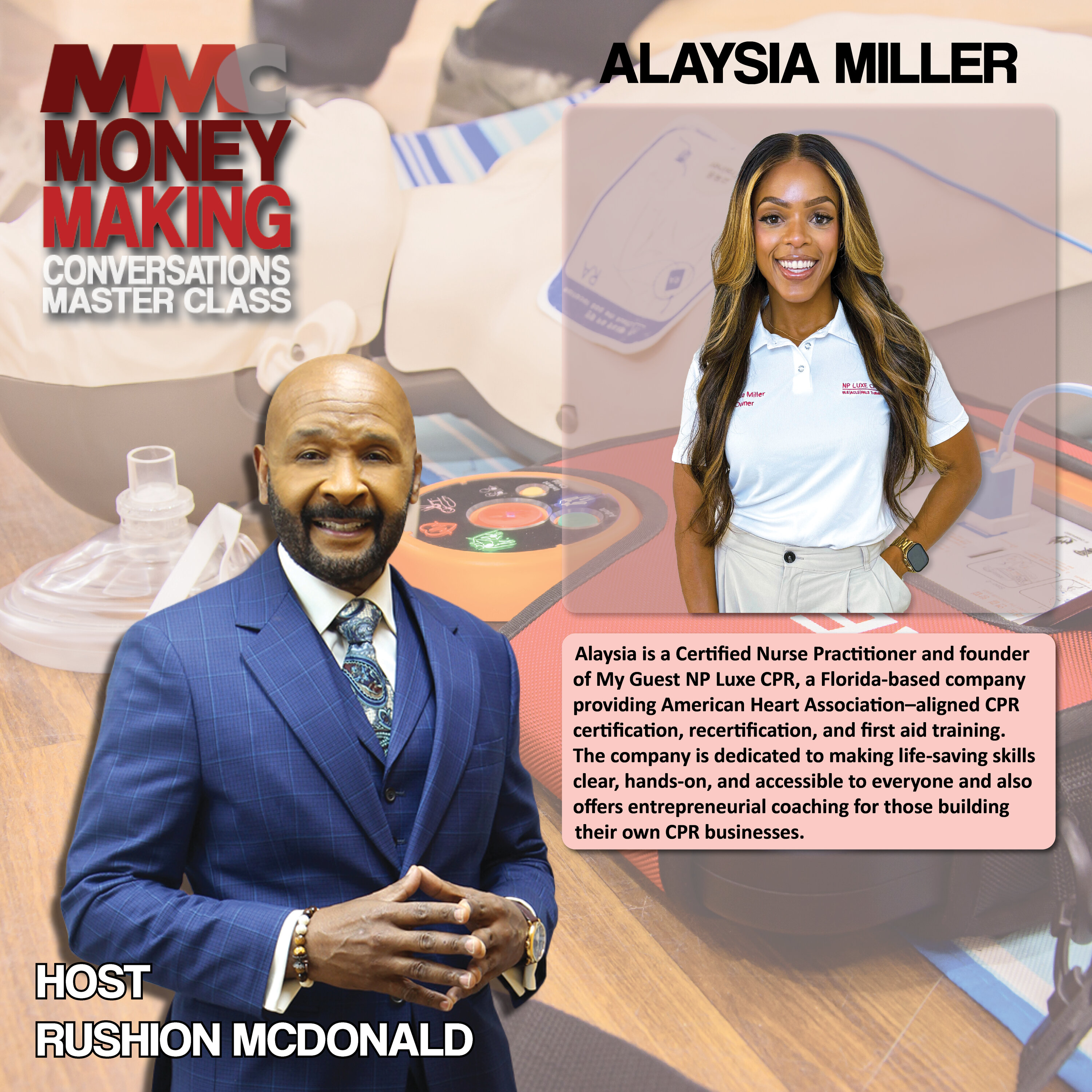
Career Change: She explains how frontline burnout pushed her into launching a CPR education business.
Jun 2400:28:19Tap to summarizeListen and subscribe to Money Making Conversations on iHeartRadio, Apple Podcasts, Spotify, www.moneymakingconversations.com/subscribe/ or wherever you listen to podcasts. New Money Making Conversations episodes drop daily. I want to alert you, so you don’t miss out on expert analysis and insider perspectives from my guests who provide tips that can help you uplift the community, improve your financial planning, motivation, or advice on how to be a successful entrepreneur. Keep winning! Two-time Emmy and three-time NAACP Image Award-winning television Executive Producer Rushion McDonald interviewed Alaysia Miller. A certified nurse practitioner, travel nurse practitioner, and founder of NP Luxe CPR, a Florida-based CPR training company. Alaysia discusses her journey from nurse to travel nurse practitioner, how frontline burnout pushed her into entrepreneurship, and why she launched a CPR education business. She explains the financial and lifestyle advantages of travel nursing, the importance of mentorship, the realities of entrepreneurship, and the major CPR survival gap in Black and underserved communities. Rushion and Alaysia also dive into leadership, negotiating contracts, building a lucrative CPR business, and empowering community health through education. 🎯 Purpose of the Interview The interview aims to: 1. Showcase a path to financial freedom through nursing entrepreneurship By highlighting travel nurse contracting and CPR instruction as viable wealth‑building vehicles. 2. Highlight the importance of CPR education in underserved communities Especially addressing the survival gap in Black communities due to low CPR literacy. 3. Encourage aspiring entrepreneurs—especially women and healthcare workers By sharing Alaysia’s experiences with mentorship, confidence building, and launching a service-based business. 4. Educate listeners on the realities of entrepreneurship Including time demands, imposter syndrome, and the need for consistency and proper pricing. 🔑 Key Takeaways 1. Travel Nurse Practitioners Have High Earning Potential As a staff NP she would earn $100k per year, but as a travel NP she earned $100k in six months while gaining time freedom and flexibility. Travel NP work is paid via 1099, opening the door to tax write-offs, investment flexibility, and entrepreneurial benefits. 2. Burnout Was the Catalyst for Change Working six days a week during COVID and the pressure of commercialized urgent-care systems led to burnout, weight gain, and loss of self. This pushed Alaysia toward traveling, where she worked half the time for double the pay. 3. CPR Survival Rates Are Lower in Black & Underserved Communities Alaysia explains that lack of exposure, knowledge, and basic emergency training leads to significantly lower cardiac survival rates in communities of color. She addresses this through her nonprofit We Push Health, which brings CPR and medical education to rural and urban communities. 4. You Don’t Need to Reinvent the Wheel—Mentorship Is Key She learned about mentorship in 2024 and emphasizes that mentors help you avoid costly mistakes and speed up your path. “Find someone who is the ideal image of what you want to be and mimic what they do.”. 5. CPR Businesses Are Lucrative and Accessible Almost every industry requires CPR certification: Healthcare Schools & daycares Gyms Police & fire departments Hotels Tattoo studios These make CPR instruction a strong side hustle or full-time business, especially for healthcare professionals who already understand the material. 6. Entrepreneurship Requires Real Work Alaysia breaks down the less glamorous side of building a business: Imposter syndrome The need for consistent marketing Pricing confidently Long hours initially Learning branding, systems, and follow-up “You only eat what you kill.”. 7. Communication and Adaptability Are Leadership Superpowers Travel nursing requires walking into unfamiliar environments and leading without overpowering. She emphasizes: Reading the room Adjusting communication styles Delegating the right way Being assertive but team-oriented “Adaptability is number one.”. 8. Negotiation Skills Changed Her Entire Career She learned to stop undervaluing herself and start negotiating confidently: First contract: underpriced Second contract: raised rates dramatically Uses supply‑and‑demand to justify price increases “You miss 100% of the shots you never take.”.] 🗣️ Notable Quotes On Entrepreneurship “If you know how to save a life, don’t you think you know how to run a business?”. “You only eat what you kill.”. On Burnout “I lost myself giving it to a job.”. On Community Health “They can’t know what they don’t know.” “Survival rates for cardiac arrest are significantly lower in communities of color because they lack access to basic emergency skills.”. On Mentorship “You don’t have to reinvent the wheel to be successful.” “Find someone who is the ideal image of what you want to be.”. On Negotiation “What’s the worst they can say? No.” #SHMS #STRAW #BESTSee omnystudio.com/listener for privacy information.
Transcribe →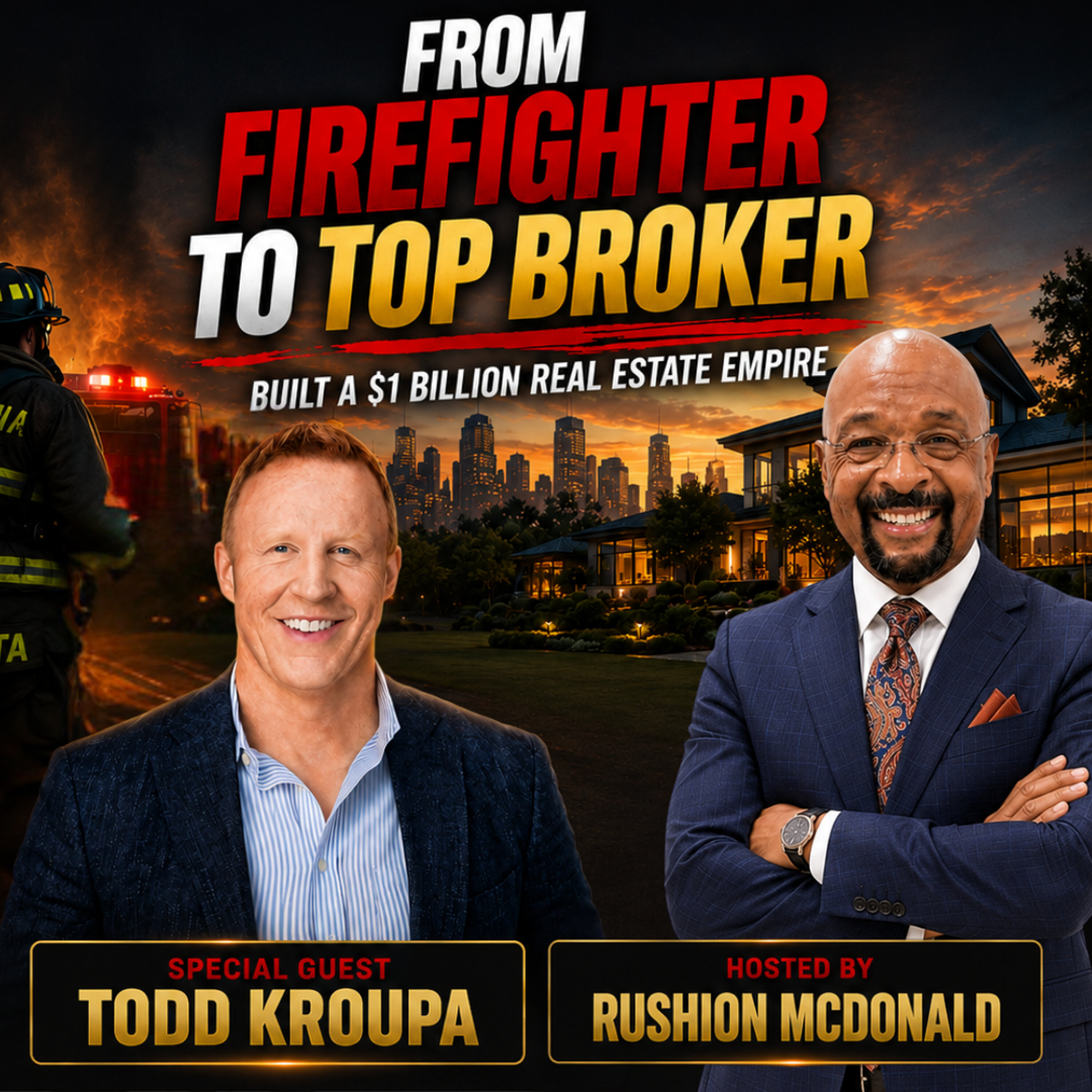
Following Your Passion: He shows you how to move from a steady secure job to a successful career in real estate.
Jun 2300:26:50Tap to summarizeListen and subscribe to Money Making Conversations on iHeartRadio, Apple Podcasts, Spotify, www.moneymakingconversations.com/subscribe/ or wherever you listen to podcasts. New Money Making Conversations episodes drop daily. I want to alert you, so you don’t miss out on expert analysis and insider perspectives from my guests who provide tips that can help you uplift the community, improve your financial planning, motivation, or advice on how to be a successful entrepreneur. Keep winning! Two-time Emmy and Three-time NAACP Image Award-winning, television Executive Producer Rushion McDonald interviewed Todd Kroupa. 🔷 Interview Summary Todd Kroupa, a former firefighter turned top-performing real estate agent (No. 1 in Georgia, nearly $1B in lifetime sales), shares his journey of career transition, entrepreneurship, and success in real estate. [TODD KROUPA iHeart | Txt] The interview covers: Leaving a stable career for entrepreneurship Building a real estate business from scratch in a new market Customer-first sales philosophy Practical advice for buyers and sellers Real estate as a long-term wealth-building strategy It blends career reinvention, sales mindset, and real estate expertise. 🎯 Purpose of the Interview 1. Inspire career transition and risk-taking Show how to move from a secure job to a high-reward entrepreneurial path 2. Educate on real estate buying and selling Provide practical insights for: First-time buyers Families Sellers 3. Highlight relationship-driven sales success Emphasize service, trust, and referrals over commissions 4. Promote real estate as a wealth strategy Explain why real estate is a strong long-term investment 5. Share resilience and mindset lessons Demonstrate how persistence and belief overcome doubt and rejection 🔑 Key Takeaways 1. Career pivots require courage and clarity Kroupa left a stable firefighting career despite outside doubt He trusted his long-term vision over short-term safety [TODD KROUPA iHeart | Txt] 2. Block out “outside noise” He avoided negativity and advice that could derail his decision Focus and conviction were essential to success 3. Skills transfer across industries Firefighter experience taught: Problem-solving under pressure Customer care These skills translated directly into real estate 4. Relationships drive real estate success The business is built on: Trust Referrals Long-term client relationships Not just transactions 5. Service > commission mindset Top agents prioritize: Client outcomes Long-term value Income follows service 6. Emotion drives buying decisions Buyers decide within minutes based on: Feeling Personal connection Logic comes later in the process 7. Realtors must guide, not just sell A great agent: Identifies hidden issues Advises clients—even against a deal 8. Inspection is critical Key deal-breakers: Mold Foundation issues Roof problems Buyers must be willing to walk away 9. Real estate decisions require discipline Avoid overpaying or emotional overcommitment Think long-term resale and investment value 10. Neighborhood matters as much as the house Buyers should: Visit at different times Talk to neighbors Research schools and environment 11. Market strategy matters when selling Presentation is key: Neutral design Strong first impressions Buyers decide quickly 12. Real estate is a powerful wealth builder Benefits over stocks: Control (improvements, rental, usage) Tax advantages Tangible value 13. Multi-generational living is rising Driven by: Cost of living Family dynamics Post-COVID lifestyle shifts 14. Buying the most expensive home isn’t optimal Property value is influenced by surrounding homes Overpricing limits appreciation potential 💬 Notable Quotes On career transition “I walked away from a very stable career… to something that can be unstable.” [TODD KROUPA iHeart | Txt] On ignoring doubt “I avoided a lot of phone calls… I didn’t want anybody to persuade my decision.” [TODD KROUPA iHeart | Txt] On motivation “That put the fire in me.” [TODD KROUPA iHeart | Txt] On mindset and focus “I just cut the noise out.” [TODD KROUPA iHeart | Txt] On service approach “It should never be about the commission… it should be about helping that person.” [TODD KROUPA iHeart | Txt] On relationships “This business is about referrals… connections.” [TODD KROUPA iHeart | Txt] On buyer psychology “They’re looking emotionally first—logic comes second.” [TODD KROUPA iHeart | Txt] On inspections “If you’re not comfortable now, you won’t be comfortable after you close.” [TODD KROUPA iHeart | Txt] On real estate vs stocks “You can’t control a stock… you can improve and live in a home.” [TODD KROUPA iHeart | Txt] On pricing strategy “You don’t want to be the most expensive house in the neighborhood.” [TODD KROUPA iHeart | Txt] 🧭 Bottom Line Todd Kroupa’s message is a blueprint for success in both entrepreneurship and real estate: Take calculated risks → growth requires leaving comfort zones <stron...
Transcribe →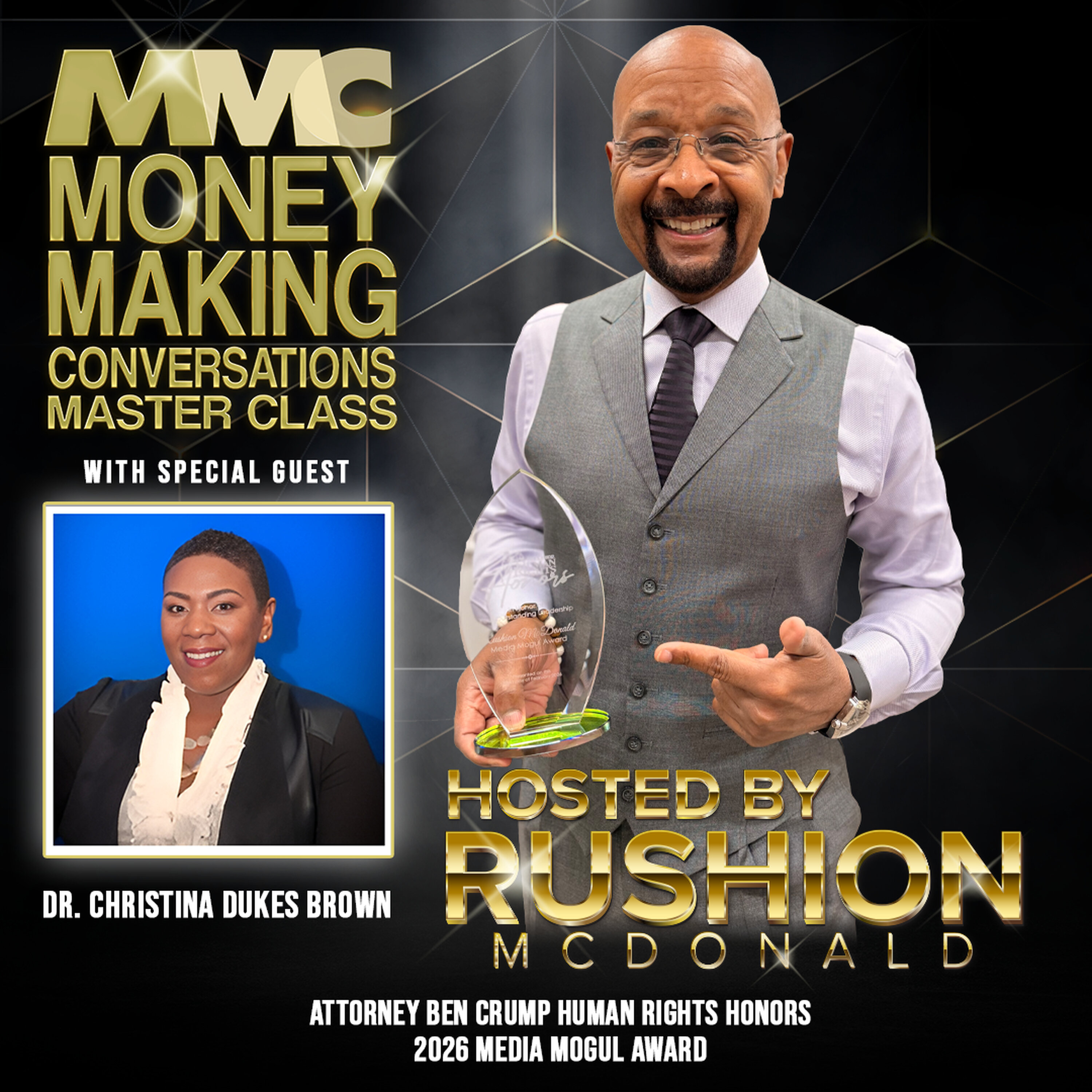
Mentoring: Interview focuses on community empowerment, educational gaps, and the importance of improving outcomes for our youth.
Jun 2300:22:56Tap to summarizeListen and subscribe to Money Making Conversations on iHeartRadio, Apple Podcasts, Spotify, www.moneymakingconversations.com/subscribe/ or wherever you listen to podcasts. New Money Making Conversations episodes drop daily. I want to alert you, so you don’t miss out on expert analysis and insider perspectives from my guests who provide tips that can help you uplift the community, improve your financial planning, motivation, or advice on how to be a successful entrepreneur. Keep winning! Two-time Emmy and Three-time NAACP Image Award-winning, television Executive Producer Rushion McDonald interviewed Dr. Christina Dukes Brown. 🎙️ Interview Summary Overview:Dr. Christina Dukes Brown, CEO of the Boys & Girls Club of Paterson and Passaic, discusses her work supporting underserved youth in New Jersey. The interview focuses on community empowerment, educational gaps, youth development, and the importance of collective action (mentorship, partnerships, and funding) to improve outcomes for young people. 🎯 Purpose of the Interview 1. Raise Awareness of Community Needs Highlight the challenges faced by underserved Black and Latinx youth (poverty, low literacy, lack of resources). 2. Call to Action Encourage volunteers, mentors, corporations, and donors to support the Boys & Girls Club. 3. Promote Youth Development & Opportunity Showcase how structured programs (education, sports, arts, mentoring) help kids succeed. 🔑 Key Takeaways 1. Underserved Communities Face Major Resource Gaps Many families struggle with poverty, homelessness, and food insecurity. [Dr. Christ...green) (2) | Txt] Academic performance is low (literacy and math proficiency challenges). 👉 Lesson: Community-based organizations fill critical gaps left by broader systems. 2. After-School Programs Are Essential The club provides: Homework help (“Power Hour”) Tutoring Meals Safe recreation spaces [Dr. Christ...green) (2) | Txt] 👉 Lesson: Learning doesn’t end at school—support systems outside the classroom are vital. 3. The Mission Is Holistic Development Focus areas include: Academic support Character development Creative outlets (arts, dance) Athletics (including strong aquatics program) [Dr. Christ...green) (2) | Txt] 👉 Lesson: Success requires both academic and personal development. 4. Combatting Stereotypes Is a Core Challenge Many youth face a “deficit ideology” that assumes they cannot succeed. [Dr. Christ...green) (2) | Txt] 👉 Lesson: Changing mindset and self-belief is as important as providing resources. 5. Every Child Has Unique Strengths Not all success is academic—soft skills, communication, and creativity matter. 👉 Lesson: Programs must recognize and nurture diverse talents. 6. Mentorship and Representation Matter Youth benefit from seeing successful people who share their background. 👉 Lesson: Real-life role models inspire confidence and possibility. 7. Community Support Is Critical The organization relies heavily on: Volunteers Donations Corporate partnerships Nearly half its budget comes from fundraising. [Dr. Christ...green) (2) | Txt] 👉 Lesson: Sustainable community change requires collective investment. 8. Early Intervention Is Better Than Crisis Response Many young adults (18–24) seek help after struggling to find direction. 👉 Lesson: Providing guidance, skills, and exposure early can prevent setbacks. 9. Skills Training Must Be Practical Programs include: Professional skills (showing up, communication) Career pathways (internships, trades, entrepreneurship) 👉 Lesson: Real-world readiness is essential alongside education. 10. Leadership Requires Purpose and Commitment Dr. Brown is motivated by personal experience and a sense of responsibility to uplift her community. 👉 Lesson: Effective leadership in social impact requires passion and lived understanding. 💬 Notable Quotes On Community Responsibility “I can’t complain about the position of Black and Brown people… if I’m not going to do the work.” [Dr. Christ...green) (2) | Txt] On Motivation “I am motivated to jump out of bed every morning to… support these communities.” [Dr. Christ...green) (2) | Txt] On Stereotypes “No matter where you come from… you have the capacity to become great.” [Dr. Christ...green) (2) | Txt] On Youth Potential “Some children… have the ability to articulate a point… we have to affirm those skills.” [Dr. Christ...green) (2) | Txt] On Mentorship “One of the best motivating factors… is seeing someone who looks like them.” [Dr. Christ...green) (2) | Txt] On Community Action “It takes a real village.” [Dr. Christ...green) (2) | Txt] On Organizational Need “We essentially have to earn $4 million a year through fundraising.” [Dr. Christ...green) (2) | Txt] On Call to Action “I need men and women… to teach our young people the skills… to become business owners.” [Dr. Christ...green) (2) | Txt] 🧠 Bottom Line This interview is fundamentally a community mobilization message. Dr. Christina Dukes Brown’s central message: Youth potential is high—but opportunity gaps are real <...
Transcribe →
Financial Advice: A certified financial planner with 25+ years of experience, discusses her book Women and Wealth.
Jun 2300:24:17Tap to summarizeListen and subscribe to Money Making Conversations on iHeartRadio, Apple Podcasts, Spotify, www.moneymakingconversations.com/subscribe/ or wherever you listen to podcasts. New Money Making Conversations episodes drop daily. I want to alert you, so you don’t miss out on expert analysis and insider perspectives from my guests who provide tips that can help you uplift the community, improve your financial planning, motivation, or advice on how to be a successful entrepreneur. Keep winning! Two-time Emmy and Three-time NAACP Image Award-winning, television Executive Producer Rushion McDonald interviewed Cary Carbonaro. 🎙️ Interview Summary Overview:Carrie Carbonaro, a certified financial planner with 25+ years of experience, discusses her book Women and Wealth and her mission to empower women financially. The interview focuses on the growing economic power of women, systemic gaps in the financial industry, and the importance of financial planning and independence. 🎯 Purpose of the Interview 1. Empower Women Financially Raise awareness about women’s role in the future of wealth ownership. Encourage women to take control of their financial futures. 2. Highlight Industry Gaps Expose how the financial services industry has historically underserved women. Advocate for a more inclusive, “female-friendly” approach to financial planning. 3. Promote Financial Planning for Everyone Emphasize that financial planning is not just for the wealthy. Encourage proactive, long-term planning to achieve financial freedom. 🔑 Key Takeaways 1. Women Will Control the Majority of Wealth By 2030, women are projected to control two-thirds of U.S. wealth (~$30 trillion). [CARY CARBONARO | Txt] 👉 Lesson: The financial industry must adapt to serve a rapidly changing client base. 2. The Financial Industry Is Not Built for Women Historically designed “by men for men.” Many women feel unheard, misunderstood, or underserved. 👉 Lesson: Financial services must evolve in communication, empathy, and strategy. 3. Women Often Leave Financial Advisors About 80% of women leave their financial advisor after a spouse dies. [CARY CARBONARO | Txt] Reasons: Lack of connection Poor communication Feeling excluded or pressured 👉 Lesson: Relationship-building and inclusion are critical in financial advising. 4. Financial Planning Is Essential for Everyone Not just for the wealthy—everyone needs a roadmap. Planning covers: Cash flow Investments Taxes Insurance Estate planning 👉 Lesson: A comprehensive plan aligns all aspects of your financial life. 5.“If You Fail to Plan, You Plan to Fail” Financial success requires intentional planning. Each person’s “financial freedom” looks different. 👉 Lesson: Define your goals and build a strategy to reach them. 6. Women Face a Significant Wealth Gap Beyond the wage gap, women experience a**“wealth gap”** due to: Career interruptions Caregiving responsibilities This can cost women around $1 million over a lifetime. [CARY CARBONARO | Txt] 👉 Lesson: Structural and societal factors impact long-term wealth accumulation. 7. Financial Literacy Equals Power and Choice Wealth gives options in lifestyle, career, and life decisions. 👉 Lesson: Money is not just income—it’s control over your life. 8. Women Often Seek Help Too Late Many women consult financial advisors only after crises (death, divorce, job loss). 👉 Lesson: Proactive planning is far more effective than reactive decision-making. 9. Representation Matters in Finance Only about 24% of certified financial planners are women. [CARY CARBONARO | Txt] 👉 Lesson: More female professionals are needed to better serve female clients. 10. Confidence & Visibility Drive Success Carbonaro built her business by: Positioning herself as a financial expert for women Speaking publicly and sharing her message Staying authentic to her mission 👉 Lesson: Clear positioning and purpose attract the right audience. 💬 Notable Quotes On Wealth Shift “By 2030, women are going to control two-thirds of the nation’s wealth.” [CARY CARBONARO | Txt] On Industry Gaps “My industry… has been built by men for men.” [CARY CARBONARO | Txt] On Planning “If you fail to plan, you plan to fail.” [CARY CARBONARO | Txt] On Financial Independence “Women should control their own destiny… money equals power.” [CARY CARBONARO | Txt] On Advisor Relationships “80% of women leave their financial advisor after a spouse dies.” [CARY CARBONARO | Txt] On Life Impact of Wealth Gap “That… over her lifetime costs her $1 million.” [CARY CARBONARO | Txt] On Financial Timing “Women call me when it’s raining… I want them to call when it’s sunny.” [CARY CARBONARO | Txt] 🧠 Bottom Line This interview highlights a major societal and financial shift: 👉 Women are becoming the dominant force in wealth—but the system isn’t ready. Carrie Carbonaro’s message: Start planning early Build financial literacy Demand better service Use wealth as a tool for independence and choice #SHMS #BEST #STRAWSee omnystudio.com/listener for privacy information.
Transcribe →
Mental Health: She discusses why Black professionals increasingly seeking therapy.
Jun 2300:34:31Tap to summarizeListen and subscribe to Money Making Conversations on iHeartRadio, Apple Podcasts, Spotify, www.moneymakingconversations.com/subscribe/ or wherever you listen to podcasts. New Money Making Conversations episodes drop daily. I want to alert you, so you don’t miss out on expert analysis and insider perspectives from my guests who provide tips that can help you uplift the community, improve your financial planning, motivation, or advice on how to be a successful entrepreneur. Keep winning! Two-time Emmy and Three-time NAACP Image Award-winning, television Executive Producer Rushion McDonald interviewed Dr. LaToya Gilmore. A licensed professional counselor with 20+ years of experience. Topic: Her book Communication Skills for Healthier Boundaries and her journey in mental health. 2. Dr. Gilmore’s Career Path Started in mass communication, switched to psychology after a friend's suggestion. First psychology class sparked her passion. Emphasizes the importance of curiosity and self-awareness in career transitions. 3. Mental Health and Career Change Discusses fear of change and how to overcome it. Encourages self-assessment and assertive communication. Talks about blocking external opinions to follow personal truth. 4. Mental Health in the Black Community Pandemic brought mental health to the forefront. Black professionals increasingly seeking therapy for trauma, stress, and work-life balance. Her practice is 95% African-American professionals. 5. HBCU Experience Attended Prairie View A&M and Texas Southern University. Highlights the affirming and empowering environment of HBCUs. Importance of representation and academic excellence. 6. Book Discussion: Communication Skills for Healthier Boundaries Focuses on effective communication and healthy boundaries. Addresses rigid vs. absent boundaries and their impact on relationships and self-worth. 7. Therapy Practice Model Transitioned from in-person to fully virtual practice. Offers flexibility for clients and shares her own experience with therapy. 8. Entrepreneurship Lessons Graduate school didn’t teach business fundamentals. Learned about insurance, legal structure, and accounting on the fly. Advocates mentorship and using resources like ChatGPT (with caution). 9. Betting on Yourself Shares her transition from full-time professor to private practice. Advises strategic planning and exit strategies over impulsive quitting. 10. Parenting and Child Development Warns against premature diagnoses in children. Encourages education on developmental stages and adapting parenting strategies. 11. Future of Mental Health Education Advocates normalization of mental health as part of routine healthcare. Notes increased visibility in media, faith communities, and public discourse. 12. Boundaries in Social Settings Shares how she handles unsolicited therapy requests at social events. Emphasizes professional boundaries and offers referrals when needed. 13. Closing Website: www.lovesupportguidance.com Social media: Instagram @DrGilmoreShares Encouragement to lead with gifts and keep winning. 💡 Key Takeaways Self-awareness is the foundation for personal and professional growth. Mental health is health—it should be normalized and prioritized. Boundaries are essential for healthy relationships and self-care. Entrepreneurship requires preparation beyond passion—legal, financial, and structural knowledge is key. Representation matters—HBCUs provide affirming environments that expand possibilities. Parenting requires education, not assumptions—developmental quirks aren’t always disorders. 🗣️ Notable Quotes “You have to allow your voice to be above the external voices and opinions.” “The individuals around you are not mind readers.” “The pandemic put us on the forefront of mental health… you had to sit at home with your own thoughts.” “Everyone is not going to be my client, but I do have resources.” “Mental wellness is just another leg of healthcare. That’s all it is.” “Don’t quit because you’re mad. Have an exit strategy.” “Boundaries can be rigid or absent—both can disrupt your life.” #SHMS #STRAW #BESTSee omnystudio.com/listener for privacy information.
Transcribe →
Overcoming the Odds: She demonstrates that bankruptcy can become a turning point rather a permanent financial barrier.
Jun 2300:24:29Tap to summarizeListen and subscribe to Money Making Conversations on iHeartRadio, Apple Podcasts, Spotify, www.moneymakingconversations.com/subscribe/ or wherever you listen to podcasts. New Money Making Conversations episodes drop daily. I want to alert you, so you don’t miss out on expert analysis and insider perspectives from my guests who provide tips that can help you uplift the community, improve your financial planning, motivation, or advice on how to be a successful entrepreneur. Keep winning! Two-time Emmy and Three-time NAACP Image Award-winning, television Executive Producer Rushion McDonald interviewed Ashley Joi Boyd. Interview Purpose The purpose of this interview is to explore the intersection of creativity, financial literacy, ownership, and personal resilience, using Ashley Joi Boyd’s journey as a Grammy‑nominated songwriter, music publisher, real estate developer, and author as a powerful case study. Through honest conversation, Ashley reframes success in the entertainment industry beyond fame and hits, emphasizing business ownership, financial education, mindset, and long‑term wealth building. The interview also serves as an empowerment message—particularly for women—demonstrating that financial setbacks, including bankruptcy, can become turning points rather than permanent barriers. Major Themes & Key Takeaways 1. Songwriting Is the Heart—and the Business—of Music Ashley explains that songwriting is not just creativity; it is the foundation of lasting success in the music industry. While artists may earn from performances, writers and publishers earn from ownership, collecting royalties every time a song is played, streamed, or used globally. Key takeaway: Creativity generates income, but ownership generates wealth. 2. Publishing Is Where the Real Money Lives Ashley highlights that music publishing—not performing—is the most lucrative side of the industry. By owning her publishing company, she positioned herself to earn long‑term, recurring income rather than relying on one‑time payments or constant touring. Key takeaway: Understanding back‑end revenue streams is critical in any industry. 3. Business Knowledge Creates Leverage Raised in an entertainment household, Ashley learned early the importance of understanding contracts, rights, and percentages. She famously walked away from a publishing deal that demanded 75% ownership—choosing long‑term control over short‑term opportunity. Key takeaway: Walking away from the wrong deal can be the right decision. 4. Opportunity Meets Preparation Ashley’s collaboration on Justin Bieber’s hit “Yummy” did not happen overnight. It was the result of years of preparation, proven skill, respect for her craft, and being ready when the door opened. Key takeaway: Access opens doors, but preparation determines what happens next. 5. Financial Collapse Can Become Financial Education Ashley openly discusses filing for bankruptcy after the 2008 housing crash—a moment she describes as devastating but transformative. With no guidance at the time, she was forced to learn money management the hard way, reshaping her relationship with credit, debt, and planning. Key takeaway: Bankruptcy is not the end—it can be the beginning of financial mastery. 6. Financial Literacy Is Often Untaught—but Essential Ashley stresses that many people, especially women, are never taught how to manage money, credit, or wealth. This gap inspired her book Financially Fly: Mastering Money and Wealth for Women, written to create a safe, honest space for financial conversations. Key takeaway: Making money is not the same as knowing how to keep or grow it. 7. Wealth Is About Structure, Not Just Cash In defining generational wealth, Ashley emphasizes trusts, insurance policies, estate planning, and real estate—structures that protect families long after income stops. Key takeaway: Generational wealth is built with systems, not just income. 8. Invest in Yourself First One of Ashley’s most practical strategies is prioritizing yourself as a financial line item—saving consistently, protecting your credit, and building habits that support future freedom. Key takeaway: If you don’t prioritize yourself financially, no one else will. 9. Mindset Drives Money Patterns Ashley underscores that many financial struggles are rooted in scarcity mindset and emotional spending. Shifting to an abundance mindset and facing numbers honestly is the first step toward change. Key takeaway: Your mindset controls your financial outcomes. Notable Quotes “Songwriting is the heart and soul of a song—it’s what makes it last.” “The real money in music is on the back end.” “I walked away from a deal because the business wasn’t right—and that changed everything.” “Bankruptcy forced me to learn how to protect myself.” “Just because you know how to make money doesn’t mean you know how to keep it.” “Generational wealth is structure—trusts, insurance, planning.” “Put yourself on your own balance sheet.” “Your mindset controls everything around you.” Overall Message Ashley Joi Boyd’s interview is a masterclass in reclaiming control—creatively, financially, and mentally. Her story demonstrates that wealth is not defined by income alone, but by ownership, education, structure, and intention. By openly sharing both her success and setbacks, Ashley empowers listeners to stop avoiding financial truth, build sustainable habits, and believe that long‑term wealth is possible—no matter where they are starting. #SHMS #BEST #STRAWSee omnystudio.com/listener for privacy information.
Transcribe →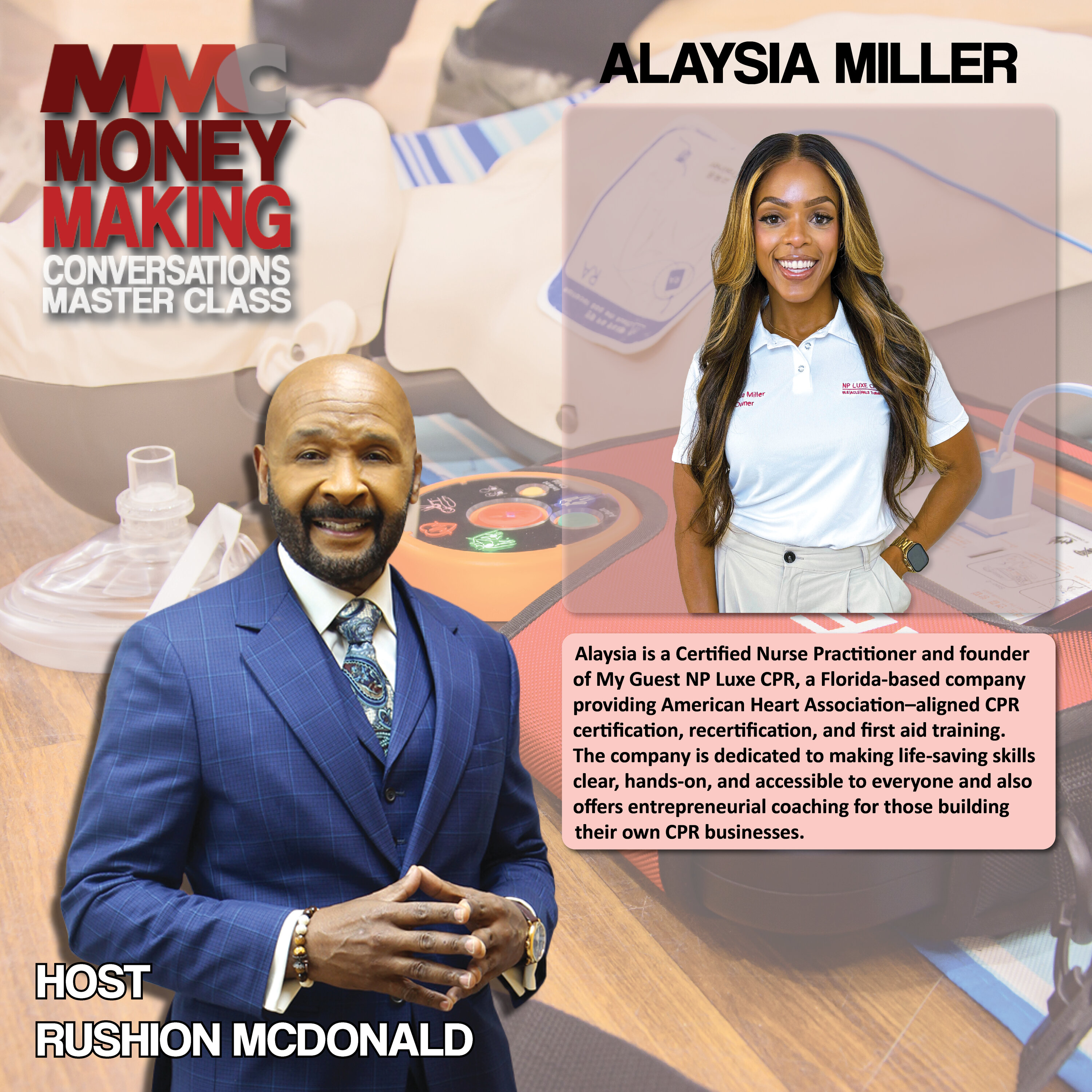
Follow Your Passion: Travel nurse builds a lucrative CPR training business.
Jun 2200:28:19Tap to summarizeListen and subscribe to Money Making Conversations on iHeartRadio, Apple Podcasts, Spotify, www.moneymakingconversations.com/subscribe/ or wherever you listen to podcasts. New Money Making Conversations episodes drop daily. I want to alert you, so you don’t miss out on expert analysis and insider perspectives from my guests who provide tips that can help you uplift the community, improve your financial planning, motivation, or advice on how to be a successful entrepreneur. Keep winning! Two-time Emmy and three-time NAACP Image Award-winning television Executive Producer Rushion McDonald interviewed Alaysia Miller. A certified nurse practitioner, travel nurse practitioner, and founder of NP Luxe CPR, a Florida-based CPR training company. Alaysia discusses her journey from nurse to travel nurse practitioner, how frontline burnout pushed her into entrepreneurship, and why she launched a CPR education business. She explains the financial and lifestyle advantages of travel nursing, the importance of mentorship, the realities of entrepreneurship, and the major CPR survival gap in Black and underserved communities. Rushion and Alaysia also dive into leadership, negotiating contracts, building a lucrative CPR business, and empowering community health through education. 🎯 Purpose of the Interview The interview aims to: 1. Showcase a path to financial freedom through nursing entrepreneurship By highlighting travel nurse contracting and CPR instruction as viable wealth‑building vehicles. 2. Highlight the importance of CPR education in underserved communities Especially addressing the survival gap in Black communities due to low CPR literacy. 3. Encourage aspiring entrepreneurs—especially women and healthcare workers By sharing Alaysia’s experiences with mentorship, confidence building, and launching a service-based business. 4. Educate listeners on the realities of entrepreneurship Including time demands, imposter syndrome, and the need for consistency and proper pricing. 🔑 Key Takeaways 1. Travel Nurse Practitioners Have High Earning Potential As a staff NP she would earn $100k per year, but as a travel NP she earned $100k in six months while gaining time freedom and flexibility. Travel NP work is paid via 1099, opening the door to tax write-offs, investment flexibility, and entrepreneurial benefits. 2. Burnout Was the Catalyst for Change Working six days a week during COVID and the pressure of commercialized urgent-care systems led to burnout, weight gain, and loss of self. This pushed Alaysia toward traveling, where she worked half the time for double the pay. 3. CPR Survival Rates Are Lower in Black & Underserved Communities Alaysia explains that lack of exposure, knowledge, and basic emergency training leads to significantly lower cardiac survival rates in communities of color. She addresses this through her nonprofit We Push Health, which brings CPR and medical education to rural and urban communities. 4. You Don’t Need to Reinvent the Wheel—Mentorship Is Key She learned about mentorship in 2024 and emphasizes that mentors help you avoid costly mistakes and speed up your path. “Find someone who is the ideal image of what you want to be and mimic what they do.”. 5. CPR Businesses Are Lucrative and Accessible Almost every industry requires CPR certification: Healthcare Schools & daycares Gyms Police & fire departments Hotels Tattoo studios These make CPR instruction a strong side hustle or full-time business, especially for healthcare professionals who already understand the material. 6. Entrepreneurship Requires Real Work Alaysia breaks down the less glamorous side of building a business: Imposter syndrome The need for consistent marketing Pricing confidently Long hours initially Learning branding, systems, and follow-up “You only eat what you kill.”. 7. Communication and Adaptability Are Leadership Superpowers Travel nursing requires walking into unfamiliar environments and leading without overpowering. She emphasizes: Reading the room Adjusting communication styles Delegating the right way Being assertive but team-oriented “Adaptability is number one.”. 8. Negotiation Skills Changed Her Entire Career She learned to stop undervaluing herself and start negotiating confidently: First contract: underpriced Second contract: raised rates dramatically Uses supply‑and‑demand to justify price increases “You miss 100% of the shots you never take.”.] 🗣️ Notable Quotes On Entrepreneurship “If you know how to save a life, don’t you think you know how to run a business?”. “You only eat what you kill.”. On Burnout “I lost myself giving it to a job.”. On Community Health “They can’t know what they don’t know.” “Survival rates for cardiac arrest are significantly lower in communities of color because they lack access to basic emergency skills.”. On Mentorship “You don’t have to reinvent the wheel to be successful.” “Find someone who is the ideal image of what you want to be.”. On Negotiation “What’s the worst they can say? No.” #SHMS #STRAW #BESTSee omnystudio.com/listener for privacy information.
Transcribe →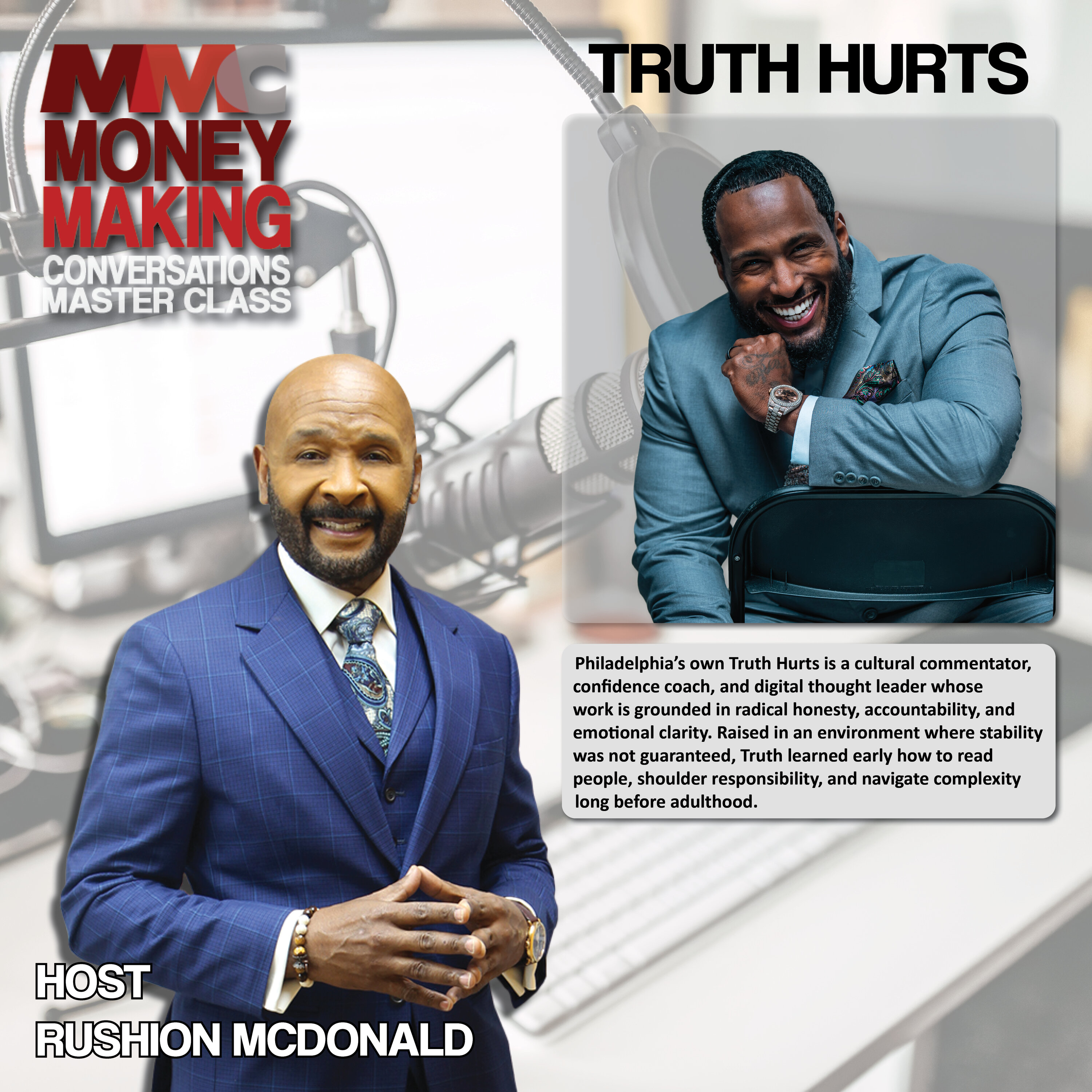
Motivation: He is a cultural commentator and “confidence coach” rooted in honesty, accountability, and lived experience.
Jun 2200:28:29Tap to summarizeListen and subscribe to Money Making Conversations on iHeartRadio, Apple Podcasts, Spotify, www.moneymakingconversations.com/subscribe/ or wherever you listen to podcasts. New Money Making Conversations episodes drop daily. I want to alert you, so you don’t miss out on expert analysis and insider perspectives from my guests who provide tips that can help you uplift the community, improve your financial planning, motivation, or advice on how to be a successful entrepreneur. Keep winning! Two-time Emmy and Three-time NAACP Image Award-winning, television Executive Producer Rushion McDonald interviewed Truth Hurts. 🎙️ Interview Summary: Truth Hurts x Rushion McDonald ✅ Purpose of the Interview The conversation serves three main purposes: Showcase Truth Hurts’ philosophy and brand Present him as a cultural commentator and “confidence coach” rooted in honesty, accountability, and lived experience. [ Explore the role of authenticity in influence Highlight why his unfiltered, real-life approach resonates in a crowded social media space. Push toward scaling impact as a business Rushion mentors him live, challenging him to move from raw influence into structured growth (branding, live events, monetization, and global reach). 🔑 Key Takeaways 1. Radical honesty + accountability is his core message Truth Hurts’ content centers on personal responsibility rather than excuses. He emphasizes that growth begins when people stop blaming external factors. 👉 Insight: Accountability is framed as the gateway to transformation and self-respect. 2. Authenticity is his competitive advantage He intentionally avoids polished aesthetics or rehearsed content. His videos are spontaneous, real-time expressions of his thoughts. 👉 Insight: Relatability > perfection. Audiences trust imperfection when it feels real. 3. Lived experience defines credibility He rejects the label of “life coach” in favor of lived expertise. His advice comes from failures, mistakes, and personal growth. 👉 Insight: Modern audiences value experience-based authority over credentials. 4. Accountability is the hardest truth people avoid Most people struggle to take responsibility for their own decisions. Blame (trauma, upbringing, relationships) is often used as a shield. 👉 Insight: Personal progress requires confronting self-made problems. 5. “High value” is mindset-driven, not just financial He reframes “high value” as: For men: being a provider and protector within their means For women: relational and emotional value over financial output 👉 Insight: The concept is subjective and often misunderstood due to social media narratives. 6. His gift: communication and emotional connection He discovered his ability to counsel and uplift others later in life. People naturally confide in him, and he instinctively knows how to respond. 👉 Insight: His influence is rooted in empathy + clarity + conversational delivery. 7. Influence comes with responsibility As his platform grew, he became more intentional with his messaging. He recognizes that people apply his advice in real life. 👉 Insight: Influence requires ethical awareness, not just reach. 8. He overcame lifelong doubt and criticism Was told he “talked too much” and didn’t fit in. Reframed those critiques into strengths. 👉 Insight: Confidence often emerges from reclaiming what others criticized. 9. Rushion’s mentorship: talent must be paired with strategy Rushion pushes him beyond inspiration into execution. He emphasizes building a plan (live shows, scaling audience, monetizing brand). 👉 Insight: Raw talent ≠ success without structure, partnerships, and vision. 10. Transition from influencer → enterprise The conversation shifts from motivation to business scaling: Selling out venues Building a global brand Creating a formal growth plan 👉 Insight: The next level requires intentional business strategy, not just content creation. 💬 Powerful Quotes On authenticity “I’m somebody that is not afraid to admit my shortcomings… I never get on the internet and try to claim to be perfect.” On honesty vs comfort “This is not a safe BS zone. I just want to be honest.” On accountability “We hate taking accountability for the bad decisions that we make.” [ “Once I was able to take accountability… my whole life changed.” [ On content style “Whenever you see my videos, there’s one take… exactly what’s on my mind.” [ On audience connection “My audience will get me… I don’t need 50 million people to get what I’m putting down.” [ On resilience “I’ve dealt with naysayers my whole life.” On purpose “I just want to go around the world empowering the people.” [ Rushion’s key challenge “You are a unique talent… but there is a plan to the madness.” [ “You can’t be a great leader until you learn how to follow.” [ 🧠 Bottom-Line Insight This interview is more than a profile—it’s a turning point: Truth Hurts represents authentic, experience-driven influence Rushion represents structure, scalability, and business discipline 👉 The central message: Truth + accountability builds influence — but strategy turns it into legacy. #SHMS #BEST #STRAWSee omnystudio.com/listener for privacy information.
Transcribe →
Follow Your Passion: She pivoted into tech in 2021 with no degree and went from $40K to six figures within 90 days.
Jun 2100:30:03Tap to summarizeListen and subscribe to Money Making Conversations on iHeartRadio, Apple Podcasts, Spotify, www.moneymakingconversations.com/subscribe/ or wherever you listen to podcasts. New Money Making Conversations episodes drop daily. I want to alert you, so you don’t miss out on expert analysis and insider perspectives from my guests who provide tips that can help you uplift the community, improve your financial planning, motivation, or advice on how to be a successful entrepreneur. Keep winning! Two-time Emmy and Three-time NAACP Image Award-winning, television Executive Producer Rushion McDonald interviewed Jennifer Gaddis. Interview Summary Show: Money Making Conversations MasterclassHost: Rushion McDonaldGuest: Jennifer Gaddis – Senior Quality Assurance Engineer, Educator, Founder of Road to QA 1. Purpose of the Interview The primary purpose of the interview is to inspire and educate everyday people—especially those without college degrees or traditional tech backgrounds—on how to pivot into technology careers, specifically Quality Assurance (QA), and to reframe fear around AI, layoffs, and automation into opportunity. Jennifer’s story is used as proof of concept that: You do not need a college degree to succeed in tech Transferable skills already qualify many people for QA roles AI does not eliminate jobs—it creates new opportunities Strategic career pivots can result in life-changing income and freedom Rushion positions Jennifer not only as a success story, but as a new blueprint for wealth-building through skills, not credentials. [ 2. Interview Overview (High-Level Summary) Jennifer Gaddis shares how she: Pivoted into tech in 2021 with no degree Went from $40K to six figures within 90 days Built a $400K+ remote household income with her husband Created Road to QA, helping 200+ people land tech jobs Accidentally built a multi-million-dollar education business Used personal hardship, COVID, financial stress, and family responsibility as fuel—not limitations She explains what Quality Assurance engineering is, why it is resistant to AI replacement, and how regular users of apps are already doing parts of QA work without realizing it. 3. Key Takeaways A. You’re Already More Qualified Than You Think Jennifer emphasizes that everyday digital behavior translates into QA skills: Using apps Identifying bugs Expecting software to “work correctly” Navigating systems as an end user This insight forms the core of her teaching philosophy. B. The Faster You Add Skills, the Faster You Increase Income Jennifer repeatedly notes: “The difference in your paycheck is your skillset.” By stacking skills (manual QA → automation → AI testing), professionals increase their market value, not just job security. C. AI Is a Career Accelerator, Not a Threat Rather than fearing AI, Jennifer encourages people to: Work alongside AI Become the humans overseeing AI systems Move into hybrid QA + automation + AI roles She stresses that human oversight is still required in tech deployment. D. Entrepreneurship Can Be Accidental—but Scalable Jennifer did not initially plan to build a company. Her business emerged from: Instagram stories A $97 beginner e-book Real student outcomes Her willingness to: Raise prices Build systems Hire specialists Learn financial discipline Allowed Road to QA to grow sustainably. E. Representation and Access Matter Jennifer openly discusses: Being a Black woman in tech Coming from financial insecurity Navigating family obligations Redefining success for future generations Her story challenges stereotypes about who “belongs” in tech careers. [ 4. Notable Quotes from the Interview “I landed my first year in tech within 90 days.” [ “The difference in your paycheck is your skillset.” “You’re already a software tester—you just don’t know it yet.” [ “I didn’t set out to build a company. I said yes to myself.” [ “AI still needs human oversight.” “My journey was already different, so I had to build something different.” 5. Overall Message Jennifer Gaddis’s interview reinforces a central theme of Money Making Conversations: Income growth follows skill alignment, not traditional credentials. Her journey reframes: Fear → strategy Job loss → skill expansion Limited access → self-investment The interview serves as both motivation and roadmap for anyone seeking financial mobility through tech—without gatekeeping. #SHMS #BEST #STRAWSee omnystudio.com/listener for privacy information.
Transcribe →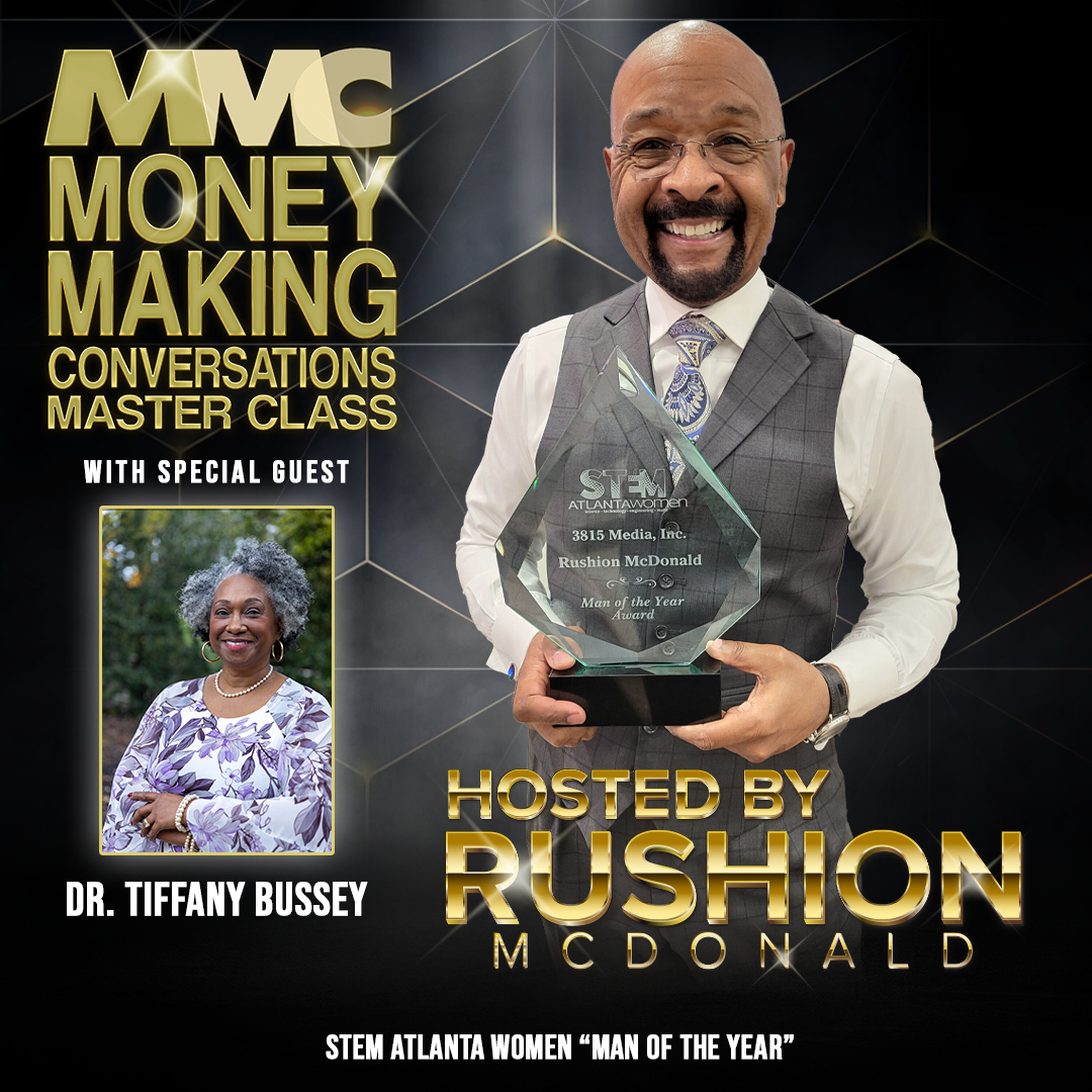
Business Plan: Presents a practical small business roadmap—centered on ownership, access, and readiness.
Jun 2100:24:51Tap to summarizeListen and subscribe to Money Making Conversations on iHeartRadio, Apple Podcasts, Spotify, www.moneymakingconversations.com/subscribe/ or wherever you listen to podcasts. New Money Making Conversations episodes drop daily. I want to alert you, so you don’t miss out on expert analysis and insider perspectives from my guests who provide tips that can help you uplift the community, improve your financial planning, motivation, or advice on how to be a successful entrepreneur. Keep winning! Two-time Emmy and Three-time NAACP Image Award-winning, television Executive Producer Rushion McDonald interviewed Dr. Tiffany BusseyTitle: Director, Morehouse Innovation and Entrepreneurship Center (MIEC)Dr. Tiffany Bussey discusses how the Morehouse Innovation and Entrepreneurship Center works to scale Black- and Brown-owned businesses, close the racial wealth gap, and intentionally connect entrepreneurs and workers to capital, contracts, and emerging industries, particularly in sustainability. Purpose of the Interview The interview serves to: Educate listeners about the systemic barriers facing Black entrepreneurs beyond access to capital. Highlight practical solutions—programs, partnerships, and ecosystems—that create real economic outcomes. Shift mindsets around entrepreneurship, risk, and opportunity, especially in underserved communities. Expose listeners to emerging, high-growth industries (e.g., sustainability, EVs, renewable energy) instead of oversaturated traditional businesses. Promote community-based economic ecosystems, particularly the collaboration between Morehouse, Goodwill, and corporate partners. Key Themes & Takeaways 1. Entrepreneurship as a Tool for Closing the Wealth Gap Dr. Bussey positions entrepreneurship and business ownership as one of the most effective ways to generate long-term wealth in Black communities. The Center has supported 400+ scalable, mid-sized businesses, resulting in: 850+ jobs created $34M+ in new capital accessed $82M+ in new revenue generated Key insight: The problem isn’t a lack of capable Black businesses—it’s visibility, access, and opportunity. 2. “Access to Opportunity” Matters as Much as Capital While access to capital dominates the conversation, Dr. Bussey emphasizes access to contracts and decision-makers. MIEC programs are designed with opportunity partners (large corporations, general contractors, primes) so participants gain: Exposure to real contracts Understanding of supply chains Direct relationships with decision-makers Takeaway: Capital without revenue and customers won’t sustain a business. 3. The Three C’s of Business Growth Dr. Bussey outlines MIEC’s core framework: Capital – Funding and financial resources Connections – Two-way, relationship-based networks Contracts – Revenue-generating opportunities She stresses that connections only matter if relationships are mutual—it’s not enough to “know someone” unless they also understand your value. 4. Breaking Stereotypes About Black-Owned Businesses Dr. Bussey addresses harmful narratives around skill, readiness, and qualifications. She highlights intentional strategies to: Prepare businesses before opportunities arise Align training and recruitment with future industries Counter biases through performance, scale, and visibility Key idea: Preparation plus access dismantles bias. 5. Sustainability = One of the Largest Economic Opportunities Dr. Bussey reframes sustainability as an economic opportunity, not just an environmental issue: Electric Vehicles: ~$163B industry Green Construction: ~$324B industry Renewable Energy: ~$952B industry Sustainable Agriculture: ~$20B industry She urges listeners to stop defaulting to oversaturated businesses (e.g., nightclubs) and instead pursue industries that are expanding rapidly and globally. 6. Workforce Development + Business Development Must Align Goodwill provides free job training, certifications, and even stipends for individuals. Morehouse trains businesses that can hire those workers, creating a full economic loop. This ecosystem addresses two major barriers simultaneously: Human capital Business readiness Takeaway: Economic equity requires aligned systems, not isolated programs. 7. Entrepreneurship Is Rewarding—but Not Romantic Dr. Bussey demystifies entrepreneurship: It’s high-risk, exhausting, and statistically likely to fail early. Failure is part of the process, but historical and financial realities make risk harder for Black entrepreneurs. Ownership remains critical despite these challenges. Key message: Entrepreneurship is powerful, but it must be supported intentionally. Notable Quotes “Entrepreneurship and small businesses are one of the pathways to closing the racial income inequality gap.” “We don’t just provide technical assistance for technical assistance’s sake—this is about creating real opportunity.” “Capital dominates the conversation, but contracts are equally important.” “People don’t buy products or services. They buy solutions.” “We have to stop thinking only about what we feel we have access to.” “Sustainability is not one industry—it’s multiple trillion-dollar opportunities.” “Entrepreneurship is the most rewarding and the most fatiguing thing you’ll ever do.” Overall Impact The interview functions as both a masterclass and a call to action: For entrepreneurs: Think bigger, pursue scalable industries, and prepare for opportunity. For communities: Build ecosystems, not silos. For institutions and corporations: Inclusion requires intentional design. Dr. Tiffany Bussey presents a practical, data-backed roadmap for inclusive economic development—centered on ownership, access, and readiness. #STRAW #SHMS #BESTSee omnystudio.com/listener for privacy information.
Transcribe →