Podcast
Money Making Conversations Master Class
Hosted by Rushion McDonald · EN
Money Making Conversations Master Class is more than a podcast. It's a front-row seat to the ideas, experiences, and breakthrough moments that inspire success. Hosted by Rushion McDonald, each episode features influential entrepreneurs, business leaders, celebrities, influencers, and nonprofit changemakers sharing the lessons, strategies, and mindset shifts that helped them turn ambition into achievement. The show empowers dreamers, doers, and leaders to think bigger, move smarter, and take action on their goals. As Rushion McDonald often says, "Stop reading other people's success stories and start planning your own."
Tune in, get inspired, and start writing your own success story, one conversation at a time.
https://www.moneymakingconversations.com
https://www.youtube.com/MoneyMakingConversations
https://www.facebook.com/MoneyMakingConversations/
https://twitter.com/moneymakingconv
https://www.instagram.com/moneymakingconversations/
176episodes
Episodes
Newest firstAll episodes
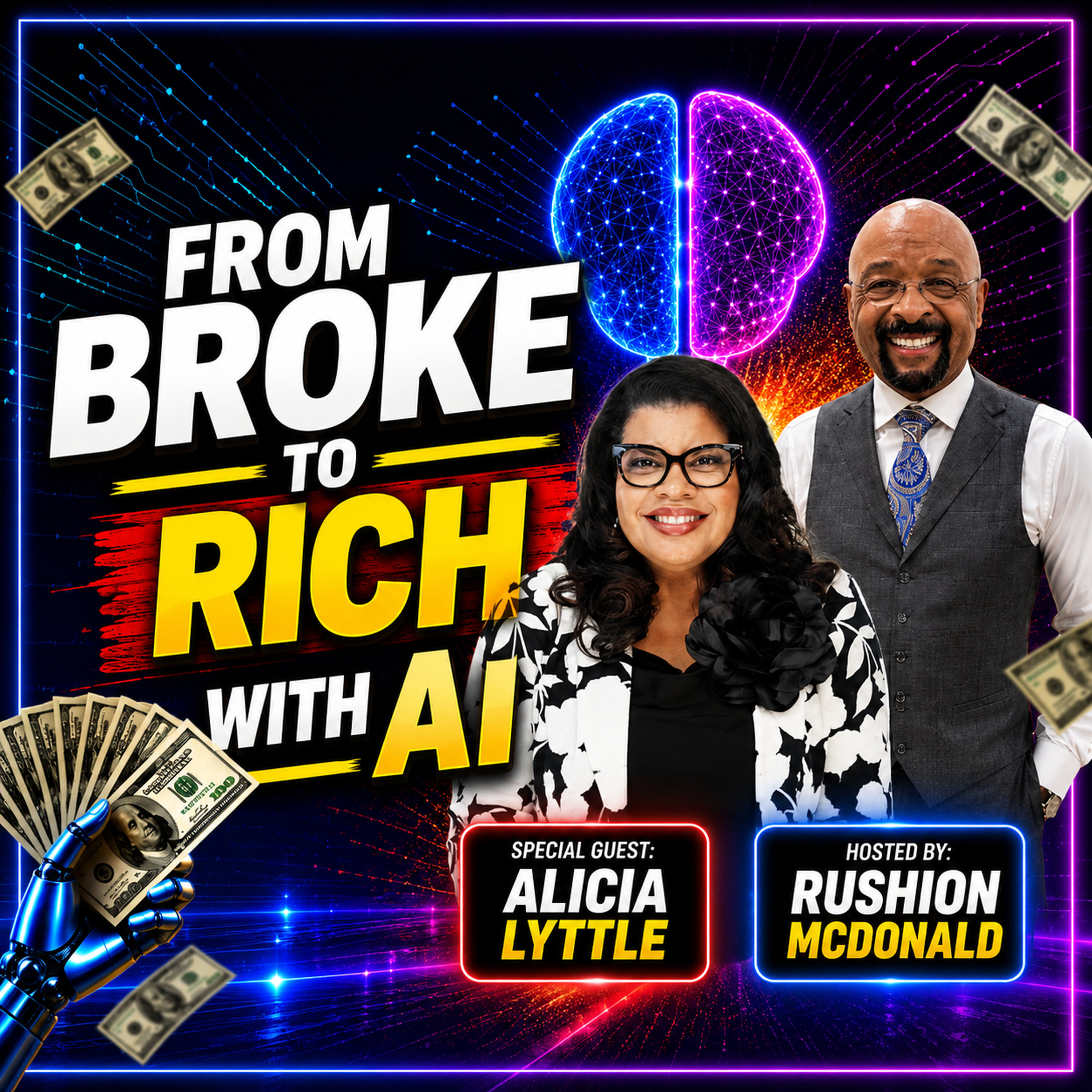
Financial Plan: AI is the defining financial opportunity of this era—and those who learn it early will dominate the future.
Jun 600:27:43Tap to summarizeListen and subscribe to Money Making Conversations on iHeartRadio, Apple Podcasts, Spotify, www.moneymakingconversations.com/subscribe/ or wherever you listen to podcasts. New Money Making Conversations episodes drop daily. I want to alert you, so you don’t miss out on expert analysis and insider perspectives from my guests who provide tips that can help you uplift the community, improve your financial planning, motivation, or advice on how to be a successful entrepreneur. Keep winning! Two-time Emmy and Three-time NAACP Image Award-winning, television Executive Producer Rushion McDonald interviewed Alicia Lyttle. 🔹 Purpose of the Interview The interview is designed to: 1. Educate on AI for Business Help entrepreneurs and small businesses understand and adopt artificial intelligence Break down AI into practical, hands-on use cases 2. Promote AI Literacy & Equity Encourage underserved communities—especially Black entrepreneurs—to lead in the AI economy rather than fall behind 3. Position AI as a Growth Tool Show how AI can increase efficiency, scale operations, and boost revenue 👉 Core purpose:Demystify AI and position it as an essential, accessible tool for economic growth and competitive advantage. 🔹 Key Themes & Takeaways 1. AI Is Moving Fast—You Must Keep Up AI adoption has accelerated dramatically in just two years. Demand for AI education is so high that Lyttle moved from annual events to monthly training. “People couldn’t wait a year anymore… they need it every month.” [ 👉 Insight: AI is no longer optional—it’s urgent. 2. Hands-On Learning Is the Key to Adoption Lyttle emphasizes practical training over theory She teaches users to actively use tools like ChatGPT and Google NotebookLM “Open your laptop… let me demonstrate… then you do it.” [ 👉 Result: Builds confidence and immediate skill application 3. AI Dramatically Increases Productivity One piece of content can be transformed into: Show notes Emails Social posts Videos Study guides “You could take this one episode and repurpose it into all these different content ways.” 👉 Insight: AI enables content multiplication and efficiency at scale 4. AI Creates Unprecedented Business Opportunity According to Lyttle, this is the best time in history to start or scale a business “Never have I seen a better time… to start, build, or scale a business than right now.” 👉 Why: Automation lowers cost and time barriers Tools can replace expensive services (e.g., website development) 5. AI Literacy Is Becoming a Job Requirement Companies are: Replacing non-AI-literate employees Hiring AI-skilled workers “Companies have… laid off those who are not AI literate.” 👉 Key takeaway: AI skills = career survival + advancement 6. Those Who Use AI Will Win AI does not just replace jobs—it rewards those who adapt “Those using AI will replace you… or far surpass you.” [ 👉 Strategy: Learn AI → integrate it → lead with it 7. AI + Human Intelligence = True Power AI is not a standalone solution—it requires human direction “It’s AI plus human intelligence.” [ 👉 Insight: Better prompts = better results Human creativity + AI execution = exponential growth 8. AI Can Transform Revenue Growth Lyttle uses AI to: Identify financial gaps Develop growth strategies “I made the income from the whole year… in one month using AI.” [ 👉 Impact: AI drives data-informed decision-making and scaling 9. AI Is Disrupting Every Industry Examples discussed: Finance AI automation (call handling, analytics) Identifying revenue gaps Healthcare AI-assisted tools and support systems AI companions for mental wellness (with caution) Government & Workforce Push for nationwide AI leadership Job displacement + new opportunities 👉 Conclusion: AI is universal, not niche 10. Early Adoption Creates Leadership Advantage Lyttle pivoted early (2022) into AI despite skepticism “Nobody wants to work with AI… but I knew it would be in demand.” [ 👉 Lesson: Vision + timing = competitive edge 11. Community Must Lead, Not Follow Focus on ensuring Black entrepreneurs are ahead of the curve “My mission… is to make sure our community is ahead of the curve.” 12. Marketing & Visibility Drive Growth Lyttle grew to 21,000+ live viewers through: Consistent content Public speaking Clear messaging “You want a bigger audience? You’ve got to show up more.” 🔹 Memorable Quotes On AI Urgency “People couldn’t wait a year anymore.” On Learning “Let me demonstrate… then you do it.” On Opportunity “Never have I seen a better time… than right now.” On Competition “Those using AI will replace you.” On Intelligence “It’s AI plus human intelligence.” On Growth “You can repurpose one piece of content into everything.” On Mindset “You want a bigger audience? You’ve got to show up more.” On Mission “Demystify AI and help people cash in on the AI revolution.” [ 🔹 Bottom Line This interview is a blueprint for thriving in the AI economy, emphasizing: ✅ Learn AI now (urgency)✅ Apply it hands-on (execution)✅ Use it to scale content and revenue✅ Stay competitive through AI literacy✅ Combine human creativity with AI power✅ Leverage AI to lead—not follow Core message:👉 AI is the defining opportunity of this era—and those who learn it early will dominate the future. #SHMS #BEST #STRAWSee omnystudio.com/listener for privacy information.
Transcribe →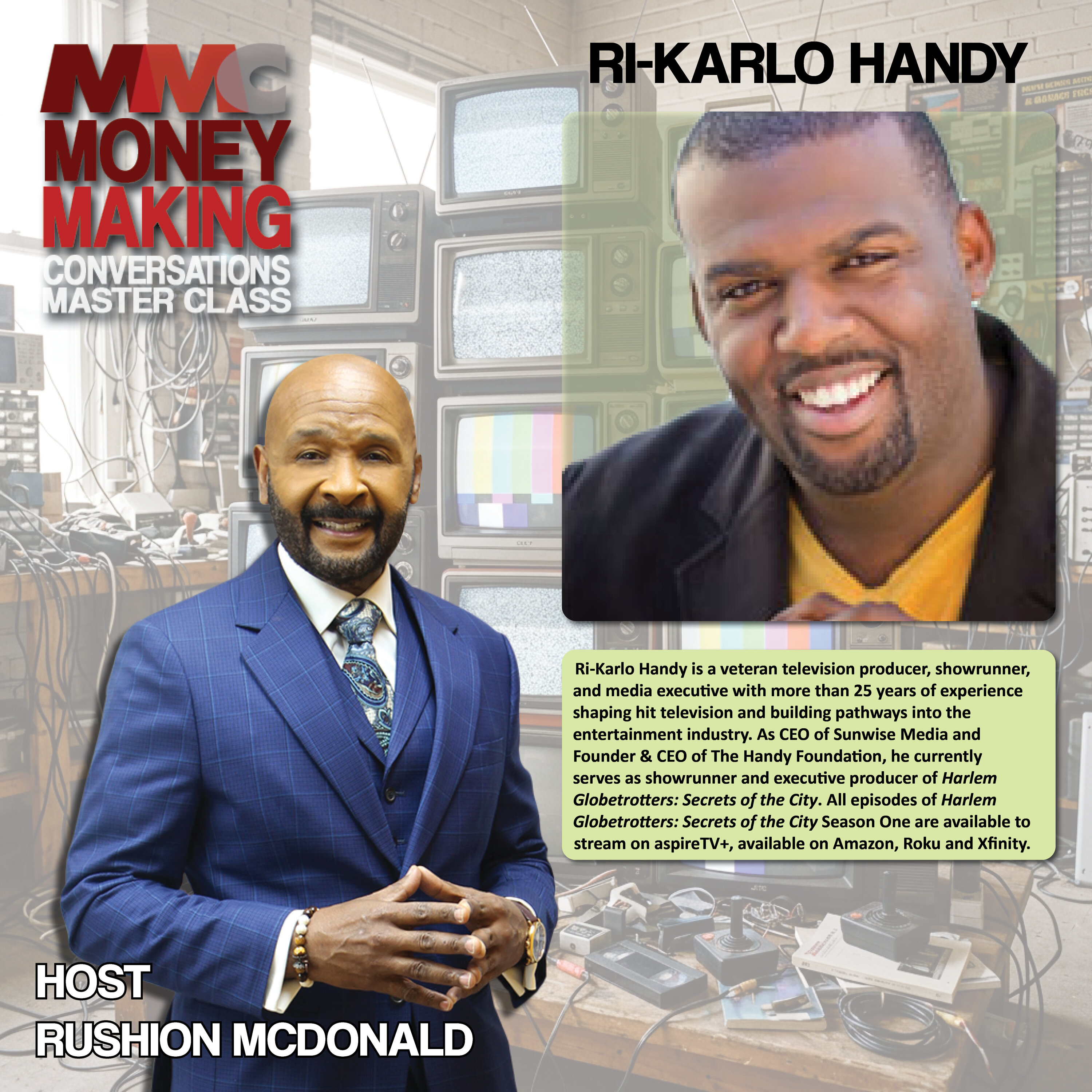
Fun News: A travel + culture show on AspireTV+ highlighting global experiences through the Globetrotters.
Jun 300:24:42Tap to summarizeListen and subscribe to Money Making Conversations on iHeartRadio, Apple Podcasts, Spotify, www.moneymakingconversations.com/subscribe/ or wherever you listen to podcasts. New Money Making Conversations episodes drop daily. I want to alert you, so you don’t miss out on expert analysis and insider perspectives from my guests who provide tips that can help you uplift the community, improve your financial planning, motivation, or advice on how to be a successful entrepreneur. Keep winning! Two-time Emmy and Three-time NAACP Image Award-winning, television Executive Producer Rushion McDonald interviewed Here is a structured summary of the Ri‑Karlo Handy interview with Rushion McDonald from Money Making Conversations Masterclass, including its purpose, key takeaways, and notable quotes. 🎯 Purpose of the Interview This interview serves three key purposes: Promote the Harlem Globetrotters: Secrets of the City series A travel + culture show on AspireTV+ highlighting global experiences through the Globetrotters. Showcase Ri‑Karlo Handy’s career and impact in media His role as a veteran showrunner and executive producer shaping content across major networks. Highlight access, mentorship, and opportunity in entertainment His efforts to open pathways for underrepresented talent through training and the Handy Foundation. 🧠 Key Takeaways 1. Content Success Is Built on Relationships and Trust Handy emphasizes that success in media is not just about creativity, but relationships and reliability. ✅ Insight: In creative industries, trust is often more valuable than talent alone. “Our business is less about skills… and more about trust.”%20(1).txt) [Ri-Karlo H...dcast) (1) | Txt] 2. Secrets of the City Redefines the Travel Show Format The show stands out by: Highlighting global destinations through Black cultural perspectives Connecting viewers to diaspora communities Sharing practical “insider” travel knowledge ✅ Insight: Niche storytelling (culture + identity + utility) creates differentiated content. “We show not just how to visit a city… but how to live in it.”%20(1).txt) [Ri-Karlo H...dcast) (1) | Txt] 3. The Harlem Globetrotters Are a Cultural Legacy Brand Over 100 years old, the Globetrotters: Pre-date the NBA Spread basketball globally Continue as ambassadors of goodwill ✅ Insight: Legacy brands can remain relevant by reinvention and media visibility. “They disappeared from the spotlight… now we’re bringing them back.”%20(1).txt) [Ri-Karlo H...dcast) (1) | Txt] 4. Entertainment + Culture + Purpose Drives Engagement The show blends: Travel Sports Cultural storytelling Social impact (global outreach) ✅ Insight: Strong content combines entertainment with purpose and identity. 5. Excellence Behind the Scenes Makes On-Screen Magic Possible Globetrotters: Train rigorously Continuously elevate performance Their performances are not just fun—they require elite skill and discipline. ✅ Insight: Great performers succeed through preparation, repetition, and mastery. 6. Representation Requires Intentional Action Handy created opportunities because: Many roles (especially post-production) lack diversity Access barriers prevent entry ✅ Insight: Real change comes from creating systems of access—not just awareness. “The hardest thing is getting that first shot.”%20(1).txt) [Ri-Karlo H...dcast) (1) | Txt] 7. The Handy Foundation Is Building Industry Pipelines Provides: Training in film/TV careers Apprenticeships Real job placement opportunities Over 400 alumni now working in major productions. ✅ Insight: Sustainable impact requires scalable talent pipelines. 8. Mentorship Shapes Careers Handy credits: Early mentors Hands-on learning opportunities ✅ Insight: Exposure + mentorship creates career pathways that traditional education often misses. 9. Curiosity and Learning Drive Career Growth Handy’s progression: Editor → Producer → Executive → Showrunner Each step came from wanting to understand how systems work. ✅ Insight: Career growth comes from continuous learning and strategic positioning. 10. Give Others Opportunities Early He consistently hires and trains first-time professionals. ✅ Insight: Industry leaders should lower barriers for entry-level talent. 11. Cultural Storytelling Strengthens Identity and Connection The series highlights: African diaspora communities worldwide Cultural ties across countries ✅ Insight: Content can build global cultural awareness and belonging. “We connect with expats and diaspora communities around the world.”%20(1).txt) [Ri-Karlo H...dcast) (1) | Txt] 💬 Notable Quotes On trust “Our business is less about skills… and more about trust.”%20(1).txt) [Ri-Karlo H...dcast) (1) | Txt] On travel storytelling “We show not just how to visit a city… but how to live in it.”%20(1).txt) [Ri-Karlo H...dcast) (1) | Txt] On opportunity “The hardest thing is getting that first shot.”%20(1).txt) [Ri-Karlo H...dcast) (1) | Txt] On representation “There aren’t a lot of Black folks in post-production… because they don’t get the opportunity.”%20(1).txt) [Ri-Karlo H...dcast) (1) | Txt] On mentorship “I’ve always been the one willing to give someone their first chance.”%20(1).txt) [Ri-Karlo H...dcast) (1) | Txt] On legacy brands “They never stopped touring… they always made people smile.”%20(1).txt) <a href="ht...
Transcribe →
Financial Tips_ He shows you to discover Your Wealth DNA, on how the tax code actually works, and how understanding it.
Jun 300:28:25Tap to summarizeListen and subscribe to Money Making Conversations on iHeartRadio, Apple Podcasts, Spotify, www.moneymakingconversations.com/subscribe/ or wherever you listen to podcasts. New Money Making Conversations episodes drop daily. I want to alert you, so you don’t miss out on expert analysis and insider perspectives from my guests who provide tips that can help you uplift the community, improve your financial planning, motivation, or advice on how to be a successful entrepreneur. Keep winning! Two-time Emmy and three-time NAACP Image Award-winning television Executive Producer Rushion McDonald interviewed Michael Uadiale. A seasoned CPA and master tax advisor with 25+ years of experience, discussing how entrepreneurs can use strategic tax planning to accelerate wealth building and achieve financial freedom within 5–7 years. He introduces his trademarked DECIDE Framework, explains why most small business owners overpay taxes, and breaks down strategies such as employing children, capturing appreciation, digital asset taxation, and multigenerational wealth planning. Rushion plays the voice of the everyday entrepreneur—curious, intimidated by taxes, and eager to understand wealth strategies—while Michael emphasizes empowerment through education, intentional planning, and knowing the rules of the tax code. 🎯 Purpose of the Interview The interview aims to: 1. Educate entrepreneurs …on how the tax code actually works, and how understanding it—not fearing it—is the key to wealth building. 2. Introduce Michael Uadiale’s DECIDE Framework A 6-step model that helps entrepreneurs achieve financial freedom in 5–7 years, based on strategic tax planning. 3. Debunk myths about taxes and wealth Especially the myth that “the tax code only favors the rich.” 4. Encourage proactive financial behavior By meeting tax advisors regularly, planning before spending, using legal tax incentives, and building multigenerational wealth. 🔑 Key Takeaways 1. The tax code is a tool—not a trap Michael stresses the tax code was intentionally created as a set of incentives to encourage certain behaviors. Those who understand it win; those who fear it overpay. “The tax law is a set of incentives… It’s how the government wants us to behave.” 2. Wealth cannot be delegated You can delegate marketing, HR, operations—but not wealth-building decisions. “Wealth cannot be delegated.” 3. The DECIDE Framework (Michael’s 6‑step wealth-building system) D – Discover Your Wealth DNAUnderstand how you make money because not all dollars are taxed equally. E – Engineer Tax-Free StructuresYour business structure determines how much money you keep. C – Capture Your Growth & Appreciation“Freeze” wealth so your heirs avoid 45% estate tax bites. I – Integrate Advanced Tax StrategiesUse high-level but legal tax planning (what rich families do). D – Defend Against Tax ErosionPut barriers in place so taxes don’t eat your wealth. E – Empower Multi‑Generational LegacyEnsure your family continues benefiting from your planning. 4. Over 80% of small business owners overpay in taxes Because they avoid taxes, only meet their preparer once a year, and confuse a tax preparer with a tax advisor. “You cannot operate like that and win the game of money.” 5. You can legally pay your kids and get major tax benefits Kids can perform tasks (in office or at home), earn up to $15–16k tax‑free, and you deduct the wages. “Instead of paying out of pocket, the government subsidizes raising your kids.” Some clients even invest those wages in Roth IRAs to create child millionaires by age 21. 6. Tax planning must be proactive, not reactive Plan taxes all year long—not at the deadline. “When you are doing tax planning, you design the end game before the start.” 7. Compounding interest + tax efficiency = true wealth Michael reinforces that compounding should start early—and taxes must be minimized to let compounding work. “Wealth is compounding interest minus taxes.” 8. Digital assets will play a major future role Michael predicts digital currencies (e.g., Bitcoin) will eventually surpass fiat currency due to scarcity and blockchain verification. 9. Fear stops people from gaining wealth Most people think advanced tax planning is “too good to be true,” which keeps them stuck. “You miss 100% of the shots you don’t take.” 10. Confidence and education are the foundation Rushion repeatedly emphasizes that Michael’s calm, confident clarity is essential for entrepreneurs who fear taxes. 🗣️ Notable Quotes from the Interview On Tax Code “The tax code was not written for the little guys… but if you understand the rules, you get the same benefits the big boys get.” “The tax code is one of the fastest ways to financial freedom.” On Wealth “Wealth cannot be delegated.” “Wealth is compounding interest minus taxes.” On Fear & Taxes “People avoid taxes all year and then try to win in April—You cannot win like that.” “You miss 100% of the shots you don’t take.” On Paying Kids “It’s a no brainer. The government is subsidizing your kids’ upbringing.” On Digital Currency “Digital assets are backed by supply and demand. It’s only a matter of time.” On His Confidence “I have nothing else to prove in my life at this point.” #SHMS #STRAW #BESTSee omnystudio.com/listener for privacy information.
Transcribe →
Overcoming the Odds_ Oversees operations Rolling Stone, Billboard, Variety, The Hollywood Reporter, Vibe, SXSW, and more
Jun 300:22:29Tap to summarizeListen and subscribe to Money Making Conversations on iHeartRadio, Apple Podcasts, Spotify, www.moneymakingconversations.com/subscribe/ or wherever you listen to podcasts. New Money Making Conversations episodes drop daily. I want to alert you, so you don’t miss out on expert analysis and insider perspectives from my guests who provide tips that can help you uplift the community, improve your financial planning, motivation, or advice on how to be a successful entrepreneur. Keep winning! Two-time Emmy and Three-time NAACP Image Award-winning, television Executive Producer Rushion McDonald interviewed Paul Rainey. He holds a powerful executive role in the media world, shaping the future of iconic brands like Billboard, Rolling Stone, and SXSW. 🏆 Paul Rainey’s Executive Career at Penske Media Corporation (PMC) Current Role Executive Vice President of Operations and Finance at Penske Media Corporation (PMC). Oversees operations and financial strategy for Rolling Stone, Billboard, Variety, The Hollywood Reporter, Vibe, SXSW, and more. Provides strategic input across PMC’s global media brands and live events, including the Billboard Music Awards, SXSW, and American Music Awards. Key Responsibilities Leads financial decision-making, acquisitions, and operational procedures across PMC’s portfolio. Serves on several boards, including as Audit Committee Chair of Redaptive, Inc. and a Director at SXSW. Background & Education Holds a Master of Science in Accountancy and a BBA in Finance and Computer Applications from the University of Notre Dame. Formerly held leadership roles at General Electric, Global Eagle, and Harris CapRock Communications, managing billion-dollar operations across five continents. 📘 About PMC & Cultural InfluencePMC is a global media powerhouse, reaching over 350 million people monthly. Its brands shape culture through journalism, entertainment, and live events, including SXSW Paul Rainey is a rare blend of creative storyteller and corporate strategist, bridging the worlds of graphic novels and global media leadership. Whether he’s crafting a sci-fi twist in a comic or guiding the future of Billboard and SXSW, his influence is both wide-reaching and deeply personal. Let me know if you’d like a visual timeline of his career or a deeper dive into one of his roles. 🎬📈✨ #STRAW #BEST #SHMSSee omnystudio.com/listener for privacy information.
Transcribe →
Money Talk_ She educates listeners on estate planning as a wealth‑preservation.
Jun 300:28:16Tap to summarizeListen and subscribe to Money Making Conversations on iHeartRadio, Apple Podcasts, Spotify, www.moneymakingconversations.com/subscribe/ or wherever you listen to podcasts. New Money Making Conversations episodes drop daily. I want to alert you, so you don’t miss out on expert analysis and insider perspectives from my guests who provide tips that can help you uplift the community, improve your financial planning, motivation, or advice on how to be a successful entrepreneur. Keep winning! Two-time Emmy and Three-time NAACP Image Award-winning, television Executive Producer Rushion McDonald interviewed Attorney Whitney Knox Lee. Explains practical estate‑planning strategies—wills, trusts, powers of attorney—and how entrepreneurs, families, and especially parents of disabled children can protect assets, avoid costly probate, and maintain eligibility for critical benefits. The conversation also touches on integrating insurance with estate planning, small‑business contingency planning, and Lee’s personal mission and background in civil rights work. Purpose of the Interview Educate listeners on estate planning as a wealth‑preservation strategy (not just documents)—to reduce court costs, taxes, and confusion for families. Clarify the differences and roles of wills, trusts, and powers of attorney, including when each is appropriate and how they work together.] Highlight special considerations for entrepreneurs and families with disabled children or aging relatives, including insurance, operating agreements, and special‑needs planning. Share Lee’s values and practice approach, including culturally responsive service and sustainable advocacy rooted in prior civil‑rights work. Key Takeaways 1) Wills vs. Trusts vs. Powers of Attorney A will is not the plan—it’s just one piece and still goes through probate, which can be slow and expensive; think of a will as a “letter to the judge.] Revocable living trusts can help families bypass probate, reduce delays, and retain more control over how assets are managed after death. Powers of attorney (financial and health) are essential for incapacity scenarios; even 18‑year‑olds heading to college should have them so parents can access information if needed. 2) Why Insurance Belongs in the Plan Life insurance can protect the family’s ability to keep the home by paying off a remaining mortgage or covering living expenses—turning an asset into a sustainable legacy rather than a burden. For entrepreneurs, key‑person insurance can replace income when the owner can’t work, keeping the business afloat. 3) Minimizing Probate Costs and Taxes Probate involves court filings and legal fees; in some states fees scale with estate size (example discussed: percentage‑based fees in other jurisdictions), which can significantly erode wealth passed to heirs. Proper planning reduces those leakages. 4) Special‑Needs and Elder Planning Parents of children on need‑based benefits (e.g., Medicaid) must avoid transfers that jeopardize eligibility; the right trust structures preserve benefits while providing support. Elder law planning anticipates long‑term care costs (nursing home, assisted living, in‑home care) so families don’t have to deplete assets later. 5) Business Continuity for Owners Establish operating agreements and buy‑sell agreements that spell out who runs the business if the principal is incapacitated; pair with business powers of attorney. 6) Values, Audience, and Access Lee intentionally centers Black and Brown women and their families, grounding services in community uplift and transparent referrals to trusted financial pros (no paid referral arrangements). Contact approach: 15‑minute intake, then a four‑meeting process (legacy planning → design → review → signing). Notable Quotes (for pull‑quotes & captions) “Think of a will as a letter to the judge… a will still has to go through probate court. “A trust allows families to bypass probate altogether so they aren’t paying legal fees or leaving things to people who want to challenge the will. “Life insurance is a huge tool—it can help the family pay off the mortgage so they can keep the home and the equity.” “Estate planning is a strategy—not just documents.” “Even 18‑year‑olds should have powers of attorney—parents can’t just call doctors once kids are legal adults.” “I stay in my lane—I’m an attorney. I work closely with trusted financial professionals and make non‑compensated referrals.” “For special‑needs planning, don’t jeopardize need‑based benefits—use the right trust so support continues. “I want to build a sustainable practice that lets me serve my community and rest well, aligned with my family and values.” Quick Action Items (for listeners inspired by the episode) Draft or update POAs (financial and health) for every adult in the household, including college‑age children. Evaluate whether a revocable living trust makes sense to avoid probate and retain post‑death control. For business owners: review operating agreement / buy‑sell, add key‑person insurance, and create a business POA. Families with special‑needs dependents: consult on special‑needs trusts to protect benefits. #SHMS #STRAW #BESTSee omnystudio.com/listener for privacy information.
Transcribe →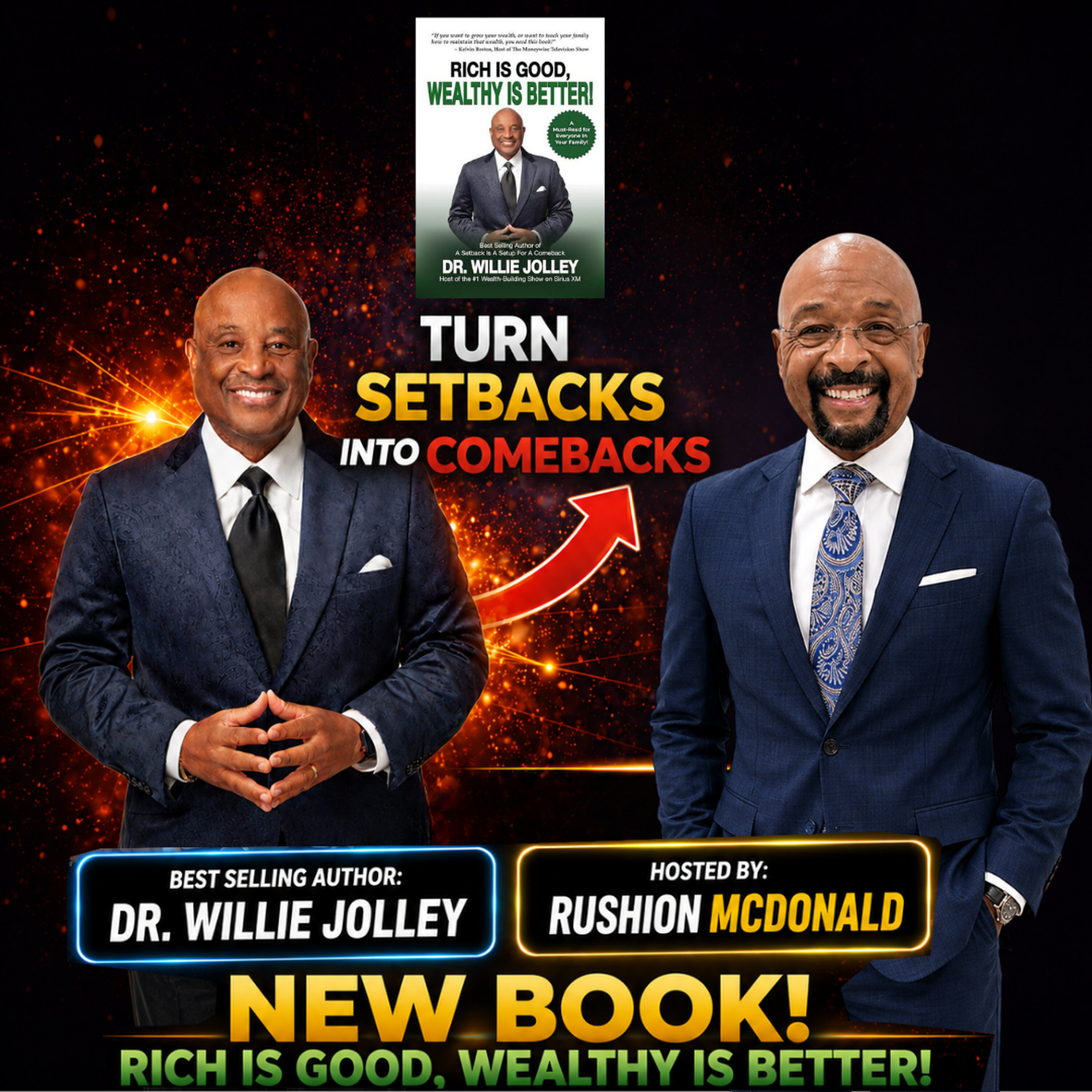
Financial Plan: Rich is Good, Wealthy is Better, practical financial frameworks for individuals, families, and small business owners.
Jun 200:27:42Tap to summarizeListen and subscribe to Money Making Conversations on iHeartRadio, Apple Podcasts, Spotify, www.moneymakingconversations.com/subscribe/ or wherever you listen to podcasts. New Money Making Conversations episodes drop daily. I want to alert you, so you don’t miss out on expert analysis and insider perspectives from my guests who provide tips that can help you uplift the community, improve your financial planning, motivation, or advice on how to be a successful entrepreneur. Keep winning! Two-time Emmy and Three-time NAACP Image Award-winning, television Executive Producer Rushion McDonald interviewed Dr. Willie Jolley. 🔹 Purpose of the Interview The interview is designed to: Promote Jolley’s book*“Rich Is Good, Wealthy Is Better”* Educate listeners on wealth-building principles, especially in underserved and entrepreneurial communities Shift mindset from short-term income thinking to long-term, generational wealth creation Provide practical frameworks for individuals, families, and small business owners to grow and protect wealth At its core, the purpose is mindset transformation + actionable financial literacy. 🔹 Key Themes & Takeaways 1. Wealth vs. Rich: A Critical Distinction Most people don’t understand the difference. “Rich” = amount of money “Wealthy” = sustainability + generational impact 👉 Key insight: You cannot achieve a goal you don’t understand or can’t define. “It’s hard to hit what you can’t see—and even harder to hit what you don’t know.” 2. Wealth Begins with Mindset Wealth creation starts internally, not externally. Thought patterns determine financial outcomes. 👉 Core message: “Wealth starts in your mind.” 3. The 5 Money Mindsets (Progression Model) Jolley outlines a ladder of financial thinking: One-Day Mindset – survival (daily income) 30-Day Mindset – paycheck-to-paycheck One-Year Mindset – annual income growth focus Decade Mindset – high earners but often unsustainable Wealth Mindset – generational thinking 👉 Goal: Move up one level at a time “The wealth mindset thinks generation to generation to generation.” [ 4. Discipline is the Foundation of Wealth Income alone does not create wealth. Behavior and consistency do. 👉 Principle: What you do with money matters more than how much you make “Regular folks work for their money. Wealthy people make their money work for them.” 5. The Three Legs of Wealth To build sustainable wealth, Jolley emphasizes: Income – money coming in Investment – grow excess capital Insurance – protect assets 👉 Missing any one leg creates instability. 6. Live Below Your Means (and Drop Pride) Pride is a major barrier to wealth. Social pressure drives overspending. 👉 Key idea: Sacrifice short-term appearances for long-term freedom. “My pride would not allow me to invest… now I understand.”“Once I realized my pride was killing my wealth, I had to let the pride go.” 7. Multiple Streams of Income Are Essential Everyone should have at least two streams of income Examples: real estate, stocks, content creation, collectibles, etc. 👉 Wealth requires diversification. 8. Wealth Is More Than Money (5 Types of Wealth) Jolley broadens the concept of wealth into: Financial wealth Health wealth Relationship wealth Reputational (brand) wealth Intellectual wealth 👉 Insight: True wealth is holistic—not just financial “If you are sick, you cannot enjoy the great revenues you’re generating.” [ 9. Anyone Can Become Wealthy (Accessibility) Jolley makes a strong distinction: Not everyone will be rich Anyone can become wealthy with discipline and principles “Everybody is not going to be rich… but anybody can become wealthy.” [ 10. Start Now—It’s Never Too Late Age, income, or past mistakes don’t prevent wealth building. 👉 Key mindset: Action beats delay. “When’s the second best time? Today.” [ 11. Turn Setbacks into Comebacks Jolley’s personal story reinforces resilience. Failure is not final—it's a pivot point. “A setback is not the end… it’s a setup for a comeback.” [ 🔹 Memorable Quotes Here are standout quotes from the interview: On Time & Opportunity “You have only just a minute… but eternity is wrapped up in it.” [ On Wealth Awareness “It’s hard to hit what you can’t see—and even harder to hit what you don’t know.” [ On Mindset “Wealth starts in your mind.” On Financial Behavior “Regular folks work for their money. Wealthy people make their money work for them.” On Pride “My pride would not allow me to invest.” [ On Generational Thinking “The wealth mindset thinks generation to generation.” [ On Possibility “Anybody can become wealthy.” On Timing “The second best time to start is today.” On Resilience “A setback is a setup for a comeback.” 🔹 Bottom Line The interview is a masterclass in wealth mindset + practical money strategy, emphasizing: ✅ Think long-term (generational wealth)✅ Act with discipline (live below your means)✅ Invest consistently✅ Protect what you build✅ Eliminate pride and ignorance✅ Start now—regardless of circumstances #SHMS #STRAW #BESTSee omnystudio.com/listener for privacy information.
Transcribe →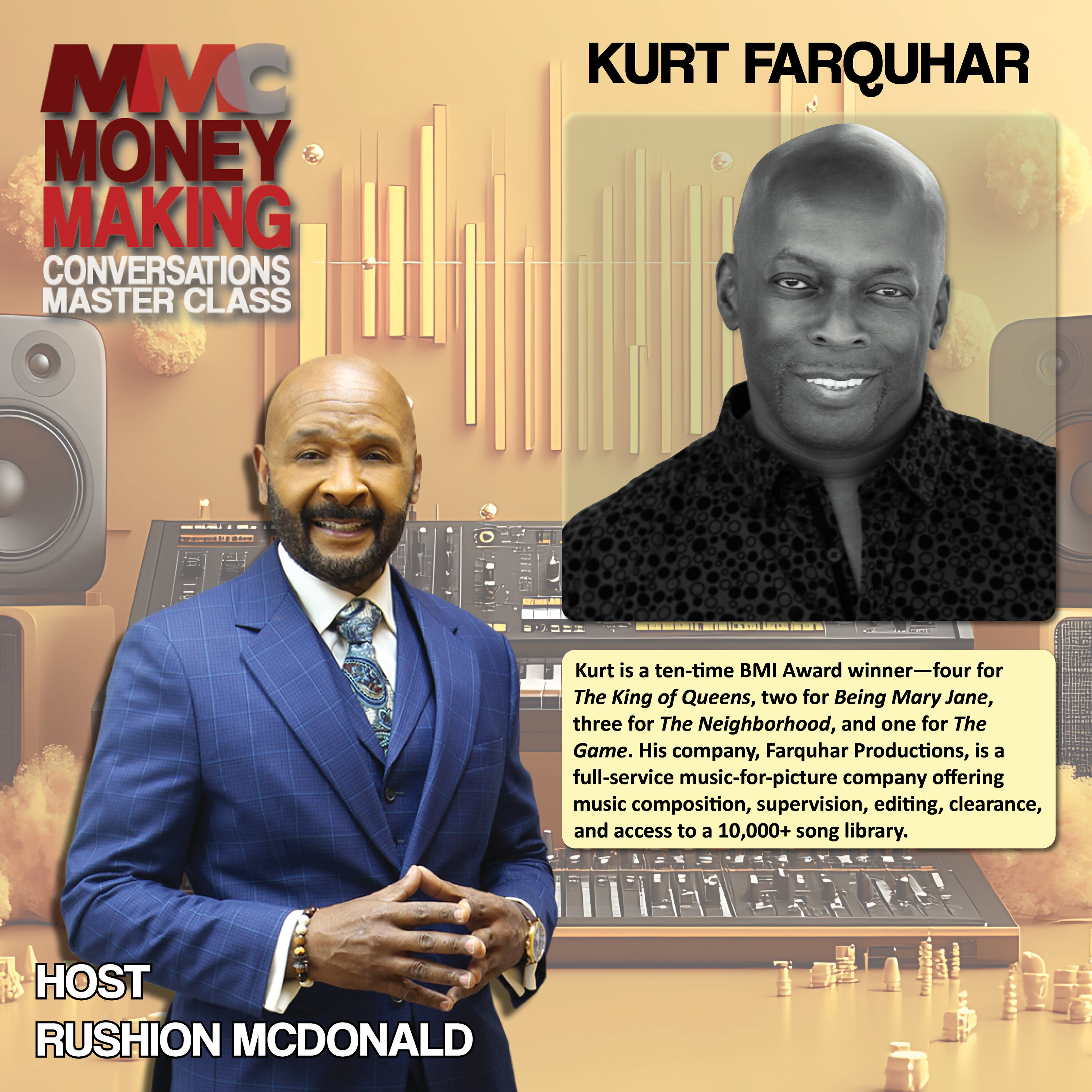
Overcoming the Odds: He highlights how sustainable success comes from mastery of craft, relationship-building, and treating creativity as a business.
Jun 100:29:06Tap to summarizeListen and subscribe to Money Making Conversations on iHeartRadio, Apple Podcasts, Spotify, www.moneymakingconversations.com/subscribe/ or wherever you listen to podcasts. New Money Making Conversations episodes drop daily. I want to alert you, so you don’t miss out on expert analysis and insider perspectives from my guests who provide tips that can help you uplift the community, improve your financial planning, motivation, or advice on how to be a successful entrepreneur. Keep winning! Two-time Emmy and Three-time NAACP Image Award-winning, television Executive Producer Rushion McDonald interviewed Kurt Farquhar. Television & Film Composer, Founder of Fall Crop Productions and True Music ProNotable Credits: The King of Queens, Girlfriends, The Parkers, Being Mary Jane, The Proud Family, The Neighborhood, Black LightningAwards: 10 BMI AwardsTenure: 38+ years in television Purpose of the Interview The purpose of this interview is to educate and inspire creatives, entrepreneurs, and professionals about longevity, adaptability, and wealth-building behind the scenes. Kurt Farquhar’s journey highlights how sustainable success comes from mastery of craft, relationship-building, and treating creativity as a business—not chasing visibility or fame. Rushion McDonald uses Kurt’s career as a blueprint for: Building mailbox money through residuals Staying relevant across decades of industry change Monetizing intellectual property Leveraging relationships to sustain opportunity Core Themes Discussed Longevity vs. “getting on” Behind-the-scenes success Residual income (“mailbox money”) Adaptability in changing industries Creative originality Relationship capital Diversifying income through ownership Treating art like a business Key Takeaways 1. Staying In Is Harder Than Getting In While many focus on breaking into the industry, Kurt emphasizes that lasting success requires constant reinvention. “The continuing it for the 30-plus years has been way harder than the getting in in the first.” Insight: Longevity requires discipline, humility, and evolution. 2. Behind-the-Scenes Roles Can Be More Sustainable Kurt chose composing over performing, allowing him to age into his career rather than age out of it. “In television and film… all I’ve got to say is John Williams is in his 90s and still composing.” Insight: Choose lanes that allow long-term relevance and recurring income. 3. Residual Income Is Real Wealth Rushion and Kurt discuss “mailbox money”—recurring payments from past work. “If you just had the mailbox money for King of Queens, you’d be fine.” Insight: True financial freedom comes from owning work that keeps paying. 4. Adaptability Is Non‑Negotiable Kurt has survived massive industry shifts—from analog tape to digital production—by embracing change. “Sustain that good idea, change it, polish it up, and mold it for the changing times.” Insight: Talent without adaptability becomes obsolete. 5. Originality Comes From Listening, Not Forcing a Style Kurt avoids creative stagnation by serving the story, not his ego. “I don’t come in every day trying to force the singular style I’ve done for 38 years.” Insight: Longevity depends on collaboration and humility. 6. Relationships Are Career Currency Kurt credits long-term success to consistently showing up for people—before they’re powerful. “If you only call someone once you read they’ve got something coming up, it’s already too late.” Insight: Relationships built without agenda produce lasting opportunity. 7. Saying “Yes” Creates Opportunity Kurt embraces what he calls the power of yes. “I figure I can say yes more than you and end up making more and doing better.” Insight: Opportunity favors those who remain open, prepared, and professional. 8. Ownership Multiplies Creativity Into Business Kurt built True Music Pro, a licensing library used across major networks and streaming platforms. “I realized companies were licensing more of my music than I was… so I built my own library.” Insight: Ownership turns talent into scalable income. Notable Quotes “The journey to stay in is harder than the journey to get in.” “Treat it like a business and it might treat you in kind.” “I do my job, I do it the best I can, and I move on to the next one.” “Character is character. Relationships matter.” “That success doesn’t happen by accident. It happens with care.” Overall Impact of the Interview This interview serves as a masterclass on creative longevity and wealth-building without celebrity dependency. Kurt Farquhar’s story reframes success as: Consistent excellence Relationship stewardship Business ownership Adaptability across generations It is especially powerful for: Creatives seeking sustainable careers Entrepreneurs building IP-based businesses Professionals navigating long-term relevance Anyone pursuing “quiet wealth” over public fame #SHMS #STRAW #BESTSee omnystudio.com/listener for privacy information.
Transcribe →
Family Values: The 5 Ps of Family Resilience: Perseverance, Persistence, Preparedness, Purpose, and Prayer
Jun 100:37:28Tap to summarizeListen and subscribe to Money Making Conversations on iHeartRadio, Apple Podcasts, Spotify, www.moneymakingconversations.com/subscribe/ or wherever you listen to podcasts. New Money Making Conversations episodes drop daily. I want to alert you, so you don’t miss out on expert analysis and insider perspectives from my guests who provide tips that can help you uplift the community, improve your financial planning, motivation, or advice on how to be a successful entrepreneur. Keep winning! Two-time Emmy and Three-time NAACP Image Award-winning, television Executive Producer Rushion McDonald interviewed Cheryl McKissack Daniel. Topic: Legacy, resilience, and entrepreneurship of the McKissack family, as detailed in the book The Black Family Who Built America. Cheryl shares the powerful story of her family's 230-year legacy in architecture and construction, making McKissack & McKissack the oldest minority woman-owned professional design and construction firm in the U.S. The conversation explores themes of generational resilience, Black excellence, business strategy, and personal growth. 🎯 Purpose of the Interview Highlight the McKissack family’s historical and cultural impact on American infrastructure and Black entrepreneurship. Promote the book The Black Family Who Built America as a record of legacy and inspiration. Inspire small business owners and entrepreneurs with lessons on perseverance, succession planning, and self-identity. Address the importance of preserving Black history in the face of cultural erasure. 🔑 Key Takeaways 🏗️ Legacy & Impact McKissack & McKissack has contributed to major U.S. infrastructure projects like: Barclays Center JFK Terminal One LaGuardia Airport Penn Station Lincoln Financial Field “We are the fifth generation. Right. And we're Black in America.” 📚 Historical Significance The family legacy began with Moses McKissack, who was enslaved and later became a builder. Cheryl’s ancestors were the first licensed Black architects in America (licenses 117 and 118 in Tennessee). “They became the first Black licensed architects in America… and helped get licensed in 22 other states.” 💼 Business Wisdom Cheryl emphasizes the importance of: Succession planning Understanding both technical and political buyers Building relationships before you need them “You better have that relationship before you need it.” 🧠 The 5 Ps of Family Resilience Perseverance Persistence Preparedness Purpose Prayer “Sometimes you do get up in the morning and you say it's not for me… You have to come back and meditate on the fact that you're a winner.” 🧘‍♀️ Personal Growth & Mental Health Cheryl discusses overcoming stress, rediscovering herself after a difficult marriage, and the importance of meditation. “Being yourself is what we're talking about… I recognize that I am currently feeling stressed out. So what do I need to do?” 👩‍👧‍👧 Women in Leadership Cheryl’s mother took over the business after her father’s stroke, despite societal barriers. “She only knew the telephone number to the office at that time… but she knew deep inside that she wanted to hold on for the fifth generation.” 🎥 Representation & Media The book and Cheryl’s story aim to counteract negative portrayals of Black people in media and history. “You may not have known about Black excellence. You just ignored it. But we exist.” 💬 Memorable Quotes “Black people built America. Now, that's the point we're making here.” “You have to say the opposite to yourself. And you have to put one foot in front of the other.” “This book is a receipt to say we are around. We have a foundation. We're not going anywhere.” #SHMS #STRAW #BESTSee omnystudio.com/listener for privacy information.
Transcribe →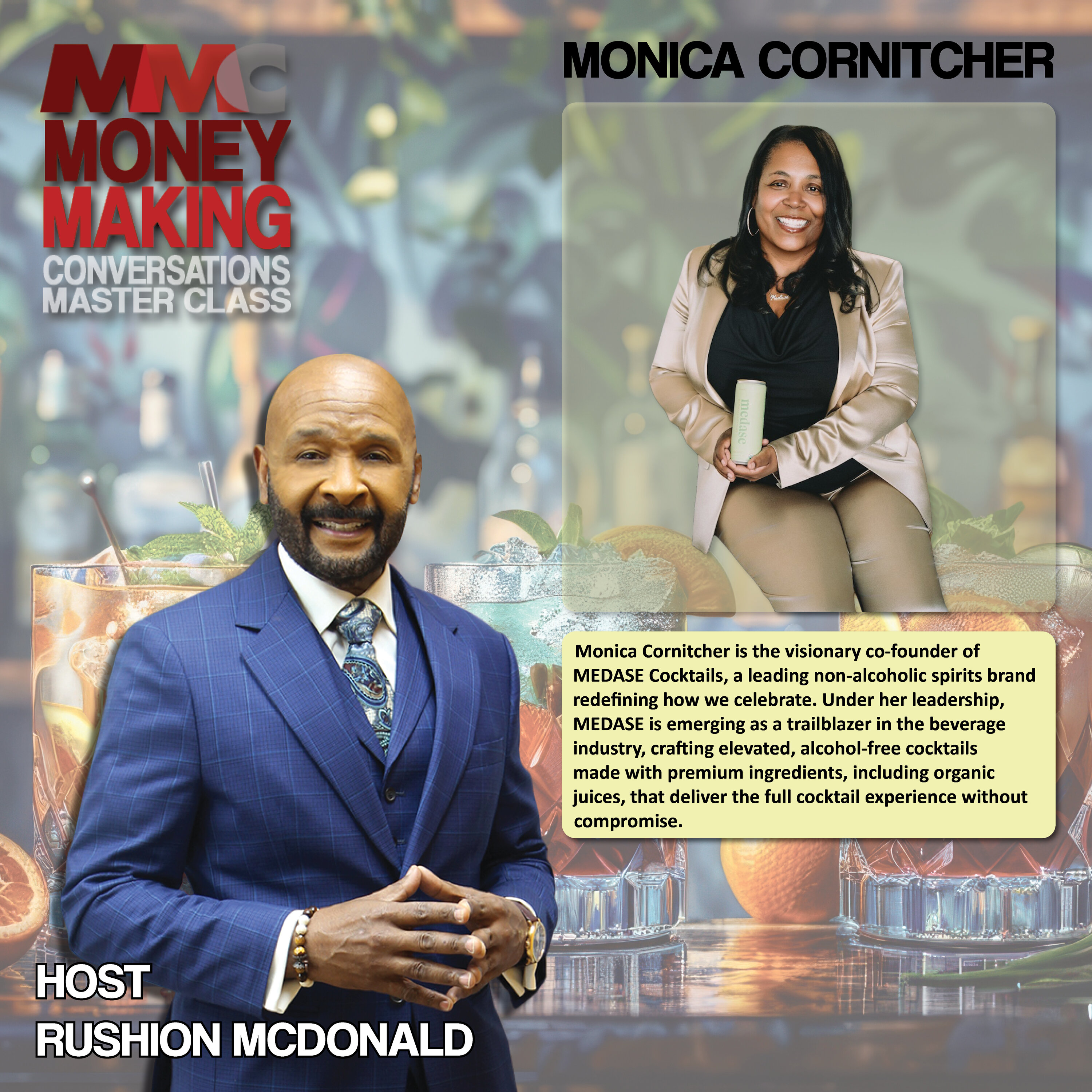
Overcoming the Odds: Discusses launching, funding, and scaling a premium nonalcoholic spirit brand against high competition.
Jun 100:28:13Tap to summarizeListen and subscribe to Money Making Conversations on iHeartRadio, Apple Podcasts, Spotify, www.moneymakingconversations.com/subscribe/ or wherever you listen to podcasts. New Money Making Conversations episodes drop daily. I want to alert you, so you don’t miss out on expert analysis and insider perspectives from my guests who provide tips that can help you uplift the community, improve your financial planning, motivation, or advice on how to be a successful entrepreneur. Keep winning! Two-time Emmy and Three-time NAACP Image Award-winning, television Executive Producer Rushion McDonald interviewed Monica Cornitcher. Entrepreneurial journey, the inspiration behind Medase Cocktails, and the realities of launching, funding, and scaling a premium nonalcoholic spirits brand in a highly competitive market. Purpose of the Conversation The purpose of the episode is to: Educate aspiring entrepreneurs on how to build a differentiated consumer brand Demonstrate the importance of storytelling, market clarity, and operational discipline Highlight the growth of the nonalcoholic / zero‑proof beverage movement Inspire founders—especially founders of color—to own their niche, seek capital strategically, and scale intentionally. Key Takeaways 1. Business Built from Personal Need and Purpose Medase Cocktails was co‑founded by Monica and her lifelong friend during her friend’s battle with breast cancer, a time when alcohol was no longer an option—but celebration still mattered. The brand was created to allow people to celebrate authentically without alcohol It carries emotional depth rooted in friendship, gratitude, and loss Monica continues the mission after her co‑founder passed away in 2024 Lesson: Purpose-driven businesses create deeper emotional connection and long-term brand equity. 2. Differentiation Is Everything Monica deliberately rejected the “sparkling water with flavor” model common in nonalcoholic drinks. Her differentiators include: Authentic cocktail taste (Old Fashioned, Margarita, Moscow Mule) Organic juices, not artificial flavors Bold packaging that stands out on shelves Drinks designed to smell, taste, and feel like real cocktails Lesson: Competing on authenticity—not cost—is how you carve out market share in crowded spaces. 3. Brand Names and Stories Matter The name “Medase” means “thank you” and reflects gratitude, friendship, and emotional support. Monica emphasizes: Every flavor name, color, and product decision has a story A strong brand narrative creates curiosity, loyalty, and investor interest Lesson: People invest in brands they feel—emotionally, not just intellectually. 4. Venture Capital Is Not Just About Numbers While financials matter, Monica stresses that VCs also invest in founders and stories. What helped her secure venture capital: A compelling personal story Relevant founder skill sets (M&A, law, operations) Clear understanding of the market opportunity Lesson: Early-stage funding often depends on who you are and why you’re building, not just revenue. 5. Research, Planning, and Discipline Before Launch Unlike many food startups, Medase did not begin in a kitchen. They: Conducted a feasibility study Built a formal business plan Worked with a Black female food scientist Set strict personal funding limits before seeking capital Lesson: Preparation reduces risk and builds long-term sustainability. 6. Scaling Requires Operational Maturity As sales increased—especially on Amazon—Monica emphasized the need to move from “hustle mode” to operational excellence. Key scaling principles: Understand unit economics Track ROI for events and activations Adjust pricing as volume increases Build strategy across marketing, operations, and distribution Lesson: Hustle starts the business; operations grow it. 7. Niche First, Expansion Later Medase does not try to be “everything to everyone.” Core customers include: People seeking a break from alcohol Health-conscious consumers Black men looking for alcohol replacements Consumers wanting cocktail taste without hangovers Lesson: Strong niches create loyal advocates who fuel organic growth. 8. Smart Distribution Strategy Rather than rushing into retail, Monica prioritized direct-to-consumer channels: Amazon (top-performing channel) Brand website TikTok Shop Only after 6–7 months of traction did retail expansion become viable. Lesson: Control your margins and demand before entering expensive retail environments. Memorable Quotes “I wanted an authentic cocktail without compromise.” “Everything we do has a story behind it.” “Sometimes it’s not about the financials—it’s about the founder and the story.” “Don’t be everything to everybody. Find your market and stick with your market.” “Hustle starts the business, but operations give you scale.” “If it tastes too much like alcohol and you gave me a one-star review—thank you. That means I did my job.” Overall Message This episode is a real-world entrepreneurial blueprint showing how clarity of vision, emotional authenticity, disciplined planning, and niche focus can turn a personal idea into a scalable national brand. Monica Cornitcher exemplifies the modern founder:visionary, data-aware, emotionally intelligent, and unapologetically authentic. #SHMS #BEST #STRAWSee omnystudio.com/listener for privacy information.
Transcribe →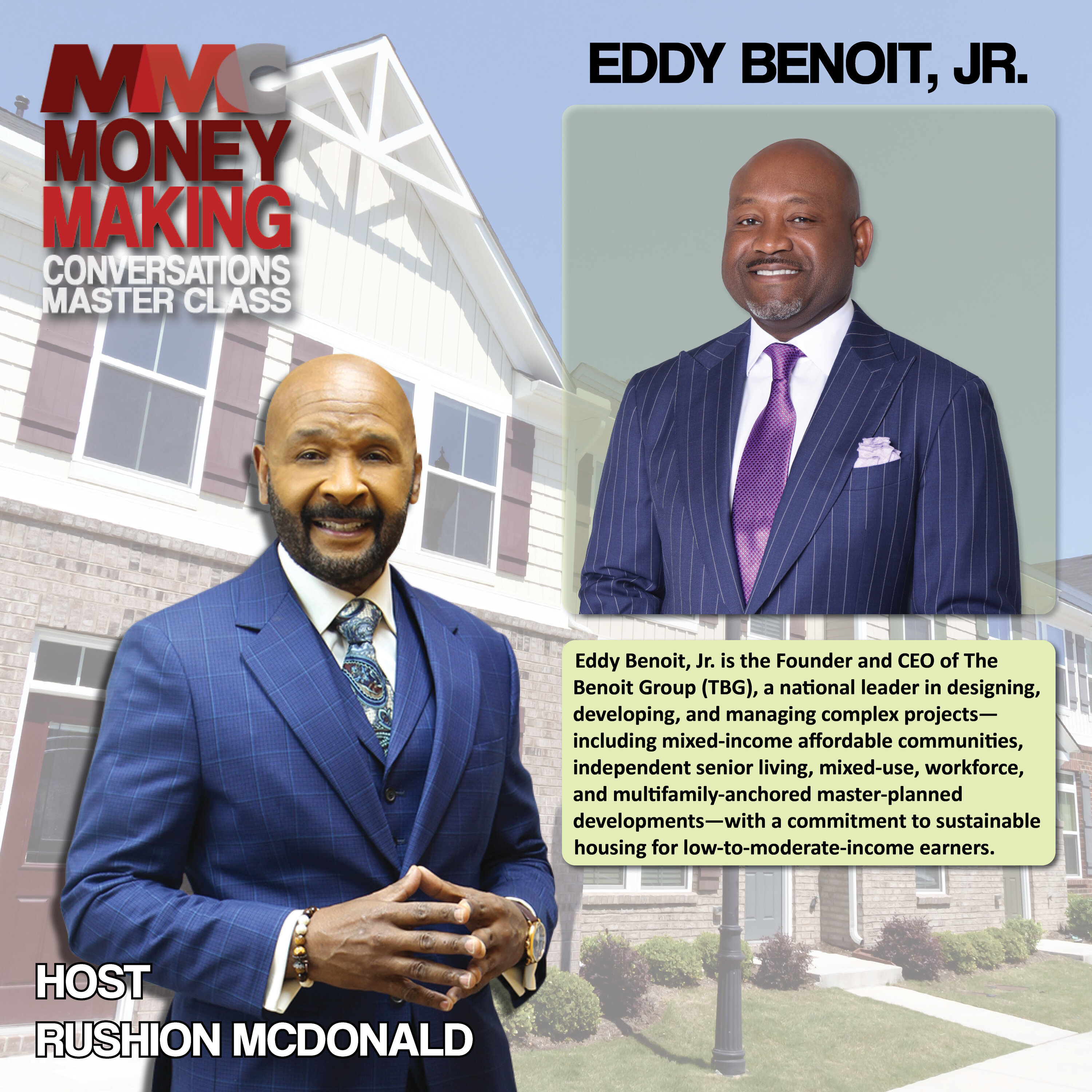
Real Estate: Highlights his work in real estate development especially affordable housing, mixed-use developments, and senior living.
Jun 100:25:43Tap to summarizeListen and subscribe to Money Making Conversations on iHeartRadio, Apple Podcasts, Spotify, www.moneymakingconversations.com/subscribe/ or wherever you listen to podcasts. New Money Making Conversations episodes drop daily. I want to alert you, so you don’t miss out on expert analysis and insider perspectives from my guests who provide tips that can help you uplift the community, improve your financial planning, motivation, or advice on how to be a successful entrepreneur. Keep winning! Two-time Emmy and Three-time NAACP Image Award-winning, television Executive Producer Rushion McDonald interviewed Eddy Benoit Jr. 🎯 Purpose of the Interview This interview has three primary objectives: Highlight Eddy Benoit Jr.’s work in real estate development Especially affordable housing, mixed-use developments, and senior living. Explain how mission-driven real estate can transform communities Focus on underserved areas and mixed-income solutions. Provide entrepreneurial and leadership insights Covering vision, discipline, team-building, and scaling a business. 🧠 Key Takeaways 1. Mission-Driven Development Is the Core of Success The Benoit Group focuses on affordable and mixed-income housing, especially for underserved populations. Their strategy is rooted in a clear “why” that hasn’t changed since founding. ✅ Insight: Long-term success comes from staying aligned with a clear mission. “Our litmus test has been our why… that’s what keeps us from being distracted.” [EDDY BENOIT JR | Txt] 2. There Is a Massive Gap in Affordable Senior Housing Target population: Ages 55–85 Low to moderate income This group often: Doesn’t qualify for subsidies Can’t afford market-rate housing ✅ Insight: Huge opportunity exists in underserved housing markets. “The demand is extremely high… not many people are really building affordably priced housing.” [EDDY BENOIT JR | Txt] 3. Understanding “Affordable Housing” Is More Complex Than It Sounds Two categories: Capital A Affordable: Low-income (≤60% of area median income) Small a affordable: Moderate-income (80%–140%) Projects must balance income ranges to remain financially viable. ✅ Insight: Real estate success requires technical, financial, and regulatory understanding. 4. Public-Private Partnerships Drive Large Developments Major projects come through: Competitive RFP/RFQ processes Partnerships with municipalities Developments often include: Housing Retail Office/hospitality components ✅ Insight: Scale is achieved through collaboration with government entities. 5. Great Leadership Requires Evolution and Self-Awareness Leadership style evolved over time: From authority-based to transparency-based Key principle: Honesty and communication build strong teams ✅ Insight: Effective leadership is adaptive, transparent, and people-centered. “Transparency and honesty… is the best form of communication.” [EDDY BENOIT JR | Txt] 6. Hire People Who Challenge You Entrepreneurs often make the mistake of hiring people just like themselves. Strong teams include: Different perspectives Greater expertise ✅ Insight: Growth requires diverse thinking and constructive challenge. “You want people who think different… and can challenge your thought process.” [EDDY BENOIT JR | Txt] 7. Be Realistic and Honest in Business Planning Many entrepreneurs: Set unrealistic revenue expectations Build budgets based on wishful thinking ✅ Insight: Success requires honest evaluation and disciplined planning. “They’re not honest with themselves… the path to making that revenue isn’t achievable.” [EDDY BENOIT JR | Txt] 8. Real Estate Can Transform Entire Communities Benoit Group intentionally invests in: Overlooked or underserved neighborhoods Their developments act as catalysts: Attracting other investors Sparking broader economic growth ✅ Insight: Strategic investment can redefine entire communities. “We go in areas that have been overlooked… and act as a catalyst.” [EDDY BENOIT JR | Txt] 9. True Impact Goes Beyond Buildings Success is not just physical development: It’s about changing mindset and confidence in communities ✅ Insight: Transformation requires both infrastructure and psychological uplift. “You’ve got to change the mindset… before you can get transformation.” [EDDY BENOIT JR | Txt] 10. Recognition Is Meaningful but Not the Motivation Benoit didn’t expect the award and initially thought it was for someone else. He emphasizes: Mission over recognition Team contribution ✅ Insight: Awards are a byproduct of consistent, purpose-driven work. “We don’t do it for the awards… but the recognition does feel great.” [EDDY BENOIT JR | Txt] 11. Future Focus: Growth + Mentorship Expansion goals: Broader geographic footprint (10+ states) Strategic priority: Mentoring smaller developers to scale ✅ Insight: True leadership includes creating opportunities for others to grow. 💬 Notable Quotes On mission “Our litmus test has been our why.” On market demand “The demand is extremely high… especially for the baby boomers.” On leadership “Transparency and honesty… is the best form of communication.” On team building “You want people who think different… and can challenge you.” On business planning “They’re not honest with themselves.” On community impact “We act as a catalyst… attract others to invest.” On transformation “You’ve got to change the mindset.” 🧾 Bottom Line This interview is a powerful example of mission-driven entrepreneurship in real estate. Eddy Benoit Jr.’s core m...
Transcribe →