Loading summary
Transcript61 lines
- [00:01]
Alicia Graff
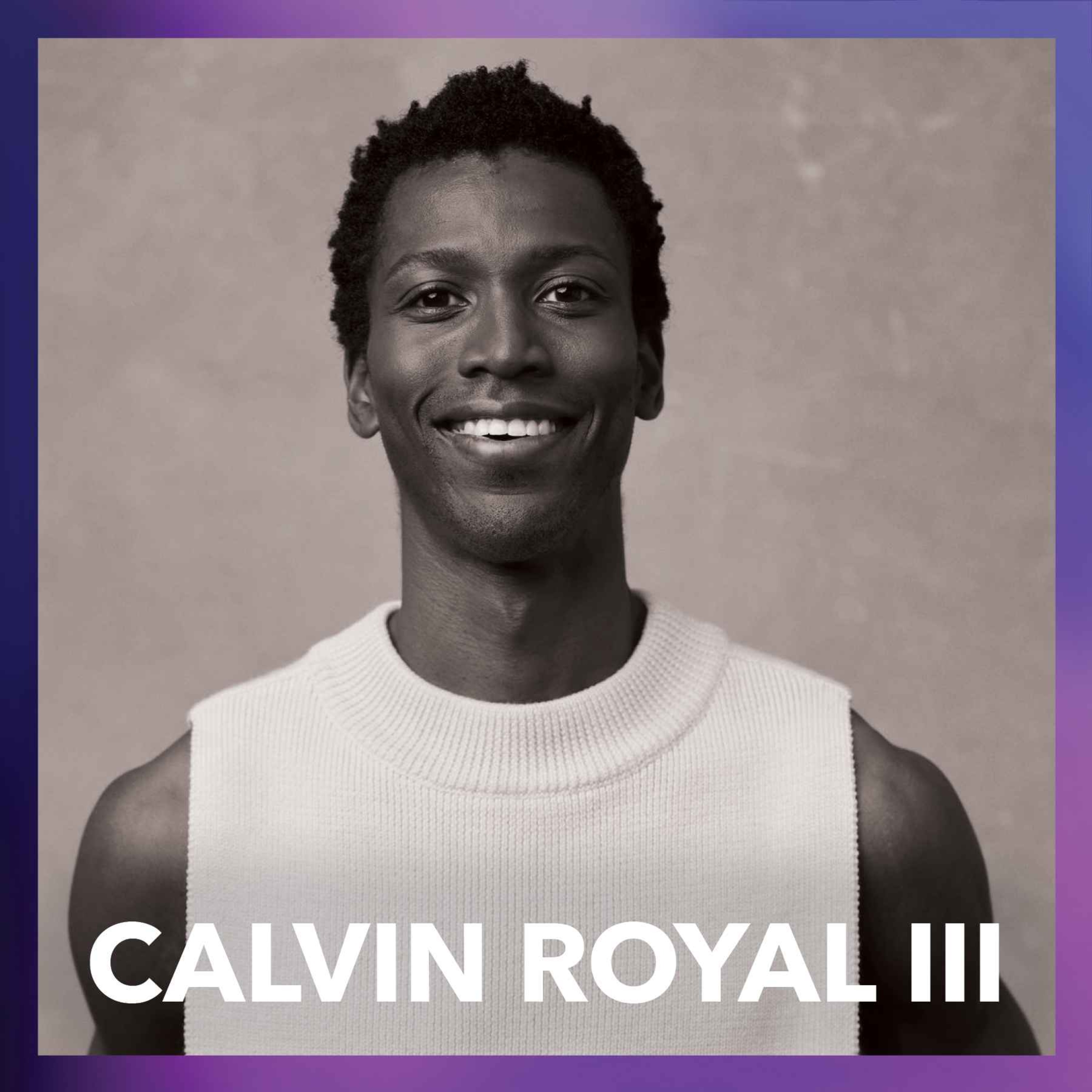
Hey listeners, it's Alicia. I'm so excited to be back sharing brand new interviews with some of the dance world's most accomplished and groundbreaking artists. Before we dive into today's episode, I want to let you know about a small change we're making here at Moving Moments. Going forward, we'll release new episodes on the first Wednesday of each month. The good news is the show isn't changing. You can expect the same candid conversations just on a new cadence. To ensure you don't miss an episode, follow Moving Moments in the podcast app you're using right now, just click the button at the top of the show's page that says follow. Okay, now on to today's conversation. Thanks for listening. Principal dancer with American Ballet Theater, Calvin Royal iii is the third African American to hold his role in the company's 85 year history. After a late introduction to formal dance training, Calvin found his place at the bar and worked tirelessly to catch up to his peers. He never loses sight of his early beginnings and sees his position as a great privilege that comes with even greater responsibility.
- [01:16]
Calvin Royal III
Just because I'm a principal doesn't mean that the journey ends there. It's how you carry yourself in the day to day. It's how you greet the pianist when you walk in the room, who's accompanying your rehearsal. It's how you find five minutes to chat with a younger dancer who might be having an issue. It's so important to be able to reach down and pull someone else up.
- [01:39]
Alicia Graff
You're listening to Moving Moments, the podcast that explores the dance world's most accomplished and groundbreaking artists. I'm your host, Alicia Graff, Mack Dean and Director of Dance at the Juilliard School. During each episode, you'll hear me talk with some of my closest friends and most trusted colleagues as we sit down to hear about their creative process and how they are changing the dance world on and off the stage. Calvin, when I think of you, I think of true dance royalty. Not just because you've reached the peak of success in the dance world, but because of the way you carry yourself and lift others up. You truly live up to your name. Where do you think that carriage, the way in which you walk in this world, where does that come from?
- [02:31]
Calvin Royal III
Well, first of all, thank you, Alicia, for having me on and for that beautiful introduction. You're like dance royalty to me too, so the feeling is definitely mutual. I think having, well, having the last name Royal comes with a lot of expectations. I was very blessed to grow up surrounded by my family, my teachers, and just a community of resilient, hardworking, kind people. And I think that a lot of that rubbed off on me from an early age. You know, each of them, in their own way, nurtured me, encouraged me, no matter what it was that I wanted to do. You know, so like my parents, for example, you know, when I expressed this interest in the arts and dance and music, it was never a question of why, but how can we make this possible for you to spread your wings and explore? And I think that having that support and encouragement from early on allowed me to carry myself through the world in a way where I could enter a room that maybe I didn't always see myself represented or be the only in some cases and not feel intimidated by that, but that I was just there to learn as much as I could and explore and find ways to express myself.
- [04:01]
Alicia Graff
I always say that it takes a village to raise a dancer. And it's so beautiful that your village started with your parents, which is not always the case for dancing artists. Can you talk a little bit about where you're from and those early beginnings and when you found yourself in motion?
- [04:19]
Calvin Royal III
Yeah. So I was born in Fort Stewart, Georgia. My dad was in the army. So from the time I was born, we moved around every two years to one military base, to the next army town. And my mom, when she had my brother and I, she was a stay at home mom until we went off to school. And then she got into social work and was helping to place kids with families, foster families and adoptive parents. So I had her sort of a role model to see what it was like to, you know, care for others outside of your own family. But yeah, I grew up just kind of one state to the next in the South. And my parents actually separated when I was about in the first grade. So my mom, my brother and I, we moved to Florida to live with my grandma on my mom's side. And my grandma was sort of like, there was always music, gospel music, soul. She loved classical music and opera. So that was sort of like being at home. We were always immersed in all of that goodness and dance. Actually, when it came into my life, I was about 8 years old. I was home after school one day and I saw this ad on TV for an audition for the local community project called the Chocolate Nutcracker. And I remember seeing it and just wanting to be part of it. So I called my mom and I told her about it, and she's like, okay, well, we'll take you this weekend. So I went to audition for the Chocolate Nutcracker.
- [05:52]
Alicia Graff
Wait, wait, I have to stop you. How much dance had you done before this audition? It sounds like I hadn't done a.
- [05:59]
Calvin Royal III
Single step, but I just. There was something about the way that this ad was on tv. It had like a montage of past years, dancers doing hip hop and jazz and West African dancing. And I just. When I saw, I was like, this looks so cool. I want to be there. I want to, you know, be in the room even if I don't get in. I just wanted to kind of be around it and see what it was all about. And so my mom took me and I auditioned for the Chocolate Nutcracker. And I had gotten in. I was about eight years old when I did my first audition. And, you know, I got into the production and it meant every weekend from probably 10 in the morning till 5 at night, there were rehearsals for the production. And I just fell in love with feeling like I had this purpose in a way and that it was fun and I got to express myself. I got to move across the floor to drum beats and jazz music. It was just so much fun. And that's when I fell in love with dance.
- [07:08]
Alicia Graff
Wow. So from that first experience, that was quite a formative first experience where you felt a sense of belonging in the room, the music, the energy. I can imagine young Calvin in this room, just like wide eyed, trying to soak it all in. So then what happened from there? Because obviously you had so much more room to grow, so much more capacity to fill that love and that potential. What happened from there?
- [07:37]
Calvin Royal III
Yes. So I did the Chocolate Nutcracker for a few years consecutively, just falling deeper and deeper in love with moving and dance music. A friend of mine had a piano at his house. I went over to his house one day after school. He had a piano while I was playing on it. And when I went home, I was like, mom, I really want a piano. Just to learn how to play it. I was, like, fascinated with the piano. And my grandma, who was sitting on the couch, she got wind of this. And that Christmas, she bought me a Yamaha keyboard.
- [08:07]
Alicia Graff
Wow.
- [08:08]
Calvin Royal III
And. And that was just. I just took off with music. And I was doing both the Chocolate Nutcracker and just in my room after school, after homework, just playing on the piano. And then that led to being enrolled in a performing arts middle school where I was studying music. And then when it came time to audition for the High School of Performing Arts, I had auditioned for both music and dance. Since that was sort of like the thing that I had going on at the time. And I got into the dance program in high school my freshman year, and that's when it became more real. Like I was actually part of a program where I was training and studying seriously to learn the fundamentals of classical ballet and modern dance. We did Horton and a little bit of Graham and stuff like that. So those earlier years discovering, learning about dance and loving it led me to training more seriously in high school.
- [09:04]
Alicia Graff
That's beautiful. I always think how you come into movement and fall in love with movement is so important to how you continue into your professional career. It's so important to hold on to that childlike innocence and joy to maintain a very serious career. Do you have any thoughts on that now?
- [09:27]
Calvin Royal III
As you know, I've been a professional dancer for over a decade now, and I feel like it's moments where I feel the most challenged and, like, pushing myself to get out of bed or, you know, not really feeling it that day or a particular day. And it's on those days where I just say, you know what? I'm just going to just have fun today. I'm just gonna let it go. I'm not gonna focus so much on the technique or the things that are not working and just kind of find that, like you said, that childlike approach to it. And it's in those moments that it frees you up because there is none of the baggage that we put on ourselves sometimes trying to be and to be perfect and to achieve all of these things that we obviously are working towards and working on. But it's so important to not forget that that love and that. That fire that came from the beginning, it fuels you even later, so.
- [10:25]
Alicia Graff
That's right. That's right.
- [10:27]
Calvin Royal III
Yeah.
- [10:28]
Alicia Graff
So what I'm hearing is you didn't actually really, like, set your two hands on that bar or figure out all of these various codified formulas until you were in high school. How did you have such a quick capacity to learn and what challenges did you come up against in those very early years in your high school training?
- [10:55]
Calvin Royal III
It wasn't easy.
- [10:58]
Alicia Graff
I can't imagine.
- [10:59]
Calvin Royal III
I remember those mornings at freshman year because I lived basically on the other side of the county. So I would get on the school buses 5:30 in the morning and bus to St. Petersburg to the performing arts high school. And ballet class was 7:05am when the bell rang. The sun wasn't even up yet. And I think those early years, the biggest challenge was just finding my ability to be able to learn the vocabulary of ballet and modern dance and being able to really kind of get my body to do all of these incredibly challenging things that before in the Chocolate Nutcracker, I was just throwing it all away and just kind of learning the steps as I go. There was no. No one really saying, you're doing this wrong or that's not the right line, or your foot needs to be pointed here. So I think that a big challenge for me in the beginning was about basically starting from ground zero and learning how to build from there step by step. The technique to be able to not only execute the steps properly, but to do it in a safe way that I wouldn't get injured and that I would be able to do it the right way. So that then down the line, when I know how to do it the right way, I can free it up and add the artistry and all of that.
- [12:20]
Alicia Graff
Yeah. All those small steps that many of us, we've learned from a young age. I have two small kids, and my daughter is really into dance. And it's so interesting, this. See how you just start. Like, how do you start with just learning how to turn out? And every time you move, you point your foot. Like there's. There's so many things.
- [12:43]
Calvin Royal III
Yeah.
- [12:43]
Alicia Graff
That. That are part of the language, that are just not natural, you know? Yeah. So I would imagine. I do. I can imagine how challenging that must be from an older age to get started. But you had the love, definitely performed and already auditioned, so it was clear you had the talent.
- [13:04]
Calvin Royal III
And my teacher. That's the thing. Like my teachers at the school, no matter if you came into the program, somebody who had been studying since you were three, because there were those ballerinas in my class that had been studying and in classes since they were three, or someone like me who came to the ballet bar with two hands and sagging tights and not knowing a tendu from a pas de cha, Both of our directors and teachers really just nurtured every one of their students as if we all had a fighting chance. And that was something that allowed me to feel like, okay, I may not be anywhere near the best of my class, but there's a place for me here at this spot at the bar and in the space. And I'm just going to try to learn as much as I can and be sore the next day and then get back up and try it again.
- [13:52]
Alicia Graff
So what challenges did you come up against or barriers did you come up against being you and wanting to discover all that you can in dance and in classical ballet specifically.
- [14:06]
Calvin Royal III
Yes. So I think in my case, it was Less, in a way, about my race and if I belong because of the color of my skin, and more about the challenges that I was facing and up against for starting so late in ballet. Because, you know, when you look at ballet and you go to a show and you see just how dancers create these illusions that look so effortless. It takes an incredible amount of work and artistry and time. And so coming into it so late, I felt like I had a lot of catching up to do. And that was where a big part of my challenge lied. It wasn't about like, does he look the part? But am I able to be strong enough to be able to do this very difficult, very complex art? And it's like training to be a professional athlete. So for me, that. That was my biggest challenge and hurdle to overcome. From the beginning, the focus was on getting better and being honest with myself. Even as I started to go on and get the scholarships and stuff like that, there was always more work to do and more to discover and more to grow. That. That was the focus. There was no time to focus on all of those other exterior perceptions of what it meant to be in dance or in ballet. When I joined the High School of Performing Arts, there were dancers in my class that were black, Latino, white. Like, there was a. It was very diverse. Even the school that I went to, like, it was the art school, but also the local kids. So it was like a very diverse environment.
- [15:50]
Alicia Graff
How beautiful it is to come into this world through a space of belonging and diversity, because it does show you the possibility. Right. So tell us about the Youth America Grand Prix competition, because I feel like that was a major turning point.
- [16:11]
Calvin Royal III
Yes. So the Youth America Grand Prix, our ballet director at our high school would take a group of maybe five to eight kids to compete and to try to win a scholarship through the Youth America Grand Prix. Each year and my junior year, three years after studying ballet, my teacher had this idea.
- [16:33]
Alicia Graff
I just have to laugh. This is crazy to me.
- [16:36]
Calvin Royal III
I know, I know. I thought it was crazy, too, but I was like, I'm going on this journey. I'm just going to take the wild ride. She took a group of us to compete in the regional YAGP in Orlando. And at that competition, I had placed third in classical and contemporary. And so those scores allowed me to compete in New York at the finals for more opportunity to potentially win a scholarship to a training program for the summer or year round. And so we went to New York. It was me and a few of my classmates. I did the competition, and I placed for the final round. And during preparation for the final round, they had this tiny studio at the MLK High school. And I was in the studio with my modern teacher. We were working on my contemporary solo to present for the judges for the final round of the competition. And I remember this competitor kind of eyeing me up and down from the corner. And he comes over to us, like, halfway through our little mini rehearsal in the studio, he's like, you're competing in the final round. And we were like, yeah, we're getting ready. You only have a couple more minutes. He was like, you know, you can only do classical variations in the final round of the competition. Something that we didn't get the memo on. So I'm here for, like, rehearsing my contemporary solo. My modern teacher left the studio to try to find my ballet teacher, to let her know that we needed my classical costume that was downtown at our hotel. They had to reach out to the people of the competition to let them know that they were going to bring the right music. And it was like I switched gears, and I had to get. It was Swan Lake, Act 3, Prince decreed solo that I needed to get ready for the final round of the competition. And so they were able to push me back in the line of competitors so that, you know, they could. We could make the switch. And so in rehearsal, I'm in the studio, the costume comes, I put it on, I'm rehearsing, and then I go down to my knee for the final finish. And I skin my knee open so I have this, like, blood stain on my white tights.
- [18:54]
Alicia Graff
On white tights right before having to.
- [18:58]
Calvin Royal III
Go out for my final round solo in front of the judges. So I go out, they call my number, I do the solo. When I come off stage, I leave the backstage area, I see my teachers running around the corner. Like, I was like, oh, my God, did I just mess up? Did I screw up really bad? Was it really bad? Did they see the blood stain? And they told me that halfway through my solo, two of the judges got up from the judges table, trying to find my teachers. And those two judges were the directors of the ABT JKO school. And they had wanted to offer me a scholarship to come to ABT to train at the school in the fall, which was. I was just so shook.
- [19:45]
Alicia Graff
This kid will give blood, sweat, and tears.
- [19:50]
Calvin Royal III
I was so shook.
- [19:52]
Alicia Graff
I'm sure they saw your amazing potential. You're such a bright light, and I can't even imagine what you were like at that age. I'm sure they were like, I'm snatching up this kid. We're gonna continue his training. That's so amazing.
- [20:10]
Calvin Royal III
It was really such an incredible, wild experience. And, yeah, I'm just so thankful for that moment because it. It just sort of changed the whole trajectory for me, getting that scholarship and moving to New York my senior year of high school, finishing school in the city and taking the train downtown and going to ballet class at abt.
- [20:32]
Alicia Graff
Well, I read the following quote from Media magazine about five things I wish I was told. And this is your quote. I wish I had known my ABT instructors, who I perceived were tough and often blunt if not dismissive of me, wasn't because I didn't fit the mold ethnically or the body type, nor the traditional training paths like most others, but rather because I started late and I needed more development, which meant more work for both of us. In hindsight, they had to be tough. I wonder what led you to think in this way and what led you to gain the type of really open and generous perspective that you've developed over these years.
- [21:21]
Calvin Royal III
Yeah, I. It was less about trying to find the peace in it and more about trying to find the clarity and understanding and that it didn't come overnight. Like, it's been a journey of that. And I think this particular quote that you read, I think back to my time, especially in ABT Studio company as ABT2 at the time. And my director, Wes Chapman, he was former principal dancer with ABT in the 80s during a time where, you know, being in the company was so extreme. The different personalities, the approach to working and, you know, you couldn't even step into a studio that two principals were dancing in because they'd be like, get out. You know?
- [22:06]
Alicia Graff
Right.
- [22:06]
Calvin Royal III
And so his approach to how he worked with all of us was very tough. It was very strict. And so at the time, didn't understand why he was so hard on me. But then, in hindsight, looking back, I realized that I had joined Studio Company four or five years after I took my first ballet class. And these dancers that were in Studio Company alongside of me have been dancing their whole lives. They've been doing ballet their whole lives and performing all over the world. So that was my challenge. That was my hurdle. And I actually, a couple of years back, I was already in the company. I was, you know, had already been promoted at the time. And I reached out to Wes because I wanted to talk with him about that time, because we. Talking about past traumas, we had never really opened up to each other in a way and had those Just like, we're both adult. I'm an adult now, he's an adult, you know, and to be able to talk side by side as peers, I was able to ask him a lot of the questions of like, well, why did you say that thing that you said to me? Or why did you train us the way you did or talk to us the way you did in certain circumstances? And it really helped me to shift my perception of the whole thing of, like, no, he wasn't just being racist or like wanting to single me out, particularly because of that, but it was because he knew how hard it was going to be once we joined the company. We weren't going to just be the feature dancer in the junior company anymore. We were going to have to fend for ourselves and continue to train and continue to look out for ourselves when nobody else was going to be focused, laser focused on us when we joined the main company. So it was a lot of that. It was a lot of being able to seek the clarity and understand it from the other side of why things were the way that they were.
- [24:04]
Alicia Graff
Wow. That takes, again, an incredible amount of generosity and empathy to be able to even have that conversation. And I'm sure Wes was thrilled to have that conversation with you.
- [24:18]
Calvin Royal III
Yeah, it was, it was. I felt like it was healing for both of us in a way. And yeah, I just, I was like, I really want to know. I really want to have this conversation.
- [24:28]
Alicia Graff
And it's true. We kind of straddle two different generations of dance world, if you will. The culture and environment has shifted tremendously. So I love that these conversations are now happening and informing everyone on how to move forward in a really healthy way.
- [24:49]
Calvin Royal III
Yeah.
- [24:50]
Alicia Graff
In your very early years when you joined abt, what things did you dance and did you ever have one of those moving moments, like one of those aha moments.
- [25:02]
Calvin Royal III
So the early years joining abt, I did a lot of understudying. So my first few years in the company, it was a lot of learning the rep, learning the big ballets, not performing a lot, honestly. I did a few walk on roles, but as the years went by and I started to step into more roles, it was really exciting to be able to work with people like Twilight Tharp, who would come in and stage in the upper room, and other really exciting, iconic works that she does. I got to work with Mark Morris and other choreographers that, that came into the company, which is really, really exciting. But I think the breakthrough moment for me was in 2019, I had the opportunity to perform the role of Apollo with abt. And that was a huge breakthrough for me because the question of, can someone that looks like me play the role of a young God on the ballet stage at Lincoln Center? And to be able to step into that role that's so iconic that so many incredible dancers over generations have danced, I was able to learn it and perform it. You know, he has these stairs behind him that are so symbolic of all of those steps that you take. To be able to become who you're meant to be and to be able to step into that role has been such a moving moment for me in my career. And to be able to represent not just myself and Apollo, but for so many of the young dancers coming up after me that'll get to do it and see themselves in it. Just so moving.
- [26:39]
Alicia Graff
I did not get the opportunity to see you perform, but I did follow the whole journey because you're really present on social media, which I love, but also in the press and everything. That was such a watershed moment for all of us to cheerlead and experience and witness. And you are so fitting for that role.
- [27:02]
Calvin Royal III
Thank you.
- [27:02]
Alicia Graff
Not only your skill set, but also who you are, your character, what you bring, it's perfect for you.
- [27:09]
Calvin Royal III
Thank you.
- [27:09]
Alicia Graff
Being a professional dancer, there's so many glamorous moments, but most days I call it your grace and grit. Just digging a little deeper. Being a principal dancer of a world class company like American Ballet Theater, you hold so much responsibility in your hands and so many people are looking towards you. How do you carry all of that?
- [27:33]
Calvin Royal III
I've always looked up to principal dancers who especially weren't just the best technicians or artists on stage, but the ones who were able to connect with people at every level. And I think that that's something that I try to remind myself of at least, is that just because I'm a principal doesn't mean that the journey ends there. It's how you carry yourself in the day to day. It's how you greet the pianist when you walk in the room, who's accompanying your rehearsal. It's how you find five minutes to chat with a younger dancer who might be having an issue that they're trying to sort out. And I feel like being in this place in my career at this time and all the experiences that I've had that led up to this moment, I think it's so important to be able to now give that back in a way and be able to reach back or reach down and pull someone else up to the view. That means everything to me to be able to do that, because we all want a better environment. We all want to shift the culture in a way. And I think that that's a big way of how you do it is not getting to a certain level and shutting the world off. Being a principal can be very isolating and lonely because you do spend a lot of time on your own with one on one with a coach or with your partner. And there's been some seasons where me and my partner will be rehearsing so intimately, and we don't see the rest of the company on stage until the actual performance or the dress rehearsal the day before the performance. And so I think being able to find those moments and be intentional about fostering and caring for those that are coming up too, and letting them know that if you're playing the featured role or if you're playing the lady that sweeps the stage in Romeo and Juliet marketplace scene, everybody that is in a production matters, and they have a place too. And the story can come alive with just one or two people. It takes all of us to bring it, to bring the magic.
- [29:39]
Alicia Graff
It feels like you are living totally in the present, in the meaty part of your career, getting to experience so many choreographers. And I know we haven't talked about Touche. But I would encourage all of our listeners to read up on all of the accolades that came from that incredible pas de deux choreographed by Christopher Rudd and all of the things that you've done at ABT and beyond. I wonder if you are imagining what your life is past, abt, what comes to mind and what are you playing with?
- [30:16]
Calvin Royal III
Yes, I. I think it's something that I, maybe five years ago would have been more shy. Like, I would shy away from even thinking about, well, what happens after this, because I was so immersed and the performing and learning and traveling and all of that. But at this stage, I think, yes, I can still do that. But there is that bit of space to imagine and dream and even dabble in some things. And one of the most exciting projects that I have coming up is that I've been invited to creative, direct and curate the Ballet Festival at the Joyce Theater in the city this August. Thank you. It's a week long celebration of essentially the bright line of ballet and honoring the past, representing the present and looking towards the future of what I believe our art form and this beautiful art form can be. So it's this opportunity that I've been given to bring together some of my favorite artists from companies across the country and around the world for the eight Performances in August. Some classics are on the program. Some contemporary works that are from established and emerging creators that are creating ballets. Some for the first time here in New York City. And also being able to incorporate a young dancer who just was awarded a prize at the Youth America Grand Prix. That is why we've titled the festival Unite, because it's about uniting all of these elements that have nurtured and allowed me to get to this vantage point and to be able to nurture and bring those up that are coming after me. And for them to be able to stand on stage and be in the same program as the dances that they look up to is really exciting. So I can't wait, can't wait to.
- [32:04]
Alicia Graff
Be an audience member for those performances. So maybe artistic direction, you know, presenter is in your future. Down the line, whenever, maybe.
- [32:17]
Calvin Royal III
I love. Yeah, I love the idea of being able to dabble in these things. I mean, I've learned so much just through this process about putting on a show, producing the show in a way, and bringing together artists and directing, and it's just. It's a lot. And I'm enjoying the ride.
- [32:34]
Alicia Graff
Amazing. Congratulations on all your endeavors. The last question that I have for you is what you hope your legacy to be.
- [32:46]
Calvin Royal III
Wow. Legacy is such a big word. And I try so hard to live in the present. And when I think about legacy, for me, it's. I want people to remember that I was a leader and that I was able to give back in a way that made people feel seen and heard and valued. I hope that through my leadership and my journey, they'll be able to be inspired by all of that, too.
- [33:16]
Alicia Graff
I think they will be. I think we all are currently. So you're definitely living in the legacy that you hope to build. Calvin, thank you so much for this conversation. It's just awesome to spend this time with you.
- [33:29]
Calvin Royal III
Thank you, Alicia.
- [33:31]
Alicia Graff
I hope you enjoyed this episode of Moving Moments. If you like what you heard, please tell your friends about it. Spread the word. Be sure to follow the show, rate us, and leave a review wherever you get your podcasts. To keep up with future episodes, follow us on Instagram at Moving Moments Podcast and Visit us at artfulnarrativesmedia.com Tune in next month as we hear another inspiring artist's Moving Moment.