Loading summary
Transcript63 lines
- [00:00]
Alicia Graff
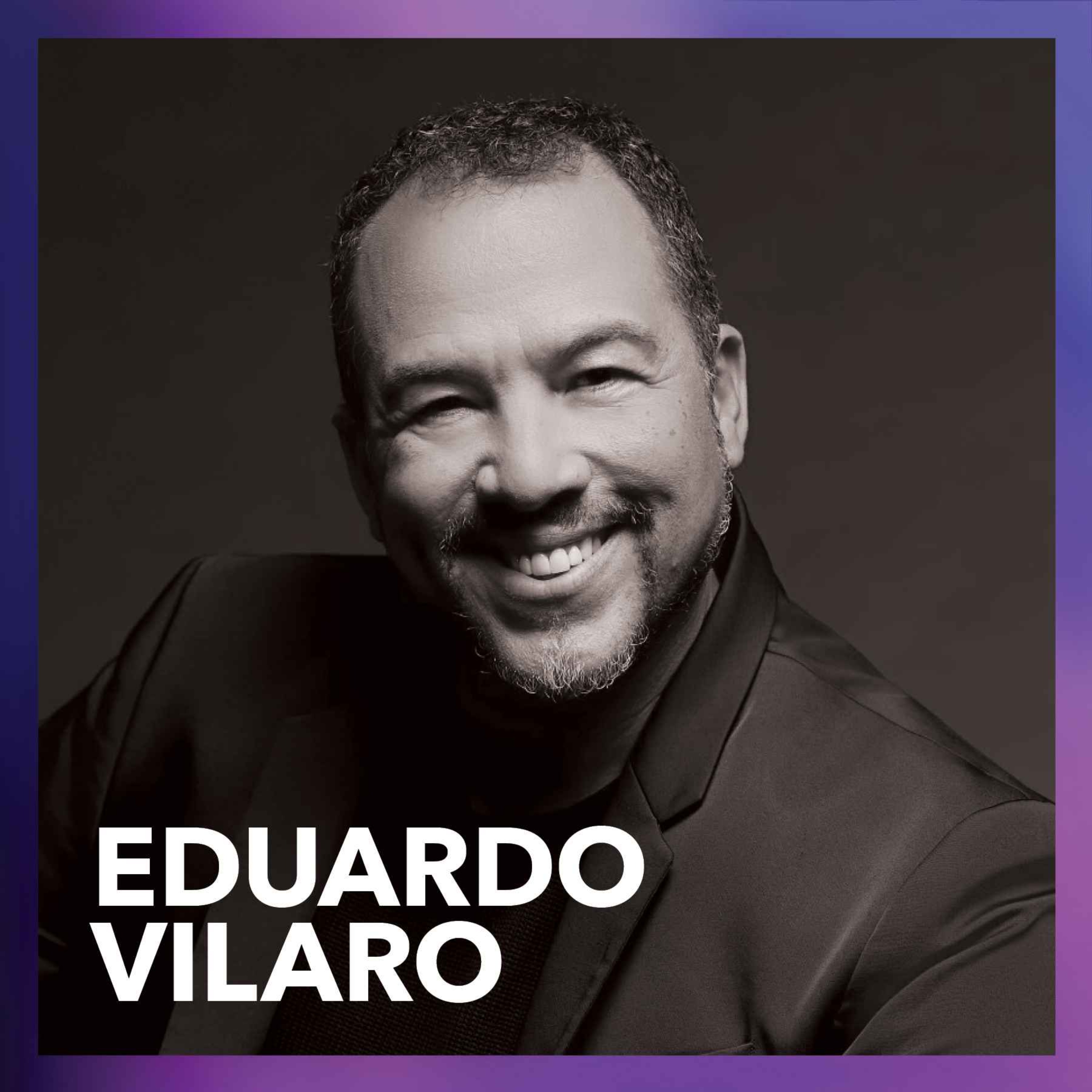
Hey listeners, thanks for tuning in. If you're enjoying Moving Moments, please consider supporting our work with a tax deductible donation. You can easily contribute on our website@artfulnarrativesmedia.com donate or just click the link in the show note of this episode. Every donation, no matter the size, helps us to keep bringing you inspiring conversations with remarkable artists. Thank you so much for your continued support. We really appreciate it. Cuban American dancer, choreographer, educator and artistic director and CEO of Ballet Hispanico, Eduardo Valero honors the company's legacy by fusing multicultural traditions with contemporary ideas. He recounts his vision for the company when he first arrived in this role in 2009.
- [00:58]
Eduardo Valero
I was going to break that idea that we're a monolith, how to show every aspect. And I love the intersectionalities of diasporas and cultures and the need to see those threads and tendrils so we understand our art more, our music, and we break these silos of this is only modern or this is only Afro Cuban, that there is a coming together because that's what's always made art.
- [01:32]
Alicia Graff
You're listening to Moving Moments, the podcast that explores the dance world's most accomplished and groundbreaking artists. I'm your host, Alicia Graff, Mack Dean and Director of Dance at the Juilliard School. During each episode, you'll hear me talk with some of my closest friends and most trusted colleagues as we sit down to hear about their creative process and how they are changing the dance world on and off the stage. We've been colleagues in the field for some time now. Many. But more recently I feel like we've become a sort of support group for each other, navigating the responsibilities.
- [02:09]
Eduardo Valero
I'm honored to be on the show, coming together and really talking about the things that affect us and also how we can make things better, not only for us, but for the dance field has been very rewarding. So thank you.
- [02:24]
Alicia Graff
Well, part of the mission of this podcast is to reveal the moments of inspiration, the moments that inspired your life in dance. And the hope is that we will continue to inspire audiences and artists alike. So I think we have to go back to how it all began. Why do you think you fell in love with dance?
- [02:47]
Eduardo Valero
Wow, that's a great question, because I've been asked that and you'll hear some of what I always say. But to think about the first movement has to be that moment when my mom or an auntie or an uncle grabs me and it's a coming together, it's a party, whatever it was and asked you to Dance and made you dance, actually, you know, because they make you dance. Come here, let's dance. And you know, that beginning, it connects me to culture. So I'm already starting to build an identity, right? As a very young toddler, you're hearing these rhythms. You're feeling this energy, and it's moving through your body, and it excites you, and you smile, and then it connects you and you want it more because it's the only thing you have around you. I'm an immigrant. We came here in. In the late 60s, and at that time, it's not like today there, the availability of cultural diversity was very different. Much more underground and still exoticized. Right? So. So that those moments of a birthday party, of a quinceanera, those were the first moments.
- [04:14]
Alicia Graff
I love that because one of the first thing you said was it connects you to your culture. I always talk about the artist, citizen that we, as artists, we share who we are, and we connect to our culture. We connect to other people's cultures. We are able to communicate across the footlights, even if we don't speak the same language. There's something that is inherent in how we move that connects us to each other. And I think so many people will say, you know, the first time I remember, I was in my kitchen, I was with my mother, I saw Michael Jackson on television. Or, you know, these are very real cultural realities. And the truth is we are all dancing. It's just then at some point in time, we learn in the concert dance world a more formal, kind of codified way of understanding those systems of movement. I wonder, when was the first time you started to formalize an idea of dance as a mode of professional training, and did that affect how you interacted with dance?
- [05:21]
Eduardo Valero
I was in eighth grade, and I have this teacher who was an actor and a director. And he came into our parochial school, and he was so creative in the way he taught us. I learned so much from this man. His name is Mr. Chuck Abbott. And he decided to show us what it's like to be an artist and what it's like to audition and work and how important it was, because some of us may go that route. I didn't know what. What an artist was really. I just understood the glamour of, you know, what's on an LP or Michael Jackson, as you mentioned on the television. So we auditioned, we all auditioned for your good man Charlie Brown. And I got the role of Linus. And Linus has a dance with his blanket. And I was able to learn the music, sing the Song. But at the time when it came to dance, he's like, well, I want you to move around here and here, but you can move however you want. So that was so fascinating to me because the agency that I was being given at that moment to say you could do this yourself or that it's part of you, was remarkable. And I did it. And that connection to audience, that connection for the artist in communication with the audience was that moment where I felt like I belonged. And I needed to find it and I needed to look for it. And from then on, it was just everything possible I could do, I did to be in dance.
- [07:02]
Alicia Graff
And you felt it at that moment?
- [07:04]
Eduardo Valero
Yes, that. That was the moment. I started in sixth grade in the school and it was eighth grade and I was still. I was just getting into English, really learning the language and that, that this movement, this music, this dancing really built this bridge for me. And again, another layer of adding to identity.
- [07:25]
Alicia Graff
And did you communicate with your family at the time?
- [07:28]
Eduardo Valero
You know, one of the things as you age and you, you have some life experience, you realize that when you come from a family of immigrants, you have to give them some space. They too were struggling. They too were trying to belong in a world that was much harder for them. And because they were working and so they didn't celebrate it. They came, they saw the show, they didn't connect that this might be something for me that was not in their headlights. It couldn't be. We had three boys. We needed to get fed, we needed to be housed, we needed to go to school. That was important. So I've learned to give them some room with that. But later on they did.
- [08:10]
Alicia Graff
If you could reveal what it was like to study in New York City at this time, what was the ethos of the dance world like when you were studying and aspiring to be a professional dancer?
- [08:23]
Eduardo Valero
Oh, my God, I have such great stories. The world that time was much grittier. It was just as fast paced as it is today. But we were still trying to fit in structures that now have been dismantled, Right? Structures of do it or die. Right? That kind of mentality. And so that's what we did. We were just like, do, do, do, you're injured. Get, get in class Anyway. So it was that. That was one of the hard aspects. But one of the most beautiful aspects to me was that we were surrounded by gods and goddesses. I mean, Carmen de Lavalad was in class. You worked with Joffrey holder. There was Mr. Ailey, who had come into class from time to time. There was Graham. There were these divas of Graham at that time, Christine Dank. And you would watch them, Therese Capicelli, all these remarkable people who are teaching now, who are colleagues of ours. But I still see them when I see them, they're. To me, they're these gods and goddesses because they were at that moment where they were leveling the contemporary, the modern world. They were taking from the pioneers and taking it forward and creating something that was just so spectacular and there were so many intricate threads of dance. There was not only that, there was the Judson Group. You ran to see Twyla, you ran to see this incredible back and forth. I mean, I see things today and everybody's like, oh, this is like so brand new. I'm like, nope. I can tell you which artist did that before. Not that it's a bad thing. You should do it again, try everything. But I mean, it was so experimental and without rules. That's the thing. There were no rules in terms of what was on stage because I saw some crazy stuff, loved it. And then there were no rules in how we acted, created, which we've learned was detrimental. We've had to really reconstruct how we work in this field. It's a good thing. But there's something about that grittiness at that time amongst. So walking in the pathways of these gods and goddesses was remarkable. This is the beauty, I think, for my generation there was much more than just the concert dance at the same time. You had underground dance. Like we would go to Paradise Garage after a performance. There was the Sound Factory, there were these nightclubs, there was punk rock scene was going on. And for me, I felt like we shapeshifted. We went from place to place and grabbed at that. It was so important for us as artists.
- [11:03]
Alicia Graff
I know that you went on to study in college and what then inspired you to audition for Ballet Hispanico after you had more training? What was the inspiration behind auditioning for Ballet Hispanico? And what was it like to work with the great trailblazer Tina Ramirez?
- [11:23]
Eduardo Valero
So I was three months before I was going to graduate and I started looking at Dance magazine, checking the boxes of where I was interested in, and I saw Ballet Hispanic was like, you know, Ballet Hispanico and here's. This is very important for me. It's like, B. Hispanico. Why isn't that a known name? Why? So we have Graham and this and that and that. It's like, let me go check them out. So I went to take class, they said, come take company class. And I walked in Because I was still doing Graham in this lime green unitard because, you know, you had to get everybody's attention. I got everybody's attention.
- [12:00]
Alicia Graff
There you go.
- [12:01]
Eduardo Valero
There you go. I took class and Tina came up afterwards. Up to me. She's like, young man, we're going on tour and I need a male dancer. The position is yours if you want it.
- [12:12]
Alicia Graff
Just like that?
- [12:14]
Eduardo Valero
Just like that. She was, she's like, she's like, she knows what she wants. That's Tina. And I said, you know, I, I, I have three months. I have to finish my, my bfa. And she's like, who's your dean? Norman Walker. Great. Give me a minute. She went to her office, called Norman came back out and said, Norman said, it's fine. You could finish after you graduate. And I got the job.
- [12:35]
Alicia Graff
That's Tina. That's what I understand of Tina. She's going to get it done.
- [12:40]
Eduardo Valero
She got it done. Tina made me the artist that I am first and then led me to this idea of, you can be a leader. She really did. She, she saw something in me and that's, that was her, her gift. She saw talent, she saw people. And she immediately put me to work teaching. I developed a program for kids living in temporary homeless shelters. She was like, you could do this, go do it. My entrepreneurial skills were built because I was dancing because of dance, right? So it's like this slowly build and in community, working in the community. So unbeknownst to me, I was developing these wonderful skills and that's what Tina was, I mean, she was so demanding. Right? Now I look at when I rehearse my dances, I'm like, oh, guys, you don't even know. If that solo was not clear, you would be there until 8:00 at night. Until that solo was clear for you.
- [13:38]
Alicia Graff
Wow.
- [13:38]
Eduardo Valero
Or until she felt it was. There was no joke. Close the door. And you were with her until it got done. That kind of thing.
- [13:47]
Alicia Graff
Union rules. What? Or. Five minutes break. What?
- [13:51]
Eduardo Valero
What? I'm tired. What?
- [13:54]
Alicia Graff
How meaningful was it for you to be part of a company that was really a cultural ambassador of Latin and Hispanic community and culture and social dance and history?
- [14:05]
Eduardo Valero
I just saw so much opportunity for myself to really just get rooted into having everyone understand first who I am as a Latino man, and then having everyone understand the reality. Because again, at that time, we were still dealing with heavy duty stereotypes, iconographic, big time. The derogatory words were still used lightly. And there was something in me that said, I need to change that I want to change that and this organization is changing that.
- [14:35]
Alicia Graff
I wonder. I'm going to jump forward for a second, because I feel like the next natural question is, with you as the artistic director now, how much do you ask the dancers about how meaningful it is for them to join Bally Hispanico and if they understand the mission and the context and the history of the company as well?
- [14:55]
Eduardo Valero
I don't ask. I give. And so from the word go, I'm hiring you. You do understand what this mission is? I feel like I'm one of those leaders that it's very important for me to model constantly. So those engagement classes on tour, I teach some. I invite them to come see, because I did that when I was dancing. I want them to see me in the midst of it. When we do a lecture demonstration, I'm the one moderating, because I want them to hear what I say about culture, about Tina, about this mission, about the importance, and they hear it. And in these performances for young people, we call them, there's a section where I get all the kids up and we're dancing, and they are jubilant backstage with me. They're doing merengue with me, and they think I don't see it, but I do. And it warms my heart because they're not, like, just sitting there like, this is not an office job. You have to give yourself over to a mission and vision. If not, then, yeah, let's go get an office job.
- [16:05]
Alicia Graff
Yeah. That goes back to the idea of this artist as citizen. And for me, it's your artistry as a calling, your purpose to share, to uplift, to inspire, to connect. That's really what I feel like is at the heart of all that we do, no matter what the specific mission is of the company or the school that you're associated with.
- [16:27]
Eduardo Valero
Correct.
- [16:27]
Alicia Graff
Right. And that sounds like a high or an aha moment as an artistic director. Now, with that deep love for the company and for movement that was guiding you, what then led you to step away from the company and ultimately to found your own organization, Luna Negra Dance Theater.
- [16:47]
Eduardo Valero
The truth was that I was dancing for 10 years with Tina, doing a whole bunch of stuff, and I wanted to expand. My leadership was calling. I was like, so, Tina, what's next for me? And, you know, God bless. That's that generation. She was like, I don't know. I don't have anything here. Everything is taken. I said, okay. So again, going back to what I just said, you could find it yourself. So I said, all right, I'm going to go back to school because school always centered me. And I did a master's at Columbia College, Chicago. And when I finished, because of the work I did and everyone I networked and met, I said, oh, I'm going to start an organization. This city is in need of a Latino dance company. I was crazy. But anyway, it worked.
- [17:32]
Alicia Graff
It did work. I remember seeing the company and being so in awe of everything that you all presented. It was amazing.
- [17:40]
Eduardo Valero
Oh, that's so kind. Thank you. That's so sweet.
- [17:42]
Alicia Graff
What did you experience then? Being a director and someone who was then leading the cause and reading dancers.
- [17:51]
Eduardo Valero
I think for me, it was the immigrant brain. The immigrant brain says, keep going blinders on. You've got this, You've got to get it going. And I learned that from my family. So I just went into it and just did it. And the good thing was that I had this huge experience of touring and working with choreographers, and my toolbox was full mentally. There was just this urge to have a voice, that thing that when I said that, I joined B because it rooted me more into my community. I said, not only can I be rooted, but I can bring everyone with me. I can share, I can open spaces for young people. And that's what we did in Chicago. And, you know, I've used this before. It's not the building. It's not the church. It's the preacher, it's the priest, it's the shaman, it's the guiding light. Right. And so you share the information, you bring it to everyone, and then the congregation starts coming around.
- [19:01]
Alicia Graff
Yeah, you have to be that person. I always say, I feel like I'm the cheerleader. I'm everybody's cheerleader, which I love. I love being in that position. And I love the idea of leading from behind. Right. Because the dancers, they're already working towards their north Star. And you know that because the type of artists that we work with are already on that trajectory. So you just need to kind of, like, blow the wind underneath of them and keep everybody moving in the right direction. I think that's why it's so important to have a very clear vision, which it sounds like you really had, and you knew what the need was for the community and for the dancers themselves.
- [19:39]
Eduardo Valero
I went everywhere. I mean, I stepped into foundations and took on roles that I shouldn't have. You know, like, someone asked me, hey, would you like to be on this board? Yes. I need the experience. I need to learn what this is. It was so important for me to start the conversation of diversity, because it was A conversation I was having since I was a young child here in this country. So I was like, everyone has to look at this culture and understand that we're much more than I want to live in America, that we're much more than xyz. And so the messaging within the community, within the art, was something I learned at Tina and took it forward and not a monolith.
- [20:23]
Alicia Graff
So it sounds like you got your master's degree at Columbia in Chicago, and then you got your PhD building Luna Negra.
- [20:31]
Eduardo Valero
Ooh, I love that. Can I use that?
- [20:33]
Alicia Graff
Love that. Yes, you can, please. Yes, Dr. Valero. So tell me next, what happened then? Did you receive a call from Bali Espanico, from Tina? How did that happen? And how did the next steps work?
- [20:50]
Eduardo Valero
So I have to start this by saying that I had just adopted our child when I got the call. So it was a very interesting dynamic. He wasn't even a year yet, Max. And I got a call from the recruiter saying, so Tina's stepping down, as you know. And I was like, yes, I heard. And I knew the recruiter very well from the field. And he's like, well, yes, you know, if you know of anyone. And I was like, are you asking me or are you just. Are you. Come on, let's be straight with me. And he's like, well, we. We would love to know if you would be interested as well. And I was like, sure, I'll take a meeting. And then I quickly hung up and went into my room to my husband. And I was like, so it's happening. And so the call happened, and I went in for a meeting, and I was deathly sick at that meeting. I had. I don't know if it was a flu. I don't remember. My eyes were hardly open.
- [21:57]
Alicia Graff
Oh, my gosh.
- [21:57]
Eduardo Valero
Just like the snot coming out. And I had a sore throat.
- [22:00]
Alicia Graff
Because you had a one year old at home. That's why all the jerks.
- [22:05]
Eduardo Valero
Right, right. But, you know, I went through it. I went through it. And to this day, the board chair today says, you know, Eduardo, we knew the moment you walked in. And then it was funny because I first met with the board, and then the requisite was that you had to meet with Tina in another room. And it was a very quick conversation. Eduardo, you have to do this. Okay, Tina, thanks. How are you again? Going back to the first day I met her, and she said, you have to take this job.
- [22:39]
Alicia Graff
Wow. And when you talk to your husband about it, what did he say?
- [22:43]
Eduardo Valero
He was excited. My husband is a Very patient man. He wants what's best for me. He understood how excited I was, but we understood that the impact that I wanted to have as an artist and where we were moving forward was going to be important for my career.
- [23:05]
Alicia Graff
So, yeah, heading back to New York City.
- [23:08]
Eduardo Valero
I'm such a New Yorker. I loved my time in Chicago, but I just adore New York. It's home. It's home. I know it inside out. I'm a kid from the Bronx in the streets.
- [23:19]
Alicia Graff
What was your vision? I mean, you had been a dancer in the company. You had seen the company from the outside. You knew Tina, you knew how she worked when you stepped in. How did you want to make that journey for the company?
- [23:33]
Eduardo Valero
I was going to do what I started doing at Luna Negra, which was how to break that idea that we're a monolith, how to show every aspect. And I love the intersectionalities of diasporas and cultures and the need to see those threads and tendrils. So we understand our art more, our music, and we break these silos of this is only modern or this is only Afro Cuban, that there is a coming together, because that's what's always made art a coming together.
- [24:10]
Alicia Graff
And now, thinking about your legacy as an artistic director and as one of this very important historical company, what are the things that excite you and what are you looking forward to in the years to come?
- [24:24]
Eduardo Valero
Oh, my goodness. I walk every day going up to my office where studios and young people are finding themselves in dance excitement number one. I'm like, oh, this is great. I stop. I watch the teeny, teeny ones. I watch the kids from college taking class. It's so exciting. I'm going to mention one more thing. Part of what I did was start developing with Instito Choreographico, which is our dance laboratory, ways of building more Latinx artists. And one of those is Michelle Manzanal, another wonderful choreographer, teacher. And so being able to see that flourish in the building, in the space, that we're just not creating art, we're creating leaders. That's my focus, Right? We're going to create leaders. And then the other exciting thing for me as I look into the future is to really settle this organization in the canon of contemporary dance, going back to how we started. When I first went to take class, I was like, how come this company's not known more? A lot of it because small black and brown companies were not given the funding they needed, nor the attention they needed, because we were, oh, how cute. You were othered. In so many ways. Now I want to make sure this company always has a seat on the leadership table.
- [25:45]
Alicia Graff
Amen. That's something that we often talk about, and I feel like you walk the walk, talk the talk. We hear these catchphrases of EDI now, but companies like Ballet Hispanico, companies like Dance Theater of Harlem, Alvin Ailey, American Dance Theater, have been doing it all along. It is the seed of inspiration behind the entire idea of the company. And your company is such a shining example of how you lead with these purposes. And you don't have to have an extra sort of side mission to move along with the trend, honestly, of what's happening in our dance world. We've had this conversation before, but what I feel like I'm seeing is during COVID and after George Floyd's murder and the rise of the Black Lives Matter movement, again, we saw so much conversation around the importance of this in the dance world. And, you know, now we're a couple years out, it's 2024, and I'm not hearing those same conversations. Companies like yours, they keep it alive, and it's the real deal in action every day, all day, with intention.
- [26:57]
Eduardo Valero
I really. I so appreciate that you brought it up, because I question that also. Where is it? Where are we going now? I think just the structures of supremacy that are around us continuously. Backlash, right? And we're seeing backlashes now, and we get stuck in legacy and pedigree. All these words that I'm saying sounds like what was used to enslave people. So why are we still doing that? Why do we still hold this up higher than this when this has already proven? When companies like dth, Alie Ballet, Hispanico, Dayton Ballet, Dallas Black, I can go on. Because it's not just us. It's all everyone. All of us doing this works. These days, when I talk to my staff, I'm like, you know what? We are doing dei, and we're doing it on a daily basis. Let's stop trying to do more because we feel that the voice is not being heard. If it's not being heard, it's because they don't want to hear it. We just need to stick to what we're doing, which is giving youth opportunity, doing innovative works, and engaging with our community.
- [28:08]
Alicia Graff
You know, you have to just keep moving forward. And with having the school and having all the community programs that Ballet Hispanico has. You're building the scaffold. It continued to build the scaffold.
- [28:18]
Eduardo Valero
Right, right. And. And at the same time, you know, I want to say that being in conversation with other dance companies who are not bipoc organizations has been so fruitful because again, we're learning from each other in one way or another. We're going to affect a certain kind of change by being who we are. We should never turn away again. Let's get back to the humanity and say, what can I learn from you? What can you learn from me?
- [28:45]
Alicia Graff
Let's plan to have another conversation down the line about this for the public to hear because I feel like these are the ideas that will spur new thoughts, new artists, visions, and this is how we carry forward.
- [29:00]
Eduardo Valero
It's been an absolute honor to be with you. You are another shining leader and we need all of you we can get. So thank you so much, Alicia.
- [29:10]
Alicia Graff
Thank you. I hope you enjoyed this episode of Moving Moments. If you like what you heard, please tell your friends about it. Spread the word. Be sure to follow the show, rate us and leave a review wherever you get your podcasts. To keep up with future episodes, follow us on Instagram at Moving Moments Podcast and Visit us at artfulnarrativesmedia.com Tune in next month as we hear another inspiring artist's moving Moment.