Loading summary
Transcript73 lines
- [00:03]
Alicia Graff Mack
Second soloist with the Boston Ballet, Michaela Mabenti Duprince's personal journey to the stage is astonishing. As a child, Mikayla was abandoned at an orphanage in her homeland of Sierra Leone. Enamored by ballet at a young age, her American adoptive parents nurtured her passion for ballet, and she went on to join Dance Theatre of Harlem and Dutch National Ballet. Ultimately, dance gave Mikayla freedom.
- [00:29]
Michaela Mabenti Duprince
For me, dancing was a way to quiet the chaos that I had been through in life, a way to express myself, because as a child, I constantly felt I had to be perfect. But in ballet, even if I messed up, I might have gotten mad at myself, but I had that space to explore.
- [00:49]
Alicia Graff Mack
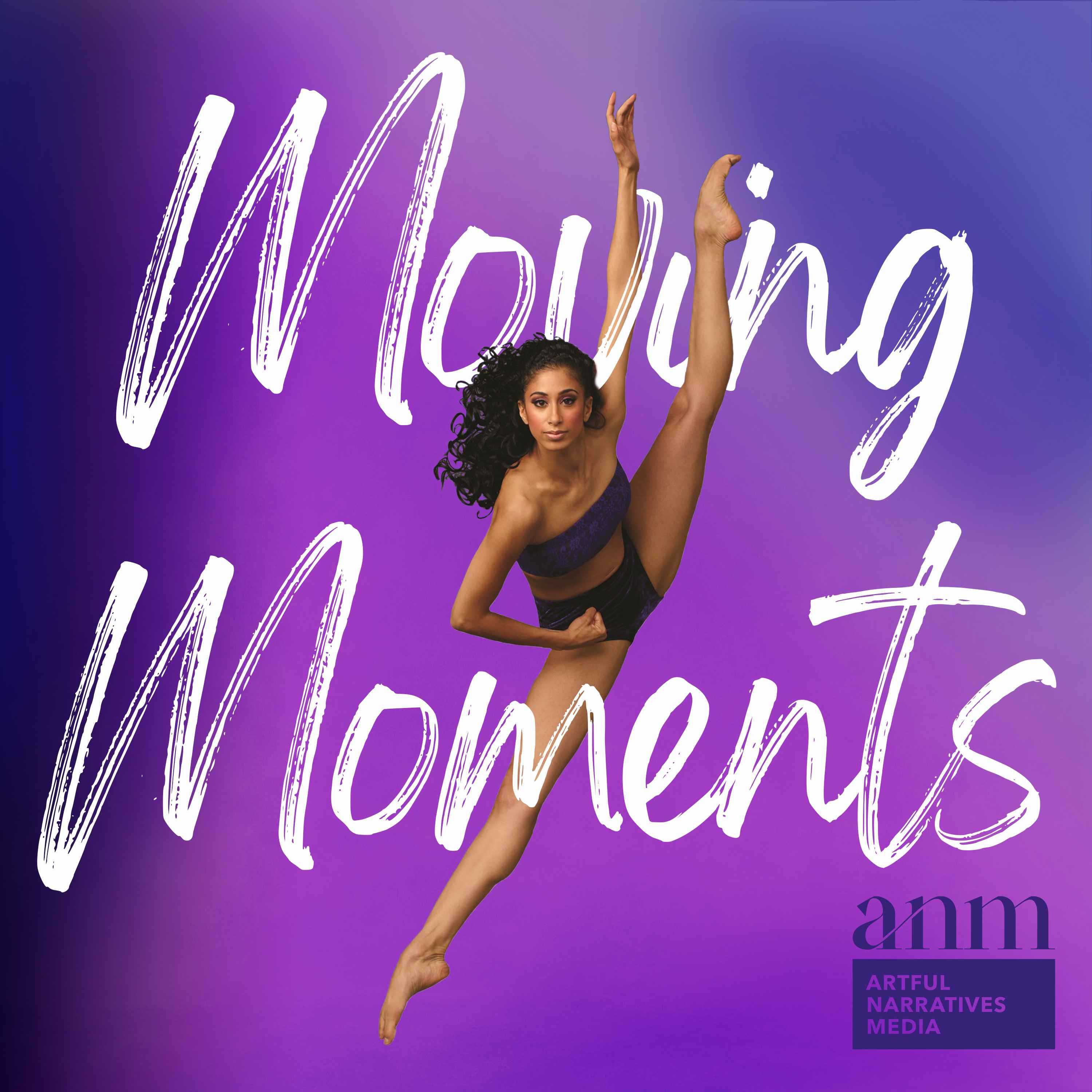
You're listening to Moving Moments, the podcast that explores the dance world's most accomplished and groundbreaking artists. I'm your host, Alicia Graff Mack Dean and director of Dance at the Juilliard School. During each episode, you'll hear me talk with some of my closest friends and most trusted colleagues as we sit down to hear about their creative process and how they are changing the dance world on and off the stage. I'm a huge fan, and I've been since your first appearance as a teenager on the documentary First Position and through your films, books, of course, your work on stage and your commercial presence. You have a wide fan base and are inspiring generations of young dancers and the current generation of dancers such as myself. Did you ever think as a child that you'd be the face of the ballet world?
- [01:50]
Michaela Mabenti Duprince
Well, it's funny, because I was listening to a podcast and somebody was saying how people keep saying, oh, I'm so surprised I've made it so far. I am very surprised. But obviously there's a certain voice that's telling you, you can keep going, you can keep going. You don't have to stop. You just keep persevering and trying to change and pushing the envelope. At a very young age, I wasn't considered to be good enough to become an overachiever. At a very young age, I loved ballet. I love the things I've always done my whole life, but it was more like to matter. And so for me to matter finally, and then to be able to get adopted and to do something that I loved. And after losing so much, I thought I finally found something that I love and an environment where I can thrive and just be myself. But I'm a black ballerina, and I didn't realize that I was going to have to do the same thing to find a way to matter and to stand out. And I think I Was. I don't want to say I was born with it, but I'm kind of like, if you knew me as a little four year old, you'd be like, okay, she's the same person. I was very spicy. You couldn't tell me what to do. If you said, you can't do that, I was like, okay, I'm just going to prove you wrong and just show you that I can do it 10 times better. But I think it just has always been this fight because at a young age, I know what it's always felt like to not be good enough, to not feel like you can accomplish what other people think that you can't accomplish. I remember when I was 15 and I was auditioning even, like some teachers and even my best friends were saying, why don't you audition for Alvin Ailey? I love Alvin Ailey. It's a beautiful company. But if you know me, you know I was classically trained. All I talked about was ballet. I did obviously different types of dance techniques, but ballet was the thing I wanted to do. I wanted to be in a classical company. So I think because of all the things and all the obstacles I had to face, I think I just built this armor and this armor, I didn't realize I needed it to be able to help other people. I'm very much a caretaker and I want other people not to have to constantly fight, but to be able to enjoy and to be present in the moment of whatever art form that they love. Because it can get very tiring to fight, I'm sure. You know, it can get exhausting. And sometimes you're like, well, what's the point anymore? Which is why, like writing ballerina dreams and taking flight and having those kinds of responses from people of how I've changed their lives has changed mine. It inspires me every day to be able to go to work. It inspires me to continue to use my voice. It inspires me just to hold on to that love of this amazing art form that I found, if that makes sense.
- [04:17]
Alicia Graff Mack
It absolutely does make sense. I feel that in my life, if I have the sense that I'm representing something greater than myself or that it's a calling, it is my responsibility and not just a task or a job. It makes it that much more fulfilling and worth the fight that you talk about. Can you tell me a little bit about your dancing spirit? As a child, I'm hearing how you had this fight in you, but what about the dancing spirit which I think has to live in all dancing artists who Become professionals.
- [04:58]
Michaela Mabenti Duprince
For me, dancing was a way to quiet the chaos that I had been through in life, a way to express myself. Because as a child, I constantly felt I had to be perfect. I had to be successful. But in ballet, whenever I was in the studio, even if I messed up, I might have gotten mad at myself, but I felt like I had that space to explore, and it didn't need to be perfect right away. And I feel like my spirit in general. I think people can tell from the book or interviews I'm more of this feisty but also very quiet person. If you really get to know me, I move silently, and then people are like, oh, there she is. Yeah.
- [05:39]
Alicia Graff Mack
And even before you started with formal training, did you find yourself dancing or moving?
- [05:46]
Michaela Mabenti Duprince
When I describe it, it's half of my heart. When I was younger, I used to force my sisters and my friends to come over, and I would have to choreograph on them, of course. Of course. But dancing has been a thing I think I'd been doing for such a long time without even realizing what it was. Especially in Sierra Leone, I was always dancing. I just didn't know what it was until I realized I wanted to become like ballerina, like the woman on the magazine.
- [06:10]
Alicia Graff Mack
Could you tell our audience just a summary of how you came to see this ballerina?
- [06:16]
Michaela Mabenti Duprince
I won't go too much into details because you guys can buy the book. There you go. Which is a good thing to put out there. So first, I want you guys to also understand. When I was born, I had two incredible biological parents who loved me. They understood me. They appreciated me, because also I had vitiligo that nobody treated me very well. So when they passed away, I had absolutely nothing. I had an uncle who took me to the orphanage. Now, I forgive him, but I was a child. I couldn't understand why he didn't see me for me, like the way my biological parents saw me. So I'm in the orphanage, and I thought, okay, fine, fine. I'm going to finally have people who love me and who actually care about me. And it was a complete opposite. So they ranked us from, like, one was the favorite child and 27 was the least favorite. Number one, got the biggest amount of food. 27, which was me, got the smallest amount of food. And I was just mistreated all the time. They would braid my hair to make sure that my scalp would hurt as much as possible. They just abused me a lot. And I wasn't allowed to play with some of the children as well. I was very isolated. I was lucky. I had my mat mate was number 26, who ended up actually getting adopted with me and becoming my sister. Now I had her, but I didn't have anything else besides that. So I remember when I found out all the children were getting adopted and I wasn't going to get adopted, 12 families didn't want me. It was at the right moment where I found this hope and this light of something I could not understand. So I was walking towards the gate one afternoon and a magazine blew into the orphanage gate. And I look at it and it's a beautiful ballerina. And I actually know who she is. Her name is Magalie Messak and she's a beautiful human being. But now as an adult, I think even if it was a football, I'm glad it wasn't a football player or soccer player, but because I'm not coordinated outside of ballet. But seeing something so beautiful and effortless and seeing this woman look so happy, I wanted to know what that felt like. And so right away I was looking through the magazine. Everything looked beautiful in it. But this certain pose that she was doing with this pink tutu was. I can't even put it into words. But right away, as this little girl who thought, well, one, nobody wants me, I'm never going to become anything. Having that moment of hope and a dream changed my life forever.
- [08:34]
Alicia Graff Mack
Yeah, it's so incredible. I think that everything happens for a reason and is guided for a reason. And the thought that this image would land at your feet, to me I'm like, that's. That's nothing but God there. Because you had a calling before you even knew.
- [08:56]
Michaela Mabenti Duprince
Yeah, I think I absolutely can agree with you. Finding that magazine was something I just needed to find. I ripped the COVID off and I put it in my underwear. That was the only place that I felt like it was safe enough and nobody was going to take it away from me. So no matter what, I would have had that constant feeling of an escape from reality, actually, and something to become bigger than myself. I do believe things happen for a reason. Yeah.
- [09:25]
Alicia Graff Mack
And do you still have the picture?
- [09:29]
Michaela Mabenti Duprince
I don't have the original, but I do have the magazine here, actually, like 10 steps away from me. And like in a special case that I have whenever I feel like, okay, I'm not feeling so great, but I look back and I remind myself, I'm like, how far I've come. And, yeah, it's absolutely incredible. Yeah.
- [09:46]
Alicia Graff Mack
Tell us a little bit about your parents and the home that you grew up in with your siblings and what values they instilled in you that helped to propel you forward?
- [09:59]
Michaela Mabenti Duprince
It's a little bit complicated. I lost myself as an African young child, and I just wanted to become very American to fit in, but they really just wanted me to become the best version of myself that I possibly could be. And they invested in everything. Like, even my adopted mother, she made my tutu. She taught me how to sew pointe shoes. She would dye my tights with coffee and something else to make them brown. She would, like, even do that with my undergarments. I'm really happy that I was able to have the life that I had because of them. And I think the things that my adopted brothers and sisters taught me was how to love unconditionally, the right way, if that makes sense. Like, your family doesn't always actually need to come from blood. It can come from different people. Yeah.
- [10:47]
Alicia Graff Mack
Wow. As a mother of only two, I am constantly juggling schedules. And I'm in awe of your parents because I'm sure your siblings also were involved in so many various things. How did they make time to get you to all the lessons, to go get the pointe shoes, to sew and do all of those things? Or is it just like the mama magic? It just, you know, happens.
- [11:13]
Michaela Mabenti Duprince
I can't even fathom how my adopted mother had time to sew. My point, she was make my tutu while also trying to make sure we got to our swimming lessons while trying to, like, take care of my other siblings. Because when I was adopted, it was just Mia and I, and then we adopted Marielle after a year and a half. And then I created my own agency when I was about nine years old in our basement because I wanted an older sister. And so, yeah, I made Mia put everything in the binder, and Mara will staple everything. And I was going to pick our big sister. And then we got an older sister when she was 14 years old and I was 10. And then my. I had my other brothers, like, around. So I don't. I think luckily it was like two different generations and it worked out. But the girls, we all danced, we all swam. I think being homeschooled also really helped us. But somehow we just. We're all over achievers and wow, you know, just wanted to do everything.
- [12:08]
Alicia Graff Mack
So come on. Administrator at 9 years old. Mikayla. For most, surviving the teenage years is hard enough. Just going to school or growing into yourself, maturing into your body, just understanding who you are as a person for most teenagers is quite challenging. But you were making your mark in the Dance world by the time you were 13, 14 years old. Tell us about your early life as a pre professional dancer and what you faced both as sources of motivation and sources of challenge during those years.
- [12:45]
Michaela Mabenti Duprince
I didn't think I was actually going to become professional. I didn't think I was good enough because, I mean, I was told I wasn't going to become a ballerina. I was black and I don't fit into the ballet world. But I met certain people in my life who really believed in me. But at the same time, if you understand my traumas and things like that, I didn't always necessarily trust it as an adult. I do now. But at that moment, I couldn't really trust when people actually were there for me. I was at the Rock School when I was 13 for two years. And then I went to American Ballet Theater, which are two different things, two different kind of schools. It was hard being a teenager and away from your family and not even understanding your body and not understanding your emotions, what's going on. And then moving to New York by myself to go live with a host family in a new school, it was. It was very scary. But because I'm also very much like a survivor, it was more like surviving and thinking about, well, I want to look like her and I want to look like her, and I'll take this from this person, that from this person, hopefully I can create my own person as an artist. Was fortunate enough to meet Franco Dovita, Raymond Lukens, who also really believed me. Arthur Mitchell was a huge thing for me. He's scared me to death. Yeah, terrified. But meeting him at Dan City of Harlem when I was 12 was my first summer intensive away from home. That was a big moment that shifted my thought, okay, actually, maybe I could become professional. And already by the time I was 15, 16, I had my first soloist performance with South African Ballet. And that went very, very well. And then I joined, I'm still at abt. And then I joined Dance to Harlem as well. And that went very, very well. But then, like, I wanted to figure out what was next for me. So then I left and I went to Dutch National Ballet for a few years. And being the only black female for a long time was very difficult. Ever since I met Arthur Mitchell. Being in Dance Suit of Harlem, those are the things I think that kind of kept me finding my own person.
- [14:43]
Alicia Graff Mack
In terms of living internationally. What did you find moving to Europe, having lived in the United States for so many years?
- [14:52]
Michaela Mabenti Duprince
One, it was very scary. I didn't speak the language. Luckily, there were a lot of people who also spoke English. I'm really glad I did it. At 18, I only thought I was going to be there for maybe, like, two years, and then I end up being there for eight years. But I learned a lot about myself. I learned a lot about not being a people pleaser. I learned about doing things for me and for others and trying to change the ways for others and not having to feel like I had to constantly silence my voice. Also finding myself outside of ballet and finding a way to help others, because that's my thing. I love helping people. I love trying to make the world a better place through dancing, through working with refugees, with Warchild Holland, through writing, even writing the books. It was to be able to help other people. But, yeah, it was an incredible experience, and I'm happy to be back in the U.S. especially after the first year. Being back in Boston, I feel like I found my place again in who I am.
- [15:46]
Alicia Graff Mack
So let's just shift a little bit to your actual artistic process. When you're learning something new or learning rep or having something being created on you, what is your mental and physical preparation for rehearsal day? And how do you prepare for performances so that you're working at your best?
- [16:11]
Michaela Mabenti Duprince
It's different for everybody, but for me, having people in your corner. I'm very fortunate to have Charlotte Jen. What I love about her is it's not about the steps. And with her Since I was 15, it's always about having a conversation on stage and having that conversation reached the audience. She was able to help me find a way that this set means this. This set means that I'm actually having conversation with my dance partner. And it's a journey that I was doing very well. And then I ruptured my Achilles and I got very insecure, and I had to relearn how to find that confidence again. And pretty much doing it the most authentic way, doing it Michaela's way, not trying to be like anybody else. But I think what's really, really beautiful is when you can see a dancer perform and, you know, they're doing it their way, instead of being like, oh, well, that looked exactly like the other girl who stepped on eight. You know, I think that's a little bit boring. But the thing is, at the end of the day, it has to do with less ego in the room and more about how can we make this young artist feel like this person can have a safe space. It's hard because sometimes people think when you do challenge your artistry, that you are a diva. Like, really, you're just trying to find different ways to grow. I'm excited to see because I feel like something's changing and I feel like all artists should have that opportunity. I feel like I can sense that I'm growing. That's a beautiful thing.
- [17:36]
Alicia Graff Mack
So, yeah, that is a magical moment. Yeah, definitely. For an artist who works as hard as you do. But to feel those moments that you know something's coming, you can feel your growth. That's really a special, special time. I'm glad you recognize that.
- [17:54]
Michaela Mabenti Duprince
I'm just being authentically me and I'm doing it for me, and I hope everybody likes it. If you don't, you don't. But I know I'm gonna enjoy that process of my growth.
- [18:04]
Alicia Graff Mack
Yeah.
- [18:04]
Michaela Mabenti Duprince
And that's such an important thing. It's such a short career. Yep.
- [18:08]
Alicia Graff Mack
You know, and you know, the stage is a truth teller. You can't fake it. People know your heart when you perform.
- [18:16]
Michaela Mabenti Duprince
Yeah.
- [18:16]
Alicia Graff Mack
And so if you're not authentically yourself on stage, you know that truth rings true.
- [18:23]
Michaela Mabenti Duprince
Yeah. Yeah.
- [18:24]
Alicia Graff Mack
So I've asked many of my guests to describe the high of a performance. When you truly feel that you're in your element and making the magic, I guess you could say. Can you try to describe what that big feeling feels like?
- [18:43]
Michaela Mabenti Duprince
I've had that a few times. I had a performance in South Africa and it was kind of like an out of body experience. It was very strange, but at the same time I was having like just a conversation with friends on stage and it just was like so much like actual conversation with our dancing and really looking at each other and not faking really having this beautiful moment. And I finished the full ballet. I mean, Don Ki was hard. I finished the full ballet and I wanted to do it again. It was the same thing when I did. I know that's crazy, but because I was so fulfilled by the enjoyment of it, it. It wasn't as hard because I wasn't trying to pretend to be somebody else. It's just such a beautiful thing when you're so in tune with your body and you can feel everything is present. It's like having a piece of chocolate cake and you want to have it again. Yeah. It's like. It's just so good. Yeah.
- [19:38]
Alicia Graff Mack
Those moments are very hard to describe. And you're right, they're fleeting. I know you've had a very difficult injury with your Achilles, and some say that injuries are detrimental to careers, especially as dancers. Careers are so short. But in my own experience, I feel that my injuries have Been a blessing in disguise. What has your experience been?
- [20:00]
Michaela Mabenti Duprince
So in 2017, when I ruptured my Achilles, I thought it was the end of the world. I was very hard on myself, but at this time I was suffering really badly with my ptsd, so I wasn't sleeping very well and I would still go to work. I will still do what I need to do. But I was in this mode of just going, going, going and not dealing with my inner things that I needed to deal with. And I kind of felt like that was also blocking my growth as an artist. So I ruptured my Achilles and I had to figure out, who am I outside of ballet.
- [20:33]
Alicia Graff Mack
Were you in a rehearsal or a performance?
- [20:36]
Michaela Mabenti Duprince
No, I was in Sicily. It's actually I met Lenny Kravitz and I. What? He dedicated a song to me and I got up, we were at a temple and I just stepped in the wrong place at the wrong time. But it would have happened.
- [20:51]
Alicia Graff Mack
Oh, my gosh, it was bound to.
- [20:53]
Michaela Mabenti Duprince
Happen because I'm sure you've seen the first position. Like, I've been struggling with acute tendonitis for such a long time. Especially joining company a young age and wanting to prove yourself. Sometimes you forget that you're still a human. But I ruptured my Achilles. I didn't know who I was. And so I wanted to find out who am I outside of ballet? So I started working with Warchild More. I went into the field helping refugees, finding a way to just find different things that bring love and joy into my life. Finding who I am as a human being and not just focusing on dancing. Started teaching more, started doing more talk, starting just building a different foundation for who I was. And I also changed the way I started working. I'm looking at it now because I'm very proud because I just did a gala in Mexico and haven't done a massive gala in front of 10,000 people in six years. And I did Diana and we went very well, which I'm happy. But I don't know if I would have done it the same way if I hadn't ruptured my Achilles.
- [21:54]
Alicia Graff Mack
We started this conversation. You mentioned wearing your brown tights. Can you describe to our audience what it means to wear your skin toned tights and shoes?
- [22:08]
Michaela Mabenti Duprince
Okay, so the first time I ever wore it was when I was 12, when I went to dance to the Parliament Summer intensive. And I felt very vulnerable because I was very much myself and I couldn't understand that feeling. And then I was at Dutch national my. I think it was maybe my Third year in the company, and I started wearing brown tights. I remember I did Clara Marie, and I kind of just felt like there's something missing at these pink tights on. There's something missing. Why do I feel like not a fraud, but I know there's something missing? And I did Tarantella in brown tights, and I don't think I've ever felt that free. I started changing the way I use my muscles.
- [22:49]
Alicia Graff Mack
Yes.
- [22:49]
Michaela Mabenti Duprince
When I wore brown tights, I wasn't as bulky. I wasn't really trying to grip everything. I was just trying to really find a way to elongate everything. And I just. It changed my body. And people just thought, oh, you lost weight. Oh, I'm just wearing something where I don't feel like I have to show that I have muscles.
- [23:06]
Alicia Graff Mack
Yeah.
- [23:06]
Michaela Mabenti Duprince
But it's a beautiful thing to be able to have your own skin tone when you're dancing.
- [23:11]
Alicia Graff Mack
It's life changing.
- [23:13]
Michaela Mabenti Duprince
Yeah.
- [23:13]
Alicia Graff Mack
I had the same experience. I had never worn brown tights until I joined Dance suit of Harlem, 17. And it was like the feeling of, you know, when you try on that dress that fits just right and you feel like a million bucks.
- [23:31]
Michaela Mabenti Duprince
Yeah.
- [23:31]
Alicia Graff Mack
I didn't realize I was missing that feeling.
- [23:34]
Michaela Mabenti Duprince
Yeah.
- [23:35]
Alicia Graff Mack
And I'm so glad to see things changing in terms of various companies selling various colors of shoes and tights. And I know you've been on the forefront of that, of that fight along with, of course, Arthur Mitchell really began that idea in the 70s with having each dancer live in their skin tone. But it's amazing that not until last maybe five to seven years have we seen that conversation go beyond the walls. At Dancing of Harlem. Outside of dancing, outside of your work, what is your life like? Is there a work life balance? We could talk about that idea too, which I'm like, does that really exist? But I'll ask you the question. And what brings you joy?
- [24:24]
Michaela Mabenti Duprince
For me, it's really one connecting with the family that I've made and having time for them and just catching up and having good conversation. Teaching. I love teaching. I love it when somebody leaves the classroom feeling very positive. If I can help somebody, it really just makes me feel so good. And I don't want to sound cheesy. When I'm able to give back, that's when I'm at my happiest. But I also love resting for a full day. I will turn my phone off. Nobody will disrupt me or anything. I love cooking. I love seeing my friends. I go to New York quite a lot. It's Difficult coming back to the US because a lot of dancing, a lot of rehearsing compared to being in Europe. So I'm finding that balance beyond. I'm pretty happy with whatever is happening now and outside of the ballet as well, and all the other things I do. So.
- [25:11]
Alicia Graff Mack
Yeah, yeah. So with your books, I know you've starred in an animated film, is that right?
- [25:17]
Michaela Mabenti Duprince
I did, yeah.
- [25:18]
Alicia Graff Mack
And all of your sponsorship, Nike, you know, how are you able to focus on your dancing? With this barrage, I'm sure, of requests of personal appearances and filming and all of that.
- [25:32]
Michaela Mabenti Duprince
I'm very lucky. I always think there's certain opportunities. You're going to meet people, it's going to inspire you in a certain way, or you're going to learn a lesson that you needed to learn. I love being busy, but it is definitely a balance. It is like once a week where I don't talk to anybody. Like, I have to just shut down and just focus on my mental health. I started doing that about four or five years ago. It's very helpful. It's hard, but sometimes I need those moments not to be on Instagram or looking at my emails or trying to please other people so they feel better. Because sometimes I'll. I'll just. I'll get into that flow of pleasing and pleasing and pleasing, and then I'm drained, you know? And you can't make everybody happy. You only make yourself happy. That's what I'm trying to focus on.
- [26:12]
Alicia Graff Mack
Yeah.
- [26:13]
Michaela Mabenti Duprince
Yeah.
- [26:13]
Alicia Graff Mack
My last question, and you don't have to answer this, but I heard that your book may be turning into a movie.
- [26:23]
Michaela Mabenti Duprince
Yes.
- [26:23]
Alicia Graff Mack
Can you reveal about that?
- [26:25]
Michaela Mabenti Duprince
I can definitely confirm it. Certain things have changed since we announced it a few years ago, but everything is looking really great. Last summer, I heard this script for the first time and I actually cried. But it's such a beautiful way of presenting my life.
- [26:41]
Alicia Graff Mack
Are you in the film?
- [26:43]
Michaela Mabenti Duprince
No. Then it will never get finished. Because I'm sure you've experienced, if you do, like, photo shoots or things like that, they don't necessarily notice it, but they'll see you coming down. They're like, that's beautiful. I love the space. I'm like, I have a biscuit.
- [26:55]
Alicia Graff Mack
So for audiences that may not know, the biscuit is a foot that's not quite fully pointed.
- [27:04]
Michaela Mabenti Duprince
So I want to make sure. I want this story to come out, and I think it's a perfect time for it to come out. It's the same thing with the animation. I did Coppelia. It's all about beauty. Is within and loving yourself.
- [27:16]
Alicia Graff Mack
Amazing. I'm trying to get out as much information as I can. Somebody must play you in terms of being a ballerina in the film. I mean there are so many beautiful ballerinas out there, but there is only one Mikayla. How is that happening?
- [27:33]
Michaela Mabenti Duprince
We will just have to wait and see. But I'm excited for everybody to see see it.
- [27:37]
Alicia Graff Mack
Oh, I can't wait. Thank you so much for spending this time with me. It's so good to hear your voice. It's so good to know that you're feeling fulfilled by your life and excited by your future in dance and all other things.
- [27:54]
Michaela Mabenti Duprince
Thank you. Appreciate it.
- [27:56]
Alicia Graff Mack
I hope you enjoyed this episode of Moving Moments. If you like what you heard, please tell your friends about it. Spread the word. Be sure to follow the show, rate us and leave a review wherever you get your podcasts. To keep up with future episodes, follow us on Instagram at Moving Moments Podcast and Visit us at artfulnarrativesmedia.com Tune in next week as we hear another inspiring artist's Moving Moments.