Podcast
My Worst Investment Ever Podcast
Hosted by Andrew Stotz · EN
Welcome to My Worst Investment Ever podcast hosted by Your Worst Podcast Host, Andrew Stotz, where you will hear stories of loss to keep you winning. In our community, we know that to win in investing you must take the risk, but to win big, you’ve got to reduce it.
Your Worst Podcast Host, Andrew Stotz, Ph.D., CFA, is also the CEO of A. Stotz Investment Research and A. Stotz Academy, which helps people create, grow, measure, and protect their wealth.
To find more stories like this, previous episodes, and resources to help you reduce your risk, visit https://myworstinvestmentever.com/
26episodes
Episodes
Newest firstAll episodes
Enrich Your Future 35: Market Gurus Are Just Expensive Entertainers
Jun 23, 202500:31:43Tap to summarizeIn this episode of Enrich Your Future, Andrew and Larry Swedroe discuss Larry’s new book, Enrich Your Future: The Keys to Successful Investing. In this series, they discuss Chapter 35: Mad Money.LEARNING: Investors are naive, and Cramer is an entertainer, not a financial advisor who adds value. “Do not confuse information with value-added information. If you know something because it was in the newspaper, everyone else knows it as well. So it has no value.”Larry Swedroe In this episode of Enrich Your Future, Andrew and Larry Swedroe discuss Larry’s new book, Enrich Your Future: The Keys to Successful Investing. The book is a collection of stories that Larry has developed over 30 years as the head of financial and economic research at Buckingham Wealth Partners to help investors. You can learn more about Larry’s Worst Investment Ever story on Ep645: Beware of Idiosyncratic Risks.Larry deeply understands the world of academic research and investing, especially risk. Today, Andrew and Larry discuss Chapter 35: Mad Money.Chapter 35: Mad MoneyIn this chapter, Larry explains why investment advice from so-called market experts is often worthless.The infamous Jim CramerJim Cramer, a former hedge fund manager, has become one of the most recognizable faces in the investment world. He dispenses rapid-fire investment advice on the show “Mad Money.” Since it premiered in March 2005, it has been one of CNBC’s most-watched shows. But has his advice been as successful for the investors who follow it? Larry shares a couple of research studies that answer this question.It pays more to invest in an S&P than in Cramer’s fundCramer manages a portfolio that invests in many of the stock recommendations he makes on TV. Established in August 2001 with approximately $3 million, the Action Alerts PLUS (AAP) portfolio has been the centerpiece of Cramer’s media company, TheStreet, which sells his financial advice, giving subscribers in the millions access to each trade the portfolio makes ahead of time. Jonathan Hartley and Matthew Olson, authors of the 2018 study “Jim Cramer’s Mad Money Charitable Trust Performance and Factor Attribution,” examined the AAP portfolio’s historical performance. Their study covered the period from August 1, 2001, the AAP portfolio’s inception, through December 31, 2017. The study found that the fund returned a total of 97%. During that same period, an investment in the S&P would have returned 204%.No real stock-picking skill, just entertainmentIn another study, “How Mad Is Mad Money?”, Paul Bolster, Emery Trahan, and Anand Venkateswaran examined Cramer’s buy and sell recommendations for the period from July 28, 2005, through December 31, 2008. They also constructed a portfolio of his recommendations and compared it to a market index. The researchers came to three key conclusions:Investors were paying attention, as the stocks he recommended had abnormal returns of almost 2% on the day following his recommendations.The returns for the recommended stocks were both positive and significant for the day of the show and the 30 days preceding the show. So, it seems he was recommending stocks with short-term momentum.The returns were negative and significant, at -0.33% and -2.1%, for days 2 through 5 and days 2 through 30 following the recommendation. After 30 days, the results are insignificant.There is no evidence of any stock-picking skill—Cramer’s picks are neither good nor bad. In the end, it’s just entertainment.A third study, “Is the Market Mad? Evidence from Mad Money,” conducted in 2005, found the same result as the second study: prices rise overnight, and they are quickly corrected. This means that Cramer added negative value for the people who tried to implement his advice because they drove the price up in their buying frenzy. Then the smart money comes in, and the price reverts to basically where it was before he made the recommendation.Do stock market experts reliably provide stock market timing guidance?In a fourth study, CXO Advisory Group set out to determine if stock market experts, whether self-proclaimed or endorsed by others (such as in the financial media), reliably provide stock market timing guidance.To find the answer, from 2005 through 2012, they collected and investigated 6,584 forecasts for the US stock market offered publicly by 68 experts (including Cramer), employing technical, fundamental, and sentiment indicators. Their collection included forecasts, all of which were publicly available on the internet, dating back to the end of 1998. They selected experts, both bulls and bears, based on web searches for public archives that contained enough forecasts spanning various market conditions to gauge their accuracy. Basically, they found there are no real experts.The distribution of their accuracy looks virtually identical to a bell curve but slightly to the left, meaning, on average, they do worse. The average accuracy was 47%, which happened to be the same score as Cramer’s. So, of all the non-expert experts, Cramer was average at being non-expert.The market is highly efficient for any guruAccording to Larry, all these studies indicate that investors are naive, Cramer is an entertainer, not a financial advisor, who adds value, and that the market is highly efficient, making it very hard to beat it.They also show that being highly intelligent (and entertaining, in Cramer’s case) is not a sufficient condition to outperform the market. The reason is simple. There are many other highly intelligent money managers whose price discovery actions work to keep the market highly efficient (meaning market prices are the best estimate we have of the right price). That makes it unlikely any active money manager will outperform on a risk-adjusted basis.The research shows that gurus’ only value is to make weathermen look good, whether it involves predicting economic growth, interest rates, currencies, or the stock market, or even picking individual stocks.Ignore the prognosticatorsLarry concludes that while Cramer might provide entertainment, those following his recommendations are like lambs being led to slaughter by more sophisticated institutional investors. He urges investors to keep this in mind the next time they find themselves paying attention to some guru’s latest forecast. You’re best served by ignoring it, he says.The prudent strategy, Larry adds, is to develop a well-thought-out plan and to have the discipline to adhere to it, ignoring the market noise, whether it comes from Jim Cramer or any other prognosticator.Further readingMichael Learmonth, “Ratings Flood for Fox, CNN,” Variety, September 27, 2005.Jonathan Hartley and Matthew Olson, “Jim Cramer’s Mad Money Charitable Trust Performance and Factor Attribution,” The Journal of Retirement (Summer 2018).Paul Bolster, Emery Trahan and Anand Venkateswaran, “How Mad Is Mad Money?”The Journal of Investing (Summer 2012).Joseph Engelberg, Caroline Sasseville and Jared Williams, “Is the Market Mad? Evidence from Mad Money,” March 22, 2006.Bill Alpert, “Shorting Cramer,” Barron’s (August 20, 2007).Jim Cramer, “Cramer vs. Cramer,” New York, May 25, 2007.CXO Advisory Group, “Guru Grades,” www.cxoadvisory.com/gurus.Did you miss out on the previous chapters? Check them out:Part I: How Markets Work: How Security Prices are Determined and Why It’s So Difficult to OutperformEnrich Your Future 01: The Determinants of the Risk and Return of Stocks and BondsEnrich Your Future 02: How Markets Set PricesEnrich Your Future 03: Persistence of Performance: Athletes Versus Investmen...
Transcribe →
Mike Koenigs - A Founder’s Character Is Bigger Than Their Charisma
Jun 16, 202500:37:51Tap to summarizeBIO: Mike Koenigs is a serial entrepreneur with five successful exits, a 19-time bestselling author, and a top strategist for founders post-exit.STORY: Mike invested big in a SaaS startup set up for success, but infighting brought it to its knees.LEARNING: Character is bigger than charisma. “If you’re a shareholder, your best exit is for a big company to come and buy what they believe is money at a discount.”Mike Koenigs Guest profileMike Koenigs is a serial entrepreneur with five successful exits, a 19-time bestselling author, and a top strategist for founders post-exit. He helps build powerful personal brands in just one week and pioneers Generative AI for executives, speaking at elite events like Abundance 360, MIT, and Tony Robbins’ gatherings.Worst investment everMike learned about a SaaS startup from a client with whom he had spent time and had gotten to know, like, and trust him. So, when the client introduced Mike to this deal, he got interested.The startup looked great, so he invested a substantial amount of money and then doubled down because it got even better.Off to a promising startThe basic premise was that it was a pool. The founders would find SaaS companies with customers, momentum, technology, and a bit of a moat. They had much experience and success, such as a 10x dividend to investors in three years.Infighting paralyzes everythingUnfortunately, the two founders started fighting. One of them locked the other one out of everything. They had the majority and equal shareholding, making infighting even worse. The remaining partner started emptying the coffers.Someone doing the books became a whistleblower and revealed the shenanigans going on. The partner was siphoning off money, building a house, going on big trips, using private jets everywhere, etc. It got uglier and uglier, causing the shareholders to file lawsuits, and the FTC got involved. Years have gone by, and things are still shut down.Lessons learnedTime kills deals.Character is bigger than charisma. Crooked founders will gut you faster than any market downturn.Put all that money into index funds and let it compound.Andrew’s takeawaysThe only way to invest as an angel investor is to invest in 10 startups. Don’t do it if you are not prepared with the money and time to do that.Actionable adviceUnless you’re a full-time VC with deal flow, customer channels, or an exit mapped out, keep your money in things you can control. If you’re a shareholder, your best exit is for a big company to come and buy what they believe is money at a discount.Mike’s recommendationsMike recommends learning to build a brand that will elevate everything you touch for the rest of your life. He suggests reading his book, Your Next Act: The Six Growth Accelerators for Creating a Business You’ll Love for the Rest of Your Life, to help you build your brand. He also recommends immersing yourself in AI and learning how to use it effectively.No.1 goal for the next 12 monthsMike’s number one goal for the next 12 months is to become an international citizen. He wants to continue living his beautiful life in multiple locations and working with more entrepreneurs worldwide.Parting words “Go out and build your brand. You will get access to better deals faster at a discounted price.”Mike Koenigs [spp-transcript] Connect with Mike KoenigsLinkedInFacebookInstagramPodcastWebsiteBooksAndrew’s booksHow to Start Building Your Wealth Investing in the Stock MarketMy Worst Investment Ever9 Valuation Mistakes and How to Avoid ThemTransform Your Business with Dr.Deming’s 14 PointsAndrew’s online programsValuation Master ClassThe Become a Better Investor CommunityHow to Start Building Your Wealth Investing in the Stock MarketFinance Made Ridiculously SimpleFVMR Investing: Quantamental Investing Across the WorldBecome a Great Presenter and Increase Your InfluenceTransform Your Business with Dr. Deming’s 14 PointsAchieve Your GoalsConnect with Andrew Stotz:astotz.comLinkedInFacebookInstagramThreadsXYouTubeMy Worst Investment Ever Podcast
Transcribe →
Enrich Your Future 34: Embrace the Bear: Why Market Crashes Are Your Silent Ally
Jun 9, 202500:34:20Tap to summarizeIn this episode of Enrich Your Future, Andrew and Larry Swedroe discuss Larry’s new book, Enrich Your Future: The Keys to Successful Investing. In this series, they discuss Chapter 34: Bear Markets: A Necessary Evil.LEARNING: Investors must view bear markets as necessary evils. “If stocks didn’t experience the kind of bear markets that we have, investors would be very unhappy.”Larry Swedroe In this episode of Enrich Your Future, Andrew and Larry Swedroe discuss Larry’s new book, Enrich Your Future: The Keys to Successful Investing. The book is a collection of stories that Larry has developed over 30 years as the head of financial and economic research at Buckingham Wealth Partners to help investors. You can learn more about Larry’s Worst Investment Ever story on Ep645: Beware of Idiosyncratic Risks.Larry deeply understands the world of academic research and investing, especially risk. Today, Andrew and Larry discuss Chapter 34: Bear Markets: A Necessary Evil.Chapter 34: Bear Markets: A Necessary EvilIn this chapter, Larry explains why investors must view bear markets as necessary evils. He says that if stocks didn’t experience the kind of bear markets that we have, investors would be very unhappy.Larry further explains that the most basic finance principle is the relationship between risk and expected, but not guaranteed, return. So, the higher the risk, the higher the expected return, which means that if the risk is high, investors will apply a bigger risk premium, which will lead to the denominator in the formula of the Net Present Value. The numerator is the expected earnings. The denominator is the risk-free rate plus the risk premium.The higher the risk, the higher the premiumsLarry highlights historical bear markets, noting the U.S. has experienced losses exceeding 34% during the COVID crisis and 51% from 2007 to 2009. He argues that these losses are essential for investors to demand higher risk premiums. The very fact that investors have experienced such significant losses leads them to price stocks with a large risk premium.From 1926 through 2022, the S&P provided an annual risk premium over one-month Treasury bills of 8.2% and an annualized premium of 6.9%. If the losses that investors experienced had been smaller, the risk premium would also have been smaller. And the smaller the losses experienced, the smaller the premium would have been.In other words, the less risk investors perceive, the higher the price they are willing to pay for stocks. And the higher the market’s price-to-earnings ratio, the lower the future returns.Staying the course during underperformanceThe bottom line, Larry says, is that bear markets are necessary for the creation of the large equity risk premium we have experienced. Thus, if investors want stocks to provide high expected returns, bear markets (while painful to endure) should be considered a necessary evil.However, Larry notes that it is during the periods of underperformance that investor discipline is tested. Unfortunately, the evidence suggests that most investors significantly underperform the stock market and the mutual funds they invest in. The underperformance is because investors act like generals fighting the last war.Subject to recency bias (the tendency to overweight recent events/trends and ignore long-term evidence), they observe yesterday’s winners and jump on the bandwagon—buying high—and they observe yesterday’s losers and abandon ship—selling low. It is almost as if investors believe they can buy yesterday’s returns when they can only buy tomorrow’s.Keys to successful investingLarry shares three keys to successful investing to ensure you get the most from your investments even during bear markets.The first key is to have a well-thought-out plan that includes understanding the nature of the risks of investing. That means accepting that bear markets are inevitable and must be built into the plan.This understanding will help you feel prepared and less anxious when bear markets occur. It also means having the discipline to stay the course when it is most difficult (partly because the media will be filled with stories of economic doom and gloom).What is particularly difficult is that staying the course does not just mean buying and holding. Adhering to a plan requires that investors rebalance their portfolio, maintaining their desired asset allocation. That means that investors must buy stocks during bear markets and sell them in bull markets.The second key to successful investing, Larry suggests, is to avoid taking more risk than you have the ability, willingness, and need to take. By steering clear of excessive risk, investors are more likely to stay the course and avoid the common buy high/sell low pattern that most investors fall into.The last key is to understand that trying to time the market is a loser’s game—one that is possible to win but not prudent to try because the odds of doing so are so poor.Further reading1996 Annual Report of Berkshire Hathaway.1992 Annual Report of Berkshire Hathaway.1991 Annual Report of Berkshire Hathaway.2006 Annual Report of Berkshire Hathaway.2004 Annual Report of Berkshire Hathaway.Did you miss out on the previous chapters? Check them out:Part I: How Markets Work: How Security Prices are Determined and Why It’s So Difficult to OutperformEnrich Your Future 01: The Determinants of the Risk and Return of Stocks and BondsEnrich Your Future 02: How Markets Set PricesEnrich Your Future 03: Persistence of Performance: Athletes Versus Investment ManagersEnrich Your Future 04: Why Is Persistent Outperformance So Hard to Find?Enrich Your Future 05: Great Companies Do Not Make High-Return InvestmentsEnrich Your Future 06: Market Efficiency and the Case of Pete RoseEnrich Your Future 07: The Value of Security AnalysisEnrich Your Future 08: High Economic Growth Doesn’t Always Mean High Stock Market ReturnEnrich Your Future 09: The Fed Model and the Money IllusionPart II: Strategic Portfolio DecisionsEnrich Your Future 10: You Won’t Beat the Market Even the Best Funds Don’tEnrich Your Future 11: Long-Term Outperformance Is Not Always Evidence of SkillEnrich Your Future 12: When Confronted With a Loser’s Game Do Not Play<a href="https://myworstinvestmentever.com/enrich-your-future-13-past-performance-is-not-...
Transcribe →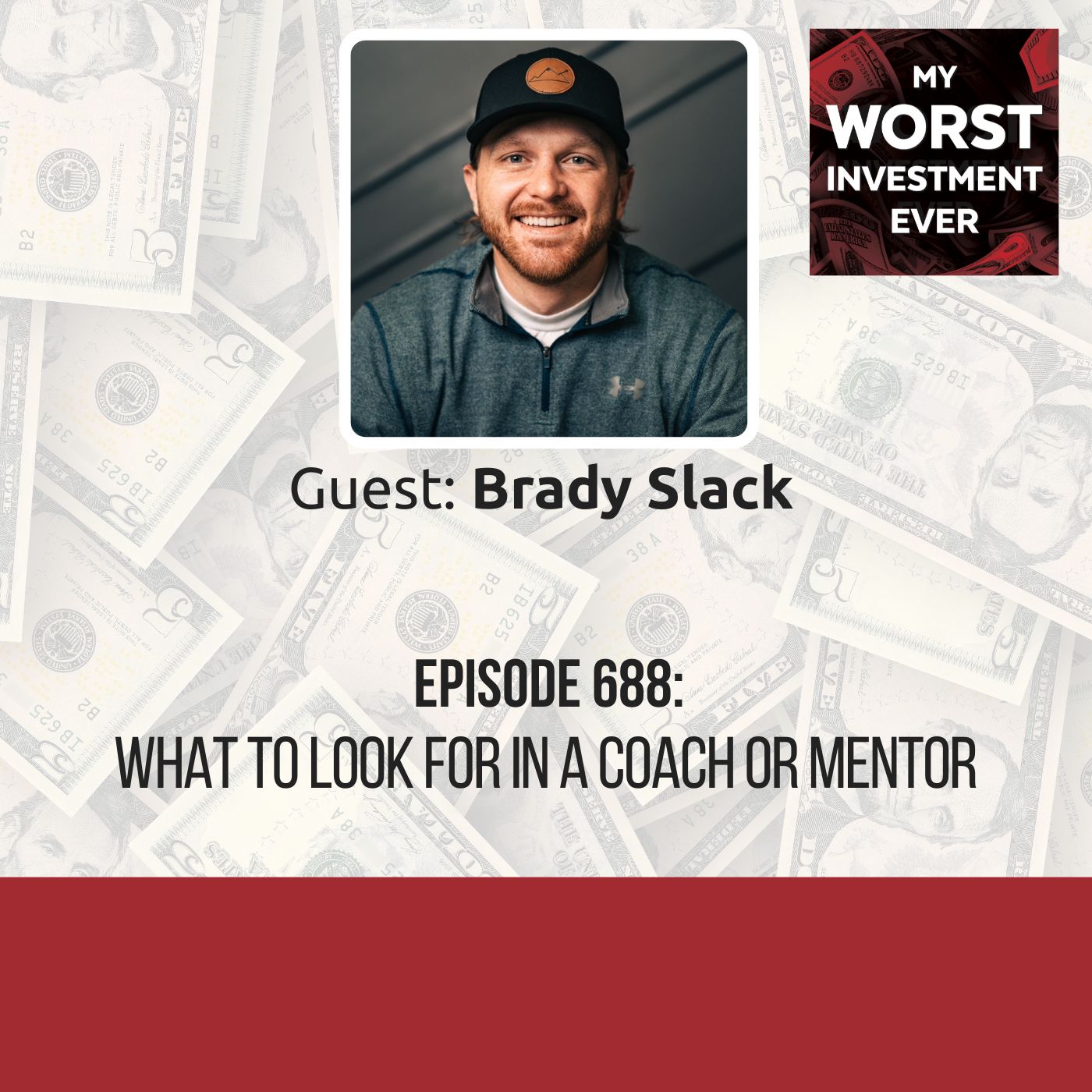
Brady Slack – What to Look For in a Coach or Mentor
May 21, 2023Tap to summarizeBIO: Brady Slack is the owner of High Country Finance, LLC, a full-service tax and accounting firm based in Utah in the US. His purpose is to be a resource that helps everyone experience wealth while paying the fewest taxes possible.STORY: Brady came across a coaching group on Facebook that was good at marketing its coaching package. He was fascinated by the package and bought it for $50,000. While it was a good package, it wasn’t a good fit for him as it didn’t align with his business goals.LEARNING: Vet the mentor, coach, or advisor before you engage with them. Pick a mentor or a coach who embodies what you want to be. Don’t decide out of desperation or pressure. “If you’re going to make a decision or buy something, or spend money, go to bed first. If you still feel the same in the morning, do it. But if anything’s changed, rethink it.”Brady Slack Guest profileBrady Slack is the owner of High Country Finance, LLC, a full-service tax and accounting firm based in Utah in the US. His purpose is to be a resource that helps everyone experience wealth, all while paying the fewest taxes possible.Worst investment everWhen Brady turned 23, he quit his job at an accounting firm and started a business. He didn’t have the expertise or the experience to create an accounting firm, but he decided to do it anyway. A close friend, a successful businessman, told Brady that the quickest way to learn and grow is to hire someone. So Brady started seeking out mentors, coaches, and development opportunities.Brady connected with a group on social media that asked him to speak at their event. He felt this would be an excellent way to reach more people and boost his business. He later found out the group had an offer attached to the back end of the speaking engagement, including some coaching, marketing and advertising, and websites. This was an even better deal for Brady. This all came as a coaching package that cost over $50,000. Brady purchased it.While the coaching program was great, Brady soon realized that it didn’t necessarily align with where he wanted to go with his business. It just wasn’t the right fit for him.Lessons learnedIf you need more financial resources to pay for an opportunity, wait until you have it.Vet the mentor, coach, or advisor before you engage with them.Before you pick a mentor or coach, define your goals, your intentions, and what you want your outcome to be.Andrew’s takeawaysPick a mentor or a coach who embodies what you want to be.You may get less value from a generalist, so go for a specialist in your interests.Avoid getting sucked into the flashy coaches on your Facebook feed because those guys are great at selling but not necessarily great at coaching.Don’t decide out of desperation or pressure.Actionable adviceTake time to define what you want out of your venture clearly, and then look for someone who has already done that and reach out to them to mentor or coach you.Brady’s recommendationsBrady recommends getting as much information and education as possible from the numerous free online resources. Further, vet someone who can accelerate the growth within your venture and ask them to mentor you.No.1 goal for the next 12 monthsBrady’s number one goal for the next 12 months is to get his newly launched software to a point where it pays all its capital back and is profitable.Parting words “Just keep going. The road to entrepreneurship or becoming successful is 75% hard work, grit, and determination. The other 25% is just a little bit of luck.”Brady Slack [spp-transcript] Connect with Brady SlackLinkedInTwitterInstagramYouTubeWebsitePodcastAndrew’s booksHow to Start Building Your Wealth Investing in the Stock MarketMy Worst Investment Ever9 Valuation Mistakes and How to Avoid ThemTransform Your Business with Dr.Deming’s 14 PointsAndrew’s online programsValuation Master ClassThe Become a Better Investor CommunityHow to Start Building Your Wealth Investing in the Stock MarketFinance Made Ridiculously SimpleFVMR Investing: Quantamental Investing Across the WorldBecome a Great Presenter and Increase Your InfluenceTransform Your Business with Dr. Deming’s 14 PointsAchieve Your GoalsConnect with Andrew Stotz:astotz.comLinkedInFacebookInstagramTwitterYouTubeMy Worst Investment Ever Podcast
Transcribe →
Brenden Kumarasamy – Follow the Data, Not Your Emotions
May 14, 2023Tap to summarizeBIO: Brenden Kumarasamy is the founder of MasterTalk; he coaches ambitious executives & entrepreneurs to become the top 1% of communicators in their industry.STORY: Brenden decided to promote his YouTube channel by sending 500 cold emails per day to university professors. After sending 2,000 emails, he received very negative responses. Instead of reviewing his strategy, he sent more emails for three months and got nothing out of it.LEARNING: Follow the data and remove emotion as much as possible when making decisions. Make sure your marketing content offers undeniable value. “If you want to be in the top 1% of any category, you need to behave in a way that 99% of people aren’t willing to.”Brenden Kumarasamy Guest profileBrenden Kumarasamy is the founder of MasterTalk; he coaches ambitious executives & entrepreneurs to become the top 1% of communicators in their industry. He also has a popular YouTube channel called MasterTalk, with the goal of providing free access to communication tools for everyone in the world.Worst investment everWhen Brenden started MasterTalk, he had this brilliant idea to send 50,000 cold emails to university professors in Canada and the US. His thought was pretty strategic. Even if 10% or even 1% of the recipients shared his videos with their college students every year, Brenden’s distribution would be unlimited, and his YouTube channel would explode in popularity.Brenden didn’t know how automated email campaigns worked, so he’d manually send 500 emails each day. He would open universities’ websites, pull up their faculties, find their emails, and start sending emails. About 2,000 emails into it—about a week into it—he started getting negative responses from the university professors. Brenden got so much hatred; it was insane.Despite the hate and realizing his strategy wasn’t working, Brenden didn’t stop after 2,000 emails. Being the 22-year-old knucklehead he was then, he spent the rest of that summer sending 500 emails daily for the next three months. After all that dedication, Brenden got just two positive responses.Lessons learnedFollow the data and remove emotion as much as possible when making decisions.There’s no silver bullet to entrepreneurship, just hundreds of lead bullets. So don’t push just one primary strategy, have hundreds of little different strategies.When something starts working for you, instead of guessing why it’s working, ask your customers. You’ll get to see what’s working, and through that, you’ll get the results you’re looking for.Andrew’s takeawaysTry A/B testing across many different things to determine where you’re making a breakthrough.When you send any marketing content, make sure it has some benefit to the recipient.Be relentless when you’ve got the right target, and follow up without giving up.Brenden’s recommendationsBrenden recommends subscribing to his YouTube channel to access hundreds of free videos on how to speak. He also does free live communication training on Zoom every two weeks. If you want to join that, go to Rockstarcommunicator.com and register for the next one.No.1 goal for the next 12 monthsBrenden’s number one goal for the next 12 months is to scale his business to another level to create more impact for everyone around him.Parting words “Realize that the relationship successful people have with failure is very different than the one unsuccessful people have with failure.”Brenden Kumarasamy [spp-transcript] Connect with Julian KlymochkoLinkedInInstagramYouTubeWebsiteAndrew’s booksHow to Start Building Your Wealth Investing in the Stock MarketMy Worst Investment Ever9 Valuation Mistakes and How to Avoid ThemTransform Your Business with Dr.Deming’s 14 PointsAndrew’s online programsValuation Master ClassThe Become a Better Investor CommunityHow to Start Building Your Wealth Investing in the Stock MarketFinance Made Ridiculously SimpleFVMR Investing: Quantamental Investing Across the WorldBecome a Great Presenter and Increase Your InfluenceTransform Your Business with Dr. Deming’s 14 PointsAchieve Your GoalsConnect with Andrew Stotz:astotz.comLinkedInFacebookInstagramTwitterYouTubeMy Worst Investment Ever Podcast
Transcribe →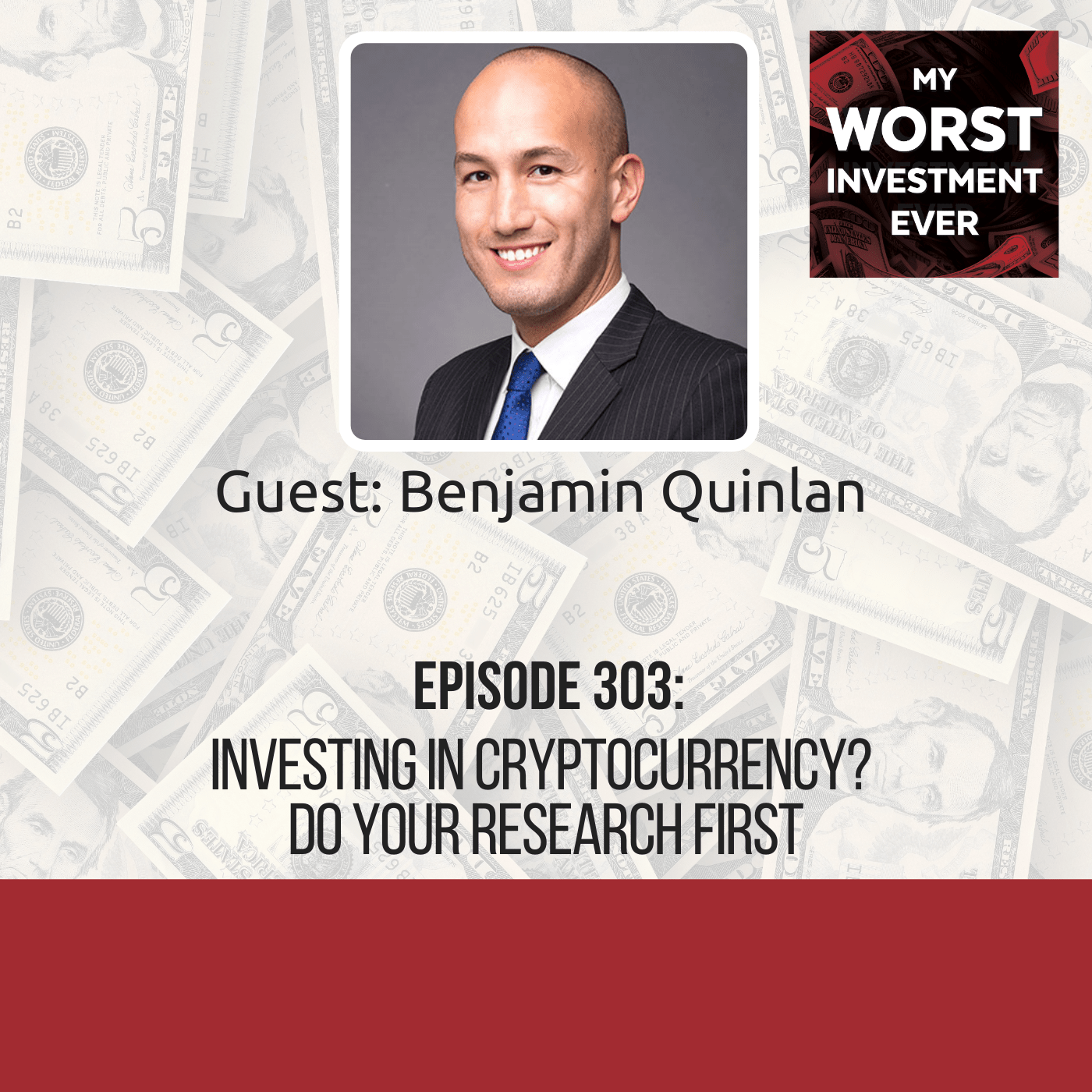
Benjamin Quinlan – Investing in Cryptocurrency? Do Your Research First
Jan 10, 2021Tap to summarizeBenjamin Quinlan is the CEO and Managing Partner of Quinlan & Associates. He is also the Chairman of the FinTech Association of Hong Kong, an Adjunct Professor at the AIT School of Management, a Mentor for PingAn’s Cloud Accelerator, a Guest Contributor for eFinancialCareers and Regulation Asia, and a Senior Advisor to many leading startups in the region.He was previously the Head of Strategy for Deutsche Bank’s equities business in the Asia Pacific and its Investment Bank in Greater China. He has also worked at UBS, Oliver Wyman, and PwC. “You’ve got to be in the game and not on the sidelines; otherwise, you are never going to get involved to the degree you need to make things work for you.”Benjamin Quinlan Worst investment everInvesting in cryptocurrency with all the hypeIn 2017, there was all this hype going on around cryptocurrencies. Bitcoin was literally on the financial news headlines every day. As a strategic consultant, Benjamin likes to put a lot of data and thought behind how he looks at new opportunities and new developments, particularly in the financial services industry.So Benjamin deployed his team and tasked them with cracking this new cryptocurrency. His focus was on learning what this ecosystem was all about and the real value of this very elusive Bitcoin that everyone kept referring to.Finding a way to value BitcoinAs Benjamin and his team tried to crack Bitcoin, they realized that nobody knew its worth. Analysts in the market said it was worth zero, while the people rushing to invest in Bitcoin were saying it was worth a million. But they were all in agreement about one thing; there were zero methodologies and approaches to valuing Bitcoin.The team sat down and worked out how to value this new currency. The team came up with four different methodologies. Every single method pointed to the fact that this was a massive speculative bubble.Sharing his report with the marketBenjamin and his team concluded that Bitcoin was just a speculative investment that would plummet in no time. At the time of Benjamin’s research, the price of Bitcoin was around $20,000.In Benjamin’s report, he predicted that the price of Bitcoin at the end of 2018 would be $1,800. By the end of the year, it hit $3,100.Claim to fameBloomberg cited Benjamin’s report as the most accurate crypto forecaster in the world. The report got so much coverage around the world and even made it into Quora and Reddit.The advice he had but never tookOne day, Benjamin was on international TV, CNBC, and the anchor asked him, “So Benjamin, given all of your research and analysis and thought process, are you shorting Bitcoin?” He said, “No, we do not. Because as an independent consulting firm, we do not get involved in the investment side.”Benjamin watched as Bitcoin continued to plummet throughout the year and could not help but think about the amount of money he could have made from backing the advice he and his team were so confident of. But alas, he did not do it. It would have been great to put his money where his mouth is.Lessons learnedThe success of any investment lies in thorough researchWhen considering an investment, including cryptocurrencies such as Bitcoin, do thorough research first. Do not just look at technicals and theories. You need to look at what is going on in the broader market too.Back your thought process with convictionYou will not always get everything you do right but no matter what happens, always back up your decisions with conviction. If you strongly believe that your decision is right, then stick by it.Andrew’s takeawaysTake a small position and grow it over timeJust because your gut tells you to do something does not mean you have to go all in. Invest just a little bit into your investment of interest so that you are at least taking action. Start slowly and continue to build your portfolio.Actionable adviceIf your gut is fundamentally pushing you in a direction to make a decision, take a position. Whatever that position might be, follow your instinct, and follow your gut. Only over time can you work out if you got it right or wrong and, that is part of investing.No. 1 goal for the next 12 monthsBenjamin’s number one goal for the next 12 months is to continue to build and scale his business. Beyond that, he wants to get back on stage and do some more touring for comedy. He also wants to finish the book he’s been working on.Parting words “I wish everyone a very fruitful 2021.”Benjamin Quinlan [spp-transcript] Connect with Benjamin QuinlanLinkedInTwitterFacebookInstagramWebsiteBlogAndrew’s booksHow to Start Building Your Wealth Investing in the Stock MarketMy Worst Investment Ever9 Valuation Mistakes and How to Avoid ThemTransform Your Business with Dr.Deming’s 14 PointsAndrew’s online programsValuation Master ClassHow to Start Building Your Wealth Investing in the Stock MarketFinance Made Ridiculously SimpleBecome a Great Presenter and Increase Your InfluenceTransform Your Business with Dr. Deming’s 14 PointsConnect with Andrew Stotz:astotz.comLinkedInFacebookInstagramTwitterYouTubeMy Worst Investment Ever Podcast
Transcribe →