
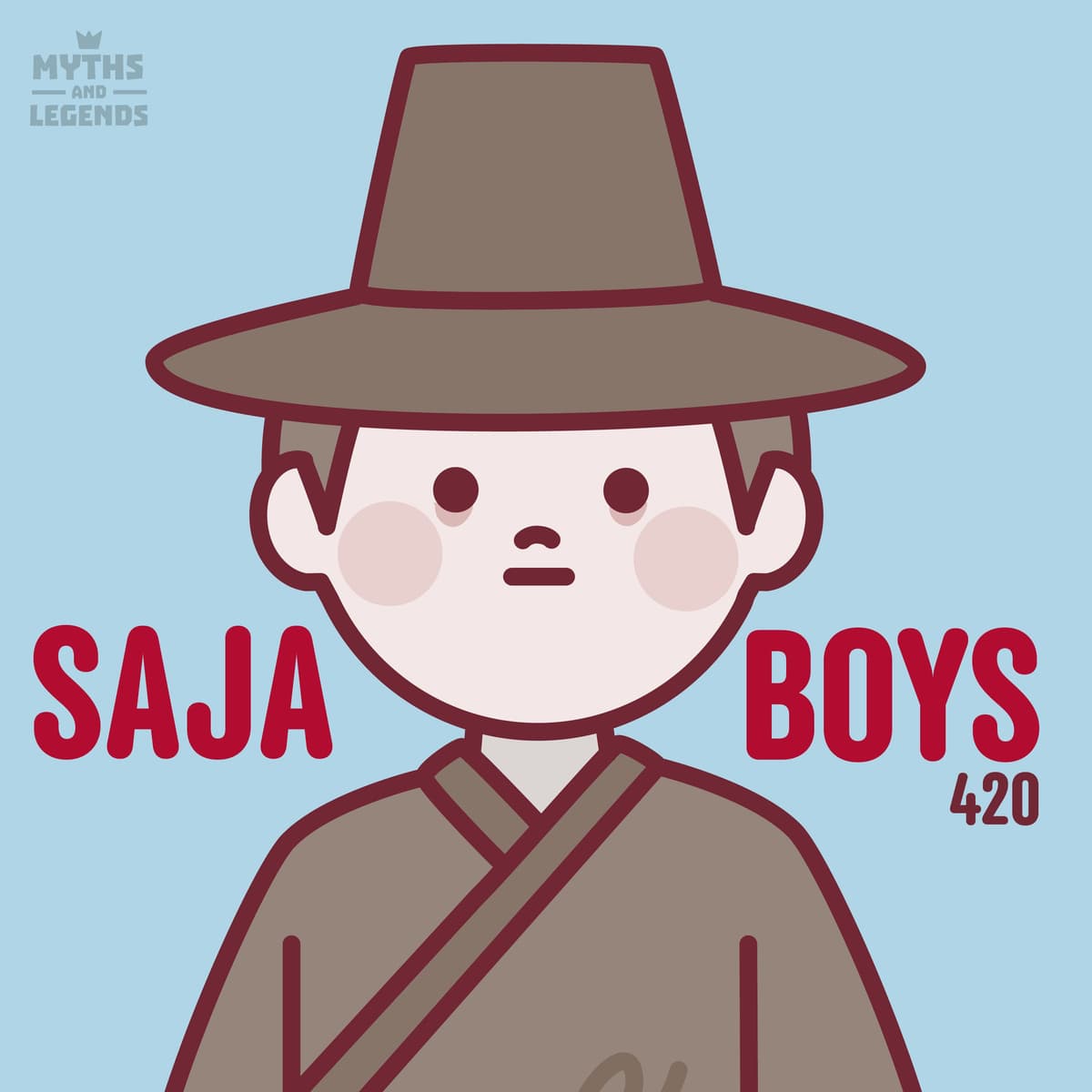

Myths and Legends, Episode 420: Korean Grim Reaper: Saja Boys
Release Date: October 22, 2025
Hosts: Jason Weiser, Carissa Weiser
Episode Overview
In this episode, Jason and Carissa explore Korean folklore through tales of the Joseon Saja—the Korean Grim Reaper. Through two vivid stories, they delve into what it takes to try to beat death, featuring epic combat preparation, quirky folk wisdom, and hilarious as well as grim twists of fate. Along the way, they highlight how the Saja's role in Korean mythology differs from the Western Grim Reaper and introduce a unique nightmare-eating creature, the Pulgasari.
Key Discussion Points & Story Summaries
1. Introduction to the Joseon Saja (Korean Grim Reaper)
- The Saja is positioned as Korea’s equivalent of the Grim Reaper: a psychopomp who collects souls and has some peculiar dislikes.
- Notable trait: The Saja abhors citrus and silver—details that become crucial in the stories.
2. Story One: The General Who Fears Death
Segments: 00:00–22:55
The General's Paranoia
- General Jine, recently retired, obsesses over avoiding death with folk precautions: silver hairpins, citrus barriers, and intensive daily combat drills.
- “Don’t bury dad until he’s been dead seven days.” – The General, describing the unconventional family motto about possibly coming back from death. (02:24)
- The General’s superstition extends to a hatred of peach trees, interpreted as a break in his anti-Saja citrus barrier.
The General's Family Dynamics
- His son and wife are bemused and weary of his antics.
- The family reflects on his paranoia:
- “Yeah, so he’s really afraid of death.” – The General's son to his mother, puzzled by his father's extreme measures. (50:03)
Folk Wisdom and Saja Myths
- The General lectures on how citrus and silver can supposedly ward off the Joseon Saja, referencing advice from both scientists and “people who knew the old folk ways.”
- “Didn’t he know that the Joseon Saja, the reaper of a grim nature and demeanor, hated citrus and couldn’t come close to silver?” – The General (07:56)
Combat Training… with Assassins
- The General courts danger by hiring assassins to attack him for practice, claiming it's to prepare for the afterlife battles.
- His relentless drills amuse and exasperate his family.
- “Because, son, if I die... I need to be able to fight the armies of the dead to get back here.” – The General, justifying his bizarre preparation. (51:12)
3. Story Two: Dongbangsuk Cheats Death
Segments: 13:15–45:35
Meeting the Saja
- Dongbangsuk, approaching his 30th birthday, accidentally runs into a blind, grumpy old man who reveals himself to have knowledge of Dongbangsuk’s fast-approaching death.
- “Yeah, you’re gonna die. Sorry, kid.” – The blind stranger, matter-of-factly (17:05)
- Hilariously, the stranger clarifies he’s not psychic due to his blindness, deftly side-stepping a “positive stereotype.” (18:15)
Outwitting Death… with Hospitality
- Dongbangsuk prepares for his prophesized death, meeting the Joseon Saja with calmness and even hospitality.
- He offers the Saja a feast, charming him into accepting shoes and a luxurious cloak as gifts.
- “Wait, wasn’t the Joseon Saja forgetting his shoes?” – Dongbangsuk, feigning concern for the Reaper’s property as a ruse (24:45)
- The Saja, bedazzled, checks his paperwork and realizes he’s made a bureaucratic error—Dongbangsuk’s not supposed to die after all. (26:10)
Corrupt Bureaucracy in the Underworld
- As Dongbangsuk repeats the ruse with more Sajas, he’s forced into a never-ending bribery scheme, until his escape sparks a major celestial scandal.
- Eventually, he’s caught after 3,000 (or perhaps 180,000) years by the Death God using an “old man washing coal” ruse.
- “Don’t you know if you wash coal long enough, you can make it white?” – Death God, taunting Dongbangsuk in disguise. (41:43)
- “That’s not how carbon works.” – Dongbangsuk, unimpressed (41:52)
Themes and Morals
- “You can’t be crafty with death because death is sneakier. You have to be stronger. You have to win.” – The General, interpreting the tale's lesson for his son. (45:25)
4. The General’s Fate: Fighting Through the Hells
Segments: 58:15–end
Saja’s Trickery and the Final Battle
- The Saja finally breaches the General’s citrus barrier using a cleverly grown peach tree, and strikes him down while he bathes—clothes off, silver hairpin removed.
- The General’s soul awakes in the underworld, facing the “Ten Hells”—classic East Asian underworld levels of punishment (e.g., mountains of knives, boiling oil).
- He fights his way through each hell armed with weapons he collects, outsmarting guards and ferrymen to reach the land of the living.
Bitter Irony: A Premature Burial
- The General claws his way back toward life, only to awaken in darkness. He realizes, in horror, that his family buried him too soon—ignoring his “seven days” motto.
- “No. No. No. No, no, no, no. They hadn’t listened... They had buried him.” (end of main narrative)
Reflection and Philosophical Closing
- The hosts reflect: The General wasted his life fearing death, missing out on his family.
- “Even when you don’t accept fate, sorry, it’s still coming.” – Jason’s closing reflection (53:44)
- Death in these tales is a flawed but relatable bureaucrat, not a cold, silent figure—more the overworked servant than ominous specter.
- Jason compares this Saja to Death in Terry Pratchett’s Discworld: “Death here was basically a civil servant…someone who had expectations placed on them and quotas and who was maybe a little over it.” (54:35)
5. Creature of the Week: Pulgasari
Segments: 53:55–56:00
The Metal-Eating Nightmare Dog
- The Pulgasari, a chaotically benevolent beast, eats nightmares, metal, and, occasionally, people. Originating from Buddhist persecution in 14th-century Korea, this rhino-dog was created to ward off evil, but grew unstoppable.
- “There’s probably a metaphor here for persecution leading to desperation and further violence... But this is where the Pulgasari actually takes a turn because on its own… it could defeat nightmares, ward off evil spirits, and prevent plagues…” (54:45)
- Eventually, it becomes a protective icon rather than a menace—a curious twist on monsters turning into guardians in folklore.
Notable Quotes & Memorable Moments
-
On death as a job:
“Death's view of death was that it was just another job. He wasn't the only Joseon Saja. There were countless others with that role and title. He had a boss and paperwork and quotas and promotions…” – Narration as Dongbangsuk dines with the Saja (28:19) -
On family and superstition:
“Don’t bury dad until he’s been dead seven days.” – The family’s absurd call-and-response motto (02:24, 52:40) -
On facing fate:
“If the General had just accepted that he was going to die someday, he might have enjoyed the time with his family…” – Jason, summarizing the tragic lesson (53:45) -
On the transformation of monsters:
“Just stop eating people and burning down villages. Pretty low bar, if you ask me.” – Jason, about the Pulgasari (55:58)
Episode Structure and Timestamps
| Time | Segment / Highlight | |-----------|-----------------------------------------------------------------------------------------| | 00:00 | Introduction; “Saja Boys” teaser and General's daily motto | | 04:10 | The General’s citrus-silver paranoia and assassin training | | 13:15 | Story of Dongbangsuk and the blind seer encounter | | 18:15 | The Saja’s visit; mistaken identity, gifts, and bureaucracy | | 26:10 | Underworld corruption and Dongbangsuk’s long con | | 41:43 | Death God’s “washing coal” trick; Dongbangsuk caught | | 45:25 | General’s folk lesson: “You can’t be crafty with death…” | | 50:03 | Family discussions after the General’s defeat | | 51:12 | Motives for the General’s extreme preparation | | 58:15 | The General’s odyssey through the Ten Hells | | 01:01:00+ | Bitter twist: premature burial and what accepting fate means | | 53:55 | Creature of the Week: Pulgasari – the metal-eating, nightmare-devouring dog |
Themes
- Fate vs. Free Will: The futility and tragedy of fighting the inevitable.
- Death as Bureaucratic/Relatable: The Joseon Saja are less fearsome than their Western counterparts, plagued by paperwork, quotas, and the perils of making mistakes.
- Family and Trust: Estrangement through obsession; missed opportunities for joy due to fear.
- Transformation of Monsters: How even the most fearsome beings in folklore can become protectors, given time and new roles.
Final Thoughts
Jason and Carissa bring out the humor, irony, and tragedy in tales of the Korean Grim Reaper, blending fast-paced narrative with folk wisdom. The stories explore not just mortality, but how culture shapes our understanding of death, monsters, and family—always with a wink, a laugh, and sometimes a chill.