Loading summary
Transcript353 lines
- [00:08]
A
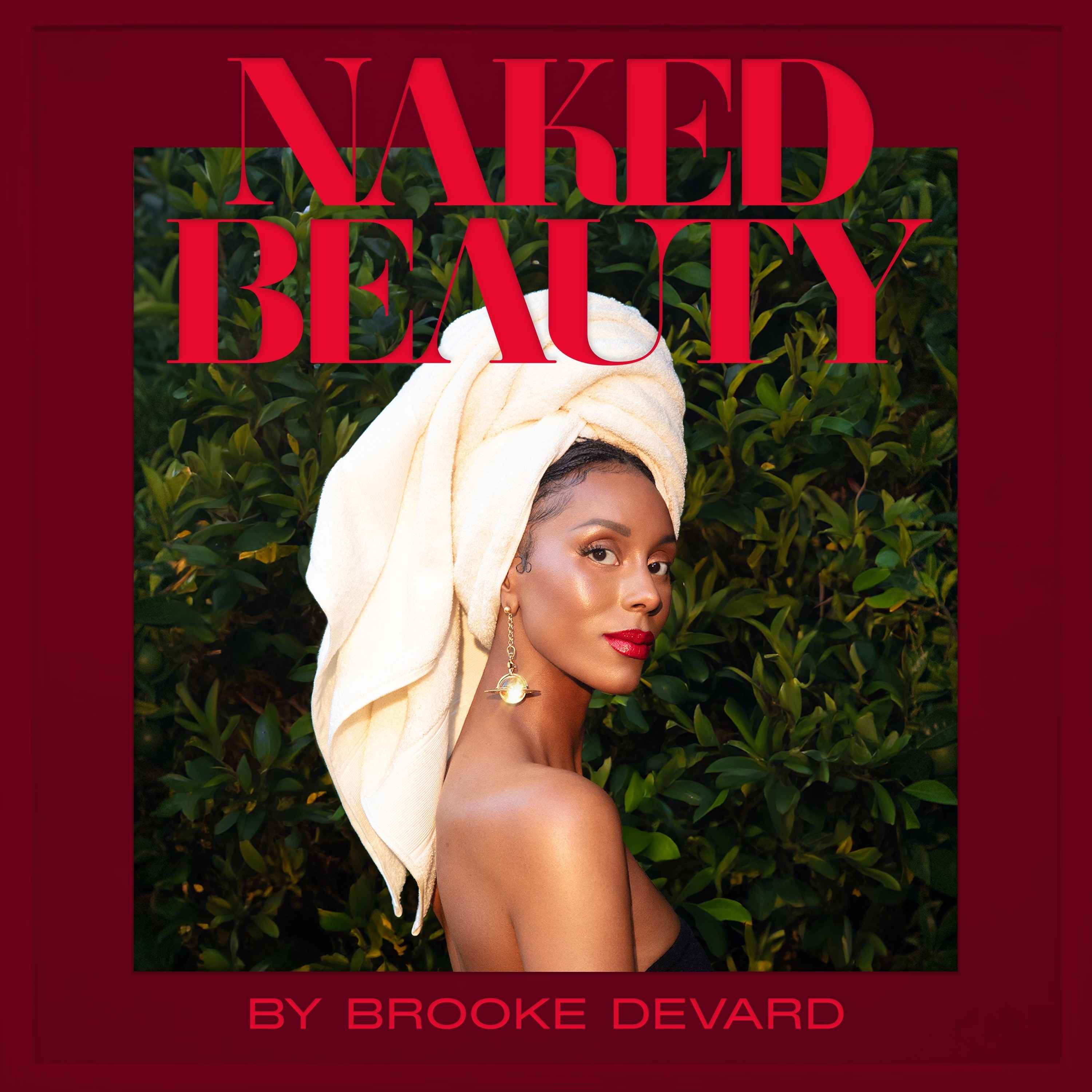
Hello. Hello. This is Brooke Devard, and you're listening to the Naked Beauty Podcast. And if you're joining us on YouTube, you are watching the Naked Beauty Podcast. And today, I am so excited to have Katie Jean Hughes rejoin the show. Katie is no stranger to the Naked Beauty Podcast. We'll link to her first episode from 2020 in the show notes. But she's done so much in the last few years that that I had to have her back on the show. If you're not familiar with Katie Jane Hughes, let me brush you up. Katie Jane Hughes is a British celebrity and editorial makeup artist. Born in England, now based in New York. She's done makeup for some of your favorite celebrities. Ashley Graham, Hailey Bieber Hailee Steinfeld, Lily Allen, and most recently, Dua Lipa. When Katie isn't working with clients, she captivates beauty enthusiasts worldwide by sharing her expert beauty tips and tutorials online. That is how I came to know Katie, and I fell in love with her content immediately. She's cultivated a devoted community of 1 million followers on Instagram by spreading her mission to keep skin looking like skin while still playing with color. And if all of that wasn't enough, in 2023, Katie founded her very own cosmetics brand, KJH. Brand Katie's products apply beautifully. We'll speak about the incredible soft smudge blush in this interview, and I'm so excited to dig into her philosophy as a founder and just the journey of building her brand. Katie, welcome to Naked Beauty.
- [01:24]
B
Thank you so much. I'm so excited to be back. I cannot believe it's been since 2020. That is insane.
- [01:28]
A
Five years.
- [01:29]
B
That's crazy. I feel like it was literally six months ago.
- [01:32]
A
But you know what? I think it's so important for people to realize how much time it takes to build community.
- [01:37]
B
Yeah.
- [01:37]
A
Build products. You know, like, this isn't like an overnight success.
- [01:41]
B
No.
- [01:42]
A
And I think sometimes you see all of these brands launching in Sephora. I feel like every week there's like a new launch.
- [01:46]
B
There is.
- [01:46]
A
And people are like, oh, like, I want that or why not me? And it's like it takes so time. Time.
- [01:52]
B
It does. It takes a lot of time.
- [01:54]
A
Katie, as a New Yorker who comes to la, sometimes, what are your thoughts and impressions of la?
- [01:58]
B
I really love LA when I spend some time in a neighborhood and it's like a pocket, but when I feel like I have to bounce around the city, kind of like today I feel a bit frazzled. Today I'm like, up in one area, then I'm in another. Area, then I've got to go back to another area that's not my favorite. But I guess that's not my favorite in any city.
- [02:13]
A
Right?
- [02:14]
B
I guess. I just. I think if I lived in lonely, I'd probably live in like Silver Lake or Echo park or somewhere like that. That's a bit Brooklyn Y walkable, where you don't need to sort of be in a car.
- [02:23]
A
Yes, I totally understand.
- [02:24]
B
Somewhere I can be on my bike.
- [02:25]
A
Yes. Well, don't be frazzled now we're gonna have a very relaxed conversation. You can exhale.
- [02:31]
B
Thank you. That was nice.
- [02:32]
A
Felt good.
- [02:32]
B
I just had a mini massage.
- [02:33]
A
Speaking of neighborhoods, and didn't you move recently and you're doing this whole incredible home project?
- [02:38]
B
So we bought a house in New Jersey. We have a studio apartment in Brooklyn, which we still live in, and we've had for 10 years that we rent. And then we bought our first home in New Jersey in just 45 minutes outside of Soho. It's a mid century modern house with a sunken living room. It's my dream, like, sort of vibe house, I guess. And, you know, there's lots of little things that we're doing. We just did a really awesome partnership with Design Within Reach on some furniture, which was really great and awesome to work with the design concierge team because I have nothing. I have not a design element and angle in my body. You do. You're amazing at that. But yeah, it was really. It's cool.
- [03:12]
A
When you do partnerships with furniture brands, that's the only time that I've ever agreed to be paid in product. Anything else, I'm just like, no, no, no. Like, you have to cut a. When it comes to furniture, I'm like, I am happy to.
- [03:21]
B
Totally. And also expensive, but not even that. It's like so hard. I don't know what goes together. I am so crap. I know what goes together on a face. I know how to make, you know, all these colors work on one face and make it make sense. When it comes to interiors, I have no idea. So the help that we had from that was worth every single social media mention.
- [03:39]
A
Incredible. Well, okay. I need to stick to the script because we have so much to talk about.
- [03:43]
B
We do.
- [03:44]
A
So when you came last time, you talked about growing up.
- [03:46]
B
Yeah.
- [03:47]
A
And being interested in beauty and having this kind of like, proclivity towards beauty. But how did you know that you could do it as a profession? Like, how did you know I can make a living doing beauty?
- [03:56]
B
I think I sort of realized that I could do it. As a profession, as I probably through just social media and the Internet and learning that it was actually a career and a job. And then I think the whole, like, how did I feel like I realized that I could particularly do it as a career was honestly just learning through myself and learning through the people that I assisted and the people that I watched and learned from. And it sort of. It was never this eureka moment like, oh, that could be a job for me. It. It just sort of gradually happened and I didn't. There was never an end goal of like, oh, I want to be doing these jobs because they pay this much, or, you know, it was all. It was just like, that seems like something really fun. And I love to be creative and I love to feel like I'm successful at something. And that felt like something that I was going to be able to manage. Yes, successfully, if that makes sense.
- [04:41]
A
That makes sense. And I think you've also done a lot to share your work online, and that's. I feel like a conversation I'm always having with all types of professionals. Like, people not feeling like they want to share their stuff online. But how has sharing online helped your career?
- [04:56]
B
Oh, my gosh, like, tenfold. Like, I think without the platforms like Instagram and TikTok and, you know, those types of things, I don't think I would be where I am today in my career, because I do think that they just give you. You know, when I first started, after I was done assisting, I really wanted to book those allure campaigns for the covers and the big beauty stories in the magazines. But I wasn't necessarily booking those because the time in which I was coming up, it was this, you know, select few artists that were at the top of their game and at the helm, and it was always their names in the fine print. And, you know, there's nothing wrong with that because it is a, you know, five percentile type category of job that will make it to the very top, like many sort of, you know, really fun jobs effectively. But I think through Instagram, it became this channel that allowed for me to put out into the world my own version of an editorial. It's like my Instagram page and feed became my editorial opportunity for myself to show the world what it is that I wanted to do.
- [05:51]
A
I love that.
- [05:52]
B
But it often tripped me up as well, because as a professional working makeup artist, to paint your own face on Instagram was very, very, very frowned upon. And this, like, oh, you're an influencer, you're not a makeup artist. And I still get into that, you know, confusion bracket with some people, but I don't care and it doesn't matter anymore. It's like the lines are blurred enough to the point now anyway.
- [06:09]
A
Yeah. But I, you know, it is interesting that it's so, like, bifurcated. I remember connecting you with Chelsea Uchena, who does Dochi's makeup, but she was a creator first.
- [06:18]
B
Yeah.
- [06:18]
A
Dochi found her from videos that she was doing. Like, she was, like, doing stuff on Snapchat and TikTok and Instagram, and Dochi was like, please be my makeup artist. Yeah, she's an incredible makeup artist, but she's like, sometimes my management, like, doesn't know what to do with me because I'm an influencer, but I'm also a makeup artist.
- [06:34]
B
But at the same time, though, I didn't know that story, but it also makes sense. Totally. Because I think that's how people are getting scouted nowadays. It's like how models would get scouted outside of Topshop in the UK on Oxford Street. It's like Instagram is the version of that for a lot of different things and creatives now. But I do actually think she comes across super well as a makeup artist, not an influencer. Yeah, I think she does an amazing job of that. And I think maybe because she's putting her talent forward on her clients now, and maybe that's how I discovered her, which is great. She's incredible. She's an amazing creative.
- [07:01]
A
For makeup artists, do you recommend that they also share doing makeup on themselves?
- [07:07]
B
Yes, because I think it shows. I think it destigmatizes the makeup process for those that are watching you that might want to book you for something, because then they'd be like, oh, cool, I like how she does her makeup. I would like to try her doing my makeup, like back when I used to work with Rosie hunting to Whiteley, when she lived in the US years and years and years ago. I mean, it wasn't that many years ago. It was a few years ago. She would, like, open up her phone, she would go to my Instagram feed, she would scroll, she would pick a look.
- [07:28]
A
Right.
- [07:28]
B
And it was literally a lookbook. So my photos on my face of makeup that I'd done on myself was how she picked what she would want to wear that day for her makeup.
- [07:36]
A
I think that's, like, so helpful for people to hear because I think there is that, like, hesitancy to be like, oh, I want to be taken seriously in this profession, and they don't want to be seen as A creator.
- [07:45]
B
Yeah.
- [07:45]
A
What I love about your content, and I always tell people to, like, think about not just like, oh, I'm so great. Look at me. Here's my posts. Like, it think about helping other people. And the reason I fell in love with your content is because you were teaching people how to put on makeup.
- [07:59]
B
Yeah.
- [07:59]
A
And I think education is also a really great way to, like, get out of your head and to be like, think about how many people you can tell.
- [08:04]
B
Yeah, exactly. Exactly. I think that's a huge. A huge part of it. And I just love to make people feel like they can achieve that, you know, wing liner if they've got hooded eyes. And they can achieve, you know, making their skin look like skin, all the while having optimal coverage and, you know, things like that. And I always, like, I'm also a bit of a clapback queen. Like, sometimes there'll be comments in on a thread where I've collaborated with somebody be like, oh, like, recently there was one I did with this creator called Glamzilla, and she was doing this bridal series, and she featured me on it, and I did a really, really natural makeup look. And then there was a comment that was like, beautiful makeup, but it's not wedding makeup. But I was like, well, says who? Says who you're for, not for you. Sure, that's okay. And I like to sort of almost challenge the comments because I'm like, well, it's not wedding makeup for you, but it is wedding for makeup for somebody that doesn't really wear makeup ever at all. So, like, think about it. And I always like to make people think. Try and think in the commentary as opposed to. And it's not really a clapback. I like to find opportunities to, like, have conversations.
- [08:57]
A
Yeah. And challenge people's ideas about traditional. Yeah. And you've taught me so much. Like, we did a live, what, like, four years ago, and I still think about the things that you taught me then.
- [09:07]
B
Oh, my gosh. I wonder if there is. I wonder if I have the same ethos and practices and tips.
- [09:11]
A
Okay, well, I'll tell you some things that I learned.
- [09:12]
B
Okay.
- [09:13]
A
One of them is just the brushwork. Like, you're pushing the makeup in rather than, like, moving it around. Like, I think I've always approach blending and for people listening audio, like, moving side to side.
- [09:24]
B
Yeah.
- [09:24]
A
And you kind of taught me you pushed the product in.
- [09:27]
B
Yes.
- [09:27]
A
Which is like a game changer.
- [09:29]
B
Yes.
- [09:29]
A
What are more kind of like, traditional mistakes that people make when applying makeup that you think everyone should know?
- [09:35]
B
I think That's a huge one.
- [09:36]
A
Yeah.
- [09:36]
B
Swiping and sweeping because you're actually taking product off and not actually blending it in.
- [09:42]
A
You're just moving it around, even for blush. Like you place it and then you push it in. You're not like. Yeah, yeah.
- [09:46]
B
You're like tapping it in. I think a weird one. This isn't so much a technique as much as it is a product category. And I think priming is a product category and setting sprays are two product categories that I think are fine. If that's what you like as a person and you feel like they really help you in your routine, don't change it. But I don't believe that priming is the be all and it all of long lasting makeup.
- [10:09]
A
Yes, but a moisturizer, right?
- [10:11]
B
Exactly.
- [10:11]
A
Yes.
- [10:12]
B
A moisturizer is a primer.
- [10:13]
A
Right.
- [10:13]
B
I think priming starts at your skincare. Priming starts at your cleanser. Actually, your cleanser priming starts the night before you go to bed.
- [10:19]
A
Wow.
- [10:19]
B
Because you're priming your face for the next day through your washing your face.
- [10:23]
A
Okay. I have a question about cleanser and priming your makeup. If I do a light beat to be on Zoom at 10am, but then I have a big event at 6pm and I want my makeup to look flawless for the event.
- [10:32]
B
Yeah.
- [10:32]
A
Should I wash my face again?
- [10:34]
B
No, absolutely not.
- [10:34]
A
Okay.
- [10:35]
B
You can layer because you've primed it with a little bit of makeup. That little bit of makeup that you've got on is perfect. Primed layer for more makeup. Because makeup sticks to makeup.
- [10:41]
A
Okay.
- [10:42]
B
Makeup typically sticks better to makeup that's been on all day. Like, I don't like to. If I'm doing somebody in that concept. Concept, they come with a little bit of makeup on. I will not take it off. I'll work on top. Unless it's cakey and thick in those areas.
- [10:54]
A
Sure.
- [10:55]
B
I'll freshen up with a bit of a setting spray. In that instance, I'd use a setting spray or like a face mist, like a caudalie or something like that. But typically working on top is nice.
- [11:04]
A
Okay. Love that the celebrities you've worked with, you mentioned Rosie, Hailey, Bieber, Dua Lipa, incredible celebrities that kind of set the beauty agenda for so many people. I mean, Haley does something and it's like everyone immediately wants to get that exact look.
- [11:18]
B
Gorgeous lip look. Yeah.
- [11:20]
A
Right. Dua Lipa too. Right. For makeup artists listening that want to work with celebrities like you do. Like, what advice do you have?
- [11:26]
B
I think just be open and available online I mean, most of my celebrity clients have found me through Instagram, through, you know, people on their team, perhaps, you know, putting my name forward or through them finding me themselves, or through, you know, a celebrity client having another celebrity friend. And they're like, oh, I want to try that person. I think that's why I think posting yourself and posting your work is key. But I get at the same time, not everybody does want to post themselves. So I think as long as it's something, it's fine. It gives people an opportunity to be like, oh, I'd be, I'd be interested to work with that person.
- [11:58]
A
Can I tell you another tip that I've just gathered from just being around you? You're very fun and easy to be around. And as I've met makeup artists like Sergeant, I'm like, oh, yeah, of course Beyonce would want to have you around all day. Priscilla Uno, of course, Rihanna, like, because you're cool and fun to be around. Like, I think that there's so much of it.
- [12:14]
B
Yeah, it's a big part of it.
- [12:15]
A
To just being like a nice, pleasant person.
- [12:17]
B
Totally. But also it's like there's, there's. And that's why I feel like, you know, with any kind of relationship, whether it's a celebrity client or, you know, a high profile business client, whoever it might be, there's a personality level that comes into a lot of it. And it's a case of just being easygoing, easy to sort of be in a. Be in a room with fun. It's also okay if it doesn't, because not everyone is for everyone in every way in life. We don't all have to be friends with everyone. Even though I think it's important to try and everybody get along and be nice and cordial and respectful to one another, we don't all have to be friends with the same group of people. It's the same when it comes to work.
- [12:51]
A
Right? That's so true. That's so true. So you're working on these incredible celebrity clients, you're gaining massive Instagram following, you're doing all of these brand deals. What makes you say, I've got it so good, but I want to create a product, I want more. What makes you think, okay, I need to create the KJH brand?
- [13:08]
B
The reason why I created KJH Brand is because I wanted to create a brand that I could educate with. And my primary driving sort of beacon with any product that I develop for this brand is, can I educate with this? If I can educate with it, I'll make it. And if I can, like, simplify something for people, I will make it. It's like, nothing's really new anymore. Nothing's brand new. It's like, yeah, innovation changes and innovation gets, you know, evolved as technology advances. But typically, you know, if I can make a product that makes somebody go, ah, that makes total sense for me, I'm going to try that, or, oh, I think I could work with that product. And, you know, then, great.
- [13:43]
A
Let's talk about the products that you just brought me.
- [13:46]
B
Precision sculpture Stylo. She's a.
- [13:48]
A
Okay.
- [13:48]
B
Teeny, tiny little contour one for your mouth and your eyes.
- [13:51]
A
Oh, wow. Okay, which color should I open?
- [13:53]
B
I think you should open forge, which is the almost black shade. And I think you should open, chisel and carve.
- [13:59]
A
Oh, wow. Okay. And tell me what these do.
- [14:02]
B
So they are designed to be a part of your sort of complexion routine. They're an extension of your complexion routine because they're contour. So you've got this powdery kind of smudgy crayon that's precise enough to get into the crevices and the corners of your eyes, precise enough to really shape up the mouth. And I would do it just before you do your foundations and your concealers and things like that. It's an underpainting kind of product in the sense, but it's also great to just throw on and add to your lip throughout the day if you're out and about in your handbag.
- [14:29]
A
Okay. So you said. So I can use this on my eye and on my lip?
- [14:32]
B
Yeah.
- [14:32]
A
Oh, wow.
- [14:33]
B
Yeah.
- [14:33]
A
Okay, I'm opening one now. This is like this beautiful brown shade.
- [14:37]
B
Yeah. There's two browns. One's warm, one's cool, and there's an almost black shade, and then there's a light kind of peachy coral, and then there's. That's got a gray undertone. They all have, like, a contoury quality. What shade is that?
- [14:49]
A
Chisel.
- [14:50]
B
Oh, that's actually one of the lighter ones.
- [14:52]
A
Okay.
- [14:52]
B
But actually it looks nice. Wait, look in the mirror in the camera. Ooh, pretty.
- [14:57]
A
This is very pretty.
- [14:57]
B
So chisel is, in my opinion, a brown girl friendly taupe.
- [15:01]
A
Okay.
- [15:01]
B
Which doesn't actually come around that much.
- [15:03]
A
It does not.
- [15:04]
B
And so I'm using the lightest, lightest shade, which is called etch.
- [15:08]
A
And I love how you overline slightly. I feel like it's taken. I. I love my makeup artist here in la, Alexis. She's taught me so much about over lining. I was so intimidated but she was like, no, babe, like, you've gotta overline. Like, just. It's just like a little bit.
- [15:19]
B
Yeah.
- [15:20]
A
It's not crazy.
- [15:20]
B
You know, we have two lip lines. One is pigmented and one is volume.
- [15:23]
A
Right?
- [15:24]
B
Always go to the volume.
- [15:25]
A
The one slightly above.
- [15:26]
B
Slightly above, yeah, always go to the.
- [15:27]
A
And it makes such a difference even when I look at, like, pictures of how I used to do my makeup before, when it's not.
- [15:31]
B
Yeah, Especially the top lip.
- [15:34]
A
The top lip. You've got to do it.
- [15:35]
B
Yeah.
- [15:36]
A
You guys are watching on YouTube. We are getting into the product.
- [15:39]
B
We're doing this without mirrors too, which is kind of a great thing. But, yeah, this product started out as a cream eyeshadow with shimmer in it and this diameter, this exact component. And I was like, I want to make this, but I want it to be a micro contour wand and I want it to be powdery in its consistency so that you have this, like, really beautiful kind of blurring effect when it hits the lip or the eye. And you can kind of, you know, just create beautiful shaded moments. So the etch and the chisel are really beautiful. On melanated complexions is a center of the lip or as an eyeshadow for that, like, gorgeous, Like Naomi campbell, kind of like 90s.
- [16:12]
A
Yes.
- [16:12]
B
Kevin Aucoin.
- [16:13]
A
Like that. Like Matt. Kevin Aucoin. I have it on my Pinterest board.
- [16:17]
B
Yeah.
- [16:17]
A
Now your lips look great. Thank you. Now, now you. You talked about. And I think they look great too. You talked about this. Working on melanated complexions, when you are creating products for everyone, how do you test? Okay, how do you test across all different, like, skin types? Like, do you. Do you just develop with different skin tones in mind? Do you actually bring models into test?
- [16:37]
B
Yes, yes, yes. Bringing models into test is incredibly important. I think as a makeup artist, it's important for me to have an inclusive shade range. Like, I think it's a non negotiable as a brand founder to have an inclusive shade range, especially if you're a makeup artist. I mean, I don't think anybody's got an excuse in this day and age. One of the persons on my team, Fatima, she's a girl in the black community and she's also a makeup artist. And I love having somebody that's on my PD team that, you know, I'm getting two perspectives. I'm getting, would you wear that as a makeup artist? Would you use that in your kit as a makeup artist of color? And would you wear that yourself? And what Shades would you want? So it's. And I always actually like her perspective to be in the. In the bucket of information before mine. I'm like, I want to see your six. Let's say we're developing a blush. I'll be like, I want to see your six shades. Let's say we can afford to do six shades. I'll say, I want to do six shades. You give me your first six that work for you that then will filter down. Because I came to a realization a few years ago, and I think I was using a Danessa Myricks color that was this beautiful plummy blush in the blurring blush balm that she makes. It's really rich, beautiful, vivid, purpley kind of plum. And I tried it on myself. Even though it's not a shade that I typically would have gone for, I tried it on myself, and I just used it the teeniest amount. I was like, this works for me. Of course it does. Because everything other complexion is the only category where you can't really do what I'm about to say. But for blush and eyeshadow, if it works for melanated complexions, it will also work for fairer complexions. You can change it. You can sheer it down, you can mix it with a bit of concealer. You can put it on sheer, you can put it on with a glossy balm underneath it. So, like, makeup artists, stock your kit for black complexions first, because that's. It's important. It has to be. And so I feel the same way about our product development. It's like, I want to target a more melanated complexion first. I'm always going deepest to fairest.
- [18:07]
A
Yeah. I mean, when I tried your soft smudge blush, I was amazed at just the color transfer. Like, the color payoff.
- [18:14]
B
Super interesting texture.
- [18:15]
A
I use so many cream blushes, and they just do nothing. Unless I go to, like, the brightest. Brightest.
- [18:20]
B
Yeah, yeah, yeah, yeah. Which sometimes can be intimidating.
- [18:23]
A
Yes.
- [18:24]
B
You're like, how do I work with this color?
- [18:25]
A
I know. And one of your big kind of education things is, like, people not being afraid of color on their face. Now we have to talk about this because a lot of people of all skin tones are like, I'm not putting crazy colors on my face. I'm going to stick to, like, my nudes, my beiges, my browns.
- [18:37]
B
Right.
- [18:38]
A
How do you get people to feel comfortable at putting color on their face?
- [18:41]
B
I just kind of always remind people it's makeup and it washes off, and I get. And I start them slow. Like, I'LL kind of just like sneak in a little bit of a plum slightly on the cheek, and then somebody will go, oh, that's actually quite nice. It's like if you don't. I think sometimes if you tell someone before you're going to do it, they were like, oh, no. I don't know. Like, the sound of that. It's like if you just quickly do a tiny bit and you just sort of edge them closer to something a bit different, it's an easy way to, you know. And also, again, it's makeup. It washes off.
- [19:05]
A
I know one of the ways I've been having fun with color are just like, colored eyeliner pencils.
- [19:09]
B
Yeah. Like, so much fun.
- [19:10]
A
Trying a green or a brown. Like, I feel like you can start. Or like a colored mascara. Like a mascara. You can start slow. Yes.
- [19:16]
B
And it's. And then it becomes an accent or an extension of your outfit or it becomes this accessory piece.
- [19:21]
A
Yeah.
- [19:21]
B
And also, like what you just said about greens and, like, browns, they're earth tones. So in effect, they're neutral.
- [19:28]
A
That is true.
- [19:29]
B
So green is a neutral because it's found in nature. I think any color that's found in nature.
- [19:32]
A
Mustard.
- [19:33]
B
It's a neutral.
- [19:33]
A
Right.
- [19:34]
B
Blue neutral.
- [19:35]
A
Yeah. I love it. Let's listen. This is the truth, according to Katie Jean.
- [19:39]
B
No, we're lying to ourselves.
- [19:40]
A
What was missing in the market that you wanted to solve with the KJH brand? And I'm gonna. I'm add to that question as well.
- [19:47]
B
Okay.
- [19:47]
A
Comment.
- [19:48]
B
Okay.
- [19:48]
A
Because I'm finding that the best products, the best makeup products that I use, period, are always developed by makeup artists.
- [19:55]
B
Oh, wow.
- [19:55]
A
Vanessa Myricks makeup by Mario Love Him. Kevin Aucoin products to this day. Like that. What's that pot of concealer called? Essential Skin Enhancer.
- [20:04]
B
So, yeah.
- [20:05]
A
Insane.
- [20:06]
B
Amazing product. I love that. You love that? Yeah.
- [20:08]
A
Oh, my God.
- [20:08]
B
That's great.
- [20:09]
A
I mean, it's just an incredible product. Sometimes the products can be intimidating.
- [20:12]
B
Totally.
- [20:12]
A
Like the Danessa Myricks color fix that, like, every makeup artist uses. I was like, I can't do it.
- [20:17]
B
Right.
- [20:17]
A
But then she released the foil stick, and I was like, now this I can do. Yeah. But I think that there's something. You all have a very unique insight into people's faces and the way makeup should work from a performance standpoint, that's unique. So what were you. What was missing that made you think, I need to launch this brand?
- [20:33]
B
I don't know whether I had that moment and that thought feeling that something was missing. I Think for me, what I found myself, what kind of gave me the mindset to move forward with the brand was I got a dm, I think by a few people and I think it was in the same window of time, day hours, can't even remember. It was, I've got oily skin, what's the best highlighter for me? And then the same day or the same week, I got same dm, I've got dry skin, what's the best highlighter for me? And I was like, God, what are they? What is the answer to that question? And then I said, I've got a minute. I'm going to make this. I'm going to make the highlighter that can be used by all different skin types and I'm going to give it to you separately. I'm going to give you the product in the pot, which is the concentrated highlight pigment. I'm going to give you the thing in the tube, that's the serum to help you make it wet if you're dry, but if you're oily, you don't need the serum or you don't need as much. And then a brush and then teach you how to use it, depending on what your skin type is. And so that's kind of where the brand was born out of and everything. Most things now will have an element where I can say, if you're dry, use it this way. If you're oily, use it this way. You know, for the most part, unless there's a product that's easy and you just grab it off the shelf.
- [21:34]
A
No, I love that and I love the multi use aspect of it as well. So like, again, makeup artists use things.
- [21:39]
B
In as many ways as they can. So why shouldn't the general, you know, consumer be doing the same thing and why shouldn't we be giving them and empowering them to feel like they can? I think there's this element of branding and from brands that's like, oh, no, this is for that area only. And often it feels to me like, well, is that because you want to sell more stuff to people? Probably, probably, but just whatever, okay, fine. Every brand's going to do what they want to do, but if they pay for the testing to make sure that it can be used on different parts of the face and you've got these claims, then why not use it as multiples?
- [22:07]
A
Yeah, absolutely.
- [22:08]
B
Even like nars just brought back their multiple stick after discontinuing it. It's like it's coming back around on the mainstream.
- [22:14]
A
Yeah, people want More from their products. Now amongst makeup artists that also have brands like, are you in a group chat with like Patrick Ta and Charlotte Tilbury?
- [22:24]
B
I mean, no, in a group chat with my female founder friends, Shereen Idris, Charlotte Parlor, Sophie Pavitt. Danessa's always on speed dial and look.
- [22:33]
A
These are all guests that have been on Naked Beauty.
- [22:35]
B
I'm so lucky. Like it's amazing. Like the. I was texting Danessa the other day about Sephora questions because we're talking about, we're talking to Sephora about a launch for next year and she's just so like, there's nobody like that woman. There's nobody like that woman. She is so like I actually feel emotional when I talk about her because she's such a special soul that's just so giving with information, so giving with her time, so giving with just love and energy. She's just. Yes, there's nobody like that girl.
- [23:00]
A
Now just. Does the prospect of being in Sephora make you nervous? Okay. Because it's like you go from 0 to 100 fast.
- [23:07]
B
Yeah, it's very scary because as a small brand that, you know, I self funded the brand and I've not taken any capital or investment just yet. We probably will have to raise for us for a launch. We, we're just sort of in the moment now where we're like, what are we going to launch? How are we, how are we going to launch? Are we going to launch next big thing on that one shelf situation that feels quite discovery but yet we don't really get to tell our brand story in that area. Or are we going to launch on a big one bay or on an end cap? That's a whole different ball game with a lot more expense at stake. And however, though I can tell the story that I want to tell and have all the products on the unit as opposed to just pick a few, you know. So it's, it's what we do. But we're actually having a meeting with them next week so I'm excited to start hashing out these ideas.
- [23:45]
A
Now another question I have, if you go into a Sephora, do you get any of that customer data? Like do you get those emails insight or is it just kind of like.
- [23:52]
B
I don't know me myself or as a brand?
- [23:55]
A
As a brand? Yeah. Like do you like, do you lose that first party data? I have no idea.
- [23:58]
B
Actually, I'm not sure if you have.
- [23:59]
A
A good question to ask.
- [24:00]
B
Yeah, I'm gonna. Thanks. That's a really good one.
- [24:02]
A
Let me remember that while we're talking about beauty and innovation. I asked you a hard question. To think of three beauty products that you feel like are truly innovative and, like, make you excited. I've thought of my three. Okay, we can go. We can go product for product.
- [24:17]
B
Okay.
- [24:18]
A
My first is the Yummy skin liquid blurring balm setting spray from Danessa Myricks.
- [24:23]
B
Incredible.
- [24:24]
A
It just came out.
- [24:25]
B
Yeah.
- [24:26]
A
I saw some of the ads, and I was like, is this gonna work how it looks like it's gonna work? It is this setting spray that basically, it's almost like. It looks like you've powdered your face. Yeah.
- [24:35]
B
It's wild.
- [24:36]
A
It looks like you have the Paris filter on permanently.
- [24:39]
B
Yeah.
- [24:39]
A
You spray it on and, like, it just. I wish I was wearing it now.
- [24:42]
B
It's so good.
- [24:43]
A
It just makes your skin look so gorgeous. Flawless.
- [24:47]
B
Yeah.
- [24:47]
A
It is incredible.
- [24:49]
B
It is. It's. She's. She's a magician.
- [24:51]
A
I mean, that is just like, a magician. Like, I don't know if it's too new to win awards, but, like, that product is.
- [24:56]
B
No, it will win an award. It will.
- [24:57]
A
So many awards.
- [24:58]
B
Yeah. Yeah, it will.
- [24:58]
A
Okay. You agree with that one. Wait, I feel like I need to also, though, share how much it costs.
- [25:02]
B
I'm going to guess it's $34. That's literally just a guess.
- [25:06]
A
I just guess. Listen, I'll. I'll link to it in the show notes.
- [25:08]
B
Okay.
- [25:09]
A
It's an incredible product. Okay, you're next.
- [25:11]
B
All right. My first one is probably, Ooh, the glossier brow pencil. That is called Boy brow arch. It is so good. It is the perfect amount of pomadiness. And it's got this sharpener in the cap where you can sort of sharpen the pencil on the cap to make it sharp again. And it's great. I love it so much.
- [25:31]
A
That is a great product. I find that most brow pencils are too thick, and, like, I need a micro tip. I need to do truly hair, like, strokes. I'm not. I don't have a lot of brows to begin with. That is a very good product.
- [25:42]
B
I love it so much.
- [25:43]
A
Okay. My next product is from Violette Fr. I feel like I talked about this product a lot, but I do.
- [25:48]
B
Nails are kind of the same as mine. I know what you're about to say.
- [25:50]
A
Oh, really? Okay. This is the eye paint.
- [25:52]
B
Yeah.
- [25:53]
A
In that royal blue color. Oh, yeah. You love that one diable.
- [25:56]
B
It's so gorgeous.
- [25:57]
A
What I love about the Violette Fr eye paints is they really are buildable. You don't need, like, an eye primer, like, you can truly just, like, do a wash of color on the lid. You can put it on a very skinny brush and do, like, just a little bright blue liner. I just think it's.
- [26:12]
B
I did it yesterday with this berry colored one, like a pinky plum.
- [26:15]
A
Oh.
- [26:15]
B
Everybody was like, oh, your eyes are pretty. And it was easy. Put it on a little brush. Literally did exactly that. Blended it out. They're really nice. They're malleable, which I like.
- [26:22]
A
Yeah. So malleable. And I've seen you advertising something on TikTok. It wasn't an advertisement, but the, like, eyeliner machine thing. Do I need that?
- [26:30]
B
That's a guy beauty thing. It's really cool. It's designed by. For hand mobility, people with mobility issues in their hands. And it's this little shape like that, that kind of just. You draw it on your eyeliner.
- [26:39]
A
Yeah, it's really cool. Allows you to do perfect eyeliner. So I need that. Okay, that's great. I'm gonna buy that even close to me.
- [26:45]
B
My second one is probably the Farah Midi concealer, because I love anything adjustable. So she's got this concealer that's in a. A palette, and it's got this shiny kind of side, that's this balmy kind of radiant pressed serum, solid glow and. And then a concealer on the other side. And you can kind of just cocktail and customize what kind of finish you want.
- [27:04]
A
Okay.
- [27:04]
B
You want a bit more coverage.
- [27:05]
A
Plus, this woman who I've yet to meet, has captured the hearts and minds of beauty lovers everywhere.
- [27:10]
B
She's got. She's making great products.
- [27:12]
A
I need to have her on the podcast.
- [27:13]
B
Making great products.
- [27:14]
A
Yes.
- [27:14]
B
Fire Hermitage. Get on the podcast.
- [27:16]
A
Yes. Okay. My last is going to be your product, Soft Smudge in the shade Raisin.
- [27:23]
B
Raisin's great. That's gonna be our franchise shade.
- [27:25]
A
I think it's so brilliant. How would you describe it?
- [27:27]
B
Cause it's like a toasted terracotta, like a. Like a burnt, rusty, warm brownie rust.
- [27:35]
A
It's beautiful. And what I love about it is.
- [27:38]
B
Do you wear it on your lips?
- [27:39]
A
I was just gonna say it's beautiful on the mouth. I do it on my cheeks for blush. And I love that it's buildable. You can really, like, control the intensity. It doesn't move, it doesn't get smudged. And I'll do a little brown liner, and then I put it at the center of my lips.
- [27:52]
B
Oh, it's perfect.
- [27:53]
A
I wish I was wearing it.
- [27:54]
B
And I love that it's just like so powdery, but yet you can make it juicy through adding a little bit of a serum or, you know, even a little bit of lip balm or a little bit of face gloss or something like that.
- [28:01]
A
How long did it take to formulate that product?
- [28:03]
B
Oh, my God, ages. It was actually started out as a lipstick. That formula was a lipstick. And then it evolved because I knew I wanted to do a multiple use lip and cheek item. So it started out as a lipstick. It just gradually, gradually got drier because I knew I wanted to use the serum that we made with the Hypershine highlight kit to mix with it so that it's customizable. So it took a couple of years to get it right. What is my third favorite? I think my third favorite, it's a moisturizer. And I don't know why, but it just makes my skin feel so, so good.
- [28:32]
A
Which moisturizer?
- [28:33]
B
It's this brand new one and I don't even know the full name of it. It's. This is clinical.
- [28:37]
A
Okay.
- [28:37]
B
Reparative moisturizer, I think it's called. It came out like a month ago and I'm obsessed with it. It makes my skin feel so good. I sleep in it every night, I wear it every day. My makeup sits on top so beautifully. It's incredible.
- [28:49]
A
Is clinicals, does brilliant products.
- [28:51]
B
It's so good.
- [28:52]
A
I need to try this.
- [28:53]
B
Yeah.
- [28:54]
A
Now sunscreen is a big factor, especially living here in la and I feel like some sunscreens work really well under makeup, some don't. I've been using an oil based sunscreen. Have you seen these? It's called Undefined Beauty. Oh, no, it's an SPF oil.
- [29:07]
B
Oh.
- [29:08]
A
But my makeup on top, it's a disaster. It's not because it's just oily. It's just not. It's not working. What sunscreens do you like under makeup?
- [29:15]
B
I love Shirin Idris's sunscreen, the disco one that's got the little bits of sheen in it. It's like glowy and gorgeous. I love that. I really like this one from the UK called La Roche Posay Hyla B5. I don't think you can get it in the US which is annoying, but it's. It's like a gel. I really like this brand called Freaks of Nature. They're like an outdoor brand. So there's definitely like.
- [29:38]
A
Yes, I have Freaks of Nature.
- [29:40]
B
Yeah.
- [29:41]
A
The mineral sunscreen, as you can imagine, is a disaster.
- [29:44]
B
You're gonna have a white cast on me. Yeah, it's I like that they have a really nice. I just.
- [29:50]
A
I like the texture now.
- [29:51]
B
I do like the Korean ones, though.
- [29:52]
A
I know, of course, the Koreans. I mean, we could spend all day talking about Korean sunscreens and how far behind we are. But alas, now, because you develop products and you're always doing your face or someone else's face, are you constantly thinking of product ideas? Like, how does it go from, like, idea to product in our hands?
- [30:09]
B
It goes from idea through just how I mix and cocktail things whilst I'm working and just messing about with different formulas and using them for the wrong things. And sometimes it comes from innovation, because innovation starts in multiple ways from the production level.
- [30:23]
A
Right?
- [30:23]
B
It can start from the lab showing you their presentation. So the cosmetics labs that do these presentations to all the. All the makeup brands that the, you know, season. September in New York and in March in, like, Bologna, where whenever it is, they'll present to you their innovation books. And a lot of the times that provides me a decent amount of inspiration. And I'd be like, I like that. But I would change the this, this, this, this, this. And I want it not for this purpose, but I want it for another purpose. So for me, I just have to see something that I like, and I kind of flip the narrative on what it is there for and what it's used for. Like, I'm doing a lip product that's coming out in spring of next year. That's this really shimmery, rich, pearly crayon. And it was an eyeshadow stick. And I was like, oh, my God, I want to put that on my lips. I put it on my lips, but it wasn't comfortable because it had alcohols in it and these things to make it last long time on the eyes. So then we took out all of those ingredients and we remade it into something else. So for me, it just sort of, you know, like, right now I'm using this big, giant body balm thing, like, almost every day on myself. That is a body product, but I'm using it everywhere because it's kind of just the tone and the texture and the finish. So it's. For me, it's coming from a place of, like, oh, I think a version of this should exist, even if maybe it exists already, because I think there's enough space to go around for people to play. But I think, you know, when you tweak things and make them your own, it's unique.
- [31:35]
A
Now, does your team ever tell you, Katie, this is insane? Absolutely not. Is like do you work with your husband?
- [31:41]
B
So Tarik works on the brand, the financy bit, and doing all of the businessy stuff.
- [31:46]
A
I love that.
- [31:46]
B
He's like, babe, no more pos pios means pet purchase order. He's like, no more POS for, you know, for, for a moment to the labs. Because what happens is, is it takes a long time to develop a product. So you develop it, you develop it, you develop it, you get it to where it goes. Then you do a PO purchase order to the lab, where then they put in the order and then they produce it. But that production lead time is like three to six months after you've done your PO. So you have to do a lot of POs to order product, and then they all sort of stagger and come at a different time. So you have to spend a lot of money and then you have to wait a long time before money comes back in, obviously for the business of beauty. But, yeah, that's pretty funny. And then, you know, it's really interesting. People on my team, there's me, who's a makeup artist and a creative and likes to really play and push products to their limits. There's Hannah, who's kind of my right hand that does a lot of everything with me on the business. She kind of touches on almost every angle of the brand. She's like a no makeup, makeup girly. She's not a trained makeup artist. She's very much just, you know, your average product, your average woman. So her opinion is valid. Then there's Fatima, who's my PD consultant, who's also a makeup artist girl in the black community. Like, it's, it's important that there's, like, so many different perspectives at the table.
- [32:49]
A
How is it working with your husband? That's personally one of my worst nightmares.
- [32:52]
B
Do you know, it's funny, back when he was helping me with management of just the content side of things, you know, we'd often get into little, little, little tiffs and there'd be, like, energy where he'd be like, oh, this isn't working out, or whatever. Now it's like, weirdly perfectly fine. I think I've grown and probably evolved and I, I, you know, maybe I'm easier to, to be around than I was back then. Like, he used to always say this thing to me. Like, stop talking to me like, I'm your intern. I'm like, I don't know. I'm doing it. I don't mean it. Like, I'm just, like, trying to sort of get something across to you. And I don't know, it. There was a time where it was. Where it was tricky, but we've obviously aged out of it, and now it's perfectly fine. It's great. We get on really well at work.
- [33:30]
A
And how do you and I know you guys have been together for a long time. How do you. Seniors, 17 years. So beautiful. How do you switch from okay, work mode to okay, now it's husband and wife time.
- [33:39]
B
He is actually really, really, really bad at switching off. I'm actually pretty good at, like, switching off. I'm terrible for texting the group chat over the weekend because, you know, you've.
- [33:48]
A
Got ideas, you're excited.
- [33:49]
B
Yeah, exactly. He's really bad at taking breaks. Like, he won't take a lunch break. He won't step out for a coffee break. He's like, I'm too busy. I've got this blah, blah, blah. And I'. No, no, no. We have to go take 15 minutes and go for a walk and go get a coffee and, you know, just. You'll hate me. I'm like, you'll hate me and you'll resent this work and this job. But we are in scrappy startup mode, so there's like, you know, we're all wearing many hats, so there's that too. But I'm always trying to, like, instill some balance in him, and he's always, you know, trying to make me slow down. And I love that. Take some.
- [34:17]
A
And. And do.
- [34:18]
B
And do you put my phone down?
- [34:19]
A
You know, do you text this, like, female founder brain trust that you've got going on and say, like, so how do we relax?
- [34:25]
B
No, we don't have that. But, you know, I was given some advice once by another female founder who works with her husband. She was like, you guys should get a therapist. It's helpful. But we don't have yet. We might.
- [34:37]
A
I like the idea. I haven't.
- [34:38]
B
Yeah, it's. It's there in the back of my mind for when. If and when we need it, you know?
- [34:41]
A
Yes. Now. I mean, I do think therapy in general is really helpful for people who share so much of their life.
- [34:46]
B
Yeah.
- [34:47]
A
Now, you shared a lot about your IVF journey. And I'm asking for selfish reasons because I'm going through kind of a medical thing right now where I'm deciding if I share it with my audience. What made you encouraged to share it with your audience? And then also, you kind of pulled back a little bit. I'm just curious to hear your thinking.
- [35:05]
B
Back when I first went down the route of looking into ivf, we were, I was, like, kind of terrified. So I think the whole, like, even, like, it took me days to muster up the courage to put on this estrogen patch on my belly that primes you for the other medicine that they're about to give you. Because I knew that that was the start of something that I didn't know how long it was going to take or what it was going to feel like or how it was going to make me feel or what the end goal was going to be. Just fear of the unknown type feelings. And I think communicating it on social media really helped me because it gave me a huge community of people to talk to about it. And I know that's not everybody's journey and not what everybody wants to do, but in a way, it was two pronged. Me destigmatizing it and making it less abnormal. Everything to talk about made me feel like I was doing it for other people, therefore making it not much about me anymore, which was probably a defense mechanism. Perhaps then there was also an element where there's so much information here that I can access because it's a common thing. And as soon as I opened my mouth about it to anybody, friends, personal, for example, I realized how common it was.
- [36:08]
A
Sure.
- [36:08]
B
And it was just like, oh, yeah, I think we're doing ivf. Oh, we did that. Oh, we did that. Oh, yeah, my sister did that. What I didn't realize about the whole process is, like, you get into it. And I got into it thinking, I'll do it one time, we'll do one round of ivf and then, you know, that'll be it. But it's not.
- [36:23]
A
No.
- [36:23]
B
And the doctors are like, do another round, It'll be better next time. Do another round, It'll be better next time.
- [36:27]
A
Yeah.
- [36:27]
B
And, you know, I don't know, I feel like if I could go back and change a few things about how I approach the process, maybe I would. But I'm also very okay with whatever the outcome. And that's always been how I felt. I've been like, if we're supposed to be parents, we'll be parents in some way, shape or form. It doesn't have to be this way. It doesn't have to be. It doesn't have to be any sort of way. It's like, if it's meant to happen, it'll happen, period. Yeah. And I'm okay with that. If it doesn't also like it, I'm very like, if it's meant for us, great. If it's not, that's okay.
- [36:50]
A
Absolutely.
- [36:51]
B
Totally. The journey isn't any less easy because, you know, you still obviously are doing these things in the hope for something, but. And then when you know, you. I think the most frustrating thing is the striking empty when you get an egg retrieval. That's what I found the most difficult.
- [37:05]
A
Yeah, no, I appreciate you sharing that, and I think that gives me a lot of perspective and courage to share some of my stuff, because you're right. Like, community makes everything so much better.
- [37:13]
B
It does. Makes it feel less big and less scary. It makes. It. Makes it less, I don't know, daunting. But then it also can come with, like, you know, you open yourself up. You, you know, will obviously have then an influx of information that then your brain can't comprehend because it's like, so many different opinions on what they did and what works. And the amount of screenshots in my phone of things that people have sent me and that I've wanted to remember that I've probably never looked at again because it just gets over. Consuming information.
- [37:39]
A
Totally. You seem so grounded. Like, you have such great perspective. Are there people that you look to for advice? Have you had career mentors? Are you close with, you know, are there friends or parents that just kind of like, keep you on track? Because you seem to have really great perspective about everything.
- [37:55]
B
I'd say my sister is a really grounding source for me, like, whenever I.
- [37:58]
A
Have a older sister.
- [37:59]
B
Yeah.
- [38:00]
A
Okay.
- [38:00]
B
My sister and me are, like, very close. And like, whenever we both have a bit of a wobble, we're the first people that we each kind of go to to vent or just to, like, chat. Chat it through. Tarek. My husband's an amazing sort of just support. Like, he's always just, like. He'll never push me to do something that doesn't really, you know, align with me. And he's just always like, me first, which, you know, is. Which. Which is sweet. But then he'll also push me to do things that I'm scared of to. To make me grow. Like, one time, I remember I didn't want to get on an airplane because I was terrified to get on the airplane for whatever reason. And he dragged me on the plane, and I hated him so much. He was like, I'm. I'm sorry.
- [38:34]
A
You.
- [38:35]
B
We can move back to England if you just want to stop flying all this time. There's no way you're not getting on this plane back to New York right now. I. I was just going through an anxious Moment. But, like, sometimes I think, you know, a partner has to do those things for you to push you, otherwise you don't really grow.
- [38:47]
A
Yeah. I saw something on Threads that was like, successful women either have partners that are obsessed with them and support everything they do, or they're single and there's no in between.
- [38:55]
B
It's true.
- [38:55]
A
Because being with someone that's working against you and detracting, it's like the worst thing you can do. Like, you're better off just being alone.
- [39:02]
B
Right? Yeah, it's true. But no, there's. I think it's good to have a community of people that you can go to and talk to you about things.
- [39:09]
A
What are you excited about next?
- [39:12]
B
Oh, my God. Sephora is really exciting. I'm really excited for the holiday period. We're going to go and spend the time in our house and watch for the bears and the deer that just walk past our house almost every day, which is crazy. But, yeah, the Sephora thing, I think, is what we're going to be getting our teeth into at the brand right now.
- [39:26]
A
And it sounds like that's a pretty small brand. How many people work full time?
- [39:30]
B
Seven or eight of us.
- [39:31]
A
And what have you learned in this past two years of being a brand founder about yourself as, like, I guess, a businesswoman?
- [39:38]
B
As a businesswoman, I think I'm more capable of things that I thought I was. But I also believe that you can't do everything alone. I like. When we first launched the brand, I hired an operations consultant, which a woman called Julia, who has been absolutely imperative to, you know, where we are. We couldn't have got where we are today without her from her guidance for just her getting us set up and getting us where we needed to be. But, yeah, she's.
- [40:00]
A
Yeah, you have to have the right team.
- [40:02]
B
You do have to have the right team. And, you know, finding the. Finding the right people and the right balance is. It's. The equilibrium of it is so important. And communication, like, you know, I think anything. Everything's better with better communication and just, you know, talking about it and having structure and things like that.
- [40:16]
A
Yes, yes. And are you gonna launch anything new?
- [40:21]
B
We have a brow gel coming in about three weeks, which is actually. I keep saying this as like a tagline for it. There's nothing unique or special about it other than that I should get the. It's a damn good eyebrow gel that works like, it holds the brows up if you want them to be held up. You can make them skinny and pointy if you want. You can Fluff them up. You can. You know, it's colorless. It's like everybody can wear it. It's kind of like a perfect bra.
- [40:40]
A
Okay.
- [40:41]
B
It's amazing. I'll send you a good bra. And then what else have we got working? I mean, I'm just always so excited about everything we've got coming up, but it's all so far away.
- [40:50]
A
Yeah.
- [40:50]
B
Which is annoying. That's the annoying thing about beauty and development of beauty is it takes ages.
- [40:55]
A
You've got to wait. You've got to wait. Well, we're. We're eagerly awaiting everything that you've got coming.
- [40:59]
B
Thanks.
- [40:59]
A
Final question. When do you feel most beautiful?
- [41:03]
B
I feel most beautiful when I have time to myself and I have time to spend with my community in front of my phone, and I get to create a really cool, badass makeup look. That's when I feel the most beautiful.
- [41:16]
A
And we love you for it.
- [41:17]
B
Thanks.
- [41:18]
A
Thank you so much, Katie, for coming back on Naked Beauty. And so fun. Yeah. Just excited to see where the brand goes. It's just so incredible.
- [41:26]
B
Thank you. I can't wait. That's gonna be good.
- [41:28]
A
Amazing. Thank you, guys, for listening.
- [41:39]
C
I'm gonna take your grandpa style. I'm gonna take your grandpa style.
- [41:41]
B
No, for real.
- [41:42]
C
Ask your grandpa. Can I have his Hand me down my lord Jumpsuit and some house slippers Dookie brown leather jacket that I found Dig it. I had a broken keyboard I bought a broken keyboard I bought a ski blanket Then I bought an Eboy hello, hello, my ace man my mellow John Wayne ain't got nothing on my fringe.
- [42:03]
A
ACAST powers the world's best podcasts. Here's a show that we recommend.
- [42:11]
D
On his first day back in the White House, Donald Trump signed a controversial executive order stating that there are only two genders, male and female, and that those genders are tied to biological sex. This statement was simple and devastating, and it signaled that the gender backlash had reached a boiling point. I'm Julie Koehler, the host of White Picket Fence. This season, we're examining the many faces of this gender backlash, how it's showing up in our politics and culture. It's a scary time, but it's also a moment for imagination. What becomes possible when we imagine a better future? Subscribe to White Picket Fence. Wherever you listen to podcasts.
- [42:57]
A
Acast helps.
- [42:58]
C
Creators launch, grow, and monetize their podcasts everywhere.
- [43:03]
A
Acast.com.