Loading summary
Transcript103 lines
- [00:01]
A
Does that make me crazy? Does that make me crazy?
- [00:07]
B
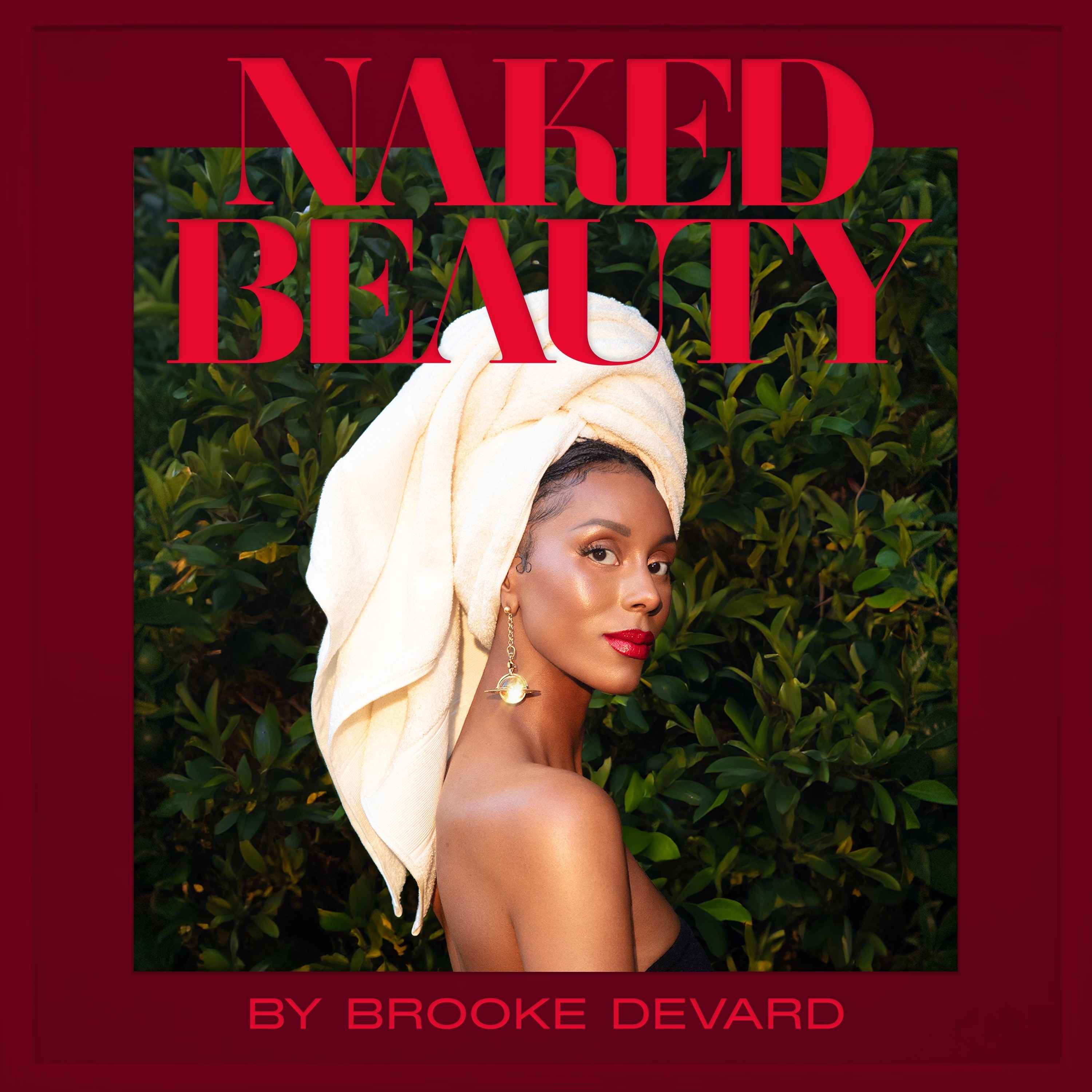
Hello. Hello, this is Brooke Devard, and you're listening to the Naked Beauty Podcast. I am beyond excited to introduce today's guest, Norma Kamali. Norma Kamali is a true icon with over 50 years of experience in the fashion industry and the beauty industry. I learned in today's episode, I'm sure many of you are familiar with her namesake brand, Norma Kamali, but if you're not familiar, here's some background. Norma Kamali began her business in 1967 as a shop owner, and she started her clothing career bringing back vintage clothing that she was finding in London and bringing it all the way back to New York City. And then she eventually transitioned into making and selling her own designs. Her entire goal as an entrepreneur was to have the freedom to be creative and then use that creativity to design styles for women that would ultimately make them feel great. Norma is a true innovator in the space. The sleeping bag coat. Iconic. The high heeled sneaker. She also popular, popularized athleisure and fashion. We owe so much to Norma Kamali. She's, of course, extremely well regarded in the industry. She's won the CFDA special tribute Award and the CFDA Jeffrey Bean lifetime Achievement Award. She has an amazing story. As she was telling me her story, I was like, this feels like a movie. I hope that as you guys are listening, maybe you're on a nice long car ride, you've got your headphones in, you're on a plane. This episode is one of my all time favorites because I love hearing from people that have these deep, layered stories. And when we can learn from other people's wisdom, that is always powerful to me. And at 80 years old, Norma is still dedicated to her fitness routine. She is stronger than I am. Her skincare routine, her approach to her business and creativity, she's just so vital. Absolutely. People throw around the term life goals a lot. She is life goals. I'm so excited for you all to get to hear this episode. Let's get into my conversation with Norma Kamali. Hi, Norma. I am so excited to talk to you.
- [02:05]
A
Well, it's a pleasure meeting you too. I know people that know you and it's. It's interesting because I've heard about you, so I feel familiar even though we don't know each other. So I kind of. It's nice. It's nice to meet you too.
- [02:20]
B
Honored to meet you. And before we start, I have to share with you. So you made this swimsuit? I bought it in 2021. After my first child, we had our first beach trip. We went to Mexico.
- [02:30]
A
You have a first child. You look so young.
- [02:33]
B
I'm on my second child.
- [02:34]
A
Oh, my goodness.
- [02:36]
B
I wore it in Mexico. I just went to Ibiza for the first time. I bought this trusty 2021 swimsuit. Again, because I've had a second child who's now 10 months old. I just have to show you, because postpartum. This is your beautiful swimsuit.
- [02:50]
A
Oh, my God. Look at you.
- [02:52]
B
You see how I accessorized it? Yes.
- [02:54]
A
I love it. I love it.
- [02:56]
B
But I have to say, the ruching, the construction of your pieces, they complement women's bodies so well. And you know how they say you can tell, like a designer that's a man versus a designer that's a woman? I have found so much confidence in my body through your pieces. So I am eternally grateful to you.
- [03:12]
A
That's a big compliment. I'll take it. I'll take it. Thank you. Very, very kind. I appreciate it.
- [03:18]
B
So, Norma, you grew up, like, I grew up on the Upper east side of Manhattan. What was it like growing up in the city? What was your experience?
- [03:27]
A
I grew up in Manhattan in the 60s. Well, actually in the 50s. And it was very different. There were. It was in. In an odd way, it was very small town because, as you know, there's a German town and like 86th street and. Yeah, there are all. There were areas. There were cluster areas where immigrants from different countries would migrate to and have. You could walk through these areas and it. You'd smell the food, you'd hear the language on the street, but people pretty much stayed in their areas. Right. And even though, as you can tell, I'm not Irish Catholic, somehow my mother and father settled in an Irish Catholic neighborhood, so we were very different looking than the rest of the neighborhood. But it was a fantastic neighborhood to be brought up in. And what street were you on? So do you know where John Jay park is? Yes, on 77th.
- [04:44]
B
Yes.
- [04:44]
A
And between York and the river.
- [04:47]
B
Yeah.
- [04:48]
A
So that's like a little enclave that's not even. Doesn't feel like New York. And we lived in the buildings that were landmark buildings that were built in these contests they had with architects. And they were really unique, gorgeous buildings. And it was a very. I mean, nobody in the neighborhood had two pennies to rub together. I mean, it was definitely. We were not talking well to do folks, and there were like 10 kids to every family. So we were out on the street all the time in the park. I even got arrested for Climbing over the fence and swimming in the pool at night. And. And my father had to come to the police station to get me. And I still can remember the badge number of the policeman. 5712, wherever you are, if you're still alive. Well, I'm never forgetting you. So I loved it. I love the neighborhood.
- [05:52]
B
Yeah. And your mother is Lebanese and your father was Basque. So you mentioned being different from a lot of the people that were there. Did you feel beautiful growing up?
- [06:02]
A
Well, whatever the standard is that you're around, that's the definition of beauty. Right? That's what, that's what it's measured by. And so I was not that standard. And clearly everybody had little noses and they all were like these pretty girls. And I would sleep on my nose hoping it would turn up because mine was just kept growing and going in a different direction. And I. So for a long time I thought, well, how do I compete with pretty girls? I'm not pretty. But of course I'm dealing with a standard that's different for me and how, how do I make a place for myself? And so I decided to do it with clothes and the way I wore the clothes.
- [07:02]
B
Yes. And. And I've also read that your mother was very creative and was very into wellness and used different oils and herbs. How did that influence you?
- [07:13]
A
Well, it was the only thing I knew, right. It. This was my house. I didn't have any other experience. I thought everybody's mother was like my mother. My mother, when I think about it now, is actually a little eccentric and not so much like anybody else's mother, but she was experimenting with lots of different things for good health, for, for. For a lot of reasons. We. Olive oil was such an important part of our world. I mean, between a Lebanese mother and a Basque father, you know, there was olive oil everywhere. So the fact that I was so involved with olive oil is, is just clear. It was my upbringing.
- [08:01]
B
I'm always curious to hear from people who their beauty icons were growing up, who their fashion icons were growing up. So growing up in the 50s, 60s, who did you look to and say, she's just gorgeous and I would love to look like her.
- [08:15]
A
Well, in the 50s, there were these fan magazines and they were thicker than People magazine and all of the movie star be on every page. And that's how we saw hairstyles and the way people dressed. And so it would be whoever the celebrities were at the time, you would be influenced by looking through these books. And so you have to remember if the 50s, I was like 11 and 12 in the 50s. And those are the early years of influence of music and celebrities. And most of them were actresses. There were the 50s were Sophia Loren, Marilyn Monroe, Brigitte Bardot, Audrey Hepburn.
- [09:12]
B
Right.
- [09:13]
A
Well, she was a little later in the 60s, and so they were very influential in so many ways, especially hair and makeup. So the 50s were very different from the 60s because the early 60s was Audrey Hepburn, Jackie Kennedy, that kind of dressing. But then mid-60s, that was baby boomer time, where there was this whole revolution of clothes, everything, music, everything drastically different.
- [09:53]
B
Yeah.
- [09:53]
A
And so the influence changed completely.
- [09:57]
B
Absolutely. I mean, I. I love Dorothy Dandridge and Eartha Kitt, and a lot of black women from that time period were so iconic. In terms of my understanding of what beautiful was just growing up.
- [10:08]
A
Exactly.
- [10:09]
B
From the 50s, it sounds like these books were basically like Instagram of the time.
- [10:14]
A
Yeah, absolutely. And the interesting thing is, I would say after the 50s and early 60s, the world changed dramatically and the idea of beauty changed also. And. And everybody was influenced by the same kind of thing. So if there was twiggy in the 60s and she was a skinny, kind of boyish model, but there was also Diana Ross, who is a skinny, kind of boyish model type girl. So what happened was this type, this body type and this beauty type started to emerge, and it was universal, and that was really great. That was the beginning of beauty kind of being redefined. I actually felt at the time I actually looked more like Diana Ross than I did, like Twiggy. So there are people like me who found different people that we connected to. And so, like I said, it just. Things started to change and it still happens now. Now to where Kim Kardashian and the Kardashians have an influence on how women look. So it's. It continues and it's still, obviously with.
- [11:50]
B
Us, the pendulum just swings back and forth.
- [11:53]
A
It swings, it swings.
- [11:55]
B
And you've seen all of the shifts throughout your incredible career. So we have to talk about you going to London, because I feel like so much of the style revolution was happening in the uk, but first you went to fit in New York.
- [12:09]
A
I did.
- [12:10]
B
Did you go in thinking, I'm going to go to this school and, like, come out a successful fashion designer. What was your mindset going in?
- [12:17]
A
Well, my mindset going in was I really wanted to be a painter. I studied anatomy at a very young age, and I was consistent about it. I really wanted to. Michelangelo was someone I followed carefully. And understanding the human form and the way the body moves was really a Big interest of mine. My mother kept saying, get a job. You are not going to get a job if you paint. This is. What are you doing? So, fortunately, one of my paintings was an impetus for me getting scholarships. I got a scholarship to NYU for painting, which wasn't on the top of the list, obviously. And I also got a scholarship to fit And I studied fashion illustration. I was not at all interested in fashion design because that was the Jackie Kennedy period. And I did not at all relate to any of that. I mean, girls actually came to fit wearing gloves and hats.
- [13:28]
B
Oh, my goodness, seriously.
- [13:30]
A
And I was like, I don't know. I'm not feeling this. This is definitely not my thing. So I didn't care about fashion. It wasn't until I went on my first job interview and had a really bad experience, one of these horrific objectifying experiences that made me think, I don't want to work in the garment industry.
- [13:58]
B
What was the experience, if you don't mind sharing?
- [14:00]
A
Well, I had my portfolio, and I was really excited about it because I felt the people that mattered in these decisions gave me a lot of confidence to believe that. And so I went for an illustration job at a regular garment center company. And the guy that was sitting behind the desk with his feet up on his desk eating a tuna sandwich said, put your portfolio down and come here. So I go to his desk, and he says, now turn around for me. And I. I was like, what? And now how old are you when you graduate from fit, Right? And how. You know, like what? And I. And I turned around and I was so humiliated that I did that. I was so embarrassed. I just started crying. And I picked up my portfolio, and I can remember every minute of it. I. My portfolio was really big, and I was running in my pumps, you know, the 60s pumps, the Jackie Kennedy pumps. And my. And. And at the time, we were wearing stockings and garter belts. It was not pantyhose time. It wasn't any. That was what everybody wore. So the portfolio ran my stockings. I was just a mess. I was just. My face was swollen with tears and everything. And then when I got home, my mother said, well, did you get the job? And I was like, no, I didn't get the job. So I. The New York Times was where you could find jobs. So I looked in the Times, and there was an ad at an airline, Northwest Orient Airlines. And I had no office skills, as you can imagine. And I don't know why they hired me. There was no reason that they should, but they did. And I got a really good training there. And I learned about computers because I worked at a Univac computer in the office. And it was in the 60s at the very early stages. And that was a great experience that influenced me till today. And then I traveled every weekend for $29 round trip to London, where everything was happening. It just was beginning. I caught it right at the beginning.
- [16:38]
B
And this is where I feel like, as I was reading about your life, it feels like a movie. You were taking these $30 flights to London, meeting all of these celebrities and rock stars that were in London, buying clothes, bringing back them back to New York City. For those of us that can only, like, imagine what this time period was. Like, what year was it? And like, who were some of the people and experiences that you were having during this time period?
- [17:00]
A
Well, the first thing. So this is like 64, 65. And this. And just keep in mind, think about this. Nobody. No women at this time were wearing skirts above their knees. None. And especially if you're wearing garter belt and stocking, it's not. It's not set up for that. Right. So when I went to London, I seen these mini skirts and I was like, what is that? What is going on? And I always used to have a needle and thread with me because I used to make my clothes, but I didn't know how to put a zipper in properly. So I would sew myself into my pants and. And had a seam ripper to unsew myself out of my pants. So I would immediately, as soon as I saw this, I hemmed my skirt before I could go out. And I happened to be staying in an area where the center of all of this was happening in Soho, on the Kings Road. Mary Quant was there.
- [18:14]
B
Yes. And she kind of popularized the miniskirt in the uk.
- [18:19]
A
She. She was probably the first, most commercial. But there were others that were popping up, too. And. And when I was there, I. A friend of mine from FIT was going to be in Paris. So I flew to Paris to meet her. And first, before I got to London and we met, I was waiting for her in a hotel lobby. And while I was in the hotel lobby, there were these British guys talking, and they were talking about me because they thought I was French and I didn't understand them. And then my friend comes in and they hear that we speak English, and it was very funny. But it was a group called the Spencer Davis Group, and they were on tour in Paris. They were going to different airplane hangars to perform, and they said, why don't you Guys, come with us. And we did, and we had so much fun and it was. It was really a blast. And they were really nice. And they were said, there's a club in London, when you go to London. It's called the Speakeasy, and it's on Margaret street and we'll get you in. And so the club, it turns out, was a club for musicians and for singers. So it was like this private club that just people who were in the music business would go to. So the Beatles were there, Jimi Hendrix was there, everybody. And you have to remember it was their. The beginning of their careers. They weren't hugely famous yet, the Beatles were, but they. This was like the next wave. And so I ended up going there every time I went to London. And I met so many people and it was just incredibly exciting and fun. And then I would come back after the weekend and sit behind my computer with boas and all kinds of eyelashes and wigs on and stuff. And they sent me home a few times. But I figured if I sell a lot of chores, they won't send me home. So I worked really hard not to get sent home.
- [20:44]
B
That era of rock stars like Mick Jagger and Jimi Hendrix that you mentioned, that had real personal style, I always find that inspiring. But, like, now I feel like people are so manufactured. They have stylists, everyone's telling them what to wear. But then it was really authentic to who they were.
- [20:59]
A
You got it. You're actually the first person that I've heard in your generation say that. It's like. It's so obvious to me that. That freedom to. I mean, Jimi Hendrix. There was a place called Antiquarius. It's still there, actually, in Lond. But you could go to Antiquarist. It was a big, vintage, sort of crazy place where there were stalls of all kinds of things, from uniforms to. I mean, anything you could think of. And he would go into Antiquarius and go from stall to stall and put together, I mean, amazing, amazing looks. The guy had just crazy style. And everybody did. Everybody didn't want to look like anybody else. The worst thing is if you looked similar to somebody else, like, you would run and change, you know, you would. The. The humiliation, embarrassment of being in that bad situation. So the personal style is so expressive and it's so creative and it's so much a part of who we are. Even if your personal style is no style, it's still a style, right? And. And so you're saying something about yourself. And. And yes, when you have somebody that you're paying to do that for you. It starts to take you out of the. That experience. And it's an. It's. It's very important. Telling your story is very important.
- [22:46]
B
Yes. And telling your story through your clothing. So you're bringing all of this incredible clothing back from the uk, selling it in New York. When do you start making your own designs and start establishing your own label?
- [23:00]
A
So my friends saw me wearing these clothes and then they said, you've got to bring these back. So Biba and Bus Stop and all of these great places had fantastic things. The dresses were $12 and I would roll them up and put R bands around them and put them in a garment bag and walk through with my carry on luggage, so to speak. And then finally it got to be so much that I opened a store in the basement of this strange group of buildings. And. And it was $285 a month. And I started there and I would keep bringing things back. And then I started to have ideas of things that I thought should be next and. And I just started doing them and I didn't really know what I was doing. And as you know, and we all know that in your 20s and 30s, you're faking it until you make it. So I was faking big time. And I thought, any day I'm going to get found out and it's not going to be pretty. I know I'll be embarrassed by it all, but I really knew when it was happening. When I saw people really interested in buying what I was doing, I couldn't believe that they would pay for it. It was just so astounding to me. And I thought, what encouragement this is to go on and to keep doing it. So I knew that I found what my real purpose would be. That soul was kind of connected to what I was doing. I felt that there was a. Something big was happening for me.
- [24:51]
B
Yes. And I don't want to get off track on the timeline of your life, but just a moment on pricing because I have found that the prices of Ready to Wear have become so outrageous. And what I love about all of your collections, they are. I mean, they are on the pricier side, but you're getting incredible value for what you're paying for. There are pieces that you can truly wear forever. And have you ever felt pressure to like, raise your prices or have you. Have you always wanted it to be accessible for, you know, the working woman?
- [25:21]
A
So, you know, I've had so many phases of my career that when I had, when I was just this designer this kooky designer that people would buy these strange clothes from. And my early clothes were really kind of, you know, in the moment of the time, but different. They, they had a price that sort of fit the time and that they were mostly a lot of one of a kinds because I wasn't doing production. I was just doing whatever my soul felt. But then when I started the sweats collection, that took me to, into a global arena. And so the price range of that, I wanted to be under 200 or to 275, something like that. And it was a huge hit. Not just for the idea, but also like you say, for the price, where you get great value for a price. Then I started doing different collaborations and licenses and I did an Italian license with a company that made the most gorgeous clothes out of the most beautiful fabrics. And then the collection I did with them was crazy expensive. And the clothes were extraordinary. The sewing machines had 5ft in front, 5ft in back, 5 on either side. So we're talking Milan magic. But it was killing me that a white shirt, a beautiful white shirt was $750. And I thought, I don't know, you know, and, and, and the end up and everything kind of was in that other world price. And I, when the license was up, I said, no, I don't feel good about this. I don't, I don't want it. I love the clothes, but I just don't want to do this. And so I ended up thinking more and more about pricing and giving great value and like you said, making that purchase timeless and giving it an opportunity to be a part of your wardrobe for a long time. And so yes, you hit it on the head. It's a real on purpose part of what I do.
- [27:59]
B
Yes, and we're grateful for it, for you making it accessible. So I know that you, you got divorced and then a couple of years later, you launched on my own. Norma Kamali, what was it like going out on your own? Were you scared? And how did you kind of turn that time period in your life into making great creative work?
- [28:20]
A
So I, I was married for. We got married when we were both 19. So smart. Oh, wow. Not really. And so when you', teen, you're not fully formed yet in, in your brain especially. But we danced together really great. And he was good looking, so I don't know, I can't think of any other reason. Anyway, he, he actually was a very nice guy and, and he was a big believer in my talent. And he would price the clothes and say, this is what they're worth. And. And. But then we grew apart. We, you know, from. We were in such different places, and. And I was so happy to found what I love. And he loved talking to the press and being out front, and he was very charming. But I think it was when the sales girls he was dating started to ask me to do their. To make their designs that I just said, I am so out of here.
- [29:29]
B
Wait, so he basically dated the women that worked for you?
- [29:34]
A
Yes. Yes. And so, yeah, and there was a lot of drugs and everything going on. Remember, this is a time and place. And. And I was like, not in that space at all. And so. And he controlled the money because that's what we thought men did better than women. And so I had $98 to my name when I picked up and walked out of the company. And the company was. Everything that I'd collected, every fabric, everything that was in that space was something that I put there. So I had a mattress, no shades on my windows, and $98. And it was. And I didn't know anything about business. I never told anybody my story. I was too embarrassed to even talk about it. And I had to learn very quickly to tell my story so I could get help. And that's a very big thing to learn how to do, because embarrassment is a tough story to talk about.
- [30:50]
B
Absolutely. But. And look at how. How long your business has lasted from that experience and with those $98 that you started with.
- [30:59]
A
Yeah. But, you know, I. I have to say something, and I feel qualified at this point to. To say this. I am so grateful for some of the most horrific experiences in my life. And I just told you two. One is this guy, this jerk who just was so awful, he. The universe put him in my path to say, don't you dare get this job. There's other things for you. Get out of here. He. He threw me out of that place. And the universe said, right. Phew. You got out of here.
- [31:39]
B
Right.
- [31:40]
A
This girl, especially at a. Years later, wanted to apologize to me for what she'd done. And it was a drug relationship that they had, and it was that. And I. And I said, you don't need to, because you saved my life. You did me the favor of a lifetime to send me out there to learn that I could run a business, to learn that I don't have to be embarrassed about saying what's going on. And I'm so grateful to you. And everybody's life has many of these. Not tons, but enough to say, you know what? Don't do what you're doing anymore, it's not working. So the key is to pay attention. When something is so awful and you insist on keeping that going, whether it's a relationship or a job or any, you know, there's a million, million of these things, you better pay attention and let the universe do its job. And whatever the pain is that, that it. That you go through at the time, it's worth going through it so that you go to the place, the next place you should be.
- [33:00]
B
Oh, my goodness. I got chills as you were saying that. Taking these moments that are terrible, but using them as redirection and realizing that there's this higher plan for your life, but you have to pay attention, which is so important.
- [33:12]
A
Yeah.
- [33:13]
B
You published a book in 2021 called I Am Invincible. And there's a quote on the COVID of the book that I want to read for the audience. So you wrote, I am Invincible. I feel empowered. And when I am healthy, I am strong. And then I can do all the things I need to do and to reach the goals I need to reach in order to fulfill my big dreams that are as big as the world and as optimistic as my mind can imagine. I will age with power and influence because I know my purpose. An incredible affirmation. How did you develop this outlook on.
- [33:43]
A
Life through enough of these experiences? And another thing that I think is really important is to learn early on as early as you can, and it can modify, but what is your purpose? So it's kind of like you're traveling a path, right? You're going along a road, and you kind of see some other roads, and you. You take them and you get lost, and you're like, what am I doing here? But if you know your purpose, you know what road you're supposed to take, and you don't wander and get sidetracked. So having a purpose gives you clarity about decisions you make in your life, and that that is key. Now, how do you figure out what your purpose is? It's really, really easy. If you take enough quiet time in meditation or whatever prayer, it could be a number of things where you take yourself out of the noise and you really think about what you do, what. Who you are, who is the soul in. In. In you? Where is the spirit? Who is that spirit? And you will know. I mean, you'll know exactly what feels right to you. And I, I knew that my purpose, I. I knew it when I started do to do designing. I knew my purpose was really for women to do whatever I could to make women feel good. Like the book was a handbook for women. I didn't want it to be just for me. I. I didn't want to tell my life story, and who cares, right? But if I could give it as a source of inspiration or information so that women could have information about discovering their purpose and going down the path that they're supposed to be going down. The other thing is to. Relationships are so key in this, defining you, who you are and your purpose, and that if you're with somebody who doesn't deserve you, you should only be with somebody that you deserve. Anything less than that is bigger, this distraction, than going down the wrong road, because that will destroy your soul inside. And you have to run, not walk, but run from that, because it just will destroy that ability to reach your purpose. And the reaching, trying to get to the purpose is the beauty of the whole thing. And we always. We always. I don't know, a woman who hasn't been with someone who just is a jerk, didn't know the right way. Like, we all have stories, and I, you know, I'm older than everybody. I have more stories, and you finally say, I think I. It wasn't until I was 65 that I was like, what am I doing? Like, what is happening here? These choices? And I was lucky enough to kind of see the light and say, I'm. I'm doing the wrong thing. So it's a hard one. That's a hard one.
- [37:36]
B
I'm so happy you said that, though, because so many people are in relationships with people that are detracting from the quality of their life, and you need to be with a partner that pushes you, lifts you up, supports you, and is your number one fan and champion. So I'm so happy you've said that.
- [37:51]
A
You got it. That's perfect. Perfectly said.
- [37:54]
B
We have to get into Longevity Wellness Lifestyle Diet because you are just the picture of health. And I know this because I was, unfortunately for me, placed next to you in a Physique 57 class in Bridgehampton years ago.
- [38:11]
A
Oh, my God. That's so funny.
- [38:13]
B
I was like, please, I hope no one is looking at me, because you were, like, holding the planks, you know, all of those really difficult moves at the bar. You are so incredibly strong, which I can see, but I've also experienced it firsthand being right next to you in a workout class. So, I mean, how do you. I just want to get into how you keep yourself feeling your best, looking your best. Let's start with exercise. What kind of exercise do you like to do. And how have you developed your exercise practice?
- [38:40]
A
Well, I mean, I love exercising, I just love it. I like the challenges of it. In fact, in my studio here we have a different trainer come in at 12:30 to do a class. The mats come out and we all work out and all the departments, different ages, everybody. And, and because we do it consistently, we're at a more, a higher level than you would think a typical class would be. So it's really good and we have tough trainers. I also follow trainers that do unique things. I love animal flow and things like that. And there's a trainer, Leo Moves, who's from Switzerland, who, who I follow and finally came to New York and trained our class too. So we get to like really meet great people. And so this is just an interest that I have. And in the end what I've learned is my, my age, my biological age is a lot younger than I am and it's totally attributed to working out. So out of everything you can do, if you're consistent with working out and it doesn't matter what you do, it's like everybody can go on, okay, now it's weights or, and in 10, five, three years it'll be something else and whatever it is, it's okay, it doesn't matter. But being consistent and challenging yourself, this is a mind body experience. Working out. If you're, you have to think when you're working out, you have to concentrate. Are your abs engaged? Are you like. It's a thought. You know, if you've done physique, you can't just do that blindly. I mean, what, what will happen? So I think that that's the most important out of everything. But you know, diet, sleep, diet, exercise, all of that is important. But I, I kind of at this point really see in the end the fact that I've been working out consistently all these years has really been the critical difference when it comes to heart health, muscle, all of that. So, and you know, I work out with 20 and 30 year olds here and I see that the more everyone works out, the, there's a difference in their mind and in their productivity as well. And that that's the biggest benefit of working out too is brain health. Longevity for the brain too is, it's super helpful. But you see when you push yourself and working out to a place that you didn't think you could do, like, can you do a split? I rem. I think I was 60 when I said, damn, why can't I do a split? I sure looks great. I I want to see if I can do it. And I. A little. Every day I would take a little, A little, a little, a little. And so I can do a split. And it's just, it's just putting your mind to it so I can reach that point. So every time somebody takes a step like that and they do something they didn't think they can do, that's what they can do with their lives. Right. You can do that in, in other parts of your life too. So I'm a big believer in exercise. Are you still doing physique?
- [42:37]
B
No, because now I'm here in la. I've been doing strength training, but I do, I need to get it. I need to find a good bar class. But there's hope for me to still learn a split, which I love to hear. You also have incredible skin. And being that this is naked beauty, we have to talk about the skincare products you love. I'm also curious, like, do you do facials? Do you do specific treatments? What skincare products do you feel like have benefited your skin long term?
- [43:03]
A
So I have a skincare line that I created. It's really olive oil based and it's very natural and it works for me. And I have exfoliants that are again, the ground up olive pits. And it's, it's a very kind of beautiful skin line. And I, and I, it's a very simple step, easy, eat a lot of olive oil too. And I think diet has so much to do with it and genetics love that.
- [43:36]
B
I do want to talk about some of your most popular iconic designs. So I'm gonna, it's gonna be kind of like a lightning round. But the story behind these is what I'm really interested in. So the first iconic Norma Kamali item is hot pants pants.
- [43:52]
A
Oh, my goodness. Yes. So hot pants. This was during the London time. And minis then were getting shorter and shorter and I thought, I think it's really hard to wear these really short skirts. So I'm gonna make shorts and call them hot pants. And so I, I didn't have a lot of money for fabric, so I would take all the scraps and do patchwork and embroider things. And each one was like a little piece of art. And so I sold all one of a kind hot pants. And they, they were a lot of fun. And I found one of my original hot pants that I wore and they were like this big. So I was really, I'm small now, but I was really, I think I was 96, something like that. And I was really small and those little hot pants were really cute.
- [44:54]
B
Wow. The sleeping bag coat, which is probably still today one of the most famous designs ever.
- [45:01]
A
Well, that was a camping trip. After my husband and I divorced, I. I was dating this guy who was a real outdoorsy camping type. And I didn't realize how much I loved canoeing and camping. I'm a city girl, as you know. We city girls are not like canoe. And I really got into it and so we would go camping and sleeping in my sleeping bag. And then one cold night when I had to go into the woods to, you know, do what you have to do, and I came back with the coat around me and I thought, oh my goodness, I need to make a coat out of this with my sleeping bag and make a coat. And I made a coat when I got home out of my. My own sleeping bag. And then everybody loved it. So I just bought a whole bunch of sleeping bags and made coats out of them for a long time. Until then I started creating from scratch and that I never stopped making sleeping bag coats. Every year I make them since the first one.
- [46:11]
B
That's incredible. And I saw on your website recently there's like a white one that's like kind of furry. That's like a short sleeping bag coat.
- [46:19]
A
Right? Right. Yes.
- [46:21]
B
That's incredible to have that longevity for a piece. Okay, the next item is Farrah Fawcett's red swimsuit.
- [46:28]
A
So I don't know if people still know Farrah Fawcett, but everybody seems to. And she, she was really like the all American girl beauty. And sort of every guy had a thing for her and had. She did a poster and it was a huge. It had the. I think it still holds these top selling posters of all time. And I see that she's wearing a swimsuit of mine on it. And the problem was I had a technique where I would try new styles. I would make six to see how it sold. And that particular suit I took off the floor because I really didn't like it. And I had no idea that she'd been in and actually bought it and ended up wearing it on the poster. And I was like, oh my God. But of course, as much as I didn't like the swimsuit, she was so beautiful and her smile alone made. Carried it off. And. And the funny thing is, when the Smith I asked her when she came in later, I said, why Farah, out of all the swimsuits you have for me, why that one? And she said, I had a few swimsuits in My bag. My friend is photographer, and we just thought we would keep taking pictures till we found something for the poster and we decided it was that one. I was like, okay, girl, thank you very much. And then the Smithsonian. Yeah, the Smithsonian wanted it, and I said, could I just redo it and make another one? They said, no, thank you. We'd like the original. So there you go.
- [48:24]
B
It's perfect as it is, and one of the most iconic beauty images we have.
- [48:28]
A
Yeah.
- [48:29]
B
I want to talk about this idea of hitting your creative peak, because I think so many people think, like, you hit your creative peak in your 30s or 40s, but. But every single decade, you've pushed yourself to new heights. How have you been able to stay inspired, do new ideas, and kind of keep one upping yourself creatively and personally?
- [48:51]
A
So, you know, I think the word is disrupt. So you can be disrupted by life, by a number of things, and that's tough because sometimes it means the end of something or. Or an outcome that you didn't want, but, you know, when things are not right, and sometimes you have to disrupt yourself before you get disrupted. And so I think being in New York City, Upper east side, girl, we survive. We have survivor skills. And I have intuitively known so far at least that, okay, I need to change this. I need to change what I'm doing. I need to change the way I'm doing it. I need to. I need to make adjustments. And right now, in this last week, I've made a decision to disrupt, to do something different. Everything is fine, mind you, but sometimes when everything is fine, there's an under layer that's saying, no, maybe you should do it in a different way. Maybe you should try something else. So I'm not changing. I'm still designing clothes and have this company, but the way I'm doing it and how I'm making decisions is. Is really going to go through some changes. And I actually am excited about it.
- [50:37]
B
Yes. I mean, it sounds like you are open to pushing yourself out of your comfort zone. So many people reach an area of comfort and they're like, okay, I feel good. Everything's easy, and I'm comfortable, so I'm going to stay here. But when things feel quiet and comfortable for you, you're like, how can I disrupt and move into a new stratosphere?
- [50:53]
A
Well, there's, there's, there's. In that quiet, there's always a message. There's always an undertone of something. It's not. You do have a sense of it. The minute you think that Something could go wrong. That's the time that you need to really be clear about what you need to do. And so I've had the same job for 58 years, but nothing stays the same. You can ask the people that work here, they fear Monday mornings when I have new ideas, and he's like, oh, no, what is she going to do now? But it's very important. Very important.
- [51:34]
B
I could speak to you all day. The amount of wisdom that I've gained from this one hour conversation is incredible to me. So thank you so much for your time, but I have to ask you my. My final question that I ask all of my guests. I've done over 350 episodes, and I'm very curious for your answer. When do you feel most beautiful?
- [51:53]
A
I think it's more than just beauty. It's a total physical, mental sense of beauty. And that's when you've reached the goal or the dream where you've gotten to a dream or an outcome that you've been looking forward to. And so there's nothing that could make you feel bad about yourself in any way when you get to that. And so these are these achievements, these milestones that are really pretty fabulous. Beauty is more than just how you look. There are a lot of beautiful women, but in people's eyes, you can see more. There's a sense of something else that carries that beauty forward.
- [52:55]
B
I couldn't agree more. Thank you so, so much for your time.
- [53:00]
A
It was a pleasure. It was.
- [53:01]
B
I've learned a lot. All right, next time I run into you at a workout class, I hope you enjoyed listening to this episode as much as I enjoyed having this conversation. We have split together much to learn from women who fearlessly, independently. The biggest takeaway I'm taking from this episode, truly the thing that will always stay with me is just her conviction that every misdirection in your life, everything that doesn't go the way that you hoped it was going to go, it's happening that way for a reason, because it's pointing you towards your larger purpose. And I always believe that the universe has a plan for us or God or whatever you believe in. But I do believe that there's this divine plan for us. And if you can take things that you wanted to get but didn't get or just. Just all of these kind of curves we take on this path to success and remembering that it's not linear if we just always have that faith and trust that there is, like a larger plan in place. But that doesn't mean you just sit back and let the plan unfold. You've got to work hard too. And I think her work ethic speaks for itself. The fact that she is still so dedicated to her fitness routine is incredible. And when she said like, exercise is the number, number one thing that makes her have the energy she has today and just look the way that she does today, I'm like, okay. Between this conversation and Last week with Dr. Sharon Malone, I am on my wellness fitness journey. Such a great episode. Thank you all so much for listening. If you like this episode, you have thoughts about this episode, you want to chat more about this episode, make sure to leave a comment on Spotify. I read all the Spotify comments. It's very exciting to me that you can leave comments on Spotify. If you're listening on your iPhone, make sure to subscribe to Naked Beauty on Apple Podcasts new episodes every Monday. If you're new to the podcast, would love for you to stick around and be part of the community. And for everyone who's been holding me down week after week after week, thank you so much for listening and for all of the support. I'll be back next week with the new episode.
- [54:54]
A
Does that make me crazy? Does that make me crazy? Does that make Me crazy? The longer you stay alive, the longer you can enjoy Boost Mobile's unlimited plan with a price that never goes up. So here are some tips. Do not parallel park on a cliff if you want to enjoy an unlimited plan with a price that never goes up. Do not mistake a wasp nest for a pinata if you want to enjoy an unlimited plan with a price that never goes up. Do not microwave a hard boiled egg.
- [55:33]
B
If you want to enjoy another unlimited.
- [55:34]
A
Plan with the price that never goes up. Stay alive and enjoy Unlimited Wireless for.
- [55:39]
B
$25 a month forever with Boost Mobile. After 30 gigs, customers may experience slower speeds.
- [55:42]
A
Customers will pay $25 a month as long as they remain active on the Boost Mobile Unlimited plan.
- [55:46]
B
With cold weather around the corner, go for a jacket that feels like you're wearing a hug. Columbia Sportswear's new Amaze Puff protects you from the elements and feels, well, amazingly warm, cozy and comfortable. You know, Colombia makes tough winter layers, but the Amazepuff jacket is definitely for the girls. Built to be soft and warm while also looking great with tons of colors and lengths to match any mood or look. Visit Columbia.com to get your hands on an Amazepuff jacket. It's tough on cold, soft on you.
- [56:18]
A
Acast powers the world's best podcasts Here's a show that we recommend. Hi, I'm Joanna Coles. And I'm Michael Wolff. No other modern American president has impacted the world like Donald Trump. To understand his mercurial whims, we dive deep inside Trump's Head. Three days a week, Joanna and I deliver behind the scenes access and recount insider stories. From hidden health concerns to alleged Epstein connections, we unravel the 47th president in a way you will not find anywhere else. So search for Inside Trump's Head wherever.
- [56:58]
B
You get your podcasts.
- [57:00]
A
New episodes are released three times a week on all major podcast platforms, platforms.
- [57:05]
B
Or tune in a day earlier on.
- [57:07]
A
The Daily Beasts YouTube channel. Acast helps creators launch, grow and monetize their podcasts everywhere. Acast.com.